EXOA19 | AI for exoplanet and brown dwarf studies

EXOA19

AI for exoplanet and brown dwarf studies
Convener: Yann Alibert | Co-conveners: Jeanne Davoult, Sara Marques, Romain Eltschinger, Adrien Leleu, Carles Cantero Mitjans, Kai Hou (Gordon) Yip, Jo Ann Egger
Orals MON-OB2
| Mon, 08 Sep, 09:30–10:30 (EEST)
 
Room Uranus (Helsinki Hall)
Orals TUE-OB2
| Tue, 09 Sep, 09:30–10:30 (EEST)
 
Room Saturn (Hall B)
Posters MON-POS
| Attendance Mon, 08 Sep, 18:00–19:30 (EEST) | Display Mon, 08 Sep, 08:30–19:30
 
Finlandia Hall foyer, F211–216
Mon, 09:30
Tue, 09:30
Mon, 18:00
Artificial intelligence (AI) is revolutionizing planetary sciences, enabling new insights from vast and complex datasets, both for solar system exploration and the study of exoplanets and brown dwarfs.

This session will explore AI-driven approaches for studies, focusing on innovative techniques such as image analysis, curriculum learning, diffusion models, generative models for data augmentation and simulation, machine learning techniques for analyzing large-scale surveys. We will also discuss applications of natural language processing for scientific literature mining, and uncertainty quantification in AI-driven models. By bringing together experts in AI and exoplanetary science, this session aims to foster interdisciplinary collaborations and advance the field.

Session assets

Orals MON-OB2: Mon, 8 Sep, 09:30–10:30 | Room Uranus (Helsinki Hall)

Chairpersons: Yann Alibert, Carles Cantero Mitjans, Adrien Leleu
09:30–09:42
|
EPSC-DPS2025-808
|
On-site presentation
Angèle Syty, Orphée Faucoz, Jean-Philippe Beaulieu, Pierre Drossart, Jérôme Amiaux, Thibault Pichon, Christophe Cossou, and Kai Hou Yip

The Ariel space mission is a European Space Agency (ESA) mission that aims to study the atmospheres of a large and diverse sample of transiting exoplanets (Tinetti et al. 2021).  Scheduled for launch in 2029 to the L2 Lagrange point, Ariel will observe a diverse sample of transiting exoplanets in visible and near-infrared wavelengths (0.5–7.8 µm) via low-resolution spectroscopy. Ariel will use various spectroscopic techniques, including transmission and emission spectroscopy during transits and eclipses, as well as phase curve observations. These measurements will reveal wavelength-dependent variations in the observed spectra, caused by molecular absorption and emission in the planets' atmospheres. This will enable detailed studies of atmospheric composition, clouds, hazes, and thermal structure.

As machine learning methods are increasingly used in many astrophysics fields, these methods have recently arrived in the exoplanet community. The Ariel Consortium puts effort into the machine learning development from data processing to molecular retrievals. Applications include accelerating parameter space exploration, investigating the highly degenerate molecular composition of planet atmospheres in exoplanets’ spectra, studying complex undesired artifacts in Ariel data, such as the effect of the jitter of the line of sight of the telescope during the observation, or even interpreting pre-launch calibration data. Indeed, post-processing methods will be used to correct Ariel data from photometric noise and ensure that the science objectives can be achieved. These corrections often rely on the knowledge of calibration maps of the detector, acquired before flight. However, the detector’s performance may vary in flight due to extreme conditions of temperature and pressure or because of strong mechanical constraints experienced during launch. The performances may also vary over the years the telescope is in operation. For instance, the ability to detect bad pixels in flight might be a key element of the success of the mission. Indeed, if left uncorrected, bad pixels can introduce bias into the data, potentially limiting the extraction of atmospheric features from exoplanet spectra. If a bad pixel is spotted, it can be either masked from the image for its analysis or corrected if its behavior is well characterized.

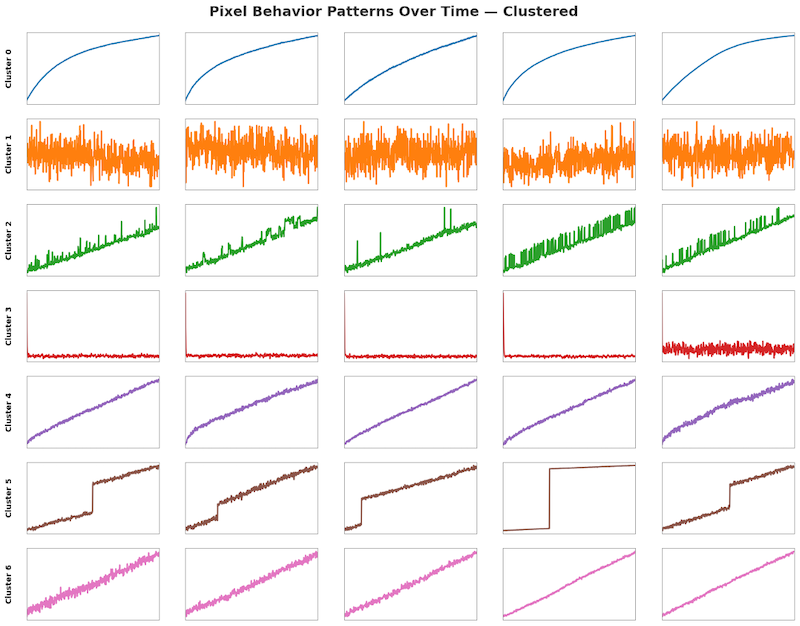
In this talk, the work of the Ariel Data Challenge 2024, extended in 2025, a competition hosted by the NeurIPS conference, which gathered 23000 model submissions from almost 1500 participants (Yip et al. 2024), will be introduced. The task of this competition is to extract the atmospheric spectra from every observation, with an estimate of its level of uncertainty. To obtain such a spectrum, we required the participant to detrend many sequential 2D images of the spectral focal plane taken over several hours of observing the exoplanet as it transits in front of its host star. A project in collaboration with CNES and CEA on calibration data for Ariel will also be presented. Dark frames are measured in laboratories to flag the pixels having non-nominal behaviors (“bad pixels”), which must be either masked during the data processing step or parametrized to avoid introducing any bias in the scientific data to come. Machine learning is a powerful tool to cluster those pixels according to their behavior, on datacubes containing millions of time series of pixels’ responses. Different data pre-processing methods (wavelet transform, autoencoder, statistical distribution analysis), as well as clustering methods (DBSCAN, Gaussian Mixture), are compared to classify and characterize the various types of bad pixels. The attached figure shows examples of the measured evolution of some pixels’ response over time, without any illumination, after the clustering step with an ML algorithm. Cluster 6 is the cluster of nominal pixels, having a linear accumulation of dark current over time. The other clusters are flagged as ‘bad’ pixels. Clusters 0 and 4 are non-linear pixels, respectively, non-linear over the whole ramp or just at the beginning of the ramp. Cluster 1 is the cluster of dead pixels, Cluster 2 of pixels oscillating between a finite number of states, and Cluster 3 of pixels starting from a high value and then becoming dead pixels. Finally, Cluster 5 gathers the pixels hit by a cosmic ray. Some pixels are classified as outliers, having very peculiar behaviors that machine learning can identify even if they are unexpected.

Ultimately, this work demonstrates how modern machine learning techniques can play a critical role in preparing for the challenges of space-based exoplanet observation, ensuring the reliability and scientific return of the Ariel space mission.

References:

  • Kai Hou Yip et al., NeurIPS - Ariel Data Challenge 2024. NeurIPS - Ariel Data Challenge 2024. https://kaggle.com/competitions/ariel-data-challenge-2024, 2024. Kaggle.
  • Giovanna Tinetti et al. “Ariel: Enabling planetary science across light-years”. In: arXiv e-prints,arXiv:2104.04824 (Apr. 2021), arXiv:2104.04824. arXiv: 2104.04824

Acknowledgments: This work has received support from France 2030 through the project named Académie Spatiale d'Île-de-France (https://academiespatiale.fr/) managed by the National Research Agency under bearing the reference ANR-23-CMAS-0041, and from the Centre National d’Études Spatiales (CNES).


How to cite: Syty, A., Faucoz, O., Beaulieu, J.-P., Drossart, P., Amiaux, J., Pichon, T., Cossou, C., and Yip, K. H.: ML approaches for exoplanet atmosphere characterization and detrending methods in the Ariel space mission, EPSC-DPS Joint Meeting 2025, Helsinki, Finland, 7–13 Sep 2025, EPSC-DPS2025-808, https://doi.org/10.5194/epsc-dps2025-808, 2025.

09:42–09:54
|
EPSC-DPS2025-1430
|
ECP
|
On-site presentation
Hendrik Schmerling, Rok Hribar, Sascha Grziwa, and Martin Pätzold

The discovery and characterization of exoplanets has become a central goal of modern astronomy. While space-based missions such as Kepler, K2, and TESS have revolutionized the search for transiting exoplanets by producing vast amounts of stellar photometric data, the process of identifying and confirming planetary transits within these light curves remains a time-intensive task, still heavily reliant on manual inspection and traditional search algorithms. These conventional methods, such as Box Least Squares (BLS), tend to struggle with noisy signals, low signal-to-noise ratios, and sparse transit events, resulting in a significant number of missed detections and false positives.

To address these limitations, we present TRANSCENDENCE — a machine learning-based pipeline designed to automate and enhance both the detection and characterization of exoplanetary transits. At the core of our approach is a hybrid architecture combining convolutional neural networks (CNNs) with recurrent layers (LSTMs), trained using supervised learning techniques on light curves augmented with synthetic transits. This architecture allows for both denoising and classification of transit-like signals, effectively distinguishing them from instrumental noise and stellar variability.

A crucial aspect of the pipeline's development is the preparation of a robust training dataset. Because real transit events are rare compared to the total volume of light curve data, we enhance our dataset by injecting simulated planetary transits into real TESS light curves. This procedure involves generating synthetic transit signals based on realistic astrophysical parameters, including limb darkening effects modeled with a quadratic law and parameterized using stellar characteristics from the TESS Input Catalog. The simulated transits are produced using the \texttt{batman} library and injected at random phases into real photometric data, preserving the noise characteristics of the original observations. This ensures that the resulting dataset maintains high astrophysical realism while achieving a roughly balanced distribution of transit and non-transit examples, which is essential for effective model training.

In total, we use light curves from approximately 450,000 stars across 30 TESS sectors, selected based on the availability and quality of stellar parameters and limb darkening coefficients. To further enhance model robustness, the injected planetary parameters are sampled from empirically informed distributions, with a deliberate skew toward smaller planets (e.g., 50% of injected planets have radii between 0.5 and 4 Earth radii). This encourages the model to improve its sensitivity to shallow transit signals that are commonly overlooked by traditional methods.

TRANSCENDENCE demonstrates strong performance in both detection and characterization tasks. It consistently identifies planets larger than 2 Earth radii with high accuracy and maintains a low false positive rate between 5% and 10%. Smaller planets are also detected, albeit with reduced reliability, which is consistent with the intrinsic challenges posed by weak transit signals. Importantly, the pipeline operates with minimal manual intervention and offers significant computational efficiency, positioning it as a promising tool for large-scale, automated exoplanet discovery in current and future survey missions.

How to cite: Schmerling, H., Hribar, R., Grziwa, S., and Pätzold, M.: TRANSCENDENCE - A TRANSit CaptureENgine for DEtection and Neural networkCharacterization of Exoplanets, EPSC-DPS Joint Meeting 2025, Helsinki, Finland, 7–13 Sep 2025, EPSC-DPS2025-1430, https://doi.org/10.5194/epsc-dps2025-1430, 2025.

09:54–10:06
|
EPSC-DPS2025-1820
|
ECP
|
On-site presentation
Jeanne Davoult, Romain Eltschinger, and Yann Alibert

Searching for planets analogous to Earth in terms of mass and equilibrium temperature is currently the first step in the quest for habitable conditions outside our Solar System and, ultimately, the search for life in the universe. Future missions such as PLATO or  LIFE will begin to detect and characterise these small, cold planets, dedicating significant observation time to them. The aim of this work is to predict which stars are most likely to host an Earth-like planet (ELP) to avoid blind searches, minimises detection times, and thus maximises the number of detections.
Using a previous study on correlations between the presence of an ELP and the properties of its system, we trained a Random Forest to recognise and classify systems as ‘hosting an ELP’ or ‘not hosting an ELP’. The Random Forest was trained and tested on populations of synthetic planetary systems derived from the Bern model, and then applied to real observed systems. The tests conducted on the machine learning (ML) model yield precision scores of up to 0.99, indicating that 99% of the systems identified by the model as having ELPs possess at least one. Among the few real observed systems that have been tested, 44 have been selected as having a high probability of hosting an ELP, and a quick study of the stability of these systems confirms that the presence of an Earth-like planet within them would leave them stable.
If we assume that such a global model of planetary formation adequately describes the architecture of real systems, then such a tool can prove indispensable in the search for Earth-like planets.

How to cite: Davoult, J., Eltschinger, R., and Alibert, Y.: Earth-like planet predictor: using AI to predict planet detection, EPSC-DPS Joint Meeting 2025, Helsinki, Finland, 7–13 Sep 2025, EPSC-DPS2025-1820, https://doi.org/10.5194/epsc-dps2025-1820, 2025.

10:06–10:18
|
EPSC-DPS2025-270
|
ECP
|
On-site presentation
Isidro Gomez Vargas and Xavier Dumusque

Detecting Earth-sized exoplanets through the radial velocity method is particularly challenging due to stellar activity, which can contaminate or mimic planetary signals. In this work, we apply deep learning techniques to enhance the precision of Doppler shift measurements in stellar spectra obtained from the HARPS-N spectrometer. Our models are carefully trained exclusively on real observational data, deliberately avoiding the use of simulated data during training to ensure robustness and generalizability in real scenarios, while minimizing the risk of biases inherent in synthetic data. Using a supervised learning approach inspired by Zhao et al. (2024), based on a convolutional neural network applied to spectral shells (Cretignier et al. 2023), we demonstrate the ability to detect Doppler shifts as small as 10 cm/s in unseen data, highlighting the generalization power of our deep learning models. We also explore an unsupervised strategy using generative models, in particular variational autoencoders, to identify patterns in stellar spectra. This approach could be used either to derive RVs directly without using cross-correlation functions or other classical methods, or to derive activity indicators that could be used to mitigate spurious signals in RV timeseries. Together, these deep learning approaches provide data-driven frameworks for extracting planetary signals directly from real observations, offering an interesting complement to traditional radial velocity techniques.

How to cite: Gomez Vargas, I. and Dumusque, X.:  Deep Learning strategies for detecting Earth-size exoplanets in HARPS-N stellar spectra, EPSC-DPS Joint Meeting 2025, Helsinki, Finland, 7–13 Sep 2025, EPSC-DPS2025-270, https://doi.org/10.5194/epsc-dps2025-270, 2025.

10:18–10:30
|
EPSC-DPS2025-407
|
ECP
|
On-site presentation
Emilie Panek, Alexander Roman, Katia Matcheva, Konstantin Matchev, Roy Forestano, and Eyup Unlu

The study of exoplanetary atmospheres is influenced by models and assumptions based on Earth-like chemistry, because it is what we know best. This perspective can introduce biases in how we interpret spectroscopic data. With the upcoming Ariel mission, we will soon have access to a large, uniform dataset of thousands of exoplanet atmospheres. This presents both an opportunity and a challenge: how can we quickly identify atmospheres that do not follow expected chemical patterns?

The main goal of this study is to test the use of machine learning, specifically autoencoder-based anomaly detection, to identify exoplanet atmospheres with unexpected chemical signatures. This could help detect interesting targets early in large-scale surveys and avoid missing important atmospheric diversity.

We use the publicly available Atmospheric Big Challenge (ABC) database (Changeat & Yip 2023), which contains 105,887 simulated exoplanet transmission spectra generated with a wide range of planetary parameters. All these spectra are based on a ”free chemistry” approach, where molecular abundances are constant throughout the atmosphere, with the abundance value allowed to change unconstrained by equilibrium chemistry. We then use the set-up introduced in Forestano et al. (2023), where the dataset is divided into normal and anomalous samples. An anomalous atmosphere is considered to be one which includes an additional absorber that the training set does not have. Planets with normal spectra are those where this absorber (for example, CO or CO2) is essentially absent.

We train an autoencoder on the normal sample of the ABC database. We look for anomalies in the input space, the latent space as well as the reconstructed space. Anomaly detection in the latent space gives the clearest separation between normal and anomalous spectra. We test the method across different signal-to-noise ratios. This is specifically interesting for molecules that show weak spectral signatures or in the case of spectra with higher level of noise.

Autoencoder-based anomaly detection is a useful tool for identifying exoplanet atmospheres that differ from expected patterns. This approach does not require labeling or predefined thresholds and can process large datasets automatically. It could help us prioritize unusual targets in missions like Ariel, where time for detailed follow-up is limited. In future work, we plan to include equilibrium chemistry in the anomaly set, which will allow us to detect even more diverse chemical behaviors in exoplanet atmospheres.

How to cite: Panek, E., Roman, A., Matcheva, K., Matchev, K., Forestano, R., and Unlu, E.: Detecting unusual chemical signatures using autoencoder-based anomaly detection, EPSC-DPS Joint Meeting 2025, Helsinki, Finland, 7–13 Sep 2025, EPSC-DPS2025-407, https://doi.org/10.5194/epsc-dps2025-407, 2025.

Orals TUE-OB2: Tue, 9 Sep, 09:30–10:30 | Room Saturn (Hall B)

Chairpersons: Kai Hou (Gordon) Yip, Jeanne Davoult, Adrien Leleu
09:30–09:42
|
EPSC-DPS2025-590
|
ECP
|
Virtual presentation
Pragati Mitra, Anne-Sophie Libert, Benoît Frenay, and Alexandru Caliman

Determining the long-term stability of planetary systems traditionally relies on direct orbital integrations, which are computationally intensive. Recent advances have demonstrated that machine learning (ML) models, when combined with short-timescale simulations, can reach desirable performance for robustly classifying stability in extrasolar systems, while significantly reducing computational cost. In this work, we explore multiple ML strategies: (i) decision tree-based ensembles incorporating features derived from analytical understanding of resonant dynamics in two-planet systems and (ii) deep learning models tailored for time series data in which we use latent representations learned by the model directly from the time evolution of the initial orbital conditions. We show the efficiency of each strategy, access feature importance for model interpretability, and emphasize the contribution of chaos indicators to stability prediction.

How to cite: Mitra, P., Libert, A.-S., Frenay, B., and Caliman, A.: Predicting Long-Term stability of Extrasolar Systems with Machine Learning, EPSC-DPS Joint Meeting 2025, Helsinki, Finland, 7–13 Sep 2025, EPSC-DPS2025-590, https://doi.org/10.5194/epsc-dps2025-590, 2025.

09:42–09:54
|
EPSC-DPS2025-630
|
ECP
|
On-site presentation
Hugo Vivien, Magali Deleuil, Ilias Carega, Nicholas Jannsen, Joris De Ridder, Dries Seynaeve, Suzanne Aigrain, and Nora Eisner

In the context of large scale photometric surveys, monitoring hundreds of thousands of stars in the search for exoplanets, one of the main bottlenecks remains reliable and rapid identification of exoplanet candidates. As it stands, the detection of exoplanets in light curves remains a complicated process, which can be thrown off by stellar activity, or instrument systematics. The task becomes increasingly harder for long period planets, taking away the ability to search for periodic signals within the high precision light curves. In an effort to find Earth-analogs, which are by definition long period planets, often with shallow transits, our ability to avoid periodicity in the detection process is key. Additionally, since current filtering methods are not well suited to filter unique, shallow, transits, they risk erasing the presence of these signals altogether before the detection step can be run. Such cases not only lead to missed planets, but they also induce a bias in the final distribution, by removing key planets in our sample.

To this end, we develop the Panopticon deep learning model, trained to identify transits individually in unfiltered light curves. First trained on simulated PLATO data [1], we report the model’s ability to correctly identify >99% of the light curves containing transits with a SNR>3 (Fig.1), while keeping a false alarm rate of less than 0.01% [2]. When applied on a new, independent, dataset in a blind search scenario, we are able to confidently recover the transiting planets in >98% of the cases. In a second time, a dedicated version of the model was trained on TESS data to measure the impact of real world data on the model. As for previously, we find the model to be highly effective at recovering transits, correctly reporting >93% of the light curves containing transits, while achieving a false alarm rate of <0.5%.

In both instances, we find the only limiting factor of the model is the individual transit signal to noise ratio, while the periodicity has no impact on performances. We also report very fast training time for these performances, of the order of a few hours. Training, or retraining, of a model to suit a new set of light curves only requires a limited, easy to prepare, sample to produce satisfactory results. The resulting models, used for the detection, have an almost instantaneous inference time, and that on light curves that do not need to undergo any form of filtering. This makes it a strong contender to be used as a preliminary analysis, in parallel to any detection pipeline, or exploring archival data for missed transits.

Fig. 1: Planet recovery depending the individual physical parameters of the system. The purple bins show the complete sample, with the recovered sample shown in green. Overlaid in orange is the recovered fraction of planets per bin.


[1] Jannsen, N., “PlatoSim: an end-to-end PLATO camera simulator for modelling high-precision space-based photometry”, Astronomy and Astrophysics, vol. 681, Art. no. A18, 2024. doi:10.1051/0004-6361/202346701.

[2] Vivien, H. G., “PANOPTICON: A novel deep learning model to detect single transit events with no prior data filtering in PLATO light curves”, Astronomy and Astrophysics, vol. 694, Art. no. A293, EDP, 2025. doi:10.1051/0004-6361/202452124.

How to cite: Vivien, H., Deleuil, M., Carega, I., Jannsen, N., De Ridder, J., Seynaeve, D., Aigrain, S., and Eisner, N.: Panopticon: a deep learning model to detect individual transits in unfiltered light curves, EPSC-DPS Joint Meeting 2025, Helsinki, Finland, 7–13 Sep 2025, EPSC-DPS2025-630, https://doi.org/10.5194/epsc-dps2025-630, 2025.

09:54–10:06
|
EPSC-DPS2025-677
|
ECP
|
On-site presentation
Sara Marques and Yann Alibert

Understanding the diversity and structure of planetary systems requires capturing not only the properties of individual planets but also the statistical relationships between planets within the same system and their interaction with the host star. 

Traditional population synthesis models, such as the Bern model, provide physically motivated insights into these correlations, but their computational cost limits the applications. To address this, we introduce a conditional generative model that produces synthetic planetary systems with high fidelity and efficiency, while explicitly incorporating host star and protoplanetary disk properties such as the stellar metallicity, disk lifetime, mass and so on.

The model architecture builds on a previous transformer framework (Alibert, Davoult and Marques in review, see http://ai4exoplanets.com). Through conditioning, the new model is expected to capture system-level features such as planet multiplicity, orbital distribution, but also to link such properties to the host Star and disk. The training is performed using Bern model synthetic simulations to avoid observational bias and the model is capable of producing rapidly new planetary systems that remain statistically consistent with those from the simulations.

How to cite: Marques, S. and Alibert, Y.: Planetary systems architecture based on a conditional generative model, EPSC-DPS Joint Meeting 2025, Helsinki, Finland, 7–13 Sep 2025, EPSC-DPS2025-677, https://doi.org/10.5194/epsc-dps2025-677, 2025.

10:06–10:18
|
EPSC-DPS2025-1410
|
Virtual presentation
Théo Bodrito, Olivier Flasseur, Julien Mairal, Jean Ponce, Maud Langlois, and Anne-Marie Lagrange

The detection of exoplanets, the characterization of their atmospheres, and the study of exoplanet formation mechanisms are major current challenges in astrophysics. High-contrast direct imaging (HCI) is one of the observational techniques of choice to address these questions. However, such observations are particularly demanding due to the extreme contrast levels and angular resolution required. In addition to the use of extreme adaptive optics and coronagraphs, advances in data science have become critical for analyzing these observations and disentangling the signals of interest (exoplanets and circumstellar disks) from the strong nuisance component (speckles and noise) that corrupts the data.

In this context, we will present our recent developments in deep learning applied to HCI, aimed at the optimal and reliable extraction of astrophysical information from multivariate observations (including spatial, temporal, spectral, and multi-epoch diversity). These approaches are based on a fine modeling of the different components contributing to the total signal and incorporate physical domain knowledge as prior information. Emphasis will be placed on (i) combining deep learning models with statistical modeling of the nuisance, (ii) leveraging large archival datasets as a valuable source of diversity for tackling the unmixing task, and (iii) jointly exploiting the spectral diversity of observations.

Our methods are tailored to the specific challenges of high-contrast imaging: (i) very low signal-to-noise ratios and non-stationary noise, (ii) detection of rare events, and (iii) absence of ground truth. Using data from the VLT/SPHERE instrument, we will show that these approaches enable fine modeling and effective subtraction of the nuisance component, leading to reliable and nearly optimal estimates of the astrophysical quantities of interest. This results in significantly improved detection sensitivity and more accurate astro-photometric characterization. The proposed approaches are also scalable and readily applicable to large-scale surveys.

Looking ahead, instruments on the next generation of thirty-meter-class telescopes will enable the exploration of the innermost environments of Sun-like stars at unprecedented contrast levels. Achieving the associated scientific goals will require addressing several data science challenges: (i) approaching the ultimate performance limits of the instruments through optimal signal extraction, (ii) capturing complex, spatially structured nuisance exhibiting strong variability, and (iii) building robust nuisance models that go beyond the limitations of angular differential imaging, particularly in the vicinity of the host star. We will discuss these challenges in light of the methodological developments presented.

How to cite: Bodrito, T., Flasseur, O., Mairal, J., Ponce, J., Langlois, M., and Lagrange, A.-M.: Deep learning for exoplanet detection and characterization by direct imaging at high contrast, EPSC-DPS Joint Meeting 2025, Helsinki, Finland, 7–13 Sep 2025, EPSC-DPS2025-1410, https://doi.org/10.5194/epsc-dps2025-1410, 2025.

10:18–10:30
|
EPSC-DPS2025-1882
|
ECP
|
Virtual presentation
Jo Ann Egger and Yann Alibert

Despite over 5800 exoplanet discoveries to date, determining the internal compositions of these planets remains challenging. This is due to an intrinsic degeneracy: many interior compositions can fit the observed mass and radius values of each exoplanet. This difficulty is especially pronounced for small planets, with radii between the ones of Earth and Neptune. However, studying the composition of exoplanets can give us insights into planet formation and evolution processes, as exoplanet interiors are shaped by the properties of the protoplanetary discs in which they formed, as well as their formation locations, orbital migration, and evolution histories.

Traditionally, interior models have been combined with Bayesian inference to explore the range of an observed planet's possible compositions, but this is a computationally expensive and slow process. To this end, we developed the plaNETic code (Egger et al. 2024), an open-source framework that accelerates interior characterisation by replacing the computationally expensive forward model with a fast surrogate model. More specifically, plaNETic uses a feed-forward neural network for this purpose, that was trained on a dataset of 15 million planetary interior models generated using the BICEPS planetary structure model (Haldemann et al. 2024). In this way, the internal structure of an observed planet can be inferred quickly but still reliably. The framework has already been successfully applied to a range of observed systems, including a recent detailed analysis of the TOI-469 planets (Egger et al. 2024).

How to cite: Egger, J. A. and Alibert, Y.: plaNETic: Inferring the interiors of observed super-Earths and sub-Neptunes using neural networks, EPSC-DPS Joint Meeting 2025, Helsinki, Finland, 7–13 Sep 2025, EPSC-DPS2025-1882, https://doi.org/10.5194/epsc-dps2025-1882, 2025.

Posters: Mon, 8 Sep, 18:00–19:30 | Finlandia Hall foyer

Display time: Mon, 8 Sep, 08:30–19:30
Chairpersons: Jo Ann Egger, Romain Eltschinger, Jeanne Davoult
F211
|
EPSC-DPS2025-93
|
On-site presentation
Asier Abreu Aramburu, Jorge Lillo-Box, and Ana Maria Perez

Gathering statistics on brown-dwarfs and better understanding their mass distribution  is critical to uncovering the underlying mechanisms for their formation. The current census of brown-dwarfs has revealed a scarcity of these sub-stellar objects on short period orbits (P<~100 days),  around solar-type stars, with minimum around 30–35 Mjup (Grether et al. 2004,Persson C. et al. 2019, Ma B. et al 2013, Stevenson J. et al. 2023).  This raises some interesting questions and several theories regarding the possible formation paths or post-formation migration for brown-dwarfs.  In this study, we take advantage of the rich dataset available in Gaia DR3 to try to shead some light into  this interesting question, by providing a mechanism for the systematic detection of these (and possibly other)  sub-stellar objects within Gaia DR3 data. To do so, we generate a deep learning model that takes advantage of the correlation existing  between quality of the astrometic fit performed by the Gaia data reduction system and the presence of an unseen companion.   To generate training data for our deep neural network , we use a probabilistic generative model, that simulates a stellar population composed of both single and binary systems  with primary masses ranging from 0.1 to 1.5 solar masses and secondary companion masses spanning 10 to 80 Jupiter masses  (a range intentionally selected to corver the "brown-dwarf desert"). We then generate astrometric epoch data for each system and also simulate the observations that Gaia would perform on each of our systems.  From these, we perform an astrometric fit similar to that one performed by Gaia data reduction system and obtain a set of quality-of-fit statistics  that, together with a known (single/binary) flag are fed into a deep neural network (DNN) to map the underlying correlation  between the presence of unseen companions and astrometric quality-of-fit.  We then apply our model to a sample of F,G,K,M stars from the Gaia DR3 and obtain the probablity of each of those stars to host  a sub-stellar companion. Using this model we identify ~8000 new candidate stars to host sub-stellar companions. Using suplementary data from existing ground RV surveys we can constrain the masses for the potential companions,  but only for a small subset of 20 of these candidates. The  estimated masses of these potential 20 sub-stellar companions are in the range  30-50M_Jup, and although statistics are scarce, this would locate them in the dry-est part of the brown-dwarf desert.

How to cite: Abreu Aramburu, A., Lillo-Box, J., and Perez, A. M.: Abstract: Can Gaia combined with AI help-us plant seeds in the Brown-Dwarf desert?   , EPSC-DPS Joint Meeting 2025, Helsinki, Finland, 7–13 Sep 2025, EPSC-DPS2025-93, https://doi.org/10.5194/epsc-dps2025-93, 2025.

F212
|
EPSC-DPS2025-251
|
On-site presentation
Yann Alibert, Jeanne Davoult, and Sara Marques

Numerical calculations of planetary system formation  can provide access to correlations between the properties of planets in the same system. Such correlations can, in return, be used in order to guide and prioritize observational campaigns aiming at discovering some types of planets, like Earth twins. Such numerical simulations are, on the other hand, very demanding in term of computing power. We therefore developed a generative model which is capable of capturing correlations and statistical relationships between planets in the same system. Such a model, trained on the Bern model for planetary system formation, offers the possibility to generate large number of synthetic planetary systems with little computational cost, that can be used, for example, to guide observational campaigns.

Our model is based on the transformer architecture which is well-known to efficiently capture correlations in sequences, and is at the basis of all modern Large Language Models. To assess the validity of the generative model, we perform visual and statistics comparison, as well as a machine learning driven tests. We show using different comparison methods that the properties of systems generated by our model are very similar to the ones of the systems computed directly by the Bern model. We also show that different classifiers cannot distinguish between the directly computed and generated populations, adding confidence that the statistical correlations between planets in the same system are similar. 

Our generative model, which we provide to the community on ai4exoplanets.com, can be used to study a variety of problem like understanding correlations between certain properties of planets in systems, or predicting the composition of a planetary system, given some partial information (e.g. presence of some easier-to-observe planets). Yet, the performances of our generative model rely on the ability of the underlying numerical model, here the Bern model, to accurately represent the actual formation process of planetary system. Our generative model could, on the other hand, very easily be re-trained using as input results of other numerical models provided by the community.

This work has been carried out within the framework of the NCCR PlanetS supported by the Swiss National Science Foundation under grants 51NF40_182901 and 51NF40_205606.

How to cite: Alibert, Y., Davoult, J., and Marques, S.: A transformer-based generative model for planetary systems, EPSC-DPS Joint Meeting 2025, Helsinki, Finland, 7–13 Sep 2025, EPSC-DPS2025-251, https://doi.org/10.5194/epsc-dps2025-251, 2025.

F213
|
EPSC-DPS2025-316
|
ECP
|
Virtual presentation
Gaurav Shukla, Katia Matcheva, Konstantin Matchev, and Sergei Gleyzer

Transmission spectroscopy is a common tool for the characterization of transiting exoplanets and their atmospheres. Machine learning (ML) techniques are being increasingly applied to the inverse problem of determining the exoplanet parameters from observed transit spectra. A necessary ingredient in such studies is a database of synthetic spectra representing a wide class of exoplanets of interest. We focus on the issue of data uncertainty quantification and explore the performance improvement of ML retrievals with increasing the size of the training data. For this purpose, we create the largest ever publicly available database of 10 million transit spectra, for varying stellar and planet parameters and different atmospheric chemical compositions. We use the created database to train several popular ML architectures and compare the resulting performance. We provide a useful recipe for choosing the minimum size of the training database, for a given level of instrumental noise in the observations.

How to cite: Shukla, G., Matcheva, K., Matchev, K., and Gleyzer, S.: Uncertainty Quantification of Machine-Learning-Based Atmospheric Retrievals of Exoplanets fromTransmission Spectra, EPSC-DPS Joint Meeting 2025, Helsinki, Finland, 7–13 Sep 2025, EPSC-DPS2025-316, https://doi.org/10.5194/epsc-dps2025-316, 2025.

F214
|
EPSC-DPS2025-542
|
ECP
|
On-site presentation
Multi-method extraction of quasi-periodic exoplanet signals from noisy data in transit surveys
(withdrawn after no-show)
Yannick Eyholzer, Adrien Leleu, and Slava Voloshynovskiy
F215
|
EPSC-DPS2025-1853
|
ECP
|
On-site presentation
Romain Eltschinger, Jeanne Davoult, Khaled Al Moulla, Yann Alibert, and Xavier Dumusque

One of the most effective techniques for detecting exoplanets is the radial velocity (RV) method, which tracks tiny shifts in a star’s RV caused by the gravitational pull of orbiting planets. In this work, which constitutes the first step in an effort to quantify observational biases and develop an AI-based tool (Davoult et al., in prep), we developed a simulation framework that injects synthetic planetary signals, generated using the Bern model, into pre-simulated stellar RV curves to compute detection rates across various orbital and planetary parameters. These detection rates are subsequently compared to those derived in Mayor et al. 2011 revealing differences in sensitivity, particularly for smaller planets and shorter orbital periods. Notably, our method shows higher detection rates for planets with larger RV amplitudes (K > 1 m·s⁻¹), and occasionally detects low-mass planets (< 1 Earth mass) under favorable conditions. In contrast, Mayor et al.’s approach tends to outperform our method in the low-amplitude regime (K < 1 m·s⁻¹), likely due to the presence of instrumental noise in our model. In a future work (Davoult et al. in prep.), this physically motivated framework will serve as a foundation for training a machine learning model capable of reproducing detection rates in a much faster way by learning from the outcomes of our simulations.

How to cite: Eltschinger, R., Davoult, J., Al Moulla, K., Alibert, Y., and Dumusque, X.: Generating synthetic detection rates for RV observations, EPSC-DPS Joint Meeting 2025, Helsinki, Finland, 7–13 Sep 2025, EPSC-DPS2025-1853, https://doi.org/10.5194/epsc-dps2025-1853, 2025.

F216
|
EPSC-DPS2025-2087
|
ECP
|
On-site presentation
Carles Cantero, Isidro Gomez, Omer Rochman, Damien Ségransan, and Xavier Dumusque

We introduce SpeckleNet, a next-generation deep learning framework for direct exoplanet detection and characterization in high-contrast imaging (HCI), developed in the context of the VLT/SPHERE instrument and designed to adapt to its forthcoming upgrade, SPHERE+. SpeckleNet integrates Variational Autoencoders (VAEs), Latent Diffusion Models (LDMs), and conditional learning to model and reconstruct the stellar Point Spread Function (PSF) in a powerful generative framework. Unlike previous approaches such as ConStruct, SpeckleNet explicitly incorporates the temporal correlations of speckle noise during training, enabling a more accurate and dynamic separation of stellar noise from planetary signals. A key limitation of traditional algorithms like Principal Component Analysis (PCA) is their tendency to introduce planet self-subtraction, significantly reducing sensitivity to faint sources. SpeckleNet is specifically designed to overcome this issue by learning a more faithful, non-destructive reconstruction of the PSF that preserves potential exoplanet signals. Trained on a uniquely extensive and diverse SPHERE dataset, SpeckleNet sets a new benchmark for robustness and sensitivity in variable observing conditions. Through transfer learning, SpeckleNet can leverage its learned knowledge from SPHERE data and adapt to the improved capabilities of SPHERE+, ensuring performance as AO instrumentation evolves. Together, these innovations establish SpeckleNet as a powerful new tool for the search for exoplanets.

How to cite: Cantero, C., Gomez, I., Rochman, O., Ségransan, D., and Dumusque, X.: SpeckleNet: a large-scale PSF subtraction deep learning model for exoplanetdetection and characterization in high contrast imaging, EPSC-DPS Joint Meeting 2025, Helsinki, Finland, 7–13 Sep 2025, EPSC-DPS2025-2087, https://doi.org/10.5194/epsc-dps2025-2087, 2025.