
 2,1,
2,1,- 1School of Earth and Space Sciences, University of Science and Technology of China, Hefei, China (czp1990@126.com)
- 2China Geological Survey, Center For Hydrogeology and Environmental Geology Survey, Tianjin, China (czp1990@126.com)
Introduction: As a new type of clean energy strongly supported by the state, the efficient development of hot dry rock (HDR) relies on hydraulic fracturing technology to create an effective reservoir fracture network. However, the dynamic propagation of fractures and fluid migration during the fracturing process are difficult to observe directly. The Time-Frequency Electromagnetic (TFEM) method, as an artificial source electromagnetic technique with high excitation energy, high precision, broad frequency band, and strong anti-interference capability, provides a powerful geophysical means for real-time monitoring of the fracturing process. This is based on the significant resistivity contrast between the fracturing fluid and the HDR rock mass (e.g., granite).
Method: This study applied the TFEM method to monitor HDR fracturing. The monitoring network was deployed along the direction of the principal crustal stress (i.e., the main direction of fracturing stimulation and the most probable direction of fracture development) to maximize the capture of resistivity change signals induced by fluid injection. After field data acquisition, the raw data and corresponding source data were processed through organization and validation, followed by Fourier transform. Subsequent processing steps included current normalization, editing, filtering, etc. Finally, amplitude anomalies were extracted from the frequencies showing the highest anomalous response to characterize the relative changes in subsurface resistivity.
Results: The basement of the study area consists of high-resistivity granite (buried at approximately 1500 m depth, resistivity 2000~100,000 Ω·m), overlain by medium-to-low resistivity sedimentary strata. The target HDR stimulation depth was 3500-4000 m. Through continuous monitoring of the entire fracturing cycle (including multiple stages such as test fracturing, high-pressure stimulation, stable high-pressure stimulation, pressure-maintained sustained stimulation, pressure-maintained flowback, and enhanced stimulation), amplitude anomaly maps for each stage were obtained (Figure 1a-f). The monitoring results indicate that the resistivity decrease caused by fracturing is clearly reflected in the amplitude anomalies of the surface-collected data. The anomaly maps can intuitively display the spatial distribution of fluid migration and accumulation during different fracturing stages and effectively indicate the preferential migration pathways of the fluid.
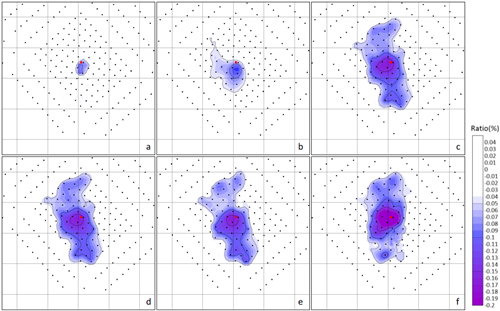
Figure1 Plan View of Abnormal Amplitude of Fracturing Monitoring in Each Stage
Discussion and Conclusion: This case study demonstrates that the TFEM method can effectively monitor the resistivity changes induced by fluid injection during HDR fracturing, successfully imaging the dynamic development of the fracture network and fluid migration pathways. This method highlights the advantage of utilizing the physical property differences between the rock mass and fluids to address engineering geological problems, providing crucial technical support for the real-time evaluation and optimization of HDR reservoir fracturing stimulation effectiveness.
How to cite: cheng, Z., lian, S., zhang, H., and wei, Q.: Application of Time-Frequency Electromagnetic Method in Monitoring Hydraulic Fracturing in Hot Dry Rock, EGU General Assembly 2026, Vienna, Austria, 3–8 May 2026, EGU26-2473, https://doi.org/10.5194/egusphere-egu26-2473, 2026.


