
 1,1,3,
- 1Division of Space and Planetary Sciences, University of Bern, Sidlerstrasse 5, 3012 Bern, Switzerland (ruben.tandon@unibe.ch)
- 2LIRA, Observatoire de Paris, Université PSL, Sorbonne Université, Université Paris Cité, CY Cergy Paris Université, 92190 Meudon, France
- 3Türkiye National Observatories, Atatürk University District, Prof. Dr. Lütfü Ülkümen Street 8/3, 25050 Yakutiye/Erzurum, Turkey
The Programmable Liquid-crystal Active Coronagraphic Imager for the DAG telescope (PLACID) will be the world’s first ever “adaptive stellar coronagraph” facility – with “adaptive” referring to the instrument’s unique ability to adjust in real-time to changing observing conditions.
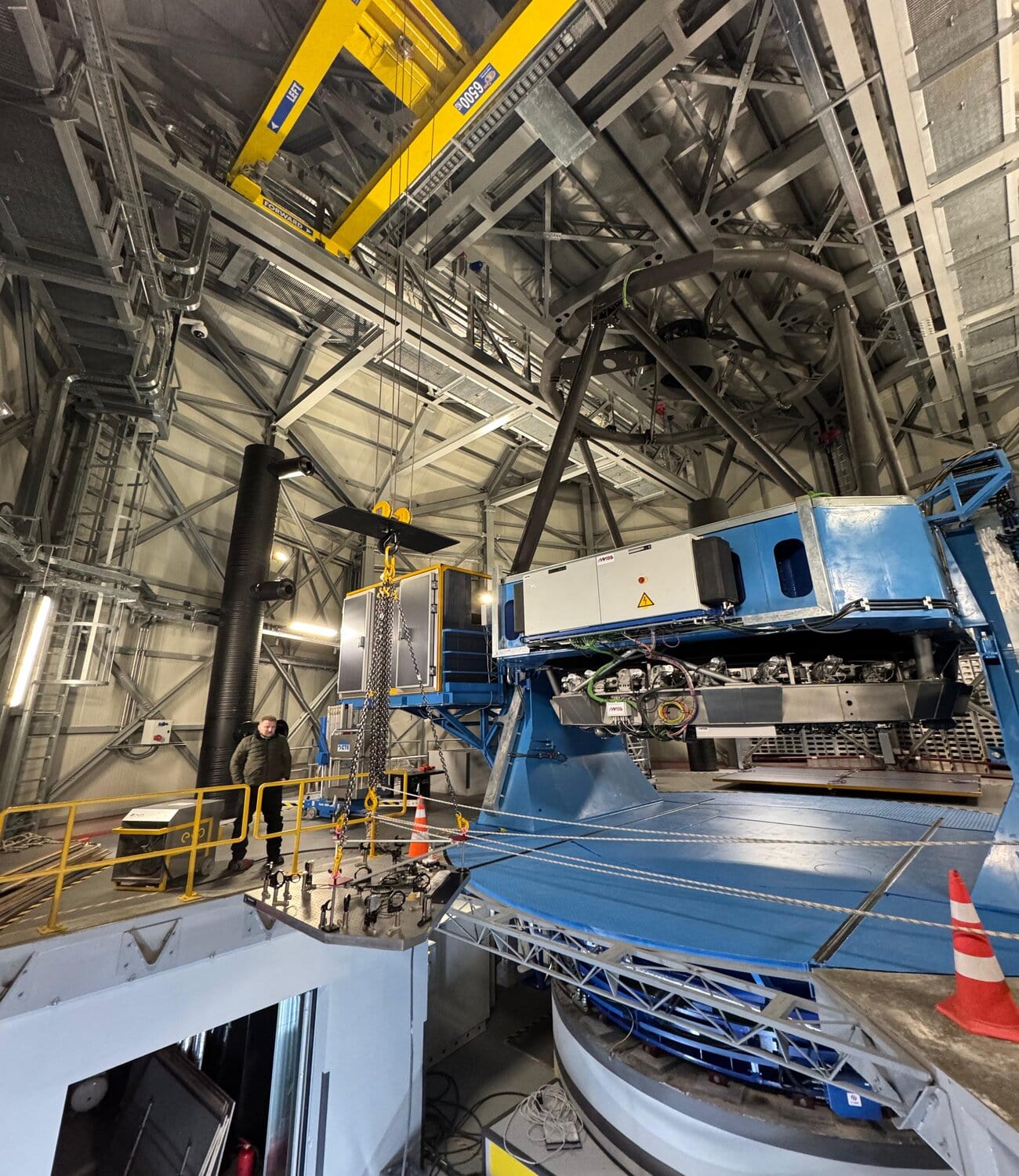
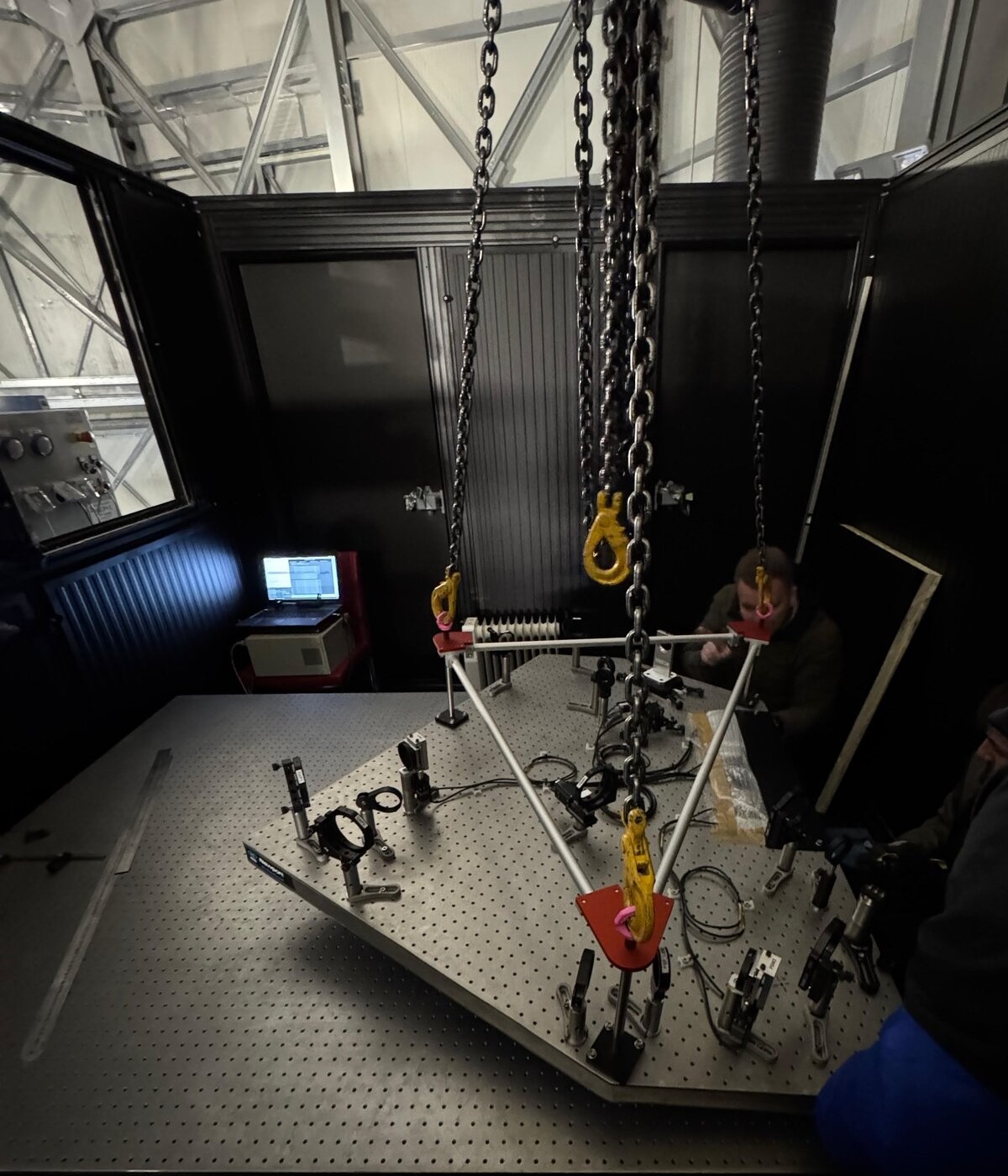
The PLACID project achieved a major milestone by being delivered to the Turkish National Observatories (TNO) facilities at Atatürk University, Erzurum in March of 2024 and subsequently being installed on the diffraction-limited Nasmyth platform of the new national observatory, the 4-m DAG (Doğu Anadolu Gözlemevi) telescope during the first semester of 2025. The Assembly, Integration and Validation (AIV) activities are currently ongoing with the internal light source, with first light anticipated by the fall/end of 2025.
PLACID consists of a fore-optics coronagraphic intermediate stage platform, positioned between the TROIA extreme adaptive optics (XAO) system and the DIRAC HAWAII-1RG focal-plane array. Its core component is a customized spatial light modulator (SLM) functioning as a programmable scalar focal-plane phase mask (FPM) coronagraph, operating from H- to Ks-band. The dynamically addressed SLM enables software-only adjustments or re-alignments of the FPM pattern, entirely free of actuator motion, offering observers a highly flexible and reconfigurable system.
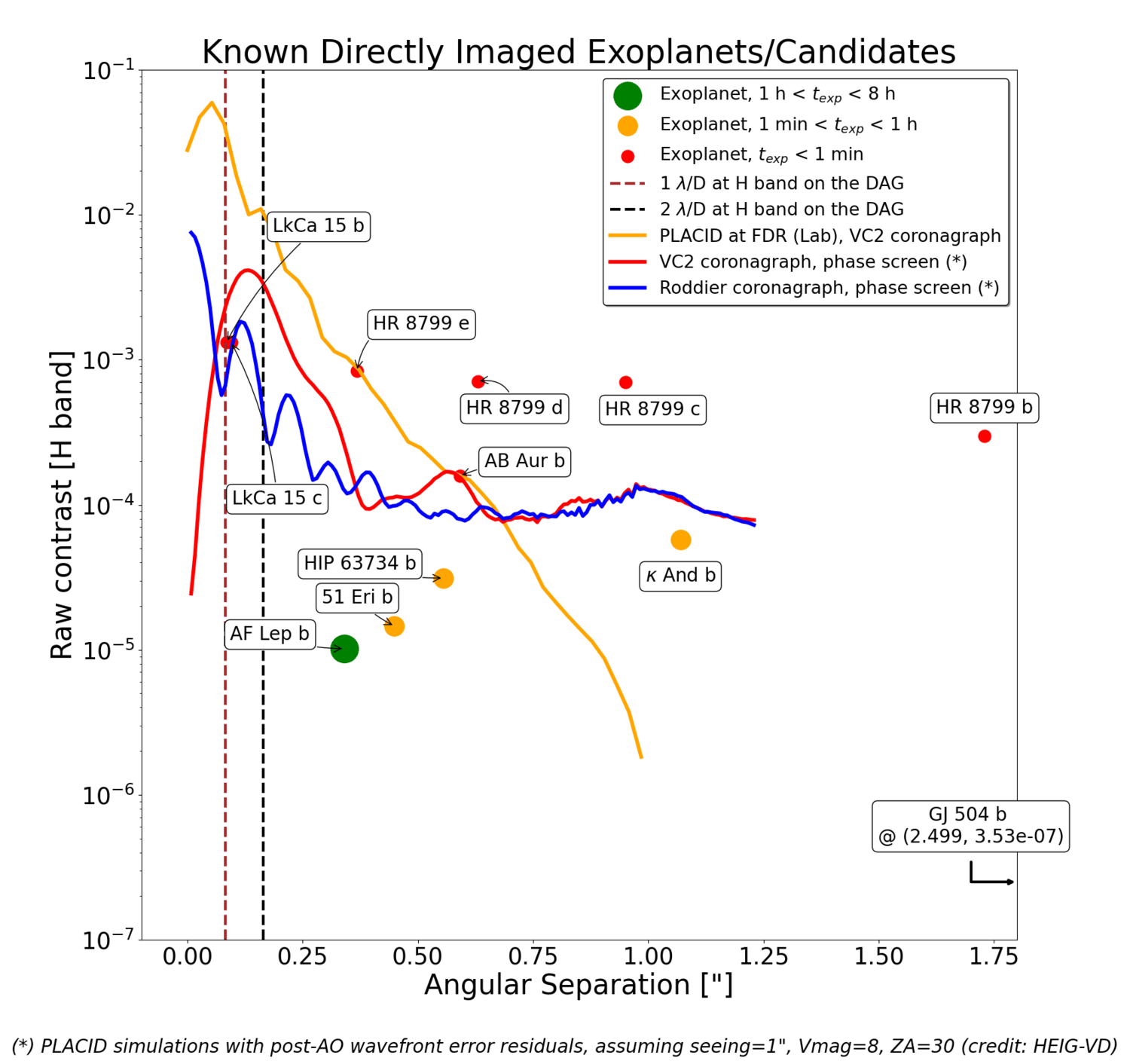
Preparing for the first observations, the PLACID graphics user interface (GUI) is currently being finalized, while the PLACID on-sky discovery space was estimated, based on laboratory measurements at factory acceptance, as well as simulations with post-AO residual wavefront errors. This was conceived to enable the Turkish and visitor astronomers to plan future high-contrast imaging observations. The science discovery space estimate has been derived using an up-to-date exposure time calculator for PLACID, considering key parameters such as adaptive optics performance, contrast levels, limiting magnitudes, and coronagraphic inner working angle.
The instrument is particularly promising for exoplanet and circumstellar disk imaging, while new developments of the PLACID GUI are in the works for coronagraphic imaging of binary or multiple star systems — a valuable niche science case for PLACID.
Development of the PLACID data reduction software is also currently underway, based on existing high-contrast imaging software architecture (PynPoint).
In parallel to PLACID first science observations in 2026, future development avenues for the instrument include:
- Self-calibration of non-common path aberrations (NCPAs) using a phase-shifting Zernike wavefront sensor,
- Coronagraphic nulling tailored for binary or triple star systems, compatible with angular differential imaging (ADI),
- Time-domain coherent differential imaging (CDI).
We present the delivered PLACID instrument and its discovery space, detailing its current on-site commissioning status, and — if available at the time — the first on-sky results.
How to cite: Tandon, R., Lin, L., Marquis, L., Potier, A., Öztürk Çetni, D., and Kühn, J. G.: The Programmable Liquid-crystal Active Coronagraphic Imager for the 4-m DAG telescope (PLACID) instrument: Discovery Space and Status, EPSC-DPS Joint Meeting 2025, Helsinki, Finland, 7–13 Sep 2025, EPSC-DPS2025-1774, https://doi.org/10.5194/epsc-dps2025-1774, 2025.


