
 1,1,1,1
- 1German Aerospace Centre (DLR), Berlin, Germany (sabatino.santangelo@dlr.de)
- 2Technische Universität Berlin, Berlin, Germany
Introduction: The Moon has experienced a highly asymmetric volcanic history, with 90% of volcanic activity recorded on the nearside and only 10% on the farside [1]. One possible explanation to the asymmetry has been suggested to be the combination of a thinner crust and a concentration of heat producing elements (i.e. Th, U, and K) underneath the lunar nearside [2]. In turn, a concentration of radiogenics can cause a long-standing thermal anomaly in the mantle of several hundreds of K, which could have lasted up to present-day [2, 3]. Such asymmetry in the subsurface temperature at present-day will induce gravity field anomalies that can affect crustal thickness inversions. Interestingly, thermal anomalies have also been suggested to affect the degree-3 component of the tidal response of the Moon [3].
Here, we combine thermal evolution models that account for crustal thickness variations [2] with gravity and topography inversions for crustal thickness that take thermally-induced density anomalies as input [4, 5]. Thus, we provide a coupled, self-consistent estimate of the lunar mantle temperature and its crustal structure.
Methods: This work builds upon the 3D laterally heterogeneous geodynamic models in [2], where the thermal evolution of the Moon is solved in a 3D spherical shell geometry, using the code GAIA [6]. In particular, we focus on the best-fit model (Fig. 1), which is consistent with both Apollo heat flow experiments [7] as well as with the recent Blue Ghost Mission 1 LISTER [8] and LMS [9] experiments.
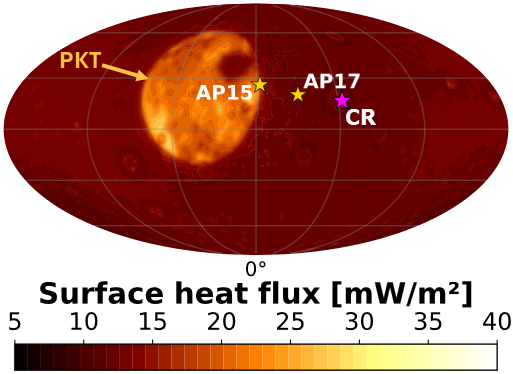
Figure 1: Surface heat flux distribution from one of the
best-fit models in [2]. This setup consists of a radiogenic
anomaly of ~1200 km in radius, and 30 ppm Th equivalent
concentration for a 1.6 km thick layer. Bulk abundance
of radiogenics is equivalent to 90 ppb Th.
The setup in Fig. 1 consists of a geodynamic model overlaid with a crustal thickness model, as described in [2]. At present-day, this model produces a temperature field which predicts a positive thermal anomaly of ~100-200 K underneath the nearside Procellarum KREEP Terrane (PKT), and two smaller anomalies (~50-100 K) underneath the farside highlands terrane (positive) and south pole-Aitken basin (negative).
The 3D temperature field is then discretized into layers from the surface to the core and converted into a density field assuming a mantle density and thermal expansion coefficient of 3400 kg/m3 and 2x10⁻⁵ K-1, respectively. Thereafter, the gravity anomaly associated with density variations within each layer is computed following [10], using the DSP code [11]. These anomalies are then fed into a global inversion model that self-consistently solves for mare and feldspathic crustal thickness from observed gravity and topography [1]. For this calculation, we neglect crustal temperature anomalies as these do not lead to important density anomalies given the expected low thermal expansivity in the crust and smaller temperature variations. We then run a second thermal evolution model using the updated crustal thickness model to ensure that the iteration between crustal thickness and geodynamic models converges.
Results and discussion: The update in crustal thickness resulting from our approach is shown in Fig.2. As expected, regions where subsurface temperatures were higher than average result in a crustal thinning (e.g., PKT, Farside Highlands). Conversely, regions of colder-than-average interior, such as basins, show crustal thickening subsequent to our calculation (e.g., SPA).
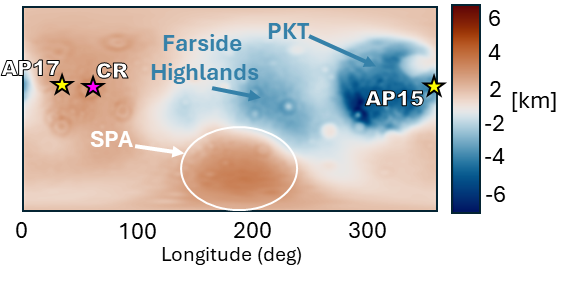
Figure 2: Variations in crustal thickness inversion induced
by temperature anomalies in the mantle. Locations of
Procellarum KREEP Terrane (PKT), farside highlands, south
pole-Aitken, Apollo 15, Apollo 17, and mare Crisium are
annotated in the map.
The most prominent variation in crustal thickness is related to the nearside temperature anomaly and reflects the shape of the modeled PKT area. Within this area, we obtain a crustal thinning of ~20% (~8.5 km) with respect to the original crustal thickness model which did not account for a variable mantle density [5]. The secondary temperature anomalies associated with the farside highlands and the south pole-Aitken basin induce a crustal thinning and thickening, respectively, of about 3 km. Outside of these three regions, we see moderate crustal thickening throughout the lunar surface.
Notably, when using the updated crustal thickness to run the thermal evolution model a second time, we see negligible differences in the present-day thermal state of the Moon. This result implies that the conclusion drawn in [2] from the results of the geodynamic model are not significantly affected by the interaction between mantle temperature and crustal thickness. We note, however, that the geodynamic model is non-unique and its resolution coarser than that of the crustal thickness inversion, which leaves room for further sensitivity analysis.
Conclusion: In this work we successfully quantify the effect of predicted mantle thermal anomalies predicted by geodynamic models on lunar crustal thickness inversions. We build a self-consistent model of the present-day thermal state and crustal structure of the Moon. We find differences with respect to previous crustal thickness inversions up to 20% in the procellarum KREEP terrane region, which can be of interest for future works that rely on local crustal thickness estimates. As future steps, we will consider the effect of the predicted thermal anomalies on seismic velocities, which can also be estimated from the output of geodynamic models. Additionally, we will use the present-day interior temperature distribution derived from our model to compute the tidal response of the Moon in terms of tidal Love numbers and time-variable Stokes coefficients up to degree and order 3, using a pseudo-spectral method [12, 13]. The comparison of the computed tidal response with the values measured by GRAIL [3] will provide additional constraints to refine the model presented here.
References: [1] Broquet and Andrews-Hanna (2024). [2] Santangelo et al., (2025). [3] Park et al., (2025). [4] Wieczorek et al., 2013. [5] Broquet et al., (2025). [6] Hüttig et al. (2013). [7] Langseth et al., (1976). [8] Nagihara et al., (2026). [9] Grimm et al., (2026). [10] Wieczorek & Phillips, (1998). [11] Broquet, (2024). [12] Rovira Navarro & Matsuyama, (2024). [13] Qin, (2012).
How to cite: Santangelo, S., Broquet, A., Cascioli, G., Plesa, A.-C., Breuer, D., and Hussmann, H.: Updated lunar crustal thickness distribution from global geodynamic models, Europlanet Science Congress 2026, The Hague, The Netherlands, 7–11 Sep 2026, EPSC2026-1047, https://doi.org/10.5194/epsc2026-1047, 2026.


