
 1
1- 1European Space Agency (ESA), European Space Research and Technology Centre (ESTEC), Noordwijk, Netherlands (maximilian.guenther@esa.int)
- *A full list of authors appears at the end of the abstract
The European Space Agency's (ESA's) PLAnterary Transits and Oscillations of stars (PLATO) mission is scheduled for launch in early 2027 and will deliver high-precision, long-duration photometry. Over its four-year nominal mission, its 26 cameras will produce a rich data set supporting the detection and characterisation of exoplanets, deeper understanding of stellar ages and evolution through asteroseismology, and a wide range of additional stellar physics and complementary science cases.
PLATO's first observation field is located in the galactic southern hemisphere and referred to as LOPS2, with a sky area covering approximately 49° x 49° and its centre located close to the Large Magellanic Cloud (see Figure 1). Given the plethora of data, PLATO will not download full-frame images (except at the beginning and end of observing quarters) but instead provide imagettes of high-priority targets, along with light curves and centroids produced on board for other cases.
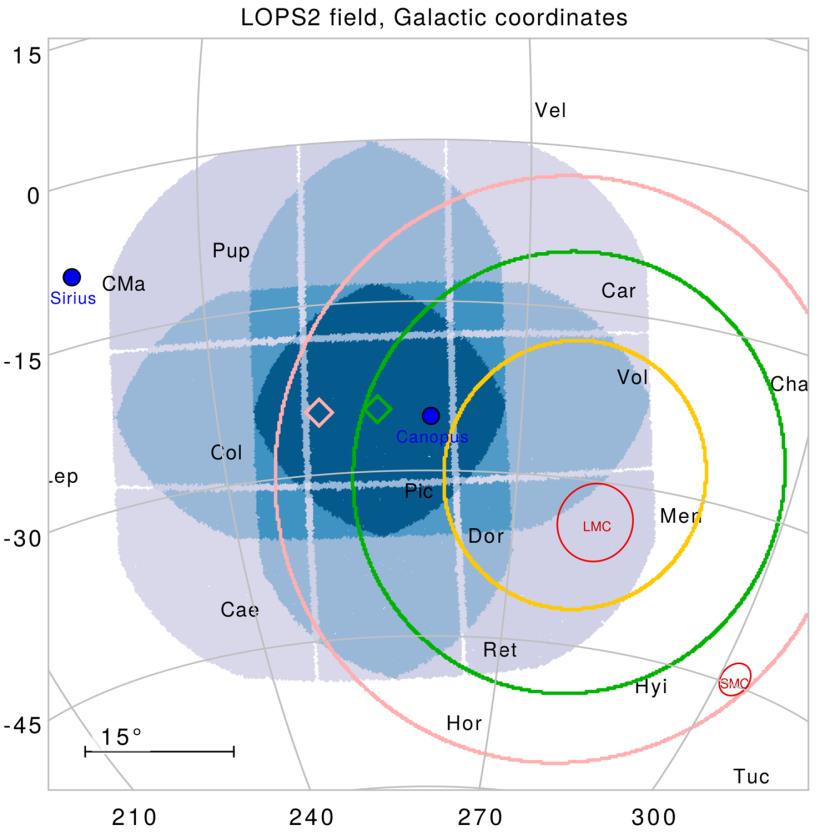
Figure 1: PLATO's first observation field (LOPS2).
The PLATO Input Catalogue (PIC) has been carefully curated to meet all the science requirements of the mission for this field. It provides the complete set of potential targets for transit searches, asteroseismology, spacecraft guidance, instrument calibration, and science validation. Overall, the PIC contains on the order of 200,000 bright dwarf and sub-giant stars of spectral types FGK and M. In detail, the catalogue is composed of four tables covering all relevant sources in the LOPS2 field (see Figure 2). In addition, two supplementary tables are provided which list all contaminants in the field of view and cross-identifications with other astronomical catalogues.
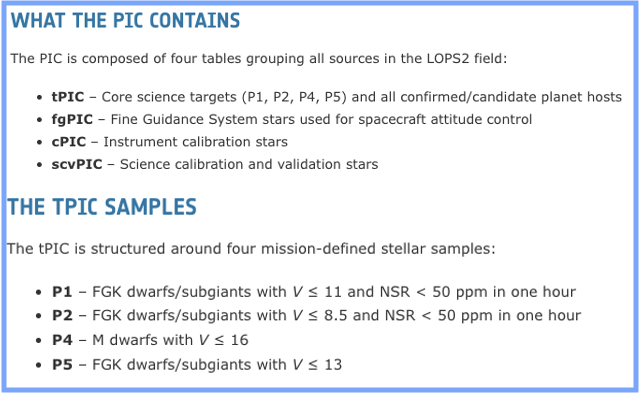
Figure 2: Composition of the PLATO Input Catalogue (PIC).
PLATO's observational data products are structured into four distinct deliveries, which can range from imagettes, light curves, and centroids generated on board to a catalogue of confirmed exoplanets with radial velocity information (see Figure 3).
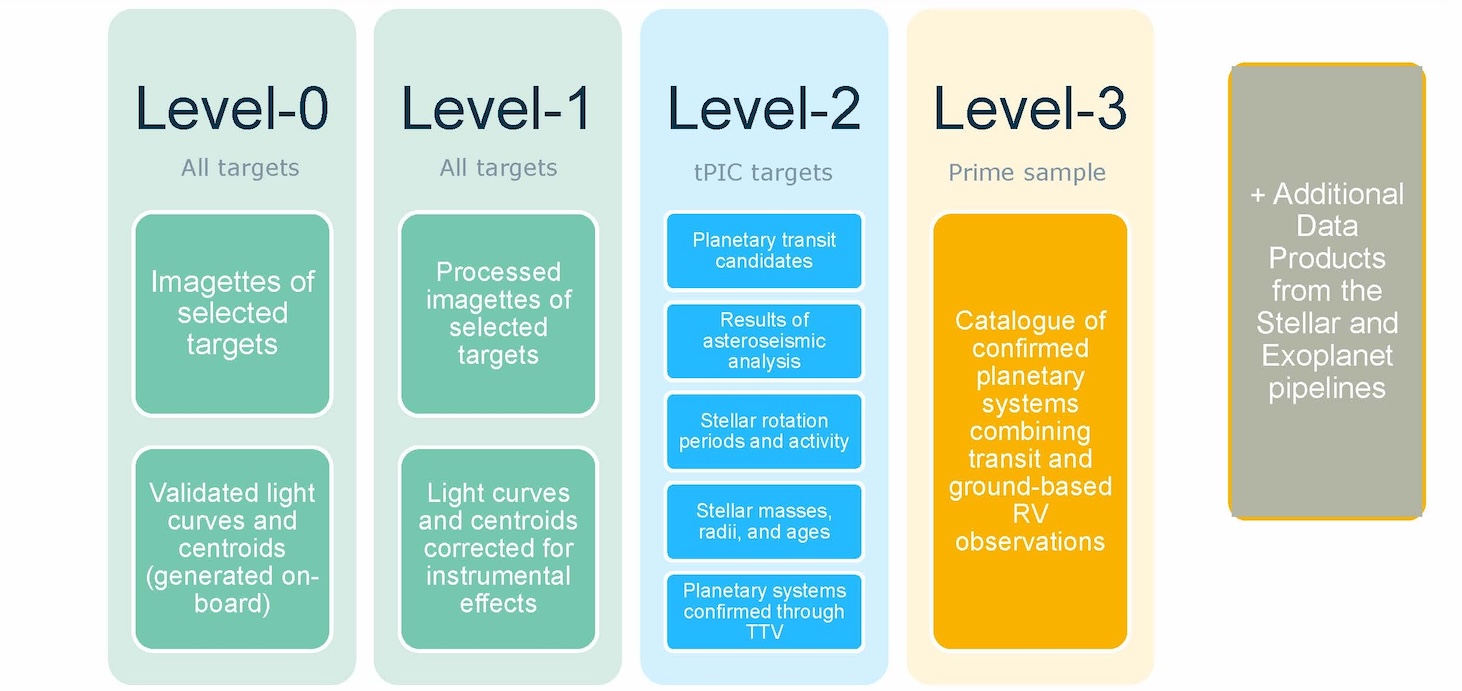
Figure 3: PLATO's data products.
The PLATO ArXiv (PAX) is the mission's central access point for all data products. It provides graphical user interfaces and command line tools that allow the worldwide community to explore, visualise, and download a wealth of PLATO information. This ranges from retrieving the PIC to science observations (once available), from catalogue information to advanced query results. Notably, as the first ESA Science archive ever, the PAX was already made available before the missions launch to host the PIC and list of contaminants in the field. Users can readily interact with these tools and catalogues to plan ahead for upcoming observations and data analysis.
The schedule for making data products publicly available will vary based on the target sample. For the inaugural observing quarter, the first data products will be released via PAX approximately nine months after the end of said quarter. For all subsequent observing quarters, the first releases are planned within six months after the end of each quarter (see Figure 4).

Figure 4: PLATO's data releases.
References
- Nascimbeni et al. (2022, A&A 658, A31) - LOPN1 and LOPS1
- Nascimbeni et al. (2025, A&A, 694, A313) - LOPS2
- LOPS2 PIC2.2.0.1 Release Notes
- LOPS2 PIC2.2.0.1 PIC Data Definition Document
- Montalto et al. (2026, preprint) - tPIC
- Nascimbeni et al. (2026, preprint) - tPIC Prime Sample
- Prisinzano et al. (2026, A&A, 706, A207) - tPIC P4 Sample
- Zwintz et al. (2026, preprint) - scvPIC
- Heller et al. (2026, preprint) - cPIC and fgPIC
- Cabrera et al. (2026, preprint) - Assessment of PLATO Science Performance
- PLATO Product Definition Document
- PAX (https://pax.esac.esa.int/plato/)
We acknowledge the broad contributions by all our colleagues across the PLATO Mission Consortium and ESA teams contributing to defining the mission's data products, releases, and access. This includes but is not limited to the following list (in alphabetical order): Conny Aerts, Kévin Belkacem, Juan Cabrera, Magali Deleuil, Monica Fernandez Barreiro, Laurent Gizon, Maximilian N. Günther, René Heller, Ana M. Heras, Chen Jiang, Silvia Marinoni, Paola Maria Marrese, J. Miguel Mas-Hesse, Marco Montalto, Valerio Nascimbeni, Laurence O’Rourke, Hugh Osborn, Isabella Pagano, Giampaolo Piotto, Don Pollacco, Loredana Prisinzano, Elena Puga, Roberto Ragazzoni, Gavin Ramsay, Heike Rauer, Stéphane Udry, Eva Verdugo, Konstanze Zwintz
How to cite: Günther, M. N. and the PLATO Team: Leveraging PLATO's Data: Overview of Products, Releases, and Access, Europlanet Science Congress 2026, The Hague, The Netherlands, 7–11 Sep 2026, EPSC2026-1152, https://doi.org/10.5194/epsc2026-1152, 2026.


