

- ARC-Space, The University of Aizu, Aizu-Wakamatsu, Japan (naru@u-aizu.ac.jp)
The existence of rubble pile asteroids, such as Itokawa, Ryugu, and Bennu, is widely recognized. Despite sharing a common formation process, aggregation of fragments produced by the disruption of a parent body, these asteroids exhibit considerable morphological diversity. For example, Ryugu has a spinning top-like shape, with a triaxial ratio of b/a = 0.96 and c/a = 0.87 [1]. In contrast, the overall triaxial ratio of Itokawa is b/a = 0.55 and c/a = 0.39 [2, 3]. Even when divided into "head" and "body" regions, the body retains an elongated form with a triaxial ratio of b/a = 0.63 and c/a = 0.53 [4]. Recent spacecraft observations of other asteroids with possible rubble pile structures have also revealed that each asteroid possesses a unique shape and displays a wide range of axial ratios.
The diversity in asteroid shapes is further supported by light curve observations obtained from both ground-based and space-based telescopes. Statistical analyses of light curves for main belt asteroids indicate that bodies with diameters less than 10 kilometers, which are likely to have rubble pile structures based on their collisional lifetimes, exhibit axial ratios b/a ranging approximately from 1.0 to 0.4, with a peak near b/a = 0.6 [5].
The objective of this study is to clarify, through rigid body simulations, the range of possible asteroid shapes that can be formed through realistic rubble pile accumulation processes. Fragments resulting from impact disruption of a parent body are modeled as rigid bodies, and their random accumulation is simulated to evaluate the resulting final shapes.
In this study, the rubble pile accumulation process is modeled using Chrono, an open source physics simulation engine. Chrono is designed for multi-physics applications, offering a comprehensive suite of tools for simulating the dynamics of rigid bodies, soft bodies, and fluids under a variety of conditions [6]. Ferrari and Tanga (2020; 2022) have applied Chrono to the modeling of rubble pile asteroid accumulation [7-8].
The axial ratio of the collisional fragments is set to 2:√2:1, which corresponds to typical shapes observed in laboratory impact experiments and is also consistent with the morphology of boulders found on asteroid surfaces. Each simulation includes several hundred to approximately one thousand fragments, prepared according to a size-frequency distribution (SFD) that follows a power law. The standard power law index is set to –2.5. Additional SFDs with indices of –2.25 (representing fewer small fragments) and –2.75 (representing more small fragments) are also examined. Two scenarios for the distribution of the largest fragments are considered: a Monopolistic case with a single largest fragment, and an Oligopolistic case with four largest fragments of equal maximum size (Fig. 1). In total, six distinct SFD configurations are investigated.
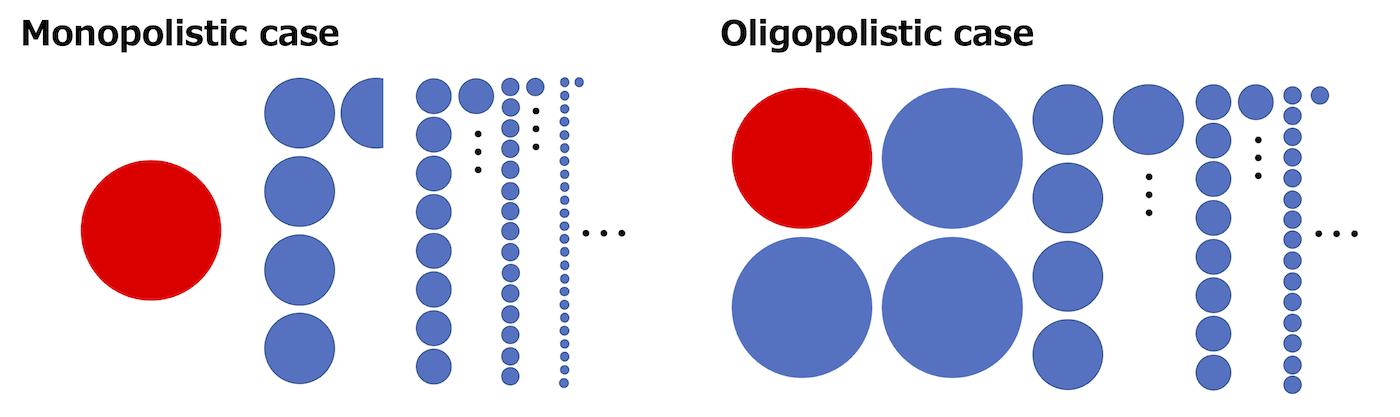
Fig. 1. Size-frequency distribution cases in this study.
Simulations are initialized by placing the largest fragment first, followed by the sequential addition of the remaining fragments in random order (Fig. 2). In most runs, the initial fragment is not rotating. However, for the case with a power law index of –2.5, additional simulations are performed in which the initial fragment is assigned spin rates equal to one and two times the critical spin limit.
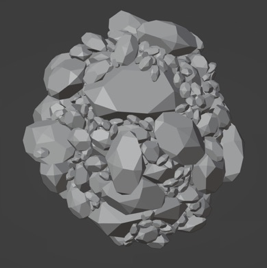
Fig. 2. Example of a rubble-pile formed from a monopolistic case run.
The results are presented in Fig. 3. These plots show the distributions of axial ratios for rubble pile asteroids formed through the simulations. Each plot includes the mean axial ratios for each simulation run, along with the observed axial ratios of asteroids investigated by spacecraft and the initial axial ratio of the fragments. Above each scatter plot, a histogram of the b/a is shown, along with a reference histogram axial ratios estimates for main belt asteroids smaller than 10 km in diameter, derived from telescope observations.
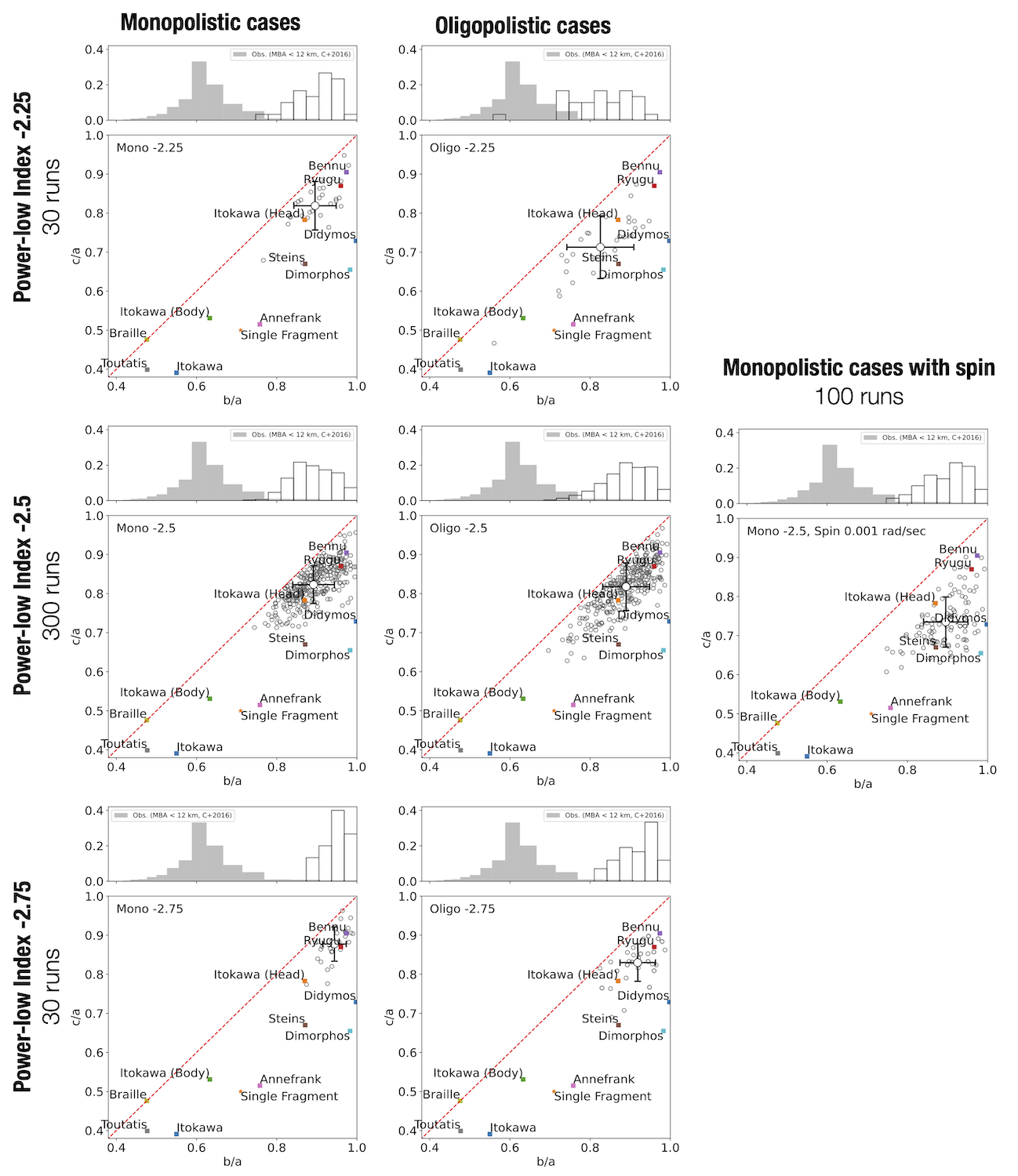
Figure 3. Distributions of axial ratios of rubble-pile asteroids formed by the simulation.
In all simulation cases, a large number of rubble pile asteroids were formed with axial ratios similar to those of top-shaped bodies such as Ryugu and Bennu. However, asteroids with highly elongated shapes, like Itokawa, were rarely produced. Only in one instance—a case with a power law index of - 2.25 and a fragment distribution dominated by a few large bodies—was a rubble pile asteroid formed with an axial ratio comparable to that of the body region of Itokawa.
These results indicate that within the range of parameters explored in this study, the formation of elongated rubble pile asteroids observed by spacecraft and inferred from telescope data is unlikely. In general, fragments arriving in the later stages of the accumulation process tend to settle in regions of low gravitational potential on the rubble pile surface. This effect likely leads to the formation of more spheroidal shapes, as observed in the simulations.
Itokawa is considered to be a rubble pile asteroid with high confidence, based on its high macroporosity. Therefore, in future work, it is necessary to expand the parameter space of the simulations in order to explore more realistic scenarios under which elongated rubble pile asteroids, such as Itokawa and others, could form.
How to cite: Hirata, N.: Rigid-Body Simulations of Rubble Pile Accumulation: Implications for Asteroid Shape Diversity, EPSC-DPS Joint Meeting 2025, Helsinki, Finland, 7–12 Sep 2025, EPSC-DPS2025-1334, https://doi.org/10.5194/epsc-dps2025-1334, 2025.


