
 ,
,- Faculty of Physics, University of Duisburg-Essen, Duisburg, Germany (gerhard.wurm@uni-due.de)
A major barrier to early planet formation within protoplanetary disks is overcoming the so-called bouncing barrier, which prevents the growth of dust aggregates beyond the millimeter scale due to collisional bouncing. However, such collisions can induce tribocharging and thereby generate long-range electrostatic attractions. This additional long-range force plays a significant role in fostering the formation of lager entities that are more likely to participate in further concentration mechanisms such as the streaming instability.
In our laboratory experiments we used an acoustic trap to levitate small aggregates of tribocharged sub-mm grains (see fig. 1). As these aggregates spin up within the trap and eventually lose grains one could use the centrifugal force to measure the local binding force.
Our results demonstrate that grains are often strongly bound to their neighbors (Schwaak et al. 2024). The forces required to eject particles from the clusters can exceed the scattering forces of the acoustic trap, indicating that the binding strength is several orders of magnitude higher than for uncharged grains. As these electrostatic forces are long-range compared to van der Waals interactions, charged aggregates exhibit enhanced stability.
We conclude that tribocharging significantly increases the effective binding force between particles, facilitating the growth of centimeter-sized clusters. This mechanism may provide the necessary conditions for hydrodynamic concentration and the nucleation of planetesimal formation across a wide part of the protoplanetary disk.
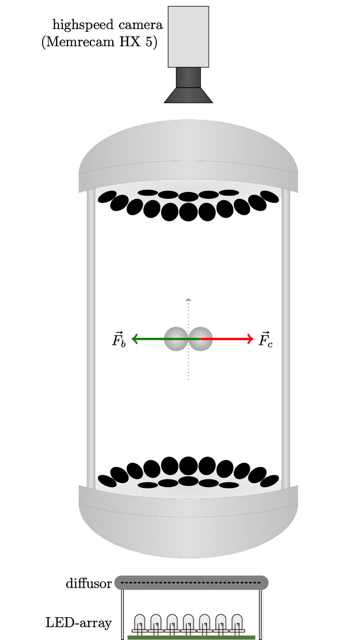
Fig. 1: Principle experiment setup (Schwaak et al. 2024).
How to cite: Schwaak, J., Führer, F., Wolf, D. E., Posorski, L., Brendel, L., Teiser, J., and Wurm, G.: Exploring the stability of charge particle clusters: Acoustic levitation as a tool for studying planetesimal formation, EPSC-DPS Joint Meeting 2025, Helsinki, Finland, 7–13 Sep 2025, EPSC-DPS2025-1335, https://doi.org/10.5194/epsc-dps2025-1335, 2025.


