SB15 | Computational and experimental astrophysics of small bodies and planets

SB15

Computational and experimental astrophysics of small bodies and planets
Convener: Vladimir Zakharov | Co-conveners: Stavro Lambrov Ivanovski, Ivano Bertini, Raphael Marschall, Nicholas Attree, Nikolay Bykov
Orals MON-OB4
| Mon, 08 Sep, 14:00–16:00 (EEST)
 
Room Earth (Veranda 2)
Orals WED-OB6
| Wed, 10 Sep, 16:30–18:30 (EEST)
 
Room Mercury (Veranda 4)
Posters MON-POS
| Attendance Mon, 08 Sep, 18:00–19:30 (EEST) | Display Mon, 08 Sep, 08:30–19:30
 
Finlandia Hall foyer, F170–186
Mon, 14:00
Wed, 16:30
Mon, 18:00
The goal of this session is to cover numerical simulations and relevant laboratory investigations related to the Small Bodies (comets, KBOs, rings, asteroids, meteorites, dust), their formation and evolution, and the instruments of their exploration. This session is specially focused on the interdisciplinary approach in the development of models (formal descriptions of physical phenomena), experiments (on ground and in micro-gravity), and mathematical simulations (computational methods and algorithms of solution) of various astrophysical phenomena: (i) dusty gas cometary atmospheres; (ii) volcanic activity on icy satellites (e.g. Enceladus and Io); (iii) planetary body formation (e.g. via pebbles growth), and planetesimal dynamics.

This session will include an introduction and discussion of new and/or existing laboratory studies in simulated space-like environments and models, experimental techniques, computational methods that can address the results of analytical, experimental and numerical analysis (with respect to computational methods and algorithms of solution) on the above described studies.

Abstracts on thermophysical evolution models of small bodies interiors as well as on the modeling of atmosphere and exosphere are welcome.

Session assets

Orals MON-OB4: Mon, 8 Sep, 14:00–16:00 | Room Earth (Veranda 2)

Chairpersons: Vladimir Zakharov, Raphael Marschall, Ivano Bertini
Comets&Asteroids
14:00–14:12
|
EPSC-DPS2025-195
|
On-site presentation
Yuri Skorov, Volodymyr Reshetnyk, Igor Lukyanyk, Christian Schuckart, and Jürgen Blum

As comets draw closer to the Sun, they begin to emit small solid particles, producing the familiar dust coma and tail. The cohesive forces binding these micrometer-sized grains typically reach about 1 kPa, while the gas pressure generated by sublimating volatiles usually remains only a few pascals. This stark difference presents a major challenge: any plausible dust release model must explain how such strong cohesion between particles can be overcome.

Cohesion can be effectively reduced only under particular conditions. One such scenario involves the formation of weakly bound porous aggregates — cometary "pebbles" — composed of fine micron-sized dust grains assembled into millimeter-sized structures. This concept aligns well with in situ findings from the COSIMA, MIDAS, and GIADA instruments. A theoretical model proposed by Skorov and Blum (2012) describes the removal of these porous aggregates through sublimation-driven gas flow, and subsequent laboratory experiments have confirmed the validity of this mechanism.

Earlier models, including related approaches, generally assumed the presence of a dry, porous dust crust situated above an icy substrate, with sublimating gases accumulating pressure at the ice-dust boundary. In these models, it is primarily fragments of the crust — rather than individual grains — that are detached and ejected into space. More recently, however, new models have emerged, focusing instead on the possibility of releasing primary dust particles or small aggregates (Schuckhart & Blum, 2025).

In this study, we extend this perspective by investigating the evolutionary dynamics of a densely packed, heterogeneous porous layer consisting of non-volatile dust grains intermixed with icy inclusions, subjected to solar heating. The absorption of solar radiation triggers the sublimation of the embedded ice, which progressively weakens the mechanical integrity of the porous structure and drives its spatial reorganization.

To simulate these processes, we develop a novel computational framework based on the DEM that explicitly represents the granular structure of the heterogeneous material (Reshetnyk et al. 2025). Our study examines systems composed of both solid particles and porous aggregates, considering arrangements of both monodisperse and polydisperse spheres. Two formation scenarios are analyzed: layers resulting from initial deposition and those compacted under external mechanical loads. Particular attention is devoted to the phenomenon of jamming, where compression immobilizes the particles into a dense, stable configuration.

Using tools from percolation theory and graph analysis, we map the pathways leading to material disintegration. Our results demonstrate that the sublimation of internal ice can promote the detachment and ejection of individual dust grains or small clusters from the cometary surface. Unlike traditional approaches that focus on the global tensile strength of the dust layer, our model emphasizes localized release mechanisms, offering new insights into the origin of fine dust observed in cometary environments. Additionally, we find that some of the ejected aggregates may retain residual ice, potentially serving as a prolonged source of both dust and water vapor — a result consistent with observations of comet 67P/Churyumov-Gerasimenko.


References:

Reshetnyk, V. et al. 2025. Key structural characteristics of porous layers in diffusion modelling: A study on polydispersity, shape, and hierarchy. PSS 260. doi:10.1016/j.pss.2025.106078

Schuckart , C. and J. Blum 2025. A&A, doi: 10.1051/0004-6361/202553750

Skorov, Y. and J. Blum. 2012. Dust release and tensile strength of the non-volatile layer of cometary nuclei. Icarus 221, 1–11. doi:10.1016/j.icarus.2012.01.012

How to cite: Skorov, Y., Reshetnyk, V., Lukyanyk, I., Schuckart, C., and Blum, J.: Evolution of Micro-Granular Porous Dust-Ice Mixtures Under Solar Irradiation: Implications for Cometary Dust Activity, EPSC-DPS Joint Meeting 2025, Helsinki, Finland, 7–13 Sep 2025, EPSC-DPS2025-195, https://doi.org/10.5194/epsc-dps2025-195, 2025.

14:12–14:24
|
EPSC-DPS2025-522
|
ECP
|
On-site presentation
Stephan Zivithal, Wolfgang Macher, Günter Kargl, and Helmut Lammer

Comets and their surface are mixtures of refractory and icy material. Space missions like Rosseta gave estimates on how much ice is present at a comet on global scale. On local (millimetre to micrometre) scale the distribution of ices inside the porous regolithic structure is less well understood. Nevertheless, in active periods the distribution of ices might change the thermodynamic behaviour and thereby affect global outgassing rates and dust activity. To address this, we developed a one-dimensional thermophysical outgassing model, which allows to simulate gas activity depending on the chosen structural model. For now, we consider two possible porous structures, one where ice is located around agglomerates filling the larger macropores and another where the ice is present within the agglomerate, which affects the gas diffusivity less.  The thermophysical model couples the heat and gas diffusion equations and allows ices to sublimate and redeposit depending on the local temperature and pressure. Figure 1 illustrates the simulated desiccation process, hence how the ice content φ changes with time and depth when the irradiation is assumed to be constant. The front (shaded regions) moves deeper with time as no dust activity is assumed. We find that a part of the sublimated material does redeposit in deeper layers forming a layer of high ice fraction (sinter layer), which is visible as a region where the ice content exceeds the initial 10 %. Simulations of single agglomerates show that most of the additional ice will freeze out in the larger pores around the agglomerate, thereby clogging the pore space beneath. We further discuss the effects of the different models on the thermal conductivity and analyse properties of a forming sublimation front.

How to cite: Zivithal, S., Macher, W., Kargl, G., and Lammer, H.: The desiccation process of cometary surfaces , EPSC-DPS Joint Meeting 2025, Helsinki, Finland, 7–13 Sep 2025, EPSC-DPS2025-522, https://doi.org/10.5194/epsc-dps2025-522, 2025.

14:24–14:36
|
EPSC-DPS2025-466
|
ECP
|
On-site presentation
Jiancen Liu, Yinglong Tang, Xiaohui Wang, and Yuxian Yue

Non-gravitational effects serve as a critical nexus between comet dynamics and thermodynamics, offering essential insights into cometary activity and evolution. While sublimation-driven recoil forces influence both orbital and rotational motion, these effects simultaneously encode critical information about a comet’s physical properties. Comet 103P/Hartley 2 exhibits pronounced non-gravitational torque-driven rotation during perihelion passage. This study employs observational spin-state variation data to inversely constrain the H₂O and CO₂ ice sublimation depths across surface regions and investigates long-term rotational evolution.

We present a coupled attitude-thermal simulation framework integrating nucleus thermal modeling with rotational dynamics simulations. The dust mantle model is used to simulate the one-dimensional thermal process of the cometary nucleus surface. In this model, volatiles sublimate from a certain depth on the nucleus surface. By setting different ice front depths for various regions, we can model the anisotropic sublimation on the cometary nucleus. To address computational bottlenecks, we implement a neural network proxy model achieving 60-fold acceleration with a relative error of 13%. Based on observation results, the nucleus is divided into three regions: the large end, the waist, and the small end. CO₂ ice sublimates from the ends, while H₂O ice sublimates from the waist. By treating sublimation depth as optimizable variables, we successfully reproduce 103P’s observed spin-state variations and volatile production rates.

Key results demonstrate:

  • The angular momentum and rotational energy of the nucleus exhibit a combination of short-term fluctuations and long-term decay (Fig. 1).
  • Sublimation patterns at E+7 min show H₂O release from the waist and asymmetric CO₂ outgassing – predominantly from the sunlit small lobe with secondary production on the large lobe's nightside. Extended analysis reveals that the dust mantle layer acts as a thermal insulator, maintaining sustained volatile sublimation throughout the nucleus's rotational cycle. Derived CO₂ ice front depths are 71 mm (large lobe) and 92 mm (small lobe), with the large end showing stronger activity. While modeled CO₂ production (1.77×10²⁷ mole/s) matches observations, waist H₂O production (4.93×10²⁶ mole/s) constitutes merely 5% of observed values, suggesting H₂O production rate mainly originates from CO₂-driven water ice ejection at the ends.
  • Long-term simulations predict initial short-axis excitation transitioning to long-axis mode around E-200 days. In the following orbital cycles, the nucleus’s angular momentum gradually shifted toward the minimum inertia axis, and a sun-pointing attitude emerged. Each time the nucleus passes through perihelion, the angular velocity increases. We estimate that 103P may reach its rotational break-up limit after approximately 25 orbital cycles.

Fig. 1: Variations in angular momentum and rotational energy. The upper graph shows the angular momentum variation, and the lower graph shows the rotational energy variation. The black crosses represent Belton’s estimates, and the red curve represents the fitting results from this study.

How to cite: Liu, J., Tang, Y., Wang, X., and Yue, Y.: Unravelling Anisotropic Sublimation Effects on Comet 103P/Hartley 2 through Coupled Attitude-Thermal Simulations, EPSC-DPS Joint Meeting 2025, Helsinki, Finland, 7–13 Sep 2025, EPSC-DPS2025-466, https://doi.org/10.5194/epsc-dps2025-466, 2025.

14:36–14:48
|
EPSC-DPS2025-19
|
On-site presentation
Nicholas Attree, Pedro Gutiérrez, Christian Schuckart, Jurgen Blum, Johannes Markkanen, and Yuri Skorov

Simulating cometary activity by overcoming material cohesion in order to eject dust particles is currently challenging for numerical models. Here we will present the results of a pebble-based 1D thermophsical model running across a number of points on the surface of comet 67P/Churyumov-Gerasimenko (hereafter 67P). We find that, for sufficiently low diffusivities,  the cohesion can be overcome by sublimating gas pressure build-up in the subsurface, leading to the ejection of the dust crust and resulting in global emission rates of dust, water, CO2, and CO that roughly match those observed by the Rosetta mission. Ejected particles are of millimetre- to decimetre-scale, and all come from the southern hemisphere during the time that it is strongly illuminated at perihelion, leading to the 'blow-off' of the dust-crust here. Volatiles are then much closer to the surface in the south (within the top centimetre) than in the north (10 or more cm deep), naturally explaining the strong water outgassing expected here from modelling of 67P's non-gravitational accelerations and torques. We find that a low gas-diffusivity, as well as a large heat-capacity and a steeply decreasing tensile strength with depth, are in best agreement with the outgassing data. However, the model struggles not to exceed the observed emission rates of dust, CO2, and CO. It is difficult to achieve a balance between triggering activity and generating too much of it in the south (with CO2 the critical driving-species here); while in the north, it remains challenging to generate activity at all. The local and global locations of dust ejection and erosion place strong constraints on the nature of the cometary activity mechanism.

How to cite: Attree, N., Gutiérrez, P., Schuckart, C., Blum, J., Markkanen, J., and Skorov, Y.: Modelling comet 67P/Churyumov-Gerasimenko's global production rates with an ejecting dust-crust, EPSC-DPS Joint Meeting 2025, Helsinki, Finland, 7–13 Sep 2025, EPSC-DPS2025-19, https://doi.org/10.5194/epsc-dps2025-19, 2025.

14:48–15:00
|
EPSC-DPS2025-868
|
ECP
|
On-site presentation
Matthew Moser, Abhinav Jindal, Samuel Birch, Eads Fouché, Jason Soderblom, Jean-Baptiste Vincent, Jordan Steckloff, Bjorn Davidsson, Raphael Marschall, and Orkan Umurhan

Comets are among the most primitive objects in the solar system, acting as time capsules that preserve clues about the solar system’s origins and early evolution. These icy bodies store volatile compounds that are sporadically released, offering a window into their internal structure and composition. Among the mechanisms of volatile release, outbursts stand out as the most extreme and energetic, marked by sudden brightness increases and the ejection of vast amounts of material into space (Lin et al., 2009; Lin et al., 2017; Vincent et al., 2016). Such explosive events have been observed on a range of cometary bodies—including Jupiter-family comets (Li et al., 2011), centaurs (Donaldson, A., & Scholz, A. 2020), and dynamically new comets (Combi et al. 2019)—and occur under diverse conditions: at perihelion and aphelion, and during midday and/or local night(Rousselot, 2008; Vincent et al., 2016).

     Despite their dramatic nature and scientific importance, the mechanisms driving outbursts and their effects on a comet’s surface morphology remain poorly understood. ESA’s Rosetta mission provided over two years of unprecedented observations of Comet 67P/Churyumov–Gerasimenko (67P), capturing dozens of outbursts throughout the comet’s perihelion passage (Vincent et al., 2016). However, studying the impact of these outbursts on 67P’s surface presents unique challenges due to the comet’s complex bilobate shape, which complicates observation and analyses. This challenge is highlighted by the fact that while 34 major outbursts near perihelion were identified (Vincent et al., 2016), only 6 outburst-associated surface changes were documented prior to this study (Pajola et al., 2017; Fornasier et al. 2017; El-Maarry et al., 2019; Hasselmann et al., 2019). 

     To bridge this gap, we have developed a new tool–the Rosetta Search and Characterization Tool (RoSCo) that allows selecting a region of interest on a 3D shape model of 67P and retrieval of all associated images, followed by precise projection of all images into any user-defined coordinate system. Using RoSCo, we are mapping outburst-driven changes in high-resolution detail and will present a comprehensive analysis of how these energetic events reshape cometary terrain. The results demonstrate that cliff collapses, pit formation, and smooth terrain loss are all capable of sourcing such events. These cascading surface transformations offer critical constraints for refining models of cometary dynamics, volatile redistribution, and long-term landscape evolution. In this presentation, we will present all of our new findings and what our ongoing work will be to fully characterize these most dramatic of comet-shaping events.

How to cite: Moser, M., Jindal, A., Birch, S., Fouché, E., Soderblom, J., Vincent, J.-B., Steckloff, J., Davidsson, B., Marschall, R., and Umurhan, O.: Kaboom: Surface Manifestations of Cometary Outbursts, EPSC-DPS Joint Meeting 2025, Helsinki, Finland, 7–13 Sep 2025, EPSC-DPS2025-868, https://doi.org/10.5194/epsc-dps2025-868, 2025.

15:00–15:12
|
EPSC-DPS2025-825
|
On-site presentation
Charles Schambeau, Nalin Samarasinha, Pamela Gay, and Ian Bauer

Introduction:  Coma images of active comets are commonly used to identify inhomogeneities that appear as coma features, which provide key insights into coma dynamics and nucleus properties [e.g., 1, 2]. We have developed a 3D Monte Carlo model to simulate such features and have successfully applied it to interpret cometary activity and nucleus characteristics in prior studies [e.g., 3, 4, 5]. We are currently preparing to release this software as a Tool to the wider astronomy community via a user-friendly web interface, Coma Factory. A companion Python package containing the underlying codes will also be made available. Our presentation will include a live demonstration of Coma Factory using both the web interface and the Python package in a Jupyter Notebook. We welcome community feedback to help guide the development of comprehensive tutorials and ensure the Tool’s broad utility.

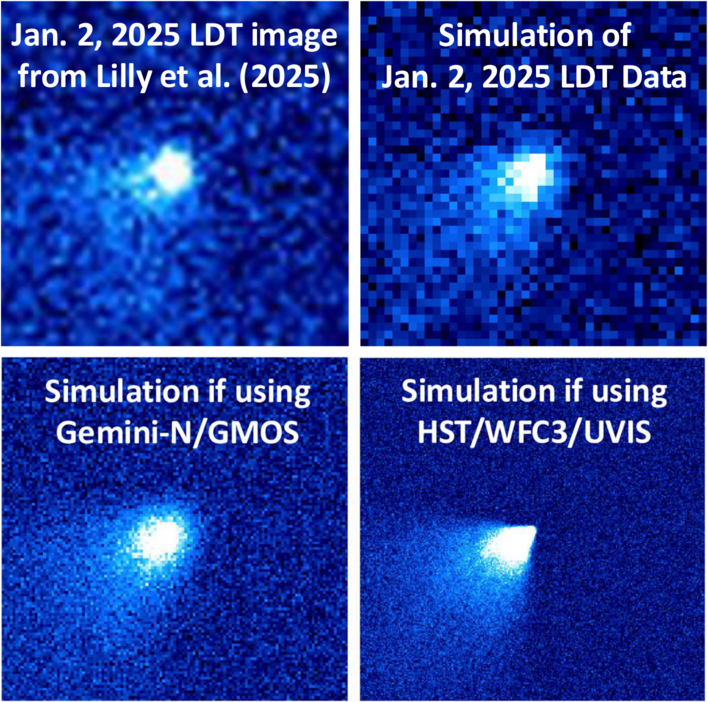
Coma Model:  The 3D Monte Carlo coma model simulates the spatial distribution of particles – first-, second-, or third-generation species – emitted from a nucleus. The resulting 3D particle distribution is then projected onto a 2D skyplane corresponding to the observer’s line of sight (e.g., Figure 1), enabling direct comparison with observed coma images. The model requires input parameters that describe the comet’s activity, nucleus properties, particle-specific species characteristics, and observing geometry. It also includes the capability to simulate the effects of solar radiation pressure on all species.

Coma Factory: When using Coma Factory, once the user provides the necessary input parameters, the web interface runs the Python code to generate the corresponding image in FITS format. The image header includes keywords identifying all the input parameters and hence each image created by Coma Factory maintains a digital record of the input parameters corresponding to each image. Additionally, Coma Factory may be used to produce 2D coma simulations corresponding to a range of viewing directions that enable the user to assess the 3D structure of the coma feature(s) that are useful for interpreting actual coma observations of comets.

Figure 1. Top-left: Image of the active Centaur 2023 RS61 from [6]. Top-right: shown is a simulated image using Coma Factory that is consistent with the data.  The bottom two panels show the same simulated image but if the data had been acquired with other facilities with different image resolutions. The same coma model was used for each of the three image simulations, where characteristics of each telescope and instrument combination were used to replicate imaging data if observations had been acquired from the specified facility. Coma Factory is capable of generating realistic comae images as illustrated by these simulations.

Acknowledgments: We gratefully acknowledge the support provided by the NASA PDART Program through award 80NSSC21K0881.

References:  [1] Schleicher D. G. and Woodney L. M. (2003) Icarus, 162, 190-213. [2] Goldberg C. et al. (2023) Planet. Sci. J., 4, 19pp. [3] Schulz R. et al. (1993) Icarus, 103, 319-328. [4] Samarasinha N.H. (2000) Astrophys. J., 529, L107-L110. [5] Schambeau C. A. et al. (2017) Icarus, 284,359-371. [6] Lilly et al. (2025) RNAAS, 9, Issue 3, id.67.

How to cite: Schambeau, C., Samarasinha, N., Gay, P., and Bauer, I.: Simulating and Analyzing Comet Comae with Coma Factory, EPSC-DPS Joint Meeting 2025, Helsinki, Finland, 7–13 Sep 2025, EPSC-DPS2025-825, https://doi.org/10.5194/epsc-dps2025-825, 2025.

15:12–15:24
|
EPSC-DPS2025-1940
|
On-site presentation
Gints Jasmonts, Andris Slavinskis, and Karina Šķirmante

Understanding the morphology and dynamics of cometary gas jets is essential for interpreting optical observations, planning flyby, rendezvous and impact trajectories and inferring subsurface volatile emissions. However, conventional high fidelity gas and dust models require substantial computational resources, specialized software and offline rendering pipelines. We present a web browser native framework that enables real time interactive simulations and visualizations of cometary outgassing for arbitrary nucleus shapes, requiring minimal setup running on a local graphics processing unit (GPU) powered by WebGPU technology [1] .

The developed processing pipeline implements the nucleus surface thermal balancing solver adapted from the Space Imaging Simulator for Proximity Operations (SISPO) [2] ComaCreator module and research done by Marschall et al. [3]. This yields spatially resolved sublimation rates that identify active regions depending on the angle of incidence onto the nucleus. Due to the fact that the thermal balance and gas emission calculations are carried out on a per facet basis, the pipeline is agnostic to object geometry therefore any cosmic object represented as a triangular surface mesh at any resolution can be processed without modification. As we obtain surface emission rates, WebGPU integration allows for sophisticated determination of activity generation for cometary jets. Example parameters determined by the surface activity levels include emission rates, particle sizes and lifetime, directional spread and emission velocity. Since technology comes with a provided shading language, it is possible to leverage GPU capabilities in order to determine the movement of dust particles using compute shaders based on physical equations present in observed flyby scenarios.

Our current implementation of the web-based cometary activity model includes two modes - particle based and direction line based. This allows the user to tailor the simulation to specific scientific needs - streamlines allow for dust flow path visualization and jet trajectories, useful for quantitative analysis of jet origins and orientations while particle approach captures volumetric scattering and diffuse coma structures, offering realistic depiction of gas density variance and illumination effects. The interface is tailored with configuration parameters, which may be changed in real time to simulate various scenarios of comet activity. Adjusting any configuration re-runs the simulation nearly instantaneously, fostering rapid testing and analysis without recompilation or preprocessing. Preliminary results are showcased in figure 1 and 2, displaying potential approaches to jet formation and dust dissipation visualization.

By developing a tool to perform cometary activity research on any modern browser, we empower mission planners, observers and educators to explore the cometary outgassing phenomena on various discovered or procedurally generated nuclei. It also serves as a tool to popularize and educate the public on the complex nature of cometary activity and dust emission in space.

References
[1] https://www.w3.org/TR/webgpu/
[2] M. Pajusalu et al. (2022) SISPO: Space Imaging Simulator for Proximity Operations. PLoS ONE 17(3): e0263882. https://doi.org/10.1371/journal.pone.0263882
[3] R.В  Marschall et al. (2016) Modelling observations of the inner gas and dust coma of comet 67P/Churyumov-Gerasimenko using ROSINA/COPS and OSIRIS data: First results A&A 589 A90. https://doi.org/10.1051/0004-6361/201628085

How to cite: Jasmonts, G., Slavinskis, A., and Šķirmante, K.: Development of an Interactive Web-Based Simulation and Visualization Tool for Cometary Jet Modelling on Arbitrarily Shaped Nuclei, EPSC-DPS Joint Meeting 2025, Helsinki, Finland, 7–13 Sep 2025, EPSC-DPS2025-1940, https://doi.org/10.5194/epsc-dps2025-1940, 2025.

15:24–15:36
|
EPSC-DPS2025-1599
|
ECP
|
On-site presentation
Samuele Vaghi, Alessia Cremasco, Luigi Vittorio Delfanti, Lucia Francesca Civati, Iosto Fodde, Irina Luciana San Sebastiàn, and Fabio Ferrari

This work presents a microgravity experimental campaign aimed at investigating contact dynamics in asteroid-like environments. Recent Earth-based and in-situ observations have revealed that most asteroids between a few hundred meters and several kilometers in diameter are not monolithic, but rather loosely bound aggregates of material - commonly referred to as rubble piles [1]. These bodies are held together by a combination of self-gravity and cohesion forces. Results in literature show that their dynamics can be effectively simulated by addressing a gravitational-collision problem via N-body codes [2]. The contact representation relies on a set of parameters, such as friction and coefficient of restitution, that are typically calibrated to match large-scale behaviours rather than the local contact dynamics. Hence, an experimental campaign has been performed to validate at particle scale the N-body code GRAINS, whose contact dynamics is based on the physics engine Chrono. The experiment involved observing low-speed collisions between two asteroid-simulant cobbles under microgravity conditions. The 6-degree-of-freedom trajectories of the cobbles were reconstructed, and a digital twin of the experiment was created in GRAINS to calibrate the contact parameters against the experimental results.

The campaign, sponsored by ESA, was performed at ZARM facilities, exploiting both the Drop Tower and the GraviTower Bremen Pro. The first can offer one of the best microgravity environments worldwide (10-6 g0) for 4.7 s, allowing for 2–3 tests per day. In the latter, despite a slightly larger residual acceleration (10-4 g0) and shorter duration, tens of drops per day can be performed [3]. The first half of the campaign took place between October/November 2024; the second half took place between March/April 2025.

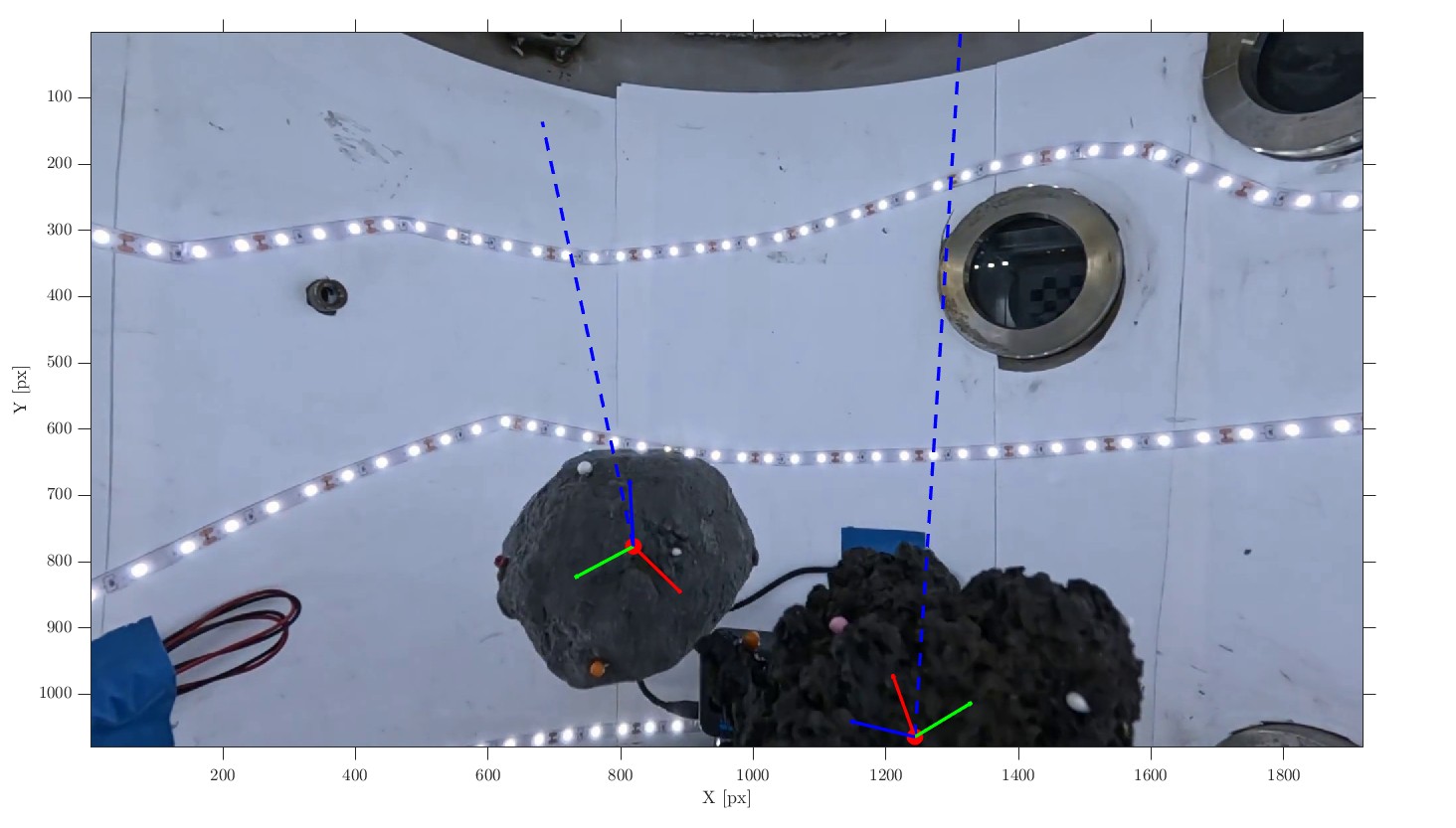
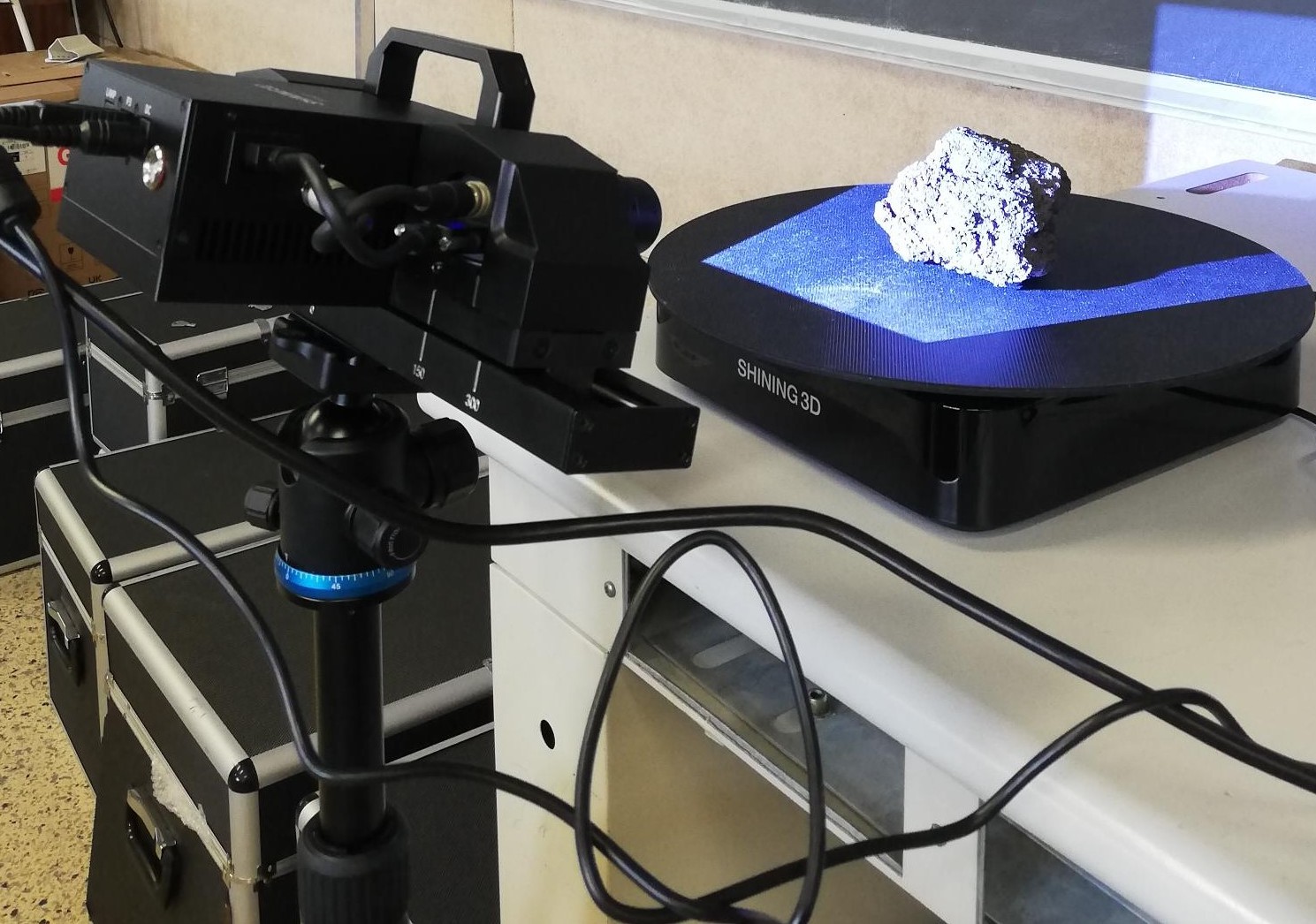
To replicate the physical characteristics of asteroid material, cobbles were selected based on their chemical composition and surface texture. Two high-fidelity simulant sets have been purchased from Space Resource Technology, with mineralogy modelled after the Murchison (CM simulants) and Orgueil (CI simulants) meteorites [4]. An additional set has been sampled on Mount Etna: coming from recent volcanic eruptions, they present the irregular and un-weathered surface expected for rocks found on Solar System bodies without an atmosphere. To recover the shape and inertia properties of each cobble, they have been scanned using a 3D scanner with 0.035 mm accuracy. The mesh obtained is used to build the digital twin of the experiment. Markers have been glued to the surface of the cobbles to enable motion tracking and trajectory reconstruction.

Figure 1: 3D scanner.

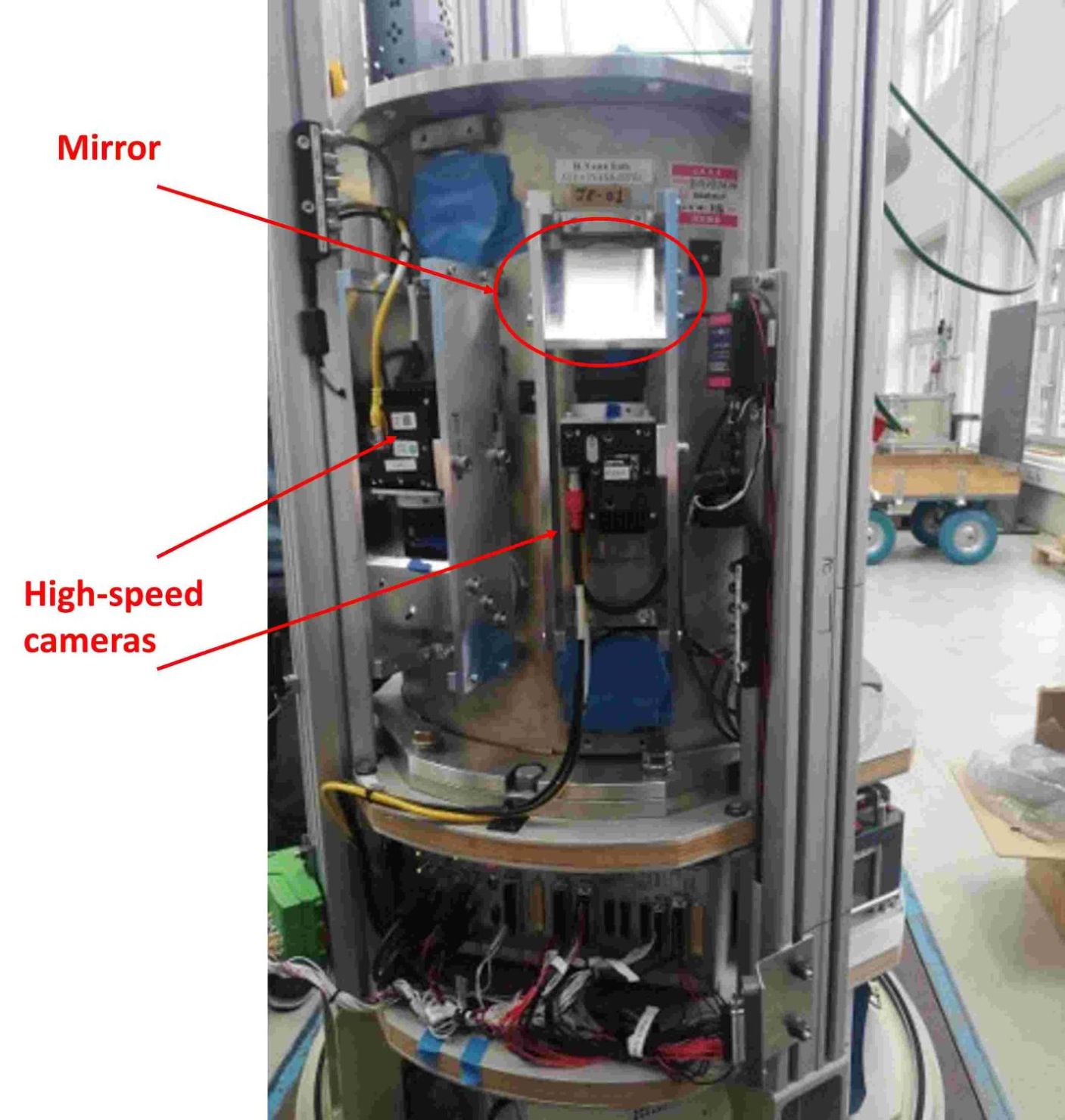
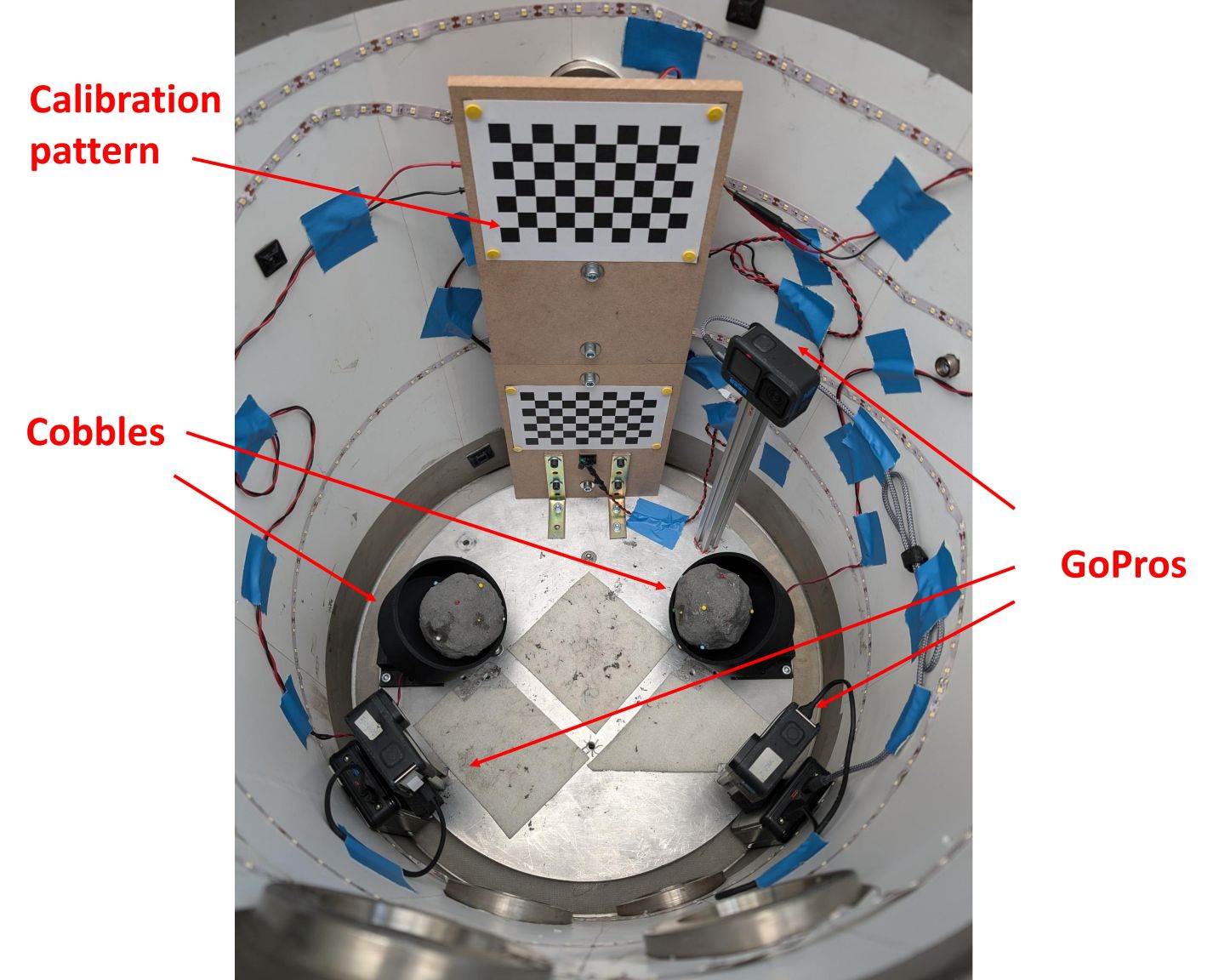
The experiment is placed inside a vacuum chamber, since, besides microgravity, vacuum conditions are fundamental to simulate the asteroid environment. The cobbles are released using a spring-based release mechanism with a velocity in the range 15 – 20 cm/s. Their motion was recorded using a network of two high-speed cameras provided by ZARM, along with three GoPro cameras mounted inside the chamber to ensure full visual coverage (see Figure 2). The high-speed cameras could observe the interior only through a mirror, due to the limited available space.


Figure 2: experimental setup.

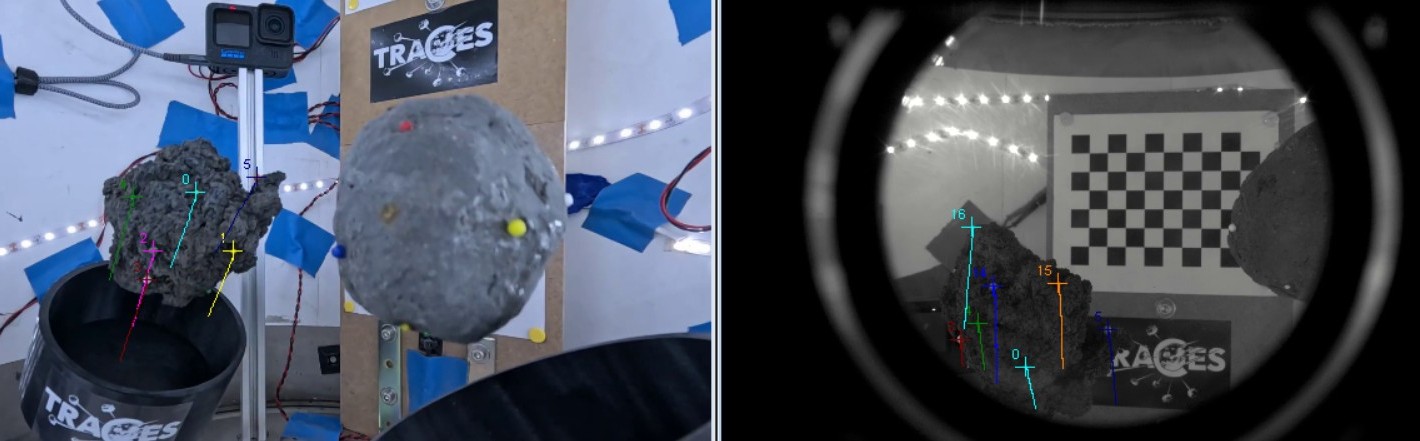
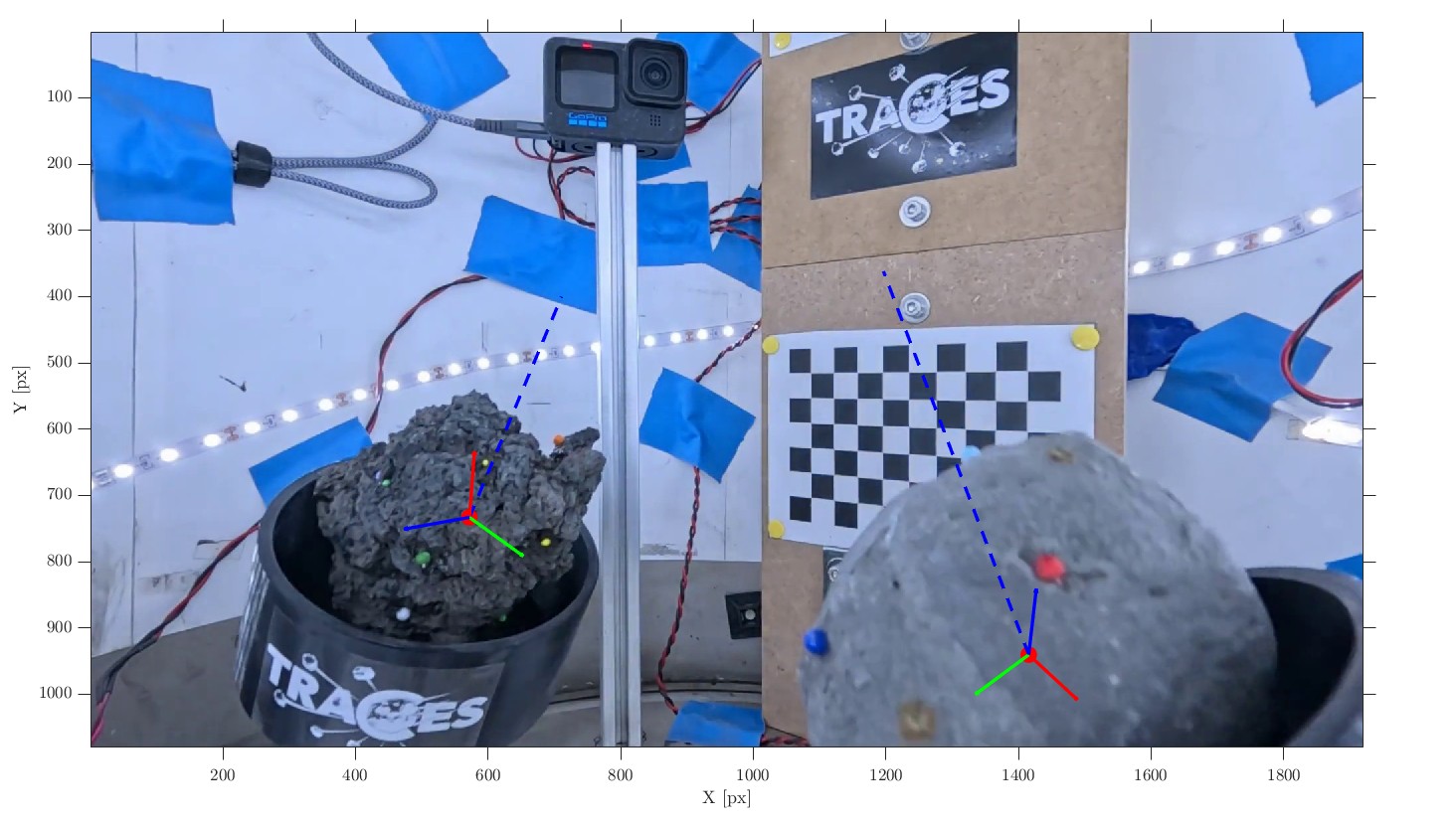
The tracked markers’ coordinates are processed in a batch least-squares filter to reconstruct the cobbles’ 6-dof trajectory and provide the digital twin with the initial conditions, necessary to validate the numerical code. This analysis also enables the computation of key parameters for characterizing collision dynamics in asteroid environments, such as the coefficient of restitution. Figure 3 shows the tracked markers, whereas Figure 4 shows the reconstructed centre-of-mass trajectory and body triad reprojected into the camera plane.

Figure 3: Tracked markers from GoPro (left) and high-speed camera (right) relative to an Etna rock – CM simulant collision.


Figure 4: pre- (up) and post-collision (down) trajectory reprojected into the camera plane.

In Tab. 1 a summary of the tests performed is reported.

                           First half Second half     
GraviTower tests 19 36
Drop Tower tests 6 7
Suitable for analysis 9/25 37/43

Table 1: Experimental campaign summary.

Tests performed in the GraviTower were useful to tune parameters such as spring stiffness and pre-load. The heritage from the first campaign helped to improve both the total number of tests and success rate. Data quality also improved, thanks to enhanced camera mounting, better visibility, and the use of smaller tracking markers.

The accuracy of the trajectory estimation is assessed through Monte-Carlo simulations, with uncertainties in the order of 0.3 mm in position and 1 deg/s in angular velocity. The coefficient of restitution, computed as the ratio between the energy after and before the collision, including the rotational component, ranges between 0.84 and 0.88. This indicates a nearly rigid contact behavior, suggesting that nearly rigid contact models are best suited to simulate these interactions.

The experimental validation campaign enhances our capabilities to simulate the dynamics of rubble-pile asteroids. This is beneficial not only for the scientific community, but also to support the design of interaction scenarios in upcoming asteroid exploration missions.

References

[1] Walsh K. J. (2018) Rubble Pile Asteroids, Annual Review of Astronomy and Astrophysics., 56, 593–624.

[2] Ferrari F. et al. (2020). A parallel-GPU code for asteroid aggregation problems with angular particles. Monthly notices of the Royal Astronomical society., 492, 749–761.

[3] Könemann T. (2022) Bremen Drop Tower, Version 1.4.

[4] Britt, D.T., et al. (2019), Simulated asteroid materials based on carbonaceous chondrite mineralogies. Meteorit Planet Sci, 54: 2067-2082. https://doi.org/10.1111/maps.13345

Acknowledgements Funded by the European Union (ERC, TRACES, 101077758). Views and opinions expressed are however those of the authors only and do not necessarily reflect those of the European Union or the European Research Council. Neither the European Union nor the granting authority can be held responsible for them.

The GEMS campaign was funded by the European Space Agency under the SciSpace CORA program. The authors would like to acknowledge Thorben Könemann and the ZARM team for their support during the design and operations of the experiment.

How to cite: Vaghi, S., Cremasco, A., Delfanti, L. V., Civati, L. F., Fodde, I., San Sebastiàn, I. L., and Ferrari, F.: Microgravity Experimental Campaign for Contact Dynamics Characterization in the Asteroid Environment, EPSC-DPS Joint Meeting 2025, Helsinki, Finland, 7–13 Sep 2025, EPSC-DPS2025-1599, https://doi.org/10.5194/epsc-dps2025-1599, 2025.

15:36–15:48
|
EPSC-DPS2025-790
|
ECP
|
On-site presentation
John Wimarsson, Fabio Ferrari, and Martin Jutzi

Circumasteroidal debris disks offer an explanation for the surprising existence of atypically shaped binary asteroid satellites [1], such as the oblate Dimorphos imaged by NASA's Double Asteroid Redirection Test (DART) spacecraft [2], or the contact binary satellite Selam detected by Lucy [3]. Classical theories based on the slow build-up of material in orbit around a rapidly spinning primary [4] or contact binary fission [5] account for the predominantly prolate (elongated) population [6], but not any outlier structures. In our work, we used polyhedral N-body simulations to show that the dynamical environment of debris disks around rubble pile asteroids produces mergers between moonlets in the unexplored sub-escape-velocity regime which can create a wide range of unusual satellite shapes.

Spinning rubble pile asteroids only held together by gravity structurally fail before any wide debris disk can be formed, but adding a small amount of cohesion can allow them to reach significantly higher spin rates [7], leading to more chaotic mass-shedding events. Just a few per cent of the primary mass in a disk extending beyond the fluid Roche limit is enough to generate multiple moonlets of varying sizes that dynamically interact and merge [1]. More eccentric orbits are dampened by the surrounding matter, causing mergers to occur with small impact angles. As the typical impact velocity is proportional to the ratio between the total mass of the moons and the mass of the primary [8], the observed impact velocities in simulations of this scenario are always lower than the mutual escape velocity of the moonlets [1].

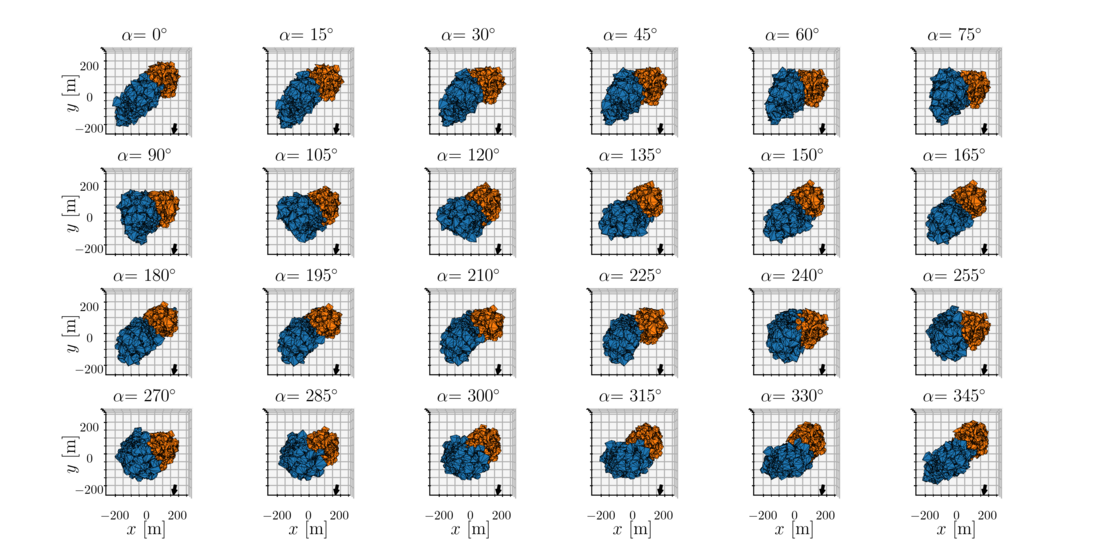
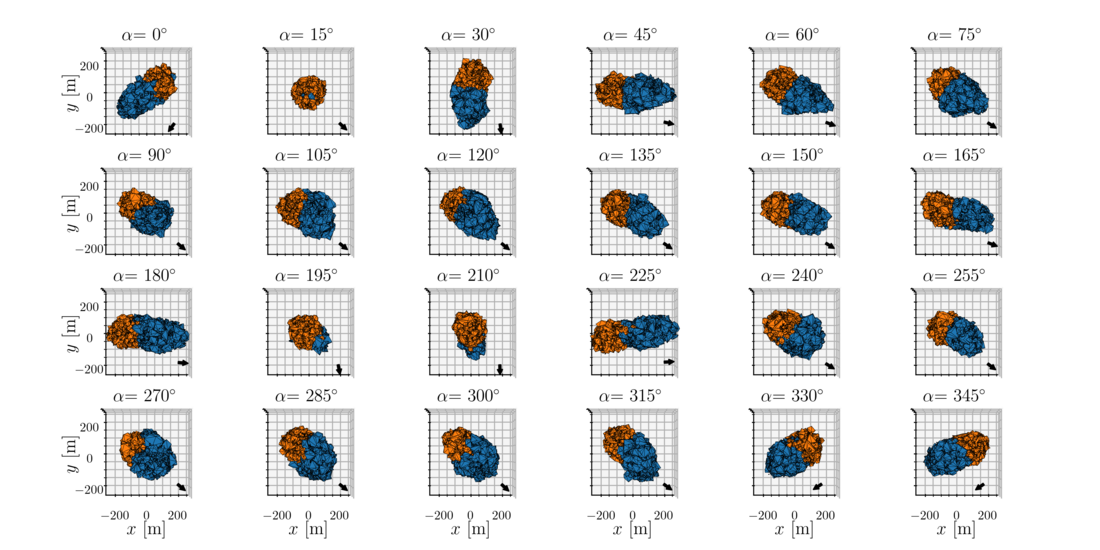
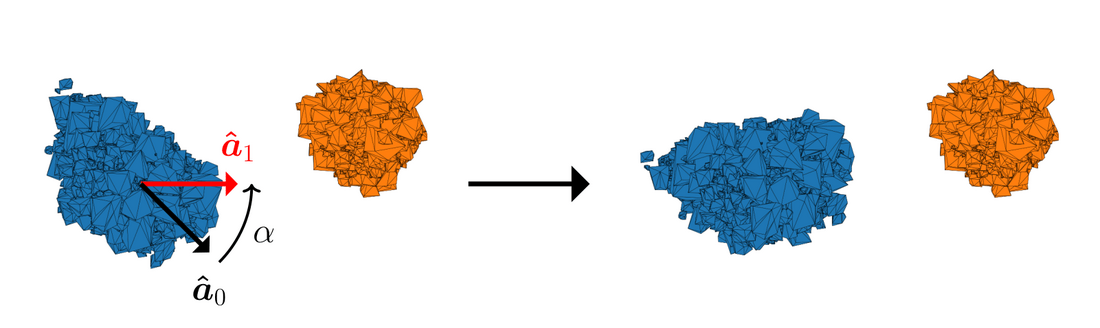
Because of the soft impacts, the initial shape of the participating moonlets is largely retained, with the most massive specimen being prolate due to tidal distortion. To show that the final shape is highly dependent on the relative orientation of the two bodies and the location of the impact, we performed a set of simulations based on a merger observed in a debris disk scenario (see [1]). Keeping the impact angle, velocity, spin rate, and position of the merger intact, we rotated the most massive body in the equatorial plane of the primary around its barycenter by different angles α to generate a set of new configurations, illustrated in Figure 1. As expected, each merger led to a unique shape, as seen in Figure 2.

Figure 1: Alteration of the initial merger configuration seen on the left side by rotating the largest moonlet (blue) by some angle α, generating new initial conditions [9].

Figure 2:  Post-merger shapes of the merged moonlets, where α indicates the counterclockwise rotation of the largest moonlet (blue) with respect to the original configuration of the merger [9]. The black arrow indicates the direction of the primary.

Letting the system evolve for a few orbits, we found that each body deformed with varying degrees via tidal disruption and distortion, depending on the initial shape and spin-orbit state of the body. Elongated objects were more susceptible to disruption, leaving only the outer lobe intact on a hyperbolic orbit. On the other hand, the more compact objects would instead undergo partial mass-shedding. To consistently have moons survive the tidal disruption stage, we increased the post-merger distance from the primary by 10%. Among the resulting shapes in Figure 3, we can identify spherically oblate Dimorphos-like (α = 15°) and elongated, bilobate Selam-like objects (α = 225°). 

Figure 3:  The shapes of the moons in Figure 1 after 48 h of simulation, for the case where their post-merger distance from the primary was increased by 10% [9].

Our results further reinforce the idea that objects like Dimorphos and Selam have formed in circumasteroidal debris disks and further hint at the existence of other, atypically shaped binary asteroid satellites born from sub-escape-velocity mergers. With the upcoming ESA Hera mission that will revisit the Didymos system [10], along with future space missions visiting binary asteroid systems, we can constrain moon shapes and develop our understanding of the underlying formation mechanisms at play.

Acknowledgments

J.W. and F.F. acknowledge funding from the Swiss National Science Foundation (SNSF) Ambizione grant No. 193346. M.J. acknowledges support from SNSF project No. 200021_207359.

References

[1] Wimarsson et al. Icarus, 421, 116223, 2024

[2] Daly et al. Nature, 616(7957):443–447, 2023

[3] Levison et al. Nature, 629, 1015, 2024

[4] Walsh et al. Nature, 454(7201):188–191, 2008

[5] Jacobson and Scheeres. Icarus, 214(1):161–178, 2011

[6] Pravec et al. Icarus, 267, 267, 2016

[7] Hirabayashi et al. ApJ, 808(1):63, 2015

[8] Leleu et al. Nature Astronomy, 2, 555, 2018

[9] Wimarsson et al., submitted, 2025

[10] Michel et al. PSJ, 3(7):160, 2022

How to cite: Wimarsson, J., Ferrari, F., and Jutzi, M.: Forming unusually shaped moons in binary asteroid systems via sub-escape-velocity mergers and tidal deformation, EPSC-DPS Joint Meeting 2025, Helsinki, Finland, 7–13 Sep 2025, EPSC-DPS2025-790, https://doi.org/10.5194/epsc-dps2025-790, 2025.

15:48–16:00
|
EPSC-DPS2025-1560
|
ECP
|
On-site presentation
Alice Humpage

We present a study into the dynamics and evolution of small Solar System bodies. This is the culmination of a PhD which focused on the application of N-body simulations of near-Earth asteroid and interplanetary dust clusters.

This work is split into three projects, which applied N-body simulations of 100 – 1000 particle clusters with a spread up to a maximum velocity. These represented the outcome of an asteroid breakup, with the mechanism represented by the magnitude of the initial spread of the cluster. For the parts of the work which simulated dust, Poynting-Robertson drag (PR drag) was added as an additional force, where each particle was assigned a size and corresponding drag strength.

The first project studied the evolution of synthetic NEA families. As we approach first light of the Vera C. Rubin telescope’s Legacy Survey of Space and Time, with maybe 100,000 new near-Earth asteroids (NEAs) to be discovered [1], it is important to prepare for new searches for NEA families. This project is intended as a guide, so that families and pairs can be searched for where they’re likely to stay closer together for longer. If found, these families can tell us a great deal about the dynamics, composition, and formation of asteroids [2][3]

A grid of clusters were integrated with different initial orbital elements and conditions. Areas of focus included initial inclination, breakup mechanism, Kozai-Lidov oscillations, and mean-motion resonances (MMRs). A power-law relationship was found in the increase in orbital dispersion of the semi-major axis, allowing an easier comparison between different initial conditions. This further led us to find the importance of eccentricity and inclination, and how it has an effect on the oscillations caused by the Kozai-Lidov effect.

The second project looked at the hypothetical breakup of an Earth co-orbital – an object in the 1:1 MMR with the Earth. The zodiacal light, or zodiacal dust, is a band of light visible at dusk or dawn when observed close to the plane of the ecliptic [4]. It is caused by the presence of interplanetary dust which scatters the light from the Sun. The zodiacal light has different components identified by spacecraft such as IRAS and COBE [5], including a broad, cometary band, and background interstellar dust. Two strong narrow asteroidal features have also been identified at 士1.4 and 士10.2 ecliptic latitude, as well as a broader band centred at 士10[6]. There have been a number of suggestions as to the exact origin of the asteroid dust bands, most often the scattering of main-belt asteroid families falling into Jupiter resonances [7]. One major factor affecting the evolution of the dust is PR drag, which causes it to spiral into the Sun, requiring the dust to either be regularly replenished, or temporary [8].

We integrated synthetic clusters in the horseshoe, trojan, and quasi-satellite co-orbital configurations, as well as clusters at the position of real Earth co-orbitals. We studied the different factors which affect the infall time and how long dust remains within a co-orbital, along with the appearance of the dust from the Earth, based on how much light is scattered. While no features matching the zodiacal dust bands have been found, we present a quasi-satellite region which is stable for longer periods of time than expected. We also show that while a lot of dust will fall unimpeded into the Sun due to PR drag, some will get trapped in MMRs of terrestrial planets, slowing their infall rate.

The third project looks at the evolution of dust from a hypothetical impact on the Martian trojan (5261) Eureka. A large amount of dust, both interplanetary in the orbital plane of Mars and high up in the Martian atmosphere has been detected by the Juno and MAVEN (The Mars Atmosphere and Volatile Evolution) spacecraft [9][10]. Its properties and quantity cannot be explained by dust storms on Mars, as it is too high in the atmosphere, and is too spread in inclination to originate from the moons Phobos and Deimos.

The dynamics of this dust under the effects of the co-orbital resonance, PR drag, and the gravitational influence of the terrestrial planets has been studied. The minimum orbital intersection distance between the dust and Mars has been calculated, and the orbital dynamics and infall time of the dust studied. The dust seems to stay within the resonance for long periods of time, though PR drag acts quickly on the smaller objects. We again see evidence of terrestrial planet MMRs impeding the infall of the dust.  

Bibliography 

[1] Jones R. L., et al., 2018, Icarus, 303, 181–202

[2] Schunová E., Granvik M., Jedicke R., Gronchi G., Wainscoat R., Abe S., 2012, Icarus, 220, 1050–1063

[3] Fu H., Jedicke R., Durda D. D., Fevig R., Scotti J. V., 2005, Icarus, 178, 434–449

[4] Lasue J., Levasseur-Regourd A.-C., Renard J.-B., 2020, Planetary and Space Science, 190,

104973

[5] Fixsen D. J., Dwek E., 2002, The Astrophysical Journal, 578, 1009–1014

[6] Rowan-Robinson M., May B., 2013, Monthly Notices of the Royal Astronomical Society,

429, 2894–2902

[7] Marsset M., et al., 2024, Nature, 634, 561–565

[8] Schramm L. S., Brownlee D. E., Wheelock M. M., 1989, Meteoritics, 24, 99–112

[9] Jorgensen J. L., Benn M., Connerney J. E. P., Denver T., Jorgensen P. S., Andersen A. C.,

Bolton S. J., 2021, Journal of Geophysical Research: Planets, 126

[10] Andersson L., et al., 2015, Science, 350

How to cite: Humpage, A.: The dynamics and evolution of simulated near-Earth asteroid families and interplanetary dust, EPSC-DPS Joint Meeting 2025, Helsinki, Finland, 7–13 Sep 2025, EPSC-DPS2025-1560, https://doi.org/10.5194/epsc-dps2025-1560, 2025.

Orals WED-OB6: Wed, 10 Sep, 16:30–18:30 | Room Mercury (Veranda 4)

Chairpersons: Ivano Bertini, Nicholas Attree, Vladimir Zakharov
Planetesimals, Small Bodies & Rings
16:30–16:42
|
EPSC-DPS2025-11
|
On-site presentation
Sergei Ipatov

Introduction. The planets also could get similar material due to the ejection of material from their surface when they collided with planetesimals and other bodies. I studied the probabilities pE, pV, pMe, pMa, pMoon, and pSun of collisions of bodies ejected from a terrestrial planet with the Earth, Venus, Mercury, Mars, Moon, and the Sun. In each calculation variant, the motion of 250 bodies ejected from a planet was studied at fixed values of the ejection angle iej, ejection velocity vej, and ejection point. The motion of the ejected bodies was studied during the dynamical lifetime of all bodies, which was usually about a few hundreds Myrs. The gravitational influence of the Sun and all eight planets was taken into account. In different calculation variants, iej varied from 15° to 90°, and vej varied from the parabolic velocity on the surface of a planet to 20 km/s. Ejection of material was studied from 6 opposite points on the surface of a planet. The probabilities of collisions of bodies ejected from the Earth with the Moon were studied in (Ipatov, 2024a), and the probabilities of collisions of such bodies with planets were studied in (Ipatov, 2025). The probabilities of collisions of bodies ejected from Mars, Mercury, and Venus were briefly discussed in (Ipatov, 2024b,c). Below in this abstracts the probabilities are presented for a whole considered time interval. The fraction of bodies delivered to the Moon in its present orbit was smaller than that delivered to the Earth by a factor of 20-30.

Ejection of bodies from the Earth and the Moon. The fraction of bodies ejected from the Earth and falling back onto the Earth was about 0.2-0.3. At 11.5≤vej≤12 km/s, pV was in the range of 0.22-0.37. The total number of bodies delivered to the Earth and Venus probably did not differ much. The values of pMe and pMa were in the ranges of 0.02-0.08 and 0-0.025, respectively. The probability of a collision of bodies ejected from the Earth with the Moon in its present orbit was about 0.01-0.02 at vej=11.3 km/s and 0.005-0.008 at vej=16.4 km/s. At vej=20 km/s all bodies ejected from the “forward” point on the surface of the Earth or Mars could be ejected into hyperbolic orbits. The probabilities of collisions of ejected bodies with planets were similar for bodies ejected from the Earth and the Moon in its present orbit but for different ejection velocities.

Ejection of bodies from Mars. Some bodies ejected from Mars could collide with the Earth in 0.1 Myr, and some - in hundreds of Myrs. The values of pE typically did not exceed 0.16. At vej≥5.2 km/s, the values of pV usually exceeded pE and mainly were less than 0.2. The values of pMa were mainly about 0.04-0.25 and 0-0.04 at 5.05≤vej≤5.3 and 5.5≤vej≤20 km/s, respectively. For the ‘back’ (relative to motion of the planet) point B, pMa was usually smaller than for ‘middle’ points (which are on the plane that passes through the Sun and the planet and is perpendicular to the orbital plane). The values of pMe usually were less than 0.06 and were larger than pMa at vej≥6 km/s. For ejections from ‘middle’ points, pMe was mainly about 0.02-0.08 at 5.05≤vej≤20 km/s.

Ejection of bodies from Mercury. Most of the bodies ejected from Mercury fell back onto Mercury. The values of pE usually did not exceed 0.02 and 0.1 at vej less than 8 and 15 km/s, respectively. The values of pV were usually about 0.2-0.3 at 6≤vej≤10 km/s. The values of pV were usually by an order of magnitude greater than pE. At lower ejection velocities, this difference was greater. For most calculation variants, the fraction of bodies ejected into hyperbolic orbits did not exceed 0.01.

Ejection of bodies from Venus. In this paragraph we discuss the values of the probabilities of collisions with planets for bodies ejected from ‘middle’ points on Venus at 10.4≤vej≤16 km/s. In this case, the value of pMe was about 0.01-0.2, pV was about 0.3-0.8, and pE was about 0.04-0.2 (several times less than pV). At vej=16 km/s pMe was approximately several times larger (from 2 to 10 depending on the ejection point and iej) than at vej=10.4 km/s. The values of pV have some tendency (but not for all initial data) to be smaller at higher vej. The values of pMa often did not exceed 0.01 for all initial data.

For “middle” ejection points at vej=20 km/s, pMe was approximately 0.1-0.15, values of pV were approximately 0.23-0.35, values of pE were about 0.04-0.1 at iej=45o, and could be about 0.2 at iej=89o. For the ‘back’ point B, pMe was about 0.02-0.35 (with a maximum at vej=20 km/s), pV was about 0.4-0.8, pE was mainly about 0.04-0.2 (but equaled to 0.01 at vej=20 km/s and iej=89o). For the ‘forward’ point W at vej≤12 km/s, pMe was about 0.01-0.1, pV was about 0.3-0.8, and pE was about 0.1-0.2.

Ejection of dust particles. For ejections of 1-100 micron dust particles from a terrestrial planet, the probability of a collision of a dust particle with the planet usually did not exceed 0.01. The ejected particles mostly fell onto the Sun or were ejected from the Solar System. For micron particles, the ratio between ejected and colliding particles (greater or less than 1) depended on the ejection point and velocity. Most particles with a diameter of about 10-100 microns fell onto the Sun. The dynamical lifetime of most 1-100 micron particles did not exceed 1 Myr.

Acknowledgements: The studies of delivery of material to the Moon or from the Moon were supported by the Russian Science Foundation, project 25-17-00051. Other studies were carried out under government-financed research project for the Vernadsky Institute.

References: Ipatov S.I. (2024a) Solar System Research 58:94-111. https://doi.org/10.1134/S0038094624010040, http://arxiv.org/abs/2405.19797. Ipatov S.I. (2024b) Solar System Research 58. Suppl. 1. P. S50-S63. https://doi.org/10.1134/S0038094623600105, http://arxiv.org/abs/2411.05436. Ipatov S.I. (2024c) Modern astronomy: from the Early Universe to exoplanets and black holes. P. 904-909. https://doi.org/10.26119/VAK2024.143, https://arxiv.org/abs/2501.00134. Ipatov S.I. (2025) Icarus 425, id. 116341 (24 p.). https://doi.org/10.1016/j.icarus.2024.116341, http://arxiv.org/abs/2411.04218.

How to cite: Ipatov, S.: Exchange of ejected material between the terrestrial planets and the Moon, EPSC-DPS Joint Meeting 2025, Helsinki, Finland, 7–13 Sep 2025, EPSC-DPS2025-11, https://doi.org/10.5194/epsc-dps2025-11, 2025.

16:42–16:54
|
EPSC-DPS2025-111
|
On-site presentation
Bruno Sicardy and Heikki Salo

Rings are observed around several small bodies of the solar systems: the Centaur Chariklo, the dwarf planet Haumea, the large trans-Neptunian object Quaoar and possibly the active Centaur Chiron. In spite of large differences in sizes and heliocentric distances, these rings share common properties. First, they are dense, in the sense that their dynamics is dominated by collisions, meaning optical depths from a percent or so to essentially opaque. Secondly, they are narrow, thus calling for confining mechanisms. Such features are also observed around the giant planets, with the nine narrow Uranus' rings, the two Adams and Le Verrier rings of Neptune, or the numerous ringlets of Saturn.

Thus, even though their physical parameters and origins are very diverse (Sicardy et al. 2025), these rings show some "convergent evolution", implying that some common mechanisms are at work. Here, we examine the role of spin-orbit resonances (SORs) between the central body and its ring(s), which involve commensurabilities between the rotation rate of a non-asymmetric central body and the mean motion of the ring particles. This non-axisymmetry of the body can take the form of a mass anomaly μ at the surface of the body, or an elongation of the body (or a combination of both). Resonances can also stem from a satellite. However, due to their expected small sizes, there resonance  are expected  to be much weaker than those stemming from SORs.

We have already explored through numerical simulations the fate of a collisional ring orbiting an irregular body, see the dynamical  study  and the numerical  results of Sicardy and Salo (2024) and Salo and Sicardy (2024).

Here, we placed a ring initially close to the second-order 5/7 SOR with Chariklo, meaning that the ring particles complete five revolutions while the central body complete seven rotations. This SOR lies just beyond the synchronous orbit, where the particle mean motion matches the central body spin rate, see Fig.1. The left panel illustrates the main characteristics of the ring evolution: (i) the general outwards migration caused by the positive torque exerted by the mass anomaly and (ii) the temporary capture of the ring in successive first- (aka Lindblad) and second-order SORs 2/3, 3/5, 1/2. The right panel of Fig. 1 shows the same simulation, where the particle dynamical states are plotted in a diagram showing the eccentricities as a function semi-major axis. It illustrates again the temporary capture of the ring in first- and second-order SORs.

In this example, the torque exerted by the mass anomaly eventually pushes the ring outside the SOR. We will examine in the talk the role of a small satellite that may halt this outward migration, in particular at the 1/3 SOR (not visible in Fig. 1). The general view that emerges from this work is that the strong SORs caused by irregularities in the body potential (mass anomaly, elongation or more complex non-axisymmetric features) cause a rapid  confinement of the ring, while a small satellite balances the positive torque from the SOR, thus stabilizing the ring on the long term. This behavior may be generic to rings around small bodies, irrespective to the origin of this material.

Fig. 1 – Left: A density plot showing the evolution of a Chariklo ring with initial optical depth τ0=0.075, composed of 7,500 inelastically colliding particles with radius 200 m (without self-gravity) orbiting a central body with mass anomaly μ=0.003. The time is expressed in terms of revolutions of the central body and the y-axis show the particle angular momenta Lz, normalized to its value at synchronous orbit. The red curve is the average value of Lz. Right: The green dots show the orbital eccentricities of the particles  shown in Fig. 1 as a function of semi-major axes. The black (resp. red) curves are the theoretical responses of test particles to the corresponding first-order (resp. second-order) SORs.

Acknowledgements  - This work has been supported by the French ANR project Roche, number ANR-23-CE49-0012.

References:
- Salo & Sicardy, "Collisional confinement of 1:3 resonance ringlets around non-spherical bodies",  EPSC Abstracts 17,, EPSC2024-534 (2024), doi: 10.5194/epsc2024-534
- Sicardy & Salo, "The dense resonance meshes around the ringed Chariklo, Haumea and Quaoar", EPSC Abstracts 17, EPSC2024-123 (2024), doi: 10.5194/epsc2024-123
- Sicardy et al., "Origins of rings in the Solar System", Phil. Trans. R. Soc. A 383 (2025): 20240193

How to cite: Sicardy, B. and Salo, H.: The formation of rings around small bodies: an overview, EPSC-DPS Joint Meeting 2025, Helsinki, Finland, 7–13 Sep 2025, EPSC-DPS2025-111, https://doi.org/10.5194/epsc-dps2025-111, 2025.

16:54–17:06
|
EPSC-DPS2025-1426
|
ECP
|
On-site presentation
Christian Schuckart, Ben Aussel, Tina Rückriemen-Bez, Carsten Güttler, and Bastian Gundlach

Context

The number of spacecrafts investigating small bodies and carrying remote sensing instruments for thermal infrared measurements has been steadily increasing. With the TIRI instrument - a thermal infrared imager - aboard the Hera mission as the latest example [1], there is and will be a wealth of data to interpret using thermophysical models. These models, when combined with mission data, enable the retrieval of key surface characteristics such as thermal conductivity, density, porosity, and grain size. The observation of new small bodies brings new demands on model accuracy, necessitating ongoing improvements to ensure robust, body-specific data analysis. A recent case highlighting this need is the TIR instrument, the predecessor to TIRI, aboard the Hayabusa2 mission. TIR was used to collect thermal maps of the asteroid Ryugu at various stages of the mission, prompting refinements in modelling approaches to match the complexity and specificity of the collected data. Previous findings have shown that a global thermophysical model without surface roughness could not reproduce the thermal measurements from TIR [3, 4]. A combination of a global scale thermophysical model with an adequate surface roughness description was identified as a crucial step toward accurately characterizing Ryugu’s surface thermal environment. Consequently, the next generation of thermophysical models will need to be highly adaptable, enabling the rapid incorporation of new findings and observational data.

Current implementation

We have developed for the purpose of solving the heat transfer equation for dry, airless planetary surfaces. At the core, MoCSI is a one-dimensional finite element method code, which can in principal run on a variety of geometries. In its current form, MoCSI can solve the heat transfer equation on each facet of any given shape model. What sets MoCSI apart from other thermophysical models is its highly modular architecture, which   allows for easy adaptation to different applications and planetary bodies. Key physical properties – such as thermal conductivity, heat capacity, and density are managed by independent modules. This modular structure makes it straightforward to incorporate new or alternative formulations of physical parameters or mechanisms ensuring flexibility and extensibility. Already implemented modules are:

  • Physical properties such as density, heat capacity and thermal conductivity, specifically for regolith [5] and porous boulders [6]
  • A ray-caster and the solution of the radiosity equations [7]
  • Integration of SPICE [8]

These currently available modules allow for a thorough investigation of the thermal surface environment of asteroids.

Verification

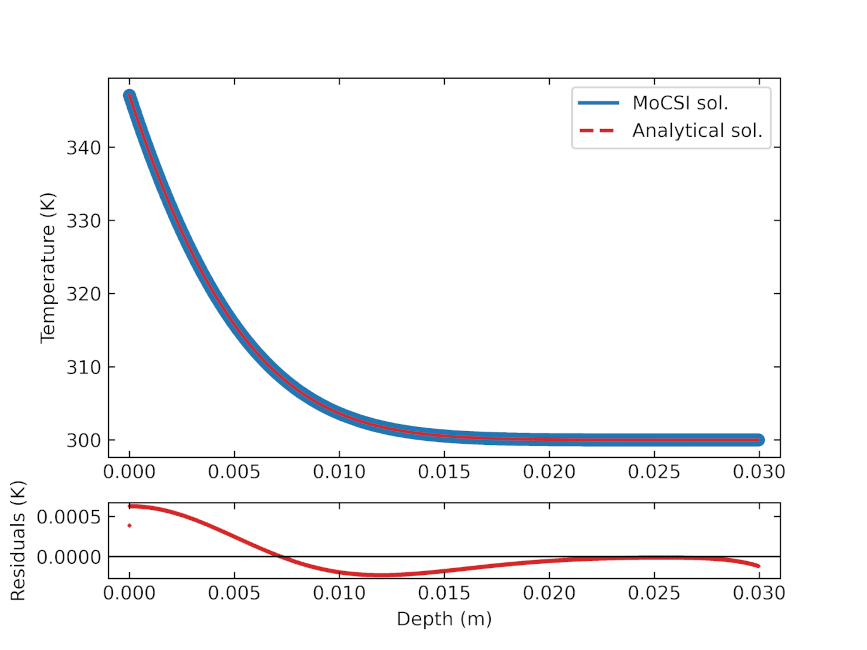
Fig. 1: MoCSI solver comparison against the known analytical solution of a semi-infinite domain with constant heat diffusivity and constant incoming heat flux. Temperatures (top panel) and temperature residuals (bottom panel) of MoCSI and the analytical solution are shown as a function of depth.

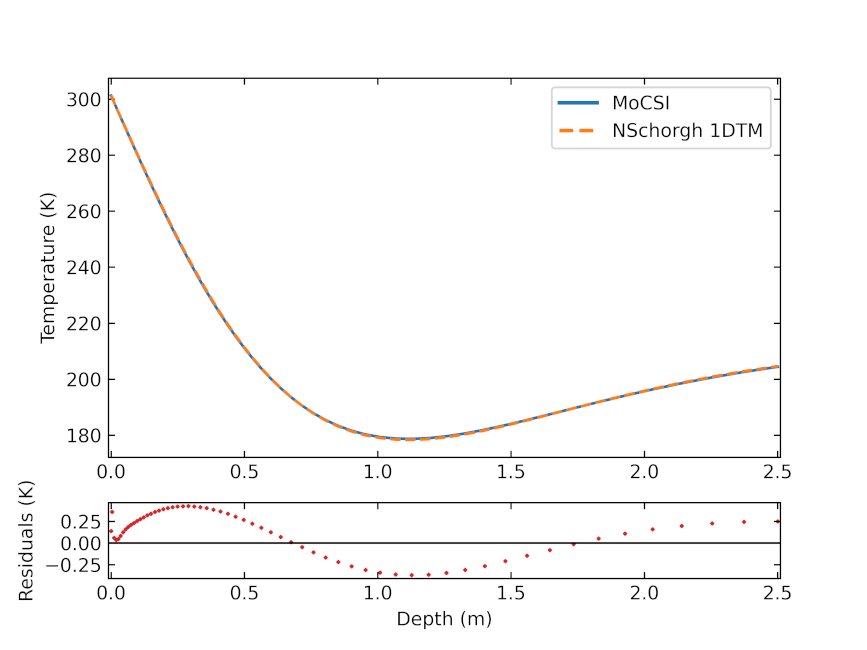
Fig. 2: Comparison of MoCSI and the ‘’testcrankQ`` case defined for 1DTM [11]. Temperatures (top panel) and temperature residuals (bottom panel) of MoCSI and the Norbert Schörghofer model [9] shown as a function of depth. The minor (agree to the first decimal place) differences are due too different implementations of the surface energy balance upper boundary condition.

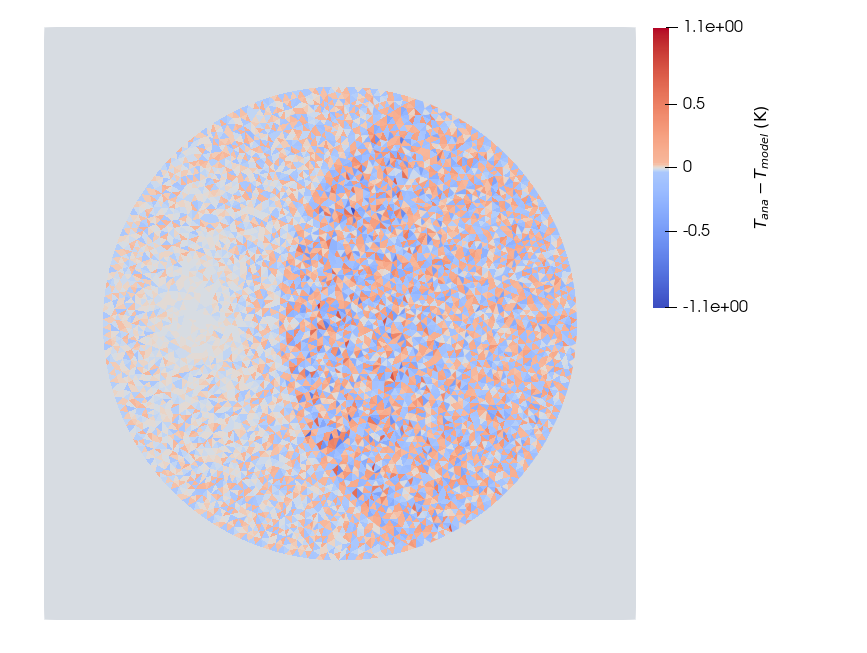
Fig 3: Comparison of the radiosity module in MoCSI against the known analytical solution of the surface temperature of a partially shadowed spherical crater presented in [7] with the geometry of [5]. Shown are the temperature residuals between MoCSI and the analytical solution in a top down view onto the crater.

MoCSI’s currently implemented TDMA (Tridiagonal Matrix Algorithm) solver has been verified against known analytical solutions of the heat transfer equation (Figure 1) and against the 1DTM code of Norbert Schörghofer [9] (Figure 2). We use an analytical solution for the radiosity in a spherical crater to verify the implementation of the radiosity equations [10]. As shown in Figure 3, MoCSI’s results closely match the expected values, consistent with findings in [7]. Further results, including applications of MoCSI to selected craters on Ryugu are forthcoming.

References

[1] Okada, T. et al. (2024), LPSC 2024, #1777.

[2] Okada, T. et al. (2020), Nature 579, pp. 518–522.

[3] Shimaki, Y. et al. (2020), Icarus 348, 113835.

[4] Senshu, H. et al. (2022), Int J Thermophys 43, 102.

[5] Gundlach, B. and Blum, J. (2012), Icarus 219, 618.

[6] Maxwell, J.C. (1873), Clarendon Press 2, 3408.

[7] Potter, S.F. et al. (2023), Journal of Computational Physics: X 17, 100130.

[8] Acton, C.H. (1996), Planetary and Space Science 44 No. 1, pp. 65-70.

[9] Schörghofer, N. and Khatiwala, S. (2024), Planet. Sci. J. 5, 120

[10] Ingersoll, A.P. et al. (1992), Icarus 100, pp. 40-47.

[11] Schörghofer, N. (2025), Planetary Code Collection, Github.

How to cite: Schuckart, C., Aussel, B., Rückriemen-Bez, T., Güttler, C., and Gundlach, B.: Modular heat transfer code for dry, airless planetary surfaces: MoCSI, EPSC-DPS Joint Meeting 2025, Helsinki, Finland, 7–13 Sep 2025, EPSC-DPS2025-1426, https://doi.org/10.5194/epsc-dps2025-1426, 2025.

17:06–17:18
|
EPSC-DPS2025-282
|
ECP
|
On-site presentation
Qunfeng Jiang and Man Hoi Lee

Pluto's small satellites—Styx, Nix, Kerberos, and Hydra—occupy nearly circular orbits that are nearly coplanar with that of Pluto-Charon. While several formation scenarios have been proposed, none has yet provided a fully self-consistent explanation for how these satellites arrived at their present orbits. Early in-situ formation near their current locations—following the Charon-forming impact—is one of the most promising explanations (Woo & Lee 2018), though its dynamical viability depends critically on the free eccentricities of the small satellites.

We adopt the theoretical framework of Lee & Peale (2006) and Woo & Lee (2020), which provides a proper non-Keplerian description of circumbinary orbits and defines free eccentricity as an appropriate generalization of eccentricity for such orbits. Based on this framework, we conduct orbital simulations using the latest ephemerides by Porter & Canup (2023) and Brozović & Jacobson (2024) and apply the fast Fourier transform (FFT) to extract the free eccentricity component of each satellite. To assess the robustness of our results, we also estimate uncertainties in the extracted free eccentricities by repeating the analysis with the uncertainties in the ephemerides reported by Porter & Canup (2023).

We find that the free eccentricities of Nix, Kerberos, and Hydra are consistent with previous values but the free eccentricity of Styx is significantly different. The consistency of the extracted free eccentricities across two independent sets of initial conditions supports the robustness of our results. Based on these dynamical constraints, we then carry out tidal evolution simulations under the in-situ formation scenario to test whether the observed free eccentricities and orbital structure can be reproduced by the early in-situ formation scenario through long-term interactions with the tidally evolving Pluto–Charon binary.

Our results demonstrate that free eccentricity analysis offers a robust way to constrain the formation of Pluto's small satellites. This approach provides a dynamic link between the current orbital structure and the formation and evolution of the system, and may also offer insights into the formation of circumbinary planets in extrasolar systems.

This work is supported in part by Hong Kong RGC grant 17309323.

Figure 1. Free eccentricities of Pluto’s small satellites versus their orbital distances normalized by Pluto’s radius. Black circles with error bars are from Porter & Canup (2023); red triangles are from Brozović & Jacobson (2024). Vertical dashed lines mark the current 3:1 to 6:1 mean-motion commensurabilities with Charon.

How to cite: Jiang, Q. and Lee, M. H.: Dynamical Signatures of Formation and Evolution: Free Eccentricity Analysis of Pluto's Small Satellites, EPSC-DPS Joint Meeting 2025, Helsinki, Finland, 7–13 Sep 2025, EPSC-DPS2025-282, https://doi.org/10.5194/epsc-dps2025-282, 2025.

17:18–17:30
|
EPSC-DPS2025-355
|
ECP
|
On-site presentation
Martina Kováčová

Resonances in the main asteroid belt play a significant role in dynamical evolution of small bodies in the Solar system. They are capable of driving objects into near-Earth object (NEO) region as well.

Last year we presented our results for the 5:2 mean motion resonance (MMR) with Jupiter [1, 2]. This work examines the transportation abilities of the 3:1 MMR. The 5:2 MMR is located in the outer part of the main belt and therefore it is believed to be not very efficient in delivering objects to the NEO region [3]. However, it has a non-negligible contribution to NEO population at larger sizes. On the other hand, the 3:1 MMR and the secular resonance  in the inner main belt are considered to be the largest contributors to the steady-state NEO population regardless of the size [4].

We used analogous method as in the case of the 5:2 MMR. Firstly, short-term FLI (fast Lyapunov indicator [5]) maps of the 3:1 MMR were computed in order to distinguish between stable and unstable orbits. Then over 10 000 unstable particles were selected and integrated for a longer period of time, up to 10 Myr, to reveal the transportation abilities of the resonance. All our calculations were made using the MERCURIUS integrator from REBOUND package [6, 7]. We are interested in transportation to the NEO region and final state of these particles. Moreover, we also search for the orbits of potentially hazardous asteroids (PHAs), close encounters with planets and migration closer to the Sun. However, these results might be distorted because we were not taking collisions with planets or the Sun into account, just because we wanted to obtain results comparable to the papers on 5:2 MMR [1, 2, 8]. This means that our test particles survived arbitrarily close encounters. But we actually tracked the close encounters in such a way that we can later tell if there would have been a collision; however, this data is still being processed.

According to our current results, 98.58% of test particles became NEOs at some point during the integration, which is slightly less than in the case of the 5:2 MMR. However, we obtained considerably larger amount of particles reaching a < 1 au (20.71%) and we also registered extremely large number (~ 71.76%) of Sun-grazing particles, i.e. particles that reached perihelion distance q < 0.016 au. In our simulation, the vast majority (96.82%) of test particles entered the Hill sphere of the Earth, which is a little more compared to the 5:2 MMR. The amount of particles that got as close to the orbit of Earth as PHAs was, of course, even larger (97.80%), which is almost the same amount as in the case of the 5:2 MMR. We confronted the results of our simulations with the list of all known PHAs, i.e. we searched for the orbits of PHAs in our simulation. The list was downloaded from JPL SBD (Jet Propulsion Laboratory Small-Body Database) [9]. According to our simulation, the orbits of 49 known PHAs were recovered by at least 70% of the test particles at some point. Orbits of only 7 of these PHAs were also recovered by more than 20% of test particles from simulation dedicated to the 5:2 MMR. The highest percentage was 25.24%. The final distribution of test particles in our simulation revealed that ejections to hyperbolic orbits or to orbits with a > 100 au were predominantly caused by Jupiter, as was expected. We did not find any other value of perihelion distance (other than perihelion distance of Jupiter) that would be significantly associated with elimination of the test particles. The same result we also obtained for 5:2 MMR. The elimination along q ≃ 0.26 au [8] was not confirmed in the case of the 5:2 MMR.


Acknowledgement:

The development and testing of the method, the examination of the 5:2 MMR, as well as participation in EPSC-DPS2025 were supported by the VEGA - Slovak Scientific Grant Agency, grant no. 2/0009/22. The 3:1 MMR examination itself was supported by the PostdokGrant APD0093.


References:

[1] Kováčová M., 2024, A&A, 686, A107

[2] Kováčová M., 2024, Re-examination of the transportation abilities of the 5:2 MMR with Jupiter. In Interactive Conference of Young Scientists 2024. Občianske združenie Preveda, ISBN: 978-80-974608-1-5

[3]Bottke W.F., Morbidelli A., Jedicke R., et al., 2002, Icarus, 156, 399

[4] Granvik M.,  Morbidelli A., Jedicke R., et al., 2018, Icarus, 312, 181.

[5] Skokos C., Gottwald G. & Laskar J., 2016, Chaos detection and predictability (Chapter 2).

[6] Rein H., Hernandez D., Tamayo D., et al., 2019, MNRAS, 485, 5490

[7] REBOUND (https://rebound.readthedocs.io/en/latest/)

[8] Todorović N., 2017, MNRAS, 465, 4441

[9] JPL SBD (https://ssd.jpl.nasa.gov/tools/sbdb_query.html)

How to cite: Kováčová, M.: Examination of the transportation abilities of the 3:1 MMR with Jupiter, EPSC-DPS Joint Meeting 2025, Helsinki, Finland, 7–13 Sep 2025, EPSC-DPS2025-355, https://doi.org/10.5194/epsc-dps2025-355, 2025.

17:30–17:42
|
EPSC-DPS2025-247
|
ECP
|
On-site presentation
Yuki Yoshida, Eiichiro Kokubo, and Hidekazu Tanaka

Collisional sticking of dust is the initial stage of planet formation. Dust is considered to form aggregates, which are composed of many sub-micrometer-sized particles, called dust monomers. The collisions between dust aggregates have been investigated using numerical simulations based on DEM (discrete element method). The DEM simulations calculate the contacting interaction between monomers based on the JKR model, which is an elastic contact model. However, the JKR model does not include the viscosity due to molecular motions. Then, we investigate the contact interaction between monomers, including molecular motions.

We perform molecular dynamics (MD) simulations, which calculate the molecular motions using the intermolecular potential. We use the Lennard-Jones potential as an intermolecular potential and prepare five kinds of monomers with radius of R/σ = 29, 58, 88, 147, and 294, where σ is the intermolecular distance (~0.3 nm); the number of molecules is from 105 to 108. We simulate the head-on collisions between equal-mass monomers with changes in the impact velocity as v_imp/Cs = 6.5×10⁻³ - 4.8×10⁻², where Cs is the sound velocity, and analyze the inter-monomer force and the coefficient of restitution (COR). The COR is the ratio of relative velocities between before and after collisions and is a key parameter of the dissipation of monomers’ kinetic energy.

Figure 1 shows the enlarged views of the contact area before and after a collision. After the collision, some molecules move, and the surface becomes rough. The phase when two monomers approach is called “loading”, and the phase when they move away is called “unloading”. Figure 2 shows the inter-monomer force as a function of the distance between the centers of mass of two monomers. At the loading phase, the force obtained in the MD simulations agrees with that of the JKR model. However, the force at the unloading becomes smaller than that at the loading phase. This difference shows the hysteresis of the collisional process, which indicates the energy dissipation. Figure 3 shows the COR as a function of the impact velocity for the collisions between monomers with R/σ = 147. First, we find that the COR of MD simulations is smaller than that of the JKR model. This suggests that collisional kinetic energy is more dissipated in the MD simulations than in the JKR model. The decrease in collisional kinetic energy is converted to the molecular random kinetic energy and potential energy. The change in potential energy means the deformation. Second, we find that the COR has a peak. The decrease in COR appears in only the MD simulations because the feature comes from the significant monomer deformation, which is out of scope of the JKR model. The strong plastic deformation causes large energy dissipation and makes the COR small.

The small COR of the MD simulations suggests dissipative effects caused by molecular motions, which promote the sticking of monomers. The viscosity is not included in DEM simulations. Then, we suggest a new dissipation model, which has a resistance force proportional to the relative velocity between monomers and the contact radius. The dissipation force also depends on the pressure at the center of the contact surface exponentially. We fit the COR of the MD simulations and obtain the appropriate formula. The blue line in Fig. 3 shows the new model, and we can see that the model reproduces the MD simulations well for the low impact velocity. For the high impact velocity, the modeled COR is higher than that of the MD simulations since the model cannot reproduce the energy dissipation due to the strong plastic deformation. The model is a formulation of viscous resistance and cannot represent the physics of deformation.

In this presentation, we show and discuss the above results.

How to cite: Yoshida, Y., Kokubo, E., and Tanaka, H.: Molecular dynamics simulations of dust monomer collisions, EPSC-DPS Joint Meeting 2025, Helsinki, Finland, 7–13 Sep 2025, EPSC-DPS2025-247, https://doi.org/10.5194/epsc-dps2025-247, 2025.

17:42–17:54
|
EPSC-DPS2025-519
|
ECP
|
On-site presentation
Sarah Anderson, Pierre Vernazza, and Miroslav Broz

Asteroids preserve some of the earliest solid materials formed in the Solar System, but their narrow concentration in the asteroid belt belies the wide chemical and isotopic diversity of meteorites, suggesting they were implanted from a broad range of heliocentric distances [1, 2]. Isotopic analyses reveal distinct reservoirs for non-carbonaceous and carbonaceous chondrites, with further divisions among CC types, notably between CM and CI chondrites [3, 4, 5]. Spectroscopic surveys [6, 7, 3] show that large (D > 100 km) CM-like planetesimals display a symmetrical distribution across the asteroid belt, while CI-like asteroids follow a more asymmetric profile [8]. Our previous work [8] demonstrated that this dichotomy reflects two separate implantation events: CM-like bodies likely formed in a pressure bump just outside Jupiter’s early gap [4] and were implanted during Saturn’s growth, while CI-like material formed farther out, beyond the ice giants, and was implanted later during Uranus and Neptune’s migration [9]. This interpretation, consistent with the chondrule-poor nature of CIs, supports a chronology in which asteroids record distinct stages of giant planet formation and migration, providing a key to unlocking the early dynamical evolution of the Solar System. However, the final fate of the remaining population, which was scattered outwards, remains poorly constrained.

Here, we use an orbital model to investigate the injection of planetesimals into the ice-giant formation zone belt following giant planet growth in the protoplanetary disk (PSD) to determine whether CM-like material plausibly became incorporated into the building blocks of Uranus and Neptune (the proto-ice giants) and their satellites, to better constrain the compositional building blocks in the outer Solar System as a whole. We conduct simulations using REBOUND, including 100-km-sized planetesimals evolving under gas drag and the gravitational influence of growing giant planets within various gas disk profiles and planetary configurations, considering two, three, or five planets at a time.


Fig.1:  Final eccentricity and semi-major axis of our remaining particles after 1 Myr of simulation time in the three-planet model, for a moderately sloping gas profile following Σg ∝ r−0.5. While some objects remain at ai > aSat, they are not easily implanted there.

We find that only a small fraction of CM-like bodies can be circularized and implanted beyond Saturn’s orbit, even in gas-rich disks (Fig. 1). Most are either ejected or remain on eccentric orbits, reinforcing the notion that mixing between planetesimal reservoirs was minimal. This supports recent models of the outer Solar System as a series of compositionally distinct, radially confined planetesimal rings [10], potentially separated by gas gaps that further inhibited material exchange.

Our results provide further evidence that CI chondrites originated in a spatially and temporally isolated reservoir, likely the trans-Uranian region, and were implanted much later. As such, the CI-rich asteroids in the main belt may represent the most distant material ever delivered to the inner Solar System, now made accessible by recent sample return missions [11, 12, 13, 14]. These findings position carbonaceous chondrites as a crucial link between the inner and outer Solar System and offer a powerful record of early giant planet dynamics and compositional evolution.

References


[1] A. Morbidelli et al., Chaotic capture of Jupiter’s Trojan asteroids in the early Solar System, 435.7041 (May 2005), pp. 462–465.
[2] Sean N. Raymond and Andre Izidoro, Origin of water in the inner Solar System: Planetesimals scattered inward during Jupiter and Saturn’s rapid gas accretion, 297 (Nov. 2017), pp. 134–148.
[3] Timo Hopp et al., Ryugu’s nucleosynthetic heritage from the outskirts of the Solar System, Science Advances 8.46 (2022), eadd8141.
[4] Jan L. Hellmann et al., Origin of Isotopic Diversity among Carbonaceous Chondrites, 946.2, L34 (Apr. 2023), p. L34.
[5] Fridolin Spitzer et al., The Ni isotopic composition of Ryugu reveals a common accretion region for carbonaceous chondrites, Science Advances 10.39 (2024), eadp2426.
[6] P. Vernazza et al., Compositional Homogeneity of CM Parent Bodies, 152.3, 54 (Sept. 2016), p. 54.
[7] Francesca E. DeMeo et al., Connecting asteroids and meteorites with visible and near-infrared spectroscopy, 380, 114971 (July 2022), p. 114971.
[8] Sarah Anderson, Pierre Vernazza, and Miroslav Brož, Distinct origins for CM and CI-like bodies: Saturn formation region versus
trans-Neptunian disk, European Planetary Science Congress, Sept. 2024, EPSC2024-63, EPSC2024–63.
[9] David Nesvorný et al., Isotopic trichotomy of main belt asteroidsfrom implantation of outer solar system planetesimals, Earth and Planetary Science Letters 626, 118521 (Jan. 2024), p. 118521.
[10] Andre Izidoro et al., Planetesimal rings as the cause of the Solar System’s planetary architecture, Nature Astronomy 6 (Mar. 2022), pp. 357–366.
[11] Toru Yada et al., Preliminary analysis of the Hayabusa2 samples returned from C-type asteroid Ryugu, Nature Astronomy 6 (Dec. 2021), pp. 214–220.
[12] Motoo Ito et al., A pristine record of outer Solar System materials from asteroid Ryugu’s returned sample, Nature Astronomy 6 (Aug. 2022), pp. 1163–1171.
[13] T. Nakamura et al., Formation and evolution of carbonaceous asteroid Ryugu: Direct evidence from returned samples, Science 379.6634, abn8671 (Mar. 2023), abn8671.
[14] Dante S. Lauretta et al., Asteroid (101955) Bennu in the laboratory: Properties of the sample collected by OSIRIS-REx, Meteoritics &
Planetary Science n/a.n/a ().

How to cite: Anderson, S., Vernazza, P., and Broz, M.: Bridging the Gap: How Carbonaceous Chondrites Connect the Inner and Outer Solar System, EPSC-DPS Joint Meeting 2025, Helsinki, Finland, 7–13 Sep 2025, EPSC-DPS2025-519, https://doi.org/10.5194/epsc-dps2025-519, 2025.

17:54–18:06
|
EPSC-DPS2025-497
|
On-site presentation
Ingo von Borstel, Jürgen Blum, Rainer Schräpler, Coskun Aktas, Daniyar Balapanov, Andrei Vedernikov, Julie Brisset, Noah Molinski, and Ben Schubert

The Laplace facility is an advanced microgravity setup scheduled for launch in fall 2025 and will be installed on the International Space Station (ISS) to explore the initial stages of planet formation. Building upon the insights gained from its predecessor, ICAPS, which was launched aboard the Texus-56 and Texus-58 sounding rockets in 2019 and 2023, Laplace aims to shed light on early dust-agglomeration processes in protoplanetary disks.


Investigating the initial stages of planet formation necessitates the study of many-particle interactions, involving millions of micrometer-sized particles within a low-density gaseous environment (typically a few tens of Pascals), where Knudsen numbers significantly exceed 1. These conditions require extended observation periods, making microgravity environments essential for such experiments. Both ICAPS and Laplace setups are equipped with advanced mechanisms to actively protect the dust cloud from diffusion losses and other external forces, as well as concentrate the particles using an actively-controllable thermophoretic trap, functioning along all three axes.


Concurrently, the dust cloud is accessible to multiple observational instruments. The entire cloud is monitored in three dimensions from two perpendicular overview cameras. Additionally, a dedicated, high-speed long-distance microscope provides non-destructive in-situ analysis of the growing dust aggregates in a central volume of 1 mm² cross-section. An extinction sensor measures light extinction levels throughout the entire cloud. Repeated measurements of individual particle electric charges are performed using controlled DC or AC fields to determine charge distribution and its evolution over time.


This presentation will outline the design and methodologies employed by the Laplace setup, detailing its capabilities, calibration processes, and highlight specific data acquired during the ICAPS flights.

How to cite: von Borstel, I., Blum, J., Schräpler, R., Aktas, C., Balapanov, D., Vedernikov, A., Brisset, J., Molinski, N., and Schubert, B.: The Laplace Experiment: A Facility for Investigating the Initial Stage of Planet Formation, EPSC-DPS Joint Meeting 2025, Helsinki, Finland, 7–13 Sep 2025, EPSC-DPS2025-497, https://doi.org/10.5194/epsc-dps2025-497, 2025.

18:06–18:18
|
EPSC-DPS2025-130
|
On-site presentation
Jacob Simon, Daniel Carrera, Abigail Davenport, Hans Baehr, Til Birnstiel, Cassandra Hall, David Rea, and Sebastian Stammler

A major open question in planetary science and astrophysics is: when exactly does planet formation begin? Within the context of planetary science, it is known that CAIs formed 4.6 Gyr ago, but Kuiper Belt Objects (KBOs) may have formed more than 1 Myr later as radioactive decay of 26Al would have caused melting of the ice that is still present in these bodies. However, in the astrophysical context, there is mounting evidence that planets (and thus planetesimals) should form very rapidly (< 1 Myr; while the protosolar disk is still embedded in its natal envelope).

Here, we present a state-of-the-art 1D model of dust growth in a very young, massive disk that is still embedded in its natal envelope. By simulating a wide range of dynamical processes, including infall from the envelope, magnetically and gravitationally induced turbulence (necessary to produce accretion rates in agreement with observational constraints), and thermal evolution, we find that the dust grain growth is severely limited by turbulent fragmentation at these early stages and at radii less than 20 AU (see Fig 1). Despite this limited grain growth, we are still able to form CAIs at a time remarkably similar to their expected formation in the protosolar nebula.

We conclude with two implications:  First, if planetesimal formation does occur rapidly, the planet-forming disk should be significantly less turbulent. In this case, accretion would need to be driven by a non-turbulent mechanism, such as large-scale magnetically launched winds.  Our future work will address this question. The second possibility is that planetesimal formation may be extremely difficult at these early times due to very limited grain growth. This hypothesis strongly agrees with observations of KBOs suggesting they formed relatively late (> 1Myr after CAIs). Future work should also address this possibility and how to reconcile these implications with observations of planets and their formation environments around other stars that suggest planet formation proceeds rapidly throughout the young disk phase.

Figure 1 - Mid-plane dust-to-gas ratio versus maximum Stokes number (proportional to particle size) at several radial locations in a 1D model) for dust growth in a young, massive, turbulent disk (colored curves near the bottom of the plot).  The curved red line is the regime in which the dust-to-gas ratio and Stokes number are such that streaming instability can readily occur.  The horizontal dotted line (from Carrera et al. 2025) is the minimum dust-to-gas ratio needed for the feedback mechanism from Carrera et al. 2025, in which dust growth and the streaming instability provide a positive feedback route towards planetesimal formation. We find that planetesimal formation is not possible in our model, which either suggests that such young disks are not very turbulent (if planetesimal formation does happen rapidly) or that planetesimal formation takes longer than 1 Myr.  

References:

Carrera, D.; Davenport, Lim, J.; Eriksson, L. E. J.; Lyra, W.; Simon, J. B.; Positive Feedback: How a Synergy Between the Streaming Instability and Dust Coagulation Forms Planetesimals”, submitted to A&A Letters, eprint arXiv:2503.03105.

How to cite: Simon, J., Carrera, D., Davenport, A., Baehr, H., Birnstiel, T., Hall, C., Rea, D., and Stammler, S.: Turbulence Inhibits Early Planetesimal Formation, EPSC-DPS Joint Meeting 2025, Helsinki, Finland, 7–13 Sep 2025, EPSC-DPS2025-130, https://doi.org/10.5194/epsc-dps2025-130, 2025.

18:18–18:30
|
EPSC-DPS2025-929
|
ECP
|
On-site presentation
Jackson Barnes, Stephen Schwartz, and Seth Jacobson

Relict planetesimals in the Kuiper Belt record the earliest epochs of planet formation. In particular, multi-component Kuiper Belt systems are relied upon as primary evidence of planetesimal formation via gravitational collapse. However, two of these systems, (47171) Lempo and (148780) Altjira, are hierarchical triple systems. Unlike a satellite triple system (e.g., Mars, Phobos, and Deimos), hierarchical triple systems lack a dominant central object—instead, they contain an ordered set of relationships (e.g., the Sun, Earth, and the Moon). Ambiguously, Kuiper Belt hierarchical triple systems could either be long-lived systems established during gravitational collapse or more recent creations from collisions or other processes. Here, we show that gravitational collapse can directly create hierarchical triples with dynamical architectures consistent with the observed systems. Using numerical simulations, we demonstrate that angular momentum conservation combined with inefficient orbital energy loss during the gravitational collapse process results in multiple-component systems, some of which are hierarchical triple systems like Lempo and Altjira.

The streaming instability and the subsequent gravitational collapse of self-gravitating pebble clouds have been proposed as an origin for hierarchical triples. Gravitational collapse enables pebbles (~mm-cm-sized objects) to rapidly and efficiently accrete to form large (~10-100 km sized) planetesimals. Crucially, excess angular momentum is imparted onto the pebble clouds via vorticity leftover from the streaming instability such that they are rotating as they collapse. This excess angular momentum is preserved during the collapse, such that pebbles are prevented from accreting into a single central object and instead form binary systems with near-equal-mass components. Numerical models have so far shown that gravitational collapse is a viable mechanism to reproduce the orbits, high rate of binarity (~30%), and physical characteristics of relict planetesimal systems comparable to those within the cold-classical Kuiper Belt. Numerical models have also shown that gravitational collapse can create higher order planetesimal systems (triples, quaternaries, etc.), planetesimals on very tight orbits, and even contact binary planetesimals. However, the creation of hierarchical triples has so far remained elusive due to model limitations and computational constraints.

In order to model the gravitational collapse of a pebble cloud, we used an astrophysical N-body algorithm (PKDGRAV) to calculate the gravitational collapse of a cloud of pebbles in the protoplanetary disk tracking the collapse until accreted planetesimals formed. The original pebble cloud would have contained approximately 1021 cm-sized pebbles, which is computationally infeasible, so we were forced to rely on the use of 105 km-sized super-particles. Prior models of gravitational collapse adopted a perfect-merger modeling approach, such that colliding super-particle combine into a new spherical particle and conserve both mass and momentum in the process. However, because the perfect-merging method creates planetesimals as perfect spheres, it cannot adequately record their spin and shape characteristics. Moreover, prior models used inflation factors to increase the super-particle surface areas to resemble the surface areas of a sub-cloud of pebbles and to enhance the super-particle collision rates. Although this is effective at the start of gravitational collapse when innumerable collisions would theoretically occur, it has critical disadvantages. Inflated particles form unrealistically low planetesimal densities (<< 1 g/cm3) and preclude the formation tight binary orbits because mutually orbiting planetesimals inevitably make contact and accrete to form a single spherical planetesimal. However, we avoided the use of inflated particles, which do allow simulation speed-up but prevent the modeling of tight orbits; instead super-particles possess realistic densities (1 g/cm3). We used a soft-sphere discrete element method (SSDEM) to model the contact physics between super-particles. This method models collisions between super-particles with mutual surface penetration that allows them to effectively stick and rest upon one another. Therefore, the SSDEM can create planetesimals as super-particle aggregates with a wide range of shapes and spin states. Furthermore, the SSDEM can track both accretion and decretion from the growing aggregate planetesimals as the collapsing cloud evolves.

With the SSDEM we can effectively create hierarchical triple planetesimal systems from gravitational collapse for the first time (e.g., Figs. 1 and 2). The example hierarchical triple in Figure 1 has mass ratios m2/m1 ~ 0.998 and m3/m2 ~ 0.963, rotation periods P1 ~ 27 hours, P2 ~ 124 hours, and P3 ~ 9.1 hours, and separations d12 ~ 419 km and d23 ~ 1313 km. The example hierarchical triple in Figure 2 has mass ratios m2/m1 ~ 0.643 and m3/m2 ~ 0.065, rotation periods P1 ~ 9.71 hours, P2 ~ 16.4 hours, and P3 ~ 19.1 hours, and separations d12 ~ 871 km and d23 ~ 170 km. With our results, we provide evidence that hierarchical triples form directly from gravitational collapse, and they may have been prevalent throughout the early solar system.


Fig. 1: An example of one type of hierarchical triple system created during a simulation of planetesimal formation via gravitational collapse (image dimensions 3,000 km x 3,000 km). This hierarchical triple is composed of an inner tight binary with a small mutual semimajor axis and a third companion planetesimal on a circumbinary orbit with a semimajor axis several times larger than the size of the inner binary orbit.


Fig. 2: An example of another type of hierarchical triple system created during a simulation of planetesimal formation via gravitational collapse (image dimensions 2,000 km x 2,000 km). This hierarchical triple is composed of a tight binary planetesimal system orbiting about a single central planetesimal several times more massive than its companions.

How to cite: Barnes, J., Schwartz, S., and Jacobson, S.: Triple Vision: Hierarchical Triple Planetesimal Systems Created from Gravitational Collapse, EPSC-DPS Joint Meeting 2025, Helsinki, Finland, 7–13 Sep 2025, EPSC-DPS2025-929, https://doi.org/10.5194/epsc-dps2025-929, 2025.

Posters: Mon, 8 Sep, 18:00–19:30 | Finlandia Hall foyer

Display time: Mon, 8 Sep, 08:30–19:30
Chairpersons: Vladimir Zakharov, Raphael Marschall, Nicholas Attree
Dust, Planetesimals, Comets, Asteroids, Rings
F170
|
EPSC-DPS2025-1103
|
ECP
|
Virtual presentation
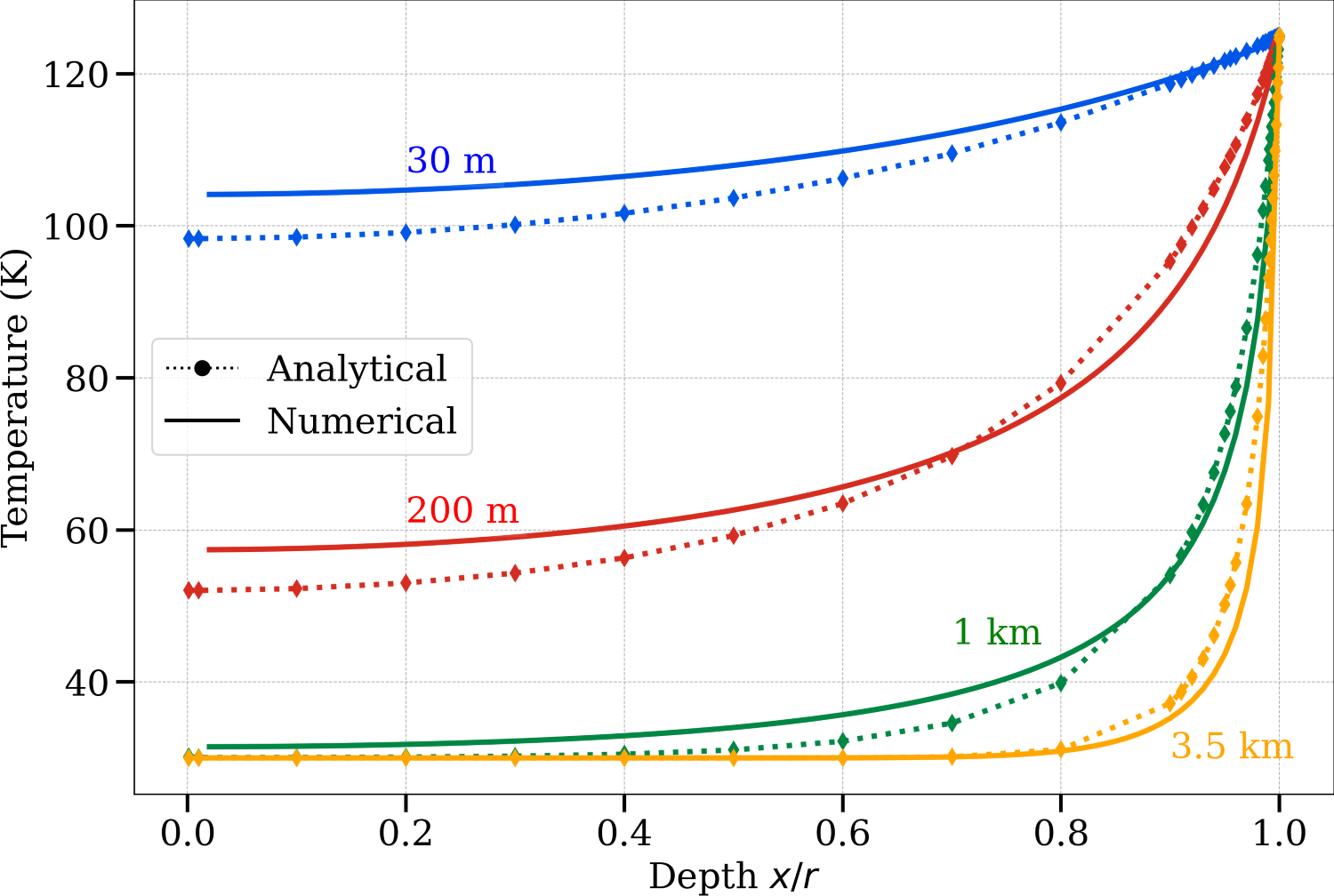
Ruslan Spassyuk and Lyubov Shestakova

Thermal stresses in small bodies approaching the Sun

Modern agglomeration models describe cometary nuclei as porous bodies with low
densities ( 0.1 g/cm³), yet observations of comets Halley and Shoemaker–Levy 9 indi-
cate significantly higher densities ( 0.6 g/cm³), suggesting a need to revise these models.
Thermal stress has emerged as a plausible mechanism for fragmentation, capable of op-
erating far from the Sun and without requiring tidal forces. Studies (Tauber and Kuhrt,
1987; Shestakova and Tambovtseva, 1997; Tambovtseva and Shestakova, 1999; ˇCapek
and Vokrouhlick´y, 2010) show that thermal stresses can exceed the tensile strength of
terrestrial materials.
This mechanism is also relevant to the origin of meteorites and near-Earth ob-
jects (NEOs). Research (Broˇz, M. et al., 2024) highlights the role of asteroid families
like Karin, Koronis, and Massalia in generating NEOs and ordinary chondrites. Car-
bonaceous chondrites are linked to bodies such as 3200 Phaethon, which may undergo
thermal disruption near the Sun.
We apply both analytical and numerical solutions of the heat diffusion equation
with one initial and two boundary conditions (Shestakova and Tambovtseva, 1997).
The analytical approach assumes constant thermal diffusivity and is restricted to ide-
alized parabolic orbits with zero perihelion, whereas the numerical model accounts
for temperature-dependent thermal diffusivity and realistic orbital configurations with
non-zero perihelion distance.
Spherical bodies made of crystalline ice, basalt, and chondrites are modeled along
parabolic orbits. Initial uniform temperatures are set at Tbb ≈ 150 K (3.45 AU) for
silicates and Tbb ≈ 30 K (86 AU) for ice, with final distances of 0.0345 AU (Tbb ≈
1500 K) and 4.95 AU (Tbb ≈ 125 K), respectively. Results show rapid internal heating
for small bodies, while larger ones retain cold interiors (see Fig. 1).
Comparison with strength lines (see Fig. 2) suggests that bodies with radii of 30 m
to 5 km may undergo fragmentation, even at distances from 10 AU to 40 AU.Smaller
fragments (with radii less than 30 meters) are unlikely to undergo thermal destruc-
tion, as they experience nearly uniform heating throughout their volume, resulting in
negligible internal temperature gradients and stress accumulation. Nevertheless, such
bodies are subject to active sublimation(Shestakova and Serebryanskiy, 2023) as they
approach the Sun. In contrast, larger nuclei (more than 1 km) retain a cooler interior and exhibit critical thermal stresses in the near-surface layers, which is consistent with the observed onset of coma formation during solar approach. The breakup of comet
Shoemaker–Levy 9 was likely initiated by this mechanism, with thermal fracturing
possibly preceding the tidal disruption (Shestakova et al., 2025).
According to Fig. 3, destructive internal stresses arise in basaltic, carbonaceous, and
ordinary chondritic bodies at heliocentric distances of approximately 2.5 AU, 2 AU,
and 1 AU, respectively. These stresses affect bodies with radii not exceeding 10 meters,
whose fragmentation is unlikely to produce observable dust clouds unless they pass
close to Earth such as ordinary chondrites with radii around 10 m. Near Earth’s
orbit, carbonaceous chondrites (40 m) and basaltic bodies (80 m) may also undergo
fragmentation ( ˇCapek and Vokrouhlick´y, 2010).Larger objects tend to break up closer
to the Sun, initiating a cascade of fragmentation. The resulting smaller fragments
continue to disintegrate, forming clouds of fine dust that may reach the sublimation
zone and become detectable via optical or infrared observations.


Figure 1: Temperature profiles from the center (x/r = 0) to the surface (x/r = 1) inside
bodies of various sizes at the final heliocentric distances of 0.0345 AU (7.42 R⊙) and 4.95 AU,
for chondritic material (left) and crystalline ice (right), respectively.

Figure 2: Thermal stresses at the center (x/r → 0, left) for the radial component and at the
surface (x/r = 1, right) for the tangential component, computed analytical and numerical at
various heliocentric distances from the initial position at 86 AU to the final point at 4.95 AU
for ice bodies.

Figure 3: Thermal stresses at the center (x/r → 0, left) for the radial component and
at the surface (x/r = 1, right) for the tangential component, computed analytically and
numerically at various heliocentric distances from the initial position at 3.45 AU to the final
point at 0.0345 AU (≈ 7.42 R⊙) for chondritic and basalt bodies.

Acknowledgements: Our research is funded by the Science Committee of the Ministry of Science and Higher Education of the Republic of Kazakhstan (programme no. BR20381077).

References
Broˇz, M., Vernazza, P., Marsset, M., Binzel, R. P., DeMeo, F., Birlan, M., Colas, F., Anghel,
S., Bouley, S., Blanpain, C., Gattacceca, J., Jeanne, S., Jorda, L., Lecubin, J., Malgoyre,
A., Steinhausser, A., Vaubaillon, J., and Zanda, B. (2024). Source regions of carbonaceous
meteorites and near-earth objects. AA, 689:A183.
Shestakova, L. I. and Serebryanskiy, A. V. (2023). On the new mechanism of planetary long-
period debris formation around white dwarfs. Monthly Notices of the Royal Astronomical
Society, 524(3):4506–4520

Shestakova, L. I., Spassyuk, R., and Omarov, C. (2025). Thermal stresses as a possible
mechanism for initiating the destruction of comet shoemaker–levy 9. Monthly Notices of
the Royal Astronomical Society, 537(2):2151–2159.
Shestakova, L. I. and Tambovtseva, L. V. (1997). The thermal destruction of solids near the
sun. Earth, Moon, and Planets, 76(1):19–45.
Tambovtseva, L. and Shestakova, L. (1999). Cometary splitting due to thermal stresses.
Planetary and Space Science, 47(3):319–326.
Tauber, F. and Kuhrt, E. (1987). Thermal stresses in cometary nuclei. Icarus, 69:83–90.
ˇCapek, D. and Vokrouhlick´y, D. (2010). Thermal stresses in meteoroids. i. implications for
small-scale splitting of meteoroids. Astronomy & Astrophysics, 519:A75.

How to cite: Spassyuk, R. and Shestakova, L.: Thermal stresses in small bodies approaching the Sun, EPSC-DPS Joint Meeting 2025, Helsinki, Finland, 7–13 Sep 2025, EPSC-DPS2025-1103, https://doi.org/10.5194/epsc-dps2025-1103, 2025.

F171
|
EPSC-DPS2025-332
|
ECP
|
On-site presentation
Ryan Dahoumane, Valéry Lainey, and Kévin Baillié

The existence or inexistence of subsatellites (satellites of satellites) in the Solar System has never been demonstrated. Kollmeier and Raymond (2019) showed from an analytical approach exclusively based on tides that Jupiter and Saturn could both potentially host subsatellites. Later, Sucerquia, Mario et al. (2024) studied the stability of equatorial rings around main satellites of the gaseous planets, through N-body simulations. They concluded that such rings could be stable over long timescales, in contrast with the absence of direct observations. We extend this work by examining the stability of sub-moons around a large number of Jupiter’s and Saturn’s satellites—including the irregulars. Using N-body simulations that account for gravitational perturbations from the Sun and the neighbour planet, we evaluate the survival rates of subsatellites. We produce a map of the best candidates capable of hosting sub-satellites in the Jovian and Kronian systems.

How to cite: Dahoumane, R., Lainey, V., and Baillié, K.: Hunting for Sub-Moons: A Map of Stability in the Jovian and Kronian Systems, EPSC-DPS Joint Meeting 2025, Helsinki, Finland, 7–13 Sep 2025, EPSC-DPS2025-332, https://doi.org/10.5194/epsc-dps2025-332, 2025.

F172
|
EPSC-DPS2025-457
|
On-site presentation
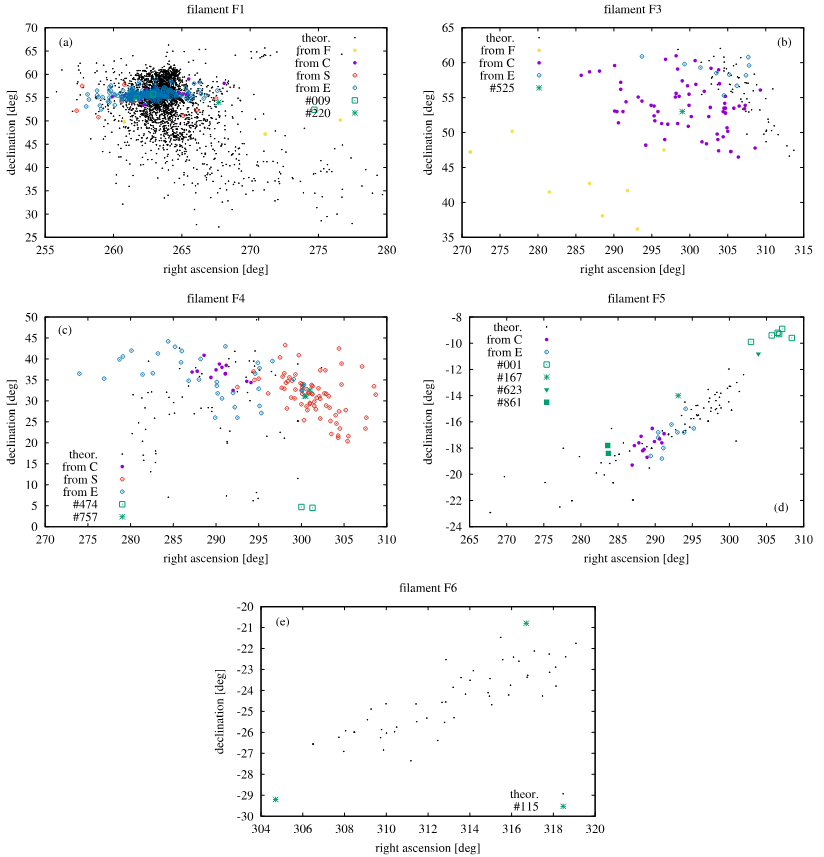
Luboš Neslušan and Dušan Tomko

We investigated the dynamical evolution of the meteoroid stream originating in the nucleus of comet 21P/Giacobini-Zinner. We created 20 partial models, in each assuming 10,000 test particles, and fixed values for the evolutionary time and the strength of the Poynting–Robertson effect. These models provided a ‘‘mosaic’’ with which to map the entire stream.

We tried to identify the predicted showers, corresponding to the individual filaments, in the IAU MDC photographic database, version 2021 (Porubčan et al., 2011; Neslušan et al., 2014), the IAU MDC ‘‘Cameras for Allsky Meteor Surveillance’’ (CAMS) video database, version V3 (Gural, 2011; Jenniskens et al., 2011, 2016a,b,c; Jenniskens and Nénon, 2016), the 2007–2021 ‘‘SonotaCo’’ video database (Sono-taCo, 2009, 2016, 2017; SonotaCo et al., 2021); and the ‘‘European viDeo MeteOr Network Database’’ (EDMOND) (Kornoš et al., 2014a,b). Hereafter, we refer to these databases with the capital letters F, C, S, and E, respectively. The versions of the databases used contained thegeocentric data and orbits of 4873, 471 582, 394 408, and 145 830 meteors, respectively.

We confirmed the relationship between the comet 21P/Giacobini-Zinner and the meteor shower October Draconids, #9. Our modeling also confirmed the erratic (rapidly evolving) orbits of the comet and the meteoroids in its stream. In accordance with the modeling, the October Draconids can survive in a compact orbital configuration, enabling their recognition as a meteor shower, only during ∼1 kyr after they are ejected from the surface of the parent body.

We predicted six meteor showers associated with 21P in total. The particles in these showers occur at the collisional course with the Earth after ∼1 to ∼2 kyr after their ejection.

We also found the probable relationship between comet 21P and several other showers. The 𝜄-Cygnids, #525, corresponded to the predicted filament F3 of the 21P’ stream. The 𝜒-Cygnids, #757, and the August 𝛽-Aquariids, #474, corresponded to filament F4, although the August 𝛽-Aquariids were meanwhile moved to the list of removed showers. It is, therefore, questionable whether this is a real shower. Our modeling supports its real existence. It seems it could be a duplicate shower (another solution) of the 𝜄-Cygnids. Furthermore, filament F5 was identified with the June 𝜉1-Sagittariids, #861, 𝜉2-Capricornids, #623, Northern 𝜎- Sagittariids, #167, and also with the 𝛼-Capricornids, #1. These four showers are probably solutions of the same shower. We note that the 𝜈- Draconids, #220, were identified, in addition to the October Draconids, with filament F1. This identification was, however, very uncertain. Filament F2 was predicted, but not identified with any real shower.

All the aforementioned showers have their radiant areas on the northern ecliptical hemisphere. We also predicted a filament, F6, with the radiant area on the southern sky. This filament was identified with two of four southern-sky solutions of the Daytime Capricornids- Sagittariids, #115.

Of all the showers found to originate in comet 21P, only the October Draconids, #9, and 𝛼-Capricornids, #1, are the established showers.

Fig. 1. The positions of the radiants of theoretical particles in filaments F1, F3–F6 (black triangles) and the positions of the real meteors in the shower corresponding to a given filament (yellow, violet, red, and blue full or empty circles indicating the identification of shower in F, C, S, and E databases, respectively). The mean radiants of the showers in the IAU MDC list of showers corresponding to given filament are shown with a large green symbol.

How to cite: Neslušan, L. and Tomko, D.: Long-period dynamical evolution of the meteoroid stream originating in comet 21P/Giacobini-Zinner, EPSC-DPS Joint Meeting 2025, Helsinki, Finland, 7–13 Sep 2025, EPSC-DPS2025-457, https://doi.org/10.5194/epsc-dps2025-457, 2025.

F173
|
EPSC-DPS2025-394
|
ECP
|
On-site presentation
Nicole Ozdowski, Mark Loeffler, Michelle Thompson, Driss Takir, and Joshua Emery

The surfaces of airless bodies in our Solar System are continually altered by processes collectively referred to as space weathering (Chapman 2004; Hapke 2001; Pieters & Noble 2016). Space weathering has the potential to complicate remote sensing efforts that aim to understand the composition and evolution of these bodies.  In light of recent remote sensing observations and returned sample analysis that show some asteroids are hydrated, we are conducting experiments on lizardite aimed at understanding how the 3-μm region responds to simulated space weathering. 

Our newly operational ultra-high vacuum (UHV) chamber operates at a base pressure of about 10-9 Torr. We have the capability to heat samples up to ~600 C in order to remove weakly bound terrestrial contaminants, such as H2O, while monitoring the reflectance spectrum of our sample. Currently, we can also irradiate our samples with a pulsed laser, which is used to simulate micrometeorite impacts. 

As serpentines are a major phase of phyllosilicates found in carbonaceous chondrite meteorites and are therefore expected to be observed on hydrated asteroids, we performed our first weathering experiments using the terrestrial serpentine mineral lizardite.  Here we present those results and discuss possible implications in the context on space weathering of airless bodies.  


Citations

Chapman, C. R. 2004, Annu. Rev. Earth Planet. Sci., 32, 539

Hapke, B. 2001, Journal of Geophysical Research: Planets, 106, 10039

Pieters, C. M., & Noble, S. K. 2016, Journal of Geophysical Research: Planets, 121, 1865

How to cite: Ozdowski, N., Loeffler, M., Thompson, M., Takir, D., and Emery, J.: Space Weathering Effects on Lizardite, EPSC-DPS Joint Meeting 2025, Helsinki, Finland, 7–13 Sep 2025, EPSC-DPS2025-394, https://doi.org/10.5194/epsc-dps2025-394, 2025.

F174
|
EPSC-DPS2025-958
|
On-site presentation
Patrick Hock, Jens Teiser, and Gerhard Wurm
The ionization of atmospheres is important for a number of physical and chemical processes from earth to other planets to protoplanetary disks. As many atmospheres are particle ladden at times with frequent collisions, we study the microphysics of particle collisions on ionization. It is well known that due to tribocharging particles carry charges after a collision. However, this charge transfer is not restricted to the grain surfaces. Somewhat less obvious, the gas phase also becomes ionized along.
 
In laboratory experiments, we quantify the amount of ions produced in a collision of glass beads with 2.8 mm diameter. We extract the ions by applying an external electrostatic field and measuring the generated current. The ions are detected at all the pressures studied, i.e. from 0.3 mbar to 100 mbar. However, the ionization rate peaks at about 1 mbar. Scaled to individual bouncing collisions, charge as high as 1 pC of each polarity was detected (Hock et al. 2025). This implies collisions of grains can be a significant source of ions in various atmospheres. In view of these results, this process might be a significant source of ionization in certain parts of atmospheres. 

How to cite: Hock, P., Teiser, J., and Wurm, G.: Ionizing atmospheres in collisions of grains , EPSC-DPS Joint Meeting 2025, Helsinki, Finland, 7–13 Sep 2025, EPSC-DPS2025-958, https://doi.org/10.5194/epsc-dps2025-958, 2025.

F175
|
EPSC-DPS2025-1136
|
On-site presentation
Mark Lewis, Amanda Sickafoose, Bastian Kneiling, Stephen Levine, Tim Lister, Michael Person, Karsten Schindler, and Carlos Zuluaga

The large Trans-Neptunian object (50000) Quaoar has one known moon, Weywot [1].  Based on stellar occultation data from 2018-2021, a ring named Q1R was reported around Quaoar at an orbital radius of 4148.4±7.4 km and with variable width and optical depth [2]. Occultation data from 2022 were analyzed to reveal two rings [3]. Deriving a similar pole orientation to [2], the dense part of Q1R was interpreted to be ring arcs located at a radius of 4057.2±5.8 km, having Lorentzian shape extending over 60 km and full-width-at-half-maximum of 5 km, with peak normal optical depth τ=0.4 and a minimum arc length of multiple hundreds of km [3]. The more tenuous, continuous portion of Q1R had a typical width of 80-100 km and normal optical depth of τ=0.003 [3]. Secondary events from one location were consistent with a second ring, Q2R, at a radius of 2520±20 km, typical width of 10 km, and a normal optical depth of τ=0.004 [3].

The location of Q1R is well outside the Roche limit, implying that the material should coalesce over reasonable timescales. [2] and [3] pointed out that the ring is close to a 3:1 spin-orbit resonance with Quaoar as well as the inner 6:1 mean-motion resonance with Weywot, both of which could act to perturb and/or confine material. Following on numerical models showing that a single satellite can confine ring material outside the Roche limit at Chariklo [4], we present global collisional simulations of ring material near the 6:1 mean-motion resonance in a system with parameters that mirror those of the Quaoar/Weywot system. 

We begin with simulations of low optical depth material, τ=0.01, spread uniformly over a 200 km radial range on roughly circular orbits to explore where the resonant forcing would cause material to be confined into a narrow ring. We then simulate a higher optical depth distribution, τ=0.1, that covers only the range of radii that were confined in the initial simulation. To model the 6:1 resonance with an eccentric moon, the simulations are global and include collisions only, not self-gravity, with oversized particles 20 m in radius, and a velocity-dependent coefficient of restitution from [5]. Notably, these simulations do not yet explore the impact of being outside the classical Roche limit. 

We find that a narrow ring of material is confined near resonance after a few hundred orbits. The width of the material that is pulled into the ring scales with the orbital eccentricity and mass of the simulated Weywot.

In addition, we present a handful of new stellar occultation datasets by Quaoar between 2019 and 2024, some light curves of which contain detections of Q1R. Synthetic occultations from the numerical simulations can be compared with the occultation data to better constrain the physical properties of ring material. This work is supported by NSF AST Award Number 2206306.

[1] Brown, M. E. and T.-A. Suer (2007). Satellites of 2003 AZ_84, (50000), (55637), and (90482). International Astronomical Union Circular 8812. 

[2] Morgado, B. E., et al. (2023). A dense ring of the trans-Neptunian object Quaoar outside its Roche limit. Nature 614, 239.

[3] Pereira, C. L., et al. (2023). The two rings of (50000) Quaoar. A&A 673, id.L4.

[4] Sickafoose, A. A. and M. C. Lewis, Numerical Simulations of (10199) Chariklo’s Rings with a Resonant Perturber, PSJ, 5(2), id. 32, 2024.

[5] Bridges, F., Hatzes, A. & Lin, D. (1984). Structure, stability and evolution of Saturn's rings. Nature 309, 333–335.

How to cite: Lewis, M., Sickafoose, A., Kneiling, B., Levine, S., Lister, T., Person, M., Schindler, K., and Zuluaga, C.: Simulating Quaoar’s Ring with Confinement by Weywot, EPSC-DPS Joint Meeting 2025, Helsinki, Finland, 7–13 Sep 2025, EPSC-DPS2025-1136, https://doi.org/10.5194/epsc-dps2025-1136, 2025.

F176
|
EPSC-DPS2025-1832
|
On-site presentation
Joe Hahn, Douglas Hamilton, Thomas Rimlinger, and Lucy Lu

Narrow eccentric planetary ringlets have sharp edges, sizable eccentricity gradients, and an unknown confinement mechanism that preserves the ringlet's narrow width despite ringlet's viscosity that would otherwise cause it to spread radially. One popular confinement mechanism suggests that a narrow ringlet is straddled by one or more unseen shepherd satellites whose gravitational perturbations confine the ringlet radially (Goldreich & Tremaine 1979, Goldreich et al 1995, Chiang & Goldreich 2000, Mosqueira & Estrada 2002). However the Cassini spacecraft did not detect any such shepherds, which casts doubt on this proposal (Longaretti 2018). 

Nbody simulations of viscous self-gravitating ringlets are used to investigate whether ringlets might be self-confining. We find that under a wide range of initial conditions, the simulated ringlet's self-gravity pumps up the ringlet's eccentricity gradient until the ringlet's angular shear near periapse experiences a sign reversal, as anticipated by Borderies et al (1982, BGT). These Nbody simulations also show that when the angular shear reversal is vigorous enough, that causes the ringlet's orbit-averaged angular momentum flux to reverse sign, which in turn causes the ringlet to contract radially while also causing its surface density profile to sharpen at the ringlet edges.

Viscous friction within the ringlet also causes the ringlet's mean eccentricity to decay over time, which will eventually reduce the ringlet's eccentricity gradient and ultimately defeat this confinement mechanism. Which means that self-confining ringlet's have a finite lifetime, and that lifetime will be assessed at conference time.

How to cite: Hahn, J., Hamilton, D., Rimlinger, T., and Lu, L.: Self-Confinement of Narrow Eccentric Planetary Ringlets, EPSC-DPS Joint Meeting 2025, Helsinki, Finland, 7–13 Sep 2025, EPSC-DPS2025-1832, https://doi.org/10.5194/epsc-dps2025-1832, 2025.

F177
|
EPSC-DPS2025-1493
|
ECP
|
On-site presentation
Dar Dahlen

Kete is an open source software library designed to predict the location of all known asteroids and comets to within sub-arcsecond precision on a laptop. Kete provides a number of tools to calculate object states and expected magnitudes (Visible and IR), and is designed to operate on the entire catalog of solar system objects within a few centuries from today. The NEO Surveyor and SphereX telescopes are using Kete to predict and label known solar system objects in all images that are captured. Kete has also been used to perform precovery on asteroids, in one case identifying an asteroid in a glass plate from Palomar Mountain in 1950. The tools may be combined in many ways to solve complex problems, examples include identifying all known asteroids in a given FITs image, calculating syndyne/synchrone curves for comets, performing monte-carlo simulations of the orbital uncertainty of an asteroids orbit for precovery, and observation planning.

How to cite: Dahlen, D.: Kete: open source solar system simulation software, EPSC-DPS Joint Meeting 2025, Helsinki, Finland, 7–13 Sep 2025, EPSC-DPS2025-1493, https://doi.org/10.5194/epsc-dps2025-1493, 2025.

F178
|
EPSC-DPS2025-391
|
On-site presentation
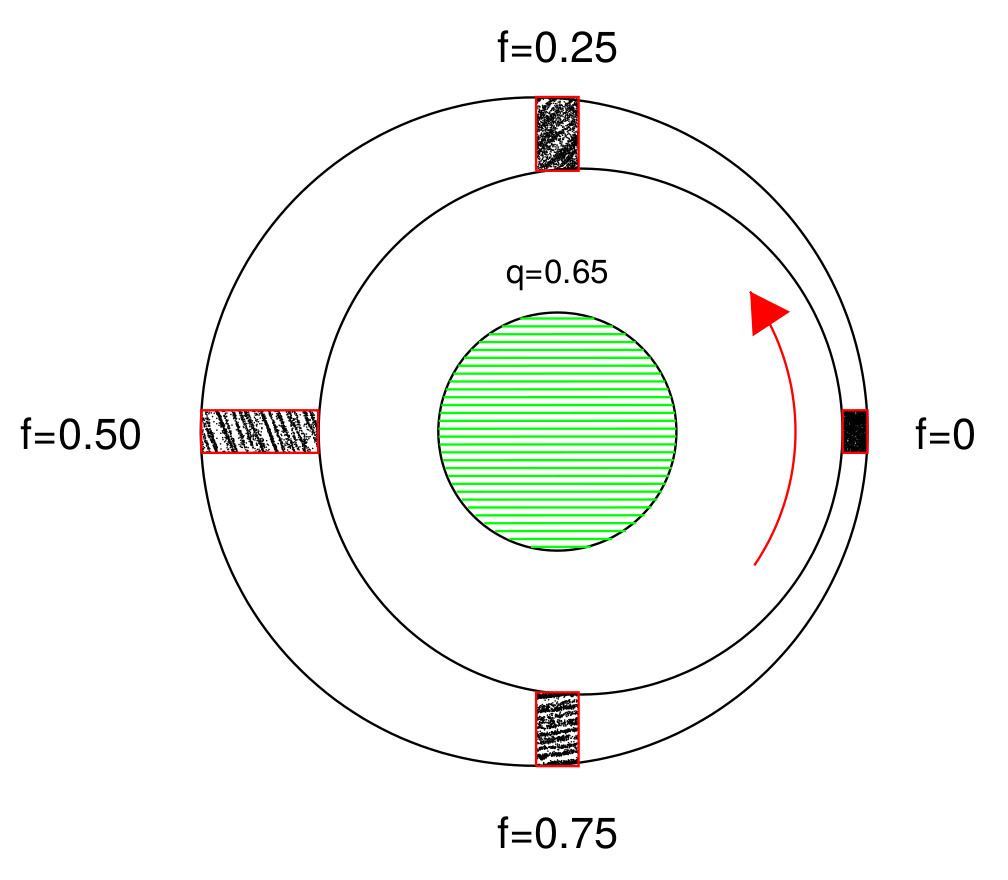
Heikki Salo, Richard G French, Philip D. Nicholson, and Matthew M. Hedman

Self-gravity wakes form in planetary rings via gravitational accumulation of ring particles, which is counteracted by differential rotation that tries to tear apart any forming condensations. This competition leads to a statistical steady state, with the continuous formation and destruction of local trailing density enhancements on timescales on the order of the ring orbital period. In unperturbed regions characterized by Keplerian shear, the average pitch angle of wakes with respect to  the tangential direction is 15-25 degrees, depending on the strength of self-gravity with respect to the  tidal force. The existence of such structures in Saturn’s A and B rings leads to azimuthal variations in ring optical depth and brightness, as they depend on the geometry of observation with respect to the local tangential direction (see Salo & Mondino-Llermanos, 2025).

In perturbed ring regions, the local shear rate may deviate significantly from its Keplerian value. This is the case, for example, in regions with satellite density waves, near non-circular ring edges, or inside eccentric ringlets exhibiting width variations. As a consequence, the average spacing and orientation of self-gravity wakes can be expected to change compared to those in unperturbed regions.

An efficient local method to simulate perturbed rings was devised by Mosqueira (1996). It is based on the fact that, from the viewpoint of an individual ring particle, such perturbations appear as periodic compression and decompression of the density in the vicinity of the particle (Fig. 1). This can be mimicked in a local simulation by: 1) assigning the initial particle velocities to follow the perturbed mean flow; 2) making the radial size of the simulated region follow the local density changes; and 3) using periodic boundary conditions that account for the perturbation-modified shear rate.


Fig. 1  Schematic illustration of the local simulation of an eccentric ring. Due to ring eccentricity gradient (de/da), the ring width varies as W=W90 (1-q cos(2πf)), where q = a de/da  is the perturbation parameter, f  is the orbital phase counted from the maximum compression, and W90 the ring width at quadrature (phase f=0.25). Due to width variations, the pitch angle of self-gravity wakes changes with the orbital phase: after the maximum compression, the wake structure emerges with a large  pitch angle and winds tighter with the orbital phase (see Figs 2 and 3).


In the current study, we extend the Mosqueira (1996) method to take into account ring self-gravity, calculated self-consistently as described in Salo et al. (2018). The effect of different parameters on the self-gravity wake structure is systematically explored, including the strength of the perturbation (Figs. 2 and 3), as well as the properties of the underlying ring (strength of self-gravity, optical depth, particle size distribution, and elasticity of impacts). Besides dynamical modeling we also analyze how the photometric signatures of self-gravity wakes are modified in perturbed regions.

Preliminary application  to the Uranian ε ring  indicates very good agreement between the simulated self-gravity wakes and the local micro-structure deduced from the analysis of the Voyager 2 RSS scattered signal (French et al. in prep.). For the orbital phase of RSS egress observations (f=0.67), both observations  and simulations (using q=0.65) give similar 10 degree pitch angle (Fig. 3).  Modeling the wake spacing deduced from the RSS signal suggests that the ring particles have an  internal density less than or approximately half  that of solid ice.

References:

  • Mosqueira (1996)  "Local Simulations of Perturbed Dense Planetary Rings", Icarus 122, 128
  • Salo & Mondino-Llermanos (2025) "Photometric modelling of self-gravity wakes and overstable oscillations in Saturn's rings ", A&A,  695, id.A37
  • Salo & Ohtsuki & Lewis (2018)  "Computer Simulations of Planetary Rings", in the book Planetary Ring Systems. Properties, Structure, and Evolution, Eds. M.S. Tiscareno and C.D. Murray.

Fig. 2 Influence of perturbation on self-gravity wakes when q  increases from zero to 0.65. In each case, the evolution over one full orbit is displayed, for orbital phases f separated by 0.1 orbital periods (corresponding to different ring azimuths).  In the snapshots the radial coordinate increases vertically and the prograde tangential direction is to the left. After the first few periods, the system attains a statistical steady state where a  basically similar evolution repeats after each orbital cycle. The strength of gravity (rh=0.68) corresponds to that estimated for the mid-A ring in Salo & Mondino-Llermanos (2025). The size of the simulation system at f=0.25 corresponds to 10 by 12 Toomre critical wavelengths in the radial and tangential directions. The number of particles is  N=48000.

Fig. 3 Pitch angle and wake spacing in the simulations of Fig. 2. The measurements were based on the 2D power-spectrum of the density field, averaged over snapshots corresponding to similar phases over 40 orbital cycles. Note  how the pitch angle is reduced as the orbital phase increases from 0.25 to 1  (at f=0-0.25 the pitch angle is not well defined). For f ≥ 0.6, the pitch angle is significantly reduced and for f ≥ 0.2-0.4 the wake spacing becomes smaller compared to its non-perturbed value.

How to cite: Salo, H., French, R. G., Nicholson, P. D., and Hedman, M. M.: Simulations of self-gravity wakes in perturbed ring regions, EPSC-DPS Joint Meeting 2025, Helsinki, Finland, 7–13 Sep 2025, EPSC-DPS2025-391, https://doi.org/10.5194/epsc-dps2025-391, 2025.

F179
|
EPSC-DPS2025-1335
|
ECP
|
On-site presentation
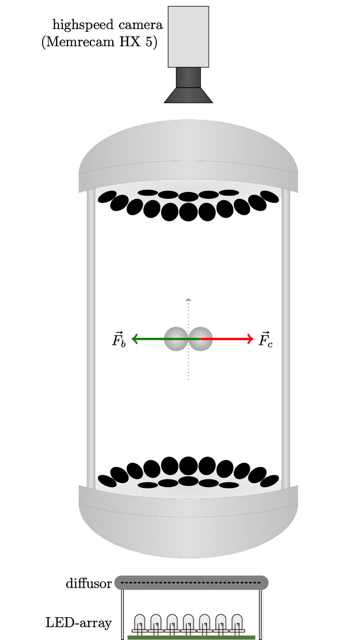
Jonas Schwaak, Florian Führer, Dietrich E. Wolf, Lindsey Posorski, Lothar Brendel, Jens Teiser, and Gerhard Wurm

A major barrier to early planet formation within protoplanetary disks is overcoming the so-called bouncing barrier, which prevents the growth of dust aggregates beyond the millimeter scale due to collisional bouncing. However, such collisions can induce tribocharging and thereby generate long-range electrostatic attractions. This additional long-range force plays a significant role in fostering the formation of lager entities that are more likely to participate in further concentration mechanisms such as the streaming instability.

In our laboratory experiments we used an acoustic trap to  levitate small aggregates of tribocharged sub-mm grains (see fig. 1). As these aggregates spin up within the trap and eventually lose grains one could use the centrifugal force to measure the local binding force.

Our results demonstrate that grains are often strongly bound to their neighbors (Schwaak et al. 2024). The forces required to eject particles from the clusters can exceed the scattering forces of the acoustic trap, indicating that the binding strength is several orders of magnitude higher than for uncharged grains. As these electrostatic forces are long-range compared to van der Waals interactions, charged aggregates exhibit enhanced stability.

We conclude that tribocharging significantly increases the effective binding force between particles, facilitating the growth of centimeter-sized clusters. This mechanism may provide the necessary conditions for hydrodynamic concentration and the nucleation of planetesimal formation across a wide part of the protoplanetary disk.


Fig. 1: Principle experiment setup (Schwaak et al. 2024).

How to cite: Schwaak, J., Führer, F., Wolf, D. E., Posorski, L., Brendel, L., Teiser, J., and Wurm, G.: Exploring the stability of charge particle clusters: Acoustic levitation as a tool for studying planetesimal formation, EPSC-DPS Joint Meeting 2025, Helsinki, Finland, 7–13 Sep 2025, EPSC-DPS2025-1335, https://doi.org/10.5194/epsc-dps2025-1335, 2025.

F180
|
EPSC-DPS2025-726
|
ECP
|
On-site presentation
Julia W. Miller, Orkan Umurhan, Christian Huber, and Samuel Birch

Introduction: Small, ice-rich objects in and beyond the Kuiper Belt are likely to have undergone the least amount of processing in the billions of years since their formation, and can be used to form a more complete picture of the conditions and materials present in the early solar system. However, even these objects are unlikely to have remained entirely pristine. Since they would originally have contained substantial amounts of hypervolatile ice, even minor sources of heating may have resulted in significant thermal alteration.

To understand the extent to which the presence and quantity of volatile materials in a small body is indicative of when and where an object formed, we have developed a new thermophysical evolution model for small bodies, which includes all physical processes relevant to volatile loss at low temperatures.

Methods: We have developed a 1D spherically symmetric finite difference model for the thermophysical evolution of small porous bodies with volatile-rich interiors. We treat one species as a volatile material and track sublimation, deposition, and gas flow for this species. All other materials (predominantly silicates, complex organic materials, and amorphous water ice) make up the matrix, which is all treated as entirely refractory, consistent with the low range of temperatures we consider.

Our system is described by a set of coupled partial differential equations for the conservation of energy and mass through time. At each model time step, we solve the diffusion equation for volatile gas in the Knudsen flow regime, with phase change as a source term. This is done implicitly, assuming that the time step is long enough for the gas density to adjust to an equilibrium profile. We then update the temperature profile by solving an explicit form of the thermal diffusion equation, with the latent heat of phase change as an energy sink and the decay of long-lived radioisotopes as an energy source. We use a constant value for thermal conductivity but investigate the effect of varying this value, since the functional form generally has a strong dependence on both the porosity structure [1,2] and the distribution of solid components [3], neither of which are well constrained for small porous bodies.

For this study, the volatile of interest is carbon monoxide, and we use the updated vapor pressure curves from [4]. We use CI chondrite abundances of radioisotopes for the silicate portion of the body [16], and we assume a 1:1 ratio by mass of silicates to complex organic material [17]. We consider a range of temperatures between 30 K and 39 K, broadly consistent with equilibrium surface temperatures in the Kuiper Belt. We choose initial CO mass fractions between 0.05 and 0.15, generally consistent with estimates of protoplanetary disc composition at the location of the future Kuiper Belt [5]. We vary the pore size of the matrix material between 1 and 0.01 mm, and we test values of effective thermal conductivity between 1e-2 and 1e-4 W/m/K, both consistent with remote measurements of comets [6].

Results: We find that it is possible for a porous Kuiper Belt Object with a 5 km radius, such as Arrokoth, to retain CO over the lifetime of the solar system, although many plausible combinations of matrix porosity and thermal conductivity result in CO depletion even at a surface temperature of 30 K. Lower temperatures and porosities, and higher values for effective thermal conductivity result in slower rates of CO loss. Higher initial CO mass fractions also increase the volatile retention lifetime in a weakly nonlinear manner.

Discussion: It has been suggested [7,8] that the minimal amount of solar radiation received by objects in the Kuiper Belt and Oort Cloud may still have been enough to fully remove volatile ices, such as CO, on timescales much shorter than the age of the solar system. However, CO outgassing has been observed from comets sourced from these regions. This has led various workers to hypothesize that CO is trapped in less volatile materials such as amorphous water [9,10], clathrates [11], or CO2 ice [7,12]. If such mechanisms were responsible for the release of CO vapor, one would expect CO outgassing rates to be correlated with rates of H2O and CO2 vapor production, but this does not seem to be the case [12,13]. Furthermore, CO outgassing has been observed in recent years at large heliocentric distances where less volatile ices should be stable [15].

If CO can be preserved for billions of years within small bodies in the outer solar system, then additional mechanisms for volatile retention are not categorically required to explain observations, and the discrepancy outlined above is resolved. We suggest that this may be the case for some portion of comets which formed cold [18] and late [19], with small pores and thermally conductive interiors.


References: [1] Shoshany, Y., et al. (2002) Icarus 157, 219–227. [2] Krause, M., et al. (2011) Icarus 214.1, 286-296. [3] Wang, M., et al. (2007) J. Phys. D: Appl. Phys., 40, 260. [4] Grundy, W. M., et al. (2024) Icarus 410, 115767. [5] Estrada, P. R., Cuzzi, J. N. (2022) APJ 936 (1), 40. [6] Groussin, O., et al. (2019) Space Sci Rev, 215:29. [7] Lisse, C. M., et al. (2021) Icarus 356, 114072. [8] Bouziani, N., and Jewitt, D. (2022) APJ 924:37. [9] Jewitt, D. APJ 137, 4296–4312. [10] Prialnik, D., and Rosenberg, E. D. (2009) MNRAS 399, L79–L83. [11] Marboeuf, U., et al. (2010), APJ 708, 812. [12] Davidsson, B. J. R. (2021) MNRAS 505 (4), 5654–5685. [13] Kipfer, K. A., et al. (2024) A&A 686, A102. [14] De Prá, M. N., et al. (2024) Nat. Astro. 1-10. [15] Harrington Pinto, O., et al. (2022) PSJ 3:247. [16] Robuchon, G., and Nimmo, F. (2011) Icarus 216, 426-439. [17] Bardyn, A., et al. (2017) MNRAS 469, S712–S722. [18] Marschall, R., et al. (2025) PSS. [19] Davidsson, B. J. R. (2016) A&A 592, A63.

How to cite: Miller, J. W., Umurhan, O., Huber, C., and Birch, S.: Timescales for Hypervolatile Depletion from Small Kuiper Belt Objects, EPSC-DPS Joint Meeting 2025, Helsinki, Finland, 7–13 Sep 2025, EPSC-DPS2025-726, https://doi.org/10.5194/epsc-dps2025-726, 2025.

F181
|
EPSC-DPS2025-1812
|
On-site presentation
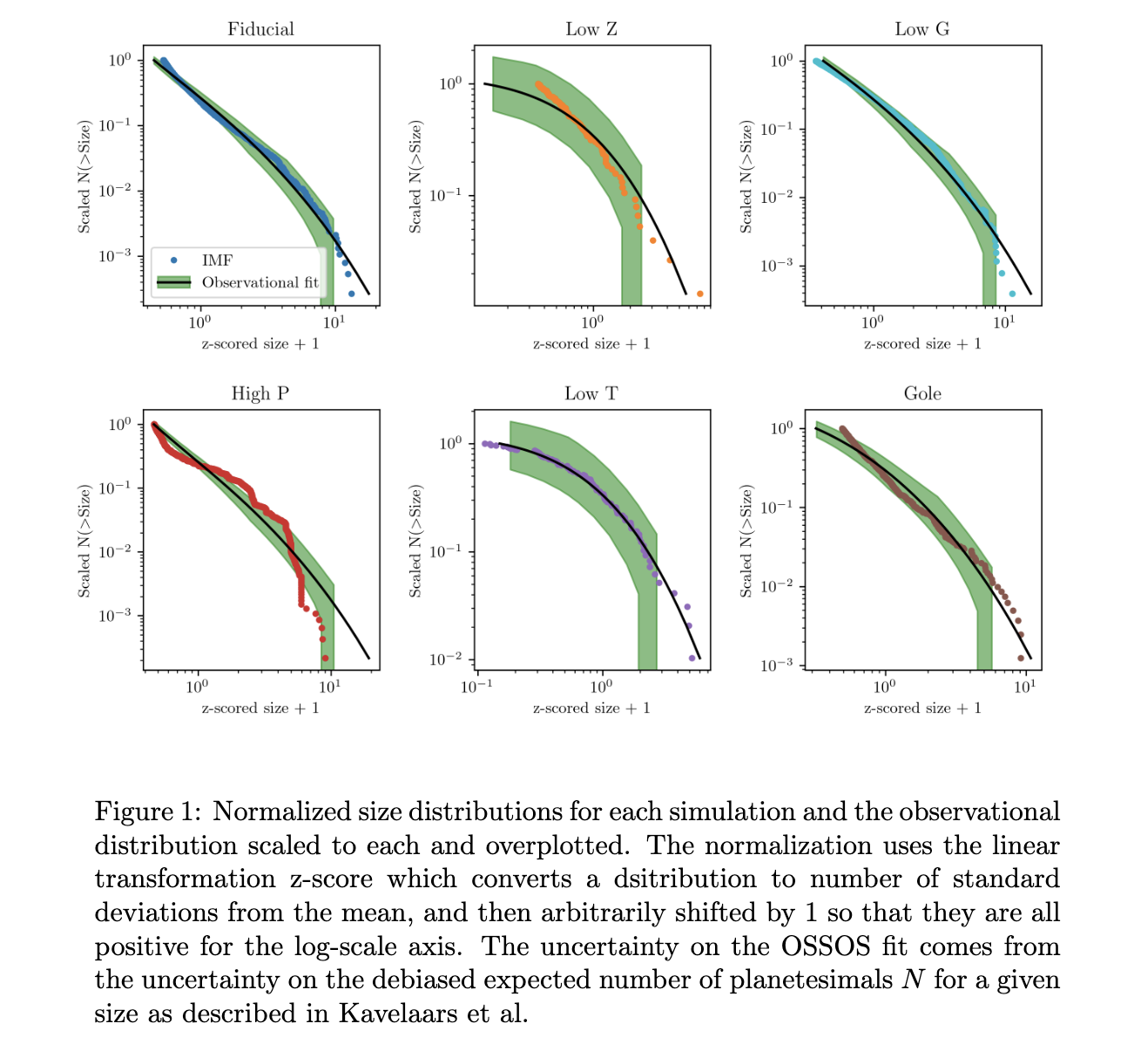
Weston Hall and Jacob Simon
Introduction
Planetesimals are small bodies held together by their own gravity, usually 1-1000 km in diameter. They can grow efficiently into planets by accreting pebbles and solid dust. The formation of planetesimals is an important open question in planetary science. A leading candidate for their creation is the streaming instability (SI), where radially drifting solid particles experience a drag force from embedded gas where angular momentum exchange between gas and solids leads to aerodynamic clumping of the solids. This instability can increase the density necessary to gravitationally bind particles together and grow planetesimals.
 
Many small bodies in our solar system are evolved usually via collisions that affect their shape and size. However, the Cold Classical Kuiper Belt objects (CCKBOs) are thought to be relatively pristine, having been formed from the primordial protoplanetary disk and remaining relatively unchanged. This means that they are an ideal testbed to compare size distributions between the observed size distribution of planetesimals and the size distribution of planetesimals formed in numerical simulations employing the SI.
 
In this work we study of the nature of planetesimal initial mass functions (IMFs) from numerical simulations. In particular, we study the effects of various physical parameters on planetesimal formation, and ultimately compare simulation IMFs to observed size distributions to determine if the SI model of planetesimal formation produces distributions that are similar to reality. The underlying assumption that makes this comparison reasonable (since the numerical simulation cannot reach the size and resolution necessary to model the CCB in its entirety), is that planetesimals formed via the physical process of the SI is comparable to randomly selecting planetesimal sizes from some underlying distribution, where that underlying distribution contains characteristics of the physical parameters of the numerical simulation. We carry out several statistical analyses (both parametric and non-parametric) that rely on different sets of assumptions to show that as numerical simulations approach the conditions of the early solar system, planetesimal IMFs become more similar to the observed CCKBO size distribution.
 
Methods
 
In short, we used the ATHENA hydrodynamical code to solve the equations of hydrodynamics inside of shearing boxes, which are small sections of a protoplanetary disk containing solid particles and an isothermal fluid that interact through momentum exchange. The SI is then allowed to concentrate the particles until an effective clumping saturation is reached, after which particle self-gravity is turned on. As the simulation continues, particles become clumped together in gravitationally bound objects that resemble clouds of pebbles, and have the necessary gravitational influence to collapse into large planetesimals. We track the particles throughout the simulation and use their characteristics at initial formation to inform the IMF.
 
We performed 6 simulations with different physical parameters for each one, choosing to vary particle size represented by a dimensionless stopping time parameter τ, a pressure gradient parameter relating the ratio of the particle velocity to the gas sound speed Π, the dust to gas mass ratio Z, and the relative strength of self-gravity to tidal shear ˜G. We were able to compare the relative distribution shape to confirm that each parameter has effects on the IMF that can be measured.
 
Using the observed Hr magnitude distributions of the Cold Classical Belt (Kavelaars et al 2021, Napier et al 2024)
, the size distribution can be compared to simulation IMFs. The Kolmogorov-Smirnov (K-S) test can be used to determine the likelihood that simulated IMFs were drawn from the observational distribution, and by bootstrap sampling the observed distributions, a 2-sample K-S test can be used to estimate the similarity between observation and simulation.
 
Lastly, simulation IMFs were parametrically fitted to match the functional form of the CCB distribution, which relies on some assumptions about pebble cloud characteristics and behavior in the simulations, and small body characteristics of the CCKBOs. The existence of a strong exponential taper cutoff has been shown in the CCB, and this method can probe for its existence in the simulation IMFs as well.
 
Results
 
 
The non-parametric comparisons can be seen in Figure 1. K-S test results between simulation IMFs and observational distributions yielded p-values greater than 0.05 for the ``Low G'' simulation and the α=0.5 distribution in Kavelaars et al. and the ``Low T'' simulation and all three distributions in the literature. Parametric fits can be seen in Figure 2. For the simulations that could probe the small-mass regime of the size scale well, power law slopes favored the gentler slope of Napier et al. When constraining the low-mass regime of the distribution, tapering power laws for the high-mass end mildly preferred the gentler slope of Kavelaars (α=0.4) and really favored the gentler slope in Napier et al., agreeing with the unconstrained fits.
 
 
The strong comparison between simulations ``Low Z'', ``Low G'', and especially ``Low T'' with observation suggest that physical parameters (like those chosen for these runs) that are similar to the primordial CCB produce stronger comparisons. The agreement between the SI results and observation are very promising. This is evidence that the SI can produce the necessary size distributions that match our solar system planetesimal populations.

How to cite: Hall, W. and Simon, J.: Planetesimal initial mass functions formed via the Streaming Instability agree with Cold Classical KBO size distributions, EPSC-DPS Joint Meeting 2025, Helsinki, Finland, 7–13 Sep 2025, EPSC-DPS2025-1812, https://doi.org/10.5194/epsc-dps2025-1812, 2025.

F182
|
EPSC-DPS2025-321
|
On-site presentation
Maya Guy, Benoit Carry, and Vincent Vandewalle

The identification of asteroid families is a key question in planetary sciences (Novaković et al. 2022), offering crucial insights into the collisional and dynamical history of the asteroid Main Belt (MB). These families, originating from the fragmentation of parent bodies due to catastrophic collisions, form dense clusters in orbital proper elements space. Over time, the non-gravitational Yarkovsky effect induces a semi-major axis drift, producing the characteristic V-shaped patterns in the (semi-major axis, absolute magnitude) plane.

Current techniques for family identification suffer from several limitations. The most widely used approach, the Hierarchical Clustering Method (HCM, Zappala et al. 1990), does not account for the presence of a background population, leading to overestimated family cores and the omission of their extended wings (often referred to as halos, Dermott et al. 2018). Furthermore, no families older than ∼2Gyr have been confidently identified using this method (Spoto et al. 2015). Additionally, HCM assumes that families are non-overlapping in the proper element space, an unrealistic assumption as young familiesmay overlap with older, more diffuse, families.

To overcome some of the HCM limitation, the V-shape method was developed (Bolin et al. 2017). Being based on the print of Yarkovsky-induced spreading, it successfully allowed to find very old families (Delbo et al. 2017; Delbo et al. 2019). While recent combined approaches have incorporated the background population into family detection frameworks (Ferrone et al. 2023), they still lack an intrinsic mechanism for handling overlapping families and do not yield probabilistic membership lists.

In this study, we propose a new probabilistic approach for identifying asteroid families in the MB, using model-based clustering. We model the observed population of the MB as a mixture of skewed-t distributions for eccentricity, inclination, and absolute magnitude, ST(xijμkjkjkjkj), j∈{1,2,3} coupled with a gaussian distribution for semi-major axis that explicitly depends on absolute magnitude N(xi4μk4+ck100.2xi3cosγs2k4) which captures the Yarkovsky-driven semi-major axis evolution. The parameters θkj, which define the shape and orientation of each cluster along each dimension (e, i, a, H), and mixture proportions αk of the model are estimated using the Expectation-Maximization (EM) algorithm. This model also includes a uniform background component for the primordial asteroid population.


This flexible approach accommodates anisotropic and overlapping family structures, and provides a probabilistic membership assignments, enabling a more nuanced and robust classification of asteroid families.
We will present the methodology and results from simulated datasets to demonstrate the performance and advantages of this approach.

References
Bolin, Bryce T., Marco Delbo, Alessandro Morbidelli, and Kevin J. Walsh (Jan. 2017). “Yarkovsky V-
shape identification of asteroid families”. In: Icarus 282, pp. 290–312. issn: 0019-1035.
Delbo, Marco, Chrysa Avdellidou, and Alessandro Morbidelli (2019). “Ancient and primordial collisional
families as the main sources of X-type asteroids of the inner main belt”. In: A&A 624, A69.
Delbo, Marco, Kevin Walsh, Bryce Bolin, Chrysa Avdellidou, and Alessandro Morbidelli (Sept. 2017).
“Identification of a primordial asteroid family constrains the original planetesimal population”. In:
Science 357.6355, pp. 1026–1029.
Dermott, Stanley F., Apostolos A. Christou, Dan Li, Thomas. J. J. Kehoe, and J. Malcolm Robinson (July
2018). “The common origin of family and non-family asteroids”. In: Nature Astronomy 2, pp. 549–554.
arXiv: 2010.13218 [astro-ph.EP].
Ferrone, S., Delbo, M., Avdellidou, C., Melikyan, R., Morbidelli, A., Walsh, K., and Deienno, R. (2023).
“Identification of a 4.3 billion year old asteroid family and planetesimal population in the Inner Main
Belt”. In: A&A 676, A5.
Novakovi´c, Bojan, David Vokrouhlick´y, Federica Spoto, and David Nesvorn´y (Aug. 2022). “Asteroid fam-
ilies: properties, recent advances, and future opportunities”. In: Celestial Mechanics and Dynamical
Astronomy 134.4, 34, p. 34. arXiv: 2205.06340 [astro-ph.EP].
Spoto, Federica, Andrea Milani, and Zoran Kneˇzevi´c (Sept. 2015). “Asteroid family ages”. In: Icarus 257,
pp. 275–289. arXiv: 1504.05461 [astro-ph.EP].
Zappala, Vincenzo, Alberto Cellino, Paolo Farinella, and Zoran Knezevic (Dec. 1990). “Asteroid Families.
I. Identification by Hierarchical Clustering and Reliability Assessment”. In: Astronomical Journal 100,
p. 2030.

How to cite: Guy, M., Carry, B., and Vandewalle, V.: Unveiling Hidden Structures in the Main Belt: A Probabilistic Framework for Asteroid Families, EPSC-DPS Joint Meeting 2025, Helsinki, Finland, 7–13 Sep 2025, EPSC-DPS2025-321, https://doi.org/10.5194/epsc-dps2025-321, 2025.

F183
|
EPSC-DPS2025-1440
|
ECP
|
On-site presentation
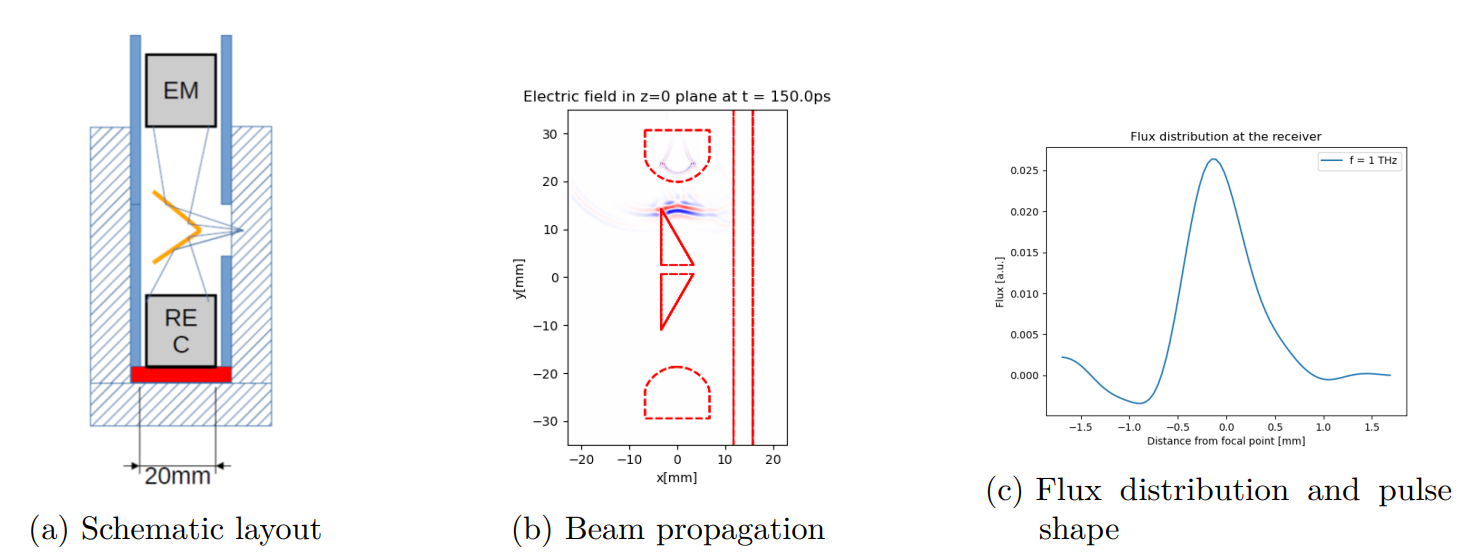
Valentin Meier, Arnaud Demion, Marc Nicollerat, Joseph Moerschell, Linus Stöckli, Axel Murk, Hervé Girard, Dominik Belousov, and Nicolas Thomas
 

Abstract

Comets are believed to be relics of the early Solar System, preserving pristine material that has undergone minimal thermal processing since planetary formation. Understanding their composition and internal structure—particularly the relationship between ices and refractory materials—is essential for testing current models of planet formation, such as pebble accretion [1]. While ground-penetrating radar (GPR) allows for 3D mapping of subsurface structures, and Raman spectroscopy offers detailed chemical analysis of surface materials, neither is ideally suited for non-contact, high-resolution analysis at centimeter-scale depths in opaque granular media. Terahertz time-domain spectroscopy (THz-TDS), with its capacity to penetrate non-metallic media, offers a promising alternative by enabling both structural and spectroscopic characterization in a single pulse.

As part of the SUBICE project, this work explores the miniaturization of THz-TDS systems for borehole applications on comets, focusing on simulated designs that could be integrated into future lander missions or robotic probes. The goal is to maintain high energy efficiency and spectral fidelity while minimizing optical complexity to reduce internal reflections (echoes), pulse distortion and energy loss, as well as preserving a large bandwidth.

Three conceptual designs were considered:

  • Off-axis reflection compact system: (Figure 1) A pair of conventional THz emitter and receiver modules are placed face to face, aligned such that a focusing THz beam is formed using aspherical silicon lenses. Two flat mirrors are used to deflect the beam sideways, enabling analysis of the borehole wall and underlying structures, and redirect it toward the receiver.

  • Antenna array with programmable emission delays: (Figure 2a) A lensless solution is explored where an array of THz emitters (blue dots on the figure) is driven with variable time delays to create constructive interference at a desired focal point. This electronically controlled beam-steering approach enables 2D scanning across the borehole wall without moving parts. In THz-TDS, each emitter requires optical excitation by a femtosecond laser pulse between two electrodes. This requirement can be met by integrating a microlens array to distribute the excitation beam to the emitter array — a technique demonstrated in prior literature [2].

  • Monolithic emitter–receiver design with shared lens: (Figure 2b) The third approach aims to reduce both volume and alignment complexity by combining emitter and receiver into a single optical block. An aspherical lens focuses the beam from the emitter toward the target. After perpendicular reflection (e.g. on a borehole wall and one underlying materials), the returning pulse is captured by receiver antennas placed adjacent to the emitter. These antennas are positioned to intercept the returning beam, which remains within a ~1 mm diameter spot. Since THz antennas have typical dimensions on the order of hundreds of microns, this design is geometrically feasible. A combination of variant 2. and 3. is also examined, without additional THz lens.

The simulations were performed using MEEP (MIT Electromagnetic Equation Propagation) with a spatial grid optimized for subwavelength resolution and absorbing boundary conditions to limit artifacts. In addition to flux maps, we evaluate pulse integrity by inspecting time-domain waveforms at the receiver. Maintaining pulse shape is essential to preserve spectroscopic resolution.

As a representative example, a snapshot of the pulse propagation and the flux distribution at the focus point of the off-axis reflection compact system configuration are illustrated (Figure 1b and 1c).

In this scenario, the emitter is characterized by a broadband Gaussian dipole pulse centered at 1 THz with a bandwidth of 4 THz. The pulse propagates through a silicon lens (refractive index 3.41) and is deflected toward the borehole wall using two flat mirrors. The focal spot at 1 THz reaches a FWHM of approximately 1 mm, consistent with efficient focusing. The flux distribution confirms that the energy remains concentrated along the intended path with limited dispersion. It should be noted that, due to normalization at the source, the y-axis values do not reflect absolute energy efficiency, however results are comparable to those of conventional THz setups employing spherical lenses and off-axis parabolic mirrors, which were also simulated.

These simulations assess not only the energy transfer efficiency but also the preservation of the pulse shape, which is critical for accurate spectroscopic analysis. Pulse integrity affects the clarity of spectral features, making beam shape and minimal distortion essential.

These concepts aim to guide the future integration of THz-TDS in borehole probes for cometary exploration. Unlike GPR, THz-TDS can resolve fine-scale structures and provide spectral fingerprints of volatiles and organics. Its depth range (cm-scale) and non-destructive nature make it a compelling complement to existing tools, especially for layered or porous cometary soils.

 
Figure 1: Off-axis reflection compact system compact system: (a) optical schematic, (b) beam propagation snapshot, and (c) pulse flux at focal point.
Figure 2: Schematic views of alternative designs: (a) antenna array and (b) monolithic emitter–receiver design.

References

[1] Lambrechts, M., & Johansen, A. (2012). Rapid growth of gas-giant cores by pebble accretion. Astronomy & Astrophysics, 544, A32. https://doi.org/10.1051/0004-6361/201219127

[2] Ata Akatay, Caglar Ataman, and Hakan Urey, High-resolution beam steering using microlens arrays. Optics Letters, 31(19), 2861–2863 (2006). https://doi.org/10.1364/OL.31.002861

How to cite: Meier, V., Demion, A., Nicollerat, M., Moerschell, J., Stöckli, L., Murk, A., Girard, H., Belousov, D., and Thomas, N.: Simulation of compact THz-TDS systems for borehole applications in cometary soil analysis, EPSC-DPS Joint Meeting 2025, Helsinki, Finland, 7–13 Sep 2025, EPSC-DPS2025-1440, https://doi.org/10.5194/epsc-dps2025-1440, 2025.

F184
|
EPSC-DPS2025-783
|
On-site presentation
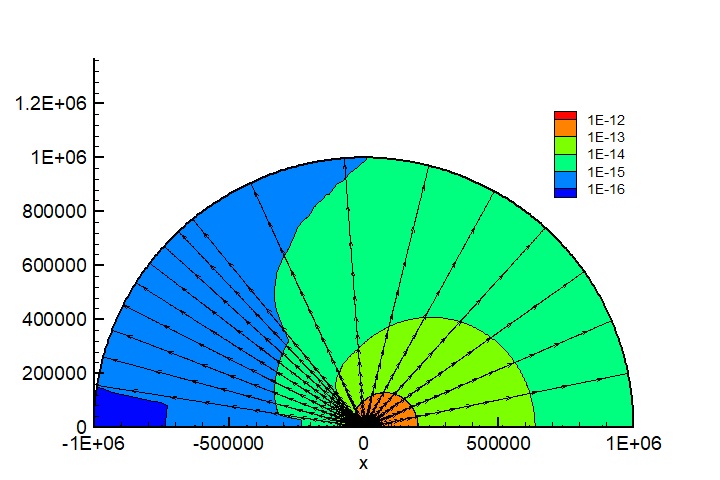
Vladimir Zakharov, Ivano Bertini, Nikolay Bykov, Stavro Ivanovski, Alessandra Rotundi, Alexander Rodionov, Vincenzo Della Corte, and Laura Inno

Comets are thought to be icy leftovers from planet formation, either planetesimals themselves or direct descendants of the former. These small bodies have undergone very few global changes since their formation in the proto-planetary disc. For that reason, they are widely considered to have retained information about the early Solar System and can inform our understanding of planet formation.

According to the current understanding, the nucleus of a comet consists of a mixture of diverse ices, minerals and organics. The atmosphere of a comet is formed by the sublimation products of ices and the dust particles ejected from the nucleus and entrained by the gas flow.

In the absence of a direct exploration of the nucleus, the observations of cometary atmosphere allow us to deduce parameters of the nucleus – its composition, structure etc. and, in this way, to get information about the Solar System formation.

Once ejected in the coma, cometary dust particles are anisotropic scatterers of incident sunlight, and their nature can be studied by remote sensing. Among them, the measurement of the phase function curve is of key importance in a number of scientific aspects. It can be inverted by theoretical and laboratory studies to provide clues about the intrinsic nature of the emitted dust. It is also useful for space instrument planning because it provides a baseline for optimal exposure times for remote sensing sensors that observe coma over a large range of phase angles during close approaches. This will be especially valuable for the future ESA Comet Interceptor mission, which will fly-by a dynamically new comet entering the Inner Solar System for the first time, and will carry instruments that will image the coma with different observational geometries and phase angles in a short time.

To interpret the phase function shape numerical modelling and laboratory experiments of light scattering by single particles have been conducted (Moreno et al. 2018, 2021, Munoz et al. 2020, Markkanen et al. 2018, Levasseur-Regourd et al. 2019). The results of these studies have shown that reproducing the phase function of a real comet (e.g. 67P/Churyumov-Gerasimenko obtained by OSIRIS camera onboard the Rosetta probe) is a non-trivial task.

In essence, the phase function is the result of scattering and propagation of solar radiance in the space filled by dust particles i.e. it is a combination of an optical properties (single/multiple scattering of photons in the coma, scattering properties of dust grains etc.) and dust dynamics (which defines spatial distribution of dust grains). It is of interest to reveal the contribution of pure dust dynamics (omitting optical properties of grains) on the phase function. This contribution is determined by the column values of the dust coma parameters, i.e., the integrals of the parameters along the line of sight from the camera through the coma.

We report the results of the study of the column area density dependence on the phase angle as it follows from the dust coma model used as a base for the Engineering Dust Coma Model in the ESA Comet Interceptor project.

The model of cometary environment assumes that the dusty-gas coma is formed by the gas sublimating from the nucleus (from the surface and/or from the interior) and solid particles (mineral or/and icy) released from the nucleus with zero initial velocity and entrained by the gas flow. The gas distribution is computed according to the model Zakharov et al. 2021a (see example in Fig.1). It is assumed that the dusty-gas flow is coupled in one way only -- the gas drags the dust (i.e. the presence of dust in the coma does not affect the gas motion), and that the dust particles do not collide with each other. The model of dust dynamics follows Zakharov et al. 2021b and accounts for gas drag, nucleus gravity, and solar gravity and radiation pressure (see example in Fig.2).

For a wide variety of gas and dust coma model parameters (heliocentric distances, surface gas production distributions, sizes and mass of the nucleus and dust grains) we compute the column values of dust environment along the line of sight (LOS) from the spacecraft (SC) for different phase angles (φ) and cometocentric distances (RSC) (see Fig.3). An example of the column area density dependence on the phase angle is shown in Fig.4. 

Fig.1 Gas density isocontours and flowlines (Sun on the right). Fig.2 Dust (ad = 1 μm) density isocontours (Sun on the right).
Fig.3 The geometry of observations. Fig.4 The normalized dust column area density as a function of phase angle (for two dust sizes and two cases of dust size distribution).  


Acknowledgments

This research was financially supported by the Russian Science Foundation, Agreement N 24-12-00299, https://rscf.ru/en/project/24-12-00299/.

Contribution of I. Bertini, A. Rotundi, V. Della Corte and L. Inno was supported by the ASI-INAF agreement 2023-14-HH.0 project number.


References

Bertini et al. 2017, MNRAS, 469, S404

Levasseur-Regourd et al. 2019, A&A, 630, A20

Markkanen et al. 2018, ApJ, 868, L16

Moreno et al. 2018, AJ, 156, 237

Moreno et al. 2021, MNRAS, 510, 5142

Munoz et al. 2020, ApJS, 247, 19

Zakharov et al. 2021a, Icarus 354, 114091

Zakharov et al. 2021b, Icarus 364, 114476

How to cite: Zakharov, V., Bertini, I., Bykov, N., Ivanovski, S., Rotundi, A., Rodionov, A., Della Corte, V., and Inno, L.: Variation of dust column properties as a function of phase angle as it follows from the dust coma model., EPSC-DPS Joint Meeting 2025, Helsinki, Finland, 7–13 Sep 2025, EPSC-DPS2025-783, https://doi.org/10.5194/epsc-dps2025-783, 2025.

F185
|
EPSC-DPS2025-1558
|
ECP
|
On-site presentation
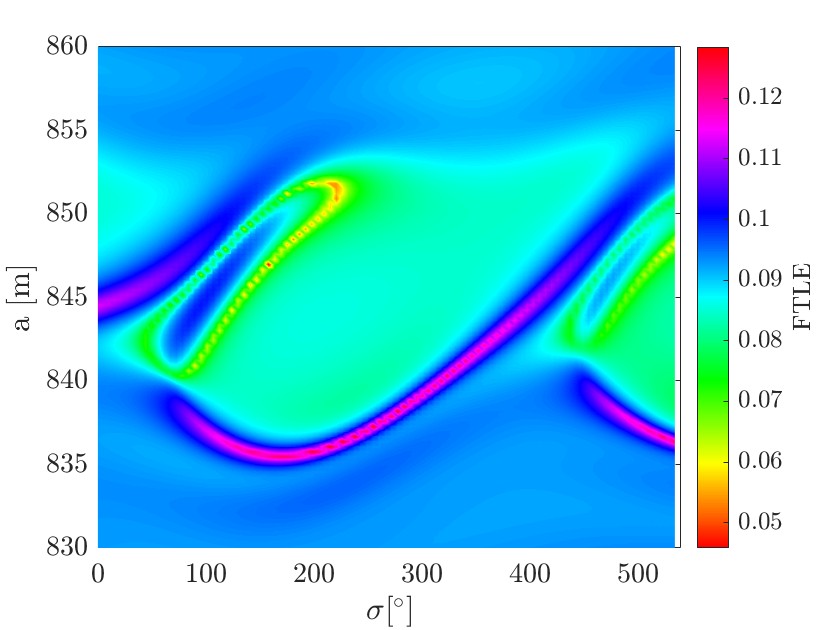
Lucia Civati, Iosto Fodde, and Fabio Ferrari

Asteroids exhibit intricate dynamical environments due to their irregular, nonspherical shapes, which give rise to complex gravitational fields capable of inducing chaotic motion in surrounding particles. Despite this apparent disorder, regions of periodic and resonant motion can emerge. These periodic and resonant structures, shaped by the gravitational asymmetry of the central body, are particularly evident in the body-fixed reference frame. In particular, resonant dynamics can provide valuable insight into the long-term evolution of ejecta, dust particles, and debris, as it can lead to their temporary or permanent trapping around small bodies. These mechanisms can drive the redistribution of material, with implications for regolith transport, debris retention, and the transition from transient to bound orbits [1]. In recent years, these dynamics have gained growing interest, especially for their relevance to early satellite formation, binary asteroid development, and the formation of rings or secondary bodies. Examples such as the rings observed around Chariklo and Haumea, suggesting  that these irregular bodies can host coherent structures maintained by resonant mechanisms [2].

Several studies have explored the influence of non-spherical gravitational potentials on resonant dynamics near small bodies [2][3], often relying on simplified representations such as ellipsoids, localized mass anomalies, or low-degree spherical harmonic models.

In this work, we model the deviation from spherical symmetry using a higher-order spherical harmonics expansion up to degree and order six, which proves sufficient to resolve resonant features close to the body. The approach is applied to the primary of the Didymos system, the binary asteroid targeted by ESA’s Hera mission, whose binary nature makes it an ideal case for investigating capture processes and the potential formation of secondary bodies.

An object is said to be in a p1 : p2 gravitational resonance when its orbital period and the rotational period of the central body satisfy the commensurability condition p1Ω = p2 n, where n denotes the mean motion of the particle (related to its orbital period in the inertial frame), and Ω is the rotational rate of the central body.

Near irregularly shaped bodies, it is more effective to adopt a body-fixed, co-rotating frame, in which the gravitational potential becomes time-invariant, and so problem autonomous, making it suitable for identifying resonance islands and stable regions through techniques such as Poincaré surface of section analysis. To provide a more intuitive and geometrically meaningful interpretation of resonances in the body-fixed frame, an alternative definition can be employed [6]. By defining the radial (epicyclic) frequency κ, which describes how frequently the particle returns to periapsis, and the synodic frequency, nΩ, which indicates how often the particle returns to the same spatial location in the co-rotating frame, the resonance condition can be reformulated as: κ = k( n−Ω), which corresponds to a k : (k − j) resonance: n/Ω∼k/(k-j).

Here, j represents the number of distinct types of sectors traced by the resonant orbit, while k indicates the number of identical sectors. Moreover, j also corresponds to the number of intersections on the Poincaré surface of section, offering a direct link between orbital resonances and visual structures in phase-space.

The phase-space structure around Didymos has been initially explored through Poincaré sections, revealing the emergence of resonant features and periodic orbit islands.  The resonances identified through these maps are then examined in using a Hamiltonian formalism. Through this approach, it becomes possible to construct portraits of the resonant phase-space, providing insights into the location of equilibrium points, the amplitude of libration and circulation zones, and the overall stability and dynamical features associated with a specific resonance.

This analysis is complemented through the use of a dynamical indicator: the Finite-Time Lyapunov Exponent (FTLE). This chaos indicator highlights the sensitivity of trajectories to initial conditions and is effective in capturing a broader picture of the system’s behavior. FTLE maps offer a useful benchmark for comparing results obtained via the classical Hamiltonian framework.

Fig. 1: Comparison between FTLE map (left) and phase-space portrait (right) for the 1:3 p1 : p2 resonance.

To investigate how resonances can facilitate the temporary or long-term trapping of particles, this study considers capture mechanisms influenced by perturbations relevant to natural ejecta, such as solar radiation pressure and energy-dissipating effects arising from particle collisions, extending the analysis beyond the typical resonance capture analysis applied to controlled spacecraft trajectories under low-thrust propulsion [5].  Inter-particle interactions are preliminarily modeled via a Stokes-like drag term, used as a simplified proxy for energy loss from mutual collisions.

A Monte Carlo approach is employed to statistically assess the probability of particles becoming trapped within previously identified resonant regions.

The examination of features such as the stabilization of the semi-major axis over time, energy variations near separatrices in the Hamiltonian phase-space, and the behavior of stability indicators, are used to distinguish transient from longer-lived trapping.

Fig. 2: Evolution of semi-major axis for particle captured in a Monte Carlo simulation with drag-like perturbation. 

Preliminary expectations indicate that collisional dissipation and low-thrust-like forces can facilitate trapping, while SRP, due to its varying direction, likely causes short-lived resonance locking. Further analysis will clarify the timescales and conditions for feasible capture. To complement the analysis, an N-body code designed for granular materials is used to simulate realistic particle collisions and investigate their role in resonant capture. While theoretical models offer insight into the dynamics around non-spherical bodies, collision simulations can provide a valuable counterpart by testing how these processes may lead to capture and possibly to binary system formation.

Acknowledgments

This work is funded by the European Union (ERC, TRACES, 101077758). Views and opinions expressed are however those of the authors only and do not necessarily reflect those of the European Union or the European Research Council. Neither the European Union nor the granting authority can be held responsible for them.

[1] D. Scheers et al. “The Fate of Asteroid Ejecta”.

[2] B. Sicardy et al. “The dynamics of rings around Centaurs and Trans-Neptunian Objects”.

[3] Nicolas Delsate. “Analytical and numerical study of the ground-track resonances of Dawn orbiting Vesta”.

[4] C. D. Murray et al. “Solar system dynamics”.

[5] W. Boumchita et al. “The capture probability of Dawn into ground-track resonances with Vesta”.


How to cite: Civati, L., Fodde, I., and Ferrari, F.: Resonant Dynamics and Particle Trapping Around Non-Symmetric Asteroids, EPSC-DPS Joint Meeting 2025, Helsinki, Finland, 7–13 Sep 2025, EPSC-DPS2025-1558, https://doi.org/10.5194/epsc-dps2025-1558, 2025.

F186
|
EPSC-DPS2025-559
|
ECP
|
Virtual presentation
Investigating dynamically linked near-Earth asteroids: Orbital evolution and possible separation mechanisms
(withdrawn)
Athanasia Toliou, Mikael Granvik, and Georgios Tsirvoulis