
 1
1- 1Purple Mountain Observatory, Chinese Academy of Sciences, Nanjing, China (wu@pmo.ac.cn)
- 2Space Science Institute, Macau University of Science and Technology, Macau, China (yzwu@must.edu.mo)
- Background and Data
Spectroscopy provides key insights into planetary surfaces. The differences observed among remote sensing, in situ, and sample-based measurements highlight the need to integrate multiple approaches for accurate understanding of airless body surfaces.
The Visible and Near-Infrared Imaging Spectrometer (VNIS) onboard the CE-3 and CE-4 rovers. Mounted 0.69 m above the surface at a 45° angle, it captures high-resolution spectra over a trapezoidal field of view.
The CE-5 mission collected two types of samples, namely, surficial and subsurface samples through scooping and drilling, respectively. Two samples of 200 mg each were allocated to us by the China National Space Administration. Sample 0600 represents the scooped surficial soils, while sample 0906 represents the drilled subsurface soils from a depth of approximately 10 cm.
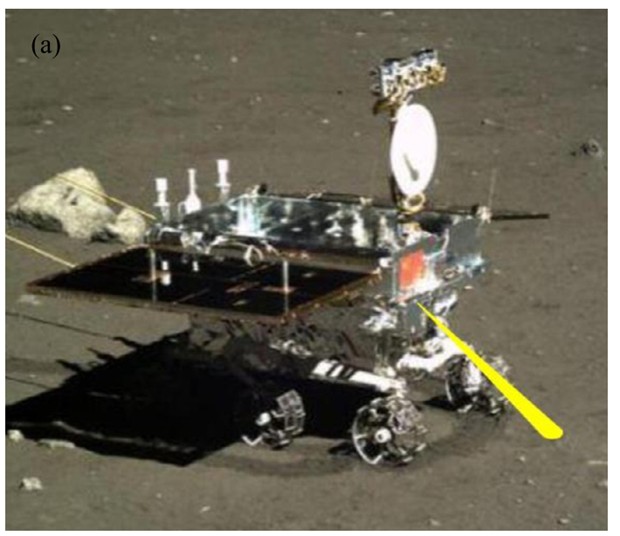
Fig.1 Schematic of detection by VNIS. Looking at the ground.
- Results
Figure 2 shows that the brightness of the CE-3 landing site increased after the spacecraft landed. The brightness increase of the disturbed regolith was found for all the landing sites (e.g., Clegg et al. 2014). Smoothing of surface roughness has been suggested as the main cause of the observed increase in reflectance (Kaydash et al. 2011; Shkuratov et al. 2013; Clegg et al. 2014). Exposure of less mature soil was rejected in these studies. However, as shown in Fig.3, the reflectance, OMAT and band depth of Site 8 are the lowest; while the reflectance, band depth, and OMAT of Site 5 are the largest. Site 5 has been disturbed by rocket exhaust while Site 8 is undisturbed pristine (Fig. 2). It indicates that the topmost surface is more weathered, and rocket exhaust blows away the finest and most weathered dust. Brightness changes are related to the reduction in maturity due to the removal of the fine and weathered particles by the lander’s rocket exhaust, not the smoothing of the surface.
The VNIS instrument, despite its relatively short wavelength coverage, detects thermal emission. Spectral upturns show no correlation with regolith maturity but correlated with solar incidence angle (Fig. 3). The CE-4 in situ spectra also show similar character (Wu et al., 2021). We developed a Monte Carlo method to derive emissivity and temperature, and found that temperatures derived from VNIS data are higher than temperatures predicted by a radiative equilibrium model. This indicates that the uppermost surface layer has low thermal inertia and the effects of micro-scale roughness (Wu and Hapke, 2018; Wu et al., 2021).
Canonical opinion believed that space weathering increases the spectral slope in the VIS and NIR (Lucey et al. 1998; Hapke 2001; Noble et al. 2001), such that the 415/750 nm ratio of becomes smaller with increasing maturity. The in situ spectra show the effects on the spectral slope caused by space weathering are wavelength dependent: increasing the visible and near infrared slope while decreasing the visible slope (Wu et al., 2019). The optical effects of space weathering and TiO2 are identical: both reduce albedo and blue the spectra. This suggests that a new TiO2 abundance algorithm is needed.

Fig.2. Locations of the four spectral measurements (numbered 5 to 8) of CE-3 rover.

Fig.3 Comparison of the reflectance from VNIS sites 5, 6, 7, and 8 normalized to (30◦, 0◦, 30◦).
Figure 4 shows that both the reflectance and absorption depth of CE-5 soil is significantly higher than that of the orbital remote sensing spectra (Wu et al., 2024). The Is/FeO values of CE-5 0600 and 0906 samples are 62 and 46, respectively, much lower than the value of 102 derived from remote sensing data. This indicates that samples are fresher and couldn’t represent pristine/true lunar surface.
The greatest uncertainties in TiO2 prediction are young basalts because Apollo missions only sampled old basalts. The CE-5 samples provide a ground truth for establishing the correlation between UV-vis color and TiO2 content in young basalts, enhancing the accuracy of TiO2 content mapping. The CE-5 samples provide an anchor on the sigmoidal trend for late-stage basalts, which have the largest uncertainties in TiO2 estimation.

Fig.4 Laboratory reflectance spectra and remote sensing data.

Fig.5 TiO2 versus 415/750 ratio for CE-5 soils and LSCC mare bulk soils.
- Conclusions
This study compares in situ spectral data, lunar sample spectra, and remote sensing spectra. Remote sensing spectra are significantly darker with shallower absorptions, indicating highly weathered nature of the undisturbed lunar surface. A spectral upturn beyond 2 μm is attributed to thermal emission, revealing low thermal inertia and micro-scale temperature variations. CE-5 samples exhibit higher reflectance and absorption depths, suggesting they are fresher and not fully representative of the pristine surface. These samples serve as a new benchmark for estimating TiO₂ in young basalts. Notably, CE-3 in situ data reveal that space weathering reduces the visible slope, contradicting the traditional view that it increases. Since both space weathering and TiO₂ lower albedo and blue the spectra, a revised TiO₂ abundance algorithm is required.
- References
Clegg, R. N., Jolliff, B. L., Robinson, M. S., Hapke, B. W., & Plescia, J. B. (2014). Effects of rocket exhaust on lunar soil reflectance properties. Icarus.
Gillis, J. J., Jolliff, B. L., & Elphic, R. C. (2003). A revised algorithm for calculating TiO₂ from Clementine UVVIS data. J. Geophys. Res. Planets.
Hapke, B. (2001). Space weathering from Mercury to the asteroid belt. J. Geophys. Res. Planets.
Kaydash, V., Shkuratov, Y., Korokhin, V., & Videen, G. (2011). Photometric anomalies at Apollo sites seen by LRO. Icarus.
Lucey, P. G., Blewett, D. T., & Hawke, B. R. (1998). Mapping FeO and TiO₂ with multispectral imagery. J. Geophys. Res. Planets.
Pieters, C. M. et al. (2000). Space weathering on airless bodies. Meteorit. Planet. Sci.
Shkuratov, Y., Kaydash, V., Sysolyatina, X., Razim, A., & Videen, G. (2013). Engine jet traces from Soviet probes. Planet. Space Sci.
Wu, Y., & Hapke, B. (2018). Spectroscopic observations at the lunar surface. Earth Planet. Sci. Lett.
Wu, Y., Wang, Z., & Lu, Y. (2019). Space weathering from in situ detection. Res. Astron. Astrophys.
Wu, Y. et al. (2021). CE-4 spectra reveal surface thermophysical properties. Geophys. Res. Lett.
Wu, Y. Z. et al. (2024). Spectral results of CE-5 soils. Astron. Astrophys.
How to cite: Wu, Y., Chai, Y., and Jiao, H.: High-resolution spectroscopy of airless bodies:remote sensing, In situ and laboratory measurements, EPSC-DPS Joint Meeting 2025, Helsinki, Finland, 7–12 Sep 2025, EPSC-DPS2025-1449, https://doi.org/10.5194/epsc-dps2025-1449, 2025.


