
 1,2,1,3,4,
- 1University of Kent, School of Engineering, Maths, and Physics, Canterbury, United Kingdom of Great Britain – England, Scotland, Wales (jejf3@kent.ac.uk)
- 2University of Kent, School of Natural Sciences, Canterbury, Kent, CT2 7NH, United Kingdom
- 3ESTEC (ESA), Keplerlaan 1, Noordwijk, 2201AZ, Netherlands
- 4University of Leicester, School of Physics and Astronomy, University Road, LE1 7RH, United Kingdom
- 5LRT/TU München, Boltzmannstr. 15, D-85748 Garching, Germany
- 6Institute for Space, Space Park Leicester, 92 Corporation Road, LE4 5SP, United Kingdom
Background:
Despite extensive study, the Mars system still possesses many mysteries, one of which is the formation of its moons Phobos and Deimos. Several mechanisms have been proposed but weather the moons formed as re-accreted ejecta [1] or as captured asteroids [2]) remains a significant problem. The key to solving this is currently thought to be held in the analysis of Phobosian ejecta, with numerical models having predicted it to contain, on average, 255 ppm of Martian material contaminant [3,4], transported to Phobos via impact processes.
Whilst numerical investigations have provided ranges for the level of detectable Martian material on Phobos [3,4,5,6], laboratory investigations are required into both the level of Martian material predicted on the surface of Phobos and its assumed detectability. Whilst some studies have previously found distinguishing features during spectral analysis of Phobosian surface analogues [7], an experimental investigation utilizing complex geological mixtures is lacking. This study therefore performed an experimental test of the assumed detectability of Martian material through the use of a geologically complex ‘Martian’ projectile impacting a geologically complex Phobos simulant target.
Method:
The work presented here assumes the case of a captured asteroid origin for Phobos. It presents the results from a shot series aiming to quantify the level of projectile material detectable during post-shot analysis. Six shots were carried out using the one and two stage light-gas gun at the University of Kent[10,11] over the speed range of 650 m/s to 1600 m/s covering the lower end of speeds predicted for material impacting the surface of Phobos [5]. The projectiles were designed to maximize the quantity of projectile material reaching the target and were formed of a custom designed 3D-printed UV-cured resin shell (Figure 1) containing an Eu-doped MGS-1 (Martian simulant) [8] mixture.
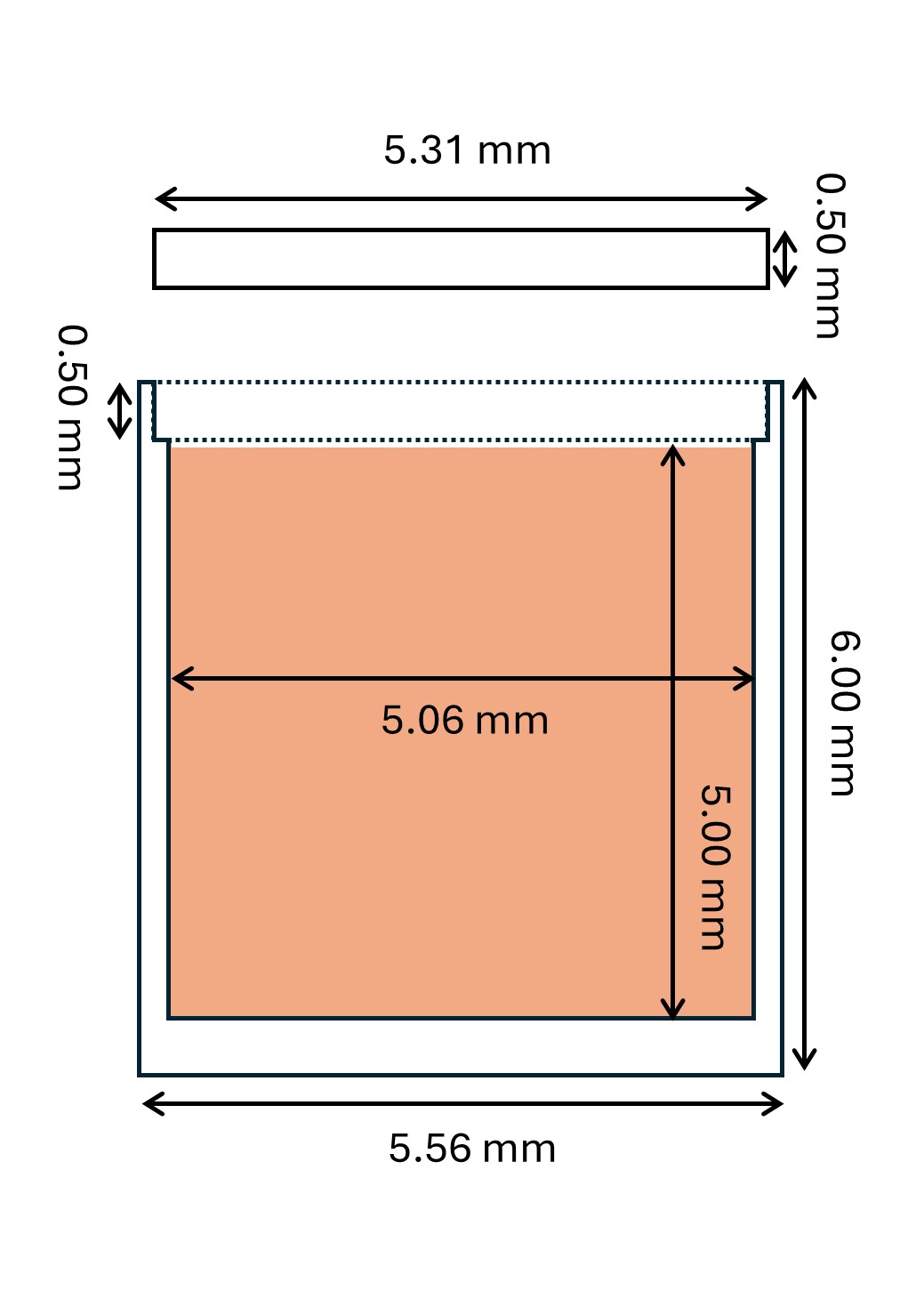
Figure 1: Schematic of the custom projectile shells for this investigation. The orange square in the schematic represents the projectile material.
This design of projectile allowed a geologically complex Martian simulant material to be used, with minimal preparation required, thus reducing chemical changes to the projectile. This was fired at cemented PCA-1 (Phobosian simulant) [9] target blocks (Figure 2) forming a geologically complex analogue of the Phobosian near-surface region. Targets were cubes with an average side length of 8.6 cm and depth of 5.8 cm. The average porosity was calculated to be 9.6% just is on the lower end of the current porosity range of 10-50% estimated for Phobos [1].
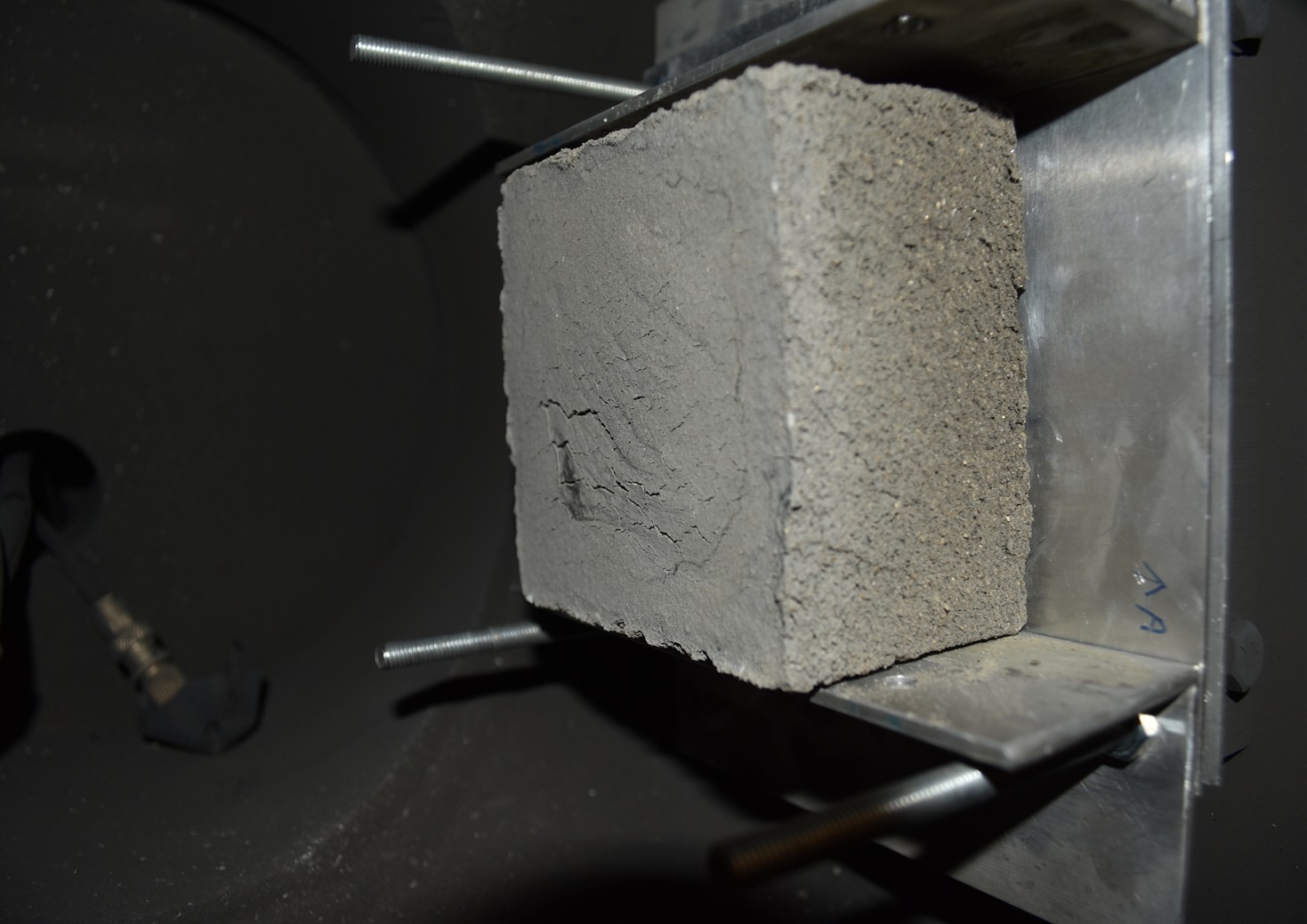
Figure 2: Pre-impact target within the Kent light-gas gun.
Post-shot analysis focused on two main questions: 1) can material from a Martian projectile be detected, and 2) can the level of detected material be quantified. For this, ejecta material was captured during each shot through the use of an ejecta capture cell. Not all of the ejecta from each shot was captured, but it is assumed that the material collected is representative of the entire population. Analysis was carried out on the ejecta sample and resultant impact crater separately, allowing the distribution of Martian contaminant material within the Phobosian regolith and the implantation of projectile material to be investigated separately.
Results and Discussion:
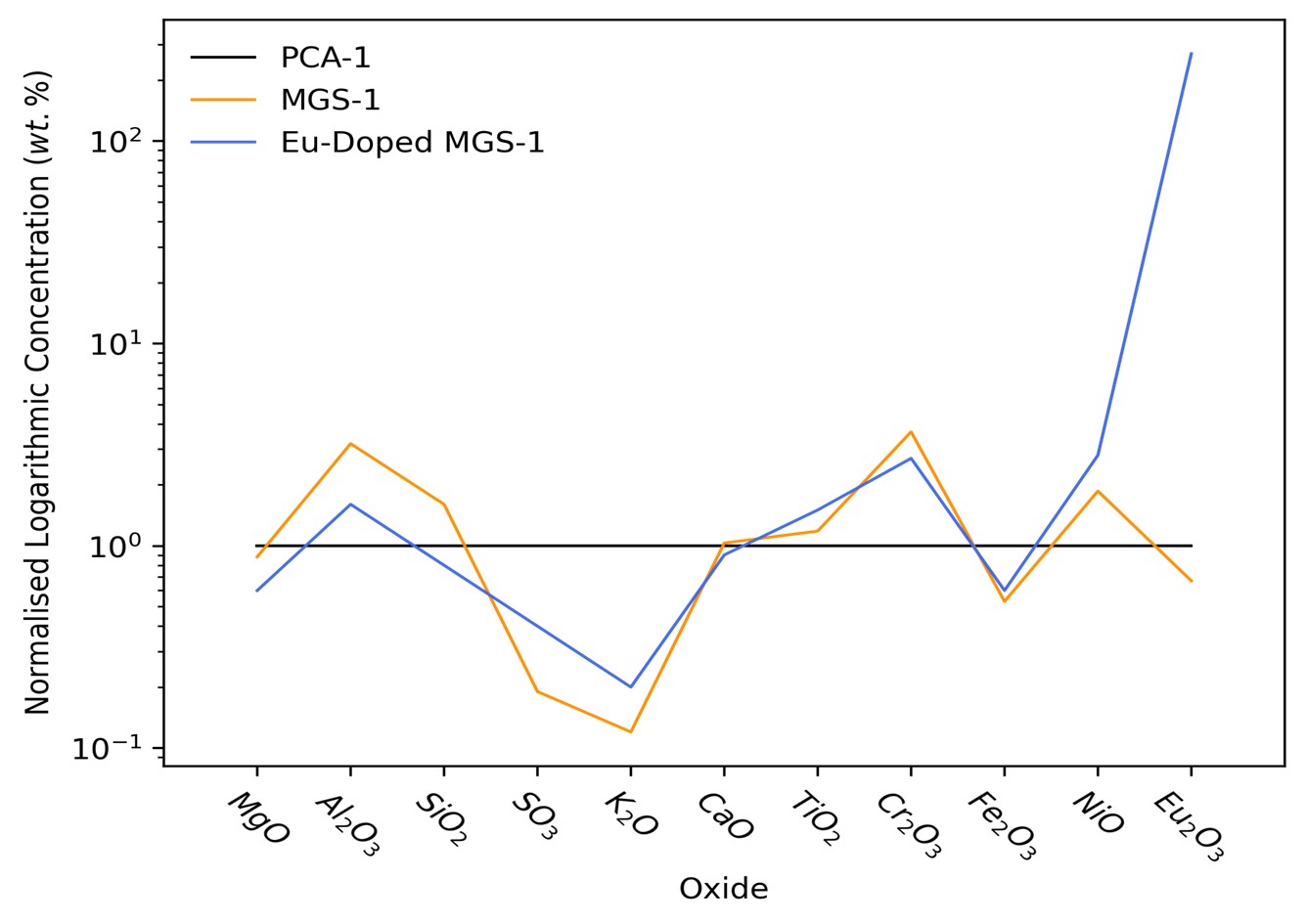
Figure 3: XRF results of pre-shot material. Values for each constituent are normalised to the values for PCA-1. The y-axis is presented as a logarithmic scale.
Collected ejecta samples were subjected to XRF, and XRD analysis, to both confirm and attempt to quantify the presence of projectile. To aid in the post-shot identification of projectile material, an elemental tracer (in the form of Eu(CH3CO2)3·XH2O) was included in the projectile. XRF analysis of the pre-impact material (Figure 3) shows clear differences between the PCA-1 and MGS-1 materials. Not only is the europium content of the projectile significantly higher than the background levels within the PCA-1 or MGS-1 simulants, characteristic variations between the two simulants (with differences being found between the measured K2O, Cr2O3, and NiO values) are also evident. Whilst the initial results show the clear presence of projectile material within the collected ejecta, further in-depth analysis is required to quantity its level. Initial observations of the impact features also shows the presence of projectile material (see Figure 4 and Figure 5).
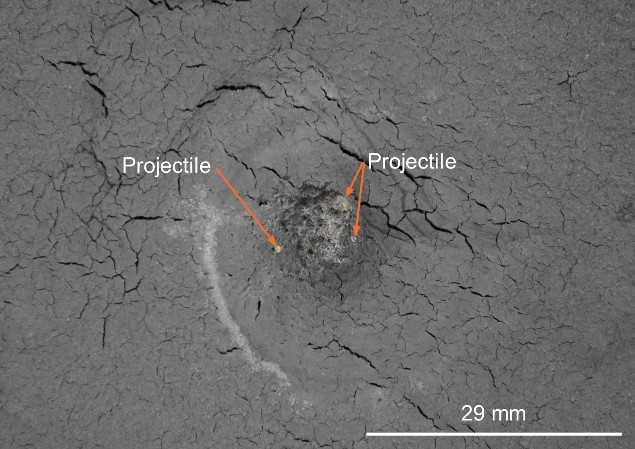
Figure 4: Formed impact feature from shot 2 showing potential projectile material embedded within the crater.
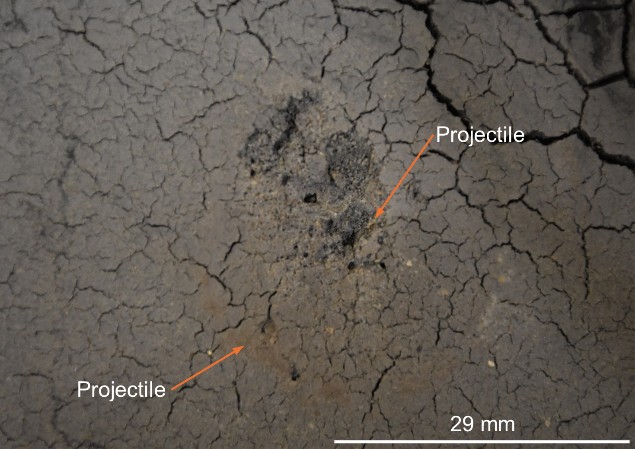
Figure 5: Formed impact feature from shot 6. During the shot the projectile broke-up prior to impact. Potential projectile debris is highlighted.
Conclusions:
This study has demonstrated the ability to effectively fire a geologically complex ‘Martian’ projectile and subsequently detect this material within the impact target and ejecta. A full analysis of the targets and ejecta is now underway, with the aim of quantifying the level of successful transfer of impactor to the target. If successful this would provide an experimental test of previous numerical studies investigating the formation of Phobos.
References:
[1] R.I. Citron, et al., Icarus 252, 334 (2015).
[2] K.R. Ramsley, J.W. Head, Space Sci. Rev. 217, 86 (2021).
[3] K.R. Ramsley, J.W. Head, PSS 87, 115 (2013).
[4] P. Thomas, Icarus 131, 78 (1998).
[5] L. Chappaz, et al. Astrobiology 12, 936 (2013)
[6] R. Hyodo, et al., Sci. Rep. 9, 19833 (2019).
[7] G. Poggiali, et al., MNRAS 516, 465 (2022).
[8] K.M. Cannon, et al., Icarus 317, 470 (2019).
[9] Z.A. Landsman, et al., Advances in Space Research 67, 3308 (2021).
[10] M. Price, et al. International Journal of Impact Engineering 184, 104828 (2024)
[11] R. Hibbert, et al., Procedia Engineering 204, 208 (2017)
How to cite: Finch, E., Wozniakiewicz, P., Tandy, J., Burchell, M., Sefton-Nash, E., Avdellidou, C., Alesbrook, L., Koschny, D., and Spathis, V.: The mysterious Martian potato: An experimental investigation into the origin of Phobos, EPSC-DPS Joint Meeting 2025, Helsinki, Finland, 7–12 Sep 2025, EPSC-DPS2025-1484, https://doi.org/10.5194/epsc-dps2025-1484, 2025.


