
 1,1,2,
- 1Institute of Communication Technology, Dresden University of Technology, Germany
- 2German Aerospace Center Institute of Space Systems Bremen, Germany
- 3Institute of Space Technology and Applications (ISTA), Bundeswehr University in Munich, Germany
We propose a novel radar mission architecture to characterize the internal structure, near-surface stratigraphy and gravity field of a small asteroid by multi-static radar sounding using a distributed network of miniature surface packages and orbiting radar platforms. This concept is similar to the CONSERT (COmet Nucleus Sounding Experiment by Radiowave Transmission) experiment that was part of the Philae lander on the Rosetta mission, but instead of a single unit, our system employs multiple units. By colocating transmitters and receivers on the surface, our concept eliminates free-space interface losses at the vacuum-regolith boundary. Simulations on a simplified rubble pile model (Fig. 2) show significant SNR improvements, compared to an orbiter based radar link budget. In ground penetrating mode, direct subsurface measurements at each lander position enable high resolution radargrams. Utilizing a unique inter-satellite link (ISL) approach, descent tracking provides valuable gravitational field data. Furthermore, radar-landing dynamics and bounce behavior constrain regolith mechanical properties.
In addition to the main orbiter, one or more CubeSat-class secondary orbiters are foreseen. The primary and secondary orbiters also carry radar transceivers, enabling bi-static and multi-static measurement geometries between surface packages and orbiters. Multistatic synthetic aperture measurements improve target illumination diversity, increase signal-to-noise ratio (SNR) and enable 3D tomographic reconstructions of the asteroid interior.
The main scientific objectives are
1. Elucidate the internal structure (e.g. rubble pile vs. solid core, stratification, voids, compositional variations) with sub-10m resolution.
2. Resolve fine-scale stratigraphy in the upper ~10 m of regolith at each landing site to infer formation and evolutionary processes.
3. Derive gravity field information from descent trajectories to constrain mass distribution and internal density anomalies.
4. Assess regolith mechanical properties by combining radar signatures with accelerometer data from landing dynamics.
5. Measure surface temperature in situ to improve emissivity estimates and constrain thermal properties of the regolith.
Up to 15 compact surface packages (1/3U CubeSat form factor; 90 × 90 × 30 mm) will be deployed by the primary orbiter. Each surface package houses a broadband radar transceiver capable of switching between:
(a) high- frequency mode with up to 5.5 GHz instantaneous bandwidth for centimetre -scale resolution in the upper ~10 m;
(b) lower frequencies mode (50-100 MHz) for deeper penetration.
The packages are solar powered for extended operations with a pre-charged battery, sufficient for the primary objectives, even without solar power. They include an additional sensor pack with thermometers and a MEMS based 3-axis accelerometer. Each densely packed unit weighs about 400g and is equipped with a turnstile antenna for the low-frequency multistatic radar operation, deployed during the descent.
The radar supports FMCW, gated FMCW, coherent chirp, and FSK/PSK modulation modes. Its power consumption is <10W peak and the system dynamic range exceeds 140dB for a 1 second long measurement. During the descent there is no precise attitude control, resulting in a stochastic distribution of the landers. As such, it is unknown which side is facing the surface or the sky. Sensors and ISL antennas are therefore located on both. Depending on the detected orientation, the correct one is selected.
The system is clearly energy limited. The initial pre-charging of the unit ensures two-week operation with ~2% duty cycle. This is sufficient to perform multi-static measurements between all surface units, mono-static GPR measurement at each unit, as well as a limited amount of surface package to orbiter measurements. If solar irradiation permits, the surface-package to orbiter coverage can be extended.
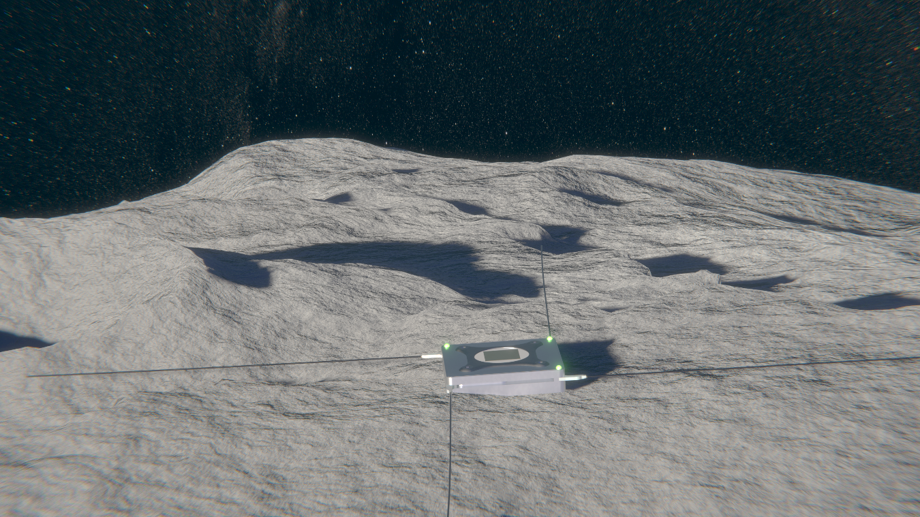
Fig 1: Artistic illustration of the proposed surface package
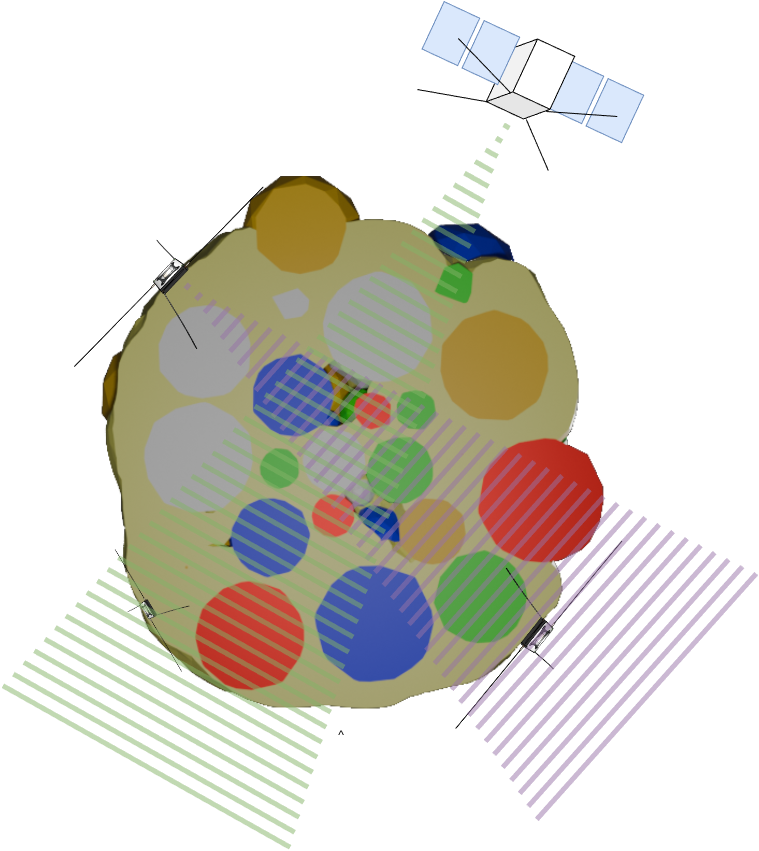
Fig 2: Illustration of multiple surface packages on a rubble-pile simulation model
For time synchronization and position reconnaissance, and a telemetry link to the surface packages, each package integrates an ultra-wideband (UWB) transceiver operating in the J-band. UWB provides two-way time-of-flight ranging with better than 10 cm resolution, arrival time estimation and time synchronisation to an accuracy of ≲2 ns. It acts as the primary telemetry and command link between packages and orbiters too. For best time synchronization accuracy, line-of-sight communication between at least one orbiter and a surface package is preferred. In case only one orbiter is available, the hold-over accuracy degrades the timing accuracy by ~2ns/hour.
The packages are released from the primary orbiter at near zero velocity relative to the asteroid in small groups. The orbiter(s) track the descending packages position and rotation using UWB ranging and angle-of-arrival measurements. Small, on-time-use thrusters in the surface packages fire, to reduce touchdown velocity and spin, ensuring that each package remains well below its escape velocity. They are composed of a thermal decomposable chemical which is heated electrically to 200°C and release gaseous reaction products. No further attitude control is foreseen. After all surface packages have landed and settled, the UWB ranging functionality is used again to precisely locate the devices and initiate initial synchronization and data acquisition.
For objects close to Earth (up to 0.5AU), a transponder like mode for earth-borne radio science can be implemented. In this mode the device operates as a narrowband, transparent transponder. By measuring the propagation delay and Doppler shift, the orbit and spin state of the small body can be monitored for very long periods, even when passive observations are not feasible anymore.
How to cite: Laabs, M., Jenning, M., Zakutin, E., Plettemeier, D., Grundmann, J. T., and Andert, T.: Multistatic Radar Sounding with Distributed Surface Packages for Small Body Characterization, EPSC-DPS Joint Meeting 2025, Helsinki, Finland, 7–12 Sep 2025, EPSC-DPS2025-1511, https://doi.org/10.5194/epsc-dps2025-1511, 2025.


