
 ,,
,,- Politecnico di Milano, Department of Aerospace Science and Technology, Milan, Italy
This work presents a microgravity experimental campaign aimed at investigating contact dynamics in asteroid-like environments. Recent Earth-based and in-situ observations have revealed that most asteroids between a few hundred meters and several kilometers in diameter are not monolithic, but rather loosely bound aggregates of material - commonly referred to as rubble piles [1]. These bodies are held together by a combination of self-gravity and cohesion forces. Results in literature show that their dynamics can be effectively simulated by addressing a gravitational-collision problem via N-body codes [2]. The contact representation relies on a set of parameters, such as friction and coefficient of restitution, that are typically calibrated to match large-scale behaviours rather than the local contact dynamics. Hence, an experimental campaign has been performed to validate at particle scale the N-body code GRAINS, whose contact dynamics is based on the physics engine Chrono. The experiment involved observing low-speed collisions between two asteroid-simulant cobbles under microgravity conditions. The 6-degree-of-freedom trajectories of the cobbles were reconstructed, and a digital twin of the experiment was created in GRAINS to calibrate the contact parameters against the experimental results.
The campaign, sponsored by ESA, was performed at ZARM facilities, exploiting both the Drop Tower and the GraviTower Bremen Pro. The first can offer one of the best microgravity environments worldwide (10-6 g0) for 4.7 s, allowing for 2–3 tests per day. In the latter, despite a slightly larger residual acceleration (10-4 g0) and shorter duration, tens of drops per day can be performed [3]. The first half of the campaign took place between October/November 2024; the second half took place between March/April 2025.
To replicate the physical characteristics of asteroid material, cobbles were selected based on their chemical composition and surface texture. Two high-fidelity simulant sets have been purchased from Space Resource Technology, with mineralogy modelled after the Murchison (CM simulants) and Orgueil (CI simulants) meteorites [4]. An additional set has been sampled on Mount Etna: coming from recent volcanic eruptions, they present the irregular and un-weathered surface expected for rocks found on Solar System bodies without an atmosphere. To recover the shape and inertia properties of each cobble, they have been scanned using a 3D scanner with 0.035 mm accuracy. The mesh obtained is used to build the digital twin of the experiment. Markers have been glued to the surface of the cobbles to enable motion tracking and trajectory reconstruction.
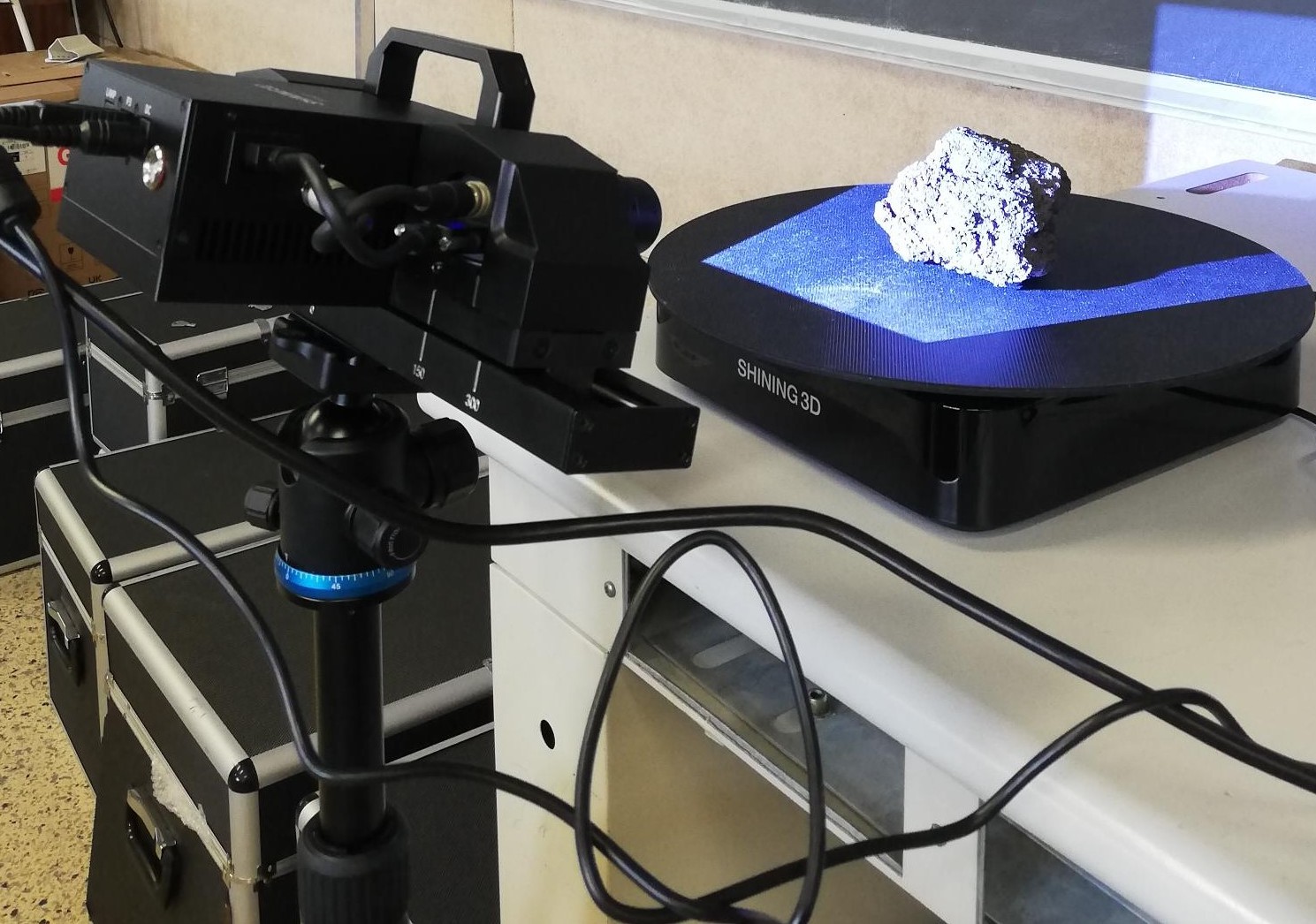
Figure 1: 3D scanner.
The experiment is placed inside a vacuum chamber, since, besides microgravity, vacuum conditions are fundamental to simulate the asteroid environment. The cobbles are released using a spring-based release mechanism with a velocity in the range 15 – 20 cm/s. Their motion was recorded using a network of two high-speed cameras provided by ZARM, along with three GoPro cameras mounted inside the chamber to ensure full visual coverage (see Figure 2). The high-speed cameras could observe the interior only through a mirror, due to the limited available space.
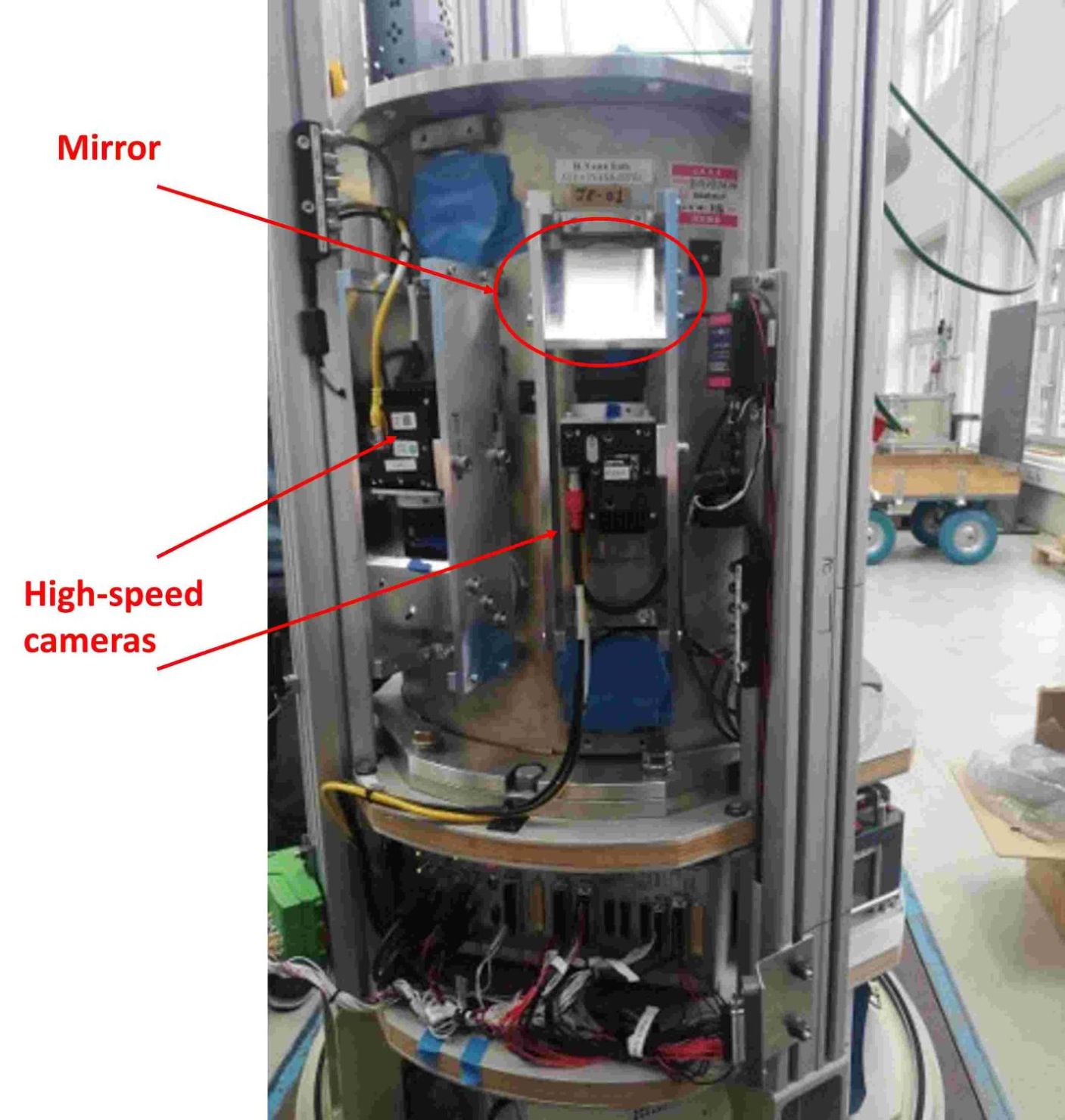
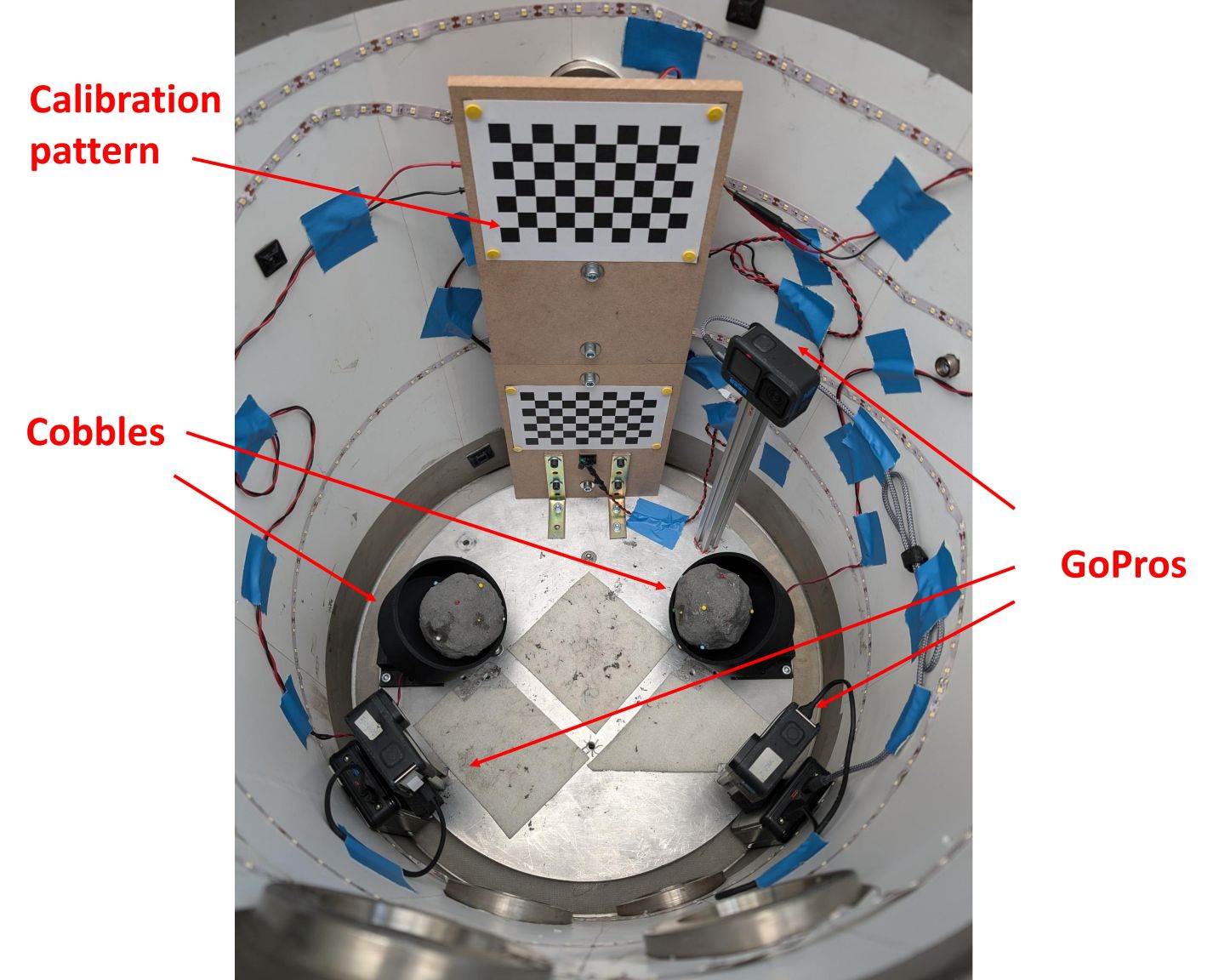
Figure 2: experimental setup.
The tracked markers’ coordinates are processed in a batch least-squares filter to reconstruct the cobbles’ 6-dof trajectory and provide the digital twin with the initial conditions, necessary to validate the numerical code. This analysis also enables the computation of key parameters for characterizing collision dynamics in asteroid environments, such as the coefficient of restitution. Figure 3 shows the tracked markers, whereas Figure 4 shows the reconstructed centre-of-mass trajectory and body triad reprojected into the camera plane.
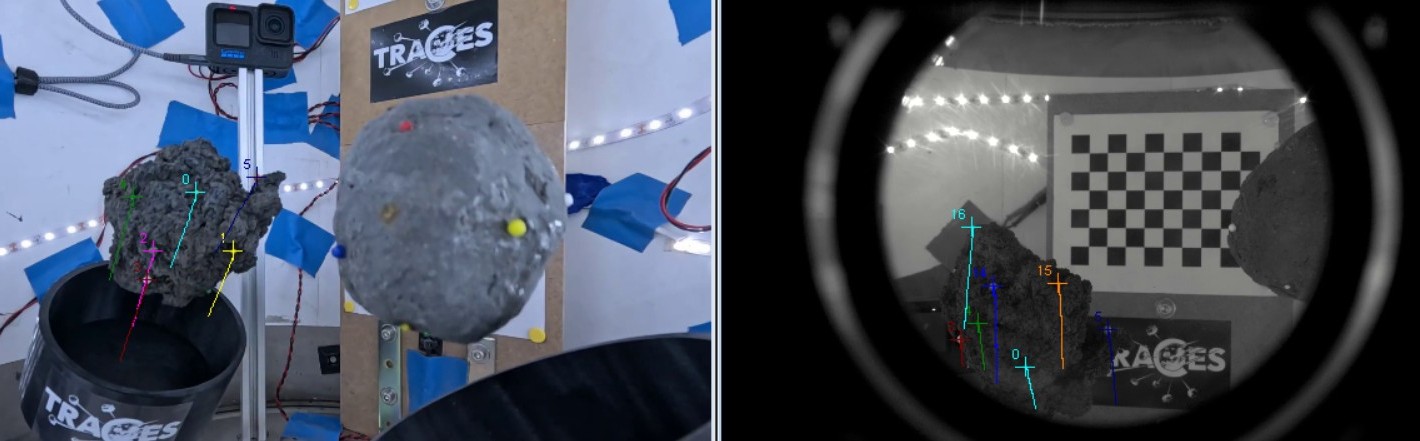
Figure 3: Tracked markers from GoPro (left) and high-speed camera (right) relative to an Etna rock – CM simulant collision.
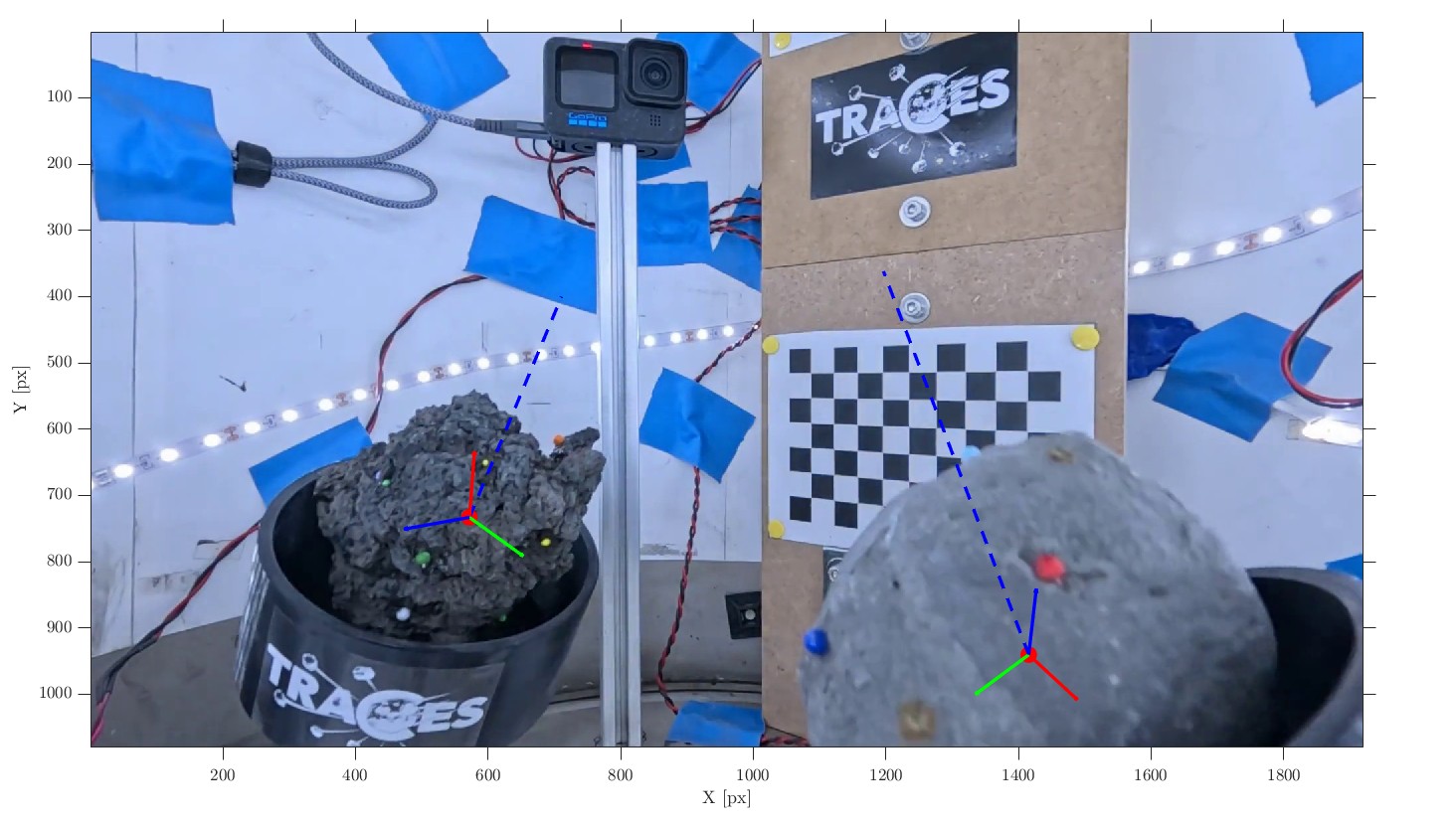
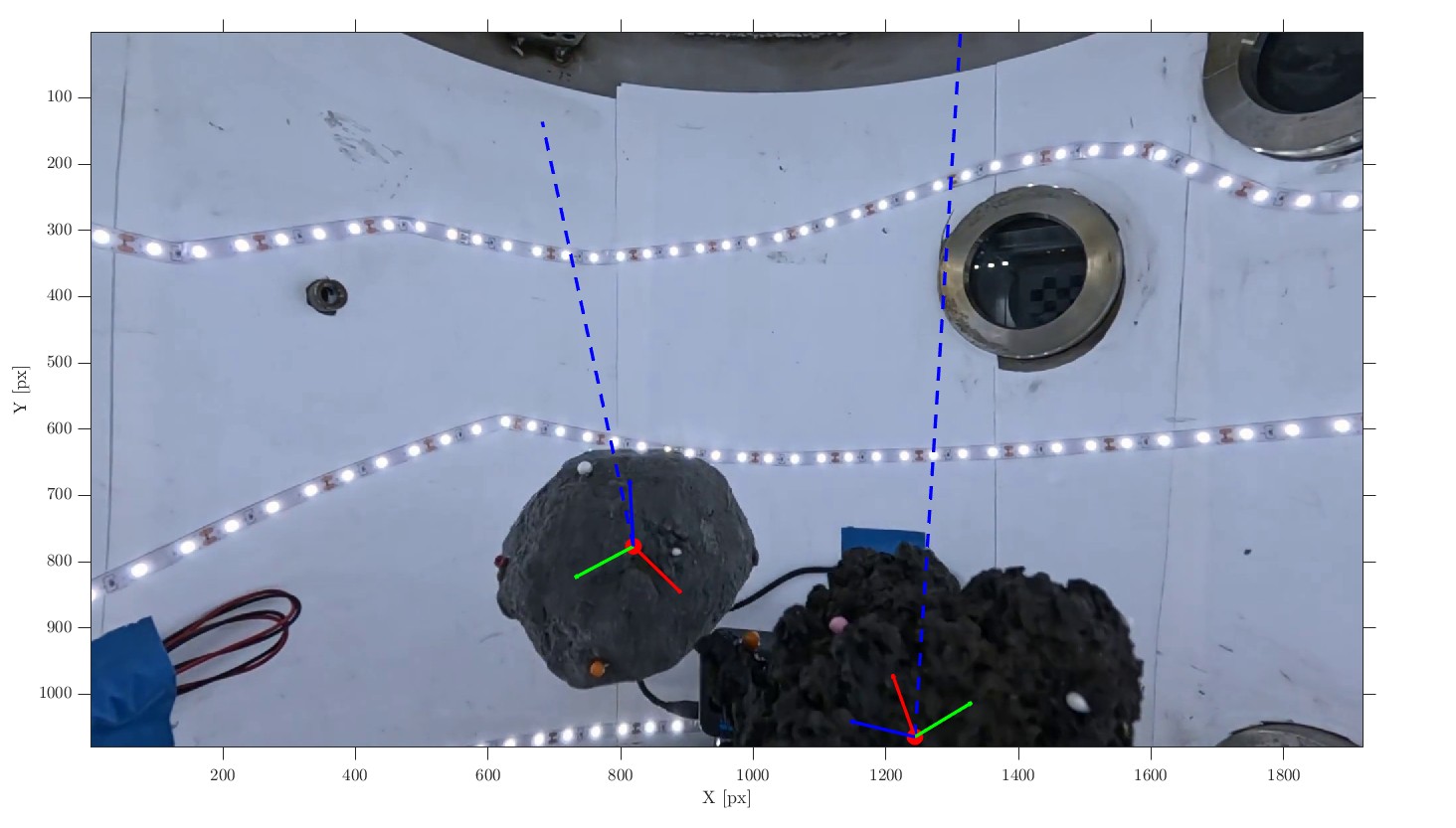
Figure 4: pre- (up) and post-collision (down) trajectory reprojected into the camera plane.
In Tab. 1 a summary of the tests performed is reported.
| First half | Second half | |
| GraviTower tests | 19 | 36 |
| Drop Tower tests | 6 | 7 |
| Suitable for analysis | 9/25 | 37/43 |
Table 1: Experimental campaign summary.
Tests performed in the GraviTower were useful to tune parameters such as spring stiffness and pre-load. The heritage from the first campaign helped to improve both the total number of tests and success rate. Data quality also improved, thanks to enhanced camera mounting, better visibility, and the use of smaller tracking markers.
The accuracy of the trajectory estimation is assessed through Monte-Carlo simulations, with uncertainties in the order of 0.3 mm in position and 1 deg/s in angular velocity. The coefficient of restitution, computed as the ratio between the energy after and before the collision, including the rotational component, ranges between 0.84 and 0.88. This indicates a nearly rigid contact behavior, suggesting that nearly rigid contact models are best suited to simulate these interactions.
The experimental validation campaign enhances our capabilities to simulate the dynamics of rubble-pile asteroids. This is beneficial not only for the scientific community, but also to support the design of interaction scenarios in upcoming asteroid exploration missions.
References
[1] Walsh K. J. (2018) Rubble Pile Asteroids, Annual Review of Astronomy and Astrophysics., 56, 593–624.
[2] Ferrari F. et al. (2020). A parallel-GPU code for asteroid aggregation problems with angular particles. Monthly notices of the Royal Astronomical society., 492, 749–761.
[3] Könemann T. (2022) Bremen Drop Tower, Version 1.4.
[4] Britt, D.T., et al. (2019), Simulated asteroid materials based on carbonaceous chondrite mineralogies. Meteorit Planet Sci, 54: 2067-2082. https://doi.org/10.1111/maps.13345
Acknowledgements Funded by the European Union (ERC, TRACES, 101077758). Views and opinions expressed are however those of the authors only and do not necessarily reflect those of the European Union or the European Research Council. Neither the European Union nor the granting authority can be held responsible for them.
The GEMS campaign was funded by the European Space Agency under the SciSpace CORA program. The authors would like to acknowledge Thorben Könemann and the ZARM team for their support during the design and operations of the experiment.
How to cite: Vaghi, S., Cremasco, A., Delfanti, L. V., Civati, L. F., Fodde, I., San Sebastiàn, I. L., and Ferrari, F.: Microgravity Experimental Campaign for Contact Dynamics Characterization in the Asteroid Environment, EPSC-DPS Joint Meeting 2025, Helsinki, Finland, 7–12 Sep 2025, EPSC-DPS2025-1599, https://doi.org/10.5194/epsc-dps2025-1599, 2025.


