
 1,2,
1,2,- 1Aix Marseille Univ, CNRS, Centrale Marseille, Institut Origines, Institut Fresnel, Marseille, France (christelle.eyraud@fresnel.fr)
- 2Computing Sciences, Tampere University (TAU), P.O. Box 692, 33101, Tampere, Finland
A lot of crucial questions about the internal structure of asteroids remain unanswered. This knowledge is fundamental, as it will provide essential data for modeling the mechanical behavior of these bodies, which is vital not only for science, but also for planetary defense [1]. Imaging the interior of these asteroids is not a trivial problem not only in terms of measurements, but also in terms of imaging algorithms. The challenges being mainly due to the very large size of these structures, and their high density and strong electromagnetic scattering. In recent years, imaging algorithms have been developed and adapted to such bodies. Some methods derive from those developed for observing the Earth and planets and adapted to imaging these bodies such as SAR tomography [2] and others methods derive from electromagnetic inverse problems as Pseudo-Inverse and Back-Propagation methods [3], [4], [5]. These imaging procedures allow structural imaging of the interior of asteroids and have two main advantages: the memory required is relatively small, so it is possible to reconstruct a large domain, which is necessary for such objects, and these procedures are generally robust to perturbations.
In this study, we focused on the algorithm developed in [3], based on Pseudo-Inverse method and combined with Principal Component Analysis (PCA). The electric scattered field on the receiver domain is obtained by the observation equation. The induced current is estimated for each frequency using the Pseudo-Inverse method from all spatial measurement points. This takes full advantage of the spatial bandwidth of the measured field. PCA is then applied to this series of 3D images to perform a frequency-based analysis and obtain the final 3D image of the scene.
In the present study, this imaging method was applied to the scattered field of analogues measured in the laboratory, in our anechoic chamber, with the Institut Fresnel setup (Figure 1 (a)). Analogue size and wavelength are reduced by the same factor, following the microwave analogy. [6]. The configuration was chosen as quasi-monostatic to be similar to those used in space radars, such as the JuRa radar on board the Hera mission, which will probe the binairy asteroid 65803 Didymos. Figure 1 (b) shows an example of the results for the interior of the asteroid 25143 Itokawa analogue reproduced by 3D printing [7] using monostatic measurement points on a large part of a sphere around the analogue and the frequency band [3.5-10] GHz. In this slice of the 3D image, the interior void of the analogue can be seen at the correct position. The results obtained from different analogues of asteroids will be presented. An analysis of the images obtained as a function of the number of spatial measurements, the bandwidth as well as the number of frequencies will also be proposed.
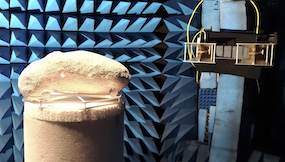
Figure 1: (a) Measurement configuration in the anechoic chamber of the Institut Fresnel, Marseille
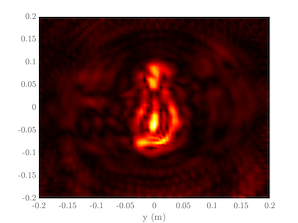
Figure 1 (b) : Slice of the 3D reconstructed image of a analogue of the 25143 Itokawa asteroid
References
[1] A. Herique and al. Direct observations of asteroid interior and regolith structure: Science measurement requirements. Advances in Space Research, 2018.
[2] O. Gassot, A. Herique, W. Fa, J. Du, and W. Kofman. Ultra-wideband sar tomography on asteroids. Radio Science, 56(8), 2021.
[3] A. Dufaure, C. Eyraud, L.-I. Sorsa, Y. O. Yusuf, S. Pursiainen, and J.-M. Geffrin. Imaging of the internal structure of an asteroid analogue from quasi-monostatic microwave measurement data - i. the frequency domain approach. Astronomy and Astrophysics, 674(A72), 2023.
[4] L.-I. Sorsa, Y. O. Yusuf, A. Dufaure, J.-M. Geffrin, C. Eyraud, and S. Pursiainen. Imaging of the internal structure of an asteroid analogue from quasi-monostatic microwave measurement data - ii. the time domain approach. Astronomy and Astrophysics, 674(A73), 2023.
[5] M.S. Haynes, I. Fenni, and B.J.R. Davidsson. Inverse scattering under the born approximation using an object t-matrix and full bistatic spherical sampling geometry. IEEE Transactions on Antennas and Propagation, 72, 2024.
[6] R. Vaillon and J.-M. Geffrin. Recent advances in microwave analog to light scattering experiments. Quantitative Spectroscopy and Radiative Transfer, 146, 2014.
[7] Liisa-Ida Sorsa, Christelle Eyraud, Alain H´ erique, Mika Takala, Sampsa Pursiainen, and Jean-Michel Geffrin. Complex-structured 3d-printed wireframes as asteroid analogues for tomographic microwave radar measurements. Materials and Design, 198, 2021.
How to cite: Eyraud, C., Dufaure, A., Oluwatoki Yusuf, Y., Sorsa, L.-I., Henry, G., Pursiainen, S., and Geffrin, J.-M.: Imaging of the Inner Structure of an asteroid analogue from lab-Measurements with frequency analysis, EPSC-DPS Joint Meeting 2025, Helsinki, Finland, 7–12 Sep 2025, EPSC-DPS2025-708, https://doi.org/10.5194/epsc-dps2025-708, 2025.


