
 1,
1,- 1Institut d'Astrophysique de Paris, CNRS, SU, France (angele.syty@iap.fr)
- 2Centre Nationale d'Études Spatiales (CNES), Toulouse, France
- 3Commissariat à l'Énergie Atomique et aux Énergies Alternatives (CEA), Gif-sur-Yvette, France
- 4University College of London, London, UK
The Ariel space mission is a European Space Agency (ESA) mission that aims to study the atmospheres of a large and diverse sample of transiting exoplanets (Tinetti et al. 2021). Scheduled for launch in 2029 to the L2 Lagrange point, Ariel will observe a diverse sample of transiting exoplanets in visible and near-infrared wavelengths (0.5–7.8 µm) via low-resolution spectroscopy. Ariel will use various spectroscopic techniques, including transmission and emission spectroscopy during transits and eclipses, as well as phase curve observations. These measurements will reveal wavelength-dependent variations in the observed spectra, caused by molecular absorption and emission in the planets' atmospheres. This will enable detailed studies of atmospheric composition, clouds, hazes, and thermal structure.
As machine learning methods are increasingly used in many astrophysics fields, these methods have recently arrived in the exoplanet community. The Ariel Consortium puts effort into the machine learning development from data processing to molecular retrievals. Applications include accelerating parameter space exploration, investigating the highly degenerate molecular composition of planet atmospheres in exoplanets’ spectra, studying complex undesired artifacts in Ariel data, such as the effect of the jitter of the line of sight of the telescope during the observation, or even interpreting pre-launch calibration data. Indeed, post-processing methods will be used to correct Ariel data from photometric noise and ensure that the science objectives can be achieved. These corrections often rely on the knowledge of calibration maps of the detector, acquired before flight. However, the detector’s performance may vary in flight due to extreme conditions of temperature and pressure or because of strong mechanical constraints experienced during launch. The performances may also vary over the years the telescope is in operation. For instance, the ability to detect bad pixels in flight might be a key element of the success of the mission. Indeed, if left uncorrected, bad pixels can introduce bias into the data, potentially limiting the extraction of atmospheric features from exoplanet spectra. If a bad pixel is spotted, it can be either masked from the image for its analysis or corrected if its behavior is well characterized.
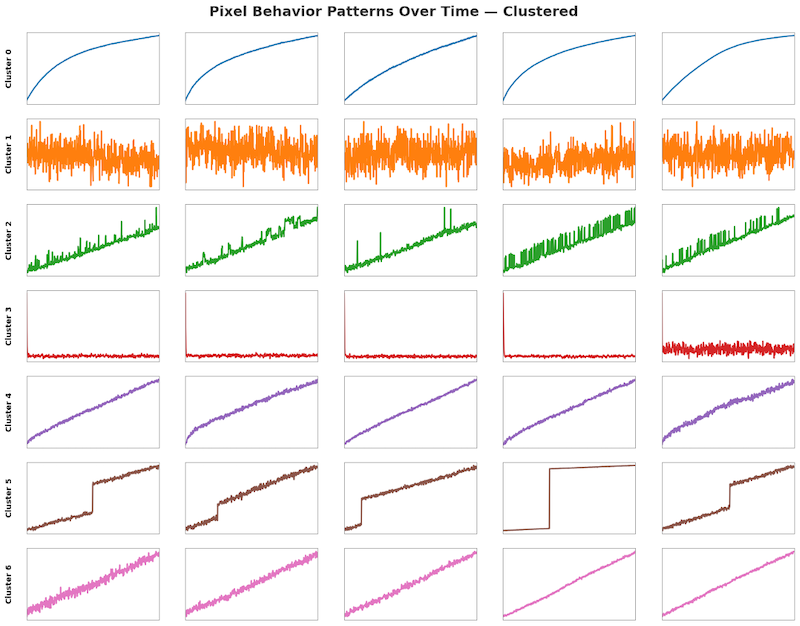
In this talk, the work of the Ariel Data Challenge 2024, extended in 2025, a competition hosted by the NeurIPS conference, which gathered 23000 model submissions from almost 1500 participants (Yip et al. 2024), will be introduced. The task of this competition is to extract the atmospheric spectra from every observation, with an estimate of its level of uncertainty. To obtain such a spectrum, we required the participant to detrend many sequential 2D images of the spectral focal plane taken over several hours of observing the exoplanet as it transits in front of its host star. A project in collaboration with CNES and CEA on calibration data for Ariel will also be presented. Dark frames are measured in laboratories to flag the pixels having non-nominal behaviors (“bad pixels”), which must be either masked during the data processing step or parametrized to avoid introducing any bias in the scientific data to come. Machine learning is a powerful tool to cluster those pixels according to their behavior, on datacubes containing millions of time series of pixels’ responses. Different data pre-processing methods (wavelet transform, autoencoder, statistical distribution analysis), as well as clustering methods (DBSCAN, Gaussian Mixture), are compared to classify and characterize the various types of bad pixels. The attached figure shows examples of the measured evolution of some pixels’ response over time, without any illumination, after the clustering step with an ML algorithm. Cluster 6 is the cluster of nominal pixels, having a linear accumulation of dark current over time. The other clusters are flagged as ‘bad’ pixels. Clusters 0 and 4 are non-linear pixels, respectively, non-linear over the whole ramp or just at the beginning of the ramp. Cluster 1 is the cluster of dead pixels, Cluster 2 of pixels oscillating between a finite number of states, and Cluster 3 of pixels starting from a high value and then becoming dead pixels. Finally, Cluster 5 gathers the pixels hit by a cosmic ray. Some pixels are classified as outliers, having very peculiar behaviors that machine learning can identify even if they are unexpected.
Ultimately, this work demonstrates how modern machine learning techniques can play a critical role in preparing for the challenges of space-based exoplanet observation, ensuring the reliability and scientific return of the Ariel space mission.
References:
- Kai Hou Yip et al., NeurIPS - Ariel Data Challenge 2024. NeurIPS - Ariel Data Challenge 2024. https://kaggle.com/competitions/ariel-data-challenge-2024, 2024. Kaggle.
- Giovanna Tinetti et al. “Ariel: Enabling planetary science across light-years”. In: arXiv e-prints,arXiv:2104.04824 (Apr. 2021), arXiv:2104.04824. arXiv: 2104.04824
Acknowledgments: This work has received support from France 2030 through the project named Académie Spatiale d'Île-de-France (https://academiespatiale.fr/) managed by the National Research Agency under bearing the reference ANR-23-CMAS-0041, and from the Centre National d’Études Spatiales (CNES).
How to cite: Syty, A., Faucoz, O., Beaulieu, J.-P., Drossart, P., Amiaux, J., Pichon, T., Cossou, C., and Yip, K. H.: ML approaches for exoplanet atmosphere characterization and detrending methods in the Ariel space mission, EPSC-DPS Joint Meeting 2025, Helsinki, Finland, 7–12 Sep 2025, EPSC-DPS2025-808, https://doi.org/10.5194/epsc-dps2025-808, 2025.


