
 1,1,2,3,3,3,3,
- 1Centro de Astrobiologia (INTA-CSIC), Torrejon de Ardoz, Spain (adevicente@cab.inta-csic.es)
- 2Space Science Institute, Boulder, CO, USA.
- 3Instituto Nacional de Técnica Aeroespacial, Madrid, Spain.
Introduction
The surface albedo and thermal inertia are key parameters to understand the climate and geology of Mars. Albedo controls the amount of solar energy that is absorbed by the surface, playing an important role in the Surface Energy Budget (SEB), which on Mars is controlled by the radiative terms [1]. The SEB and the surface thermal inertia determine the temporal evolution of the ground temperature, which in turn drives the near-surface atmospheric processes. In addition, surface albedo and thermal inertia allow the geological characterization of the terrain, as they depend on rock abundance, particle size or porosity.
The MEDA instrument [2] onboard the Perseverance rover of the Mars 2020 mission includes the Radiation and Dust Sensor (RDS) [3] and the Thermal InfraRed Sensor (TIRS) [4], among other sensors, which allow the direct determination of these parameters.
Methodology and Calibration Improvements
Surface albedo is obtained from downward and upward shortwave fluxes, which are obtained respectively from the RDS TOP-7 and TIRS-IR3 channels. The retrieval of the thermal inertia uses also the surface brightness temperature measured by the TIRS-IR5 and the surface energy budget, in which the downward and upward longwave fluxes are obtained respectively from the TIRS-IR1 and TIRS-IR4 channels.
This work expands and improves the results presented in [1] covering the first 350 sols of the mission. In order to accurately perform longer-term analyses, such as this one, it becomes necessary to correct RDS and TIRS measurements for the effect of dust accumulation. This is done by means of a Dust Correction Factor (DCF). In this work we use recent correction factors for dust deposition on the RDS [5] and TIRS [6] channels, which improve the accuracy of the radiative terms, which in turn allow for a refinement in the calculation of the surface albedo and thermal inertia.
Figure 1 shows the DCF on the RDS TOP-7 channel. The temporal evolution shows two periods of strong net dust accumulation, between sols 400-600 and 1000-1200, covering slightly more than the first half of the perihelion season. During the remaining periods, dust accumulation experiences little variability. Finally, net dust removal occurs at the end of the analyzed period.
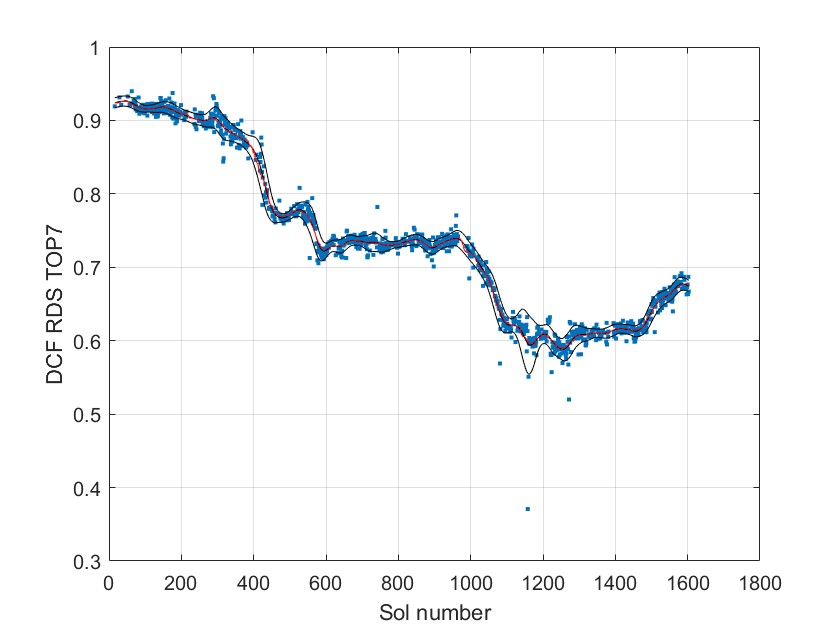
Figure 1. Dust Correction Factor for the RDS TOP-7 channel.
Figure 2 shows the DCF on the TIRS channels. Dust accumulation is small for the last three channels because they are looking downwards. The behavior of IR1 and IR2 is similar to that of the RDS TOP-7, but with a smaller effect of dust accumulation, particularly on the IR1 channel.
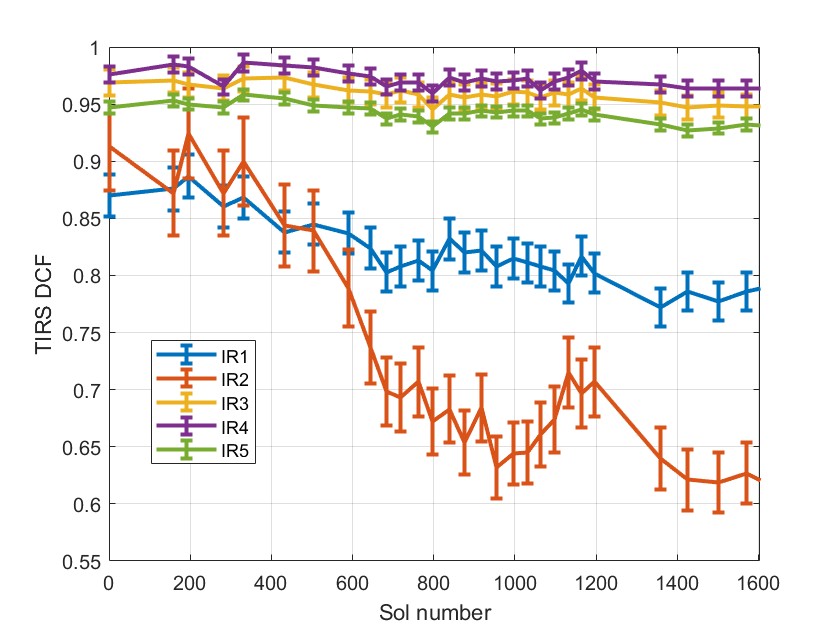
Figure 2. Dust Correction Factor for the TIRS channels.
Results
Figure 3 shows the surface albedo during the first 1,600 sols of the mission. Surface albedo strongly depends on illumination and viewing geometry, leading to a significant diurnal variation [1]. For this reason, we show the values at noon, which represent the diurnal minimum. The temporal evolution appears to show a seasonal cycle, with minimum values at around Ls = 180º and maximum values at around Ls = 270º. The values range from 0.10 to 0.23, and the surface albedo in MY 37 appears to be systematically larger than in MY 36.
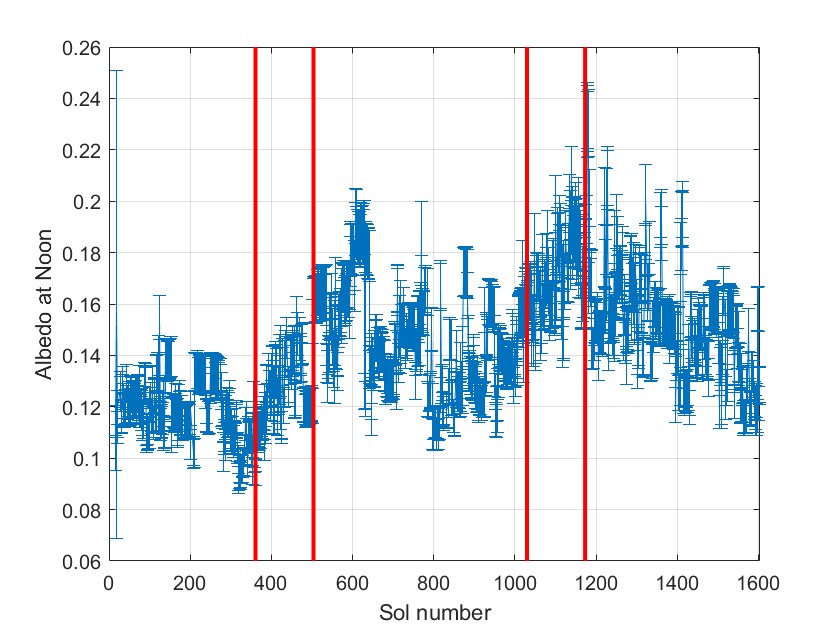
Figure 3. Surface albedo at Noon for the first 1,600 sols. Vertical lines indicate Ls = 180º and Ls = 270º for MY 36 and 37.
Figure 4 shows the surface thermal inertia during the first 1,600 sols of the mission. Contrary to the albedo, the temporal evolution is now controlled by the portion of the terrain observed by TIRS, and a seasonal cycle is not clearly identified. The strong fluctuations can be attributed to the relatively small field of view of TIRS, which observes an area of approximately 3-4 m2, and therefore it is very sensitive to surface heterogeneities. Values range from below 200 to above 600 SI units, indicating a variety of terrain features.
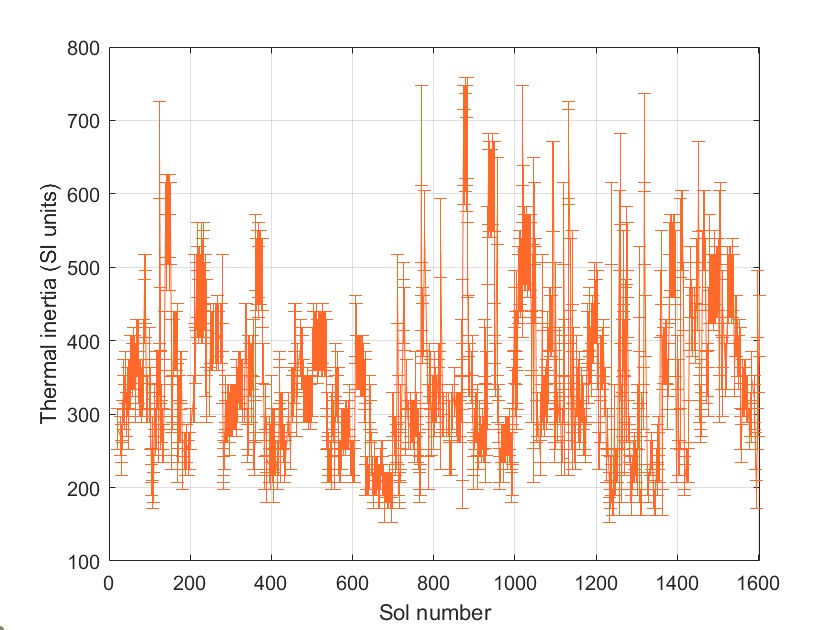
Figure 4. Surface thermal inertia for the first 1,600 sols.
Discussion
These results can be compared to those obtained from satellite observations. In the case of thermal inertia, THEMIS retrievals [7] around the rover traverse are tipically between 200 and 400 SI units. The smaller range of values can be attributed to the different spatial resolutions of both instruments.
Mean values from OMEGA albedo observations [8] for the region where Perseverance is located are around 0.16, in very good agreement with MEDA retrievals. OMEGA observations (Figure 5) also show higher albedo values as the rover moved towards the West, in agreement with MEDA retrievals. Furthermore, the seasonal cycle observed from MEDA is consistent with that observed at Syrtis Major from MARCI observations for MY 28 to 33, with annual minima around Ls = 180º and maxima around Ls = 270º [9]. The increase in brightness is approximately coincident with the strong decreases of the RDS DCF, suggesting that it can be partially attributed to dust deposition.
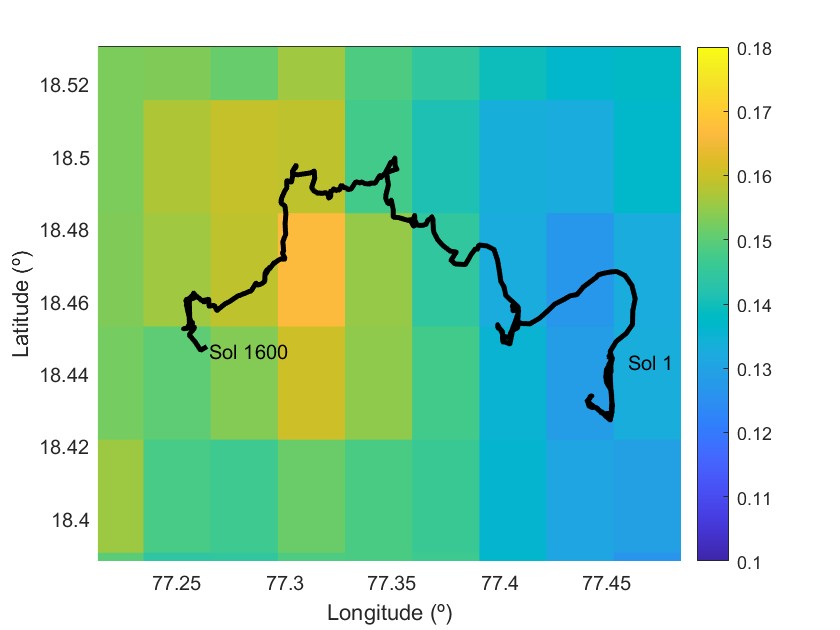
Figure 5. OMEGA albedo values, with the rover traverse shown in black.
The presented results are important to validate numerical models and provide ground-truth for satellite observations of albedo and thermal inertia. In addition, these results include the area named Three Forks, where ten sample tubes have been deposited. Finally, they allow exploring the role of dust storms and dust lifting and deposition on these parameters throughout the mission.
Acknowledgements
This research is funded by the Spanish Ministry of Science, Innovation and Universities (MICIU)/State Agency of Research (AEI) project PID2024-161247OB-C31, funded by MICIU/AEI /10.13039/501100011033 / FEDER, UE
References
[1] Martínez, G. M. et al. (2023). Journal of Geophysical Research: Planets, 128, e2022JE007537. [2] Rodríguez-Manfredi, J. A. et al. (2021). Space Science Reviews, 217(3), 1–86. [3] Apéstigue, V. et al. (2022). Sensors, 22(8), 2907. [4] Sebastián, E. et al. (2020). Measurement, 164, 107968. [5] Vicente-Retortillo, A. et al. (2024). Geophysical Research Letters, 51, e2023GL107975. [6] Sebastián, E. et al. (2025). [7] Fergason R. L. et al. (2006), JGR 111, E12004. [8] Vincendon M. et al. (2015), Icarus 251, 145-163. [9] Wellington, D. F., and Bell III, J. F. (2020). Icarus, 349, 113766.
How to cite: Vicente-Retortillo, A., Martínez, G., Sebastián, E., Lemmon, M., Rodríguez-Veloso, R., Toledo, D., Apéstigue, V., Arruego, I., and Rodríguez-Manfredi, J. A.: Albedo and Thermal Inertia at Jezero Crater from MEDA over the First 1600 Sols: Extended Analysis and Calibration Improvements, Europlanet Science Congress 2026, The Hague, The Netherlands, 7–11 Sep 2026, EPSC2026-1140, https://doi.org/10.5194/epsc2026-1140, 2026.


