

- Deutsches Zentrum für Luft- und Raumfahrt, Planetology, Germany (romain.vidal96@gmail.com)
Unlike Earth, Mars never developed plate tectonics, allowing billions of years of tectonic and volcanic deformation to remain preserved within its crustal structure and at their surface as fault systems. These inherited structures provide a unique opportunity to investigate the long-term mechanical evolution of the Martian lithosphere, and to constrain lateral variations in crustal thickness and density [1]. One of the central challenges in Martian geophysics is that gravity and topography data alone cannot uniquely resolve the planet’s internal structure [2]. Different combinations of crustal thickness
and density can produce nearly identical signals. In this study, we explore whether surface tectonic observations can help break this ambiguity by incorporating them as an additional constraint in a joint inversion.
We reconstructed a global map of horizontal surface deformation from the fault catalogue of Knapmeyer and et al. [3]. Fault segments were processed through spatial filtering and azimuthal merging before being converted into a signed horizontal strain field ε_obs_h, weighted by fault geometry using compressional and extensional fault-angle thresholds of 30◦ and 60◦ [4], respectively [Figure 1].
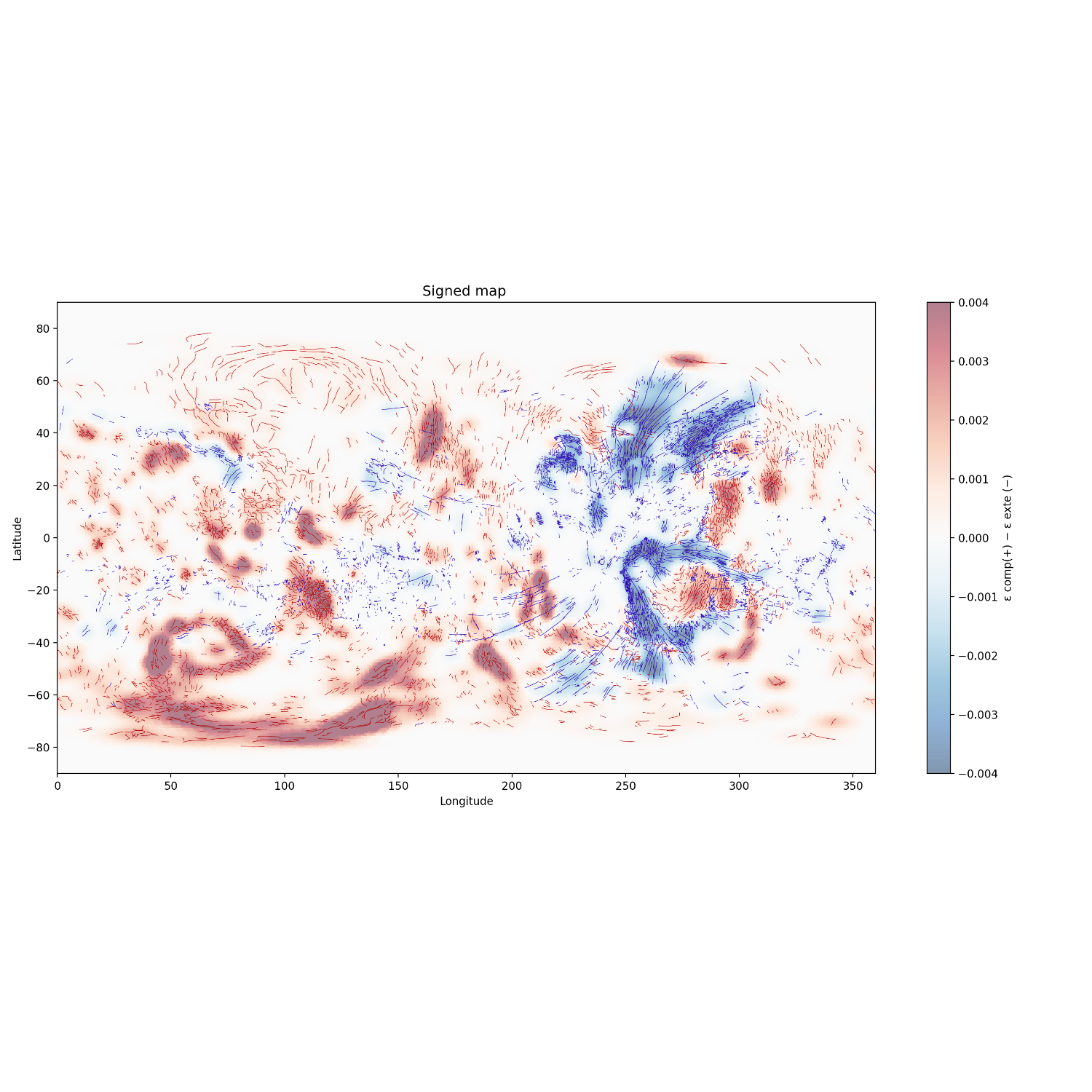
Fig1: Observed deformation based on tectonic [3}
This strain field is then mapped into the spectral domain via a spectral admittance function Z(ℓ), calibrated on the elastic thin-shell model of Banerdt [5], yielding the tectonic observable Wobs. The combined inversion :
G; H; Wobs (1)
is regularized with a minimal amplitude spectral filter.
Our results recover a crustal structure broadly consistent with Wieczorek and et al. [6], which we take as a useful sanity check. More interestingly, the deformation patterns we obtain are spatially coherent with the major tectonic provinces of Mars (see Figure 2). Extensional strain clusters around the Tharsis volcanic rise and its graben systems, while compression appears in parts of the southern highlands. Recovered strain amplitudes stay below ε ≲ 4 × 10⁻³, which is physically reasonable for a brittle upper crust.
Taken together, these results suggest that tectonic data can be quantitatively folded into planetary inversions. We think this is a promising direction, not just for Mars, but for any one-plate body where ancient surface deformation has been preserved [7].
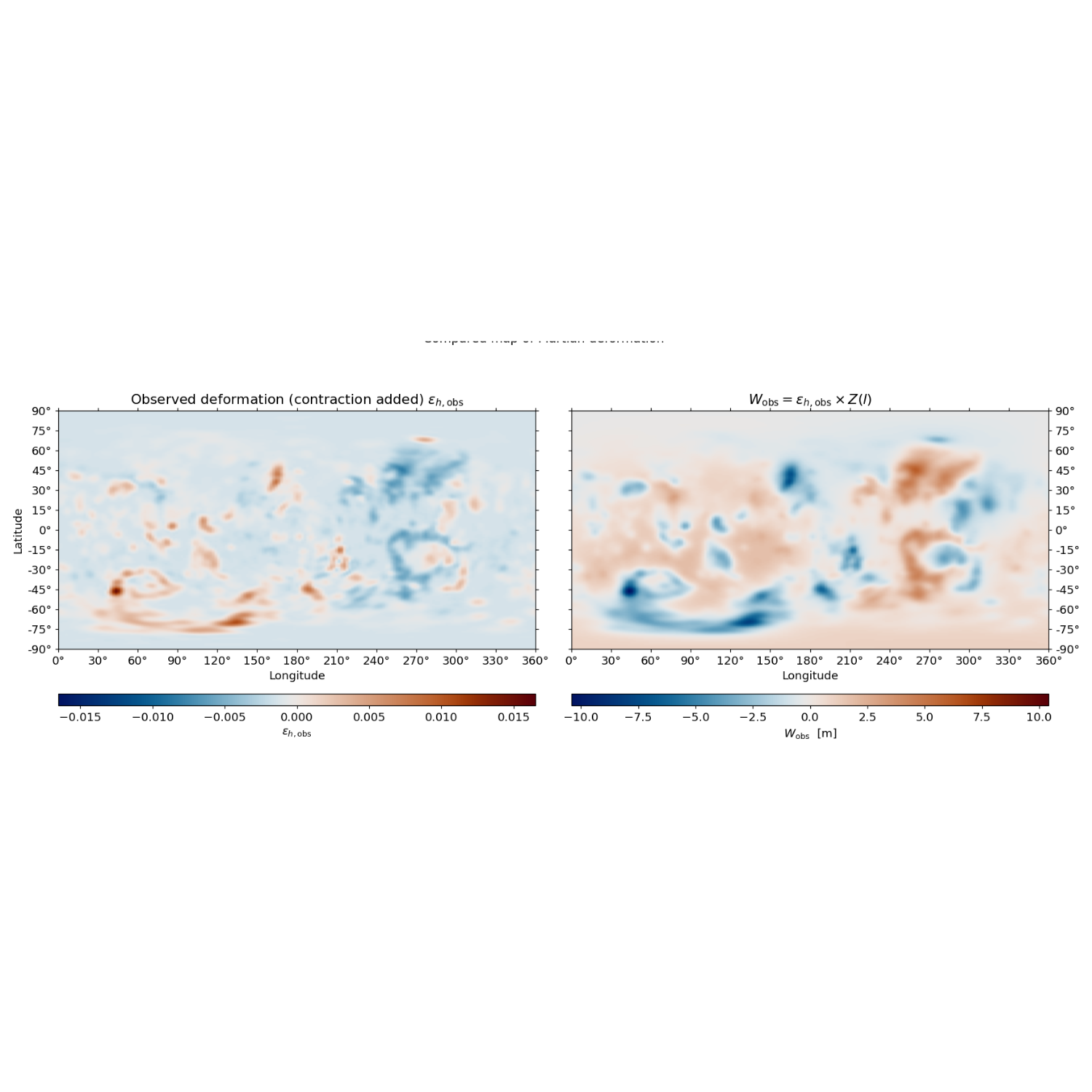
Fig 2: Comparaison of observed deformation
[1] J.C. Andrews-Hanna and A. Broquet. The history of global strain and geodynamics on mars. Icarus,
395 :115476, 2023. doi : https://doi.org/10.1016/j.icarus.2023.115476.
[2] Mark A. Wieczorek and Maria T. Zuber. Thickness of the Martian crust : improved constraints from
geoid-to-topography ratios. Journal of Geophysical Research : Planets, 109(E1) :E01009, 2004. doi :
10.1029/2003JE002153.
[3] M. Knapmeyer and et al. Working models for spatial distribution and level of Mars’ seismicity. Journal
of Geophysical Research : Planets, 111(E11) :E11006, 2006. doi : 10.1029/2006JE002708.
[4] Jeffrey C. Andrews-Hanna. The tectonic architecture of wrinkle ridges on Mars. Icarus, 351 :113937,
2020. doi : 10.1016/j.icarus.2020.113937.
[5] W. B. Banerdt. Support of long-wavelength loads on Venus and implications for internal structure.
Journal of Geophysical Research, 91(B1) :403–419, 1986. doi : 10.1029/JB091iB01p00403.
[6] Mark A. Wieczorek and et al. InSight constraints on the global character of the Martian crust. Journal
of Geophysical Research : Planets, 127(5) :e2022JE007298, 2022. doi : 10.1029/2022JE007298.
[7] Thomas R. Watters. A case for limited global contraction of Mercury. Communications Earth &
Environment, 2(1) :9, 2021. doi : 10.1038/s43247-020-00076-5.
How to cite: Vidal, R. and Broquet, A.: Constraints on Martian Crustal Deformation from Joint Gravity--Topography Inversion and Tectonic Structure Analysis, Europlanet Science Congress 2026, The Hague, The Netherlands, 7–11 Sep 2026, EPSC2026-1167, https://doi.org/10.5194/epsc2026-1167, 2026.


