
 ,,,
,,,- Tumbleweed Mars, Delft, The Netherlands (mario@teamtumbleweed.eu)
Introduction
Mars exploration remains constrained by trade-offs between mobility, surface coverage, power availability, and mission cost. The proposed Tumbleweed Mission addresses this challenge through a distributed swarm of wind-driven, spheroidal rovers designed to traverse the Martian surface using prevailing winds as the primary source of mobility.
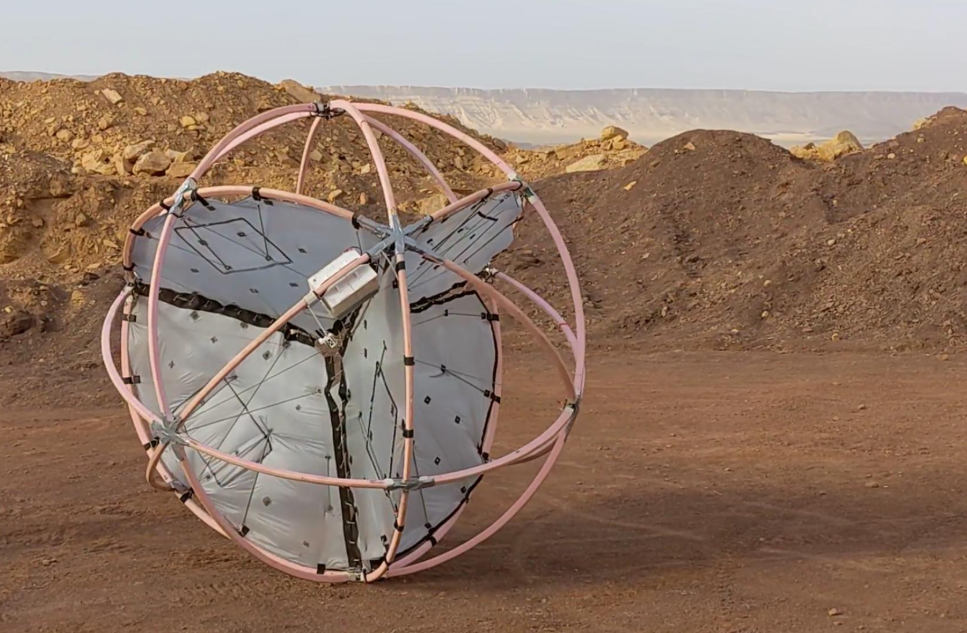
Figure 1 – Tumbleweed rover prototype in the Negev Desert, Credit to OEWF/AMADEE20.
Leveraging a bio-inspired architecture built from modular, largely off-the-shelf components (figure 1), this mission concept aims to enable broad, low-energy exploration of Mars at scales that are difficult to achieve with conventional rover systems.
The Tumbleweed Mission
The Tumbleweed rover concept builds on prior work demonstrating the feasibility of wind-driven mobile impactors for planetary science and extends it into a swarm mission architecture. Each rover is approximately 5 metres in diameter, with a compliant outer shell, a stabilised internal structure, embedded solar panels, and a suspended payload pod positioned above the surface. After atmospheric entry and deployment (figure 2), the rovers are expected to unfold, descend to the surface, and begin a rolling phase lasting at least 90 Martian sols, during which they can be steered indirectly by seasonal and diurnal wind patterns. Following this dispersal period, individual units transition into stationary monitoring stations, forming a distributed sensor network for long-duration surface observations.

Figure 2 - Proposed Mission Architecture: mid-air deployment (1), landing (2), rolling towards the equator (3) and stationary phase (4).
The science strategy is driven by three principal exploration themes. First, the meteorology objective targets high-resolution mapping of near-surface winds , pressure, temperature, humidity, dust activity, and electromagnetic properties. Second, the geology and geophysics objective focuses on multispectral imaging, geomorphological mapping, and the detection of remnant crustal magnetism, enabling a better reconstruction of Mars’ geological evolution and surface modification processes. Third, the astrobiology objective addresses the spatio-temporal variability of ionizing radiation and its interaction with the regolith, atmosphere, and local magnetic fields, while also assessing the abundance of carbon, water, and other biologically important elements near the surface.
A key feature of the mission concept is the selection of zones that are simultaneously scientifically valuable and operationally favourable. The mission draws from candidate landing sites and exploration zones identified in prior studies, and combines these with maps of water-equivalent hydrogen inferred from orbital neutron measurements. This geospatial approach identifies areas where multiple science priorities overlap, particularly where candidate exploration zones intersect with regions of elevated near-surface water abundance. From this analysis, three particularly promising target regions emerge: Firsoff Crater–Meridiani Planum, Gusev Crater–Apollinaris Sulci, and Ismenius Lacus–Deuteronilus Mensae. These regions provide favourable combinations of scientific interest, terrain accessibility, and relevance to both astrobiology and future human activity.
The payload concept has been optimised to maximise science return within strict size, mass, and power constraints. The currently selected instrument suite includes imaging and multispectral capability, radiation sensing, electric field and wind measurements, dust and atmospheric monitoring, temperature and pressure sensors, a soil pH sensor, a humidity sensor, and a magnetometer. The payload is being developed around high-technology-readiness components and compact subsystems, with an estimated mass of less than 5 kg and a volume below 6U per rover.
Recent Advances
In 2025, Tumbleweed Mars achieved validation of the current box-kite spheroidal rover design through a wind tunnel campaign in Aarhus University Planetary Environment Facility supported by Europlanet’s Transnational Access programme. Currently, the mission is advancing through active engineering validation. Recent field testing of prototype rovers has begun to characterise locomotion behaviour, environmental robustness, and payload performance in Mars analogue settings (figure 3).
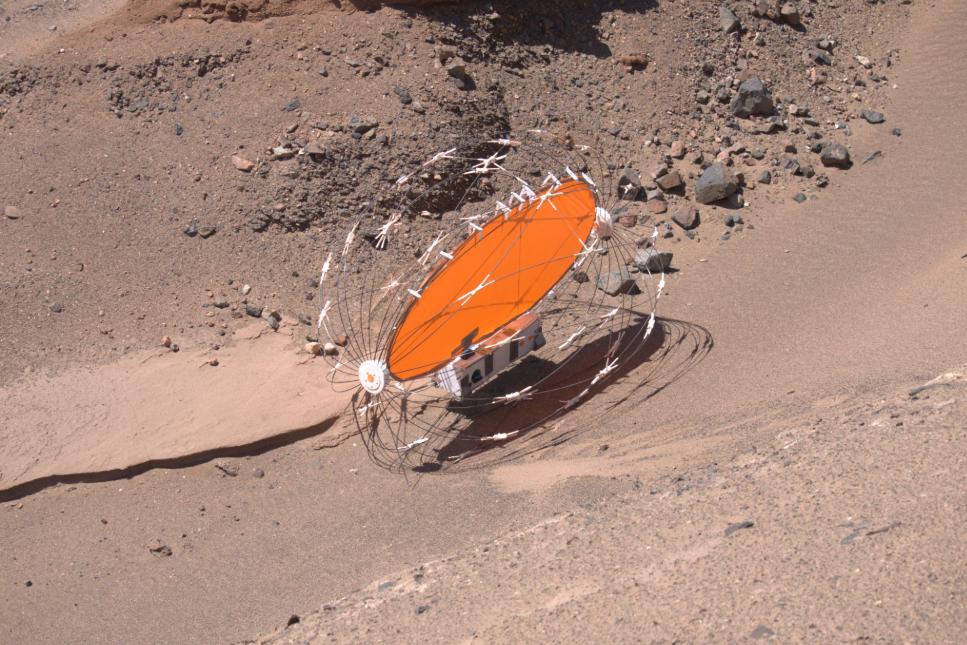
Figure 3 - Tumbleweed rover prototype in the Atacama.
Beyond field testing campaigns, several simulations are necessary to further constrain mission architecture. For instance, the minimum number of rovers, w, required to satisfy Mission Requirements depends on several factors, including the required spatial and temporal distribution of measurements, the fraction of rovers that successfully survive entry, descent, deployment, and early surface operations, and the probability that a sufficient number of rovers reach the priority destination associated with specific science goals.
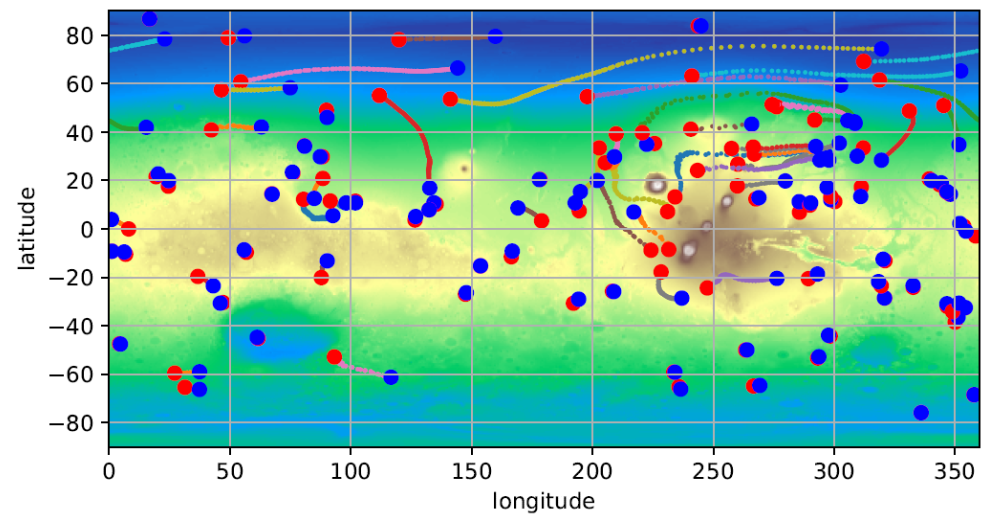
Figure 4 - Global scale semi-stochastic spreading simulation, illustration of a sample run with 100 rovers randomly deployed on the Martian surface, 80 sols fixed lifetime.
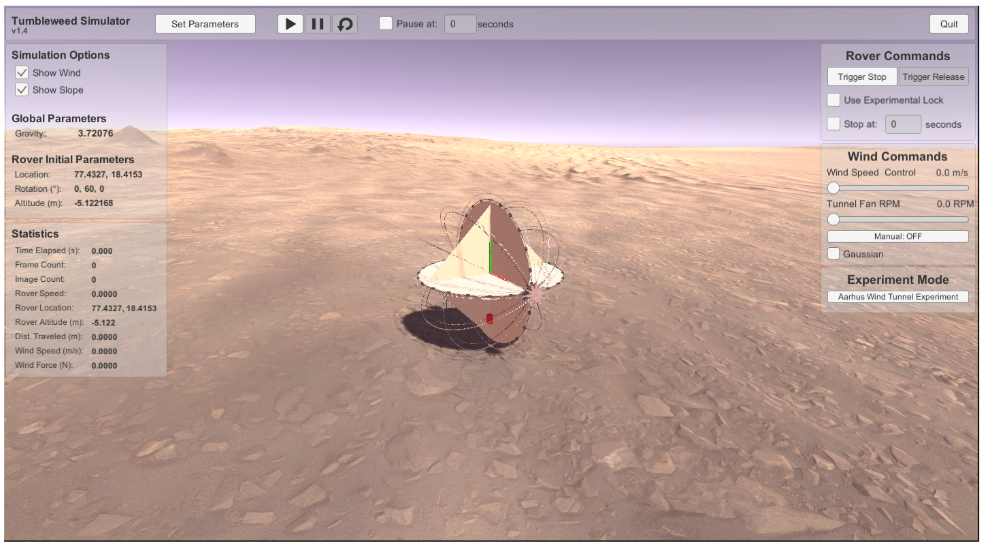
Figure 5 - Unity-based Martian Digital Twin simulating a Tumbleweed rover traverse in the Jezero Crater.
Because rover motion is semi-stochastic and highly dependent on local atmospheric and geomorphological conditions, the estimation of w must rely on a three-layer modelling framework composed of large-scale swarm dispersal simulations (figure 4), higher-fidelity local environmental modelling through the Martian Digital Twin (figure 5), and instrument-specific simulations for individual measurement objectives. Within this framework, the large-scale spreading simulation constrains the preliminary x and w values associated with regional rover delivery, the Martian Digital Twin constrains the local y values associated with specific geomorphological contexts, and instrument-specific modelling constrains the z values required to satisfy the statistical and operational requirements of individual measurements. By iterating between these three modelling layers and the Science Traceability Matrix (figure 6), it becomes possible to progressively refine the Mission Architecture and derive a swarm size that is both scientifically meaningful and operationally robust against the environmental variability inherent to wind-driven surface exploration on Mars.
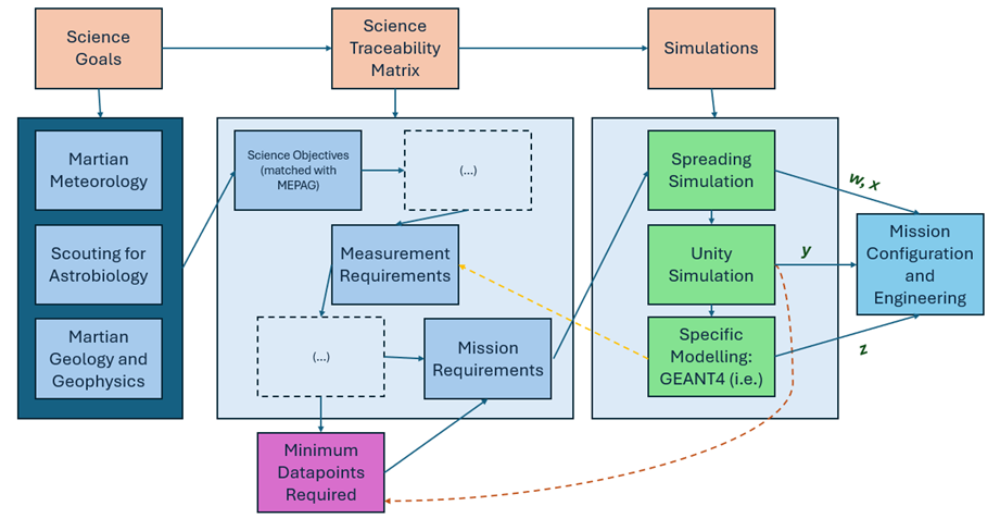
Figure 6 - How the three modelling layers relate to the Science Traceability Matrix.
Conclusion
The Tumbleweed Mission offers a new model for Mars surface exploration, based on mobility through the environment rather than against it. Through passive wind-driven locomotion, distributed sensing, and scalable deployment, the mission concept has the potential to transform our ability to sample the Martian surface and atmosphere over large spatial scales. In doing so, it can advance fundamental questions about the Martian climate, geology, habitability, and resource distribution, while also scouting the terrain and conditions relevant to future human explorers.
How to cite: de Pinto Balsemão, M., Kingsnorth, J., Shanbhag, A., Marta Bernabò, L., Neumeister, N., Itzerott, M., Moisuc, C., Mazur, B., Pikulić, L., Holthuijsen, T., and Rothenbuchner, J.: Advances in the Tumbleweed Mars Mission: Architecture, Science Drivers, and Swarm Deployment, Europlanet Science Congress 2026, The Hague, The Netherlands, 7–11 Sep 2026, EPSC2026-1173, https://doi.org/10.5194/epsc2026-1173, 2026.


