
 1,3,4
1,3,4- 1TU Braunschweig, Institut für Geophysik und Extraterrestrische Physik, Braunschweig, Germany (j.blum@tu-bs.de)
- 2Max-Planck-Institut für Sonnensystemforschung, Göttingen, Germany
- 3Research Centre for Deep Space Explorations, Hing Kong Polytechnik University, Hong Kong
- 4European Space Agency, ESAC, Madrid, Spain
The surfaces of cometary nuclei exhibit a rich surface morphology, including steep, narrow topographic protrusions that rise above the surrounding terrain (Fig. 1). These protrusions, known as pinnacles, are among the most enigmatic features observed on cometary surfaces: unlike analogous structures elsewhere in the Solar System, their origin cannot be explained by any previously established mechanism. Terrestrial pinnacles arise from mechanical weathering and the differential resistance of rocks. On Callisto, ice spires grow through the sublimation of ice and the subsequent condensation of vapour from the exosphere onto cold, elevated terrain (White et al. 2016). On Pluto, blade-like methane ridges reflect the redistribution of volatile ices (Moore et al. 2016). None of these mechanisms, however, can operate on airless, vacuum-exposed surfaces in the free-molecular sublimation regime. Cometary pinnacles must therefore arise by a distinct process.
The first definitive identification of cometary pinnacles occurred on comet 81P/Wild 2 during the Stardust flyby in 2004 (Brownlee et al. 2004). Spire-like promontories exceeding 100 m in height confirmed the mechanical rigidity of the outer nucleus shell. A major step forward came with the ESA Rosetta mission to comet 67P/Churyumov–Gerasimenko, whose OSIRIS cameras (Keller et al. 2007) provided images down to ∼0.07 m/pixel. Basilevsky et al. (2016) identified 49 pinnacles in 13 northern-hemisphere regions, with heights of 10–200 m and basal diameters of 30–300 m. Krasilnikov et al. (2020) expanded this to a global survey of 166 pinnacles (see Table 1), establishing that approximately two-thirds are planimetrically elongated — implying structural anisotropy within the consolidated nucleus material.
Three hypotheses have been proposed for pinnacle formation on 67P. (A) Differential sublimational erosion: resistant heterogeneities survive as protrusions while weaker surrounding material is removed. (B) Sequential erosional evolution of flat-floored depressions: expanding adjacent pits progressively isolate and undercut intervening material until a pinnacle-like morphology emerges. (C) Primordial relict structures inherited from the comet’s residence in the Kuiper Belt, subsequently exposed and sharpened by sublimation (Lim & Ishiguro 2025). These hypotheses are not mutually exclusive. The resistance contrast invoked in hypotheses A and B may reflect primordial heterogeneity in porosity or dust-layer thickness, further modified by impacts.
Here we present the first dedicated three-dimensional numerical simulations of pinnacle formation and evolution on 67P, driven by observationally constrained illumination conditions and implemented within the validated mass-loss evolution framework MONET (Zhao et al. 2021; Rezac & Zhao 2025). The model incorporates (i) the growth and lateral expansion of multiple interacting depressions producing inter-pit remnants, (ii) the role of compositional heterogeneity in setting the resistance contrast required for pinnacle survival, and (iii) the dependence of pinnacle height, aspect ratio, and planimetric elongation on latitude, orbital parameters, and initial heterogeneity geometry.
Synthetic pinnacle populations are compared with the Krasilnikov et al. (2020) catalogue to constrain the scale and spatial organisation of nucleus heterogeneity. This work represents a step toward integrating pinnacle morphology into a consistent evolutionary framework linking the formation of active pits, their widening into flat-floored depressions, coalescence into smooth plains, and the emergence of erosional remnants.
References
Basilevsky A. T., Krasilnikov S. S., Mall U., et al. 2016, Planet. Space Sci., 130, 204
Brownlee D. E. et al. 2004, Science, 304, 1764
Keller H. U., Barbieri C., Lamy P., et al. 2007, Space Sci. Rev., 128, 433
Krasilnikov S. S., Skorov Yu. V., Basilevsky A. T., et al. 2020, MNRAS, 491, 2664
Lim B., Ishiguro M. 2025, A&A, 694, A122
Moore J. M., McKinnon W. B., Spencer J. R., et al. 2016, Science, 351, 1284
Rezac L., Zhao Y. 2025, MNRAS, 537, 217
White O. L., Umurhan O. M., Moore J. M., Howard A. D. 2016, JGR Planets, 121, 2145
Zhao Y., Rezac L., Skorov Y., et al. 2021, Nat. Astron., 5, 139
Table 1. Some of the pinnacles that were chosen for our modeling. Indexed morphometrical parameters are presented according to Krasilnikov et al. (2020). Dimensions are in meters.
|
Index |
Type |
Smaller direction (d) |
Larger direction (D) |
d/D |
Height (h) |
h/d |
|
Anuket 10 |
Rounded |
33 |
33 |
1 |
12 |
0.37 |
|
Nut 136 |
Separate ridges |
45 |
105 |
0.43 |
16 |
0.35 |
|
Sobek 148 |
Compression-related ridges |
44 |
470 |
0.09 |
17 |
0.39 |
|
Seth 146 |
Depression-related ridges |
37 |
310 |
0.12 |
51 |
1.37 |
|
Ash 25 |
Geomorphological border-related ridges |
279 |
565 |
0.49 |
88 |
0.32 |
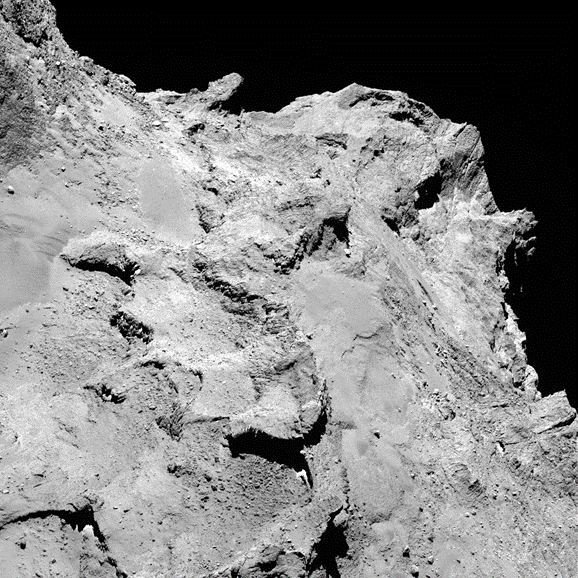
Figure 1. An example of pinnacles on the border of Seth and Anubis regions.
How to cite: Blum, J., Skorov, Y., Krasilnikov, S., Rezac, L., Wu, B., and Küppers, M.: Pinnacle Formation and Evolution on Cometary Nuclei: A case study of 67P/Churyumov–Gerasimenko, Europlanet Science Congress 2026, The Hague, The Netherlands, 7–11 Sep 2026, EPSC2026-240, https://doi.org/10.5194/epsc2026-240, 2026.


