SB5 | Computational, AI and experimental astrophysics of small bodies and planets

SB5

Computational, AI and experimental astrophysics of small bodies and planets
Co-organized by MITM
Conveners: Vladimir Zakharov, Stavro Lambrov Ivanovski, Ivano Bertini, Raphael Marschall, Nicholas Attree, Dominique Bockelee-Morvan, Nikolay Bykov
Orals WED2
| Wed, 09 Sep, 11:00–12:30 (CEST)|Room Earth (Tango 1)
Orals WED3
| Wed, 09 Sep, 14:00–15:30 (CEST)|Room Earth (Tango 1)
Posters THU-POS
| Attendance Thu, 10 Sep, 18:00–19:30 (CEST) | Display Thu, 10 Sep, 08:30–19:30|Foyer 3, F3.72–75
Wed, 11:00
Wed, 14:00
Thu, 18:00
The goal of this session is to cover numerical simulations, artificial intelligence techniques and relevant laboratory investigations related to the Small Bodies (comets, KBOs, rings, asteroids, meteorites, dust), their formation and evolution, and the instruments of their exploration. This session is specially focused on the interdisciplinary approach in the development of models (formal descriptions of physical phenomena), experiments (on ground and in micro-gravity), artificial intelligence techniques (particularly machine learning) and mathematical simulations (computational methods and algorithms of solution) of various astrophysical phenomena: (i) dusty gas cometary atmospheres; (ii) volcanic activity on icy satellites (e.g. Enceladus and Io); (iii) planetary body formation (e.g. via pebbles growth), and planetesimal dynamics.

This session will include an introduction and discussion of new and/or existing laboratory studies in simulated space-like environments and models, experimental techniques, computational methods that can address the results of analytical, experimental and numerical analysis (with respect to computational methods and algorithms of solution) on the above described studies.

Abstracts on thermophysical evolution models of small bodies interiors as well as on the modeling of atmosphere and exosphere are welcome.

Orals WED2: Wed, 9 Sep, 11:00–12:30 | Room Earth (Tango 1)

Chairpersons: Vladimir Zakharov, Stavro Lambrov Ivanovski, Nicholas Attree
Processes in a cometary nucleus
11:00–11:15
|
EPSC2026-240
|
solicited
|
On-site presentation
Jürgen Blum, Yuri Skorov, Sergey Krasilnikov, Ladislav Rezac, Bo Wu, and Michael Küppers

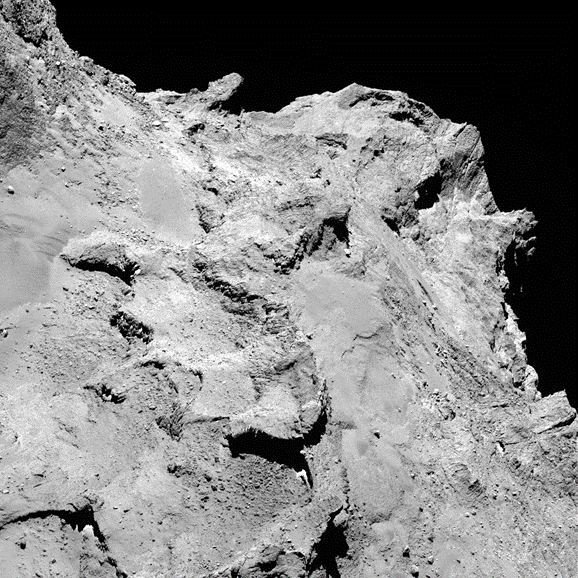
The surfaces of cometary nuclei exhibit a rich surface morphology, including steep, narrow topographic protrusions that rise above the surrounding terrain (Fig. 1). These protrusions, known as pinnacles, are among the most enigmatic features observed on cometary surfaces: unlike analogous structures elsewhere in the Solar System, their origin cannot be explained by any previously established mechanism. Terrestrial pinnacles arise from mechanical weathering and the differential resistance of rocks. On Callisto, ice spires grow through the sublimation of ice and the subsequent condensation of vapour from the exosphere onto cold, elevated terrain (White et al. 2016). On Pluto, blade-like methane ridges reflect the redistribution of volatile ices (Moore et al. 2016). None of these mechanisms, however, can operate on airless, vacuum-exposed surfaces in the free-molecular sublimation regime. Cometary pinnacles must therefore arise by a distinct process.

The first definitive identification of cometary pinnacles occurred on comet 81P/Wild 2 during the Stardust flyby in 2004 (Brownlee et al. 2004). Spire-like promontories exceeding 100 m in height confirmed the mechanical rigidity of the outer nucleus shell. A major step forward came with the ESA Rosetta mission to comet 67P/Churyumov–Gerasimenko, whose OSIRIS cameras (Keller et al. 2007) provided images down to ∼0.07 m/pixel. Basilevsky et al. (2016) identified 49 pinnacles in 13 northern-hemisphere regions, with heights of 10–200 m and basal diameters of 30–300 m. Krasilnikov et al. (2020) expanded this to a global survey of 166 pinnacles (see Table 1), establishing that approximately two-thirds are planimetrically elongated — implying structural anisotropy within the consolidated nucleus material.

Three hypotheses have been proposed for pinnacle formation on 67P. (A) Differential sublimational erosion: resistant heterogeneities survive as protrusions while weaker surrounding material is removed. (B) Sequential erosional evolution of flat-floored depressions: expanding adjacent pits progressively isolate and undercut intervening material until a pinnacle-like morphology emerges. (C) Primordial relict structures inherited from the comet’s residence in the Kuiper Belt, subsequently exposed and sharpened by sublimation (Lim & Ishiguro 2025). These hypotheses are not mutually exclusive. The resistance contrast invoked in hypotheses A and B may reflect primordial heterogeneity in porosity or dust-layer thickness, further modified by impacts.

Here we present the first dedicated three-dimensional numerical simulations of pinnacle formation and evolution on 67P, driven by observationally constrained illumination conditions and implemented within the validated mass-loss evolution framework MONET (Zhao et al. 2021; Rezac & Zhao 2025). The model incorporates (i) the growth and lateral expansion of multiple interacting depressions producing inter-pit remnants, (ii) the role of compositional heterogeneity in setting the resistance contrast required for pinnacle survival, and (iii) the dependence of pinnacle height, aspect ratio, and planimetric elongation on latitude, orbital parameters, and initial heterogeneity geometry.

Synthetic pinnacle populations are compared with the Krasilnikov et al. (2020) catalogue to constrain the scale and spatial organisation of nucleus heterogeneity. This work represents a step toward integrating pinnacle morphology into a consistent evolutionary framework linking the formation of active pits, their widening into flat-floored depressions, coalescence into smooth plains, and the emergence of erosional remnants.


References

Basilevsky A. T., Krasilnikov S. S., Mall U., et al. 2016, Planet. Space Sci., 130, 204

Brownlee D. E. et al. 2004, Science, 304, 1764

Keller H. U., Barbieri C., Lamy P., et al. 2007, Space Sci. Rev., 128, 433

Krasilnikov S. S., Skorov Yu. V., Basilevsky A. T., et al. 2020, MNRAS, 491, 2664

Lim B., Ishiguro M. 2025, A&A, 694, A122

Moore J. M., McKinnon W. B., Spencer J. R., et al. 2016, Science, 351, 1284

Rezac L., Zhao Y. 2025, MNRAS, 537, 217

White O. L., Umurhan O. M., Moore J. M., Howard A. D. 2016, JGR Planets, 121, 2145

Zhao Y., Rezac L., Skorov Y., et al. 2021, Nat. Astron., 5, 139


Table 1. Some of the pinnacles that were chosen for our modeling. Indexed morphometrical parameters are presented according to Krasilnikov et al. (2020). Dimensions are in meters.

Index

Type

Smaller direction (d)

Larger direction (D)

d/D

Height (h)

h/d

Anuket 10

Rounded

33

33

1

12

0.37

Nut 136

Separate ridges

45

105

0.43

16

0.35

Sobek 148

Compression-related ridges

44

470

0.09

17

0.39

Seth 146

Depression-related ridges

37

310

0.12

51

1.37

Ash 25

Geomorphological border-related ridges

279

565

0.49

88

0.32


Figure 1. An example of pinnacles on the border of Seth and Anubis regions.

How to cite: Blum, J., Skorov, Y., Krasilnikov, S., Rezac, L., Wu, B., and Küppers, M.: Pinnacle Formation and Evolution on Cometary Nuclei: A case study of 67P/Churyumov–Gerasimenko, Europlanet Science Congress 2026, The Hague, The Netherlands, 7–11 Sep 2026, EPSC2026-240, https://doi.org/10.5194/epsc2026-240, 2026.

11:15–11:27
|
EPSC2026-548
|
ECP
|
On-site presentation
Victoria Muthig, Christopher Kreuzig, Maximilian Timpe, Calvin Knoop, and Jürgen Blum

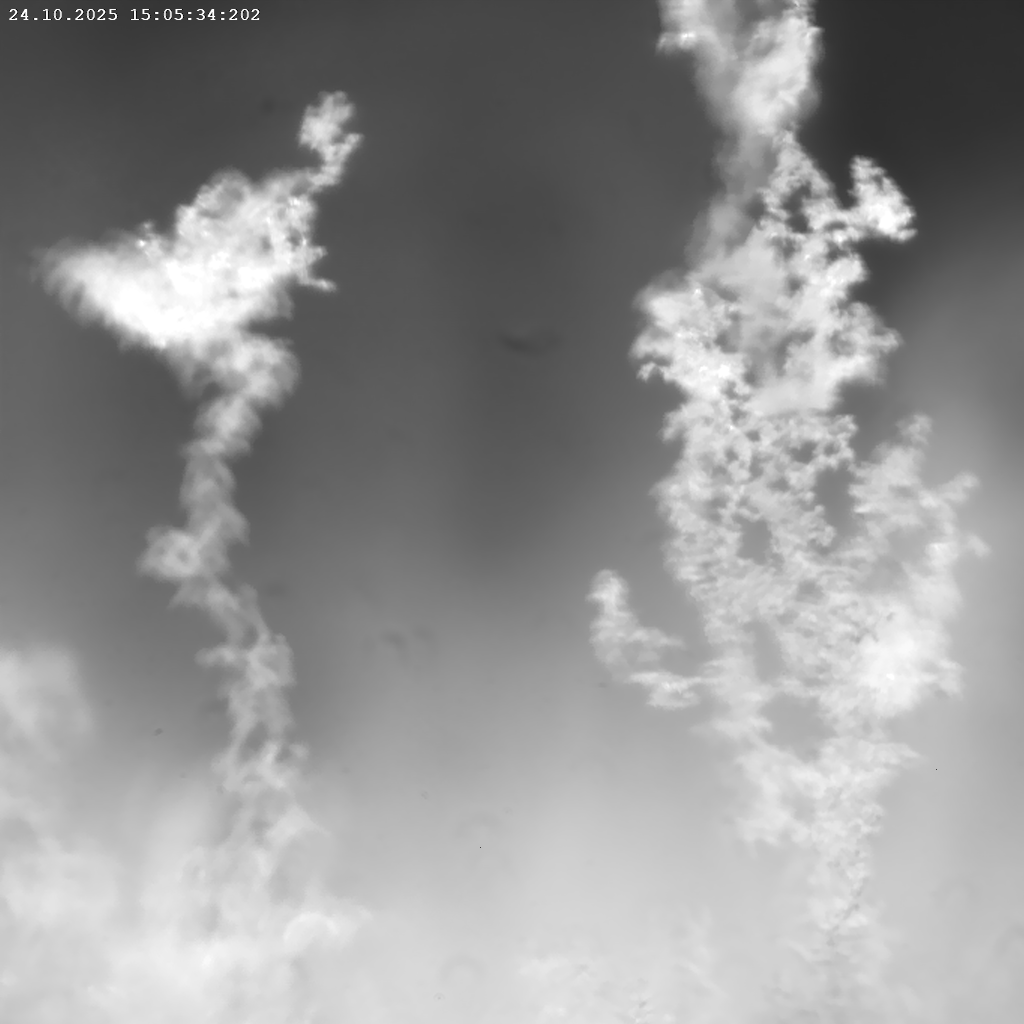
When a comet approaches the sun, its containing ice begins to sublimate, transitioning directly to its gaseous phase, and simultaneously taking dust with it. To better understand the composition of comets, its components are studied in laboratories. In the process simplified models are used as example only considering pure water ice without dust. While illuminating with a halogen lamp, small filaments of water ice particles were observed on the surface of the sample. Using a microscope and a high-speed camera this work covered the analysis of this behavior and documentation of the activity of the filaments. The first part involved designing and setting up a suitable experiment. The second part focused on the observation of the filaments. The usage of two pumps successfully lowered and maintained the pressure inside the vacuum chamber at a high vacuum of ≈ 10-6 mbar. With liquid nitrogen as the cooling system this the chamber was now ready for measurements. The observations revealed that the filaments begin to form when the initial structure of the water ice at the start of the measurement gradually unfolds due to the influence of the halogen lamp. Through the gas pressure the filaments are able to grow, but also to oscillate, rotate and, with enough kinetic energy, break away from the surface. The length of the observed filamentss ranged from 0.3 to 1.8 mm. The movements are analyzed using videos of the filaments which can be shown in the presentation.

How to cite: Muthig, V., Kreuzig, C., Timpe, M., Knoop, C., and Blum, J.: Experimental results from the CoPhyLab - High-resolution optical observation of water ice activity, Europlanet Science Congress 2026, The Hague, The Netherlands, 7–11 Sep 2026, EPSC2026-548, https://doi.org/10.5194/epsc2026-548, 2026.

11:27–11:39
|
EPSC2026-550
|
ECP
|
On-site presentation
Maximilian Timpe, Christopher Kreuzig, Calvin Knoop, and Jürgen Blum

When comets approach the Sun, sublimation of ice releases dust particles, forming a coma and tail. To reproduce this activity in the laboratory, CoPhyLab experiments employ granular water ice or ice–dust mixtures in a thermal vacuum chamber, illuminated from above. While pure ice samples exhibit continuous particle ejection until complete sublimation, dust–ice mixtures cease activity after a brief period, unlike real comets. We attribute this to gravitational redeposition of dust, which builds an insulating surface layer and shuts down sublimation. To overcome this, we rotate the experimental assembly by 90° so that illumination is delivered from the side. In this geometry, ejected grains no longer fall back onto the sample, sustaining continuous activity. Preliminary tests with ice–silica and ice–graphite mixtures confirm prolonged particle ejection. These results demonstrate a simple method to mimic sustained cometary dust activity and will help interpret observations of cometary dust environments and the influence of the ice to dust ratio.


How to cite: Timpe, M., Kreuzig, C., Knoop, C., and Blum, J.: Experimental results from the CoPhyLab - Particle activity of Dust-Ice mixtures under horizontal illumination, Europlanet Science Congress 2026, The Hague, The Netherlands, 7–11 Sep 2026, EPSC2026-550, https://doi.org/10.5194/epsc2026-550, 2026.

11:39–11:51
|
EPSC2026-390
|
ECP
|
On-site presentation
Tom Possekel, Christopher Kreuzig, Victoria Muthig, Maximilian Timpe, Calvin Knoop, and Jürgen Blum

The effects of solar illumination on comets are difficult to understand. In order to investigate them, cometary materials can be simulated in vacuum chambers, where light from a halogen lamp is directed onto samples composed of substances known to occur on comets.
The basis of these samples is granular water ice, which constitutes a major fraction of cometary material. When pure granular water-ice samples are observed in vacuum under halogen-lamp illumination, filament formation can be seen. These filaments form on the sample surface, oscillate, rotate, and grow until they eventually detach from the surface. To document these filaments in greater detail, a dedicated experimental setup was developed, consisting of a small vacuum chamber at its center (figure [1]). Using this setup, filaments can be observed and recorded with the aid of a microscope (figure [2]).
This phenomenon has already been investigated for pure granular water ice in the bachelor thesis of Victoria Muthig. To gain further insight into these processes and into how they may occur on actual comets, mixtures of water ice with other substances commonly detected on comets are now being studied. In particular, this work compares filament formation in granular water ice mixed with salt, alcohol, and carbon dioxide, respectively. All of these substances have been identified on comets. The samples consist predominantly of water ice, with approximately ten percent of one of the additional substances. The samples are placed in the vacuum chamber and exposed to illumination. The results provide insight into how the added substances influence filament formation on the sample surface.
For the measurements, a specially designed sample holder is filled with approximately 8 g of sample material. The surface is leveled by removing any material protruding above the surface, ensuring that the microscope is focused precisely at the surface, where the filaments become visible. The lamp is then switched on and focused onto the sample surface. After approximately 20 s, the first filaments become visible, and at a lamp voltage of 12 V, filament formation continues for about 30 min.
Initial measurements with carbon dioxide have already been performed and indicate a larger number of filaments as well as more frequent motion compared to samples with pure granular water ice. Additional measurements will be carried out to verify these preliminary observations.
Measurements with salt and alcohol will be performed in the upcoming months. The expected behavior in these experiments is difficult to predict, since filament formation is not yet fully understood even for pure granular water ice. It may be hypothesized that samples containing salt will show reduced activity, because salt does not sublimate under halogen-lamp illumination. This would lower the gas pressure at the sample surface, which normally builds up due to water sublimation and may influence both filament formation and filament dynamics. Alcohol, in contrast, is also expected to sublimate, possibly even more readily than water ice. This could enhance sample activity and promote both filament formation and filament motion in ice mixtures containing alcohol.

Figure [1]: Experimental setup used for the measurements: A: vacuum chamber, B: vacuum pump, C: microscope, D: camera, E: window for the light, F: voltage source for the lamp.

Figure [2]: Example of a close-up image of the observed filaments in a sample of carbon dioxide and granular water ice. The frame shown has a real height of 1.76 mm.

How to cite: Possekel, T., Kreuzig, C., Muthig, V., Timpe, M., Knoop, C., and Blum, J.: Experimental Results from the CoPhyLab - Investigating Filament Formation on Granular Water-Ice Samples Mixed with Carbon Dioxide, Alcohol, or Salt in Comet-Simulation Experiments, Europlanet Science Congress 2026, The Hague, The Netherlands, 7–11 Sep 2026, EPSC2026-390, https://doi.org/10.5194/epsc2026-390, 2026.

11:51–12:06
|
EPSC2026-788
|
solicited
|
On-site presentation
Carsten Güttler, Martin Rose, Christian Schuckart, Holger Sierks, Tina Rückriemen-Bez, and Bastian Gundlach

Introduction

Cometary activity is driven by sublimation of volatile ices in near-surface layers. Gas produced below the surface builds up pressure, diffuses through porous material, and may contribute to lifting dust or pebbles from the surface. The efficiency of this process depends on the microscopic structure, such as pebble size, porosity, and arrangement, which control the diffusion coefficient and gas pressure gradient.

Thermophysical models commonly treat sublimation, heat transport, and gas diffusion in a vertically stratified medium. However, the fate of molecules produced at a sublimation front is often simplified. Molecules diffusing downward into colder layers can re-condense and transport both mass and energy into the interior. This may alter ice distribution, porosity, permeability, thermal conductivity, and mechanical strength. We study this vertical volatile transport on the microscopic scale using a Direct Simulation Monte Carlo (DSMC) model.

  • Methods

We use the PI-DSMC code, previously tested for molecular gas diffusion through granular samples (Güttler et al., 2023). The cometary surface is represented by a packing of spherical pebbles with 2.5 mm radius. The sample consists of a desiccated, dry upper layer and an ice-containing lower region.

For each sphere, we prescribe a constant temperature based on a simplified vertical temperature profile from Gundlach et al. (2020). Water molecules are produced from icy spheres according to the Hertz-Knudsen sublimation rate and are adsorbed upon collision with cold icy spheres. By tracking adsorption and desorption events, we determine local and depth-dependent mass-transfer rates.

The model is quasi-static: temperature profile and ice distribution are prescribed and not updated. This isolates the microscopic gas-transport process and provides descriptions for future self-consistent thermophysical models.

Results

For a reference case with a 30 mm dry surface layer (corresponding to six pebble diameters), the DSMC simulation produces a pressure profile consistent with the local sublimation pressure in the icy region and a diffusive pressure decrease through the dry layer towards the surface. Adsorption and desorption bookkeeping shows that net mass loss is concentrated close to the dust-ice interface, while colder layers below gain mass by re-condensation.

Only about 4 percent of the sublimated water molecules escape into space in this reference case. The remaining 96 percent are transported downward and refreeze below the sublimation front. Thus, sublimation at the ice interface can efficiently redistribute ice into deeper layers rather than simply remove it from the comet.

To interpret the DSMC results, we apply a random-walk toy model. A molecule starts at the dust-ice interface and performs a three-dimensional random walk with a step length equal to the mean path length. It escapes only if it reaches the surface without ever moving below its starting depth; otherwise it refreezes. This model is able to reproduce the 4 percent escape probability in the reference case.

The height of the desiccated layer was varied and the escape probability (see figure) shows a strong decrease with dry-layer thickness. The very simple random walk is able to qualitatively reproduce the data surprisingly well; small but systematic differences are to be expected due to its simplicity. Both sets are best reproduced with a 2-parameter power law fit. The widely used “efficiency function” of Gundlach et al. (2020, Eq. A8; orange curve) shows a reasonable match, when the single free parameter, the half-transmission thickness, is applied in the order 3/4 times the mean path (Macher et al., 2024; Eqs. 24 & 32).

Figure 1: Fraction of escaping water molecules as a function of the depth of the dust-ice interface, normalized by the mean path length.

Implications and Outlook

Our results show that diffusion through granular cometary material can strongly reduce the fraction of sublimated water molecules escaping into space. Instead, most molecules re-condense below the sublimation front, causing downward transport of ice and latent heat. The accumulation of ice below the sublimation front may reduce pore space, modify the diffusion coefficient, and form a less permeable layer. This could affect the release of more volatile species from greater depths and may be relevant for delayed, localized, or episodic cometary activity. In future work, we will study how deposited ice changes the pore geometry, for example through sinter-like necks between pebbles, and how this affects gas diffusion.

References

Gundlach, B. et al., 2020. MNRAS 493:4690.
Güttler, C. et al., 2023. MNRAS 524:6114.
Macher, W. et al., 2024. Journal of Engineering Mathematics 144:2.

How to cite: Güttler, C., Rose, M., Schuckart, C., Sierks, H., Rückriemen-Bez, T., and Gundlach, B.: Vertical volatile transport in cometary near-surface layers, Europlanet Science Congress 2026, The Hague, The Netherlands, 7–11 Sep 2026, EPSC2026-788, https://doi.org/10.5194/epsc2026-788, 2026.

12:06–12:18
|
EPSC2026-493
|
On-site presentation
Christian Schuckart, Abhinav Jindal, Samuel Birch, Tina Rückriemen-Bez, Matthew Moser, Eads Fouché, Julia Miller, Carsten Güttler, and Bastian Gundlach

The Rosetta mission to comet 67P/Churyumov-Gerasimenko (67P) has granted insight into the development of cometary nuclei in previously unprecedented detail. But still, the plethora of data from that mission is not fully evaluated and some driving mechanism pertaining to dust and volatile ejections [1] and surface morphology changes are not yet fully understood or only investigated for a small sample size [2, 3]. With recent tools developed to streamline and improve investigations of surface morphology changes observed during the Rosetta mission (RoSCo [4]), it is feasible to look at multiple events across the entire surface of 67P and compare their thermal environment using a thermophysical model.

MoCSI [5] is a thermophysical model designed to simulate surface and subsurface temperatures of dry-airless bodies. Since the focus of this study are geometry driven difference in received heat flux and thermal gradients in the dusty surface layer, a simple two-layer model [6] with different thermal conductivities is used and internal sublimation and gas flux is neglected. The two layers represent thermal conductivities of a mostly dry top layer and a volatile richer bottom layer.

Figure 1: Simulations of 1.5 comet rotations during 01.06.2015 and 01.08.2015 in the Khonsu region of 67P, comparable to [2]. The dashed blue line marks the time of an outburst that occurred in the region on the 01.08.2025 (outburst #7 in [7]). a) Surface temperature distribution during the outburst time and selected two facets. b) Received heat flux for both the plateau and cliff wall facet at the two dates. c) and d) Temperatures at depths of 0, 5 and 10mm for the cliff wall facet and the plateau facet respectively at both dates. e) and f) Temperature gradients between 0-1mm, 0-5mm and 5-10mm the cliff wall facet and the plateau facet respectively at both dates.

In order to compare our results to the ones of Pajola et al. [2], we also focus on two facets, one at the cliff wall of a collapsing cliff (feature F5 in [8]) and the other on top of the plateau region of that cliff. The two facets are compared at a date at which an outburst occurred in the region and another date two months prior, similar to [2]. Received heat flux, temperatures at varying depth within the first centimeter and temperature gradients are recorded and compared for multiple different cliff collapses. Figure 1 shows an example using the same depiction as [2] for a cliff collapse in the Khonsu region.

We will discuss similarities and differences between the different cliff collapse events in the different regions of 67P and what can be learned about the underlying physics that may drive these collapses.

[1] Attree, N. et al. (2025), MNRAS 541.2, pp. 771-783.

[2] Pajola, M. et al. (2017), Nature Astronomy 1, 0092.

[3] Groussin, O. et al. (2025), A&A, 694, A21.

[4] Jindal, A. S. et al. (2025), EPSC-DPS 2025,  EPSC-DPS2025-838.

[5] Schuckart, C. et al. (2026), A&A, 706, A104.

[6] Jindal, A. S. et al. (2022), PSJ, 3 193.

[7] Vincent, J.B. et al. (2016), MNRAS 462(Suppl_1), pp. S184-S194.

[8] Hasselmann, P.H. et al. (2019), A&A, 630, A8.

How to cite: Schuckart, C., Jindal, A., Birch, S., Rückriemen-Bez, T., Moser, M., Fouché, E., Miller, J., Güttler, C., and Gundlach, B.: Thermophysical development of cliff collapse regions on 67P/Churyumov-Gerasimenko, Europlanet Science Congress 2026, The Hague, The Netherlands, 7–11 Sep 2026, EPSC2026-493, https://doi.org/10.5194/epsc2026-493, 2026.

12:18–12:30
|
EPSC2026-1029
|
On-site presentation
Nikolay Bykov, Alexander Lukin, Tatiana Andreeva, and Vladimir Zakharov

According to the current understanding, the nucleus of a comet consists of a mixture of diverse ices, minerals and organics. The atmosphere of a comet is formed by the sublimation products of ices and the dust particles ejected from the nucleus and entrained by the gas flow.

In the absence of a direct exploration of the nucleus, the observations of cometary atmosphere allow us to deduce parameters of the nucleus – its composition, structure etc. and, in this way, to get information about the Solar System formation. To this end, it is necessary to have a model that links processes in the nucleus and in the circumnuclear dusty-gas environment.


We present a modified model of gas flow through the porous layer of a comet's nucleus. We consider a time-dependent process that includes the rotation of the nucleus, its heating (under solar illumination) and its cooling. The nucleus consists of a mixture of ices (H2O, CO2, CO etc.) and refractory materials.

The standard model for surface layer heating and gas outflow through pores involves solving the diffusion equation in conjunction with the energy equation. A distinctive feature of the modified model is that it accounts for the presence of a certain proportion of closed cavities within the layer. The model allows for a complex composition of a surface layer consisting of multiple ices, open and closed cavities, and refractory material. The model accounts for the dependence of the thermophysical parameters on the porosity. To calculate the thermal conductivity coefficient, the Hertz factor (a coefficient characterizing the ratio of the thermal conductivities of porous and non-porous materials) is introduced. When evaluating the thermal conductivity coefficient, the contribution of radiative heat transfer in a porous medium is taken into account.

Based on the modified model, a numerical study was conducted of the heating process in the surface layer of a comet, which consists of H₂O and CO₂ ice, as well as refractory particles. The model predicts significantly higher gas pressure than that predicted by a model that accounts only for the presence of water ice, or by a model that describes a mixture of different types of ice but does not account for enclosed cavities.

High gas pressure in the cavity might leads to the destruction of the surface layer and ejection of its fragments. We present the results of a numerical simulation that accounts for the gas-dynamic detachment of refractory fragments caused by the presence of cavities containing gaseous products of sublimation from the surface layer.

This study was carried out with the financial support of the Russian Science Foundation (grant No. 24-12-00299, https://rscf.ru/en/project/24-12-00299/).

How to cite: Bykov, N., Lukin, A., Andreeva, T., and Zakharov, V.: On one possible mechanism for a cometary nucleus surface destruction and the ejection of solid particles from the surface layer, Europlanet Science Congress 2026, The Hague, The Netherlands, 7–11 Sep 2026, EPSC2026-1029, https://doi.org/10.5194/epsc2026-1029, 2026.

Orals WED3: Wed, 9 Sep, 14:00–15:30 | Room Earth (Tango 1)

Chairpersons: Stavro Lambrov Ivanovski, Ivano Bertini, Raphael Marschall
14:00–14:03
14:03–14:18
|
EPSC2026-370
|
ECP
|
solicited
|
On-site presentation
Markus Reichel, Xuanyu Hu, and Dominic dirkx

This year marks the tenth anniversary of the end of the Rosetta mission at comet 67P/Churyumov–Gerasimenko [1], and the community is already preparing for the next step in cometary exploration with ESA's Comet Interceptor mission, scheduled for launch in 2029 [2]. Despite the extensive insights gained from Rosetta regarding coma structure and its impact on spacecraft dynamics, accurately and efficiently modelling the coma for orbit analysis remains a major challenge.

The cometary coma exhibits a highly complex structure driven by the nucleus shape, time-varying illumination from rotation, and changing heliocentric distance [3]. These factors produce a strong day–night asymmetry, with gas number densities differing by several orders of magnitude between the sunlit and shadowed hemispheres [4]. The nearly radial outgassing velocity shows a similar angular structure: day-side bulk speeds reach up to ~800 m/s, almost twice those on the night side. Because orbiting spacecraft move at only cm/s to low m/s relative to the nucleus, this radial gas velocity dominates the aerodynamic force and must therefore be modelled with high fidelity.

Uniform, homogeneous coma models [5] can capture only bulk quantities such as the total water production rate and lead to large propagation errors when applied to orbit determination. Direct Simulation Monte Carlo (DSMC) approaches reproduce the structure of the coma far more faithfully by accounting for nucleus shape and illumination [3], but are computationally prohibitive for a temporally continuous representation and are typically restricted to the inner coma (≲10–20 km). Consequently, neither approach is directly suitable for orbit analysis, where thousands of force evaluations are required along candidate trajectories.

To bridge this gap, we introduce a 4-D Spherical-Harmonic Polynomial Framework for empirical gas-field modelling. The framework provides a joint radial, temporal, and angular continuous expansion of the coma. Any scalar gas-field quantity, number density, bulk speed, an individual velocity component, or temperature, is expanded in surface spherical harmonics whose Stokes coefficients depend on radius and time. Diurnal variability is captured through a discrete Fourier representation over the nucleus rotation period, while the radial evolution is described by compact polynomials. Once fitted, the resulting surrogate is operationally tractable: it delivers continuous, differentiable, millisecond-scale field evaluations directly compatible with high-throughput orbit propagation routines.

In this contribution, we present the formulation of the framework and demonstrate its application to comet 67P as a case study, illustrating its ability to reproduce reference fields with high accuracy using an open-source implementation in Tudat software [6] and its utility for trajectory analysis around active small bodies in support of upcoming missions such as Comet Interceptor.


  • Glassmeier K.-H., et al. (2007), Space Sci. Rev.
  • Lee, S., et al. (2015), Astronomy and Astrophysics
  • Geraint H. Jones, et al. (2023), Encyclopedia of Astrobiology
  • Marschall et al. (2024), in Comets III
  • Haser, L. (1957), Bulletins de l’Academie Royale de Belgiquie
  • Dirkx, D, et al. (2022), EPSC2022-253

How to cite: Reichel, M., Hu, X., and dirkx, D.: A 4-D Spherical-Harmonic Polynomial Framework for EmpiricalGas-Field Modelling in Spacecraft Orbit Analysis: Case Study ofRosetta at 67P/Churyumov–Gerasimenko, Europlanet Science Congress 2026, The Hague, The Netherlands, 7–11 Sep 2026, EPSC2026-370, https://doi.org/10.5194/epsc2026-370, 2026.

14:18–14:30
|
EPSC2026-1049
|
On-site presentation
Gints Jasmonts, Karina Šķirmante, and Andris Slavinskis

Future comet flyby missions, including ESA’s Comet Interceptor, may observe targets for which nucleus morphology and activity state may be poorly constrained before encounter. This creates a need for modelling tools that can convert plausible activity scenarios into observation-like visualizations under realistic illumination and viewing geometry.

We present a synthetic imaging workflow for visualizing inner coma dust activity around irregular cometary nuclei, including both localized dust jets and the surrounding near-nucleus dust environment. The workflow is developed around open-source and openly accessible physical models and visualization tools, using Blender for procedural nucleus generation, scene construction, and physically based volumetric rendering. The method combines facet-scale surface temperature evaluation, morphology based active region selection, diffuse coma modelling, procedural or mission derived nucleus shapes, and observation geometry controlled rendering. Localized dust jets are generated where sublimation favourable surface conditions coincide with steep or topographically distinct terrain, producing plume-like volumetric structures embedded within the broader inner coma scene.

The framework has been benchmarked against independent thermophysical models and compared with calibrated Rosetta/OSIRIS observations of comet 67P using reconstructed spacecraft geometry. The resulting workflow supports rapid generation of synthetic flyby scenes for dynamically new or previously unvisited comets, providing a practical tool for interpreting activity signatures and preparing future mission observations.

Because the framework is implemented in Blender, the full 3D scene and virtual observing geometry can be reconfigured to test different flyby trajectories, illumination conditions, fields of view, and camera setups for different instruments within the same synthetic environment. The modular structure of the workflow further allows the underlying physical and rendering components to be replaced by instrument specific or higher fidelity alternatives while preserving the same scene generation pipeline.

How to cite: Jasmonts, G., Šķirmante, K., and Slavinskis, A.: Visualizing Inner-Coma Dust Activity for Optical Instruments Observing Dynamically New Comets, Europlanet Science Congress 2026, The Hague, The Netherlands, 7–11 Sep 2026, EPSC2026-1049, https://doi.org/10.5194/epsc2026-1049, 2026.

14:30–14:42
|
EPSC2026-1101
|
ECP
|
On-site presentation

Matteo Teodori, Luca Maggioni, Gianfranco Magni, Michelangelo Formisano, Maria Cristina De Sanctis, Francesca Altieri, Emiliano D'Aversa, Mauro Ciarniello, and Giuseppe Piccioni

Introduction 
Cryovolcanic eruptions occurring on icy satellites, as observed on Enceladus [1-6] and suspected for Europa [7,8], offer a unique opportunity to study the interior of such objects and the origin of ejected volatiles. On Enceladus, plumes outgas from surface fractures [1], and originate from the salty subsurface ocean [9]. On Europa, a similar activity was observed. Here, we present the Smoothed Particle Hydrodynamics (SPH) [10] to characterize the behavior of volatile emissions, used for Enceladus [11] and applicable to Europa plumes.

Smoothed Particle Hydrodynamics model for volatile emissions
Enceladus plumes. Our SPH model describes the volatile release from a surface fracture on Enceladus [11]. It integrates hydrodynamic equations and provides the evolution of density, velocity, and energy. We consider phase transitions between vapor and icy-grains and their viscous interaction. The thermal interaction with the surface, the solar radiation and radiative equilibrium, the gravitational attraction, and tidal limitations are also considered. We predict the mass loss and the surface ice accumulation which result consistent with literature [3,5].

Europa plumes: setup and modeling challenges. The model is applicable to the suspected cryovolcanism on Europa [7,8]. Here, the emission mechanisms are not constrained by observations [12]. The Jovian plasma environment is important for detection, but a second-order effect for the plume structure as only a small fraction of material is involved in the plasma-plume interaction [12]. The icy shell thickness determines the depth of a potential subsurface liquid interface, where ocean evaporation occurs. In addition, from the perspective of source mechanisms such as liquid pockets or diapirism [12], the extent of the reservoir is highly uncertain. Furthermore, the unknown temporal modulation of plume activity suggests episodic events, with wall deposition as a possible mechanism for fracture sealing [13]. By applying our model, we can characterize the episodic emission by investigating the relationship between the ejected mass and the release timescale. This depends on source and subsurface physical properties, which we can explore to provide predictions useful for interpreting the future observations of Europa Clipper and JUICE missions (Figure 1).

Figure 1. Schematic representation of workflow to investigate ejected mass and release timescale according to source and subsurface conditions.

Preliminary simulation of Europa plumes show a similar behavior of the two-component (vapor-ice) flow as obtained for Enceladus activity, where we considered different icy-grain sizes, a quantity that affects the viscous drag coupling. This process shapes the dynamics within the fracture, yielding a slower flow for larger grains (100 micron) and increasing the release time. Larger grains produce a more collimated icy plume, also affecting a small fraction of the vapor plume. Small grains (1 micron) are initially driven by vapor, where density is higher. This occurs on top of the venting area, where we get a plumper plume (Figure 2).

Figure 2. Velocity distribution (grains: blue-green shades; vapor: red-yellow-shades) at t~10 s after emission for 1-micron (left) and 100-micron (right) sized icy grains for Europa plumes simulation. Larger grains show a higher collimation, while small grains present a broader low-velocity distribution above the venting area. Vapor expands in all directions, although for the large grain simulation, it also shows some degree of collimation where ice is present.

To enhance the quality of our model and yield more robust predictions, we are improving the phase transition treatment to better describe the thermal effects of the latent heat of sublimation and to simulate the evaporation process. A definitive numerical solution for latent heat transfer in SPH simulations is still missing. Here we present a numerically stable procedure to the latent heat problem in vapor–ice phase change. We show benchmark tests validating the implementation based on analytical considerations and energy conservation. We also discuss the challenges introduced by simulating the evaporation process, generating new SPH particles. 

Conclusions and perspectives
Preliminary results show that our SPH model is applicable to Europa plumes. It offers an advanced tool to investigate the episodic release of volatiles, in particular to characterize the ejected material and the release time relationship, according to source and subsurface properties. To this aim, we are performing preliminary simulations and refining the considered processes to improve the description of the two-phase flow. In the future, we plan to account for the thermal interaction with fracture walls and the sealing of fractures via ice deposition, taking advantage of the SPH formalism and Eulerian models for thermophysical characterization [14]. Finally, our model can be applied to volatile emissions occurring on various objects of the Solar System. These include cometary activity [15], drilling-induced release of volatile-dust mixtures on Mars [16-17] and the evolution of vaporized ejecta resulting from impacts of hydrated objects, with the possible accumulation within Permanently Shadowed Regions on the Moon and Mercury [18].

References
[1] Hansen et al. 2006, Science 311, 1422.
[2] Schmidt et al. 2008, Nature, 451, 685.
[3] Kempf et al. 2010, Icarus, 206, 446-457.
[4] Dong et al. 2011, J. Geophys. Res., 116.
[5] Teolis et al 2017, Astrobiology, 17, 9.
[6] Postberg et al. 2018, Nature, 558, 564.
[7] Roth et al. 2014, Science, 343, 171.
[8] Sparks et al. 2016, ApJ, 829, 121.
[9] Spencer & Nimmo 2013, Annu. Rev. Earth Planet. Sci. 41, 693.
[10] Monaghan 2005, Rep. Prog. Phys. 68, 1703.
[11] Teodori et al. 2026, Icarus, 443, 116765.
[12] Vorburger & Wurz 2021, JGR Space Physics, 126, e2021JA029690.
[13] Boccelli et al. 2025, PSS, 263, 106136.
[14] Formisano et al. 2024, PSS, 251, 105969.
[15] Rinaldi et al. 2025, EPSC-DPS2025-1556.
[16] Maggioni et al. 2025, MNRAS, 543, 3310.
[17] Maggioni et al. 2026, PSS, 272, 106244.
[18] Teodori et al. 2025, EPSC-DPS2025-323.


Acknowledgments
This work has been developed under the “ASI-INAF agreement n. 2023-6-HH.0”, the  "ASI-INAF agreement n. 2023-3-HH.0", by ISSI within the project “Thermophysical Characterization of Ice-Rich Areas on the Surface of Specific Planetary Bodies: Conditions for the Formation of a Transient Exosphere” and INAF MiniGrant “PLUMES-Planetary fractures Lagrangian simUlations for Multi-component EmissionS”.

How to cite: Teodori, M., Maggioni, L., Magni, G., Formisano, M., De Sanctis, M. C., Altieri, F., D'Aversa, E., Ciarniello, M., and Piccioni, G.: Investigating Europa plumes with Smoothed Particle Hydrodynamics: preliminary analysis, simulation setup and current challenges, Europlanet Science Congress 2026, The Hague, The Netherlands, 7–11 Sep 2026, EPSC2026-1101, https://doi.org/10.5194/epsc2026-1101, 2026.

14:42–14:54
|
EPSC2026-397
|
On-site presentation
Ishan Sharma

Introduction

Many asteroids, especially near-Earth asteroids, are believed to be gravitationally bound granular aggregates (“rubble piles”) rather than monolithic rocks. Radar observations and spacecraft missions reveal irregular shapes, low bulk densities and surface morphologies consistent with such aggregates. One possible formation pathway is the collapse and re-accumulation of debris following, perhaps, a disruptive event. This is analogous to gravitational collapse processes discussed in the context of planetesimal formation (Goldreich & Ward 1973). In this scenario, a rotating cloud of fragments interacts through self-gravity and dissipative inter-grain collisions, gradually forming a bound aggregate. The evolution depends upon the system’s angular momentum, initial energy, and the collisional properties of its constituent grains. We investigate the collapse of an initially spherical rotating granular cloud under the influence of self-gravity and collisional energy dissipation. Because the system is assumed to be isolated, its total angular momentum is conserved throughout the evolution.

The cloud is composed of spherical, inelastic grains and its constitutive response is modeled, on a continuum scale within the framework of kinetic theory, as a thermally conducting nonlinear complex fluid. The dynamical evolution is determined systematically using the method of moments. The system is parameterized by the initial angular momentum, rotational kinetic energy and density of the cloud, together with the diameter, material density and coefficient of restitution of the grains.

We first consider axisymmetric deformation of the cloud, charting the change in its shape, rotation state, rate of energy dissipation, and internal structure. We  then investigate the granular cloud's stability to non-axisymmetric perturbations at different stages of its evolution. In particular, we identify the parameter regimes that permit the emergence of truly triaxial ellipsoidal shapes.

Mathematical model

We consider an isolated agglomerate of identical spherical grains. The grains interact through binary inelastic collisions characterized by a normal coefficient of restitution. The system is assumed dilute, so the dynamics are governed by the inelastic Boltzmann equation for the one-particle distribution function.

Macroscopic fields are defined as velocity moments of this distribution function. These include the bulk density, the mean velocity field, and the granular temperature, which is the fluctuational kinetic energy of the grains relative to their mean motion.

Velocity moments of the Boltzmann equation yield the hydrodynamic equations for a self-gravitating granular gas. This  yields  balance laws for mass, linear momentum and fluctuational energy. Together they describe the evolution of the density, velocity and granular temperature fields under the influence of pressure gradients, gravitational forces, internal stresses, heat transport and collisional dissipation.

On scales large compared with the grain size, the aggregate is modeled as a continuum granular medium whose constitutive response follows from kinetic theory (Jenkins & Savage 1983). In this, the pressure is proportional to the product of density and granular temperature. The stress tensor depends on velocity gradients through a viscosity determined by the grain size and temperature, while the heat flux arises from gradients in both temperature and density. Energy is dissipated through inelastic collisions between grains. The gravitational potential of the cloud is determined self-consistently through Poisson’s equation which contains the bulk density of the granular medium.

Homogeneous axisymmetric collapse

We solve the above set of equations using the method of moments (Chandrasekhar 1969, Sharma 2017). We begin by restricting the cloud to deform homogeneously so that, at any given time, the cloud may take only an ellipsoidal shape. Under this assumption, the governing equations reduce to a set of ordinary differential equations describing the evolution of the strain-rate tensor, the spin tensor, and the inertia tensor of the cloud.

The strain-rate and spin tensors characterize the homogeneous deformation and rotation of the cloud, while the inertia tensor describes the evolving mass distribution associated with the ellipsoidal geometry. The equations also incorporate the average stress tensor obtained from the constitutive relations, the effects of self-gravity through the gravitational shape tensor determined by the ellipsoid’s semi-major axes, and the rotation of the principal axes of the body.

The resulting equations are readily solved once the initial conditions of a rotating spherical granular cloud are specified. Because the cloud is initially spherical, we expect the early stages of the evolution to remain axisymmetric. This symmetry allows the governing equations to be simplified and integrated efficiently.

Once the axisymmetric evolution is known, we examine the stability of the cloud to non-axisymmetric perturbations. In particular, we investigate whether small departures from axisymmetry can grow, leading to bifurcations toward prolate or fully triaxial configurations. The bifurcation points depend on the physical parameters of the system, including the angular momentum of the cloud, its density, and the collisional properties of its constituent grains. These results therefore connect the emergence of non-axisymmetric rubble asteroids with the initial conditions of the collapsing granular cloud.

The present framework provides a continuum description linking granular kinetic theory with the dynamical evolution of self-gravitating aggregates. It offers a new pathway for understanding the formation and internal structure of rubble-pile asteroids and motivates future work on rotational fission, binary formation, triaxial shape instabilities and anisotropic internal pre-stresses in rubble asteroids.

References

Goldreich, P., and Ward, W. R. (1973). The formation of planetesimals. Astrophysical Journal, 183, 1051–1061.

Jenkins, J. T., and Savage, S. B. (1983). A theory for the rapid flow of identical, smooth, nearly elastic, spherical particles. Journal of Fluid Mechanics, 130, 187–202.

Chandrasekhar, S. (1969). Ellipsoidal Figures of Equilibrium. Yale University Press.

Richardson, D. C., Walsh, K. J., Murdoch, N., and Michel, P. (2013). Numerical simulations of asteroids modelled as gravitational aggregates. Planetary and Space Science, 107, 3–15.

Sharma, I., Jenkins, J. T., and Burns, J. A. (2006). Tidal encounters of ellipsoidal granular asteroids with planets. Icarus, 183, 312–330.

Sharma, I., Jenkins, J. T., and Burns, J. A. (2009). Equilibrium configurations of rubble-pile asteroids. Icarus, 200, 304–322.

Sharma, I. (2017). Shapes and Dynamics of Granular Minor Planets. Springer.

How to cite: Sharma, I.: Formation of Rubble-Pile Asteroids from the Collapse of a Rotating Granular Cloud, Europlanet Science Congress 2026, The Hague, The Netherlands, 7–11 Sep 2026, EPSC2026-397, https://doi.org/10.5194/epsc2026-397, 2026.

14:54–15:06
|
EPSC2026-501
|
On-site presentation
Joseph DeMartini, Harrison Agrusa, and Thomas Meier

Originally developed for darkmatter-only, cosmological N-body simulations, pkdgrav is a massively-parallel N -body code that uses a k-D binary tree for domain decomposition and for approximating the gravity of distant particles [1]. A treatment for collisions was added which enabled applications in planetary science [2], such as the first full simulations of asteroid family formation by asteroid disruption and gravitational reaccumulation [3]. In the planetary science community, pkdgrav is also known for its implementation of the soft-sphere discrete element method (SSDEM) which is a technique used in granular mechanics for modeling the frictional forces between contacting particles [4,5]. In this model, interpenetrating particles feel a restoring normal force based on a Hooke’s law spring, as well as rolling, twisting, and sliding frictional forces based on user-defined coefficients that can be set to represent realistic granular media. Over the last∼25 years, pkdgrav has been been a cutting-edge tool

in the planetary sciences, and used to make significant advancements in formation of planetesimals and planets [2,6,7], asteroid families [3], and asteroid satellites [8-10], as well as the study of Saturn’s rings [11] and asteroid surface processes and seismology [12,13]. It has also been used to support small body space missions including the OSIRIS-REx, New Horizons, DART, and Hera missions. Owing to its k−D tree, pkdgrav’s runtime scales as O(N logN), where N is the number of particles in the simulation, which is a significant improvement from a simple brute-force N -body code which has O(N2) scaling. However, the original pkdgrav architecture is now more than two decades old and increasingly limited relative to modern computational approaches.


We present a new implementation of SSDEM in pkdgrav3. pkdgrav3 is a massively parallel, GPU-accelerated N-body and hydrodynamics code designed for a range of astrophysical problems [14]. Building on the legacy of the original pkdgrav framework, pkdgrav3 combines a hierarchical tree algorithm with a Fast Multipole Method (FMM) gravity solver that reduces the runtime scaling from O(Nlog⁡N) to O(N), enabling simulations with billions to trillions of self-gravitating particles. The code is optimized for modern heterogeneous supercomputing architectures through hybrid MPI/pthreads parallelization, asynchronous communication, SIMD vectorization, and GPU acceleration, allowing efficient scaling across thousands of CPU cores and GPUs. Its scalability, computational efficiency, and low memory footprint have enabled some of the largest cosmological simulations ever performed, including simulations with four trillion self-gravitating particles for the Euclid mission’s flagship mock galaxy catalog [15]. Smoothed Particle Hydrodynamics (SPH) has recently been implemented within the code, enabling shock physics simulations on planetary and asteroid size scales [16]. 

We will describe the numerical algorithms underlying the pkdgrav3 SSDEM implementation and present benchmarking results demonstrating the code’s performance. We will report the current status of the code’s development and discuss features planned for future releases. We will also discuss some planned applications for this code, including high-resolution simulations of asteroid family formation, planetesimal formation, and asteroid tidal encounters in preparation for Apophis’ close Earth encounter.


References:

[1] J. Stadel, “Cosmological N-body simulations and their analysis,” University of Washington, 2001.

[2] D. Richardson, “Direct Large-Scale N-Body Simulations of Planetesimal Dynamics,” Icarus, vol. 143, no. 1, pp. 45–59, Jan. 2000, doi: 10.1006/icar.1999.6243.

[3] P. Michel, W. Benz, P. Tanga, and D. C. Richardson, “Collisions and Gravitational Reaccumulation: Forming Asteroid Families and Satellites,” Science, vol. 294, no. 5547, pp. 1696–1700, Nov. 2001, doi: 10.1126/science.1065189.

[4] S. R. Schwartz, D. C. Richardson, and P. Michel, “An implementation of the soft-sphere discrete element method in a high-performance parallel gravity tree-code,” Granular Matter, vol. 14, no. 3, pp. 363–380, Mar. 2012, doi: 10.1007/s10035-012-0346-z.

[5] Y. Zhang et al., “Creep stability of the proposed AIDA mission target 65803 Didymos: I. Discrete cohesionless granular physics model,” Icarus, vol. 294, pp. 98–123, Sep. 2017, doi: 10.1016/j.icarus.2017.04.027.

[6] D. Nesvorný, A. N. Youdin, and D. C. Richardson, “FORMATION OF KUIPER BELT BINARIES BY GRAVITATIONAL COLLAPSE,” The Astronomical Journal, vol. 140, no. 3, pp. 785–793, Aug. 2010, doi: 10.1088/0004-6256/140/3/785.

[7] J. C. Marohnic et al., “Constraining the final merger of contact binary (486958) Arrokoth with soft-sphere discrete element simulations,” Icarus, vol. 356, p. 113824, Mar. 2021, doi: 10.1016/j.icarus.2020.113824.

[8] K. J. Walsh, D. C. Richardson, and P. Michel, “Rotational breakup as the origin of small binary asteroids,” Nature, vol. 454, no. 7201, pp. 188–191, Jul. 2008, doi: 10.1038/nature07078.

[9] K. J. Walsh, R.-L. Ballouz, H. F. Agrusa, J. Hanus̆, M. Jutzi, and P. Michel, “Satellite Formation around the Largest Asteroids,” The Astrophysical Journal Letters, vol. 986, no. 1, p. L12, Jun. 2025, doi: 10.3847/2041-8213/adc562.

[10] H. F. Agrusa et al., “Direct N-body Simulations of Satellite Formation around Small Asteroids: Insights from DART’s Encounter with the Didymos System,” The Planetary Science Journal, vol. 5, no. 2, p. 54, Feb. 2024, doi: 10.3847/psj/ad206b.

[11] R.-L. Ballouz, D. C. Richardson, and R. Morishima, “Numerical Simulations of Saturn’s B Ring: Granular Friction as a Mediator between Self-gravity Wakes and Viscous Overstability,” The Astronomical Journal, vol. 153, no. 4, p. 146, Mar. 2017, doi: 10.3847/1538-3881/aa60be.

[12] Y. Kim, J. V. DeMartini, D. C. Richardson, and M. Hirabayashi, “Tidal resurfacing model for (99942) Apophis during the 2029 close approach with Earth,” Monthly Notices of the Royal Astronomical Society, vol. 520, no. 3, pp. 3405–3415, Feb. 2023, doi: 10.1093/mnras/stad351.

[13] J. V. DeMartini et al., “Using a discrete element method to investigate seismic response and spin change of 99942 Apophis during its 2029 tidal encounter with Earth,” Icarus, vol. 328, pp. 93–103, Aug. 2019, doi: 10.1016/j.icarus.2019.03.015.

[14] D. Potter, J. Stadel, and R. Teyssier, “PKDGRAV3: beyond trillion particle cosmological simulations for the next era of galaxy surveys,” Computational Astrophysics and Cosmology, vol. 4, no. 1, May 2017, doi: 10.1186/s40668-017-0021-1.

[15] F. J. Castander et al., “Euclid,” Astronomy & Astrophysics, vol. 697, p. A5, Apr. 2025, doi: 10.1051/0004-6361/202450853.

[16] T. Meier, D. Potter, C. Reinhardt, and J. Stadel, “Smoothed Particle Hydrodynamics in pkdgrav3 for Shock Physics Simulations. I. Hydrodynamics,” The Astrophysical Journal, vol. 1000, no. 2, p. 266, Mar. 2026, doi: 10.3847/1538-4357/ae4e29.

How to cite: DeMartini, J., Agrusa, H., and Meier, T.: The Soft-Sphere Discrete Element Method in pkdgrav3 for Small-Body Simulations, Europlanet Science Congress 2026, The Hague, The Netherlands, 7–11 Sep 2026, EPSC2026-501, https://doi.org/10.5194/epsc2026-501, 2026.

15:06–15:18
|
EPSC2026-973
|
On-site presentation
Bojan Novakovic and Tatjana Novakovic

The Yarkovsky effect, arising from the anisotropic re-emission of absorbed solar radiation, is the key driver of semimajor-axis evolution for sub-kilometer asteroids (e.g., Bottke et al. 2006; Vokrouhlicky et al., 2015a). The diurnal component, driven by the body's rotation, is particularly sensitive to the spin-axis obliquity γ. Classically, the drift is approximated as da/dt ∝ cos γ, a relation valid in the limit of rotation around a fixed spin axis. However, some real asteroids exhibit spin-axis precession and may be found in the so-called tumbling state (Pravec et al., 2005), which appears to be increasingly common among small near-Earth asteroids (Alarcon et al., 2026).

This precession modulates the effective obliquity on timescales typically comparable to, or shorter than, their orbital evolution timescale. Modulations of the instantaneous obliquity, in turn, modulate the diurnal Yarkovsky acceleration. At the same time, on eccentric orbits, the diurnal Yarkovsky effect is strongly concentrated near perihelion, so the orientation of the spin axis at perihelion carries disproportionate weight in the orbit-averaged drift.

Although spin-axis precession could have a significant impact on the Yarkovsky effect-driven orbital semi-major axis mobility (e.g., Vokrouhlicky et al. 2015b), the issue has not been systematically addressed to date.

Using a thermophysical model developed by Marceta et al. (2025) and implementing a time-dependent spin-axis geometry, we examine how the interplay among orbital eccentricity, spin-axis precession amplitude, and spin-orbit commensurability affects the long-term Yarkovsky drift. We map the dependence of the secular Yarkovsky drift on eccentricity, mean obliquity, precession cone amplitude, and the precession-to-orbital-period ratio. 

Our preliminary results suggest that spin-axis precession can be an important component of long-term orbital evolution for small asteroids on highly eccentric trajectories. We identify regimes where the drift can be significantly altered by precession. An example includes enhanced drift for low mean obliquity when resonant phasing keeps the spin axis near its most efficient orientation at perihelion.

Acknowledgments: This research is supported by The Science Fund of the Republic of Serbia through Project No. 7453, Demystifying enigmatic visitors of the near-Earth region (ENIGMA)

References:

Alarcon, M.R., Licandro, J., Serra-Ricart, M. 2026. A dedicated survey of fast-rotating near-Earth asteroids with the Two-meter Twin Telescope: I. Observational strategy and first results. Astronomy and Astrophysics 707, id.A262

Bottke, W.F., Vokrouhlicky, D., Rubincam, D.P., Nesvorny, D. 2006. The Yarkovsky and Yorp Effects: Implications for Asteroid Dynamics. Annual Review of Earth and Planetary Sciences 34, 157–191

Marceta, D., Novakovic, B., Gavrilovic, M. 2025. Numerical validation of the Yarkovsky effect in super-fast rotating asteroids. Astronomy and Astrophysics 703, id.A185

Pravec, P. and 19 colleagues, 2005. Tumbling asteroids. Icarus 173, 108–131

Vokrouhlicky, D., Bottke, W.F., Chesley, S.R., Scheeres, D.J., Statler, T.S. 2015a. The Yarkovsky and YORP Effects. Asteroids IV 509–531

Vokrouhlicky, D. and 6 colleagues 2015b. The Yarkovsky effect for 99942 Apophis. Icarus 252, 277–283

How to cite: Novakovic, B. and Novakovic, T.: Spin-Axis Precession and the Diurnal Yarkovsky Effect, Europlanet Science Congress 2026, The Hague, The Netherlands, 7–11 Sep 2026, EPSC2026-973, https://doi.org/10.5194/epsc2026-973, 2026.

15:18–15:30
|
EPSC2026-716
|
ECP
|
On-site presentation
Ana Carolina de Souza-Feliciano, Jorge Carvano, and Mário De Prá

The era inaugurated by the James Webb Space Telescope revealed the presence of carbon dioxide, carbon monoxide, water ice in amorphous and crystalline phases, methanol, and a forest of complex organic materials on the surface of small and mid-sized trans-Neptunian objects (TNOs) [1-3]. The TNOs can be seen as a population of small bodies in the solar system that have undergone little surface alteration since their formation to the present day. Due to that, constraining the properties (e.g., abundances, grain sizes, distribution) of these materials on their surface can help us to understand the protoplanetary disk conditions at the place where they formed and how the migration process in the late stages of the outer solar system formation affected them. 

Retrieving the surface compositional properties of TNOs through modelling techniques (e.g., Hapke, Shkuratov) using a large spectral range is not a straightforward task. Depending on the chosen modelling technique, the number of free parameters to estimate and the degenerated solutions can overwhelm the process. In order to obtain a quantification of the abundances and grain sizes of the materials present on TNOs’ surface, we are training a machine learning (ML) algorithm with a library of synthetic spectra containing materials that are expected to be found there. Our goal is to obtain a tool able to find a match for a real JWST/NIRSpec spectra of a TNO that belongs to the prominent water ice or prominent organic groups [4] in the dataset we create, and, in this way, constraint their surface compositional properties.  

In this work, we present a preliminary database containing 1000 synthetic spectra created with the Hapke model [5] and optical constants of ice, red, and dark materials for training purposes of the ML match algorithm. To avoid repetitions and clustering in the training dataset, we use the Latin Hypercube sampling statistical tool [6] combined with a Dirichlet distribution for generating a near-random sample of parameter values for abundance and grain size parameters (Fig. 1). As the abundances must sum to unity, we implemented a weight system to avoid an oversample of abundances at 1/N, where N is the number of materials used in the mixtures. The next step is to evaluate the physical properties of the synthetic models and train the ML algorithm to recognize the compositional groups we are interested in.

Figure 1. Abundance (left side) and grain size (right side) distribution of an experimental dataset with 1000 mixtures containing five materials each. The grain size selected range is from 7 to 150 microns.

References:

[1] De Pra et al. 2025. Widespread CO2 and CO ices in the trans-Neptunian population revealed by JWST/DiSCo-TNOs. Nature Astronomy, Volume 9, p. 252-261.

[2] Pinilla-Alonso et al. 2025. A JWST/DiSCo-TNOs portrait of the primordial Solar System through its trans-Neptunian objects. Nature Astronomy, Volume 9, p. 230-244

[3] Fernandez-Valenzuela et al. 2021. Compositional Study of Trans-Neptunian Objects at λ > 2.2 μm. Planet. Sci. J. 2 10.

[4] Holler et al. 2025. A Descriptive Taxonomic Nomenclature for Intermediate-sized Trans-Neptunian Object Spectra. Res. Notes AAS 9 241.

[5] Hapke 2012. Theory of Reflectance and Emittance Spectroscopy, by Bruce Hapke. Cambridge: Cambridge University Press. OCLC: 775869853. eISBN: 9781139025683.

[6] Songa & Kawai, 2023. “Monte Carlo and variance reduction methods for structural reliability analysis: A comprehensive review”. Probabilistic Engineering Mechanics 73, 103479.

How to cite: de Souza-Feliciano, A. C., Carvano, J., and De Prá, M.: A Sampling Framework for Machine Learning–Based Retrieval of Surface Composition in Small Bodies ​I. TNOs case​, Europlanet Science Congress 2026, The Hague, The Netherlands, 7–11 Sep 2026, EPSC2026-716, https://doi.org/10.5194/epsc2026-716, 2026.

Posters: Thu, 10 Sep, 18:00–19:30 | Foyer 3

Display time: Thu, 10 Sep, 08:30–19:30
Chairpersons: Stavro Lambrov Ivanovski, Raphael Marschall, Nicholas Attree
F3.72
|
EPSC2026-429
|
ECP
|
On-site presentation
Jonathan Pfeifer, Christopher Kreuzig, Maximilian Timppe, Calvin Knoop, and Jürgen Blum

Comets are among the most primitive bodies in the Solar System and therefore provide valuable insight into its formation and early evolution. Since they pre-
serve largely unaltered material from the early stages of planetary assembly, the study of their composition and physical properties is essential for understanding the processes that shaped the Solar System. Despite their importance, many aspects of cometary structure and activity remain insufficiently understood. Continued experimental and observational research is therefore necessary to refine existing models of comet formation and evolution.
In this work, we investigate the emission of particles from an illuminated granular water-ice sample, representing a simplified analog of a comet approaching the Sun. The samples consist of micrometer-sized water-ice grains placed inside a thermal vacuum chamber (Kreuzig et al., 2021). They are illuminated by a 24 V halogen lamp while being kept at a pressure of approximately 10-5 mbar. Emitted particles are detected using cameras, and a horizontal line laser mounted on the side of the chamber improves particle counting. The trajectories of the particles are recorded using high-speed cameras. Additionally, a chopper was installed to simulate a periodic day-night cycle. The subsequent analysis includes the determination of particle count, size, mass, velocity, acceleration, and possible rotational motion.
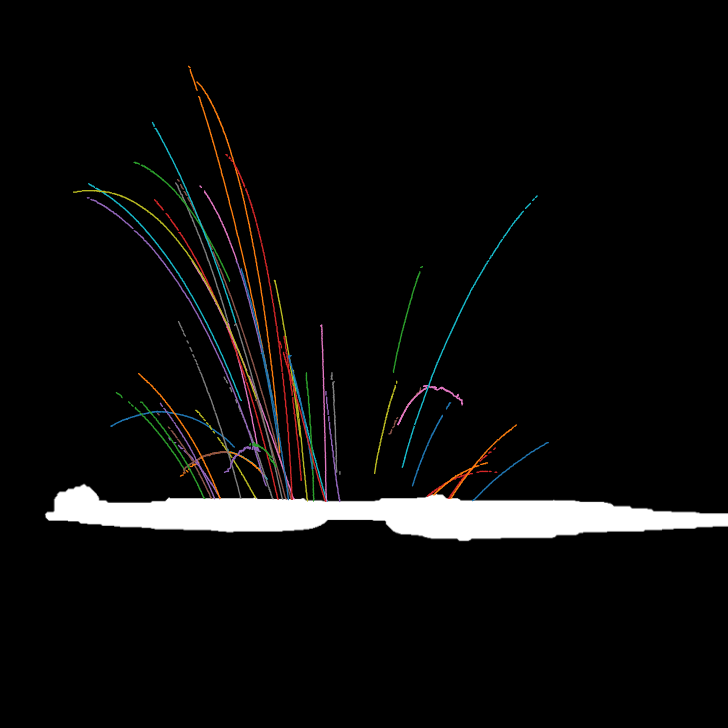
A similar setup was used in a previous experiment to characterize emitted particles (Kreuzig et al., 2025). Figure 1 shows colored particle trajectories obtained with a tracking program over a time span of approximately 1.3 s. The average detected particle was found to have a diameter of about 100 μm, an initial velocity of 0.28 m s-1, and an oscillating acceleration, which is most likely associated with the particle’s rotation. With the additional use of the line laser in the new experimental setup, a relation between mass loss of the sample and emitted particles can be established, allowing the mass of the average particle to be calculated.
One objective of the present study is to reproduce these earlier results and to further investigate the physical properties of the emitted particles.

Figure 1: Emitted particles from a granular water-ice sample (white). The displayed trajectories were obtained from approximately 5200 frames, corresponding to a time interval of 1.3 seconds.

How to cite: Pfeifer, J., Kreuzig, C., Timppe, M., Knoop, C., and Blum, J.: Experimental Results from the CoPhyLab - Detection and Analysis of Emitted Particles from an Illuminated Granular Water-Ice Sample, Europlanet Science Congress 2026, The Hague, The Netherlands, 7–11 Sep 2026, EPSC2026-429, https://doi.org/10.5194/epsc2026-429, 2026.

F3.73
|
EPSC2026-458
|
On-site presentation
Max Mahlke

The James Webb Space Telescope (JWST) offers unprecedented sensitivity for characterising minor bodies across the Solar System, from Near-Earth Asteroids to Trans-Neptunian Objects (e.g. [1]). However, the complexity of JWST observation planning - incorporating moving-target visibility constraints, target-specific thermal modeling, and instrument-specific signal-to-noise ratio (SNR) requirements - often necessitates the use of multiple disparate tools and web-based interfaces. I present jayrock, an open-source python toolkit designed to unify these steps into a single, automated workflow for the minor body community.

jayrock provides a comprehensive, programmatic interface for the end-to-end simulation of minor body observations. The package automates the retrieval of physical properties via the rocks package [2] and computes JWST-centric visibility windows and ephemerides through integration with JPL Horizons and the JWST General Target Visibility Tool (jwst_gtvt). Target spectra are modeled as a superposition of reflected sunlight (using Phoenix stellar models) and thermal emission (utilising a Near-Earth Asteroid Thermal Model, NEATM [3]).

A core strength of jayrock is its local execution of the STScI pandeia engine, the powerhouse behind the official JWST Exposure Time Calculator [4]. This allows users to simulate detector configurations (including MIRI, NIRSpec, and NIRCam modes) without the need for a web browser. Crucially, the software enables automated detector optimisation: users can define specific SNR targets, and jayrock performs an iterative binary search to determine the required number of groups and integrations (ngroup/nint), based on the predicted observational parameters of one or many targets.

By providing the ability to simulate observations across multiple epochs or instrument configurations for many targets in a single script, jayrock significantly reduces the manual overhead of proposal preparation. The package is publicly available via PyPI and GitHub [5], offering a transparent and reproducible environment for planning the next generation of infrared Solar System observations.

References
1.    Pinilla-Alonso N., Brunetto R., De Prá M., et al., Nature Astronomy 2025, 9, 230-244.
2.    Berthier J., Carry B., Mahlke M., Normand J., A&A 2023, 671, A151.
3.    Implementation from https://github.com/mkelley/mskpy
4.    Pontoppidan K., Pickering T.E., Laidler V.G., et al., Observatory Operations: Strategies, Processes, and Systems VI,  SPIE, 2016, Edinburgh
5.    https://github.com/maxmahlke/jayrock

How to cite: Mahlke, M.: jayrock: JWST Observation Planning and Simulation for Minor Bodies, Europlanet Science Congress 2026, The Hague, The Netherlands, 7–11 Sep 2026, EPSC2026-458, https://doi.org/10.5194/epsc2026-458, 2026.

F3.74
|
EPSC2026-476
|
ECP
|
On-site presentation
Rai Machado-Oliveira, Fabio Ferrari, Othon Winter, Rafael Sfair, and Eric Frizzell

Rubble pile objects are small Solar System bodies with diameters in the range 0.2 < d < 10 km and described as loosely bound boulder aggregates (Walsh, 2018). Over the past few years, several in-situ missions to these objects, e.g., Hayabusa2 (Watanabe et al., 2017), OSIRIS-REx (Lauretta et al., 2017), and DART (Daly et al., 2023), have provided a substantial advance in the understanding of them. In general, the missions’ achievements confirmed some expected characteristics while also finding unexpected properties. It is well known that the dynamics of rubble piles are strongly influenced by their shapes, sizes, and composition. This fact makes the investigation of these bodies challenging, since it seems that each object can keep its own dynamical characteristics. For all the objects visited by probes, their surfaces were described as covered by boulders of different sizes and cohesionless. However, one of the main goals in the characterisation of these objects is the understanding of their internal structure, since there is still a lack of physical description. In the past decades, different approaches were developed in order to describe their interior. Some of them used semi-analytical approaches from continuum mechanics (Holsapple, 2001, 2004) to impose the stress limit condition for cohesionless bodies. In these works, material properties of solid bodies were assumed to describe the behaviour in the interior of these minor objects. The bodies were handled as elastic-plastic ellipsoids and it was possible to describe the friction angle changes when varying different values of spin velocity and object size. On the other hand, other techniques simulated the structure of rubble piles using DEM (Discrete Element Method) N-body codes (Richardson et al., 2009; Schwartz et al., 2012; Ferrari et al., 2017), treating the interaction between the aggregates of boulders through self-gravity and contact/collisions. The DEM codes are, in general, able to reproduce physical effects due to the geometry of contact interactions between the boulders without taking into account cohesion strength interactions such as those described by continuum mechanics. Both approaches are able to investigate the evolution and stability of the internal structure of small bodies, but there is no direct relation between the physical parameters that describe each technique. In this work, we present an approach about how to connect results from solid bodies described by continuum mechanics with DEM simulations using the GRAINS (Ferrari et al., 2017; Ferrari and Tanga, 2020) code. Despite the different natures of analysis of each technique, it is possible to track the results from each approach if we restrict their physical properties and create similar scenarios of simulation. In order to reach this connection, we investigate the stress behaviour (Zhang et al., 2017) in both methods, considering ellipsoidal bodies under the effects of constant spinning rotation and self-gravity. We explore the connections between the physical parameters that describe both methods, investigating their influence on each approach and creating a relation between them. Since the cost and efforts to develop a mission to study these minor bodies in-situ are high, one possible way to validate the characterisation of these objects and find out similar features of the internal structure of these bodies can be to assemble computational techniques. We therefore expect the results obtained from both approaches to be mutually consistent.

Acknowledgements: This study was financed in part by the Brazilian Federal Agency for Support and Evaluation of Graduate Education (CAPES) - Finance Code 001, Fundação de Amparo à Pesquisa do Estado de São Paulo (FAPESP) – Proc. 2022/01678-0, Proc. 2022/11783-5, Proc. 2025/19962-4, Conselho Nacional de Desenvolvimento Científico e Tecnológico (CNPq) – Proc. 316991/2023-6, 405349/2025-4, and 307400/2025-5. E.F. and F.F. acknowledge funding of the European Union’s Horizon Europe research and innovation programme under grant agreements No. 101264707 (Marie Skłodowska-Curie Actions Postdoctoral Fellowship, SEISMOR: E.F.) and No. 101077758 (ERC, TRACES: F.F.).

References:

Daly, R.T., Ernst, C.M., Barnouin, O. S. et al. Successful kinetic impact into an asteroid for planetary defence. Nature 616, 443–447 (2023).

Ferrari, F., Tanga, P. The role of fragment shapes in the simulations of asteroids as gravitational aggregates. Icarus, 350:113871, 2020. ISSN 0019-1035.

Ferrari, F., Tasora, A., Masarati, P. et al.N-body gravitational and contact dynamics for asteroid aggregation. Multibody System Dynamics, 39(1):3–20, 2017.

Holsapple, K.A. Equilibrium configurations of solid cohesionless bodies. Icarus, 154(2):432–448, 2001. ISSN 0019-1035.

Holsapple, K. A. Equilibrium figures of spinning bodies with self-gravity. Icarus, 172(1):272–303, 2004. ISSN 0019-1035. Special Issue: Cassini-Huygens at Jupiter.

Lauretta, D.S., Balram-Knutson, S.S., Beshore, E. et al. OSIRIS-REx: Sample Return from Asteroid (101955) Bennu. Space Sci Rev 212, 925–984 (2017).

Richardson, D.C. , Michel, P., Walsh, K.J. et al. Numerical Simulations of Asteroids Modelled as Gravitational Aggregates with Cohesion. Planetary and Space Science, 57(2):183–192, 2009. ISSN 0032-0633. Catastrophic Disruption in the Solar System.

Schwartz, S. R., Richardson, D. C., Michel, P. An implementation of the soft-sphere discrete element method in a high-performance parallel gravity tree-code. Granular Matter, 14(3):363–380, 2012.

Walsh, K. J. Rubble Pile Asteroids. , 56:593–624, September 2018. Sei-ichiro Watanabe, Yuichi Tsuda, Makoto Yoshikawa, et al. Hayabusa2 mission overview. Space Science Reviews, 208(1):3–16, 2017.

Zhang, Y., Richardson, D. C., Barnouin, O. S. et al. Creep Stability of the Proposed AIDA Mission Target 65803 Didymos: I. Discrete Cohesionless Granular Physics Model. Icarus, 294:98–123, 2017. ISSN 0019-1035.

How to cite: Machado-Oliveira, R., Ferrari, F., Winter, O., Sfair, R., and Frizzell, E.: On the interface between Continuum Mechanics analysis and Discrete Element Method simulations, Europlanet Science Congress 2026, The Hague, The Netherlands, 7–11 Sep 2026, EPSC2026-476, https://doi.org/10.5194/epsc2026-476, 2026.

F3.75
|
EPSC2026-1220
|
On-site presentation
Mario De Pra, Jorge Carvano, Ana Carolina Souza Feliciano, Harvison Brittany, and Takir Driss

The advent of the James Webb Space Telescope (JWST) has enabled a paradigm shift in planetary science, offering unprecedented spectroscopic sensitivity and wavelength coverage that are unveiling the complex mineralogy of small bodies throughout the solar system. By transcending traditional taxonomic classifications, these observations expose subtle compositional nuances that push the limits of current spectral modeling frameworks. The spectral data of small bodies obtained by the JWST has highlighted a critical bottleneck: the requirement for expanded laboratory reference libraries and experimental datasets of materials subjected to the unique thermal and radiative conditions of space.

Central to this challenge is the interpretation of phyllosilicates on asteroidal surfaces. These materials are key products of aqueous alteration, and serve as diagnostic indicators of a body's thermal and chemical evolution. The formation and crystalline structure of these minerals are highly sensitive to environmental stressors, resulting in profound spectral and structural divergences between terrestrial analogs and those formed in vacuum [1]. To bridge these modeling gaps, this study implements a robust inversion technique to retrieve reliable optical constants (n and k) from carbonaceous chondrite meteorites, by employing an inversion technique based on the Hapke radiative transfer model [2], and adapted from the framework by Davalos et al. (2016) [3]. These refined optical inputs will provide a more rigorous foundation for interpreting JWST data of asteroids compositions and constraining the evolutionary history of the solar system’s most primitive bodies.

References

  • Aqueous alteration on asteroids: Linking the mineralogy and spectroscopy of CM and CI chondrites. McAdam, M. et al. Icarus 2015. 
  • Theory of Reflectance and Emittance Spectroscopy. Bruce Hapke. Cambridge University Press. OCLC: 775869853. eISBN: 9781139025683. 2012
  • Numerical determination of visible/NIR optical constants from laboratory spectra of HED meteorites. Davalos, J. A. et al. Icarus. 2016. 

How to cite: De Pra, M., Carvano, J., Souza Feliciano, A. C., Brittany, H., and Driss, T.:  Retrieving optical constants from laboratory spectra of carbonaceous chondrites: A step towards understanding the mineralogy of primitive asteroids, Europlanet Science Congress 2026, The Hague, The Netherlands, 7–11 Sep 2026, EPSC2026-1220, https://doi.org/10.5194/epsc2026-1220, 2026.