
 1,
1,- 1Space Engineering, Delft University of Technology, Delft, The Netherlands
- 2STAR Institute, Liège University, Liège, Belgium
The solar system is our home in the universe, and there is still a lot to discover about the planetary bodies within it. One of the main ways to study these bodies is via remote observations, where we measure the light reflected from the planetary body. By combining traditional spectral measurements with polarization observations, we can obtain more information about the microscopic structure and chemical composition of the surface. By investigating the spectro-polarimetric signature, we can determine the grain size, porosity and ice morphology of the surface.
The observed reflected polarization of a planetary body depends heavily on the observation parameters, such as the wavelength and angular configuration of the measurement, and the material properties of the observed surface. This results in a large parameter space that needs to be explored to understand what spectro-polarimetric features can be linked to which material properties. Therefore, the interpretation of these features can be very complex. Fortunately, we can measure the spectro-polarimetric signature of planetary analogue samples to disentangle this problem.
Previous research has been done on measuring the polarization properties of planetary analogue samples. Some instruments of note are PROGA2, GRIT-T Pol and the POLICES instrument. These instruments were created to investigate specific science questions regarding spectro-polarimetry and therefore have a limited wavelength range and sometimes limited polarimetric accuracy, which reduces the parameter space they can explore. Therefore, it will be useful to create an instrument that can explore the available parameter space more thoroughly.
To fill this research gap, the Delft University of Technology is developing the AgSPARROW instrument (A goniometric SpectroPolArimeter for Optical and NIR Wavelengths). The goals of this instrument are to combine broadband wavelength coverage with high polarimetric accuracy and separately rotating instrument arms to provide precise control of the incidence and reflectance angles. The design wavelength range of the instrument is 350-3500 nm. The instrument is designed to measure both linear and circular polarized light reflected from a sample illuminated with unpolarized light. The minimum phase angle targeted by the instrument will be 5 degrees. Furthermore, the instrument will be designed such that it can measure both room temperature samples and cryogenic samples, starting with the implementation of the room-temperature measurements. Figure 1 shows a drawing of the instrument layout.
In this talk I will present the design, construction and calibration of the AgSPARROW instrument. The current goal is to have first light for the instrument in the summer of 2026. I will also present the preliminary results from the first measurements done with the instruments. Finally, I will discuss the future plans for the instrument, with a main focus on using spectro-polarimetry to characterize the surface of Enceladus for future landing missions.
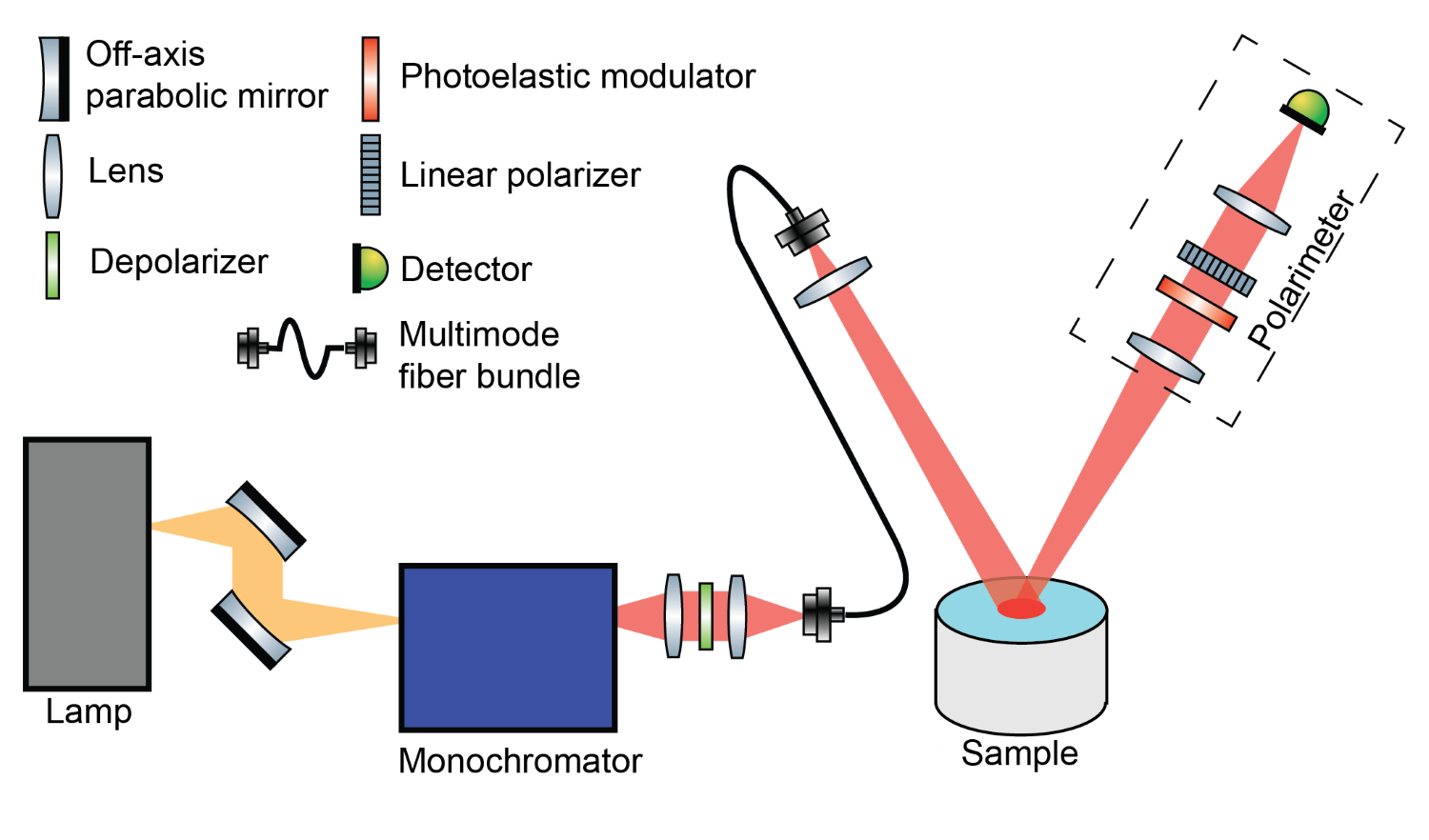
Figure 1: Illustration of the component layout of the AgSPARROW instrument.
How to cite: van Straalen, W., Ligterink, N., Piron, P., and Loicq, J.: Experimental investigation of spectro-polarimetry for solar system exploration, Europlanet Science Congress 2026, The Hague, The Netherlands, 7–11 Sep 2026, EPSC2026-316, https://doi.org/10.5194/epsc2026-316, 2026.


