
 1
1- 1Roma Tre University, Department of Philosophy, Communication, and Performing Arts, Italy (dario.galleana@uniroma3.it)
- 2Roma Tre University, Department of Philosophy, Communication, and Performing Arts, Italy (marta.perrotta@uniroma3.it)
Academic podcasting is increasingly used to expand educational models beyond conventional lectures and one-way dissemination. The narrative approach based on orality, intimacy and identification enhances and extends structured learning beyond traditional channels (Shaby et al. 2026). This abstract presents SWIMmers, a podcast-based STEAM educational tool developed within the ERC Advanced Grant SWIM project, coordinated by Prof. Elena Pettinelli at Roma Tre University. SWIMmers uses planetary science as a framework for teaching concepts and transferable skills related to planetary geophysics, radar sounding, icy moons, space missions, sound design and science communication.
From multidisciplinarity to interdisciplinarity through ethnography
SWIM, the parent project of SWIMmers, presents specific challenges for STEAM education. It is a complex planetary geophysics research, focusing on supporting the Europa Clipper (NASA) and JUICE (ESA) space missions in discovering liquid oceans underneath the icy moons of Jupiter (Pettinelli 2026). As such, it involves a variety of disciplines: geophysics, condensed matter physics, engineering, mechanics, volcanology, geology and more. SWIMmers addresses this challenge by presenting science as a collaborative process, avoiding sensationalism and reductive stereotypes of STEM as individual, masculine or reserved for exceptional talent (Starr 2018).
SWIMmers podcast adopts an interdisciplinary ethnographic approach. Interdisciplinarity moves beyond the juxtaposition of different points of view to integrate theories and methods through interaction (Cohen Miller and Pate 2019; Rossini and Porter 1979). Ethnography — doing research by engaging with a community (Becker 1998; Bourdieu 1977; Clifford and Marcus 1986; Geertz 1973; Malinowski [1922] 2014) — supports interdisciplinarity because the podcast’s curator shares the working environment with the SWIM team and follows the research process. This position makes it possible to document not only scientific results, but also instruments, routines, uncertainty, collaboration and professional trajectories.
SWIMmers connects the Performing Arts department, the college radio station Roma Tre Radio and the Mathematics and Physics department in a reciprocal pedagogical exchange. Media-production expertise helps scientists reflect on narrative, voice, explanation and audience engagement; scientific expertise enables accurate sonic and narrative models for complex planetary-science concepts. The result is not simply a podcast about science, but an implemented STEAM learning environment in which research, communication and production skills are co-developed.
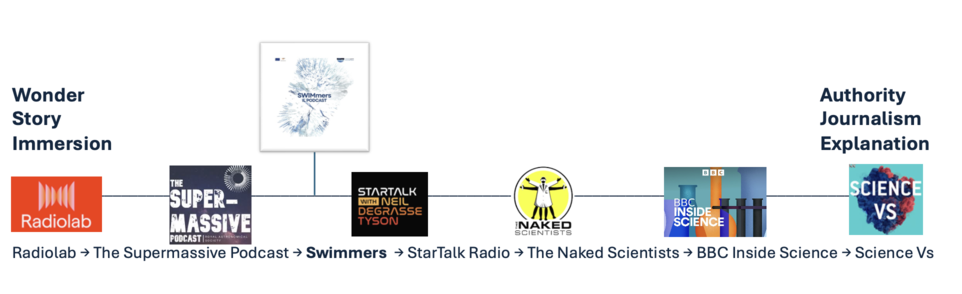
Figure 1: The narrative continuum in scientific podcasting
A sonic research environment
Within SWIMers, podcasting becomes a sonic research environment - an experimental space to examine how voice, narrative and sound design shape public understanding of planetary geophysics. The podcast creates an immersive environment where the audience can connect to complex scientific concepts through listening, spatial imagination and analogy (Ruiz Arana 2024).
To create immersive environments, SWIMmers adopts different strategies: sonification, soundscape composition, and field recording.
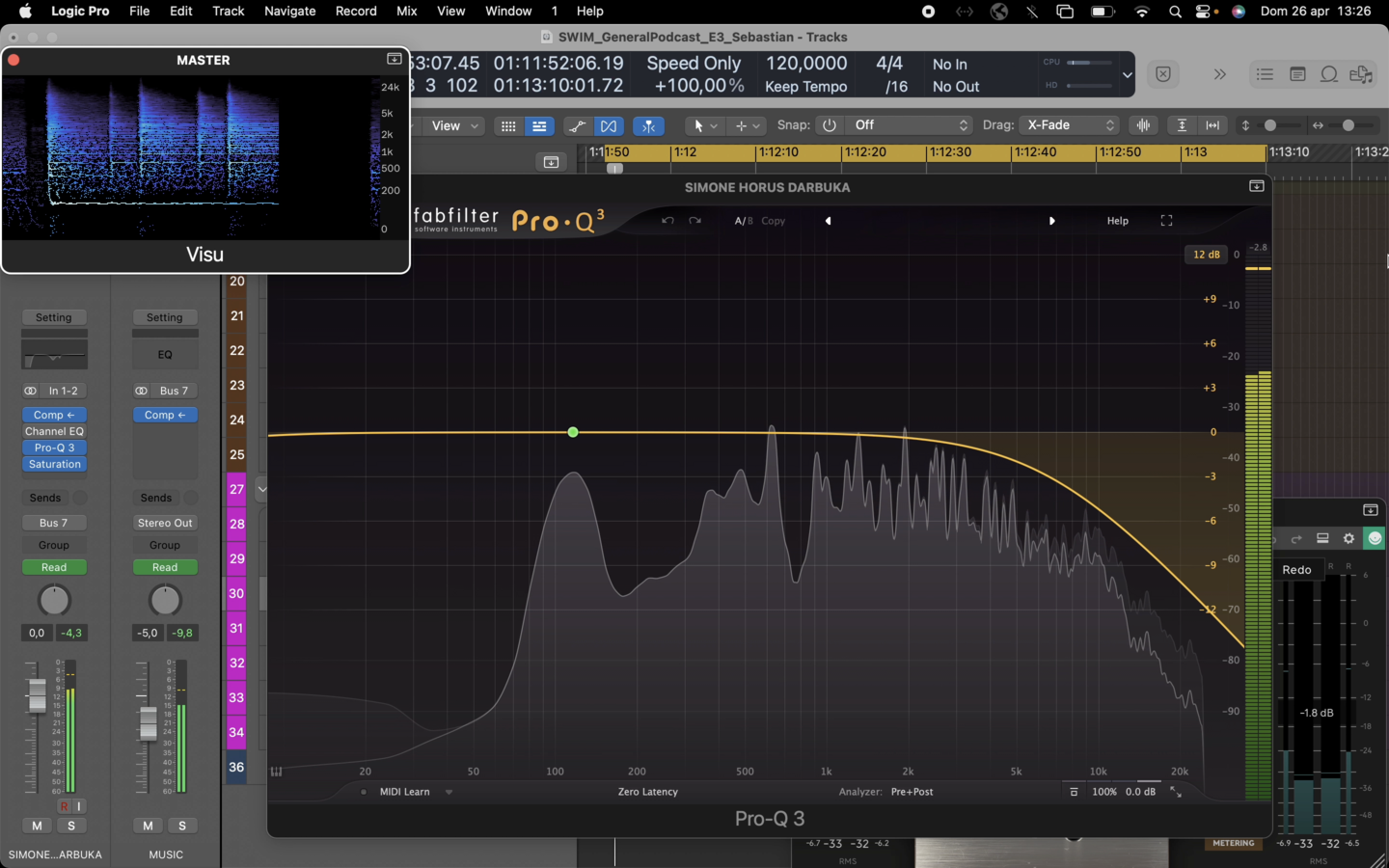
Figure 2: using a percussive sound (Darbuka drum) and sound effects to sonify the concept of “inverse problem” in geophysics
- Sonification is the translation of data into audio signals, enabling its perception and interpretation (Arcand 2022; Zanella et al. 2022). SWIMmers uses sonification and analogies to connect inaudible signals (e.g. radio echoes) to familiar sounds (e.g. rhythm, resonance, repetition), providing an auditory scaffold for conceptual understanding.
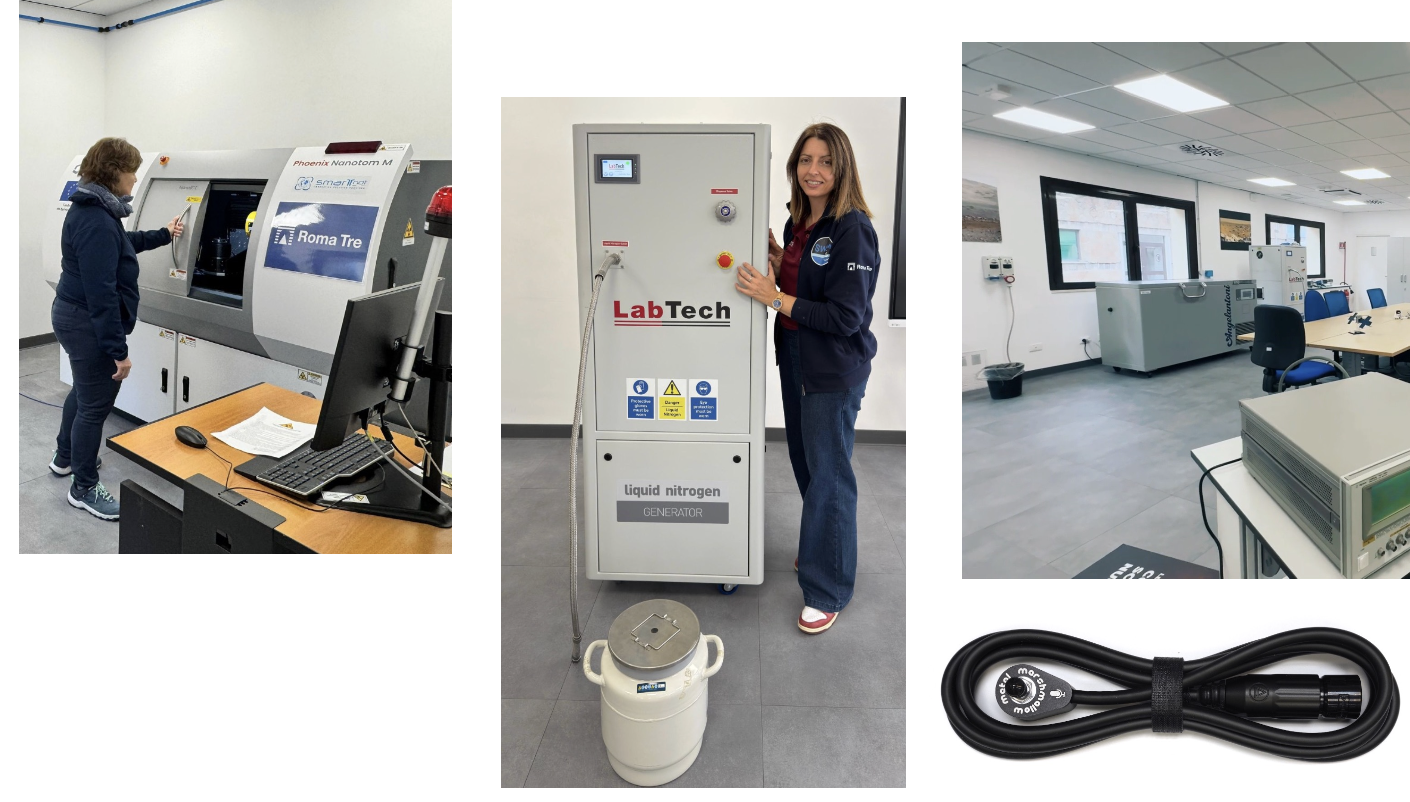
Figure 3: The contact microphone used to record the lab’s machinery
- Soundscape composition is the creative reassembling of recorded environmental sounds to communicate and reframe a listener’s relationship to it (Schafer 1993; Truax 2021). Laboratory machinery, experimental spaces and working gestures are recorded and assembled to let the audience access embodied laboratory practice.
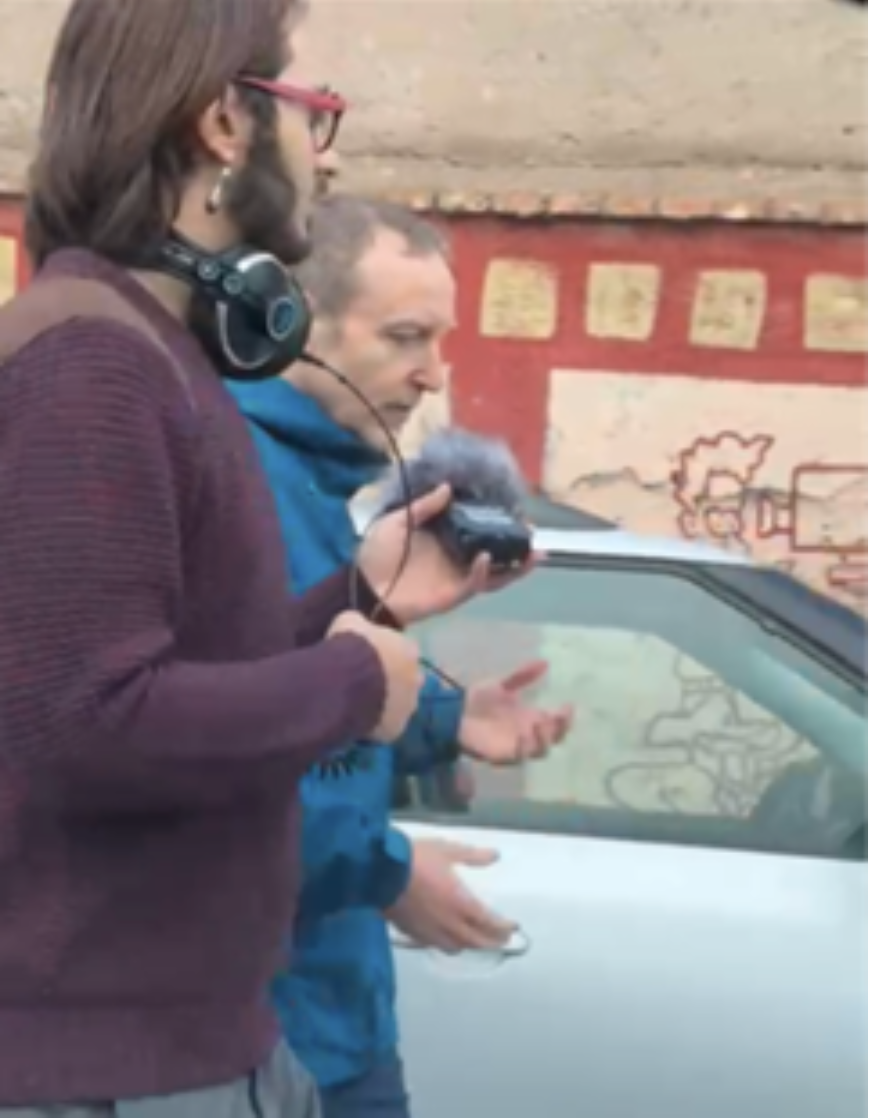
Figure 4: Dario (the podcast’s curator) interviewing meteorologist Marcello Petitta while walking on the street to the lab
- Field recording is the practice of capturing sounds in place, in uncontrolled conditions, to emphasise immersiveness (Feld 2015; Voegelin 2010). Rather than isolating expert voices in a studio, SWIMmers places them within laboratories and streets, supporting identification.
Together, these strategies situate the podcast as an immersive pedagogical environment where audio conveys more than pure information: it stimulates attention, creates intimacy, and supports connecting planetary science with tangible experience.
Creating an engaging and scalable educational model: collective sessions, contests, and games
Finally, to avoid reducing podcasting to passive individual consumption on digital platforms (Bonini and Perrotta 2023; Sullivan 2019), SWIMmers actively engages the audiences through in-person events. These formats transform podcasting into a participatory educational practice and a scalable tool for community listening (Lacey 2013) in classes, conferences, and public events.
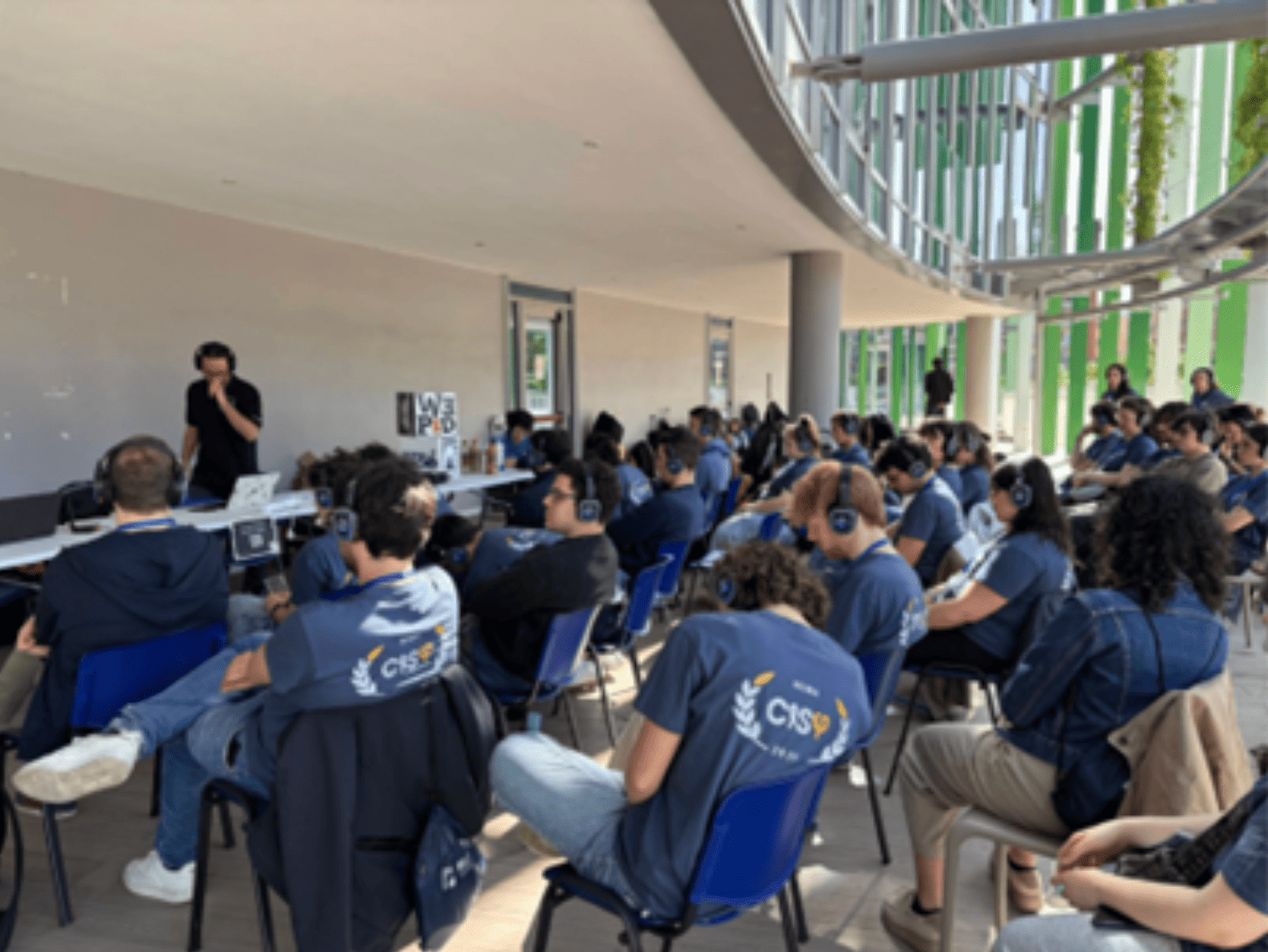
Figure 5: collective listening session during the CISF 2026 conference
Collective listening sessions are a fundamental component of SWIMmers. Using a silent system with wireless headphones, up to 100 people can listen to the podcast in a shared space. A subsequent discussion fosters engagement, feedback, and co-creation. The CISF 2026 session tested this format with a student audience, combining listening, discussion and a sonification contest for future episodes.
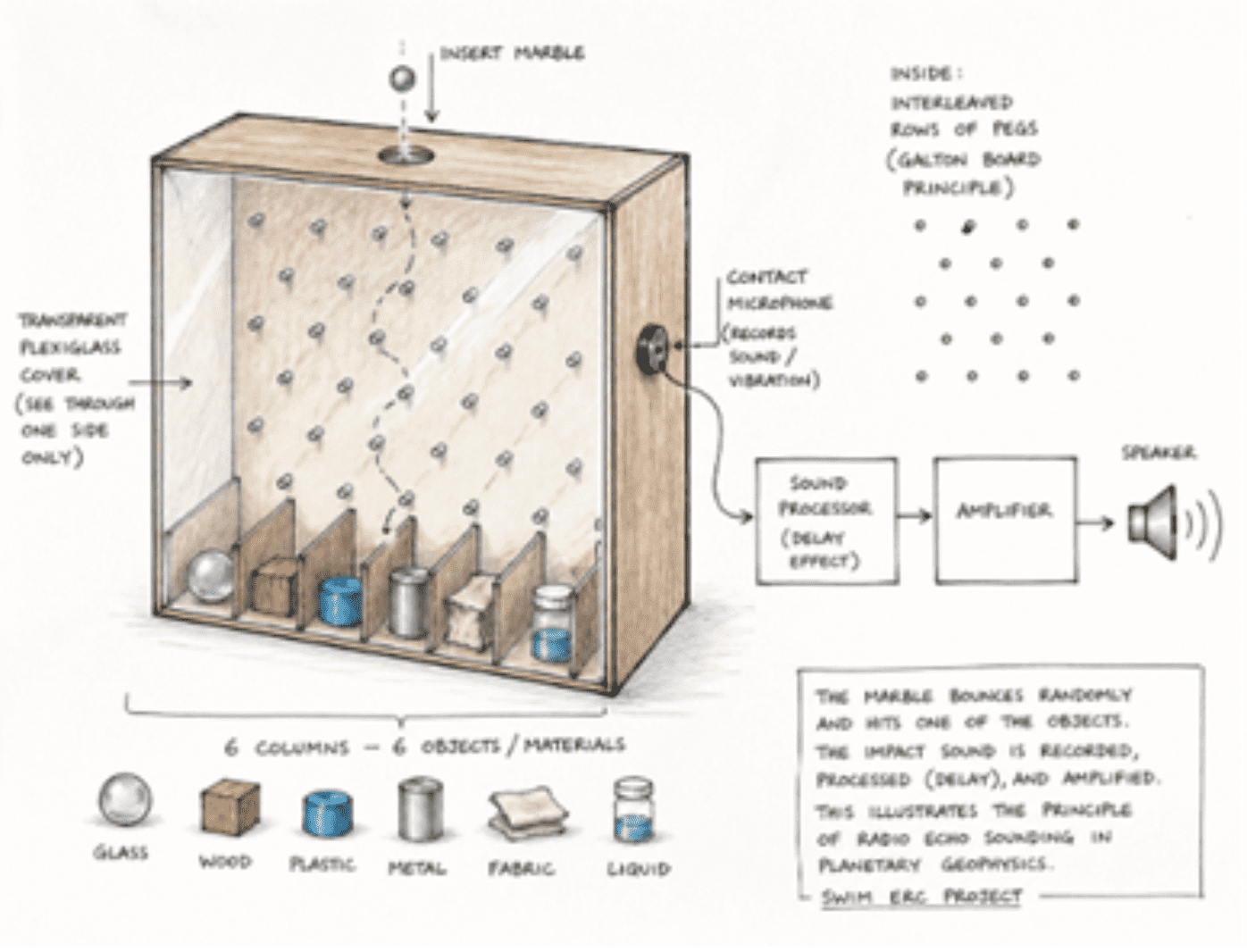
Figure 6: A sketch of the “SWIMbox”, an interactive device presented at Roma Tre Open Night on June 4th
The project also develops gamified public activities. Prototypes such as the SWIMbox are designed to let participants explore key planetary science principles (e.g. radio echo sounding, inversion) through analogy, sound and play. These tools extend the podcast beyond the audio file and turn it into a scalable STEAM platform.
Conclusion
SWIMmers is an innovative podcast-based STEAM tool for integrating planetary science into structured learning across academic and informal contexts. By combining planetary geophysics, ethnography, sound design, collective listening and assessment, it demonstrates how podcasting can function as a scalable educational model and a space for skill transfer. Its contribution lies in transforming planetary science into a rigorous, immersive and participatory learning environment.
How to cite: Galleana, D. and Perrotta, M.: SWIMmers: Podcasting Planetary Geophysics as a Scalable STEAM Learning Environment , Europlanet Science Congress 2026, The Hague, The Netherlands, 7–11 Sep 2026, EPSC2026-39, https://doi.org/10.5194/epsc2026-39, 2026.


