
 ,,
,,- (nils-martin.robeling@univie.ac.at)
Motivation
Recent observations by the James Webb Space Telescope have demonstrated that disequilibrium chemistry shapes the transmission spectra of exoplanet atmospheres, making robust theoretical modelling of these processes essential for accurate atmospheric characterisation. This is particularly pressing for the upcoming ESA Ariel mission, which will observe hundreds of exoplanets across a diverse range of conditions, yet our understanding of disequilibrium processes at the population level remains limited.
Methods
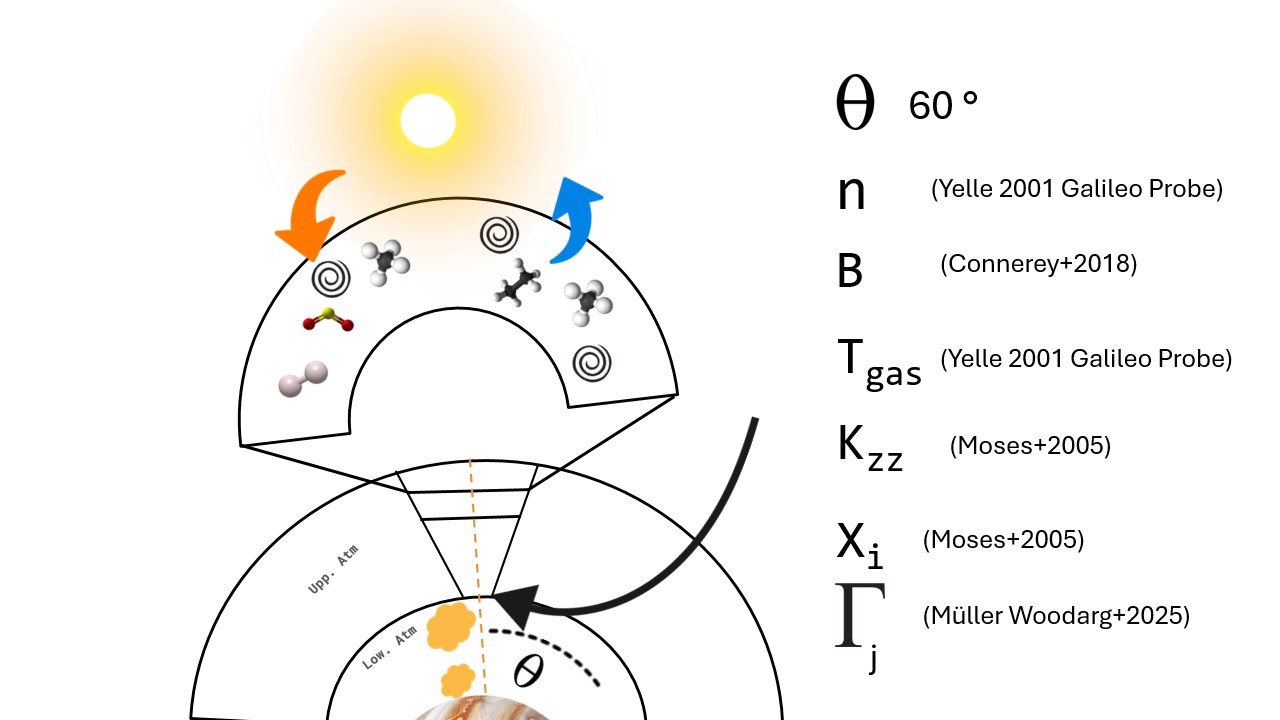
We present the extension and benchmarking of Kompot, a one-dimensional, first-principles, self-consistent thermo-chemical model, to gas giant atmospheres. Kompot solves the coupled hydrodynamical, (photo-)chemical, and thermal balance equations without prescribing an input temperature profile, allowing the physical structure, including the thermal profile, to emerge self-consistently from the underlying processes, and capturing feedback between chemistry and thermal structure.
Results
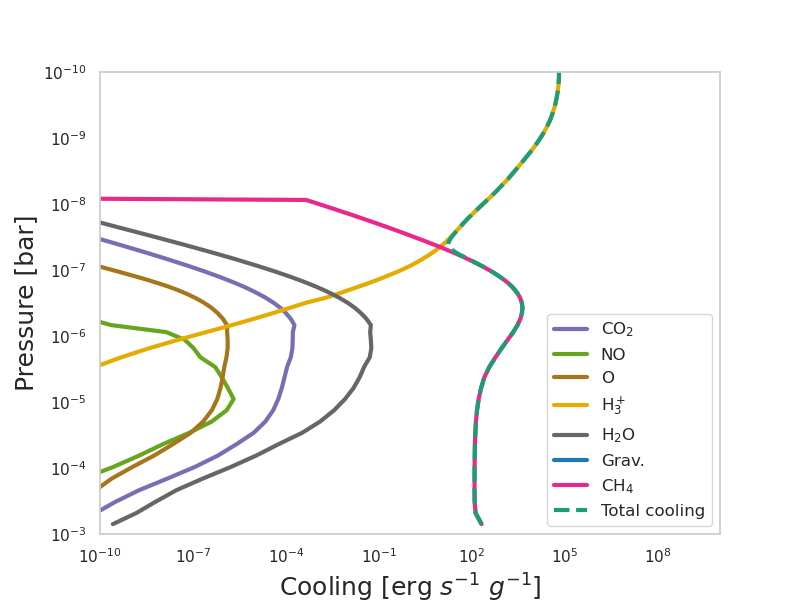
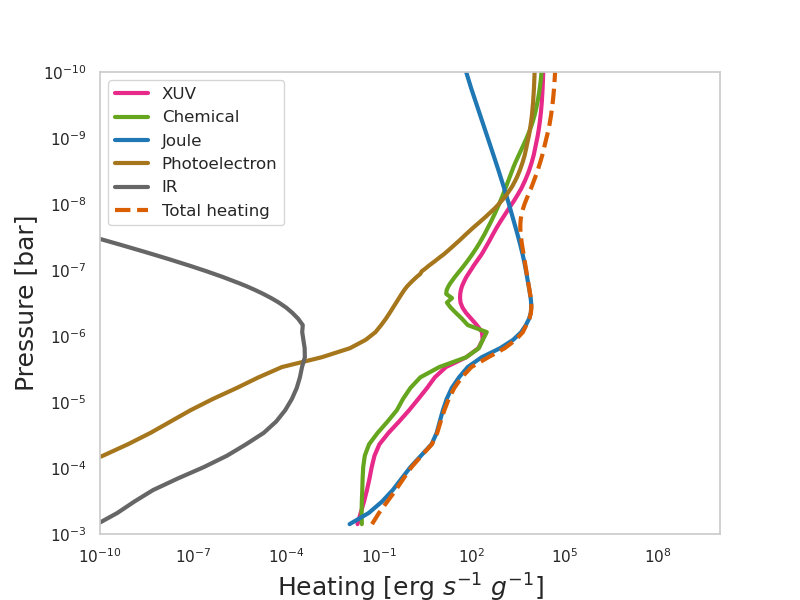
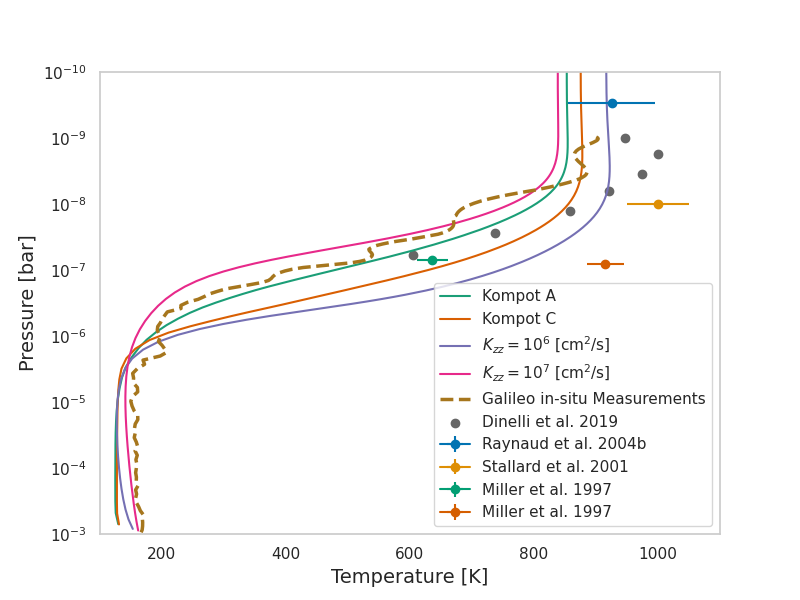
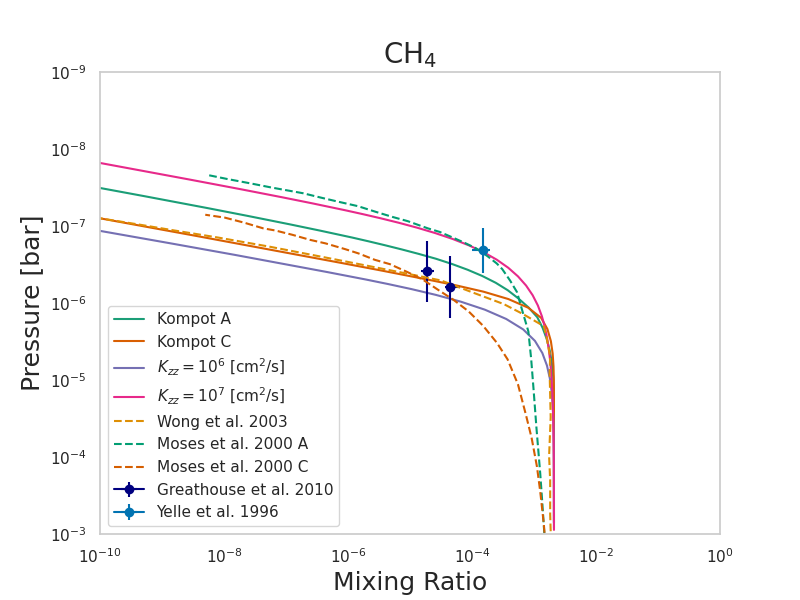
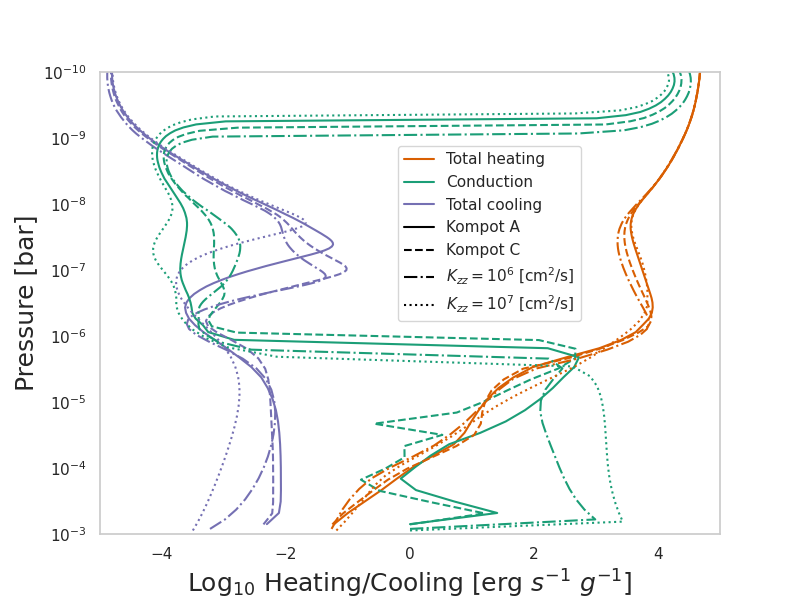
Applying Kompot to Jupiter, we establish its first benchmark for gas giants, demonstrating that the model successfully reproduces both temperature and chemical structure of Jupiter's upper atmosphere. In particular, we find that photochemical feedback plays a significant role in shaping the upper atmospheric thermal structure, with implications for how disequilibrium signatures manifest in transmission spectra. In addition to discussing our model results for Jupiter, I will also present our ongoing work to expand the model to simulate the upper atmospheres of hot and warm Jupiters. Thus, expanding the parameter space to provide self-consistent modelling of the temperature and the chemical structure of a diverse gas giant population for which observational constraints are relatively sparse.
How to cite: Robeling, N.-M., Boro Saikia, S., Stanković, I., and Güdel, M.: Jupiter as an Exoplanet, Europlanet Science Congress 2026, The Hague, The Netherlands, 7–11 Sep 2026, EPSC2026-435, https://doi.org/10.5194/epsc2026-435, 2026.


