
 1,1,1,3,4,5,6,5
- 1Institut für Planetologie, University of Münster, Münster, Germany
- 2Chair of Radio Frequency and Photonics Engineering, Technische Universität Dresden, Dresden, Germany
- 3Institute of Astrophysics of Andalusia, Granada, Spain
- 4Planetary Sensor Systems, DLR Institute of Planetary Research, Berlin, Germany
- 5Max Planck Institute for Solar System Research, Göttingen, Germany
- 6Space Research & Planetary Sciences, University of Bern, Bern, Switzerland
Introduction
The Hayabusa2 and OSIRIS-REx missions successfully returned material from near-Earth asteroids (NEA) Ryugu and Bennu using Touch-and-Go (TAG) manoeuvres [1, 2]. Hayabusa and Hayabusa2 collected material mobilised by the impact of a projectile. OSIRIS-REx released pressurized nitrogen gas to eject surface material into a container. In contrast, other programs (e.g., Chang’e) utilise landers that are equipped with sampling devices like drills or scoops [3]. As part of the MarcoPolo-R mission study [4], a Brush Wheel Sampler was considered for TAG sampling of a NEA. The idea was to brush surface material into a canister.
The basic principle of a brush wheel sampler is applicable for both TAG sampling as well as lander-based sampling. This is why we are adapting this mechanism from previous studies [5–7] and optimise it for sampling a broad range of grain sizes in both lunar and asteroidal environments. The Brush Wheel System (BWS) developed at the Institut für Planetologie (University of Münster) is part of the proposed PRIAMOS (PRImordial Asteroid Mission to understand the Origin of the Solar system) mission that is presented at this meeting by Marschall et al. (2026) [8]. The BWS is a subsystem of the APOSSUM (Asteroid Payload for Obtaining, Storing, and Sample return with Utility Module) system which is presented by Renggli et al. (2026, EPSC2026-147) [9].
Sampler Design
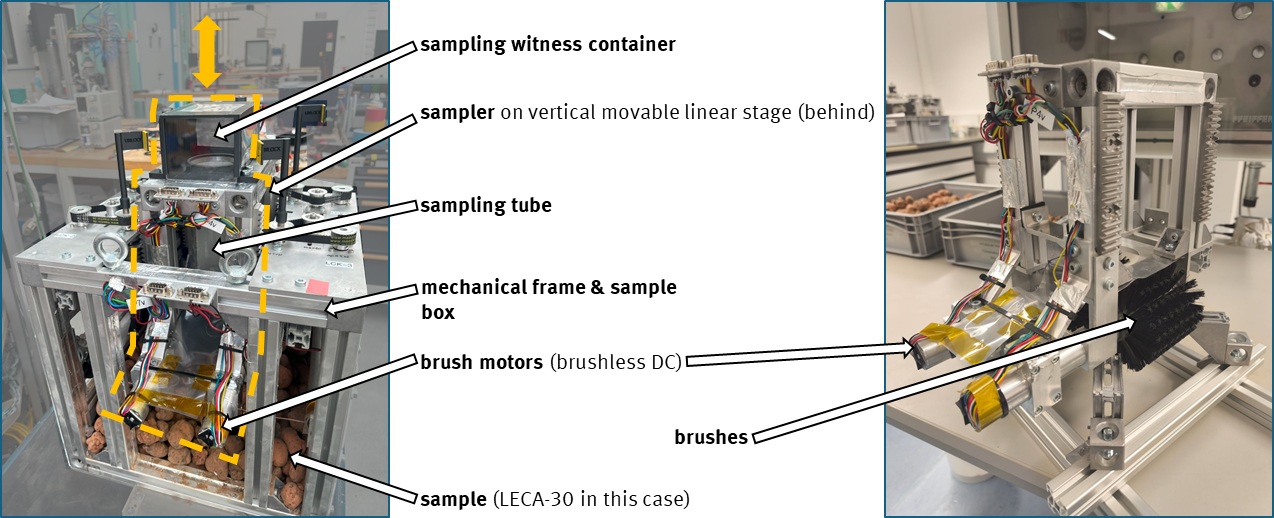
Fig. 1: Brush Wheel System breadboard for reduced gravity, microgravity, and laboratory tests
The Brush Wheel System concept was originally developed as the APOphiS SUrface saMpler during two concurrent engineering studies at DLR Bremen in 2024 [10, 11]. Based on this concept, several iterations of laboratory breadboards were constructed to test sampling efficiency. The current breadboard (Fig. 1) consists of two cylindrical brushes that are 100 mm in length and diameter. Each brush is rotated individually with up to 400 rpm by BLDC motors. Material with grain diameters up to 50 mm is captured and lifted through a tube into a container. Potential clogging can be cleared by rotating brushes in reverse direction. A linear stage simulates the surface approach and ascent during a TAG manoeuvre.
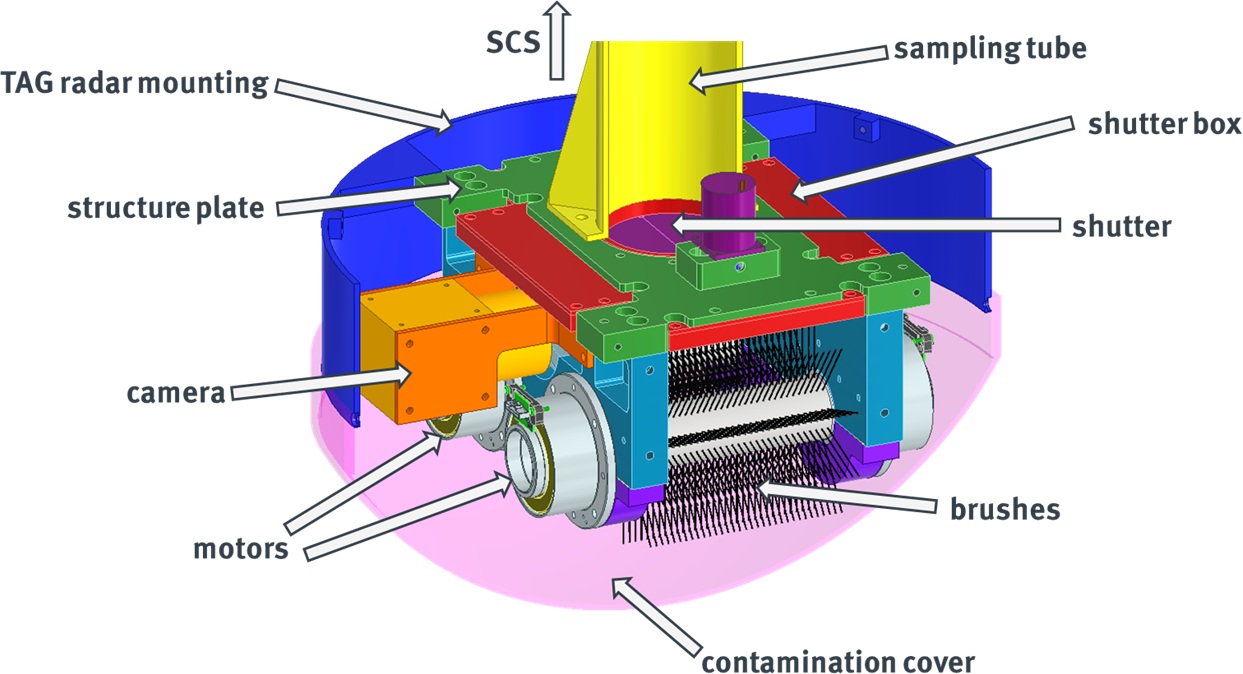
Fig. 2: CAD model of the APOSSUM-BWS engineering model
The current engineering model of the APOSSUM-BWS (Fig. 2) assumes a two-brush design with multiple potential brush-motor combinations including in-brush motors that replace the brush axis, frameless motors at the axis end, or more complex solution such as belt drives. A structure plate (green) provides spacecraft fix points and assembly locations for all sub-components. Material that is lifted from the surface is directed towards the Sample Capture and Storage (SCS) system of APOSSUM (see [9]) through a sample tube (yellow). A shutter mechanism (violet) is situated inside the shutter box (red) between brushes and sample tube to trap material inside the sample tube. A camera (orange) will be used to monitor the interaction between brushes and material and a TAG radar mounted on a composite ring (blue) will provide science and engineering surface penetration evidence.
First Test Results
The current BWS laboratory breadboard is undergoing extensive vacuum testing to determine the importance of parameters like gravity, brush rotation speed, grain size and shape, bristle hardness, and motor torque for the sampling efficiency. Soil simulants used for testing include lightweight clay aggregates (LECA), Ytong, sand (WF34), and lunar simulant (TUBS-M).
Test results indicate the importance of brush rotation speed for sampling efficiency. Faster rotation speeds enhance efficiency, especially for larger grain sizes. Under laboratory conditions, the BWS proved robust under Earth gravity and has shown satisfactory efficiency.
In 2025, the BWS laboratory breadboard was tested in the Drop Tower and GraviTower at the Center of Applied Space Technology and Microgravity (ZARM) in Bremen. Over the span of several weeks of experiment campaigns, 100 TAG attempts in reduced gravity and microgravity have shown improved sampling efficiency in comparison to Earth gravity experiments.
Acknowledgement
This project is supported by DLR with funds provided by the Federal Ministry of Education and Research under grant number 50OO2511. We also want to thank the ZARM team for their support during the experiment campaigns.
References
[1] Watanabe S. I., et al. (2017) Space Science Reviews, 208, 3-16.
[2] Lauretta D. S. et al. (2024) Meteorit. Planet. Sci., 59, 2453-2486.
[3] Xiao et al. (2021), Sample return missions, 195-206.
[4] Barucci M. A. et al. (2012) Exp. Astron., 33, 645–684.
[5] Bonitz R. (2012) IEEE Aerospace Conference, Big Sky, MT, USA, pp. 1-6.
[6] Zhang J. et al. (2022) Acta Astronautica, 198, 329-346.
[7] Luo H. et al. (2023) Front. Mech. Eng., 18, 16.
[8] Marschall et al. (2026) EPSC 2026.
[9] Renggli et al. (2026) EPSC 2026-147.
[10] Grundmann J. T. et al. (2025) Apophis T-4 Workshop.
[11] Goldmann M. et al. (2025) Apophis T-4 Workshop.
How to cite: Bannemann, L., Goldmann, M., Patzek, M., Güttler, C., Gundlach, B., Plettemeier, D., Lara, L. M., Grott, M., Renggli, C., Marschall, R., and Kleine, T.: Brush Wheel System – a sampling mechanism for PRIAMOS, Europlanet Science Congress 2026, The Hague, The Netherlands, 7–11 Sep 2026, EPSC2026-542, https://doi.org/10.5194/epsc2026-542, 2026.


