
 ,,
,,- Technische Universität Braunschweig, Institut für Geophysik und Extraterrestrische Physik, (victoria.muthig@tu-braunschweig.de)
When a comet approaches the sun, its containing ice begins to sublimate, transitioning directly to its gaseous phase, and simultaneously taking dust with it. To better understand the composition of comets, its components are studied in laboratories. In the process simplified models are used as example only considering pure water ice without dust. While illuminating with a halogen lamp, small filaments of water ice particles were observed on the surface of the sample. Using a microscope and a high-speed camera this work covered the analysis of this behavior and documentation of the activity of the filaments. The first part involved designing and setting up a suitable experiment. The second part focused on the observation of the filaments. The usage of two pumps successfully lowered and maintained the pressure inside the vacuum chamber at a high vacuum of ≈ 10-6 mbar. With liquid nitrogen as the cooling system this the chamber was now ready for measurements. The observations revealed that the filaments begin to form when the initial structure of the water ice at the start of the measurement gradually unfolds due to the influence of the halogen lamp. Through the gas pressure the filaments are able to grow, but also to oscillate, rotate and, with enough kinetic energy, break away from the surface. The length of the observed filamentss ranged from 0.3 to 1.8 mm. The movements are analyzed using videos of the filaments which can be shown in the presentation.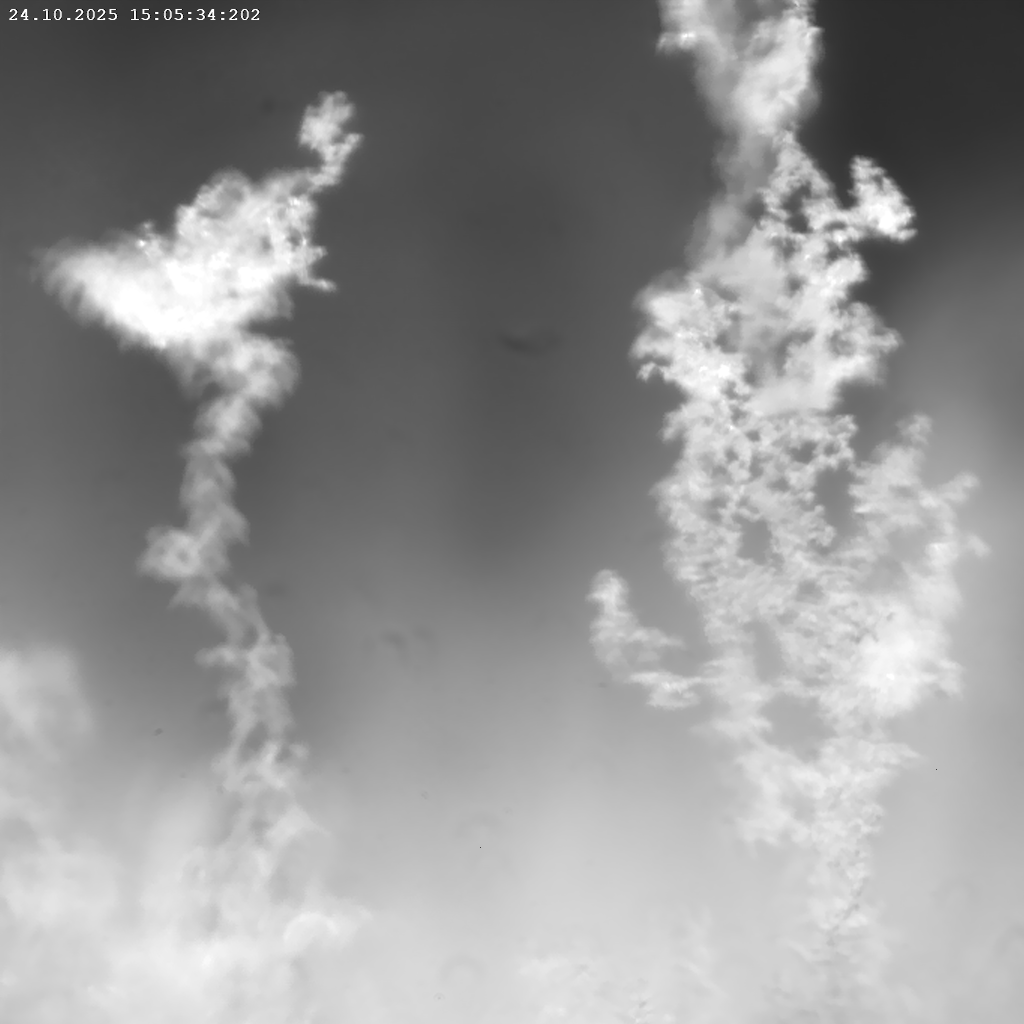
How to cite: Muthig, V., Kreuzig, C., Timpe, M., Knoop, C., and Blum, J.: Experimental results from the CoPhyLab - High-resolution optical observation of water ice activity, Europlanet Science Congress 2026, The Hague, The Netherlands, 7–11 Sep 2026, EPSC2026-548, https://doi.org/10.5194/epsc2026-548, 2026.


