

- Roma Tre University, Mathematics and Physics, Rome, Italy (elena.pettinelli@uniroma3.it)
Radar sounder is a very reliable method to investigate the subsurface structure of planets and moons, as the dry and cold conditions of their outer shells are favorable environments for deep signal penetration. In few years, two spacecrafts, ESA/JUICE and NASA/Europa Clipper will start to scan the icy crusts of Europa, Ganymede and Callisto using RIME (Radar for Icy Moons Exploration)) and REASON (Radar for Europa Assessment and Sounding: Ocean to Near-Surface). Interpreting radar data and, in particular, detecting the presence of liquid water requires an extensive knowledge of the dielectric properties of the materials composing the ice shells through which the radio waves propagate. Our understanding of such properties is very limited and must be profoundly expanded before JUICE and EUROPA CLIPPER will start to collect data. To fill this gap, we have developed the project SWIM (Surfing radio waves to detect liquid water in the Solar System) which has been funded in 2024 by the European Research Council in the framework of the ERC Advanced Grant.
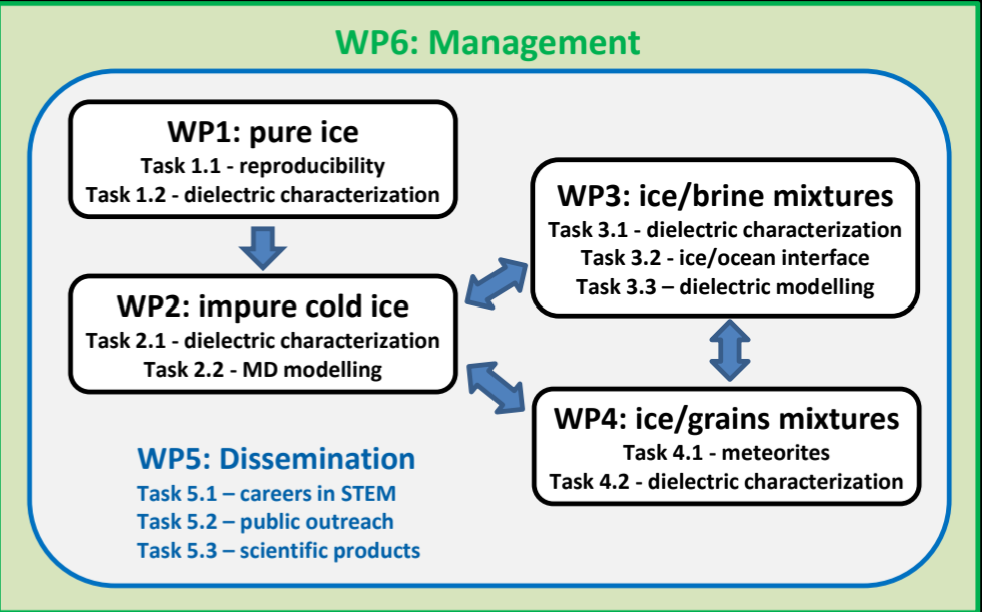
Figure 1 Work Package organization of the SWIM project
The project intend to integrate laboratory measurements regarding the dielectric properties of pure and doped water ice (also mixed with meteoritic materials), with molecular dynamics and dielectric modelling, to characterize the different targets expected to be present in the icy crusts of Europa, Ganymede and Callisto (Figure 1). The final goal of the project is to build a reliable dielectric model of the icy crusts and support the radar investigations in detecting subglacial liquid water and assessing the habitability conditions of such moons. Here we present the rationale of the SWIM project, together with some preliminary results.
How to cite: Pettinelli, E.: Assessing the dielectric properties of the Galilean moons icy crusts integrating laboratory measurements and modelling, Europlanet Science Congress 2026, The Hague, The Netherlands, 7–11 Sep 2026, EPSC2026-617, https://doi.org/10.5194/epsc2026-617, 2026.


