
 1
1- 1CSFK HUN-REN, Konkoly Astronomical Institute, Budapest, Hungary (kereszturi.akos@csfk.mta.hu)
- 2Eotvos Lorand Univeristy of Sciences, Department of Astronomy
The activity potential of hypothetical life forms depends on a number of environmental factors beyond the Earth. The dryness of the Martian surface poses significant challenges to any hypothetic orgaism there. One possible mitigating factor is the presence of hygroscopic salts, which have the ability to absorb atmospheric water vapour and form liquid solutions (Gough et al., 2016, Martín-Torres et al., 2015 and Zorzano et al., 2009). Such brine solutions can form for several hours during the night on the Martian surface (Pál and Kereszturi, 2017). Various observations indicate that salt crystals are present in many locations on Mars, particularly near the equator (Carter et al., 2013 and Osterloo et al., 2008).
However warmer daytime periods even hygroscopic salts could not keep their nighttime condensed water. Temperature fluctuations can lead to significant volume changes of such minerals. But such significant temperature fluctuations cause volumetric thermal expansion and contraction in the crystals, which can generate mechanical stress and fractures. The salt crystals of interest have been detected around the equator, within a band of about 40o, where the pronounced temperature variations occur. The average daytime maximum temperature is around 273 K, while the nighttime minimum can drop to approximately 150 K (Kuti et al., 2007).
Based on the work of Drebushchak and Wallace (Drebushchak, 2020 and Wallace, 1972), we used NaCl to calculate volume change by numerical integration between 150 and 300 K. The resulting relative volume change is 1.64%, meaning that a 1 cm diameter NaCl crystal can expand by 0.16 mm during the day and contract by the same amount overnight on Mars.
This process may result in a phenomenon whereby cracks in the crystal surface close during the daytime due to expansion (to inhibit H2O loss from internal voids), and reopen at night as the crystal contracts (to allow H2O migration inside.
Beside dryness another important factor is UV radiation, which can cause severe damage in any organism due to Mars' thin atmosphere. According to Schuerger's measurements, a habitable environment shielded against UV would require an additional layer of dust or rock to shield against UV radiation. There is an optimal zone, approximately 3 - 4 mm below the surface, which effectively blocks radiation while still allowing enough sunlight to penetrate for photosynthesis (Marschall et al., 2012).
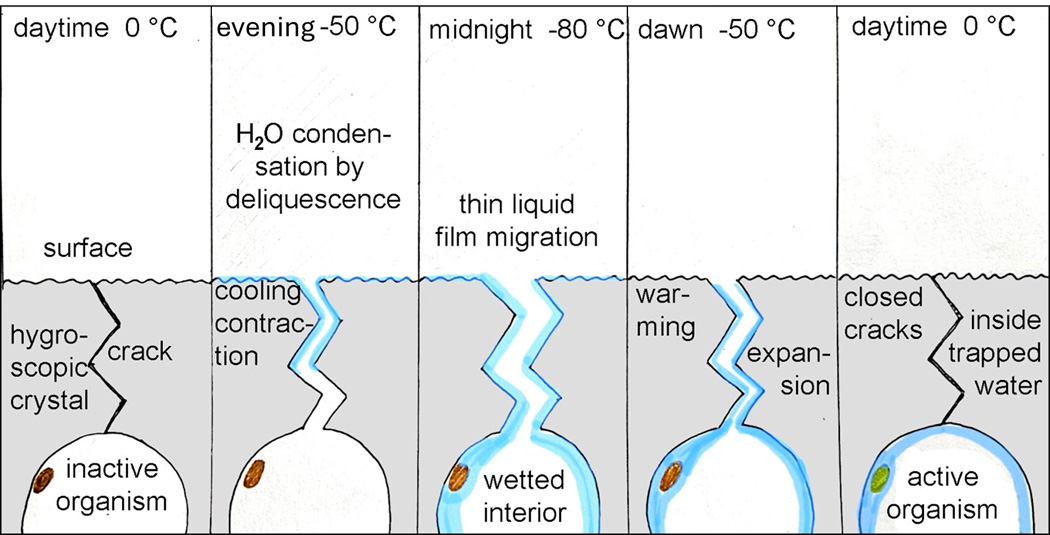
Figure 1. Flowchart of the proposed phases in the model.
Based on these parameters, salt crystals may offer potential microhabitats for microorganisms. In the evening, lower local temperatures may cause cracks in the crystals to open due to shrinkage, allowing contact with the surrounding atmosphere of the crystal’s interior. Rising relative humidity levels at night can cause hygroscopic salts to liquefy and water to seep into deeper cavities along the hygroscopic surface in the form of a microscopic liquid layer, allow wetting of the internal voids inside a crystal. As temperature rises during the day, the crystal expands and the cracks close possibly before the internal cavity fully dries out. This could allow a hypothetical organism to access liquid water throughout the day if it is situated inside such a crystal, partly similar to what has been identified in the Atacama desert on the Earth for example. Additionally, this process provides protection against UV radiation too.
References:
- Carter, J., Poulet, F., Bibring, J.-P., Mangold, N. and Murchie, S. Hydrous minerals on Mars as seen by the CRISM and OMEGA imaging spectrometers: Updated global view. Journal of Geophysical Research: Planets, 118, 831–858, 2013.
- Gough, R.V., Chevrier, V. és Tolbert, M.A. Formation of liquid water at low temperatures via the deliquescence of calcium chloride: Implications for Antarctica and Mars. Planetary and Space Science, 131:79-87, 2016, doi: 10.1016/j.pss.2016.07.006.
- Kuti, A. and Kereszturi, A. Daily temperature fluctuation on Mars at aphelion. Workshop on Planetary Atmospheres, 2007.
- Martín-Torres, F.J., Zorzano, M.P., Valentín-Serrano, P., Harri, A.M., Genzer, M., Kemppinen, O., Rivera-Valentin, E.G., Jun, I., Wray, J., Madsen, M.B., Goetz, W., McEwen, A.S., Hardgrove, C., Renno, N., Chevrier, V.F., Mischna, M., Navarro- González, R., Martínez-Frías, J., Conrad, P., McConnochie, T., Cockell, C., Berger, G., Vasavada, A.R., Sumner, D. és Vaniman, D. Transient liquid water and water activity at Gale crater on Mars. Nature Geoscience, 8:357-361, 2015, doi: 10.1038/ngeo2412.
- Marschall, M., Dulai, S. and Kereszturi, Á. Migrating and UV screening subsurface zone on Mars as target for the analysis of photosynthetic life and astrobiology. Planetary and Space Science, 72:146–153, 2012, doi: 10.1016/j.pss.2012.06.011.
- Mickol, R.L., Page, J.L. and Schuerger, A.C. Magnesium sulfate salt solutions and ices fail to protect Serratia liquefaciens from the biocidal effects of UV irradiation under Martian conditions. Astrobiology, 17(5):387–400, 2017, doi: 10.1089/ast.2015.1448.
- Osterloo, M.M., Hamilton, V.E., Bandfield, J.L., Glotch, T.D., Baldridge, A.M., Christensen, P.R., Tornabene, L.L. and Anderson, F.S. Chloride-bearing materials in the southern highlands of Mars. Science, 319(5870):1651–1654, 2008, doi: 10.1126/science.1150690.
- Pál B. és Kereszturi Á. Possibility of microscopic liquid water formation at landing sites on Mars and their observational potential. Icarus, 282:84-92, 2017, doi: 10.1016/j.icarus.2016.09.006.
- Titov, D.V. Water vapour in the atmosphere of Mars. Advances in Space Research, 29(2):183–191, 2002, doi: 10.1016/S0273-1177(01)00568-3.
- Zorzano, M.P., Mateo-Martí, E., Prieto-Ballesteros, O., Osuna, S és Renno, N. Stability of liquid saline water on present day Mars. Geophysical Research Letters, 36, 2009, doi:10.1029/2009GL040315.
How to cite: Kereszturi, A. and Bognar, A.: Volume change supported micro-habitat model of salt crystals on the Martian surface, Europlanet Science Congress 2026, The Hague, The Netherlands, 7–11 Sep 2026, EPSC2026-787, https://doi.org/10.5194/epsc2026-787, 2026.


