
 1,1,1,2,1,1,1,1
- 1Osservatorio Astronomico di Padova (OAPD), Istituto Nazionale di Astrofisica (INAF), Padova, Italy
- 2University of Padova, Department of Geosciences, Padova, Italy
Introduction: The polar regions of Mercury host Permanently Shadowed Regions (PSRs), areas that remain in permanent darkness due to the planet’s extremely low obliquity [1]. These environments experience extremely low temperatures [2], enabling the accumulation and long-term preservation of volatile deposits, including water ice. Radar-bright deposits detected in Mercury’s PSRs from Earth-based observations [3,4], later supported by MESSENGER neutron spectrometer measurements [5] and thermal models [6], strongly suggest the presence of water ice beneath a thermally insulating lag deposit. Recent geomorphological investigations revealed the presence of peculiar landforms within PSR-hosting craters, including fractures, rough terrains, and bright ejecta deposits potentially associated with volatile-related processes [7]. On airless bodies such as Mercury, local topography strongly controls illumination conditions and self-heating, directly influencing the thermal stability of surface and near-surface volatiles [8]. In this work, we investigate the relationship between crater morphology, thermal gradients, and volatile stability in selected PSR-hosting craters through shape-based thermophysical modelling. In particular, we explore whether crater geometry may influence sublimation timescales and volatile preservation through its effect on local thermal environments.
Methods: We adopted a multidisciplinary approach combining geomorphological mapping, morphometric analyses, thermophysical modelling, and volatile stability modelling. Six craters located above 80°N were selected for this work: Angelou, Desprez, Fuller, Jimenez, Laxness, and Ensor. These craters exhibit different morphologies, depth-to-diameter ratios (d/D), radar-bright deposits, and crater retention ages [7, 9]. High-resolution Digital Terrain Models (DTMs) derived from MESSENGER observations [10] were employed to perform shape-based thermophysical simulations using the model developed by [8]. The model computes surface and subsurface temperatures for each facet of a 3D mesh over one Hermean solar day (~176 Earth days), accounting for direct solar illumination, multiple scattering of visible and infrared radiation, terrain shadowing, self-heating, and thermal emission. From the simulations, we derived maximum temperatures (Tmax), minimum temperatures (Tmin), and thermal amplitudes (ΔT = Tmax − Tmin) for the investigated PSRs. These thermal maps were compared with crater morphometry and geomorphological observations in order to investigate possible relationships between crater shape, thermal gradients, and volatile-related surface morphologies. To investigate volatile stability, we applied a sublimation-rate model based on the temperature-dependent sublimation flux of water ice [11]. The model estimates volatile loss as a function of local thermal conditions and compares it with volatile replenishment from external sources, including solar wind implantation, micrometeoroids, interplanetary dust particles (IDPs), comets, and asteroids.
Results: The thermophysical simulations (Fig. 1) reveal substantial variability in thermal amplitudes among the investigated PSRs, with ΔT values ranging from ~30 K to >140 K depending on crater morphology and local topographic configuration. Laxness crater exhibits some of the highest thermal amplitudes (~140 K) within bright ejecta deposits located along shadowed crater walls. These deposits were previously interpreted as freshly exposed ice excavated by recent small impacts [7,12]. In contrast, PSRs within Fuller crater display significantly lower thermal amplitudes (~30–50 K), particularly in areas where fractures and rough terrains were identified [7].
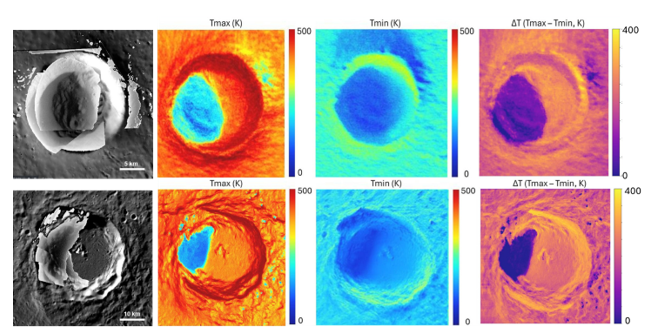
Fig. 1 – The image shows an example of the results for two craters (Angelou and Desprez).
Discussion: The obtained results suggest that crater morphology strongly influences the thermal environment and volatile stability within Mercury’s PSRs. In particular, crater shape appears to control the degree of self-heating and the thermal buffering within shadowed regions. Desprez crater, characterized by a relatively low d/D ratio, hosts a broad floor-dominated PSR with uniformly low Tmax and reduced thermal variability. In contrast, Angelou crater, characterized by a higher d/D ratio, develops smaller wall-restricted PSRs more strongly coupled to adjacent illuminated slopes, producing higher Tmax values and larger ΔT amplitudes. This correlation observed between median ΔT values and crater d/D suggests that more confined crater geometries enhance thermal contrasts through increased self-heating and reduced sky-view factors.
In general, we revealed in all craters the presence of a restricted cold PSR core (Tmax < 100 K) surrounded by a broader marginal zone characterized by intermediate temperatures between 100 and 150 K (Fig. 2). On Fuller, this thermally transitional zone spatially corresponds to peculiar geomorphological units identified within the crater floor, suggesting that these intermediate thermal regimes may promote thermal cycling, micro-fracturing, and lag-deposit destabilization processes analogous to periglacial environments on Earth.
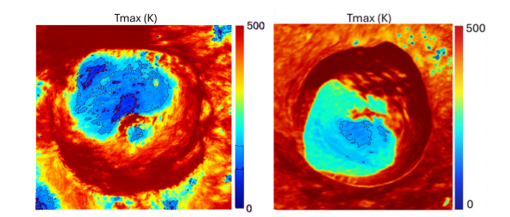
Fig. 2: The figure shows Jimenez (left) and Fuller (right) with highlight the core PSRs (solid line) and the marginal PSRs (dashed line)
Sublimation modelling for the bright ejecta deposits exposed in the surface within Laxness and Ensor craters, indicates that volatile losses largely exceed replenishment rates under these conditions, implying that exposed ice deposits are thermodynamically unstable and may survive only for relatively short geological timescales (~39 kyr and ~85 Ma, respectively, Fig. 3). The younger minimum ages than measured with crater counting of [12] may be due to i) the low statistics of the crater counting or ii) the higher temperatures implied by self-heating.
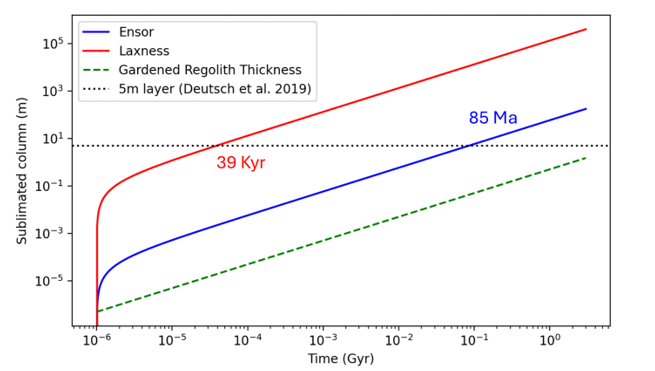
Fig. 3: The plot shows the sublimation column Vs the time, taking as reference the 5 m layer of ice exposed in the surface from [11].
Conclusions: Our results suggest that crater morphology strongly controls the thermal environment and volatile stability within Mercury’s PSRs. Different PSR configurations produce distinct thermophysical micro-environments, potentially influencing both volatile preservation and the evolution of specific landforms. Future observations from the BepiColombo mission and the SIMBIO-SYS suite will provide new high-resolution datasets to investigate these morphology–temperature–volatile interactions within Mercury’s polar regions.
Aknowledgements: This work has been developed under the ASI-INAF agreement n. 2024-40-HH.0
References: [1] Margot J.-L. et al. (2012), JGR:Planets, 117. [2] Susorney H. C. M. et al. (2021), The Planet. Sci. J., 2. [3] Harmon and Slade (1992), Science, 258, 640–643 [4] Harmon et al. (2011), Icarus, 211, 37-50. [5] Wilson et al. (2019), JGR:Planets, 124, 721 – 733. [6] Paige et al. (2013), Science, 339, 300 – 303. [7] Bertoli et al. (2024), Journal of Maps [8] Cambianica P. et al (2024), PSS, 253 [9] Bertoli et al. (2025), PSS., 264 [10] Hamill et al. (2020), Planet. Sci. J. [11] Norbert Schörghofer N., Williams J. P. (2024), Icarus, 416. [12] Deutsch A. N. et al. (2019), EPSL, 250, 26 – 33
How to cite: Bertoli, S., Cambianica, P., Munaretto, G., Cremonese, G., Massironi, M., Martellato, E., Lucchetti, A., Pajola, M., Simioni, E., Tullo, A., and Re, C.: Craters shape and volatile stability in Mercury’s permanently shadowed regions, Europlanet Science Congress 2026, The Hague, The Netherlands, 7–11 Sep 2026, EPSC2026-947, https://doi.org/10.5194/epsc2026-947, 2026.


