SB21 | Lucy Main Belt Asteroid Flybys: Dinkinesh and Donaldjohanson

SB21

Lucy Main Belt Asteroid Flybys: Dinkinesh and Donaldjohanson
Conveners: Keith Noll, Simone Marchi
Orals MON-OB4
| Mon, 08 Sep, 14:00–16:00 (EEST)
 
Room Neptune (rooms 22+23)
Posters MON-POS
| Attendance Mon, 08 Sep, 18:00–19:30 (EEST) | Display Mon, 08 Sep, 08:30–19:30
 
Finlandia Hall foyer, F187–194
Mon, 14:00
Mon, 18:00

Session assets

Orals: Mon, 8 Sep, 14:00–16:00 | Room Neptune (rooms 22+23)

Chairpersons: John Spencer, Toshi Hirabayashi, Jessica Sunshine
14:00–14:12
|
EPSC-DPS2025-408
|
On-site presentation
Harold Levison, Simone Marchi, Keith Noll, John Spencer, and Thomas Statler and the The Lucy Team

 On April 20, 2025 NASA's <i>Lucy</i> mission performed a flyby of the main belt asteroid (52246) Donaldjohanson, hereafter DJ. <i>Lucy</i> is a NASA Discovery-class mission to study primitive bodies near both the L<sub>4</sub> and L<sub>5</sub> Lagrange points with Jupiter - the Jupiter Trojans [1]. The flyby of DJ was intended as a full-scale end-to-end test of <i>Lucy</i>'s systems before its first Trojan encounter in 2027.  The spacecraft and ground systems performed flawlessly.

DJ is a C-type asteroid [2] with a semi-major axis of 2.4 au. From the ground, it is observed to have a high-amplitude lightcurve with a rotation period of ~250 hr [3].  It is a member of the Erigone asteroid family, which an age estimated to be only 155 Myr [4].  <i>Lucy</i> approached DJ from a phase angle of 14 deg and with a relative velocity of 13.4 km/sec [1].  Its close approach distance was about 960 km.  

<i>Lucy</i> determined that DJ is an elongated bi-lobed object about 8 km long with an axis ratio greater than 2 to 1.  It has a well-defined neck between the two lobes that shows evidence of significant geological processing.  One lobe appears to be significantly larger than the other.  <i>Lucy</i> obtained useful scientific data from all of its instruments:  L'LORRI, a high-resolution panchromatic camera [5], TTCam  (a wide-field panchromatic camera [6]), L'Ralph/MVIC (a five color color camera [7]), L'Ralph/LEISA (a near-infrared spectroscopic mapper [7]), and L'TES (a thermal IR spectrometer [8]).  The results will be summarized here.  More details will be given in subsequent presentations in this session.

[1] Levison et al. (2025), PSJ, 2:171, doi:10.3847/PSJ/abf840.
[2] Souza-Feliciano et al. (2020), Icarus, 338, 113463.
[3] Ferrais et al. (2021), AAS/DPS meeting #53, id.306.19.
[4] Marchi et al. (2025), PSJ, 6:59, doi:10.3847/PSJ/adb4f4.
[5] Weaver et al. (2023), SSRv, 209, doi:10.1007/s11214-023-01028-z.
[6] Bell et al. (2023), SSRv, 219, doi:10.1007/s11214-023-01030-5.
[7] Reuter et al. (2023), 219, doi:10.1007/s11214-023-01009-2.
[8] Christensen et al. (2024), SSRv,  220. doi:10.1007/s11214-023-01029-y.

How to cite: Levison, H., Marchi, S., Noll, K., Spencer, J., and Statler, T. and the The Lucy Team: The Lucy Encounter with asteroid (52246) Donaldjohanson - An Overview, EPSC-DPS Joint Meeting 2025, Helsinki, Finland, 7–13 Sep 2025, EPSC-DPS2025-408, https://doi.org/10.5194/epsc-dps2025-408, 2025.

14:12–14:24
|
EPSC-DPS2025-983
|
ECP
|
On-site presentation
Ishita Solanki, John Spencer, Stefano Mottola, Tom Statler, Harold Levison, Keith Noll, Simone Marchi, and Neil Dello Russo and the The Lucy Team

The Lucy Mission is a NASA Discovery class mission to study the Trojan asteroids. Its targets are the asteroids Eurybates (Aug. 2027), Polymele (Sep. 2027), Leucus (Apr. 2028), Orus (Nov. 2028) and the Patroclus – Menoetius binary (Mar. 2023). On its way to the Trojans, Lucy performed test flybys of two main belt asteroids. The second flyby was of the asteroid Donaldjohanson (DJ), with closest approach occurring April 20th, 2025. One of the aims of the flyby was to test planning and executing a complex science encounter sequence.

Images taken during the approach phase by the L’LORRI instrument, the high-resolution panchromatic camera onboard Lucy, were used to build up a lightcurve of DJ. The ground-based lightcurve, with a large amplitude and long period, had already shown unusual characteristics, but Lucy provided a highly complementary dataset with uniform cadence, no weather interruptions, and a unique viewing geometry. The relevant Lucy datasets include L’LORRI images taken for optical navigation and for potential satellites, which were taken at a lower cadence of once every two days or once a day closer to encounter, and approach photometry observations. The approach photometry imaging, from E-4 days to E-13 hours from closest approach, provided higher cadence data alternating between 0.75 hours and 1.25 hours. This higher time-resolution data provided detailed observation of one minimum of the lightcurve.

How to cite: Solanki, I., Spencer, J., Mottola, S., Statler, T., Levison, H., Noll, K., Marchi, S., and Dello Russo, N. and the The Lucy Team: Lightcurve of Asteroid (52246)Donaldjohanson from the Lucy Spacecraft’s Observations, EPSC-DPS Joint Meeting 2025, Helsinki, Finland, 7–13 Sep 2025, EPSC-DPS2025-983, https://doi.org/10.5194/epsc-dps2025-983, 2025.

14:24–14:36
|
EPSC-DPS2025-1022
|
On-site presentation
Stefano Mottola, Frank Preusker, Tom Statler, Marc Buie, John Spencer, Olivier Barnouin, Edward Bierhaus, Keith Noll, Simone Marchi, Harold Levison, and the Lucy Team

On April 20, 2025, while crossing the Main Asteroid Belt, the NASA Lucy mission—en route to the Jupiter Trojan regions—encountered its second cruise target, the C-type asteroid (52246) Donaldjohanson.

During the fly-by, the L’LORRI instrument [1] acquired a series of images suitable for stereo reconstruction, covering about 40% of the asteroid’s surface. The images have a ground sampling distance ranging from 17 to 5 m/pixel and were taken at solar phase angles between 0.9° and 52°. Due to the asteroid’s slow rotation (with a spin period exceeding 10 days), no appreciable rotation was observed in the disk-resolved images.

To achieve global shape reconstruction and determine the spin state, we complemented the stereo-photogrammetric data with contour information (limb and terminator features) and lightcurve data. This lightcurve information was drawn from two sources: sequences acquired by L’LORRI during the two months preceding the approach [2]and ground-based lightcurves obtained over the past six apparitions. The ground-based observations had already revealed that Donaldjohanson is currently in a state of complex rotation.

By combining these datasets, we expect to develop a detailed digital shape model of the illuminated portion of the asteroid, along with a low-order model of its non-illuminated hemisphere. Additionally, we plan to derive the asteroid’s rotational dynamics and determine its inertia tensor—results that will be presented at the conference.

Acknowledgement: The Lucy mission is funded through the NASA Discovery program on contract No. NNM16AA08C

References: [1] Weaver, H.A., et al., Space Science Reviews, 219, 82, 2023. [2] Solanki et al., this meeting.


How to cite: Mottola, S., Preusker, F., Statler, T., Buie, M., Spencer, J., Barnouin, O., Bierhaus, E., Noll, K., Marchi, S., Levison, H., and Lucy Team, T.: Shape Reconstruction and Rotation State of Asteroid (52246) Donaldjohanson from Lucy Imaging and Ground-Based Photometry, EPSC-DPS Joint Meeting 2025, Helsinki, Finland, 7–13 Sep 2025, EPSC-DPS2025-1022, https://doi.org/10.5194/epsc-dps2025-1022, 2025.

14:36–14:48
|
EPSC-DPS2025-1183
|
ECP
|
On-site presentation
Luis Salazar Manzano, David Gerdes, Kevin Napier, Hsing Wen Lin, Fred Adams, Tessa Frincke, Simone Marchi, Keith Noll, and John Spencer

Spacecraft flybys offer unparalleled opportunities to investigate small Solar System bodies. These encounters enable disk-resolved imaging and spectroscopy, revealing surface composition, morphology, collisional history, and the potential presence of satellites, capabilities that far exceed what is achievable from Earth. Despite their scientific utility, such encounters remain rare due to the high costs and operational complexity of spacecraft missions. Within this context, NASA’s Lucy mission stands out, having completed two flybys of Main Belt Asteroids and targeting five flybys within the Jupiter Trojan clouds. Lucy’s recent encounter with (152830) Dinkinesh, a ~700-meter MBA, yielded striking and unexpected returns, including the discovery of a contact binary satellite, highlighting the unique scientific value of sub-kilometer targets. Notably, only one of the five Jupiter Trojan flybys target the L5 cloud, raising the question of whether it is possible to identify an additional Dinkinesh-sized L5 Jupiter Trojan flyby target for Lucy. In this talk, we present estimates of the number of sub-kilometer L5 Trojans accessible to Lucy under two operational scenarios:  before and after the Patroclus-Menoetius flyby. We describe an improved model of the L5 cloud’s spatial distribution and outline the observational constrains (sky area, search window, and survey duration) required to enable a targeted search. Finally, we discuss the scientific impact of such a flyby, particularly in the context of the L4/L5 population asymmetry.

How to cite: Salazar Manzano, L., Gerdes, D., Napier, K., Lin, H. W., Adams, F., Frincke, T., Marchi, S., Noll, K., and Spencer, J.: Opportunities for a Dinkinesh-Sized Trojan Flyby in the L5 Cloud, EPSC-DPS Joint Meeting 2025, Helsinki, Finland, 7–13 Sep 2025, EPSC-DPS2025-1183, https://doi.org/10.5194/epsc-dps2025-1183, 2025.

14:48–15:00
|
EPSC-DPS2025-445
|
On-site presentation
Edward Bierhaus, Stuart Robbins, Jennifer Scully, Masatoshi Hirabayashi, Fiona Nichols-Fleming, Stefano Mottola, Olivier Barnouin, Harrison Agrusa, Jessica Sunshine, Alan Stern, Richard Binzel, Keith Noll, John Spencer, Simone Marchi, and Hal Levison

NASA’s Lucy mission [1] will explore the Trojan asteroids, a population of small bodies in the Sun-Jupiter L4 and L5 Lagrange points.  En route to the Trojans, Lucy encountered the main belt C-type asteroid (52246) Donaldjohanson on April 20, 2025 [2]. The flyby was an opportunity to assess the performance of the science instruments when observing a small body, as well as test the spacecraft functions needed for the Trojan encounters.

Data types from the Donaldjohanson encounter include visible images from the L’LORRI [3] and TTCam [4] instruments.  The images span a range of phase angles, resolutions, and viewing geometries.  These data enable measurements of body dimensions and shape [5], albedo [6], and surface features. 

The overall shape of Donaldjohanson suggests a contact binary, a situation in which two objects merged to become a single object, with the shape of the merged object expressing a bi-lobed geometry; the connection between the two lobes is narrower and informally called the “neck”.  One lobe apparently is larger than the other [5].  Craters and boulders, which are common surface features on other asteroids, are present across both lobes and the neck [7, 8].  The surfaces of the lobes express similar regional surface morphologies, apparently dominated by impact cratering.  The large lobe has pit-chain like features [9]. The neck’s surface is generally smoother than the lobes, and the craters on the neck often appear to be shallower, and some have relatively flat floors.   The neck has two prominent ridge-like features that are approximately at either end of its hourglass shape; i.e., the ridges are approximately at the interfaces between the neck and the two lobes.  The neck’s geometry relative to the lobes results in a distinct region of surface gravity, surface stress, and volumetric stress [10].

Collectively the features, their distributions, and their morphologies may reflect processes expected to be common among all asteroids (i.e. cratering, boulder and regolith generation and redistribution), as well as processes that are the result of contact binary formation and evolution.  More broadly, contact binaries have been observed in comets and Kuiper Belt objects (in addition to asteroids), and the novel high-resolution Lucy data will help elucidate the processes for this class of object.

References

[1] Levison et al. (2021) PSJ 2, 171. [2] Levison et al. (2025) this conference. [3] Weaver et al. (2023) SSR 219, article id 82.  [4] Bell et al. (2023) SSR 219, article id 86. [5] Mottola et al. (2025), this conference. [6] Spencer et al. (2025), this conference. [7] Robbins et al. (2025), this conference. [8] Scully et al. (2025), this conference. [9] Nichols-Fleming et al. (2025), this conference. [10] Hirabayashi et al. (2025), this conference.


Acknowledgements

The Lucy mission is funded through the NASA Discovery program via contract numbers NNM16AA08C and NNG17FD73C. 

How to cite: Bierhaus, E., Robbins, S., Scully, J., Hirabayashi, M., Nichols-Fleming, F., Mottola, S., Barnouin, O., Agrusa, H., Sunshine, J., Stern, A., Binzel, R., Noll, K., Spencer, J., Marchi, S., and Levison, H.: An overview of the geology on the C-type Main Belt asteroid (52246) Donaldjohanson from NASA’s Lucy flyby, EPSC-DPS Joint Meeting 2025, Helsinki, Finland, 7–13 Sep 2025, EPSC-DPS2025-445, https://doi.org/10.5194/epsc-dps2025-445, 2025.

15:00–15:12
|
EPSC-DPS2025-665
|
ECP
|
On-site presentation
Fiona Nichols-Fleming, Jennifer Scully, Emily Costello, Audrey Martin, Edward Bierhaus, Olivier Barnouin, Neil Dello Russo, Hal Weaver, Simone Marchi, Keith Noll, John Spencer, and Hal Levison and the Lucy Team

On April 20, 2025, NASA’s Lucy spacecraft [1] completed its closest approach with main-belt asteroid (52246) Donaldjohanson [2]. Donaldjohanson appears to be a contact binary and is about 8 km long with a greater than 2 to 1 axis ratio [3]. High resolution images from L’LORRI (Lucy Long Range Reconnaissance Imager) [4] throughout the flyby show linear clusters of depressions, or pit chains, on Donaldjohanson’s large lobe.

The term “pit chain” is not diagnostic of formation mechanism, and these features can form from a range of processes including primary or secondary impacts, venting, or dilational faulting [e.g., 5–7]. We will discuss the most likely formation mechanism(s) for the pit chains on Donaldjohanson and compare the morphology of these features with that of pit chains observed on other small bodies such as (433) Eros, Phobos, (243) Ida, and (951) Gaspra [8–13].

Under the assumption that Donaldjohanson’s pit chains form due to the drainage of unconsolidated material into subsurface structures, we will use the depths of these pits to calculate a minimum thickness for a layer of unconsolidated regolith-like material on the surface of Donaldjohanson. We will compare this estimate with regolith thickness estimates from the study of impact craters on Donaldjohanson as well as estimates from prior studies of pit chains on Eros, Phobos, Ida, and Gaspra.


Acknowledgements: The Lucy mission is funded through the NASA Discovery program on contract No. NNM16AA08C. F. Nichols-Fleming is supported by the Lucy L4 PSP award #80NSSC25K7723.

References: [1] Levison, H. F. et al. (2021) Planet. Sci. J., 2, 171. [2] Levison, H. et al. (2025) EPSC-DPS2025. [3] Mottola, S. et al. (2025) EPSC-DPS2025. [4] Weaver, H. A. et al. (2023) Space Sci Rev, 219, 82. [5] Wyrick, D. et al. (2004) Journal of Geophysical Research: Planets, 109. [6] Wyrick, D. Y. et al. (2010) 41st LPSC, Abstract No. 1413. [7] Wyrick, D. Y. and Buczkowski, D. L. (2022) Journal of Geophysical Research: Planets, 127, e2022JE007281. [8] Thomas, P. et al. (1979) Journal of Geophysical Research: Solid Earth, 84, 8457–8477. [9] Prockter, L. et al. (2002) Icarus, 155, 75–93. [10] Hurford, T. A. et al. (2016) Journal of Geophysical Research: Planets, 121, 1054–1065. [11] Sullivan, R. et al. (1996) Icarus, 120, 119–139. [12] Veverka, J. et al. (1994) Icarus, 107, 72–83. [13] Buczkowski, D. L. et al. (2008) Icarus, 193, 39–52.

How to cite: Nichols-Fleming, F., Scully, J., Costello, E., Martin, A., Bierhaus, E., Barnouin, O., Dello Russo, N., Weaver, H., Marchi, S., Noll, K., Spencer, J., and Levison, H. and the Lucy Team: Pit Chains on Asteroid (52246) Donaldjohanson, EPSC-DPS Joint Meeting 2025, Helsinki, Finland, 7–13 Sep 2025, EPSC-DPS2025-665, https://doi.org/10.5194/epsc-dps2025-665, 2025.

15:12–15:24
|
EPSC-DPS2025-935
|
On-site presentation
Stuart Robbins, Simone Marchi, Beau Bierhaus, Jennifer Scully, William Bottke, Keith Noll, John Spencer, Hal Levison, and the Lucy Team

NASA’s Lucy mission [1] to the Trojan asteroids executed an engineering test flyby of asteroid (52246) Donaldjohanson on 20 April 2025.  Data were gathered by all Lucy instruments, including the Lucy Long-Range Reconnaissance Imager (L’LORRI [2]), which is a panchromatic 1,024×1024 pixel framing camera.  Data at up to a few meters per pixel revealed a bilobate body approximately 3–4 km at its widest and approximately 9 km long [3].  The larger lobe was observed at solar incidence angles more favorable to recognition of topographic features.

We have mapped the visible crater and boulder populations across the body.  We will present the crater population in context with other small bodies, an investigation of crater population similarities or variations across Donaldjohanson, crater modification variations across the body in context with the gravity field, equilibrium population considerations, and a minimum model surface age.  In addition, we will present data on the spatial distribution and size-frequency distribution of isolated topographic highs (nominally considered to be boulders) in comparison with boulders on other small bodies.

Acknowledgement:  The Lucy mission is funded through the NASA Discovery program on contract No. NNM16AA08C.

References:

[1] Levison, H. and 24 co-authors (2021).  Lucy Mission to the Trojan Asteroids: Science Goals.  The Planetary Science Journal, v. 2, Issue 5, id. 171.

[2] Weaver, H.A. and 22 co-authors (2023).  The Lucy Long Range Reconnaissance Imager (L'LORRI).  Space Science Reviews, v. 219, article id 82.

[3] Mottola et al. (2025). Shape Reconstruction and Rotation State of Asteroid (52246) Donaldjohanson from Lucy Imaging and Ground-Based Photometry.  This conference.

How to cite: Robbins, S., Marchi, S., Bierhaus, B., Scully, J., Bottke, W., Noll, K., Spencer, J., Levison, H., and Lucy Team, T.: The Crater and Boulder Populations of Asteroid (52246) Donaldjohanson, EPSC-DPS Joint Meeting 2025, Helsinki, Finland, 7–13 Sep 2025, EPSC-DPS2025-935, https://doi.org/10.5194/epsc-dps2025-935, 2025.

15:24–15:36
|
EPSC-DPS2025-140
|
On-site presentation
Masatoshi Hirabayashi, Stefano Mottola, Edward Bierhaus, Daniel Britt, Harrison Agrusa, Olivier Barnouin, Jennifer Scully, Jessica Sunshine, Simone Marchi, Keith Noll, John Spencer, Harold Levison, and Lucy Team

NASA’s Lucy [1] successfully flew by the C-type asteroid (52246) Donaldjohanson [2] on April 20, 2025 [3]. The asteroid exhibited unique topographic and geological features [4-6]. While the imaged area was limited to the illuminated hemisphere at the time of the flyby, L’LORRI [7] and TTCAM [8] images reveal the asteroid’s elongated and contact binary shape [4, 9]. The asteroid has a highly elongated shape, about 8 km long, with a greater than 2:1 axis ratio [4].

We apply a mission-developed shape model [9] to investigate Donaldjohanson’s surface gravity field and structural properties. Due to its complex shape, escape speeds are low and vary along the body. The slow rotation does not contribute significantly to surface acceleration. We expect the interior to be dominated by compression, but the asteroid’s irregular topography makes the stress field complex. Given its slow spin period, our analysis is expected to be almost independent of the rotational effect.

The presentation will discuss Donaldjohanson’s structural and gravitational environment and the implications for its formation and evolution scenarios.

The Lucy mission is funded through the NASA Discovery program on contract No. NNM16AA08C. This study is also supported under the NASA Lucy PSP program.


[1] Levison et al. (2025), PSJ, 2:171, doi:10.3847/PSJ/abf840.

[2] Marchi et al. (2025), PSJ, 6:59, doi:10.3847/PSJ/adb4f4.

[3] Levison et al. (2025), this conference.

[4] Bierhaus et al. (2025), this conference.

[5] Scully et al. (2025), this conference.

[6] Nichols-Fleming et al. (2025), this conference.

[7] Weaver et al. (2023) SSR 219, doi:10.1007/s11214-023-01028-z.

[8] Bell et al. (2023) SSR 219, doi:10.1007/s11214-023-01030-5.

[9] Mottola et al. (2025), this conference.

How to cite: Hirabayashi, M., Mottola, S., Bierhaus, E., Britt, D., Agrusa, H., Barnouin, O., Scully, J., Sunshine, J., Marchi, S., Noll, K., Spencer, J., Levison, H., and Team, L.: Interior and gravity characterization of the C-type asteroid (52246) Donaldjohanson seen by NASA’s Lucy flyby, EPSC-DPS Joint Meeting 2025, Helsinki, Finland, 7–13 Sep 2025, EPSC-DPS2025-140, https://doi.org/10.5194/epsc-dps2025-140, 2025.

15:36–15:48
|
EPSC-DPS2025-379
|
On-site presentation
Joshua Emery, Amy Simon, Hannah Kaplan, Will Grundy, Jessica Sunshine, Silvia Protopapa, Dennis Reuter, Allen Lundsford, Matt Montanaro, Gerald Weigle, Ishita Solanki, Richard Binzel, John Spencer, Keith Noll, Simone Marchi, and Harold Levison and the Lucy Team

The NASA Lucy mission was designed to provide the first reconnaissance of Jupiter Trojan asteroids.  These primitive bodies hold important clues to the origin and evolution of the Solar System.  The Lucy spacecraft is currently en route to its encounters with Trojan asteroids in the L4 swarm in 2027 and 2028, and the L5 swarm in 2033 [1].  On its way through the Main Belt, Lucy flew past the asteroid (52246) Donaldjohanson on April 20, 2025.  The main purpose of the flyby was to support mission preparation for the primary science targets, the Trojan asteroids. The Linear Etalon Imaging Spectral Array (LEISA) mapping spectrometer [2,3], part of the L’Ralph instrument, collected multiple spectral datasets during the encounter with Donaldjohanson.  LEISA covers the spectral range 0.97 – 3.95 μm with a variable spectral resolving power ranging from ~50 to 160 (Δλ<10 nm).

Several primitive asteroid families have been identified in the inner Main Belt.  These families are of interest for their potential to deliver primitive material into near-Earth space, and potentially even sourcing the carbonaceous meteorites that fall to Earth.  Donaldjohanson is a member of one of these families, the Erigone collisional family.  The collisional disruption of the Erigone family occurred ~155 Myr ago [4].  Ground-based observations have revealed that the Erigone family consists of primitive C-complex asteroids, the majority of which show evidence for a 0.7-μm absorption due to Fe-bearing phyllosilicates [5] and spectral slopes that are neutral to slightly red [6].  The only ground-based near-infrared data published of Donaldjohanson itself [7] are too noisy for a reliable interpretation. We will report on the Lucy near-infrared spectral observations of Donaldjohanson, with a focus on a search for absorption features due to materials seen in ground-based spectra of Erigone family members and found in analog carbonaceous meteorites, including hydrated silicates and organic molecules.  The spatially resolved LEISA data also enable assessment of any potential spectral heterogeneity on Donaldjohanson.


Acknowledgements

The Lucy mission is funded through the NASA Discovery program on contract No. NNM16AA08C.


References

[1] Levison, H.F., et al. 2021. Lucy Mission to the Trojan Asteroids: Science Goals. Planet. Sci. J. 2:171 (13pp)

[2] Reuter, D.C., et al. 2023. L’Ralph: A Visible/Infrared Spectral Imager for the Lucy Mission to the Trojans. Space Sci. Rev. 219:69.

[3] Simon, A.A., et al. 2025. Lucy L′Ralph In-flight Calibration and Results at (152830) Dinkinesh. Planet. Sci. J. 6:7 (11pp).

[4] Marchi, S., et al. 2025. A Pre-flyby View on the Origin of Asteroid Donaldjohanson, a Target of the NASA Lucy Mission. Planet. Sci. J. 6:59 (19pp).

[5] Morate, D., et al. 2016. Compositional study of asteroids in the Erigone collisional family using visible spectroscopy at the 10.4m GTC. Astron. Astrophys. 585, A129.

[6] Harvison, B., et al. 2024. PRIMASS near-infrared study of the Erigone collisional family. Icarus 412, 115973.

[7] Sharkey, B.N.L., et al. 2019. Compositional Constraints for Lucy Mission Trojan Asteroids via Near-infrared Spectroscopy. Astron. J. 158:204 (13pp).

How to cite: Emery, J., Simon, A., Kaplan, H., Grundy, W., Sunshine, J., Protopapa, S., Reuter, D., Lundsford, A., Montanaro, M., Weigle, G., Solanki, I., Binzel, R., Spencer, J., Noll, K., Marchi, S., and Levison, H. and the Lucy Team: Compositional analysis of (52246) Donaldjohanson from the Lucy flyby, EPSC-DPS Joint Meeting 2025, Helsinki, Finland, 7–13 Sep 2025, EPSC-DPS2025-379, https://doi.org/10.5194/epsc-dps2025-379, 2025.

15:48–16:00
|
EPSC-DPS2025-164
|
On-site presentation
Carly Howett, Hannah Kaplan, Silvia Protopapa, Joshua Emery, Jessica Sunshine, Amy Simon, Allen Lunsford, Gerald Weigle, William Grundy, Ishita Solanki, Simone Marchi, Harold Levison, Keith Noll, John Spencer, Richard Binzel, and Lucy Team

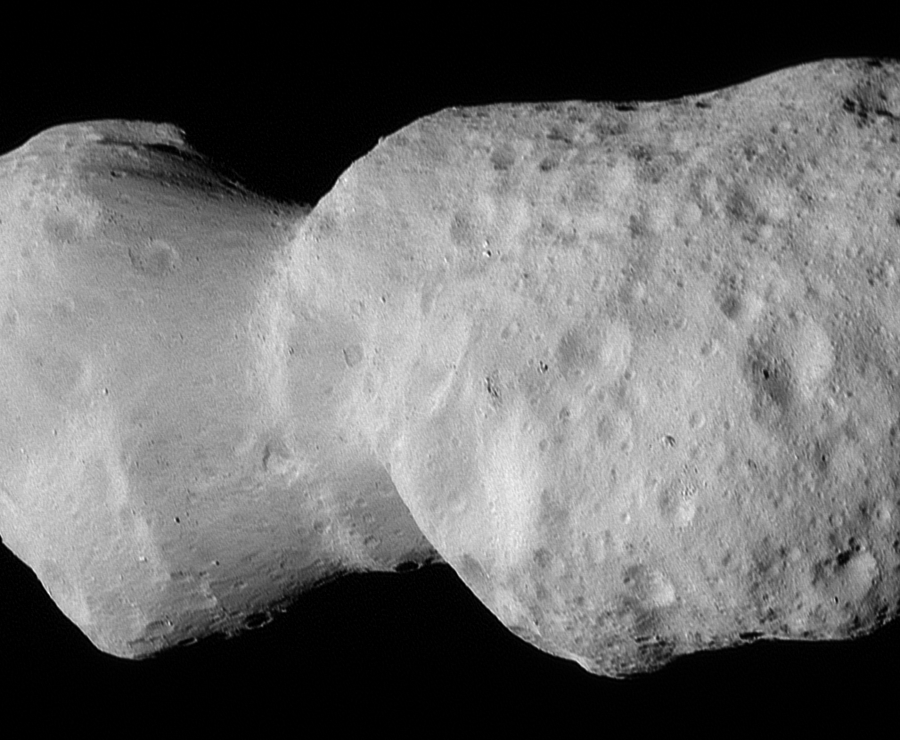
Introduction: On the 20th of April 2025, NASA’s Lucy mission [1] flew by the C-type main-belt asteroid (52246) Donaldjohanson (hereafter DJ). The encounter’s goal was to test the spacecraft and instruments during an observation sequence commensurate with those to be used on Lucy’s main targets – Jupiter’s Trojan asteroids. Data returned from the panchromatic Lucy LOng Range Reconnaissance Imager (L’LORRI, 450-850 nm, [2]) during this testing sequence reveal the asteroid to be bi-lobed and elongated shape (Fig. 1).

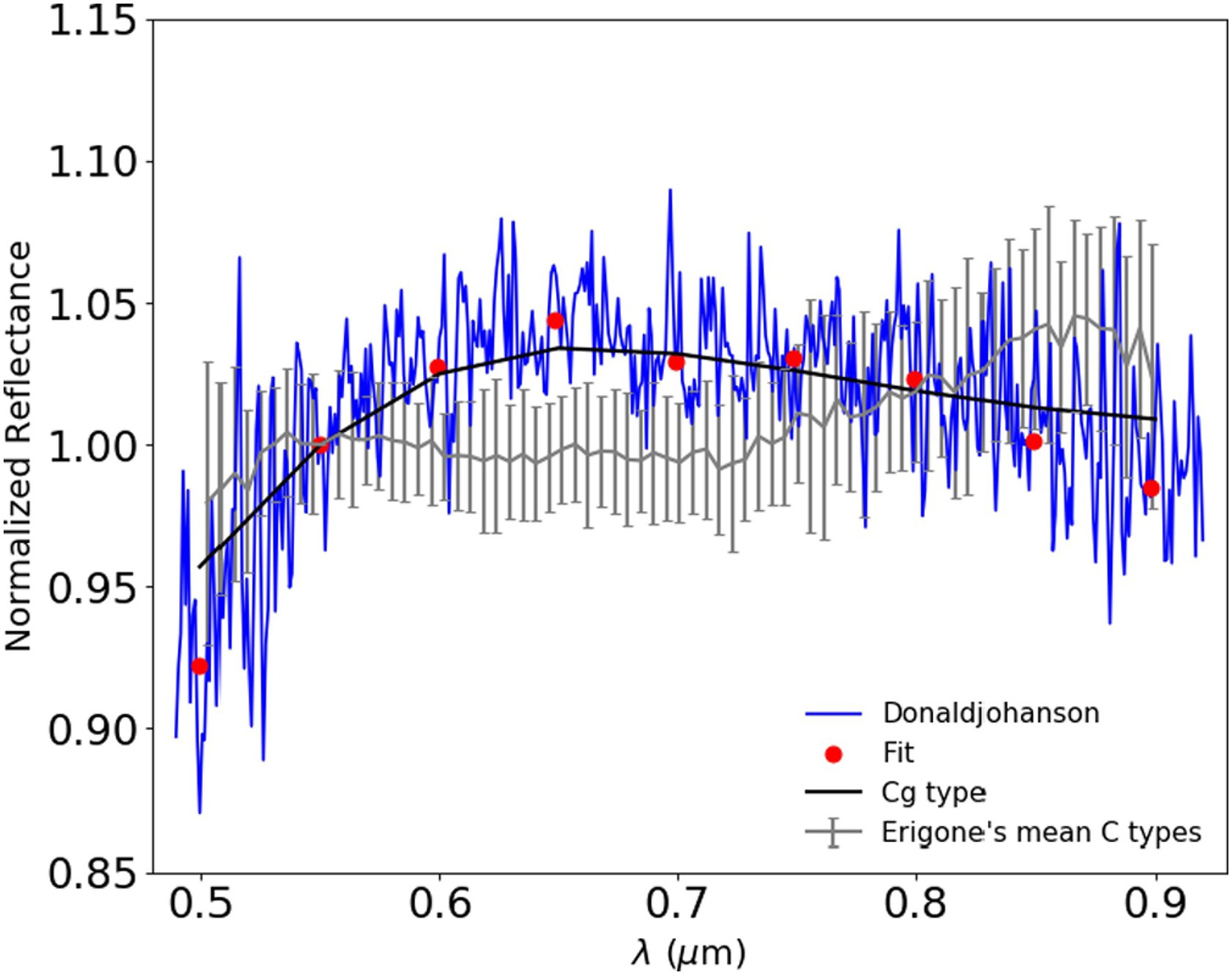
DJ is a member of the Erigone collisional family, named after the parent body asteroid (163) Erigone (see references in [3]). Ground-based color observations (Fig. 2) show it to decrease in color towards shorter wavelengths, possibly due to the presence of hydrated materials [4].

In this work, we present an analysis of color images taken by Lucy’s Multispectral Visible Imaging Camera (MVIC). MVIC consists of six time delay integration (TDI) charge-coupled devices (CCDs). TDI works by synchronizing the transfer rate of the image between CCD rows and the relative motion of the instrument allowing a high signal to noise image to be built up even for fast scans. It covers wavelengths between 375 nm and 950 nm using five color filters and a panchromatic one (see Table 1).

Color Analysis: We focus our analysis on images acquired with the four wide band filters: violet, green, orange and near-IR. Our results will provide resolved color variations and contextualise DJ’s color with respect to ground-based observations of DJ, Erigone (Fig. 2), other members of the Erigone family, and the broader asteroid and small body populations.

Filter Wavelength

Violet

375-480

Green

480-520

Orange

520-625

Phyllosilicate

625-750

Near-IR

750-950

Panchromatic

350-950

Table 1 – MVIC filters [5]

Figure 1 – (52246) Donaldjohanson as seen by the panchromatic Lucy L’LORRI instrument, taken on April 20, 2025 at 17:51 UTC.


 Figure 2 – Ground-based normalized (at 0.55 µm) visible spectrum of DJ (blue) acquired with the Gran Telescopio Canarias compared to the Bus-DeMeo’s Cg-type (black) and the mean spectrum of the C-type members within the Erigone family (grey). Taken from [6].

 Acknowledgments: The Lucy mission is funded through the NASA Discovery program on contract No. NNM16AA08C.

References: [1] Levison et al. (2021) PSJ 2, 171. [2] Weaver et al. (2023), SSR 219, 82. [3] Marchi et al., (2025) PSJ 6, 59. [4] Vilas (1995) Icarus 115, 217-218. [5] Reuter et al. (2023), SSR 219, 69. [6] Souza-Feliciano et al. (2020), Icarus 338, 113463.

How to cite: Howett, C., Kaplan, H., Protopapa, S., Emery, J., Sunshine, J., Simon, A., Lunsford, A., Weigle, G., Grundy, W., Solanki, I., Marchi, S., Levison, H., Noll, K., Spencer, J., Binzel, R., and Team, L.: Resolved Color of Main-Belt Asteroid (52246) Donaldjohanson as seen by NASA’s Lucy Mission, EPSC-DPS Joint Meeting 2025, Helsinki, Finland, 7–13 Sep 2025, EPSC-DPS2025-164, https://doi.org/10.5194/epsc-dps2025-164, 2025.

Posters: Mon, 8 Sep, 18:00–19:30 | Finlandia Hall foyer

Display time: Mon, 8 Sep, 08:30–19:30
Chairpersons: Harold Levison, Carly Howett
F187
|
EPSC-DPS2025-1009
|
ECP
|
On-site presentation
Leonardo Braga, Andre Amarante, Filipe Monteiro, Maria Martins, Nicoli Rocha, and Alessandra Ferraz

NASA's Lucy mission aims to investigate Jupiter trojan asteroids, considered primordial remnants of the Solar System's formation. The probe will visit targets at the L4 and L5 Lagrangian points, including the asteroid (11351) Leucus (Levison et al., 2021).
Leucus is a peculiar asteroid characterized by an extremely slow rotation (~446 hours), elongated shape, and low surface gravity, making it especially relevant for studies of surface dynamics in microgravity environments.
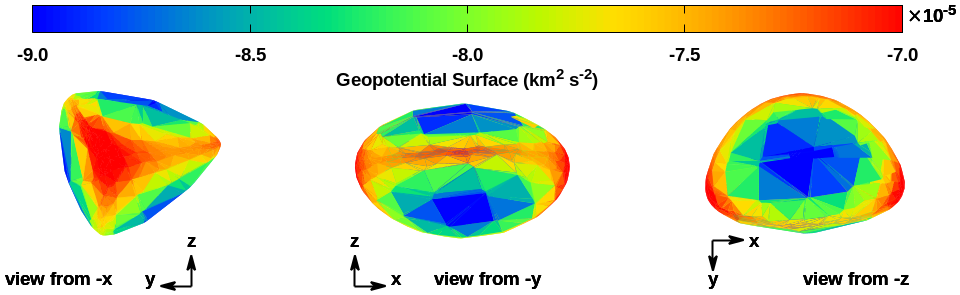
In this work, we give a detailed analysis of the surface dynamics of Leucus based on the 3-D polyhedral shape model with 574 vertices and 1,144 faces available in the literature (Durech & Hanus, 2023).
We calculate dynamical characteristics, such as geometric height, surface tilt, geopotential surface, surface acceleration, escape speed, slopes, and the number, location, and stability of equilibrium points. We adopt a density of 1.0 g/cm3 (Marchis et al., 2006) and a rotational period of 446 h (Mottola et al., 2020; Buie et al., 2021).
Our results show that the surface tilt across Leucus does not exceed 40 degrees. The minimum geopotential locations are in the poles (Fig. 1), corresponding to the areas over Leucus's surface with maximum surface acceleration (Fig. 2). Also, the maximum escape speed values are in the poles of the asteroid Leucus.
The analysis of the slopes allows us to infer possible regions of material accumulation or migration, which is important for understanding the morphological evolution of the asteroid Leucus. Most of the slopes over the surface of Leucus are less than 30 degrees, and particles are probably accumulating in some regions along its surface (Fig. 3).
We found 5 equilibrium points around Leucus, of which 3 are linearly stable (L2, L4, and L5) regarding its density and rotational period (Fig. 4). The equilibrium point locations are far away from the surface of asteroid Leucus, due its slow rotational period.
So, the dynamic environment around Leucus may eventually trap particles in the Roche lobe, allowing the formation of rings and small satellites.
We believe that the detailed study of the surface dynamics of asteroid Leucus could provide insights for mission planning and expand our understanding of the evolution of Trojan asteroids.

Fig. 1: Geopotential computed across Leucus's surface. The color box indicates the geopotential values in km2/s².

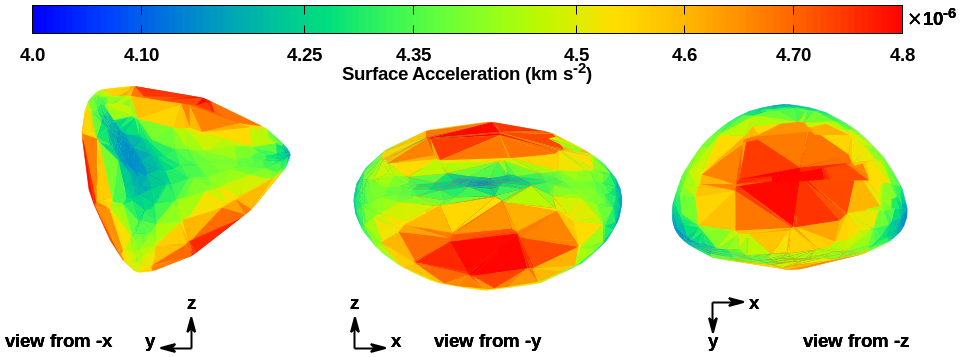
Fig. 2: Surface acceleration calculated over Leucus's surface. The color box denotes the surface acceleration values in km/s².

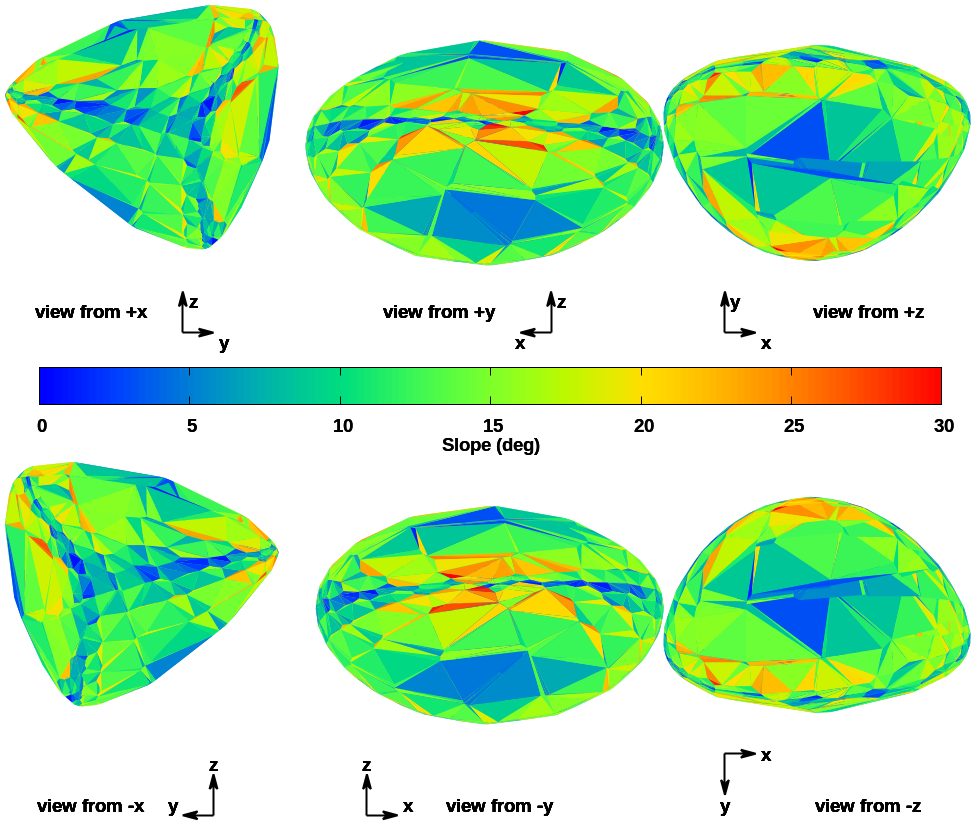
Fig. 3: Slopes computed across the surface of asteroid Leucus. The color bar code indicates the slope values in degrees.

Fig. 4: The number, location, and stability of equilibrium points around asteroid Leucus. The green dots represent linearly stable equilibrium points, while the red crosses are unstable.

How to cite: Braga, L., Amarante, A., Monteiro, F., Martins, M., Rocha, N., and Ferraz, A.: The Dynamics About Lucy Target Asteroid (11351) Leucus: A Very Slow Rotator, EPSC-DPS Joint Meeting 2025, Helsinki, Finland, 7–13 Sep 2025, EPSC-DPS2025-1009, https://doi.org/10.5194/epsc-dps2025-1009, 2025.

F188
|
EPSC-DPS2025-859
|
On-site presentation
Keith Noll, Harrison Agrusa, Olivier Barnouin, Edward Bierhaus, Richard Binzel, Masatoshi Hirabayashi, Harold Levison, Simone Marchi, Raphael Marschall, Stefano Mottola, John Spencer, Thomas Statler, Jessica Sunshine, and the Lucy Team

The Lucy spacecraft flew by the Main Belt asteroid (52246) Donaldjohanson, hereafter DJ, on April 20, 2025. Images obtained during the flyby show DJ to be an elongated object, about 8 km long with an axis ratio greater than 2 to 1,  consisting of two distinct lobes connected by a narrow neck. A detailed shape model [1] will be required to further quantify this structure.

Similarly shaped small bodies have been directly observed among Near Earth Objects [2-4], the Main Belt [5], comets [6-9] and in the Kuiper Belt [10]. Many more elongated/bilobed objects can be inferred from lightcurve observations [11]. DJ is a potentially valuable addition to understanding these objects because it resides in the Main Belt and is part of a collisional family of known age [12].

We compile estimated lobe dimensions and apparent orientations in a variety of small bodies of similar size to DJ and discuss observable trends. We compare results to expected behavior in collisional systems and accretion models [13-18].

Acknowledgement: The Lucy mission is funded through the NASA Discovery program on contract No. NNM16AA08C

References:  [1] Mottola et al., this meeting, [2] Fujiwara et al., Science, 312, 5778,  1330–1334, 2006.  [3] Hu,  Acta Astro. Sinica, 60,  5,  46, 2019.  [4] Benner et al. in Asteroids IV, 2015, pp. 165–182. [5] Levison et al. Nature, 629, 8014, 1015-1020, 2024. [6] Keller et al., A&Ap, 187, 807–823, 1987. [7] Boice et al., EM&P, 89, 301–324, 2002. [8] A’Hearn et al., Science, 332, 1396, 2011. [9] Sierks et al., Science 347, 6220, 2015. [10] [1]Stern et al. PSJ 4, 9, 176, 2023. [11] Cannon, MNRAS 538,  4, 2311–2329, 2025. [12] Marchi et al., PSJ 6,  3,  59, 2025. [13] Schwartz et al., Nature Astronomy  2, 379–382, 2018. [14] Jutzi and Benz, A&Ap 597, A62, 2017. [15] Jutzi, P&SS 177, 104695, 2019. [16] Jutzi and Asphaug, Science 348, 6241, 1355–1358, 2015. [17] Hirabayashi and Scheeres, Icarus 317, 354–364, 2019. [18] Scheeres, Icarus 436, 116563, 2025.


How to cite: Noll, K., Agrusa, H., Barnouin, O., Bierhaus, E., Binzel, R., Hirabayashi, M., Levison, H., Marchi, S., Marschall, R., Mottola, S., Spencer, J., Statler, T., Sunshine, J., and Lucy Team, T.: (52246) Donaldjohanson and the Architecture of Bilobed Small Bodies, EPSC-DPS Joint Meeting 2025, Helsinki, Finland, 7–13 Sep 2025, EPSC-DPS2025-859, https://doi.org/10.5194/epsc-dps2025-859, 2025.

F189
|
EPSC-DPS2025-378
|
On-site presentation
Jennifer Scully, Fiona Nichols-Fleming, Stuart Robbins, Olivier Barnouin, Stefano Mottola, Edward Bierhaus, Audrey Martin, Jessica Sunshine, Emily Costello, Masatoshi Hirabayashi, Harrison Agrusa, John Spencer, Neil Dello Russo, Hal Weaver, Hal Levison, Simone Marchi, and Keith Noll and the Lucy Team

NASA’s Lucy mission will study the Jupiter Trojan asteroids, which are thought to be a physically and compositionally diverse group of primitive planetesimals that originated in the outer Solar System from ~15-30 AU [1]. The Jupiter Trojans are thus early Solar System relics, which are one of the last accessible, stable, small-body groups yet to be explored by a spacecraft. Prior to the first Trojan encounter, (3548) Eurybates in August 2027, Lucy flew by two main-belt asteroids: asteroid (152830) Dinkinesh in November 2023 [2] and asteroid (52246) Donaldjohanson in April 2025 [3], both of which have never before been visited by a spacecraft.

Here we present the first geologic map of the entire observed portion of Donaldjohanson. The asteroid is about 8 km long, with a greater than 2 to 1 axis ratio, and appears to be an elongated contact binary composed of two lobes joined by a narrower neck. The primary datasets on which we base the geologic map are images from the L’LORRI camera [4] and the derived shape model [5]. We will present a geologic map that includes both lobes and the neck. We will discuss geologic units, linear features and point features, and an analysis of their distribution across the surface. We will also use geomorphic and structural analyses of these features to make inferences about the present-day subsurface structure and formation mechanism of Donaldjohanson.

The Lucy mission is funded through the NASA Discovery program on contract No. NNM16AA08C, and part of this work was funded by ROSES grant 24-LUCYL4PSP-0031.

References: [1] Levison, H., et al. (2021) PSJ, 2(5), 171. [2] Levison, H., et al. (2024) Nature, 629, 1015-1020. [3] Levison, H., et al. (2025) This meeting. [4] Weaver, H.A., et al. (2023) SSR, 219, 82. [5] Mottola, S., et al. (2025) This meeting.

How to cite: Scully, J., Nichols-Fleming, F., Robbins, S., Barnouin, O., Mottola, S., Bierhaus, E., Martin, A., Sunshine, J., Costello, E., Hirabayashi, M., Agrusa, H., Spencer, J., Dello Russo, N., Weaver, H., Levison, H., Marchi, S., and Noll, K. and the Lucy Team: Geologic Mapping of Asteroid (52246) Donaldjohanson as observed by NASA’s Lucy mission, EPSC-DPS Joint Meeting 2025, Helsinki, Finland, 7–13 Sep 2025, EPSC-DPS2025-378, https://doi.org/10.5194/epsc-dps2025-378, 2025.

F190
|
EPSC-DPS2025-179
|
On-site presentation
Phyllosilicates on Donaldjohanson as seen from the Lucy Flyby
(withdrawn)
Jessica M. Sunshine, Silvia Protopapa, Hannah H. H. Kaplan, Carly J. A. Howett, Joshua P. Emery, Richard P. Binzel, Daniel T. Britt, Amy A. Simon, Andy López-Oquendo4, Dennis C. Reuter, Allen W. Lunsford, Matthew Montanaro, Gerald E. Weigle, Ishita Solanki, Simone Marchi, Keith S. Noll, John R. Spencer, and Harold F. Levison and the The Lucy Team
F191
|
EPSC-DPS2025-731
|
On-site presentation
An Overview of Lucy L'Ralph Observations at (52246) Donaldjohanson and (152830) Dinkinesh: Visible and Near-Infrared Data of Two Main Belt Asteroids
(withdrawn)
Hannah Kaplan, Amy Simon, Dennis Reuter, Joshua Emery, Carly Howett, William Grundy, Jessica Sunshine, Silvia Protopapa, Allen Lunsford, Matthew Montanaro, Gerald Weigle, Ishita Solanki, Andy López-Oquendo, John Spencer, Keith Noll, Simone Marchi, Hal Levison, and the Lucy Team
F192
|
EPSC-DPS2025-744
|
ECP
|
On-site presentation
Andy J. López-Oquendo, Hannah H. Kaplan, Amy A. Simon, Denis C. Reuter, Joshua P. Emery, Silvia Protopapa, Carly Howett, William M. Grundy, and Jessica M. Sunshine

On November 1, 2023, NASA’s Lucy spacecraft successfully imaged the Main-Belt asteroid (152830) Dinkinesh and its moon, Selam. Dinkinesh is an S- or Sq-type asteroid with multiple geologic features (i.e., craters, central ridge, and trough) [1].  The Dinkinesh system is complex, with satellite that itself is a contact binary [1]. Broadband visible (0.35-0.95 µm) and near-IR (0.97-3.95 µm) hyperspectral images collected by the L’Ralph instrument showed absorption features near 1-, 2-, and 3-µm [2, 3]. 


The vibrational absorption between 2.6 and 3.3 µm in asteroid spectra has generally been interpreted as OH and H2O (i.e., hydration). This ~3.0 µm band, has been a crucial tool of characterization to understand the degree of hydration on the surface of asteroids [4]. Detection of hydration or volatile-rich materials on S-type objects is surprising due to the expected high temperature at which these bodies formed in the main-belt and presence of anhydrous silicates. Ground-based facilities have provided crucial detections and insights about the 3.0 µm band on S-type asteroids [5,6], yet much remains unknown about its origin. Dinkinesh’s close approach by Lucy offers a fortuitous opportunity to better understand the hydration of these bodies and assess any spatial variation on the surface that might be related to geologic features.


The Lucy L’Ralph Dinkinesh observations can help differentiate the source of hydration. For example, exogenous material (e.g., carbonaceous or cometary material) is expected to appear in discrete areas associated with specific surface features such as craters [7]. Alternatively, solar wind implantation on asteroids occurs when high H+ fluxes doses from the Sun interact with surface minerals, embedding hydrogen atoms and potentially leading to the formation of OH or H2O in the regolith [8]. We will report on the spectral analysis of Dinkinesh, with a focus on the shape model registration of hyperspectral images from the L’Ralph Multi-spectral Visible Imaging Camera (MVIC) and Linear Etalon Imaging Spectral Array (LEISA). We will present colors, spectral slopes, and band depth to look for possible spectral heterogeneities associated with geologic morphologies.


Results: We registered the digital shape model of Dinkinesh to the L’Ralph instrument detectors. Figure 1 shows a preliminary example of the MVIC panchromatic filter frame during the close approach registered to the respective incidence angle backplane obtained using SpiceyPy [9]. Figure 2 shows an example of a LEISA-calibrated frame (e.g., I/F) registered to Dinkinesh’s shape model.  After registration, the 3 µm absorption feature is analyzed for each facet by computing the absorption strength (e.g., band depth) and looking for correlations with surface morphologies provided by stereophotogrammetry of L’LORRI images. Similarly, we obtained MVIC color maps and overlayed them on the shape model. Our preliminary analysis suggests a 3 µm detection across the entire imaged surface, showing variabilities in band depth. We will further explore such variability to find its possible relationship with surface morphologies, local color variations, and illumination geometry.

Figure 1. MVIC panchromatic frame of Dinkinesh overlayed with the SpiceyPy incidence angle backplane.

Figure 2. Left: Dinkinesh shape model with overlayed LEISA cross-track I/F frame 700 during close approach.  

[1] Levison, H.F. et al. 2024. A contact binary satellite of the asteroid (152830)

Dinkinesh. Nature 629, 1015–1020.

[2] Simon, A. et al. 2025. Lucy L'Ralph In-flight Calibration and Results at (152830) Dinkinesh. Planet. Sci. J.  6, 7.

[3] Kaplan, H., et al. 2024.  "Multi-spectral imaging observations of asteroid (152830) Dinkinesh by the Lucy Mission." Proceedings of the Lunar and Planetary Science Conference 2024,

abstract #1474. Houston, TX: Lunar and Planetary Institute.

[4] Rivkin, A. S. et al. 2018. Evidence for OH or H2O on the

surface of 433 Eros and 1036 Ganymed. Icarus 304, 74–82.

[5] McGraw, L. E. et al. 2022. 3 μm Spectroscopic Survey of Near-Earth Asteroids. Planet. Sci. J. 3, 243.

[6] McAdam, M. et al. 2024. Detection of Hydration on Nominally Anhydrous S-complex Main Belt Asteroids. Planet. Sci. J. 5, 254.

[7] De Sanctis, M. C. et al. 2015. Mineralogy of Marcia, the youngest large crater of Vesta: Character and distribution of pyroxenes and hydrated material. Icarus 248, 392–406.

[8] Hibbits, C. A., et al., 2011. Thermal stability of water and hydroxyl on the surface of the Moon from temperature-programmed desorption measurements of lunar analog materials. Icarus, 213, 64-72.

[9] Annex, A. M., et al., 2020. SpiceyPy: a Pythonic Wrapper for the SPICE Toolkit. Journal of Open Source Software, 46, 2050.

How to cite: López-Oquendo, A. J., Kaplan, H. H., Simon, A. A., Reuter, D. C., Emery, J. P., Protopapa, S., Howett, C., Grundy, W. M., and Sunshine, J. M.: Spectral Imaging Analysis of Asteroid (152830) Dinkinesh by the Lucy Mission, EPSC-DPS Joint Meeting 2025, Helsinki, Finland, 7–13 Sep 2025, EPSC-DPS2025-744, https://doi.org/10.5194/epsc-dps2025-744, 2025.

F193
|
EPSC-DPS2025-896
|
On-site presentation
John Spencer, Anne Verbiscer, Jessica Sunshine, Tod Lauer, Harold Levison, Simone Marchi, Keith Noll, Neil Dello Russo, Harold Weaver, and Olivier Barnouin and the Lucy Mission Team

During its April 20th 2025 flyby of the approximately 8 km long C-type asteroid (52246) Donaldjohanson, the Lucy spacecraft obtained several hundred spatially resolved images of the target with the panchromatic Lucy Long Range Reconnaissance Imager (L’LORRI) camera, over a wide range of solar phase angles from 1 degree to 52 degrees.  Lucy passed through the opposition point at a range of 3,700 km, 4.5 minutes before closest approach, when the image scale was 20 meters/pixel.  We will report on the mapping and phase behavior of surface albedo features, and determination of their relationship to surface geological features, enabled by the large phase angle range of the L’LORRI dataset.  

Acknowledgement: The Lucy mission is funded through the NASA Discovery program on contract No. NNM16AA08C

How to cite: Spencer, J., Verbiscer, A., Sunshine, J., Lauer, T., Levison, H., Marchi, S., Noll, K., Dello Russo, N., Weaver, H., and Barnouin, O. and the Lucy Mission Team:  Albedo Features on (52246) Donaldjohanson, from Lucy L’LORRI Observations, EPSC-DPS Joint Meeting 2025, Helsinki, Finland, 7–13 Sep 2025, EPSC-DPS2025-896, https://doi.org/10.5194/epsc-dps2025-896, 2025.

F194
|
EPSC-DPS2025-1492
|
On-site presentation
Matthias Hahn, Martin Paetzold, Tom Andert, Harold Levison, Keith Noll, and Simone Marchi

The Lucy spacecraft was launched in 2021. After two gravity assists at Earth and the flybys at binary main-belt asteroid (152830) Dinkinesh in November 2023 and just recently at (52246) Donaldjohanson in the asteroid belt the spacecraft is now on its way to characterize several trojan asteroids. These outer solar system asteroids are located in the Lagrange points L4 and L5 of the Jupiter-Sun system.

The first flyby will be at (3548) Eurybates and its moon Queta in August 2027, followed directly by the flyby at (15094) Polymele with its moon Shaun (informal name) in September 2027. Two more flybys in the so-called Greek camp in the L4 point are at (11351) Leucus in April 2028 and at (21900) Orus in November 2028. After orbiting the Sun once more the spacecraft will reach the L5 swarm of asteroids and will fly by the binary system of (617) Patroclus and Menoetius in March 2033.

During these flybys the mass of the target asteroids shall be determined using the Doppler tracking method. Analytic solutions for the error estimation of the mass determination have already shown that the required precision will be met. However, this analytic approach does not take into account several error sources like time limited tracking, no Doppler data +/- 2h around closest approach, uncertainties in the initial spacecraft position and velocity for a flyby, non-gravitational forces, etc. Another contributing error source is the Doppler noise imposed on the signal. Doppler data from ESAs Rosetta mission and NASAs New Horizons spacecraft as well as tracking data recorded during the first 3 1/2 years of Lucys cruise phase could be analyzed regarding distance, solar wind turbulence, integration times etc.

A numeric orbit determination using simulated Doppler data can provide the most realistic error estimation using all perturbing forces and uncertainties. A detailed analysis of the error of the mass determination for all flybys shall be presented.

How to cite: Hahn, M., Paetzold, M., Andert, T., Levison, H., Noll, K., and Marchi, S.: Uncertainty estimations for the mass determination of the Lucy mission target asteroids using Doppler tracking data, EPSC-DPS Joint Meeting 2025, Helsinki, Finland, 7–13 Sep 2025, EPSC-DPS2025-1492, https://doi.org/10.5194/epsc-dps2025-1492, 2025.