TP11 | Lunar Space Environment

TP11

Lunar Space Environment
Conveners: Yoshifumi Futaana, Mihály Horányi | Co-conveners: Parvathy Prem, Francesca McDonald, Iannis Dandouras, Mehdi Benna, Stas Barabash
Orals THU-OB6
| Thu, 11 Sep, 16:30–17:57 (EEST)
 
Room Saturn (Hall B)
Orals FRI-OB3
| Fri, 12 Sep, 11:00–12:29 (EEST)
 
Room Saturn (Hall B)
Posters THU-POS
| Attendance Thu, 11 Sep, 18:00–19:30 (EEST) | Display Thu, 11 Sep, 08:30–19:30
 
Finlandia Hall foyer, F71–79
Thu, 16:30
Fri, 11:00
Thu, 18:00
The lunar space environment is governed by dynamic coupling between the solar wind/magnetospheric plasma, energetic particles, exosphere, dust, photoelectrons, solid surface, and magnetic anomalies. In recent years, almost all space agencies and many private companies and universities have been active in preparation for lunar exploration. Successful exploration in the coming decade will reveal mysteries of the Moon, but on the other hand, they will significantly alter the lunar environment. Characterizing the pristine state before it is contaminated by human activity is an urgent matter, and we should act immediately.

This session invites oral and poster contributions across this broad area of the lunar environment. Key themes include
- Innovative science: Scientific outcomes using a range of methods, including data analysis, numerical simulation, lab experiments, instrumentation, future missions, and a combination of these.
- Pre-contamination characterization: What is needed to characterize the pristine state that is a critical benchmark for evaluating the impact of human activity.
- Interdisciplinary insights: Revealing mysteries of the coupling between different domains of the Moon and the space environment.

This session aims to gain insight into the complex coupling that shapes the lunar space environment, examine the implications for future lunar science, exploration, and human activities, engage with diverse scientists from various disciplines to share cutting-edge knowledge, and spark new ideas about science.

Session assets

Orals THU-OB6: Thu, 11 Sep, 16:30–18:00 | Room Saturn (Hall B)

Chairpersons: Stas Barabash, Francesca McDonald
16:30–16:45
|
EPSC-DPS2025-901
|
ECP
|
solicited
|
On-site presentation
Paul S. Szabo, Andrew R. Poppe, Ivana Thomas, Linus Upson, Andreas Mutzke, Herbert Biber, Shahab Fatemi, Noah Jäggi, Audrey Vorburger, André Galli, Peter Wurz, and Friedrich Aumayr

Impacts of solar wind (SW) ions on the Moon contribute to surface hydration, alteration of the lunar surface via space weathering and the emission of atoms into the exosphere via sputtering [1]. Furthermore, scattering of SW protons as H+, H0 (energetic neutral atoms, ENAs) and recently as H- have allowed direct in-situ observations of ion impacts on the surface [2-4]. For example, measurements of scattered particle allow quantifying the shielding efficiency in magnetic anomalies and even the characterization of regolith properties [5,6].  

Here we focus on giving an overview of recent work on observations and modeling of ion-surface  interaction. In particular, we discuss how ENA emission from H scattering is connected to properties of the solar wind and the lunar surface [6-8]. We will further highlight how these studies allow us to better constrain sputtering of the surface by ion impacts, as well as new modeling studies that help us better describe the sputtering process [9,10].


References

[1] P. Wurz, et al., Space Science Reviews 218.3 (2022): 10.

[2] M. Wieser, et al., Planetary and Space Science 57.14-15 (2009), 2132.

[3] D. J. McComas, et al., Geophysical Research Letters 36.12 (2009).

[4] C. Lue, et al., Geophysical Research Letters 38.3 (2011).

[5] A. Vorburger, et al., Journal of Geophysical Research: Space Physics 117.A7 (2012).

[6] P. S. Szabo, et al., Geophysical Research Letters 49.21 (2022), e2022GL101232.

[7] P. S. Szabo, et al., Journal of Geophysical Research: Planets 128.9 (2023), e2023JE007911.

[8] S. Verkercke, et al., The Planetary Science Journal 4.10 (2023), 197.

[9] N. Jäggi, et al., The Planetary Science Journal 4.5 (2023), 86.

[10] L. Morrissey, et al., The Planetary Science Journal 5.12 (2024), 272.

How to cite: Szabo, P. S., Poppe, A. R., Thomas, I., Upson, L., Mutzke, A., Biber, H., Fatemi, S., Jäggi, N., Vorburger, A., Galli, A., Wurz, P., and Aumayr, F.: Ion precipitation of the lunar surface and its impact on the lunar environment, EPSC-DPS Joint Meeting 2025, Helsinki, Finland, 7–13 Sep 2025, EPSC-DPS2025-901, https://doi.org/10.5194/epsc-dps2025-901, 2025.

16:45–16:57
|
EPSC-DPS2025-510
|
On-site presentation
Martin Wieser, Romain Canu-Blot, Stas Barabash, Gabriella Stenberg Wieser, Aibing Zhang, Wenjing Wang, and Chi Wang

Solar wind protons precipitating onto the lunar regolith forget their initial charge state when interacting with the surface. Subsequently particles are partially reemitted to space with a charge state distribution determined by the lunar regolith. Recent measurements on the lunar surface by the NILS instrument[1] on Chang’e-6 and the ASAN instrument[2] on Chang’e-4, both combined with Artemis data[3]  allow to investigate the full charge state distribution of emitted hydrogen energies above ~10eV. We present energy dependent charge state fractions for backscattered and sputtered hydrogen and explore the fate of the emitted particle populations in the near lunar environment.

[1] R. Canu-Blot, et al. (2025), The Negative Ions at the Lunar Surface (NILS) Instrument on the Chang’E-6 Mission. Space Science Reviews, doi:10.1007/s11214-025-01162-w
[2] M. Wieser, et al. (2020), The Advanced Small Analyzer for Neutrals (ASAN) on the Chang’E-4 Rover Yutu-2. Space Science Reviews, doi:10.1007/s11214-020-00691-w
[3] C. Lue, et al.,(2018), Artemis observations of solar wind proton scattering off the lunar surface. Journal of Geophysical Research: Space Physics, doi:10.1029/2018JA025486


How to cite: Wieser, M., Canu-Blot, R., Barabash, S., Stenberg Wieser, G., Zhang, A., Wang, W., and Wang, C.: Charge exchange of solar wind protons precipitating on lunar regolith and the effect on the near lunar plasma environment, EPSC-DPS Joint Meeting 2025, Helsinki, Finland, 7–13 Sep 2025, EPSC-DPS2025-510, https://doi.org/10.5194/epsc-dps2025-510, 2025.

16:57–17:09
|
EPSC-DPS2025-714
|
On-site presentation
Romain Canu-Blot, Martin Wieser, Stas Barabash, Gabriella Stenberg Wieser, Maté Kérényi, Xiao-Dong Wang, Neil Melville, and Aibing Zhang

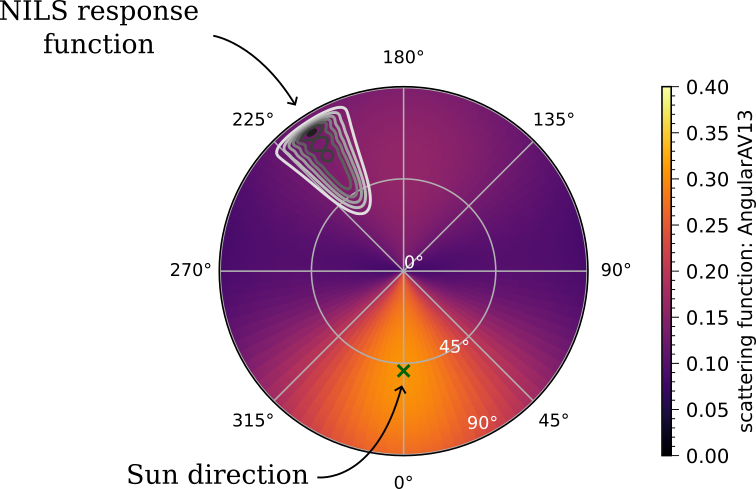
The Negative Ions at the Lunar Surface (NILS) instrument [1] is the first instrument to measure negative ions directly on the lunar surface. Carried onboard the Chang’e-6 mission to the lunar far-side (South Pole-Aitken basin) in June 2024, the instrument produced 346 minutes of data. The instrument uses an electrostatic elevation scanning system and energy analyzer to measure the direction- and energy-resolved negative ion flux. The instrument field-of-view spans from the surface to space in 16 linearly-spaced angular steps. The instrument response, integrated over the 8 steps viewing the surface, is shown in Fig. 1 alongside the scattering function for energetic neutral hydrogen atoms (ENAs) previously derived from orbital observations [2].

Figure 1: Hydrogen ENA scattering function from Schaufelberger et al., 2011 along with the projected summed NILS response function.

NILS data provide direct constraints—at the emission source—on the energy and angular distributions of scattered and sputtered negative hydrogen ions. A detailed mathematical model of the instrument is used within a Bayesian inference framework to retrieve the scattering and sputtering functions. Finally, these NILS-derived functions are compared with orbital measurements of scattered solar wind protons and hydrogen ENAs.

[1] Canu-Blot, R., Wieser, M., Kérényi, M. et al. The Negative Ions at the Lunar Surface (NILS) Instrument on the Chang’E-6 Mission. Space Sci Rev 221, 38 (2025). https://doi.org/10.1007/s11214-025-01162-w

[2] A. Schaufelberger et al., “Scattering function for energetic neutral hydrogen atoms off the lunar surface,” Geophysical Research Letters, vol. 38, Art. no. 22, Nov. 2011.

How to cite: Canu-Blot, R., Wieser, M., Barabash, S., Stenberg Wieser, G., Kérényi, M., Wang, X.-D., Melville, N., and Zhang, A.: Scattering and Sputtering of Negative Hydrogen Ions from the Lunar Surface: Inference from NILS Observations on Chang’e-6, EPSC-DPS Joint Meeting 2025, Helsinki, Finland, 7–13 Sep 2025, EPSC-DPS2025-714, https://doi.org/10.5194/epsc-dps2025-714, 2025.

17:09–17:21
|
EPSC-DPS2025-1325
|
On-site presentation
Manabu Shimoyama, Stefan Karlsson, Stas Barabash, Yoshifumi Futaana, Martin Wieser, Thomas Maynadié, Burak Yağlıoğlu, Burak Karagözoğlu, Fahri Öztürk, Sena Nur ÇALIŞKAN, and Zeynep Altay

Solar wind precipitation on atmosphere-less bodies like the Moon generates backscattered and sputtered energetic neutral atoms (ENAs) from the surface and near-surface environment. Since ENAs does not sense electromagnetic fields, ENAs can be assumed to retain the initial velocity if gravity effect can be ignored. This makes global remote sensing of surface properties and near-surface environment possible from an orbiting spacecraft. Lunar Neutrals Telescope (LNT) is an ENA instrument onboard the first Turkish Lunar Mission AYAP-1 [1], which will be launched in early 2027. The LNT is designed to measure ENAs generated at the Moon surface from the orbit around the Moon and make a global map of plasma precipitation onto the Moon surface. There are three major scientific objectives for LNT observations: (A) To investigate the structure (shape) of mini-magnetosphere created by lunar magnetic anomalies and its response to the solar wind, (B) to search for volatile-rich areas on the Moon’s surface with the special focus on permanently shadowed regions, and (C) to investigate the formation and maintenance processes of the lunar exosphere.

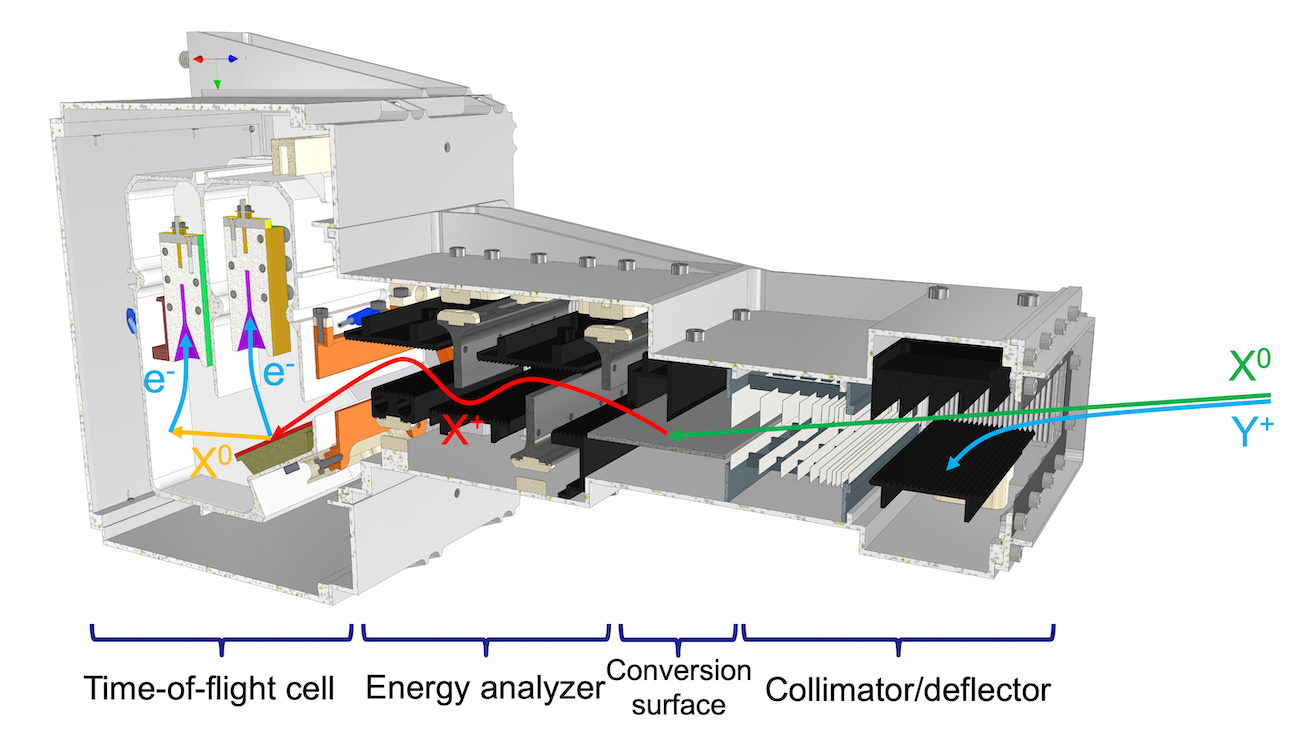
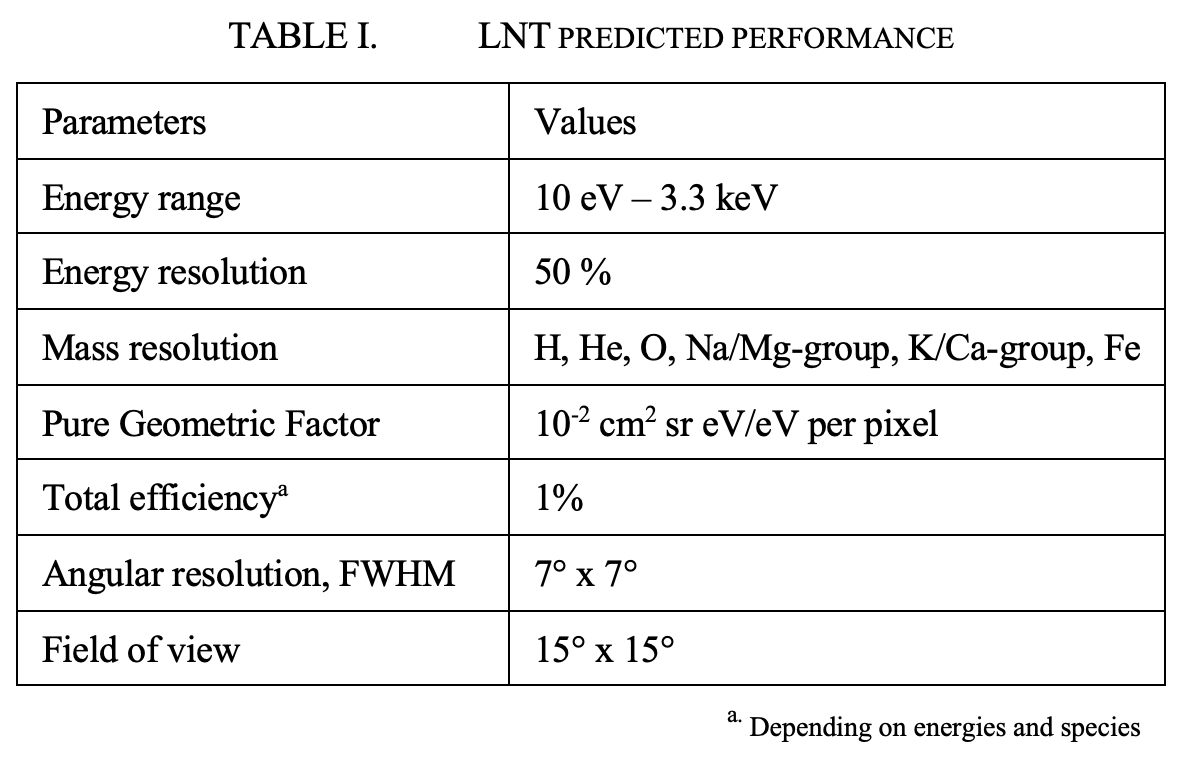
The Design of the LNT, as shown in Figure 1, is based on the successful predecessor CENA/SARA sensor on Chandrayaan-1 [2] and is updated to achieve unprecedentedly high angular resolution (∼7° × 7°), which is approximately factor of 7 higher than the predecessor. Owing to its high angular resolution, the expected spatial resolution at the Lunar surface is ~12 km, which is small enough to resolve the fine structure of the mini-magnetosphere and properties of the permanently shadowed regions. The predicted performance of LNT is shown in the Table I. Energy and mass resolution of LNT also allows us to discriminate the process of plasma interaction with the surface (i.e. backscattered or sputtered), from which valuable information of surface properties can be derived.

We will present the predicted performance of LNT with the current status of development and discuss the expected science.

References:

[1] B. Yağlioğlu, et al. (2023), "The First Turkish Lunar Mission Part 1: Programmatic, Mission and System Aspects," 2023 10th International Conference on Recent Advances in Air and Space Technologies (RAST), Istanbul, Turkiye, 2023, pp. 1-6, doi: 10.1109/RAST57548.2023.10197907.

[2] M. Wieser et al. (2010), First observation of a mini-magnetosphere above a lunar magnetic anomaly using energetic neutral atoms, Geophys. Res. Lett., 37, L05103, doi:10.1029/2009GL041721.

How to cite: Shimoyama, M., Karlsson, S., Barabash, S., Futaana, Y., Wieser, M., Maynadié, T., Yağlıoğlu, B., Karagözoğlu, B., Öztürk, F., Nur ÇALIŞKAN, S., and Altay, Z.: Study of plasma interaction with Lunar surface environment: Science cases with Lunar Neutrals Telescope on Turkish Lunar Mission AYAP-1, EPSC-DPS Joint Meeting 2025, Helsinki, Finland, 7–13 Sep 2025, EPSC-DPS2025-1325, https://doi.org/10.5194/epsc-dps2025-1325, 2025.

17:21–17:33
|
EPSC-DPS2025-1506
|
ECP
|
On-site presentation
Enrico Nardi, Giuseppe Massa, Emiliano Zampetti, Chiara Gisellu, Ernesto Palomba, Fabrizio Dirri, and Andrea Longobardo

The Moon is a prime location for space observations and for investigating fundamental questions about the origin and evolution of our Solar System.

One of the most important problems in view of future missions that will take place on the lunar surface (i.e., NASA Artemis program) is that of lunar dust, which can not only create interference with the instrumentation up to damage it (due to its small size and to its charge), but could also cause important problems for a possible human crew (i.e., vision obstruction, damage to spacesuits, obstruction of the respiratory tract). The study and characterization of lunar dust (physical properties, granulometry, electric charge) is therefore an aspect of fundamental importance and will be the main object of this research project. In order to study and characterize the Moon and its environment, several missions have been conducted over the years, among which we mainly remember the LEAM experiment [1], then LDEX [2,3,4] and finally the two missions Chang' E-3 (CE-3) and Chang' E-5 (CE-5) [5,6,7,8].

The lunar surface is exposed to solar radiation (which includes visible, ultraviolet and X radiation), as well as to the solar wind, charged particles, galactic cosmic rays and high-speed micrometeorites: this interaction can lead to various dust charging processes (electron/ion collisions, photoelectric emissions, contact charging with electron transfer).


Recent studies [9] have highlighted the presence of suspended dust of charged particles within 1 meter of the lunar surface. The interaction of the lunar surface with UV radiation and plasma causes the emission and re-absorption of photoelectrons and/or secondary electrons at the walls of microcavities formed between neighboring dust particles below the surface, which are responsible for generating unexpectedly large negative charges and intense particle-particle repulsive forces (Coulomb Force) to mobilize and lift off dust particles. The dynamics of charged dust in response to various electrical environments on airless bodies has been studied mainly theoretically and by computer simulations (e.g. the "Patched Charge Model" [10,11,12], a model that has been validated in the laboratory [Figure 1]), while in situ measurements are lacking.


Figure 1. Patched Charge Model representation [10]


To achieve this purpose, this work presents the development of the DEC (Dust Electrostatic Collector) instrument, whose basic concept mirrors that of the QCMs and which allows to pave the way for in situ applications in the near future. DEC is under development by an Italian team led by INAF-IAPS, in collaboration with CNR-IIA and Politecnico di Milano.  

The main goal of this activity is therefore to demonstrate the capability of an instrument based on QCM sensors to attract charged particles (of dimensions ≤10 μm), while evaluating their charge-to-mass ratio. The object of the research itself and its consequent practical applications are highly innovative elements since the study of these charged lunar particles has so far been theoretical and never faced experimentally.

The instrument core is a QCM (Quartz Crystal Microbalance) which oscillates at a resonant frequency depending on the mass deposited on its sensible area [13]. The deposition process of these charged particles on the instrument would be favored by a particular type of design for the breadboard (Figure 2), using an electron gun to simulate the charging and lofting processes and exploiting the effect of electric fields to attract the particles, a concept completely innovative and not yet applied in the field of microbalances. As matter of fact, the instrument will be capable of attracting charged dust grains by means of a variable Electric Field (EF), generated locally by the instrument itself. The application of this EF will break the equilibrium between the Electric and the Gravity Fields on the Moon, allowing the electrically charged dust grains to be attracted toward the microbalance and, in principle, by changing the local EF it will be possible to attract grain with different size and electric charge.

Figure 2. Setup design

It is assumed that the electrostatic lofting that occurs on the lunar surface is the same phenomenon that occurs on other bodies in the Solar System; for this reason, the study of the phenomena that occur on the lunar surface represents a first step towards the realization of a human outpost on the Moon and an excellent laboratory to characterize the processes that may govern the evolution of atmosphere-less planetary surfaces throughout the Solar System.


[1] Berg OE, Richardson FF, Burton H. 1973.NASA SP 330:16

[2] M. Horányi, Z. Sternovsky, M. Lankton, et al., Space Sci. Rev. 185 (2014) 93–113.

[3] Horányi, M., et al., Nature 522.7556 (2015): 324-326.

[4] Bernardoni, Edwin, Mihály Horányi, and Jamey R. Szalay. The Planetary Science Journal 4.2 (2023): 20.

[5] H. Zhang, Y. Wang, L. Chen, H. Zhang, et al., Sci. China Ser. ETechnol. Sci. 063 (2020) 520–527.  

[6] D. Li, Y. Wang, H. Zhang, X. Wang, Y. Wang, Z. Sun, et al., Geophys. Res. Lett. 47 (2020).

[7] Li, Detian, et al. Journal of Geophysical Research: Planets 124.8 (2019): 2168-2177.

[8] Zhuang, Jianhong, et al., Sensors and Actuators A: Physical 320 (2021): 112564.

[9] Dust charging and transport on airless planetary bodies. Wang, X., et al. 2016. Geophysical Research Letters 43.12: 6103-6110.

[10] Wang, X., et al., Geophysical Research Letters 43.12 (2016): 6103-6110.

[11] Orger, Necmi Cihan, et al. Advances in Space Research 63.10 (2019): 3270-3288.

[12] Schwan, J., et al. Geophysical Research Letters 44.7 (2017): 3059-3065.

[13] Sauerbrey, G. s.l. : Z. Phys. 155 206–222, 1959.

How to cite: Nardi, E., Massa, G., Zampetti, E., Gisellu, C., Palomba, E., Dirri, F., and Longobardo, A.: DEC (Dust Electrostatic Collector): an innovative QCM-device for the Lunar environment, EPSC-DPS Joint Meeting 2025, Helsinki, Finland, 7–13 Sep 2025, EPSC-DPS2025-1506, https://doi.org/10.5194/epsc-dps2025-1506, 2025.

17:33–17:45
|
EPSC-DPS2025-349
|
ECP
|
On-site presentation
Lucas Liuzzo, Andrew R. Poppe, Christina O. Lee, and Vassilis Angelopoulos

Solar energetic particles pose significant hazards to space exploration and habitation. In the context of the Moon, understanding the access of these high-energy particles to the lunar environment is critical when studying the composition of the surface, quantifying energy deposition at depth, and when considering the planned exploration during crewed and robotic missions. Of particular interest are times when the Moon is embedded deep within the tail of Earth’s magnetosphere, which occurs for approximately one-third of each lunation. Although the strong terrestrial magnetic field prevents high-energy particles from reaching Earth’s surface, the Moon does not receive the same protection while located within the terrestrial magnetotail. Instead, we show that the high-energy ions and electrons readily penetrate the tail along field lines that are open to the solar wind far downstream of the Moon. By applying a combination of data analysis and modeling techniques, we highlight the lack of shielding from these particles that the magnetotail provides to the lunar environment. Even so, we find that specific regions on the lunar near-side surface are still protected from precipitation by high-energy electrons by the solid body of the Moon: despite the high flux of potentially hazardous particles that can reach the local environment while within the magnetotail, the flux onto the lunar near-side is reduced. Our findings provide context for understanding access of high-energy solar particles to the lunar surface and are relevant for the safety of astronauts during the upcoming missions to explore the lunar environment.

How to cite: Liuzzo, L., Poppe, A. R., Lee, C. O., and Angelopoulos, V.: Solar Energetic Particle Access to the Lunar Environment While Embedded Within Earth's Magnetotail, EPSC-DPS Joint Meeting 2025, Helsinki, Finland, 7–13 Sep 2025, EPSC-DPS2025-349, https://doi.org/10.5194/epsc-dps2025-349, 2025.

17:45–17:57
|
EPSC-DPS2025-1735
|
ECP
|
On-site presentation
Tim Arnet, Silvan Hunziker, Harald Krüger, Peter Strub, and Veerle J. Sterken

Various dust populations reside in the solar system. Depending on their origin, we can distinguish between interplanetary dust particles (IDP) and interstellar dust (ISD). Besides the sporadic interplanetary dust, there are IDP populations with special dynamical properties: nanodust is easily influenced by magnetic fields, beta-meteoroids are pushed away from the Sun through the solar radiation pressure and become interstellar, and larger cometary dust forms streams that slowly deviate from the orbit of the parent body.

Interstellar dust is assumed to enter the solar system from the direction of motion of the Sun with respect to the interstellar medium. Dust grains acquire a charge in a space environment and are hence sensitive to magnetic fields. While large micron-sized ISD grains are nearly unaffected, small nanometer-sized ISD grains can therefore not enter the solar system. Every 11 years, at the minimum of the solar cycle, mid-sized ISD gets alternately focused or defocused from the ecliptic plane through the influence of the solar wind magnetic field on the charged dust trajectories. Last but not least, impacts on the lunar surface generate a lunar dust cloud through the impact-ejecta process. The Lunar Gateway is a space station concept orbiting the Moon in a near-rectilinear halo orbit with periapsis about 1’500 km and apoapsis about 70’000 km above the lunar surface. The Lunar Gateway offers a platform to perform in-situ measurements of various dust populations at 1 AU in the vicinity of the Moon and in the free solar wind, an environment much more pristine than the environment near to the Earth. The Lunar Gateway should be operative in the 2030s, simultaneously with the next focusing phase of interstellar dust, which only occurs every 22 years.

We present the science case of a dust detector package on the Lunar Gateway, and the expected dust fluxes of the different dust populations. To conclude, we show which instrumentation could be used to achieve the science goals.

How to cite: Arnet, T., Hunziker, S., Krüger, H., Strub, P., and Sterken, V. J.: Dust science from the Lunar Gateway, EPSC-DPS Joint Meeting 2025, Helsinki, Finland, 7–13 Sep 2025, EPSC-DPS2025-1735, https://doi.org/10.5194/epsc-dps2025-1735, 2025.

Orals FRI-OB3: Fri, 12 Sep, 11:00–12:30 | Room Saturn (Hall B)

Chairpersons: Iannis Dandouras, Mihály Horányi
11:00–11:05
11:05–11:17
|
EPSC-DPS2025-837
|
ECP
|
On-site presentation
Patrice Smith, Cesare Grava, Kurt Retherford, Elizabeth Czajka, Randall Gladstone, and Thomas Greathouse

The lunar exosphere, a tenuous environment crucial for understanding surface-exosphere interactions, is investigated using extended Far-Ultraviolet (FUV) spectroscopy from the Lunar Reconnaissance Orbiter’s (LRO) Lyman Alpha Mapping Project (LAMP). Leveraging seven years of continuous dawn/dusk orbital data, doubling the previous reported (Cook et al., Icarus, 2013) 3.5-year dataset, we aim to improve constraints on exospheric species, their densities, and temporal variability. Our methodology involves detailed evaluation of LAMP spectra (57-196 nm) during twilight passes, employing robust background removal to isolate faint exospheric signals from reflected UV starlight and earthshine. We focus on identifying emission lines of neutral atomic species, with helium being a prominent detection. This study extends prior work by applying the same twilight observation technique to a significantly longer temporal baseline, enhancing the signal-to-noise ratio for spectral line detections or upper limits. Analyzing this extended dataset allows for a more precise determination of species abundances and the potential identification of fainter constituents. By constraining temporal variations in these densities, we further explore the source mechanisms (e.g., sputtering, desorption, outgassing) and loss processes governing the lunar exosphere.

How to cite: Smith, P., Grava, C., Retherford, K., Czajka, E., Gladstone, R., and Greathouse, T.: Analyzing the Moon’s Exosphere with Seven Years of Far-Ultraviolet LRO-LAMP Spectra, EPSC-DPS Joint Meeting 2025, Helsinki, Finland, 7–13 Sep 2025, EPSC-DPS2025-837, https://doi.org/10.5194/epsc-dps2025-837, 2025.

11:17–11:29
|
EPSC-DPS2025-1179
|
ECP
|
On-site presentation
Megan Seritan and Ian Garrick-Bethell

1 — Introduction

The Moon sustained a global magnetic field at some point in its past, likely driven by a dynamo. Although the global magnetic field no longer exists, multiple regions of magnetic anomalies are found in the Moon’s crust. Currently, there is no agreed-upon consensus for how any of these anomalies formed. Determining the formation mechanism of these anomalies would allow us to constrain the size of the source bodies and the timing of their emplacement. In turn, this would help constrain estimates of the Moon’s dynamo field strength and history.

The group of Gerasimovich magnetic anomalies, located west of the Orientale basin and near the Crisium basin antipode, exhibit some of the strongest magnetic fields observed from lunar orbit (Figure 1). Previous work has hypothesized that the high magnetic fields in the Gerasimovich region are due to magnetized ejecta from the impact that formed the Crisium basin. This work tests the antipodal ejecta hypothesis by analyzing the relationship between topography, surface slope, and magnetic field in the region of the Gerasimovich magnetic anomalies.


2 — Methods

Correlations between topography, slope, and magnetic field maps — First, we demonstrate that areas of relatively low slope in the Gerasimovich region are co-located with areas of high magnetic field by comparing topography, topographic slope, and magnetic field maps of the region. For our magnetic field data, we use the Tsunakawa et al. (2015) Surface Vector Magnetometer (SVM) model at a resolution of 5 pixels per degree (ppd). For our topographic data, we use Lunar Orbiter Laser Altimeter (LOLA) maps with a resolution of 512 ppd. We create surface slope maps by calculating the arctangent of the magnitude of the topography gradient.

Modeling magnetic field based on slope — We forward-model the magnetic field from source bodies whose magnitude is set by areas of low surface slope to demonstrate that it reproduces features in the observed magnetic data. We use a grid of 40,000 uniformly spaced dipoles with the same resolution as the SVM map, 5 ppd. We set the moments of the dipoles according to the locally normalized values of either topography or slope. For topographic elevation, we set the dipole moments to be inversely proportional to the topography values, and for topographic slope, we set the dipole moments to be inversely proportional to the surface slope values. In each case, the dipole moments are varied linearly between the two extremes. The peak moment was set to be 1011 A⋅m2, which was chosen such that the peak magnitude of the resulting magnetic field map matched the peak magnitude observed field in the area. Finally, we linearly decreased the magnetic moment of the dipoles as a function of distance from the center of the modeling space, to more accurately represent the finite, grouped nature of the magnetic anomalies.

Crater fill thickness and magnetization strength — Within the study area we assess the fill thicknesses (i.e., materials deposited inside the crater after their formation) for four craters older than Crisium. We measure the depths of these craters and compare them to the values expected from a statistically-derived depth-diameter relationship from Krüger et al. (2018). Assuming that the difference between the measured and expected crater depth values is due to magnetic fill, we then convert the fill thickness into a source body magnetization.

3 — Results

Correlations between topography, slope, and magnetic field maps — By plotting 100 and 150 nT magnetic field contours over surface slope maps (Figure 2), we found that the largest contiguous blocks of strong field are associated with low-to-moderate slopes, supporting our hypothesis that ejecta from the antipodal Crisium impact moved down pre-existing high-slope crater rims upon landing. We also find that the rim slopes of several relatively small craters, all mapped as Orientale secondaries, bound the area of high magnetic field, suggesting that any pre-existing magnetism beneath these craters’ footprints was destroyed by impacts.


Modeling magnetic field based on slope — We find that the model field map produced using slope values for dipole strength has good agreement with many of the actual field observations and is superior to the analogous model field map produced using topography values for dipole strength (Figure 3).


Crater fill thickness and magnetization strength — We find that all four of our study craters are anomalously shallow compared to their statistically expected depths. Additionally, profiles of their topography show they are shallower, or at least the same depth, as comparison craters elsewhere on the Moon of similar diameter and younger or similar age (Figure 4). For the crater Gerasimovich, we find a fill thickness of ~0.8km, which implies a source body magnetization of ~4.6 A/m.


4 — Conclusions

We have found that the areas of high surface magnetic field (>100 nT) around the Crisium antipode are collocated with areas of low surface slope. A model of magnetic field strength setting the rock magnetization inversely proportional to the surface slope reproduces key features in the observed magnetic field. Our interpretation is that ejecta from the Crisium-forming impact filled pre-existing craters and became magnetized after landing. Ejecta moved downslope upon landing and thereby avoided collecting on high-slope crater rims. Later smaller impacts also demagnetized the surficial magnetized layer, and their high-slope rims now bound the regions of strong magnetization. We inferred rock magnetization strength of ~4.6 A/m inside the Gerasimovich crater based on ~0.8 km of fill deposits inside it. Either way, all observations require a dynamo field existing during the time of Crisium basin formation, likely on the order of ten or even tens of microtesla in strength.

5 — References

  • Krüger et al. (2018), Deriving Morphometric Parameters and the Simple-to-Complex Transition Diameter From a High-Resolution, Global Database of Fresh Lunar Impact Craters (D ≥ 3 km). JGR Planets 123, 2667–2690.
  • Tsunakawa et al. (2015), Surface vector mapping of magnetic anomalies over the Moon using Kaguya and Lunar Prospector observations. JGR Planets 120, 1160–1185.

How to cite: Seritan, M. and Garrick-Bethell, I.: Magnetic field morphology correlated with surface slopes at the Gerasimovich lunar magnetic anomaly, EPSC-DPS Joint Meeting 2025, Helsinki, Finland, 7–13 Sep 2025, EPSC-DPS2025-1179, https://doi.org/10.5194/epsc-dps2025-1179, 2025.

11:29–11:41
|
EPSC-DPS2025-219
|
ECP
|
On-site presentation
Thomas Maynadié, Yoshifumi Futaana, Stas Barabash, Anil Bhardwaj, Peter Wurz, and Kazushi Asamura

While the Moon lacks a global intrinsic magnetic field, its crust features small-scale magnetized regions known as lunar magnetic anomalies [1]. Their interaction with the solar wind causes significant proton reflection and deflection [2] and creates unique structures known as lunar mini-magnetospheres [3, 4]. Previous studies have shown that lunar magnetic anomalies induce global-scale perturbations in the near-surface lunar plasma environment on both the dayside [5] and nightside [6]. In particular, simulations suggest that the largest lunar magnetic anomaly, the South Pole-Aitken (SPA) cluster, causes large-scale solar wind compressions and interplanetary magnetic field enhancements due to the interaction between protons reflected by SPA and the solar wind that can reach south-polar regions when the SPA cluster is at local noon [7]. However, the influence of these solar wind compressions on the plasma environment at the lunar South Pole remains unknown.

In this study, we produce new composite images of backscattered energetic neutral hydrogen derived from Sub-KeV Atom Reflecting Analyzer (SARA) [8] measurements. These images show that the plasma perturbations generated by the SPA cluster can extend to lunar south-polar regions, depending on local time and upstream solar wind conditions. These perturbations affect solar wind proton precipitation patterns, either decreasing or enhancing impinging proton fluxes depending on whether the south pole lies downstream or outside of the SPA anomaly. Based on these observations, we develop an empirical model of solar wind compression by the SPA cluster to evaluate its impact on ion instrument measurements at the south pole.

Understanding the complex interactions between the plasma, dust, and electromagnetic environments is an important asset to ensure safe and sustainable human presence on the Moon. We will discuss the role of the SPA cluster in these interactions, which will establish preliminary measurement requirements for in-situ plasma instruments in polar regions.


References:

[1] Coleman et al. (1972), Physics of the Earth and Planetary Interiors, https://doi.org/10.1016/0031-9201(72)90050-7.

[2] Lue et al. (2011), Geophysical Research Letters, https://doi.org/10.1029/2010GL046215.

[3] Lin et al. (1998), Science, https://doi.org/10.1126/science.281.5382.1480.

[4] Wieser et al. (2010), Geophysical Research Letters, https://doi.org/10.1029/2009GL041721.

[5] Maynadié et al. (2024), Europlanet Science Congress 2024, Berlin, https://doi.org/10.5194/epsc2024-79.

[6] Dhanya et al. (2018), Geophysical Research Letters, https://doi.org/10.1029/2018GL079330.

[7] Fatemi et al. (2014), Journal of Geophysical Research: Space Physics, https://doi.org/10.1002/2014JA019900.

[8] Barabash et al. (2009), Current Science, http://www.jstor.org/stable/24105464.

How to cite: Maynadié, T., Futaana, Y., Barabash, S., Bhardwaj, A., Wurz, P., and Asamura, K.: Effects of the South Pole-Aitken Magnetic Anomaly Cluster on the Plasma Environment at the Lunar South Pole, EPSC-DPS Joint Meeting 2025, Helsinki, Finland, 7–13 Sep 2025, EPSC-DPS2025-219, https://doi.org/10.5194/epsc-dps2025-219, 2025.

11:41–11:53
|
EPSC-DPS2025-1660
|
On-site presentation
Lasse B. N. Clausen, Tore-André Bekkeng, Sebastian Els, Mohammed Khoory, Ahmed A. Sharaf, Sayan Adhikari, Anders Eklund, Wojciech J. Miloch, and Hamad A. Al Marzooqi

The Rashid-1 rover, which was part of the Emirates Lunar Mission (ELM) program, was a small rover aimed to be operated for one lunar day on the lunar surface. As part of its scientific instrumentation, Rashid-1 carried a Langmuir probe experiment (LNG) in order to provide the first extensive, high-resolution in situ measurements of the bulk parameters of the lunar dayside thermal plasma at different altitudes above the lunar surface. The LNG was comprised of four probes, mounted at different locations and heights above the lunar surface on the Rashid-1 rover. This way, the LNG was intended to derive an altitude profile of the two plasma parameters electron density and electron temperature above the lunar surface. The design of the instrument and a description of the data analysis technique, calibration, and validation are provided in this paper. Due to the short separation between the probes and the rover body (in terms of Debye length), the measurements of the LNG were expected to be influenced by the presence of the rover and its sheath. This was addressed through numerical modeling, which is described and preliminary results are presented. Unfortunately, the landing in the Atlas crater of the lunar lander carrying Rashid-1 to the surface was not successful – however, this description of the instrument design and the data analysis techniques are still useful for future explorations of the lunar plasma environment.

How to cite: Clausen, L. B. N., Bekkeng, T.-A., Els, S., Khoory, M., Sharaf, A. A., Adhikari, S., Eklund, A., Miloch, W. J., and Al Marzooqi, H. A.: The Langmuir Probe Instrument on Board the Rashid-1 Rover of the Emirates Lunar Mission, EPSC-DPS Joint Meeting 2025, Helsinki, Finland, 7–13 Sep 2025, EPSC-DPS2025-1660, https://doi.org/10.5194/epsc-dps2025-1660, 2025.

11:53–12:05
|
EPSC-DPS2025-142
|
On-site presentation
Shaosui Xu, Andrew Poppe, Yuki Harada, and Phil Chamberlin

The lunar dayside surface is constantly bombarded by solar photons and ambient charged particles, inducing a variety of surface processes (e.g., photoemission, secondary electron emission, sputtering, and absorption of charged particles). The resulting charge transfer between the lunar surface and space causes surface charging such that electric currents into and out of the surface are balanced. Lunar surface charging is both scientifically and practically important (human exploration). The nightside surface charging has been well characterized by previous studies, but not so much for the dayside, mainly because of a poor understanding of lunar photoelectrons and a lack of a robust methodology. Recently, oxygen Auger photoelectrons emitted from the lunar surface have been observed by the ARTEMIS (Acceleration, Reconnection, Turbulence, and Electrodynamics of the Moon's Interaction with the Sun) spacecraft, which provides a unique feature to identify lunar photoelectrons (PHE) and infer the dayside surface electrostatic potential. With a combination of observations from the ARTEMIS mission and modeling efforts, we can determine the lunar surface potential. In this study, we provide the first statistical analysis of the lunar dayside surface potential when the Moon is located in the Earth’s magnetotail lobes and how it varies with solar zenith angles, local plasma density, and electron temperatures.

How to cite: Xu, S., Poppe, A., Harada, Y., and Chamberlin, P.: Inferring lunar dayside surface potential from modeled and observed photoelectrons, EPSC-DPS Joint Meeting 2025, Helsinki, Finland, 7–13 Sep 2025, EPSC-DPS2025-142, https://doi.org/10.5194/epsc-dps2025-142, 2025.

12:05–12:17
|
EPSC-DPS2025-443
|
On-site presentation
Prabal Saxena, Stefano Bertone, Heather V. Graham, Natalie M. Curran, Aaron B. Regberg, Andrew W. Needham, D.E. (Betsy) Pugel, and Noah E. Petro

Environmental conditions on most of the lunar surface are incredibly harsh for the survival of most microbial life, due to a combination of high doses of ultraviolet (UV) radiation, energetic particle radiation, high temperatures and desiccation. This is true in equatorial regions, where all previous crewed exploration of the Moon has taken place. However, the extent of these conditions at high latitude regions has not been examined. This study includes shielding by topography to understand the interplay between surface roughness and exposure to harmful radiation. This is particularly relevant at the lunar poles, where maximum Sun elevation is limited to a few degrees above the horizon. We will discuss recent analyses that consider data describing the resilience of common microorganisms and remote sensing data of the lunar surface from the Lunar Reconnaissance Orbiter (LRO), to determine potential survivability niches for several microbial cells at the lunar poles.

Ultraviolet radiation turns out to be the main “microbe killer” at the lunar poles for the set of specific common and extremophilic microbes under consideration. We used recent models of solar fluxes at UV wavelengths to assess the existence of favorable locations in the lunar southern polar regions. First, we modeled regional UV fluences at the surface based on available fractional solar visibility maps. Then, we used available altimetry-based Digital Elevation Models (DEM) along with ray-tracing techniques to carefully model ground conditions at specific locations. Combined with LRO’s Diviner temperature measurements, our results suggest that the lunar south pole possesses significant regions of lower temperatures and ultraviolet light flux.

By comparing these surface conditions to survivability data of specific microorganisms, we find that certain regions of the lunar poles may be less hostile to survival of microbial life than previously assumed. We find significant areas in the lunar south pole that likely possess surface conditions amenable to the survival of several common microbial cells over time-scales relevant to future lunar exploration. We will discuss the implications of this potential survivability given the numerous plans for manned exploration of the lunar south pole in the near future.

How to cite: Saxena, P., Bertone, S., Graham, H. V., Curran, N. M., Regberg, A. B., Needham, A. W., Pugel, D. E. (., and Petro, N. E.: Potential Survivable Niches for Microbial Life at the Lunar Poles, EPSC-DPS Joint Meeting 2025, Helsinki, Finland, 7–13 Sep 2025, EPSC-DPS2025-443, https://doi.org/10.5194/epsc-dps2025-443, 2025.

12:17–12:29
|
EPSC-DPS2025-7
|
ECP
|
On-site presentation
Li Hsia Yeo, Hannah McLain, Sophia Westerkamp, Danielle Simkus, Jennifer Holt, and Jason McLain

One of the most stunning findings from the Apollo era was the discovery of organic compounds, including amino acids, in lunar soil samples. This raised the question of how amino acids might manage to survive the harsh environmental conditions of the lunar surface. The surface of the Moon, which lacks a global magnetic field or an atmosphere, is subject to significant space weathering in the form of physical bombardment and radiation. This means that any volatiles or organics deposited on the lunar surface is subject to high temperatures and significant fluxes of ultraviolet (UV) radiation and solar wind plasma. We present a laboratory investigation on the survivability of amino acids in lunar simulant soil under conditions similar to the lunar surface.

In this study, samples are created by depositing amino acids into the lunar simulant JSC-1A. Samples are then exposed to lunar conditions in a custom-built vacuum, gas, and radiation treatment chamber. Survival rates of various amino acids were quantified using ultra high performance liquid chromatography in conjunction with AccQ·Tag derivitization and fluorescence detection.

 Vacuum, Hydrogen Gas, and UV/Plasma.  Samples were separately exposed to different vacuum levels, hydrogen gas, and hydrogen plasma/UV radiation. Results show that vacuum and hydrogen gas exposure have relatively minor effects on amino acid survivability compared to hydrogen plasma and ultraviolet (UV) radiation. Interestingly, in our experiments, exposure to plasma and UV significantly reduces the amount of but does not completely destroy amino acids in lunar soil.

Extended Radiation Dose.  Amino acids in lunar soil systematically exposed to increasing amounts of plasma and UV radiation displayed an exponential decay rate with increasing doses. After the equivalent of 20 years of irradiation at the Moon, a small amount (∼4-7%) of amino acids continue to survive in the soil.

Varied Burial Depths.  To investigate the shielding effects of dust in the survivability of amino acids, we buried 0.1 g of samples of JSC-1A doped with amino acids in 4.5 g columns of undoped JSC-1A. Burial heights were set at 0 mm (surface deposition), 8 mm, 16 mm, and 24 mm. Results highlight the importance of shielding by lunar dust: amino acids buried as little as 8 mm below the surface have a ≳ 95% survival rate under 2.5 years of equivalent radiation.

In summary, amino acids are experimentally shown to survive on human time scales under hydrogen plasma/UV radiation. Lunar dust is found to play an important role in shielding amino acids. These results have important implications for the effects of human exploration of the Moon. Future studies will examine more complex organic molecules, as well as the breakdown and outgassing products of such under hydrogen plasma/UV exposure.

How to cite: Yeo, L. H., McLain, H., Westerkamp, S., Simkus, D., Holt, J., and McLain, J.: Survivability of Amino Acids in Lunar Soil, EPSC-DPS Joint Meeting 2025, Helsinki, Finland, 7–13 Sep 2025, EPSC-DPS2025-7, https://doi.org/10.5194/epsc-dps2025-7, 2025.

Posters: Thu, 11 Sep, 18:00–19:30 | Finlandia Hall foyer

Display time: Thu, 11 Sep, 08:30–19:30
Chairperson: Yoshifumi Futaana
F71
|
EPSC-DPS2025-973
|
On-site presentation
Stas Barabash, Yoshifumi Futaana, Thomas Maynadié, Angele Pontoni, and Akbar Whizin

To date, plasma observations in the energy range of a few eV to 10 keV on the lunar surface have been very limited. Most of these observations were conducted during the Apollo program by sensors in the Apollo Lunar Surface Experiments Package (ALSEP)—namely, the Solar Wind Spectrometer (SWS), the Suprathermal Ion Detector Experiment (SIDE) with Cold Cathode Ion Gauge, and the Charged Particle Lunar Environment Experiment (CPLEE). While some of these observations—such as plasma measurements on the nightside over the full lunar night—remain unique, the overall sensor performance was highly limited by modern standards. Instruments on the Chinese landers have been focused on specific objectives, such as the measurement of negative ions and energetic neutral atoms (ENAs). Therefore, our knowledge of the lunar plasma environment and the processes that govern it remains sparse, relying heavily on orbital measurements and theoretical models. This current level of understanding is insufficient to support the large-scale lunar exploration efforts that are about to commence. Improved plasma measurements are needed for:

  • Proper modeling of surface and man-made object charging and potentials;
  • Investigation of dust dynamics, including dust release and dust–plasma interactions;
  • Study of space weathering processes that modify surface characteristics and composition;
  • Understanding the formation, release, and dynamics of volatiles in the lunar exosphere;
  • Exploring surface-level plasma dynamics and interactions with various plasma domains as the Moon moves along its orbit.

The measurement need to span over four fundamental scales:

  • Microscale (kinetic, 10⁻⁴–10⁻² cm):
    To resolve the microphysics of particle–surface interactions
  • Mesoscale (sub-Debye, 10 cm–10 m):
    To study plasma processes where quasi-neutrality breaks, generating strong electric fields
  • Macroscale (MHD, 10 m–1 km):
    To explore connections between plasma dynamics and lunar topography
  • Global scale (MHD, 1 km–1,000 km):
    To reveal the influence of large-scale structures, such as magnetic anomalies and the terminator, on local plasma populations

In this presentation, we:

  • Demonstrate the limitations of current surface-level plasma knowledge
  • Highlight the critical importance of advancing this understanding
  • Provide an overview of the measurement requirements and techniques needed to address these scientific and operational gaps

How to cite: Barabash, S., Futaana, Y., Maynadié, T., Pontoni, A., and Whizin, A.: The Need for Plasma Measurements on the Lunar Surface, EPSC-DPS Joint Meeting 2025, Helsinki, Finland, 7–13 Sep 2025, EPSC-DPS2025-973, https://doi.org/10.5194/epsc-dps2025-973, 2025.

F72
|
EPSC-DPS2025-1757
|
On-site presentation
Mika Holmberg, Caitriona Jackman, Matthew Taylor, Olivier Witasse, Jan-Erik Wahlund, Stas Barabash, Hans Huybrighs, Xin Cao, Sebastian Cervantes, Michiko Mooroka, Christian Imhof, and Charlie Bowers

We use Spacecraft Plasma Interaction Software (SPIS) simulations to study the interaction between the Juice spacecraft and its environment during the recent lunar gravity assist (LGA). We also use SPIS to study a suspected outgassing event that occurred shortly after the spacecraft crossed the lunar terminator.

On August 19, 2024, Juice performed its first gravity assist as it passed the Moon.  During the LGA the Moon was situated in the lobe region of Earth’s magnetotail. Present in the near vicinity of the Moon were also the two Artemis spacecraft P1 and P2. Despite a distance of around 14,000 km between the two spacecraft, the Artemis P1 and P2 observations of the magnetic field, and plasma density, velocity, and temperature are in excellent agreement. Given that Juice was located in between 4,000 and 7,000 km from Artemis P2, it is reasonable to consider the Artemis observations as a reliable representation of the space environment encountered by Juice during the LGA. 

The Artemis observations are used as input to simulate the interaction between the Juice spacecraft and its environment during the LGA, excluding the period when the spacecraft crossed the lunar wake. Our simulation results show that the spacecraft bus reaches a potential of approximately 11 V, while non-conductive surfaces, such as the radiators and the high-gain antenna, reach potentials ranging from - 2 to 14 V. Due to the tenuous plasma environment in the magnetotail lobe and the spacecraft’s close proximity to the Sun, the surface charging is predominantly driven by the emission of photoelectrons from the spacecraft. We also simulate the suspected outgassing event observed shortly after the lunar terminator crossing, and discuss its impact on the particle and field measurements obtained by Juice.

How to cite: Holmberg, M., Jackman, C., Taylor, M., Witasse, O., Wahlund, J.-E., Barabash, S., Huybrighs, H., Cao, X., Cervantes, S., Mooroka, M., Imhof, C., and Bowers, C.: Surface charging and outgassing during the Juice lunar gravity assist, EPSC-DPS Joint Meeting 2025, Helsinki, Finland, 7–13 Sep 2025, EPSC-DPS2025-1757, https://doi.org/10.5194/epsc-dps2025-1757, 2025.

F73
|
EPSC-DPS2025-589
|
On-site presentation
Markus Fränz, Norbert Krupp, Elias Roussos, Robert Labbuda, Stas Barabash, and Jan-Erik Wahlund

The plasma spectrometer JEI is an ion and electron spectrometer designed to observe the thermal and medium energy charged particle environement of Jupiter. It is part of the PEP instrument onboard JUICE. The flyby through the Earth-Moon system in August 2024 was the first test of the instrument in a magnetospheric plasma and under higher radiation. We report on the instrument performance and on observations of charged particles in the lunar environment and during the crossing of the Earth magnetosphere. JEI was turned on during four short time periods near the moon, in the plasma sphere, and during magnetopause and bow shock crossings in the magnetosheath and back into the solar wind. During the lunar flyby JEi recorded photo electrons accelerated by a highly positive spacecraft potential and effects of spacecraft outgassing. The crossing of the Earth plasmasphere allowed a rare observation of the plasmasphere cold ion composition. This measurement was made possible by the combination of a negative spacecraft potential and a high spacecraft velocity.

How to cite: Fränz, M., Krupp, N., Roussos, E., Labbuda, R., Barabash, S., and Wahlund, J.-E.: Observations of the JUICE PEP JEI plasma spectrometer during the Moon and Earth flyby in August 2024, EPSC-DPS Joint Meeting 2025, Helsinki, Finland, 7–13 Sep 2025, EPSC-DPS2025-589, https://doi.org/10.5194/epsc-dps2025-589, 2025.

F74
|
EPSC-DPS2025-1628
|
On-site presentation
Lasse B. N. Clausen, Yoshifumi Futaana, Fabrice Cipriani, Gregoire Deprez, and Fredrik Leffe Johansson

As part of an ESA contract the University of Oslo (UiO) is, under the leadership of the Swedish Institute of Space Physics (IRF) and in collaboration with the Czech Academy of Science (CAS) and the University of Stuttgart (UoS), developing an instrument package to measure important parameters near the lunar surface. The overall system design including a boom package is managed by IRF, while CAS is designing an eBox that handles power and data/command distribution. The package includes two scientific instruments: (1) a dust detector designed by UoS, and (2) an electric field instrument designed by UiO. Here we present the progress made on the electric field instrument design, from measurement requirements to instrument concept selection. As part of the measurement requirements, we present a review of the current knowledge of near-surface lunar electric fields (including the DC and AC components) and plasma parameters derived from models of lunar electrodynamics and previous observations. Based on these expectations, the current instrument comprises a number of spherical probes, mounted on booms, that can dynamically be used in a double probe mode (with current biasing), or in a Langmuir probe mode. We outline the expected mode of operation, and briefly touch upon the expected science return of the instrument package.

How to cite: Clausen, L. B. N., Futaana, Y., Cipriani, F., Deprez, G., and Leffe Johansson, F.: An electric field instrument for lunar surface missions, EPSC-DPS Joint Meeting 2025, Helsinki, Finland, 7–13 Sep 2025, EPSC-DPS2025-1628, https://doi.org/10.5194/epsc-dps2025-1628, 2025.

F75
|
EPSC-DPS2025-1553
|
ECP
|
On-site presentation
Sonny Kristofer Napa Häger, Xiao-Dong Wang, and Axel Hagermann

As the Moon lacks a collisional atmosphere, the space plasmas and the solar radiation can directly interact with its rocky surface, causing significant surface charging. Lunar surface charging and its resultant surface dust environment impact the safety and functionality of human and technology systems on the lunar surface. Therefore, to characterize the surface electric field configuration is important for the lunar exploration activities. The electromagnetic field configuration on the lunar surface is rather poorly known and will be studied on this project through computational modeling using Simion.

The Lunar Boomerang project aims to launch charged particles from the lunar surface and probe the electromagnetic field configurations using the properties of returning particles. In addition to the electric force, charged particles affected by the magnetic force are prone to gyrate with gyro-radii reaching up to several km. Depending on the particle energy, emission direction, and distribution of the field, a fraction of particles will return. A particle detector on the same instrument will detect these returning particles. From these, an electromagnetic field configuration can be determined.

This is an innovative technique where IRF, the Swedish Institute for Space Physics will conduct proof-of-concept studies.

 We carry out numerical simulations using the particle tracing software, SIMION, to trace charged particle motion in a predefined electromagnetic field, and records all the information of the particles hitting a surface. By varying electromagnetic fields and initial particle energies and direction to predict the characteristics of these returning particles. The results of simulations with different electromagnetic field configurations will be presented and discussed.

How to cite: Napa Häger, S. K., Wang, X.-D., and Hagermann, A.: Lunar Boomerang: Computer modeling of an innovative technique to study electromagnetic fields at the Lunar surface, EPSC-DPS Joint Meeting 2025, Helsinki, Finland, 7–13 Sep 2025, EPSC-DPS2025-1553, https://doi.org/10.5194/epsc-dps2025-1553, 2025.

F76
|
EPSC-DPS2025-401
|
On-site presentation
Yoshifumi Futaana, Mira Gergacz, Daan Kapitein, and Alexandra Gustafsson

Introduction

The lunar dust environment in the exosphere, coupled with the other weather environments — plasma, electromagnetic field, and the surface regolith — is a highly dynamic system in nature.  Particularly, since the discovery of the horizon glow in the 60s and 70s, scientists (and astronauts) have discussed the source of the emission. A potential, and widely accepted, hypothesis is the levitation of lunar dust in the near-terminator exosphere.  However, it is still controversial due to the lack of experimental evidence. Recent measurements, particularly a dedicated in situ dust instrument on the LADEE spacecraft, did not find such dust components (Horanyi et al., 2015), raising questions about the levitated dust hypothesis.


Here, we propose a new, complementary technique of measurements using recently established energetic neutral atom imaging.  The technique, named "Limb Sounding", can offer the exospheric density profile and levitated dust composition in the terminator region in a remote sensing manner (Futaana et al., 2024).  In this presentation, we outline the technique, introduce its theory, and discuss its feasibility. We will also depict a simple system implementation as a pathfinder mission.


Outline of limb sounding

Figure 1 shows two main processes occurring in the dusty exosphere. The charge exchange with exospheric atoms neutralizes the solar wind (panel 1) and collision with a dust grain (panel 2). Depending on the size of the grain, the impinging solar wind proton is neutralized and decelerated. In both cases, the neutralized solar wind (also called energetic neutral atoms, ENAs) can reach the spacecraft that will be measured during the ingress to or egress from the lunar shadow. This geometry is required since the dusty exosphere is between the Sun and the spacecraft, and thus, the solar wind protons pass through the exosphere. Since a part of the solar wind will lose its charge states and be converted to energetic neutral atoms (ENAs) by several mechanisms in the dusty exosphere, the ENAs contain information about the dusty exosphere.


ENAs produced by exospheric gas: ENAs produced by the lunar exospheric neutrals were studied by Futaana et al. (2008).  They conducted a forward model using an ideal exosphere and claimed that the ENA flux is high enough to be measured by an established ENA instrument. Theoretically, the flux is proportional to the exospheric density and the path length of the solar wind in the exosphere.  Thus, the measured ENA flux contains the information of the exospheric density and spatial distribution (scale height). By time series measurements using the moving spacecraft, various paths of the measurements within an ingress (and egress) path can be measured.


ENAs produced by dust grains: Collision with dust grains is the other source of ENA production. Collier et al. (2009) established a theory of the dust-originated ENA production and demonstrated that the flux is measurable if the solar wind speed is high enough.  The detection also depends on the dust grain size distribution.  Here, we extended their theory to consider the energy loss and angular spread.  This extension allows us to simulate the expected energy and directional distribution and their time series. This will further enable us to assess the feasibility of retrieving the dust grain size distribution and its height profile.


These two processes can be distinguished by measuring the energy of the hydrogen: The charge exchange does not alter the energy, but the dust grain penetration will decelerate the solar wind proton during the neutralization process.


Summary

In this presentation, we will outline the limb sounding technique, highlighting its theoretical feasibility. Particularly, their angular and energy distributions will be discussed. We further describe an example system to demonstrate the technique using a CubeSat as a pathfinder. With a relatively simple measurement system, the limb sounding technique can provide an opportunity to investigate the dynamic lunar dusty exosphere. Once it is validated, the measurement principle will potentially provide a long-term monitoring system of the lunar dusty exosphere, possibly contaminated by human activities in the coming decades.

Figure 1: Illustration of the Limb Sounding technique. (Top) A production mechanism of energetic neutral atoms (ENAs) by exospheric gas via the charge exchange mechanism. (Bottom) Another production mechanism of ENAs, i.e., the solar wind penetrating through dust grains in the exosphere.

How to cite: Futaana, Y., Gergacz, M., Kapitein, D., and Gustafsson, A.: Limb Sounding: A new remote sensing technique for lunar dusty exosphere monitoring, EPSC-DPS Joint Meeting 2025, Helsinki, Finland, 7–13 Sep 2025, EPSC-DPS2025-401, https://doi.org/10.5194/epsc-dps2025-401, 2025.

F77
|
EPSC-DPS2025-1806
|
Virtual presentation
Fabrice Cipriani, Francesca McDonald, James Carpenter, Philipp Hager, and Laurentiu Nicolae Daniel

Introduction: The lunar surface has become a major target for a number of Space Agencies and private stakeholders with a number of commercial and institutional missions under preparation, relying on both robotic deployments and astronaut based operations. Future ESA lunar missions of interest include ArgoNET and MoonLight enabling the implementation of a lunar communication and navigation network, as well as the delivery of payloads of different nature and at different location to the lunar surface. In this highly evolving international context as part of ESA’s strategic vision for sustained human and robotic exploration of the Moon and beyond [1-2] and the evolving NASA Artemis program [e.g., 3], the deployment of a Lunar Environment Analysis Package (AstroLEAP) becomes necessary to characterize the lunar surface near environment and help both in the design of upcoming missions and contribute to real time feedback on lunar surface environmental conditions for plasma, fields, lunar dust and radiation.

AstroLEAP Scope: As such, AstroLEAP eventually aims to provide in-situ measurements of near surface plasma populations, electro-magnetic fields, transported lunar dust and ejecta, as well as incoming meteoritic flux, exospheric species and surface radiation. Such measurements will help to characterise the associated physical mechanisms acting at the surface [e.g., 4-10] to provide environmental data and help constrain exploration environment models addressing both fundamental scientific questions and preparation for safe and sustained lunar surface operations [1,2,11, 12] (Figure 1).

In particular, AstroLEAP takes advantage of the Moon as a unique vantage point to characterise the upstream solar wind and Earth magnetosphere environments variations along the lunar orbit. A key design driver for the analysis package is the requirement for long duration (1-5 years) in situ surface operations, to understand the impact of temporally variable conditions on the environment dynamics, e.g., over several lunations, varying solar illumination, varying solar wind flux (including solar activity and solar events such as SEPs and CMEs), magnetosheath and tail variability, plasmasheet crossings; meteoroid impacts, etc. [4-10].

Science Definition:  The AstroLEAP facility will  be composed of an analytical instrument suite supported by a payload servicing module (in preparation by ESA) providing long-term power, communications, power conversion and data storage/transfer (Figure 2). The initial science case informing AstroLEAP development studies was elaborated as a result of an international Facility Definition Team (FDT) [12]. Exploration science questions have been formulated and categorized within a number of key themes that encompass ESA strategic documents [1,2] and international exploration goals [e.g., 3,11], including:

  • Near surface plasma, particles and fields
  • Earth Magnetospheric Environments
  • Energetic particle Environment
  • Surface bounded Exosphere
  • Dust Environment
  • Human exploration Impact

Resultant synergistic exploration-enabling and exploration-enabled science objectives have been flown to a science traceability matrix, which describes measurements requirements, deployment and functional requirements (pointing, sampling, etc.). Target science products, performance and associated example analytical techniques/instrumentation that can be applied to addressing the identified measurements have also been defined.

Ongoing Development: This presentation will provide an overview of the AstroLEAP science goals and measurements objectives as well as potential instrumentation of interest and to engage the community in discussing those in the current context. It will also elaborate on challenges regarding implementation due to intrinsic lunar surface environment constraints and possible operational constraints in relation to an ongoing Phase A development study. 

[1] ESA Explore 2040 https://www.esa.int/About_Us/ESA_Strategy_2040 [2] ESA Strategy for Science at the Moon (2019); [3] Artemis III SDT Report (2021); [4]  Dandouras, I. et al. (2023) Front. Astron. Space Sci., 10: 1120302 ; [5] Grün, E. et al. (2011) PSS, 59, 1672-1680 ; [6] Futaana, Y. et al. (2018) PSS, 156, 23-40 ; [7] Wurz et al. (2022) Space Sci. Rev., 218, 10 ; [8] Farrel, W.M. et al. (2023) Rev. In Min. & Geochem., 89, 563-609 ; [9] Denevi, B.W. et al. (2023) Rev. In Min. & Geochem., 89, 611-650 ; [10] Hurley, D.M. et al. (2023) Rev. In Min. & Geochem., 89, 787-827. [11] Moon to Mars Strategy and Objectives [12] AstroLEAP FDT report (ESA/FDT, 2024).

How to cite: Cipriani, F., McDonald, F., Carpenter, J., Hager, P., and Daniel, L. N.: AstroLEAP: A Surface Package to Monitor the Near-Surface Lunar Environment, EPSC-DPS Joint Meeting 2025, Helsinki, Finland, 7–13 Sep 2025, EPSC-DPS2025-1806, https://doi.org/10.5194/epsc-dps2025-1806, 2025.

F78
|
EPSC-DPS2025-1517
|
On-site presentation
Iannis Dandouras

The Moon during 5 – 6 days every orbit crosses the tail of the terrestrial magnetosphere. During these periods it is not exposed to the solar wind but to the terrestrial magnetotail plasma environment, providing the opportunity to study in-situ, from the Moon or from an observational platform in lunar orbit, the dynamics of the magnetotail and its dependence on drivers such as the solar and geomagnetic activity conditions. Phenomena as for instance plasmoids released from the near-Earth magnetotail and propagating anti-Sunward, hot plasma flows, energetic particle bursts, magnetic reconnection and plasma sheet dynamics can then be observed in-situ. The Moon during these periods is also very well placed to monitor atmospheric escape from the Earth into space, in the form of energetic heavy ions outflowing from the terrestrial ionosphere and transported into the deep magnetotail. Terrestrial heavy ions, transported to the Moon, may have preserved samples of the Earth’s ancient atmosphere by their implantation in the lunar regolith. 


How to cite: Dandouras, I.: The lunar plasma environment when the Moon is in the terrestrial magnetotail, EPSC-DPS Joint Meeting 2025, Helsinki, Finland, 7–13 Sep 2025, EPSC-DPS2025-1517, https://doi.org/10.5194/epsc-dps2025-1517, 2025.

F79
|
EPSC-DPS2025-1060
|
ECP
|
On-site presentation
Luis Langermann, Johanna Bürger, Paul O. Hayne, Marco Delbo, and Jürgen Blum

The Moon’s surface thermal environment is extreme compared to other planetary bodies in the solar system, with temperatures ranging between 400 K at the subsolar point and lower than 40 K in permanently shadowed regions around the poles (Paige et al. 2010). The surface temperature of the Moon also represents a fundamental boundary condition that governs the thermal state of the Moon’s regolith, the interior, and the behaviour of near-surface volatiles. The regolith is the layer of unconsolidated material covering the lunar surface, created by impacts and space weathering. The lunar environment is known to be characterized by interactions between the space plasma and the dusty surface, leading to a complex exosphere. Knowing more about the current state of the lunar regolith can give us insight into the geological history of the moon.

In contrast to in-situ measurements or returned samples, remote sensing measurements can be used to constrain surface properties on a global scale. NASA’s Lunar Reconnaissance Orbiter (LRO) was the first spacecraft to create a global 3D map of the lunar surface. During the 15+ years of operation of LRO, the Diviner Lunar Radiometer Experiment (Diviner) has measured the brightness temperature of the lunar surface in 9 wavelength channels ranging from 0.35 µm to 400 µm (Paige et al. 2010) with a spatial resolution of approximately 250 meters per pixel. With the help of thermal models, the Diviner measurements were used to derive global properties of the lunar regolith (Hayne et al. 2017). Based on the latter work, Bürger et al. (2024) developed a thermal model of the lunar regolith using microphysical parameters, such as the regolith grain size and stratification. However, their best-fit results to Diviner nighttime measurements were non-unique.

On the contrary to the diurnal cycle which spans roughly 29.5 Earth days, lunar eclipses (solar eclipses as seen from the lunar surface) provide cooling curves of the regolith on a much smaller timescale of roughly 4 Earth hours. As a consequence, eclipse cooling occurs only within a thin layer corresponding to the much shallower thermal skin depth < 1 cm (compared to ~10 cm for the diurnal cycle). Lunar eclipse events lead to a significant cooling of the lunar surface by ΔT ≈ 200 K, due to the lack of a lunar atmosphere. Therefore, eclipse events offer a unique opportunity to constrain the physical properties of the uppermost regolith layer, the interaction zone between the lunar space environment and the lunar surface.

We present a refinement of the thermal model of Bürger et al. (2024) by combining Diviner daytime, nighttime, and eclipse measurements to resolve the degeneracy of the solution space and give best-fit estimates for microphysical properties of the lunar regolith such as regolith grain size and stratification on a global scale. To capture the precise timing and geometry of each lunar eclipse we improve the upper boundary condition of the thermal model by using the SPICE toolkit. We filter for locations with a low rock abundance below the average of 0.4% (Bandfield et al. 2011) and small local slopes below 5 degrees, describing default regolith properties and avoiding offsets of the lunar local time. We analyse lunar maria and highlands independently and investigate a latitudinal trend of the derived regolith properties. A comparison with in-situ measurements conducted by the Apollo mission is made to confirm the results.

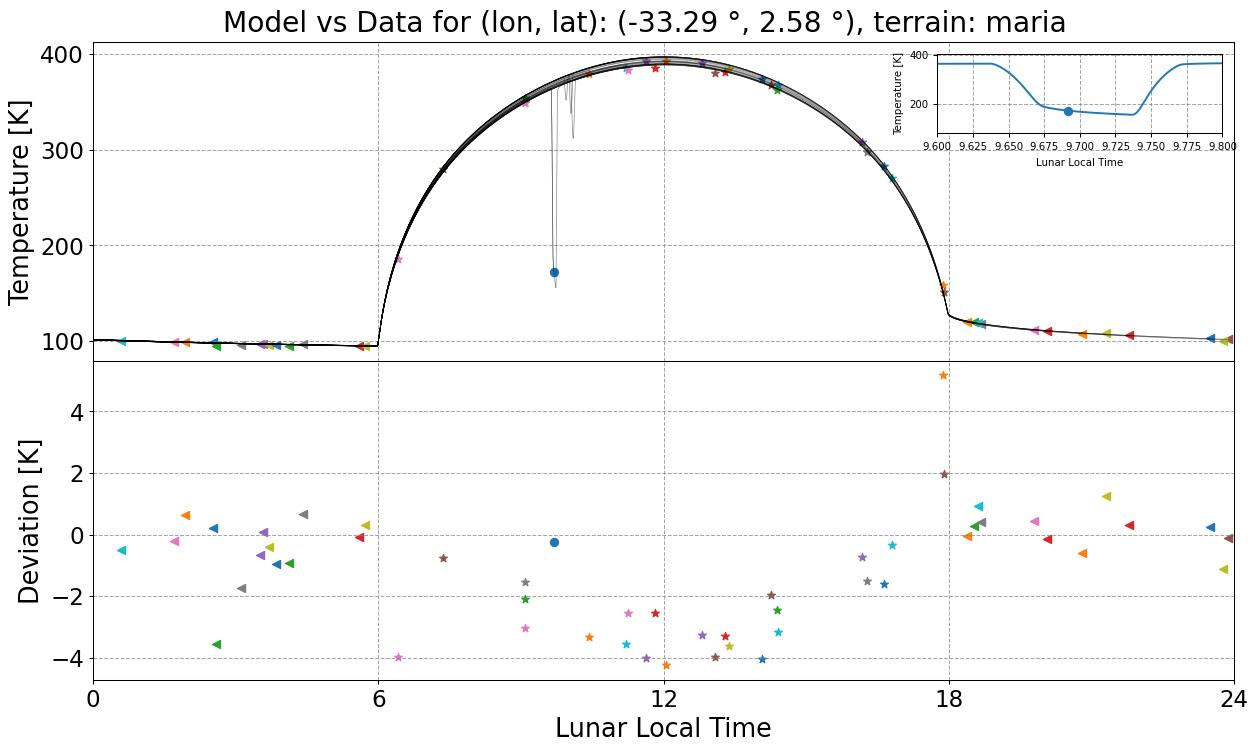
Figure 1: Comparison of the thermal model with the Diviner data for a location in the maria near the equator. The top panel shows the available Diviner measurements for this location between 2009-12-01 and 2024-06-01 on top of their respective simulated diurnal curves. Nighttime data are marked with triangles, daytime data with asterisks. The eclipse event on the morning side is marked with a circle and shown in the cutout in the top right corner. The temperature drops by ~200 K for a short duration and then rises quickly to continue the ascending curve of the morning side. A drop in temperature without a measurement means that the location was not in the field of view of Diviner during the eclipse, instead it is part of the diurnal curve of another data point. The bottom panel shows the difference between model and data with χ2 = 1.6 K.


References:

Paige et al. (2010), Space Sci. Rev., 150(1-4).

Bandfield et al. (2011), JGR, 116(12).

Hayne et al. (2017), JGR, 122(12).

Bürger et al. (2024), JGR, 129(3).

How to cite: Langermann, L., Bürger, J., Hayne, P. O., Delbo, M., and Blum, J.: Refining a Thermophysical Model of the Lunar Surface using Eclipses, EPSC-DPS Joint Meeting 2025, Helsinki, Finland, 7–13 Sep 2025, EPSC-DPS2025-1060, https://doi.org/10.5194/epsc-dps2025-1060, 2025.