MITM19 | Apophis T-4 years: preparing for a once in a lifetime opportunity for planetary defense and science

MITM19

Apophis T-4 years: preparing for a once in a lifetime opportunity for planetary defense and science
Co-organized by SB
Conveners: Patrick Michel, Monica Lazzarin | Co-conveners: Naomi Murdoch, Michael Küppers
Orals MON-OB4
| Mon, 08 Sep, 14:00–16:00 (EEST)
 
Room Uranus (Helsinki Hall)
Posters MON-POS
| Attendance Mon, 08 Sep, 18:00–19:30 (EEST) | Display Mon, 08 Sep, 08:30–19:30
 
Finlandia Hall foyer, F126–135
Mon, 14:00
Mon, 18:00
Apophis T-4 years: preparing for a once in a lifetime opportunity for planetary defense and science

Session assets

Orals: Mon, 8 Sep, 14:00–16:00 | Room Uranus (Helsinki Hall)

Chairpersons: Monica Lazzarin, Patrick Michel
14:00–14:12
|
EPSC-DPS2025-806
|
On-site presentation
Monica Lazzarin, Patrick Michel, Michael Kueppers, Simon Green, Paolo Tortora, Stephan Ulamec, Jean Baptiste Vincent, Paul Abell, Seiji Sugita, and Paolo Martino

Introduction

The ESA RAMSES (Rapid Apophis Mission for SpacE Safety) mission is designed to rendezvous with the Potentially Hazardous Asteroid (99942) Apophis prior to its extremely close approach to Earth on April 13, 2029, at a distance of about 30000 km, below that of geostationary satellites. The mission is part of ESA's Space Safety Programme and aims to characterize Apophis before, during, and after its encounter with Earth, with the goal of assessing the asteroid's response to terrestrial tidal forces. RAMSES builds on the heritage of ESA’s Hera mission [1] and will include a main spacecraft and two CubeSats. The mission is scheduled for launch in spring 2028, with a direct trajectory enabling arrival at Apophis two months prior the closest approach. Its development is ongoing while the formal approval has to wait for the ESA Council at Ministerial Level (CMIN25) in November 2025.

ESA RAMSES mission logo

Scientific Objectives

RAMSES targets fundamental planetary defense and asteroid science questions. Its primary objectives are to determine the dynamical and physical state of Apophis prior, during and after Earth encounter. These include determining the asteroid’s orbit, spin state, shape, surface and internal properties. Post encounter observations will refine the asteroid’s orientation and rotation modes to better than 1% for the dominant component, and within 10% for secondary rotation components. RAMSES will perform high-resolution global imaging (≤10 cm/pixel) before and after the encounter to identify local surface movements, landslides, or morphological changes. Radio science will measure small-scale deformations. The mission will also explore whether Apophis undergoes internal restructuring as a result of tidal stress, through interior probing by a low-frequency radar and Radio Science which also measure the internal heterogeneity and porosity. Furthermore a landing CubeSat equipped with a seismometer, gravimeter, and magnetometer will provide, for the first time, seismic and magnetic measurements on an asteroid. Ramses aims to detect structural heterogeneities down to meter scales and determine whether Apophis is a rubble pile, contact binaty, fractured monolitth or other complex structure. RAMSES includes TIRI, a thermal infrared imager, led by JAXA and based on heritage from Hera, to map temperature distribution and estimate thermal inertia. These measurements are key to understanding  Yarkovsky-related orbital evolution and contribute to the assessment of post-encounter changes. The combination of imaging, radio science, and in-situ measurements will constrain Apophis’ bulk density, internal heterogeneity, and porosity. The possible presence of dust clouds or levitated dust particles during the encounter, potentially triggered by Earth's tidal forces or interaction with its magnetosphere, will be monitored using high-resolution imagery and a plasma instrument. This may provide new insight into space weathering processes and surface refreshing mechanisms.

Mission Architecture and Instrumentation

RAMSES is derived from the design of ESA’s Hera spacecraft [1], adapted for a direct transfer trajectory to Apophis. The spacecraft will operate in close proximity to Apophis throughout the Earth encounter phase. The core payloads comprise, as in Hera, two Asteroid Framing Cameras and the Radio Science experiment (for mass, gravity and tidal deformation measurements). Opportunity payloads are the thermal infrared camera TIRI (from JAXA) with Hera heritage and some new payloads selected by ESA in march 2025: a visible–near-infrared  spectral camera, CHANCES and a visible–near-infrared hyperspectral imager, HAMLET,  for mineralogical and compositional mapping. Two 6U-XL CubeSats will be included in the mothercraft: a Lander CubeSat equipped with a seismometer, gravimeter, and magnetometer. It will attempt surface landing before the flyby to record in-situ data during tidal stress; an Orbiter CubeSat that will carry a low-frequency radar for internal structure probing and the VISTA instrument for dust analysis. The two CubeSats will be released prior to Earth close approach and will operate autonomously, communicating with the main spacecraft acting as a relay with an Inter-Satellite Link that will also contribute to the asteroid gravity field determination. The lander CubeSat represents a milestone, potentially enabling the first seismic detection on an asteroid.

RAMSES is part of a broader international effort to study Apophis during its 2029 close approach. It is expected to arrive after a possible flyby by JAXA’s DESTINY+ mission and before NASA’s OSIRIS-APEX, which will investigate long term post-encounter evolution. The synergy between those missions will provide a temporal baseline for observations, allowing pre-, peri-, and post-encounter characterization of Apophis by multiple space agencies.

Conclusion

RAMSES will be the first mission to observe in real-time the geological and dynamical response of an asteroid to natural tidal forces from a planetary encounter. It will provide unique scientific data on asteroid structure, mechanical properties, composition and space weathering processes, while also supporting ESA’s planetary defense roadmap. Moreover, while asteroid Apophis makes its exceptionally close approach to Earth and Ramses will feed in live real images of the asteroid, more than 2 billion people will have the rare opportunity to observe it with the naked eye. This will further enhance the impact of the United Nations' designation of 2029 as the International Year of Asteroid Awareness and Planetary Defense.

Acknowledgments: The authors acknowledge support from ESA, ASI, CNES, DLR, JAXA, NASA.

References: [1] Michel P. et al. (2022) Planet. Sp. Sci. 3, 160-180. [2] D. DellaGiustina et al. (2023) Planet. Sp. Sci., 4, 198-219   

How to cite: Lazzarin, M., Michel, P., Kueppers, M., Green, S., Tortora, P., Ulamec, S., Vincent, J. B., Abell, P., Sugita, S., and Martino, P.: RAMSES: A European rendezvous mission to study tidal effects on the Near-Earth Asteroid Apophis during its 2029 close encounter with the Earth, EPSC-DPS Joint Meeting 2025, Helsinki, Finland, 7–13 Sep 2025, EPSC-DPS2025-806, https://doi.org/10.5194/epsc-dps2025-806, 2025.

14:12–14:24
|
EPSC-DPS2025-187
|
On-site presentation
Michael C. Nolan, Daniella N. DellaGiustina, Anjani T. Polit, Dathon R. Golish, Michael C. Moreau, Amy A. Simon, and Scott D. Guzewich

Introduction: NASA’s Origins, Spectral Interpretation, Resource Identification, and Security– Regolith Explorer (OSIRIS–REx) mission characterized and collected a sample from asteroid (101955) Bennu [1,2]. Twenty minutes after releasing its sample return capsule to Earth’s surface on September 24, 2023, the spacecraft diverted into an orbit around the Sun that allows for subsequent close Earth flybys. On this trajectory, the spacecraft will approach Earth alongside asteroid (99942) Apophis in 2029, enabling a follow-on mission to another asteroid with the same unique capabilities that led to OSIRIS- REx’s groundbreaking scientific results: OSIRIS– Apophis Explorer, or “APEX” [3].

Apophis will be well placed for an extensive ground-based telescopic campaign ahead of its Earth encounter on April 13, 2029, but observing conditions degrade just hours after the closest approach as the asteroid passes within 20° of the Sun. Immediate aftereffects of the tidal interaction will be impossible to examine from the ground—but will be distantly witnessed by APEX.

Figure 1. View of the APEX spacecraft, Earth, and Apophis trajectories around the Sun during the cruise phase. APEX will use a series of Earth gravity assists (EGAs) to approach Apophis. APEX will follow the right-hand small ellipse 3 times around the Sun over 2 years. EGA3 alters APEX’s orbit to the larger yellow path, which brings the intersection point with Earth’s orbit to the left side of the figure after 1.5 orbits. EGA4 shifts the orbit to the left-hand small ellipse for 3 orbits over 2 Earth years. About one hour after Apophis’ close approach to Earth, EGA5 puts APEX on a nearly identical trajectory as Apophis.


The Journey to Apophis: The Earth divert maneuver performed just after release of the OSIRIS- REx sample return capsule, and just before the mission’s second Earth gravity assist (EGA2), put the spacecraft on an eccentric orbit that passes to within 0.5 au of the Sun at perihelion (Fig. 1)—much closer to the Sun than the 0.77 au limit analyzed for the OSIRIS-REx mission. To mitigate this, the spacecraft adopts a “fig- leaf” attitude in which the solar arrays shadow critical spacecraft components when the spacecraft is within 0.65 au of the Sun (Fig. 2). As of January 2025, OSIRIS- APEX has successfully completed two of six close perihelion passages, and all instruments and spacecraft systems continue to operate nominally.

Figure 2. The APEX spacecraft in the fig-leaf attitude as viewed from the Sun. The solar panels shade critical spacecraft components.


Apophis Arrival and Proximity Operations: APEX will begin observing Apophis as a point source by April 2, 2029, at a distance of 5×10⁶ km. Orbital mechanics prohibit an earlier rendezvous. APEX will observe Apophis from 50,000 km away during its close Earth encounter on April 13 and capture the evolution of its spin state in real time, revealing the consequences of a near-Earth object undergoing tidal disturbance by a planet (see presentation by Adam et al., this meeting) and continue observing as Apophis grows in its field of view. APEX will arrive at Apophis and begin its detailed study on June 5, 2029. Observations will uncover any signs of mass wasting that the tidal encounter triggered, revealing centimeter-scale topography via lidar and millimeter-scale morphology via images (Fig. 3),

Figure 3. The APEX spacecraft was designed to obtain global high-spatial-resolution imagery of small asteroids.

Chronicling the tidal encounter is only the beginning of APEX’s journey with Apophis. Having already challenged our fundamental understanding of carbonaceous (C-complex) asteroids during its exploration of Bennu, the spacecraft instrument suite will
provide first-of-its-kind high-resolution data of a stony (S-complex) asteroid—dramatically advancing our knowledge of this asteroid class and its connection to the meteorite collection. Global spectral mapping at meter scales and across a wide range of wavelengths (0.4–100 μm) will determine the composition of Apophis and identify any volatiles on its surface. Optical and radiometric tracking data will reveal Apophis’ mass and structure. We will also search for signatures of mass shedding, whether due to the tidal encounter or an episodic process like that observed at Bennu. After 15 months of orbital operations, APEX will perform the Spacecraft Thruster Investigation of Regolith (STIR), mobilizing surface material by means of its backaway thrusters, as demonstrated at Bennu. Observations during and after excavation will provide otherwise inaccessible insight into space weathering and the surface strength of stony asteroids.

Although scientific discovery is APEX’s prime motivator, Apophis’ bulk structure and surface strength have critical implications for planetary defense. As an S-complex object, Apophis represents the most common class of potentially hazardous asteroids, and knowledge of its properties can inform mitigation strategies. Monitoring Apophis after Earth approach provides the first opportunity to witness any change in an asteroid’s Yarkovsky force—a nongravitational effect that influences an asteroid’s likelihood of striking Earth.

Acknowledgement: The OSIRIS-APEX mission is supported by NASA Contract NNM10AA11C.

References:

[1] Lauretta, D.S., DellaGiustina, D.N. et al. (2019). Nature 568, 55–60, doi:10.1038/s41586-019-1033-6.

[2] Lauretta, D. S. et al. (2022). Science 377, 285–291, doi:10.1126/science.abm1018.

[3] DellaGiustina, D. N. et al. (2023). PSJ 4, 198, doi:10.3847/PSJ/acf75e.

How to cite: Nolan, M. C., DellaGiustina, D. N., Polit, A. T., Golish, D. R., Moreau, M. C., Simon, A. A., and Guzewich, S. D.: OSIRIS-APEX: NASA's Apophis Explorer Mission, EPSC-DPS Joint Meeting 2025, Helsinki, Finland, 7–13 Sep 2025, EPSC-DPS2025-187, https://doi.org/10.5194/epsc-dps2025-187, 2025.

14:24–14:36
|
EPSC-DPS2025-650
|
On-site presentation
Jian-Yang Li, Jiangchuan Huang, Wing-Huen Ip, Yang Yu, and Xian Shi

The close encounter of asteroid (99942) Apophis with Earth on 2029 April 13 represents a once-in-thousands-of-years opportunity to study the effects of tidal interaction from a planet on the evolution of an asteroid. We propose to use the CROWN technology pathfinder spacecraft to perform a flyby exploration of Apophis. CROWN is a mission concept for a space-based asteroid survey that will deploy a constellation of spacecraft in a Venus-like heliocentric orbit to substantially improve the searching and tracking efficiencies for near-Earth asteroids (NEAs). A technology pathfinder mission is planned to send a spacecraft to the Sun-Earth L1 halo orbit to demonstrate the technical readiness of a space-based survey telescope for NEAs and to gain experience for the design and operations of the CROWN mission. The pathfinder spacecraft will be launched to L1 halo orbit, testing the space-based NEA survey, and waiting for Apophis to arrive. While in L1, the camera is expected to detect Apophis over 100 days before it encounters Earth, and will gather photometric data of the asteroid.  The spacecraft will then drift out of the halo orbit to perform a flyby of Apophis on April 16 at 10:45 UT, about 2.5 days after its Earth encounter. The scientific goals of the CROWN/Apophis mission are to measure the basic properties of Apophis and search for the signatures of the tidal interaction with Earth during the encounter. The pathfinder spacecraft is equipped with a panchromatic visible camera and a visible-near-infrared spectrometer. It will also carry a cubesat to be separated before the flyby to perform intersatellite ranging and Doppler measurements during the flyby to detect the gravitational field of Apophis for a mass estimate. Such measurements, if successful, will be the first mass measurement of a sub-km-sized asteroid from a flyby, and will demonstrate such a technology that can be widely used in future NEA flybys for science explorations and resource utilization reconnaissance. The panchromatic camera will continuously collect images of Apophis during the flyby and is expected to reach sub-meter resolution near the closest approach. The spectrometer will also continuously collect data during the flyby. With the observations and intersatellite ranging and Doppler measurements, we expect to measure the density and probably density distribution of Apophis, determine surface composition, constrain the rotational status of Apophis before and after the encounter, and observe potential mass movement on the surface of Apophis during the Earth encounter. A dust detector is also under consideration to search for potential dust activity of Apophis and the interaction with the terrestrial magnetosphere during the Earth encounter. The CROWN/Apophis mission is expected to contribute to the coordinated effort from around the globe to study Apophis in the 2029 opportunity, and to demonstrate the capability of performing fast-response reconnaissance of potential hazardous asteroids in the future.

How to cite: Li, J.-Y., Huang, J., Ip, W.-H., Yu, Y., and Shi, X.: CROWN/Apophis Mission, EPSC-DPS Joint Meeting 2025, Helsinki, Finland, 7–13 Sep 2025, EPSC-DPS2025-650, https://doi.org/10.5194/epsc-dps2025-650, 2025.

14:36–14:48
|
EPSC-DPS2025-1299
|
ECP
|
On-site presentation
Jonathan Männel, Tobias Herbst, Hakan Kayal, Jonathan Klesse, and Tobias Neumann

Introduction: 

The close flyby of asteroid (99942) Apophis in April 2029, at a distance of about 32,000 kilometers from Earth’s surface, represents a rare and scientifically highly valuable event. This close encounter provides a unique opportunity to investigate tidal effects on a small Solar System body and to characterize its physical and dynamical properties, advancing both planetary defense efforts and planetary science.

Since its discovery in 2004, numerous mission concepts have been proposed to investigate (99942) Apophis. To date, however, the only confirmed mission is NASA’s OSIRIS-APEX, an extended phase of the OSIRIS-REx mission. Though, the spacecraft will not arrive until shortly after the asteroid’s closest approach to Earth (ECA). In October 2024, the European Space Agency (ESA) approved funding for preparatory activities for its RAMSES mission, a proposed rendezvous mission intended to conduct a comprehensive characterization of Apophis both before and after the ECA. A final decision on full mission funding is expected by November 2025. According to presentations at the Apophis T–4 Workshop held in Tokyo in April 2025, the DESTINY+ mission is also expected to conduct a flyby of Apophis in February 2029. Additionally, eight further mission concepts are currently being explored by various international actors, though none of them have yet secured funding.

This contribution presents a low-cost small satellite mission concept currently being studied at the University of Wuerzburg. The concept involves deploying two identical CubeSats into a highly elliptical Earth orbit to observe Apophis during its close approach on 13 April 2029. In addition to providing imagery and supporting scientific data on Apophis, the mission is designed to demonstrate key small-satellite technologies relevant for future deep-space flybys with small satellites and to study Earth’s magnetosphere and radiation belts.

Mission Scenario: 

The Interceptor mission comprises two identical 16U CubeSats that will perform a flyby maneuver with (99942) Apophis approximately 90 minutes before the ECA at an altitude of approximately 47,000 km above Earth’s surface within the equatorial plane. The primary scientific objective is to collect visual data of the asteroid. Furthermore, by accommodating magnetometers as secondary payloads, the mission will monitor magnetic field variations and the radiation environment within the upper and lower Van Allen radiation belts. Overall, the purpose of this mission is the demonstration of a German, deep-space-capable small satellite architecture with complex payload operations suitable for future asteroid reconnaissance and other interplanetary missions. To allow for initial orbit adjustments and in-orbit system testing, the target launch date is December 2028, utilizing a geostationary transfer orbit (GTO) rideshare to minimize launch costs.

Apophis Flyby Experiment

The actual flyby will be conducted as shown in Figure 1: The Interceptor satellites (Int1, Int2) will pass Apophis at a minimum flyby distance of 25 km. Due to the short observation window, expected to last on the order of one minute, and the high relative velocity (~8 km/s), multi-angle high-resolution optical imaging with a target surface resolution of about one meter is foreseen. These observations will allow constraining the asteroid’s spin state, shape, topography, albedo variations, and surface texture. Additionally, magnetometer measurements will be conducted during the flyby to provide reference data on the local magnetic field environment in the vicinity of Apophis. Efforts are being made to downlink an image sequence to ground stations shortly after the flyby.

Van-Allen Belt Experiments

Following the Apophis flyby, the mission is expected to continue for approximately one year in a highly elliptical Earth orbit. While magnetic field measurements are planned to be performed continuously, the second half of the mission is specifically dedicated to focused Van-Allen Belt experiments. The planned orbit (500 × 47,000 km) allows for repeated sampling of key regions of Earth's magnetosphere, including the inner and outer Van Allen belts, the plasmasphere, and the plasmapause transition zone, since it will traverse L-shells ranging from approximately 1.1 to 7.4 RE, covering regions with strong spatial gradients in particle density and magnetic field strength. Figure 1 provides a representative distribution of orbital dwell times across these regions, highlighting the mission’s sampling potential. These measurements will help to close an observational gap after the end of the Van Allen Probes and Cluster missions and will enable the identification of features such as the plasmapause location, magnetic discontinuities, and potential wave activity.


Conclusion

By combining a timely flyby of (99942) Apophis with extended magnetospheric monitoring and the demonstration of key technologies, the Interceptor mission aims to provide valuable scientific return at minimal cost and supporting both planetary science objectives and the development of future deep-space small satellite missions.

Development Activities: With the completion of the pre-Phase A analysis, funding for Phase A has been approved. The mission analysis is currently ongoing to ensure a successful Preliminary Requirements Review (PRR). The work will be conducted at the Interdisciplinary Research Center for Extraterrestrial Studies (IFEX) at the Julius-Maximilians-University Wuerzburg.

Acknowledgement: The work on this mission is funded by the German Aerospace Center (DLR) based on a decision of the German Bundestag (Grant No. 50OO2413).


How to cite: Männel, J., Herbst, T., Kayal, H., Klesse, J., and Neumann, T.: Updates on the Apophis Interceptor Mission, EPSC-DPS Joint Meeting 2025, Helsinki, Finland, 7–13 Sep 2025, EPSC-DPS2025-1299, https://doi.org/10.5194/epsc-dps2025-1299, 2025.

14:48–15:00
|
EPSC-DPS2025-1759
|
On-site presentation
The Caltech Mission to Characterize Apophis
(withdrawn)
Carol A. Raymond, Jose E. Andrade, Philippe Adell, Shyam Baskaran, Art Chmielewski, Adriana Daca, Lorraine Fesq, Mark Haynes, and Alain Herique
15:00–15:12
|
EPSC-DPS2025-1114
|
On-site presentation
Cristina Thomas, Vishnu Reddy, Michael Kelley, James Bauer, Davide Farnocchia, Elizabeth Warner, and Tony Farnham

Near-Earth asteroid (NEA) 99942 Apophis is interesting because it will make an exceptionally close approach of the Earth in 2029 at a geocentric distance of 38,000 km making it the closest known flyby by a large NEA. The International Asteroid Warning Network (IAWN) conducts campaigns to test the operational readiness of the global coalition of observers, modelers, and decision makers to assess a potential NEO impact hazard.

In preparation for the 2029 close approach of Apophis, the IAWN is planning a two-phased campaign: a pre-encounter large-aperture and spacecraft phase in 2027 and 2028 that will be focused on NEO science, and a 2029 close approach phase focused on planetary defense with citizen science participants. Due to Apophis' relatively faint visual magnitude and short observing windows, the 2027 and 2028 opportunities will concentrate on refining its rotation state and gathering additional visible spectra. The IAWN will coordinate the large-aperture and space telescopes observing efforts. Observers will self-organize but IAWN will advocate for their telescope time, if requested. Scientific results from these efforts will be published independently by respective PIs with coordination from the IAWN. The 2029 close approach will be the primary focus for more direct IAWN efforts. Some of the campaign themes we are exploring include: a traditional IAWN campaign treating Apophis as a newly-discovered NEA, which would be similar to our 2021 Apophis campaign; enabling participation of small telescopes (<1 meter aperture) like those aligned with the proposed International Year of Planetary Defense; better coordination with Planetary Defense Conference exercise if there is one planned around Apophis in 2029; and integrating results from spacecraft rendezvous missions planned at or near the Apophis closest approach.

How to cite: Thomas, C., Reddy, V., Kelley, M., Bauer, J., Farnocchia, D., Warner, E., and Farnham, T.: Near-Future Plans for IAWN Apophis Observing Campaigns, EPSC-DPS Joint Meeting 2025, Helsinki, Finland, 7–13 Sep 2025, EPSC-DPS2025-1114, https://doi.org/10.5194/epsc-dps2025-1114, 2025.

15:12–15:24
|
EPSC-DPS2025-1301
|
ECP
|
On-site presentation
Joseph DeMartini, Adriana Daca, Derek Richardson, Naomi Murdoch, and Ronald Ballouz

The upcoming close encounter of asteroid 99942 Apophis with Earth in 2029 presents a once-in-7000-years opportunity to study the dynamics, bulk properties, and interior structure of a potential rubble-pile asteroid as it passes deeply through Earth’s gravitational field. Numerical modeling—including via Discrete Element Methods (DEMs)—has helped to develop our understanding of the dynamics and physical outcomes of the tidal encounter between Apophis and Earth, including the expected change in the bulk shape and spin of the body, and predictions of potentially measurable surface and seismic outcomes due to the short period of natural tidal forcing. These models have helped to design missions to Apophis to ensure that we can make the most of the natural experiment that the Apophis encounter provides. 


In this talk, we will present new and ongoing DEM models of the full Apophis-Earth close encounter, making use of recent developments in modeling realistic particle shapes with both a “glued-sphere” approach and a level-set DEM (LSDEM) approach in the parallelized N-body gravity and soft-sphere DEM (SSDEM) code PKDGRAV. The glued-sphere method provides simpler spherical gravity and collision detection calculations but requires smaller timesteps and stiffer constituent particles. The level-set method provides a more realistic shape representation at the cost of increased memory requirements and the loss of precise gravitational torques (as we do not calculate polyhedral gravity). Here, we compare the results and performance of both techniques, and how these methods compare with previous spheres-only DEM models to get a clearer picture of the deformation, spin change, and seismic activity induced in Apophis during the close approach.


For the simulations presented here, we use PKDGRAV to model interparticle gravitational and contact forces between discrete, spherical particles. The SSDEM in PKDGRAV allows particles to slightly interpenetrate at the point of contact, using a Hooke’s law restoring spring force to model the material’s stiffness and apply normal and tangential damping forces, interparticle friction, and cohesive forces for particles in contact. The LSDEM defines nodes on the boundaries of the (irregularly shaped) particles, defined by the mathematical constructs of “level sets” to determine contours of distance from the true particle boundary, with an increasing number of nodes per particle improving the shape approximation. LSDEM particles are soft, as in SSDEM: when they contact, they are allowed to interpenetrate, and the restoring force is determined by the depth of penetration at each overlapping node on the particle boundary.


Modeling with irregular particle shapes (rather than independent spheres) allows us to increase the macroporosity of the resultant rubble pile while also increasing the body’s shear strength. This occurs naturally when packing irregular shapes due to the void spaces created by interlocking grains, and the physical strength of those interlocked structures, which cannot be replicated by spheres alone. The bonded aggregate SSDEM approach and the LSDEM approach allow us to create a high macroporosity regolith body—like those investigated in recent missions to rubble-pile asteroids Bennu, Ryugu, and Itokawa—that is also more resistant to reshaping or disaggregation than previous spheres-only models. 


Following the method of our previously published work, we represent Earth as a single, rigid sphere and Apophis as a cohesionless, self-gravitating, granular aggregate of irregular boulders several meters in radius. We also model the asteroid with different interior structure profiles: contact-binary; large single-core (ellipsoidal); and rubble throughout. We use the best-fit, radar-derived shape model to carve the appropriate shape of Apophis from a random cloud of constituents allowed to collapse in free space under self-gravity, subject only to gravitational and contact forces. 


The body is then placed under rotation. The primary source of uncertainty in the 2029 Apophis-Earth encounter is the orientation of Apophis at the time of close approach. In one subset of our comparative simulations, we align the spin axis with the intermediate body axis of Apophis, and model the encounter in the plane defined with a normal vector parallel to that spin axis. In this way, we can construct encounters with either the long axis or the short axis of Apophis directly aligned with Earth at perigee, which should bracket the expected deformation as the strongest and weakest encounter geometries, respectively. For the models investigating change in rotation state and seismic influence, we implement a spin axis chosen from the uncertainties in the current lightcurve data. In all cases, we choose the spin frequency to match the averaged effective spin period for its tumbling state and do not model the tumbling motion. The body is allowed to settle under its rotation until residual particle speeds in the body frame are much less than 1% of their expected peak values during the encounter simulations.


The encounters last for 10 simulated hours: ~5 h before closest approach and ~5 h after, in the non-rotating frame of the center of mass of Apophis. The lead time ensures there are no strong jolts from the sudden addition of the Earth’s gravity. The trailing time allows the body to settle into its post-encounter equilibrium state after Earth’s gravitational effects have diminished.


In addition to updates on the prior SSDEM results, and comparisons between different constituent particle geometries and interior structures, we have carried out an SSDEM analysis of the seismicity on Apophis in a high-resolution (time and particle number; relative to the newest set of models) encounter simulation. Each PKDGRAV particle exhibiting elastic motion can be used as a seismic station in our models, with velocities measured at every timestep. By finding peaks in velocity magnitudes, we identify seismic sources in the body. Our analysis indicates that the quaking on Apophis will be shallow and that most sources begin ~2 h after closest approach and persist for a period of ~2 h. Our results indicate that the seismic signals in our models would be measurable by an in-situ seismometer (like the one described in the abstract by Murdoch et al.) taking measurements on Apophis during and after the close Earth encounter.

How to cite: DeMartini, J., Daca, A., Richardson, D., Murdoch, N., and Ballouz, R.: Influence of Particle Shape in Discrete Modeling of Apophis’ 2029 Close Earth Encounter., EPSC-DPS Joint Meeting 2025, Helsinki, Finland, 7–13 Sep 2025, EPSC-DPS2025-1301, https://doi.org/10.5194/epsc-dps2025-1301, 2025.

15:24–15:36
|
EPSC-DPS2025-928
|
ECP
|
On-site presentation
Lukas Bannemann, Philipp-Marius Kost, Carsten Güttler, and Bastian Gundlach

Introduction

On 13 April 2029, asteroid (99942) Apophis will fly by Earth with a distance of approximately 38,000 km. Several authors suggest that the gravity field of Earth may lead to surface reshaping, e.g. avalanches [1,2,3]. These would be observed through planned space missions, providing insights into the granular dynamics of small rubble-piles asteroids. A key parameter for the models above is the so-called static angle of repose, which describes the angle of a slope that must be exceeded to start an avalanche [4].

To provide ground truth on the angle of repose under reduced gravity, an experimental setup was designed to determine the static angle of repose in vacuum and under reduced gravity. For this, the “Vacuum Angle of Repose Determination Experiment under Reduced Gravity” (VADER) was based on the concept of a rotating tumbler experiment. In these experiments, a granular material is slowly rotated in the discrete flow regime, which leads to the start of an avalanche, when the static angle of repose is exceeded. As a tumbler we use a volume of 20 mm diameter and 5 mm depth inside a rotating vacuum chamber with a glass blanking flange.

Laboratory Experiments

First successful investigations on the static angle of repose of WF 34 quartz sand were carried out in a laboratory environment under Earth gravity at our laboratory. Two series of laboratory experiments were performed under vacuum and ambient pressure conditions. Both series of experiments were performed at sample chamber rotation speeds between 0.2 and 6.9 rpm. For all vacuum experiments, the pressure after each experiment was always below 0.1hPa.

Results showed the static angle of repose at low tumbler rotation speeds to be similar in vacuum and under ambient pressure, despite the expected influence of humidity [5]. For laboratory experiments in vacuum, we find an angle of repose ϑS = 41.3±1.2° at the lowest rotation speed. For higher rotation speed and increasing duration of an experiment run, it was revealed that electrostatic charging of the sample affected the results. Sand grains were sticking to the glass blanking flange of the tumbler and the angle of repose increased. The experiments were therefore kept short and slow enough to avoid an electrostatic influence.

Drop Tower Experiments

During a first drop tower campaign in September 2024, nine drop experiments with the same tumbler setup were performed at the Bremen Drop Tower of the Center for Applied Space Technology and Microgravity (ZARM). The choice of material and the maximum vacuum gas pressure were identical to the laboratory experiments above. The static angle of repose was determined under different gravitational accelerations g by mounting the tumbler onto a rotating centrifuge to simulate accelerations between 0.10 and 0.31 gE.

After the release of the capsule (change of gravity direction, reorientation of granular sample) the tumbler was rotated at a reasonably high speed for up to 0.5 s. The practical purpose of this was to arrange the sample at an angle close to its angle of repose. After this phase, the tumbler speed was either reduced (procedure P1) or briefly stopped and restarted at a reduced speed (procedure P2) for the remaining time of the experiment. The rotation speed for P1 was small enough to remain in the discrete flow regime. In contrary, the rotation speed in P2 was allowed to be higher, because the intention was only to observe the start of an avalanche from a static state. The latter allowed experiments down to a smaller gravitational acceleration. Due to the short experiment time in the Bremen Drop Tower, there were no signs nor expected influence of electrostatic charging (sticking grains).

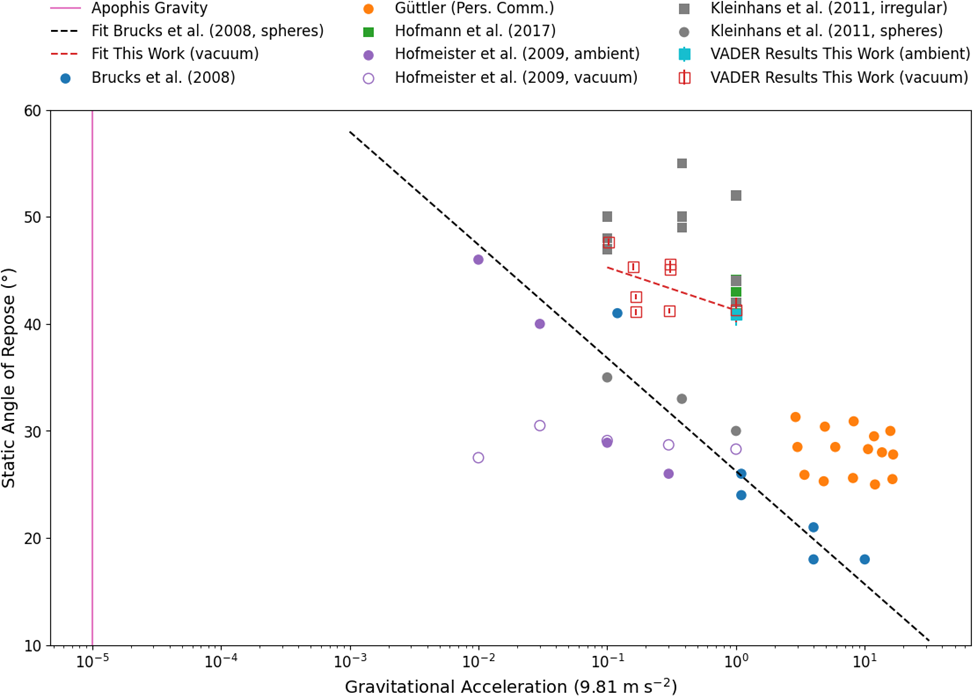
Experimental results under varying gravity conditions (g/gE) are shown as red and cyan squares in Fig. 1. Approximating the data with a trend line ϑS = -4.02 x log10(g/gE) + 41.26 (Eq. 1), a slight formal trend of an increased static angle of repose ϑS under reduced gravity was observed. Thus, these experiments expand on similar trends that were observed in other experiments (other data in Fig. 1). Consistent with early experiments [4,6], all experiments with irregular grains show static angles of repose that are larger than assumed in numerical models predicting avalanches on Apophis [1,2,3].

Figure 1: The static angle of repose of experimental data in the literature in comparison to our new data (red and cyan squares).

Perspective

The goal for future investigations lies in the expansion of the number of experiments and therefore datapoints. The current experimental results described above are only of small number and must be increased to get a better extrapolation to Apophis gravity and the 2029 Apophis-Earth encounter. We aim to increase the relative effect of cohesive forces (Bond number, [9]). Performing experiments at lower gravitational accelerations than what is presented above is anticipated to be achieved by procedure P2.

Acknowledgements

We acknowledge financial support by the DLR Agency (50WM2544).

References

[1] G. Noiset et al., 2022. EPSC 2022-1159. https://doi.org/10.5194/epsc2022-1159

[2] Ballouz et al., 2024. The Planetary Science Journal, 5 (11), 251. https://doi.org/10.3847/PSJ/ad84f2

[3] Kim et al., 2023. MNRAS, 520 (3), 3405-3415. https://doi.org/10.1093/mnras/stad351

[4] M.G. Kleinhans et al., 2011. J. Geophys. Res. 116, E11. https://doi.org/10.1029/2011JE003865

[5] Fraysse et al., 1999. Eur. Phys. J. B, 11 (4), 615–619. https://doi.org/10.1007/s100510051189

[6] M. Hofmann et al., 2017. MNRAS 469. https://doi.org/10.1093/mnras/stx1190

[7] A. Brucks et al., 2008. Earth & Space 2008. https://doi.org/10.1061/40988(323)9

[8] P.G. Hofmeister et al., 2009. AIP Conf. Proc. 1145. https://doi.org/10.1063/1.3180028

[9] Elekes and Parteli (2021). PNAS, 118 (38), e2107965118. https://doi.org/10.1073/pnas.2107965118

How to cite: Bannemann, L., Kost, P.-M., Güttler, C., and Gundlach, B.: Static angle of repose on asteroid (99942) Apophis: first results of a microgravity vacuum experiment, EPSC-DPS Joint Meeting 2025, Helsinki, Finland, 7–13 Sep 2025, EPSC-DPS2025-928, https://doi.org/10.5194/epsc-dps2025-928, 2025.

15:36–15:48
|
EPSC-DPS2025-2077
|
Virtual presentation
Lena Okajima, Seiji Sugita, Hiromune Ishii, Shogo Tachibana, and Patrick Michel

Introduction: Asteroid (99942) Apophis’ Earth flyby in 2029 presents a unique opportunity to investigate how its surface material behaves under gravitational and external force influences. The ExLabs-led ApophisExL mission integrates multiple scientific payloads to analyze Apophis' physical and compositional evolution. ALE’s mass driver experiment contributes to this initiative by studying regolith displacement, impact physics, and surface material ejection in low-gravity conditions. Understanding how Apophis’ surface reacts to controlled impacts is crucial for planetary defense and asteroid resource utilization (ISRU). The ALE’s experiment, which aims at very low-speed impacts with no consequences on Apophis orbit, will provide essential data on impact dynamics, aiding future asteroid landing missions and planetary defense modeling.

ALE’s Background and Mission: ALE’s vision is” Anchor space into our culture to empower humankind to new endeavors.” ALE's mission is to "Make space closer. For all of us. Together.". Since 2011, ALE has developed artificial meteor technology, initially for space entertainment but increasingly for scientific applications. ALE’s expertise in controlled material release in space has expanded into atmospheric data collection, supporting climate research and re-entry modeling. ALE’s mission for this experiment is titled "ALE’s Low-Energy Multi-Impact Experiment (ALEMIE)". The experiment builds upon ALE’s artificial meteor technology, which involves the controlled release of metallic particles from satellites, mimicking natural meteors to create luminous trails in the atmosphere. The artificial meteor generation device (Ishius) used in this process has been modified for deployment aboard the ExLabs ApophisExL mission.

ApophisExL Mission and ALE’s Role: Apophis’ 2029 flyby will likely induce surface modifications due to tidal forces. The ApophisExL mission, led by ExLabs, incorporates multiple scientific payloads to monitor these changes. ALE contributes by deploying a mass driver system to conduct controlled very low speed impact experiments on Apophis’ surface.

The operational flow of ALE’s mission is as follows:

  • Selection of impact sites based on surface conditions observed by other missions.
  • Coordination with spacecraft orbital and attitude control to execute the impact experiment.
  • Observation of generated craters and internal structures using imaging instruments from collaborating missions.

ALE’s release mechanism is specifically designed to create small craters, with subsequent analysis conducted in collaboration with external observation instruments. The impact experiments are scheduled for post-Earth closest approach, aligning with other mission timelines. Given the importance of mission coordination, open discussions and adjustments with other Apophis space mission teams will be essential.

Mass Driver System Overview: ALE’s mass driver system leverages technology from its artificial meteor project. It is compact, lightweight, and designed for controlled impact experiments.

Experiment and Expected Outcomes: The mass driver experiment will (1) analyze regolith displacement and ejection patterns, (2) assess surface cohesion and regional variability, (3) validate non-contact sampling techniques, and (4) support planetary defense research.

With collaborative observations using high-speed cameras and spectrometric sensors, the experiment will capture real-time regolith motion and surface alterations. These insights are crucial for modeling asteroid evolution and supporting future asteroid deflection missions.

This study ensures the impact experiments do not alter Apophis' orbit, maintaining mission integrity while contributing to planetary defense and ISRU research. ALE’s mass driver experiment is an innovative application of artificial meteor technology, contributing to asteroid science and planetary defense [3].

Our findings support: Planetary defense (impact modeling and risk mitigation), Asteroid resource utilization (ISRU) (surface excavation and material characterization), Future deep-space exploration (asteroid landing and mission planning).

How to cite: Okajima, L., Sugita, S., Ishii, H., Tachibana, S., and Michel, P.:  ALE'S Mass Driver Experiment: Investigating Apophis Surface Dynamics for Planetary Defense and Resource Utilization  , EPSC-DPS Joint Meeting 2025, Helsinki, Finland, 7–13 Sep 2025, EPSC-DPS2025-2077, https://doi.org/10.5194/epsc-dps2025-2077, 2025.

15:48–16:00
|
EPSC-DPS2025-1188
|
ECP
|
Virtual presentation
Hee-Jae Lee, Myung-Jin Kim, Hong-Kyu Moon, and Young-Jun Choi and the on behalf of the Apophis Observation Team

We present refined physical properties of the potentially hazardous asteroid (99942) Apophis based on an extensive photometric and spectroscopic observing campaign during its 2021 apparition. The campaign, conducted from January to April 2021, involved 32 facilities in 16 countries and provided dense temporal coverage over 218 nights. Using the light curve inversion method for non-principal axis rotation, we derived an updated convex shape model and spin state. Spectroscopic observations confirm that Apophis generally exhibits spectral characteristics of the S-complex; however, rotational phase-dependent variations in the reflectance spectra show features ranging from Sq-type to Q-type, suggesting subtle surface heterogeneity. These spectral differences, observed across multiple rotational phases, may reflect local resurfacing events, inhomogeneous surface composition, differences in regolith particle size, or the nature of Apophis as a contact binary. Our results provide a constrained pre-encounter baseline for assessing potential surface changes after the 2029 Earth flyby. Updated model parameters and phase-resolved reflectance spectra are provided to serve as a reference for future observations during and after the planetary encounter.

How to cite: Lee, H.-J., Kim, M.-J., Moon, H.-K., and Choi, Y.-J. and the on behalf of the Apophis Observation Team: Refined physical properties of (99942) Apophis from the 2021 observation campaign, EPSC-DPS Joint Meeting 2025, Helsinki, Finland, 7–13 Sep 2025, EPSC-DPS2025-1188, https://doi.org/10.5194/epsc-dps2025-1188, 2025.

Posters: Mon, 8 Sep, 18:00–19:30 | Finlandia Hall foyer

Display time: Mon, 8 Sep, 08:30–19:30
Chairpersons: Monica Lazzarin, Michael Küppers, Naomi Murdoch
F126
|
EPSC-DPS2025-198
|
On-site presentation
Richard P. Binzel, Patrick Michel, Seiji Sugita, Brent Barbee, Julia de Leon, Michael Küppers, Monica Lazzarin, Naomi Murdoch, Michael Nolan, and Cristina Thomas

The solar system small bodies community, having a dedicated interest in the planetary defense science opportunity presented by the exceedingly rare natural event of the large (340-meter) asteroid Apophis safely passing within 32,000 km of Earth on 2029 April 13, held a two-day Workshop at the University of Tokyo, April 9-10, 2025.  This “Apophis T-4 Years” workshop was attended by more than 300 scientists and engineers (most in-person; others by virtual connection) representing 31 countries on 5 continents.  The current workshop is the culmination of a series of international workshops begun as virtual meetings, starting annually in 2020 at “Apophis T-9 years.” Over the course of two days for the Apophis T-4 Workshop, presentations included the DESTINY+ mission (Japan), the RAMSES mission (ESA), and the OSIRIS-APEX mission (NASA).  Additional spacecraft and instrument concepts were proposed and discussed.

Summarized here are the Findings and Recommendations reached collectively by the Workshop participants, drafted into their final form by the Science Organizing Committee whose names appear on this abstract. 

 FINDINGS

1)  With the United Nations declaring 2029 as the International Year of Asteroid Awareness and Planetary Defense, and as 330 Workshop participants from 31 countries and 5 continents (representing multiple space agencies as well as private space enterprises), we recognize that the entire world will be watching how we collectively respond to the knowledge opportunity for planetary defense presented by the safe but very close Earth passage by the asteroid Apophis in April 2029.

2) Speaking as a collective voice of international experts in the study of asteroids and planetary defense, recognizing the breadth and complexity of the possible effects of Earth’s tidal forces on Apophis during its safe passage, we find that no single telescopic or spacecraft investigation can encompass measurements taking full advantage of the Apophis 2029 knowledge opportunity. Thus, we find that international collaborations and coordination are imperative for achieving Apophis 2029 science.

3) Recognizing that planetary defense is an international concern, as asteroid impacts know no borders, we collectively affirm that planetary defense is a shared international responsibility. Therefore we dedicate ourselves to support, encourage, celebrate, and we commit to collaborative and coordinated international efforts to achieve a thorough scientific investigation of the Apophis 2029 safe passage through telescopic and in situ spacecraft measurements before, during, and after Earth flyby. We commit to sharing with the world the outcomes of our Apophis scientific investigations.

4) With a collective international voice, we endorse as essential Apophis science investigations the stated mission objectives and complementarity of the flyby by DESTINY+ and the successive rendezvous missions RAMSES and OSIRIS-APEX. These are the highest priority missions for Apophis and should be fully funded and supported to ensure their success.  We strongly encourage additional partners supporting these cornerstone investigations.

5) We additionally encourage support for SmallSat and CubeSat opportunities to demonstrate new technologies further advancing the science of planetary defense while also creating new opportunities for student experiences in the field.

6) We collectively entreat and emphasize to our respective agencies, member states, funding sources, and all interested parties that time is of the essence for moving forward decisively in funding current science investigations proposed and underway, which are essential for achieving the Apophis science outcomes being anticipated and to be watched by the entire world. Time is particularly of the essence for envisioning and supporting new concepts in space science and planetary defense capabilities, whose performance can be validated by the sum of all efforts being devoted to the Apophis 2029 opportunity.


RECOMMENDATIONS 

A)  We recommend that collaborative and coordinated international efforts be devoted over the broadest possible suite of Earth-based telescopic assets, across all wavelength ranges (including radar and radio), to contribute, expand, and strengthen the science return from the Apophis 2029 encounter, as well as through extended duration post-encounter observations. We note, as a corollary recommendation, support for coordinated observations of upcoming Apophis apparitions prior to 2029, requiring access to large aperture telescopes.

B) To achieve the maximum science return from the Apophis 2029 knowledge opportunity, we recommend:

    (i) Funding support for ongoing theoretical, laboratory, and collaborative investigations to determine quantitatively what measurements are achievable in yielding significant science outcomes of the Apophis encounter with Earth’s tidal forces, for which Apophis physical effects may continue to evolve long after the Earth encounter.

   (ii)  International agency and science community coordination for achieving key science results.  Time is of the essence for all agencies and entities executing flight missions to coordinate on science requirements. From this coordination, achievable data requirements and data acquisition strategies can set the framework for the broad community and interagency coordination needed to achieve successful science outcomes from the Apophis 2029 opportunity.

C) Following this community’s Communique one year ago (Apophis T-5 Workshop) stating “Janus to Apophis is our highest recommendation” for a NASA-led pre-encounter investigation, we follow-up by urging NASA to issue a timely response to the Apophis 2029 Innovation Using the Janus Spacecraft Request for Information.  


Acknowledgement:  We thank our University of Tokyo hosts, Professors Seiji Sugita and Shogo Tachibana  and their staff, for all of their support and welcome to Workshop participants.

How to cite: Binzel, R. P., Michel, P., Sugita, S., Barbee, B., de Leon, J., Küppers, M., Lazzarin, M., Murdoch, N., Nolan, M., and Thomas, C.: Findings and Recommendations of the Apophis T-4 Years Workshop "Knowledge Opportunity for the Science of Planetary Defense", EPSC-DPS Joint Meeting 2025, Helsinki, Finland, 7–13 Sep 2025, EPSC-DPS2025-198, https://doi.org/10.5194/epsc-dps2025-198, 2025.

F127
|
EPSC-DPS2025-1723
|
ECP
|
On-site presentation
Riccardo Lasagni Manghi, Marco Zannoni, Edoardo Gramigna, Federico Scalera, and Paolo Tortora

Context: On April 13, 2029, the asteroid 99942 Apophis will have a very close encounter with the Earth, transiting the GEO ring. This flyby represents a unique opportunity to observe a well-known potentially hazardous asteroid subject to strong tidal forces. The time-varying orbital and rotational environment can lead to changes in the surface slopes. Depending on the circumstances, this mechanism may drive significant property changes in the asteroid's internal structure and granular motion on its surface. In this context, characterizing the bulk density and its mass distribution within the asteroid nucleus before and after the encounter could represent a critical step towards understanding the evolutionary history of near-Earth asteroids [1].

Aim: In this work, we present the outline of a possible Radio Science Experiment (RSE) onboard the Rapid Apophis Mission for Space Safety (RAMSES) proposed by the European Space Agency, which is expected to rendezvous with the asteroid before the Earth's close encounter. The objectives of this experiment will include characterizing the overall mass, density, and porosity of the nucleus with an accuracy of less than 1%, refine the asteroid’s orientation and rotation modes to better than 1% for the dominant component and 10% for the secondary rotation components, estimating the extended gravity field and internal structure of the nucleus, and improving its heliocentric trajectory reconstruction.

Methods: To reach the outlined objectives, the radio science experiment will exploit Earth-based radiometric measurements, namely Doppler, range, and ΔDOR, and optical images collected by the onboard navigation cameras. Furthermore, building on the experience gained with the RSE onboard the Hera mission [2] [3] [4], this study proposes a concept of operations involving an Inter-Satellite Link (ISL) between RAMSES and two deployable 6U CubeSats.The mothercraft is expected to rendezvous with Apophis in late February 2029. During a pre-encounter phase of roughly 40 days, the spacecraft will alternate passively safe hyperbolic orbits with hovering boxes at various altitudes between 20 km and 1 km. In the Earth close encounter phase, the spacecraft will retreat to a safe distance of roughly 15 km, hovering at a constant Sun phase angle and monitoring the evolution of Apophis with high-resolution images. In the post-encounter phase, the spacecraft will again move closer to the asteroid, mirroring the trajectories of the pre-encounter phase. The two CubeSats will be released prior to the Earth's close approach and will operate autonomously, communicating with the mother craft acting as a relay. The Orbiter CubeSat, carrying a low-frequency radar for internal structure probing, will transfer to a Periodic Terminator Orbit (PTO) at an altitude of 1.7 km from Apophis, where it will operate for roughly one month before retreating to a safe distance during the encounter. The Lander CubeSat, equipped with a seismometer, gravimeter, and magnetometer, will attempt a surface landing before the flyby to record in situ data during tidal stress.

Results: The expected performance of the radio science experiment in terms of gravity and spin state estimation at the end of the Earth's close-encounter phase was assessed through a multi-arc covariance analysis using JPL's MONTE software.Preliminary results have shown that the proposed concept of operations satisfies the mission requirements in terms of mass estimation requirement with a relative accuracy of up to 0.04%. Adding Doppler and range ISL measurements, in particular for the CubeSat to CubeSat configuration, allows for the gravity field estimation up to degree and order three, which would otherwise not be possible in a Ramses-only scenario due to the mothercraft's high orbital altitude. Within this work, we also highlight the contribution of the ISL with the Lander CubeSat during the Earth encounter, which significantly contributes to the Apophis spin state reconstruction and characterization of the tidal interactions.

References: [1] Findings from SBAG 29, July 11-13, 2023 (https://www.lpi.usra.edu/sbag/findings/). [2] Zannoni M. et al. (2018), Advances in Space Research, 62(8), 2273–2289. [3] Gramigna E. et al. (2024), Planetary and Space Science. [4] Gramigna E. et al. (2022), IEEE 9thMetrology for Aerospace, 430–435. [5] Pravec P. et al (2014) Icarus. [6]   Brozović, M. et al. (2018), Icarus. [7] Lasagni Manghi, R., et al. (2025). 2025 AAS/AIAA Space Flight Mechanics Meetings (https://doi.org/10.48550/arXiv.2503.19998).

How to cite: Lasagni Manghi, R., Zannoni, M., Gramigna, E., Scalera, F., and Tortora, P.: A covariance analysis for the RAMSES Radio Science Experiment, EPSC-DPS Joint Meeting 2025, Helsinki, Finland, 7–13 Sep 2025, EPSC-DPS2025-1723, https://doi.org/10.5194/epsc-dps2025-1723, 2025.

F128
|
EPSC-DPS2025-1686
|
ECP
|
On-site presentation
Adriana Daca, Jose Andrade, Joseph DeMartini, Lorraine Fesq, Mark Haynes, Alain Herique, and Carol Raymond

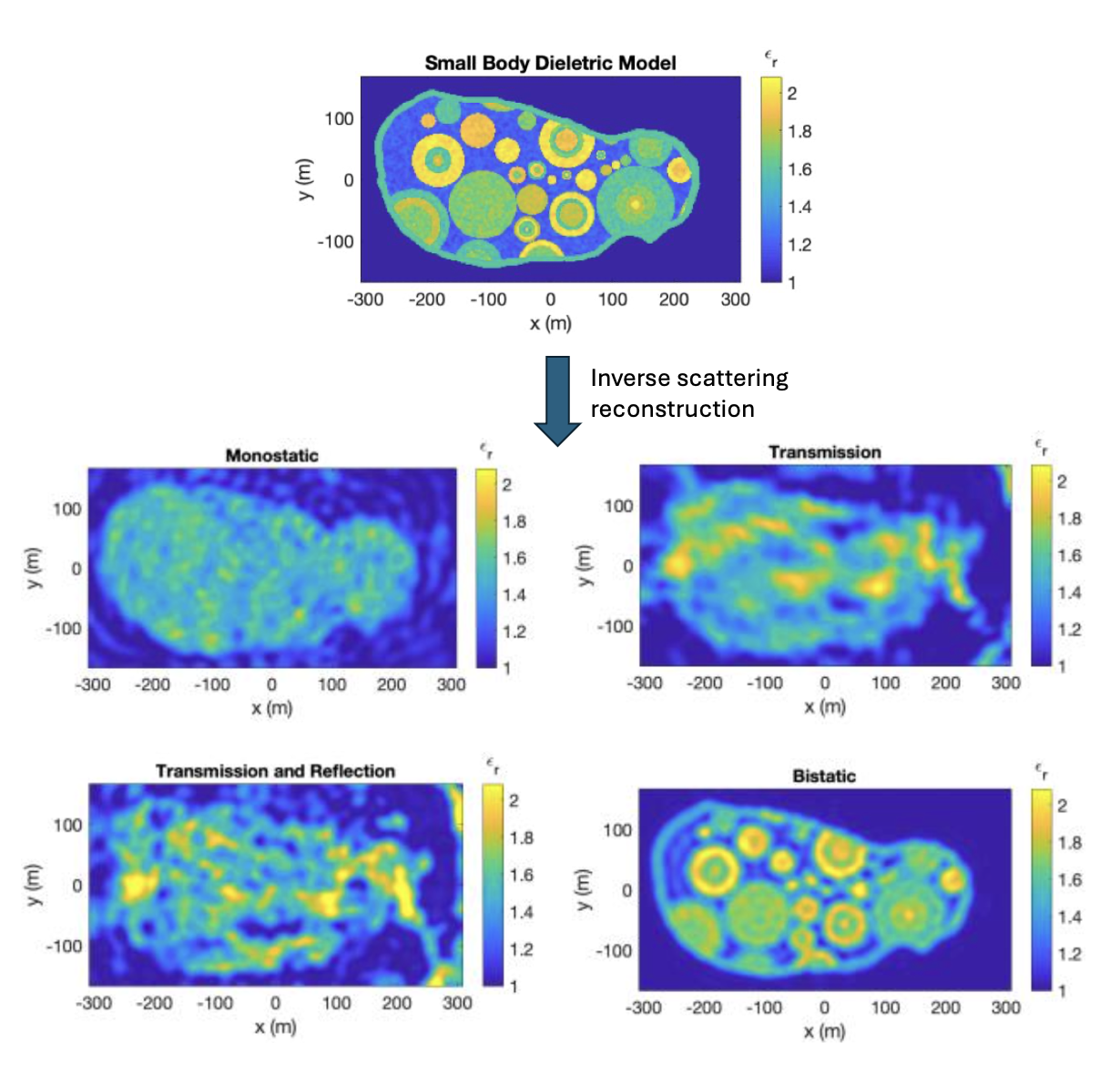
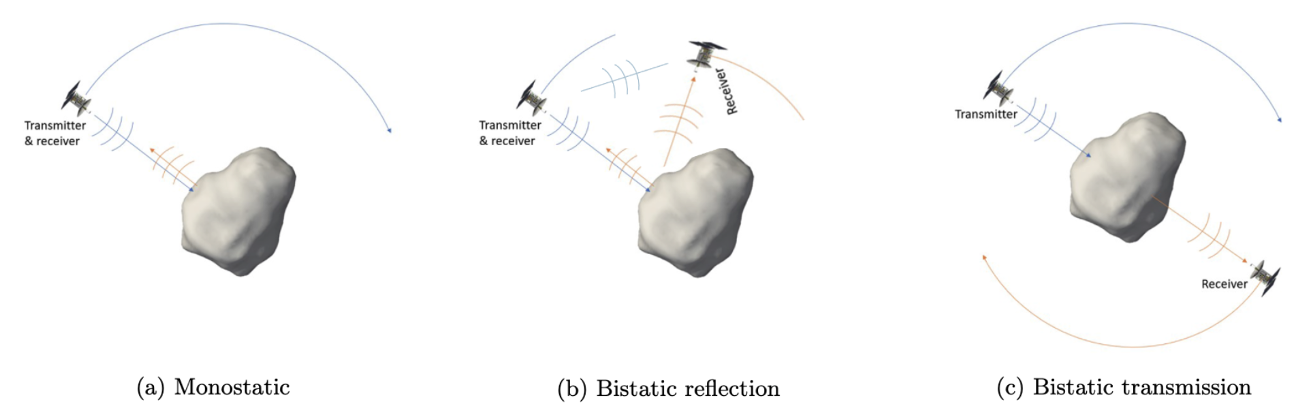
Coordinated use of modeling and in-situ radar data can advance our understanding of the internal structure of rubble-pile asteroids, providing insight into their formation and evolution mechanisms. Asteroid (99942) Apophis will fly by Earth within a distance of ~6 Earth radii on April 13, 2029. This event will be a rare opportunity to observe the reaction of a small, suspected rubble-pile body to planetary tidal forces. Caltech is leading a first-of-its-kind mission to rendezvous with Apophis before its Earth Closest Approach (ECA) and escort it through the approach. The mission consists of a spacecraft constellation comprised of a mothership and two CubeSats equipped with radar. The asteroid’s response to Earth’s gravity will be observed, and low-frequency (60 MHz) radar will be used to map its interior. The mission will perform both monostatic and bistatic radar (Fig. 1), mapping the asteroid’s internal structure at tens-of-meter scales and producing 3D backscatter and dielectric constant maps (Fig 2) to reveal Apophis's shape, density, internal block and void distribution, and spin state changes. These observations will offer groundbreaking insights into rubble-pile interiors, though methods for interpreting such data remain an open challenge.

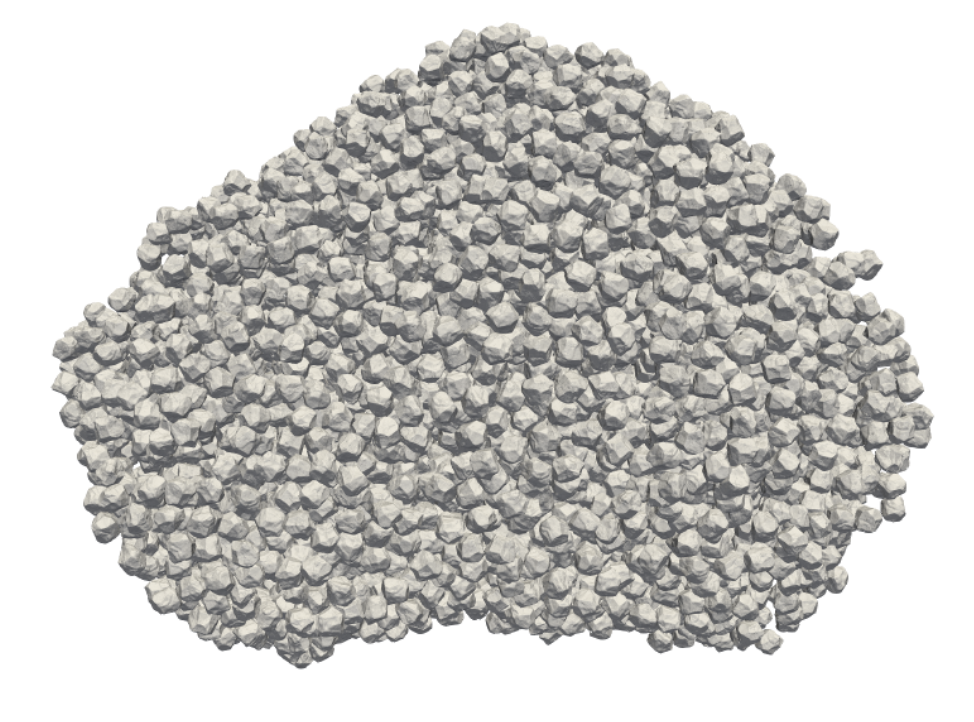
To effectively simulate potential radar observations, realistic asteroid models are necessary. Previous work using the Discrete Element Method (DEM) has modeled Apophis as a lattice arrangement of uniform-sized spheres [1] or a collection of large aggregates of spheres [2]. We have developed an improved DEM model of Apophis using level sets [3] to represent realistic block shapes (Fig 3) and with size-frequency distributions of blocks ranging from meters to tens of meters in diameter, similar to those observed on the surfaces of analogous asteroids (e.g. Itokawa [4]) by previous missions. Simulated scenarios explore several internal configurations, such as uniform block spatial distributions, larger blocks near the core or surface, and contact binaries. These models are currently being used to predict Apophis’s response to its Earth flyby. They can also be used to generate simulated radar images to help define radar specifications and data volume requirements needed to determine whether the interior is homogeneous or heterogeneous at large scales and constrain the size-frequency distribution and spatial arrangement of interior boulders in greater detail.

This work underscores the synergy between modeling and radar tomography. We discuss how modeling can help define mission requirements and refine data interpretation methods, ensuring high scientific return from radar missions to Apophis or similar asteroids. In turn, radar tomography data can validate and improve models used to investigate the formation mechanisms and evolution processes of rubble-pile asteroids. 

Fig 1. Radar modes implemented by the Caltech Mission to Apophis.

Fig 2. Single-frequency inverse scattering reconstructions of a 2D small body dielectric model (top) under four different sampling geometries (bottom) [5]. 

Fig 3. Example rubble pile model of Apophis with irregular particle shapes modeled by Level Set Discrete Element Method (LS-DEM). 

References: 

[1] DeMartini, Joseph V., et al. "Using a discrete element method to investigate seismic response and spin change of 99942 Apophis during its 2029 tidal encounter with Earth." Icarus 328 (2019): 93-103.

[2] Liu, P. Y., et al. "Tidal Effects on the Shape and Structure of Apophis during the Earth Flyby in 2029.", NEO-MAPP 2023. 

[3] Kawamoto, Reid, et al. "All you need is shape: Predicting shear banding in sand with LS-DEM." Journal of the Mechanics and Physics of Solids 111 (2018): 375-392.

[4] Michikami, Tatsuhiro, et al. "Size-frequency statistics of boulders on global surface of asteroid 25143 Itokawa." Earth, planets and space 60 (2008): 13-20.

[5] Haynes, Mark, et al. "Small body radar inverse scattering in monostatic and bistatic geometries." Lunar and Planetary Science Conference. Vol. 2548. 2021.

How to cite: Daca, A., Andrade, J., DeMartini, J., Fesq, L., Haynes, M., Herique, A., and Raymond, C.: Synergy between Numerical Models and Radar Tomography Data from the Caltech Mission to Apophis, EPSC-DPS Joint Meeting 2025, Helsinki, Finland, 7–13 Sep 2025, EPSC-DPS2025-1686, https://doi.org/10.5194/epsc-dps2025-1686, 2025.

F129
|
EPSC-DPS2025-1868
|
On-site presentation
Apophis close encounter : surface charging predictions in geostationary environment
(withdrawn)
Fabrice Cipriani
F130
|
EPSC-DPS2025-884
|
ECP
|
On-site presentation
Electroadhesive Coupling for Seismic Measurements on a Granular Surface: A Case Study for Asteroid Apophis
(withdrawn)
William Hickmott, Kai Hoettges, and Stefania Soldini
F131
|
EPSC-DPS2025-417
|
On-site presentation
Naomi Murdoch, Alexandre Cadu, Raphael F. Garcia, Anthony Sournac, Arnaud Wilhelm, Pauline Carpi, Théo André, Joseph DeMartini, David Mimoun, Philippe Logonné, Taichi Kawamura, Patrick Michel, Veronique Piou, and Pierre Bousquet

The close encounter between asteroid Apophis and Earth in 2029 presents an unparalleled opportunity for the first in-situ seismic study of an asteroid. The Seismic Instrument for Asteroids (SIA) will be deployed to the surface of (99942) Apophis by the ESA RAMSES mission and used to measure the seismicity of the asteroid due to tidal forces [1,2], in addition to monitoring other natural sources such as micro-meteoroid impacts or thermal cracks; [3-5]. SIA is under development at ISAE-SUPAERO with the support of the French Space Agency (CNES). The instrument is the culmination of over a decade of research and development, incorporating advancements from projects such as BASiX, CNES Apophis 2029 studies, ESA COPINS, and the NEO-MAPP European Commission Horizon 2020 project.

The main science and technological goal of SIA is to perform the first ever in-situ seismic study on the surface of an asteroid. SIA will constrain the mechanical properties of the surface during landing, measure the seismic background noise on the surface of Apophis, quantify the seismicity of Apophis in response to tidal forces, and probe the subsurface and internal structure of Apophis. Such information about the asteroid’s physical properties is essential for planetary defense (for assessing potential impact damage and developing mitigation strategies), as well as for our understanding of the evolutionary history of asteroids. 

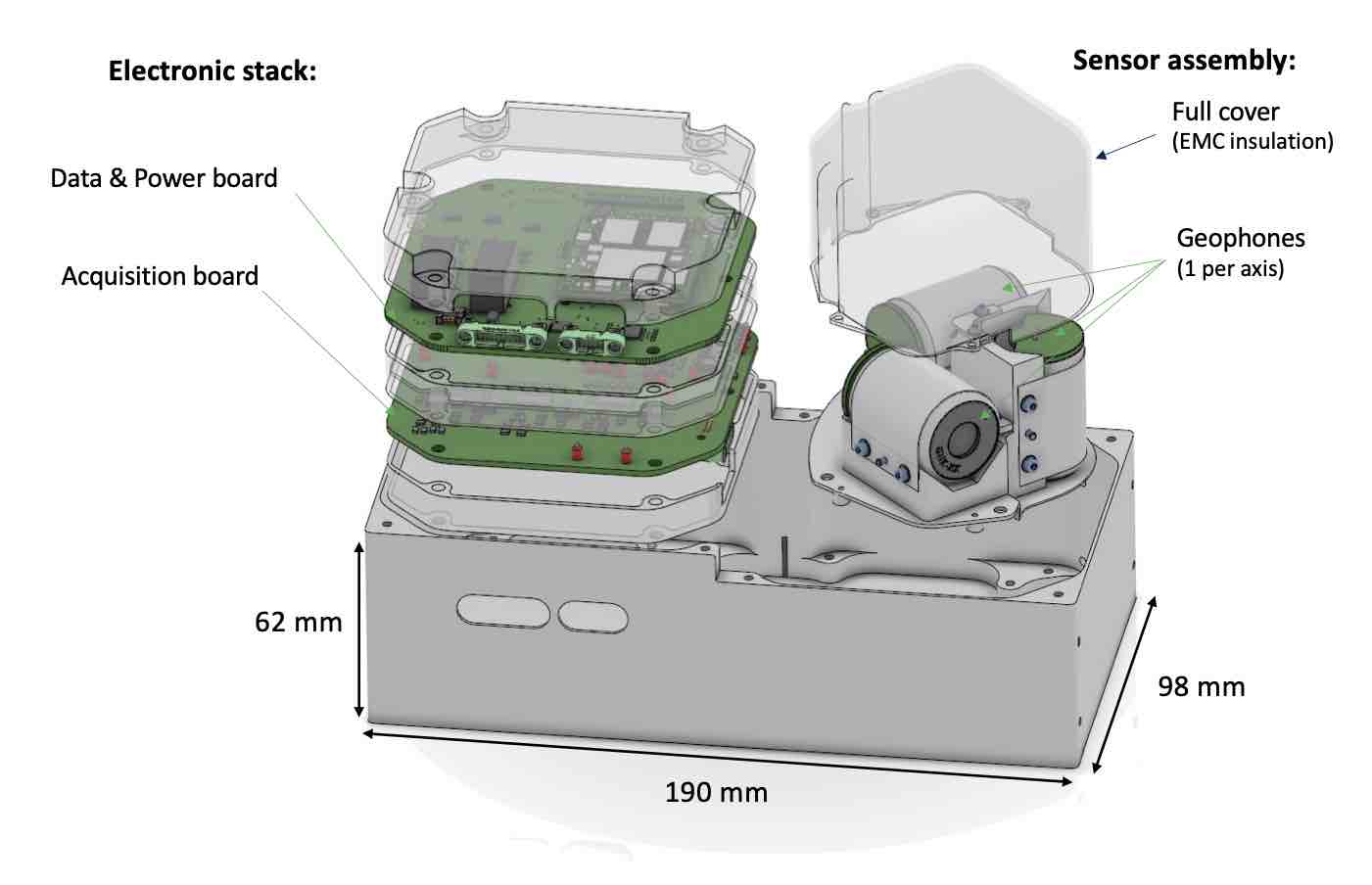
The SIA instrument (Fig. 1) is a compact seismometer that incorporates three commercially available geophone sensors (built to endure extreme environments) and custom-built electronics that are carefully designed to ensure a high sensitivity and low intrinsic noise. The SIA sensor is expected to have a noise level lower than 1.0E-9 m/s/√Hz  in the 5-200 Hz bandwidth. The instrument performance is evaluated at ISAE-SUPAERO, relying heavily on the experience and expertise gained from the SEIS (InSight) instrument testing [6,7]. Initial thermal vacuum (TVAC) and vibration testing demonstrated that the sensors survived the launch and the operational environments, and that the noise level and the transfer function remain unchanged. 

Figure 1: Expanded CAD view of SIA. The instrument contains three geophones, in addition to the data and power board and the acquisition electronics. The current best estimate of the dimensions is 190 x 98 x 62 mm.


Based on Discrete Element Method (DEM) simulations it has been predicted that the peak seismic activity (largest occurrence of quakes) occurs as tides are dissipating in the hours after closest approach [1] (Fig. 2).  This is likely due to changing centripetal forces (due to rotation rate changes during encounters [1,2]), and the relaxation following the tidal deformation. However, the largest amplitude quake(s) make occur prior to the perigee [2]. As such, SIA should be deployed on the surface of Apophis prior to the closest approach to Earth (ideally 10s of hours prior). In the lead-up to perigee, periodic measurements will be conducted for instrument commissioning and background noise assessment. Then, during the critical window from three hours before to six hours after perigee—when seismic activity induced by tidal forces is expected [1,2]—continuous monitoring will be essential. Following the close encounter, additional periodic measurements should be taken to track the evolution of background noise and seismic activity, including diurnal variations. Ideally, these post-encounter observations would continue for several tens of hours. The measurements before and/or after the close encounter are important to help identify which seismic signals originate due to the tidal forces, and which are due to the asteroid surface environment.

After deployment, SIA can function in any orientation without requiring leveling, but the instrument must be in direct contact with the asteroid's surface to make the seismic measurements.  Instead of anchoring the instrument to the surface, our approach relies on simple surface contact. Attempting to secure the instrument would likely result in attachment only to the loose regolith, which may not be well connected to the underlying material. As long as the lander remains in contact with the surface, ground motion will be transmitted to the seismometer. If seismic amplitudes happen to exceed the asteroid’s local surface gravity, brief lofting may occur, with the subsequent landing offering an additional opportunity to study the asteroid’s mechanical properties.

This presentation will discuss the science objectives and operational scenario for SIA in addition to providing an update on the SIA instrument design and development.

Figure 2: The Apophis encounter trajectory indicating the period of peak seismicity (the period of largest occurrence of quakes) as predicted by DEM simulations [1].


References:

1] DeMartini, J. et al. (2024) Apophis T-5.

[2] Ballouz et al., (2025) Apophis T-4.

[3] Murdoch, N. et al., (2017) Planetary and Space Science, 144, 89-105.,

[4] Murdoch, N. et al., (2015) Asteroids IV, University of Arizona Press Space Science Series. `

[5] Compaire, N., et al. (2022). Geophysical Journal International, 229(2), 776-799.

[6] Lognonné, P. et al., (2019) Space Science Reviews, 215.

[7] Mimoun, D. et al. (2017) Space Science Reviews, 211.


Acknowledgements:

The authors acknowledge funding support from the European Commission's Horizon 2020 research and innovation programme under grant agreement No 870377 (NEO-MAPP project), and from the French Space Agency (CNES).

How to cite: Murdoch, N., Cadu, A., Garcia, R. F., Sournac, A., Wilhelm, A., Carpi, P., André, T., DeMartini, J., Mimoun, D., Logonné, P., Kawamura, T., Michel, P., Piou, V., and Bousquet, P.: Seismic Instrument for Asteroids (SIA): the RAMSES seismometer, EPSC-DPS Joint Meeting 2025, Helsinki, Finland, 7–13 Sep 2025, EPSC-DPS2025-417, https://doi.org/10.5194/epsc-dps2025-417, 2025.

F132
|
EPSC-DPS2025-463
|
On-site presentation
Alain Herique, Dirk Plettemeier, Mark Haynes, Patrick Michel, Monica Lazzarin, Carol Raymond, Wlodek Kofman, and Yves Roger and the JuRa, RAMSES Radar and CAM Radar Teams

Our knowledge of the internal structure of asteroids relies entirely on inferences from remote sensing observations of the surface and theoretical modeling. Many fundamental questions are still unresolved. Is the body a monolithic piece of rock or a rubble-pile, and how high is the porosity? What is the typical size distribution of the constituent blocks? Are these blocks homogeneous or heterogeneous? Direct measurements of an asteroid’s deep interior structure are needed to better understand asteroid accretion and their dynamic evolution. The characterization of the asteroids’ internal structure is crucial for science, planetary defense and exploration.

In orbit sounding Radars are the most mature instruments capable of achieving the objective of characterizing the internal structure and heterogeneity, both for the benefit of science as well as for planetary defense or exploration. It is the goal of JuRa on cruise to probe Didymos binary system in 2027 and aim of two instruments under development for the ESA Ramses Mission and the Caltech Mission is to study the deep interior of Apophis in 2029.


JuRa

JuRa, the Juventas radar, onboard the ESA HERA mission, is a monostatic radar, BPSK coded and inherited from CONSERT/Rosetta. The center frequency of 60 MHz provides the capability to probe the internal structure to a depth of 100 meters or more, with a limited vertical resolution of about 20 m. Multipass processing makes it possible to create a 3D tomographic image of the interior. HERA was launched in October 2024 to deeply investigate the Didymos binary system and in particular its moonlet Dimorphos, five years after the DART/NASA impact. On the ESA mission HERA, the Juventas 6U CubeSat is carrying the Juventas Radar (JuRa).

JuRa maps the backscatter coefficient (sigma zero - σ0) of the surface and of the subsurface, which quantifies the returned power per unit surface or volume. It is related to the degree of heterogeneity on the wavelength scale and to the dielectric contrast of heterogeneities, giving access to both, the sub-meter texture of the constituent material and larger scale structures.

The main objective of JuRA is to characterize the asteroid interior, to identify internal geological structure such as layers, voids and sub-aggregates, to bring out the aggregate structure and to characterize its constituent blocks in terms of size distribution from sub-metric to global scale. The second objective is to estimate the average permittivity and to monitor its spatial variation in order to obtain information on its composition and porosity. The characterization of the constitutive material and its spatial organization both on the main and on the moon will help to better model the formation and stability conditions of the binary system and the response of Dimorphos to the DART impact.


Radar to Apophis

Knowledge of the internal structure of Apophis is crucial to better understand its accretion and dynamical evolution, to better study its stability conditions, and to model its response to the gravitational constraints imposed by its approach to induced by Earth close approach.

For the RAMSES mission, the radar is operating in monostatic mode on one of the CubeSats and deeply inheriting from JuRa on Juventas/Hera, with minor modification. The radar is currently under development and under responsibility of Tyvak International, prime contractor for the CubeSat development. For the electronics (1U, 1kg), minor optimizations are proposed based on the experience from JuRa (mainly thermal optimization, adjustment of the network position and software modifications). The interfaces are revised depending on the carrying platform inheriting from Hera/Milani. For the antenna, a crossed dipole is proposed, as for JuRa on Juventas, providing measurements in full polarization. The cross dipole is consisting of 4 booms of 65g each. An optimization of the boom length and matching network will be required depending on the platform, on the antenna accommodation and on the solar array geometry.

The Caltech Mission to Apophis is under study by Caltech and JPL. For his mission, the radar is a customized version of JuRa, operating in bistatic mode: the two satellites are maintained opposite from each other around Apophis, using semi-autonomous navigation based on optical cameras. Electronics on the two platforms measure the signal transmitted throughout Apophis, like done for CONSERT on Rosetta/ESA. Using the synchronization provided by the Inter Satellite Link (ISL), the radar provides an absolute measurement of the propagation delay between the platforms through the asteroid. This provides a direct measurement of the dielectric permittivity, which is related to composition and microporosity of the inner structure of Apophis. Partial coverage will provide slices of the body with an average characterization and its spatial variability to characterize large scale structures. Dense coverage will provide a larger diversity of observation angles, the bistatic mode will then allow a complete 3D tomography to recover the permittivity contrast throughout the volume.

In addition to modifications depending on the new platform and the antenna accommodation and the adjustments based on JuRa lesson learned, the implementation of the bistatic mode requires a deeper revisit of the software and firmware to preserve synchronization of the two electronics, while the ISL is ensuring the control of the timing and the frequency.

In this talk we will present the instruments, their status, performances and goals as well as the science objectives in the context of the different targets.

How to cite: Herique, A., Plettemeier, D., Haynes, M., Michel, P., Lazzarin, M., Raymond, C., Kofman, W., and Roger, Y. and the JuRa, RAMSES Radar and CAM Radar Teams: Radar tomography of asteroid deep interior. JuRa / HERA to Didymos and the Radars to Apophis: status of the instruments  , EPSC-DPS Joint Meeting 2025, Helsinki, Finland, 7–13 Sep 2025, EPSC-DPS2025-463, https://doi.org/10.5194/epsc-dps2025-463, 2025.

F133
|
EPSC-DPS2025-543
|
On-site presentation
Norbert Krupp, Elias Roussos, Markus Fränz, Stas Barabash, Henning Fischer, Yoshifumi Futaana, Olaf Roders, and Thorsten Kleine

The flyby of asteroid 99942 Apophis in 2029 offers the unique opportunity to study the interaction of an asteroid with the Earth magnetosphere.  By measuring the spatial and energy distribution of positive and negative particles in close proximity to the asteroid it is possible to get significant information about the object without landing on it or without returning a sample from it. By characterizing the environment of an asteroid, we can also learn if the interaction is similar or totally different compared to the processes near the Earth’s moon. Full information is revealed if the particle properties impacting the surface of the object as well as all the various types of particles released from the surface e.g., backscattered and sputtered particles, photoelectrons, secondary electrons, charged dust, and neutral particles are measured. There is evidence that the number density of those particles and their energy distribution reveal information on the structure of the surface regolith. Together with computer simulations on similar types of asteroids the obtained information is essential for the study of Near Earth Objects like Apophis.
The flyby of Apophis near Earth is special in many ways. First, the flyby geometry is unique with a closest approach of about 31000 km at the edge or inside the outer radiation belt which can vary between 13000 km to 60000 km dependent on solar cycle and solar wind activity during the flyby period. This offers the unique opportunity to study the interaction of Apophis with the solar wind before and after the closest approach as well as the interaction with conditions inside the Earth’s radiation belts around closest approach. The unique possibility of the RAMSES mission compared to all the other missions currently planned to fly by Apophis is that it will carry the RAMSES Plasma Spectrometer RPS. We will describe in detail the scientific goals of RPS: 1. How does Apophis interact with its surrounding space plasma environment? 2. What plasma physics processes govern Apophis’s near-surface environment? 3. What is the surface composition of Apophis? and discuss the additional science added.

How to cite: Krupp, N., Roussos, E., Fränz, M., Barabash, S., Fischer, H., Futaana, Y., Roders, O., and Kleine, T.: Ramses Plasma Spectrometer (RPS) onboard the Ramses mission to characterize the environment of Apophis and its surface properties, EPSC-DPS Joint Meeting 2025, Helsinki, Finland, 7–13 Sep 2025, EPSC-DPS2025-543, https://doi.org/10.5194/epsc-dps2025-543, 2025.

F134
|
EPSC-DPS2025-1717
|
On-site presentation
Fabrizio Dirri, Chiara Gisellu, Ernesto Palomba, Andrea Longobardo, Enrico Nardi, Emiliano Zampetti, Diego Scaccabarozzi, and Margherita Cardi

The 2029 close approach of near-Earth asteroid (99942) Apophis offers a rare and scientifically valuable opportunity to study the physical and compositional response of a small body to intense tidal forces. The European Space Agency’s RAMSES (Rapid Apophis Mission for SpacE Safety) mission will rendezvous with Apophis and observe its evolution before, during, and after the Earth flyby. The objectives of RAMSES are to measure of the characteristics of Apophis before its closest approach to Earth and to observe the effect of Earth’s tidal forces during the approach [1]. The design of RAMSES is similar to the Hera mission, including a main spacecraft and two CubeSats.

On board Cubesat-1, in charge of Tyvak International, is the VISTA instrument (Volatile In-Situ Thermogravimeter Analyser), a dust and volatile analyser. The instrument design is based on VISTA for ESA Hera Mission [2]. The instrument core is composed by two quartz crystals, mounted in a sandwich-like configuration, its Proximity Electronics (PE) and the Thermal Control System  (TCS) (two built-in controlled heaters and RT detectors, and a Thermo-Electric Cooler). The technical characteristics are listed in Table 1.

Table 1. VISTA technical characteristic and FE Model design view.

In the framework of RAMES Mission, VISTA payload will monitor ejecta production, dust lofting, and potential regolith mobilization induced by tidal stresses or rotational excitation [3]. VISTA can also monitor any raised particles ejected due to meteor/micrometeorites impacts and due to any spacecraft manoeuvres, that influences Apophis surface (e.g. OSIRIS-APEX may use its thrusters to stir up rocks and dust on the surface of Apophis). These observations will provide critical insights into surface cohesion, mechanical response, and mass loss processes in response to planetary encounters. Combined with high-resolution imaging [4] and spectral data from other RAMSES payloads, VISTA will contribute to detect the presence of µm and sub-µm particles size and provide insight on the asteroid composition by using the TGA (Thermo-Gravimetric Analysis) and using the following operational modes (Fig.2):

  • Accumulation mode: this consists of passive collection of dust and volatiles.
  • ACTIVE MODE (Heating mode): it is the QCM warming up to the volatile desorption temperature.
  • ACTIVE MODE (Cooling mode): it is the QCM cooling down (5-10K) to favour the dust/volatiles accumulation. 


Figure 2. VISTA operational Modes during each expected phase of RAMSES Mission.


References

[1] Michel P. et al., “Science Objectives of RAMSES: ESA’s Rapid Apophis Mission for SpacE Safety”, Apophis T-4 Years 2025 (LPI Contrib. No. 3083)

[2] Palomba E. et al., “VISTA payload on-board Milani Cubesat for Hera space mission for the study and characterization of Didymos binary system”, 45th COSPAR Scientific Assembly 2024

[3] Scheeres et al., 2005; Icarus, Volume 178, Issue 1, p. 281-283

[4] Palomba et al., “Monitoring surface evolution of Apophis during its 2029 Earth flyby: the role of HAMLET on ESA’s RAMSES Mission”, EPSC 2025

How to cite: Dirri, F., Gisellu, C., Palomba, E., Longobardo, A., Nardi, E., Zampetti, E., Scaccabarozzi, D., and Cardi, M.: VISTA Payload for ESA RAMSES Mission, EPSC-DPS Joint Meeting 2025, Helsinki, Finland, 7–13 Sep 2025, EPSC-DPS2025-1717, https://doi.org/10.5194/epsc-dps2025-1717, 2025.

F135
|
EPSC-DPS2025-1607
|
On-site presentation
Ernesto Palomba, Marianna Angrisani, Vincenzo Della Corte, Marco Esposito, Andrea Longobardo, Fabrizio Dirri, Chiara Gisellu, Lavinia Arpaia, Marcel Popescu, and Julia De Leon

On April 13, 2029, near-Earth asteroid (99942) Apophis will make an exceptionally close approach to Earth, passing at a distance of approximately six Earth radii. This rare event offers a unique opportunity to study the effects of tidal forces on a small body during a planetary flyby. The European Space Agency’s Ramses (Rapid Apophis Mission for Space Safety) mission will rendezvous with Apophis and monitor it throughout this encounter.

Apophis is classified as an Sq-type asteroid, spectrally similar to LL ordinary chondrites, with an estimated olivine abundance of 63 ± 3 vol.% [1,2]. Its moderately weathered surface may undergo significant changes during the close approach, including regolith displacement due to tidal forces or spin state alteration [3] .These effects could lead to observable spectral changes, potentially shifting Apophis from an Sq-type to a Q-type asteroid, indicative of fresh, unweathered material [4].

A key instrument aboard Ramses is HAMLET (HyperScout for Apophis MultispectraL Exploration and Taxonomy), a hyperspectral camera designed for detailed surface characterization. It is an advanced version of the HyperScout-H spectral imager, which is currently flying as part of the Hera mission (ESA) (Fig.1) [5].

Fig.1: HyperScout-H current payload volume

HAMLET features a high-resolution CMOS sensors and operates across two spectral channels (Fig.2): Channel 1 (650–960 nm) and Channel 2 (960–1500 nm), providing a wide field of view and high spatial resolutions at the same time.

Fig.2: HAMLET’s CH1 and CH2 on Apophis spectra by Reddy et al., 2018.

This spectral coverage enables precise mapping of surface composition, including modal abundances of olivine, orthopyroxene, and clinopyroxene, and their Fe, Mg, and Ca content. Key absorption features (e.g., Fe²⁺ at ~0.9 and ~1.1 μm; Fe³⁺ in hydrated minerals around 0.7 μm; OH in hydroxylated phases near 1.4 μm) will be analyzed to assess mineralogy and surface maturity.

HAMLET also provides insights into physical properties such as grain size, porosity, and surface roughness. By detecting spectral slope variations and absorption depth changes, the instrument can identify space weathering effects before and after the Earth flyby. Additionally, it will investigate regolith dynamics—such as gardening and mass wasting—revealing how surface processes are modulated by gravity and close encounters.

Overall, HAMLET’s high-resolution, multi-wavelength observations will offer unprecedented data on Apophis’ surface evolution, with broader implications for planetary defense and small body science.


References:

[1] Reddy et al., 2018; The Astronomical Journal, 155:140 (8pp)

[2] Binzel et al., 2009; Icarus Volume 200, Issue 2, April 2009, Pages 480-485

[3] Scheeres et al., 2005; Icarus, Volume 178, Issue 1, p. 281-283.

[4] Binzel et al., 2010 Nature, Volume 463, Issue 7279, pp. 331-334

[5] Popescu et al., EPSC2024-586


How to cite: Palomba, E., Angrisani, M., Della Corte, V., Esposito, M., Longobardo, A., Dirri, F., Gisellu, C., Arpaia, L., Popescu, M., and De Leon, J.: Monitoring surface evolution of Apophis during its 2029 Earth flyby: the role of HAMLET on ESA's Ramses Mission, EPSC-DPS Joint Meeting 2025, Helsinki, Finland, 7–13 Sep 2025, EPSC-DPS2025-1607, https://doi.org/10.5194/epsc-dps2025-1607, 2025.