TP0 | General Session of TP

TP0

General Session of TP
Conveners: Francesca Zambon, Scott Murchie, Maurizio Pajola, Jennifer Hanley, Baptiste Chide, Alessandro Pisello
Orals THU-OB2
| Thu, 11 Sep, 09:30–10:30 (EEST)
 
Room Sun (Finlandia Hall)
Posters THU-POS
| Attendance Thu, 11 Sep, 18:00–19:30 (EEST) | Display Thu, 11 Sep, 08:30–19:30
 
Finlandia Hall foyer, F1–5
Thu, 09:30
Thu, 18:00
The objective of the General Session is to accommodate abstracts from a program group that do not align with the themes of any existing sessions within the same program group. Please note that all submitted abstracts may be reallocated to a different session at the discretion of the respective session chairs.

Session assets

Orals: Thu, 11 Sep, 09:30–10:30 | Room Sun (Finlandia Hall)

Chairpersons: Francesca Zambon, Maurizio Pajola, Alessandro Pisello
09:30–09:42
|
EPSC-DPS2025-1608
|
On-site presentation
Johannes Benkhoff and Geraint Jones

Launched on 20 October 2018 from the European spaceport Kourou in French Guyana and after finishing most of its about eight year-long cruise-phase, BepiColombo has successfully performed nine flybys (at Earth, twice at Venus and six at Mercury). On arrival in orbit around Mercury in late 2026 it will perform measurements to increase our knowledge on the fundamental questions about Mercury’s evolution, composition, interior, magnetosphere, and exosphere with its state of the art and very comprehensive payload. BepiColombo consists of two orbiters, the Mercury Planetary Orbiter (MPO) and the Mercury Magnetospheric Orbiter (Mio) and is a joint project between the European Space Agency (ESA) and the Japanese Aerospace Exploration Agency (JAXA).

Since the two spacecraft are in a stacked configuration during the cruise only some of the instruments are able to perform scientific observations. The BepiColombo Camera instrument suite, SIMBIO-SYS, on MPO is blocked and cannot be operated during cruise. However, a set of monitoring cameras (Mcam) located on the BepiColombo Transfer-Module (MTM) could be used to image the flyby targets. These images although of low quality and only black and white could be successfully used for outreach activities.

A summary of these activities and some conclusions for future missions will be given.

How to cite: Benkhoff, J. and Jones, G.: BepiColombo - Outreach with Mcam images, EPSC-DPS Joint Meeting 2025, Helsinki, Finland, 7–13 Sep 2025, EPSC-DPS2025-1608, https://doi.org/10.5194/epsc-dps2025-1608, 2025.

09:42–09:54
|
EPSC-DPS2025-822
|
On-site presentation
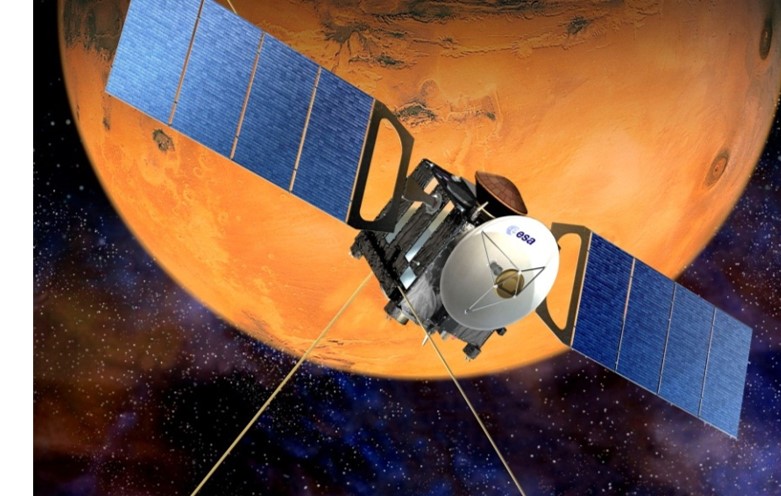
Colin Wilson
This abstract is coauthored by the Science and Operations teams of Mars Express and Trace Gas Orbiter, and by the Project team of LightShip
 

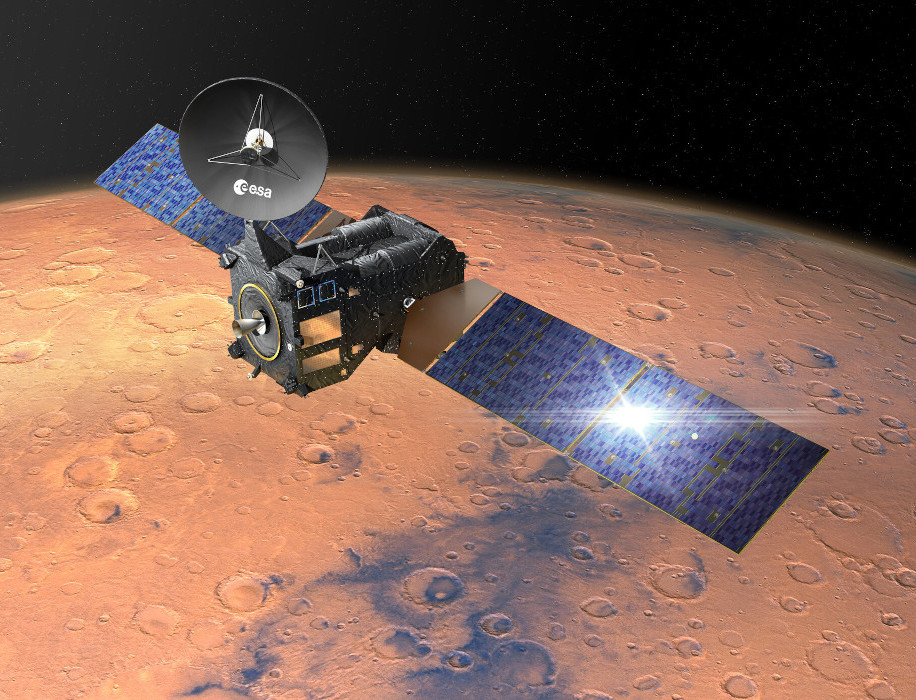
ExoMars Trace Gas Orbiter (TGO): TGO has now completed almost four full Mars years since reaching its science orbit in April 2018.

Scientific highlights include (1) continuing non-detection of methane, with upper limits as low as 20 ppt by volume [1]. Reconciling this continued non-detection by TGO with the background levels of several hundred ppt in Gale crater by MSL remains an enigma, stimulating further research; (2) further characterization of variations of HCl, the first reported halogen-containing species in the atmosphere of Mars [2,3]; (3) further characterization of the transport of water to high altitudes, a critical step in the escape of water from Mars [4]; (4) detection of transient water ice frost on tropical volcanoes by multiband CaSSIS imaging, confirmed by MEX/HRSC and TGO/NOMAD observations [5]; (5) calculation of a near-surface hydrogen abundance map, revealing surprisingly high hydrogen abundances at a number of low latitude locations including in Valles Marineris [6]; and (6) monitoring of radiation doses throughout the mission, including the most energetic event recorded yet, in May 2024, as we near the peak of the current solar cycle [7].

The TGO spacecraft health is nominal and appears consistent with operation well into the 2030s. Since Nov 2024, TGO has adopted a gyroless operation mode in order to further prolong spacecraft life.


Mars Express (MEX): MEX remains a highly productive mission as it enters its third decade of operation at Mars.

Recent science highlights include (1) continued mapping of subsurface reflectors beneath the south polar layered ice deposits [8], and associated work to explain the cause of these reflections; (2) a global map of minerals on Mars with 200 m/px resolution, obtained from analysis of MEX & OMEGA infrared spectra [9]; (3) construction of a globally consistent colour mosaic of Mars corrected for local scattering atmospheric variations using high-altitude imagery [10]; (4) publication of a catalogue of HRSC imagery of transient atmospheric cloud phenomena, such as twilight or orographic clouds [11]; (6) First analysis of ionospheric profiles obtained from spacecraft-to-spacecraft (MEX-to-TGO) radio occultation at Mars [12]; (7) discovery that, in rare solar wind conditions, the induced magnetosphere of Mars can degenerate, meaning that the bow shock apparently disappears for periods of hours to days, temporarily allowing increased transport where the bow shock would have been [13]; (8) the most detailed shape model of Phobos yet, constructed using stereophotoclinometry from datasets including MEX/HRSC/SRC [14].

Mars Express operations are currently funded until end of 2026, with indicative extension (subject to further review) until end of 2028.

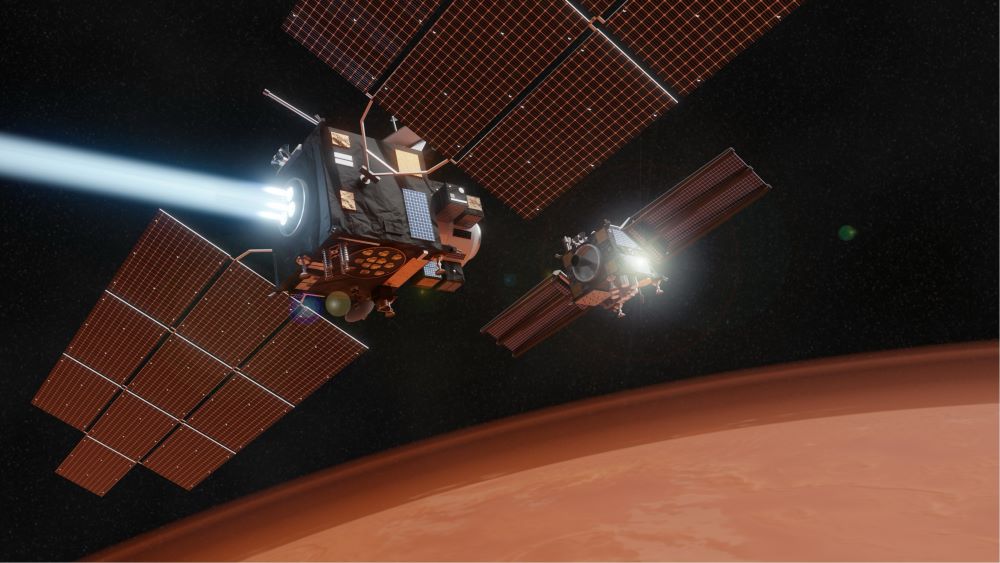
Mars LightShip:  ESA is currently developing a concept for future Mars infrastructure including a propulsive tug service with integrated communication and navigation (MARCONI) service. This concept is called Lightship. Each LightShip would deliver one or more passenger spacecraft to Mars orbit, and then would itself manoeuvre to a high (5720 km altitude) near-equatorial (20° inclination) MARCONI service orbit from which it would carry out data relay and navigation services for other surface or orbital missions, as well as carry out atmospheric science investigations. The first LightShip mission (LightShip-1) would deliver to Mars a low polar orbiter named SpotLight, whose payload would include high resolution surface imaging.

This mission concept is currently the subject of industrial phase A study, with the aim of launching not earlier than 2032. Development of the mission beyond Phase A would be dependent on further approval by ESA member states.


Acknowledgments: This abstract represents the work of hundreds of researchers and engineers across the MEX, TGO and LightShip teams. MEX and TGO data are freely and publically available at ESA’s Planetary Science Archive (https://psa.esa.int/).


References:

[1] Montmessin F. et al. (2024) 10thInt. Mars Conf, abstract id 3145. [2] Olsen K. et al. (2024), JGR 129, art. id e2024JE008350. [3] Rajendran K. et al. (2025), JGR 130, art. id e2024JE008537. [4] Brines, A. et al. (2024), GRL 51, art. Id e2023GL107224. [5] Valantinas, A. et al. (2024), Nat GeoSci 17, 608-616. [6] Golovin, D. et al. (2024) LPSC, Abstract #1923. [7] Semkova, J. et al. (2024), Sol Sys Res  58 p 367-376. [8] Lauro, S et al. (2021) Nat Astron 5 p 63-70. [9] Carter J. et al. (2023) Icarus 389 art id 115164. [10] Michael, G. et al (2025) Icarus 425 art id 116350. [11] Tirsch, D. et al (2024), EPSC abstract #44. [12] Parrott, J. et al. (2024), Radio Science, art. id. e2023RS007873. [13] Zhang, Q et al., (2024), Nature 634 (8032) p. 45-47. [14] Ernst, C. et al., Earth Planets Space 75(1) :103.

How to cite: Wilson, C.: Europe's Mars Orbiters: current status, science highlights & future prospects, EPSC-DPS Joint Meeting 2025, Helsinki, Finland, 7–13 Sep 2025, EPSC-DPS2025-822, https://doi.org/10.5194/epsc-dps2025-822, 2025.

09:54–10:06
|
EPSC-DPS2025-592
|
On-site presentation
Highlights from LUNEX SpaceHub  EuroMoonMars 
(withdrawn after no-show)
Bernard Foing and the COSPAR PEX LUNEX Spacehub EuroMoonMars team
10:06–10:18
|
EPSC-DPS2025-1064
|
ECP
|
On-site presentation
Xi Yang, Anna Mittelholz, Adrien Broquet, and Max Moorkamp

After the initial differentiation of the Moon, subsequent thermal, magmatic, and impact-related processes modified the crust over time, leaving a long-lived geophysical record. Through these modifications, a portion of the lunar crust acquired remanent magnetization, leading to pronounced magnetic anomalies (some reaching tens of nT at the surface) detectable from orbit [1–2]. Unraveling the structure and origin of magnetized sources that generate the observed strong magnetic anomalies is key to reconstructing the lunar magnetic history and understanding the thermal and magnetic evolution of the lunar crust.

The formation mechanism responsible for the lunar magnetic anomalies remains unknown. Many anomalies are associated with impact structures, supporting hypotheses involving the emplacement of impact-melt-bearing materials [3–4] and the acquisition of shock remanent magnetization [5]. However, only a small fraction of lunar craters exhibits such magnetic anomalies [6], indicating that impact-related mechanisms alone cannot explain the full range of observed features. Non-impact origins, such as magmatic processes, are less understood but may be significant for lunar crustal magnetism.

One set of geological features that may help bridge this gap are lunar swirls, high-albedo sinuous surface features that lack associated topographic variations but are consistently co-located with crustal magnetic anomalies [7]. Swirls are thought to be shaped by interactions between the solar wind and local magnetic fields, providing a direct connection between crustal magnetism and surface processes. Therefore, analysis of these features can provide insights into the geologic processes that shaped the crust. The best studied example, Reiner Gamma, has been linked to a subsurface magnetized structure associated with the Marius Hills volcanic complex [3,8], suggesting a possible magmatic origin.

If a magnetic anomaly originates from a geologic process that also generates a density anomaly (e.g., magmatic process), a correlation between observed gravity and magnetic data is expected. While dominant structures such as the large-scale linear gravity anomalies do not show such correlation [9], regional correlations of gravity and magnetic field data exist [10]. Such regions are well-suited for combined analysis of the data sets, but none have been conducted yet.

We apply an innovative 3D joint inversion of gravity and magnetic field data [11–12] to characterize the density and magnetization structure beneath the Dewar swirl. The gravity data are derived from GRAIL by removing the signals of surface and Moho relief, and the magnetic data are predicted using a crustal field model from [1]. The inversion begins with a strong coupling between density and magnetization anomalies, allowing for spatial collocation, and then we iteratively relax this coupling to improve the data fit. We focus on the result that fits the observations well while preserving a high degree of correlation between density and magnetization.

The resulting model reveals several prominent magnetization features, some of which are associated with density anomaly, where the Dewar swirl overlies the most prominent density and magnetization anomaly (Fig. 1). Magnetized bodies with positive density anomalies uniformly exhibit horizontal magnetization. Amongst these, the strongest anomaly is correlated with the Dewar swirl. Two key factors might explain the presence of the swirl: sufficiently strong horizontal magnetization and the presence of FeO-rich surface materials (Fig. 2). This is consistent with the local magnetic field shielding the surface from solar wind and thus reducing the effect of space weathering. The Dewar swirl lies within a geochemically anomalous region rich in FeO, whereas none of the other magnetized bodies with horizontal magnetization shares this surface geochemistry. Because space weathering of FeO generates opaque metallic iron, the regions that resist space weathering can form an albedo high in contrast to their surroundings.

Fig 1. Crustal structure in the Dewar region at 1 km depth: (a) density, (b) total, (c) vertical, and (d) horizontal magnetization. The swirl from [7] is highlighted in green. The solid and dashed boxes noted the magnetized bodies with a positive density anomaly and with no density anomaly, respectively. Additional magnetized bodies with negative density anomalies are noted by the arrow.

Furthermore, our results suggest a magmatic origin of the Dewar magnetic anomaly. The positive density anomaly can be explained by intrusive basaltic materials, where magnetization is the result of the enrichment of metallic iron generated from the reduction of ilmenite during its cooling [13] in the presence of a lunar dynamo. This interpretation aligns with previously identified Dewar cryptomare, the buried mare with elevated FeO and mantle-derived materials at the surface [14–15]. Other magnetized bodies with positive density anomalies lack association with geochemical anomalies and are not located near the known cryptomare. These might instead represent intrusive dikes or local emplacements of impact melt.

Fig 2. FeO abundance map in the Dewar region. The map was derived from the Clementine UVVIS datasets using the technique of [16]. The black dashed outline notes the cryptomare region identified by [15]. Other notations are the same as in Figure 1.

Finally, magnetized bodies with no density anomaly exhibit only negative vertical magnetization components of similar strength (dashed box in Fig. 1), suggesting a shared formation period and mechanism. These features could potentially represent the distal ejected materials from large impact events such as the South Pole-Aitken [4]. In contrast, weakly magnetized bodies accompanied by negative density anomalies may have formed through impact shock. Such a process could increase crustal porosity, which manifests in a negative gravity anomaly, while simultaneously generating shock remanent magnetization.


Reference

[1] Tsunakawa, H. et al. JGR-Planets (2015). [2] Ravat, D. et al. JGR-Planets (2020). [3] Oliveira, J. et al. JGR-Planets (2017). [4] Wieczorek, M. et al. Science (2012). [5] Hood, L. & Artemieva, N. Icarus (2008) [6] Yang, X. & Wieczorek, M. Icarus (2024). [7] Denevi, B. et al. Icarus (2016). [8] Oliveira, J. et al. JGR-Planets (2024). [9] Andrews-Hanna, J. et al. Science (2013). [10] Gong, S. & Wieczorek, M. JGR-Planets (2020). [11] Moorkamp, M. GRL (2022). [12] Mittelholz, A. et al. JGR-Planets (2025). [13] Liang, Y. et al. JGR-Planets (2024). [14] Lawrence, S. et al. JGR (2008). [15] Whitten, J. & Head, J. Icarus (2015). [16] Gillis, J. et al. GCA (2004).

How to cite: Yang, X., Mittelholz, A., Broquet, A., and Moorkamp, M.: New insights into lunar crustal magnetism from joint inversions, EPSC-DPS Joint Meeting 2025, Helsinki, Finland, 7–13 Sep 2025, EPSC-DPS2025-1064, https://doi.org/10.5194/epsc-dps2025-1064, 2025.

10:18–10:30
|
EPSC-DPS2025-1283
|
ECP
|
On-site presentation
Eduardo Andres Delgadillo Monsalve, Mario Armando Higuera Garzon, and David Ardila

The South Pole–Aitken (SPA) basin is the largest and deepest impact structure on the Moon’s far side and the largest known impact crater in the Solar System. This region is of significant scientific interest due to its distinctive morphological, optical, and thermal characteristics, which suggest the possible presence of water ice in permanently shadowed regions (PSRs).

Within the SPA basin lies a zone containing five impact craters named in honor of the renowned Colombian astronomer Julio Garavito Armero. This study presents a detailed multispectral and morphological analysis of this specific area, using datasets from several missions, including NASA’s Lunar Reconnaissance Orbiter (LRO), the China National Space Administration’s Chang’e program, and India’s Chandrayaan mission from ISRO.

For the morphological analysis, we processed digital elevation models (DEMs) from different sources to characterize the region’s principal geomorphological features. These include estimates of crater floor diameters—up to approximately 80 km in the largest crater—and elevation variations ranging from –5000 m to –500 m. We inferred aspects of the impact events that shaped the main depressions, identified dominant landforms such as ridges, grabens, and possible mare-like structures, and performed a slope distribution analysis to assess crater wall morphology. Additionally, using geological composition data, we estimated the age and origin of the craters, suggesting formation during the Nectarian to Imbrian periods. These features help constrain the composition and mechanical behavior of the local regolith.

For the multispectral analysis, we examined visible and thermal infrared emissions, as lunar surface radiation comprises both reflected sunlight and emitted thermal energy. Using data from the Moon Mineralogy Mapper (M3) aboard Chandrayaan-1, we analyzed reflectance as a function of radiance (I), solar flux (F), and the Sun-Moon distance (d), following radiative equilibrium principles.This relationship is expressed by the equation:

where IoF represents the apparent reflectance, allowing us to derive the spectral behavior of the surface independent of solar distance and illumination conditions.

We derived surface albedo at 750 nm and identified key absorption features associated with olivine and pyroxene. To estimate surface temperatures, we applied thermal correction techniques based on the methodology proposed by Clark et al. (2011).

We then integrated all datasets to evaluate how morphological features influence local solar illumination and thermal conditions. Variations in surface slope and orientation significantly affect apparent reflectance (I/F) and emissivity values, leading to deviations in the inferred thermal component. Sun-facing slopes tend to exhibit higher I/F values and lower apparent thermal emissions, while slopes facing away from the Sun appear cooler with reduced reflectance but artificially high thermal signals. In our estimations, the most exposed surfaces reached temperatures of up to 420 K. Overall, the interplay between morphology, optical properties, and thermal behavior governs the physical state of the regolith, influencing its composition, structure, and potential for volatile retention.

These findings enhance our understanding of the geological and thermal dynamics of the lunar far side and offer valuable insights for future landing site selection and exploration strategies in the SPA region.

How to cite: Delgadillo Monsalve, E. A., Higuera Garzon, M. A., and Ardila, D.: Multispectral and Morphological Study of a Lunar Far Side Crater in the South Pole–Aitken Basin, EPSC-DPS Joint Meeting 2025, Helsinki, Finland, 7–13 Sep 2025, EPSC-DPS2025-1283, https://doi.org/10.5194/epsc-dps2025-1283, 2025.

Posters: Thu, 11 Sep, 18:00–19:30 | Finlandia Hall foyer

Display time: Thu, 11 Sep, 08:30–19:30
Chairpersons: Francesca Zambon, Maurizio Pajola, Alessandro Pisello
F1
|
EPSC-DPS2025-263
|
ECP
|
On-site presentation
Lorenzo Biasiotti, Paolo Simonetti, Daniele Locci, Cesare Cecchi-Pestellini, Giovanni Vladilo, Lorenzo Calderone, Federico Dogo, Sergio Monai, and Stavro Ivanovski

Introduction: Space Weather (SWE) has a profound impact on Earth’s atmospheric chemistry and climate. Compared to the present-day Sun, the young Sun was more magnetically active and experienced more frequent extreme space weather events (e.g., [1,2,3,4,5]), such as coronal mass ejections (CMEs) and solar energetic particles (SEPs), which steadily bombarded Earth’s upper atmosphere. These particles enhanced atmospheric chemistry, potentially resulting in large amounts of kinetically produced greenhouse gases, such as CO, H2, N2O, and HCN [6,7,8,9,10,11]. In this work, we used a chain of three models – (i) a thermochemical and photochemical kinetic model [12,13], (ii) a radiative-convective model (EOS) [14], and (iii) an energy balance model (ESTM) [15,16] – to explore the impact of an extreme SWE event on Earth’s atmosphere, in terms of variation of atmospheric species and the consequences on Earth’s climate. Specifically, we tested whether the Sun-Earth interaction could address the Faint Young Sun Paradox (FYSP), as proposed by [3].

Method: To conduct this analysis, the first step involves using a one-dimensional thermochemical and photochemical kinetics model to simulate the interaction between atmospheric gases and ionizing stellar radiation. This model utilizes the energy spectrum of proton fluences for the Carrington event [3] and the XUV flux of the young Sun [3] to calculate ionization, excitation, and dissociation rates. By integrating stellar particle interactions, the model yields detailed vertical chemical profiles of atmospheric components. These vertical profiles are then used as inputs to our radiative-convective model, which calculates the outgoing longwave radiation (OLR) and the top-of-atmosphere (TOA) albedo for a set of atmospheric columns with different surface pressures and chemical compositions. The radiative lookup tables compiled by EOS are included in our energy balance model to derive the seasonal evolution of surface temperature in each latitudinal band. We also applied this modeling pipeline to the present-day Earth atmosphere to assess the potential impact of a prolonged period of intense solar activity.

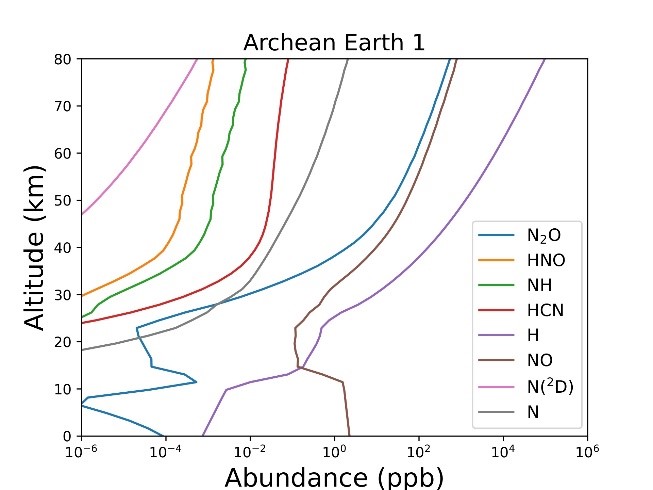
Results: First, we found that for each atmosphere considered, due to the dissociation of N2 by SEPs, N(2D) is produced, giving rise to a rich chemistry that results in the production of greenhouse gases such as N2O and HCN (Figure 1). H2 is also produced. Additionally, another greenhouse gas, CO, is thermochemically produced. Finally, we observed that in the case of secondary atmospheres, the chemical abundances of the species are dominated by SEP-driven chemistry, while high-energy radiation plays a marginal role. Second, for an Archean Earth-like atmosphere of 90% N2, 10% CO₂, and trace amounts of either CH4 or H2, the two most abundant species produced are CO (71 ppm) and H₂ (0.03 ppm). In this condition, the surface temperature increase is no larger than 0.3 K, which makes this solution to the FYSP unviable. Notably, the contribution of nitrogen species (N2O and HCN) to this temperature increase is negligible. Third, revisiting the atmospheric scenario proposed by [3], we found a modest temperature increase (∼0.2 K). Even when the SEP flux is enhanced by a factor of 10 with respect to Carrington-like conditions, the chemical composition of the atmosphere remains unchanged. This indicates that even under stronger space weather conditions, the impact on the planetary thermal state is minimal. Lastly, under present-day conditions, the cumulative effects of a prolonged period of intense solar activity, in terms of frequent Carrington-like SEP events, would decrease the surface temperature by ∼4 K (Figure 2).

Figure 1. Chemical profiles of some key molecules for one of the scenarios studied in this work, corresponding to an initial Archean Earth-like atmosphere of 90% N2, 10% CO2 and trace amounts of CH4. Credits: [17].

Figure 2. Seasonal and latitudinal variations of surface temperature. Top panel: unprocessed atmosphere. Bottom panel: processed atmosphere. Black contour lines highlight the regions of the parameter space for which pure liquid water can be liquid. Credits: [17].

References:
[1] Shibayama T. et al. (2013) ApJS, 209, 5.
[2] Airapetian V., Glocer A., Gronoff G. (2015) Proceedings of the International Astronomical Union, 11, 409.
[3] Airapetian V. S., Glocer A., Gronoff G., Hébrard E., Danchi W. (2016) Nature Geoscience, 9, 452.
[4] Airapetian V. (2016) Proceedings of the International Astronomical Union, 12, 315.
[5] Airapetian V. S. et al. (2020) International Journal of Astrobiology, 19, 136.
[6] Solomon S., Roble R. G., Crutzen P. J. (1982) J. Geophys. Res., 87, 7206.
[7] Solomon S., Reid G. C., Rusch D. W., Thomas R. J. (1983) Geophys. Res. Lett., 10, 257.
[8] Jackman C. H., McPeters R. D. (2004) in Solar Variability and its Effects on Climate. Geophysical Monograph, 141, 305
[9] Jackman C. H. et al. (2001), Geophys. Res. Lett., 28, 2883
[10] Jackman C. H. et al. (2005) Journal of Geophysical Research (Space Physics), 110, A09S27
[11] von Clarmann T. et al. (2013) Geophys. Res. Lett., 40, 2339.
[12] Locci D. et al. (2022) Planetary Science Journal, 3, 1.
[13] Locci D. et al. (2024) Planetary Science Journal, 5, 58.
[14] Simonetti P. et al. (2022) ApJ, 925, 105.
[15] Vladilo G. et al. (2015) ApJ, 804, 50.
[16] Biasiotti L. et al. (2022) MNRAS, 514, 5105–5125.
[17] Biasiotti L. et al. (2025) MNRAS (under review).

How to cite: Biasiotti, L., Simonetti, P., Locci, D., Cecchi-Pestellini, C., Vladilo, G., Calderone, L., Dogo, F., Monai, S., and Ivanovski, S.: The impact of extreme space weather events on Earth's atmosphere, EPSC-DPS Joint Meeting 2025, Helsinki, Finland, 7–13 Sep 2025, EPSC-DPS2025-263, https://doi.org/10.5194/epsc-dps2025-263, 2025.

F2
|
EPSC-DPS2025-599
|
On-site presentation
Stefano Rubino, Francesca Zambon, Rosario Brunetto, Cristian Carli, and Federico Tosi

Introduction. The Moon, as the first planetary body explored beyond Earth, has long been a cornerstone of space exploration. Following early sample return missions by the USA and the USSR, renewed global interest (following recent missions from the USA, China, India, and Japan) has emphasised the need for detailed knowledge of the lunar surface. Mafic minerals like pyroxenes and olivine are widespread on this surface [1, 2], whose spectral features in the near infrared are altered over time by space weathering processes, including solar wind irradiation and micrometeorite impacts [3, 4]. These effects, first observed in Apollo and Luna samples, modify both the chemical composition and optical properties of lunar materials. Therefore, understanding the extent and nature of space weathering is crucial to interpreting remote sensing data. The MoonSWA (Moon Space Weathering Analysis) project, selected in the framework of "Bando Ricerca Fondamentale INAF 2023 (PI: F. Zambon), targets a twofold approach combining remote sensing spectral analysis with laboratory simulations on lunar analogues to investigate space weathering effects on the Moon. The work presented here focuses primarily on the experimental part of this project.

Materials and Methods. We emulate the effects of the solar wind component of SpWe on the Moon’s surface by performing ion-bombardment experiments on several Lunar meteorites, which are not often used for this kind of work due to their scarcity: NWA 8786 (one slab + one pressed-powder pellet), NWA 14188 (one slab + one pellet) and NWA 13859 (slab in epoxy). We used the INGMAR (IrradiatioN de Glaces et Météorites Analysées par Réflectance, Institut d’Astrophysique Spatiale (IAS) - Laboratoire des deux Infinis Irène Joliot Curie (IJCLab), Orsay) vacuum chamber, at room temperature and under vacuum (P ∼ 10⁻⁷ mbar), using 20 keV He⁺ ions provided by the SIDONIE (IJCLab - Orsay) ion-implanter. We then monitored the spectroscopic evolution of our samples in the visible/near-IR range (0.3 to 4 μm) with increasing fluences up to 1x10¹⁷ ions/cm² (10³ - 10⁵ years of exposure at 3AU). Using an infrared microscope, we also acquired additional spectroscopic data in the mid-IR (2 to 16 μm), both before and after the weathering of our samples. We selected multiple ROIs for each sample to investigate ion bombardment's effects with respect to our samples' mineralogical heterogeneity.

Preliminary Results. In the visible to the near-IR range, we focus on the spectral changes affecting several spectral parameters, namely the reflectances at 380, 465 and 550 nm, the absorption band at 1 μm (Band I) and the absorption band centred at ~2 μm (Band II), associated with the spin-allowed crystal field transitions in Fe2+ in olivine and pyroxene, and the spectral slopes associated with Band I and Band II, as well as the Global slope, defined as the slope between the left shoulder of Band I and the right shoulder of Band II. These parameters have been selected since they have been used and deemed the most sensible to ion-bombardment spectral changes on other mafic materials, more specifically HEDs meteorites [5], and are now being tested for applicability for Lunar samples.

Across our samples, we see darkening at all probed wavelengths in the Reflectance space. Band I appears far less affected than the other selected parameters. Finally, in Slope space, we see instances of slope reddening followed by bluing, the bluing phase being associated with the largest achieved ion fluence of 1.0x10¹⁷ ions/cm2. An example of this parameter analysis is shown in Figure 1 for the NWA 8786 pellet sample.


Figure 1. The behaviour of NWA 8786 pellet sample upon 20 keV He+ bombardments with increased ion-fluence. The black arrow represents the increase in fluence. The associated fluences are: 0 (pristine), 0.7, 1.5, 3, 5 and 10 (x1016) ions/cm2. We see darkening across all proved fluences, Band I intensity and area virtually unvarying and reddening slope followed by blueing.

In the mid-IR, we focus on the behaviour or the Reststrahlen features associated with the vibrational modes of the meteorite’s mineral crystal lattices. For instance, we see a systematic red-shift (peak position shift towards longer wavelengths) of the Si-O stretching feature around 10 microns (with varying amplitude, from tenths to hundreds of nanometres), coupled with band depth decrease (up to approximately -8% variation in intensity). Band width is not as affected as peak position and band depth. An example of this analysis on the NWA 8687 chip sample can be seen in Figure 2.


Figure 2. Spectral data before (black) and after ion-bombardment (grey) of two spots from the NWA 8687 chip sample, with associated optical images of said 124x124 μm spots. We see a peak position red-shift coupled to a Si-O stretching band decrease upon weathering.

Conclusion and Perspective. This is a work in progress, as the spectral parameters for all samples have not yet been derived. However, preliminary results suggest that the ion-bombardment-induced spectral trends are coherent with what is commonly associated with Lunar-type SpWe. Additional measurements with scanning and transmission electron
microscopy (SEM and STEM) on both the samples’ ion-bombarded surfaces and focused-ion-beam (FIB) sections extracted from them are being considered to probe ion-bombardment-induced morphological and elemental sample modification and possibly associate these changes with the already identified spectroscopic variations.

Acknowledgement. We thank C. Lantz, O. Mivumbi, J. Boderfois, and P. Benoit-Lamaitrie for their help and technical support with SIDONIE and INGMAR. INGMAR is a joint IAS-IJCLab (Orsay, France) facility funded by the P2IO LabEx (ANR-10-LABX-0038) in the framework Investissements d’Avenir (ANR-11-IDEX-0003-01). This work is part of the INAF MoonSwa mini-grant (PI: F. Zambon) and PRIN INAF MELODY (PI: F. Tosi). SR is supported by the ASI-INAF agreement n.2023-6-HH.0 (Resp: G. Piccioni).

References. [1] McCord, T. B. et al. J. Geophys. Res. 86, 10883–10892 (1981); [2] Pieters, C. M. Reviews of Geophysics 24, 557–578 (1986). [3] Pieters, C. M. et al. Meteorit. Planet. Sci. 35, 1101–1107 (2000). [4] Hapke, B. Journal of Geophysical Research: Planets 106, 10039–10073 (2001). [5] Rubino, S. et al. Icarus, in review.

How to cite: Rubino, S., Zambon, F., Brunetto, R., Carli, C., and Tosi, F.: Solar wind ion-bombardment experiment on Lunar meteorites, EPSC-DPS Joint Meeting 2025, Helsinki, Finland, 7–13 Sep 2025, EPSC-DPS2025-599, https://doi.org/10.5194/epsc-dps2025-599, 2025.

F3
|
EPSC-DPS2025-1644
|
On-site presentation
Francesca Zambon, Stefano Rubino, Rosario Brunetto, Federico Tosi, and Cristian Carli

Airless planetary bodies are continuously exposed to extreme space conditions. Micrometeorite bombardment, diurnal thermal cycling, cosmic rays and solar wind ion implantation - collectively known as space weathering [1] - gradually and permanently alter the chemical and physical properties of their surfaces. The lunar surface is characterized by a variable amount of mafic minerals, particularly pyroxenes, and olivine. The Moon near-infrared reflectance spectra of specific areas, such as the basaltic maria, or small portion of highland’s craters, often around wall and central peak or peak ring, typically exhibit two prominent absorption bands near 1 µm and 2 µm, attributed to the presence of pyroxenes in lunar rocks. The exact position and profile of these absorption features depend on the relative concentrations of Fe²⁺, Ca²⁺, and Mg²⁺ within the M1 and M2 crystallographic sites of pyroxene, as well as in associated olivine, glassy materials, plagioclase or some opaque phases [2].

Space weathering was first identified on the Moon through analyses of samples returned by NASA’s Apollo and the Sovietic Luna missions. On the Moon, the space weathering effects manifests in three key spectral changes: albedo decrease (surface darkening), an increase in spectral slope (reddening), and a reduction of the depth of the absorption bands [3]. These spectral alterations are primarily caused by the formation of nanophase metallic iron (npFe⁰) particles, which occur within agglutinates and along the rims of individual soil grains [1, 4]. The visual effects of this process are evident in the fading of bright ray systems around young craters, which gradually darken and blend into the mature lunar regolith.

The darkening effects of space weathering on the Moon are evident in the bright ray systems surrounding young, fresh craters, which gradually fade and vanish as the surface material weathers over time. Additionally, the pattern and intensity of proton bombardment on the lunar surface are influenced by the Moon’s synchronous rotation and its interaction with Earth’s magnetosphere. These factors lead to an asymmetric distribution of solar wind exposure, resulting in non-uniform space weathering effects across the surface [5].

In this context, the Moon Space Weathering Analysis (MoonSWA) project, selected in the framework of the “Bando Ricerca Fondamentale INAF 2023” has the goal of investigating the effects of space weathering on the lunar surface in the visible and near-infrared spectral range by considering:

  • Spectral analysis of selected regions using publicly available multi- and hyperspectral datasets and high-level data products;

  • Irradiation experiments on lunar analogs (e. g. lunar meteorites) to emulate the space weathering conditions (see [6]);

  • Integrated analysis combining remote sensing data with laboratory-irradiated samples.

This work also supports the ESA/ASI LUMIO mission, aimed at observing, quantifying, and characterizing meteoroid impacts on the lunar far side of the Moon through remote sensing of impact-generated luminous flashes. 

References

  • C.M. Pieters and S.K. Noble, 2016. JGR. Doi: 10.1002/2016JE005128.
  • R. G. Burns, 1993. Mineralogical Applications of Crystal Field Theory, Cambridge University Press.
  • C.M. Pieters et al., 1993. JGR. Doi: 10.1029/93JE02467.
  • S. Noble et al., 2005, MAPS. Doi: 10.1111/j.1945-5100.2005.tb00390.x.
  • E. Kallio et al., 2019. PSS. Doi: 10.1016/j.pss.2018.07.013.
  • Rubino et al., 2025, EPSC-DPS.

Acknowledgements:  This project is funded by  “Bando Ricerca Fondamentale INAF 2023” - MoonSWA mini-grant (PI: F. Zambon). Lunar meteorite samples are provided by the “MELODY” project selected in 2020 in the framework of the PRIN INAF 2019 (RIC) call (PI: F. Tosi). This work is in support of the ESA/ASI LUMIO mission.

How to cite: Zambon, F., Rubino, S., Brunetto, R., Tosi, F., and Carli, C.: Characterization of lunar space weathering by MoonSWA project, EPSC-DPS Joint Meeting 2025, Helsinki, Finland, 7–13 Sep 2025, EPSC-DPS2025-1644, https://doi.org/10.5194/epsc-dps2025-1644, 2025.

F4
|
EPSC-DPS2025-1808
|
On-site presentation
Emily Elizondo and Seth Jacobson

Terrestrial planet formation in the solar system describes the growth of the innermost planets, including Earth. There are two competing accretion mechanisms that may be important for building these planets. The pebble accretion theory proposes rapid (<10 Myr) growth through the accretion of cm-sized objects (pebbles). If Earth grew mostly from pebbles, then this hypothesis requires a Moon-forming impact characterized as late, high angular momentum, and between nearly equal-size bodies. Alternatively, the pairwise accretion theory proposes a much longer Earth formation timescale (10–100 Myr) during which Earth is built through a series of collisions between lunar- to Mars-sized bodies. This hypothesis is consistent with the canonical Mars-sized Moon-forming impactor. The runaway growth that produces the planetary embryos in the pairwise accretion theory could have been produced by pebble accretion, so certainly, both processes could have occurred during the formation of the terrestrial planets. Thus, many hybrid scenarios combining the two theories can be imagined. Therefore, it is necessary to understand how much of a role each accretion mechanism played in the formation of the terrestrial planets.


This challenge can be approached by examining the history of impact debris production, transport, and storage in the main asteroid belt. Impact debris production occurs for all large impacts even relatively small ones such as those that produce the lunar and Martian meteorites, but ejecta creation is particularly voluminous during giant impacts. Indeed, at least one giant impact occurred in all terrestrial planet formation scenarios. Therefore, an investigation into the consequences of these impacts based on their frequency and strength can be conducted. For all giant impacts that occur, debris is generated, but what happens to this debris has not been considered. Spectroscopic studies of meteorites and asteroids have connected a rare set of differentiated asteroids to giant impact debris, which may make up as much as a few percent the mass of the asteroid belt. Thus, we hypothesize that some fraction of debris produced by giant impacts could currently reside in the asteroid belt. Quantifying the mass of potential debris currently in the asteroid belt provides an observational constraint on the total mass of debris produced during terrestrial planet formation.


In this study, we incorporate imperfect accretion into one of the leading pairwise accretion scenarios, the early instability scenario, allowing for various collision types and debris generation. The astrophysical N-body integrator SyMBA is used to track and quantify the total mass of debris that resides in the asteroid belt. After numerically evolving each simulated systems for 100 Myr, we reproduced terrestrial planet analogues similar to other simulations of the early giant planet instability scenario, and our results also agree that an orbital instability occurring between 1 and 10 Myr work best for reproducing terrestrial planet analogues. Like past work, we found that including imperfect accretion had a relatively small effect on the final accreted planets, however unlike most past work, we now focus on what happened to the debris from these impact events.


Every simulation of terrestrial planet formation possessed giant impacts which produced debris. These debris particles were scattered onto many different orbits including trajectories that intersected the Sun and other planets. Some were even ejected from the solar system. At the end of the 100 Myr simulation, we assessed which particles were on stable orbits in the asteroid belt. We found that 52 (32%) of simulations produced a significant overabundance of debris on stable orbits in the main asteroid belt while the remaining 110 (68%) simulations produce no debris on stable orbits in the asteroid belt. Of the simulations that had debris in the asteroid belt, ~95% had a total mass of debris that was greater than the current mass of the asteroid belt, as shown in Fig. 1. Some simulations produced as much as about 46 times more mass in debris than there is mass in the asteroid belt. The strong dichotomy between those simulations that produced a lot of debris in the asteroid belt and those that produced very little is likely due to a resolution issue. The debris particles used were each between about 4 – 0.85 times an asteroid belt mass, so these simulations struggled to resolve instances where perhaps only a small amount of debris ended up in the asteroid belt. 

Figure 1. The total mass of debris in the asteroid belt (2.2-3.5 AU) at the end of the 100 Myr simulation as a function of the total mass of debris generated throughout the entire simulation. The mass of the debris is normalized by the current mass of the asteroid belt, where 1 defines the current mass of the asteroid belt (red dashed line). The dark blue, pink, grey, and light blue points represent runs where an orbital instability was triggered at 1 Myr, 5 Myr, 10 Myr, and 50 Myr respectively. Only the simulations that generated debris in the asteroid belt are shown here.


How to cite: Elizondo, E. and Jacobson, S.: Consequences of imperfect accretion in the early giant planet instabilitymodel, EPSC-DPS Joint Meeting 2025, Helsinki, Finland, 7–13 Sep 2025, EPSC-DPS2025-1808, https://doi.org/10.5194/epsc-dps2025-1808, 2025.

F5
|
EPSC-DPS2025-1809
|
On-site presentation
Esa Kallio, Paul Bernhardt, Antti Kero, Ari-Matti Harri, Olli Knuuttila, Joonas Niittyniemi, Anita Aikio, Elias Hirvonen, Riku Jarvinen, Kirsti Kauristie, Antti Kestilä, Petri Koskimaa, Leo Nyman, Rafay Mahmood, Pyry Peitso, Aleksi Alatalo, Jouni Rynö, Heikki Vanhamäki, Noora Partamies, and Stanley Briczinski

The Suomi 100 CubeSat was launched on Dec. 3, 2018 (https://www.suomi100satelliitti.fi/index_eng.html; http://www.suomi100satelliitti.fi/). The 1 Unit (10×10×10 cm) polar orbit nanosatellite performs geospace, ionosphere, and arctic region research with a white light camera and a radio wave spectrometer instrument operating in the 5-10 MHz frequency range.

The Suomi 100 satellite presents a novel technology that provides new opportunities to study Earth’s atmosphere and ionosphere. CubeSats, a type of nanosatellite, offer a cost-effective means to conduct in-situ measurements of the atmosphere and the ionosphere. Especially, combined CubeSat observations with ground-based observations provides new possibilities to investigate auroras and associated electromagnetic phenomena.

The presentation will focus on the most recent measurements made by the satellite’s HEARER radio spectrometer [1], with an emphasis on new measurement campaigns conducted in collaboration with the High-frequency Active Auroral Research Program (HAARP) high power HF facility in 2024 and 2025. For these experiments, the HAARP HF array was used to point an 8.1 MHz beam at the satellite in the shape of either a pencil beam or a twisted beam [2]. The purpose of the experiment is to determine the impact of ionospheric distortions on transionospheric propagation. We also introduce numerical models that have been developed to investigate the propagation of radio waves in the ionosphere, especially the effects of ionospheric scintillation.


Figure 1. A composite figure displaying the Suomi 100 satellite photographed prior to launch, along with a dayside photograph of the Earth taken by the satellite from its orbit.


References

[1] E. Kallio, Kero, A., Harri, A.-M., Kestilä, A., Aikio, A., Fontell, M., et al. (2022). Radar—CubeSat transionospheric HF propagation observations: Suomi 100 satellite and EISCAT HF facility. Radio Science, 57, e2022RS007516. https://doi.org/10.1029/2022RS007516

[2] S. J. Briczinski, Bernhardt, P.A., Siefring, C.L. et al. (2015). Twisted Beam, SEE Observations of Ionospheric Heating from HAARP. Earth Moon Planets 116, 55–66. https://doi.org/10.1007/s11038-015-9460-3

How to cite: Kallio, E., Bernhardt, P., Kero, A., Harri, A.-M., Knuuttila, O., Niittyniemi, J., Aikio, A., Hirvonen, E., Jarvinen, R., Kauristie, K., Kestilä, A., Koskimaa, P., Nyman, L., Mahmood, R., Peitso, P., Alatalo, A., Rynö, J., Vanhamäki, H., Partamies, N., and Briczinski, S.: Ionosphere Research Using the Suomi 100 Satellite and HAARP HF Transmitter, EPSC-DPS Joint Meeting 2025, Helsinki, Finland, 7–13 Sep 2025, EPSC-DPS2025-1809, https://doi.org/10.5194/epsc-dps2025-1809, 2025.