1 Introduction
The polarimetric properties of airless Solar System bodies provide invaluable insights into their surface characteristics. While extensively applied to asteroids, often interpreted using empirical models, the Moon – our most meticulously studied airless body – offers a unique "ground-truth" calibrated benchmark. Historical lunar polarimetry established fundamental relationships [1,2,3]. This study focuses on the geologically diverse Atlas crater region, treating its terrains as distinct analogues for asteroid surfaces. We employ a multi-step approach: first, fitting an empirical model typically used for Near-Earth Asteroids (NEAs) to characterize phase curve behavior and extract key parameters; second, applying Principal Component Analysis (PCA) to this set of derived and fitted parameters to identify dominant modes of variation; and third, utilizing machine learning for terrain segmentation based on these PCA components. This work aims to: (1) derive robust polarimetric parameters and identify distinct polarimetric units within Atlas using four spectral bands (B,V,R,I); (2) enhance understanding of how lunar surface properties (e.g., soil maturity, pyroclastic deposits) govern these signatures; and (3) provide a well-constrained calibration dataset for interpreting polarimetric observations of asteroids.
2 Methods
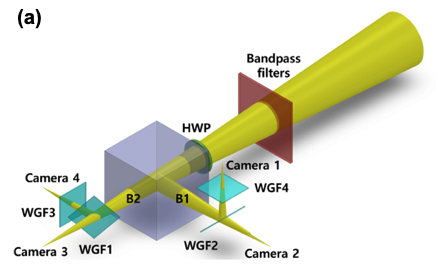
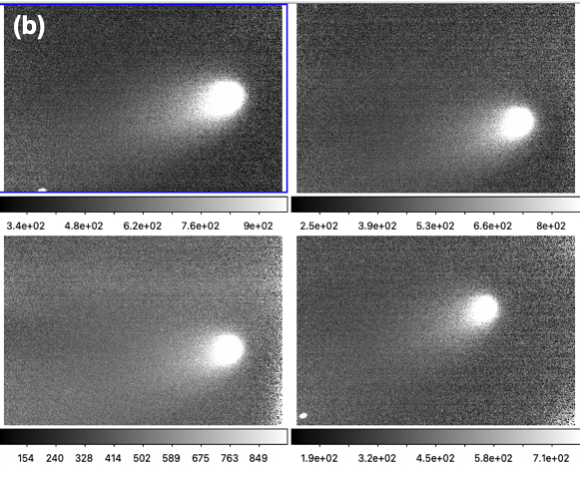
Spectropolarimetric observations of the Atlas crater region were acquired in the Johnson-Cousins BVRI filter bands. The instrumentation included a 430mm reflector telescope located at Mount Abu, India, and a 200mm reflector telescope at Wetter, Germany. The camera system employed, as detailed in [4], provided an image scale of approximately 0.9 km/pixel. The data capture the degree of linear polarization (DoLP) as a function of phase angle (α) across these four spectral bands.
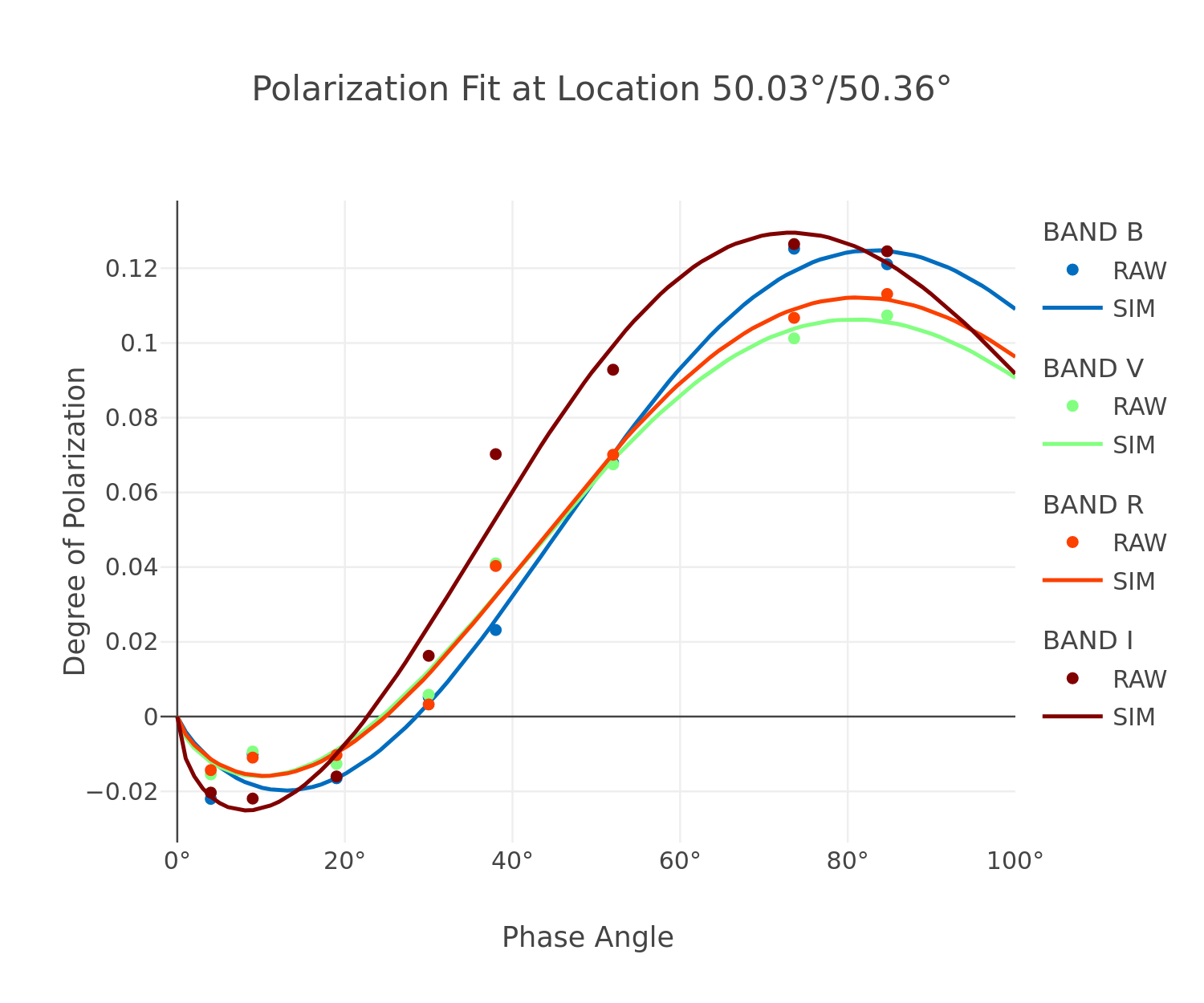
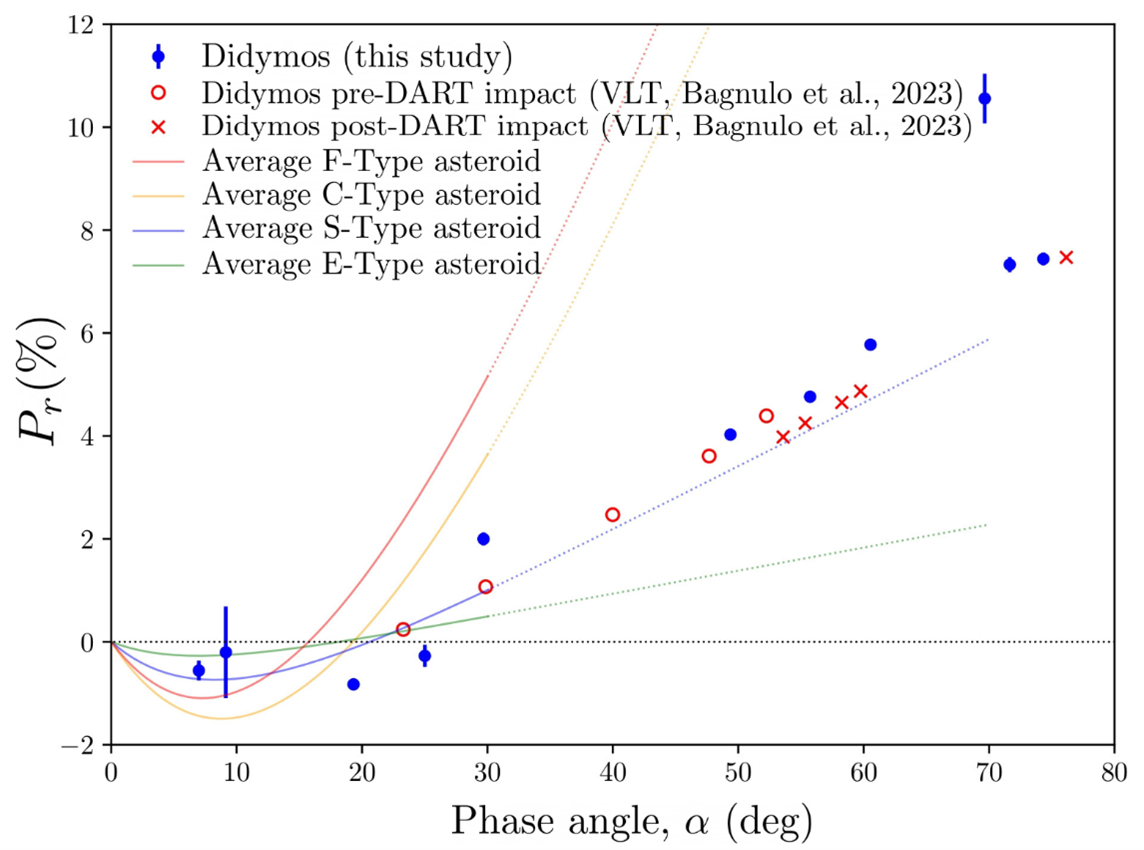
1. Empirical Phase Curve Modeling: We applied the empirical phase-polarization model described for NEAs by Bagnulo et al. [5, Section 2.2, Equation 7]: DoLP(α)=A· sinB (α) · cosC (α/2) · sin(α − αinv). This model was fitted to the observed DoLP phase curves for sub-regions within the Atlas study area (example in Fig. 1).

Figure 1 (Highland)
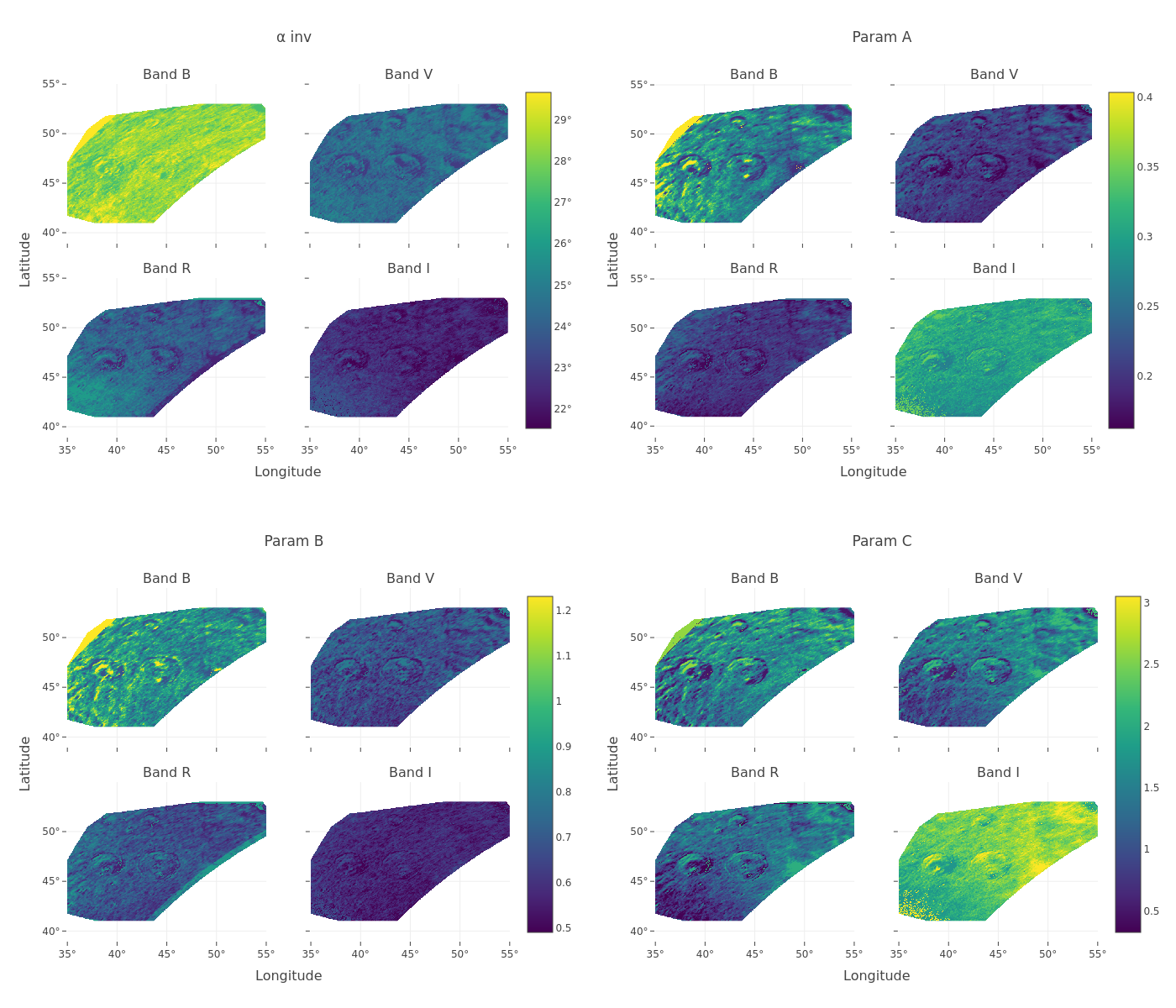
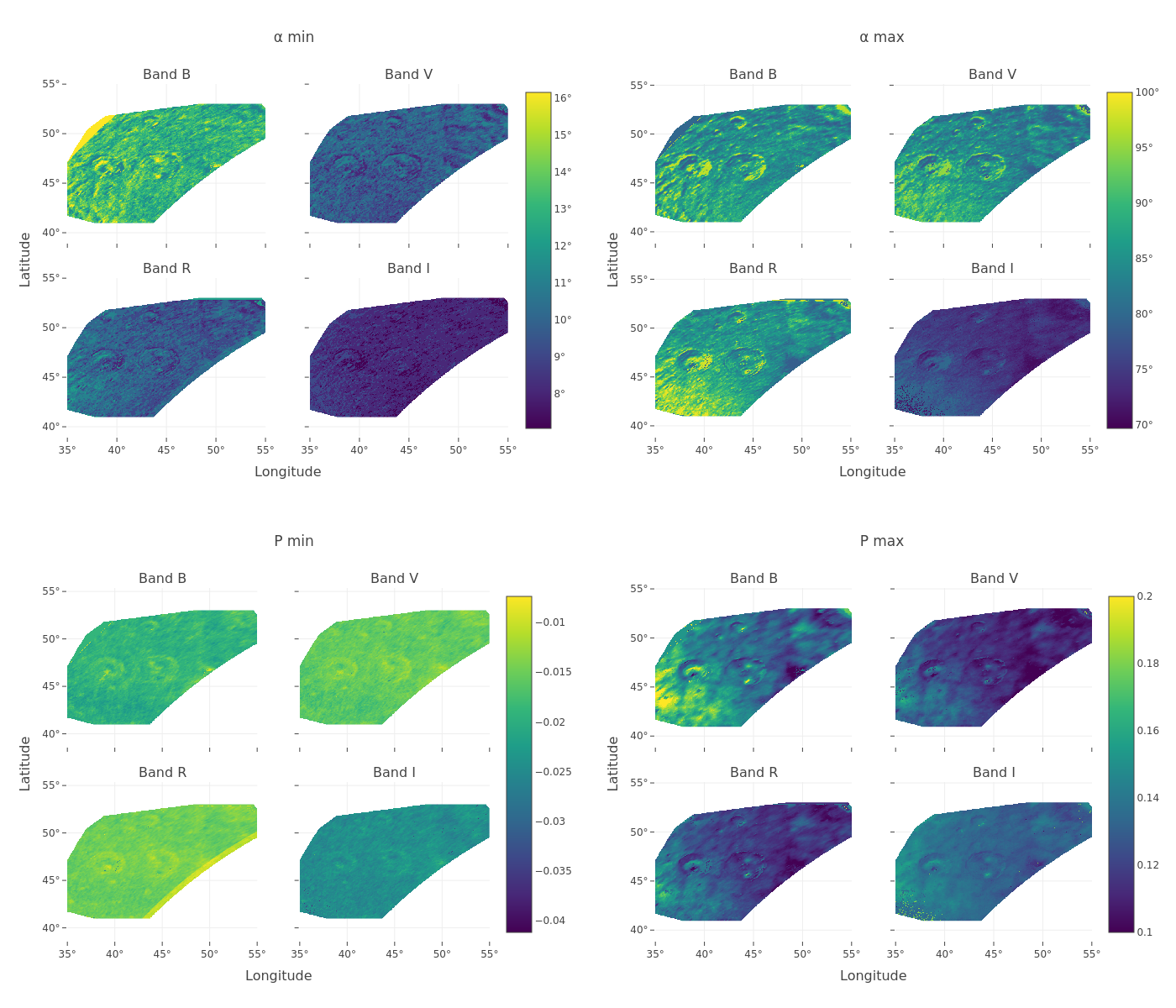
This yields maps of the fitted model parameters A, B, C, and αinv (Fig. 2). From these best-fit curves, features like minimum/maximum polarization (Pmin, Pmax) and their respective phase angles (αmin, αmax) were also numerically derived (Fig. 3).

Figure 2 Figure 3
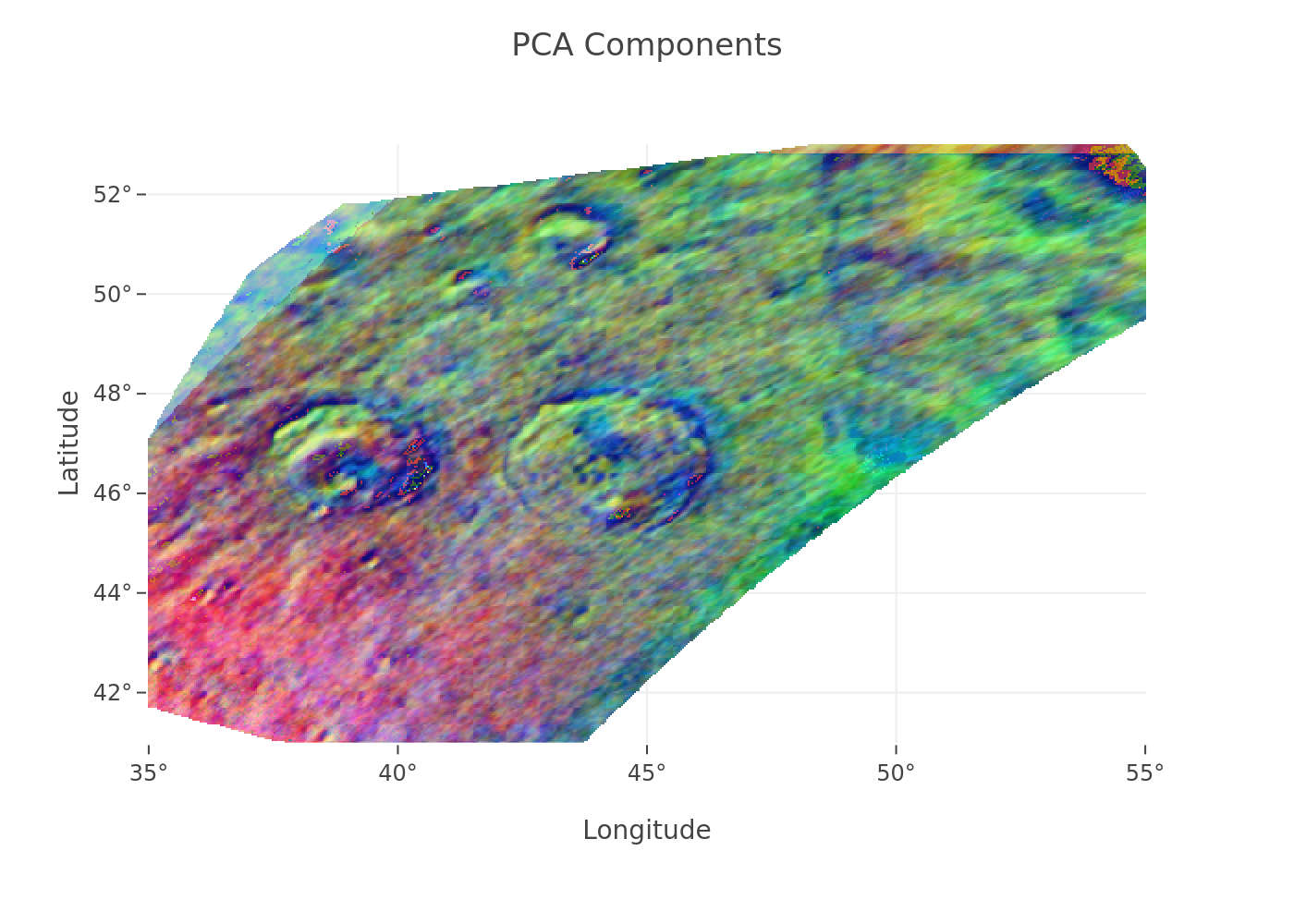
2. Principal Component Analysis (PCA) of Parameters: PCA was subsequently performed on the combined set of these eight parameters (four fitted: A, B, C, αinv; and four derived: Pmin, αmin, Pmax, αmax) obtained for each pixel across the BVRI bands. This approach reduces the dimensionality of the parameter space and identifies the principal axes of variation in the collective polarimetric response characteristics (Fig. 4).

Figure 4
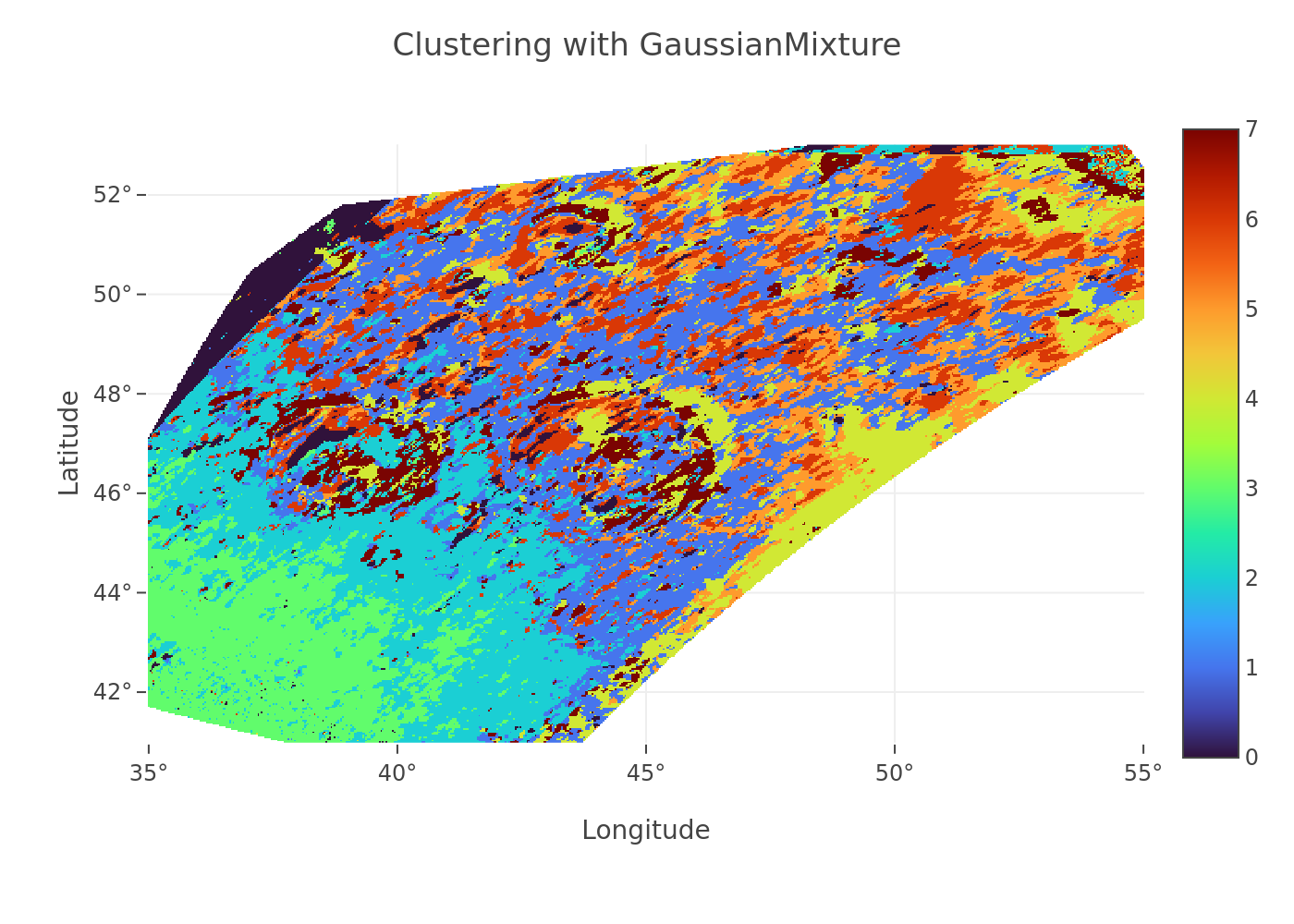
3. Clustering: Unsupervised machine learning (Gaussian Mixture Model clustering) was applied to the significant PCA components derived from the
parameter set. This step segments the Atlas region into distinct units based on similarities in their comprehensive polarimetric parameter signatures (Fig. 5).

Figure 5
3 Results
The integrated analysis of the Atlas BVRI spectropolarimetric dataset yields several key findings:
1. Empirical Model and Derived Parameter Maps: The spatial maps of the fitted parameters (A,B,C,αinv, Fig. 2) and the derived polarimetric features (Pmin,αmin,Pmax,αmax, Fig. 3) exhibit apparent variations correlated with known geological units. Notably, higher αmax values are observed for more mature mare surfaces compared to the fresh ejecta of Atlas crater, consistent with Shkuratov et al. [6] linking higher αmax to increased soil maturity.
2. PCA of Parameter Space: The PCA components map (Fig. 4), derived from the comprehensive set of eight fitted and derived parameters, effectively highlights geological distinctions and interdependencies between these parameters. Different colors in the PCA map correspond to distinct combined polarimetric characterizations.
3. Clustering Results: The Gaussian Mixture Model clustering applied to the PCA components of the parameter set (Fig. 5) successfully segments the Atlas region into distinct units. A strong spatial correlation is observed between specific clusters and known pyroclastic deposits, on the floor of the Atlas crater. This indicates that the combined polarimetric parameters captured by PCA are sensitive to such deposits, yielding results for terrain differentiation similar in utility to the direct DoLP analysis in Wöhler, et al. [4].
4. Wavelength Dependencies: All initial parameters demonstrate noticeable dependencies on wavelength across the BVRI bands, which are propagated into the PCA and clustering stages.
4 Discussion
The Atlas region serves as an exceptional natural laboratory. By first parameterizing the phase curve behavior using an empirical model (Figs. 2,3), we distill the polarimetric information into a set of physically meaningful (though empirical) coefficients and features. The subsequent PCA on this parameter space (Fig. 4) identifies the dominant combinations of these characteristics that differentiate lunar terrains. The observed correlation between higher αmax values and increased soil maturity provides a quantitative lunar benchmark. Critically, the clustering of these PCA-reduced parameters (Fig. 5) demonstrates a powerful capacity to identify and map geological units, the pyroclastic deposits. Although the PCA is applied to a different input dataset than in Wöhler, et al. [4] (parameters vs. raw DoLP), the ability to distinguish terrains, including pyroclastics, remains robust, suggesting that the information content is well-preserved and effectively summarized by the empirical model parameters.
5 Conclusion
This study demonstrates a novel approach by combining empirical phase curve modeling with PCA of the resulting parameter set and subsequent machine learning to analyze BVRI lunar spectropolarimetric data from the Atlas region. We have quantitatively characterized phase curve behavior and identified distinct polarimetric units defined by combinations of these parameters, linking them to geological features and surface properties like soil maturity and pyroclastic deposits. These findings establish the Atlas region as a crucial calibration site for interpreting asteroid polarimetry, and the methodology offers a new avenue for extracting comprehensive insights from polarimetric datasets.
[1] Lyot,Ph.D.Thesis,Jan.1929.
[2] Dollfus,Planets&Satellites.Jan.1961,p.343.
[3] Shkuratov et al.,PSS59.13(Oct.2011),pp.1326–1371.
[4] Wöhler et al., AJ167.5(May2024),p.187.
[5] Bagnulo, et al.,A&A32.1(Dec.2024)
[6] Shkuratov et al., Icarus187.2(Apr.2007),pp.406–416