EXOA11 | Exoplanet characterization of (super-)Earths and sub-Neptunes

EXOA11

Exoplanet characterization of (super-)Earths and sub-Neptunes
Convener: Lena Noack | Co-conveners: Heike Rauer, Theresa Lueftinger, Ana Maria Heras, Kevin Heng, Tim Lichtenberg
Orals TUE-OB3
| Tue, 09 Sep, 11:00–12:30 (EEST)
 
Room Earth (Veranda 2)
Orals WED-OB2
| Wed, 10 Sep, 09:30–10:30 (EEST)
 
Room Jupiter (Hall A)
Orals WED-OB3
| Wed, 10 Sep, 11:00–12:30 (EEST)
 
Room Jupiter (Hall A)
Posters TUE-POS
| Attendance Tue, 09 Sep, 18:00–19:30 (EEST) | Display Tue, 09 Sep, 08:30–19:30
 
Finlandia Hall foyer, F223–235
Tue, 11:00
Wed, 09:30
Wed, 11:00
Tue, 18:00
With JWST scientifically operational since mid-2022, and PLATO and ARIEL on the horizon, we are now in the middle of a decade of exoplanet characterization. We therefore invite abstracts to this session with a focus on the characterization of rocky to sub-Neptune. This includes modeling of their internal chemical composition and structure, density and age, laboratory experiments and ab initio calculations, thermal evolution models, and atmospheric evolution models. We also invite abstracts focussing on the observational capability of current and upcoming space missions and ground-based telescopes to characterize low-mass to Neptune-size exoplanets. Our aim with this session is to foster the discussion between modelers, experimentalists and observers especially in preparation for the PLATO and ARIEL space missions.

Session assets

Orals TUE-OB3: Tue, 9 Sep, 11:00–12:30 | Room Earth (Veranda 2)

Chairpersons: Lena Noack, Theresa Lueftinger
Atmospheric characterization
11:00–11:12
|
EPSC-DPS2025-30
|
On-site presentation
Pierre Drossart, Antonio Garcia-Munoz, Panayotis Lavvas, Lotfi Ben Jaffel, Jean-Philippe Beaulieu, Jorge Sanz-Forcada, Jaume Orell-Miquel, Dongdong Yan, Adrien Masson, Enric Palle, and Sandrine Vinatier

Interaction phenomena between atmospheric layers in planetary atmospheres give rise to highly complex exchanges influencing thermal structure, composition and dynamics. In particular, the question of hydrodynamic escape in exoplanet atmospheres is a key issue for quantifying the mass loss in these atmospheres. Short-period exoplanets subject to violent interactions with their host star are particularly sensitive to these effects [1,2]. The scientific program presented here called AETHER (Atmospheric Escape and Transfer phenomena in Heated Exoplanets by stellar Radiation) combining modelling and future observations is a continuation of a pioneer work connecting lower and upper atmospheric modelling in exoplanets [3].

  • In order to address these questions, a model is presented combining energy deposition (itself constrained by XUV emissions from the parent star), the chemistry induced in an atmosphere of hydrogen, helium and heavier elements, and dynamical redistribution to go beyond one-dimensional models. The objective of the model is to characterize observables in exoplanets spectroscopy, in order to adapt the model to real observations, and to constrain in fine the atmospheric escape.
  • Observables to characterize these phenomena include Ly-α lines (observable from space, but perturbed by reabsorption from the interstellar medium), metallic lines [4], and more recently the He-I [5,6,7] which coupled with observations of the H-α line has enabled advances on the models [8,9]. An atmospheric radiative transfer model incorporating the predictions of the energy deposition model [10] completes the atmospheric modeling towards the lower atmospheric levels.
  • Models for the He I triplet at 1.083µm have been scaled to the well described planet HD 209458b. Assuming a He absorption taken from Carmenes analysis [11], line intensities can be predicted for observations by high resolution spectroscopy. Different planets have been studied for higher XUV fluxes and escape mass, like in HAT-P-11b [3, 6]. For still higher irradiation, like on HAT-P-32b [5,12] the detectability would be more easily ensured.
  • In addition to these lines, the simulation has focused on the detectability of hydrogen quadrupole lines : H2 lines in 1-0 and 2-0 bands at 2.3 and 1.15 µm respectively are modelled in the radiative transfer simulation. These transitions have been detected on Jupiter [13] in particular conditions, as in the auroral regions. Detecting direct H2 transitions would not be only a textbook achievement in the study of exoplanets, but would pave the way for direct measurement of the atmospheric temperatures at their pressure level of formation (typically ~100 mbar in transit spectroscopy in H filter, for the 2-0 vibrational band of H2). In addition to the normal atmosphere calculations, a probable upper atmosphere heating, would enhance the possibility to detect H2 by populating the upper transitional levels by analogy with Jupiter [14].
  • Targets for future observations of exoplanets are in the class of hot (super)Neptunes, with “puffy” atmospheres and large atmospheric scale heights. A good template for the simulations would be the planet WASP-193b [2]. This planet is particularly intriguing as a low-density Super-Neptune, described in the discovery paper as "an exquisite target for characterization by transmission spectroscopy." With a Transmission Spectroscopy Metric (TSM) of approximately 600, WASP-193b ranks as the fourth highest among all known exoplanets, making it a prime candidate for atmospheric studies. The full list of parameters of WASP-193b can be obtained from [2], the most important being a radius R~1.463 RJup, an equilibrium temperature Teq=1252 K and a mass Mp=0.141 MJup, leading to a density of 0.059 g.cm-3.
  • The program AETHER will be developped in preparation for the Ariel mission - even if observations in this field are beyond the reach of its instruments, understanding and modeling them is a key element for a better knowledge of the chemistry of the lower atmosphere, the main target of Ariel observations.

Figure caption : a) He line prediction: (case 0) equilibrium temperature 1252 K at 1 micro bar and solar abundance modified by Wasp-193 [Fe/H]; (case 1) boundary condition set by the lower atmosphere chemistry model, using the same SED for both regions (self-consistent). b) H2-q contribution prediction

References

[1] García Muñoz, A.; Fossati, L.; Youngblood, A.; Nettelmann, N.; Gandolfi, D.; Cabrera, J.; Rauer, H. A Heavy Molecular Weight Atmosphere for the Super-Earth π Men c. 2021ApJ...907L..36G

[2] Barkaoui, Khalid et al. An extended low-density atmosphere around the Jupiter-sized planet WASP-193 b, (2024) NatAs, 8, 909B

[3] Ben-Jaffel, Lotfi; Ballester, Gilda E.; García Muñoz, Antonio;  Lavvas, Panayotis; Sing, David K.; Sanz-Forcada, Jorge;  et al. Signatures of strong magnetization and a metal-poor atmosphere for a Neptune-sized exoplanet. (2022) NatAs, 6, 141.

[4] Casasayas-Barris N. et al. Atmospheric characterization ofthe ultra-hot Jupiter MASCARA-2b/KELT-20b. Detection of CaII, FeII, NaI, and the Balmer series transit.  spectroscopy. (2019) A&A, 628A, 9

[5] Czesla, S. et al, Hα and He I absorption in HAT-P-32 b observed with CARMENES. Detection of Roche lobe overflow and mass loss (2022) A&A, 657A, 6

[6] Allart, R. et al.  Spectrally resolved helium absorption from the extended atmosphere of a warm Neptune-mass exoplanet (2018) Science, 362, 1384

[7] Masson A. et al. Probing atmospheric escape through metastable He I triplet lines in 15 exoplanets observed with SPIRou. (2024) Astronomy & Astrophysics, Volume 688, A179.


[8] Lampon, M.et al. 2023. Characterisation of the upper atmospheres of HAT-P-32b. A&A 673 A140

[9] Sanz-Forcada, et al. Connection between planetary He I λ10 830 Å absorption and extreme-ultraviolet emission of planet-host stars. 2025A&A. 693A.285S

[10] Arfaux, Anthony; Lavvas, Panayotis Coupling haze and cloud microphysics in WASP-39b's atmosphere based on JWST observations (2024) MNRAS, 530, 482A

[11] Lampon, M. et al. Modelling the He I triplet absorption at 10 830 Å in the atmosphere of HD 209458 b. (2020) A&A, 636A, 13L.

 [12] Yan, D. et al. A possibly solar metallicity atmosphere escaping from HAT-P-32b revealed by Hα and He absorption (2024) A&A, 686A, 208

[13] Kim, S.; Temperatures of the Jovian auroral zone inferred from 2-μm H2 quadropole line observations. (1990) Icarus, 84, 54.

[14] Barthelemy, M. et al. H2 vibrational temperatures in the upper atmosphere of Jupiter. (2005) A&A, 437, 329

How to cite: Drossart, P., Garcia-Munoz, A., Lavvas, P., Ben Jaffel, L., Beaulieu, J.-P., Sanz-Forcada, J., Orell-Miquel, J., Yan, D., Masson, A., Palle, E., and Vinatier, S.: From atmospheres to exospheres in exoplanets, EPSC-DPS Joint Meeting 2025, Helsinki, Finland, 7–13 Sep 2025, EPSC-DPS2025-30, https://doi.org/10.5194/epsc-dps2025-30, 2025.

11:12–11:27
|
EPSC-DPS2025-644
|
ECP
|
On-site presentation
Adrien Masson, Sandrine Vinatier, and Bruno Bézard and the PLANETS - WP4
Thousands of exoplanets have been confirmed in the last two decades, and yet observational constraints on their compositions have only been obtained for a few hundred of them so far. Current detection methods only give access to the radius and mass of a planet and therefore to its bulk density, which generally induces large degeneracies in terms of composition and structure. Characterization of exoplanet atmospheres has therefore emerged as a challenge for the exoplanet scientific community. Constraining the composition, dynamics, and overall structure of an exoplanet atmosphere allows us to infer its formation and evolution history and to put our Solar system in a broader context through comparative planetary science. Transmission spectroscopy has emerged as a powerful method to characterize exoplanetary atmospheres: when an exoplanet transits its host star, part of the stellar flux passes through the exoplanet’s atmosphere, imprinting the signature of its molecular components on the observed flux. Observing these transmission spectra with ground-based high-resolution spectrometers allows us to detect the species present in the atmosphere and probe the dynamics of the atmosphere by resolving the individual lines, all while being less sensitive to clouds and hazes' opacities than space-based observations at medium resolution. However, the analysis of ground-based observations requires state-of-the-art data reduction and processing methods to correct for the Earth's atmosphere and the background host star contributions and to extract the faint planetary signal whose individual line amplitudes are orders of magnitude weaker than the noise.

I will present the work, codes, and methodology developed during my PhD to characterize the atmosphere of fifteen exoplanets observed with the SPIRou instrument, a near-infrared spectropolarimeter at the Canada-France-Hawaii Telescope. This presentation will focus on our search for the metastable He triplet signature at 1083.3 nm (in vacuum), a near-infrared probe for atmospheric escape, and for molecular signatures to constrain the atmospheric composition and structure of 15 targets ranging from super-Earth and sub-Neptunes to hot Jupiters (Fig. 1.). I will present our results in terms of mass loss rate and escape temperature constraints obtained with Parker-wind modelisation of atmospheric escape (Fig. 2.). I will then discuss our results regarding the presence and abundances of molecules such as H2O, CO, and CH4, obtained with Cross Correlation Function and Nested Sampling methods coupled with a 1D radiative-convective equilibrium code and a high-resolution radiative transfer model (Fig. 3.). Applying the same reduction pipeline on a set of targets observed with the same instrument further allowed us to provide homogeneously retrieved constraints on these targets, paving the way toward a statistical understanding of exoplanets in terms of atmospheric composition and structure.
 

Fig. 1. List of the fifteen targets studied in this work
 
Fig. 2. Detection of the metastable He triplet lines (black) in HAT-P-11 b and fitting with a Parker wind escape model (red)
 
Fig. 3. Cross Correlation Function map in velocity space showing the detection of H2O in WASP-127 b


How to cite: Masson, A., Vinatier, S., and Bézard, B. and the PLANETS - WP4: A Homogeneous Study of Exoplanetary Atmospheres Using High-Resolution Transit Spectroscopy, EPSC-DPS Joint Meeting 2025, Helsinki, Finland, 7–13 Sep 2025, EPSC-DPS2025-644, https://doi.org/10.5194/epsc-dps2025-644, 2025.

11:27–11:39
|
EPSC-DPS2025-185
|
On-site presentation
Grace Bischof, Robin Wordsworth, and John E. Moores

Introduction

     Lyman-alpha transmission spectroscopy has been a powerful tool for observing hydrogen escape from close-in exoplanets. For instance, Ly-α observations of GJ 436b showed a maximum transit depth of 56% – compared to a 0.69% transit depth in optical wavelengths – due to the hydrodynamic escape of hydrogen from the planet (1). Ly-α observations assist in understanding the evolution of such exoplanets, including characterization of the atmosphere.

     To date, the Ly-α transit of terrestrial-sized exoplanets has yielded only non-detections for exoplanets such as Trappist 1b/c (2) and 55 Cn e (3) using the Hubble Space Telescope. These non-detections possibly indicate that terrestrial exoplanets do not have enough hydrogen escape to be observed in Ly-α. Despite these non-detections, Earth’s hydrogen exosphere has been shown to extend out past 38 Earth-radii, and modelling has suggested that an exoplanet with an Earth-like hydrogen exosphere orbiting an M-dwarf star would be observable with future space telescopes (4).

     This work models the Ly-α transit of varying terrestrial exoplanets to diagnose atmospheric composition. For example, how does the Ly-α transit of a desiccated planet like Venus compare to a water-rich planet like Earth? Can we discern these differences from future space telescope observations? To test this, we model the thermal escape of hydrogen from terrestrial exoplanets and compute the associated Ly-α transit depth. Atmospheric parameters in the upper atmosphere, such as the mixing ratio of hydrogen, are varied to analyze the resulting Ly-α transit depth. From this, we examine trends in the transit depth to characterize the atmospheres of terrestrial exoplanets. In addition, we derive key attributes of exoplanets that would be detectable with future space telescopes.

Methods

     In this work, the hydrogen exosphere is modelled using the Chamberlain approach (5). Key input parameters needed are the exobase height, the number density of hydrogen, and the exobase temperature. The exobase height and hydrogen number density are calculated by setting up a 2-component atmosphere at the homopause (the altitude where different species can diffusively separate, situated at 100 km from the surface with a total species number density of 1019  molecules cm-3), with a given hydrogen mixing ratio. The species diffuse upward from the homopause until they reach the exobase where the mean free path of the atmosphere is equal to the scale height. We also account for diffusion-limited escape. In a scenario where Jean’s escape is larger than the diffusion-limited escape, the number density of hydrogen is scaled to the diffusion-limited value. The exobase temperature is a free parameter in our model, though observations from the solar system indicate that a CO2 dominated exobase is cooler than an atomic oxygen-dominated exobase such as Earth’s, due to infrared cooling.

     Once the hydrogen exosphere is modelled, the radiative transfer code from the open-source model Sunbather (6) is used to model the transit. By default, we consider the planet to be mid-transit with an impact factor of 0. Factors affecting the transit depth, such as thermal line broadening are included.

     We consider a wide parameter space of planets between 0.5 to 2 Earth radii, with atmospheric temperatures between 100 to 700 K, and hydrogen mixing ratios between 10-10 and 1.  For each run of the model, the hydrogen exosphere is computed at several exospheric temperatures between 100 and 1000 K to span the range of exobase temperatures observed in the solar system.

Results

     An example of the number density of hydrogen in the exosphere and the resulting Ly-α transit in shown in Figure 1. In this case, we have modelled an Earth-sized planet with a hydrogen mixing ratio of 10-6 at the homopause that diffuses through an upper atmosphere of atomic oxygen. The exobase is 228 km from the surface with a hydrogen number density of 3.4 x 10⁴, limited by the diffusion. The exobase is dominated by atomic oxygen, and modelled to be at 1000 K. The Ly-α transit depth around a sun-sized star is 275 ppm, much smaller than observed for close-in Neptunes, but possibly observable with future space telescope technology at a distance where geocoronal contamination is minimal.

   
Figure 1: (a) Hydrogen number density in the exosphere as a function of distance from the planet (b) The Ly-α transit in ppm.

     Figure 2 shows the transit depth of exoplanets with varying masses and hydrogen mixing ratios at the homopause. Here a fixed exobase temperature of 1000 K  was used though the simulations were also run with other exobase temperatures (not shown here, though the Ly-α transit typically increases with increasing exobase temperature due to the hydrogen atoms escaping the exobase more easily). The transit depth shows a strong dependence on hydrogen mixing ratio, with higher hydrogen mixing ratios resulting in a larger transit depth. The mass of the planet also affects the transit depth, with lower mass planets allowing for hydrogen escape more easily than more massive planets.

Figure 2: Ly-α transit depths for exoplanets with varying masses and hydrogen mixing ratios.

We will also present the effects of photoionization, making the hydrogen no longer observable in Ly-α. Lastly, we will test the ability to detect these Ly-α transits with space telescopes.


(1) Ehrenreich D, Bourrier V, Wheatley PJ, des Etangs AL, Hébrard G, Udry S, et al. A giant comet-like cloud of hydrogen escaping the warm Neptune-mass exoplanet GJ 436b. Nature. 2015 Jun;522(7557):459–61.

(2) Bourrier V, Ehrenreich D, Wheatley PJ, Bolmont E, Gillon M, Wit J de, et al. Reconnaissance of the TRAPPIST-1 exoplanet system in the Lyman-α line. Astron Astrophys. 2017 Mar 1;599:L3.

(3) Salz M, Czesla S, Schneider PC, Schmitt JHMM. Simulating the escaping atmospheres of hot gas planets in the solar neighborhood. Astron Astrophys. 2016 Feb 1;586:A75.

(4) Santos LA dos, Bourrier V, Ehrenreich D, Kameda S. Observability of hydrogen-rich exospheres in Earth-like exoplanets. Astron Astrophys. 2019 Feb 1;622:A46.

(5) Chamberlain JW. Planetary coronae and atmospheric evaporation. Planet Space Sci. 1963 Aug 1;11(8):901–60.

(6) Linssen D, Shih J, MacLeod M, Oklopčić A. The open-source sunbather code: Modeling escaping planetary atmospheres and their transit spectra. Astron Astrophys. 2024 Aug 1;688:A43.


How to cite: Bischof, G., Wordsworth, R., and Moores, J. E.: Characterization of Terrestrial Exoplanet Atmospheres through Lyman-alpha Transit Observations, EPSC-DPS Joint Meeting 2025, Helsinki, Finland, 7–13 Sep 2025, EPSC-DPS2025-185, https://doi.org/10.5194/epsc-dps2025-185, 2025.

11:39–11:51
|
EPSC-DPS2025-1823
|
On-site presentation
JWST observations of the cornerstone temperate sub-Neptune K2-18 b
(withdrawn)
Renyu Hu
11:51–12:03
|
EPSC-DPS2025-1750
|
ECP
|
On-site presentation
Lukas Felix, Daniel Kitzmann, Brice-Olivier Demory, and Christoph Mordasini

TOI-270 d, a sub-Neptune (Rp ≈ 2.2 R, Teq ≈ 340 K) orbiting a nearby M3V star, offers an exceptional opportunity for atmospheric characterization of a temperate sub-Neptune with the James Webb Space Telescope (JWST). Recent analyses of transit data from NIRSpec and NIRISS have yielded conflicting interpretations of the planet’s atmosphere: a high-metallicity, miscible envelope (Benneke et al. 2024) versus a lower metallicity ”hycean” world (Holmberg &
Madhusudhan 2024). To resolve this discrepancy, we conducted an independent data reduction and retrieval analysis and find evidence for a more complex sulfur-chemistry in TOI-270 d’s atmosphere.

Using JWST’s NIRSpec/BOTS G395H and NIRISS/SOSS GR700XD modes (spanning 0.8–5.2 μm), we produce transit spectra at the native instrument resolution, preserving the maximal amount of information obtained from the observations. We perform atmospheric retrievals over a grid of binsizes, showing that retrievals at native spectral resolution and small binsizes (<16 pixels) are only reliable if the instrument-specific line-spread functions are accounted for.

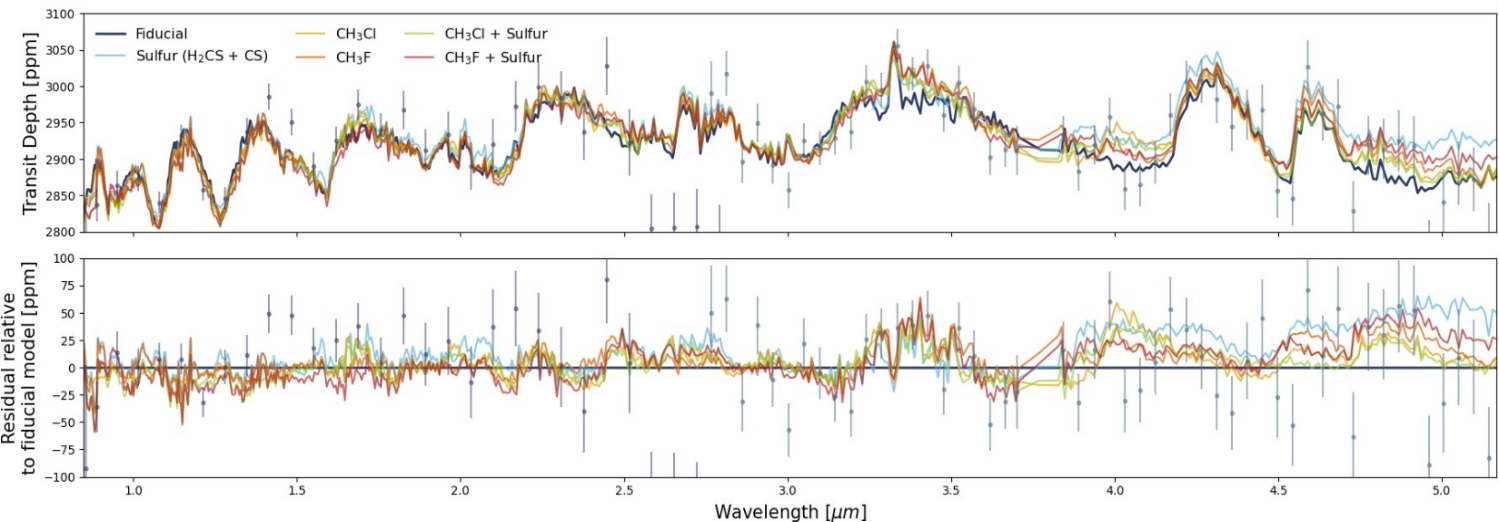
Our fiducial retrieval results reveal a high-metallicity atmosphere (M/H ≈ 160× solar) with an elevated mean molecular weight (μ ≈ 5.6 amu), confidently detecting CH4 and CO2. But we also find that the Bayes Factor in favor of the inclusion of CS2 and NH3 are highly dependent on the deployed spectral resolution, varying between 3-78 and even reaching 30’000 in one case. We therefore demonstrate that coarse spectral binning introduces biases, particularly for molecules that do not dominate the shape of the spectrum.


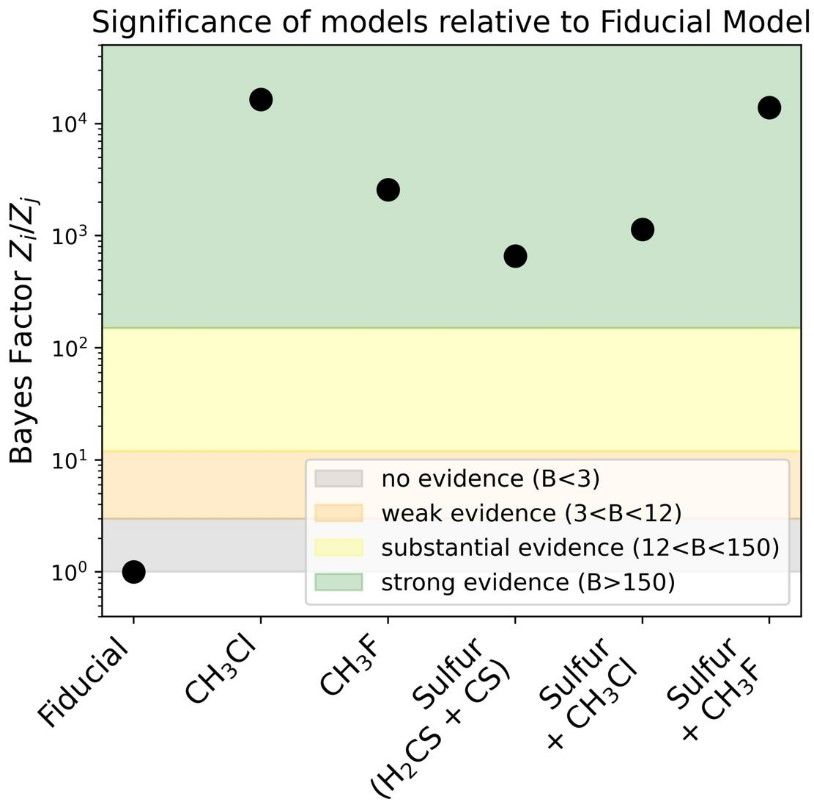
Figure 1: The Bayes Factor for the favored model extensions relative to the fiducial model. All mentioned additions are favored with a Bayes Factor >600 indicating strong evidence for their preference over the fiducial model. 

Equipped with a solid baseline atmosphere model, we test for the potential presence of various other molecules. We identify multiple majorly favored configurations (Bayes Factor 600-16000, see FIgure 1). Most plausibly, we find a rich sulfur chemistry containing both H2CS and CS at well restricted abundances, potentially providing chemical pathways that could explain the large abundance >0.1% of CS2 found across all retrievals. Alternatively, the inclusion of CH3Cl or CH3F, retrieved at abundances of > 100 ppm, leads to similar improvements in the Bayesian evidence, as does any combination of these molecules and the aforementioned sulfur model. The data alone does not allow us to identify a preferred model, due to the fact that the opacities of CH3Cl, CH3F and H2CS are almost identical in our probed spectral range (see Figure 2). 


Figure 2: The model spectra of the fiducial model as well as the favored model extensions. We show a binned down version of our transmission spectrum for visual clarity. The fit to the data is improved mainly around 3.4 μm and we can clearly see that the model extensions are almost identical across the spectrum. 

Our results highlight critical challenges in characterizing temperate sub-Neptunes. The degeneracy between biosignature gases (e.g., CH3Cl and CH3F) and abiotic sulfur compounds, like H2CS, underscores the need for the detailed exploration of sulfur-chemistry in the temperature regime of planets like TOI-270 d. Furthermore, we demonstrate that large Bayes Factors can be achieved at higher spectral resolutions, even for species lacking isolated absorption features, emphasizing the importance of carefully selecting spectral resolution and accounting for its impact when analyzing transmission spectroscopy data.

How to cite: Felix, L., Kitzmann, D., Demory, B.-O., and Mordasini, C.: Evidence for sulfur-chemistry in the sub-Neptune TOI-270 d, EPSC-DPS Joint Meeting 2025, Helsinki, Finland, 7–13 Sep 2025, EPSC-DPS2025-1750, https://doi.org/10.5194/epsc-dps2025-1750, 2025.

12:03–12:15
|
EPSC-DPS2025-1220
|
ECP
|
On-site presentation
Xinting Yu and Christopher Glein

The James Webb Space Telescope (JWST) has been revolutionizing the field of exoplanets by delivering high-precision spectra that constrain atmospheric compositions with unprecedented detail. JWST is best at constraining the atmospheric compositions for warm-to-hot exoplanets with hydrogen-dominated atmospheres and large-scale heights. To date, JWST has already provided constraints on the abundances of dominant carbon and oxygen carrier gases in over a dozen such targets. Under standard assumptions, many of these exoplanet targets are expected to have abundant methane (CH4) in their observed atmosphere. However, methane was only spotted on a few of these existing targets, giving rise to the so-called "missing methane" problem.

Here, we use published JWST results in combination with a simple, geochemistry-inspired model to explore whether elevated internal temperatures (Tint) can account for the CH4 depletion in these exoplanet atmospheres. Instead of using computationally intensive forward grid models to search for the optimum parameters (in this case, Tint) to fit the observed spectra, we construct a fast analytical framework that focuses on two key chemical equilibria: CO-CH4 and CO-CO2. The equilibrium constants are calculated using Gibbs energies from the NIST-JANAF Thermochemical Tables (Chase, 1998), and the quench temperatures of these two chemical equilibria are linked by a relationship provided in Glein et al. (2025): TCO-CO2 ≈ 0.8TCO-CH4. Following a similar and revised methodology as Glein et al. (2025), we can translate JWST-constrained CHO species abundances into a pressure–temperature (P–T) space consistent with equilibrium chemistry.

We generate a suite of P-T relationships consistent with the observed bulk atmospheric composition and a second set of P-T profiles with varying internal temperatures (characterized by Tint). For each target, we identify the minimum Tint required for the P–T profile to intersect the constrained chemical equilibrium region, which corresponds to the condition under which the observed H2O, CO2, CH4, and CO abundances can be reproduced. We first tested this approach against WASP-107 b, for which detailed forward modeling exists, and found our derived minimum Tint (minimum Tint = 500 K) to be consistent with results from the forward grid modeling approach (Tint = 460±40 K, Sing et al. 2024).

We apply this method to eleven warm-to-hot exoplanets with reliable JWST-retrieved constraints on the volume mixing ratios of H2O, CO2, CH4, and CO. For six of these targets, including WASP-107 b, HD 189733 b, HIP 67522 b, WASP-69 b, HAT-P-18 b, and GJ 3470 b (data from Sing et al. 2024; Welbanks et al. 2024; Fu et al. 2022, 2024; Thao et al. 2024; Schlawin et al. 2024), we can derive minimum internal temperatures consistent with the observed CH4 depletion. The inferred Tint values range from 70 K to 900 K for these targets (see Figure 1). We then compare these values to predictions from standard planetary evolution models, finding that several targets require additional internal heat sources (e.g., tidal dissipation and/or ohmic dissipation) to sustain such elevated Tint values at their current ages and masses.

In particular, for the five planets exhibiting strong CH₄ depletion (WASP-107 b, HD 189733 b, HIP 67522 b, WASP-69 b, and HAT-P-18 b), high Tint leads to deeper quench levels at higher temperatures where CO dominates over CH4 (which also naturally requires rapid mixing) to explain the observed missing methane. In contrast, for targets like WASP-80 b, where CH4 is detected, or for very hot planets where quenching occurs high up in the atmosphere in the radiative zone, internal temperature plays a less critical role and cannot be constrained with this method.

Our framework offers a computationally efficient and consistent method to quickly infer internal temperatures of exoplanets based on chemical equilibrium constraints. While complementary to the forward grid modeling approach, our approach provides intuitive visualizations that allow fundamental trends to be identified. Its simplicity and speed make it well-suited for analyzing a much broader sample as JWST and future space telescopes such as ARIEL continue to deliver high-quality atmospheric data across a growing and diverse target population.

Figure 1: Pressure–temperature (P–T) profiles for exoplanet targets where internal temperature (Tint) can be constrained. Solid colored curves indicate predicted profiles consistent with the retrieved CH4-CO-CO2-H2O volume mixing ratios from JWST observations (the allowed parameter space is in gray). Dashed curves represent P–T profiles with lower Tint values that are incompatible with the observed atmospheric compositions.

References:

Beatty, T. G., et al. (2024). Sulfur dioxide and other molecular species in the atmosphere of the sub-Neptune GJ 3470 b. The Astrophysical Journal Letters970(1), L10.

Chase, M. W., Jr. 1998, NIST-JANAF Thermochemical Tables, Parts I and II (4th ed.; Woodbury, NY: American Institute of Physics)

Fu, G., et al. (2022). Water and an escaping helium tail detected in the hazy and methane-depleted atmosphere of HAT-P-18b from JWST NIRISS/SOSS. The Astrophysical Journal Letters940(2), L35.

Fu, G., et al. (2024). Hydrogen sulfide and metal-enriched atmosphere for a Jupiter-mass exoplanet. Nature632(8026), 752-756.

Glein, C. R., Yu, X., & Luu, C. N. (2025). Deciphering Sub-Neptune Atmospheres: New Insights from Geochemical Models of TOI-270 d, in press at ApJ.

Schlawin, E., et al. (2024). Multiple Clues for Dayside Aerosols and Temperature Gradients in WASP-69 b from a Panchromatic JWST Emission Spectrum. The Astronomical Journal168(3), 104.

Sing, D. K., et al. (2024). A warm Neptune’s methane reveals core mass and vigorous atmospheric mixing. Nature630(8018), 831-835.

Thao, P. C. et al. (2024). The Featherweight Giant: Unraveling the Atmosphere of a 17 Myr Planet with JWST. The Astronomical Journal168(6), 297.

Welbanks, L., et al. (2024). A high internal heat flux and large core in a warm Neptune exoplanet. Nature630(8018), 836-840.

How to cite: Yu, X. and Glein, C.: Unusually Hot Interiors Could Reconcile the Missing Methane Problem for Warm-to-Hot Exoplanets with Hydrogen Atmospheres, EPSC-DPS Joint Meeting 2025, Helsinki, Finland, 7–13 Sep 2025, EPSC-DPS2025-1220, https://doi.org/10.5194/epsc-dps2025-1220, 2025.

12:15–12:30
|
EPSC-DPS2025-1042
|
ECP
|
On-site presentation
Emilie Panek, Deborah Bardet, Jean-Philippe Beaulieu, Pierre Drossart, and Olivia Venot

Studying chemical composition is fundamental to model the formation history of planets and planetary systems. With the first JWST data and the upcoming Ariel satellite, we expect a leap forward in the exoplanet’s atmosphere field. Most current atmospheric retrieval methods assume thermochemical equilibrium or freely parameterized profiles. These approaches can miss important disequilibrium processes like photochemistry and vertical mixing, which significantly affect the observed spectra. This study explores how including disequilibrium chemistry affects the retrieval of key atmospheric parameters, such as metallicity and the carbon-to-oxygen (C/O) ratio. We focus on whether these effects are detectable using data from the Hubble Space Telescope and the James Webb Space Telescope. Our five targets are HAT-P-12b, HD 209458b, WASP-6b, WASP-17b, and WASP-39b, which have temperatures ranging from 1000K to 1700K and radii ranging from 0.9 to 1.9 Jupiter radius.

We used the TauREx 3.1 atmospheric retrieval framework (Al-Refaie et al. 2019), coupled with FRECKLL (Al-Refaie et al. 2024), a disequilibrium chemistry plugin that includes vertical mixing and photochemistry. FRECKLL computes steady-state chemical abundances under disequilibrium conditions and gives them to TauREx for radiative transfer and retrieval analysis. A Bayesian nested sampling algorithm is used for parameter estimation. The principle is to start from a transmission spectroscopy dataset and to look for the model that characterizes the atmosphere in the most probable way, in other words, the spectrum that best fits the data points. For very hot planets, thermochemical equilibrium may be close to reality, but for less hot planets, vertical mixing and photodissociation bring these planets out of equilibrium. This work is a follow-up study of Panek et al. (2023) and is complementary of Bardet et al. (2025) (in review), a study that was mainly looking at the same effect on emission spectra.

We will present one of the very rare retrieval analysis taking into accounts disequilibrium chemistry and we will evaluate how this new sophisticated method improve the analysis of observations. The detectability of these effects strongly depends on spectral resolution and wavelength coverage. We expect to see the biggest improvement with JWST data, thanks to its better spectral coverage. This study demonstrates the feasibility and importance of incorporating disequilibrium chemistry into retrieval models. Doing so can significantly improve our interpretation of exoplanetary atmospheres and help refine models of planet formation and evolution. These findings also highlight the need to revisit previous retrieval studies that used only equilibrium models, especially for cooler planets where disequilibrium chemistry is expected to play a major role.

How to cite: Panek, E., Bardet, D., Beaulieu, J.-P., Drossart, P., and Venot, O.: Analysis of disequilibrium chemistry in five exoplanets’ atmosphere, EPSC-DPS Joint Meeting 2025, Helsinki, Finland, 7–13 Sep 2025, EPSC-DPS2025-1042, https://doi.org/10.5194/epsc-dps2025-1042, 2025.

Planet characterization

Orals WED-OB2: Wed, 10 Sep, 09:30–10:30 | Room Jupiter (Hall A)

Chairpersons: Heike Rauer, Tim Lichtenberg
09:30–09:42
|
EPSC-DPS2025-1807
|
On-site presentation
Theresa Lueftinger, Giovanna Tinetti, Jean-Christophe Salvignol, and Paul Eccleston

The ESA M4 mission Ariel, the atmospheric remote-sensing infrared exoplanet large-survey, has been adopted within the Cosmic Vision science programme of ESA. The goal of Ariel is to investigate the atmospheres of planets orbiting distant stars in order to address the fundamental questions on how planetary systems form and evolve and to investigate the chemical composition of exoplanetary atmospheres. During its 4-year mission, Ariel will observe a diverse sample of up to 1000 exoplanets, i.a. covering  super-Earths and sub-Neptunes and building on (future) findings from space missions like PLATO, JWST, TESS, and CHEOPS - ranging from Jupiter- and Neptune-size down to super-Earth size, in a wide variety of environments, in the visible and the infrared. The main focus of the mission will be on warm and hot planets in orbits close to their star. Some of the planets may be in the habitable zones of their stars, however. The analysis of Ariel spectra and photometric data will allow to extract the chemical fingerprints of gases and condensates in the planets’ atmospheres, including the elemental composition for the most favourable targets. The Ariel mission has been developed by a consortium of more than 60 institutes from 16 ESA member state countries, including UK, France, Italy, Poland, Spain, the Netherlands, Belgium, Austria, Denmark, Ireland, Hungary, Sweden, Czech Republic, Germany, Portugal, with an additional contribution from NASA. 

How to cite: Lueftinger, T., Tinetti, G., Salvignol, J.-C., and Eccleston, P.: Ariel - The ESA M4 Space Mission to Focus on the Nature Of Exoplanets , EPSC-DPS Joint Meeting 2025, Helsinki, Finland, 7–13 Sep 2025, EPSC-DPS2025-1807, https://doi.org/10.5194/epsc-dps2025-1807, 2025.

09:42–09:54
|
EPSC-DPS2025-577
|
ECP
|
On-site presentation
Jiri Zak, Andrea Bocchieri, and Henri Boffin

Understanding the diverse formation and migration pathways that shape exoplanetary systems requires characterizing both their atmospheric properties and their orbital dynamics. A key dynamical diagnostic is the projected spin-orbit angle, the alignment between the stellar spin and the planetary orbit which provides crucial tests for theoretical models. This angle can be determined using the Rossiter-McLaughlin effect. Although measurements exist for over 200 planets, the overall distribution of these angles remains incompletely understood, motivating further observations across the full parameter space. In this talk, we present measurements of spin-orbit angles for 25 systems identifying several system that have likely underwent disc-free migration. We highlight the synergy between the two approaches and comment on the current overlap between targets with spin-orbit angle measurements and those having measurements for atmospheric characterization. While we find no strong observational biases due to the spin-orbit angle, we note that the majority of planets, especially sub-Neptunes, with atmospheric data still lack spin-orbit measurements. This incompleteness of the dynamical information may limit the interpretation of upcoming atmospheric surveys.

How to cite: Zak, J., Bocchieri, A., and Boffin, H.: Planet migration in the era of JWST and Ariel, EPSC-DPS Joint Meeting 2025, Helsinki, Finland, 7–13 Sep 2025, EPSC-DPS2025-577, https://doi.org/10.5194/epsc-dps2025-577, 2025.

09:54–10:06
|
EPSC-DPS2025-213
|
On-site presentation
Allona Vazan and Chris Ormel

The characterization of super-Earth to Neptune-sized exoplanets depends critically on understanding their formation and thermal evolution. We investigate the evolutionary pathways of super-Earths formed with compositionally polluted envelopes, focusing on the role of silicate rainout and its impact on the observed mass-radius relation. Our results show that the energy released during silicate rainout inflates the planetary radius during early evolutionary stages, when stellar irradiation is most intense. This radius inflation enhances atmospheric mass loss by a factor of 2–8 compared to planets with initially clean envelopes. Moreover, neglecting this effect can lead to overestimates of hydrogen-helium content in young super-Earths. These findings highlight the need for accurate age measurements—such as those anticipated from the PLATO mission—to reliably interpret the observed properties of young exoplanets.

How to cite: Vazan, A. and Ormel, C.: Radius Inflation in Super-Earths Born with Polluted Envelopes, EPSC-DPS Joint Meeting 2025, Helsinki, Finland, 7–13 Sep 2025, EPSC-DPS2025-213, https://doi.org/10.5194/epsc-dps2025-213, 2025.

10:06–10:18
|
EPSC-DPS2025-1755
|
ECP
|
On-site presentation
Mykhaylo Plotnykov and Diana Valencia
Over the years, improvements in instrument technology and data analysis have led to major advances in exoplanet sciences. Low-mass exoplanets, both super-Earths and mini-Neptunes, are now routinely detected and their radius and mass are commonly being measured despite their small sizes. These discoveries often challenge the preconceived notions derived from studies about the Solar System, especially regarding planet formation, evolutionary processes, system architectures and the diversity of planetary compositions. Consequently, a key focus has become identifying universal trends within the surveyed planetary demographics, prioritizing population-level analyses rather than isolated individual cases. However, due to considerable overlap between super-Earths and mini-Neptunes in mass-radius space, the first task of characterizing these planets is to obtain their bulk composition, which entails inferring their bulk chemical inventory and determining whether a planet is rocky, ocean, gaseous or a complex hybrid.
   
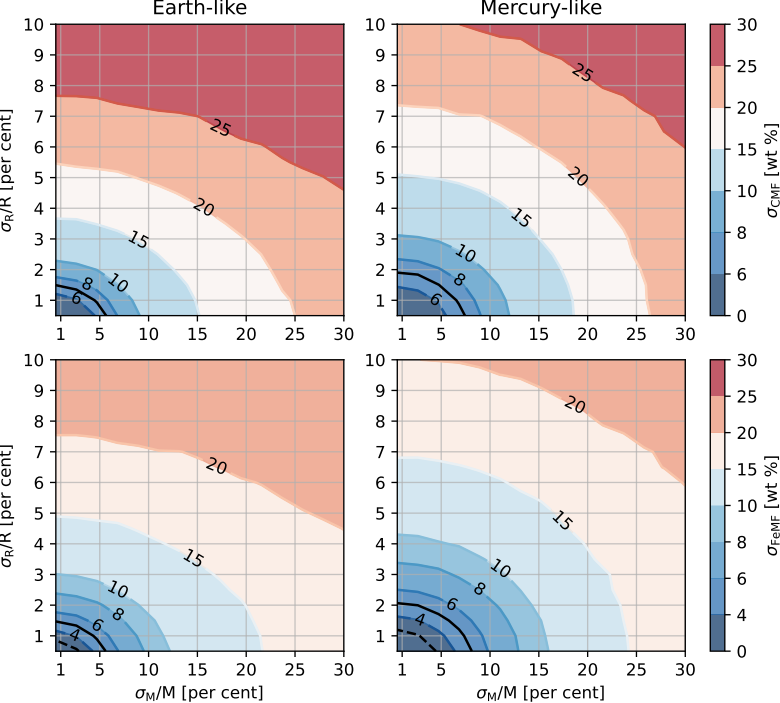
We will quantify how uncertainties in mass, radius and model assumptions propagate into errors in inferred compositions of rocky planets, water worlds or mini-Neptunes. These results can quickly guide observing strategies to maximize insights into small exoplanet compositions while avoiding over-observing. Since a strategy that improves the precision of one of the parameters, such as radius, without improving the other (i.e. mass) will not guarantee a better estimate of the planetary composition. For example, consider purely rocky planets constraints on iron-mass fraction/core-mass fraction (Fe-mf/cmf). We choose a 5M mass planet as our nominal case and consider different mass and radius errors. Thus, to constrain the Fe-mf error to 8 wt% (10% in cmf) with σR/R=2\% the mass uncertainty has to be 5\% for an Earth-like planet (cmf=33 ±10 wt%) and 11\% for a Mercury-like planet (cmf=74 ±10 wt%). Observing this example planet for longer to improve the mass will provide minimal gains at too high an observational cost as the radius uncertainty will limit any inferences. That is, for a given radius uncertainty (σR/R), there is a mass uncertainty (σM/M) below which it is not prudent to keep observing. The figure below demonstrates the improvements in Fe-mf/cmf error due to changes in mass uncertainty given a fixed radius uncertainty and vice versa.
 
 
Additionally, we present parallel analyses for water worlds and mini-Neptunes, illustrating how uncertainties in mass-radius measurements and model assumptions similarly propagate into compositional errors. Lastly, when examining Earth as an exoplanet analog, we identify inherent uncertainty floors of approximately ±5 wt% in Fe-mf and ±7 wt% in cmf, attributable to gaps in our understanding of interior mineralogy. These findings provide essential guidance for future observational campaigns and highlight the necessity for balanced precision across planetary parameters to optimize compositional insights.

How to cite: Plotnykov, M. and Valencia, D.: Effects of observation uncertainty on interior parameters precision , EPSC-DPS Joint Meeting 2025, Helsinki, Finland, 7–13 Sep 2025, EPSC-DPS2025-1755, https://doi.org/10.5194/epsc-dps2025-1755, 2025.

10:18–10:30
|
EPSC-DPS2025-1206
|
ECP
|
On-site presentation
Steven Blodgett, Darin Ragozzine, and Daniel Jones

Large-scale exoplanet discovery via transit photometry (as exemplified by the Kepler Space Telescope) has recently enabled sophisticated population-level modeling of exoplanet parameters. Perhaps the three most relevant dimensions of exoplanet parameter space are radius, period, and mass; via just these parameters, trends in exoplanet densities, interiors, compositions and habitability can be better understood. For radius and period, the full Kepler catalog (i.e., DR25 from Lissauer et al. 2024) remains the largest, most accurate, completely homogeneous exoplanet radius-period dataset. Each data point was collected in the same way and processed through a consistent pipeline. Kepler’s well-understood biases further increase its utility for studying the true radius-period distribution of close-in exoplanets.

However, the Kepler catalog lacks direct mass measurements. Most Kepler planets are out of reach of radial velocity studies, and further analysis must be performed on Kepler light curves to glean mass information for Kepler planets. Planet–planet dynamical interactions, typically detected through Transit Timing Variations (TTVs), are easiest to interpret in systems with multiple transiting planets (“multis”). Most Kepler planets show no detectable planet-planet interactions, even in multi-planet systems and even when assuming unphysically high densities. But, in systems that do have planet-planet interactions, the best mass inference is obtained when the system is modeled “photodynamically”, i.e., leveraging information from blended light curve photometry/dynamical models. Combining the best mass inferences from photodynamical modeling with the best demographic analysis from Kepler has been limited by the fact that there are no homogeneous dynamical analyses of the entire Kepler multi population. 

 We present the Kepler Multis Dynamical Catalog (KMDC), a recently completed (by Jones et al. in preperation) photodynamical catalog containing model-fitting posteriors for ≳90% of all Kepler multis. The KMDC supports many future analyses in exoplanetary architectures, interiors, and dynamics with important implications for the formation and evolution of planetary systems. This work focuses on using the KMDC to model the true underlying mass-radius-period distribution of exoplanets. 

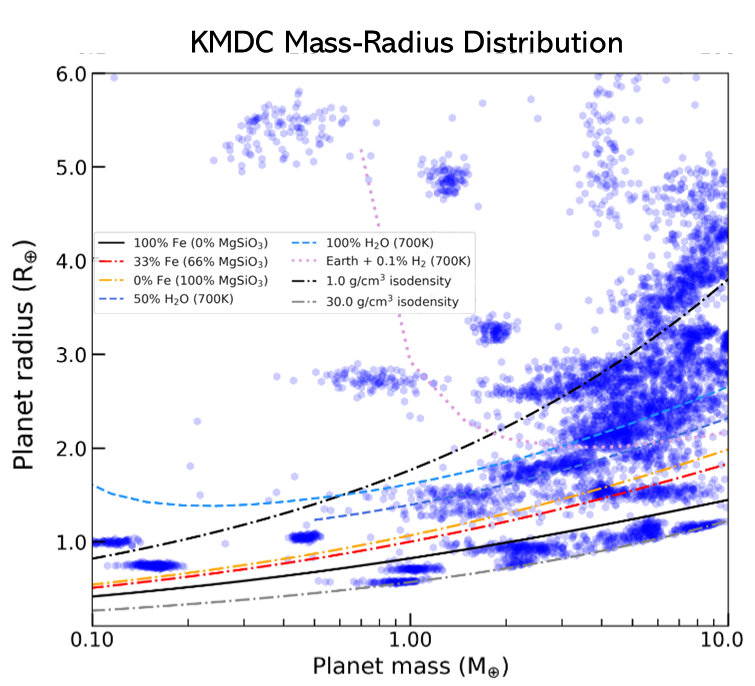
The KMDC enables a deeper and more accurate demographic analysis of planetary masses, radii, and densities as a function of period (and other parameters) for several reasons. First, the catalog contains mass posteriors for hundreds of previously undescribed systems. While most of the well-constrained masses are not new discoveries, previous mass measurements are a biased sample since they are often chosen by easily detectable TTVs. We remove that bias here since we modeled systems independent of mass detectability. Second, the catalog is homogenous, with data drawn only from one discovery source and run through a consistent photodynamical modeling process, reducing the biases that result from mixing heterogeneous survey, observation, and modeling methods. Finally, the catalog is nearly complete, allowing us to utilize well-understood biases of Kepler planet discovery. Even though most planets’ masses reflect our density prior (uniform from 0.01–30 g/cm3), we leverage all available Kepler data and have over 100 planets with masses measured with a precision of 25%  (see Figure 1). 

We demonstrate the ability of the KMDC to describe the population-level trends of  exoplanet characteristics. Following Foreman-Mackey et al. 2014, we are starting with a 3-dimensional mass-radius-period non-parametric grid model of planetary occurrence rates. This is effectively extending the previously-derived radius-period occurrence rate grids of Hsu et al. 2018 into the mass dimension.

Figure 1: A subsample of the KMDC mass-radius distribution for small planets with well-measured masses. The full KMDC consists of many more measurements. Some planets have unphysical densities attributable to overfitting. Using catalog–level analyses and/or physical models can improve the prior probability distribution to minimize the effect of outliers. 

We will also explore the value of parametric models, e.g., using populations of planets with different compositions, power–law occurrence rates, etc. Previous mass-radius-period parametric models have used much less data; we hope to follow these studies' work (e.g., Neil & Rogers 2020) and improve on their results with the KMDC.

How to cite: Blodgett, S., Ragozzine, D., and Jones, D.: Modeling the True Underlying Mass-Radius-Period Distribution of Exoplanets Using a Homogeneous, Kepler-Derived, Photodynamical Catalog, EPSC-DPS Joint Meeting 2025, Helsinki, Finland, 7–13 Sep 2025, EPSC-DPS2025-1206, https://doi.org/10.5194/epsc-dps2025-1206, 2025.

Feedbacks between interior and atmosphere

Orals WED-OB3: Wed, 10 Sep, 11:00–12:30 | Room Jupiter (Hall A)

Chairpersons: Tim Lichtenberg, Lena Noack
11:00–11:12
|
EPSC-DPS2025-648
|
ECP
|
On-site presentation
Oliver Herbort and Leon Sereinig

Rocky exoplanets are expected to show a large diversity of planetary interiors, surface conditions, and atmospheric compositions. While all of these are connected through geological processes, direct observations are challenging even with current and upcoming ground and space based instruments, showing the importance of models combining planetary atmospheres, surfaces, and interiors.

Our modelling approach for rocky exoplanets provides a bottom-to-top surface-atmosphere model. The crust-atmosphere interaction layer is the basis of the 1D atmospheric model which includes the effects of element depletion due to cloud formation. The atmospheric and cloud composition are therefore a result of the surface composition and the pressure-temperature structure.

Modelling the variety of different gas-phase compositions reveals the existence of three distinct atmospheric types (H2 rich, O2 rich, or the coexistence of CH4 and CO2), defined by their atmospheric composition. In addition to these distinct atmospheric types, the presence of some cloud condensates provides constraints on the planetary surface temperature and pressure. Furthermore, the composition of the planetary surface mineralogy in contact with the atmosphere provides distinct transitions linked to the atmospheric types.

Investigations of various elemental compositions based on different rock compositions reveal links of surface minerals to the atmospheric types. In particular, the sulphur chemistry can be constrained. While the sulphur cloud condensates of H2S and H2SO4 only form for planets with high surface pressures and/or temperatures, the sulphur-bearing condensates at the planetary surface (including especially FeS, FeS2, and CaSO4) are directly linked to the atmospheric type. 

This work shows that in principle, spectroscopic investigations of rocky exoplanet atmospheres can constrain the atmospheric composition to a specific atmospheric type and therefore put some constraints on the expected surface mineralogy. 

How to cite: Herbort, O. and Sereinig, L.: Using atmospheric types of rocky exoplanets to constrain planetary surfaces, EPSC-DPS Joint Meeting 2025, Helsinki, Finland, 7–13 Sep 2025, EPSC-DPS2025-648, https://doi.org/10.5194/epsc-dps2025-648, 2025.

11:12–11:24
|
EPSC-DPS2025-1670
|
ECP
|
On-site presentation
Marie-Luise Steinmeyer, Aaron Werlen, Marilina Valatsou, Simon Grimm, Pierlou Marty, and Caroline Dorn

The low bulk density of sub-Nepuntes suggest that these planets contain a significant amount of volatile elements, yet their precise composition remains uncertain. The two leading composition models are the gas dwarf scenario and the water world scenario. In the first scenario, sub-Neptunes are Earth-like planets surrounded by an H2/He-dominated atmosphere. In the second scenario, sub-Neptunes form beyond the ice line and accrete several tens of percents of water as well as a few weight percent of H2/He (Burn et al. 2024). Current evolution models predict that the evolution of the planet radius with time differs significantly between the gas dwarfs and water worlds, making it possible to distinguish between the two composition types (Aguichine et al. 2024, Rogers 2025).  However, these models assume that all water is confined to the atmosphere of the planet, overlooking the chemical exchange between the atmosphere and the molten interior.

We present a novel evolution framework that incorporates global chemical equilibrium calculations and fractionated mass loss to quantify the effects of the atmosphere-interior coupling on the radius evolution. Recent works by Werlen et al. (in prep) demonstrate that the chemical coupling between the atmosphere and interior modifies the atmospheric water mass fraction. Figure 1 below shows the water mass fraction in the envelope as a function of the total accreted water mass for planets with masses between 2 and 15 Earth masses, based on the results from Werlen et al. (in prep). The red line denotes the solar water mass fraction of 0.02. The colors represent the molar bulk C/O ratio, which can be seen as an indicator for the formation location of the planet. For water worlds that form outside the ice line as indicated by a high C/O ration and MH2O/Mtot (accreted) > 10%, the bulk of the accreted water is sequestered into the interior of the planet. The water mass fraction in the atmosphere is thus limited to ~10%. Planets formed inside the ice line on the other hand can have high water mass fractions in the atmosphere due to the endogenic production of water.

Motivated by the results of Werlen et al. (in prep), we integrate global chemical equilibrium calculations into our planetary structure models to track the distribution of volatiles between atmosphere and interior. The updated structure models are then embedded in a thermal evolution framework that accounts for the cooling by radiation and the radiogenic heating. Figure 2 below compares the evolution of the atmosphere thickness, defined as Rtransit - Rsolid, between a gas dwarf with a pure H2/He atmosphere and a water world with a realistic water distribution. In both cases, the total planet mass is 5 Earth masses, the envelope mass is 0.05 Earth masses and the equilibrium temperature is 880 K. As expected, the atmosphere thickness of the water world is smaller than the one of the gas dwarf. Nevertheless, both scenarios display similar temporal evolution trends. An important implication of our findings is that it will be challenging to distinguish between sub-Neptunes that formed inside or outside the ice line using the population of planets with different ages observed by TESS. 

Our evolution framework also incorporates fractionated mass loss driven by photoevaporation, following the approach of Valatsou et al. (in prep). The mass loss model self-consistently calculates the EUV and X-ray absorption depth (RXUV), the sound speed at the RXUV, and the resulting mass loss rate for atmospheres containing a mix of H2, He, and H2O. More importantly, the model includes the dissociation of the H2 and H2O into atomic hydrogen and oxygen. Due to the mass difference, hydrogen escapes more efficiently, while the oxygen escape rate is regulated by the balance between the gravitational settling and the diffusive drag from the escaping hydrogen. Valatsou et al. (in prep) find that this progress leads to significant atmospheric fractionation: oxygen is largely retained in the atmosphere, while hydrogen escapes efficiently. As a result, the atmospheres of sub-Neptunes become enriched in oxygen over time. 

Our evolution framework offers a more complete picture of the evolution of sub-Neptune by including both the chemical coupling of the atmosphere and interior, as well as the fractionated atmospheric escape. The predicted similarity in the radius evolution of gas dwarfs and water worlds, suggests that the radius-age relation alone may not be enough to distinguish between the two composition types. Instead, our framework lays the groundwork for understanding the bulk composition and formation location of sub-Neptunes based on their radius, age, and atmospheric composition.

References:

  • Aguichine, A., Batalha, N., Fortney, J. J., et al. 2024, arXiv e-prints, arXiv:2412.17945
  • Burn, R., Mordasini, C., Mishra, L., et al. 2024b, Nature Astronomy, 8, 463
  • Rogers, J. G. 2025, MNRAS, 539, 2230
  • Valatsou, M., Owen, J., Dorn, C., in prep
  • Werlen, A., Dorn, C., Burn, R., Schlichting, H., Grimm, S., Young, E., in prep

How to cite: Steinmeyer, M.-L., Werlen, A., Valatsou, M., Grimm, S., Marty, P., and Dorn, C.: Water worlds or Gas Dwarfs? Coupled Interior-Atmosphere Models Blur the Lines in Sub-Neptune Radius Evolution, EPSC-DPS Joint Meeting 2025, Helsinki, Finland, 7–13 Sep 2025, EPSC-DPS2025-1670, https://doi.org/10.5194/epsc-dps2025-1670, 2025.

11:24–11:36
|
EPSC-DPS2025-1285
|
ECP
|
On-site presentation
Akash Gupta, Lars Stixrude, and Hilke Schlichting

Recent studies suggest that most exoplanets—or their progenitors—begin life enveloped in hydrogen.  This primordial atmosphere interacts with the planet’s interior over timescales of millions to billions of years, making atmosphere–interior coupling essential for understanding planetary formation and evolution.  Yet these processes remain poorly constrained because they occur under extreme pressures and temperatures.  To probe them, we performed computational experiments using DFT-based molecular dynamics across a vast P-T regime typical of super-Earths and sub-Neptunes. We mapped out the critical curve which demarcates regimes where a single, well-mixed hydrogen-water fluid is stable and where it splits into distinct hydrogen-rich and water-rich phases. Our critical curve agrees well with existing experimental data and shows the influence of a change in fluid structure from molecular to atomic near 30-100 GPa and 3000-4000 K.


These results not only have far-reaching consequences for water-rich planets with hydrogen atmospheres like Uranus, Neptune, K2-18 b, and TOI-270 d but also bring into question the deeply ingrained notion in our community of a sharp boundary between the interior and an overlying atmosphere. Hot and young planets should have envelopes where hydrogen and water are entirely mixed, i.e., exist as a single homogeneous phase. However, as the planet cools, its deep interior should experience phase separation of hydrogen and water: leading to a "rainfall" or rainout of water towards the deeper interior, a consequent increase in internal luminosity, and the emergence of inner and outer envelopes that are hydrogen- and water-rich, respectively, and whose compositions or metallicities should depend on the planets age and instellation. Our results thus help improve our constraints on planets that are likely to have water oceans, which future surveys could leverage. Furthermore, our findings have implications for atmosphere loss and magnetic field generation. Our work thus demonstrates the importance of better understanding atmosphere-interior interactions, especially as we enter the era of James Webb Space Telescope, PLATO, the proposed Uranian Orbiter and Probe, and other next-generation observatories.

How to cite: Gupta, A., Stixrude, L., and Schlichting, H.: The story of hydrogen and water: new insights into the interaction of planet atmospheres and interiors, EPSC-DPS Joint Meeting 2025, Helsinki, Finland, 7–13 Sep 2025, EPSC-DPS2025-1285, https://doi.org/10.5194/epsc-dps2025-1285, 2025.

11:36–11:48
|
EPSC-DPS2025-87
|
On-site presentation
Yuichi Ito, Tadahiro Kimura, Kazumasa Ohno, Yuka Fujii, and Masahiro Ikoma

Thanks to recent advances in infrared spectroscopy, we have entered a new era of detailed atmospheric characterization of sub-Neptunes, potentially providing constraints on their hidden interiors. One possible structure of sub-Neptunes is a rocky core surrounded by a thick hydrogen-dominated atmosphere. The strong blanketing effect of these thick hydrogen-dominated atmospheres can keep the underlying rocky surfaces hot enough to melt and vaporize, leading to gas-magma interactions that may alter the atmospheric composition. Detecting such magma-derived atmospheric species could therefore provide evidence for a rocky interior. Motivated by this, atmospheric models have been developed to explore chemical interactions between hydrogen-dominated atmospheres and underlying magma oceans with various redox states. Recent models have predicted monosilane, SiH4, as a potential atmospheric species derived from magma oceans in sub-Neptunes, but have suggested that it is highly depleted in the observable atmospheric layers. 

Here, we propose that SiH4 can persist throughout the atmospheres of sub-Neptunes with FeO-free reduced magma oceans by considering the dissolution of H2O into the magma oceans, a factor not accounted for in previous models. In this study, we investigate the atmospheric composition of sub-Neptunes with reduced FeO-free magma oceans using a one-dimensional atmospheric model based on the chemical equilibrium of H-/O-/Si-bearing species. This model incorporates the vaporization of SiO2, silicate condensation, and the dissolution of H2O into the magma ocean. Our results demonstrate that SiH4 is produced through the reaction between SiO vaporized from magma and H2, and that the reduction of H2O due to dissolution shifts the equilibrium further toward SiH4 production. We find that the effect of water dissolution enhances the atmospheric SiH4 molar fraction to 0.1-10%, preventing its reversion to silicates in the upper atmospheric layers. Finally, we present the conditions under which large amounts of SiH4 are produced and discuss the atmospheric spectra of sub-Neptune in such cases. Our results suggest that the detection of SiH4 in future observations of sub-Neptunes would provide compelling evidence for the presence of a rocky core with a reduced magma ocean.

How to cite: Ito, Y., Kimura, T., Ohno, K., Fujii, Y., and Ikoma, M.: Monosilane Worlds: Sub-Neptunes with Atmospheres Shaped by Reduced Magma Oceans, EPSC-DPS Joint Meeting 2025, Helsinki, Finland, 7–13 Sep 2025, EPSC-DPS2025-87, https://doi.org/10.5194/epsc-dps2025-87, 2025.

Atmospheric modeling
11:48–12:00
|
EPSC-DPS2025-1585
|
ECP
|
On-site presentation
Hamish Innes and Marina Cano Amoros

In the past five years, there has been increasing interest in sub-Neptune exoplanets in the habitable zone of their stars. These planets are abundant and easier to observe via transmission spectroscopy owing to their hydrogen-rich atmospheres.  Claimed biosignature detections on the sub-Neptune K2-18 b also motivate further studies into whether their climates are suitable for life. Whether it is possible for sub-Neptunes in the traditional Earth-like habitable zone to have liquid water oceans (and be a “Hycean” planet) is debated. One possible limiting factor is the inhibition of convection in which radiative layers forming in condensing regions (due to mean molecular weight gradients) make planetary interiors too hot for oceans to condense. In this work we aim to determine the conditions under which ocean formation on a sub-Neptune can occur, assuming that the hydrogen-water envelope evolves from a hot, well-mixed initial state.


To determine the conditions under which oceans will form on a sub-Neptune, we calculate the atmospheric structure at which an interior adiabat passes through the critical point of water (for a given deep water composition). Temperature-pressure profiles warmer than this “critical profile” will form water clouds in the upper atmosphere; profiles colder than this will bubble out hydrogen from a water rich ocean state. To calculate the critical profile, we use a non-ideal Peng-Robinson equation of state to calculate the moist adiabatic gradient in adiabatic regions, and Rosseland mean opacities to calculate the temperature gradient in the deeper regions where convection is inhibited. We explore the parameter space of sub-Neptunes by varying the temperature at 1 bar, the internal heat flux and the background composition. 


We find that the critical ocean-forming state must have an extremely cold upper atmosphere if there are convectively inhibited layers. At 1 bar, the temperature in most simulations is <100 K (Figure 1), which would correspond with orbital distances well beyond the traditional habitable zone. At the upper end of this temperature range, a high internal water content approaching 100% is required for ocean formation. With reduced internal heat fluxes (<0.01 W/m^2), the presence of radiative layers depends on the composition of the atmosphere, with the inclusion of high-opacity greenhouse gases such as CH4 and CO2 sustaining high temperature gradients at lower internal heat fluxes. Our results suggest that the current population of detected sub-Neptunes are unlikely to host liquid water oceans.

Figure 1: A range of temperature-pressure profiles which pass through the critical point of water for a stated internal water content (annotated on lines). For the given internal water content, this profile represents the state in which any colder profile can form a liquid water ocean. The critical curve of water is shown in black, and regions with convective inhibition are highlighted with thicker lines. For all deep internal water contents, the atmosphere at 1 bar must be extremely cold for liquid water oceans to form.


How to cite: Innes, H. and Cano Amoros, M.: Hycean worlds can only form under extremely cold and water-rich conditions, EPSC-DPS Joint Meeting 2025, Helsinki, Finland, 7–13 Sep 2025, EPSC-DPS2025-1585, https://doi.org/10.5194/epsc-dps2025-1585, 2025.

12:00–12:12
|
EPSC-DPS2025-1598
|
On-site presentation
Kaustubh Hakim, Dan J. Bower, Paolo Sossi, and Fabian Seidler

Atmospheres of hot sub-Neptunes are being characterised by the James Webb Space Telescope (JWST). Recent modelling efforts suggest that the magma-atmosphere coupling of hot sub-Neptunes strongly impacts their atmospheric chemistry, enriching the atmosphere with gases formed from magma-bearing elements, e.g., SiO, SiH4. We implement an equilibrium chemistry reaction network at the magma-atmosphere boundary with a new Python-based code, Atmodeller, to simulate gas-gas reactions, magma-atmosphere reactions, gas solubility in magma and real gas behaviour. We demonstrate significant effects of ideal gas versus real gas assumptions and gas solubility in magma for sub-Neptunes. We also advocate for more laboratory experiments to be conducted to understand the chemical composition of sub-Neptunes. These populations should exhibit distinct atmospheric signatures that are potentially detectable with JWST now and with ARIEL in the future. 

How to cite: Hakim, K., Bower, D. J., Sossi, P., and Seidler, F.: Influence of Magma on the Atmospheric Chemical Abundances of Hot Sub-Neptunes, EPSC-DPS Joint Meeting 2025, Helsinki, Finland, 7–13 Sep 2025, EPSC-DPS2025-1598, https://doi.org/10.5194/epsc-dps2025-1598, 2025.

12:12–12:24
|
EPSC-DPS2025-505
|
On-site presentation
Helmut Lammer, Manuel Scherf, Nikolai V. Erkaev, Daria Kubyshkina, Kseniia D. Gorbunova, Luca Fossati, and Peter Woitke

The discovery of terrestrial exoplanets within the Earth-to-super-Earth mass domain led to the question of whether these bodies developed atmospheres and what kind of atmospheres surround them. Observations at some planets within the above-mentioned mass domain revealed the existence of a large population of planets with less than three Earth masses that possess huge hydrogen-dominated primordial atmospheres, which must be remnants from the protoplanetary gas disk. These discoveries stimulate questions about whether planets within the Earth-mass domain could be within the habitable zone of solar-like stars that could have accreted and kept hydrogen- and/or helium-dominated primordial atmospheres. Since the gas disk consists mainly of these elements, we study the possible enrichment of the primordial helium fraction in hydrodynamically escaping initially hydrogen-dominated atmospheres of terrestrial planets between 0.75 to 3.0 Earth masses inside the habitable zones of Sun-like G-type host stars, considering different stellar evolutionary tracks of their high-energy emission. Depending on the planet’s accreted mass during the gas disk phase and the stellar radiation, we show that through hydrodynamic escape, Earth-mass planets inside the HZ of solar-like stars with masses between about 0.95 and 1.25 Earth masses can end with helium-dominated primordial atmospheres.
Our finding has important implications for the evolution of "Earth-like Habitats", as these thick helium-enriched primordial atmospheres can inhibit the habitability of terrestrial planets. From our results we conclude that thoroughly understanding the complex interplay between a rocky planet's accretion speed and the lifetime of the gas disk, the accumulation of primordial atmospheres, and the evolution of the extreme ultraviolet radiation of a planet's host star is key to understanding how terrestrial planets can develop later into "Earth-like Habitats" where nitrogen-oxygen-dominated secondary atmospheres can evolve. The upcoming generation of giant telescopes, such as the Extremely Large Telescope, may enable us to observe and explore these atmospheres.

How to cite: Lammer, H., Scherf, M., Erkaev, N. V., Kubyshkina, D., Gorbunova, K. D., Fossati, L., and Woitke, P.: Earth-mass planets with primordial hydrogen and helium atmospheres in the habitable zone of solar-like stars, EPSC-DPS Joint Meeting 2025, Helsinki, Finland, 7–13 Sep 2025, EPSC-DPS2025-505, https://doi.org/10.5194/epsc-dps2025-505, 2025.

12:24–12:30

Posters: Tue, 9 Sep, 18:00–19:30 | Finlandia Hall foyer

Display time: Tue, 9 Sep, 08:30–19:30
F223
|
EPSC-DPS2025-1611
|
ECP
|
On-site presentation
Dilawaiz Saghir, Philipp Baumeister, and Valentin Bonnet Gibet

Many of the observed rocky exoplanets orbiting close to their host stars are likely tidally locked, with one hemisphere in permanent daylight and the other in complete darkness. Phase curve observations of GI-486b, TRAPPIST-1b and c, and LHS 3844b suggest that such planets may exhibit extreme temperature contrasts between their day and night sides, with differences potentially exceeding hundreds of kelvins. While these surface temperature gradients are widely recognized for their impact on atmospheric dynamics, their influence on interior thermal evolution and crust formation remains less explored. This study addresses how asymmetric surface heating affects mantle processes and crust generation on tidally locked rocky exoplanets operating under stagnant-lid convection.

Using the 1D parametrized thermal evolution model TEMPURA (Baumeister et al. 2023) and accounting for hemispherical surface temperature differences (adapted from Bonnet Gibet et al., 2022), we simulate the long-term interior evolution of tidally-locked planets for a number of day/night temperature differences. The model assumes a stagnant-lid regime, where the lithosphere acts as a rigid, immobile shell through which heat is primarily lost by conduction. By assigning different surface temperatures to the dayside and nightside boundaries, the model can capture the first-order effects of tidal locking on internal dynamics without the need for more complex 2D or 3D models.

Our simulations show that large day/night temperature asymmetries can greatly enhance volcanic activity and crust production on the dayside. A cold nightside leads to the growth of a thick lithosphere, which thermally insulates the mantle efficiently. Partial melting is minimal or entirely absent, producing thinner or no crust. In contrast, on the hot dayside, the lid is thin, thus enhancing melting and crust production. This effect is enhanced the greater the difference between the day and night temperatures. 

Importantly, the findings suggest that tidally locked rocky planets with significant day–night temperature contrasts may evolve into geologically asymmetric bodies, where crustal thickness, heat retention, and possibly surface volcanism vary strongly between day and nightside. Specifically, we find that the ages of crust can vary significantly between day and nightside, with typically a very young surface on the dayside, and old and potentially even primordial crust on the nightside.

This study provides a foundation for interpreting geophysical evolution on tidally locked rocky exoplanets, especially those in close-in orbits around M-dwarf stars. As observational techniques improve, coupling such models with surface and atmospheric simulations may provide critical insight into the nature of exoplanetary surfaces, volcanic histories, and long-term habitability.

How to cite: Saghir, D., Baumeister, P., and Bonnet Gibet, V.: Thermal Evolution and Crust Formation of Tidally-Locked Rocky Exoplanets, EPSC-DPS Joint Meeting 2025, Helsinki, Finland, 7–13 Sep 2025, EPSC-DPS2025-1611, https://doi.org/10.5194/epsc-dps2025-1611, 2025.

F224
|
EPSC-DPS2025-1540
|
ECP
|
On-site presentation
Lingshan Xiong, Attilio Rivoldini, Tim Van Hoolst, and Kaustubh Hakim

The seven terrestrial planets of TRAPPIST‑1 undergo strong tidal forcing that can dominate their internal heat budgets, yet most studies still adopt homogeneous models. We introduce a self‑consistent multilayer tidal‑dissipation framework that links interior structure, rheology, tidal heating, and long‑term thermal evolution for this system.

Our workflow couples: (i) 1D interior structure profiles that include possible partial molten layers, (ii) multilayer tidal‑dissipation calculations, and (iii) thermal evolution modeling through both a computationally efficient 1D code and a more detailed 2D mantle convection framework (CHIC). Dissipation rates are recomputed at each timestep based on evolving temperature–viscosity profiles, creating a critical feedback loop between heating and cooling processes.

Results demonstrate that tidal heating significantly impacts mantle thermal evolution, with the core-mantle boundary or partial molten regions serving as primary dissipation sources. Under certain conditions, a positive feedback between viscosity drop and increased tidal dissipation triggers runaway melting. Critical factors include initial thermal state, mantle cooling efficiency, and rheological parameters such as reference viscosity and activation energy.

This research advances understanding of tidally-locked exoplanets by demonstrating the importance of incorporating realistic internal structures when modeling thermal evolution, with direct implications for volatile cycling and habitability assessments of the TRAPPIST-1 system.

How to cite: Xiong, L., Rivoldini, A., Van Hoolst, T., and Hakim, K.: Thermal Evolution of TRAPPIST-1 Planets via Multilayer Tidal Dissipation Models, EPSC-DPS Joint Meeting 2025, Helsinki, Finland, 7–13 Sep 2025, EPSC-DPS2025-1540, https://doi.org/10.5194/epsc-dps2025-1540, 2025.

F225
|
EPSC-DPS2025-605
|
On-site presentation
Lena Noack, Caroline Brachmann, Hamish Innes, Philipp A. Baumeister, Alexander Thamm, and Kristina Kislyakova

The TRAPPIST-1 system has already been intensely studied by the JWST in the recent years, and the first successful observations hint at that the innermost planets of the system may not even possess an atmosphere [1,2], or if then only in combination with photochemical hazes [3]. 
To evaluate the range of possible atmospheric pathways for the different rocky planets in the TRAPPIST-1 system and compare them with the most recent observations, we conduct a large parameter study in which we first model the potential interior thermal evolution of the TRAPPIST-1 planets using 2D mantle convection simulations, by employing planetary compositions and interior structures as derived in [4] assuming that all seven planets are rocky planets (i.e. without large fractions of volatiles), which is still in line with the observed masses and radii [4]. We take into account initially super-heated cores from the planet accretion phase, as well as heating by radiogenic decay, tidal heating and induction heating from the star [5]. Melting in the interior leads to volcanic activity, with outgassing depending on the mantle redox state, melting temperature, melt extrusion efficiency, gas speciation in the melt, solubility of volatiles in the melt, and atmospheric chemical evolution (assuming chemical equilibrium in the atmosphere). The evolving atmospheric compositions are modelled under various atmospheric escape scenarios to assess their potential survivability.
The absence of an atmosphere for the innermost planets may then be explained most easily if they possess a low redox state in their interior mantles, comparable to Mercury, leading to low-mean-molecular-weight and low-pressure atmospheres [6] that are less stable against atmospheric escape. Here we show the full range of possible secondary outgassed atmospheres in the TRAPPIST-1 predicted by our coupled thermo-chemical interior-atmosphere model.


[1] Greene, T.P., Bell, T.J., Ducrot, E. et al. (2023). Thermal emission from the Earth-sized exoplanet TRAPPIST-1 b using JWST. Nature 618, 39–42.
[2] Zieba, S., Kreidberg, L., Ducrot, E. et al. (2023). No thick carbon dioxide atmosphere on the rocky exoplanet TRAPPIST-1 c. Nature 620, 746–749.
[3] Ducrot, E., Lagage, P.O., Min, M. et al. (2024). Combined analysis of the 12.8 and 15 μm JWST/MIRI eclipse observations of TRAPPIST-1 b. Nature Astronomy, doi: 10.1038/s41550-024-02428-z.
[4] Carone, L., Barnes, R., Noack, L., et al. (2025). From CO2-to H2O-dominated atmospheres and back-How mixed outgassing changes the volatile distribution in magma oceans around M dwarf stars. Astronomy & Astrophysics, 693, A303.
[5] Kislyakova, K. G., Noack, L., Johnstone, et al. (2017). Magma oceans and enhanced volcanism on TRAPPIST-1 planets due to induction heating. Nature Astronomy, 1(12), 878-885.
[6] Brachmann, C., Noack, L., Baumeister, P.A., Sohl, F. (2025). Distinct types of CHON atmospheres and surface pressures depending on melt redox state and outgassing efficiency. Icarus, 429, 116450.

How to cite: Noack, L., Brachmann, C., Innes, H., Baumeister, P. A., Thamm, A., and Kislyakova, K.: Predicted atmospheric evolutionary pathways for the TRAPPIST-1 planets, EPSC-DPS Joint Meeting 2025, Helsinki, Finland, 7–13 Sep 2025, EPSC-DPS2025-605, https://doi.org/10.5194/epsc-dps2025-605, 2025.

F226
|
EPSC-DPS2025-212
|
ECP
|
On-site presentation
Adrian Ling Ho Lam and Michelle Kunimoto

The Kepler mission has revealed a diverse array of exoplanet populations, particularly among Neptune-size and smaller planets, providing critical constraints for models of planet formation and evolution. While traditional comparisons between theoretical models and observations have been largely qualitative and limited in scope, recent advances allow for more rigorous statistical approaches. This poster outlines the development of a Bayesian inference framework that enables a quantitative comparison between observed planet populations and theoretical predictions. By applying this approach to various models explaining the radius valley - including photoevaporation, core-powered mass-loss, and gas-poor accretion - we will uncover the primordial properties of planetary systems, infer model parameters best explaining observed features, and make comparisons between competing theories. Upcoming improvements will include incorporating data from radial velocity surveys, facilitating broader exploration of planet population structures across both mass-period and radius-period space for the first time.

How to cite: Lam, A. L. H. and Kunimoto, M.: A General Evolution Inference Framework for Close-In Small Planet Populations, EPSC-DPS Joint Meeting 2025, Helsinki, Finland, 7–13 Sep 2025, EPSC-DPS2025-212, https://doi.org/10.5194/epsc-dps2025-212, 2025.

F227
|
EPSC-DPS2025-998
|
ECP
|
On-site presentation
Alexandre Branco, Clara Sousa-Silva, Wynter Broussard, Sukrit Ranjan, Edward Schwieterman, and Pedro Machado

The advent of the James Webb Space Telescope (JWST) is enabling initial forays into the characterization of rocky exoplanet atmospheres. By the end of this decade, the European Extremely Large Telescope (E-ELT) and ESA’s ARIEL space mission will see their first light, further advancing our ability to explore the chemical makeup of terrestrial worlds. Interpreting these observations requires a strong understanding of the underlying photochemical networks at play in distinct planetary settings.

However, a fundamental limitation of photochemical models comes from the quality of their input data [1,2,3]. Numerous molecular species remain unconstrained in terms of their absorption cross-sections. In the absence of data, the inclusion of such molecules into photochemical models is often done by proxy [4]. Consequently, the integrity of photochemical networks relying on such assumptions is uncertain, and may compromise both the planning and the interpretation of observations performed with modern spectroscopic facilities.

The long-term solution to this problem relies on the characterization of UV-Visible molecular absorption cross-sections via high accuracy experimental or ab initio studies, which are resource-intensive. It is therefore necessary to justify the importance of characterizing opacities for specific molecules before experimental and/or theoretical groups should be expected to be willing to expend the resources required to do so. This work tests the sensitivity of photochemical models on educated assumptions for HSO and HNO absorption cross-sections – two examples of such unconstrained species – to determine whether these should be prioritized as targets for detailed characterization efforts.

HSO is a radical which takes part in photochemical networks involving sulphur-bearing compounds (e.g., SO2, H2S) which can result in the formation of optically thick hazes in H2-, N2- and CO2-dominated, anoxic atmospheres [4]. The photolysis of HSO is often included in models assuming that its cross-sections can be approximated to those of HO2 [5,6], despite not being clear the implications of such an approach.

Additionally, photochemical models have demonstrated how an O2- and CO-rich atmosphere can emerge from an initially CO2-dominated composition on rocky exoplanets orbiting M-dwarf stars [7]. Importantly, nitrogenous photochemical networks have been suggested to significantly decrease the steady-state abundances of O2 and CO from those otherwise expected to accumulate in such planetary environments [8]. The importance of understanding the photochemical processes involving nitrogen-bearing species has been further underscored by studies of early Earth analogues. In particular, HNO chemistry has been identified as a potential source of fixed nitrogen through atmospheric production of nitrate (NO3) and nitrite (NO2) that rain out into prebiotic oceans – a potential key process for the emergence of life [9,10]. Nonetheless, HNO’s UV-Visible absorption cross-sections remain uncharacterized and are often approximated by those of HNO2 [6].

Here we identify the most suitable proxy molecules for HSO and HNO spectra by systematically comparing it to molecules with similar spectral properties (e.g., triatomics with the same point group symmetry, molecules with the same functional group). Using the photochemical component of Atmos, a one-dimensional coupled photochemical-climate model [11], we scale the cross-sections of these proxy molecules by a broad range (from a factor of 103 to 103). We evaluate whether the simulation results are sensitive to such dramatic variations in opacity, considering distinct types of planetary scenarios (e.g., different degrees of volcanic activity) and varying host star’s spectral types, and suggest new cross-section prescriptions for both atmospheric species.

References:

[1] Broussard, W.; et al. The Impact of Extended H2O Cross Sections on Temperate Anoxic Planet Atmospheres: Implications for Spectral Characterization of Habitable Worlds.  Astrophys. J. 2024, 967, 114

[2] Broussard, W.; et al. The Impact of Extended CO2 Cross Sections on Temperate Anoxic Planet Atmospheres.  Astrophys. J. 2025, 980, 198

[3] Ranjan, S.; et al. Photochemistry of Anoxic Abiotic Habitable Planet Atmospheres: Impact of New H2O Cross Sections. Astrophys. J. 2020, 896, 148

[4] Hu, R.; et al. Photochemistry in Terrestrial Exoplanet Atmospheres. II. H2S And SO2 Photochemistry in Anoxic Atmospheres. Astrophys. J. 2013, 769, 6

[5] Pavlov, A. & Kasting, J. Mass-Independent Fractionation of Sulfur Isotopes in Archean Sediments: Strong Evidence for an Anoxic Archean Atmosphere. Astrobiology 2002, 2, 1

[6] Hu, R.; et al. Photochemistry in Terrestrial Exoplanet Atmospheres. I. Photochemistry Model and Benchmark Cases. Astrophys. J. 2012, 761, 166

[7] Gao, P.; et al. Stability of CO2 Atmospheres on Desiccated M Dwarf Exoplanets. Astrophys. J. 2015, 806, 249

[8] Harman, C.; et al. Abiotic O2 Levels on Planets around F, G, K, and M Stars: Effects of Lightning-produced Catalysts in Eliminating Oxygen False Positives. Astrophys. J. 2018, 866, 56

[9] Wong, M.; et al. Nitrogen Oxides in Early Earth's Atmosphere as Electron Acceptors for Life's Emergence, Astrobiology 2017, 17, 10

[10] Ranjan, S.; et al. Nitrogen Oxide Concentrations in Natural Waters on Early Earth, Geochemistry, Geophysics, Geosystems 2019, 10, 4

[11] Arney, G.; et al. The Pale Orange Dot: The Spectrum and Habitability of Hazy Archean Earth, Astrobiology 2016, 16, 11

How to cite: Branco, A., Sousa-Silva, C., Broussard, W., Ranjan, S., Schwieterman, E., and Machado, P.: Assessing the Impact of Varying HSO and HNO Cross-Sections on Photochemical Models: Implications for Spectral Characterization of Terrestrial Exoplanets, EPSC-DPS Joint Meeting 2025, Helsinki, Finland, 7–13 Sep 2025, EPSC-DPS2025-998, https://doi.org/10.5194/epsc-dps2025-998, 2025.

F228
|
EPSC-DPS2025-1005
|
ECP
|
On-site presentation
Rafael Rianço-Silva, Giovanna Tinetti, Pedro Machado, Angelos Tsiaras, and Arianna Saba

Since the James Webb Space Telescope (JWST) became available in 2022, its observations of exoplanet transit spectra have revolutionized the field of exoplanet science. Its observations have enabled significant new discoveries, in particular, contributing to the ongoing effort of characterizing a wide array of exoplanet atmospheres [1][2][3]. Distinct data reduction pipelines have been produced to process JWST observational spectra [4][5] – which for some cases have resulted in slightly distinct transmission spectra, which may consequentially lead to distinct interpretations when characterizing said planetary atmospheres.

The goal of this study is to have a grasp of the extent of how distinct data reduction pipelines affect the extraction of transmission spectra and the consequent characterization of exoplanet atmospheres. Here we present an analysis of a small array of hot Jupiter transit spectra by the JWST/NIRISS instrument [6], whose 2 major spectral orders cover the wavelength range 0.7 μm to 2.5 μm. The same dataset of transit observations for this small exoplanet population were processed through multiple pipelines [4][5].

Here we explore how distinct pipelines extract distinct exoplanet transmission spectra from the same observational dataset – across a small sample of 5 hot Jupiters. We then apply the exoplanet atmospheric retrieval code TauREx 3 [7] to the distinct transmission spectra extracted by the several distinct data reduction pipelines. This allows to retrieve the distinct set of parameters that characterize these planetary atmospheres – and to compare how the distinct pipelines affect the retrieved parameters that characterize the planetary atmospheres across this small sample of hot Jupiters. This may provide a useful cross-validation between distinct data reduction approaches for this JWST instrument – increasingly relevant as new dedicated missions to the study of exoplanet atmospheres through transit spectroscopy – such as the ESA Ariel mission [8] - are expected to come online on the coming years.

Figure 1: WASP-39b JWST/NIRISS transmission spectrum extracted by 6 distinct data reduction pipelines, including our group’s IRACLIS pipeline. Following the data release from Feinstein et al, 2022 [4].

References:

[1] – Tsai S. et al, 2023, Nature, 617, https://doi.org/10.1038/s41586-023-05902-2, [2] – Taylor. J., et al, 2023, MNRAS, 524,  https://doi.org/10.1093/mnras/stad1547; [3] – Wellbanks, L., et al, 2024, Nature, 630, https://doi.org/10.1038/s41586-024-07514-w; [4] – Feinstein, A., et al, 2022, Nature, 614, https://doi.org/10.1038/s41586-022-05674-1; [5] - Fournier-Tondreau, M., et al, 2025, MNRAS, 539, https://doi.org/10.1093/mnras/staf489; [6] – Doyon, R., et al, 2012, Proceedings V. 8442, Space Telescopes and Instrumentation 2012: Optical, Infrared, and Millimeter Wave; 84422R, https://doi.org/10.1117/12.926578; [7] – Al-Refaie, A., et al, 2021, ApJ, 917 37, DOI: 10.3847/1538-4357/ac0252; [8] – Tinetti, G., et al, 2018, Experimental Astronomy, 46, https://doi.org/10.1007/s10686-018-9598-x;

How to cite: Rianço-Silva, R., Tinetti, G., Machado, P., Tsiaras, A., and Saba, A.: Exoplanet atmospheric retrievals through different JWST/NIRISS data reduction pipelines, EPSC-DPS Joint Meeting 2025, Helsinki, Finland, 7–13 Sep 2025, EPSC-DPS2025-1005, https://doi.org/10.5194/epsc-dps2025-1005, 2025.

F229
|
EPSC-DPS2025-1229
|
ECP
|
On-site presentation
Important knobs and dials of atmospheric retrievals in the era of JWST
(withdrawn)
Simon Schleich, Sudeshna Boro Saikia, Quentin Changeat, Manuel Güdel, Aiko Voigt, and Ingo Waldmann
F230
|
EPSC-DPS2025-211
|
ECP
|
On-site presentation
Sofia Paraskevaidou

The subjects of our research are temperate exoplanets, which is a class of exoplanets with an equilibrium temperature between 300K and 500K, and our goal is to expand the atmospheric characterization and the investigation of haze and cloud formation focusing on these exoplanets. The study of this family of exoplanets will close a knowledge gap on the temperate conditions that are intermediate to those seen in our solar system, and they will be among the next observation targets for both JWST (James Webb Space Telescope) and the upcoming ARIEL (Atmospheric Remote-sensing Infrared Exoplanet Large-survey) (Tinetti et al., 2018; Pascale et al., 2018). This research emerged from Encrenaz et al. (2018, 2022) and motivated studies that employed the improved constraints from the JWST observations for hot-Jupiter atmospheres, such as WASP-39b (Arfaux and Lavvas, 2023), and sub-Neptune atmospheres, such as GJ 1214b (Lavvas et al., 2023).
In our research, we will be using a 1D self-consistent model including haze/cloud microphysics, disequilibrium chemistry, and radiative transfer interactions to simulate the atmospheric structure of temperate exoplanets from the deep (103 bar) to the upper thermosphere ( 10−10 bar). This model was used in exoplanet studies, like in Arfaux and Lavvas (2022), offering a more detailed correspondance of the atmospheric composition and the transit abservations. Utilizing this tool we look into the TOI-270 system, located at 22.45 pc away, which was detected by the Transiting Exoplanet Survey Satellite (TESS). This exoplanetary system consists of a M3 type host-star and three transiting planets, super-Earth TOI-270b and two sub-Neptunes TOI-270c,d (Günther et al., 2019). Studying an exoplanetary system will provide insight on how a host-star shapes the conditions of the planets atmospheres differently and how this is influenced by the distance to the star. Apart from this system, we also study planetary super-Neptune sized TOI-3884b, transiting a M4 type host-star at 43.34 pc, which is also a target for the CYCLE 3 GO program.
Our work is continued on K2-18b, transiting an M2-3 host star 38 pc away, that has gained attention due to the discovery of planetary transits by the extended Kepler Mission—K2 (Foreman-Mackey et al., 2015; Montet et al., 2015) and its potential biosignature features (Madhusudhan et al., 2023, 2025). It was a target within the CYCLE 1 GO program, and according to the observations, carbon-bearing molecules appear to dominate, but this is not enough for theoretical research to fully comprehend the physical and chemical conditions of the deeper atmosphere.
All of our findings will be assisted and cross-checked by observations sensitive enough on the infrared wavelength range, where the spectrum of these temperate exoplanets provides the most information about their atmosphere (signatures of water vapor, carbon dioxide and methane), and which is also the field of expertise for the JWST and ARIEL, allowing us to broaden our knowledge of the physical processes that govern this unknown yet territory of exoplanets.

References

Arfaux, A. and Lavvas, P. (2022). A large range of haziness conditions in hot-jupiter atmospheres. Monthly Notices of the Royal Astronomical Society, 515(4):4753–4779.
Arfaux, A. and Lavvas, P. (2023). A physically derived eddy parametrization for giant planet atmospheres with application on hot-jupiters. Monthly Notices of the Royal Astronomical Society, 522(2):2525–2542.
Encrenaz, T., Coustenis, A., Gilli, G., Marcq, E., Molaverdikhani, K., Mugnai, L. V., Ollivier, M., and Tinetti, G. (2022). Observability of temperate exoplanets with Ariel. Experimental Astronomy, 53(2):375–390.
Encrenaz, T., Tinetti, G., and Coustenis, A. (2018). Transit spectroscopy of temperate Jupiters with ARIEL: a feasibility study. Experimental Astronomy, 46(1):31–44.
Foreman-Mackey, D., Montet, B. T., Hogg, D. W., Morton, T. D., Wang, D., and Sch¨olkopf, B. (2015). A systematic search for transiting planets in the k2 data. The Astrophysical Journal, 806(2):215.
Günther, M. N., Pozuelos, F. J., Dittmann, J. A., et al. (2019). A super-earth and two sub-neptunes transiting the nearby and quiet Mdwarf TOI-270. Nature Astronomy, 3:1099–1108.
Lavvas, P., Paraskevaidou, S., and Arfaux, A. (2023). Photochemical hazes clouds in the atmosphere of gj 1214 b in view of recent JWST observations. 55th Annual Meeting of the Division for Planetary Sciences, id. 223.08. Bulletin of the American Astronomical Society e-id 2023n8i223p08, 55(8).
Madhusudhan, N., Constantinou, S., Holmberg, M., Sarkar, S., Piette, A. A. A., and Moses, J. I. (2025). New constraints on DMS and DMDS in the atmosphere of K2-18 b from JWST miri. The Astrophysical Journal Letters,983(2):L40.
Madhusudhan, N., Sarkar, S., Constantinou, S., Holmberg, M., Piette, A. A. A., and Moses, J. I. (2023). Carbon-bearing molecules in a possible hycean atmosphere. The Astrophysical Journal Letters, 956(1):L13.
Montet, B. T., Morton, T. D., Foreman-Mackey, D., Johnson, J. A., Hogg, D. W., Bowler, B. P., Latham, D. W., Bieryla, A., and Mann, A. W. (2015). Stellar and planetary properties of k2 campaign 1 candidates and validation of 17 planets, including a planet receiving earth-like insolation. The Astrophysical Journal, 809(1):25.
Pascale, E., Bezawada, N., Barstow, J., et al. (2018). The ARIEL space mission. In Lystrup, M., MacEwen,H. A., Fazio, G. G., Batalha, N., Siegler, N., and Tong, E. C., editors, Space Telescopes and Instrumentation 2018: Optical, Infrared, and Millimeter Wave, volume 10698 of Society of Photo-Optical Instrumentation Engineers (SPIE) Conference Series, page 106980H.
Tinetti, G., Drossart, P., Eccleston, P., et al. (2018). A chemical survey of exoplanets with ARIEL. Experimental Astronomy, 46(1):135–209.

How to cite: Paraskevaidou, S.: Temperate Exoplanet Study with JWST and ARIEL, EPSC-DPS Joint Meeting 2025, Helsinki, Finland, 7–13 Sep 2025, EPSC-DPS2025-211, https://doi.org/10.5194/epsc-dps2025-211, 2025.

F231
|
EPSC-DPS2025-1521
|
ECP
|
On-site presentation
Ruohan Liu, Panayotis Lavvas, and Giovanna Tinetti

Sub-Neptunes (1.8R ≲ Rp ≲ 3.5R) are the most common class of exoplanets in our galaxy, yet their interior compositions remain elusive. Proposed interior structure models include gaseous ”mini-Neptunes” with thick H2-dominated envelopes, and ”Hycean” worlds with a thin H2 atmosphere overlying a deep liquid water layer (e.g. [1, 2, 3]).

The advent of the James Webb Space Telescope (JWST) has revolutionized exoplanet studies by providing high-precision near-infrared (NIR) spectroscopy, allowing us to characterise their atmospheres in unprecedented detail. Among these sub-Neptunes, K2-18b is one that has captured significant attention. Discovered in 2015 during the Kepler K2 mission [4, 5], it orbits within the habitable zone of an M dwarf, making it a prime target for studying the atmospheric composition, interior structure, and habitability of sub-Neptunes.

Previous studies using Hubble Space Telescope (HST) and Spitzer data identified an H2-rich atmosphere with significant H2O absorption features, suggesting the possibility of a liquid water ocean and habitable conditions, making K2-18b highly relevant for astrobiology studies [6, 7, 8]. However, similarities between CH4 and H2O absorption features in the HST bandpass (1.1–1.7 µm) led to competing interpretations of K2-18b’s atmospheric chemistry [9, 10].

JWST observations from the NIRISS SOSS and NIRSpec G395H instruments revealed strong absorption features between 0.9–5.2 µm. The original study [11] interpreted these as robust detections of CO2 (∼ 1% detected at 5σ) and CH4 (∼ 1% at 3σ) in an H2-rich atmosphere, alongside non-detections of H2O, CO, and NH3. Tentative (∼ 1σ) signs of dimethyl sulfide (DMS), a potential biosignature, were also reported. These abundances could point towards a Hycean-like scenario with a biogenic source of atmospheric CH4 [12]. Multiple studies have also argued in favour of a “mini-Neptune” scenario that is equally compatible with the JWST observations (e.g. [13, 14]). Moreover, recent independent reanalyses of the JWST data [15] reported no reliable evidence for CO2 or DMS, contradicting the original findings.

Recently, new JWST observations from the MIRI LRS instrument (∼6–12 µm) were released. The original analysis reported further evidence for DMS and dimethyl disulfide (DMDS) in the atmosphere – another gas proposed as a biosignature [16]. However, emerging evidence of an abiotic pathway to DMS in cometary matter has raised doubts over the reliability of these compounds as definitive biosignatures [17].

JWST’s observations have undoubtedly brought us closer to understanding the nature of K2-18b and sub-Neptunes more broadly. Nonetheless, no consensus yet exists on which model best explains K2-18b’s atmospheric composition. Although these studies have significantly expanded the realm of what we currently understand to be sub-Neptunes, the growing number of degenerate solutions highlights the need for more standardised methodologies across studies to ensure robust exoplanetary characterisation.

This study aims to refine our understanding of K2-18b by addressing key factors that influence atmospheric retrievals and characterization. First, we consider the effects of uncertainties in stellar mass and radius on derived planetary parameters in retrievals and models. To improve the treatment of K2-18’s UV spectrum, we incorporate previously unused HST STIS measurements in the UV, refining the input stellar flux used in atmospheric modelling. We employ the Iraclis data reduction pipeline [7, 18], which has not yet been applied to the JWST observations of K2-18b, offering an independent method to analyse the existing data and validate the reproducibility of previous studies (e.g. [11, 15]). Up until now, atmospheric retrieval studies of K2-18b have been limited to free chemistry, which assumes no physical or chemical processes in the atmosphere. Our retrieval framework includes both free chemistry retrievals and retrievals coupled with equilibrium chemistry models, allowing us to self-consistently solve for thermochemical equilibrium, fit key parameters such as metallicity and the C/O ratio, and predict the chemical species that could form and condense based on the retrieved elemental abundances and the pressure-temperature profile. Additionally, we perform supplementary forward modelling to account for haze/cloud microphysics, disequilibrium chemistry, and radiative feedbacks, providing a more physically motivated understanding of K2-18b’s atmosphere. Our studies leverage JWST observations from NIRISS, NIRSpec, and MIRI to inform our retrievals and chemical models of constraints to the transmission spectrum. Finally, we discuss new scenarios that could explain the JWST observations of K2-18b.

Our study highlights the broader implications of K2-18b as a natural laboratory for testing atmospheric retrieval methodologies and advancing our search for habitable environments beyond Earth.

How to cite: Liu, R., Lavvas, P., and Tinetti, G.: Exploring the Atmosphere of K2-18b through Retrievals and Forward Modelling, EPSC-DPS Joint Meeting 2025, Helsinki, Finland, 7–13 Sep 2025, EPSC-DPS2025-1521, https://doi.org/10.5194/epsc-dps2025-1521, 2025.

F232
|
EPSC-DPS2025-1792
|
ECP
|
Virtual presentation
Bárbara Soares, Caroline Dorn, Vardan Adibekyan, Sérgio Sousa, Elisa Delgado-Mena, and Nuno Santos

As the number of exoplanets found gradually increases, so does the types of planets existing, leading to a very diverse population. While the formation processes of some are thought to be known, others remain yet to be explained. Such is the case of steam worlds, planets mostly composed by rocky material but with a non-negligible atmosphere partially composed of water.

The planetary radius distribution is well known due to its bimodal shape, with one peak centred around super-Earths and the other around sub-Neptunes. The unexpected lack of planets in between is known as the radius valley. This valley is often explained by Neptune-like planets that had their atmosphere removed due to proximity with their host star. The resulting planet would be similar to super-Earths due to the lack of atmosphere and rocky interior, populating the first peak. However, the existence of steam worlds might also help to better understand this puzzling gap.

In this talk I will discuss the conditions under which this type of planets may exist. I will also debate if these planets are consequence of the evolution of other planets, or if, surprisingly, they might be instead a different population on their own.

How to cite: Soares, B., Dorn, C., Adibekyan, V., Sousa, S., Delgado-Mena, E., and Santos, N.: Neither rocky nor icy: Exploring the nature of steam worlds, EPSC-DPS Joint Meeting 2025, Helsinki, Finland, 7–13 Sep 2025, EPSC-DPS2025-1792, https://doi.org/10.5194/epsc-dps2025-1792, 2025.

F233
|
EPSC-DPS2025-1766
|
ECP
|
On-site presentation
Atmospheric Characterization of Temperate sub-Neptunes and super-Earths using Ground-based High-resolution Transmission Spectroscopy
(withdrawn)
Connor Cheverall and Nikku Madhusudhan
F234
|
EPSC-DPS2025-487
|
ECP
|
On-site presentation
Hiroto Mitani

Atmospheric escape driven by extreme ultraviolet (EUV) radiation plays an important role in the long-term evolution of close-in exoplanets. Intense stellar irradiation can heat the upper atmospheres and drive substantial hydrodynamic mass loss of close-in exoplanets.
Recent spectroscopic observations have revealed the presence of helium triplet absorption at 10830 Å  in more than 20 close-in exoplanets. This growing body of detections underscores the importance of accurately modeling the upper atmosphere, especially in terms of its composition, thermal structure, and the processes governing mass loss. In particular, the presence of metal species—those heavier than hydrogen and helium—has been confirmed in several exoplanetary atmospheres, with some exhibiting super-solar metallicities. However, the influence of these metal species on atmospheric escape dynamics and on spectroscopic observables, such as helium absorption, remains insufficiently understood.

In this study,  we derive a semi-analytic formula for estimating the equivalent width of helium triplet absorption, assuming an isothermal temperature profile. This formula provides a useful tool for interpreting observational data without the need for full hydrodynamic modeling. We also develop one-dimensional radiation-hydrodynamics simulations that self-consistently incorporate the effects of metal line cooling on the upper atmosphere. By accounting for the radiative cooling contributed by atomic and ionic metal species, our model captures the resulting changes in temperature, density, and velocity profiles throughout the outflowing atmosphere. 

Our simulation results demonstrate that increasing atmospheric metallicity significantly enhances radiative cooling efficiency in the upper atmosphere, leading to lower equilibrium temperatures and, consequently, reduced thermal mass-loss rates. Interestingly, despite this suppression of escape rates, we find that the equivalent width of the helium triplet absorption line remains largely insensitive to changes in metallicity. This behavior arises because lower temperatures promote a higher population of helium atoms in the metastable triplet state, compensating for the reduced column density due to weaker outflows.

Overall, our work offers a comprehensive framework for understanding the coupled thermal, chemical, and dynamical processes that govern atmospheric escape in metal-enriched exoplanetary atmospheres. By understanding how metal species affect both the physical structure and the observational signatures of escaping atmospheres, our findings provide critical insights for interpreting existing observations and guiding future observational campaigns targeting helium absorption in exoplanets.

How to cite: Mitani, H.: Physical Understanding of Helium Absorption: Effects of Metal Cooling on Atmospheric Escape, EPSC-DPS Joint Meeting 2025, Helsinki, Finland, 7–13 Sep 2025, EPSC-DPS2025-487, https://doi.org/10.5194/epsc-dps2025-487, 2025.

F235
|
EPSC-DPS2025-802
|
On-site presentation
Daria Kubyshkina
The recent advancements in observational techniques and planet formation models have revealed that the atmospheres of sub-Neptune-mass planets may not be limited to mostly hydrogen-helium compositions as thought before. Instead, the observations suggest that the atmospheres of planets near the radius valley (hence, on the edge of evaporation according to the classic theory) may be strongly enriched by water or other heavy elements (e.g. Benneke et al., 2019, Brande et al., 2022, Piaulet et al., 2023, Holmberg&Madhusudhan 2024, Piaulet-Grohayeb et al., 2024). This possibility was already probed in the frame of some structure and formation models (e.g. Schlichting&Young 2022, Burn et al., 2024).
 
The effect that this variety in atmospheric compositions has on the atmospheric evolution on the population-wide level yet requires a thorough investigation. A few models have shown that the atmosphere's enrichment in water (e.g. Johnstone et al., 2020, Yoshida et al., 2022, 2025, Garcia Munoz 2023) or other heavy elements (e.g. Johnstone et al., 2018, 2021, Yoshida et al., 2024, Linssen et al., 2024) can lead to a significant reduction in atmospheric escape. However, as the known exoplanets span a wide range of parameters (both in terms of their mass, radius, and temperature and the high-energy environments set by the host star and the orbit), the validity of extrapolating these results, obtained for a few specific planets, to the whole planetary population is ambiguous. This task is further complicated by the constraint on the atmospheric composition for the majority of the known exoplanets being very loose.
 
In the present work, we make a tentative parameter space study for the enriched atmospheres of young mini-Neptunes. We employ the Cloudy e Hydro Ancora INsieme (CHAIN) model (Kubyshkina et al., 2024), which we already applied to study the escape of water- and metal-enriched atmospheres (see Egger et al., 2024, 2025, Piaulet-Grohayeb et al., 2024). In both cases, we adjust the elemental abundancies (O/H ratio in the former case, and Li/H-Zn/H ratios in the latter) in the atmospheres to match the desired compositions but do not enforce the abundance of any molecules; the stability of all molecules included in the model is evaluated by the chemical framework of the Cloudy models (Ferland et al. 2017, Chatzikos et al. 2023). As we are most interested in the early phases of atmospheric evolution (when most of the bulk atmospheric losses presumably occur), we focus on high extreme ultraviolet (EUV) and X-ray irradiation levels typical for young stars. We evaluate the dependence of the atmospheric dynamics on the water- and metal-enrichment level and how this dependence changes with planet's temperature, atmospheric mass fraction, and the spectral energy distribution of the host star.
 
We find that the reduction of the escape with increasing water/metal fraction does not work the same way for different young planets, and can vary between a factor of a few to a factor of a few tens for the mean molecular weight of ~8 mH. The mechanism of reduction is also not the same, and if the chemical effects (including molecular cooling, metal line cooling and heating, and the effects connected to the excitation of hydrogen species) are most pronounced for the hot planets and planets with compact atmospheres, the atmospheres of cooler planets are more likely to switch from the hydrodynamic to the Jeans-like escape regime when the mean molecular weight of the atmosphere increases. Furthermore, for the same mean molecular weight, water enrichment appears generally more effective in the atmospheric mass loss rate reduction compared to the uniform enrichment in heavy elements over solar-like abundance. Finally, we find that besides the irradiation in the EUV range (10-91 nm), the atmospheric parameters (and in the extreme cases, escape) depend significantly on the stellar irradiation level in the far-ultraviolet (particularly 100-200 nm and specifically Ly-alpha line) and near-infrared (780-3000 nm).
 
Benneke, B., Wong, I., Piaulet, C., et al., 2019, APJL, 887, 1, L14. doi:10.3847/2041-8213/ab59dc
Brande, J., Crossfield, I. J. M., Kreidberg, L., et al., 2022, AJ, 164, 5, 197. doi:10.3847/1538-3881/ac8b7e
Burn, R., Mordasini, C., Mishra, L., et al., 2024, NatAs, 8, 463. doi:10.1038/s41550-023-02183-7
Chatzikos, M., Bianchi, S., Camilloni, F., et al., 2023, Revista Mexicana de Astronomía y Astrofísica, 59, 327. doi:10.22201/ia.01851101p.2023.59.02.12
Egger, J. A., Osborn, H. P., Kubyshkina, D., et al., 2024, A&A, 688, A223. doi:10.1051/0004-6361/202450472
Egger, J. A., Kubyshkina, D., Alibert, Y., et al., 2025, A&A, 696, A28. doi:10.1051/0004-6361/202453325
Ferland, G. J., Chatzikos, M., Guzman, F., et al., 2017, Revista Mexicana de Astronomía y Astrofísica, 53, 385. doi:10.48550/arXiv.1705.10877
García Muñoz, A., 2023, A&A, 672, A77. doi:10.1051/0004-6361/202245766
Holmberg, M. & Madhusudhan, N., 2024, A&A, 683, L2. doi:10.1051/0004-6361/202348238
Johnstone, C. P., Güdel, M., Lammer, H., et al., 2018, A&A, 617, A107. doi:10.1051/0004-6361/201832776
Johnstone, C. P., 2020, APJ, 890, 1, 79. doi:10.3847/1538-4357/ab6224
Johnstone, C. P., Lammer, H., Kislyakova, K. G., et al., 2021, Earth and Planetary Science Letters, 576, 117197. doi:10.1016/j.epsl.2021.117197
Kubyshkina, D., Fossati, L., & Erkaev, N. V., 2024, A&A, 684, A26. doi:10.1051/0004-6361/202347837
Linssen, D., Shih, J., MacLeod, M., et al., 2024, A&A, 688, A43. doi:10.1051/0004-6361/202450240
Piaulet, C., Benneke, B., Almenara, J. M., et al., 2023, NatAs, 7, 206. doi:10.1038/s41550-022-01835-4
Piaulet-Ghorayeb, C., Benneke, B., Radica, M., et al., 2024, APJL, 974, 1, L10. doi:10.3847/2041-8213/ad6f00
Schlichting, H. E. & Young, E. D., 2022, PSJ, 3, 5, 127. doi:10.3847/PSJ/ac68e6
Yoshida, T., Terada, N., Ikoma, M., et al., 2022, APJ, 934, 2, 137. doi:10.3847/1538-4357/ac7be7
Yoshida, T., Terada, N., & Kuramoto, K., 2024, PEPS, 11, 1, 59. doi:10.1186/s40645-024-00666-3
Yoshida, T. & Gaidos, E., 2025, A&A, 696, L13. doi:10.1051/0004-6361/202553667

How to cite: Kubyshkina, D.: Water- and metal-enriched atmospheres with CHAIN: the case of the young planets, EPSC-DPS Joint Meeting 2025, Helsinki, Finland, 7–13 Sep 2025, EPSC-DPS2025-802, https://doi.org/10.5194/epsc-dps2025-802, 2025.