MITM8 | Planetary in-situ measurements

MITM8

Planetary in-situ measurements
Convener: Erika Kaufmann | Co-conveners: Mark Paton, Axel Hagermann, Günter Kargl
Orals FRI1
| Fri, 11 Sep, 08:30–10:00 (CEST)|Room Saturn (Jazz 3)
Posters THU-POS
| Attendance Thu, 10 Sep, 18:00–19:30 (CEST) | Display Thu, 10 Sep, 08:30–19:30|Foyer 3, F3.35–40
Fri, 08:30
Thu, 18:00
The aim of this session is to provide a platform for all aspects related to instrumentation deployed on planetary (solid or liquid) surfaces. The conveners welcome contributions on hard/soft landers and atmospheric entry probes on missions past, present and future: outcomes, lessons learned and new developments. Equal emphasis is on development studies, models and laboratory tests of the next generation of in-situ instrumentation for planetary exploration.

Orals: Fri, 11 Sep, 08:30–10:00 | Room Saturn (Jazz 3)

Chairperson: Erika Kaufmann
08:30–08:42
|
EPSC2026-426
|
ECP
|
On-site presentation
Cecily Sunday, Donatien Billot, Alice Amsili, Alexia Duchene, Colas Robin, Damien Vivet, Esteban Wright, Julien Baroukh, Valerian Lalucaa, Nicolas Théret, Alex Torres, Simon Tardivel, Jean Bertrand, Pierre Vernazza, Patrick Michel, Stephan Ulamec, and Naomi Murdoch

Introduction

The IDEFIX rover has been integrated into the Martian Moons eXploration (MMX) mission spacecraft and is awaiting launch in October 2026. Upon arrival at the Martian moons, the rover will be deployed to the surface of Phobos and will perform the first ever technical demonstration of wheeled mobility on a small Solar System body [1]. The rover is equipped with four scientific instruments for characterizing the surface properties of Phobos: RAX, a Raman spectrometer, the NavCams, a stereo pair of cameras, miniRAD a radiometer, and the WheelCams. The WheelCams, with a pixel resolution of approximately 100 µm, will provide direct images of the surface and will capture the dynamic interaction between the rover wheels and regolith [2]. These cameras will allow for a unique, in-situ characterization of the surface material on Phobos. Still images will provide information regarding the size and morphology of the grains, the bulk mechanical properties of the regolith, and the possible layering within the shallow sub-surface of Phobos [2]. Dynamic images will be used to assess the clumping, shearing, and flow behavior of the regolith and the overall thrust and performance of the rover. The cameras can be used as a stand-alone instrument during nominal driving operations or be paired with the rover NavCams to augment the scientific output from other unplanned, but possible mobility tests, such as pivoting, driving in reverse, extending/retracting the rover legs, or excavating the regolith with a single wheel.

In anticipation of the in-situ rover operations on Phobos, we have developed a preliminary pipeline for simulating and analyzing the eventual images from the IDEFIX WheelCams. We produce representative WheelCam images using 1) optical simulations that combine the 3D rover CAD with the ANSYS programs Zemax and SPEOS and 2) experiments with the ISAE-SUPAERO WheelCam testbed [3].  Currently, the optical simulations are used to estimate the camera field of views and the quality of the images for various rover configurations, and the experimental images are used to characterize surface grain morphology [4,5], trench morphology [6,7], wheel sinkage, and wheel velocity. Together, the simulated and experimental images will provide a robust framework to support the IDEFIX operations and scientific analysis on Phobos.

Simulated images

The IDEFIX rover includes two WheelCams, which are mounted at different angles within the rover chassis. The front WheelCam is tilted at an angle of approximately 42 degrees and points at the undisturbed surface ahead of the front rover wheel. The rear WheelCam is tilted by approximately 45 degrees and shows the trench that is created by the front wheel. When the rover is in the nominal driving configuration, the front and back wheels are within the field of view of each respective camera.

Fig. 1: 3D rover CAD showing the fields of view for the front WheelCam (red) and the rear WheelCam (green)

We use the 3D rover CAD (Fig. 1), in combination with ANSYS OpticStudio to simulate the fields of view, resolution, and focus of the cameras for different rover configurations (e.g., when the rover is high vs. low sinkage configurations or when the rover legs are articulate to some off-nominal rotation angle). The simulations will be used to correct the perspective of the WheelCam images and to assist with operation planning for the WheelCam instrument.

Experimental images

In addition to performing optical simulations, we generate experimental images using the WheelCam testbed at ISAE-SUPAERO [3]. The testbed includes flight-spare LEDs, provided by CNES, and a representative rover wheel, provided by DLR. The testbed cameras are positioned to replicate the fields of view from the nominal driving configuration, and the experiments are performed with comparable exposure times and luminosity conditions as the actual WheelCams. Fig. 2 shows representative images from the front (top row) and rear (bottom row) testbed cameras for experiments with various granular materials.

Fig. 2: Representative views from the IDEFIX rover WheelCams for experiments using (a, d) gravel, (b, e) coarse sand, and (c, f) a Phobos regolith simulant [8]. The images for the front and rear testbed cameras are shown in the top and bottom rows, respectively. The rear testbed images have been rotated by 90 deg.

The image processing pipeline consists of algorithms that characterize both the wheel and surface properties. We begin by correcting the testbed images for distortion and then track points around the rim of the wheel to construct a homography matrix to transform the images based on camera perspective. The object detection is also used to determine the rotational velocity of the wheel, and the transformed images are used to calculate wheel sinkage. Static images are used to characterize the morphology of the grains around the wheel [4,5] (Fig. 3), while a series of images are used to determine local surface topography and trench morphology [6,7].

Fig. 3: Identified grains for the trench morphology analysis from WheelCam testbed experiments in (a) gravel, (b) Lunar simulant, (c) Phobos simulant, and (d) coarse sand [5].

As part of future work, the pipeline will be extended to characterize regolith flow around the wheel, identify and track the motion of clumps, determine rover forward velocity, and extract trench features such as the angle of repose. Together, these observables will be linked to the physical properties of the Phobos surface, providing a robust foundation for the in-situ data analysis and ultimately contributing to the broader MMX science objectives regarding the origin and evolution of the Martian moons.

Acknowledgements

This work was funded by CNES in the context of the MMX IDEFIX rover and the WheelCams.

References

[1] Ulamec, S., et al. Acta Astronautica 210 (2023): 95-101.

[2] Murdoch, N., et al. Progress in Earth and Planetary Science 12.1 (2025): 54.

[3] Sunday, C., et al. Review of Scientific Instruments. In preparation (2026).

[4] Robin, C. Q., et al. Nature communications 15.1 (2024): 6203.

[5] Robin, C. Q. Institut Supérieur de l’Aéronautique et de l’Espace. PhD Thesis (2026).

[6] Amsili, A., et al. EPSC2024-407. Copernicus Meetings (2024).

[7] Amsili, A., et al. Advances in Space Research. Submitted (2026).

[8] Miyamoto, H., et al. Earth, Planets and Space 73.1 (2021): 214.


How to cite: Sunday, C., Billot, D., Amsili, A., Duchene, A., Robin, C., Vivet, D., Wright, E., Baroukh, J., Lalucaa, V., Théret, N., Torres, A., Tardivel, S., Bertrand, J., Vernazza, P., Michel, P., Ulamec, S., and Murdoch, N.: Simulated images from the IDEFIX rover WheelCams, Europlanet Science Congress 2026, The Hague, The Netherlands, 7–11 Sep 2026, EPSC2026-426, https://doi.org/10.5194/epsc2026-426, 2026.

08:42–08:54
|
EPSC2026-466
|
On-site presentation
Peter M. Grindrod, Claire Cousins, Roger Stabbins, Saskia Hagan-Fellowes, Grace Nielson, Harry Marsh, Jack Langston, John Tomes, and Matthew Gunn

Introduction

The primary goal of the ESA Rosalind Franklin mission (RFM) is to search for past and present life on Mars [1], launching in 2028. Enfys is a new near-infrared spectrometer, added to the mission in 2023, with Flight Model delivery in 2026. The RFM rover will land in Oxia Planum in 2030, and Enfys will form part of the suite of remote sensing instruments used for exploration and target selection. Given the importance of near-infrared spectroscopy in selection of the landing site [2-4], Enfys will play a major role not only in mission operations, but also in helping to link orbital and in situ observations and interpretations, vital for rover missions [e.g. 5].

Updated Instrument Design

The function of Enfys is based around two near-infrared Linear Variable Filters (LVTs), each with a dedicated detector. An uncooled InGaAs photodiode is paired with a LVF covering the wavelength range 0.9 – 1.7 mm. A cooled and enhanced InGaAs photodiode is paired with a LVF covering the wavelength range 1.6 – 2.5 mm. Both LVFs are translated simultaneously on a mechanical stage. The Enfys Optical Box sits on top of the EMRF mast, co-aligned with and directly underneath the High Resolution Camera (HRC) element of the Panoramic Camera (PanCam) instrument [6].

Instrument Synergy

Embedded within the design is an overlap in wavelength range with PanCam, allowing synergy between multispectral imaging and point spectroscopy. Together these instruments provide contextual remote sensing information, prior to selection of drill sites. Enfys data will be complementary to the other near-infrared spectrometers on EMRF, namely Ma-MISS [7], which will collect data from within the drill hole, and MicrOmega [8], which will analyze the drill core once collected, prepared and delivered into the analytical suite inside EMRF.

Scientific Preparations

To maximise the scientific return from Enfys, a variety of geological analogue testing is currently underway with Enfys emulators and simulations. Expected performance of the Enfys instrument will be presented through (1) analogue samples collected during fieldwork campaigns, (2) ESA mission analogue reference sample analysis, (3) end-to-end spectroradiometric numerical simulations of the Enfys response to spectral libraries ofof phyllosilicate, and other likely martian minerals.

Acknowledgements: We are grateful for support from the UK Space Agency (grants ST/Z510427/1, ST/Z510415/1, ST/Y005996/1, ST/Y005287/1).


References: [1] Vago, J.L., et al. (2017) Astrobiol. 17, 471-510. [2] Quantin-Nataf, C. et al. (2021) Astrobiol. 21, 345-366. [3] Mandon, L., et al. (2021) Astrobiol. 21, 464-480. [4] Brossier, J. et al. (2022) Icarus 115114. [5] Fraeman, A.A. et al. (2020) JGR 125, e2019JE006294. [6] Coates, A.J. et al. (2017) Astrobiol. 17, 511-541. [7] De Sanctis, M.C. et al. (2017) Astrobiol. 17, 612-620. [8] Bibring, J.-P. et al. (2017) Astrobiol. 17, 621-626. [9] Seelos, K.D. et al. (2019) LPSC 50, #2745. [10] Million, C.C. et al. (2022) LPSC 53, #2533.

How to cite: Grindrod, P. M., Cousins, C., Stabbins, R., Hagan-Fellowes, S., Nielson, G., Marsh, H., Langston, J., Tomes, J., and Gunn, M.: Scientific Preparation for the Enfys Spectrometer on the Rosalind Franklin Rover, Europlanet Science Congress 2026, The Hague, The Netherlands, 7–11 Sep 2026, EPSC2026-466, https://doi.org/10.5194/epsc2026-466, 2026.

08:54–09:06
|
EPSC2026-495
|
ECP
|
On-site presentation
Julia Lukaszewski, Enrico Dietz, Susanne Schröder, Maximilian Buder, and Heinz-Wilhelm Hübers

Introduction

An important component in the exploration of planetary bodies, such as Mars, relies heavily on in-situ mineralogical analysis to uncover the geological history and also investigate potential habitability and organic content. Raman spectroscopy has emerged as a cornerstone technique in planetary in-situ exploration as it enables the identification of minerals and organic compounds [1]. It had its debut in planetary research with two Raman instruments on NASA’s Perseverance rover [2,3] which landed in Jezero crater, Mars, in February 2021 and has been collecting in-situ Raman data from the Martian surface since then. Raman spectroscopy will also be used in upcoming planetary missions, such as JAXA’s Martian Moons eXploration (MMX) mission with the RAman spectrometer for MMX (RAX) [4, 5] and ESA’s ExoMars rover with the RLS (Raman Laser Spectrometer) [1], both operating at 532 nm. In this study we present external-cavity diode lasers (ECDLs) as a promising alternative to frequency-doubled Nd:YAG lasers for space-borne Raman Spectroscopy.

Background

External-Cavity diode lasers (ECDLs) address the growing demand for compact, tunable, and energy-efficient laser sources in planetary Raman spectroscopy, where in-situ mineralogical analysis requires high spectral resolution. Due to their compact design, high electrical-to-optical conversion efficiency, direct electrical modulation capability, and low étendue [6], diode lasers are especially attractive for space-borne instruments. Recent advances in semiconductor technology now enable green-emitting diodes (520–530 nm), offering a flexible, semiconductor-based alternative to traditional frequency-doubled Nd:YAG lasers at 532 nm. By embedding these diodes in an external cavity, we narrow their broad gain spectrum to longitudinal single-mode operation with linewidths of 1cm⁻¹, meeting the requirements for high-precision Raman measurements. The tunability of ECDLs further enables shifted-excitation Raman difference spectroscopy (SERDS), which suppresses fluorescence by capturing spectra at slightly shifted wavelengths (~1 nm), thereby enhancing the signal-to-noise ratio for weak Raman signals in fluorescent backgrounds [7, 8].

Methodology

In this work, we present two external-cavity setups for green diodes, specifically designed for in-situ Raman measurements under planetary conditions:

  • A Littrow configuration, known for its simplicity and reliability (see Figure 1).
  • A filter-based configuration, combining a narrow bandpass filter with a cat’s-eye reflector.

By embedding the diodes in an external cavity, we narrow their inherently broad emission to achieve longitudinal single-mode operation with linewidths of 1 cm⁻¹ (Littrow setup), meeting the requirements for high-resolution Raman spectroscopy.

For the Littrow configuration, we systematically evaluated eight laser diodes based on emission wavelength, optical output power, and tuning range. The filter-based setup was tested with two diodes to assess their tuning range and maximum single-mode output power. The Littrow configuration was selected as the primary setup due to its established reliability and simplicity, making it ideal for initial testing and characterization of the diodes and ECDL system.

Figure 1: Sketch of the Littrow configuration, where the grating is mounted on a piezo actuator for fine adjustment of the cavity length [9].

Results  

Our results with the Littrow setup demonstrate wide tuning ranges across multiple diodes, with three diodes achieving the target wavelength of 532 nm which is demonstrated in Fig. 2. This positions them as direct, semiconductor-based alternatives to frequency-doubled Nd:YAG lasers for instruments like RAX [9]. The filter-based setup exhibits different tuning behavior compared to the Littrow configuration. Furthermore, its maximum single-mode output power is lower, indicating limited suitability for our application. Additionally, initial radiation hardness tests confirm the operational robustness of the diodes, marking a critical step toward flight qualification.

Figure 2: Tuning range of eight different diodes in the Littrow setup. Three of them achieving the target wavelength of 532nm.

Conclusion

This study bridges the gap between laboratory characterization and practical space applications, demonstrating that green ECDLs are a viable alternative to Nd:YAG lasers for next-generation planetary instruments. Key findings show that the Littrow setup is better suited for such applications than the filter-based configuration. The compact size, efficiency, and tunability of ECDLs make them a compelling alternative to traditional solid-state lasers, while their compatibility with 532 nm ensures seamless integration into existing mission instruments. Additionally, their ability to perform SERDS further enhances their utility, enabling high-sensitivity Raman measurements even in the presence of strong fluorescence.

References:

[1]: Rull et al., 2017
[2]: Bhartia et al., 2021
[3]: Lopez-Reyes et al., 2025
[4]: Hagelschuer et al., 2022
[5]: Schröder et al., this conference
[6]: Angel et al., 1995
[7]: Zhao et al., 2002
[8]: Böttger et al., 2017
[9]: Lukaszewski et al., in revision

How to cite: Lukaszewski, J., Dietz, E., Schröder, S., Buder, M., and Hübers, H.-W.: Green External-Cavity Diode Lasers for Space-Borne Raman Spectroscopy, Europlanet Science Congress 2026, The Hague, The Netherlands, 7–11 Sep 2026, EPSC2026-495, https://doi.org/10.5194/epsc2026-495, 2026.

09:06–09:18
|
EPSC2026-959
|
ECP
|
On-site presentation
Nicolai Krybus, Susanne Schröder, Enrico Dietz, Thomas Bergen, Maximilian Buder, Christoph Egerland, Florian Mourlin, Kristin Rammelkamp, William Rapin, Friedrich Schrandt, Fabian Seel, Ingo Walter, and Heinz-Wilhelm Hübers

Introduction

Understanding the geological history of planetary surfaces profits from linking the chemical composition of samples to their texture at fine scales. In the context of planetary exploration, this has been demonstrated, for example, by the mapping x-ray fluorescence instrument PIXL onboard NASA's rover Perseverance [1,2,3].

Another technique that has proven valuable for in-situ elemental analysis on the Martian surface is Laser-Induced Breakdown Spectroscopy (LIBS) [4,5,6,7]. By focusing a pulsed laser beam onto a target, a small plasma is generated whose emission spectrum yields information on major and minor elements including light elements such as H. LIBS requires no sample preparation, removes surface dust, and can be operated at standoff distances of several meters.

While the first generation of planetary in-situ LIBS instruments [4,5,6,7] were designed for point-to-point analysis at several meters, current efforts focus on developing LIBS instruments capable of resolving submillimeter heterogeneity by performing multiple LIBS measurements in a raster [8,9] at smaller working distances.

As a partner for the µLIBS development led by CNES and IRAP [8,9], DLR developed a particularly lightweight scanning unit (<130 g) to acquire dense elemental grids on geological samples at sub-millimeter resolution. The main drivers for the design were the low mass and volume budgets. The DLR scanner prototype allows for 2D scanning by using a two-axes configuration and was developed to TRL6 for Mars in 2024.

Here, we show its integration into a LIBS setup with an imager and a vacuum chamber to simulate extraterrestrial low pressure environments analog to Mars or airless bodies. The configuration of the setup is described and first measurements obtained on a natural heterogeneous rock are reported.


Setup

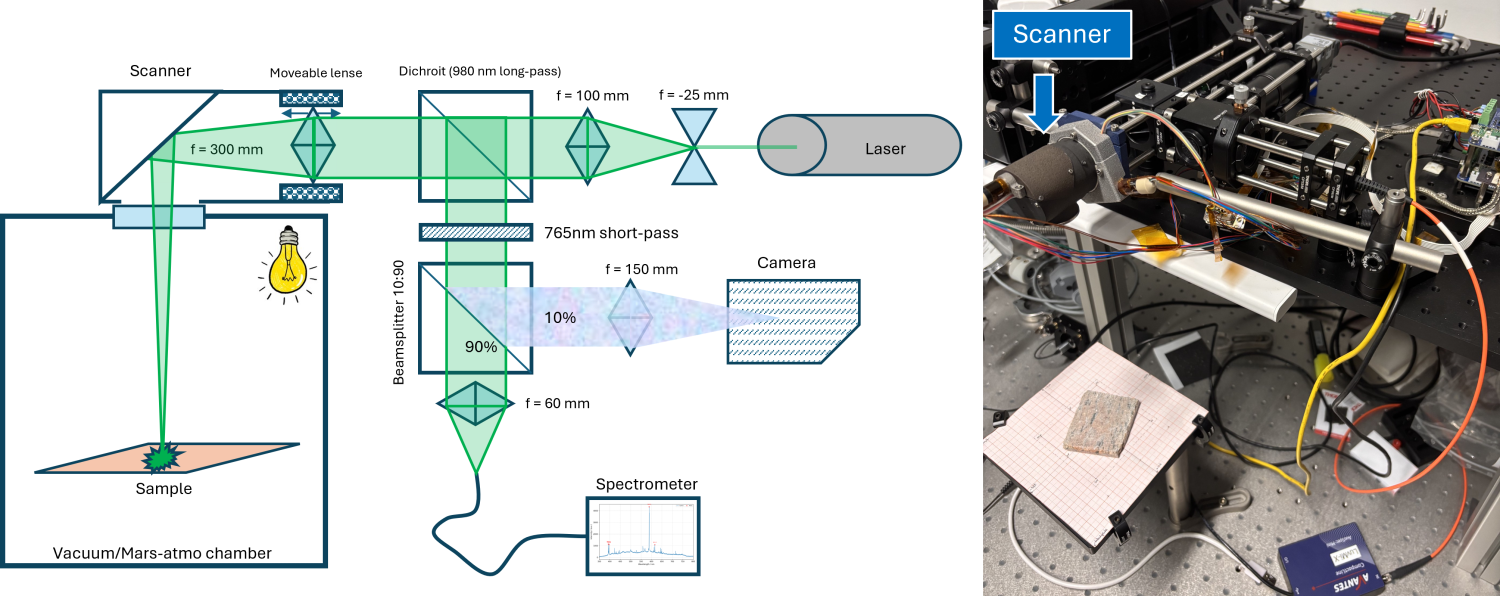
The LIBS setup with the prototype scanner is shown schematically in Figure 1. A Nd:YAG laser (1064 nm, 5 ns) delivers pulses of ≈8 mJ. After beam expansion, the laser is transmitted through a dichroic beam splitter and focused. The two-axes prototype scanning mirror directs the focused beam through an optical window onto the sample. The system achieves a maximum scan area of 8×8  cm at a working distance of ≈25 cm, and a minimum repeatable step size for grid points of 0.73 mrad in the tilt-axis direction and 1.46 mrad in the rotary-axis-direction.

The plasma emission is collected coaxially along the same optical path, ensuring that the collection efficiency remains uniform across the entire scan field and that each spectrum corresponds to the exact location addressed by the scanning mirror. So far, the setup requires adjusting the focus manually or bringing the sample into the focus distance. Plasma emission and light collected by the camera are separated from the laser line by the dichroic and filtered by a short-pass with an effective cut-off near 765 nm. A 10:90 beamsplitter divides the light between two detection channels: the larger fraction is coupled to a compact spectrometer (350–900 nm, 0.4 nm) via an optical fiber, while the remaining fraction is imaged onto a commercial camera. Each spectrum is co-registered with a context image of the ablation position and it is possible to define a precise pixel coordinate in contextual images for each spectrum.

While the sample chamber will allow for measurements in low pressures, the first results presented below were acquired in ambient air.

Figure 1: Left: schematic drawing of the µLIBS-Scanner-Setup. Right: Picture taken of the setup in the lab.


First results

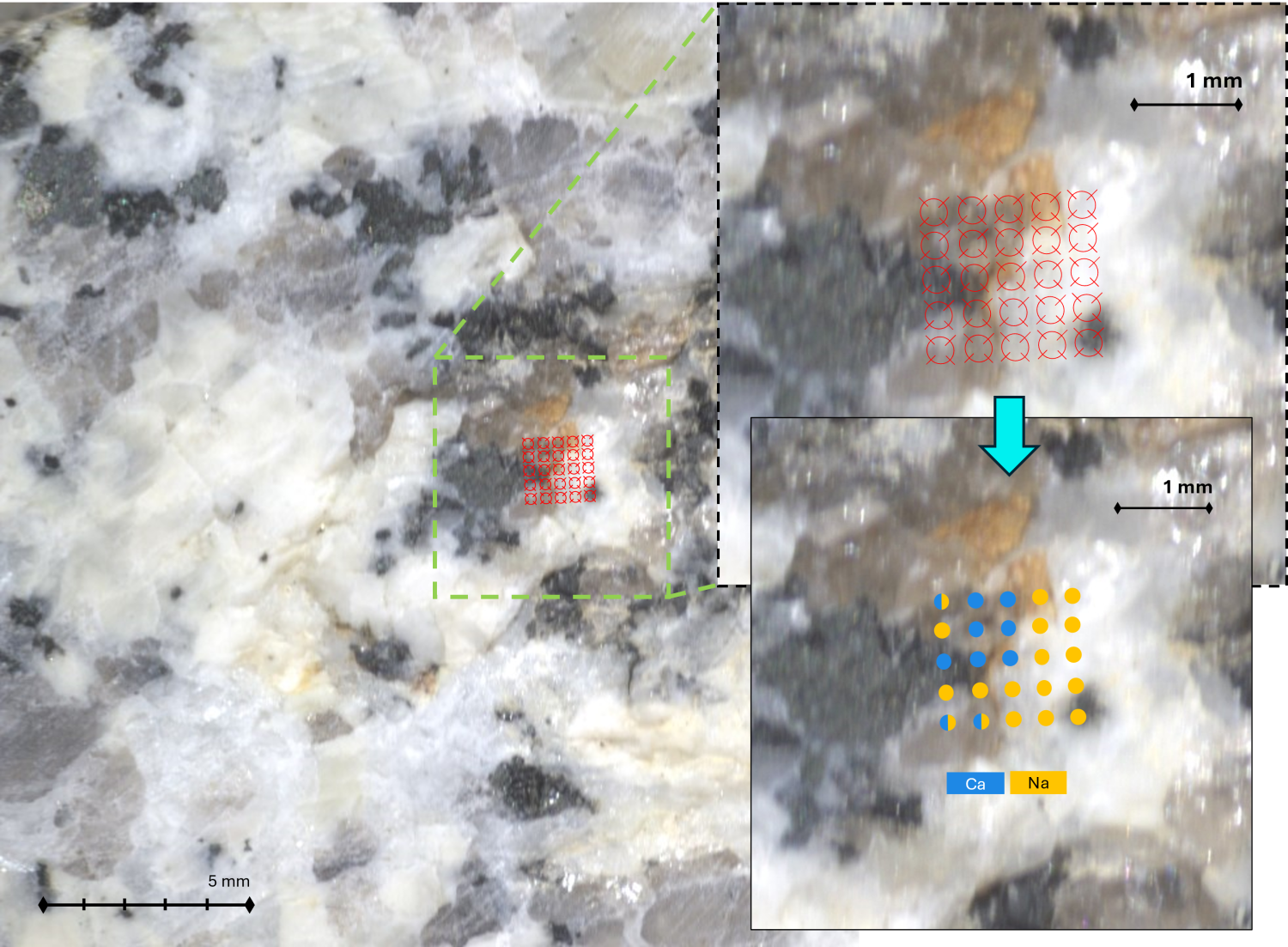
5x5 grids of LIBS measurements with a scanner step size of down to 1.46 mrad step size were acquired on flat, heterogeneous natural rock samples (Figure 2). At each point, 30 LIBS spectra were recorded using an integration time of 300 µs and averaged. Typical characteristic atomic and ionic emission lines can be seen, confirming the presence of several major and minor elements (Si, Al, Ca, Na, Fe, Mg, H, N, O, Li). N emission comes from the ambient atmosphere.

To demonstrate the elemental mapping capability without having a quantification in place, we are indicating the major emission of two major elements in the LIBS spectrum per raster position with a colored circle.  We chose Na as felsic indicator of the light toned matrix and Ca emission as an indicator of the darker mafic material. 

Raman spectroscopy revealed quartz and plagioclase on the light-toned areas and Ca amphibole (hornblende) from the darker areas.

Figure 2: Left: Full scale context image where red circles mark the 5x5-LIBS grid. Top right: Zoomed-in view. Bottom left: Color markers placed on each grid point for the dominant Ca or Na lines.

Summary and outlook

We show the implementation of a particularly small and lightweight scanning unit prototype (TRL6) into a laboratory LIBS setup that also hosts a co-aligned imaging system. Using a vacuum chamber, Martian atmospheric conditions can be simulated. The system can ignite suitable plasmas within a raster of 8x8 cm on flat samples without refocusing. Minimal reproducible angle between measurement positions is 1.46 mrad which translates to distances of ≈0.35 mm on the sample surface.

First measurements on a heterogeneous natural rock sample demonstrate the setup's ability to identify compositional variation at submillimeter scale. Ongoing work includes the acquisition of LIBS data at simulated Martian atmospheric and airless conditions and advance data processing and analytical methods in combination with image data for improved insights on geochemically heterogeneous targets including potentially limiting operational aspects.


References

1. Liu Y. et al. (2022) Science 377, 1513–1519.

2. Kizovski T. et al. (2025), nature communications, 16, 6470

3. Christian J. et al. (2026) Icarus, 453, 117060

4. Maurice S. et al. (2021) Space Sci Rev 217,

5. Wiens R. C. et al. (2022) Adv. 8, eabo3399.

6. Beyssac O. et al. (2023) JGR: Planets, 128, 7

7. Xu W. et al. (2021) Space Sci. Rev. 217, 64.

8. Rapin W. et. Al (2024) LPSC 2024, 2670

9. Rapin, W. et al. (2025) EPSC-DPS2025-1829

How to cite: Krybus, N., Schröder, S., Dietz, E., Bergen, T., Buder, M., Egerland, C., Mourlin, F., Rammelkamp, K., Rapin, W., Schrandt, F., Seel, F., Walter, I., and Hübers, H.-W.: Advancing LIBS for geochemical micro-mapping with lightweight prototype scanner, Europlanet Science Congress 2026, The Hague, The Netherlands, 7–11 Sep 2026, EPSC2026-959, https://doi.org/10.5194/epsc2026-959, 2026.

09:18–09:30
|
EPSC2026-1084
|
On-site presentation
Damien Loizeau, Jean-Pierre Bibring, Cédric Pilorget, Vincent Hamm, and the MicrOmega team

Introduction: Analyses of extraterrestrial samples enables to better assess the processes responsible for the wide diversity of solar system properties. Specifically, NIR hyperspectral imagery complement the NIR remote sensing of asteroids and planetary surfaces, in enabling tracking diagnostic major and minor constituents of sampled material, that are witnesses of the formation and evolution of their parent bodies, with their potential role when imbedded within Solar System objects. MicrOmega has been developed to detect and map such key constituents in mm-sized samples, directly in situ as a space instrument, and in the laboratory whenever returned samples are available.


The Instrument: MicrOmega is a near-IR hyperspectral microscope developed at the Institut d’Astrophysique Spatiale in Orsay, France [1]. The instrument delivers (x,y λ) spectral cubes from 0.99 to 3.65 µm, over a 5×5 mm² field of view, with a ~20 µm pixel size. Its spectral range, spectral sampling and focal depth have been chosen to enable, in a compact, light and robust instrument, the identification of most potential constituents: silicates, oxides, salts, hydrated minerals, ices and frosts, as well as organic compounds, discriminating between specific members in each family (e.g. low and high Ca pyroxenes, forsterite and fayalite, Mg and Al rich phyllosilicates, aliphatic and aromatic compounds, different types of carbonates and sulfates, etc. [2]). One prime goal is to observe the interrelation between the various phases and minerals, including those only present in small abundances (e.g. a few grains within the rock) or restricted to fractures or pores. Moreover, data processing enables not only to identify and locate grains of specific composition, but also to quantify their abundance.


MicrOmega on Mars: MicrOmega has been developed to be the first instrument to analyse the drilled samples inside the Rosalind Franklin rover of the ExoMars mission, to be launched in 2028 [1]. The rover will drill samples down to 2 m depth at the surface of Mars, and distribute them to the Analytical Laboratory Drawer (ALD) in the body of the rover for detailed mineralogic and molecular analysis. MicrOmega aims to characterize the composition of these samples at the grain size scale, in a non-destructive way.

Together with the flight model integrated in Rosalind Franklin, a flight spare of MicrOmega is installed in a dedicated set-up at Institut d’Astrophysique Spatiale [3]. The instrument is set in a glove box under controlled atmosphere and temperature to allow the safe use of the instrument under different conditions. A large number of synthetic and natural Earth analogues for Mars have been analysed within this set-up and has shown the capability of MicrOmega to map a large diversity of minerals [2], and to detect organic molecules even in small amount, in different mineral settings.


MicrOmega and extraterrestrial samples: MicrOmega is now  also used to analyse extraterrestrial samples in the lab.

The set-up with the flight spare of MicrOmega/ExoMars allows the analysis of precious extraterrestrial samples continuously out of contact with the Earth atmosphere. Meteorites, and samples from Ryugu (JAXA/Hayabusa2 mission), Bennu (NASA/OSIRIS-ReX mission), and the Moon (CNSA/Chang’E-5 mission [4]) have been and will be analysed in this facility.

Another model of MicrOmega has been integrated in the curation facility for the Ryugu and Bennu returned samples at ISAS/JAXA extraterrestrial samples curation center (EsCuC). This MicrOmega model observes all samples from both carbonaceous asteroids curated in Japan, maintained in clean chambers under N2, before their distribution to the scientific community [5, 6]. With these very dark samples, MicrOmega is sensitive to phyllosilicate signatures and how they are affected by space weathering (e.g. [7]), carbonates, phosphates, and CH- and NH-rich compounds as small as a few 10s µm.

In particular, MicrOmega has been able to help us better understand the water/rock interactions in the Ryugu and Bennu’s parent bodies in the early Solar System. For example, the instrument has mapped and distinguished different types of carbonates in samples from both asteroids, and has quantified their presence over a large portion of the returned material [8, 9].

MicrOmega has also been used to study the presence of key elements for the appearance of life, that have been delivered to the early Earth by carbonaceous asteroids: the instrument identified in Ryugu a class of hydrated minerals rich in P, Mg and ammonium that are more easily soluble than previously identified Ca-phosphates [10] ; it has also shown a number of grains enriched in NH associated to ammonium-bearing phyllosilicates both in Ryugu and Bennu [11]. 


[1] Bibring et al. (2017) Astrobiology, 17, 621-626. [2] Loizeau et al. (2022) Astrobiology, 22, 263-292. [3] Loizeau et al. (2020) PSS, 193, 105087. [4] Jiang et al. (2026) this conference [5] Pilorget et al. (2022) Nature Astronomy, 6, 221-225. [6] Pilorget et al. (2025) Nature Comm., 16, 9532 [7] Nardelli et al. (2026) this conference. [8] Loizeau et al. (2023) Nature Astronomy, 7, 391-397. [9] Mahlke et al. (2026) accepted in the Planetary Science Journal. [10] Pilorget et al. (2024) Nature Astronomy, 8, 1529-1535. [11] Jiang et al. (2026) Nature Comm., in press.

How to cite: Loizeau, D., Bibring, J.-P., Pilorget, C., Hamm, V., and MicrOmega team, T.: MicrOmega: a generic hyperspectral microscopic imager to characterize extraterrestrial samples, in space and in the lab, Europlanet Science Congress 2026, The Hague, The Netherlands, 7–11 Sep 2026, EPSC2026-1084, https://doi.org/10.5194/epsc2026-1084, 2026.

09:30–09:42
|
EPSC2026-1162
|
On-site presentation
Holly Capelo

The inter-planetary dust (IPD) environment offers key insights into planetary origins and poses significant hazards to space exploration. Due to their high velocities (> km/s), IPD particles, including micrometeorites, typically disrupt when they impact with a surface, and so they are difficult to collect directly or to inspect with images. Current IPD particle measurements rely on indirect surface charge estimations, providing little information on the nature of the particles, such as morphology and compactness.  Addressing these properties is vital to understand dust aggregate growth in planetary formation, and distinguishing between natural and anthropogenic debris sources as human activities in space increase. In addition to the case of IPDs, dust levitation and transport near terrestrial surfaces help understand the geological and exospheric conditions of the Moon, Mars, and comets. However there is no current method to directly track Lunar or Martian dust dynamics. Previous studies tracking cometary dust were conducted at low time resolutions, leaving gaps in understanding the dust ejection mechanisms . While ultra-high-speed imaging systems for particle sizing and dynamical measurements are well-established on Earth, there are no applications of such technology in space environments.  I will present the status of an ESA-sponsored tech-development study, conducted in collaboration with industry [LaVision GMbH], that aims to adapt Earth-based high-speed particle imaging technology to meet the scientific and technical requirements for tracking dust and debris in space. This effort is supported by ground-based experiments at the University of Stuttgart , and the results of the experiments will be discussed.

How to cite: Capelo, H.: Experiments in support of a novel technology to image and study dust-grain dynamics  in-situ , Europlanet Science Congress 2026, The Hague, The Netherlands, 7–11 Sep 2026, EPSC2026-1162, https://doi.org/10.5194/epsc2026-1162, 2026.

09:42–09:54
|
EPSC2026-609
|
On-site presentation
Mark Paton, Diego Scaccabarozzi, Javier Martínez-Oter, Maria Genzer, Andrea Appiani, Markel Erauzquin, Miguel Gonzalez, Danel Juárez, Harri Haukka, and Ari-Matti Harri
Introduction
Penetrators offer a low-mass method for accessing subsurface material on icy worlds compared to conventional landers. They can also minimise surface contamination as they do not need rocket motors when ballistically emplaced. Enceladus is of interest due to evidence of a possibly habitable subsurface ocean with plume emissions at the south polar terrain. However, the mechanical properties of its near-surface icy regolith is unclear. In addition, testing under the conditions on Enceladus is challenging on Earth.
This study was motivated during an ESA penetrator project (Technologies for Penetrator Payloads), which highlighted the need to study penetration mechanics in low-density icy materials.
Background
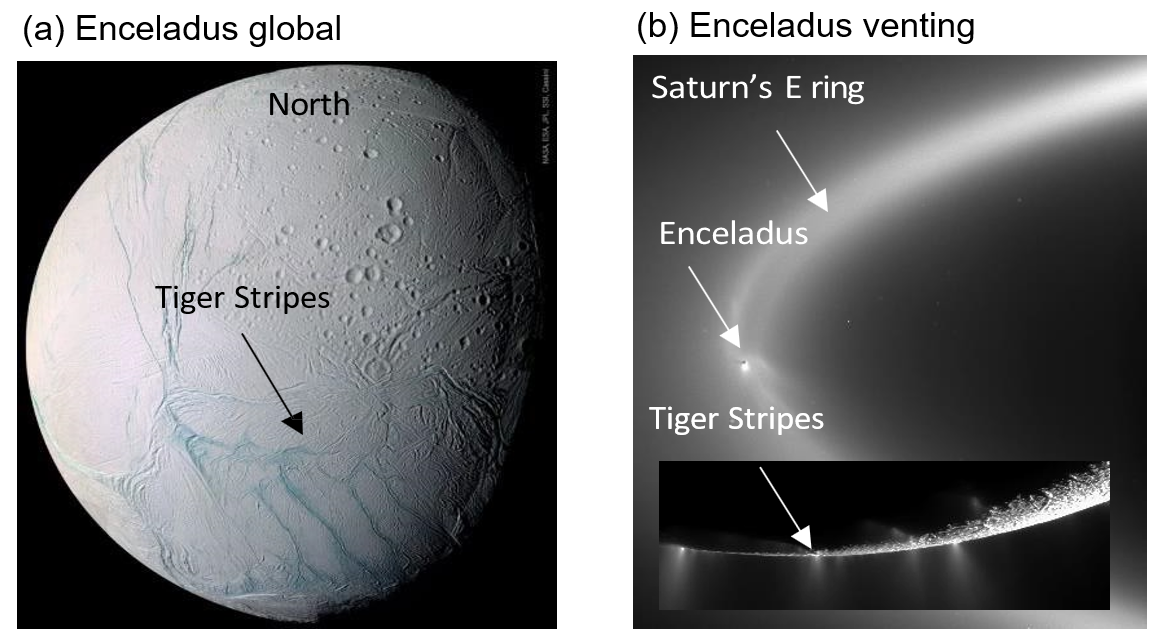
The south polar tiger stripes of Enceladus continuously vent water vapour and grains into space (Figure 1). The slower moving grain aggregates fall back to the surface forming a highly porous icy regolith that may extend from decimetres to hundreds of metres in thickness (Buratti et al., 2014; Martin et al., 2023). Microwave observations from Cassini support the interpretation of a low-density porous surface layer (Le Gall et al., 2023). Subsurface heating close to the tiger stripes could increase sintering. However, it may be that porosity remains high over geological time scales (Molaro et al., 2019).
Figure 1. Images of Enceladus and its vents. Images: Cassini’s Imaging Science Subsystem.
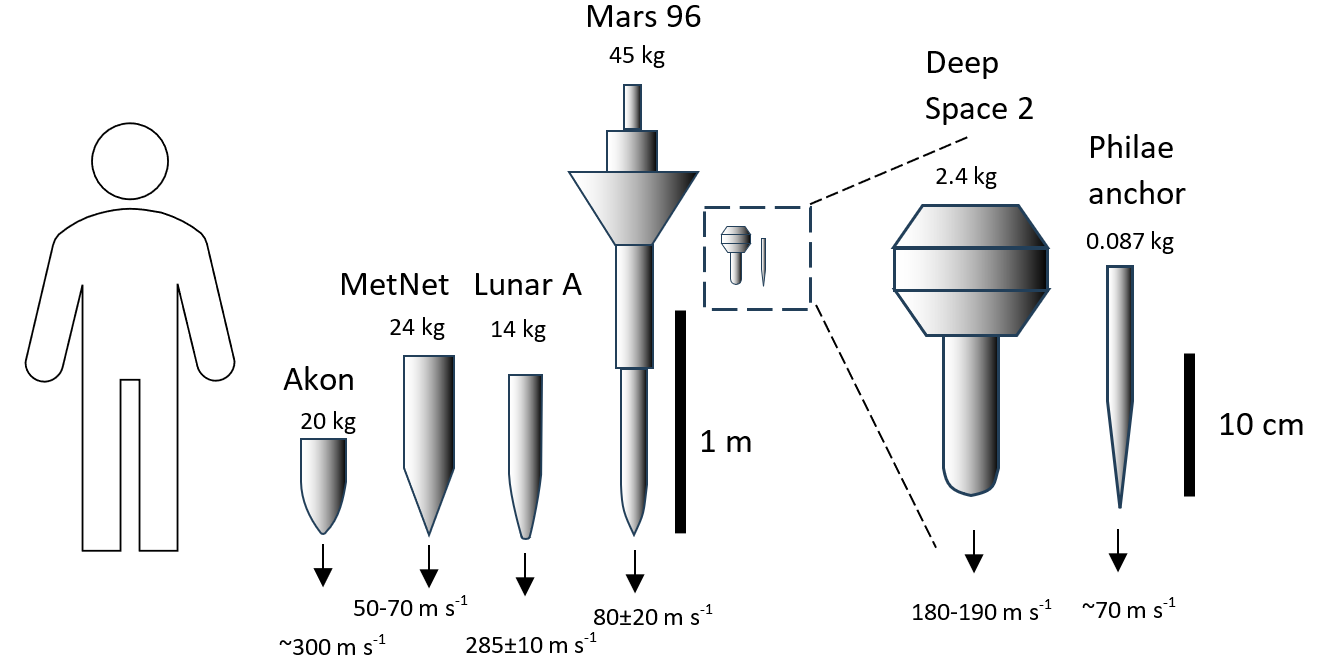
Penetrators and other impact devices have been designed and built for the Moon and for Mars and in some cases flown. A selection of planetary penetrators is shown in Figure 2. Mars 96, Deep Space 2 and the Philae anchor (an instrumented harpoon-like device) were all flown but did not deploy correctly. MetNet and Lunar A were flight ready but did not get a mission to fly on and Akon is a prototype penetrator used in tests. So far, the Huygens impact penetrometer (on Titan), together with the Philae MUPUS penetrator (on a comet), are examples of low-velocity impact devices deployed on icy bodies and provided information on its subsurface, e.g. Zarnecki et al. (2005); Paton et al. (2012).
Figure 2. Various heritage, flight ready and prototype penetrators used in this study.
Method
Penetrator dynamics are modelled using the well-known Poncelet equation (Poncelet, 1839). A physically based derivation of the Poncelet drag coefficient is developed to estimate first-order penetration deceleration profiles in porous icy materials observed on Enceladus.
The model is compared with publicly available penetration tests in sand (Bless et al., 2024) at impact velocities of 150 to 200 m s⁻¹, comparable to expected Enceladus penetrator impact speeds. Heritage penetrator concepts including Lunar-A, MetNet, Mars 96 and Deep Space 2 are used as reference for penetration simulations.
Results
The drag coefficient model reproduces experimentally inferred Poncelet drag coefficients across a range of granular target densities and penetrator geometries. The results suggest that the effective compaction density changes with initial target density, with lower-density materials generating weaker confinement and hence lower compaction states.
The dynamic response of a penetrator to sintered near-vent materials currently remains unclear due to the scarce experimental penetrator data for high porosity cryogenic icy material. However, due to significantly higher strength of sintered ice grains, the resistance to penetration is likely to be several times higher than in unsintered porous plume deposits.
Application of the model to heritage penetrators produces maximum g-levels and penetration depths consistent with previous studies. Simulated Enceladus penetration scenarios generate preliminary deceleration profiles that provide constraints on impact shock environments relevant to future penetrator payload designs for icy worlds.
References
Bless, S., et al. (2024) Robust prediction of ordnance depth of burial in soils using field calibrated phenomenological model & probabilistic simulations. Final Report, SERDP Project MR19-1277. New York University, Manhattan College and Southwest Research Institute, May 2024.
Buratti, B. J., et al. (2014) Enceladus: Surface texture and roughness as clues to what lies beneath. In: 45th Annual Lunar and Planetary Science Conference, p. 2038
Le Gall, A., et al. (2023) Microwaving Mimas, Enceladus, Tethys, Dione, Rhea, Iapetus and Phoebe: insights into the regolith properties and geological history of Saturn’s icy satellites. Icarus, 394 (April), p. 115446.
Molaro, J. L., et al. (2019) The microstructural evolution of water ice in the solar system through sintering. Journal of Geophysical Research: Planets, 124(2), pp. 243–277.
Martin, E. S., et al. (2023) Measurements of regolith thicknesses on Enceladus: Uncovering the record of plume activity. Icarus, 392, 115369.
Newman, S.F., et al. (2008) Photometric and spectral analysis of the distribution of crystalline and amorphous ices on Enceladus as seen by Cassini. Icarus, 193(2), pp. 397–406.
Paton, M.  D., et al. (2012) Microstructural penetrometry of asteroid regolith analogues and Titan’s surface. Icarus, 220(2), pp.787–807.
Poncelet, J. V. (1839) Introduction à la mécanique industrielle, 2nd edn. Brussels: Méline, Cans et Compagnie, p. 271.
Zarnecki, J. C., et al. (2005) ‘A soft solid surface on Titan as revealed by the Huygens Surface Science Package’, Nature, 438, pp. 792–795.
 
Acknowledgement:
'Technologies for penetrator payloads” project is funded by the European Space Agency under the ESA Contract No. 4000148443/25/NL/KML.

How to cite: Paton, M., Scaccabarozzi, D., Martínez-Oter, J., Genzer, M., Appiani, A., Erauzquin, M., Gonzalez, M., Juárez, D., Haukka, H., and Harri, A.-M.: Assessment of penetrator technologies for Enceladus, Europlanet Science Congress 2026, The Hague, The Netherlands, 7–11 Sep 2026, EPSC2026-609, https://doi.org/10.5194/epsc2026-609, 2026.

09:54–10:00

Posters: Thu, 10 Sep, 18:00–19:30 | Foyer 3

Display time: Thu, 10 Sep, 08:30–19:30
Chairperson: Axel Hagermann
F3.35
|
EPSC2026-446
|
On-site presentation
Saskia Hagan-Fellowes, Roger Stabbins, Peter Grindrod, Claire Cousins, and Matt Gunn

Introduction

Accurate mineral identification at Oxia Planum is central to the geological objectives of the ESA Rosalind Franklin rover [1], particularly in the characterisation of the phyllosilicate-bearing units associated with past aqueous environments [2]. This study evaluates the spectral performance of the onboard short-wave infrared (SWIR) spectrometer, Enfys, for reliable mineral identification on the martian surface [3].


Methods

We have assessed the performance of Enfys using laboratory-derived spectral libraries, including, RELAB [4], MICA [5], VISOR [6], and USGS [7], alongside Oxia Planum CRISM observations [8]. To evaluate Enfys’ detection capabilities, the high-resolution library spectra have been resampled to Enfys’ spectral parameters (Figure 1) using SPTK [9].

Figure 1: Comparison of original library spectra (solid lines) and resampled Enfys spectra (dashed lines) from the mica files [5], the Enfys-like spectra were resampled at a nyquist sampling rate using sptk [9].


Continuum removal and smoothing techniques can be incorporated to isolate absorption features, making it easier to compare spectra with different mineral assemblages. These preprocessing steps are useful for normalising spectral shapes across varying viewing and environmental conditions, improving the comparability of laboratory, field, and martian data. 

A variety of error metrics have been calculated (Figure 2), that can quantify the spectral performance of Enfys by measuring overall numerical deviation and spectral feature preservation, and to aid comparison with SWIR spectrometers on previous and ongoing Mars rovers.

Figure 2: Error Metrics for the Enfys resampled mineral spectra in the mica files with mineral ID labelled [2]. The six error metrics indicate preservation of shape and overall numerical deviation. Left to right: root mean square error (RMSE), mean absolute error (MAE), mean square error (MSE), spectral angle mapper (SAM), spectral information divergence (SID) and cross-correlation coefficient (CCC).

To support automated mineral classification, spectral parameters such as band centres, depths, and widths will be extracted after resampling. Characterising these parameters for expected minerals at Oxia Planum will aid post-landing mineral detection and target selection.

Results

Preliminary analysis shows that Enfys can identify key mineral groups, such as phyllosilicates and preserve key diagnostic absorption features. These results confirm the value of Enfys for in situ mineralogical analysis on Mars, improving our ability to select promising drill targets for biosignature detection. More broadly, this work provides a framework for optimising spectral data acquisition in future planetary exploration missions.


[1] Vago, J.L, et al. (2017) Astrobiology, 17(6-7), pp.471–510. [2] Quantin-Nataf, C. et al. (2021) Astrobiol. 21, 345–366. [3] Grindrod, R., et al. (2025). LPSC 56, #1840.  [4] Milliken, R.E., Hiroi, T., Patterson, W. (2016) LPSC 47, #2058. [5] Viviano, C.E. et al. (2014) JGR Planets 119, 1403–1431. [6] Million, C.C. et al. (2022) LPSC 53, #2678. [7] Kokaly, R.F. et al. (2017) USGS Data Series 1035. [8] Murchie, S., et al. (2007) Journal of Geophysical Research, 112(E5).  [9] Stabbins, R., Grindrod, P. (2024) Zenodo, doi:10.5281/ZENODO.10694286.

How to cite: Hagan-Fellowes, S., Stabbins, R., Grindrod, P., Cousins, C., and Gunn, M.: Spectral Performance Assessment of Enfys for Mineral Discrimination at Oxia Planum, Europlanet Science Congress 2026, The Hague, The Netherlands, 7–11 Sep 2026, EPSC2026-446, https://doi.org/10.5194/epsc2026-446, 2026.

F3.36
|
EPSC2026-793
|
ECP
|
On-site presentation
Abhimanyu Shanbhag, Mario de Pinto Balsemao, and James Kingsnorth

The Tumbleweed Mission proposes a cost‑effective swarm of wind‑driven spheroidal rovers to acquire extensive in-situ measurements across the Martian surface [1]. Built from modular components and commercial off‑the‑shelf (COTS) parts, these passively propelled rovers can significantly reduce mission cost and complexity for surface mobility on Mars.

Figure 1 - Proposed Mission Architecture: mid-air deployment (1), landing (2), rolling towards the equator (3) and stationary phase (4).


Exploring the synergies amongst our pre-selected list of instruments, we arrived at the opportunity to use multispectral cameras, radiation and neutron spectrometers, and a triaxial fluxgate magnetometer to characterise Martian Habitability across the traversed paths of individual rovers [5]. We define areas of interest for the assessment of present-day Martian Habitability as the intersection of (a) low radiation exposure, (b) local availability of water/H‑bearing materials, and (c) magnetospheric shielding. These areas could constitute niches conducive for preservation of potential biosignatures [6]. These can be probed by a synergistic suite of instruments on-board a multi‑rover swarm of Tumbleweeds. For example, the neutron spectrometer shall continuously measure both fast and epithermal neutrons produced when Galactic Cosmic Rays (GCRs) and Solar Energetic Particles (SEPs) interact with the regolith, enabling high‐resolution WEH mapping along each rover’s path [7]. Neutron measurements will be complemented by continuous measurements of soil permittivity using patch electrode based sensors [8]. Meanwhile, the fluxgate magnetometer shall record vector magnetic fields at every stop and during locomotion, detecting localized magnetic anomalies that can act as mini‑magnetospheres [9]. Each Tumbleweed will continuously sample radiation flux, hydrogen abundance, magnetic anomalies, topography, and surface composition over hundreds of kilometers, collectively generating habitability maps that bridge the gap between orbital surveys and point measurements. 

Figure 2 – Tumbleweed rover prototype in the Negev Desert, Credit to OEWF/AMADEE20.

Several prototypes have been developed to evaluate feasibility of the platform’s mobility (figure 2) [9]. In 2025, Tumbleweed Mars achieved validation of the current box-kite spheroidal rover design through a wind tunnel campaign in Aarhus University Planetary Environment Facility supported by Europlanet’s Transnational Access program [10]. To further validate Martian surface operations, as well as high-quality scientific return during dynamic motions, an analog campaign in the Atacama desert demonstrated that the rover could carry out environmental measurements while in motion. During rolling operations, the prototype continuously recorded atmospheric and surface conditions, showing that the scientific payload remained functional under dynamic conditions (figure 3). 


Figure 3 - Tumbleweed rover prototype in the Atacama. 

Nevertheless, further testing and modelling is necessary to validate the capabilities of more specialized instruments aboard a Tumbleweed rover. 

Regarding necessary instrument requirements for radiation-specific passive instrumentation to successfully achieve measurement objectives, several layers of modelling are needed in order to complete a Science Traceability Matrix. An example is the passive neutron spectrometer, which is a statistical instrument, and thus requires modelling not only for the neutron counts it may receive onboard a tumbling rover but also for the broader geomorphological context in which the rover finds itself (modelled on a Unity-based Martian Digital Twin developed in-house (figure 4) [11].

Figure 4 - Unity-based Martian Digital Twin simulating a Tumbleweed rover traverse in the Jezero Crater.

Additionally, arriving at the minimum number of individual rovers required to successfully achieve mission requirements will require a larger-scale simulation of the swarm behavior and dispersion of Martian surface. This software has been already developed in-house (figure 5) [2]. 

Figure 5 - Global scale semi-stochastic spreading simulation, illustration of a sample run with 100 rovers, 80 sols fixed lifetime.

Thus, to validate the synergies of radiation-focused instrumentation, three layers of modelling are necessary. Radiation transport modelling (in GEANT4) is required to understand and derive measurement requirements during the rolling and the static phases of the Tumbleweed Mission. If we want to map water-equivalent hydrogen in a specific location, such as Deuteronilus Mensae, we might start by using the large-scale spreading simulation with a specific landing ellipse to infer how many rovers will reach the desired destination. Should x rovers reach Deuteronilus Mensae, the question becomes about their dynamic behavior on that location due to its geomorphological and meteorological context, which would be modelled by the Martian Digital Twin. Should y of these rovers find themselves within a lava tube, then it becomes important to model their radiation environment in GEANT4 where the number of rovers that traverses the lava tube, z, can be determined in order for achieving desired measurement coverage.This three-layer modelling can be executed in the reverse chronological order.The many relationships between the models/simulations and the science goals can be seen through the decoupling of the Science Traceability Matrix illustrated on figure 6.

Figure 6 - How the three modelling layers relate to the Science Traceability Matrix.

In conclusion, the Tumbleweed Mission represents a scalable and cost-effective approach for water prospecting and investigating Martian habitability through a distributed swarm of wind-driven rovers. Central to this concept is the neutron spectrometer, through which continuous measurements of fast and epithermal neutrons could provide high-resolution mapping of water-equivalent hydrogen along rover traverses, enabling the identification of subsurface volatile reservoirs and potentially protected habitable niches. When combined with magnetic field, radiation, and multispectral observations, these measurements can reveal regions where hydrogen abundance coincides with reduced radiation exposure and localized magnetic shielding. The Atacama campaign demonstrated the feasibility of conducting scientific measurements during rover motion, while ongoing multi-layer modelling efforts will constrain the operational requirements, statistical performance, and deployment architecture necessary for neutron spectroscopy to achieve meaningful scientific return on Mars.


References

[1] https://doi.org/10.5194/egusphere-egu24-20149 

[2] Renolder et al , IAC 2023

[3] https://doi.org/10.5194/epsc2024-1103

[4] https://doi.org/10.5194/epsc2024-790

[5] https://doi.org/10.5194/egusphere-egu25-19534

[6] Shanbhag et al, IAC 2023

[7] https://doi.org/10.1016/j.icarus.2021.114805.

[8] https://doi.org/10.3389/frspt.2023.1303180  

[9] Maxwell et al 2023

[10] https://doi.org/10.5194/epsc-dps2025-1775

[11] Holthuijsen et al, IAC 2024

How to cite: Shanbhag, A., de Pinto Balsemao, M., and Kingsnorth, J.: In-situ measurements of Ionizing Radiation and near-surface Water on Mars using Tumbleweed Rovers, Europlanet Science Congress 2026, The Hague, The Netherlands, 7–11 Sep 2026, EPSC2026-793, https://doi.org/10.5194/epsc2026-793, 2026.

F3.37
|
EPSC2026-825
|
ECP
|
On-site presentation
Zhen Yang, Jurriaan Huskens, and Niels Ligterink

Abstract

One of the primary goals of extraterrestrial life detection is the qualitative identification and quantitative analysis of biosignatures that can provide direct or indirect evidence of extraterrestrial life and help reveal biological activity or prebiotic processes.1, 2 Current methods for extraterrestrial life detection mainly include mass spectrometry,3, 4 Raman spectroscopy,5, 6 and emerging microfluidic chip-based biosensing techniques.7, 8 However, extraterrestrial samples often contain high concentrations of salts and diverse minerals,9, 10 which may make sensitive and selective detection of biosignatures challenging owing to strong background signals. Therefore, there is a need for in situ analytical techniques that can secure biomolecule detection performance with high selectivity, strong resistance to interference, and low detection limits. The Life Marker Chip / Origin of Life Marker Chip (LMCOOL) project aims to develop an efficient biosignature detection platform for planetary exploration missions. Driven by this aim, this study focuses on the development of efficient chemical surface modification strategies for immobilizing biorecognition elements onto photonic chips for asymmetric Mach–Zehnder interferometry (aMZI), which is essential for the selective detection of target biosignature molecules.

The aMZI photonic chip is a highly sensitive refractive index-based sensing platform that has attracted widespread attention due to its label-free nature and its ability to provide sensitive, in-situ and real-time measurements.11 In this study, the tested aMZI chip consists of a high-refractive-index silicon nitride (Si₃N₄) waveguide layer and a silicon dioxide (SiO₂) cladding. During fabrication, part of the SiO₂ cladding is removed to form a “sensing window”, which exposes the waveguide directly to the liquid environment in sensing applications. During operation, the input light is split into a reference arm and a sensing arm. The reference arm functions as an internal reference and is generally isolated by the SiO₂ cladding layer. In comparison, the sensing arm, which is functionalized with bioreceptors that are able to specifically recognize the target analyte, is typically exposed to the matrix environment. When target molecules bind to the receptors on the sensing surface, they cause a local change in refractive index, which changes the light propagation phase and optical path length in the waveguide. This change is measured as a wavelength shift in the interference spectrum, with a resolution down to the picometer (pm) level.11-13

To analyze target biosignatures (such as D/L-phenylalanine, D/L-histidine, and guanine) accurately, a sensitive and selective receptor layer is required on the waveguide surface. In our work, poly-L-lysine (PLL) is used as a surface modification layer for Si₃N₄ substrates. The positively charged amine groups in PLL can strongly attach to the Si₃N₄ surfaces, which become negatively charged upon activation using UV/ozone, oxygen plasma, or piranha solution. Residual unbound amine groups of the PLL can be further functionalized through various chemical approaches, such as coupling reactions with N-hydroxysuccinimide (NHS) ester crosslinkers, enabling the covalent immobilization of recognition elements (e.g., aptamers) onto the chip surface. This PLL-based method is simple, stable, and widely used, and provides a reliable surface for detecting low-concentration biomarkers using aMZI in complex environments.11, 13

Considering the potential damage of the extreme radiation environment in space to organic coatings, we are also developing molecularly imprinted polymer (MIP) materials based on a siloxane backbone as an alternative recognition strategy. By using target molecules as templates during polymerization, the resulting MIP materials form binding sites that match the target molecules, allowing selective recognition.14 Combined with the high sensitivity of aMZI optical detection, this hybrid approach provides a promising platform for detecting trace biomarkers and will be useful for future extraterrestrial exploration.

Here, we will present the initial results of the project, with e.g., sensor sensitivity tests, the fabrication of PLL-based sensing layers, the evaluation of D/L-phenylalanine sensing, and the first trial with MIPs usage.


References

[1] V. Abrahamsson and I. Kanik, Frontiers in Astronomy and Space Sciences, vol. 9, 2022.

[2] M. A. Sephton, A. Steele, F. Westall, and F. Schubotz, Proceedings of the National Academy of Sciences, vol. 122, no. 2, p. e2404256121, 2025.

[3] P. V. Johnson, L. W. Beegle, and I. Kanik, in Mass Spectrometry Handbook, pp. 389–405, 2012.

[4] A. Riedo, C. de Koning, A. H. Stevens, C. S. Cockell, A. McDonald, A. C. López, V. Grimaudo, M. Tulej, P. Wurz, and P. Ehrenfreund, Astrobiology, vol. 20, no. 10, pp. 1224–1235, 2020.

[5] K. Uckert, A. Parness, N. Chanover, E. J. Eshelman, N. Abcouwer, J. Nash, R. Detry, C. Fuller, D. Voelz, R. Hull, D. Flannery, R. Bhartia, K. S. Manatt, W. J. Abbey, and P. Boston, Astrobiology, vol. 20, no. 12, pp. 1427–1449, 2020.

[6] M. W. Sandford, A. K. Misra, T. E. Acosta-Maeda, S. K. Sharma, J. N. Porter, M. J. Egan, and M. N. Abedin, Applied Spectroscopy, vol. 75, no. 3, pp. 299–306, 2021.

[7] J. Kim, E. C. Jensen, A. M. Stockton, and R. A. Mathies, Analytical Chemistry, vol. 85, no. 16, pp. 7682–7688, 2013.

[8] M. F. Mora, F. Greer, A. M. Stockton, S. Bryant, and P. A. Willis, Analytical Chemistry, vol. 83, no. 22, pp. 8636–8641, 2011.

[9] F. Postberg, S. Kempf, J. Schmidt, N. Brilliantov, A. Beinsen, B. Abel, U. Buck, and R. Srama, Nature, vol. 459, no. 7250, pp. 1098–1101, 2009.

[10] F. Tosi et al., Nature Astronomy, vol. 8, no. 1, pp. 82–93, 2024.

[11] M. J. Goodwin, G. A. J. Besselink, F. Falke, A. S. Everhardt, J. J. L. M. Cornelissen, and J. Huskens, ACS Applied Bio Materials, vol. 3, no. 7, pp. 4566–4572, 2020.

[12] T. Chalyan, R. Guider, L. Pasquardini, M. Zanetti, F. Falke, E. Schreuder, R. G. Heideman, C. Pederzolli, and L. Pavesi, Biosensors, vol. 6, no. 1, 2016.

[13] S. Aphrham, M. Verheijden, and J. Huskens, Langmuir, vol. 41, no. 17, pp. 11205–11214, 2025.

[14] J. J. BelBruno, Chemical Reviews, vol. 119, no. 1, pp. 94–119, 2019.

How to cite: Yang, Z., Huskens, J., and Ligterink, N.: Surface Functionalization of Photonic Life Marker Chips for Asymmetric Mach–Zehnder Interferometry (aMZI)-Based Biosensing, Europlanet Science Congress 2026, The Hague, The Netherlands, 7–11 Sep 2026, EPSC2026-825, https://doi.org/10.5194/epsc2026-825, 2026.

F3.38
|
EPSC2026-899
|
ECP
|
Virtual presentation
Christoph H. Egerland, Kristin Rammelkamp, Elise Clavé, Ana Lomashvili, Peder Bagge Hansen, Susanne Schröder, and Heinz-Wilhelm Hübers

Laser-induced breakdown spectroscopy (LIBS) is a non-contact analytical technique that allows for the elemental analysis of a sample by analyzing the light emitted from a plasma generated by a focused laser pulse. It has been employed in planetary in-situ missions, such as the ChemCam instrument on the Mars Science Laboratory rover [1] and the SuperCam instrument on the Mars 2020 Perseverance rover [2]. Usually the analysis of LIBS spectra relies on the use of calibration data, which is obtained by measuring the spectra of reference samples with known compositions. In the above stated missions calibration data was obtained by measuring the spectra of reference samples in the laboratory with the space- as well as the replica instruments
and by using onboard calibration targets
[3].

Figure 1: General scheme of the spectra fitting approach
 
 
The calibration-free LIBS (CF-LIBS) method enables the determination of quantitative plasma parameters without the need for such calibration data @ciucci99. Usually CF-LIBS is based on the (Saha-)Boltzmann plot method, which relies on the assumption of a local thermal equilibrium (LTE) and the selection of suitable transitions.
Another class of methods consists of the direct fitting of a plasma model producing a synthetic spectrum to the experimentally obtained spectrum. This method is more flexible and can be applied to more complex plasma models, such as non-LTE plasmas, but it is also computationally more expensive @demidov16 @gornushkin22a.

In this work we present a fitting scheme that utilizes gradient descent to find the optimal plasma parameters.
Based on the homogeneous 1D plasma model at LTE, we show that the gradient descent approach is able to find the optimal solution fast and consistently.
We emphasize that this approach is generic and can be extended to more involved plasma models, such as non-LTE plasmas, which are relevant for the analysis of LIBS spectra obtained in planetary in-situ missions.
 
References
[1]
R. C. Wiens et al., “The ChemCam Instrument Suite on the Mars Science Laboratory (MSL) Rover: Body Unit and Combined System Tests,” Space Science Reviews, vol. 170, no. 1, pp. 167–227, Sept. 2012, doi: 10.1007/s11214-012-9902-4.
[2]
S. Maurice et al., “The SuperCam Instrument Suite on the Mars 2020 Rover: Science Objectives and Mast-Unit Description,” Space Science Reviews, vol. 217, no. 3, p. 47, Apr. 2021, doi: 10.1007/s11214-021-00807-w.
[3]
S. M. Clegg et al., “Recalibration of the Mars Science Laboratory ChemCam Instrument with an Expanded Geochemical Database,” Spectrochimica Acta Part B: Atomic Spectroscopy, vol. 129, pp. 64–85, Mar. 2017, doi: 10.1016/j.sab.2016.12.003.
[4]
A. Ciucci, M. Corsi, V. Palleschi, S. Rastelli, A. Salvetti, and E. Tognoni, “New Procedure for Quantitative Elemental Analysis by Laser-Induced Plasma Spectroscopy,” Applied Spectroscopy, vol. 53, no. 8, pp. 960–964, Aug. 1999, doi: 10.1366/0003702991947612.
[5]
A. Demidov et al., “Monte Carlo Standardless Approach for Laser Induced Breakdown Spectroscopy Based on Massive Parallel Graphic Processing Unit Computing,” Spectrochimica Acta Part B: Atomic Spectroscopy, vol. 125, pp. 97–102, Nov. 2016, doi: 10.1016/j.sab.2016.09.016.
[6]
I. Gornushkin, “Calibration-Free Quantitative Analysis,” Laser-Induced Breakdown Spectroscopy in Biological, Forensic and Materials Sciences. Springer International Publishing, Cham, pp. 67–99, 2022. doi: 10.1007/978-3-031-14502-5_3.


How to cite: Egerland, C. H., Rammelkamp, K., Clavé, E., Lomashvili, A., Hansen, P. B., Schröder, S., and Hübers, H.-W.: Fitting LIBS Spectra using Gradient Descent, Europlanet Science Congress 2026, The Hague, The Netherlands, 7–11 Sep 2026, EPSC2026-899, https://doi.org/10.5194/epsc2026-899, 2026.

F3.39
|
EPSC2026-972
|
On-site presentation
Abel Palomas, Michelle Cedeño, Xavier Manyosa, Stephen Garland, Andreas Lorek, Manuel Domínguez-Pumar, and Sandra Bermejo

Purpose of the work

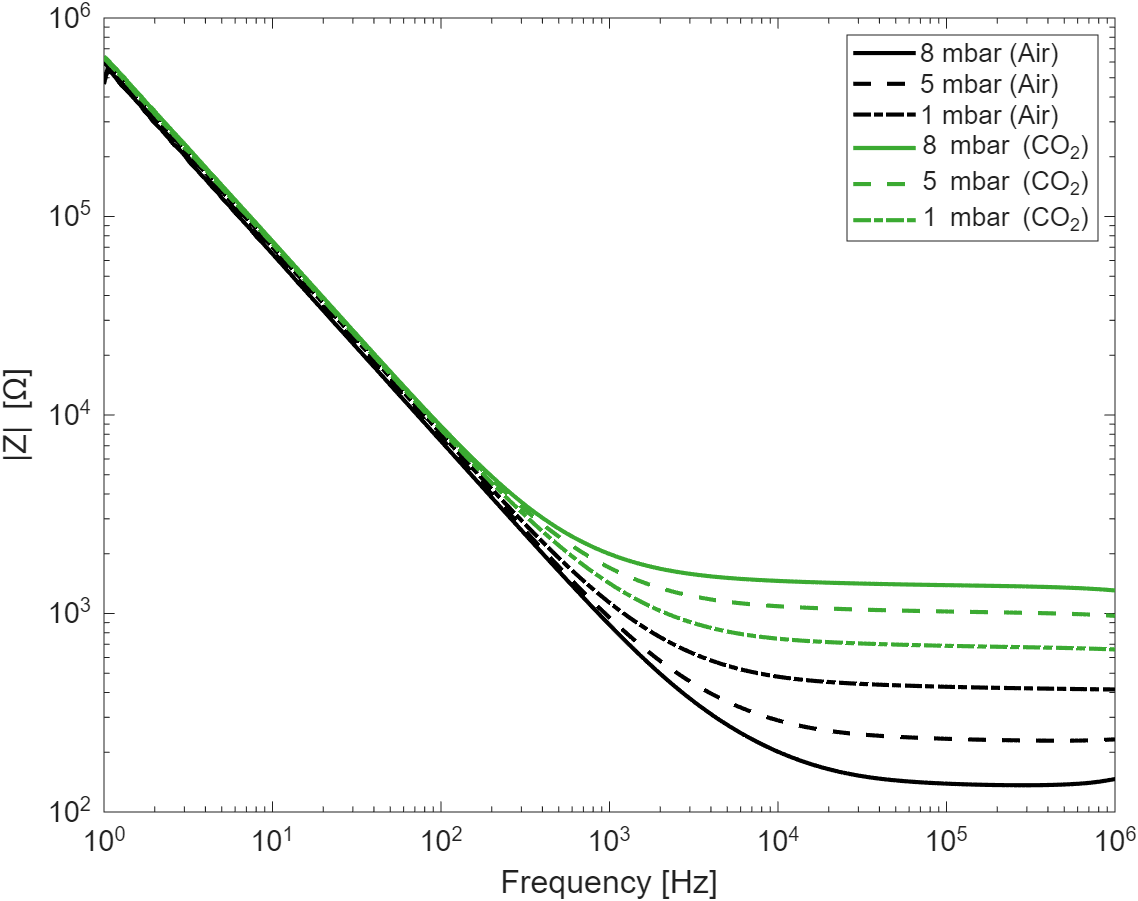
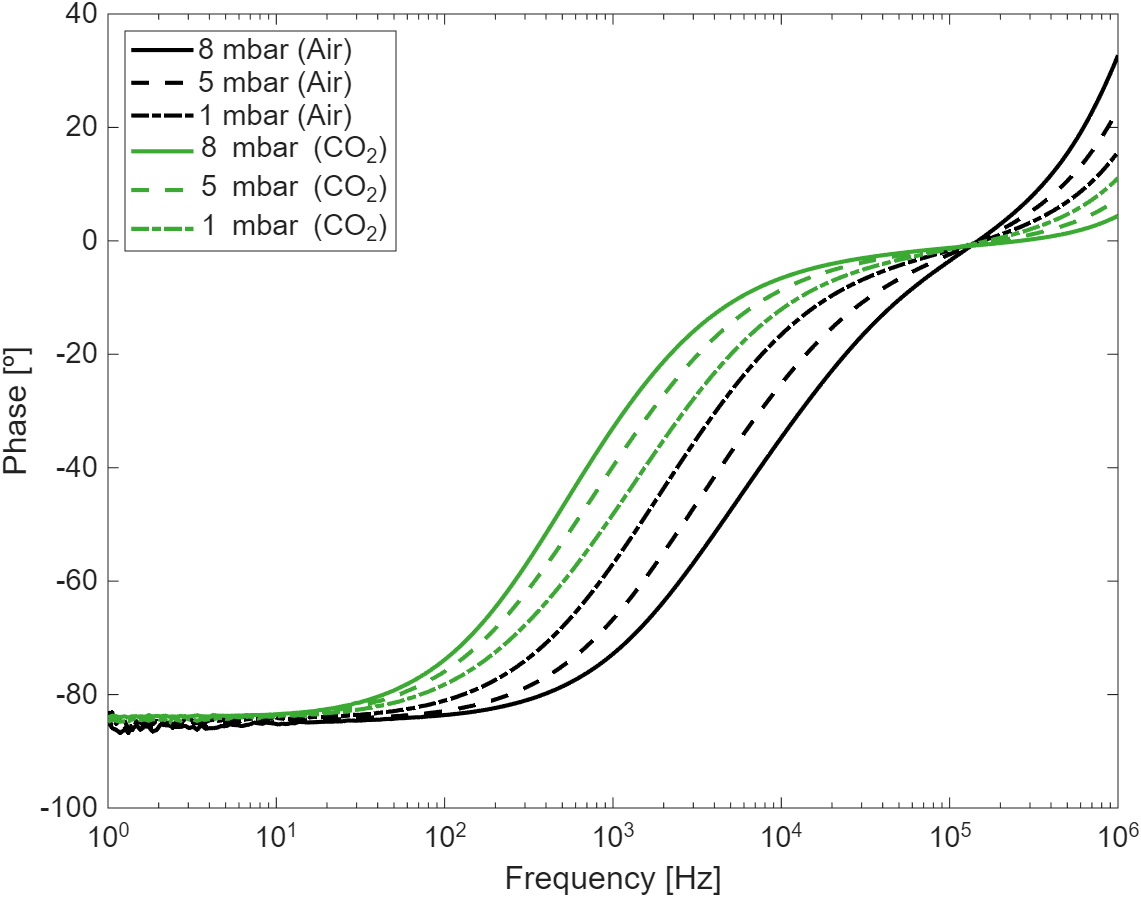
Previous studies have demonstrated the efficacy of SiO2 composite ionic liquid gel polymer electrolyte (SiO2-CILGPE)-based capacitors as relative humidity (RH) sensors. These devices exhibit stable and unaltered electrical behaviours, specifically in their impedance module and phase, under both air and CO2 atmospheres, confirming their viability for planetary research applications such as Mars habitability studies. However, a critical limitation of the initial prototypes was their slow stabilization and response time. This was primarily attributed to the drop-casting fabrication method, which resulted in a relatively thick sensing layer of approximately 600 µm. To address this challenge, this work presents a refined fabrication technique utilizing spin coating to achieve a significantly thinner active layer. Furthermore, Al2O3 (alumina) nanowires have been incorporated into the polymer matrix. The primary purpose of this study is to evaluate, via electrochemical impedance spectroscopy (EIS), a technique chosen for its capability to comprehensively decouple the resistive and capacitive dynamics within the sensing layer, how this new composite and deposition method accelerates the sensor's dynamic response to humidity variations in controlled CO2 environments, overcoming the previous latency issues without compromising its established stability.

Novelty of the work with respect to the state of the art

While traditional relative humidity sensors often rely on rigid ceramics or standard conductive polymers, the use of a Composite Ionic Liquid Gel Polymer Electrolyte (CILGPE) provides a highly tuneable, cost-effective, and non-toxic platform for planetary environments. The primary novelty of this work lies in the structural and compositional engineering of this material. For the first time, we report the integration of alumina nanowires directly into an ultra-thin CILGPE layer. This unique architectural combination leverages the intrinsic ionic conductivity of the tailored gel alongside the massive surface-to-volume ratio introduced by the alumina nanowire network to create highly efficient diffusion pathways for water vapor molecules. Furthermore, these embedded alumina nanowires act as a structural scaffold, establishing interconnected routes that fundamentally enhance both the interaction dynamics and the charge transport throughout the sensing layer. This approach pioneers a new nanocomposite design in humidity sensing technologies, specifically targeted at overcoming the kinetic limitations of polymer-based sensors for rapid environmental monitoring.

Results of the work

Initial characterisation of the drop-casted SiO2-CILGPE sensors revealed prolonged stabilisation periods, which hindered their application for real-time atmospheric monitoring. The implementation of the newly engineered spin-coated nanocomposite is designed to drastically reduce this response latency. By replacing the bulk layer with an ultra-thin profile and integrating the alumina nanowire network, the sensor's stabilisation time is projected to shift from extended periods towards an optimal operational range. Furthermore, this architectural refinement aims to maintain the sensor's intrinsic stability. EIS measurements are expected to confirm that the device preserves its impedance module and phase curve trends under both air and controlled CO2 atmospheres. These advancements position the spin-coated alumina nanowire-CILGPE composite as a highly promising candidate for future humidity sensing in CO2-rich planetary environments, such as those encountered in Martian habitability studies.

Figure 1. Z and phase responses of a SiO₂ CILGPE based capacitor under air and CO2 atmospheres at different pressures.

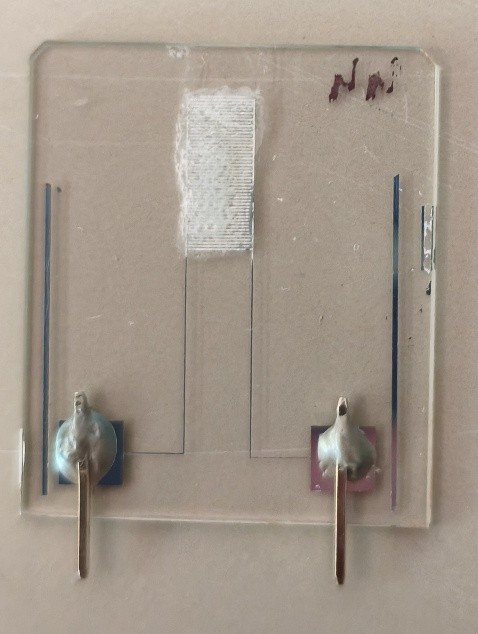
Figure 2. Final capacitive humidity sensor with alumina nanowires.

Acknowledgments

This work has been supported by the project PROD-UPC-2006-03, by the projects TED2021-131552B-C21/C22, by UPC-AGAUR 2026 and by the predoctoral program AGAUR-FI ajuts (2025 FI-1 01294) Joan Oró, which is backed by the Secretariat of Universities and Research of the Department of Research and Universities of the Generalitat of Catalonia, as well as the European Social Plus Fund.


How to cite: Palomas, A., Cedeño, M., Manyosa, X., Garland, S., Lorek, A., Domínguez-Pumar, M., and Bermejo, S.: Spin-Coated Nanowire-Polymer Electrolyte for Low-Latency Humidity Sensing in CO2 Atmospheres, Europlanet Science Congress 2026, The Hague, The Netherlands, 7–11 Sep 2026, EPSC2026-972, https://doi.org/10.5194/epsc2026-972, 2026.

F3.40
|
EPSC2026-1001
|
ECP
|
On-site presentation
Kristin Rammelkamp, Susanne Schröder, and Fabian Seel

Laser-induced breakdown spectroscopy (LIBS) is an elemental analysis technique that offers several advantages for planetary in-situ exploration. It only requires optical access to the sample, measurements are rapid, and it is sensitive to all elements including hydrogen [1]. For LIBS, a pulsed laser beam is focused onto the sample surface, where it ablates material which evolves into a microplasma of exited atoms, ions and simple molecules. Those emit characteristic radiation from which the elemental composition of the sample can be derived. In both NASA missions currently operational on the Martian surface – Mars Science Laboratory and Mars 2020 - LIBS instruments belong to the payload of the rovers [2-5] and have been successfully measuring the geochemistry of the Martian surface for several years. The first LIBS measurements on the Moon were demonstrated with a LIBS on the small lunar rover Pragyan in the framework of India's Chandrayaan-3 mission [6].

LIBS strongly depends on the ambient atmospheric conditions in which the plasma expands, in particular on the pressure [7]. Compared to the thin atmosphere of Mars which provides close to ideal conditions for good quality LIBS data, reduced pressure environments such as those on airless bodies like the Moon or asteroids pose challenges to the elemental analysis with LIBS. The plasma lifetime is much shorter as there is no plasma confinement resulting in lower total intensities [7,8]. However, LIBS under vacuum conditions has been investigated before and several studies show that the quantification of mostly major rock forming elements with LIBS is still feasible [8-11]. Here, we focus on the minor elements C, Cl, and S and investigate their detectability with LIBS in reduced pressure environments. Those elements are of relevance in several mission scenarios to airless bodies, both from a scientific and from an in-situ resource utilization (ISRU) point of view. They can serve as tracers of volatile evolution and provide information on habitability, but also play an important role in ISRU related activities such as fuel production, life support and concrete production.

We performed measurements with two laboratory LIBS setups: (1) the VOILA setup with prototype components [12,13]; and (2) a high-spectral resolution and time-resolved LIBS setup with an Echelle spectrometer [14]. Both systems use infrared lasers emitting at 1030 nm and 1064 nm, respectively, with nanosecond pulses for plasma creation. The plasma is observed in the wavelength range of 400-850~nm (spectral resolution of about 0.4 nm) and 190-850~nm in two spectral ranges (spectral resolution of 5-34~pm), respectively. For both setups the samples are placed in vacuum chambers which can be evacuated to pressures of 10-3 Pa and 10-1 Pa, respectively. While the performance of VOILA is expected to be similar to compact LIBS space instruments, the high spectral resolution of the Echelle spectrum is beyond what is expected for real space mission instruments in the near future.

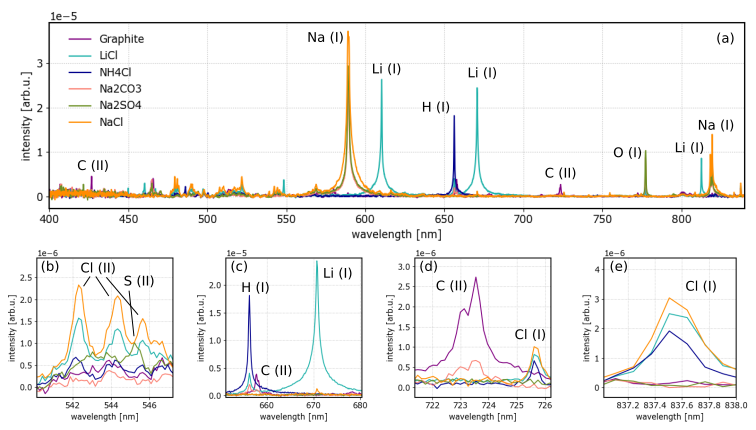
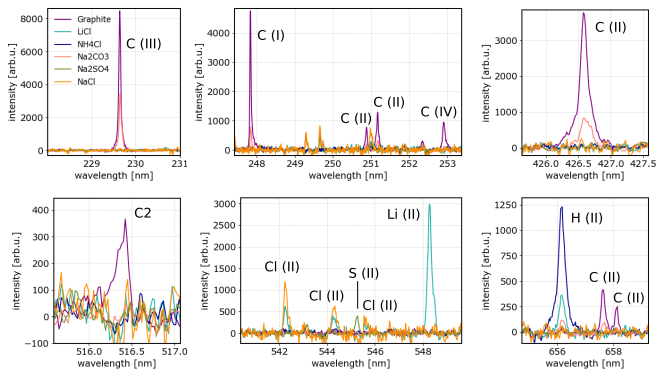
For a first feasibility check, we measured pressed pellets with mostly pure compositions in order to identify relevant emission lines and to evaluate the feasibility of developing calibration models for quantification in vacuum LIBS. The investigated samples are: graphite, LiCl, NH4Cl, Na2CO3, Na2SO4, NaCl. Spectra measured with the VOILA setup are shown in Fig. 1. It can be seen that C, Cl, and S emission lines are clearly detectable in vacuum LIBS conditions at those high concentrations. As expected, the C lines are particularly prominent in the graphite sample, whereas the spectra of Na₂CO₃ show weaker but still detectable C lines. Zooms to selected wavelength ranges in the spectra measured with the Echelle spectrometer can be found in Fig. 2. In the UV region, ionized C lines are visible, including a C(IV) line at 252.9 nm (Fig. 2(b)), which was not observed under Martian atmospheric conditions [15,16]. However, these lines are only clearly visible in the graphite sample. Only the C(III) line at 229.8 nm can be seen in the spectrum of Na₂CO₃ (Fig. 2(a)). Furthermore, weak C₂ molecular bands at 516.3 nm of the so-called Swan system can also be observed for graphite (Fig. 2(d)). Overall, the emission lines of C, Cl, and S visible in the spectra are generally the same that are also detected under Martian atmospheric condition [15,16].

More realistic samples with varying concentrations of selected minor elements will be prepared in order to determine their limits of detection with LIBS in vacuum conditions, and a detailed analysis of the impact of atmospheric conditions on selected relevant emission lines will be performed.

Fig. 1: Mean spectra of 5 repetitive measurements per sample with the VOILA setup. In (a) the whole spectral range is shown, while (b)-(e) show zooms to spectral ranges with emission lines of C, Cl, and S.

Fig. 2: Zooms to selected spectral ranges of spectra measured with the Echelle spectrometer. Shown are mean spectra of 5-10 repetitive measurements per sample. All spectra were measured with a short integration time of 200 ns directly after the laser pulse.

References

[1] Knight et al. (2000). Applied Spectroscopy. https://doi.org/10.1366/0003702001949591

[2] Maurice et al. (2012). Space Science Reviews. https://doi.org/10.1007/s11214-012-9912-2

[3] Wiens et al. (2012). Space Science Reviews. https://doi.org/10.1007/s11214-012-9902-4

[4] Maurice et al. (2021). Space Science Reviews. https://doi.org/10.1007/s11214-021-00807-w

[5] Wiens et al. (2012). Space Science Reviews. https://doi.org/10.1007/s11214-012-9902-4

[6] Sridhar et al. (2025), IEEE Sensors, 25. https://ieeexplore.ieee.org/document/10778223

[7] Seel et al. (2025). Icarus. https://doi.org/10.1016/j.icarus.2024.116376

[8] Lasue et al. (2012). Journal of Geophysical Research: Planets. https://doi.org/10.1029/2011JE003898

[9] Sallé et al. (2005). Spectrochimica Acta Part B: Atomic Spectroscopy. https://doi.org/10.1016/j.sab.2005.02.009

[10] Clegg et al. (2026). 57th Lunar and Planetary Science Conference, #1492.

[11] Kubitza (2020). Spectrochimica Acta Part B: Atomic Spectroscopy. https://doi.org/10.1016/j.sab.2020.105990

[12] Vogt et al. (2022). Sensors. https://doi.org/10.3390/s22239518

[13] Rammelkamp et al. (2024). Frontiers in Space Technologies. https://doi.org/10.3389/frspt.2024.1336548

[14] Schröder et al. (2013). Icarus. https://doi.org/10.1016/j.icarus.2012.11.011

[15] Anderson et al. (2017). Journal of Geophysical Research: Planets. https://doi.org/10.1002/2016JE005164

[16] Clavé et al. (2026). Spectrochimica Acta Part B: Atomic Spectroscopy. https://doi.org/10.1016/j.sab.2026.107537

How to cite: Rammelkamp, K., Schröder, S., and Seel, F.: Laser-induced breakdown spectroscopy (LIBS) for in-situ exploration of airless bodies: detection of minor elements , Europlanet Science Congress 2026, The Hague, The Netherlands, 7–11 Sep 2026, EPSC2026-1001, https://doi.org/10.5194/epsc2026-1001, 2026.