TP10
Planetary Cryospheres: Ices in the Solar System
Conveners:
Oded Aharonson,
Silvia Bertoli,
Nicole Costa
|
Co-conveners:
Ariel Deutsch,
Gianrico Filacchione,
Cynthia Sassenroth,
Andreas Johnsson,
Alice Lucchetti,
Costanza Rossi,
Shuai Li,
Paul Hayne
Orals WED-OB3
|
Wed, 10 Sep, 11:00–12:27 (EEST) Room Mercury (Veranda 4)
Orals WED-OB5
|
Wed, 10 Sep, 15:00–16:00 (EEST) Room Mercury (Veranda 4)
Posters TUE-POS
|
Attendance Tue, 09 Sep, 18:00–19:30 (EEST) | Display Tue, 09 Sep, 08:30–19:30 Finlandia Hall foyer, F44–52

Martian polar caps exhibit analog features to those on Earth, including surface modification and associated landforms, but they also contain CO₂ ice. At mid-latitudes, periglacial landforms—such as polygonal terrains indicate the presence of subsurface ice, while glacier-like features provide evidence of past glacial activity. Moreover, airless bodies such as Mercury and the Moon host icy deposits within the permanently shadowed regions of their polar craters. Further away, beyond the frost line, water ice becomes the dominant compositional endmember. All satellites of Jupiter and Saturn have icy crusts. For some of them (Europa and Enceladus) we have clues for the presence of internal oceans. In addition to water ice, CO₂ and CH₄ also condense into cryosphere at extremely low temperatures. Trans-Neptunian Objects (TNOs), and cometary nuclei are the objects more distant to the Sun and their low temperature and orbital properties allow them to be “time-capsules” because preserve the most primitive material in the Solar System.
Therefore, studying ice on various planetary bodies is crucial for understanding their composition, geological history, climate evolution, and the processes that contributed to the formation of the Solar System.
This session welcomes a broad range of contributions, including geological, geophysical and compositional analyses, mapping products, numerical modeling, and laboratory experiments, as well as research incorporating terrestrial analogs.
Session assets
Moon
11:00–11:15
|
EPSC-DPS2025-34
|
solicited
|
On-site presentation


11:15–11:27
|
EPSC-DPS2025-660
|
ECP
|
On-site presentation

11:27–11:39
|
EPSC-DPS2025-1411
|
On-site presentation

11:39–11:51
|
EPSC-DPS2025-2024
|
On-site presentation
Icy bodies
11:51–12:03
|
EPSC-DPS2025-1647
|
ECP
|
On-site presentation
12:03–12:15
|
EPSC-DPS2025-853
|
ECP
|
On-site presentation
Mars
12:15–12:27
|
EPSC-DPS2025-1794
|
On-site presentation


15:00–15:12
|
EPSC-DPS2025-427
|
On-site presentation



15:24–15:36
|
EPSC-DPS2025-277
|
On-site presentation


15:36–15:48
|
EPSC-DPS2025-1171
|
ECP
|
On-site presentation
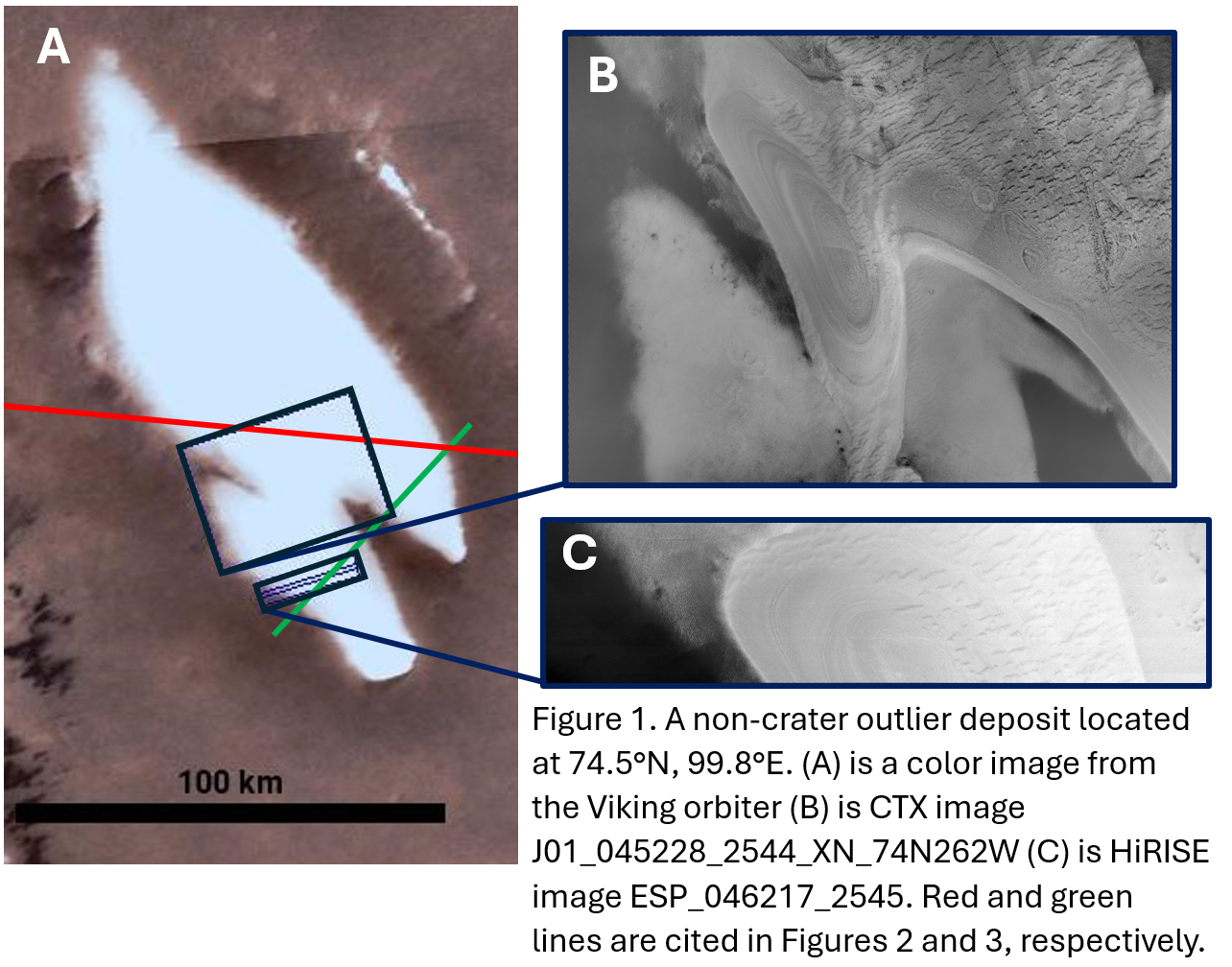
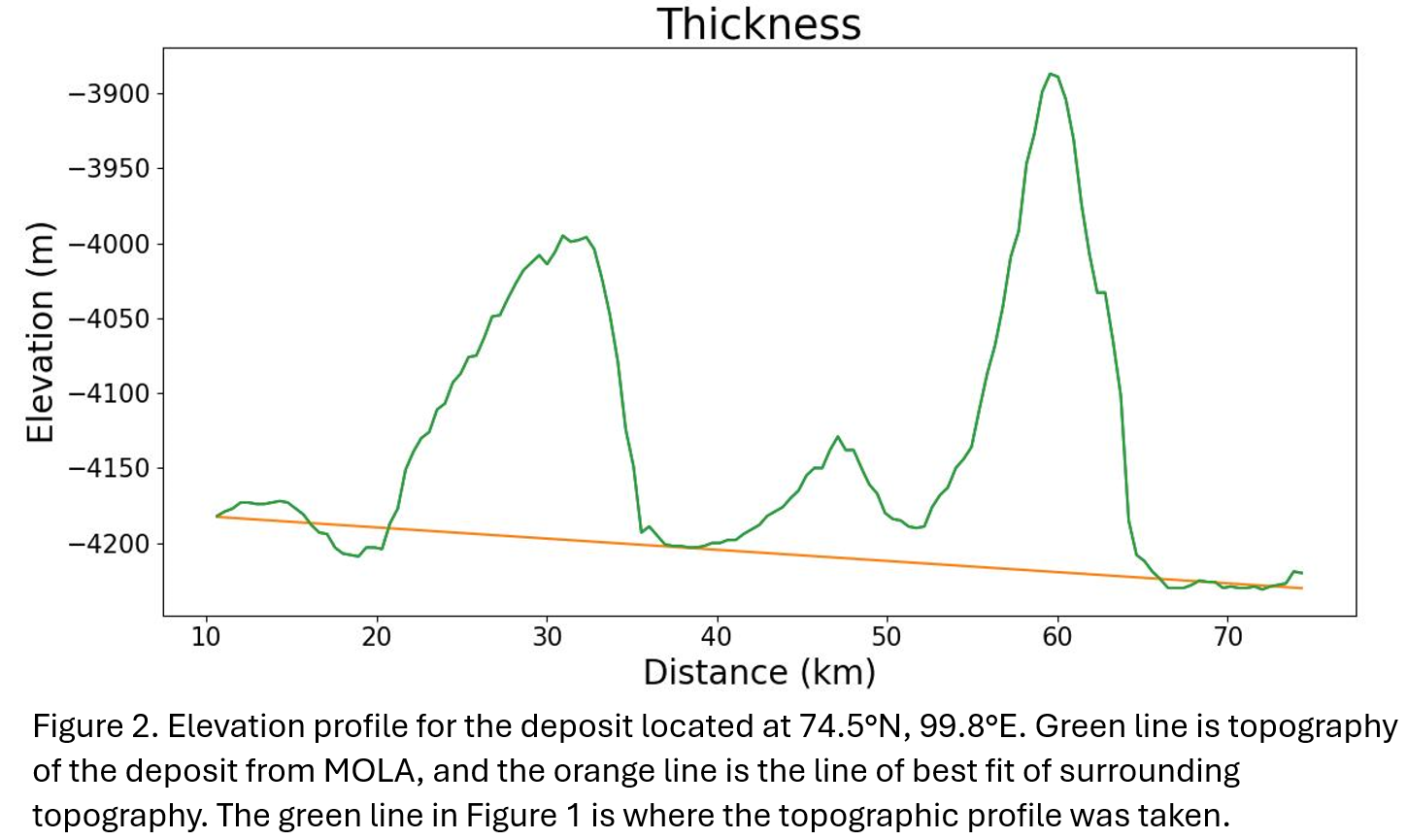
 , of these deposits using the equation
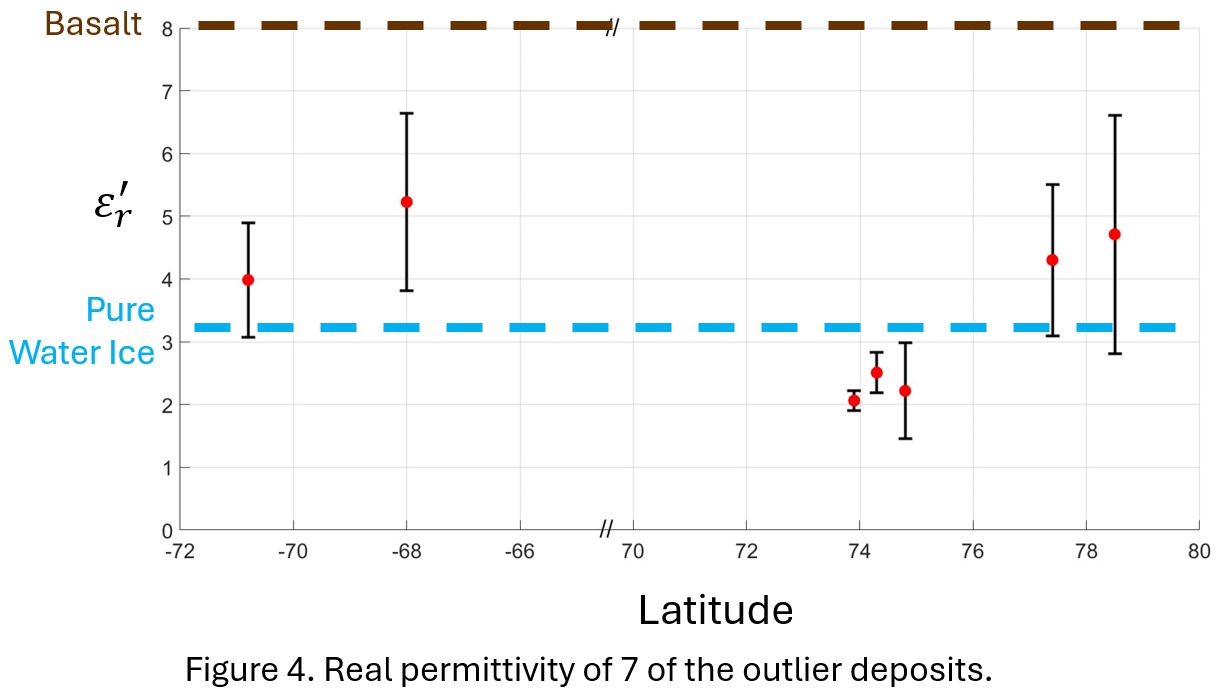
  , where c is the speed of light and t is the two-way delay time. We found real permittivity values for 8 of the deposits. We could not confidently identify the base for the other 4 deposits; thus, we do not have permittivity calculations for them. We also calculate the loss tangent for these 8 deposits using the methods of [6], which is dependent upon the imaginary permittivity. While the real permittivity relates to how long it takes for the radar wave to propagate through the material, the imaginary permittivity relates to how a material attenuates the radar, which is also sensitive to composition.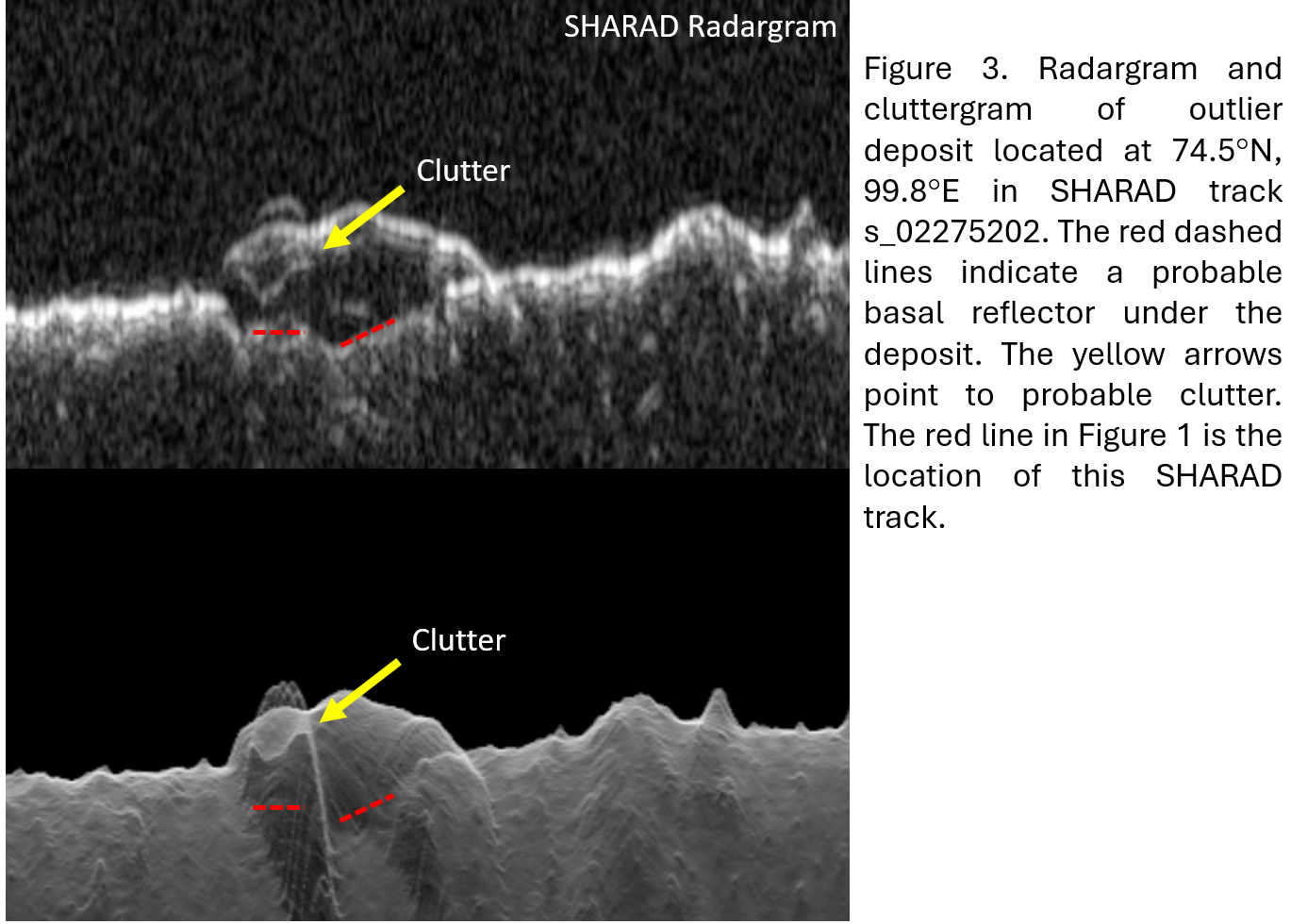
15:48–16:00
|
EPSC-DPS2025-1431
|
ECP
|
On-site presentation

Mercury
F44
|
EPSC-DPS2025-1587
|
ECP
|
On-site presentation
Mars
F45
|
EPSC-DPS2025-301
|
ECP
|
On-site presentation
Moon
F46
|
EPSC-DPS2025-1451
|
On-site presentation
F47
|
EPSC-DPS2025-323
|
ECP
|
On-site presentation


F48
|
EPSC-DPS2025-432
|
ECP
|
On-site presentation
Icy bodies
F49
|
EPSC-DPS2025-1162
|
ECP
|
On-site presentation
F50
|
EPSC-DPS2025-1530
|
ECP
|
On-site presentation
A Micro-to-Macro Structural Approach Using Terrestrial Analogs to Constrain Crustal Mechanics in Europa’s Strike-Slip Zones
(withdrawn after no-show)
F51
|
EPSC-DPS2025-585
|
On-site presentation
Other
F52
|
EPSC-DPS2025-233
|
On-site presentation