MITM18 | Planetary Defense: space missions, observations, modeling and experiments

MITM18

Planetary Defense: space missions, observations, modeling and experiments
Co-organized by SB
Convener: Naomi Murdoch | Co-conveners: Patrick Michel, Monica Lazzarin, Michael Küppers
Orals TUE-OB5
| Tue, 09 Sep, 15:00–16:00 (EEST)
 
Room Earth (Veranda 2)
Orals TUE-OB6
| Tue, 09 Sep, 16:30–17:57 (EEST)
 
Room Earth (Veranda 2)
Orals FRI-OB4
| Fri, 12 Sep, 14:00–16:00 (EEST)
 
Room Venus (Veranda 3)
Posters MON-POS
| Attendance Mon, 08 Sep, 18:00–19:30 (EEST) | Display Mon, 08 Sep, 08:30–19:30
 
Finlandia Hall foyer, F107–125
Tue, 15:00
Tue, 16:30
Fri, 14:00
Mon, 18:00
On October 7, 2024, the ESA Hera mission was launched successfully to reach the binary asteroid Didymos in fall 2026, which will provide detailed measurements of the outcome of the first asteroid deflection experiment successfully achieved by the NASA DART mission. Other missions are under study at ESA, such as NEOMIR and RAMSES. The NASA NEOSurveyor spacecraft is also planed for launch in 2027, to perform the inventory of NEOs larger than 140 m in diameter. From the Earth, the Vera Rubin telescope as well other observational programs will increase drastically the number of discoveries of NEOs. Planetary defense is thus a field that keeps growing with a wide range of activities, from active space missions to space mission concepts and observations from the ground and from space, numerical modeling of asteroid properties and of deflection techniques as well as public communication. This session will present recent progresses and perspectives.

Session assets

Orals TUE-OB5: Tue, 9 Sep, 15:00–16:00 | Room Earth (Veranda 2)

Chairpersons: Patrick Michel, Naomi Murdoch
DART mission
15:00–15:12
|
EPSC-DPS2025-73
|
On-site presentation
Josef Durech and Petr Pravec

On 26 September 2022, the NASA Double Asteroid Redirection Test (DART) spacecraft impacted Dimorphos, the secondary component of the binary asteroid (65803) Didymos (Daly et al. 2023). This experiment aimed to test the kinetic impactor deflection strategy. Due to the impact, the binary system’s angular momentum has changed, resulting in a significant change in the orbital period of Dimorphos. The orbital period was measured precisely by observing mutual events in the light curves of the system. An extensive ground-based photometric campaign resulted in a rich data set of light curves covering six apparitions between 2003 and 2023. Analysis of this data set and independent radar observations have shown that the orbital period has decreased by about 33 minutes (Thomas et al. 2023). The data set is described in detail in Pravec et al. (2022) and Moskovitz et al. (2024). We aimed to use these data to constrain a possible change in the rotation period of the primary as a consequence of the impact. Applying the binary asteroid lightcurve decomposition method (Pravec et al. 2022, 2024), we selected parts of the light curves taken at orbital phases outside the mutual events, subtracted the signal of the secondary component, and applied the light curve inversion method of Kaasalainen & Torppa (2001) and Kaasalainen et al. (2001) to reconstruct a convex shape model of Didymos and precisely determine its rotation period before and after the impact. We introduced another free parameter to the model – a change ∆ω of the rotation rate ω at the time of the DART impact. We assumed that before the impact, the model rotated with the angular frequency ω1, and then, after the impact but before the first post-impact observations, the frequency changed to ω2 = ω1 + ∆ω. The rotation phase φ of Didymos at some epoch t is then described as φ(t) = φ0 + (ω1 + ∆ω)(t − t0) , where φ0 is an initial rotation phase at the time t0 , ∆ω is zero for pre-impact data and nonzero for post-impact data. Both ω1 and ∆ω were parameters of the optimization that defined the pre-impact rotation period P1 = 2π/ω1 and the post-impact rotation period P2 = 2π/ω2 = 2π/(ω1 + ∆ω). We found the best-fit values 2.260 389 1 ± 0.000 000 2 h for the pre-impact period and 2.260 451 ± 0.000 008 h for the post-impact period. Their difference 0.22 ± 0.03 s is small yet significant, meaning that the rotation of Didymos has decelerated after the DART impact. A possible physical explanation might be the accretion of impact ejecta on Didymos, which affected its angular momentum. Although the impactor hit Dimorphos, some angular momentum may have been transferred to the primary component by accretion of ejecta (Richardson et al. 2022). However, numerical simulations need to show this as a realistic scenario.

References:

Daly, R. T., Ernst, C. M., Barnouin, O. S., et al. 2023, Nature, 616, 443

Kaasalainen, M., & Torppa, J. 2001, Icarus, 153, 24

Kaasalainen, M., Torppa, J., & Muinonen, K. 2001, Icarus, 153, 37

Moskovitz, N., Thomas, C., Pravec, P., et al. 2024, PSJ, 5, 35

Pravec, P., Meyer, A. J., Scheirich, P., et al. 2024, Icarus, 418, 116138

Pravec, P., Thomas, C. A., Rivkin, A. S., et al. 2022, PSJ, 3, 175

Richardson, D. C., Agrusa, H. F., Barbee, B., et al. 2022, PSJ, 3, 157

Thomas, C. A., Naidu, S. P., Scheirich, P., et al. 2023, Nature, 616, 448


How to cite: Durech, J. and Pravec, P.: The rotation period of asteroid (65803) Didymos before and after the DART impact, EPSC-DPS Joint Meeting 2025, Helsinki, Finland, 7–13 Sep 2025, EPSC-DPS2025-73, https://doi.org/10.5194/epsc-dps2025-73, 2025.

15:12–15:24
|
EPSC-DPS2025-1331
|
On-site presentation
Steven R. Chesley, Rahil Makadia, David Herald, Davide Farnocchia, Nancy L. Chabot, Shantanu P. Naidu, Andrew S. Rivkin, Alexandros Siakas, Damya Souami, Paolo Tanga, Sotirios Tsavdaridis, Kleomenis Tsiganis, Sébastien Bouquillon, and Siegfried Eggl

The Double Asteroid Redirection Test (DART) mission was a successful planetary defense demonstration of a kinetic impactor on Dimorphos, the satellite of binary near-Earth asteroid 63803 Didymos (Daly et al. 2023). The DART impact changed not only the orbit of the satellite Dimorphos about Didymos (Thomas et al. 2023), but also the orbit of the Didymos system about the Sun (Makadia et al. 2024). We report quantitative results of this heliocentric deflection, leading to a revised estimate of the momentum enhancement factor β as well as an estimate of the bulk density ρ of the target Dimorphos.

In the months following the DART impact, a series of stellar occultation campaigns led to a total of 18 observed occultations of the Didymos system from 2022-Oct-15 to 2023-Jan-22. These observations represent an exquisite astrometric data set, with reported errors of no more than a few milliarcseconds. Three of these observations were reported with <1 mas uncertainty, and the lowest reported uncertainty was 0.2 mas on 2023-Jan-22. With these measurements, the estimate of the Yarkovsky effect on Didymos became significantly more refined compared to the pre-impact estimates, but the effect of the DART deflection was not yet plainly discernible.

However, in May 2024–March 2025, observers detected four additional stellar occultations by Didymos. With this additional data, we estimate the change in velocity in the heliocentric along-track direction to be ∆V = -11.7 ± 1.3 μm/s. Given the known circumstances of the DART impact, this deflection implies β = 2.0 ± 0.3, which is consistent with, but somewhat lower than, previous reports (Cheng et al. 2023). A lower value of β implies a lower bulk density ρ of Dimorphos, and indeed, using the measured deflection of the Dimorphos orbit around Didymos (Naidu et al. 2024), we estimate ρ = 1.54 ± 0.22 g/cm3, indicating that Dimorphos is significantly under-dense with respect to Didymos.

How to cite: Chesley, S. R., Makadia, R., Herald, D., Farnocchia, D., Chabot, N. L., Naidu, S. P., Rivkin, A. S., Siakas, A., Souami, D., Tanga, P., Tsavdaridis, S., Tsiganis, K., Bouquillon, S., and Eggl, S.: First detection of an asteroid’s heliocentric deflection: The Didymos system after DART, EPSC-DPS Joint Meeting 2025, Helsinki, Finland, 7–13 Sep 2025, EPSC-DPS2025-1331, https://doi.org/10.5194/epsc-dps2025-1331, 2025.

15:24–15:36
|
EPSC-DPS2025-698
|
ECP
|
On-site presentation
Jasinghege Don Prasanna Deshapriya, Pedro Henrique Hasselmann, and Elisabetta Dotto and the LICIACube team

Introduction:  The NASA Double Asteroid Redirection Test (DART) mission tested planetary defense by performing a kinetic impact on Dimorphos, the smaller asteroid in the Didymos binary system, on September 26, 2022. The experiment aimed to validate kinetic impact as a method for asteroid deflection. The impact successfully shortened Dimorphos' orbital period by 33 ± 1 minutes [1], exceeding the mission's primary objective.

The momentum enhancement factor (β), measuring the momentum transferred via ejecta recoil, ranged between 2.2 and 4.9 [2], indicating that the momentum transfer was significantly greater than in a perfectly inelastic collision (β = 1). Without the ejecta effect, the orbital period reduction would have been approximately 7 minutes. This result aligns with pre-impact simulations.

Analysis of the ejecta distribution, modeled using data from the LICIACube spacecraft [3,4], revealed an ejecta cone with an elliptical base defined by half-angles of 69° and 51° [5]. This analysis highlights the critical role of ejecta in enhancing momentum transfer and confirms the effectiveness of kinetic impact for asteroid deflection.

Although the ejecta curtain can be approximated by a cone, the real physical structure is more complex than a cone, as evident from LUKE image data returned by LICIACube. As seen from Fig. 1, on both face-on and side-on views of the ejecta obtained during the flyby, it is clear that the ejecta curtain is a debris field  that is characterized by extended features originating from and around the impact location on Dimorphos. A critical understanding of the spatial distribution of these features in three dimensional space is required (a) to better understand how the momentum was distributed among escaping ejecta; (b) to constrain the ejection velocities of particles that are part of these structures; (3) to better estimate the mass of the ejecta, following radiative transfer calculations coupled with observed optical depths of features. As such, in this work we attempt to reconstruct the distribution of these features using LUKE data.

Figure 1: (a) A face-on view of the ejecta field during the approach phase of the flyby,  149 seconds after the impact, from a distance of 127.7 km from Dimorphos (b) an oblique view of the ejecta field during the final phase of the flyby, 189 seconds after the impact, from a distance of 144.3 km from Dimorphos.

Methods and Results: In order to accurately identify the extended features in both face-on and side-on/oblique images of the ejecta field, we first enhanced the images to highlight the details of the ejecta field using python scikit-image library [6]. Then we cropped the images to 400x400 px frames, centred on Dimorphos. These were then compiled to make short video clips thus enabling us to track the features in consecutive images.

Figure 2: Identified 12 features in both front, side and oblique viewing geometries.

Upon successful identification of 12 features (Fig. 2) , using the 3D animation software Blender (version 3.5), we trace out delimiters around each of the features in both face-on and side-on images. Next, we populate homogenous and evenly spaced cubic particles around Dimorphos inside a cube of 2km a side, and capture the particles that are inside the aforementioned delimiters of a given feature (Fig. 3) in face-on image (we use cubic particles of 50m per a side, comparable to the spatial resolutions of several LUKE pixels during the flyby). Next we switch to the simulation of the side-on view/ oblique view of the ejecta and populate the restricted particles from the previous step. Then, using the delimiters of the same feature in this different observing geometry we further restrict the volume in space that corresponds to the feature in question. Similarly we iterate over other features and obtain the 3D orientations and span of all the identified features. Transformations among different LUKE camera orientations are performed using NAIF/SPICE[7] package offered by Python3 package spiceypy[8].  

Figure 3: An example of an identified feature and how its delimitation is used to constrain the particles that are along the line of sight of this feature, in this case of a face-on image, superposed over a simulation of the observation. The origin of the coordinate system is at the centre of Dimorphos.

In Fig. 4, can be visualized the simulation of the ejecta field observation along with a LUKE image.

Figure 4. Left – LUKE image featuring the ejecta field observed with an oblique geometry as LICIACube was leaving the Didymos system following the closest approach. Right – Simulation of the ejecta field at the same time and geometry using the ejecta features retrieved using our method.

We then used images with longer exposure times to estimate the extends of ejecta features and thereby derive lower limits for ejecta velocities. Out of the features we used for this estimation, we found velocity ranges in the range of 30-70 m/s. We will present the final results and discuss the implications at the conference.

Acknowledgments: The LICIACube team acknowledges financial support from Agenzia Spaziale Italiana (ASI, contract No. 2019-31-HH.0 CUP F84I190012600).

References:

  • [1] Thomas et al. (2023), Nature, 616, 448
  • [2] Cheng et al. (2023), Nature, 616, 457
  • [3] Dotto et al., (2011), PSJ, 199, 105185
  • [4] Impresario et al., (2025), Acta Astronautica, 231, 223-234
  • [5] Deshapriya et al. (2023), PSJ, 4:231
  • [6] van der Walt et al. (2014), PeerJ 2:e453
  • [7] Acton, C. H. (1996), P&SS, 44, 65
  • [8] Annex, A., Pearson, B., Seignovert, B., et al. (2020), JOSS, 5, 2050

How to cite: Deshapriya, J. D. P., Hasselmann, P. H., and Dotto, E. and the LICIACube team: Reconstruction of ejecta distribution of DART spacecraft impact on asteroid Dimorphos using data from LICIACube/LUKE, EPSC-DPS Joint Meeting 2025, Helsinki, Finland, 7–13 Sep 2025, EPSC-DPS2025-698, https://doi.org/10.5194/epsc-dps2025-698, 2025.

15:36–15:48
|
EPSC-DPS2025-764
|
On-site presentation
Yaeji Kim, Lioudmila Kolokolova, Tony Farnham, and Sabina Raducan

DART (Double Asteroid Redirection Test) was the first mission dedicated to demonstrating an asteroid deflection technique by altering an asteroid’s trajectory through kinetic impact. On September 26, 2022, the DART spacecraft impacted Dimorphos, the secondary component of the Didymos binary asteroid system, generating a substantial ejecta plume. This ejecta affected the momentum transfer and led to a larger-than-expected change in Dimorphos' orbital period, exceeding 33 minutes [1]. The Italian Space Agency’s LICIACube, deployed as a follow-up observer, captured this event with its LEIA and LUKE cameras.

A key parameter of the DART mission is the estimation of the momentum enhancement factor (beta), which quantifies the momentum transfer resulting from the impact. Accurate estimation of beta requires characterization of the DART ejecta and an estimate of the total ejecta mass. To characterize the physical properties of the ejecta and their temporal variations as observed in post-impact LICIACube images,  we have simulated the ejecta plume using  the 3D radiative transfer code Hyperion (https://www.hyperion-rt.org/). Hyperion employs the Monte Carlo technique to simulate photon propagation through a scattering medium, accounting for multiple scattering effects.

A detailed analysis of the ejecta requires consideration of the three-dimensional geometry of the impact event, including the relative positions of Didymos, Dimorphos, LICIACube, and the Sun. The geometric parameters of the ejecta plume were derived for the LUKE image taken 175 seconds post-impact using DART SPICE kernels [2]. In our modeling, we use the recently calibrated images reported in [3]. Dust modeling parameters include the single-scattering albedo, brightness and polarization phase functions, and the cross-sectional properties of dust particles, defined by their size and number density. These were modeled assuming a typical S-type asteroid composition for Dimorphos. We adopted a single-scattering albedo of 0.55 and used brightness and polarization phase functions based on laboratory measurements of various (up to millimeter-sized) silicate grains [4, 5]. The ejecta plume was modeled as a hollow cone, characterized by impact location, tilt, and opening angle. As a starting point for the dust number density distribution within the cone, we used the distribution derived from the mass distribution in numerical impact simulations [6]

Our current best-fit model reproduces the LUKE image taken 175 seconds after impact, with a focus on the near-surface region of Dimorphos. Assuming an azimuthally uniform number density, we successfully simulated the structure of the ejecta plume, including the dark band adjacent to Dimorphos. This feature is likely a shadow cast by one of the optically thick cone walls onto the other. To address inhomogeneity in the ejecta, we used azimuthally averaged brightness values at specific distances from the asteroid. Comparison between observed and modeled brightness profiles provides constraints on the dust particle size distribution and number density, as well as their spatial variation. We show that the observed and modeled brightness profiles follow similar trends, including the dark band near the surface. Fitting the observed radiance values across the plume allows us to refine the number density estimates and derive the mass distribution within the plume.

The developed numerical approach and its results can serve as a template for characterizing dust in active asteroids, providing their dust size distribution, number density, and mass loss.

[1] Cheng, A.F., et al., 2023, Nature, 616(7957), 457-460.

[2] Nair, H. and Costa Sitja, M., 2023. DART SPICE Kernel Archive Bundle. NASA PDS, NAIF p.104.

[3] Farnham, T.L., 2025, LICIACube Calibrated and Merged LUKE Images V1.0. NASA Planetary Data System, https://10.26007/5vhp-pe80

[4] Munoz, O., et al., 2020, ApJ Suppl. Series, 247,19.

[5] Lolachi, R., et al., 2023, PSJ, 4, 24.

[6] Raducan, S. D., et al., 2024, Nature Astronomy, 8(4), 445 -455.


How to cite: Kim, Y., Kolokolova, L., Farnham, T., and Raducan, S.: Characterization of DART Ejecta Using 3D Radiative Transfer Modeling and LICIACube Observations, EPSC-DPS Joint Meeting 2025, Helsinki, Finland, 7–13 Sep 2025, EPSC-DPS2025-764, https://doi.org/10.5194/epsc-dps2025-764, 2025.

15:48–16:00
|
EPSC-DPS2025-1376
|
ECP
|
On-site presentation
Elisabeta Petrescu, Emmanuel Jehin, Ozgur Karatekin, and Marin Ferrais

The aftermath of one of the most known Planetary Defence missions, is still intensely studied. The DART space mission to test kinetic impact deflection, successfully impacted Dimorphos, the moon of the binary asteroid Didymos and it’s primarily objective was achieved by altering the orbital trajectory of the asteroid. The collision ejected sufficient mass to transform Dimorphos into the first made-made active asteroid (Chabot L. N. et al., 2024).

Using the TRAPPIST twins located in Morocco and Chile (Jehin E. et al., 2011), respectively, we observed the evolution of the ejecta tail formed after the DART impact on Dimorphos. We obtained photometric data for several months before and after the impact, and the measurements and analysis obtained focused on the tail’s morphology, mass determination, color indices, ejecta dynamics and composition.

We present a preliminary mass estimate of the ejecta tail derived from the photometric measurements using the COMETails pipeline (Moreno F., 2025), as we modeled the tail’s formation and evolution, constraining the ejecta particle velocity, size distribution and the total mass of the dust. We also present the characteristics and evolution of the additional tails that were present shortly after the impact and that were visible for a shorter period of time.

Considering the most important aspect of the impact, the modified trajectory of Dimorphos, we also determined from TRAPPIST lightcurves the orbital change in the rotational period by analysing the mutual events of the system the few weeks before and after the impact. 

These results complement the previously published ground-based observations and, when analyzed together with impact and dynamics models, provide better constraints on impact-driven ejecta dynamics and contribute to a broader understanding of asteroid deflection techniques.

How to cite: Petrescu, E., Jehin, E., Karatekin, O., and Ferrais, M.: TRAPPIST results of the Didymos system after the DART mission, EPSC-DPS Joint Meeting 2025, Helsinki, Finland, 7–13 Sep 2025, EPSC-DPS2025-1376, https://doi.org/10.5194/epsc-dps2025-1376, 2025.

Orals TUE-OB6: Tue, 9 Sep, 16:30–18:00 | Room Earth (Veranda 2)

Chairpersons: Naomi Murdoch, Michael Küppers
Hera mission
16:30–16:42
|
EPSC-DPS2025-119
|
On-site presentation
Patrick Michel, Michael Küppers, Alan Fitzsimmons, Simon Green, Monica Lazzarin, Stephan Ulamec, Paul Abell, Seiji Sugita, and Ian Carnelli

The Hera mission was launched on October 7, 2024 and performed succefully a flyby of Mars on March 12, 2025, which placed the spacecraft on its trajectory to the binary asteroid Didymos. Hera will approach Didymos in October 2026 and start its close proximity operations in December 2026 for a nominal mission duration of 6 months. It will be the first mission to explore an asteroid using an architecture that includes a motherspacecraft and two CubeSats, Milani and Juventas, that will be deployed at the asteroid for close proximity operations, mineralogical measurements, dust detection and analysis, the first radar probing of the internal structure of an asteroid and landing. Once landed, the Juventas Cubesat will use a gravimeter to perform gravity field measurements. Radio Science and inter-satellite links will also be used for this purpose.

During the flyby of Mars, Hera also took images of the face opposite to Mars of the smaller moon of Mars, Deimos, using the asteroid framing cameras, the hyperspectral imager (Hyperscout-H) and the JAXA-contributed thermal infrared imager (TIRI) . 

We will present the main operations achieved so far, the status of the mission and the objectives at Didymos, which will contribute to the first asteroid deflection test with the NASA DART mission, and the first full characterization of a binary asteroid, including its internal properties. 

How to cite: Michel, P., Küppers, M., Fitzsimmons, A., Green, S., Lazzarin, M., Ulamec, S., Abell, P., Sugita, S., and Carnelli, I.: The ESA Hera mission on its way to the binary asteroid Didymos: characterization of the asteroid and full documentation of the NASA DART impact, EPSC-DPS Joint Meeting 2025, Helsinki, Finland, 7–13 Sep 2025, EPSC-DPS2025-119, https://doi.org/10.5194/epsc-dps2025-119, 2025.

16:42–16:54
|
EPSC-DPS2025-815
|
On-site presentation
Julia de Leon, Marcel Popescu, George Prodan, Michael Küppers, Björn Grieger, Gabor Kovacs, Balazs Nagy, Tomas Kohout, Monica Lazzarin, Jean-Baptiste Vincent, and Javier Licandro

The ESA Hera Planetary Defence mission was sucessfully launched from Cape Cañaveral in October 7, 2024, with the goal of studying in detail the near-Earth binary asteroid system (65803) Didymos-Dimorphos[1]. The smaller of the two objects, asteroid Dimorphos, was impacted by the NASA DART spacecraft in September 26, 2022, as part of the first test of the kinetic impactor deflection technology. DART impact changed the orbital period of Dimorphos around Didymos, measured to be around 12 hours, in a total of 33.24 ± 0.03 minutes [2], generating a huge cloud of dust and debris observable from the Earth, and that lasted for almost a year [3]. After a successful comissioning phase, were the Hera spacecraft tested most of its instruments and imaged the Earth-Moon system, the mission entered the cruise phase. This phase included the Mars swing-by in mid March, 2025, when images of the surface of the red planet were acquired for calibration purposes, in addition to one “extra” scientific target: the anti-Mars side of Deimos. The spacecraft is now traveling to its final destination, the Didymos-Dimorphos system where it is expected to arrive in late 2026, starting the asteroid phase. This includes different mission phases in which the spacecraf will progressively reduce its distance to the asteroid system, getting as close as ~1 km to the surface of Dimorphos at the final stage, in June-July 2027.

The Didymos-Dimorphos system has been extensively observed in the visible and the near-infrared using ground-based telescopes [4,5,6] and also the JWST[7]. Acquired data indicate that the unresolved system can be taxonomically classified as an S-type, i.e., it is relatively bright (average geometric albedo around 15%) and is dominated by mafic silicates, mostly pyroxene and olivine. These minerals show two very characterisic absorption bands in the visible and near-infrared wavelength region (0.5-2.5 µm), centred at 1 and 2 µm, that, together with the spectral slope, can be used to infer compositional information on the surface of the asteroids. Also, effects of space weathering in such surfaces have been broadly studied, with a decrease in albedo and band depth, and a reddening in the slope observed with increasing exposition [8].

One of the instruments onboard the Hera spacecraft is HyperScout-H (HS-H hereafter). This is a hyperspectral imager developed by cosine1 with a large field of view (15° x 8°) and a CMOS detector exhibiting 2048 x 1088 pixels. The sensor incorporates a filter array consisting of on-chip, pixelated Fabry-Pérot interference filters, sampling a total of 25 bands in a configuration of 5 x 5 detector pixels and covering the 650 to 960 nm wavelength range. This instrumental setup allows to obtain both spectral and spatial information in one shot, the latter depending on the extent to which the original resolution can be restorted by demosaicking tecniques.

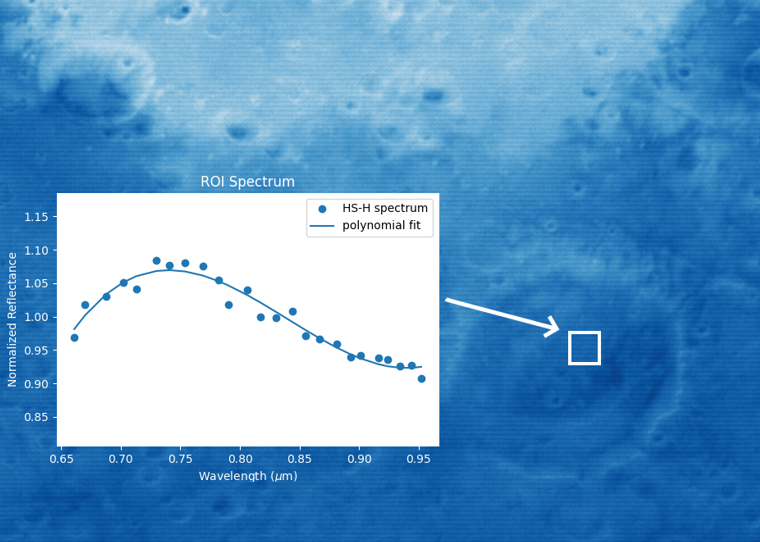
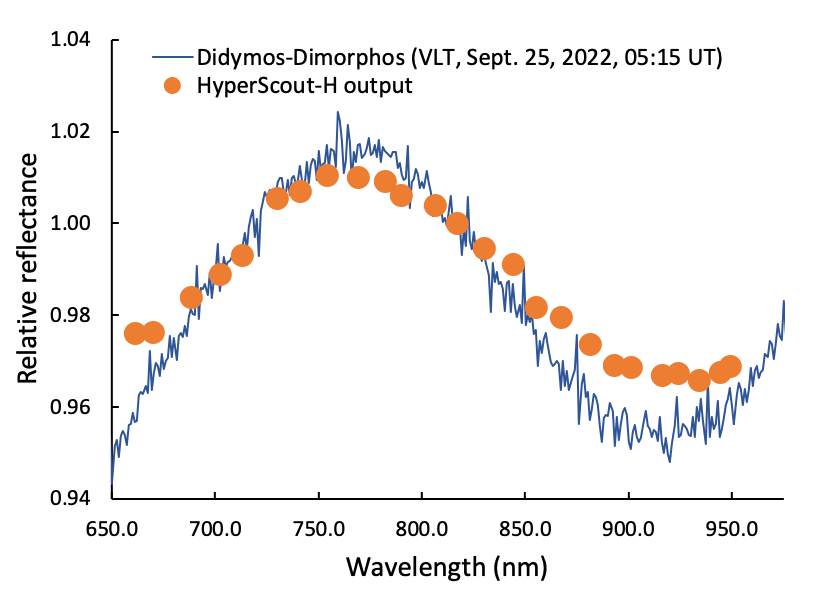
Figure 1. Visible spectrum of the Didymos-Dimorphos system obtained before the DART impact with XSHOOTER at the 8.1m VLT (in blue). The orange dots corresponds to the relative reflectance values that we would expect to retrieve with HS-H if observing a surface with this spectrum. 
 
The wavelength coverage of HS-H is such that it will be possible to measure several spectral parameters, like the position of the minimum and the maximum of the 1 µm absorption band (i.e. an estimation of its depth), and the spectral slope (Fig. 1). These parameters will be used, in combination with the information provided by the other instruments onboard the spacecraft, to create compositional and space weathering maps (high-level products) of the surfaces of the two asteroids through all the mission phases. In this work we present what we expect to observe and measure with HS-H at the arrival to the Didymos-Dimorphos system,  including different potential scenarios regarding Dimorphos status after the DART impact, the potential identification of debris orbiting the system, the presence (or not) of an impact crater, and so, the excavated, fresh material, and the detection of potential exogenous, dark material on the surface of any of the two the targets.
 
References: [1] Michel et al. (2022) PSJ 3:160-181. [2] Thomas et al. (2024), Nature 616:448-451. [3] Lister et al. (2024) PSJ 5:127-147. [4] de León et al. (2010) A&A 517:23-48. [5] Polishook et al. (2023) PSJ 4:229-241. [6] Ieva et al. (2024) PSJ 5:225-232. [7] Rivkin et al. (2023) PSJ 4:214:231. [8] Brunetto et al. (2015) In Asteroids IV, University of Arizona Press, Tucson, p.597-616.


1https://www.cosine.nl/

How to cite: de Leon, J., Popescu, M., Prodan, G., Küppers, M., Grieger, B., Kovacs, G., Nagy, B., Kohout, T., Lazzarin, M., Vincent, J.-B., and Licandro, J.: Observations of the Didymos-Dimorphos binary asteroid system with HyperScout-H instrument onboard the ESA Hera mission: what to expect at the arrival, EPSC-DPS Joint Meeting 2025, Helsinki, Finland, 7–13 Sep 2025, EPSC-DPS2025-815, https://doi.org/10.5194/epsc-dps2025-815, 2025.

16:54–17:06
|
EPSC-DPS2025-1166
|
On-site presentation
Tatsuaki Okada, Satoshi Tanaka, Naoya Sakatani, Yuri Shimaki, Takehiko Arai, Hiroki Senshu, Hirohide Demura, Tomohiko Sekiguchi, Toru Kouyama, Masanori Kanamaru, Takuya Ishizaki, Ramon Vilardell Belles, Soichiro Furukawa, Ozgur Karatekin, Joris Blommaert, Luca Ruiz Lozano, Gregoire Henry, Jonathan Leon Tavares, Birgit Ritter, and Orkun Temel and the Hera TIRI Team

Introduction: TIRI is an uncooled bolometer based thermal infrared imager with a filter wheel, developed by the Japan Aerospace Exploration Agency (JAXA) for the Hera mission led by the European Space Agency (ESA). Hera is a Planetary Defense mission to rendezvous with and explore the asteroid binary 65803 Didymos and its moon Dimorphos whose orbit around Didymos was deflected due to the kinetic impact by the Double Asteroid Redirection Test (DART) mission on 26 September 2022. The Hera spacecraft was launched on 7 October 2024, changed its trajectory to the asteroid binary by the gravity assist of Mars during the Mars Swing By on 12 March 2025, and will arrive at the targets in December 2026 and start the observations there. The current status and the future operation plan for TIRI will be briefly described.


In-Flight Performance of TIRI: We confirmed the instrument has been healthy after launch by having performed the initial function checks after launch, taken many sets of the Earth-Moon system images at various distances from the Earth, and a couple of Dark Sky imaging campaigns. The radiative calibration of TIRI has been carried out using Earth thermal images, even though their diameters are smaller than 0.5°, compared with those of the weather satellites as well as Moon thermal images compared with a thermal modeling of the Moon. The geometrical corrections of TIRI, i.e. alignments and distortions, has been conducted using the SPICE kernel provided by ESA Hera team. The calibrated TIRI data is almost ready now.


TIRI Observations during Mars Swing By: We have observed Mars and its moons Deimos and Phobos mainly for the purposes of TIRI calibration. Mars was a point source on 1 March but it was getting larger to cover the entire FOV of TIRI on 12 March, so that it is useful for the calibration of the size of source effect by comparing with the Mars thermal model and the observed data by EMIRS on UAE Mars Mission Hope and THEMIS on NASA Mars Odyssey. The comparison with the multiband filters will be also planned. Deimos has been imaged with all the bands of TIRI, so that the thermophysical properties and the constituent materials of its surface will be constrained. Crescent Phobos images of less than 10 pixel diameter have been taken during the Mars Swing By operation, which will be used for the relation of phase angle dependency of thermal emission to the surface geologic features.


Future Observation Plan for TIRI: We started to plan the asteroid phase operations. For TIRI, one-rotation thermal imaging (60-120 images in one rotation) of Didymos and Dimorphos as well as 8-band imaging (6-12 times in one rotation) will be planned from East, West, North, and South directions to investigate thermophysical properties, and during the Early Characterization Phase (ECP) and the Payload Deployment Phase (PDP) at 20-30 km distances for the first 8-9 weeks. Additionally, imaging at a higher frequency will be planned for tracing the shadows of Dimorphos is on Dimorphos and Dimorphos is in the shadow of Didymos. Similar observations but adding the imaging from the Noon direction will be planned during the Detailed Characterization Phase at 8-20 km distances for the next 4 weeks. After this phase, the spacecraft will perform flyby the asteroid binary at 4 km distances. During the close flyby, one-rotation thermal imaging of Didymos at a closest distance and at 20 km distances at high solar phase angles, as well as imaging of Dimorphos focusing on the DART impact area at higher spatial resolution at 1 m/pixel will be planned, during the Close-up Operation Phase (COP) for the next 6 weeks. Finally, much closer flyby observations to take images at higher spatial resolution will be planned at < 2 km distances during the Experimental Phase (EXP) for the last 6 weeks. Further detailed observation plan of TIRI will be reconsidered at a later stage of the mission.

How to cite: Okada, T., Tanaka, S., Sakatani, N., Shimaki, Y., Arai, T., Senshu, H., Demura, H., Sekiguchi, T., Kouyama, T., Kanamaru, M., Ishizaki, T., Vilardell Belles, R., Furukawa, S., Karatekin, O., Blommaert, J., Ruiz Lozano, L., Henry, G., Leon Tavares, J., Ritter, B., and Temel, O. and the Hera TIRI Team: In-Flight Performance of Hera TIRI and its Future Operation Plan, EPSC-DPS Joint Meeting 2025, Helsinki, Finland, 7–13 Sep 2025, EPSC-DPS2025-1166, https://doi.org/10.5194/epsc-dps2025-1166, 2025.

17:06–17:18
|
EPSC-DPS2025-1353
|
On-site presentation
Tomas Kohout, David Korda, Antti Penttilä, Saga Ranttila, Samu Syrjänen, Valtteri Pitkänen, and Lakshika Palamakumbure

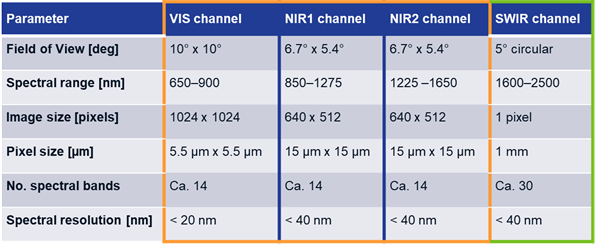
ASPECT is a flexible hyperspectral imager based on tunable Fabry-Perót interference filter (Näsilä and Kohout 2020). It consists of three independent Vis-NIR imaging channels, one single-point SWIR spectrometer, and a dedicated data processing unit (DPU) based on Xiphos Q7 (Table 1). ASPECT is the prime payload of Milani CubeSat carried by ESA Hera mission (Michel et al. 2022, Kohout et al. 2018) to binary asteroid Didymos-Dimorphos and is also considered for missions to asteroid Apophis.

Tests of ASPECT performance to resolve spectral features of chondritic materials spectra were done with Bjurböle L/LL4 meteorite. 1-µm silicate band is well resolved (Fig. 1) and SNR around 100 in Vis channel and 40 in NIRs channels can be achieved.

ASPECT will conduct global hyperspectral mapping of the target asteroids with a resolution of 1 m/px from 5 km. The spectral domain contains key information on surface composition and maturity. Combined with high spatial resolution lateral variations in surface properties can be mapped.

Table 1.

Fig. 1. Comparison of Bjurböle meteorite measurements with ASPECT (green, red) against the reference laboratory spectrometer (blue). The 1-µm silicate band is well resolved.

References:

Michel et al. 2022 DOI 10.3847/PSJ/ac6f52

Näsilä, Kohout 2020 DOI 10.1109/AERO47225.2020.9172437

Kohout et al. 2018 DOI 10.1016/j.asr.2017.07.036

How to cite: Kohout, T., Korda, D., Penttilä, A., Ranttila, S., Syrjänen, S., Pitkänen, V., and Palamakumbure, L.: Detection of composition, space weathering, and local resurfacing using ASPECT hyperspectral imager of ESA Hera / Milani mission, EPSC-DPS Joint Meeting 2025, Helsinki, Finland, 7–13 Sep 2025, EPSC-DPS2025-1353, https://doi.org/10.5194/epsc-dps2025-1353, 2025.

17:18–17:30
|
EPSC-DPS2025-1719
|
On-site presentation
Ernesto Palomba, Fabrizio Dirri, Chiara Gisellu, Andrea Longobardo, Enrico Nardi, Emiliano Zampetti, Diego Saccabarozzi, Marco Giovanni Corti, Bortolino Saggin, and Margherita Cardi

The ESA Hera mission, successfully launched on 7 October 2024, is a Planetary Defence Mission in combination with NASA DART (Double Asteroid Redirection Test) Mission, a mission kinetic impactor test, that impacted Dimorphos, i.e., the smallest body of the Didymos binary system, in September 2022.

Hera aims at demonstrating new technologies, from autonomous navigation around an asteroid to low gravity proximity operations, and at investigating the Didymos binary system, including the assessment of its internal properties and its geophysics characterization [1]. In addition to the remote sensing suite of instruments, Hera also carries two CubeSats, Juventas and Milani [2], that will be deployed in the vicinity of the asteroid system, providing unique scientific measurements.

One of the payload onboard Milani CubeSat is VISTA (Volatile In-Situ Thermogravimeter Analyser), a QCM-based device (Quartz Crystal Microbalance), whose scientific goals are the characterization of the dust environment of Didymos binary system, the detection of dust particle smaller than 5 µm, volatiles and light organics and the assessment of onboard contamination during the mission. VISTA is composed of three different units: two quartz crystals mounted in a sandwich-like configuration; the Proximity Electronics and the Thermal Control System (TCS), i.e., the customized resistors and a Thermo-Electric Cooler (TEC) to facilitate the particles deposition.

Thanks to its customized subsystem design, VISTA is capable of monitoring deposition and desorption/sublimation processes in space and molecular contamination, and performing Thermo-Gravimetric Analysis (TGA) on the collected materials [4], [5].

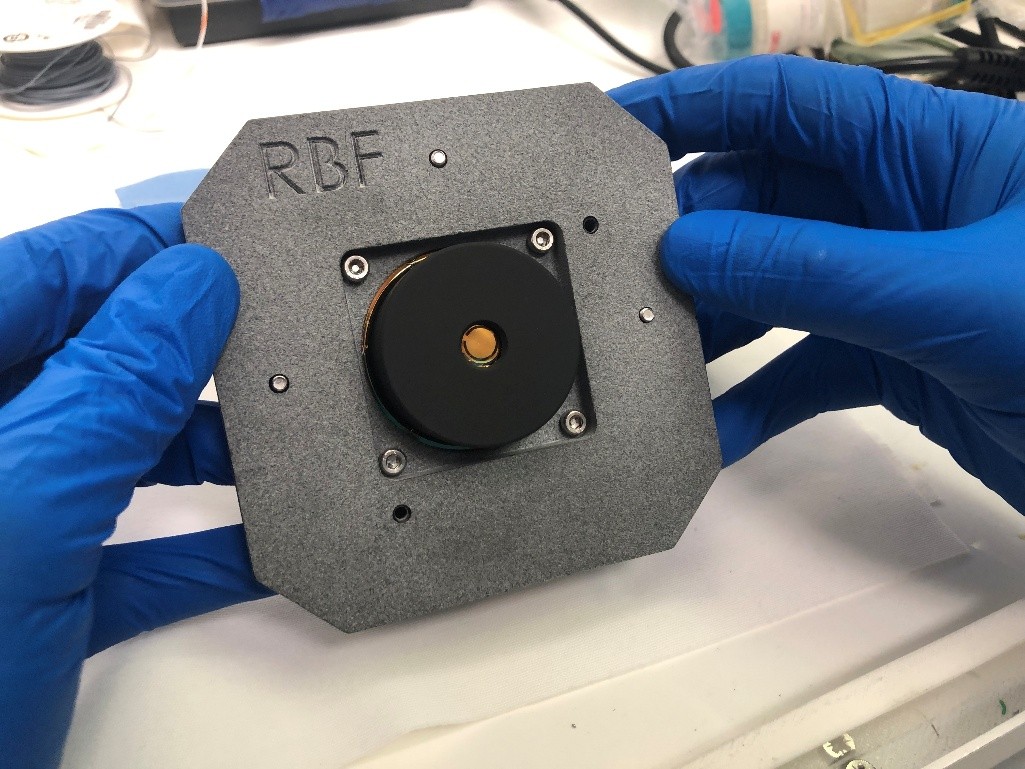
VISTA Flight Model is shown in Figure 1.

Figure 1. VISTA Flight Model mounted in its transport container.

VISTA was developed by an Italian Consortium led by INAF-IAPS (Istituto Nazionale di AstroFisica-Istituto di Astrofisica e Planetologia Spaziali), in collaboration with CNR-IIA (Consiglio Nazionale delle Ricerche-Istituto sull’Inquinamento Atmosferico) and Politecnico di Milano-MetroSpace Lab. The instrument is based on the heritage of different ITT-Emits ESA Projects: CAM (Contamination Assessment Microbalance), developed for “Evaluation of an in-situ Molecular Contamination Sensor for space use” (2014-2016); CAMLAB (Contamination Assessment Microbalance for LABoratory) developed for “Development of a European Quartz Crystal Microbalance” (2017-2019), and CAMLAB 2.0 developed for “European QCM: Bridging from Technical Development to Commercialisation” (2021-2024).

VISTA payload, including 1 Engineering Qualification Model (EQM), 1 Flight Model (FM) and 1 Flight Spare (FS) was developed in less than three years starting from late 2020. During this time, the instrument was also tested (Qualification and Acceptance tests on VISTA EQM, FM and FS were performed at INAF-IAPS and Politecnico di Milano-MetroSpace Lab) in vacuum and cryogenic environment to monitor absorption/desorption and deposition/sublimation processes to monitor the mass particles deposition lower than 5µm and sub-µm particles [5,6].

Figure 2 shows an example of a deposition test: an organic compund is heated in the Field Of View (FOV) of the instrument. The plot on the left shows the increase of frequency (black curve) with the heating steps of the organic component. In the second plot, a TGA test is shown: the crystals are heated by the built-in heaters after the depositon test to regenerate the crystals and characterize the organic compund by evaluating the sublimation temperature and the entalpy of sublimation.

Figure 2. Deposition test and TGA in vacuum.

Following the deployment of Milani in early 2027, the experimental phase will begin. VISTA will operate in Accumulation Mode (i.e., passive accumulation of dust and volatiles) and Active Modes (i.e., by using TEC and/or integrated µ-heaters) to promote the volatiles/compounds deposition and to characterize their desorption through Thermogravimetric Analysis, respectively. After the first in-orbit commissioning, VISTA behaviour was reported nominal.


References:

[1] Michel P. et al., “The ESA Hera Mission: detailed characterization of the DART impact outcome and of the Binary Asteroid (65803)”, Didymos” 2022 Planetary Science Journal 3:160

[2] Cardi M. et al., “The Hera Milani Mission”, Space Science Review 2024 (under review)

[3] Palomba E. et al., “VISTA: dust and volatile sensor for the ESA Hera mission”, Space Science Review 2024 (under review)

[4] Dirri F. 2016, AMT, 9, 655-668

[5] Dirri F. 2018, IEEE Xplore Digital Library, pp. 150-154, doi: 10.1109/MetroAeroSpace.2018, 8453532

[6] Zampetti, E. 2023, Sensors 2023, 23, 5682

How to cite: Palomba, E., Dirri, F., Gisellu, C., Longobardo, A., Nardi, E., Zampetti, E., Saccabarozzi, D., Corti, M. G., Saggin, B., and Cardi, M.: VISTA, a dust sensor for the ESA Hera mission, EPSC-DPS Joint Meeting 2025, Helsinki, Finland, 7–13 Sep 2025, EPSC-DPS2025-1719, https://doi.org/10.5194/epsc-dps2025-1719, 2025.

Planetary defense missions and concepts
17:30–17:42
|
EPSC-DPS2025-1358
|
On-site presentation
Youngmin JeongAhn, Pureum Kim, Myungjin Kim, Hee-Jae Lee, Youngbum Song, Hong-Kyu Moon, Sung-Joon Park, and Sang-Young Park

Asteroid 2024 YR4 is a Near-Earth Asteroid expected to pass through the Earth-Moon system in December 2032. While the risk of an Earth impact has been ruled out, the asteroid is still expected to pass close to the Moon, and even a lunar collision cannot be excluded. This early prediction offers a rare opportunity for a low-cost mission to investigate a small asteroid. We have recently begun exploring the feasibility of a kinetic impact mission targeting 2024 YR4. We propose sending a small spacecraft as a rideshare payload on a future lunar mission, and to keep it in lunar orbit until the asteroid approaches in 2032. The spacecraft would separate into two components, one designed to collide with the asteroid and the other equipped to observe the encounter from a safe distance. We focus on estimating the expected changes in YR4’s heliocentric orbit and spin state following the impact, and on evaluating whether these changes could be detected through follow-up observations. The mission would provide a valuable chance to observe a fast-spinning small asteroid at close range, along with 1998 KY26, a target of the Hayabusa2♯ mission. It would also contribute useful data for developing and validating kinetic impact techniques in the context of planetary defence.

How to cite: JeongAhn, Y., Kim, P., Kim, M., Lee, H.-J., Song, Y., Moon, H.-K., Park, S.-J., and Park, S.-Y.: Exploring a Kinetic Impact Mission to Asteroid 2024 YR4, EPSC-DPS Joint Meeting 2025, Helsinki, Finland, 7–13 Sep 2025, EPSC-DPS2025-1358, https://doi.org/10.5194/epsc-dps2025-1358, 2025.

17:42–17:57
|
EPSC-DPS2025-77
|
On-site presentation
Rahil Makadia, Steven Chesley, Davide Farnocchia, and Siegfried Eggl

Given present-day asteroid discovery capabilities, near-Earth asteroids (NEAs) are routinely discovered. 3,123 NEAs were discovered in 2024 alone1. Furthermore, new telescopes such as the Vera C. Rubin Observatory and the planned NEO Surveyor spacecraft are set to increase NEA discovery rates in the coming years (Mainzer et al., 2011; Schwamb et al., 2023). Once the orbit of a new object is determined, we must assess its Earth impact hazard. If a large enough asteroid is found to be on a collision course with the Earth, a deflection mission must be developed to mitigate the asteroid’s impact hazard. Thanks to NASA’s Double Asteroid Redirection Test (DART) mission, a Kinetic Impact (KI) is a demonstrated method of changing an asteroid’s trajectory (Chabot et al., 2024).


Most asteroids that pose a significant impact hazard usually allow multiple impacts with the Earth over the span of decades. For example, Chesley et al. (2014) found that the orbit of asteroid (101955) Bennu allowed for more than 200 potential Earth impacts between 2167 and 2200. As it stands on 16 April 2025, more than 80% (29 out of 36) asteroids that have a Palermo asteroid impact hazard scale rating of -4 or greater admit more than one impact given their orbital uncertainties2. The fact that small variations in an asteroid’s orbit can cause future impacts has consequences for KI mission planning. Uncontrolled deflection can, for instance, unlock gravitational keyholes. Doing so can unlock a gravitational keyhole (Chodas, 1999). If pushed into a keyhole, an asteroid would return on an impacting trajectory. This means another deflection mission on possibly much shorter timescales could become necessary.


In order to avoid such repetitive doomsday scenarios right off the bat, we should strive to design the initial KI deflection mission such that it does not trigger a keyhole (Chesley and Farnocchia, 2014; Eggl et al., 2018). In this work, we have developed a method that can aid KI mission decision-makers during the initial design process. We use realistic flyby mission trajectories that are already publicly available3 to obtain the KI velocity and mass at impact. We then combine this information with details of an impacting asteroid’s orbit, such as the keyhole locations and physical properties (like shape, spin state, and mass) and model hundreds of millions of KI mission outcomes. For each mission, we factor in realistic values of the momentum enhancement parameter as measured from the DART mission (Makadia et al., 2025).


The change in the target asteroid’s velocity resulting from the KI mission is then mapped to the scattering encounter to assess whether a particular mission realization has the potential to trigger a keyhole. The impact probability of the asteroid following each simulated KI mission is then computed using the impact probabilities of each reachable keyhole. This information is convolved with realistic targeting uncertainties for a KI spacecraft. Finally, this process is repeated over one rotation phase of the asteroid to allow for additional control over the exact time of KI deflection.


As a result of this process, we can map the 2014 keyholes of Bennu onto the surface of a target asteroid. Generating these impact probability maps allows KI mission designers to select the optimal site on the asteroid such that the post-deflection impact probability of the asteroid is minimized. Figure 1 shows a representative keyhole map on the surface of Bennu. The crosshair shows the optimal deflection site that minimizes the post-deflection impact probability of Bennu. By creating these maps, we can push asteroids away from the Earth such that they do not return on an impacting trajectory in the foreseeable future. We believe that this work is the next step in designing comprehensive KI deflection missions to ensure humanity’s continued safety from NEAs.

Figure 1: Example post-deflection asteroid impact probability map on the surface of (101955) Bennu. The crosshair corresponds to the location on the surface that minimizes the asteroid impact hazard after deflection. These results assumed a 25-meter targeting uncertainty for the KI spacecraft. As a result, deflection sites that allowed for a KI miss are not considered and form a gray boundary around the targetable region of the asteroid.

1https://cneos.jpl.nasa.gov/stats/totals.html
2https://cneos.jpl.nasa.gov/sentry/
3https://ssd.jpl.nasa.gov/tools/mdesign.html#/interactive

References
A. Mainzer et al. NEOWISE OBSERVATIONS OF NEAR-EARTH OBJECTS: PRELIMINARY RESULTS. The Astrophysical Journal, 743(2):156, December 2011. doi: 10.1088/0004-637x/743/2/156.

M.E. Schwamb et al. Tuning the Legacy Survey of Space and Time (LSST) Observing Strategy for Solar System Science. The Astrophysical Journal Supplement Series, 266(2):22, May 2023. doi: 10.3847/1538-4365/acc173.

N.L. Chabot et al. Achievement of the Planetary Defense Investigations of the Double Asteroid Redirection Test (DART) Mission. The Planetary Science Journal, 5(2):49, February 2024. doi: 10.3847/PSJ/ad16e6.

S.R. Chesley et al. Orbit and bulk density of the OSIRIS-REx target Asteroid (101955) Bennu. Icarus, 235:5–22, June 2014. doi: 10.1016/j.icarus.2014.02.020.

P.W. Chodas. Orbit uncertainties, keyholes, and collision probabilities. In Bulletin of the American Astronomical Society, volume 31, page 1117, January 1999. URL https://ui.adsabs.harvard.edu/abs/1999BAAS...31R1117C.

S.R. Chesley and D. Farnocchia. Guided asteroid deflection by kinetic impact: Mapping keyholes to an asteroid’s surface. In Asteroids, Comets, Meteors 2014, page 92, July 2014. URL https://ui.adsabs.harvard.edu/abs/2014acm..conf...92C.

S. Eggl, S.R. Chesley, P.W. Chodas, and D. Farnocchia. Avoiding Armageddon: Long-Term Asteroid Orbit Deflection Optimization. In 42nd COSPAR Scientific Assembly, volume 42, pages S.3–13–18, July 2018. URL https://ui.adsabs.harvard.edu/abs/2018cosp...42E.957E.

R. Makadia, S.R. Chesley, et al. First detection of an asteroid’s heliocentric deflection: The Didymos system after DART. Submitted, 2025.

How to cite: Makadia, R., Chesley, S., Farnocchia, D., and Eggl, S.: Keyhole-Based Site Selection for Kinetic Impact Deflection of Near-Earth Asteroids, EPSC-DPS Joint Meeting 2025, Helsinki, Finland, 7–13 Sep 2025, EPSC-DPS2025-77, https://doi.org/10.5194/epsc-dps2025-77, 2025.

Orals FRI-OB4: Fri, 12 Sep, 14:00–16:00 | Room Venus (Veranda 3)

Chairpersons: Michael Küppers, Monica Lazzarin, Patrick Michel
Modelling Didymos and Dimorphos
14:00–14:12
|
EPSC-DPS2025-1841
|
On-site presentation
Stavro Lambrov Ivanovski, Lorenzo Calderone, and Lorenzo Biasiotti

Introduction: Developing a suite of models that can address different physical scenarios in the encounter of asteroids is a timely question for planetary defense science. The role of plasma events in dust dynamics in the close vicinity of the asteroid has not been tackled methodologically. After the successful launch of the ESA/HERA mission [1] on October 7, 2024, it is timely to recall what we have learned from the NASA Double Asteroid Redirection Test (DART) impact [2] and the ASI/Light Italian Cubesat for Imaging of Asteroids (LICIACube) [3] mission. Among the scientific objectives of the HERA mission is to determine the physical properties of Dimorphos, including its internal structure, and to constrain binary formation scenarios. Here we present how dust dynamics simulations can help constrain the physical properties of the dust in the asteroid and/or in the binary system, together with a plasma model which can accelerate particles and change their dynamics in the encounter with the asteroid. Such a scenario could be of interest to study the environment of an asteroid that can be subject to strong plasma events, as in the planned ESA/JAXA RAMSES mission to Apophis in 2029.

The models: We couple two models - the 3D+t model – LIMARDE [4] and the MHD model that analyzes shock dynamics and space weather event observations MIM[5]. Dust dynamical simulations are constrained with laboratory observations [6], impact simulations, and near-field observations such as the LICIACube [7] images, and simulate the long-lived ejecta. The model computes single particle trajectories, dust rotational frequencies and velocity, as well as particle orientation at any time and distance. We compute the dust velocity distribution based on the physical properties (size, mass, and shape) derived from the LICIACube observations. The results are useful to check the role of particle fragmentation and to constrain the physical properties based on the dynamical properties of the ejected dust in the near- and mid-environment.

The MIM model studies the MHD instabilities in space weather events and the velocity changes in the plasma flow that can contribute to changes in the dynamics of particles in the vicinity of the asteroid.

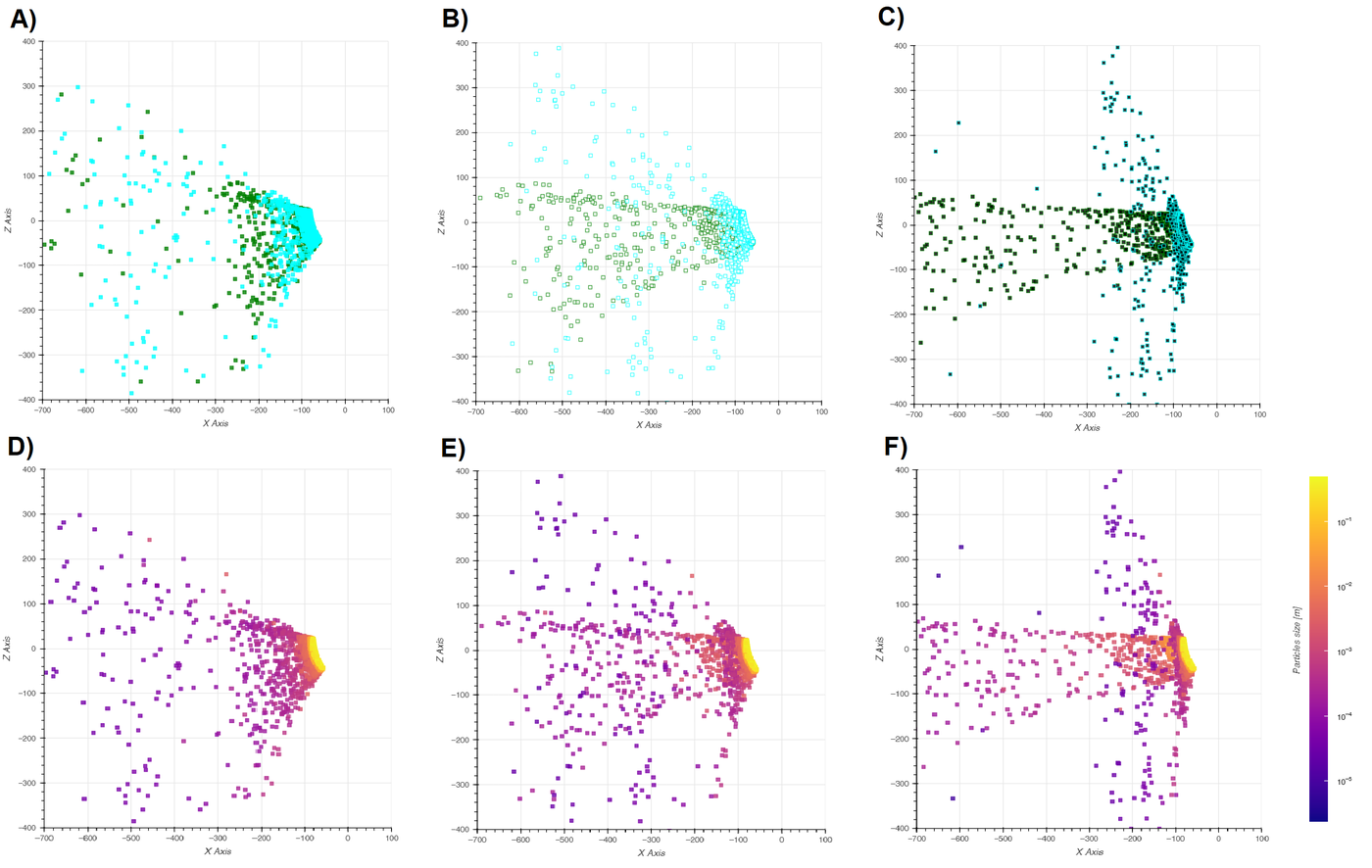
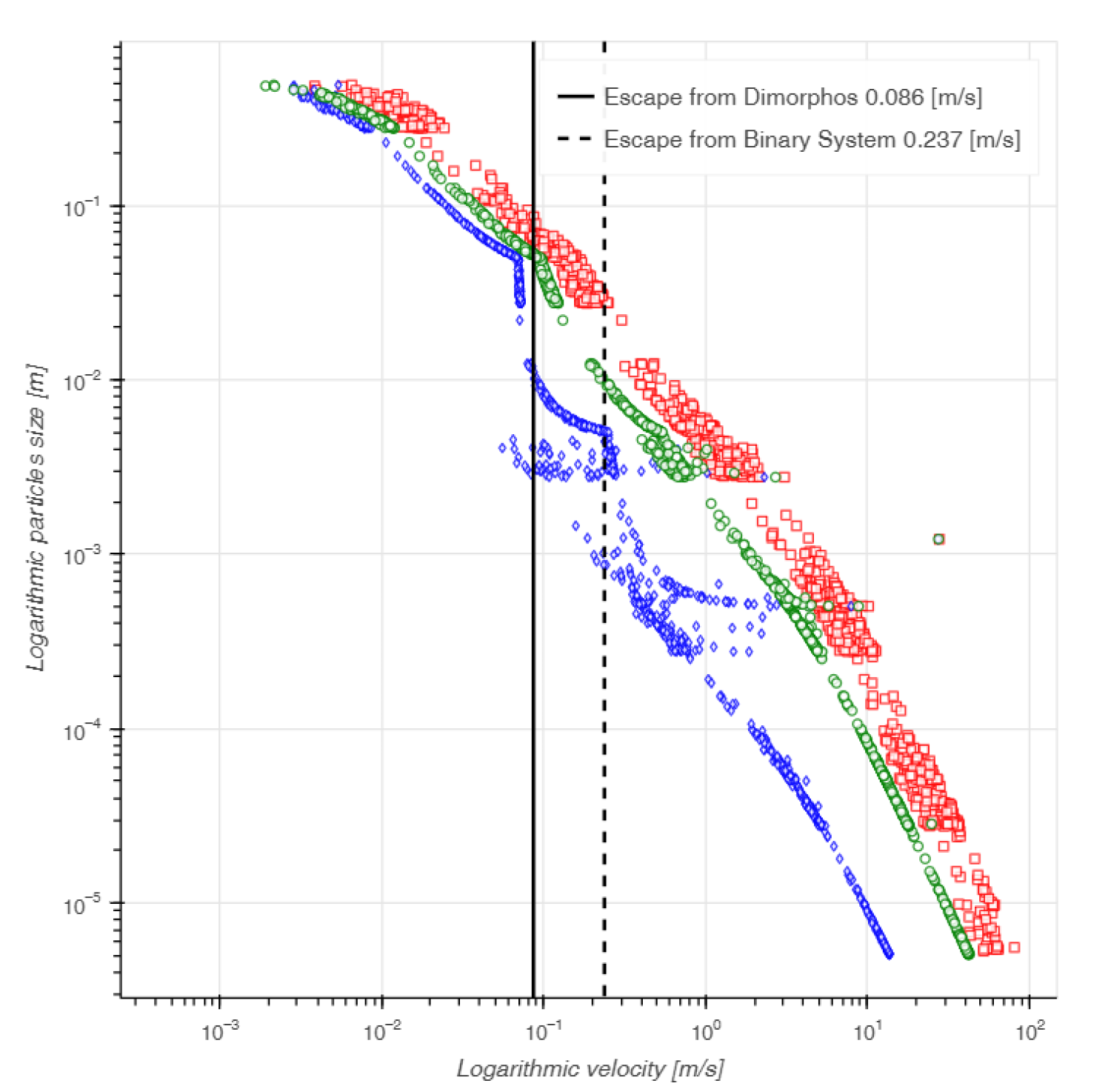
Results: The first group of results regards the dust dynamics modeling that will be coupled with the plasma model. We carried out a numerical analysis to determine how many and which non-spherical particles remain gravitationally bound to the Didymos system, how much mass escapes, and the corresponding percentages relative to the total (see Figure 1).

Figure 1. Logarithmic-scale plot showing the relationship between particle velocity and size. This graph refers specifically to the 120th second of the simulation in the presence of a vapor plume, without fragmentation, and includes data for 1000 oblate particles (red squares), 1000 prolate particles (blue diamonds), and 1000 spherical particles (green circles).

References: [1] Michel, P. et al. 2022 PSJ 160 [2] Rivkin, A.S. et al. 2021, PSJ, 2, 24pp; [3] Dotto, E. et al. 2021, PSS 199,  [4] Fahnestock et al. 2022, PSJ; [5] Biasiotti et al. 2024 [6] Ormo et al. 2022, E&PSL [7] Dotto et al. 2024, Nature

How to cite: Ivanovski, S. L., Calderone, L., and Biasiotti, L.: Dust dynamics and plasma simulations in support of planetary defense missions such as HERA and RAMSES, EPSC-DPS Joint Meeting 2025, Helsinki, Finland, 7–13 Sep 2025, EPSC-DPS2025-1841, https://doi.org/10.5194/epsc-dps2025-1841, 2025.

14:12–14:24
|
EPSC-DPS2025-609
|
On-site presentation
Masanori Kanamaru and Wenhan Zhou

The AIDA planetary defense program, consisting of the U.S. DART and Europe’s Hera missions, is currently underway. In September 2022, the DART spacecraft successfully conducted an impact experiment on Dimorphos, the satellite of the binary asteroid Didymos (Daly et al., 2023). The Hera mission is scheduled to arrive at Didymos–Dimorphos in December 2026 and will closely observe the artificial crater created by DART. Japan's thermal infrared camera (TIRI), installed on the Hera spacecraft, aims to reveal the thermal properties of the asteroid surface, such as thermal inertia, porosity, and surface roughness.

The evolution of an asteroid's orbits and rotation is affected by gravitational forces from the Sun and planets and by non-gravitational forces due to thermal radiation pressure. We aim to construct theoretical and numerical models of non-gravitational effects acting on binary asteroids and validate them with the Hera mission.

The orbital evolution of a binary asteroid’s satellite is mainly driven by tidal forces and the binary YORP (BYORP) effect. In many binary systems, the primary spins relatively fast, and the satellite’s semi-major axis increases due to tidal evolution. On the other hand, the BYORP effect is a torque generated by the thermal radiation of a synchronously rotating satellite, which can alter the semi-major axis depending on the irregularity of the satellite’s shape (Ćuk & Burns, 2005).

In this study, we newly focused on the Yarkovsky effect acting on the satellite of a binary asteroid. In particular, we analyzed the Yarkovsky-Schach effect, a mechanism that has been studied in the orbital evolution of Saturn’s ring particles and is considered to similarly affect satellites in binary asteroid systems (Rubincam, 2006; Vokrouhlický et al., 2007). We developed both analytical and numerical models of the Yarkovsky-Schach effect acting on a binary asteroid satellite (Zhou, Vokrouhlický, Kanamaru, et al., 2024).

For numerical simulations of the non-gravitational forces acting on the satellite, we used the thermophysical computation library AsteroidThermoPhysicalModels.jl, which is also applicable to binary systems. The results show that satellites experiencing frequent eclipses (in the case of prograde rotation) tend to evolve toward tidally locked orbits due to the Yarkovsky-Schach effect. This orbital evolution mechanism offers essential insights into the statistical properties and the dynamical lifetimes of binary asteroids.

How to cite: Kanamaru, M. and Zhou, W.: Non-Gravitational Effects on a Binary Asteroid: Implications for the Long-term Dynamics of Asteroid Didymos-Dimorphos, EPSC-DPS Joint Meeting 2025, Helsinki, Finland, 7–13 Sep 2025, EPSC-DPS2025-609, https://doi.org/10.5194/epsc-dps2025-609, 2025.

Discovery, Observation and Charactersation of NEOs
14:24–14:36
|
EPSC-DPS2025-1017
|
Virtual presentation
Dora Föhring, Ernesto Dölling, Emiliano Cordelli, Johannes Klug, Rene Messing, Luca Conversi, Pablo Ramirez Moreta, Marco Micheli, Francisco Ocana, Rainer Kresken, and Maxime Devogele

The Flyeye-1 is the first in a planned network of wide-field survey telescopes designed by the European Space Agency (ESA) to enhance Europe’s capability in detecting and tracking Near-Earth Objects (NEOs). This talk presents results from the commissioning campaign of Flyeye-1, conducted at the test facilities at the Matera Space Centre, operated by the Italian Space Agency (ASI) in southern Italy.  

We report the successful completion of the optical alignment of the telescope’s 16 astronomical optical channels and cameras, as well as the integration of the telescope with its equatorial mount. At the same time, all major software components – including the Front-End Control software, the Tasking and Scheduling software, and the Flyeye Data Processing Chain (DPC) – were fully integrated and tested. The expected performance of the DPC was also validated using simulated images of artificial NEOs. 

First light observations were carried out to verify system interconnectivity and assess key performance metrics including image quality, astrometric and photometric accuracy, and field uniformity. Testing includes manual calibrations and manual interactions, single-night operational tests, and safety and maintenance checks. A full demonstration of the system’s end-to-end functionality – covering automated scheduling, image acquisition, object detection and reporting – is planned for two dedicated sessions in Q3 2025, following the completion of the Factory Acceptance Tests (FAT). Early results from the acceptance phase point to Flyeye-1’s strong potential for operational deployment and its expected contribution to ESA’s planetary defense activities.  

Finally, we provide an update on the construction of the permanent observatory at Mt. Mufara (Sicily), where the Flyeye-1 is scheduled to be permanently relocated in 2026 and outline the roadmap for future developments and the planned expansion of the network. 

How to cite: Föhring, D., Dölling, E., Cordelli, E., Klug, J., Messing, R., Conversi, L., Ramirez Moreta, P., Micheli, M., Ocana, F., Kresken, R., and Devogele, M.: Commissioning and First Light Results of ESA’s Flyeye-1 Telescope , EPSC-DPS Joint Meeting 2025, Helsinki, Finland, 7–13 Sep 2025, EPSC-DPS2025-1017, https://doi.org/10.5194/epsc-dps2025-1017, 2025.

14:36–14:48
|
EPSC-DPS2025-1329
|
On-site presentation
Luca Conversi, Javier Licandro, Marco Delbo, Thomas Mueller, Karri Muinonen, Marcel Popescu, and Paolo Tanga

To warn about potential asteroid or comet impacts, we must first observe and discover these objects through dedicated NEO surveys. Most current and planned surveys are ground-based and use visible light, but they face limitations like weather dependency, limited sky visibility, difficulty detecting at low galactic latitudes, and inability to determine physical properties directly. A space-based mission at the Sun-Earth Lagrange point (L1) using thermal infrared could address these issues by scanning areas of the sky inaccessible from the ground and providing early warnings of imminent impacts.

To fill the abovementioned gap, ESA is studying an NEO Mission in the Infra-Red, called NEOMIR hereafter. NEOMIR aims to detect objects of at least 35 m in diameter (i.e., similar to the Tunguska event) from within Earth's orbit with enough lead time for mitigation. It does this by pointing at relatively low solar elongation, i.e., in directions angularly close to the Sun at all Ecliptic latitudes, shortening exposure times, and increasing revisit cadence to avoid missing faster NEOs. The infrared data will help determine initial orbits and sizes.

We will present the mission and spacecraft design, the status of the project, as well as initial results on expected detection capabilities. We will focus on the NEOMIR ability to detect possible Earth impactors and todetermine their orbits and impact locations. We will also analyse what would have been the NEOMIR contributions in real-case scenarios such as the Chelyabinsk impactor and 2024 YR4.

How to cite: Conversi, L., Licandro, J., Delbo, M., Mueller, T., Muinonen, K., Popescu, M., and Tanga, P.: NEOMIR: project statut of ESA’s space-based infrared mission for NEO detection and early warning, EPSC-DPS Joint Meeting 2025, Helsinki, Finland, 7–13 Sep 2025, EPSC-DPS2025-1329, https://doi.org/10.5194/epsc-dps2025-1329, 2025.

14:48–15:00
|
EPSC-DPS2025-460
|
On-site presentation
Paul Abell, Timothy Spahr, Brent Barbee, Dar Dahlen, Amy Mainzer, and Joseph Masiero

NASA’s Near-Earth Object (NEO) Surveyor mission is an infrared observatory planned to launch no earlier than September 2027 that is designed to discover and characterize asteroids and comets. Its main objective is to identify those objects that are large enough (>140 m in effective spherical diameter) to cause severe regional damage from impact. The observatory will operate at the Sun-Earth L1 Lagrange point and conduct a survey to within 45° of the Sun in order to identify objects in the most Earth-like orbits[1]. During the length of the survey, NEO Surveyor is estimated to discover ~200,000 to 300,000 new objects (some as small as ~10 m) and thousands of comets. These discoveries will provide a more comprehensive understanding of the orbital and size frequency distribution of the NEO population, and also provide insights into the relative probability of an Earth impact during the next 100 years.

NEO Surveyor’s ability to observe regions close to the Sun increases the likelihood that it will detect objects in very Earth-like orbits. These objects tend to have the lowest minimum orbit intersection distances (MOIDs), and thus pose the greatest risk of Earth impact. NEOs on more Earth-like orbits are also more difficult to deflect, all else being equal. This attribute of NEO Surveyor’s operation is not only important for planetary defense considerations, but it also provides an opportunity to identify low-delta V spacecraft mission targets, which are of interest to the science, in situ resource utilization, and exploration communities.

The NEO Surveyor team has developed a model reference population of NEOs and other Solar System objects (e.g., mainbelt asteroids) in which to measure the effectiveness of the survey over its designed operational lifetime. This Reference Small Body Population Model (RSBPM) combines both a separate NEO model and a background object model to mimic the moving objects that the observatory will “see” during the operation of the survey. Based on the RSBPM, NEO Surveyor will be able to identify objects that are particularly accessible for both one way and round-trip rendezvous missions and span a range of NEO diameters. The majority of these low-delta V objects will likely be Atens, but will also include a significant number of Apollos.

In this paper, we will apply astrodynamics techniques to estimate the distribution of delta V and flight time requirements for both one-way and round-trip rendezvous missions to the population of NEOs that NEO Surveyor is expected to discover. We will utilize the algorithms for the Near-Earth Object Human Space Flight Accessible Targets Study (NHATS)[1] [2], heuristics derived from the current NHATS data, and other techniques specific to one-way rendezvous trajectory calculations. The results will show us how the number of known attractive NEO mission targets may increase during NEO Surveyor’s survey operations.


References

[1]  Mainzer, A. K., J. R. Masiero, P. A. Abell, J. M. Bauer, W. Bottke, B. J. Buratti, S. J. Carey, D. Cotto-Figueroa, R. M. Cutri, D. Dahlen, P. R. M. Eisenhardt, Y. R. Fernandez, R. Furfaro, T. Grav, T. L. Hoffman, M. S. Kelley, Y. Kim, J. D. Kirkpatrick, C. R. Lawler, E. Lilly, X. Liu, F. Marocco, K. A. Marsh, F. J. Masci, C. W. McMurtry, M. Pourrahmani, L. Reinhart, M. E. Ressler, A. Satpathy, C. A. Schambeau, S. Sonnett, T. B. Spahr, J. A. Surace, M. Vaquero, E. L. Wright, G. R. Zengilowski, and the NEO Surveyor Mission Team. “The Near-Earth Object Surveyor Mission”, The Planetary Science Journal, 4:224 (19pp), 2023 December.

[2] Barbee, B. W., Abell, P. A., Adamo, D. R., Alberding, C. M., Mazanek, D. D., Johnson, L. N., Yeomans, D. K., Chodas, P. W., Chamberlin, A. B., Friedensen, V. P., "The Near-Earth Object Human Space Flight Accessible Targets Study: An Ongoing Effort to Identify Near-Earth Asteroid Destinations for Human Explorers," 2013 IAA Planetary Defense Conference, Flagstaff, AZ, April 15-19, 2013

1 Center for Near-Earth Object Studies, “Accessible NEAs,” https://cneos.jpl.nasa.gov/nhats/, accessed 2025-5-1.

How to cite: Abell, P., Spahr, T., Barbee, B., Dahlen, D., Mainzer, A., and Masiero, J.: Predicted Discovery of Low-Delta V Targets Among the NEO Population by NEO Surveyor, EPSC-DPS Joint Meeting 2025, Helsinki, Finland, 7–13 Sep 2025, EPSC-DPS2025-460, https://doi.org/10.5194/epsc-dps2025-460, 2025.

15:00–15:12
|
EPSC-DPS2025-481
|
ECP
|
On-site presentation
Cassandra Lejoly, Melissa Brucker, Robert S. McMillan, Terry Bressi, Jeffrey Larsen, Ron Mastaler, Mike Read, Jim Scotti, and Andrew Tubbiolo

An impact by an asteroid or comet onto the Earth is one of the few natural disasters that can be predicted in advance and that we have the tools to prevent. Without sufficient follow-up observations during their discovery apparitions, NEOs often accrue large uncertainties in position during typical intervals between apparitions. Some NEOs can become effectively “lost” when their positional uncertainties are large enough such that they are more likely to be rediscovered by chance than to be recovered by observations targeted to their ephemerides (Milani 1999). SPACEWATCH®, which pioneered using CCDs to survey the sky for NEOs, currently conducts Near Earth Object (NEO) follow-up observations. To improve planetary defense capabilities by reducing the uncertainty in NEO orbital elements, we conduct full-time rapid astrometric follow-up observations of high priority NEOs as the sole users of the Lunar and Planetary Laboratory’s Spacewatch 1.8-m observatory and the Steward Observatory’s 0.9-m telescope on Kitt Peak. Additionally, we conduct astrometric follow-up with Steward Observatory’s Bok 2.3-m telescope during bright time with the Spacewatch Cassegrain Camera (SCC) (see Table 1).


Our highest priority targets for NEO astrometric follow-up are virtual impactors (VIs) and Potentially Hazardous Asteroids (PHAs). PHAs are ≳140 meters in diameter with Earth Minimum Orbit Intersection Distances (EMOIDs) ≲ 0.05 au. VIs have sufficiently uncertain heliocentric orbital parameters such that at least one orbit solution predicts an Earth impact within 100 years. PHAs pose a greater hazard due to their size, but the majority do not have orbits in which the asteroid could impact Earth itself. VIs pose a greater impact risk due to their real (but low) probability of impact. Currently, only ~1% of NEAs on the JPL Sentry risk list of VIs are “large” (>140 m). It is particularly important to minimize the orbit uncertainties for VI PHAs to rule out (or in) possible impacts.

Spacewatch has observed a majority of the newly discovered NEOs that are or were on JPL’s VI impact risk list since October 16, 2019. According to the PDS SBN, from Sept. 1993 through March 2025, the 1.8-m is third in making the first observation for follow-up MPECs, sixth in follow-up MPECS, and fifth over all types of MPECs. It is fifth in MPECs for making the first follow-up observation over the past year. The 0.9-m is sixth in discovery MPECs and eighth in precovery MPECs from September 1993 through March 2025.  SPACEWATCH® also leads in faint observations (V>22.0) as shown in Figure 1.

In addition to our regular follow-up observations, SPACEWATCH® has a Target-of-Opportunity program for recovery of potential impactors. This includes applying for open time at larger telescopes (4 to 8m class), such as the LBT, the MMT, Gemini North and South, CTIO Blanco, Keck, and SOAR. The observations are triggered when a Virtual Impactor becomes too faint to follow up with smaller class telescopes, is large enough to be dangerous, and still has a high impact probability and/or high Palermo Scale value. ToO measurements of VI 2022 LX illustrate the benefit of using a large telescope to recover a VI. It was discovered on 2022 May 22 and observations were collected by smaller telescopes through July 5 while it was V < 23. We triggered a ToO with LRIS on Keck I on 2022 July 28 to extend the timespan of its observations by 23 nights. After we submitted our astrometry to the Minor Planet Center (MPC), the orbital recalculation led to a decrease in the orbital element uncertainties by ~30% (Table 2) and ruled out the potential impacts.

In 2019, SPACEWATCH®, Catalina Sky Survey (CSS) and the University of Minnesota began the Bok NEO Survey, a collaborative survey program using 90Prime on the Bok 2.3-m Telescope to discover faint asteroids, especially larger NEOs and Earth Trojan candidates. New discoveries include the imminent impactor 2024 XA1 which broke up in the atmosphere over Siberia, the hyperbolic Comet C/2025 D1 (Gröller) and Apollo NEA 2025 EW3 which has a diameter of 860m (possibly larger). From the start of the Bok NEO survey on November 15, 2019 through April 10, 2025, the observatory was operational for 48.5 months over which we averaged an allocation of 7.2 nights per month of dark/grey time from Steward Observatory. NASA’s Planetary Data System’s Small Bodies Node’s MPEC Watch reports that of the top MPEC’d discoverers, this survey is fourth over the past 5 year and is sixth since September 19, 1993. Of the top MPEC’d precoverers, it is eighth over the past year and ninth over the past 5 years (https://sbnmpc.astro.umd.edu/mpecwatch/index.html).

How to cite: Lejoly, C., Brucker, M., McMillan, R. S., Bressi, T., Larsen, J., Mastaler, R., Read, M., Scotti, J., and Tubbiolo, A.: SPACEWATCH®: Following up Near-Earth Objects (NEOs) to help Determine their Orbits, EPSC-DPS Joint Meeting 2025, Helsinki, Finland, 7–13 Sep 2025, EPSC-DPS2025-481, https://doi.org/10.5194/epsc-dps2025-481, 2025.

15:12–15:24
|
EPSC-DPS2025-1497
|
ECP
|
On-site presentation
Jin Beniyama, Marco Delbo, Thomas Müller, Luca Conversi, Margherita Maria Revellino, Paolo Tanga, Karri Muinonen, and Javier Licandro

One of the major achievements of planetary science in the past century has been the discovery of a population of asteroids and comets that have the potential to impact our planet. These objects are collectively known as Near-Earth Objects (NEOs), which include both asteroids and comets whose orbits bring them within 1.3 astronomical units (au) of the Sun. Among them, a subset is classified as Potentially Hazardous Asteroids (PHAs) — objects that have an Earth Minimum Orbit Intersection Distance (MOID) of 0.05 au or less and an absolute magnitude (H) of 22 or brighter, indicating a size large enough to cause significant damage in the event of an impact. Imminent Earth impactors have been shown to "come" from two principal directions in the sky, one towards local midnight and the other towards the local midday [1].

While midnight impactors are well covered by existing optical survey telescopes, midday impactors present a major observational challenge. From the ground, observations in the direction of the Sun are nearly impossible due to its overwhelming brightness, which prevents the detection of faint asteroid signals. The Chelyabinsk event of 2013 highlighted this vulnerability, as the ~20-meter asteroid responsible for the airburst was completely undetected before impact, approaching from a region of the sky that was effectively unobservable by existing surveys [2]. A promising solution to this problem is to place an infrared telescope at the Sun-Earth L1 Lagrange point. From this vantage point, such an observatory would be able to scan the region of space closest to the Sun with unprecedented sensitivity, detecting asteroids that would otherwise remain hidden. This is the fundamental concept behind NEOMIR (Near-Earth Object Mission in the Infrared), a proposed ESA concept mission, designed to provide early warning for asteroids approaching from the daytime sky [3]. NASA's Near-Earth Object (NEO) Surveyor will also be at L1 Lagrange point [4], but NEOMIR will be complementary in terms of survey region. By observing in the infrared at small solar elongations, NEOMIR would complement existing ground-based surveys and significantly enhance our ability to detect and respond to imminent impact threats. By positioning NEOMIR at the Sun-Earth Lagrange point L1, ESA aims to maximize early detection capabilities for hazardous asteroids approaching from the Sun’s direction. However, these asteroids are typically detected at high phase angles (angle between the Sun and the observer as seen from the asteroid) as seen from NEOMIR at L1 Lagrange point.

Hence, the mission’s success will depend on addressing the technical and observational challenges posed by high phase-angle detections, ultimately improving our ability to provide timely warnings for potential impactors. Unlike visible-light observations, which rely on sunlight reflected off an asteroid’s surface, in the medium infrared it is possible to measure the thermal radiation emitted by the asteroid itself. This advantage becomes especially crucial at high phase angles — when the Sun, the asteroid, and the observer form a nearly straight line. At such angles, only a small fraction of the asteroid’s illuminated surface is visible in reflected light, making it difficult to detect the body. However, in the thermal infrared, an asteroid's emission originates from most of its surface, which remains warm and radiates detectable heat. Despite these advantages, observing asteroids in the thermal infrared at high phase angles presents significant challenges. The extreme observing geometry complicates flux predictions, as both standard and sophisticated thermal models have not been fully validated for such conditions. Additionally, space-based detectors operating near the Sun must contend with high background noise from zodiacal dust emission and stray light, which can limit sensitivity. Overcoming these obstacles requires careful optimization of telescope location, observation strategy, and data processing techniques.

To simulate NEOMIR observations of imminent Earth impactors, we employ a ThermoPhysical Model (TPM; implementation based on [5]) to compute infrared fluxes from synthetic asteroid populations. These fluxes will then be analyzed with simple thermal models, which output the estimated diameter of the synthetic asteroid. The error between these derived diameters and the original ones (used as input for the TPM) will then be discussed. In this presentation, we provide an overview of the NEOMIR mission and present a simulation framework to estimate the infrared fluxes of synthetic asteroids, using a TPM and physically plausible assumptions about their properties (e.g., thermal inertia and pole orientations).

Acknowledgments
This work was supported by the French government through the France 2030 investment plan managed by the National Research Agency (ANR), as part of the Initiative of Excellence Université Côte d’Azur under reference number ANR-15-IDEX-01. This work was supported by JSPS KAKENHI grant Number JP23KJ0640.

References:
[1] Veres et al., 2009, Icarus, Vol. 203, 472.
[2] Müller et al., submitted to Advances in Astronomy.
[3] Conversi et al., 2024, Proceedings of the SPIE, Vol. 13092, 130922H.
[4] Mainzer et al., 2023, PSJ, Vol. 4, 224.
[5] Delbo’ et al., 2007, Icarus, Vol. 190, 236.

How to cite: Beniyama, J., Delbo, M., Müller, T., Conversi, L., Maria Revellino, M., Tanga, P., Muinonen, K., and Licandro, J.: On the detection and characterization of potential Earth-impacting asteroids from space in the thermal infrared, EPSC-DPS Joint Meeting 2025, Helsinki, Finland, 7–13 Sep 2025, EPSC-DPS2025-1497, https://doi.org/10.5194/epsc-dps2025-1497, 2025.

15:24–15:36
|
EPSC-DPS2025-1338
|
On-site presentation
Nicholas Moskovitz, Samantha Hemmelgarn, Hannah Zigo, Teddy Kareta, Maxime Devogele, and Audrey Thirouin

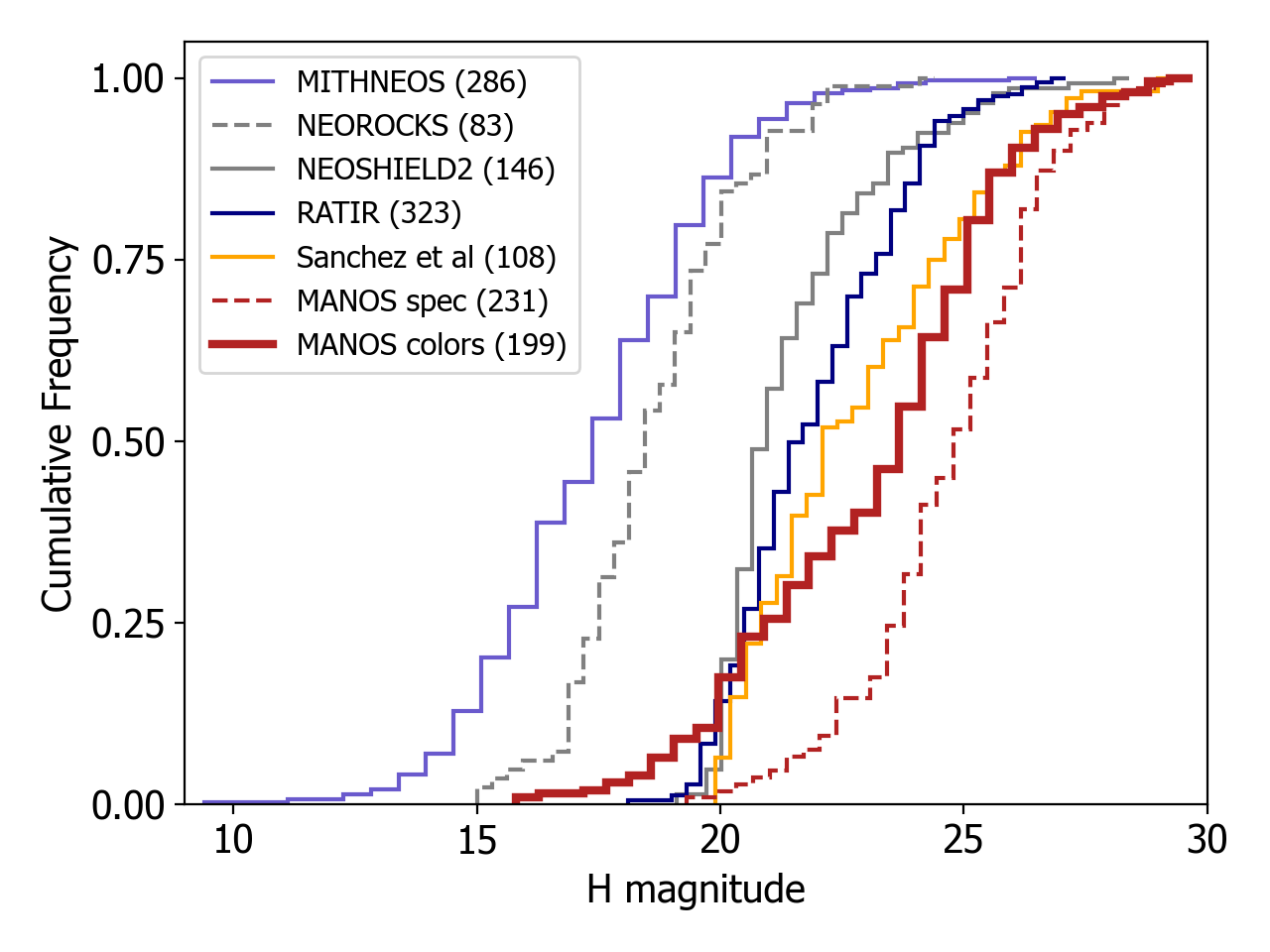
The Mission Accessible Near-Earth Object Survey (MANOS) conducts characterization observations of objects on low delta-v orbits and in the sub-km size regime where knowledge of physical properties is sparse. Spectroscopic characterization of these objects serves to constrain the distribution of taxonomic and compositional types across the population of the most frequent Earth-impacting asteroids, including the direct precursors of meteorites. Such data can probe how spectral properties may be dependent on factors such as object size (Devogele et al. 2019), Earth encounter distance (Binzel et al. 2010), and/or perihelion distance as a proxy for peak surface temperature (Graves et al. 2019). Constraints on the ensemble spectral properties of potential Earth impactors, as well as improved understanding of how those properties evolve over time, has implications for assessing the planetary defense risk associated with the NEO population.

We will present the results of MANOS spectrophotometric observations for a sample of 199 NEOs (Figures 1 and 2). Observations were performed between 2014 and 2025 from the 4.3-m Lowell Discovery Telescope (LDT), the 4.1-m Southern Astrophysical Research Telescope (SOAR), and the 4-m Mayall Telescope. At all facilities we collected images using the SDSS griz filter set with respective band centers at 0.48, 0.62, 0.76 and 0.91 microns. These multi-band data were used to derive colors and to assign a spectral taxonomic type to each object based on a down-sampling of taxonomic templates from the Bus-DeMeo system (DeMeo et al. 2009). Observing strategies were employed to constrain the lightcurves of targets, which proved necessary to properly account for rotational brightness variations during the collection of non-simultaneous images in each filter. For example, we either measured a full rotational lightcurve before collecting a color sequence, or we interleaved images in a single reference filter to track and correct for lightcurve variations (e.g. a filter sequence of seven exposures in order r-g-r-i-r-z-r). Our sample of colors accessed objects as faint as r~22, which is about 1-2 magnitudes fainter than is typically observable with spectroscopic techniques. However, the reduction of spectral information down to just four channels can limit the ability to achieve unique spectral taxonomic classifications and is not well suited to detailed compositional analysis.

This work highlights several key findings. First, the distribution of taxonomic types from the color data is consistent with previously published MANOS spectroscopic results (Devogele et al. 2019). However, this distribution is distinct from analogous surveys that sample the larger end of the NEO size distribution (H<22). In particular we find a deficit of S-type asteroids and an overabundance of X-complex asteroids amongst sub-km NEOs. It remains unclear the extent to which this is a size-dependent compositional trend in the NEO population, a size-dependence on physical surface properties such as regolith grain size, and/or a consequence of various observational biases that can be more pronounced for small (H>20) objects.

Our second major finding is related to the influence of lightcurve variations on derived colors. Our approach of non-simultaneous multi-filter imaging found that ~75% of the sample required treatment of lightcurve variability to derive reliable colors. Not accounting for this variability would produce significantly different results, where some objects would appear as part of an entirely different taxonomic complex. This would clearly have consequences for interpretation of individual objects, but also manifests as a systematic bias in the distribution of spectral types based on colors derived from non-lightcurve corrected data. Specifically, we see an over-abundance of C-complex spectral types when lightcurve variability is not treated: with lightcurve correction we find 10±5% (1-sigma) of the sample is classified as C-type, without lightcurve correction this fraction increases to 27±7%. Finding a reason for this over-abundance is an area of ongoing work. However, it is clear that lightcurve variability must be considered in any color survey that involves non-simultaneous observations across multiple filters. Of course this issue is eliminated for instruments that can obtain simultaneous multi-band images.

Finally, we identified a number of unusual objects in our sample. This includes objects observed on multiple epochs that demonstrated significantly different colors across epochs. For example, the colors 2011 CG2 were best fit by a Cgh-type on one epoch and a Q-type on a second epoch. Such variability is highly unexpected and is not well understood. We also note the unusual colors of 2022 BX5, which appears as the isolated object in the upper right of Figure 2. These are the reddest colors measured for any NEO to date and are most consistent with D-type spectra that are more common in the outer Solar System.

This work acknowledges funding support from NASA grants 80NSSC21K1328, NNX17AH06G, and NNX14AN82G.

References:

Binzel et al. (2010), Nature 463, 331.

Binzel et al. (2019) Icarus 324, 41.

Birlan et al. (2024) A&A 689, A334.

DeMeo et al. (2009) Icarus 202, 160.

Devogele et al. (2019), AJ 158:196.

Graves et al. (2019), Icarus 322, 1.

Ivezic et al. (2019) AJ 122, 2749.

Navarro-Meza et al. (2024) AJ 167:163.

Perna et al. (2018) Planetary and Space Science 157, 82.

Sanchez et al. (2024) PSJ 5:131.

Figure 1: Cumulative size frequency distributions of key NEO spectral surveys. The number of objects sampled by each survey are given in parentheses in the legend. MANOS generally focuses on sub-km objects (H>20). The sample for our spectrophotometric survey is shown as the bold red curve. References for each survey: MITHNEOS (Binzel et al. 2019), NEOROCKS (Birlan et al. 2024), NEOSHIELD2 (Perna et al. 2018), RATIR (Navarro-Meza et al. 2024), Sanchez et al. (2024), and MANOS spectra (Devogele et al. 2019).

Figure 2: g-i versus i-z color-color plot for the 199 objects observed in the MANOS spectrophotometric survey. The taxonomic assignment for each object is indicated by the plotted letters. Data from LDT are in black, from SOAR in red, and from Mayall in yellow. The blue density contours in the background represent the colors of 223 NEOs from the Sloan Digital Sky Survey Moving Object Catalog (Ivezic et al. 2001).

How to cite: Moskovitz, N., Hemmelgarn, S., Zigo, H., Kareta, T., Devogele, M., and Thirouin, A.: NEO Colors from The Mission Accessible Near-Earth Object Survey (MANOS), EPSC-DPS Joint Meeting 2025, Helsinki, Finland, 7–13 Sep 2025, EPSC-DPS2025-1338, https://doi.org/10.5194/epsc-dps2025-1338, 2025.

15:36–15:48
|
EPSC-DPS2025-1143
|
ECP
|
Virtual presentation
W. Garrett Levine, Tyler Linder, Timothy Spahr, Joseph Masiero, Steven Chesley, Amy Mainzer, and the NEO Surveyor Team

The Near-Earth Object Surveyor (NEO Surveyor; Mainzer et al., 2023) is a NASA mission designed to advance planetary defense by discovering near-Earth asteroids. Operating from a halo orbit at the Sun-Earth L1 Lagrange point, NEO Surveyor will conduct a wide-field, mid-infrared survey with an emphasis on detecting potentially hazardous asteroids (PHAs) — objects larger than 140m with minimum orbital intersection distances (MOIDs) with Earth of less than 0.05au. NEO Surveyor’s mid-infrared bandpasses will directly measure asteroids’ thermal emission, providing a strong constraint on size which is necessary for hazard assessment. 

In this work, we analyze the expected fitted-orbit quality and time-evolution of the corresponding on-sky ephemeris uncertainties for newly-discovered PHAs and smaller asteroids from NEO Surveyor. This assessment is important for the mission itself and for understanding the ground-based follow-up regime that NEO Surveyor will create.

To discover previously unknown near-Earth asteroids, NEO Surveyor’s images will be processed through the NEO Surveyor Survey Data System (NSDS). The NSDS will construct difference-images that will be processed by the Moving Object Detection Pipeline (MODP) to identify “tracklets” from Solar system objects — groups of four or more detections within several hours of each other. These tracklets will be submitted to the Minor Planet Center (MPC) within three days of detection, which will associate the tracklet with a known object, link the tracklet to previously-submitted tracklets, or retain the “isolated” tracklet for possible future linking. Previously unknown objects will require at least two linked NEO Surveyor tracklets to be cataloged as a new discovery. Previously known objects (not the focus of this study) will benefit from linkage to archival observations, yielding longer arcs and well-constrained orbits.

We simulate NEO Surveyor’s discoveries using the NEO Surveyor Survey Simulator (NSS; Masiero et al., 2023), an injection-and-recovery framework that compares the expected flux of simulated objects to the observatory’s projected sensitivity at that point on the sky. Our simulations begin with a reference population of near-Earth asteroids, to which we apply the NEO Surveyor Known Object Model (Grav et al., 2023). This method tags each object as “known” or “unknown” at the beginning of the mission, allowing us to specifically estimate the orbit quality of new objects despite using an injected population of only synthetic asteroids.

After constructing tracklets with NSS, we process those tracklets in find_orb (Gray, 2022) for initial orbit determination. To assess orbit quality, we examine formal uncertainties in orbital elements, the MPC’s orbital uncertainty “U” parameter, and projected ephemeris uncertainties at future epochs. For planetary defense applications, we also focus on the precision in MOID determination — this metric provides a key assessment of impact risk. We validate our methodology by running known objects through the survey simulation and orbit-fitting pipeline, then comparing the orbital solutions and ephemeris predictions with JPL Horizons.

NEO Surveyor’s observational strategy has typical revisit times on the order of two weeks, meaning that a two-tracklet observational arc spans at least this time; this attribute of the cadence places the discovery tracklets in a fundamentally different regime than contemporary ground-based surveys that usually construct shorter discovery arcs. NEO Surveyor will observe across a range of Solar elongations (as low as ~45 degrees), including areas challenging or impossible for ground-based telescopes to observe. Thus, ground-based follow-up will often need to wait until NEO Surveyor discoveries reach an observable Solar elongation (if ever). For objects that do eventually become observable from Earth, understanding the evolution of on-sky uncertainties after NEO Surveyor’s discovery is paramount.

We analyze the expected orbit quality from NEO Surveyor across orbital classes (Apollos, Amors, Atens, and Atiras) and physical sizes. Specifically, we correlate arc length and other detection statistics with orbit uncertainties from find_orb. Most PHAs and a large fraction of smaller objects achieve discovery arcs beyond the minimum two-tracklet track. The median track for an observed PHA apparition contains four tracklets; find_orb returns excellent orbital solutions for nearly all these median cases and for many shorter arcs. For objects with the shortest allowable discovery track — the most challenging orbit-fitting scenario with two minimally-spaced tracklets — we characterize how on-sky uncertainties change over time to inform ground-based follow-up. Many PHAs with two-tracklet arcs, even those that aren’t immediately ground-observable, should be recoverable with modern follow-up systems.

Finally, we project the evolution of orbit quality at the catalog-level throughout the mission, showing the expected state after each year of operations. NEO Surveyor’s cadence will naturally follow-up many of its own discoveries during operations and produce high-quality orbits. For those objects, ground-based data in visible wavelengths can produce complementary measurements of albedo, color, rotation rates, and lightcurve amplitudes. In summary, our analysis helps maximize NEO Surveyor’s contributions to planetary defense and planetary science by ensuring that new discoveries can be effectively monitored and characterized.

How to cite: Levine, W. G., Linder, T., Spahr, T., Masiero, J., Chesley, S., Mainzer, A., and NEO Surveyor Team, T.: Orbit Quality Projections for New Discoveries by the Near-Earth Object Surveyor, EPSC-DPS Joint Meeting 2025, Helsinki, Finland, 7–13 Sep 2025, EPSC-DPS2025-1143, https://doi.org/10.5194/epsc-dps2025-1143, 2025.

15:48–16:00
|
EPSC-DPS2025-1300
|
ECP
|
On-site presentation
Andrea Farina, Monica Lazzarin, Fiorangela La Forgia, Alessandra Mura, Elisa Frattin, and Paolo Ochner

Introduction


Near-Earth asteroids (NEAs) are asteroids with perihelion distances < 1.3 AU, whose orbits bring them close to Earth (Kokhirova and Babadzhanov 2023). They provide a unique sample of Solar System material, often transported to the inner regions after millions of years of gravitational interactions with the planets. 

Binary asteroids or binaries are systems composed of at least two bodies gravitationally bound together (Margot 2015). A substantial fraction of NEAs is found in binary systems: approximately 15% of NEAs larger than 200 m in diameter host a satellite (Pravec et al. 2006; Margot et al. 2002). Given that approximately 11,000 NEAs with these characteristics are currently known, it is estimated that around 1,600 of them could be binary systems. Recent discoveries related to the population of binary asteroids continue to increase. 


Context


Binary systems can form through various mechanisms: collisions, tidal effects during close planetary encounters, spin-up and subsequent fission due to the YORP effect, or rotational instability (Margot 2015). Each asteroid presents unique physical characteristics, differing in size, shape, chemical composition, density, and surface structure (DeMeo et al. 2009). Taxonomic classification and the mineralogical study of asteroids are essential tools for understanding the heterogeneity of these bodies and tracing their evolutionary history.

Their short distance to the Earth gives more easy access to the study of their different physical and compositional characteristics, and formation mechanisms. These properties are way more difficult to determine in furthest main-belt asteroids. This may deepen our understanding of collisional processes and gravitational interactions and estimate mass and density (Merline et al. 2002 , Margot 2015). These properties, along with the taxonomic classification and mineralogical characterization, increase our knowledge of the asteroid population in the Solar System. 

Beyond their scientific value, binary asteroids have become important in the context of planetary defense, as demonstrated by the Didymos binary system. This system is the primary target of the international collaboration AIDA (Asteroid Impact and Deflection Assessment, Cheng 2015), which includes NASA's DART mission (Double Asteroid Redirection Test; Rivkin et al. 2021) and ESA's Hera mission (Michel et al. 2022).

Aim


This work presents the preliminary spectroscopic analysis and taxonomic classification of eight binary NEAs: (137170) 1999 HF1, (539940) 2017 HW1, (85804) 1998 WQ5, (420302) 2011 XZ1, (35107) 1991 VH, (385186) 1994 AW1, (175706) 1996 FG3, and (65803) Didymos.

In this list of targets, three very well known objects appear. Didymos, the asteroid impacted by NASA's DART mission, will be further studied by ESA's Hera mission, which is scheduled to investigate the binary system in early 2027. In addition to Didymos, other relevant targets such as 1991 VH and 1996 FG3 are included in this work. These objects exhibit low delta-V values and may be potential candidates for future space missions. 


Methods


Observations were conducted as part of the NEOROCKS (NEO Rapid Observation, Characterization and Key Simulation) project (funded by ESA) using visible spectroscopy with the 1.22 m Galileo Telescope (Unipd) and the 1.82 m Copernico Telescope (INAF-OAPD) at Asiago Observatory. Spectra were obtained through low-resolution spectroscopy in the wavelength range from 4500 to 9500 Å. Data reduction was performed using the Image Reduction and Analysis Facility (IRAF) software.

For each object, normalization was computed at 6000 Å, ensuring that the result is less influenced by noise. The spectral slope was computed, and a chi-square comparison was carried out with reference taxonomic curves from Bus and DeMeo (2009). The best-fitting meteorite analogs were identified using the M4AST tool and the RELAB database (see Fig. 1). Figure 1 shows the spectrum of asteroid 1991 VH in cyan and that of asteroid 2017 HW1 in blue, as an example. The two dashed curves correspond to the Cb taxonomic curve, with the associated meteorite analog being a C1 Carbonaceous Chondrite (shown in purple).


Results


Preliminary results reveal taxonomic diversity among the studied asteroids: two are classified as Cb-type (1999 HF1, 2017 HW1, associated with C1 Carbonaceous Chondrites), one as O-type (1998 WQ5, associated with Anomalous Ureilite Achondrite), one as Cg-type (2011 XZ1, associated with CM Unusual Carbonaceous Chondrite), one as Sq-type (1991 VH), one as Q-type (1994 AW1), one as Cb-type (1996 FG3, associated with C1 Carbonaceous Chondrite), and one as S-type (Didymos, associated with Ordinary Chondrite).


Conclusions


With this work we will present the preliminary results of the taxonomic and mineralogical classification of eight binaries. This characterization increases the information on the chemical composition of these objects. By improving our understanding of their physical and compositional properties, this study offers some insight into the characteristics of near-Earth asteroids, which may support future research on these binary objects.

References:

  • G. I. Kokhirova and P. B. Babadzhanov, Current Knowledge of Objects Approaching the Earth, Solar System Research 57, 467 (2023).
  • P. Pravec et al., Photometric survey of binary near-Earth asteroids, Icarus 181, 63 (2006).
  • J. L. Margot et al., Binary Asteroids in the Near-Earth Object Population. Science 296, 1445-1448 (2002)
  • J. L. Margot et al., Asteroid Systems: Binaries, Triples, and Pairs, Asteroids IV (2015).
  • W. J. Merline, Asteroids Do Have Satellites, Asteroids III, W. F. Bottke Jr., A. Cellino, P. Paolicchi, and R. P. Binzel (eds), University of Arizona Press, Tucson, p.289-312 (2002).
  • A. Cheng and P. Michel, Asteroid Impact and Deflection Assessment mission: the Double Asteroid Redirection Test (DART), European Planetary Science Congress 2015.
  • A. S. Rivkin, The Double Asteroid Redirection Test (DART): Planetary Defense Investigations and Requirements, the Planetary Science Journal, Volume 2, Issue 5, id.173, 24 pp. (2021).
  • M. Patrick, The ESA Hera Mission: Detailed Characterization of the DART Impact Outcome and of the Binary Asteroid (65803) Didymos, The Planetary Science Journal, Volume 3, Issue 7, id.160, 21 pp. (2022).
  • F. E. DeMeo, An extension of the Bus asteroid taxonomy into the near-infrared, Icarus, Volume 202, Issue 1, p. 160-180 (2009).

Figure 1 Spectra of asteroid 1991 VH (cyan) and asteroid 2017 HW1 (blue). The two dashed curves correspond to the Cb taxonomic curve, with the associated meteorite analog being a C1 Carbonaceous Chondrite (purple).

How to cite: Farina, A., Lazzarin, M., La Forgia, F., Mura, A., Frattin, E., and Ochner, P.: Visible Spectroscopic Characterization of Eight Binary Near-Earth Asteroids, EPSC-DPS Joint Meeting 2025, Helsinki, Finland, 7–13 Sep 2025, EPSC-DPS2025-1300, https://doi.org/10.5194/epsc-dps2025-1300, 2025.

Posters: Mon, 8 Sep, 18:00–19:30 | Finlandia Hall foyer

Display time: Mon, 8 Sep, 08:30–19:30
Chairpersons: Naomi Murdoch, Patrick Michel, Michael Küppers
DART mission
F107
|
EPSC-DPS2025-1023
|
On-site presentation
Elisabetta Dotto and the LICIACube Team

Introduction: The Light Italian Cubesat for Imaging of Asteroids (LICIACube) [1] is a 6U CubeSat developed for the Italian Space Agency (ASI).  LICIACube was carried  by NASA’s Double Asteroid Redirection Test (DART) spacecraft and was deployed 15 days in advance of DART’s impact with the asteroid Dimorphos  [2] to acquire images of the event and its effects. During its post-impact flyby, LICIACube achieved a minimum distance of approximately 58 km from Dimorphos and returned more than 400 scientific images, obtaining a unique view of the event [3]. 

The DART/LICIACube mission: The Double Asteroid Redirection Test (DART was launched on 24 November 2021 to perform the first test of a planetary defence mitigation technology, redirecting the asteroid Dimorphos, the small satellite of the binary Near Earth Asteroid (NEA) (65803) Didymos [4], via a kinetic impact. During the 9.5-month cruise, LICIACube was hosted on the DART spacecraft. On 11 September 2022, fifteen days before DART’s kinetic impact, LICIACube was released and autonomously continued its track toward the binary asteroid system. LICIACube was equipped with two different cameras, LICIACube Explorer Imaging for Asteroid (LEIA) and LICIACube Unit Key Explorer (LUKE) [1]. The science phase started 71 seconds before the nominal impact time, when LICIACube was about 1400 km from Dimorphos. The science phase of LUKE started 29 seconds after the impact, acquiring triplets of images with different exposure times. LICIACube followed the target and the evolution of the system up to 320 seconds after the impact. The spacecraft’s Closest Approach (CA) occurred 167 s after the impact.

The LICIACube images: LEIA images testified the DART impact by an increase in the luminosity of the target, while LUKE images revealed that the DART impact into Dimorphos generated a cone of ejected material with a large aperture angle [3]. In the LICIACube viewing geometry, the produced effects were clearly seen in both pre-CA and post-CA LUKE images (Fig. 1). The ejecta plume shows a complex and inhomogeneous structure, characterised by filaments, dust grains, and single or clustered boulders, providing insights into the properties of the ejecta, as well as the nature of Dimorphos. Measurements from the LICIACube images constrain the asteroid shape [5], and the 3D shape of the cone plume [6]. Moreover, they feed into the calculations of the momentum transferred to Dimorphos by DART’s kinetic impact [7]. The accomplishments of LICIACube demonstrated the compelling potential for future deep-space CubeSats.

Figure 1. Images obtained by LUKE pre-CA and post-CA (Credits: ASI/NASA)


Acknowledgments: The LICIACube team acknowledges financial support from Agenzia Spa-ziale Italiana (ASI, contract No. 2019-31-HH.0 CUP F84I190012600). 
References: [1] Dotto E., et al. (2021) PSS 199, id. 105185. [2] Daly R.T., et al. (2023) Nature 616 (7957), 443. [3] Dotto E., et al. (2024) Nature 627, 505. [4] Rivkin A.S., et al. (2021) PSJ 2(5), id.173. [5] Zinzi A., et al. (2023) PSJ 5, id.103. [6] De-shapriya J.D.P., et al. (2023) PSJ 4 id.231. [7] Cheng A.F., et al. (2023) Nature, 616(7957), 457.

How to cite: Dotto, E. and the LICIACube Team: The LICIACube legacy, EPSC-DPS Joint Meeting 2025, Helsinki, Finland, 7–13 Sep 2025, EPSC-DPS2025-1023, https://doi.org/10.5194/epsc-dps2025-1023, 2025.

F108
|
EPSC-DPS2025-1636
|
ECP
|
On-site presentation
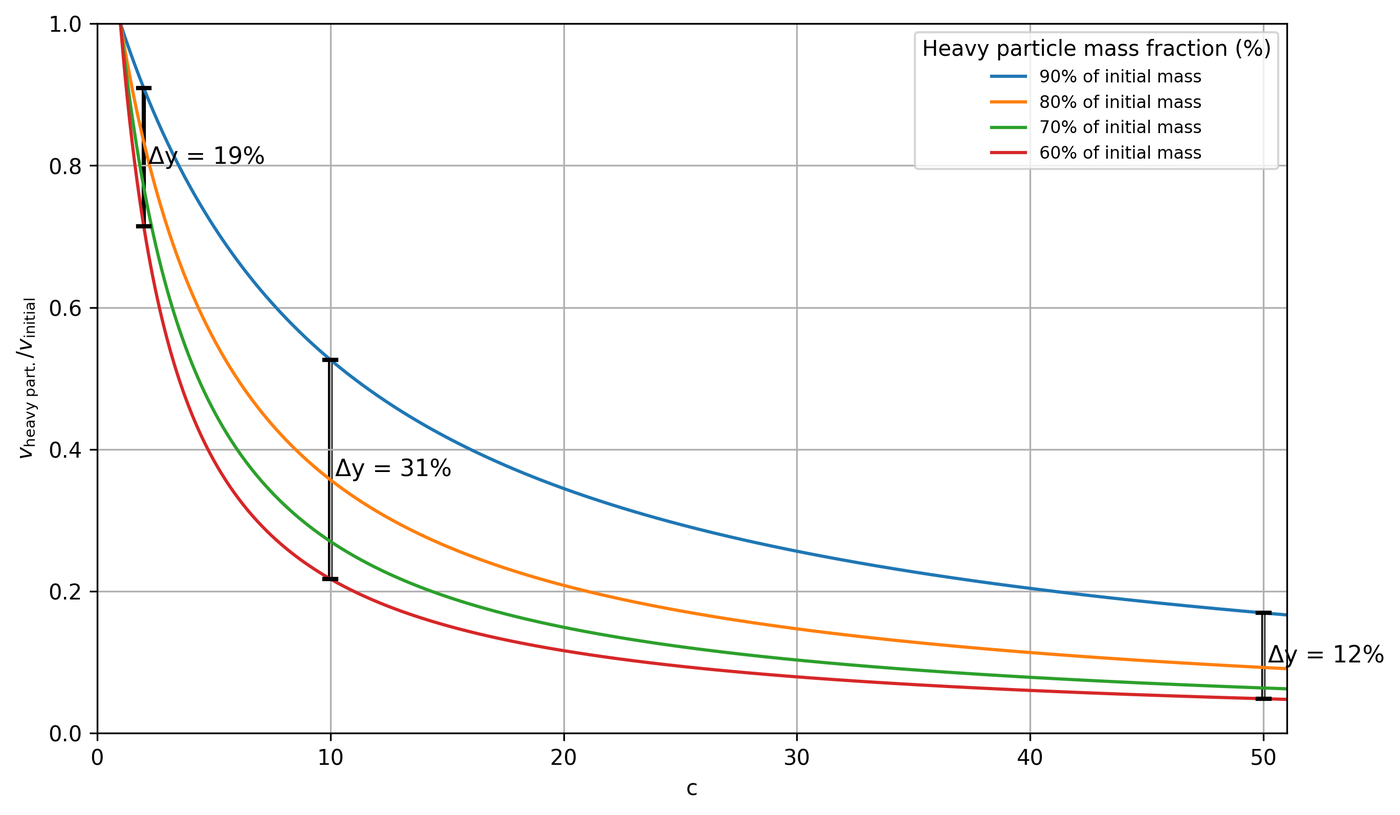
Lorenzo Calderone, Stavro Ivanovski, and Giovanni Zanotti

INTRODUCTION

In November 2021, NASA launched the first planetary defense mission against asteroids with the Double Asteroid Redirection Test (DART) [1]. Nearly a year later, the Light Italian Cubesat for Imaging of Asteroids (LICIACube) [2] captured the kinetic impact between the DART spacecraft and the small celestial body Dimorphos, revealing a prominent plume of dust that was also observed by ground-based telescopes.

ESA’s Hera spacecraft launched in October 2024 and is currently traveling toward the Didymos–Dimorphos binary system to study the post-impact environment.

Before Hera's arrival, we aim to estimate what it will observe and to better understand the plume features recorded by LICIACube.


MODEL

A subset of 1000 dust particles was extracted from a dataset comprising 100000 particles, initially distributed in position, velocity, and geometric size, with diameters ranging from 10E-5 m to 1 m. The selection was performed by randomly sampling 200 particles within each order of magnitude of diameter.

We ran the LICIACube Model for Aspherical Rotating Dust Ejecta (LIMARDE) [3] while varying the particles’ shapes (oblate, prolate, spherical), both with and without vapor plume effects.

We conducted an analysis of fragmentation by splitting each particle into two fragments after the first 10 seconds of simulation in the presence of a vapor plume. In particular, the mass of each particle was redistributed while ensuring the momentum conservation. Figure 1 shows the behavior of the function that relates the normalized velocity of the heavier fragment to a coefficient c, which defines how much faster the lighter fragment is compared to the heavier one. Subsequently, we selected c values of 2, 10, and 50, which corresponded to velocity variations of approximately 20%, 30%, and 10% of the initial velocity, depending on the mass redistribution.

We studied pairs of particles with the following percentages of the initial mass: 10–90%, 20–80%, 30–70%, and 40–60%. Figure 2 presents an example of how the particle cone varies depending on the coefficient c, for a fragmentation scenario with a 10%-90% mass redistribution.

Finally, we carried out a numerical analysis to determine how many and which particles remain gravitationally bound to the system, how much mass escapes, and the corresponding percentages relative to the total.


RESULT

The results of simulations indicate that the presence of a vapor plume is essential to reproduce the observed morphology of the dust cone. We found that the geometry of the cone is influenced not only by particle shape but also by the occurrence and degree of fragmentation. Furthermore, the way particles fragment imposes constraints on the spatial distribution of the ejecta. Remarkably, prolate-like particles tend to remain more frequently bound to the binary system than other shapes, meanwhile oblate-like particles are more likely to produce streamers.

These insights will help interpret Hera’s future observations and refine our understanding of impact-driven ejecta processes.


REFERENCE

[1] Andrew S. Rivkin and Andrew F. Cheng, “Planetary defense with the Double Asteroid Redirection Test (DART) mission and prospects,” Nature Communications, vol. 14, pp. 1003, Mar. 2023.

[2] E. Dotto et al, z, “LICIACube - The Light Italian Cubesat for Imaging of Asteroids In support of the NASA DART mission towards asteroid (65803) Didymos,” , vol. 199, pp. 105185, May 2021.

[3] Eugene G. Fahnestock et al, “Pre-encounter Predictions of DART Impact Ejecta Behavior and Observability,” , vol. 3, no. 9, pp. 206, Sept. 2022.

Figure 1: The plot shows the behavior, following particle fragmentation, of the relationship between the velocity ratio of the heavier fragment particle to the initial velocity of the parent particle, and the parameter c, which defines how much faster the lighter fragment particle is compared to the heavier one.

Figure 2: The plot shows the simulation at the 120th second in the case where 1000 oblate particles fragment into two sub-particles with masses equal to 10% (green particles) and 90% (light blue particles) of the original mass. Panels A and D represent the case where the lighter particles have a velocity equal to 2 times (c = 2) that of the heavier ones along the main direction of propagation. Panels B and E correspond to the case where c = 10, and panels C and F to the case where c = 50. While panels A, B, and C highlight the different behavior of the particles due to fragmentation, panels D, E, and F show the dust plume as a function of particle size.

How to cite: Calderone, L., Ivanovski, S., and Zanotti, G.: Deposited dust after the DART impact: Predictions for the HERA mission using LIMARDE simulations, EPSC-DPS Joint Meeting 2025, Helsinki, Finland, 7–13 Sep 2025, EPSC-DPS2025-1636, https://doi.org/10.5194/epsc-dps2025-1636, 2025.

Hera mission
F109
|
EPSC-DPS2025-1400
|
ECP
|
On-site presentation
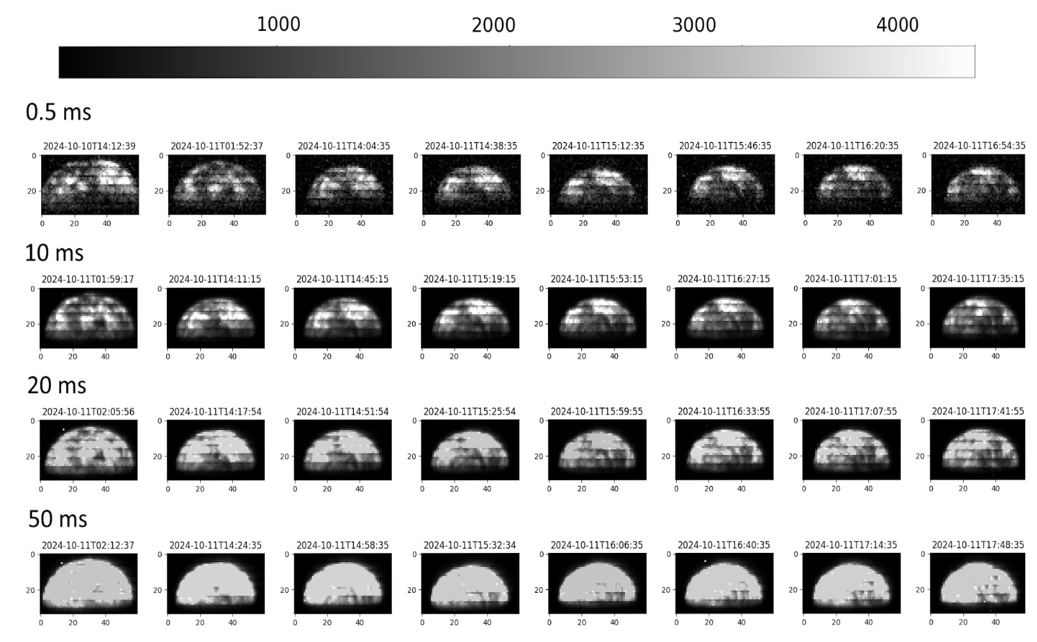
George Pantelimon Prodan, Marcel Popescu, Julia de León, Gábor Kovács, Balázs Nagy, Björn Grieger, Michael Küppers, Tomáš Kohout, and Javier Licandro

The HyperScout-H hyperspectral imager (HS-H) is one of the payloads aboard ESA’s Hera spacecraft, launched in October 7, 2024. It is produced by cosine* and its primary objective is to provide a detailed characterization of the near-Earth binary asteroid system (65803) Didymos-Dimorphos, following the impact of NASA’s DART mission [1, 2]. HS-H is a versatile, dual-purpose payload, functioning as a hyperspectral imager that captures both images and spectral data within the 0.65 – 0.95 μm wavelength range covered by 25 filters that are distributed along the detector on 5 by 5 macropixels. This work is focused on the in-flight observations of HS-H during the cruise phase. These were performed between October 2024 and March 2025, during the commissioning, early cruise phases of the mission, and the Mars swing-by.

The commissioning activities included imaging the Earth-Moon system, acquiring bias and dark images, and observing several star fields, including various observations of Vega and Aldebaran stars. The goal of these observations was to validate the instrument's functionality and cross-check the calibration performed in the laboratory [3].

The sequence of Earth – Moon images demonstrates that the full photometric range of the instrument was tested using varying exposure times as presented in Figure 1, where we can see Earth’s images at different exposure times. The star exposures of Vega and Aldebaran confirm the expected behavior of the Point Spread Function and validate the detector’s linear response regime. Three images of Aldebaran (a K5III star) at different exposure times are shown in Figure 2. Radiometric calibration was verified within a 10% margin, consistent with the accuracy limitations of the method.

Figure 1. Earth images obtained by HS-H are displayed with the number of pixels on each axis indicated. The images are organized based on their exposure time and the moment they were captured. The dark/white levels are set according to the instrument's dynamic range (grayscale color bar at the top), i.e. from 0 to 4095 Digital Numbers (DNs).

Figure 2: Linearity test images for Aldebaran at different wavelengths of the central pixel and exposure times as shown in the plots. The images correspond to three different frames, showing the increase in detected signal with exposure time. The grayscale color bar on the right indicates the pixel intensity in DNs.


To further validate the instrument’s radiometric accuracy, we perform a cross-calibration using hyperspectral observations of Mars. By targeting well-characterized surface features (e.g. Huygens crater) and comparing the extracted spectra with established datasets (e.g. CRISM@MRO), we asses both spectral and radiometric consistency. The reflectance spectrum shown in Figure 3 is extracted from a region of interest inside the Huygens crater of Mars.  

The in-flight observations successfully validated the instrument’s functionality and helped improve the radiometric and spectral calibrations, ensuring readiness for scientific operations. These early results are a solid foundation for its upcoming observations of the Didymos-Dimorphos system.

Figure 3. HS-H image of Huygens crater on Mars with an annotated Region of Interest (ROI), indicated by the white square, used for spectral extraction. The inset plot displays the normalized reflectance spectrum (dots) and a third degree polynomial fit (continuos line). The blue color of Mars observed in near-infrared resulted from a coloring algorithm that uses shifted colors with blue channel at 650 – 750 nm and red channel at 850 – 950 nm.

[1] P. Michel et al. The ESA Hera Mission: Detailed Characterization of the DART Impact Outcome and of the Binary Asteroid (65803) Didymos. , 3(7):160, July 2022.

[2] Andrew S. Rivkin et al.. The double asteroid redirection test (dart): Planetary defense investigations and requirements. The Planetary Science Journal, 2(5):173, aug 2021.

[3] Popescu, M., de León, J., Goldberg, H., Kovács, G., Krämer Ruggiu, L., Nagy, B., Prodan, G. P., Grieger, B., Kohout, T., Licandro, J., Karatekin, Ö., Esposito, M., and Küppers, M.: Hyperspectral imaging of meteorites using the HyperScout-H instrument, Europlanet Science Congress 2024, Berlin, Germany, 8–13 Sep 2024, EPSC2024-586, https://doi.org/10.5194/epsc2024-586, 2024.

* https://www.cosine.nl/

How to cite: Prodan, G. P., Popescu, M., de León, J., Kovács, G., Nagy, B., Grieger, B., Küppers, M., Kohout, T., and Licandro, J.: In-flight observations during the cruise phase of HyperScout-H instrument of ESA/Hera mission, EPSC-DPS Joint Meeting 2025, Helsinki, Finland, 7–13 Sep 2025, EPSC-DPS2025-1400, https://doi.org/10.5194/epsc-dps2025-1400, 2025.

F110
|
EPSC-DPS2025-480
|
On-site presentation
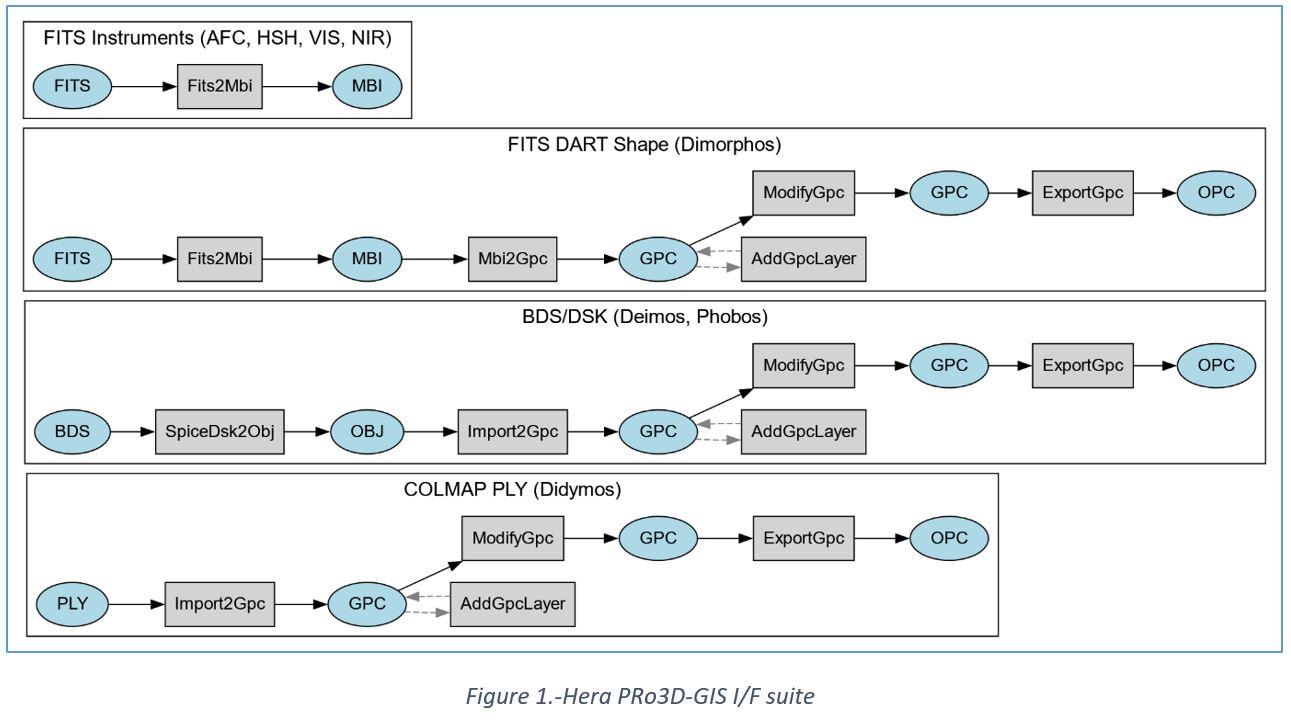
Maria del Pilar Caballo Perucha, Harald Steinlechner, Gerhard Paar, Christoph Traxler, Daniel Kup, and Christian Koeberl

 Introduction

The Asteroid Impact & Deflection Assessment (AIDA) mission is composed of two core components: NASA’s Double Asteroid Redirection Test (DART) (1) and ESA’s Hera (2) mission.

Launched in November 2021, DART became the first spacecraft to perform an organized collision with an asteroid in an attempt to alter its orbit. The target, Dimorphos, a small moon orbiting the near-Earth asteroid Didymos, was successfully impacted on 26th of September 2022 inducing a reduction of its orbital period by 33 minutes (3).

To complement this effort and among others objectives, ESA’s Hera mission, launched on 7th October 2024, will characterize the crater formed by DART and determine the asteroid’s mass and internal structure.

The Austrian contribution to the Hera mission mainly consists of supporting the scientific camera instruments´ teams (AFC, TIRI, Hyperscout-H and ASPECT) by reconstructing, visualizing, analysing and managing in 3D the data acquired with the different instruments on board. For this purpose, new I/F tools have been developed to allow the PRo3D-GIS (4) demonstration before Hera arrival for rendezvous with the asteroid in late 2026.

Developed tools

The tools developed by the Austrian team accompany the data and metadata associated with the Hera imagery data. They consist of:

  • Interfaces (I/F) required between data provided by the Hera imaging systems and the PRo3D-GIS tool
  • New developments in PRo3D-GIS for visualization, analysis and interpretation of the scientific imagery data
  • Establishment/provision/maintenance of the database related to the imagery data and metadata.

The validation of the tools used the data obtained by Hera imaging systems during the Earth-Moon observations (October 2024) and Mars fly-by (12th March 2025), in association with the Mars MOLA (5), Deimos and Phobos SDKs DTMs (6). For Hera trajectory representation, the last version of the operational SPICE kernels provided by ESAC on 14th April 2025 (6) was applied.

Interfaces for sensors imagery data

The I/F activities are related to the development and upgrade of tools for the conversion of the Hera instruments data into the generation of Ordered Point Cloud format (OPC) (7) required by PRo3D-GIS (Figure 1):

  • Mission I/F
    • Import of FITS instruments’ data (images)
    • Conversion of SPICE digital shape models (as e.g.: Deimos or Phobos)
    • Conversion of FITS (optionally multilayer) shape models (e.g.: DART Dimorphos shape model)
    • Conversion of the JR reconstructed shape models (e.g. COLMAP Didymos reconstruction)
    • Update of an already existing OPC
  • Instruments I/F
    • Import of Hera imaging instruments’ geometry (e.g.: instrument inner orientation: FoV, focal lengths)

PRo3D-GIS operations

PRo3D-GIS is designed to support the instrument teams in 3D-related mission operations. The tool is based on PRo3D, an interactive 3D visualization tool to allow planetary scientists to work with high-resolution 3D reconstructions (8,9). The PRo3D-GIS extension with the support for multiple celestial bodies as required for the Hera mission was presented in 2024 (10). The system was extended with interactive projections of calibrated sensor images by introducing the following features:

  • Visualization configuration and management of celestial bodies required for a specific mission scenario: use of so-called proxy-geometries whenever no high-quality reconstruction is available combined with OPC 3D reconstructions, allows to visualize trajectories, navigate in time and space and perform annotations on the surfaces.
  • View simulation: The tool allows to simulate views for a scenario (based on visualization properties, see above) and the FoV of a particular instrument (Figure 2). This enables the validation of the registration and scene setup for the mission and allows spatial understanding of literally each individual image pixel on the 3D asteroid surface. This allows also to look at particular sensor images from different views and play scenarios such as: what feature is seen from what instrument in what particular setting.

  • Sensor image projections. This feature allows to project instrument images onto the surfaces of the scene (Figure 3). The images can be switched through interactively as well as the viewing point (Figure 4).

3D GIS Database

A virtual machine for the Hera DBMS (Data Base Management System) is procured and set up to run as a central instance available to mission operations, hosting all relevant services DBMS services:

  • The database itself: a PostgreSQL instance with both PostGIS and pgstac extensions
  • The API: an instance of the stac-fastapi software, serving the data stored in the database layer via the STAC API protocol
  • The reverse proxy: serves as both a file server to provide access to the raw data and the metadata files as well as a file based browsing interface
  • The client: a configured instance of the stac-browser software configured to direct access the API

The database uses collections to partition the ingested items. It is possible to search within or even across these collections. Furthermore, the client is a freely accessible web app. The UI allows users to visually explore the contents of the catalogs. Additionally special searches with custom queries on the previously defined metadata fields can be made (Figure 5). The mission phase Mars fly-by was supported by performing the ingestion flow and served as a proof of concept of the whole ingestion pipeline.

Summary and further work

Further activities are still under development, being prepared for the arrival of Hera at the end of 2026. The Austrian team is currently working in the post-processing of Mars fly-by multispectral images of the Hyperscout-H sensor, as well as with TIRI images, for the correct visualization in PRo3D-GIS. The integration of ASPECT data will be finalized by the arrival of Hera to Dimorphos and following tasks are also planned:

  • Export of Region of Interest in 3D
  • Data base import/export from/to central mission repository
  • Ingestion of AFC images and calibration data into the reconstruction pipeline PRoViP-COLMAP
  • Data base maintenance: new reconstructed shape model, new instruments calibrations, SPICE versions
  • Bookmarks and videos
  • Coordinates transformation (geographic into equi-rectangular and vice versa)
  • Export of ortho image with annotations performed in the PRo3D-GIS

How to cite: Caballo Perucha, M. P., Steinlechner, H., Paar, G., Traxler, C., Kup, D., and Koeberl, C.: Design of a visualization and analysis tool for Hera scientific mission, EPSC-DPS Joint Meeting 2025, Helsinki, Finland, 7–13 Sep 2025, EPSC-DPS2025-480, https://doi.org/10.5194/epsc-dps2025-480, 2025.

Modelling Didymos and Dimorphos
F111
|
EPSC-DPS2025-347
|
ECP
|
On-site presentation
Krzysztof Langner, Elena Martellato, Robert Luther, Francesco Marzari, and Alessandro Rossi

On September 26, 2022 the DART probe impacted Dimorphos, the small moon of the binary 65803 Didymos asteroid system.
The event generated a large ejecta plume that was imaged first by the small LICIACube cubesat, released by DART 15 days before the impact, during its
fly-by. The images revealed a complex plume with a cone-like structure, crammed with dust, clumps of objects, filaments and larger boulders.  The event and the resulting ejecta were also observed by several space and ground based observatories which allowed the characterization of the plume evolution and, in
particular, the formation of a long tail of debris, pushed by the solar radiation pressure, stretching for thousands of km. Further observations by the
Hubble Space Telescope revealed the presence of a large population of dozens of boulders moving in the surroundings of the system. Assuming a geometric albedo of 0.15, these large objects span a range of dimensions between about 4 to  ∼ 7 m in diameter. Jewitt and co- authors estimated sky-plane velocities in the range between 10 cm/s to more than 67 cm/s, without significant correlation between the size and the velocity of the boulders. Since the escape velocity
from the binary system is about 24 cm/s, these velocities are consistent with objects that do not re- impact Dimorphos right after the ejection and that can
stay within the system for a comparatively long time span on highly perturbed chaotic orbits.
The long term dynamical behavior of a synthetic population of ejected boulders is investigated for a timespan of about 4 years (corresponding to the arrival of Hera at the system) by means of a comprehnsive model including the relevant perturbations, namely, the gravitational forces from both asteroids (using quadrupole potential), the gravity of the Sun and the Solar radiation pressure. The ephemeris for Sun, Didymos and Dimorphos are implemented using the NASA Spice Kernels.

During their evolution, the fragments may have frequent close encounters with either components of the binary asteroid, making their orbits highly chaotic.
The most probable outcomes of the boulders evolution is either ejection from the system or re-impact against one of the asteroids.
About 1  % of the simulated population survived for the whole integration time span.
The long surviving objects follow a complex dynamical evolution which often includes the increase in the orbital inclination and orbital flips which are similar to the Kozai mechanism. For many of these orbits we observe the increase of orbital inclination resulting in the object entering close to polar orbits or orbital flips from retrograde to prograde or vice-versa. Quasi-satellite orbits, weakly bounded to the binary system are reached too (see  Fig. 1).


Figure 1: Examples of the orbits of long lasting boulders.

The distribution of the re-impact locations on the surfaces of the asteroids is not uniform (see Fig. 2).


Figure 2: Location of re–impacts on Didymos (left) and on Dimorphos  (right). In the right panel, the green dot marks the DART impact location and the (0°,0°) point is the direction towards Didymos and the North pole (+ 90° latitude) is in the direction of the rotation axis, while the other one (-90°,0°) is the direction of the Dimorphos orbital motion. Most of the re-impacts are concentrated near the point (90°,0°) that is opposite the direction of orbital motion of Dimorphos and almost opposite the DART impact location.

The maps of the re-impacting locations are computed. The outcomes of the low velocity re-impacts (at about 50 cm/s) are evaluated through dedicated iSale hydrocode (see Fig. 3) simulations providing support for the analysis of the forthcoming Hera images.


Figure 3: Snapshots at 19.50 s of a 10 \% basaltic projectile of 1 m in diameter, impacting on a 60 \% target. The upper and lower plots show the simulations with the Drucker-Prager (DRPR) and Lundborg (LUND) strength models, respectively. The right panels show the case of a 45 cm/s impact, whereas the left panels show that of a 65 cm/s impact. A slightly different ejection angle of the ejecta curtains can be observed between the two models. The colours refer to the different materials of the projectile (blue) and target (yellow), which have different porosity.


How to cite: Langner, K., Martellato, E., Luther, R., Marzari, F., and Rossi, A.: Long term dynamics of boulders in the Didymos-Dimorphos binary asteroid system, EPSC-DPS Joint Meeting 2025, Helsinki, Finland, 7–13 Sep 2025, EPSC-DPS2025-347, https://doi.org/10.5194/epsc-dps2025-347, 2025.

F112
|
EPSC-DPS2025-1557
|
On-site presentation
Roberto Paoli, Maddalena Mochi, and David Vokrouhlicky

The Hera mission, which will reach the Didymos system in December 2026, allows for a unique opportunity to study the thermal effects acting on a small body. Among these, the Yarkovsky effect is known to play a major role in the dynamics of asteroids in the Solar System. Thanks to the Inter-Satellite Link (ISL) between the main spacecraft and the two CubeSats, Milani and Juventas, which allow for a precise orbit determination process, scientists will be able to measure the Yarkovsky effect with unprecedented accuracy. This will require a precise model to be included in orbit determination software, such as Orbit14 from the University of Pisa [2]. In most applications, the Yarkovsky effect is computed assuming a circular orbit. However, the eccentricity of Didymos is estimated to be 0.38. Therefore, to have a precise model, one should compute the temperature of the body in the generic case of a non-circular orbit, resulting in a variation of the average temperature over time. Once the average temperature and its local surface deviations are known, it is possible to analytically compute the Yarkovsky effect in either its seasonal, diurnal or mixed variant. 

To compute the temperature of a body orbiting the Sun one needs to solve a heat diffusion problem. Usually, the problem is split into two parts, one concerning the average temperature 𝑇av, while the other focuses on the surface deviations Δ𝑇 (see [1]).  Δ𝑇 can be solved for in terms of 𝑇av. We developed an algorithm to compute the average temperature as a function of the mean anomaly of an asteroid on a non-circular orbit around the Sun, up to a desired accuracy. Here we present the application of this method to Didymos, including the estimate of the Yarkovsky diurnal, seasonal and mixed effects. We provide a comparison with the circular case and other estimates found in recent literature. 

We model Didymos as a sphere of uniform density ϱ and radius R, behaving as a Lambertian scatterer (i.e. each point on the surface re-emits the absorbed heat isotropically), with values of the absorption coefficient α and emissivity ε that are typical of S-class asteroids.  

Following [1], we adopt normalized variables. The most relevant quantities appearing in this formulation are the normalized radius and the thermal inertia. The former gives a measure of the size of the body when compared to the thermal length, while the latter is responsible for the delay in thermal re-emission that causes the Yarkovsky effect. 

The normalized average temperature 𝑇′av is expressed as a power series of 𝜁=𝑒𝑖𝑀 where 𝑀 is the mean anomaly of Didymos in its orbit around the Sun. The coefficients of the power series are functions of the eccentricity. They are expressed in a power series of the parameter 𝛽=𝑒 (1-√(1-𝑒2))-1. The coefficients are computed iteratively up to a selected degree in 𝜁 and 𝛽. Since the eccentricity of the orbit of Didymos around the Sun is 0.38, one should consider the maximum order in the expansion to be large enough to account for small variations in the temperature occurring along the orbit.  

Once the normalized average temperature is estimated, it is used to compute the surface deviations Δ𝑇′, which in turn are used to obtain the Yarkovsky acceleration. The resulting acceleration is compared to the estimates present in the literature. 

The inclusion of the average temperature feature in the dynamical model is used in the computation of the three variants of the Yarkovsky acceleration, while its implementation in Orbit14 allows for the estimate of the parameters through an orbit determination process. This procedure is convenient to assess the relevance of the mixed terms corresponding to the coupling of the diurnal and seasonal variants. 

Finally, we discuss future work that is expected to stem from this research and its application in the context of the Orbit14 software and of the Hera radioscience experiment. 

Bibliography 

[1] Michel, P., Küppers, M., Bagatin, A. C., Carry, B., Charnoz, S., De Leon, J., ... & Carnelli, I. (2022). The ESA Hera mission: detailed characterization of the DART impact outcome and of the binary asteroid (65803) Didymos. The planetary science journal3(7), 160. 

[2] Lari, G., Schettino, G., Serra, D., & Tommei, G. (2022). Orbit determination methods for interplanetary missions: development and use of the Orbit14 software. Experimental Astronomy53(1), 159-208.  

[3] Vokrouhlick ́y, D. (1999). A complete linear model for the Yarkovsky thermal 
force on spherical asteroid fragments. A&A, 344:362–366. 

How to cite: Paoli, R., Mochi, M., and Vokrouhlicky, D.: Modelling thermal effects on eccentric asteroids: application to Didymos , EPSC-DPS Joint Meeting 2025, Helsinki, Finland, 7–13 Sep 2025, EPSC-DPS2025-1557, https://doi.org/10.5194/epsc-dps2025-1557, 2025.

F113
|
EPSC-DPS2025-779
|
On-site presentation
Analysis and Prediction of DART Material Transfer on Didymos for Potential Hera Observation 
(withdrawn)
Flavia Saveriano, Stefania Soldini, Lee Devlin, and Hera Team
Planetary defense missions and concepts
F114
|
EPSC-DPS2025-924
|
On-site presentation
Masatoshi Hirabayashi, Makoto Yoshikawa, Masahiko Hayakawa, Yuya Mimasu, Naru Hirata, Takuya Iwaki, Shunichi Kamata, Masanori Kanamaru, Kohei Kitazato, Toru Kouyama, Naoya Sakatani, Sumito Shimomura, Hiroshi Takeuchi, Satoshi Tanaka, Eri Tatsumi, Yasuhiro Yokota, and Koki Yumoto and the The Hayabusa2# team

Planetary defense is an international effort to collaboratively assess and mitigate upcoming threats from small bodies potentially hitting the Earth. The recent success in NASA’s DART, the mission that successfully smashed its spacecraft into the target asteroid Dimorphos, the smaller secondary of the S-type asteroid (65803) Didymos, proved the maturity of kinetic impact deflection [1]. This accomplishment, further enhanced by the visit of ESA’s Hera to this asteroid system [2], deepens the knowledge about this deflection technique. At the same time, NASA’s NEO Surveyor will also significantly increase the ability to monitor potentially hazardous objects (PHOs) [3].

Such efforts have been a remarkable catalyst for the community's greater confidence in resolving an unexpected event that causes non-negligible negative impacts on the Earth. However, a new problem emerged as being critical to resolve. When an asteroid is found to hit the Earth soon, what information is needed, and how can we identify such information before an expected terminal event? One way is a fast reconnaissance (fast recon), where a quick campaign (telescopic or spaceflight characterization) identifies the target’s key properties regardless of its limitations [4].

A flyby mission is the quickest way to visit and detail a target object directly. Thus, it is the most realistic as a fast recon in the spaceflight option, though others, such as rendezvous, landing, and sampling, may also be reasonable if time is allowed. Nevertheless, the major challenge in a fast recon mission is to prepare a spacecraft for its flight whenever needed. If mission development starts from scratch, countless processes, including the cruise phase, may delay the planned mission from reaching the target.

One possible solution emphasized in this paper is to apply an already-flying spacecraft to flyby operations. Spacecraft flying in a heliocentric orbit, particularly in the near-Earth region, can generally have high accessibility to HPOs. Such spacecraft can reach a target object in a much shorter time than the typical process of building a probe. When nominal spaceflight missions are completed, their spacecrafts are generally healthy enough for extended missions. Adding operational flexibility to already flying (used) spacecraft or making it intentionally taxi in heliocentric orbits may be another approach for a fast recon. However, using such used (and usually old) spacecraft is not optimal for getting key information because of the limited capabilities. For example, the spacecraft’s platform may not be designed for necessary operations, and onboard instruments may be degraded already.

The Hayabusa2 extended mission attempts to address this issue directly during its critical flyby operation next year [5, 6]. The Hayabusa2 extended mission follows its nominal mission, Hayabusa2, which made a triumphant sample return from the C-type asteroid (162173) Ryugu in December 2020. With its nickname, Hayabusa2# (SHARP: Small Hazardous Asteroid Reconnaissance Probe), the mission is operating its 10-year-old spacecraft en route to the final rendezvous destination, the asteroid 1998 KY26, a 15-30 m object spinning at 5-10 min [7, 8]. Until the rendezvous with 1998 KY26 in 2031, the mission will conduct various scientific and engineering investigations, including monitoring exoplanets and zodiacal light, flying by the S-type asteroid Torifune (2001 CC21), and characterizing long-term spacecraft behaviors (Figure 1). One recent effort is to plan the flyby operation at Torifune.

The spacecraft is planned to fly by Torifune in July 2026. At 0.81 AU from the Sun, the spacecraft approaches the asteroid from the inner Solar System at an encounter speed of about 5.25 km/s and a phase angle of approximately 20 deg. Hayabusa2# will challenge its engineering limit to make the spacecraft as close as possible to the asteroid and conduct comprehensive scientific investigations using the onboard instruments: the Optical Navigation Camera Telescope (ONC-T/W1), Thermal Infrared Imager (TIR), Near Infrared Spectrometer (NIRS3), and Laser Altimeter (LIDAR). The expected observational conditions will be extremely limited because the spacecraft was not designed for flyby operations. Still, the mission will attempt to maximize the determination of the asteroid’s physical properties regardless of many challenges.

Hayabusa2# has made a two-year-long effort to find an optimal approach for maximizing science return during the Torifune flyby. Torifune is a likely S-type [9-12] near-Earth asteroid rotating at a spin period of 5.02 h with no indication of a tumbling mode [9, 13]. While the equivalent diameter ranges between 0.3 and 0.53 km [9-15], the asteroid is likely to be elongated [9-11, 13-14]. The flyby sequence will consist of two phases. The first phase will be until 5 minutes before the closest approach and will focus on the spacecraft’s guidance, navigation, and control (GNC), so science observations will be limited. Within five minutes before the closest approach, the spacecraft’s GNC will be turned off (or at least less prioritized) to focus on science investigation. The mission developed a scheme to identify the best view geometry and flyby timing, as well as observational sequences, given all the existing constraints on spacecraft operations and instruments.

While recommended fast recon targets are between 50 and 100 m in diameter [4], the developed approach aligns directly with the fast recon concept, particularly using flying spacecraft. This paper discusses Hayabusa2#’s flyby planning effort, which closely ties up with planetary defense.

Figure 1. Hayabusa2#’s mission summary


[1] Daly et al. (2023), Nature 616, 443–447.

[2] Michel et al. (2022), PSJ 3, 160.

[3] Mainzer et al. (2023), PSJ 4, 224.

[4] National Academies (2022), Planetary Science and Astrobiology Decadal Survey 2023-2032.

[5] Hirabayashi et al. (2021), ASR 68, 3, 1,533-1,555.

[6] Mimasu et al. (2022), Hayabusa2 Asteroid Sample Return Mission, 27.

[7] Toni Santana-Ros et al. (2025), Nat. Comm., under review.

[8] Beniyama et al. (2025), AJ 169, 264.

[9] Popescu et al. (2025), PSJ 6, 42.

[10] Fornasier et al. (2024), A&A 688, L7.

[11] Bourdelle de Micas et al. (2025), A&A 693, L19.

[12] Geem et al. (2023), MNRAS 525, 1, L17-21.

[13] Fatka et al. (2025), A&A 695, A139, 13.

[14] Arimatsu et al. (2024), PASJ 76, 5, 940-949.

[15] Wright et al. (2024), DPS 55, 8.


How to cite: Hirabayashi, M., Yoshikawa, M., Hayakawa, M., Mimasu, Y., Hirata, N., Iwaki, T., Kamata, S., Kanamaru, M., Kitazato, K., Kouyama, T., Sakatani, N., Shimomura, S., Takeuchi, H., Tanaka, S., Tatsumi, E., Yokota, Y., and Yumoto, K. and the The Hayabusa2# team: Hayabusa2#’s (98943) Torifune flyby in July 2026: Rapid asteroid characterization using an already-flying spacecraft for planetary defense, EPSC-DPS Joint Meeting 2025, Helsinki, Finland, 7–13 Sep 2025, EPSC-DPS2025-924, https://doi.org/10.5194/epsc-dps2025-924, 2025.

F115
|
EPSC-DPS2025-645
|
On-site presentation
Ronald Ballouz, Andy Rivkin, Colby Merrill, Rylie Bull, Olivier Barnouin, Noble Hatten, Zachary Fletcher, Lev Rodovskiy, Stewart Bushman, Justin Atchison, Brent Barbee, Nancy Chabot, Andy Cheng, Terik Daly, Carolyn Ernst, Dawn Graninger, Ed Lu, Derek Richardson, Dmitry Savransky, and Angela Stickle

There are a number of possible mitigation strategies that have been identified in the event a hazardous asteroid is discovered. NASA’s DART mission recently demonstrated the kinetic impactor technique [1]. The gravity tractor (GT) is attractive as the next technology for demonstration since other techniques may be prohibited by cost and legality [2]. A GT demonstration mission would align with NASA’s goal to "develop preliminary mission designs for future NEO deflection mission campaigns” [3]. Here, we present the design of a mission that would demonstrate a GT by changing the orbit of the secondary in an asteroid binary system.

The GT concept for deflecting asteroids involves bringing a spacecraft near an asteroid and controlling the spacecraft so that the asteroid’s orbit is altered by the spacecraft’s gravity [4]. This slow-pull mitigation strategy can achieve greater precision in an asteroid’s post-deflection orbit than impulsive mitigation techniques. GT also has the benefits of being agnostic to the material properties of the asteroid and not requiring contact between the spacecraft and asteroid. A GT may be used as the “primary” mitigation technique for hazardous asteroids that are found sufficiently far in advance of their Earth impact dates, or as a “secondary” mitigation technique applied after a “primary” impulsive technique to ensure the avoidance of gravitational keyholes. Inspired by the success of the DART mission, we are studying whether GTs will be more easily tested in a binary asteroid system in the same way that kinetic impactors are: a small velocity change on the order of what would be necessary in a real emergency is more easily detected and measured on an asteroid satellite's orbit than it is on a single asteroid’s heliocentric orbit [5].   

We report on the design of a GT demonstration mission to a binary asteroid system. We identify three main goals that a GT mission to a binary asteroid should achieve: (1) guide and navigate the spacecraft to the vicinity of the secondary and precisely control its relative position (within a few body radii), (2) measure the change in the secondary’s orbit due to the GT, (3) demonstrate long-duration tractoring operations in close proximity to the asteroid. We present mission requirements needed to achieve these mission goals. These requirements are used to define a concept of operations for a binary asteroid system “characterization phase” and “tractor phase,” which would lead to a measurable deflection of the secondary within a 12-month timeframe for asteroid proximity operations. We present the mission design and baseline payload that would meet these investigation requirements. In sum, this report outlines a demonstration mission of a GT at reasonable cost that will accomplish NASA’s goal of demonstrating a slow-pull asteroid deflection technique.


References

[1] Chabot, N., et al. (2024). Planet. Sci. J. 5 49

[2] Abell, P. and Frazier (2021). Planetary Defense Missions: Rapid Mission Architecture Study. Planetary Science Decadal Survey: Mission Concept Study Report.

[3] NASA Planetary Defense Strategy and Action Plan (2023). NASA. https://go.nasa.gov/3UO2mmt

[4] Lu, E. T. and Love, S. G. (2005). Nature, 438, 177–178.

[5] Merrill, C., et al., Planetary Defense Conference 2025.

How to cite: Ballouz, R., Rivkin, A., Merrill, C., Bull, R., Barnouin, O., Hatten, N., Fletcher, Z., Rodovskiy, L., Bushman, S., Atchison, J., Barbee, B., Chabot, N., Cheng, A., Daly, T., Ernst, C., Graninger, D., Lu, E., Richardson, D., Savransky, D., and Stickle, A.: A Gravity Tractor Mission Concept to a Binary Asteroid, EPSC-DPS Joint Meeting 2025, Helsinki, Finland, 7–13 Sep 2025, EPSC-DPS2025-645, https://doi.org/10.5194/epsc-dps2025-645, 2025.

Discovery, Observation and Charactersation of NEOs
F116
|
EPSC-DPS2025-1393
|
ECP
|
On-site presentation
Eric MacLennan

The volume of thermal infrared observations of asteroids has significantly risen in the past decade with the WISE/NEOWISE survey [1]. This trend will continue when the planned NEOSurveyor [2] and NEOMIR [3] surveys begin observing thousands of near-Earth and main-belt asteroids. Simple thermal models that can be implemented on large datasets with low computational effort are an essential part of the analysis. The Near-Earth Thermal Model (NEATM; 4) has been the preferred choice because of its applicability and relatively high accuracy in diameter determinations [5].

With the WISE/NEOWISE survey, observations of asteroid thermal lightcurves are becoming more frequent, and the application of the NEATM model is restricted to spherical shapes. Moreover, the upcoming surveys mentioned herein will observe asteroids at high phase angles where a greater fraction of thermal emission originated from the nighttime hemisphere. Models like the fast-rotating model (FRM, a.k.a. iso-latitudinal model; 6) and the Nighttime Emission Simple Thermal Model (NESTM; 7) account for non-zero thermal emission from the unilluminated hemisphere yet still have only been applied to spherical shapes.

To overcome these limitations, I describe the Rotating Asteroid Simple Thermal Model (ROASTM). The model is essentially a hybrid blend of the NEATM and FRM models that represent endmember surface temperature distributions. In the case of NEATM, the surface temperatures mimic thermal equilibrium on the dayside hemisphere of an object where the hottest location is the sub-solar point. On the other hand, the FRM represents a case of infinite heat conduction and isothermal temperature at each latitude. ROASTM uses a weighted combination of both models in order to closely match a realistic temperature distribution (Figure 1) that is a result of finite heat conduction [8]. In this scheme two parameters are used: fiso, which is the weighting factor of the isolatitudinal temperatures, and eta (i.e. the beaming parameter) which can only increase the daytime temperature.

Figure 1. Example ROASTM temperature distribution.

The ROASTM temperature distribution can be applied to any general shape to generate a thermal lightcurve for fitting to multiple observations. I present a python package that can be used to fit thermal infrared observations with these simple thermal models. A shape class is used to generate a triangular mesh for different simple shapes, including simple spheres, triaxial ellipsoids [9], and so-called Cellinoid ellipsoids [10] (Figure 2). I have also implemented the option for specifying the spin axis obliquity. In such cases, the sub-solar and sub-observer coordinates can be calculated. Subsequently, ROASTM can be used in a pole scanning procedure to provide initial constraints on the spin axis and thermal inertia for later refinement using a more sophisticated thermophysical model [11].

Figure 2. Cellinoid shape implementation.


References:

[1] Mainzer et al. (2014) The Astrophysical Journal 792, 1:30, 14 pp. [2] Mainzer et al. (2024) The Planetary Science Journal, 4, 12:224, 19 pp. [3] Conversi et al. (2024) Proceedings of the SPIE, 13092, 130922H 8 pp. [4] Harris (1998) Icarus 131, 291–301. [5] Mommert et al. (2018) The Astronomical Journal 155, 2:74, 10 pp. [6] Lebofsky & Spencer (1989) In Asteroids II, University of Arizona Press. [7] Wolters & Green (2009) MNRAS 400, 204–218. [8] Spencer et al. (1989) Icarus, 78, 337–354. [9] MacLennan & Emery (2019) The Astronomical Journal, 157, 1:2, 17 pp. [10] A. Cellino, et al. (1989) Icarus 78, 2, 298–310.

How to cite: MacLennan, E.: ROASTM: A Hybrid Thermal Model for Infrared Asteroid Lightcurve Observations, EPSC-DPS Joint Meeting 2025, Helsinki, Finland, 7–13 Sep 2025, EPSC-DPS2025-1393, https://doi.org/10.5194/epsc-dps2025-1393, 2025.

F117
|
EPSC-DPS2025-353
|
On-site presentation
Pedro Henrique Hasselmann, Davide Perna, Elisabetta Dotto, Prasanna Jasinghege Deshapriya, Simone Ieva, Laurent Galluccio, Jules Bourdelle de Micas, Elena Mazzota Epifani, and Vasiliki Petropoulou

Introduction: Near-Earth Objects (NEOs) provide a window into the smallest population of asteroids and comets that originated from more distant regions of the Solar System. Most of them are product of collisional processes at various stages of the Solar System's evolution, thus important for probing compositions that may have contributed to the delivery of water and organics to Earth and the inner planets.

As NEO discoveries increase—currently at about 3,000 objects per year—the majority are not followed up with physical characterization. These properties would offer insights into their internal structure and material strength in the event of atmospheric entry [1,2], not to mention their potential as targets for future mining, exploration, and planetary defense missions [3]. Therefore, anticipating a rise in new discoveries following the start of LSST operations, we initiated a year-long, monthly photometric observation campaign of NEOs discovered in the past two years (2022–2023) and visible with the VLT Survey Telescope (VST) at Cerro Paranal. The main instrument on the VST is OmegaCAM, a multi-filter, 32-CCD camera with a Field of View (FoV) of 1 square degree [4]. This capability enables the tracking of very fast-moving NEOs and also brings important collateral science: many other small bodies can be observed simultaneously. These secondary targets are identified and analyzed to enhance their characterization and astrometric positions.

Observations: The observations were carried between February to September 2023, two monthly nights. The targets were observed cycling through SDSS r’i’z’g’r’ filters in exposure times of 10 to 30s depending on the observational conditions. Every target was observed for 1 hour. In total, we acquired 5519 image cubes covering 72 NEAs, and possibly 5 to 10 times this number in SSO in the background depending on the pointing region. The magnitude limit is estimated to r’=21.5 for SNR=3 and exposure time of 20s. The cubes are radiometrically calibrated in the Astro-Wise environment through the VST pipeline available by INAF-OAC [5]. The final products are single Mosaics in absolute Jansky flux and astrometrics. We are also provided with a list of sources measured with SExtractor. See Fig. 1 for an example of final product, where the main target and secondary targets are visible.

Methodology: The analysis is carried through procedures developed in Python3 language and the use of Scikit-image, Astropy, Photutils, and Astroquery libraries, and ordered in three steps:

1. Querying SSOs and Fixed Sources in the Field. We catalog all fixed and moving sources over mag=23 for identification of the main and secondary targets, and obtaining the photometry of field stars for flux quality check. We also operate a check on the celestial coordinate and correct any miss-offsets present. The moving object ephemeris is obtained from OBSPM/IMCEE  service and the fixed sources from several catalogs bundled under the Astropy/VO service.

2. Target Tracking, Cube alignment, stacking. We crop all loci of 0.04°x0.04° from the field that might show potential SSOs, and then align it according to Sky-Fixed and SSO-fixed coordinates. Then fixed sources are removed, we applied Hough Transform [7] to detect linear tracks related to SSO apparent motion. Then, the cube is centered onto the target, and then a stacked cube product is provided as well.

3. Aperture, Lorenz and PSF Photometry. Photometry for the target and field stars are provided through aperture, Lorenz fitting, and 2D PSF photometry analysis. We also check for signs of fast rotation throughout the image sequences. We then compare the field star photometry with SDSS and VST/Atlas sources to cross-check the flux quality [8,9].

Preliminary Results and Future Steps: To date, data reduction has been completed for the first 4 observing months and for all 30 primary targets and secondary objects under exposure time ≥ 20s (the example of a section of a light-curve in Fig. 2). The color analysis is concluded for the March 2023 run, the results (Fig. 3) show that awhile the asteroids cluster around the feature and featureless loci, we have samples of redder and bluer asteroids, generally associated to organic or carbon-rich bulk compositions.

In September 2024, new NEOVST observations have been scheduled between February 2025 and September 2025. We are now focusing on scattered monthly observations of newly discovered NEOs, with exposure times of 30s (r’) to 50s (z’), and two sequences of 1 hrs each target. We now aim to improve the signal of the background stars for better astrometric positioning, and better sampling for the phase and rotational curves by compiling data from two separated nights.


                                  (a)                                                                                  (b)

Fig.1: (a) Full mosaic of 32 CCDs for the acquisition of 2023-02-04 UT 05:15:09 in SDSS r’ for the main target NEA 2022 YM5. (b) The main target (magenta) and secondary targets (yellow) in the FOV.


Fig.2: A sequence of AB magnitudes obtained for the asteroid 2001 EV2 for the run of March 2023. The error bars are within the symbol size.

Fig.3: SDSS color mosaic of the asteroids observed in the March 2023 run (7NEAs+15MBAs). The data is overlay by the approx. loci of “S-like” and “C-like” asteroids. Many objects lack the SDSS z’ magnitude due to the weaker band efficiency.

References: [1]Perna,D.,Barucci,M.A.,&Fulchignoni,M. 2013, A&ARv,21,65. [2]Perna,D.,Dotto,E.,Ieva,S., et al. 2016, AJ 151,11. [3]Sanchez,J.-P., & McInnes,C.R. 2013, ed. V.Badescu, 439 [4]K.Konrad,R.Bender,E.Cappellaro, et al. 2004, GIA 5492, 484–494. [5]McFarland,J.P.,Verdoes-Kleijn,G., Sikkema,G. et al. 2013, ExpAstron 35, 45–78. [6]Bertin,E.&Arnouts,S. 1996, A&ASupp 317, 393. [7]P.V.C.Hough. 1959, Proc.Int.Conf. High Energy Accelerators and Instrumentation. [8] Gunn,J. E.; Siegmund,W.A.; Mannery,E.J., et al. 2006, ApJ 131,2332–2359. [9]T.Shanks,N.Metcalfe,B.Chehade, et al. 2015. MNRAS 451 (4),21:4238–4252.


How to cite: Hasselmann, P. H., Perna, D., Dotto, E., Deshapriya, P. J., Ieva, S., Galluccio, L., Bourdelle de Micas, J., Mazzota Epifani, E., and Petropoulou, V.: NEOVST: A mini 4-SDSS-colors Survey of newly-discovered Near-Earth Objects through the VLT Survey Telescope, EPSC-DPS Joint Meeting 2025, Helsinki, Finland, 7–13 Sep 2025, EPSC-DPS2025-353, https://doi.org/10.5194/epsc-dps2025-353, 2025.

F118
|
EPSC-DPS2025-498
|
On-site presentation
Simone Ieva and the the NEOPOPS team

The NEO Physical Observations and Properties Simulation (NEOPOPS) is a project, financed by the European Space Agency (ESA) and led by INAF - OAR (Observatory of Rome) dedicated to the physical characterization of Near-Earth Objects (NEOs). The project, started in February 2025, will be completed by August 2028, and it is built upon the legacy of prior large programs financed by the EU commission (NEOShield-2, NEOROCKS) devoted to the comprehension and the physical characterization of the NEO population. Those past surveys have made clear that only a joint effort is able to address the current major issues related to NEO impact monitoring and mitigation. 

In particular, extensively coordinated scientific research and innovative technical developments are necessary to improve our knowledge of the physical nature of small NEOs (the ones with the highest statistical likelihood to impact our planet in the next centuries) and to significantly reduce the risk of unannounced impacts. Therefore, the main objective of the NEOPOPS program is to tackle this scenario, providing a radically new approach:

  • organise follow-up astronomical observations of NEOs efficiently, in order to obtain high-quality data to derive their physical properties, giving priority to timely addressing potentially hazardous asteroids (PHAs) and potential impactors;
  • improve dramatically the statistical analysis, modelling and computer simulations to better understand the physical nature of NEOs. This would be of uttermost importance, for designing effective mitigation measures;
  • foster European and international cooperation on NEO physical characterization, providing scenarios and roadmaps, with the potential to scale-up at a global level the experience gained during the project;
  • cooperate with ESA to significantly enhance public understanding and perception of the asteroid hazard, counteracting the spreading of fake news and unjustified alarms.

How to cite: Ieva, S. and the the NEOPOPS team: The NEO Physical Observations and Properties Simulation (NEOPOPS), EPSC-DPS Joint Meeting 2025, Helsinki, Finland, 7–13 Sep 2025, EPSC-DPS2025-498, https://doi.org/10.5194/epsc-dps2025-498, 2025.

F119
|
EPSC-DPS2025-538
|
On-site presentation
Javier Licandro, John Tonry, Miguel R. Alarcon, Pavel Nichita, Miquel Serra-Ricart, and Larry Denneau

We present the first results from ATLAS-Teide, the new unit of the Asteroid Terrestrial-impact Last Alert System (ATLAS) installed by the Instituto de Astrofísica de Canarias (IAC) at the Teide Observatory (Tenerife, Spain) in January 2025. ATLAS-Teide is part of the IAC's “Strategic Plan of the Canarian Observatories,” supported by projects EQC2021-007122-P and ICT2022-007828, both funded by the European Union – NextGenerationEU. The system operates within the global ATLAS network (https://atlas.fallingstar.com/) under a collaborative agreement between the IAC and the University of Hawaii, covering both operations and scientific use.


ATLAS, developed by the University of Hawaii and funded by NASA, is an early warning system for asteroid impacts. The network currently includes four 50 cm Wright-Schmidt telescopes located in Hawaii, Chile, and South Africa. Each unit surveys a quarter of the night sky, imaging each field four times per night with a limiting magnitude of V ~ 19.5. The system is designed to detect small (~20 m) asteroids days before potential impact and larger (~100 m) objects weeks in advance.


ATLAS-Teide, the 5th ATLAS unit, features a new, cost-effective, modular design based on commercial off-the-shelf (COTS) components. Each module includes four Celestron RASA 11 telescopes mounted on a PlaneWave L550 equatorial Direct Drive mount, equipped with QHY600PRO CMOS cameras covering a shared field. A single module achieves the performance of a 56 cm aperture telescope, with a 7.5 deg² field of view and a plate scale of 1.26 arcsec/pixel. A prototype module (ATLAS-P) was deployed at Teide in November 2022 to test hardware, the new developed control and data reduction software, and system integration, successfully meeting all performance criteria during its 2023 trial run.


The full ATLAS-Teide facility consists of four such modules housed in a roll-off roof observatory. Together, they replicate the survey capability of the existing ATLAS units, covering approximately 6000 deg² four times per night with 30-second exposures. The system is currently finalizing commissioning and has already begun contributing high-cadence observations, reporting astrometry for thousands of asteroids each night, including 10–20 near-Earth asteroids (NEAs).


During a total of 16 commissioning nights, ATLAS-Teide submitted 171,552 individual detections corresponding to 27,081 unique asteroids and 77 NEOs. This performance highlights the success of the modular approach and establishes ATLAS-Teide as a powerful new asset for global asteroid impact monitoring.

ATLAS-Teide telescopes ready to start observations at Teide Observatory inside its roll-off dome

Detection of NEA (68287) 2001 FL24 at V=19.5 with ATLAS MOPS software


How to cite: Licandro, J., Tonry, J., Alarcon, M. R., Nichita, P., Serra-Ricart, M., and Denneau, L.: First results ot the new ATLAS unit installed at Teide Observatory, EPSC-DPS Joint Meeting 2025, Helsinki, Finland, 7–13 Sep 2025, EPSC-DPS2025-538, https://doi.org/10.5194/epsc-dps2025-538, 2025.

F120
|
EPSC-DPS2025-1614
|
ECP
|
On-site presentation
Jules Bourdelle de Micas, Elisabetta Dotto, Simone Ieva, Elena Mazzotta Epifani, Davide Perna, Francesca Ferri, Fiorangela La Forgia, and Monica Lazzarin

The study of Near-Earth Objects (NEO) is of crucial importance for several reasons. From the science perspective, these objects are the keys to understand the origin and the evolution of the early Solar System, as well as their role in delivering organic materials and water to Earth (Morbidelli et al., 2000, Marty et al., 2016). From a planetary defense standpoint, NEOs pose a major threat, caused mass extinctions in the past – such as the K-Pg event 65 million years ago, which led to the extinction of dinosaurs following the impact of a ~10 km asteroid. More recently, the detection of 2024 YR4 - a NEO with an initial impact probability of 3% (later revised to less than 0.001 %, according to the CNEOS) – highlighted that threats can also originate from much smaller objects.

On one hand, because NEOs are close to Earth, they are more easily observed, allowing us to better understand the asteroid population of the entire Solar System. On the other hand, their small sizes (ranging from tens to hundreds meters in diameter) mean they become bright enough to observe only for very limited time spans, typically on the order of a few weeks. Moreover, small NEOs are the most likely to impact Earth and can cause regional or local-scale catastrophes (Perna et al., 2015). This necessitates rapid-response physical observations to keep pace with the increasing discovery rate of small NEOs.

In addition to other observational methods (e.g., photometry and polarimetry), the NEOPOPS project (for NEO Physical Observations and Properties Simulation) aims to conduct spectroscopic observations. These observations are coordinated by INAF, which is responsible for WP4 (spectroscopy) and WP6 (Rapid Response). Using the 3.5m NTT (La Silla Chile), the 3.58m TNG (La Palma, Spain), the 1.2m Galileo telescopio, and the 1.82m Copernico telescopio (both located in Asiago, Italy), our goal is to characterize the mineralogical surface composition and the taxonomy of observed objects.

These observations will be conducted in the visible to near-infrared range, enabling comparisons with available meteorite samples. Within this wavelength range, we can identify spectroscopic features - such as absorption bands – associated with specific minerals, some of which may have undergone aqueous alteration.

The compositional characterization, combined with meteorite comparisons, will help constrain the Yarkovsky effetcs (Farnocchia et al., 2013), which results from the radiative recoil due to anisotropic thermal emission. Prior to the approval of this project, we conducted spectroscopic observations on recently discovered NEOs in order to build a physical properties database and to test a rapid-response framework.

These spectroscopic observations will be integrated with additional datasets provided by collaborators, contributing to a continuously updated monthly database maintained by the European Space Agency (ESA). Furthermore, NEOPOPS operates as part of a coordinated effort with ESA.

In this presentation, we will focus on the spectroscopic observation component of the project. We will present examples of the methodology (spectra, parameters computation, estimation of the taxonomy, meteorite comparison), based on data obtained during a pilot program obtained by INAF at the TNG.

References: Morbidelli et al., M & PS, volume 35, (2000); Marty et al., EPSL, volume 441, (2016); Perna et al., PSS, volume 118, (2015); Farnocchia et al., Icarus, volume 224, (2013)


How to cite: Bourdelle de Micas, J., Dotto, E., Ieva, S., Mazzotta Epifani, E., Perna, D., Ferri, F., La Forgia, F., and Lazzarin, M.: NEOPOPS - Spectroscopy for planetary defense, EPSC-DPS Joint Meeting 2025, Helsinki, Finland, 7–13 Sep 2025, EPSC-DPS2025-1614, https://doi.org/10.5194/epsc-dps2025-1614, 2025.

F121
|
EPSC-DPS2025-1016
|
On-site presentation
Cristina Thomas, Lauren McGraw, Francesca DeMeo, Andrew Rivkin, Annika Gustafsson, Brian Burt, Stephen Slivan, Richard Binzel, Bobby Bus, Joshua Emery, and Michael Marsset

Near-Earth objects (NEOs) represent an ongoing flux of small bodies from elsewhere in the Solar System to near-Earth space. The study of these objects teaches us about the original environment of the Solar System during formation, and the conditions as physical and chemical changes occur throughout Solar System history. The MIT-Hawaii Near-Earth Object Spectroscopic Survey (MITHNEOS) began in 2004 and has obtained ~1,350 spectral observations of over 1,000 objects. The current phase of the project has three key goals: (1) to improve our understanding of the compositional distribution of NEO spectra with respect to asteroid size via additional IRTF SpeX prism spectra, (2) to examine the distribution of volatiles in the NEO population through an analysis of SpeX LXD 3-micron spectra, and (3) to transition the program from MIT and update our infrastructure. 

We continue a regular cadence of SpeX prism (0.7 - 2.5 microns) observations with a key goal of increasing the sample of small NEOs in our data set. We assign the highest priority to targets with estimated diameters less than 600 meters (H~18.8). Other observational priorities include new discoveries, Potentially Hazardous Asteroids (PHAs), Virtual Impactors (VIs), and low-ΔV objects (< 7 km/s), and asteroids at their most favorable observing geometries. Our efforts to increase the population of small objects observed has been successful (see our progress in Figure 1 ).  Recent research highlights include pre- and post-close approach observations of S-type 2024 MK (McGraw et al. 2024). These spectra showed no evidence of surface refresh at a close approach of 0.76 lunar distance. Ongoing work includes studies of the compositional distribution with respect to size in our sample and an investigation of C-type objects with low MOID (Minimum Orbit Intersection Distance) values as a followup to Binzel et al. (2010).

Observations with SpeX LXD (1.7 - 4.2 microns) are limited to objects with V < 14.0 for our program. We define this limit based on signal-to-noise considerations. Our LXD program consists of two components: (1) a traditional observing program with known targets and (2) a target of opportunity program to observe newly discovered targets. We have successfully obtained LXD spectra of 15 unique targets since the start of this program element in the 2022B semester.

Our presentation will discuss the current status of MITHNEOS including our progress in the new 3-micron effort and our ongoing prism studies. 

How to cite: Thomas, C., McGraw, L., DeMeo, F., Rivkin, A., Gustafsson, A., Burt, B., Slivan, S., Binzel, R., Bus, B., Emery, J., and Marsset, M.: The MIT-Hawaii Near-Earth Object Spectroscopic Survey (MITHNEOS): Current Status , EPSC-DPS Joint Meeting 2025, Helsinki, Finland, 7–13 Sep 2025, EPSC-DPS2025-1016, https://doi.org/10.5194/epsc-dps2025-1016, 2025.

F122
|
EPSC-DPS2025-1156
|
On-site presentation
Flaviane Venditti, Sean Marshall, and Luisa Zambrano-Marin

During decades of operations, nearly a thousand individual near-Earth asteroids (NEAs) were observed, at least half classified as potentially hazardous asteroids (PHAs). In total, 58 binary or triple NEAs have been observed with Arecibo’s radar.

The primary goals of the Arecibo planetary radar program during the years of operation were to get astrometric measurements of NEAs for orbit refinement, and to collect delay-Doppler data that would allow us to perform physical and dynamical characterization. At the time, the volume of data obtained during decades of operation in combination with new observations that had to be performed resulted in a backlog of data to be analyzed. As part of the efforts to help with the selection of data for physical and dynamical studies, we performed a complete analysis on the entire Arecibo NEA radar database to determine how many objects have sufficient information to perform detailed characterization. A preliminary assessment of Arecibo’s NEA radar database has been performed, and at least 400 NEAs observed with the planetary radar system at Arecibo are PHAs. To determine which objects would fit the requirements for future detailed characterization, we developed a rating system called image quality code. It ranges from 1 to 5, where the higher values for the quality code means that the object has high resolution delay-Doppler data with several days of observation. A quality code between 1-2 usually means that the object wasn’t resolved in delay-Doppler or had Doppler-only data . The objects with quality code 3, 4, and 5 were also categorized by their shape: round(R), elongated(E), bifurcated(B), angular(A) or irregular(I). In addition, we reinvestigated if a satellite was visible in the delay-Doppler images for the objects with quality code 4 and 5. We will present a list of objects with quality code higher than 3, and also the objects that are more suitable for future space missions based on data quality and trajectory accessibility. 

How to cite: Venditti, F., Marshall, S., and Zambrano-Marin, L.: Rating system for the population of NEAs observed with the Arecibo Observatory’s planetary radar system , EPSC-DPS Joint Meeting 2025, Helsinki, Finland, 7–13 Sep 2025, EPSC-DPS2025-1156, https://doi.org/10.5194/epsc-dps2025-1156, 2025.

F123
|
EPSC-DPS2025-1095
|
On-site presentation
Federica Spoto, Matthew Payne, and Joseph R. Masiero

NEO Surveyor is a NASA-led space telescope mission scheduled for launch in September 2027. Its primary objective is to discover the majority of potentially hazardous asteroids (PHAs), objects large enough to cause significant damage in the event of an Earth impact. The Minor Planet Center (MPC), is working in close collaboration with the NEO Surveyor team to evaluate the mission’s expected success rate in discovering new PHAs. 

The MPC has been developing robust algorithms capable of both linking and fitting orbits from NEO Surveyor’s simulated observations. Fitting orbits to NEO Surveyor observations is particularly challenging due to the short observational arcs of many objects, combined with the significant uncertainty in the measurements driven primarily by the larger PSFs due to the infrared wavelengths the mission will be observing at. 

The MPC is developing novel, fitting-independent classification techniques that are able to derive dynamical characteristics of the objects directly from short-arc detections. These preliminary characterizations will then guide and constrain the subsequent orbit-fitting algorithms. 

We present the results of end-to-end tests conducted with the NEO Surveyor Team, from simulated observations through tracklet linking and orbit fitting. We describe novel, limited-data classification methods that extract orbital information from very short arcs, and demonstrate how incorporating these preliminary characterizations improves the accuracy and convergence of our orbit-fitting pipeline 

These results could establish a framework for processing observations from future short‐arc missions, such as ESA’s NEOMIR, by applying our new approach to asteroid classification to the discovery and characterization of NEAs.

How to cite: Spoto, F., Payne, M., and Masiero, J. R.: A new approach to asteroid classification with application to the NEO Surveyor mission, EPSC-DPS Joint Meeting 2025, Helsinki, Finland, 7–13 Sep 2025, EPSC-DPS2025-1095, https://doi.org/10.5194/epsc-dps2025-1095, 2025.

F124
|
EPSC-DPS2025-1362
|
On-site presentation
Nicolas Erasmus, Thobekile Ngwane, Amanda Sickafoose, David Trilling, and Tomasz Kwiatkowski

The South African Astronomical Observatory (SAAO) continues to contribute meaningfully to global planetary defense efforts through the observation and characterisation of near-Earth asteroids (NEAs). Located in close to the town of Sutherland, the SAAO's site hosts a range of telescopes (1–10 m class) equipped with spectroscopy, photometry, and polarimetry capabilities. The robotic 1.0-m Lesedi telescope enhances rapid-response capabilities, enabling same-night follow-up of newly discovered NEAs.

SAAO has participated in multiple international campaigns coordinated by the International Asteroid Warning Network (IAWN), including the “2012 TC” (Reddy et al. 2019), “Apophis” (Reddy et al. 2022), and “2023 DZ2” (Reddy et al. 2024) exercises. SAAO facilities also contributed to ground-based monitoring of NASA’s DART mission impact with Dimorphos (Fitzsimmons et al., in review.), supporting the first successful asteroid deflection experiment.

With one of the southern nodes of the Asteroid Terrestrial-impact Last Alert System (ATLAS; Tonry et al. 2018) operational at SAAO, and the ongoing development of its “Intelligent Observatory” (IO) initiative (Potter et al. 2024), the observatory is well positioned to support the rapidly evolving landscape of planetary defense. These developments are timely as ESA’s NEOMIR mission, NASA’s NEOSurveyor, and the Vera C. Rubin Observatory promise to greatly increase NEA discoveries and follow-up demand.

This contribution outlines SAAO’s NEA-focused observing infrastructure and highlights selected contributions to recent planetary defense activities. It also discusses future plans to leverage underused facilities and further integrate SAAO’s capabilities into international response strategies.

How to cite: Erasmus, N., Ngwane, T., Sickafoose, A., Trilling, D., and Kwiatkowski, T.: Ground-Based NEA Characterisation and Planetary Defense Support from the South African Astronomical Observatory, EPSC-DPS Joint Meeting 2025, Helsinki, Finland, 7–13 Sep 2025, EPSC-DPS2025-1362, https://doi.org/10.5194/epsc-dps2025-1362, 2025.

F125
|
EPSC-DPS2025-1223
|
ECP
|
On-site presentation
Post-Capture Spectroscopic Analysis of 2024 PT5: Evidence for a Lunar Ejecta Origin in a Temporarily Captured Near-Earth Asteroid
(withdrawn)
Xavier Inosencio, Ana Carolina Souza Feliciano, Estela Fernández-Valenzuela, Maxime Devogèle, Marin Ferrais, and Joseph Masiero