MITM14 | Exploiting Gaia to study minor bodies of the Solar System: results, challenges, and perspectives

MITM14

Exploiting Gaia to study minor bodies of the Solar System: results, challenges, and perspectives
Co-organized by SB
Convener: Paolo Tanga | Co-conveners: Daniel Hestroffer, Davide Farnocchia, Josef Durech, Julia de Leon, Karri Muinonen, Federica Spoto
Orals FRI-OB4
| Fri, 12 Sep, 14:00–16:00 (EEST)
 
Room Mercury (Veranda 4)
Posters THU-POS
| Attendance Thu, 11 Sep, 18:00–19:30 (EEST) | Display Thu, 11 Sep, 08:30–19:30
 
Finlandia Hall foyer, F99–106
Fri, 14:00
Thu, 18:00
The Gaia mission is publishing a large amount of data concerning the minor bodies of the Solar System, with unique properties and quality. However, peculiarities of Gaia data, consequence of the typical complexity intrinsic to space missions, make an appropriate exploitation complex. This session has the ambition of gathering the community of planetary scientists exploiting Gaia through any of its data products, for sharing and discussing results, difficulties, experiences, and future perspectives. Several publications have made use of the Data Release 3 (2022) including astrometry for more than 150 thousand asteroids at milli-arcsec level accuracy. Minor planet positions by Gaia, used alone or combined with other data sources, have led to progress in detection and modeling of subtle dynamical effects, and to changes in observational approaches, especially in the domain of stellar occultations. The Focused Product Release in 2023 extended this data set in time, up to the duration of the nominal mission (5 years), pushing the limit of investigation further. High-precision unfiltered photometry and a first batch of reflectance spectra for 60 thousand asteroids have also been made available, leading to new results by photometric inversion and taxonomic classification. Altogether, the observations by Gaia are contributing to the evolution of our knowledge of the asteroid belt, are offering renewed approaches to ground based observations, and are a precious data source for planning future in-situ space missions. Looking forward to Data Release 4, it is the appropriate time for an evaluation of the impact of Gaia on Solar System science that can also provide useful feedback for the data processing consortium.

Session assets

Orals: Fri, 12 Sep, 14:00–16:00 | Room Mercury (Veranda 4)

Chairpersons: Julia de Leon, Federica Spoto, Paolo Tanga
14:00–14:12
|
EPSC-DPS2025-340
|
ECP
|
On-site presentation
Raphaël Lallemand, Josselin Desmars, Bruno Sicardy, Paolo Tanga, Ziyu Liu, Luana Liberato, David Mary, Daniel Hestroffer, Guillaume Langin, Jean-Luc Dauvergne, Melaine Saillenfest, Adrien Stachowicz, Arnaud Leroy, and Yücel Kiliç and the co-authors

According to Pravec et al. [1], 15% of the population of the main belt asteroids are binary asteroids. These systems are essential to assess our knowledge about the origin and dynamical evolution of our solar system [2]. However, due to our current observational techniques, we estimate that the actual known samples identify only 2% of this population. Moreover, traditional observational techniques like direct imaging (revealing large object with small satellite) or optical and radar photometry (revealing close and icy objects) limit the variety of the current available sample, leading to a biased database. To enhance the current sample and fill this gap, the GAIAMOONS project has been launched in 2023. Its scope is to identify binary candidates using Gaia astrometric data and validating asteroid companions through stellar occultation observations. Gaia’s astrometric measurements are in fact that of the photocenter moving around the system’s center of mass [3].  Through data analysis, a list of 358 binary candidates has been established [4,5] and observational campaigns are underway to confirm the binary nature of these systems using the stellar occultation observation method [5].

Stellar occultation is a ground-based method that led to very exciting results. Indeed, this method allows to have access to its physical parameter such as its volume with a kilometric precision [6] as well as topographic details [7]. In fact, thanks to dynamic information about the asteroid pair, provided by the occultation observations, it is possible to trace the mass of the primary precisely and thus derive its density [8]. This way, coupled with infrared and spectrometric data, physical and dynamical conditions of the pair can be precisely determined.

To date, we predicted and observed 51 different stellar occultation events within the framework of the GAIAMOONS project. Each event, even with a single positive station, is of particular importance because it enables us to track the position of the occulting asteroid continuously and accurately refine its orbit. So, with continuous tracking, it is possible to get indirect clues about the existence of a companion with the deviation from the prediction. This way, some objects have already been followed through several new stellar occultation events and publicly available data from previous occultation observations.

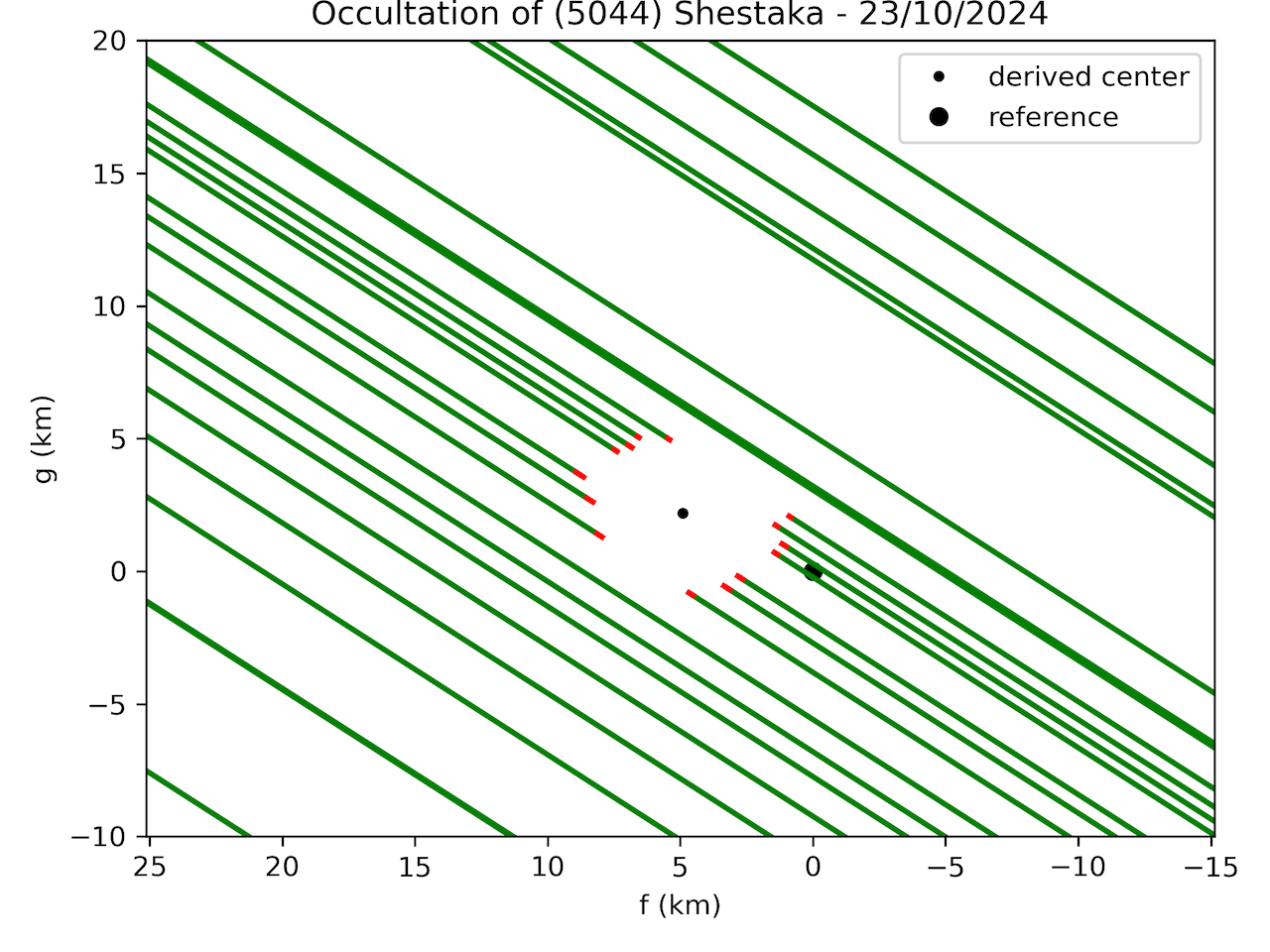
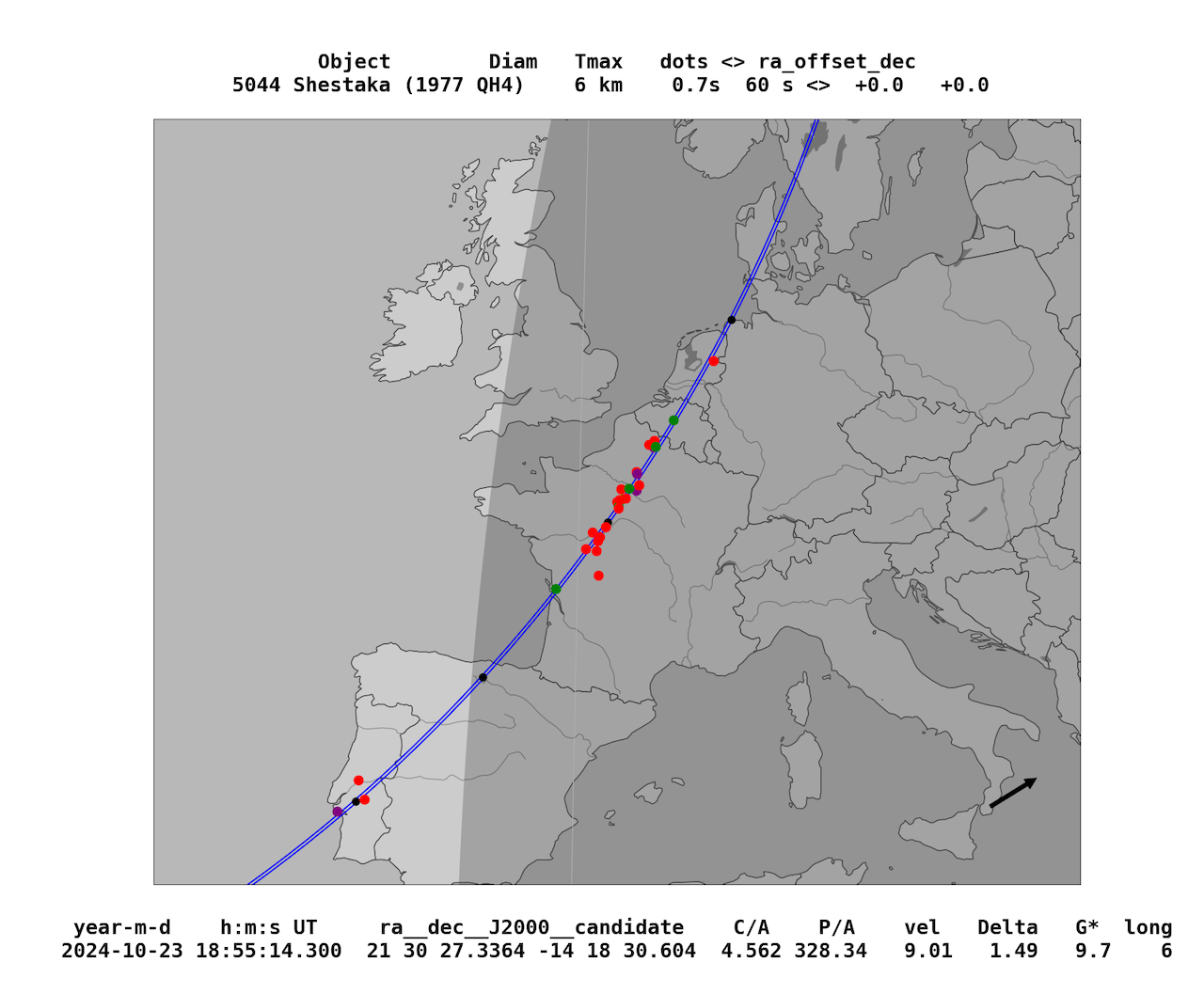
A successful observation involving 30 stations—both amateur and professional astronomers—in Portugal, Spain, France, the Netherlands, Belgium, and Germany on October 23, 2024, revealed a detailed shape of (5044) Shestaka (Figure 1), showing the asteroid is shifted by 5.3 ± 0.047 km from its predicted ephemeris. Predictions indicated the satellite would lie outside the central zone, making double drops unlikely. Due to observation conditions, a large area wasn't covered, and no satellite was detected. This constrains its environment and eliminates probable satellite positions. Some topographic features on the primary were also revealed. The next occultation window is October 28, 2025, in southern Europe.

Figure 1: Post-occultation map showing the location of each station that participated in the
October 2024 occultation campaign by (5044) Shestaka

Figure 2: Green lines show observations from different stations. Solid parts indicate when the star was visible; hollow parts mark the occultation. Red segments represent timing uncertainties for immersion and emersion.

Distinct results were obtained for objects of varying sizes. In particular, asteroid (35420) 1998 AG6 exhibited signatures suggestive of the potential presence of a satellite or an unusual shape. Additionally, (1127) Mimi, which was the subject of four separate observations, showed a clear deviation, pointing to a possible interaction with its surrounding environment. Similarly, to name the most recurrent ones, (550) Senta, (247) Eukrate, and (1237) Genevieve underwent comparable observational approach, enabling improved constraints on their shape and positional parameters for subsequent studies. Overall, this presentation will highlight the main results obtained to date from past campaigns, including refined astrometric measurements, derived shape models and surface topographies, the identification of potential satellite candidates, and a critical evaluation of existing 3D models for selected objects.


Acknowledgments
The organisation of the observation campaigns was supported by Occultation Portal - Kilic et al. (2022). Occultation Portal: A web-based platform for data collection and analysis of stellar occultations. MNRAS, Volume 515, Issue 1, pp. 1346-1357. This work made use of the SORA package - Gomes-Júnior et al. (2022). SORA: Stellar occultation reduction and analysis. MNRAS, Volume 511, Issue 1, March 2022, Pages 1167–1181. This work made use of the PRAIA package - Assafin M., 2023a, Differential aperture photometry with PRAIA, Planetary and Space Science Planetary and Space Science, Volume 239, article id. 105816. This work made use of the Pymovie package - Anderson, B. (2019) PyMovie – A Stellar-Occultation Aperture-Photometry Program, Journal for Occultation Astronomy (ISSN 0737-6766), Vol. 9, No. 4, p. 9-13. This work is funded by the French national agency Agence National de la Recherche (ANR-22-CE49-0002). This work has made use of data from the European Space Agency (ESA) mission Gaia (https://www.cosmos.esa.int/gaia), processed by the Gaia Data Processing and Analysis Consortium (DPAC, https://www.cosmos.esa.int/web/gaia/dpac/consortium). Funding for the DPAC has been provided by national institutions, in particular the institutions participating in the Gaia Multilateral Agreement.


References
[1] Pravec et al., 2007 Icarus, Binary asteroid population. 1. Angular momentum content
[2] Nesvorny et al., 2021 The Planetary Science Journal, Binary Planetesimal Formation from Gravitationally Collapsing Pebble Clouds
[3] Braga-Ribas et al. 2013, The Astrophysical Journal, THE SIZE, SHAPE, ALBEDO, DENSITY, AND ATMOSPHERIC LIMIT OF TRANSNEPTUNIAN OBJECT (50000) QUAOAR FROM MULTI-CHORD STELLAR OCCULTATIONS
[4] Tanga et al., 2023 Astronomy and Astrophysics, Gaia Data Release 3 The Solar System survey
[5] Liberato et al., 2024 Astronomy and Astrophysics, Binary asteroid candidates in Gaia DR3 astrometry
[6] Lallemand et al. 2024, SF2A Proceedings 2024, GAIAMOONS: Study of binary asteroids with stellar occultation and GAIA astrometry
[7] Rommel et al. 2023, Astronomy and Astrophysics, A large topographic feature on the surface of the trans-Neptunian object (307261) 2002 MS4 measured from stellar occultations
[8] Liu et al. 2024, Astronomy and Astrophysics, Asteroid (4437) Arecibo: Two ice-rich bodies forming a binary-Based on Gaia astrometric data

How to cite: Lallemand, R., Desmars, J., Sicardy, B., Tanga, P., Liu, Z., Liberato, L., Mary, D., Hestroffer, D., Langin, G., Dauvergne, J.-L., Saillenfest, M., Stachowicz, A., Leroy, A., and Kiliç, Y. and the co-authors: Stellar Occultations as a Tool to Detect and Characterize Binary Asteroids , EPSC-DPS Joint Meeting 2025, Helsinki, Finland, 7–13 Sep 2025, EPSC-DPS2025-340, https://doi.org/10.5194/epsc-dps2025-340, 2025.

14:12–14:24
|
EPSC-DPS2025-1274
|
ECP
|
On-site presentation
Ziyu Liu, Daniel Hestroffer, Josselin Desmars, Raphaël Lallemand, Pedro David, and Luana Liberato

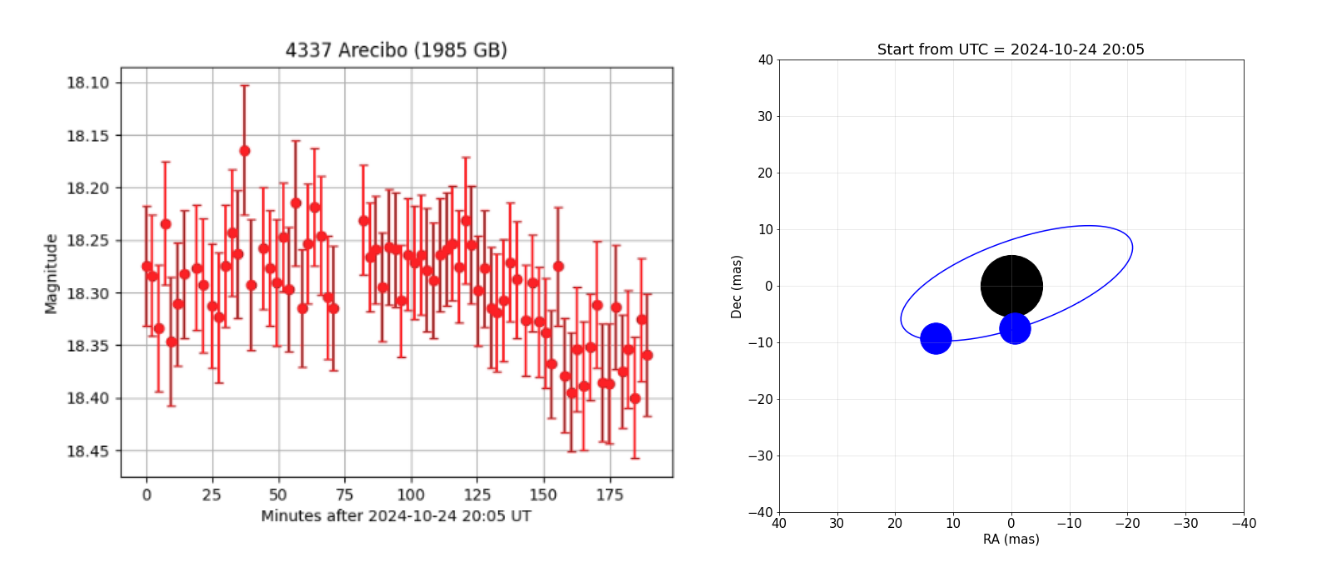
Gaia provides an exceptional opportunity to explore high-precision astrometric data for a large number of solar system objects. Thanks to its unprecedented precision, Gaia data can reveal the astrometric signatures of binary asteroids. This is the case of the binary system (4337) Arecibo, discovered by occultation. Using Gaia DR3 data [1], an astrometric wobble was clearly detected over several transits over a two days window.

In this study, we investigated the Arecibo system, combining all Gaia FPR observations. We first fit the heliocentric orbit, where the residuals contain the binary signal. This signal is proportional to the relative orbit, and a scaling factor related to the flux ratio and mass ratio of the components (see [2], [3] for the analytical formula). We then adjust the relative orbit to derive the key parameters, including full orbital parameters, flux and mass ratio. Based on estimated volumes, we obtain overall densities of around ρ₁ ≈ 1.2 and ρ₂ ≈ 1.6 for the primary and secondary, respectively. These results indicate that this system is composed of ice-rich bodies in the outer main belt [4].

Moreover, we are applying this method to other asteroid systems whose orbits are poorly known. Using Gaia observations combined with ground-based data, we have been able to refine their orbits. Furthermore, for trans-Neptunian objects, where the separation between the components is large enough for only the primary body to be observed by Gaia, the astrometric wobble can indicate the mass ratio. In such cases, Gaia data can be crucial in determining individual masses and, hence, density.

For binary candidates identified in previous studies [5], it is possible to solely use Gaia data or adding it with primary-only occultation data to perform mutual orbit determination. This can help estimate the position of a potential satellite, guiding future occultation observations for detection and confirmation.

Gaia's high-precision astrometric measurements enable us to estimate the individual masses and densities of solar system bodies. This provides valuable insights into the formation and evolution of the solar system. Additionally, by looking at orbital parameters, we can predict future mutual events and stellar occultations, which will provide further constraints on density. We aim to present preliminary results on main belt asteroid systems, TNBs and a few potential binaries, demonstrating how Gaia data contribute to our understanding of these objects and to future observation.


[1] Tanga, P., Pauwels, T., Mignard, F., et al. 2023, A&A, 674, A12

[2] Pravec, P. & Scheirich, P. 2012, Planet. Space Sci., 73, 56

[3] Lindegren, L. 2022

[4] Liu, Z., Hestroffer, D., Desmars, J., and David, P. 2024, A&A, 688, L23. 

[5] Liberato, L., Tanga, P., Mary, D., et al. 2024, A&A, 688, A50

How to cite: Liu, Z., Hestroffer, D., Desmars, J., Lallemand, R., David, P., and Liberato, L.: Binary system dynamics and physical property analysis using Gaia astrometry, EPSC-DPS Joint Meeting 2025, Helsinki, Finland, 7–13 Sep 2025, EPSC-DPS2025-1274, https://doi.org/10.5194/epsc-dps2025-1274, 2025.

14:24–14:36
|
EPSC-DPS2025-581
|
On-site presentation
Josef Hanuš and Josef Ďurech

The spin and shape properties of asteroids carry valuable information about their collisional and dynamical history. In this study, we present an extensive new dataset of asteroid spin states and convex shape models derived from all available sparse photometric data, including Gaia DR3, ATLAS, ZTF, and other major optical surveys. This represents the most complete set of asteroid physical properties derived through lightcurve inversion to date, with significantly improved coverage and statistical reliability compared to previous works.

Combining Gaia DR3 with ground-based surveys not only increases the number of reliably modeled asteroids, but also improves the robustness of individual solutions thanks to better sampling and geometry coverage. This synergy highlights the importance of integrating space- and ground-based photometry, and paves the way for even larger datasets following future data releases—most notably Gaia DR4. The same methodology applied here can be directly extended to Gaia DR4, where longer time baselines and additional measurements will further enhance model quality and enable detailed studies of smaller or more slowly rotating bodies.

Using a unified inversion pipeline, we obtained unique spin and shape solutions for more than 25,000 asteroids. The model reliability benefits from cross-validation of photometry from multiple independent sources and optimized inversion techniques tuned for sparse time sampling. Our enhanced dataset enables us to analyze correlations between rotation period, size, elongation, and other physical parameters with unprecedented statistical power.

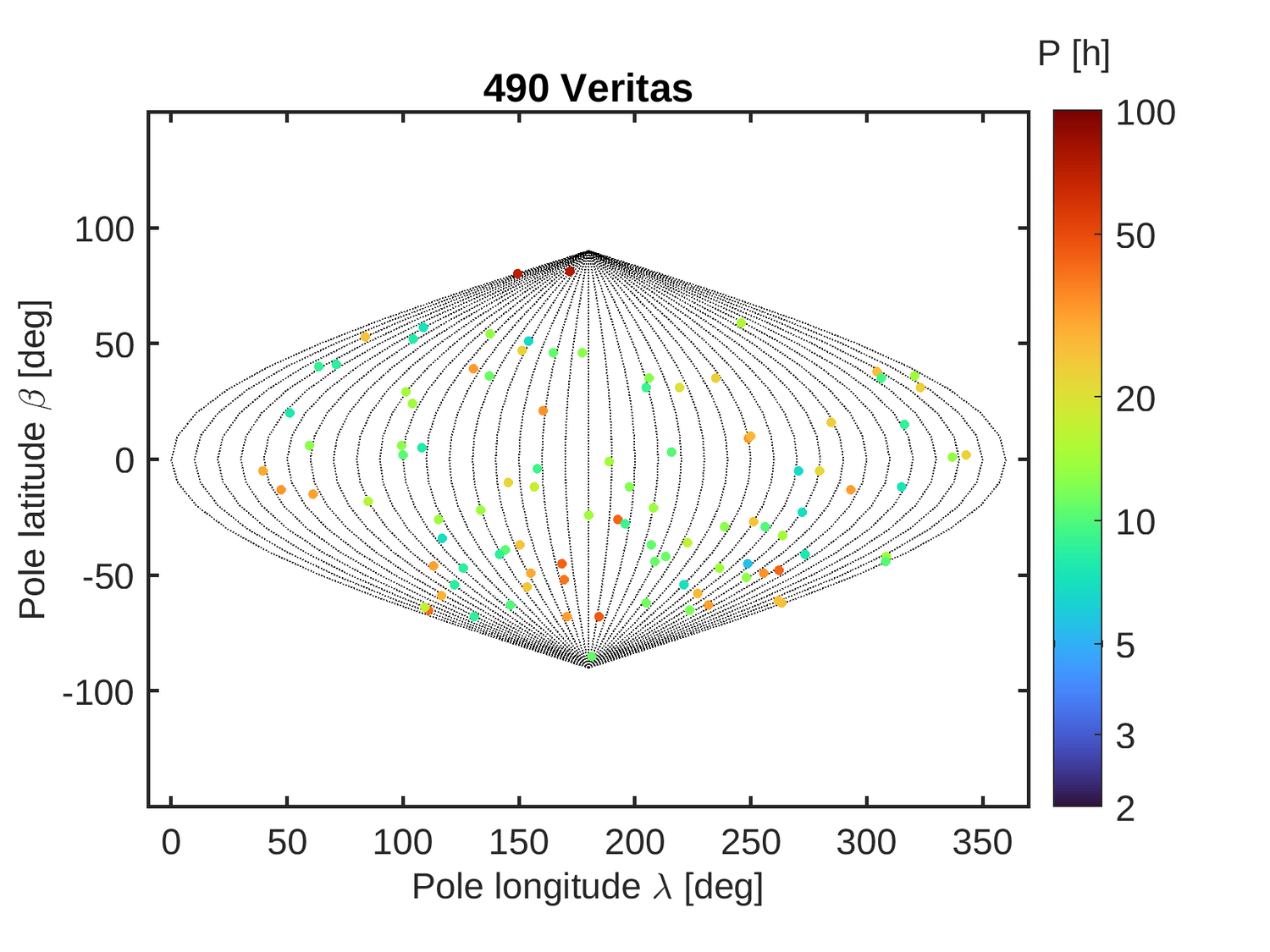
We focus particularly on asteroid families, using dynamical membership data to examine the evolution of spin properties within collisional groups. Young families, such as Veritas, show spin states that appear largely unaltered by dynamical or thermal processes. Their members exhibit a narrow distribution of rotation periods and broad distribution of elongations consistent with outcomes of catastrophic disruption and reaccumulation, reflecting their relatively pristine post-formation state.

In contrast, older families display a more evolved distribution of spin periods, with a noticeable excess of both fast and slow rotators. These features are consistent with long-term evolution driven by the YORP effect and collisional damping. The differences between young and old families reinforce the role of thermal torques in shaping asteroid spin distributions over Gyr timescales.

A central result of our study is the period–size diagram, which reveals a clear bimodality in the spin rate distribution: one group of fast rotators and another of slow rotators. This separation, statistically robust in our expanded sample, aligns well with the scenario proposed by Zhou et al. (2025), who interpret it as the combined outcome of YORP evolution and a population of tumbling or non-principal axis rotators. Our dataset confirms that this bimodality is not an artifact of selection effects or incomplete modeling, but a genuine structural feature of the asteroid spin distribution.

This work provides new constraints on asteroid rotational evolution, the age-dependent effects of YORP, and the initial conditions following family-forming collisions. Our results are essential for future efforts in thermophysical modeling, dynamical simulations of asteroid families, and constraining the long-term evolution of small bodies in the Solar System.

Figure 1: Distribution of spin axis directions (pole latitudes and longitudes) for asteroid members of the Veritas family. Each point represents one object with a derived shape and spin-state solution from combined Gaia DR3 and ground-based photometry. The color scale indicates the rotation period in hours. The nearly isotropic distribution of pole orientations suggests that the Veritas family is dynamically young and has not undergone significant YORP-induced spin alignment or collisional evolution.

How to cite: Hanuš, J. and Ďurech, J.: Spin and Shape Properties in Young and Evolved Asteroid Families: Insights from All-Sky Sparse Photometry, EPSC-DPS Joint Meeting 2025, Helsinki, Finland, 7–13 Sep 2025, EPSC-DPS2025-581, https://doi.org/10.5194/epsc-dps2025-581, 2025.

14:36–14:48
|
EPSC-DPS2025-893
|
On-site presentation
Wen-Han Zhou, Patrick Michel, Marco Delbo, Wenchao Wang, Bonny Y. Wang, Josef Durech, and Josef Hanuš
The rotational dynamics of asteroids are primarily governed by two mechanisms: collisions and the Yarkovsky–O'Keefe–Radzievskii–Paddack (YORP) effect. The YORP effect is a radiative torque resulting from the anisotropic emission of thermal radiation from irregularly shaped asteroids. These two processes dominate different rotational regimes. Because the strength of the YORP effect scales approximately as ~1/R2 (where R is the asteroid's radius), it is significantly more effective for smaller asteroids—typically those less than 50 km in diameter. In contrast, collisions are the dominant driver of rotational evolution for larger asteroids. Additionally, collisions play a crucial role in the spin evolution of very slowly rotating asteroids, whose low angular momentum makes them especially susceptible to even minor impacts.
 
For the past 40 years, astronomers have been puzzled by three major unexplained phenomena in asteroid rotation:
  • Excess of slow rotators – A significant overabundance of asteroids with extremely slow rotation periods, first discovered in the 1980s (e.g. Pravec & Harris 2000 and references therein).
  • Distribution of tumbling asteroids – A subset of asteroids that do not rotate about their principal axis (Harris 1994), yet their size-dependent distribution in the slow rotation regime follows a power law.
 
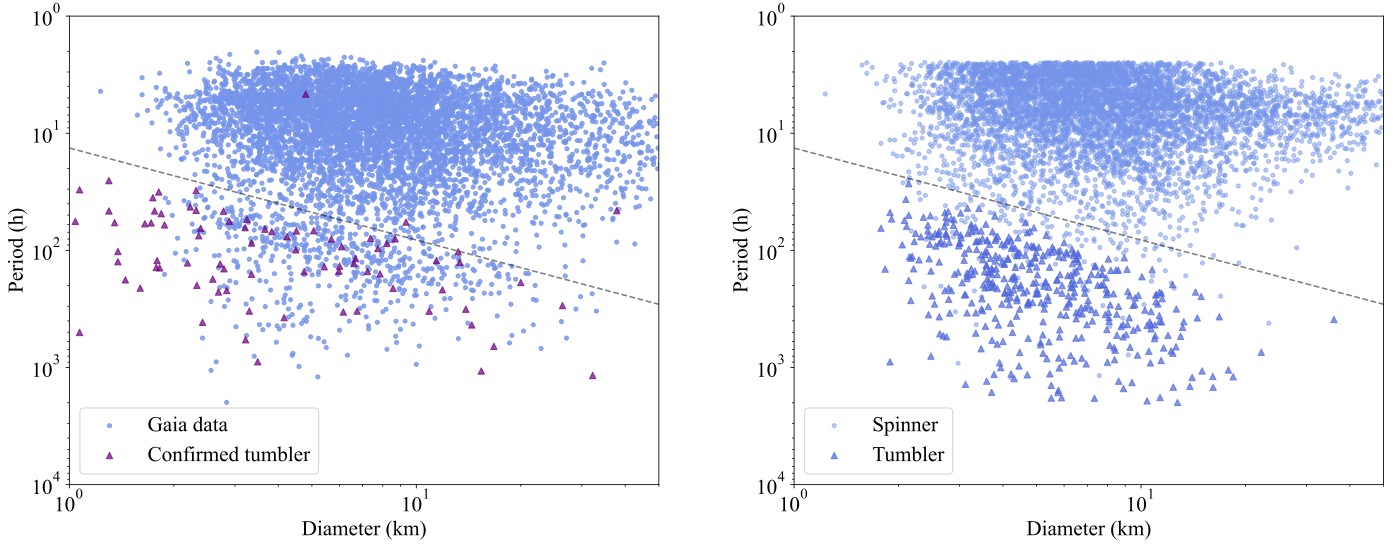
Recently discovered in Gaia data (Durech & Hanus 2023), the spin-size distribution of asteroids exhibits a gap, creating a previously unknown discontinuity in the population, as Fig. 1 shows.
Fig. 1. Period–diameter distribution: comparison of Gaia observations and simulations. Left: Observational data from Gaia (Durech & Hanus, 2023) showing the period–diameter distribution for asteroids, where the tumblers are identified using data from Asteroid Lightcurve Data Base (LCDB) (Warner, 2009). Right: Results from numerical simulations of the period–diameter distribution. The grey lines represent a fitted line that identifies the gap in the distribution.
 
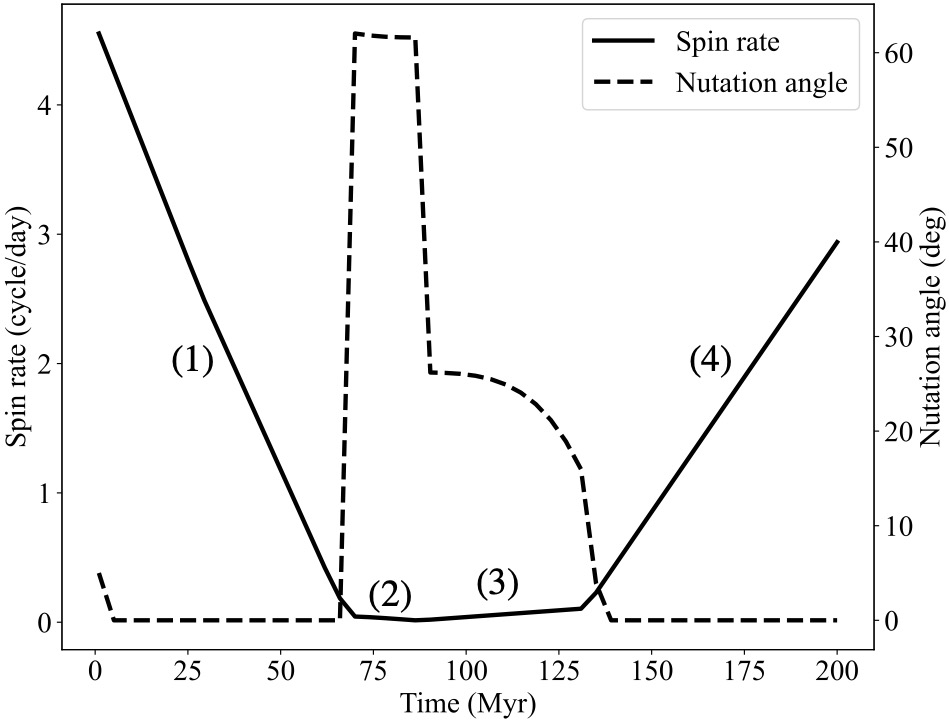
In our latest study (Zhou et al, 2025), we developed a new asteroid rotational evolution model that includes the collisions, YORP and non-principal axis rotation state (tumbling), successfully resolving all three of these long-standing mysteries. We show that most of slow rotators should be tumbling and their overabundance is caused by their slow evolution under the weakened YORP effect. These tumblers are trapped in the slow regions as collisions keep triggering a new onset of tumbling motion. A typical rotational evolution is shown in Fig. 2.
Fig.2. Rotational evolution of a synthetic asteroid over 200 Myr. The spin rate and nutation angle are denoted by the solid and dashed lines, respectively. This asteroid follows such a typical sequence: (1) it spins down, under the YORP effect, until it goes through a sub-catastrophic collision; (2) subsequently, the tumbling motion is triggered and it spins down at a slower rate than before due to a weak YORP effect until a new tumbling state is triggered; (3) then it starts to spin up at a slow rate until the tumbling is damped; (4) it spins up at a normal YORP acceleration until getting disrupted. It can be seen that the time fraction of lifetime in the slow region for asteroids is relatively high compared to that in the faster region, resulting in a larger number density of asteroid population in the slow region.
 
The gap is the boundary between pure spinner and tumblers (Fig. 3) and its location is regulated by the balance of collisions excitation and friction damping. We also found the location of the gaps is different for S-type asteroids and C-type asteroids. This could imply that the C-type asteroids dissipate energies faster than the S-type asteroids due to the difference of porosity and material properties. 
Fig. 3. Bimodal period distribution for simulated asteroids between 3 km and 4 km as an example showing the location of the gap. The group of fast rotators is dominated by pure spinners while the group of slow rotators is dominated by tumblers. A distinct gap clearly separates the two groups.
 
References
Ďurech, J., & Hanuš, J. (2023). Reconstruction of asteroid spin states from Gaia DR3 photometry. Astronomy & Astrophysics, 675, A24.
Harris, A. W. (1994). Tumbling asteroids. Icarus, 107(1), 209-211.
Pravec, P., & Harris, A. W. (2000). Fast and slow rotation of asteroids. Icarus, 148(1), 12-20.
Rubincam, D. P. (2000). Radiative spin-up and spin-down of small asteroids. Icarus, 148(1), 2-11.
Warner, B. D., Harris, A. W., & Pravec, P. (2009). The asteroid lightcurve database. Icarus, 202(1), 134-146.
Zhou, W. H., Michel, P., Delbo, M., Wang, W., Wang, B. Y., Ďurech, J., & Hanuš, J. (2025). Confined tumbling state as the origin of the excess of slowly rotating asteroids. Nature Astronomy, 1-8.

How to cite: Zhou, W.-H., Michel, P., Delbo, M., Wang, W., Wang, B. Y., Durech, J., and Hanuš, J.: Understanding the Long-term Rotational Evolution of Asteroids with Gaia, EPSC-DPS Joint Meeting 2025, Helsinki, Finland, 7–13 Sep 2025, EPSC-DPS2025-893, https://doi.org/10.5194/epsc-dps2025-893, 2025.

14:48–15:00
|
EPSC-DPS2025-965
|
ECP
|
On-site presentation
Fernando Tinaut-Ruano, Benoit Carry, and Alexey Sergeyev

The first clustering analysis of asteroids following the shape of their reflectance photo-spectra was carried out by Chapman et al. (1975) using 24 narrow filters between 0.3 to 1 µm over 110 asteroids. They obtained two groups, the C- and S-types, as they were “similar to Carbonaceous and Stony-metallic meteorites”, respectively. Ten years later, David Tholen, a PhD student at the University of Arizona (USA), increased the sample up to 600 asteroids using albedo and 8 narrow filters, ranging from 0.3 to 1.1 µm, later called the Eight Color Asteroid Survey (ECAS, Zellner et al., 1985). In Tholen’s taxonomy, Chapman’s S-group was further subdivided into five classes: S-, Q-, A-, R-, and V-types. The C-group was divided into nine classes, all having low albedo (< 0.15) visible spectra ranging from blue, neutral, to flat-red: B, C, F, G, D, T, and P classes. The NUV (below 0.45 µm) became critical to distinguish between some of those taxonomies, such as B and F types. In the last decades of the 20th century, the Charge Coupled Devices (CCDs) appeared in planetary sciences, with their higher sensitivity in visible and near infrared wavelengths, but lower sensitivity in the blue region. Bus & Binzel (2002b, a) doubled Tholen’s sample with their second phase of the Small Main-Belt Asteroid Spectroscopic Survey (SMASSII), a set of low-resolution spectral observations of 1,341 asteroids in wavelengths between 0.43 to 0.92 µm. Although they increased the sample of asteroids, they lost albedo, critical to disentangle classes such as E-, M-, P-type, as the information below 0.43 µm, needed to identify Tholen’s classes among the C-complex. More recently, machine learning and probabilistic methods have been dealing with classifying small bodies based on their reflectance spectra: Mahlke et al. (2022) developed a classification method that allows to use partial spectra over visible and near-infrared (NIR) and obtain the different probabilities of a given spectrum to belong to a certain taxonomy. Interestingly, they incorporate the albedo as Tholen did in the 80s. 

We used the reflectance spectra of asteroids provided by Gaia DR3 (Gaia Collaboration 2022). The reflectance spectra were obtained by dividing each epoch spectrum by the mean of the solar analog stars selected and then averaging over the set of epochs. The resulting spectrum consists of 16 reflectance values covering a wavelength range from 0.374 to 1.034 µm, with a resolution of 0.044 µm, and normalized to unity at 0.550 ± 0.025 µm. However, since its publication in June 2022, no taxonomy has been published yet. In this abstract, we present a summary of our recent effort to classify a large number (>10,000) of asteroids in the Gaia DR3.

The first step to obtain this classification was to study, understand, try to correct, and/or clean the effects of some artifacts present in the spectra. Summarizing, Tinaut-Ruano et al (2023) found and corrected an artificial reddening on NUV wavelengths due to the use of Solar Analogs (SAs) that were valid in the visible but not in the NUV. Gallinier et al (2023) found a systematic reddening in wavelengths between 0.7 to 0.9 µm. Tinaut-Ruano et al (2024) have found a correlation between the NUV slope with the signal-to-noise ratio (SNR), and in this work, we found the same effect in the NIR. We have corrected the effect of the SA and cleaned the sample using thresholds in the SNR, limiting the sample with complete spectra. We use albedo to combine both Tholen (the last one with NUV information) and Mahlke (the one with the larger number of objects) taxonomies. After the cleaning and crossmatch with albedo databases, we ended with a sample larger than 15,000 asteroids. 

Following an iterative clustering process, we were able to classify more than 11,000 asteroids in 13 different taxons: S, V, A, K, E, M, P, D, C, G (Ch), B, F, and L-types. This is three times larger than any previous spectral taxonomic classification. We will show in the presentation how those taxons are distributed among different families and dynamic populations, as well as the typical features and physical properties of each taxon. Our taxonomic classification has the following advantages: i) the use of the NUV and albedo; ii) a large number of objects classified systematically in different dynamical populations and families; iii) some taxonomies with a limited number of known objects have increased their members substantially. However, this taxonomy can not be used to compare spectra from different sources, as some of the artifacts remain in the Gaia spectra. See the consistent reddening in the median Gaia spectra between 0.7 and 0.9 µm in the following figure. There, we compare the median spectra of the objects classified from Gaia (blue lines) and the references from Mahlke 2022 (red dotted line). In the title of each subplot is the number of spectra classified for each taxonomy.


Some examples of achievements of this taxonomy are: i) we found differences in the NUV between F-types and B-types as expected. Their classification is supported by their presence in different families, F are located mainly in Nysa-Polana, B in Themis, Iduna and Pallas; ii) we have classified almost 700 objects from Eos family as K type with a high confidence, this is 70 times more than were previously classified from spectra; iii) We have classified almost 200 objects as L types increasing the previously classified spectra by a factor 10 of this taxon. Furthermore, we will show some preliminary results derived from this taxonomic classification, such as the composition of the families and the link to the parent bodies.

All in all, this classification provides a unique opportunity for the community to explore the composition of different families, dynamic populations, or, in the other way around, to explore how different taxons distribute in the solar system.

How to cite: Tinaut-Ruano, F., Carry, B., and Sergeyev, A.: First taxonomic classification of Gaia DR3 asteroid reflectance spectra, EPSC-DPS Joint Meeting 2025, Helsinki, Finland, 7–13 Sep 2025, EPSC-DPS2025-965, https://doi.org/10.5194/epsc-dps2025-965, 2025.

15:00–15:12
|
EPSC-DPS2025-582
|
ECP
|
On-site presentation
Noémie El-Bez-Sébastien and Sonia Fornasier

Introduction :

Spectrally red and featureless asteroids, taxonomically classified as D-, P-, T-, and Z-type in the Bus-DeMeo and Mahlke’s taxonomies [1, 2], have traditionally been found in Jupiter’s Trojans and are considered to have an organic-rich surface. They are thought to have formed in the outer Solar System [3]. Very few have been so far discovered in the main belt, including the inner part [4, 5, 6]. Using Gaia’s spectral catalog, we have found and classified, both using Bus-DeMeo and Mahlke’s taxonomies, more than 900 primordial asteroids and conducted a statistical study on them.

Methods :

We have used the DR3 spectral catalog of solar system objects of the Gaia mission, referencing 60,518 spectra of asteroids in the visible [7]. Each spectrum is the mean of several observations at different epochs of a given asteroid, and it consists of 16 spectrophotometric points covering the 0.37-1.03 micron wavelength range.

First, we computed the signal-to-noise ratio (SNR) for all the asteroids of the DR3 catalog, we selected the main belt asteroids and discarded all the objects for which the SNR was < 30. We applied an automatic taxonomy classification tool between each asteroid and the mean spectra of the two taxonomies, spotting the two « best fits » for the classes of interest (in Bus-DeMeo taxonomy D and T-types and in Mahlke P, D, and Z). Then, to better constrain the taxonomic classification and to solve ambiguities with X-complex asteroids, we applied selection criteria based on the albedo and the slope.

We considered only low albedo asteroids (geometric albedo < 12% ). Secondly, we looked for objects having a spectral slope (in the 0.550-0.814 micron) in the 2-7 %/1000 Å range for the P-types, and higher than 7 %/1000 Å for the D and Z-types.

After the preliminary classification and selection criteria, we visually inspected each potential primordial asteroid in order to remove potential known problematic points [7] and do a final classification in both Bus-DeMeo and Malhke’s taxonomies.

We added to the final dataset 13 asteroids previously classified as D-types in the literature [6].

Results :

Fig1: Position of the dataset in the main belt. Blue dots represent the D and Z types, the red triangle the P-types, and the green stars the PD-types. The three vertical lines delimit the inner, middle, and outer main belt.

Using the Malhke taxonomy, we have found 446 D-types, 270 P-types, 193 Z-types, and nine PD-types (T-types for Bus-DeMeo taxonomy). This last class represents extremely red asteroids. D and Z-types represent 1,8% of Gaia spectral catalog considering asteroids with SNR > 30 as similarly done in this analysis, P-types represent 0,7%, and PD-types 0,02%. If we only consider Z-types, they represent 0,54% of the dataset, which is less than what was previously estimated: 1.1% [2].

Primordial asteroids are observed mainly in the outer belt (207 D-types, 91 Z-types, and 146 T-types), as expected (Fig. 1), but they are also present in the inner belt, even if in lower amounts (65 D-types, 14 Z-types, and 32 T-types). This indicates important migration processes in the Solar System with implantation of primordial asteroids from the outer solar system up to the inner main belt.

We computed the correlations between the spectral slope, diameter, albedo and orbital elements for D/ Z and P-types. For the D/Z types, we found a weak anti-correlation between the albedo and the semi-major axis, the farther away from the Sun they are, the darker they are this could attributed to space weathering effects [8]. Furthermore, there are more smaller P, D and Z-types in the inner main belt. They could have been driven to their current position by the Yarkovski force as proposed by [4].

We also compared the slope distribution of D-types in the main belt with different dynamical classes of TNOs and comets and found similarities with the less red population of centaurs, SDO, and detached objects. Yet, if those D-types were in fact implanted from the TNOs population, it does not explain why we don’t find redder objects in the D/Z-types asteroids.

Acknowledgement : This work has received support from France 2030 through the project named Académie Spatiale d'Île-de-France (https://academiespatiale.fr/) managed by the National Research Agency under bearing the reference ANR-23-CMAS-0041, as well as the Centre National d’Etude Spatial (CNES).

References :

[1] DeMeo et al. (2009), Icarus, 202, 160-180

[2] Mahlke et al. (2022) , A&A, 665, A26

[3] Levison et al. (2009), Nature, 460, 7253, 364-366.

[4] DeMeo et al. (2014), Icarus, 229, 392-399.

[5] Gartrelle et al. (2021), Icarus, 363.

[6] Humes et al. (2024), PSJ, 5,3, 80.

[7] Gaia Collaboration (2023), A&A, 674, A35.

[8] Lantz et al. (2017), Icarus, 285, 43-57.

How to cite: El-Bez-Sébastien, N. and Fornasier, S.: Research of primordial asteroids in the main belt using the Gaia spectral catalog, EPSC-DPS Joint Meeting 2025, Helsinki, Finland, 7–13 Sep 2025, EPSC-DPS2025-582, https://doi.org/10.5194/epsc-dps2025-582, 2025.

15:12–15:24
|
EPSC-DPS2025-315
|
ECP
|
On-site presentation
Roberto Balossi, Paolo Tanga, Marco Delbo, and Alberto Cellino

Asteroid families are groups of asteroids sharing similar orbits and surface properties resulting from the disruption of a parent body. Asteroid families are usually identified using hierarchical clustering algorithms (HCM) in the proper element phase space. The HCM has several limitations, such as being unable to separate overlapping families, identify interlopers, or detect old families. Spectroscopic data can overcome these issues, although they are less abundant than proper element measurements. The Gaia Data Release 3 (DR3) significantly improved spectroscopic analysis by providing over 60,000 asteroid reflectance spectra.
We have already proven that asteroid families can be identified using Gaia DR3 spectra alone by detecting the Tirela/Klumpkea and Watsonia families [1], two L-type families known for their connection to Barbarian asteroids. Barbarians, characterized by unique polarimetric properties [2], might represent an old population of asteroids preserving some of the properties of the early protoplanetary disk.

In this study, we focus on a low-inclination family in the middle belt, which, due to its large spread, challenges pure HCM-based identification. This region is also known to host Barbarians. By classifying Gaia spectra with the color taxonomy from [1], we identified a new L-type family with (460) Scania as its largest member. The distribution of the family in the (a, 1/D) plane, the so-called V-shape, is reported in Figure 1. This distribution was analyzed with the V-shape detection method [3], which confirmed that the observed structure is not a statistical artifact but a real family. Its age, estimated with the V-shape fitting method [4], is around 1.0 Gyr. The second-largest remnant, (1007) Pawlowia, is unusual because its size is comparable to the largest remnant. Further observations are needed to clarify its nature.

The V-shape was numerically reproduced by simulating a fragmentation event using the N-body integrator REBOUND [5]. The distribution of the synthetic fragments closely matches the observed one, as reported in Figure 2.

Barbarian asteroids exhibit negative polarization at large phase angles, unlike normal asteroids, which show a positive transition at the same phase angles. Among the family members, polarimetric data are available only for (460) Scania, (2085) Henan, and (2354) Lavrov. The latter has limited data, while the first two are likely Barbarians.
The V-shape reflects the Yarkovsky-driven drift in semi-major axis, which depends on spin orientation: prograde rotators drift outward, retrograde inward. A strong correlation was observed between spin obliquity and position within the family’s V-shape.

To verify that the L-type family was not a result of a misclassification of Gaia spectra, we compared it with existing taxonomic data. The memberships are in good agreement for large asteroids, but discrepancies emerged at smaller sizes due to missing or ambiguous classifications. Figure 3 compares the size distributions from Gaia, literature, and their combination, along with the geometric model [6], whose slope agrees with the observed distributions, but does not resolve the issue of the two similarly sized largest remnants.

In conclusion, our analysis likely identifies an L-type family in the middle Main Belt, potentially linked to Barbarian asteroids. We stress here that although our spectroscopy method addresses some HCM limitations, it still presents some biases, as it assumes compositional homogeneity within the family, which is the commonly accepted paradigm. In addition, the Gaia color taxonomy has some limitations, since it tends to overclassify objects into the C and S classes and may misclassify faint objects with low SNR spectra. Future Gaia releases, combined with data from other surveys, will offer a larger and improved spectroscopic sample, helping to refine our understanding of this family and the whole asteroid population.

Figure 1: Figure 1: The family members in the (a, 1/D) plane fitted by V-shapes corresponding to different ages.

Figure 2: Comparison between the proper elements of the family members observed by Gaia (grey circles) and the proper elements of the synthetic family members integrated in REBOUND (blue stars).

Figure 3: Size distributions corresponding to family memberships and the geometric model.

References

[1] Balossi, R., Tanga, P., Sergeyev, A., Cellino, A., Spoto, F. (2024), Gaia DR3 asteroid reflectance spectra: L-type families, memberships, and ages, A&A, 688, A221.
[2] Cellino, A., Belskaya, I. N., Bendjoya, Ph., et al. (2006), The strange polarimetric behavior of Asteroid (234) Barbara, Icarus, 180, 565–567.
[3] Bolin, B. T., Delbo, M., Morbidelli, A., Walsh, K. J. (2017), Yarkovsky V-shape identification of asteroid families, Icarus, 282, 290–312.
[4] Spoto, F., Milani, A., Knežević, Z. (2015), Asteroid family ages, Icarus, 257, 275–289.
[5] Rein, H., Liu, S.-F. (2012), REBOUND: an open-source multi-purpose N-body code for collisional dynamics, A&A, 537, A128.
[6] Tanga, P., Cellino, A., Michel, P., et al. (1999), On the size distribution of asteroid families: The role of geometry, Icarus, 141, 65–78.

How to cite: Balossi, R., Tanga, P., Delbo, M., and Cellino, A.: An ancient L- type family associated to (460) Scania in the Middle Main Belt as revealed by Gaia DR3 spectra, EPSC-DPS Joint Meeting 2025, Helsinki, Finland, 7–13 Sep 2025, EPSC-DPS2025-315, https://doi.org/10.5194/epsc-dps2025-315, 2025.

15:24–15:36
|
EPSC-DPS2025-1278
|
ECP
|
Virtual presentation
Oscar Fuentes-Munoz, Davide Farnocchia, Jon D. Giorgini, and Ryan S. Park

The most massive asteroids in the main belt perturb the trajectories of planets and other asteroids. High-precision astrometric measurements of the positions of the perturbed asteroids can show this deviation, especially with long observation arcs before and after the encounters. The large, perturbing asteroid masses can be included in the orbital fitting process to obtain new asteroid mass estimates [1]. We use all available astrometric observations of perturbed asteroids (referred as test asteroids) to estimate the mass of as many large asteroids (referred as perturbers) as possible. In particular, the Gaia Focused Product Release (FPR) [2] of high-precision astrometry allows more precise estimates of asteroid masses [3], which we attempt in general for large asteroids in the main belt.

Close Approach Search: We select an initial perturber list of NL=1783 main belt, trojan, centaur and TNO asteroids with an inferred GM > 0.003 km3/s2, based on a size estimate from the absolute magnitude and density from taxonomic type [4]. All asteroids in JPL’s Small-Body Database[1] with well-determined orbits are considered as candidate test asteroids (1.07 million asteroids with MPC condition code = 0 out of the 1.4 million discovered asteroids). Then, we integrate the test asteroid orbits within their data arcs considering the perturbations of all planets (ephemeris model DE441 [5]) and perturber asteroids. We search for encounters with any asteroid in the perturber list. We find that 0.97 million objects have at least one encounter closer than 0.05 au with any of the objects in the perturber list within their respective data arcs.

Mass Estimation Methodology:

Test asteroid orbit determination: We correct astrometry for star catalog biases [6] and set station specific data weights [7], with specific treatment for Gaia FPR astrometry [8]. We fit the orbits of all test asteroids while estimating Np perturber masses that the test asteroid encountered within its data arc, a subset of NL. We set an apriori GM uncertainty to a large value, which prevents orbit determination divergence. We identify cases when the post-fit mass uncertainty is significantly smaller, which indicates there is real signal of the mass in the astrometry. We iterate the fitting process from updating the masses and perturber trajectories to the test asteroid orbit determination. After the orbital fit, we have the full (6+ Np)x(6+ Np) orbit covariance for each test asteroid, from which we sub-select the (NpxNp) perturber mass covariance.

Perturber masses: We compute the final mass estimates as a N-dimensional weighted mean of the individual estimates alongside the corresponding (NLxNL) covariance. The weighted mean only includes the test asteroids that had at least 1 perturber estimate with reduced uncertainty, extracted as the square root of the diagonal terms of the covariance. This full-size covariance allows us to identify cases with coupled mass estimates [1], typically due to encounters between those perturbers or encounters occurring shortly after one another.

Results: Out of all the test asteroids, we find ~10% of them are considered for the final perturber weighted mass estimates. The combination yields a total number of 77 mass estimates with SNR>10 (error <10%) and 231 estimates with SNR>3, which represent a significant addition to previous estimates from spacecraft position measurements [9] or other estimates in the literature [10]. This improvement is mostly enabled by the precision of Gaia astrometry [2,3], which limits the final uncertainties typically to be > 0.01 km3/s2. However, on rare occasions very close encounters can be very well observed and lead to mass estimates with tiny uncertainties such as 0.039 0.001 km3/s2 (445 Edna) or the smallest we found, 0.0032 0.0006 km3/s2 (1952 Hesburgh). We did not find signal of mass estimates of Trojans, Centaurs or Trans-Neptunian Objects.

Main Belt Total Mass: The total mass of the main belt (sum of all a<4.6 au) is estimated to be 12.90  10−10 M, which is similar to previous estimates in the literature and consistent with the estimated errors.

Asteroid Densities: From the estimated masses, we derive updated density estimates for asteroids with well determined diameters and find consistency with their taxonomic types.

Conclusions: The latest Gaia data release allows us to estimate the masses of large main belt asteroids with higher precision and for more objects than previously attempted. We describe the details of the methodology and results in a journal publication. These mass estimates will improve the dynamical models of motion in the Solar System as well as our understanding of the densities of asteroids of given taxonomic classes.

Acknowledgments: This research was supported by an appointment to the NASA Postdoctoral Program at the Jet Propulsion Laboratory, administered by Oak Ridge Associated Universities under contract with NASA. D.F, J.G. and R.P. conducted this research at the Jet Propulsion Laboratory, California Institute of Technology, under a contract with NASA (80NM0018D0004).

References:

[1] Baer, J. and Chesley, S. R., (2017) AJ, 154:76,
[2] Gaia Collaboration et al, (2023) A&A, 680, A37
[3] Farnocchia, D., et al (2024) AJ, 168:21
[4] Carry, B., (2012) PSS, 73(1), 98-118.
[5] Park, R.S., et al (2021) AJ, 161:105
[6] Eggl, S., et al (2020) Icarus, 339, 113596
[7] Vereš, P., et al (2017) Icarus, 139-149
[8] Fuentes-Muñoz, O., et al (2024) AJ, 167:290.
[9] Farnocchia, D., et al (2021) Icarus, 369, 114594
[10] Fienga, A., et al (2020) MNRAS, 492, 589-602

[1] Publicly accessible at JPL’s Solar System Dynamics website, data accessed November 2024.

How to cite: Fuentes-Munoz, O., Farnocchia, D., Giorgini, J. D., and Park, R. S.: Main Belt Asteroid Mass Estimation from High-Precision Astrometry, EPSC-DPS Joint Meeting 2025, Helsinki, Finland, 7–13 Sep 2025, EPSC-DPS2025-1278, https://doi.org/10.5194/epsc-dps2025-1278, 2025.

15:36–15:48
|
EPSC-DPS2025-1351
|
ECP
|
On-site presentation
Elo Tuominen, Mikael Granvik, Karri Muinonen, Paolo Tanga, and Benoit Carry

ESA’s Gaia mission provides astrometry of asteroids at an unprecedented accuracy measured, at best, in milli- or even microarcseconds. However, the accuracy decreases for larger objects due to shape and size effects, such as the offset of the apparent photocenter and the true barycenter of the object. The effect has been studied with a highly accurate shape model for one target, (21) Lutetia [1], and in a statistical sense for the over 156,000 asteroids in Gaia Focused Product Release (FPR) [2] using a spherical shape approximation [3]. Both studies show that the residuals in the along-scan direction improve when the photocenter-barycenter offset is accounted for in the orbital fitting.

To take a step further, we first derive photocenter-barycenter offsets for 35 large main-belt asteroids using shape models reconstructed with the ADAM method from VLT/SPHERE/ZIMPOL images and available lightcurve data [4]. In addition, we apply a correction for the offset to Gaia Data Release 3 (DR3) astrometry and inspect the effect on orbit computation for asteroids (21) Lutetia and (511) Davida by fitting their orbits in a least-squares sense using the open-source orbit-computation software OpenOrb [5]. The offsets are computed following e.g., [6] for each transit epoch of a given target asteroid in Gaia DR3. The correction is performed by subtracting the offsets from the corresponding observations: each transit contains up to 9 observations, and it is assumed that the offset remains constant throughout a transit.

We find that the photocenter-barycenter offset is on average 4–7% of the diameter of the asteroid, which in many cases translates to an angular offset of some milliarcseconds. Considering Gaia’s astrometric precision, such an offset is significant. We also find a nearly linear dependence between the average magnitude of the offset and the size of the asteroid. In Fig. 1 the magnitude of the offset is computed as an average over all the DR3 transits of a given target. As expected, the magnitude of the offset increases as the diameter of the asteroid increases. The linear nature of the dependence suggests that there is a possibility to derive a useful empirical model for the offset based on its size. However, it is likely that such a model would have to take into account the shape of an asteroid in addition to its size as well as possible albedo variations. Additionally, we show that the orbital fits for (21) Lutetia and (511) Davida improve in terms of the number of rejected (outlier) observations and along-scan residuals.

Figure 1: Magnitude of the photocenter-barycenter offset averaged over DR3 transits as a function of the diameter of the asteroid for 35 large main-belt asteroids.

Finally, we will report on asteroid mass estimation based on asteroid-asteroid close encounters. Our goal of achieving mass estimates with improved and realistic uncertainties should be possible given the highly accurate Gaia astrometry and the addition of a photocenter-barycenter correction, which is relevant for the target asteroids for mass estimation, as they are often relatively large. The new mass estimates and the accurate shape models, that are used for the photocenter-barycenter offset correction, allow us to derive more realistic bulk density estimates.

References:

[1] Gaia collaboration, P. Tanga et al. 2023, Astronomy and astrophysics, 674, A12 

[2] Gaia collaboration, P. David et al. 2023, Astronomy and astrophysics, 680, A37 

[3] O. Fuentes-Muñoz et al. 2024, The Astronomical journal, 167, 290 

[4] P. Vernazza et al. 2021, Astronomy and astrophysics, 654, A56 

[5] M. Granvik et al. 2009, Meteoritics and Planetary Science, 44, 1853 

[6] K. Muinonen and K. Lumme 2015, Astronomy and astrophysics, 584, A23 

How to cite: Tuominen, E., Granvik, M., Muinonen, K., Tanga, P., and Carry, B.: Photocenter-barycenter offsets for Gaia observations with high-precision asteroid shape models, EPSC-DPS Joint Meeting 2025, Helsinki, Finland, 7–13 Sep 2025, EPSC-DPS2025-1351, https://doi.org/10.5194/epsc-dps2025-1351, 2025.

15:48–16:00

Posters: Thu, 11 Sep, 18:00–19:30 | Finlandia Hall foyer

Display time: Thu, 11 Sep, 08:30–19:30
Chairpersons: Julia de Leon, Federica Spoto, Daniel Hestroffer
F99
|
EPSC-DPS2025-42
|
ECP
|
On-site presentation
Daniel C. H. Gomes and Gary M. Bernstein

The imminent start of LSST will trigger an unprecedented advance in the discovery and precise tracking of small solar system bodies. The survey is expected to yield order-of-magnitude increases in known population sizes, and to produce hundreds of observations of each target during its 10-year duration. The nominal astrometry requirement is 10 mas RMS errors per visit, a level where unmodeled displacements are dominated by atmospheric turbulence. We present a new code that interpolates, with Gaussian process regression (GPR), the turbulence displacement field on any ground-based telescope exposure that includes enough stars from Gaia DR3, using the computed displacement at the position of these stars. This idea was initially laid forth by Fortino et al. (2021), who tested a preliminary method on a few Dark Energy Survey (DES) exposures. Their code required optimization of the Gaussian process kernel, and therefore was too computationally expensive to be scalable for future surveys such as LSST. We approach the problem by generating empirical kernels: the correlation function of the turbulence field is measured directly with TreeCorr (Jarvis 2015) and smoothed to avoid numerical issues.


Our code roughly follows these steps: (1) Find stars on the exposure that have close matches to Gaia solutions; (2) compute the displacements in both directions for each reference star—these directions are treated as independent fields; (3) perform a polynomial fit to model large-scale correlations, remove outliers from the reference star set; (4) measure the correlation function of polynomial-subtracted displacements with TreeCorr; (5) reduce noise and apodize the measured correlation function to generate the GPR kernel; (6) divide exposure in patches and perform a GPR on each patch to get a modeled turbulence displacement value on the target positions (that is, the position of every star on the exposure that does not have a match in the Gaia catalog). An initial run may be done to detect additional outliers from the reference set, have them removed, before a second and final GPR run. 


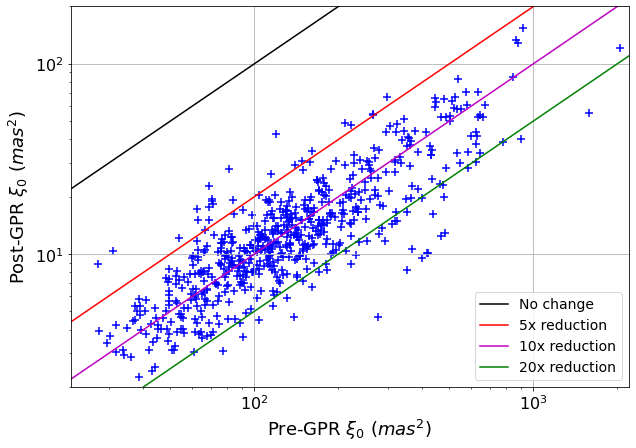
For cross-validation purposes, we divide the reference star set into five subsets, and perform five GPR runs, each with one of these sets reserved as targets. We then use the model-subtracted residuals at these targets to estimate the remaining unmodeled turbulence. We test our code both on real DES exposures and on simulated LSST data (where turbulence is generated by the atmospheric model from Hebert (2024)). Using the average correlation function for separations < 1’ (ξ0) as a metric for the variance of turbulence distortions, we compare its raw value with the model-subtracted one and we find that it is reduced by an average factor of 12.2 on the DES exposures. The pre-GPR and post-GPR values for the tested exposures are shown in Figure 1. For the LSST simulations (where the “true” displacements are accessible to us), we compute the true variance of the displacement fields before and after the GPR, and the reduction factor is 13.8. The square root of these values (3.5 and 3.7 respectively) provide us the expected improvement on the RMS of turbulence displacement errors.

Figure 1. Post-GPR (model subtracted) average correlation function for separations < 1’ versus the corresponding Pre-GPR value. Each blue point denotes one DES exposure where the turbulence reduction code was tested.


We then look at the potential use of our code to improve LSST minor planet astrometry. We consider a set of ~1000 main belt asteroid orbits and predict all their detections on a baseline LSST simulated survey. For each detection, we compute the estimated astrometric errors with and without turbulence reduction. The total error is a combination of the photon-noise error and a fixed astrometric floor that accounts for turbulence and remaining calibration errors. This astrometric floor is set at the pre-GPR nominal value of 10mas for the uncorrected scenario, and at the post-GPR value of 2.5mas, the typical value achieved on simulated LSST fields, for the corrected scenario. We find that the total positional information on MBA orbits (defined as ∑ 1/(σi)2 for i observations) improves by a factor of 13.3 (for asteroids with H < 16) and by a factor of 5.4 for H > 16.  Figure 2 shows the positional information for each object after the 10-year survey, in both scenarios (corrected and uncorrected). Fainter asteroids have a larger contribution of photon-noise error and therefore are less affected by the turbulence reduction.

Figure 2. Total positional information expected after 10 years of LSST, for a sample of ~1000 Main Belt Asteroids. Blue points represent the scenario where no turbulence correction is applied (10mas errors added in quadrature to the photon noise error). Red points reduce the astrometric errors according to the performance of our turbulence reduction code (the astrometric floor is moved from 10mas to 2.5mas).

The information gain from Gaia-referenced turbulence reduction will translate into more precise orbital constraints for a given number of measurements, improving sensitivity to signals such as non-gravitational forces, small deflections from mutual encounters, and gravitational perturbations from unmodeled mass in the Solar System.


References


Fortino, Willow. F., Bernstein, Gary M., Bernardinelli, Pedro H., et. al. 2021. "Reducing Ground-based Astrometric Errors with Gaia and Gaussian Processes." The Astronomical Journal 162 (3): 106. https://doi.org/10.3847/1538-3881/ac0722.

Hébert, Claire-Alice, Meyers, Joshua E., Do, My H., et. al. 2024. "Generation of Realistic Input Parameters for Simulating Atmospheric Point-Spread Functions at Astronomical Observatories." The Open Journal of Astrophysics 7 (April): 22. https://doi.org/10.33232/001c.115727.

Jarvis, Mike. 2015. TreeCorr: Two-point Correlation Functions. Astrophysics Source Code Library, record ascl:1508.007. https://ui.adsabs.harvard.edu/abs/2015ascl.soft08007J.

How to cite: Gomes, D. C. H. and Bernstein, G. M.: Using Gaia to reduce atmospheric turbulence displacements in LSST minor planet astrometry, EPSC-DPS Joint Meeting 2025, Helsinki, Finland, 7–13 Sep 2025, EPSC-DPS2025-42, https://doi.org/10.5194/epsc-dps2025-42, 2025.

F100
|
EPSC-DPS2025-475
|
On-site presentation
Sonia Fornasier and Noemie El-Bez-Sebastien

Introduction

Jupiter trojans have a red spectral behaviour typically associated with the presence of organics, which have been recently detected on Lucy mission Trojans targets thanks to JWST observations (1). More than 14500 Jupiter Trojans have been discovered. Their orbits are stable over the age of the Solar System, so their origin must date back to the early phase of the Solar System formation. They are supposed to be implanted TNOs captured by Jupiter during planetary migrations (2).

We present the spectral characterisation of Jupiter Trojans using data from the DR3 GAIA spectral catalogue and from the literature, the analysis of the taxonomy-spectral slope correlations with physical parameters, and the comparison with the outer Solar System bodies main properties.

Methods and data selection

The DR3 GAIA catalogue includes the spectroscopy of 60,518 Solar System Objects (3), and comprises 478 Jupiter Trojans. GAIA spectrophotometry is available in 16 spectrophotometric points covering the 0.33-1.08-micron range.

Among the Trojans observed by GAIA, we select those having a signal to noise ratio > 20, which is considered a reliable threshold for asteroid spectral classification in the visible range (4), and we visually inspected the spectral quality of those with a lower SNR, reducing the Trojans GAIA dataset to 320 objects. Some spectrophotometric points at the edges of the BP and BR photometers were discarded because affected by significant systematic errors, and the UV reflectance corrected using the factors reported by (5).

We taxonomically classified the Trojans using the Bus-Demeo and Mahlke classification scheme (6, 7), applying a chi-squared best fit between a given asteroid and the classes' mean reflectance spectra from these taxonomies, and visually inspecting the results of the fit. To enhance the statistical analysis, we have also included the visible spectra of Trojans available in the literature, mostly from (8, 9). The complete dataset of Trojans includes 519 objects, 291 in L4 and 228 in L5.

Results

The Trojan population is dominated by featureless asteroids with red spectral slopes, as already reported in the literature [8, 9]. In the Trojans sample here analysed, according to the Bus-Demeo Taxonomy [6], D-type asteroids dominate in both swarms (Fig. 1): 72.5% in L4 and 87.7% in L5. In addition to D-type, the L4 swarm also contains 15.5% X-type, 3.1% T-type, and 8.9% C-type, while the L5 swarm has 8.3% X-type, 1.3% T-type, and 2.6% C-type. Most of the X-type are featureless and dark asteroids that would be classified as P-type in the Tholen taxonomy.

The Mahlke taxonomy confirms the previous findings and allows to highlight the presence of very red asteroids, for which a new class, the Z-class, has been explicitly introduced (Fig. 1). In this taxonomy, the L4 swarm has 40.6% of Z-type, 31.6% of D-type, 10.0% of P-type, and an equal percentage, 8.9%, of X- and C-type. The L5 swarm has 45.6% of D-type and 42.1% of Z-type, 5.7% of P-type, 3.9% of X-type and only 2.6% of C-type.

The L4 swarm shows a higher spectral variability and a higher amount, by a factor of 2, of less spectrally red asteroids belonging to the C, P, and X classes.

The average spectral slope is of 8.45 ±0.21 (%/100nm) for the L4, and of 9.41 ±0.21 (%/100nm) for the L5 swarm. The small difference is due to the presence of the Eurybates family in L4. When excluding family members, the average slope of L4 and L5 Trojans are indistinguishable. The two swarms have very similar geometric albedo value (7.86 ± 0.15% and 7.35± 0.15% for the L4 and L5, respectively). The similarity in albedo and spectral slopes indicate a common origin for both swarms.

We explore also the correlation between the Trojans spectral slope with their size, albedo and orbital elements, and compare them to the properties of Kuiper belt objects, which are the probable source of Trojans. Trojans share similarities with the TNOs less red population (Fig 2), but have a distinct distribution in spectral slope, much narrower than TNOs. In the visible range, they lack the extremely red bodies observed in all the dynamically classes of TNOs, and which mainly dominate the cold classicals, known to have formed in situ. Trojans spectral slope distribution is closer to that of cometary nuclei, and to the less red Centaurs and SDO-Detached bodies. These dynamical classes, characterized by bodies with high inclination and eccentricities, may have supplied the Jupiter Trojans swarms during the planetary migration.

References: 1)Wong, I. & Brown, M. E. 2015, AJ, 150, 174; 2) Morbidelli A. et al., . 2005, Nature, 435, 462; 3) Tanga, P. et al. 2023, A&A, 674, A12; 4) Galinier et al. 2024 A&A, 683, L3 ; 5) Tinaut-Ruano_2023, A&A, 669, L14 ; 6) DeMeo, F. et al.  2009, Icarus, 202, 160; 7) Mahlke M. et al.  2022, A&A, 665, A26; 8) Fornasier, S. et al. 2007, Icarus, 190, 622–642 ; 9) Roig, F. Et al. 2008, A&A, 483, 911

Acknowledgement : This work has received support from France 2030 through the project named Académie Spatiale d'Île-de-France (https://academiespatiale.fr/) managed by the National Research Agency under bearing the reference ANR-23-CMAS-0041, as well as the Centre National d’Etude Spatial (CNES).

Fig 1: Pie charts showing the different Trojan taxonomic classes according to the Bus-DeMeo (top) andMahlke (bottom) classification schemes.

Fig 2. Comparison of the slopes of the Trojans (top plot) with those of the different dynamical classes of TNO, Centaurs and cometary nuclei.


How to cite: Fornasier, S. and El-Bez-Sebastien, N.: Jupiter Trojans spectrophotometry using GAIA DR3, EPSC-DPS Joint Meeting 2025, Helsinki, Finland, 7–13 Sep 2025, EPSC-DPS2025-475, https://doi.org/10.5194/epsc-dps2025-475, 2025.

F101
|
EPSC-DPS2025-1330
|
On-site presentation
Hanna Pentikäinen, Eric MacLennan, Antti Penttilä, Karri Muinonen, Dagmara Oszkiewicz, Alberto Cellino, Paolo Tanga, Xiaobin Wang, and Lauri Siltala

The Gaia Data Release 3 (DR3) contains high-precision sparse-in-time photometric data of more than 150 000 asteroids and low-resolution spectroscopy of more than 60 000 asteroids [1]. The wealth of asteroid data allows for the examination of asteroid classification using parameters derived from the asteroid lightcurves and their respective spectra.

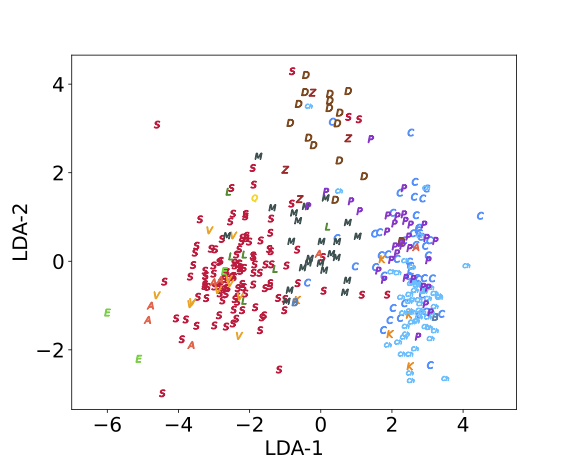
MacLennan et al. [2] have derived asteroid shape and spin characteristics by modelling the Gaia DR3 photometric data with the lightcurve inversion algorithm developed by Muinonen et al. [3], starting from the genetic inversion by Cellino et al. [4]. We take the resulting linear photometric slopes and absolute magnitudes and combine them with the Gaia DR3 spectra of asteroids for which they are available. The absolute magnitudes are used together with the effective diameters reported in the Solar System Open Database Network SsODNet [5] to calculate geometric albedos, and a linear discriminant analysis (LDA) of the combined data is performed. Because we have geometric albedo information computed from the absolute magnitudes determined in the lightcurve inversion, the use of the Mahlke taxonomy [6] is best suited for the purpose of this research. Quality filtering of the photometric data and the availability of diameter information allowed the computation of geometric albedos in the Gaia G-band for 6205 asteroids [7], and the highest quality Gaia spectra for asteroids with a known Mahlke classification reduced the number of known objects down to 328. The results of the LDA can be seen in Figure 1.


Figure 1: The combined data of linear photometric slope, geometric albedo and spectrum (from 418 nm to 770 nm) for 328 asteroids with a Mahlke classification plotted in the LDA space of the first two variables, LDA-1 and LDA-2. The letter markers represent the corresponding Mahlke class. The S-, Ch-, M-, and D-class asteroids appear to form clear groups, which is mostly demonstrated in the nearest neighbour classification results.


A nearest neighbor classifier is employed to determine how well the parameters classify asteroids in six Mahlke classes (S, Ch, C, P, M, and D). We achieve a classification accuracy of 92 % for known S-class asteroids and an accuracy of 85 % for the potentially hydrated Ch asteroids, which are of special interest to the asteroid mining industry. Given the three classification parameters, tentative class designations for 1668 previously unclassified asteroids are provided in the Mahlke taxonomy.


[1] P. Tanga et al., A&A, 674, (2023).
[2] E. MacLennan et al., in preparation.
[3] K. Muinonen et al., A&A, 642, (2020).
[4] A. Cellino et al., A&A, 687, (2024).
[5] J. Berthier et al., A&A, 671, (2023).
[6] M. Mahlke et el., A&A, 665, (2022).
[7] H. Pentikäinen et al., in preparation.

How to cite: Pentikäinen, H., MacLennan, E., Penttilä, A., Muinonen, K., Oszkiewicz, D., Cellino, A., Tanga, P., Wang, X., and Siltala, L.: Taxonomic classification of asteroids using Gaia DR3 data, EPSC-DPS Joint Meeting 2025, Helsinki, Finland, 7–13 Sep 2025, EPSC-DPS2025-1330, https://doi.org/10.5194/epsc-dps2025-1330, 2025.

F102
|
EPSC-DPS2025-1390
|
On-site presentation
Paolo Tanga, Kleomenis Tsiganis, Souami Damya, Siakas Alex, Tsarvaridis Sotirios, Bouquillon Sebastien, Chesley Steve, Farnocchia Davide, Herald David, and Makadia Rahil

The observation of stellar occultation by asteroids is an intrinsically challenging activity in the case of Near Earth Objects, that produce very short events on narrow occultation paths. From prediction to observation, and even to data reduction, the whole process requires tackling important challenges. If successful, however, the reward can be very relevant. In this contribution we report some results and lessons learned from the exploitation of occultations by the smallest asteroids observed with this technique.

A few years ago, the possibility to reach sub-km asteroids by stellar occultations was not even contemplated for extensive observation efforts, since it had to face unrealistically large ephemeris uncertainties, resulting in poorly exploitable prediction. The situation has evolved dramatically starting with the first large data release (DR2, 2018) by the Gaia mission of ESA [1] disclosing the access to sub-mas absolute astrometry.

 The impact on stellar occultations has come from (1) the availably of a new, highly precise and very dense reference catalogue for traditional ground-based astrometry; (2) the exploitation of the same catalogue to better derive the position of stars target of occultations and (3) the direct observations of asteroids themselves by Gaia [2][3].

The combination of these factors has resulted in much improved asteroid orbits in general [4], an increasing number of exploitable predictions for smaller and smaller asteroids and, as an obvious consequence, an asteroid astrometry at the level of the precision of the star position [5], i.e. of Gaia. While DR2 did contain the astrometry of 14.000 asteroids only (for 22 months of observations), the sample has increased to 150,000 in DR3 (2022) over 5 years and will reach the complete data set of the nominal mission (350,000 asteroids) in DR4 (2026). The final DR5 (2030) will include the whole extended mission (10.5) for about the same number of objects. The accuracy of stellar proper motions, and the detection of binary stars in the astrometry, will benefit from the extended time base and provide even better-quality predictions for stellar occultations.

Over the recent years, we have actively worked to the prediction, the observation and the exploitation of occultations for specific NEOs (in particular, targets of space missions). Recent campaigns on (99942) Apophis, (3200) Phaeton, (65803) Didymos and other NEOs have clearly demonstrated the potential of this technique for both their physical and dynamical characterization [6][7].

As an outstanding example, we illustrate here in more detail the case of (65803) Didymos, target of the DART (NASA) and Hera (ESA) missions. In the frame of the ACROSS collaboration, we have exploited stellar astrometry and star colors provided by Gaia to boost the improvement of the orbit quality before the impact by DART (September 26, 2022). By combining this effort to the other data available, the nominal uncertainty on the ephemeris has thus gradually collapsed, over several months in 2022, from ~800 km to ~1600 m. In the meantime, we have worked to motivate the observers and organize large campaigns trying to catch the first positive events [8].

Today, with the contribution of 20 stellar occultations, the measurement of the heliocentric deviation of the orbit of Didymos has been possible [9][10][11]. The post-fit residuals of stellar occultations from the orbital fit are of the order of ~1 mas.

Moreover, the photometry of the occultation chords for one of the best observed events is shown to sample particularly well the diffraction pattern of the star light at the edge of Dimorphos. This signature is both size- and shape-dependent. With a suitable model we are thus able to provide constraints on the projected shape of Dimorphos, observed after the impact by DART. We present an updated analysis of this result. The accurate knowledge of the occultation path, and the capability to place the observers to capture both Didymos and Dimorphos, are a direct consequence of the impact of Gaia on this observation method. To date, Dimorphos is the smallest asteroid, and the smallest satellite, ever observed by occultations.

Finally, we stress here that these results would not have been possible without the commitment of unpaid non-professional astronomers, whose contribution is fundamental to occultation activities, and further demonstrates the extend of the impact that Gaia has on all levels of activities related to astrometry.


[1] Brown, A. G. A., et al., “Gaia Data Release 2 - Summary of the Contents and Survey Properties.” A&A 616 (2018): A1.

[2] Gaia Collaboration, F. Spoto, P. Tanga, F. Mignard, J. Berthier, B. Carry, A. Cellino, et al., “Gaia Data Release 2. Observations of Solar System Objects.” A&A 616 (2018): A13.

[3] Tanga, P., T. Pauwels, F. Mignard, K. Muinonen, A. Cellino, P. David, D. Hestroffer, et al. “Gaia Data Release 3: The Solar System Survey.” A&A 674 (2023): A12.

[4] Gaia Collaboration, P. David, F. Mignard, D. Hestroffer, and P. Tanga. “Gaia Focused Product Release: Asteroid Orbital Solution. Properties and Assessment.” A&A, 680, A37 (2023)

[5] Ferreira, J. F., P. Tanga, F. Spoto, P. Machado, and D. Herald. “Asteroid Astrometry by Stellar Occultations: Accuracy of the Existing Sample from Orbital Fitting.” A&A, 658, A73 (2022)

[6] Senshu, H., et al. “Yarkovsky and YORP Effects Simulation on 3200 Phaethon.” Phil. Trans. of the RASC A 383, 2291 (2025)

[7] Dunham, D. W., J. B. Dunham, F. Yoshida, T. Hayamizu, D. Herald, D. Farnocchia, R. Venable, et al. “New NEA and Other Asteroid Results from Occultations Recorded by IOTA Observers.” Asteroids, Comets, Meteors Conference 2851 (2023): 2363.

[8] Tanga et al. “The ACROSS campaign”, in preparation

[9] Makadia, R., et al. “Measurability of the Heliocentric Momentum Enhancement from a Kinetic Impact: The Double Asteroid Redirection Test (DART) Mission.” The Planetary Science Jour., 5, 2, 38, (2024).

[10] Makadia, R., et al. “First detection of an asteroid’s heliocentric deflection: The Didymos system after DART”, submitted

[11] Chesley et al. “First detection of an asteroid heliocentric deflection: The Didymos system after DART”, EPSC-DPS2025-1331

How to cite: Tanga, P., Tsiganis, K., Damya, S., Alex, S., Sotirios, T., Sebastien, B., Steve, C., Davide, F., David, H., and Rahil, M.: Stellar occultations by Near Earth Asteroids: challenges and results , EPSC-DPS Joint Meeting 2025, Helsinki, Finland, 7–13 Sep 2025, EPSC-DPS2025-1390, https://doi.org/10.5194/epsc-dps2025-1390, 2025.

F103
|
EPSC-DPS2025-296
|
ECP
|
On-site presentation
Marjorie Galinier, Marco Delbo, and Laurent Galluccio

The Data Release 3 (DR3) of ESA's Gaia mission contains 60 518 mean reflectance spectra of Solar System small bodies, spanning the visible wavelength range in 16 bands [1]. Such large and homogeneous dataset is a powerful tool to study the Main Belt as a whole.

We developed a classification method for the DR3 dataset, focusing on the search for new potential olivine-rich A-type asteroids in the Main Belt. Indeed, there is an observed scarcity of purely olivine-rich asteroids in the Main Belt known as the "missing-mantle problem" [2,3]. DeMeo et al. (2019) [4] derived from NIR spectroscopic observations that A-type asteroids account for less than 0.16\% of the Main Belt, for asteroids with a diameter above 2 km. We tested this assertion by exploiting the Gaia DR3 dataset, as this low quantity of olivine-rich bodies contrasts with differentiation theories [5].

We developed a classification method for the DR3 dataset based on a curve matching algorithm that gives the best two spectral classes associated with an asteroid spectrum [6] after a comparison with spectral classes template spectra. To take into account inherent differences existing between DR3 and ground-based spectra, we defined Gaia DR3 template spectra based on the Bus taxonomic scheme [7] to perform the classification.

We filtered the Gaia DR3 dataset to test and apply the classification algorithm on the best-quality spectra only. We considered only spectra with an average signal-to-noise ratio above 30 and without flagged bands from 462 to 946 nm, which left us with 18 739 DR3 spectra. This sample will be refered to as the "filtered DR3 dataset" in the following. We then designed the classification using a sample of objects characterized from NIR or VISNIR spectroscopy in the literature and having a spectrum in the filtered DR3 dataset. Using a trial-and-error approach, we improved the classification of these objects by eliminating certain sub-classes from the Gaia templates and grouping others into larger complexes. The confusion matrix corresponding to this classification is displayed in the figure below. It is quite diagonal, indicating satisfactory results.

To improve the classification of A-type asteroids specifically, we defined a secondary classification step based on the blue part of DR3 spectra only, from 462 to 594 nm. We exploited the fact that this wavelength range does not appear affected by the reddening phenomenon impacting some DR3 spectra compared to ground-based spectra, which allowed us to distinguish between real A-type asteroids and false positives. This secondary step allowed us to classify correctly most A-type asteroids, while keeping the contamination of the A-class low.

We applied this two-steps classification to the 18 739 asteroids of the filtered DR3 dataset, and we obtained a total of 98 potential A-types. Of these objects, 77 had never been characterized with spectroscopy before the Gaia DR3. Considering only objects with a diameter above 2 km, we found a proportion of 0.51% of A-types in the Main Belt, which is more than three times the 0.16% found by DeMeo et al. (2019) [4].

Finally, the two steps classification method we developed gives satisfactory results for the classification of DR3 spectra and allowed to detect new potential A-type asteroids in the Main Belt. It appears that the amount of purely olivine-rich asteroids in the Main belt could be more than three times what previously thought, but this result has to be confirmed by NIR spectroscopy.

Acknowledgements:

This work has made use of data from the European Space Agency (ESA) mission Gaia (https://www.cosmos.esa.int/gaia), processed by the Gaia Data Processing and Analysis Consortium (DPAC). Funding for the DPAC has been provided by national institutions, in particular the institutions participating in the Gaia Multilateral Agreement. The authors acknowledge financial support from CNES, the Observatoire de la Côte d'Azur and the ANR ORIGINS (ANR-18-CE31-0014). 

References:

[1] Gaia Collaboration, Galluccio, L. et al. (2023) "Gaia Data Release 3. Reflectance spectra of Solar System small bodies." In: Astronomy & Astrophysics 674, A35. doi: 10.1051/0004-6361/202243791.
[2] Chapman, C. R. (1986). In: Proceedings of the NASA and CNR, International Workshop on Catastrophic Disruption of Asteroids and Satellites, 103–114.
[3] Burbine, T.H., Meibom, A., Binzel, R.P., 1996. "Mantle material in the main belt: Battered to bits?" Meteoritics and Planetary Science 31, 607–620. doi: 10.1111/j.1945-5100.1996.tb02033.x.
[4] DeMeo, Francesca E., David Polishook, Benoît Carry, Brian J. Burt, Henry H. Hsieh, Richard P. Binzel, Nicholas A. Moskovitz, and Thomas H. Burbine (Apr. 2019). "Olivine-dominated A-type asteroids in the main belt: Distribution, abundance and relation to families." In: Icarus 322, pp. 13–30. doi: 10.1016/j.icarus.2018.12.016.
[5] Neumann,W., D. Breuer, and T. Spohn (July 2012). "Differentiation and core formation in accreting planetesimals." In: Astronomy & Astrophysics 543, A141. doi: 10.1051/0004-6361/201219157.
[6] Popescu, M., M. Birlan, and D. A. Nedelcu (Aug. 2012). "Modeling of asteroid spectra - M4AST." In: Astronomy & Astrophysics 544, A130. doi: 10.1051/0004-6361/201219584.
[7] Bus, Schelte J. and Richard P. Binzel (July 2002a). “Phase II of the Small Main-Belt Asteroid Spectroscopic Survey. A Feature-Based Taxonomy.” In: Icarus 158.1, pp. 146–177. doi: 10.1006/icar.2002.6856.

How to cite: Galinier, M., Delbo, M., and Galluccio, L.: Spectral classification of Gaia DR3 Solar System small bodies and application to the search for A-type olivine-rich asteroids, EPSC-DPS Joint Meeting 2025, Helsinki, Finland, 7–13 Sep 2025, EPSC-DPS2025-296, https://doi.org/10.5194/epsc-dps2025-296, 2025.

F104
|
EPSC-DPS2025-814
|
ECP
|
On-site presentation
Luana Liberato, David Mary, Paolo Tanga, Josselin Desmars, Raphaël Lallemand, Ziyu Liu, and Daniel Hestroffer

Planets are not the only celestial bodies that can have moons. We have already detected a few hundred asteroids in the Solar System that orbit the Sun while sharing the orbit with a companion. Binary asteroids, as they are called, are expected to be extremely common, ranging from an estimated ~15% of the small asteroids in the main belt to about 20-30% of the Trans-Neptunian objects (TNO) [1,2]. These objects are difficult to detect, and each technique favours different systems' configurations, creating a biased population of known binaries. 

The ~1 mas level of unprecedented precision achieved by Gaia allows us to detect signatures of an asteroid's photocenter wobble in the post-orbital fit residuals. To detect the astrometric signature due to an asteroid companion, we developed a robust and straightforward method to find and test periodicities found in the residuals of the orbital fit using only the astrometric measurements for all 30,000 asteroids in Gaia DR3 with at least one window with a minimum of 10 consecutive observations.

Our method consists of a simple model to interpret the period detected as a wobbling signal, characterised by spherical components with uniform albedo. Then, we physically characterise them by identifying celestial systems with densities and separations within acceptable parameter ranges. We perform statistical tests and physical properties filters to obtain the list of the most significant astrometric binary candidate detections. 

As a result, we obtained more than 350 astrometric binary candidates [3], where in a few cases, the candidates present characteristics that are different from most of the binaries we know, which indicates that our method might be able to find binary systems that are rarely detected with other techniques. Our method has proven to be successful with the recent confirmation of the binary nature of several objects, such as (3220) Murayama [4] with the light curve technique, and through the detection of stellar occultations ( check Raphaël Lallemand's work).

Gaia DR3 contained data from 34 months of observations for more than 150,000 asteroids, while FPR provides almost twice the observation span, with 66 months of observation for the same objects; hence, the opportunity for an optimisation in the binary search process for the Gaia FPR data and already preparing for DR4. Therefore, we revisit the method applied in the first binary search. We use a new error model by taking the combination of systematic and random components from the astrometric error Gaia FPR data as the error bars. We change the approach in the averaged residuals by calculating the weighted mean and its associated uncertainty. We also changed the distribution used in some of the steps of the procedures from uniform to Gaussian. We implemented a new statistical selection method based on the Benjamini-Hochberg procedure ("BH" procedure) that provides more confidence in the control of the rate of false detections in the selections. We performed a deeper study on the confidence intervals determination to find the optimal approach, and we updated the physical validation process by constraining the intervals of parameters we use in the selection and filtering processes.

In this work, we present the results from the binary search in FPR with the updated selection method, the comparison with the results from DR3 and the analysis of the implications of these improvements in the estimation of the binaries' physical properties.


References

[1] Pravec, P. and Harris, A. W. (2007). Icarus, 190(1):250–259.
[2] Fraser, W. C., et al. (2017). Nature Astronomy, 1(4):0088
[3] Liberato, L., et al. (2024). Astronomy & Astrophysics, 688, A50.
[4] Benishek, V., et al. (2025). Central Bureau Electronic Telegrams, No. 5507.


Acknowledgements

This work presents results based on data from the Gaia mission (ESA) processed by the Gaia Data Processing and Analysis Consortium (DPAC). DPAC is funded by national institutions, in particular those participating in the Gaia MultiLateral Agreement (MLA) (Gaia mission website and archive: https://www.cosmos.esa.int/gaia and https://archives.esac.esa.int/gaia). The project was supported by the French Agence Nationale de la Recherche, ANR, “GaiaMoons” ANR-22-CE49-0002-01, the Programme National de Planetologie, and the BQR program of Observatoire de la Côte d’Azur. 

How to cite: Liberato, L., Mary, D., Tanga, P., Desmars, J., Lallemand, R., Liu, Z., and Hestroffer, D.: Updated method for binary asteroid search in Gaia FPR, EPSC-DPS Joint Meeting 2025, Helsinki, Finland, 7–13 Sep 2025, EPSC-DPS2025-814, https://doi.org/10.5194/epsc-dps2025-814, 2025.

F105
|
EPSC-DPS2025-1586
|
ECP
|
On-site presentation
Alexandre Bougakov, Yassin Rany Khalil, Marc Fouchard, Melaine Saillenfest, Benoit Famaey, and Paola Di Matteo
Abstract
The orbital dynamics of small Solar System bodies beyond Neptune are affected by the gravitational attraction of the Sun's galactic neighborhood [1,2]. This effect is stronger for the most distant small bodies in the Scattered Disc and Oort cloud, with semi-major axes of thousands of astronomical units. The Gaia mission reveals the structure of our Galaxy with an unprecedented level of details; it is therefore possible now to investigate the variety of trajectories that may have been followed by the Sun in the Galaxy, and how these trajectories have affected the dynamics of distant trans-Neptunian objects [3,4].
 
We focus on the effects of the galactic tides, which are caused by the difference between the gravitational attraction from the galactic medium exerted on the Sun and on distant small Solar System bodies. Locally, the potential of the galactic tides has the following form:
V(r) = (G1x2 + G2y2 + G3z2)/2 ,
where r = (x, y, z)T is the position vector of the small body with respect to the Sun in a rotating galactic frame, and G1, G2 and G3 are the parameters of the galactic tides. The so-called normal component about the z-axis, depending of G3, is usually the dominant one. It is directly related to the local mass density ρ0 of the Galaxy.
 
The parameters G1, G2 and G3 depend on the instantaneous position of the Sun in the Galaxy. Prior to Gaia, most studies considered very simplified models in which the Sun follows a circular orbit in the plane of an axi-symmetric galactic potential [5]. These rough approximations led to constant values for G1, G2 and G3. In a more realistic model of the Galaxy, the Sun follows a complex trajectory that depends on the galactic structure, including its bulge, halo, bar, and evolving spiral arms [6].
 
Khalil et al. (2024) [7] have recently used the Gaia data to adjust a new, state-of-the-art model of the Milky Way. Here, we investigate the variety of possible past trajectories of the Sun produced by this refined model, and disentangle the dynamical features produced by each component of the galactic potential. Along the Sun's trajectory, we compute the parameters G1, G2 and G3 of the galactic tides and the local mass density ρ0 of the Galaxy.
 
Figure~1 shows an example of trajectory produced by the core axi-symmetric component of the potential of Khalil et al. (2024)—it includes the galactic bulge, disks and halo. The local mass density ρ0 of the Galaxy varies by almost a factor two, which result in large variations of the external forcing felt by distant small Solar System bodies beyond Neptune.
Figure~1: Evolution of the galactic mass density ρ0 in the (R, z) plane,
where R and z are the distance of the Sun with respect to the galactic
center and with respect to the galactic disc.
 
acknowledgement: This work was supported by the Programme de Planétologie (PNP) of CNRS/INSU, co-funded by CNES.
 
References
[1]  H. Rickman, Ch. Froeschlé, Cl. Froeschlé, G.~B. Valsecchi, 2004, A&A 428, 673
[2] M. Saillenfest, M. Fouchard, T. Ito, A. Higuchi, 2019, A&A 629, A95
[3] N. Kaib, R. Roškar, T. Quinn, 2011, Icarus 215, 491
[4] C.~A. Martínez-Barbosa, L. Jílková, S. Portegies Zwart, A.~G.~A. Brown, 2016, MNRAS 464, 2290
[5] J. Heisler, S. Tremaine, 1986, Icarus 65, 13
[6] E. Gardner, P. Nurmi, C. Flynn, S. Mikkola, 2011, MNRAS 411, 947
[7] Y. R. Khalil, B. Famaey, G. Monari, M. Bernet, A. Siebert, R. Ibata, G. F. Thomas, P. Ramos, T. Antoja, C. Li, S. Rozier, M. Romero-Gómez, 2024, A&A, in press

How to cite: Bougakov, A., Khalil, Y. R., Fouchard, M., Saillenfest, M., Famaey, B., and Di Matteo, P.: The variation of galactic tides affecting the long-term dynamics of distant trans-Neptunian objects, EPSC-DPS Joint Meeting 2025, Helsinki, Finland, 7–13 Sep 2025, EPSC-DPS2025-1586, https://doi.org/10.5194/epsc-dps2025-1586, 2025.

F106
|
EPSC-DPS2025-767
|
On-site presentation
Ziyu Liu, Yurij Krugly, Daniel Hestroffer, Dmitrii Vavilov, Kamoliddin Ergashev, Otabek Burkhonov, and Haeun Kim

Gaia observed a certains of known binary asteroids, and thanks to its precision, it is possible to update the mutual orbits of several of them using Gaia astrometry. These refined orbits enable the prediction of potential mutual occultations and eclipses within these systems, which is useful for planning observations.

Photometric observations of mutual events in binary asteroids can first help to better determine the position of the secondary, thereby improving the mutual orbit. Additionally, analysing the flux drop during these events allows us to constrain the relative sizes of the components, then to determine their composition. Finally, with certain assumptions, it is possible to directly derive the bulk density of the system. (See [1] and [2] for more details)

Comparison of observed photometry (left) and predicted relative position (right) of (4337) Arecibo at 2024-10-24 20:05 UT

In our study, we present photometric data collected during partial mutual events of the (4337) Arecibo system, utilising the orbit derived from Gaia and ground based observations [3]. The figure 1 illustrates the comparison between our observations and the predicted events. The event prediction of this system is put in service at Paris observatory for public usage. Furthermore, we applied a program to reconstruct synthetic light curves for comparison with our observations. By searching for the parameters that yield the optimal observed-minus-calculated (O-C) fit, we can further constrain the physical properties of this system. This approach is planned to apply to other known binary systems. 


[1] Emelyanov, N. V., Kovalev, M. Y., & Varfolomeev, M. I. 2023, MNRAS, 522,165

[2] Scheirich, P., & Pravec, P. 2022, The Planetary Science Journal, 3, 163

[3]  Liu, Z., Hestroffer, D., Desmars, J., and David, P. 2024, A&A, 688, L23.

How to cite: Liu, Z., Krugly, Y., Hestroffer, D., Vavilov, D., Ergashev, K., Burkhonov, O., and Kim, H.: Mutual events observation of binary asteroids , EPSC-DPS Joint Meeting 2025, Helsinki, Finland, 7–13 Sep 2025, EPSC-DPS2025-767, https://doi.org/10.5194/epsc-dps2025-767, 2025.