SB5 | Physical properties and composition of TNOs and Centaurs

SB5

Physical properties and composition of TNOs and Centaurs
Convener: Csaba Kiss | Co-conveners: Thomas Müller, Silvia Protopapa, Estela Fernández-Valenzuela, John Stansberry
Orals WED-OB2
| Wed, 10 Sep, 09:30–10:30 (EEST)
 
Room Earth (Veranda 2)
Orals WED-OB3
| Wed, 10 Sep, 11:00–12:30 (EEST)
 
Room Earth (Veranda 2)
Orals WED-OB5
| Wed, 10 Sep, 15:00–16:00 (EEST)
 
Room Earth (Veranda 2)
Orals WED-OB6
| Wed, 10 Sep, 16:30–18:30 (EEST)
 
Room Earth (Veranda 2)
Posters TUE-POS
| Attendance Tue, 09 Sep, 18:00–19:30 (EEST) | Display Tue, 09 Sep, 08:30–19:30
 
Finlandia Hall foyer, F138–149
Wed, 09:30
Wed, 11:00
Wed, 15:00
Wed, 16:30
Tue, 18:00
Recent advancements in observational capabilities, particularly from the James Webb Space Telescope (JWST) and the technique of stellar occultations, have significantly deepened our understanding of the composition and physical properties of trans-Neptunian objects (TNOs) and Centaurs. When combining data from ground- and space-based observatories, as well as laboratory experiments, these findings provide valuable insights into the formation and evolution of these distant bodies, including their satellites and ring systems. This session will showcase the latest results from JWST, stellar occultations and the combination of different techniques being applied to TNOs and Centaurs, highlighting cutting-edge research in this exciting field.

Session assets

Orals WED-OB2: Wed, 10 Sep, 09:30–10:30 | Room Earth (Veranda 2)

Chairpersons: Estela Fernández-Valenzuela, Cameron Collyer
Pluto / New Horizons
09:30–09:42
|
EPSC-DPS2025-184
|
On-site presentation
Leslie Young, Kelsi Singer, Silvia Protopapa, and Ivy Knudsen

Introduction. New Horizons upended our ideas of volatile transport on Pluto. Pre-encounter models focused on the seasonal migration of N2 between summer and winter poles. These models predicted that in some regions, N2 ice would periodically cover and then expose bare terrains, while other areas might remain permanently covered in N2 ice. Instead, New Horizons showed a variety of volatile transport modes: glacial flow; the clearly permanent N2 ice deposit named Sputnik Planitia; the diurnal sublimation/condensation cycle in the lower atmosphere evident in the radio occultation; seasonal N2 sublimation fronts in surface ices; and the suggestion from combined occultation and modeling that the south pole may stay clear of N2 ice over its long winter. N2 moves between the surface and atmosphere and across the surface, but at what timescales?

Observations. A clue comes from a collection of craters that show distinctive and varied ice patterns on their rims and in their basins [1]. These craters are found at low northern latitudes west of Sputnik Planitia and north-to-northwest of Elliot Crater, in Bird Planitia and Viking Terra, 115 to 145° East longitude and 10 to 30° North latitude. For example, we show six craters in Table 1. While some of the north-facing crater slopes are bright due to more direct insolation, much of the brightness variation is correlated to deposits of N2-rich N2/CH4 ice or CH4-rich frost [2].

Discussion. In bare regions, higher insolation can lead to higher temperatures, inhibiting condensation. In areas covered by N2-rich ice or CH4-rich frost, higher insolation can lead to increased sublimation. Using the digital elevation model [1], we calculated insolation patterns in these craters, accounting for the local incidence angle and shadowing. The first question is: are there any timescales over which we see that the ice seen today lies where there had been less incident sunlight? If so, what are the time scales? If not, what are some other mechanisms control the ice deposition?

Acknowledgments: We thank all the scientists and engineers who made NASA New Horizons mission to Pluto possible. This work was funded by NASA NFDAP 80NSSC23K0666.

References: [1] Schenk, P. M. et al. (2018) Icarus, 314, 400–433. [2] Earle A. M. et al. (2018) Icarus, 314, 195–209.

How to cite: Young, L., Singer, K., Protopapa, S., and Knudsen, I.: Peculiar Ice Patterns in Craters In Bird Planitia and Viking Terra on Pluto, EPSC-DPS Joint Meeting 2025, Helsinki, Finland, 7–13 Sep 2025, EPSC-DPS2025-184, https://doi.org/10.5194/epsc-dps2025-184, 2025.

09:42–09:54
|
EPSC-DPS2025-862
|
On-site presentation
Will Grundy, Orkan Umurhan, Shae Raposa, Anna Engle, Sugata Tan, Jordan Steckloff, Steve Tegler, Gerrick Lindberg, Jennifer Hanley, Cece Thieberger, and Ivy Knudsen


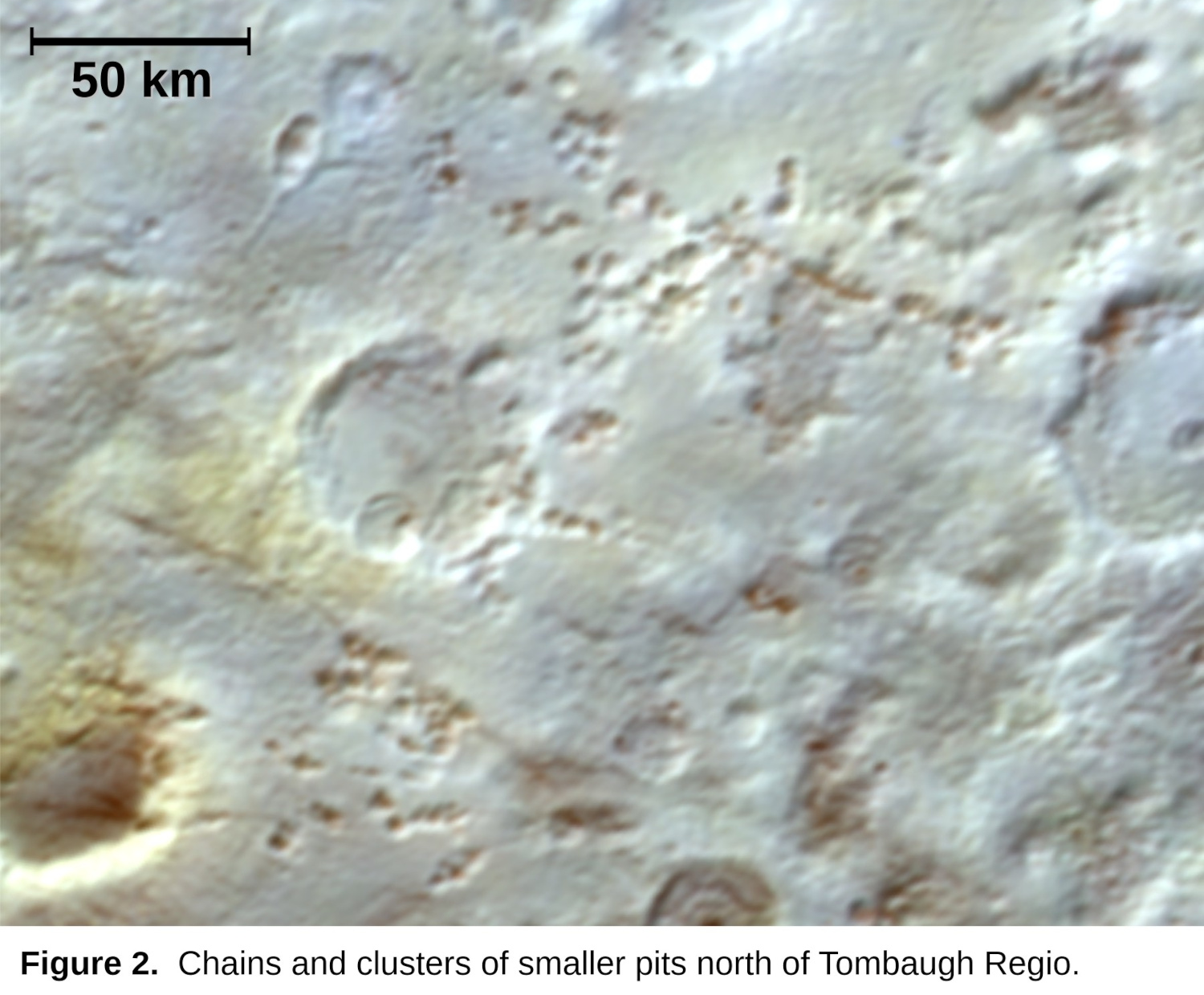
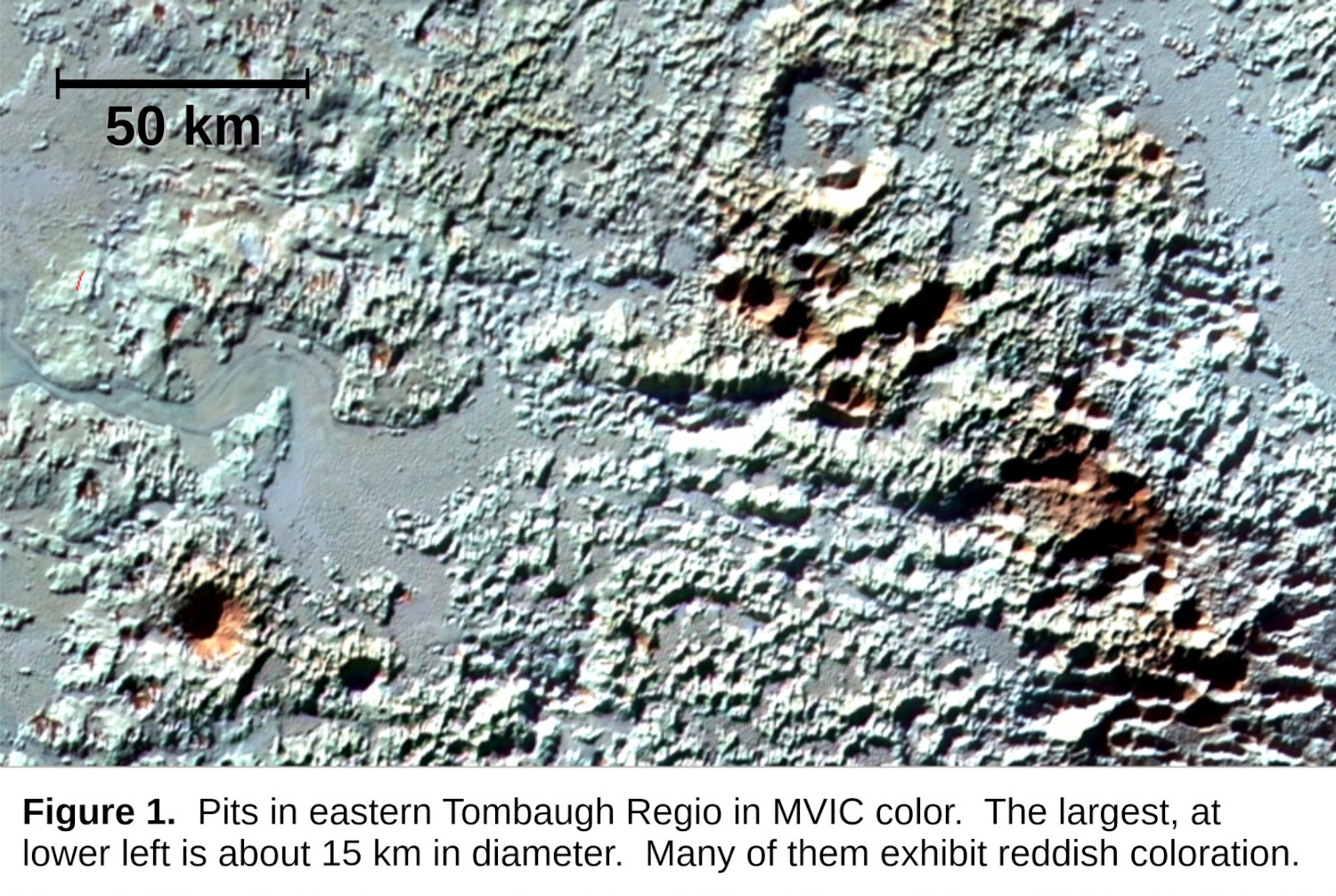
We hypothesize that Pluto’s volatiles (N2, CO, and CH4) could be involved in the formation of enigmatic pits seen in New Horizons images of eastern Tombaugh Regio. These pits exhibit a variety of morphologies, potentially pointing to more than one formation mechanism or to regional differences in subsurface composition or structure. Larger, well-separated pits reach up to ~15 km diameter. Smaller pits occur in chains and clusters. Interior profiles vary from conical to more rounded or flat-floored, and a few have raised rims. We will present several hypotheses for the formation of these features involving Pluto’s volatiles. The first involves sublimation or melting loss of subsurface volatile ices, producing voids that lead to collapse and pit formation. The second involves heating of subsurface volatiles, leading to build up of pressure and eruptive excavation of material. The third also involves eruptions, but of volatiles expelled during cooling and freezing of a mixed volatile liquid. We will discuss the physics and thermodynamics of these scenarios and consider how they fit with morphological and compositional evidence from New Horizons data.

Acknowledgment: This work was partly supported by NASA SSW grants 80NSSC19K0556 and 80NSSC25K7114.


How to cite: Grundy, W., Umurhan, O., Raposa, S., Engle, A., Tan, S., Steckloff, J., Tegler, S., Lindberg, G., Hanley, J., Thieberger, C., and Knudsen, I.: Role of Subsurface Volatiles in the Formation of Pluto's Pits, EPSC-DPS Joint Meeting 2025, Helsinki, Finland, 7–13 Sep 2025, EPSC-DPS2025-862, https://doi.org/10.5194/epsc-dps2025-862, 2025.

09:54–10:06
|
EPSC-DPS2025-791
|
On-site presentation
Simon Porter, Kelsi Singer, Anne Verbiscer, William Grundy, Susan Benecchi, Joel Parker, Pontus Brandt, and Alan Stern

NASA’s New Horizons spacecraft provided the first look at the full shape of a primordial Kuiper Belt Object (KBO) when it encountered the Cold Classical KBO (486958) Arrokoth on January 1, 2019. Arrokoth proved to be a contact binary, composed of two distinct lobes, with the larger lobe roughly twice the volume of the smaller. Examination of Arrokoth’s surface showed no tectonic evidence that lobes came together violently, implying that the present shapes of the lobes may be representative of the shapes of KBOs that formed directly from the protoplanetary disk. In particular, the shapes of the lobes of Arrokoth appear to be consistent with rapid formation from the disk through gravitational collapse triggered by the Streaming Instability (SI). SI also reliably creates large numbers of separated binaries that could evolve into contact binaries. The shapes of KBOs are thus important constraints on not only their own history, but also on the planet formation process in the Solar System as a whole.


Historically, the only practical way to estimate the shapes of small Solar System objects from Earth for objects beyond the reach of radar was through measuring photometry at various Sun-Target-Observer (STO) phase angles. However, this is difficult for KBOs, as their slow orbits (hundreds to thousands of years) and great distances (>35 AU) means that their apparent geometry as seen from Earth changes very slowly, even over many years of observation. Lightcurve studies of bright KBOs have been able to detect that some show evidence of being contact binaries. However, these studies are fundamentally limited by the bias of past surveys to detect KBOs with consistent brightness, which preferentially excludes KBOs that show high amplitude lightcurves. Since cold classical KBOs (like Arrokoth) are preferentially smaller and fainter than resonant KBOs, this bias is even stronger for Cold Classicals (CCs). A different method is thus required to properly understand how common or rare Arrokoth’s shape is among KBOs with a similar history.


Immediately after the Pluto flyby, New Horizons began observing distant KBOs with observations of (15810) Arawn at much higher STO angles than is possible from Earth. This was followed by high STO angle observations of >30 KBOs. Seven additional KBOs to the two identified separated binaries were observed by New Horizons at more than two STO angles, and with enough time coverage to determine their rotational periods. Here we use these unique observations in order to estimate the shapes of those KBOs, and therefore test how common Arrokoth-style contact binaries may be in the Kuiper Belt.


Initial results indicate 4/7 (57%) KBOs are best fit with a contact binary shape, including 3/5 (60%) Cold Classicals. Including Arrokoth in these statistics brings the fraction to 5/8 (63%) overall and 4/6 (67%) of CC KBOs that appear to be contact binaries, when discounting the two tight separated binaries (2011 JX31 and 2014 OS393). Previous studies estimated that 10-25% of CC KBOs were contact binaries based on ground-based lightcurves (in comparison to ~40% for 3:2 KBOs), but those results may be influenced by the fact that CCKBOs are on average fainter than known 3:2 KBOs, leading to a detection bias for CCKBOs with flat lightcurves.


While these are clearly small numbers to draw general conclusions from, it should also be clear that a very large fraction of CC KBOs are likely contact binaries. The upcoming Vera C. Rubin Observatory (Rubin) will be able to detect very large numbers of KBOs, and because of the nature of the survey, it will be substantially less biased towards KBOs with flat lightcurves, particularly after several years of observations. We thus predict that the long-term photometric statistics for CC KBOs from Rubin will be more similar to our results (~66% contact binaries) than past studies (~10-25% contact binaries). Rubin may therefore be able to both test SI as the formation method for the Kuiper Belt and place a constraint on the effectiveness of its creation of Arrokoth-like contact binaries.

How to cite: Porter, S., Singer, K., Verbiscer, A., Grundy, W., Benecchi, S., Parker, J., Brandt, P., and Stern, A.: Measuring the Shapes of Kuiper Belt Objects with New Horizons Photometry, EPSC-DPS Joint Meeting 2025, Helsinki, Finland, 7–13 Sep 2025, EPSC-DPS2025-791, https://doi.org/10.5194/epsc-dps2025-791, 2025.

Rings
10:06–10:18
|
EPSC-DPS2025-1768
|
ECP
|
On-site presentation
Csilla Kalup and Csaba Kiss

During the last decade, occultation measurements have revealed that not only giant planets can host a ring system: Centaur-type objects Chariklo and presumably Chiron, and the dwarf planets Haumea and Quaoar also harbor rings, either single or multiple [1,2,3,4]. While the different dynamical environments and the unique shapes and properties of the main bodies can be vastly different between these systems, similarities such as all the rings being close to the 1:3 spin–orbit resonance are already remarkable. However, both the individual and general formation, evolution and stability of these rings are still under debate.

In the case of Haumea, the canonical ring formation theory states that the ring was formed at the same time and from the same material as Haumea's moons and its dynamical family, which contradicts with the observed indirect estimate of the ring's reflectivity [3,5]. The origin of the ring from giant impact events also raises the question of how the ring could have remained stable for such a long time [6,7].

To test and develop such formation theories, information on the ring's composition are indispensable. Identifying materials helps to better understand the formation of rings around minor and dwarf planets, while the characterisation of the dominant grain sizes is important for stability studies of these systems. However, our current knowledge on these rings is mostly limited to the properties derived from occultation data and brightness estimates of the systems at different observing geometries, while the widely applied simple ring model do not carry any information on the composition [8].

Here, we introduce radiative transfer modelling for small body ring systems to overcome the limitations of the currently used simple ring models such as directly simulate the thermal and visible light emission of rings constructed by using different materials and grain sizes, and taking better account of grain emissivity and anisotropic scattering [9].

In this study, we present a detailed analysis of the Haumea ring system as a case study for other known and forthcoming small body ring systems. We show that carbon-rich or silicate models can be brighter than the thermal emission of the main body itself, and thus can be observed around 10–30 μm. We propose that this mid-infrared excess can be a tracer of smaller (0.1–10 μm) dust grains around any small body system, as it was recently reported around Makemake using JWST [10]. We emphasise the comparison of modelled spectral energy distributions with future multi-wavelength measurements as a diagnostic tool to determine the dominant grain size and characteristic material of a ring, essential inputs to theories of ring formation and evolution.

References:

[1] Braga-Ribas, F., 2014, Nature, 508, 7494, 72-75. [2] Ortiz, J. L., 2015, A&A, 576, A18, 12. [3] Ortiz, J. L., 2017, Nature, 550, 7675, 219-223. [4] Pereira, C. L., 2023, A&A, 673, L4, 14. [5] Noviello, J. L., 2022, PSJ, 3, 9, 225, 19. [6] Sicardy, B., 2025, Philos. Trans. R. Soc. A, 383, 2291, 20240193 [7] Regály, Zs., accepted in A&A, March 2025 (eprint arXiv:2503.17218) [8] Lellouch, E., 2017, A&A, 608, A45, [9] Kalup, Cs., 2024, PASP, 136, 12, 124401, 11. [10] Kiss, Cs., 2024, AJL, 976, 1, L9, 16.

How to cite: Kalup, C. and Kiss, C.: Characterising Grains and Composition in Small-Body Ring Systems: A Case Study of Haumea's Ring, EPSC-DPS Joint Meeting 2025, Helsinki, Finland, 7–13 Sep 2025, EPSC-DPS2025-1768, https://doi.org/10.5194/epsc-dps2025-1768, 2025.

10:18–10:30
|
EPSC-DPS2025-1273
|
On-site presentation
Andre Amarante

The stability scenario about rings around celestial minor bodies and exoplanets has changed significantly in the past decade. There is still no consensus on how these ring systems form, evolve, and remain stable.

So far, four ring systems have been discovered around small Solar System bodies by observing stellar occultations. These include the centaurs Chariklo (Braga-Ribas et al., 2014) and possibly Chiron (Ortiz et al., 2015), and the trans-Neptunian dwarf planets Haumea (Ortiz et al., 2017) and Quaoar (Morgado et al., 2023; Pereira et al., 2023).

The dwarf planet Quaoar was the first small celestial body to have an observed ring outside its Roche limit. The first ring, Q1R, is 4,057±6 km away from Quaoar and exists outside its Roche limit (~1,780 km). Later, a second ring, called Q2R, was discovered much closer to Quaoar at a distance of 2,520±20 km, also outside its Roche limit.

Recently, studies about the evolution and stability of the Q1R ring of Quaoar have been done in order to explain the ring stability outside the Roche limit (Morgado et al., 2023; Rodriguez et al., 2023; Sickafoose & Lewis, 2024). However, a detailed investigation of the stability of Quaoar's Q2R ring is still needed.

In this work, we study the evolution and stability of the Q2R ring of Quaoar through numerical integrations. We use an adapted version of the Mercury package (Chambers, 1999), including the gravitational effects of J2 and C22 coefficients of Quaoar shape and the Weywot satellite perturbation. We explore the combined effects of oblateness (J2) and ellipticity (C22) of Quaoar ellipsoidal shape in a test particle around it in the location of the Q2R ring. We also investigate prograde and retrograde orbits.

Our results show that the Q2R ring is unstable for a prograde orbit around Quaoar up to ~200 years (Fig. 1), regarding its ellipsoidal shape parameters of 545 km x 458 km x 395 km and a rotational period of 17.7 h (Kiss et al., 2024). The instability is due to the ellipticity of the Quaoar shape, which acts to clean the region where the Q2R ring is located.

However, when a retrograde orbit for the Q2R ring is assumed around Quaoar, the Q2R ring becomes stable for at least 25,000 years (Figs. 1 and 2), keeping a radial variation of only ~40 km that corroborates with observational data thresholds. In addition, the stability is due to the oblateness of the Quaoar shape, which keeps the ring stable for a long time.

This result is consistent with that obtained recently in the case of the exoplanet J1407b, for which it was hypothesized that the giant ring surrounding it may exhibit retrograde motion, which would explain its long-term stability (Mamajek et al., 2012; Van Werkhoven et al., 2014; Kenworthy et al., 2015; Kenworthy & Mamajek, 2015). In general, it is well known that retrograde orbits are more stable than prograde ones (see, for instance, Hamilton and Burns (1991); Scheeres (1994); Vieira Neto, E. et al. (2006); Amarante et al. (2021); Amarante et al. (2022)).

In this context, the surprising discovery of two rings around Quaoar located beyond its Roche limit and the hypothesis of a retrograde ring around the exoplanet J1407b represent significant challenges to current models of planetary ring formation, evolution, and stability (Hedman, 2023).

Considering this scenario, our results indicate that the Q2R ring may be in a retrograde orbit around Quaoar, explaining its stability in long-term simulations.

Fig. 1: Radial distance evolution from Quaoar of a test particle initially located at Q2R ring over 200 years. The red line denotes a prograde orbit, while the blue line represents a retrograde orbit around Quaoar.

Fig. 2: Radial distance evolution from Quaoar of a test particle initially located at Q2R ring over 25,000 years. The red line denotes a prograde orbit around Quaoar, while the blue line represents the retrograde orbit.

How to cite: Amarante, A.: The Retrograde Ring Of Dwarf Planet Quaoar, EPSC-DPS Joint Meeting 2025, Helsinki, Finland, 7–13 Sep 2025, EPSC-DPS2025-1273, https://doi.org/10.5194/epsc-dps2025-1273, 2025.

Orals WED-OB3: Wed, 10 Sep, 11:00–12:30 | Room Earth (Veranda 2)

Chairpersons: José María Gómez-Limón Gallardo, Thomas Müller
Occultations
11:00–11:12
|
EPSC-DPS2025-380
|
Virtual presentation
Flavia Luane Rommel, Benjamin Produfoot, Bryan Holler, Estela Fernández-Valenzuela, José Luis Ortiz, and José María Gómez-Limón Gallardo

The study of trans-Neptunian binaries has uncovered a whole set of information about planetesimal formation and collisional evolution in the outer boundaries of our planetary system. In this context, obtaining the secondary’s orbit around the primary enables a calculation of the system’s mass, which combined with size estimates from other observational techniques allows for system density estimations—key to comprehend their composition and internal structure.

The stellar occultation observational technique is widely known by its ability to obtain accurate measurements of distant solar system small bodies and is highly effective in determining a binary system’s properties. The method involves high-cadence imaging of a background star while a small body passes in front of it, temporarily blocking the star's light as observed from a location within the path of the shadow. A positive detection provides a direct measurement of the object’s size and any surrounding structure. To date, the stellar occultation technique has been responsible for the discovery of ring-like features around the Centaurs Chariklo and Chiron [1, 2], and also the rings hosted by the trans-Neptunian objects Quaoar and Haumea [3, 4, 5]. However, in general, predicting when a trans-Neptunian object (TNO) produces a stellar occultation is challenging, and even more so when the occultation is produced by a TNO satellite. An accurate prediction requires both an accurate ephemeris for the primary object and a well-constrained determination of the secondary’s orbit around the primary.

In this work we present the prediction, observation, and preliminary results of a stellar occultation by Namaka, Haumea’s smallest known satellite. The prediction was performed using the JPL#124 and NIMA v12 ephemeris for Haumea. Meanwhile Namaka’s orbit solution was obtained from [6]. We did not consider possible small barycentric wobbles of Haumea and we assumed that the primary ephemeris refers to Haumea’s true center. We predicted that Namaka would occult the same G = 17.6 mag star after Haumea on March 16th, 2025 (UT). Both stellar occultations were predicted to be visible only from Hawaiian telescopes and Namaka’s occultation was predicted to happen only ~6 minutes after Haumea’s occultation, providing an excellent opportunity to accurately measure their relative distances.

The event was recorded from the IRTF 3m telescope using the MORIS instrument with an exposure time of 0.3 seconds and 2×2 binning. The GPS pulse was set once per exposure to ensure that the image times were synchronized with universal time frame. After standard bias and sky flat calibrations, images were submitted to aperture photometry by using the PRAIA tool [7] and featuring concentric apertures of 3, 13, and 18 pixels for the stellar flux and background fluxes, respectively. Due to Haumea’s brightness contributions, a drop of only 45% was expected in the occultation light curve. Therefore, the occultation light curve was normalized to unity outside the event and to 0.55 for measurements during the events. The Stellar Occultation Reduction and Analysis (SORA) python library [8] was used to model the normalized data using the classic χ² test and obtain the star dis- and re-appearance times. Our results show positive chords of about 1260 km and 80 km in length for Haumea and Namaka, respectively. Additionally, the data were recorded in a perpendicular orientation regarding 2017’s observations, which can provide constraints regarding Haumea’s ring plane.

References

[1]Braga-Ribas, F., et al., “A ring system detected around the Centaur (10199) Chariklo”, Nature, v. 508, n. 7494, pp. 72–75, 2014. doi:10.1038/nature13155.

[2]Ortiz, J. L., et al., “Changing material around (2060) Chiron revealed by an occultation on December 15, 2022”, Astronomy and Astrophysics, v. 676, n. L12, 2023. doi:10.1051/0004-6361/202347025.

[3]Ortiz, J. L., “The size, shape, density and ring of the dwarf planet Haumea from a stellar occultation”, Nature, v. 550, n. 7675, pp. 219–223, 2017. doi:10.1038/nature24051.

[4]Morgado, B. E., et al. “A dense ring of the trans-Neptunian object Quaoar outside its Roche limit”, Nature, v. 614, n. 7947, pp. 239–243, 2023. doi:10.1038/s41586-022-05629-6.

[5]Pereira, C. L., “The two rings of (50000) Quaoar”, Astronomy and Astrophysics, v. 673, n. L4, EDP, 2023. doi:10.1051/0004-6361/202346365.

[6]Proudfoot, B. C. N., et al., “Beyond Point Masses. III. Detecting Haumea's Nonspherical Gravitational Field”, The Planetary Science Journal, v. 5, n. 3, 2024. doi:10.3847/PSJ/ad26e9.

[7]Assafin, M., “Differential aperture photometry and digital coronagraphy with PRAIA”, Planetary and Space Science, v. 239, n. 105816, 2023. doi:10.1016/j.pss.2023.105816.

[8]Gomes-Júnior, A. R., et al., “SORA: Stellar occultation reduction and analysis”, Monthly Notices of the Royal Astronomical Society, v. 511, n. 1, pp. 1167–1181, 2022. doi:10.1093/mnras/stac032.

How to cite: Rommel, F. L., Produfoot, B., Holler, B., Fernández-Valenzuela, E., Ortiz, J. L., and Gómez-Limón Gallardo, J. M.: Detailed stellar occultation detection of Haumea and Namaka from IRTF, EPSC-DPS Joint Meeting 2025, Helsinki, Finland, 7–13 Sep 2025, EPSC-DPS2025-380, https://doi.org/10.5194/epsc-dps2025-380, 2025.

11:12–11:24
|
EPSC-DPS2025-252
|
On-site presentation
Physical properties of TNO’s satellites from stellar occultations
(withdrawn)
Estela Fernández-Valenzuela, Jose Luis Ortiz, Flavia L. Rommel, Bryan Holler, Benjamin Proudfoot, Cameron Collyer, José María Gómez-Limón Gallardo, Nicolás Morales, and Juan Luis Rizos
11:24–11:36
|
EPSC-DPS2025-254
|
On-site presentation
Damya Souami, Jean Lecacheux, Bruno LTE, Observatoire de Paris, Paris, France, Jose-Luis Ortiz, Chrystian Luciano Pereira, Josselin Desmars, Felipe Braga-Ribas, Pablo Santos-Sanz, Yucel Kilic, Nicolas F. Morales Palomino, Djounai Baba-Aissa, Wolfgang Beisker, David Dunham, David Gault, Konrad Guhl, Dave Herald, Oliver Kloes, and Giuliat Navas

The powerful method of stellar occultations is a technique uniquely approaching the performances of planetary space missions. For remote objects such as 2013LU28 stellar occultations are by far the best method we have to determine its size and shape at km-level accuracy, and provide high accuracy astrometry to help better constrain the orbital solution.

(468861) 2013LU28 was discovered on June 8th, 2013 with the Mount Lemmon Survey in Arizona. It is a fascinating and intriguing object from the dynamical standpoint, with a semi-major axis of ∼183.4 AU, an inclination with respect to the ecliptic of ∼ 125°.3, and an eccentricity of ∼ 0.954. It was at its perihelion on June 20th, 2024 at ∼ 8.7AU. It has recently been observed with NIRSpec/JWST in the framework of the DiSCo-TNOs programme as well as MIRI/JWST (no published results as yet).

After chasing occultation opportunities by (468 861) 2013LU28 for about five years, we have only very recently succeeded with three multi-chord occultations recorded.

In this paper, we present the results of three multi-chord occultation campaigns on Jan. 30th (Europe and United States), Feb. 18th (Algeria, Canary Islands, and Venezuela), and March 18th, 2025 (USA) events, which have allowed to improve the astrometry, measure the size of the object and provide valuable constraints on its shape. The data from these occultations were combined with rotational light-curves obtained from Sierra Nevada Observatory, which allow to constrain the phase and have a better assessment of the 3D shape model.

Acknowledgements - This campaign is carried out under the ”Lucky Star” umbrella, an EU-funded research activity that agglomerates the efforts of the Paris, Granada, and Rio teams. (cf. https://lesia.obspm.fr/lucky-star/). Moreover, we would like to Acknowledge the contribution to these three campaigns of the 90+ IOTA members and non IOTA observers who cannot be cited here because of the limitations in the number of characters. The campaigns leads are co-authors to the abstract.

How to cite: Souami, D., Lecacheux, J., LTE, Observatoire de Paris, Paris, France, B., Ortiz, J.-L., Pereira, C. L., Desmars, J., Braga-Ribas, F., Santos-Sanz, P., Kilic, Y., Morales Palomino, N. F., Baba-Aissa, D., Beisker, W., Dunham, D., Gault, D., Guhl, K., Herald, D., Kloes, O., and Navas, G.: Constraining the astrometry, size, and shape of Trans-Neptunian Object (468 861) 2013LU28 from three multi-chord occultation events (01/2025 to 03/2025), EPSC-DPS Joint Meeting 2025, Helsinki, Finland, 7–13 Sep 2025, EPSC-DPS2025-254, https://doi.org/10.5194/epsc-dps2025-254, 2025.

11:36–11:48
|
EPSC-DPS2025-345
|
On-site presentation
José María Gómez-Limón, Rodrigo Leiva, José Luis Ortiz, and Mike Kretlow

Discovering satellites around Solar System objects is of significant scientific interest, primarily because their mutual orbits allow us to infer the system's mass [Noll et al. 2008 a]. When size measurements are also available, we can derive the bulk density, offering crucial insight into the internal structure and composition—parameters otherwise inaccessible. Furthermore, characteristics such as size ratio, inclination, and eccentricity provide valuable clues about the system’s formation and evolution [Nesvorný & Vokrouhlický 2019].

However, identifying satellites around trans-Neptunian objects (TNOs) poses a particular challenge due to their vast heliocentric distances. While the widest binaries can be resolved using the Hubble Space Telescope [Grundy et al. 2019; Porter et al. 2024], tighter systems remain beyond the reach of direct imaging techniques.

To address this limitation, we have developed a novel methodology to quantitatively constrain the sizes of potential tight satellites around TNOs by combining stellar occultation data with thermal infrared observations from the TNOs are Cool project [Müller et al. 2010]. Continuing the idea proposed by Ortiz (2020), our approach models the system’s thermal emission using the Near-Earth Asteroid Thermal Model (NEATM, [Harris 1998]), with the area of the primary fixed by the occultation-derived cross-section. We then apply a Bayesian framework to fit the model to the observed thermal fluxes, allowing us to place statistical limits on the diameter of any unresolved companion.

This technique advances previous analyses of TNOs with combined occultation and thermal data. Traditionally, if the sizes derived from the two methods are consistent, no further investigation is made into the possibility of a satellite. Conversely, discrepancies are often attributed to the presence of a companion, but rarely is its size properly quantified.

This methodology has been already applied in Gómez-Limón et al. 2025 for 2007 OC10. In this work, we expand its application to a selected sample of TNOs are Cool targets with published occultation data. In some cases, we are able to confidently rule out the presence of a sizable satellite, setting upper limits on its diameter. In others, our model suggests that a companion is necessary to reconcile the observations, and we provide estimates of the satellite-to-primary size ratio. These findings help motivate targeted searches for the proposed satellites via stellar occultation campaigns or other techniques. To validate our methodology, we also apply it to systems with already known satellites, demonstrating its robustness and potential for broader application.

References:

  • Gómez-Limón et al. (2025), A&A, in press, https://arxiv.org/abs/2504.02457 .

  • Grundy et al. (2019), Icarus, 334, 62–78.

  • Harris (1998), Icarus, 131, 291.

  • Müller et al. (2010), A&A, 518, L146.

  • Nesvorný & Vokrouhlický (2019), Icarus, 331, 49–61.

  • Noll et al. (2008a), The Solar System Beyond Neptune, Univ. of Arizona Press, pp. 345–363.

  • Ortiz (2020), 14th Europlanet Science Congress 2020

  • Porter et al. (2024), Planet. Sci. J., 5(6), 143.


How to cite: Gómez-Limón, J. M., Leiva, R., Ortiz, J. L., and Kretlow, M.: Constraining unresolved satellite presence in TNOs combining thermal data and occultations, EPSC-DPS Joint Meeting 2025, Helsinki, Finland, 7–13 Sep 2025, EPSC-DPS2025-345, https://doi.org/10.5194/epsc-dps2025-345, 2025.

Binaries
11:48–12:00
|
EPSC-DPS2025-339
|
ECP
|
Virtual presentation
Cameron Collyer, Estela Fernández-Valenzuela, José Luis Ortiz, Rafael Morales Muñoz, Nicolás Morales, Bryan Holler, Benjamin Proudfoot, and Flavia Luane Rommel

Long-baseline photometric monitoring of small bodies in the outer solar system is crucial for accurate constraints on their physical properties such as rotation period, shape, spin pole orientation, surface morphology and interior characteristics. In this work we present the analysis of 16 years of ground and space-based photometric observations of the Salacia-Actaea system, corresponding to a total on-target observing time of ∼165 hr. The photometry is derived from ∼1000 images using the automated Massive prOcessing Of aStronomical imagEs (Moose) - version 2 [M2; 1] software.

Invoking a Lomb-Scargle periodogram analysis on the unresolved photometry, we find a photometric period consistent with the orbital period of Actaea [2]. Using resolved HST photometry we isolate Salacia’s contribution to the derived phase-folded lightcurve. The individual HR-mags of Salacia and Actaea, as well as their effective radii and an approximate model of Salacia’s shape and surface morphology are derived from the HST and ground-based photometry. From this, we find that the Salacia-Actaea system is doubly-synchronous, where Salacia and Actaea both rotate at the mutual orbital period. This is only the third TNO-binary system observationally confirmed to exhibit doubly-synchronous rotation; the Pluto-Charon [3] and Eris-Dysnomia systems [4, 5] are also in this tidal end-state. We will additionally discuss our findings from an investigation of the dynamical evolution of the system resulting from tidal interactions, with implications for the formation of the binary system.

References

[1] Rafael Morales, Nicolás Morales, René Duffard, José Luis Ortiz, Mónica Vara-Lubiano, Flavia Rommel, Mike Kretlow, Pablo Santos-Sanz, Estela Fernández-Valenzuela, Alvaro Alvarez-Candal, and Nicolás Robles. Cataloguing astronomical groundbased images of asteroids and TNOs. In European Planetary Science Congress, pages EPSC2022–652, September 2022. doi: 10.5194/epsc2022-652.

[2] W. M. Grundy, K. S. Noll, H. G. Roe, M. W. Buie, S. B. Porter, A. H. Parker, D. Nesvorný, H. F. Levison, S. D. Benecchi, D. C. Stephens, and C. A. Trujillo. Mutual orbit orientations of transneptunian binaries. Icarus, 334:62–78, December 2019. doi: 10.1016/j.icarus.2019.03.035.

[3] J. W. Christy and R. S. Harrington. The satellite of Pluto. AJ, 83:1005, August 1978. doi: 10.1086/112284.

[4] R. Szakáts, Cs. Kiss, J. L. Ortiz, N. Morales, A. Pál, T. G. Müller, J. Greiner, P. Santos-Sanz, G. Marton, R. Duffard, P. Sági, and E. Forgács-Dajka. Tidally locked rotation of the dwarf planet (136199) Eris discovered via long-term ground-based and space photometry. A&A, 669:L3, January 2023. doi: 10.1051/0004-6361/202245234.

[5] Gary M. Bernstein, Bryan J. Holler, Rosario Navarro-Escamilla, Pedro H. Bernardinelli, T. M. C. Abbott, M. Aguena, S. Allam, O. Alves, F. Andrade-Oliveira, J. Annis, D. Bacon, D. Brooks, D. L. Burke, A. Carnero Rosell, J. Carretero, L. N. da Costa, M. E. S. Pereira, J. De Vicente, S. Desai, P. Doel, A. Drlica-Wagner, S. Everett, I. Ferrero, J. Frieman, J. Garcíıa-Bellido, D. W. Gerdes, D. Gruen, G. Gutierrez, K. Herner, S. R. Hinton, D. L. Hollowood, K. Honscheid, D. J. James, K. Kuehn, N. Kuropatkin, J. L. Marshall, J. Mena-Fernández, R. Miquel, R. L. C. Ogando, A. Pieres, A. A. Plazas Malag´on, M. Raveri, K. Reil, E. Sanchez, I. Sevilla-Noarbe, M. Smith, M. Soares-Santos, E. Suchyta, M. E. C. Swanson, P. Wiseman, and DES Collaboration. Synchronous Rotation in the (136199) Eris-Dysnomia System. PSJ, 4(6):115, June 2023. doi: 10.3847/PSJ/acdd5f.


How to cite: Collyer, C., Fernández-Valenzuela, E., Ortiz, J. L., Morales Muñoz, R., Morales, N., Holler, B., Proudfoot, B., and Rommel, F. L.: The Doubly Synchronous (120347) Salacia-Actaea System: Results From 16 Years of Photometric Monitoring, EPSC-DPS Joint Meeting 2025, Helsinki, Finland, 7–13 Sep 2025, EPSC-DPS2025-339, https://doi.org/10.5194/epsc-dps2025-339, 2025.

12:00–12:12
|
EPSC-DPS2025-905
|
On-site presentation
Csaba Kiss, Krisztina Gabányi, Attila Moór, Thomas Müller, Estela Fernandez-Valenzuela, Arielle Moullet, Tamás Borkovits, and Csilla Kalup

While a significant fraction of large Trans-Neptunian Objects (TNOs) possess satellites, our understanding of the mechanisms that could lead to their formation of these systems remains limited. The prevailing view is that giant impacts are primarily responsible for creating these satellites; however, most simulations have focused on individual systems such as Pluto or Haumea [1,2]. Arakawa et al. [3] conducted simulations of satellite formation that revealed a wide range of possible outcomes—such as varying satellite-to-system mass ratios—depending on impact parameters (e.g., velocity and angle) as well as the internal structure and composition of the colliding bodies. Nonetheless, these findings are insufficient to robustly constrain the general formation conditions of large TNOs, primarily due to limited observational data. Moreover, they do not fully account for the high frequency of satellites among large TNOs, often relying on assumptions about conditions in the protoplanetary disk during the impact era. Barr and Schwamb [4] proposed a broader framework in which collisions are classified as either Charon-forming or as producing small icy fragments, yet it remains unclear how most known systems fit into this paradigm. In addition to the well-studied Pluto–Charon system, the satellite-to-primary mass ratios of the dwarf planet systems Eris–Dysnomia and Orcus–Vanth have also been determined through ALMA observations [5], yielding values of q≤0.085 and q=0.16, respectively. These measurements provide important constraints on their possible formation scenarios.

In this study, we present new ALMA Band 7 (~870 µm or 340 GHz) spatially resolved observations of two additional systems: Varda–Ilmarë and Salacia–Actaea. In each case, the satellites were successfully detected, with positions closely matching those predicted by the latest available orbital solutions (see Fig. 1). To further characterize these systems, we conducted detailed thermal emission modeling using supplementary archival data from the Spitzer Space Telescope and the Herschel Space Observatory, applying the Near-Earth Asteroid Thermal Model (NEATM).

Figure 1: ALMA band-7 (344 GHz) intensity contour maps of Varda (left), observed at a single epoch, and Salacia (middle and right), observed at two epochs. V1/S1 mark the primaries, and V2/S2 mark the satellites, in all cases very close to the expected position at the specific epoch.

For Ilmarë, we derive an effective diameter of D=403±40 km and a geometric albedo of pV=0.068±0.011, indicating that Ilmarë is approximately half the size of Varda (D=740 km) and notably darker (with pV=0.099 for Varda). Assuming equal densities (ρ=1.15 g/cm³) for both bodies, the resulting satellite-to-primary mass ratio is q=0.16, closely matching that of the Orcus–Vanth system. Even under the assumption of a lower density of ρ=0.7 g/cm³—typical for trans-Neptunian objects (TNOs) in the ~400 km size range—the mass ratio remains high at q=0.11. This places Varda–Ilmarë among the systems with the largest known mass ratios, comparable to that of Pluto–Charon.

Using the same approach, we obtain D=393±33 km and pV=0.021±0.004 for Actaea and  D=838±44 km and pV=0.041±0.004 for Salacia. Again, assuming equal densities (ρ≈1.45 g/cm³) the satellite-to-primary mass ratio is q=0.10, however, this would be an exceptionally high density for the satellite. Assuming a more typical satellite density of 0.7 g/cm³ we obtain q = 0.044.

We also observed the Haumea system with ALMA in band-7 high spatial resolution measurements. For Hi’iaka, we dervied D=349±9 km and pV=0.88±0.09, considering both occultation (Fernandez-Valenzuela, priv. comm.) and thermal emission data. This suggests that Hi’iaka has the brightest surface among small and mid-sized TNOs and Centaurs, and only the largest trans-Neptunian belt objects – Eris, Makemake and Triton – and the giant planet satellites have comparably high geometric albedos. We also derive a very high albedo surface, pV≥0.6, for Namaka from the same set of measurements

When supplemented with data from other dwarf planet systems, our results clearly indicate that the transition from smaller, nearly equal-sized binaries to systems with small satellites is not abrupt. Instead, there is a gradual decrease in the satellite-to-primary mass ratio with increasing system mass—a trend that binary formation models should be able to account for.

References:

[1] Canup, R. M. 2005, Science, 307, 546

[2] Canup, R. M. 2011, AJ, 141, 35

[3] Arakawa, S., Hyodo, R., & Genda, H. 2019, Nature Astronomy, 3, 802

[4] Barr, A. C. & Schwamb, M. E. 2016, MNRAS, 460, 1542

[5] Brown M.,E., Butler B.J., 2023, PSJ, 4, 193.

How to cite: Kiss, C., Gabányi, K., Moór, A., Müller, T., Fernandez-Valenzuela, E., Moullet, A., Borkovits, T., and Kalup, C.: ALMA submm measurements of the trans-Neptunian binary system satellites Ilmarë, Actaea, Hi’iaka and Namaka, EPSC-DPS Joint Meeting 2025, Helsinki, Finland, 7–13 Sep 2025, EPSC-DPS2025-905, https://doi.org/10.5194/epsc-dps2025-905, 2025.

12:12–12:24
|
EPSC-DPS2025-225
|
On-site presentation
Audrey Thirouin, Scott S. Sheppard, William M. Grundy, and Keith S. Noll

A close/contact binary can be a small body with a bi-lobed shape, two objects touching at one point, and two objects with a small separation of less than a few hundred kilometers. Contact binaries are common in our Solar System's small body populations, as they are found in the near-Earth object, comet, main belt asteroid, and trans-Neptunian object populations.  
Several models have been proposed to explain the formation of trans-Neptunian contact binaries, and we can cite for example: (1) a wide binary system can shrink its orbit and end up in a compact configuration due to dynamical effects, (2) binaries formed directly from gravitationally unstable clouds of much smaller particles through pebble accretion and if clumps are formed close enough they will end up as contact binaries, and (3) a physical collision between two objects can result in their accretion, within the sphere of influence of a third object

Unfortunately, none of these proposed models have been thoroughly tested with observations, as the contact binary trans-Neptunian population remained elusive until recently. Now that we have a sizeable sample of confirmed and likely contact binaries in the trans-Neptunian belt, we can test these models as they predict different outcomes regarding the presence of a widely separated moon orbiting the contact binary. If the first model based on dynamical effects is responsible for contact binary formation, no contact binary should have a moon if created from a two-body system. With three-body interactions, one has to expect many triple systems, whereas the gravitational collapse should give a mix of triple systems and contact binaries with no moon.

Using archival and new Hubble Space Telescope observations, we will present some preliminary results regarding the fraction of contact binaries with/without a moon and their distribution in several trans-Neptunian sub-populations. 

This work is supported by HST-GO-17524 and the National Science Foundation grants #1734484 and #2109207. 

How to cite: Thirouin, A., Sheppard, S. S., Grundy, W. M., and Noll, K. S.: Moon(s) around Contact Binary Trans-Neptunian Objects., EPSC-DPS Joint Meeting 2025, Helsinki, Finland, 7–13 Sep 2025, EPSC-DPS2025-225, https://doi.org/10.5194/epsc-dps2025-225, 2025.

12:24–12:30

Orals WED-OB5: Wed, 10 Sep, 15:00–16:00 | Room Earth (Veranda 2)

Chairpersons: Csaba Kiss, Csilla Kalup
Discovery and photometric monitoring
15:00–15:12
|
EPSC-DPS2025-1006
|
On-site presentation
Anne Verbiscer, Susan Benecchi, Amanda Sickafoose, Paul Helfenstein, Julia Lynn, and Hannah Worters

We report the results of a campaign to observe the opposition effect of several trans-Neptunian objects (TNOs) and Centaurs from several ground-based telescopes. Our target list included TNOs (225088) Gonggong and (275809) 2001 QY297 and Centaurs (10199) Chariklo and (52872) Okyrhoe, among others, and our observations were obtained primarily at the Astrophysical Research Consortium's 3.5-m telescope at Apache Point Observatory and the South African Astronomical Observatory's 74-inch telescope.

The opposition effect, or opposition surge, is the non-linear increase in reflectance seen as an airless planetary body nears opposition and the solar phase (Sun-Target-Observer) angle decreases to zero. The smallest solar phase angles are attainable at node crossings as the Earth transits the solar disk as viewed from the object. In this configuration, a solar system body is at "true" opposition and when combined with observations at larger phase angles, the resulting measurement can be related to the collisional history and physical properties of the surface. The minimum solar phase angle at which a TNO or Centaur can be observed is defined by the angular radius of the Sun seen from the body. Thus, we exploit the large heliocentric distances at which TNOs reside to probe deeper into the opposition effect by accessing smaller solar phase angles than can be observed for objects inward of 30 au.

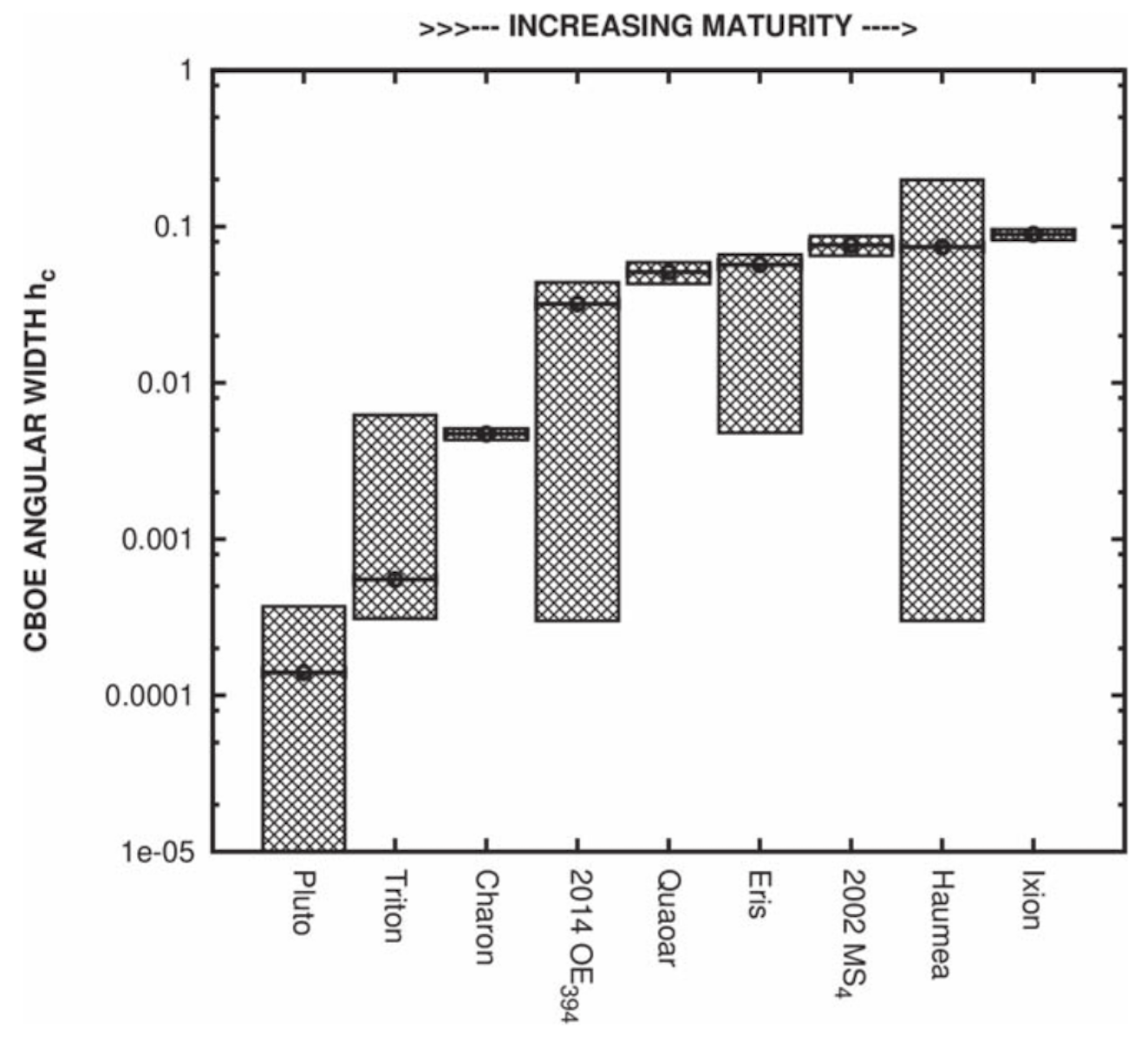
The opposition effect is the product of two mechanisms: interparticle shadow hiding and a constructive interference phenomenon know as coherent backscatter. The shadow hiding opposition effect (SHOE) is most pronounced at phase angles less than 20º [1] and is related to regolith grain size distribution, grain transparency, and surface porosity [2]. The coherent backscatter opposition effect (CBOE) occurs when photons traveling in the regolith along identical but reversed paths interfere constructively to increase the reflectance by up to a factor of two at phase angles less than 2º [3,4]. Both the SHOE and the CBOE are characterized by an amplitude and an angular width. While the SHOE acts only on singly scattered light, the CBOE affects both singly and multiply scattered photons [5,6]. Due to the role of multiple scattering in the CBOE, high albedo surfaces should exhibit strong opposition effects. Nevertheless, many low albedo surfaces, including those on TNOs and Centaurs [e.g. 7,8], exhibit strong CBOE, most likely contributed by multiple internal scattering from minute inclusions and mechanical imperfections within individual, architecturally complex regolith grains. The angular width of the CBOE is directly related to regolith maturity: surfaces with broad opposition effects are more mature than those whose CBOE angular widths are narrower [9] (Fig. 1). Characterization of the angular width and amplitude of the SHOE and CBOE enables the investigation and comparison of the surface properties and evolution of TNOs and Centaurs.

Fig. 1: From [8], CBOE angular width (in radians) for several large TNOs and dwarf planets as a function of surface maturity. Surfaces with larger CBOE widths (e.g. Ixion and Houmea) are more mature than those with smaller CBOE angular widths (e.g. Pluto and Triton).

Authors acknowledge support from NASA grant 80NSSC21K0433.

[1] Helfenstein, P. et al. (1988) Icarus 74, 231. [2] Hapke, B. (1986) Icarus 67, 264. [3] Shkuratov, Y. G. (1988) Kinemat. Phys. Neb. Tel. 4, 33. [4] Muinonen, K. (1990) Ph. D. Thesis, Helsinki University, Helsinki. [5] Hapke, B. (2002) Icarus 157, 523. [6] Hapke, B. et al. (2009) Icarus 199, 210. [7] Verbiscer, A. J. et al. (2019) ApJ 158, 123. [8] Verbiscer, A. J. et al. (2022) PSJ 3, 95. [9] Hapke, B. (2021) Icarus 354, 114105.

How to cite: Verbiscer, A., Benecchi, S., Sickafoose, A., Helfenstein, P., Lynn, J., and Worters, H.: Physical Surface Properties of Trans-Neptunian Objects and Centaurs Derived from Observations of the Opposition Effect, EPSC-DPS Joint Meeting 2025, Helsinki, Finland, 7–13 Sep 2025, EPSC-DPS2025-1006, https://doi.org/10.5194/epsc-dps2025-1006, 2025.

15:12–15:24
|
EPSC-DPS2025-1418
|
On-site presentation
Susanne Pfalzner, Frank Wagner, and Paul Gibbon

Trans-Neptunian Objects (TNOs) are remnants of the planetesimal population formed during the planet formation stage \citep{Gladman:2021}. Unlike the planets, most TNOs move on inclined eccentric orbits. Different models are proposed to explain these dynamics. However, another constraint comes from the TNOs' chemical composition, which may provide additional valuable insights into the Solar System's early history. Both dynamics and composition have to be explained simultaneously using the same model. This puts tight constraints on any early solar system model. We show that a stellar flyby can stand this rigorous test of explaining the TNOs dynamics and colour distribution simultaneously.


Recently, we looked at a stellar flyby as an alternative to the planet instability model to explain the TNOs dynamics (Pfalzner et al. 2004). While migration of the giant planets during the early stages of Solar System evolution could have induced substantial scattering of planetesimals producing TNOs on inclined, eccentric orbits, this process cannot account for the small number of distant TNOs (p > 60 au) outside the planets' reach and retrograde TNOs. The alternative scenario of the close flyby of another star delivers all these TNO features simultaneously. We found that a 0.8 M⊙ star passing at a distance of p = 110 au, inclined by i = 70°, gives a near-perfect match. This flyby also reproduces the cold, hot, Sena-like, retrograde TNO populations. The next step is to test whether the same flyby can also account for the TNO's colour distribution.


Detailed compositional data mainly exists for the largest TNOs. The smaller TNOs are often too faint for spectroscopic observations (e.g. Emery et al. 2024}. As a result, their surface composition is typically analysed using broadband photometry. This type of observation shows that the colour distribution of TNOs ranges from grey to very red {e.g. Barucci et al. 2020}. At greater distances from the Sun, temperatures drop significantly, which could have strongly influenced local chemistry during planetesimal formation. Therefore, one may expect that the colours of TNOs varied with their distance from the Sun. However, observations do not show such a straightforward correlation between TNO colour and heliocentric distance {Jewitt:2001}. Early studies already showed that TNOs with low inclination and low eccentricity are predominantly very red. In contrast, TNOs with higher inclinations (i.e., i > 5 degrees) and higher eccentricities, typical of the hot Kuiper Belt, exhibit a mix of red and grey colors. Recent studies, including the Outer Solar System Survey (OSSOS) (Schwamb et al. 2019) and the Dark Energy Survey (DES) (Bernardinelli:2023), along with observations from the James Webb Space Telescope (JWST) (Pinilla:2024) have confirmed these findings.


We simulate the effect of a stellar flyby on a disc represented by massless test particles, which initially orbit the Sun on Keplerian trajectories. We assume that before the flyby, the model disc extended to 150 au and exhibited a colour gradient due to its TNO composition. We follow the trajectories of the test particles during the flyby and investigate their final properties using the REBOUND code.


We find that the flyby explains the observed colour structures found in the OSSOS and DES survey. The complex colour distribution directly results from this transport in the spiral arms. It successfully links the colours to the dynamics of the TNOs. In particular, the flyby naturally produces the increased dominance of grey vs. very red TNOs for higher inclinations. This results in the scarcity of very red TNOs for inclinations >21°. It also leads to the observed lack of very red TNO among very eccentric (e > 0.42) TNOs.


The lack of very red objects among the irregular moons can be explained as a direct result of originating in the outer regions ($r >$ 60 au) of the disc (Pfalzner & Govind 2004). We find now that they may originate from the same reservoir as the high-inclination TNOs.


The combined reproduction of the TNO dynamics and colours significantly strengthens the argument for a stellar flyby being responsible for the intricate structure of the solar system beyond Neptune. Up-coming instruments, in particular LSST, hold the promise of detecting many thousands of new TNOs.


References

  • Gladman Gladman, B., & Volk, K. 2021, ARA&A, 59, 203,
  • Pfalzner, S., Govind, A., & Portegies Zwart, S. (2024), Nature Astronomy, 8, 1380.
  • Emery, J. P., Wong, I., Brunetto, R., et al. 2024, Icarus, 414, 116017
  • Barucci, M. A., & Merlin, F. 2020, in The Trans-Neptunian Solar System, ed. Prialnik, M. A. Barucci, & L. Young (Elsevier), 109–126
  • Jewitt, D. 2018, AJ, 155, 56
  • Schwamb, M. E., Fraser, W. C., Bannister, M. T., et al. 2019, ApJS, 243, 12
  • Bernardinelli, P. H., Bernstein, G. M., Jindal, N., et al. 2023, ApJS, 269, 18
  • Pinilla-Alonso, N., Brunetto, R., De Pra ́, M. N., et al. 2025, Nature Astronomy, 9, 230
  • Pfalzner, S., Govind, A., & Wagner, F. W. 2024, ApJL, 972, L21,


How to cite: Pfalzner, S., Wagner, F., and Gibbon, P.: TNO colours as a test for a past, close stellar flyby to the solar system, EPSC-DPS Joint Meeting 2025, Helsinki, Finland, 7–13 Sep 2025, EPSC-DPS2025-1418, https://doi.org/10.5194/epsc-dps2025-1418, 2025.

15:24–15:36
|
EPSC-DPS2025-38
|
On-site presentation
Eva Lilly, Charles Schambeau, Kat Volk, Peter Jevčák, Audrey Thirouin, and Jiří Šilha

Centaurs are small bodies residing on unstable orbits between Jupiter and Neptune. As objects recently scattered from their sources in the Kuiper belt and beyond, they carry the compositional information of their parent populations into the realm of the giant planets. Unlike the TNO populations, Centaurs are known for their unusual bimodal distribution of optical surface colors, splitting them into two distinct groups - red and grey (neutral). It has been long disputed whether this color distribution points to Centaurs being sourced from two distinct formation locations in the protoplanetary disk, or alternatively that the present surface color distribution represents an ongoing dynamical-evolutionary pathway experienced by Centaurs that produces the two groups.

Here we present results from a broadband visible photometric investigation using the SDSS-like g', r' and i' filters of 33 Centaurs obtained with the Gemini Observatories and the Lowell Discovery Telescope. The data have been collected as a part of the RENOIR (Revealing cENtaur cOlor hIstoRy) survey in 2022-2025. The ultimate goal of this program is to collect surface colors of Centaurs covering a wide range of diameters and occupying the entire heliocentric distance span of the Centaur region. 

Our preliminary results suggest that the (g'-r') color distribution of our target Centaurs is different from that of TNOs measured by the Col-OSSOS program (Buchanan et al. 2022) with a 2-sigma confidence level, and while our targets' colors do display bimodality in (g'-r') - space, they are also significantly shifted towards the neutral part of the color-color plot. This shift potentially points out to a surface color transformation the pristine TNOs undergo during their dynamical evolution in the Centaur region. We have also coupled our observational results with the analysis of each Centaur’s orbital history in order to explore possible correlations of orbital evolution with present-day observed surface colors.

How to cite: Lilly, E., Schambeau, C., Volk, K., Jevčák, P., Thirouin, A., and Šilha, J.: First results from the RENOIR survey: A Possible Evidence of Surface Transformation of Centaurs, EPSC-DPS Joint Meeting 2025, Helsinki, Finland, 7–13 Sep 2025, EPSC-DPS2025-38, https://doi.org/10.5194/epsc-dps2025-38, 2025.

15:36–15:48
|
EPSC-DPS2025-771
|
On-site presentation
Hsing-Wen Lin, Larissa Markwardt, David Gerdes, and Fred Adams

Motivation:

The James Webb Space Telescope (JWST) has observed numerous outer solar system minor planets, including Trans-Neptunian Objects (TNOs), Centaurs, and Neptunian Trojans (NTs). One significant result is that most of their spectra can be classified into three primary categories (Pinilla-Alonso N., et al., 2025):

  • Bowl-type surfaces dominated by water ice features,

  • Double-dip surfaces with strong CO₂ absorption, and

  • Cliff-type surfaces characterized by very strong absorption beyond 3 µm.

However, these observations are limited to the brightest members of these populations. Many objects remain too faint for similar spectral observations with current facilities, raising the possibility that some outliers may not be true anomalies but instead belong to smaller, under-sampled groups.

This study explores whether the spectral types of these objects, particularly NTs, can be inferred using multi-band photometry. This approach requires shorter exposure times on less competitive facilities or could be achieved through large-scale multi-color sky surveys.

Method: 

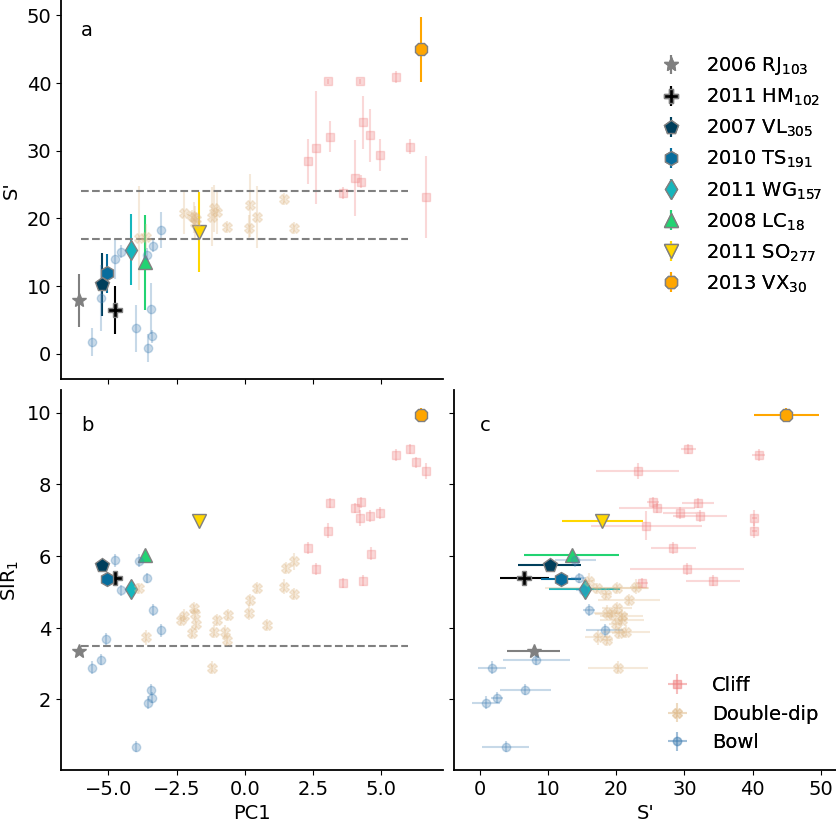
We employed Principal Component Analysis (PCA) to condense the full JWST/NIRSpec spectral range (0.7–5 µm) into a single value, PC1, for each TNO and NT. As the first principal component, PC1 retains most of the spectral information and serves as a proxy for the full spectrum.

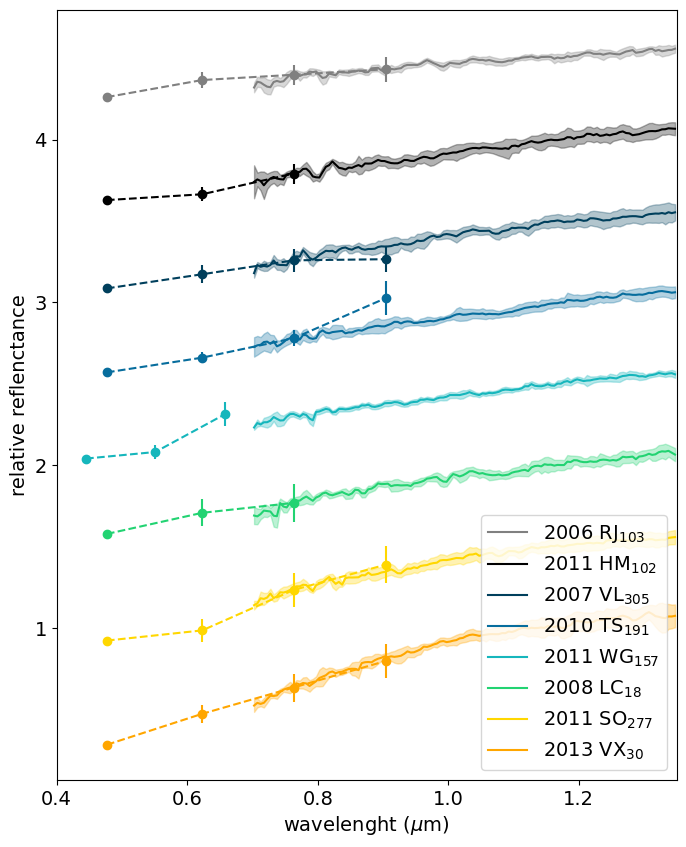
Additionally, we derived the optical spectral slope (S′) and the near-IR slope (SIR1). Optical slopes can be measured with standard photometric systems (e.g., SDSS gri or Johnson-Cousins BVR filters), while SIR1 values (derived from the 0.7–1.2 µm range) can also be obtained from multi-band photometry, such as SDSS r, i, and z filters. Figure 1 demonstrates that r, i, and z photometry reliably follows the near-IR spectral slope.

Result:

We plotted PC1 against S′ and SIR1, as shown in Figure 2. Our findings indicate the following:

  • PC1 alone is sufficient to classify objects into the three main spectral categories.

  • PC1 correlates strongly with S′, enabling the classification of objects based on S′ using the following thresholds:
    • S′ ≤ 17%/1000 Å: Bowl-type,

    • 17%/1000 Å ≤ S′ ≤ 24%/1000 Å: Double-dip type,

    • S′ ≥ 24%/1000 Å: Cliff-type.

While SIR1 is less effective in distinguishing Bowl and Double-dip types, it can differentiate Cliff-types and reveals that “Bowl” objects may be further divided into steep and shallow near-IR subgroups based on SIR1 = 3.5%/1000 Å. Most NTs exhibit steep near-IR slopes, with 2006 RJ103 being an exception.

Figure 2c illustrates the relationship between S′ and SIR1, analogous to color-color diagrams (e.g., g-r vs. r-J in Fraser et al. 2023, or g-r vs. r-z in Bernardinelli et al. 2025). This schema maps optical/near-IR colors to spectral groups, aligning with the near-IR bright (NIRB) and near-IR faint (NIRF) categories in previous studies. We predict that Bowl-types correspond to NIRBs, Cliff-types to NIRFs, and Double-dips represent the bluer subset of NIRFs.

Conclusion:

This study presents a practical schema for classifying spectral types of TNOs and NTs using multi-band photometry. This method provides a viable approach for characterizing faint outer solar system objects in ongoing and future surveys.

[1] Pinilla-Alonso N., et al., 2025, NatAs, 9, 230. doi:10.1038/s41550-024-02433-2
[2] Bernardinelli, P. H., et al. 2025, arXiv e-prints, arXiv:2501.01551,788
[3] Fraser, W. C., et al. 2023, PSJ, 4, 80,826 doi: 10.3847/PSJ/acc844827

Figure 1: Joint optical photometry and NIRSpec spectra of eight Neptunian Trojans (NTs). Each color represents a different NT, with circular markers indicating the central wavelengths of various optical bands (from shorter to longer wavelengths: g, r, i, z, or B, V, R for 2011 WG157). Error bars show 1-sigma uncertainties for the optical photometry, while shaded regions indicate 1-sigma uncertainties for the NIR spectra.

Figure 2: PC1 versus optical slope (S′) and near-IR slope (SIR1) for Neptunian Trojans (NTs) and TNOs, with each NT represented by a unique colored marker. In the upper left panel (a), dashed lines at S′ = 17 and 24 %/1000 Å indicate the proposed boundaries separating the three primary spectral groups. In the bottom left panel (b), a dashed line at SIR1 = 3.5 %/1000 Å marks the proposed division between shallow and steep near-IR slope subtypes within the Bowl-type objects.

How to cite: Lin, H.-W., Markwardt, L., Gerdes, D., and Adams, F.: Mapping Multi-Band Photometry to the Spectral Taxonomy of Outer Solar System Minor Planets, EPSC-DPS Joint Meeting 2025, Helsinki, Finland, 7–13 Sep 2025, EPSC-DPS2025-771, https://doi.org/10.5194/epsc-dps2025-771, 2025.

15:48–16:00
|
EPSC-DPS2025-450
|
ECP
|
On-site presentation
Laura Buchanan and Wes Fraser

The Kuiper Belt, located beyond Neptune, is home to remnants of early planet formation in the form of small planetesimals. Trans-Neptunian Objects (TNOs), which populate this region, are often non-spherical or part of binary systems, and typically rotate with lightcurve periods of ~6–15 hours (e.g. Trilling & Bernstein, 2006; Benecchi & Sheppard, 2013; Showalter et al., 2021). Spectral variability, observed in a very limited number of TNOs (e.g. Choi et al. 2003, Fraser et al. 2015), offers significant insights into their composition, history, and the broader processes that shaped the solar system. One such object, 2015 RB281, previously exhibited a notable optical colour variation between two epochs, as measured by the Colours of the Outer Solar System Origins Survey (Col-OSSOS, Schwamb et al. 2019, Fraser et al. 2023). This TNO is classified as a cold classical TNO, presumed undisturbed planetesimals which formed at roughly their current distances. Previously, this TNO showed >5σ variation in surface colour, as shown in Figure 1. Although the focus of this investigation was the large optical colour variation of 2015 RB281, within the 20 Col-OSSOS TNOs with repeat colour measurements we do see variation >3σ on a total of three TNOs, two varying in the optical and one in the NIR. This means that ~10% of the sample vary in optical wavelengths, and ~11% of the NIR repeat observations (note, only ~half the repeat colours TNOs got repeat observations at NIR wavelengths). Additionally, it is interesting to note that these TNOs vary in either optical colour or NIR colour, never both.

Figure 1: (g-r) versus (r-J) colors of TNOs observed by Col-OSSOS are shown in teal crosses for the BightIR class and orange crosses for the FaintIR class (where the FaintIR class is predominantly made up for cold classical TNOs). The two colors measured for 2015 RB281 are shown by the red diamonds, connected by a dashed black line. The yellow star shows solar colors. The red dashed line shows the solar reddening curve, along which TNOs have a single linear reflectance from the optical to NIR wavelengths. The blue dot-dashed line shows where the split in FaintIR/BrightIR surfaces is (Fraser et al., 2023). The vertical green dotted line shows the approximate split between red and neutral surfaces at (g-r) = 0.75. Note that although some other TNOs show some variation in colour, only 2015 RB15 shows such significant variation relative to its uncertainties. With the purple squares we show the additional TNOs with greater than 3σ variation.

Streaming instability, a key mechanism in planetesimal formation, suggests that planetesimals formed by this process should consist of a single, homogeneous composition. This also holds true for other prevailing theories of planetesimal formation, such as pebble collapse. As such, smaller TNOs like 2015 RB281 are expected to be made up of a single composition, unless influenced by external factors like collisions (which is predicted to be uncommon for small TNOs Batygin et al., 2011). While the observed colour variation in 2015 RB281 spans the entire optical range of the red/FaintIR compositional class, it does not shift between compositional classes. Similarly, the other two TNOs that show colour variation just shift within their colour class. 

To further investigate this variability, we conducted follow-up observations of 2015 RB281 in the g- and r-bands using the Gemini North telescope. We collected a sparse, multi-band lightcurve, with the goal of either identifying a contact binary lightcurve (where the sharp dips may have caused a false variation in the colour measurement) or confirming the optical colour variability, and investigating the associated lightcurve changes. Our follow-up observations, which spanned ~4 months and included 10 epochs each in a symmetrical rgrg sequence aiming for an SNR of ~20 per band per visit, confirm the previously observed colour variation, albeit at a slightly smaller magnitude. Reprocessing of the original Col-OSSOS photometry also reveals the same trend. Additionally, our analysis of the lightcurve indicates that the redder colour only appears in about 3 of the total ~12 observations, suggesting that the colour variation may be localised to a small area of the TNO’s surface such as the inferred red spot on Haumea’s surface (Lacerda 2009). We will present these findings and discuss their implications for theories of planetesimal formation, considering potential mechanisms that could explain the observed colour variability. 

How to cite: Buchanan, L. and Fraser, W.: Investigating the Potentially Variable Surface of TNO 2015 RB281, EPSC-DPS Joint Meeting 2025, Helsinki, Finland, 7–13 Sep 2025, EPSC-DPS2025-450, https://doi.org/10.5194/epsc-dps2025-450, 2025.

Orals WED-OB6: Wed, 10 Sep, 16:30–18:30 | Room Earth (Veranda 2)

Chairpersons: Silvia Protopapa, Ian Wong, Bryan Holler
16:30–16:42
|
EPSC-DPS2025-1230
|
On-site presentation
Ying-Tung Chen and the FOSSIL II Team

The Formation of the Outer Solar System: an Icy Legacy II survey (FOSSIL II) is a wide-field survey of the outer Solar System focused on the discovery and dynamical classification of distant trans-Neptunian objects (TNOs). FOSSIL II emphasizes finding and characterizing TNOs with large perihelion distances and those trapped in Neptunian mean-motion resonances. By expanding the survey’s depth and implementing intensive follow-up, FOSSIL II has substantially increased the census of distant small bodies.

We report on recent observational campaigns and results from Phase II. In particular, a tracking observation on 28 April 2025 successfully extended the observational arcs of most of the newly discovered TNOs to over two years. As a result, we achieved a recovery (re-observation) rate exceeding 90% for a sample of 201 TNOs. The extended arcs dramatically improve orbit determinations — the fractional uncertainty in semi-major axis (Δa/a) is now on the order of 0.001 for these objects. Such precision is sufficient to robustly determine each object’s dynamical class, including separating resonant and non-resonant populations in the Kuiper Belt. These improved orbits provide a clearer picture of the outer Solar System’s structure, delineating the various resonant families and high-perihelion objects at an unprecedented level of precision. Based on these results, this high-precision orbital dataset provides a stronger foundation for future studies of resonant TNO demographics and formation history of the Kuiper Belt. We will outline how the extended tracking baseline and high recovery rate enhance our ability to characterize these distant populations.

Finally, we present a preliminary characterization of “Ammonite” (2023 KQ14), a newly discovered Sedna-like object uncovered by FOSSIL II. Ammonite is a high-perihelion TNO (perihelion ∼66 au). Initial photometric observations obtained on 26 April 2025 using the Magellan telescope include a continuous 7‑hour monitoring window, which revealed no clear periodic lightcurve variations and placed an upper limit on the amplitude of 0.18 mag (1σ), suggesting it does not exhibit a large-amplitude, rotation-induced brightness variation (it may have a relatively uniform shape/albedo or a long rotation period). Additionally, multi-band color measurements indicate that Ammonite’s surface colors are consistent with typical TNOs, with g – r = 0.87 ± 0.18 and r – i = 0.36 ± 0.18, showing a moderate redness comparable to other Sedna-like objects (noting that Ammonite’s diameter is estimated to be ~200–300 km based on its brightness and assumed albedo). The results from FOSSIL II, including the discovery of Ammonite, underscore the value of its unique capabilities: the survey not only builds a broad statistical sample but also uncovers extreme objects that expand our understanding of the Solar System’s outermost reaches.

References:

Chen, Y.-T., et al. (in revision). Discovery and Dynamics of a Sedna-like Object with a Perihelion of 66 au. Nature Astronomy.

How to cite: Chen, Y.-T. and the FOSSIL II Team: Formation of the Outer Solar System: An Icy Legacy (FOSSIL II) – Phase II Status and Updated Characterization of the Sedna-like Object 2023 KQ14, EPSC-DPS Joint Meeting 2025, Helsinki, Finland, 7–13 Sep 2025, EPSC-DPS2025-1230, https://doi.org/10.5194/epsc-dps2025-1230, 2025.

16:42–16:54
|
EPSC-DPS2025-955
|
On-site presentation
Wesley Fraser, Samantha Lawler, Rosemary Pike, Jj Kavelaars, Edward Ashton, Stephen Gwyn, Yingtung Chen, Brett Gladman, Yukun Huang, Jeanmarc Petit, Justine Obidowski, Lowell Peltier, Mike Alexandersen, Benoit Noyelles, Changkao Chang, Shiangyu Wang, Kat Volk, Christa Van Laerhoven, Michele Bannister, and Preeti Cowan and the The CLASSY Team

Here we present results of CLASSY: the Classical and Large-A Solar SYstem survey. Running into its third year, this 2-year CFHT Large Program was allotted 75 nights from 2022B through 2024A inclusive, with a 16 night extension in 2024B and 2025A to accommodate time lost due to equipment failure. Using shift’n’stack techniques, CLASSY has been surveying 5 independent pointings (10.1 square degrees total) of the cold classical belt’s forced midplane in search of Kuiper Belt Objects and very distant extreme trans-Neptunian Objects. Field opposition locations are chosen to be spaced as evenly as possible in ecliptic longitude and each spans a two-month window (AS: Aug-Sept, ON, JF, MJ, JA). The survey design involves 5 visits to each field across the first year (discovery), with observations of these fields at a second opposition one year later for some fields, and 2 years later for others (tracking). The survey has achieved limiting magnitudes of r~26.5, and we expect to have an >80% recovery rate during tracking. Due to the nature of the observations which by design are drifted at rates that approximate typical main-belt Kuiper Belt Objects, highly distant and/or inclined objects tend to sheer off the tracking pointings, resulting in a reduced recovery rate for objects on those orbits. To compensate, a pointed recovery effort at Magellan and supplemented at Palomar has accompanied the main CFHT program, successfully recovering many of our discoveries on more extreme orbits. To date, all discovery fields have been acquired, and all fields have received a complete year 2 or year 3 follow-up, thereby completing the main CLASSY observing program.  


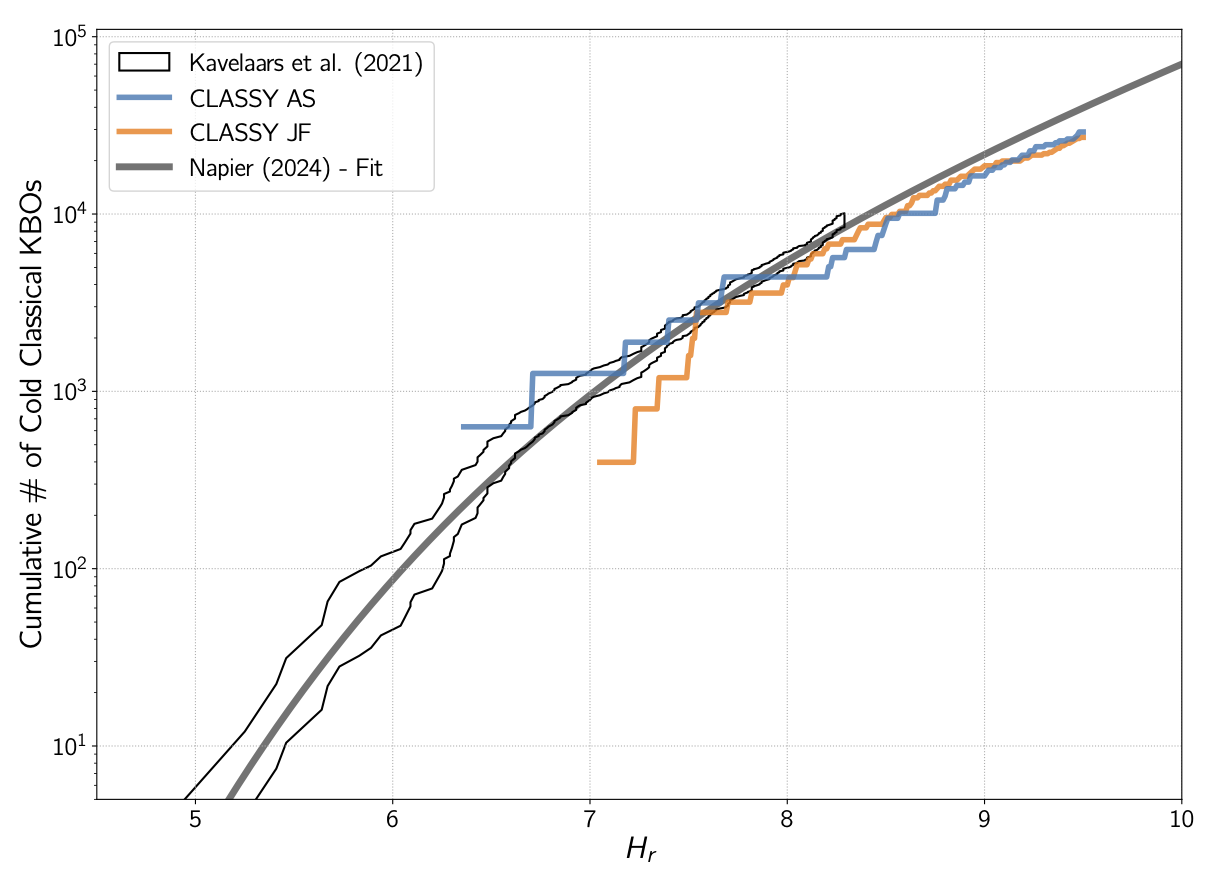
The main science goals of CLASSY are to measure the size distribution of the cold classical belt to absolute magnitudes as faint as H_r~10, and to provide a census of extreme TNOs with minimal and well measured bias in ecliptic longitude. By nature of the robust pre/recovery during the first year, free inclinations can be calculated with sufficient accuracy to provide a surprisingly robust separation between members of the cold classicals and the more excited TNO populations, thereby enabling robust measurements of the luminosity functions of each population separately. We find that both populations exhibit the same luminosity functions to within the precision of the observations. Our observations reveal that the cold classical Kuiper Belt Objects exhibit an absolute magnitude distribution that is somewhat shallower than a direct extrapolation of the tapered exponential that accurately describes the size distribution measured for larger and brighter objects (see Figure 1). The inferred differential power-law slope over the range of CLASSY discoveries q~-2.5, revealing a decreasing mass per size, and suggests that what ever formation process resulted in these objects, it preferentially resulted in objects with diameters D~150 km, where the size distribution rolls over to this shallower slope.


Even though our analysis clearly demonstrates sensitivity to objects at distances as far as 200 au, CLASSY has found a surprising dearth of eTNOs, discovering no more than 1 in the three fields we have searched to date (AS, ON, JF) though at time of writing, the year 2 and 3 follow-up observations have not been included in our analysis resulting in large uncertainties in orbital semi-major axis.  At the distances over which most eTNOs are found, CLASSY is sensitive to objects with sizes smaller than the roll-over size of objects in the more proximate main Kuiper Belt, D~150 km. This preliminary result implies that eTNOs either exhibit a different size distribution and thus, possess relatively fewer large bodies than the main belt, or that these objects have subdued albedos compared with main belt objects, or both. We will conclude with a discussion of these and other prospects that can address the observed paucity of eTNOs.


Figure 1: The preliminary absolute magnitude distribution of the cold classicals derived from the observations of AS (blue) and JF (orange) blocks. The thin black outline marks the cold classical Kuiper Belt Object H-distribution presented by Kavelaars et al. (2021) and the thick grey curve displays the best-fit tapered exponential of the cold classicals presented by Napier et al. (2024).


References

Kavelaars et al. (2021) OSSOS Finds an Exponential Cutoff in the Size Distribution of the Cold Classical Kuiper Belt ApJ, 920L, 28K

Napier et al. (2024) The DECam Ecliptic Exploration Project (DEEP). V. The Absolute Magnitude Distribution of the Cold Classical Kuiper Belt, PSJ Vol 5, 270N.

How to cite: Fraser, W., Lawler, S., Pike, R., Kavelaars, J., Ashton, E., Gwyn, S., Chen, Y., Gladman, B., Huang, Y., Petit, J., Obidowski, J., Peltier, L., Alexandersen, M., Noyelles, B., Chang, C., Wang, S., Volk, K., Van Laerhoven, C., Bannister, M., and Cowan, P. and the The CLASSY Team: The Classical and Large-a Solar System  , EPSC-DPS Joint Meeting 2025, Helsinki, Finland, 7–13 Sep 2025, EPSC-DPS2025-955, https://doi.org/10.5194/epsc-dps2025-955, 2025.

JWST results
16:54–17:06
|
EPSC-DPS2025-848
|
ECP
|
Virtual presentation
Ana Carolina Souza Feliciano, Bryan Holler, Will Grundy, Josh Emery, Alvaro Alvarez-Candal, Rosario Brunetto, Mario De Prá, Aurélie Guilbert-Lepoutre, Nuno Peixinho, Benjamin Proudfoot, Vania Lorenzi, John Stansberry, and Ian Wong

Introduction. The trans-Neptunian objects (TNOs) are icy remnants of planetary formation that orbit the Sun beyond Neptune. The study of their physical and compositional properties can be used to constrain the evolutionary process that took place in the early stages of the solar system. In particular, the trans-Neptunian binaries (TNBs) are used in several dynamical studies to constrain these processes (e.g. Nesvorný et al., 2011). The characterization of the TNBs is therefore of particular interest in the field from both the dynamical and compositional perspectives.    

Before the James Webb Space Telescope (JWST) era, the knowledge of the compositions of small and medium-sized TNOs was incomplete. Now, we are aware of 4 main compositional groups in the trans-Neptunian region based on the spectral behavior of carbon dioxide, water ice, methanol ice, carbon monoxide, and tholins (e.g., de Prá et al., 2025; Pinilla-Alonso et al., 2025). Another finding from NIRSpec observations comes from the observation of Mors-Somnus, a TNB in the 3:2 mean motion resonance with Neptune (the plutino TNOs) with components of almost equal size (around 100 km) and a wide orbital separation, with a color similar to the cold classical TNOs (Shepard et al., 2012). The observations of Mors-Somnus from NIRSpec revealed not only the colors of Mors and Somnus are similar in the visible range, but the spectral features are similar in both up to 5 microns (Souza-Feliciano et al., 2024). This result strengthened the outcomes from dynamical simulations regarding the transportation mechanisms in the trans-Neptunian region (Hahn & Malhotra, 2005) and shed light on the origin of this pair and its connection with the cold classical and plutino TNOs (Nesvorný & Vokrouhlický, 2019).   

Goals and sample selection. Aiming to constrain the surface composition of TNBs of similar and different sizes (tight, medium, and wide separation) and shed light on the formation mechanisms of TNBs, we selected a sample of 10 TNBs of cold, hot, resonant, detached, and scattered dynamical groups in the trans-Neptunian region. Due to the faintness and tight separation of some pairs, we chose to use three sets of NIRCam filters as part of program 6064 (PI: Souza-Feliciano). By resolving the components of each system in these multiple filters, we can study their surface compositions up to 4 microns and 1) determine the level of similarity between the components, 2) evaluate if they agree with the current formation scenarios proposed in the literature, and 3) identify which TNBs cannot be explained by current formation scenarios.    

Status and processing. Nine of the ten pairs in our sample have already been observed. Calibration was performed using the most up-to-date reference files provided by the Calibration References Data System (CRDS) and the latest version of the JWST calibration pipeline. This step is necessary to ensure the images are flat-fielded, bias-corrected, and flux-calibrated. After a background estimation, the flux of each source was extracted using a circular aperture and corrected by empirical encircled energy measured with data from the Cycle 1 Absolute Flux calibration program (Gordon et al., 2022).    

Preliminary results. Nine of the ten TNB systems in our sample were resolved by NIRCAM observations. The cold classical TNB pairs observed in our sample (2006 BR284 and Teharonhiawako) show hints of similar surface composition, and differences are noticed for some TNBs that belong to other dynamical groups. The implications of the compositional similarities and differences between TNB components in the context of formation mechanisms in the early outer solar system will be discussed. 

References 

De Prá, M.N., Hénault, E., Pinilla-Alonso, N. et al. Widespread CO2 and CO ices in the trans Neptunian population revealed by JWST/DiSCo-TNOs. Nat Astron 9, 252–261 (2025).  

Gordon, K. D., Bohlin, R., Sloan, G. C. et al. The James Webb Space Telescope Absolute Flux Calibration. I. Program Design and Calibrator Stars. The Astronomical Journal, 163, 6 (2022). 

Hahn, J. M., & Malhotra, R. 2005, AJ, 130, 2392.  

Nesvorný, D., Vokrouhlický, D., Bottke, W.F. et al. Observed Binary Fraction Sets Limits on the Extent of Collisional Grinding in the Kuiper Belt. The Astronomical Journal, Volume 141, 5 (2011). 

Nesvorný, D., & Vokrouhlický, D. 2019, Icarus, 331, 49.  

Pinilla-Alonso, N., Brunetto, R., De Prá, M.N. et al. A JWST/DiSCo-TNOs portrait of the primordial Solar System through its trans-Neptunian objects. Nat Astron 9, 230–244 (2025). 

Sheppard, S. S., Ragozzine, D., & Trujillo, C. 2012, AJ, 143, 58. 

Souza-Feliciano , A. C., Holler, B. J., Pinilla-Alonso, N. et al. Spectroscopy of the binary TNO Mors–Somnus with the JWST and its relationship to the cold classical and plutino subpopulations observed in the DiSCo-TNO project. A&A 681 L17 (2024). 

How to cite: Souza Feliciano, A. C., Holler, B., Grundy, W., Emery, J., Alvarez-Candal, A., Brunetto, R., De Prá, M., Guilbert-Lepoutre, A., Peixinho, N., Proudfoot, B., Lorenzi, V., Stansberry, J., and Wong, I.: Constraining the surface composition of trans-Neptunian binaries with NIRCAM instrument, EPSC-DPS Joint Meeting 2025, Helsinki, Finland, 7–13 Sep 2025, EPSC-DPS2025-848, https://doi.org/10.5194/epsc-dps2025-848, 2025.

17:06–17:18
|
EPSC-DPS2025-59
|
On-site presentation
Pierre Vernazza, Paul Simon, Laurent Jorda, Marin Ferrais, Pierre Beck, Richard Binzel, Francesca DeMeo, Michael Marsset, Sarah Anderson, Audrey Delsanti, Noemi Pinilla-Alonso, Javier Licandro, and Dean Hines

Outer solar system small bodies (Centaurs, Comets, small Trans-Neptunian objects (TNOs)) hold the residual ingredients from our young protosolar disk that are still observable today. Thus, by measuring their composition and distribution across the solar system, we have the potential to unravel the scenario of our planetary system’s formation and dynamical evolution, providing a benchmark to which other stellar systems can be compared. In particular, a fraction of the small bodies that formed in the outer solar system (beyond Uranus/Neptune) are predicted to have been implanted in the inner solar system (P/D-type asteroids, Jupiter Trojans) following the outward migration of Uranus and Neptune (Nice model).

The objective of this study is to further test the hypothesis of a common origin of small bodies in the inner and outer solar systems. This will be achieved by measuring the silicate composition of Centaurs and small TNOs. Silicates are thermally stable over the heliocentric range extending from the main asteroid belt to the Kuiper belt. At present, they appear to be the only robust tracer of a common genetic link.

Spectroscopic data were obtained with JWST/MIRI for 3 Centaurs (Chariklo, Bienor, 2020 VF1) and 3 scattered disk objects (1999 OX3, 2002 GG166, 2013 LU28) with a Centaur-like orbit as part of the Cycle 2 GO program (GO  2820 PI: Pierre Vernazza). We also analyzed the MIRI data of GTO target 2013XZ8, also a Centaur (Cycle 1 GTO 1272; PI: D. Hines) and of three Jupiter Trojans (targets of the Cycle 1 GO 2574 programme; PI: M. E. Brown).

Our albedo values for less red Bowl-type (<0.1) and red Cliff-type (>0.1) Centaurs and small TNOs are consistent with those derived from Herschel observations. The emissivity spectra of Centaurs and small TNOs, including the variability of the spectral contrast of the main 10 mm silicate feature, are remarkably similar to those of Jupiter Trojans, P/D main belt asteroids, and comets. In particular, the spectral contrast observed for Cliff-type target 1999 OX3 is close to that observed for comet comae, suggesting substantial surface porosity, probably related to a lower silicate/(ices+organics) ratio. Careful analysis of the emissivity spectra of Centaurs, small TNOs and Jupiter Trojans reveals the presence of a large number (9) of features. These features are consistent with crystalline olivine and pyroxene - both with Mg/(Mg+Fe)>0.7 - being major refractory components of the surfaces of these objects. This further supports a strong link with comets and chondritic porous interplanetary dust particles (CP IDPs) in terms of extraterrestrial analogues.

JWST/MIRI observations of Centaurs and small TNOs support the hypothesis that these bodies share a common origin with inner solar system P/D-type asteroids and Jupiter Trojans, as outlined in the Nice model. Our results, together with previous measurements for these populations and dynamical studies, raise the possibility of a genetic link between P-types and Bowl-types, and between D-types and Cliff-types.


How to cite: Vernazza, P., Simon, P., Jorda, L., Ferrais, M., Beck, P., Binzel, R., DeMeo, F., Marsset, M., Anderson, S., Delsanti, A., Pinilla-Alonso, N., Licandro, J., and Hines, D.: JWST mid-infrared spectroscopy of Centaurs and small TNOs: Linking the inner and outer solar system, EPSC-DPS Joint Meeting 2025, Helsinki, Finland, 7–13 Sep 2025, EPSC-DPS2025-59, https://doi.org/10.5194/epsc-dps2025-59, 2025.

17:18–17:30
|
EPSC-DPS2025-459
|
On-site presentation
Ian Wong, Wesley Fraser, Bryan Holler, and Michael Brown

The Kuiper belt is characterized by a complex orbital architecture that manifests the cumulative effects of dynamical processes that have shaped the outer Solar System. This complexity has been a driving force behind recent theories of Solar System evolution, and current models are able to reproduce much of the observed dynamical landscape of Kuiper belt objects (KBOs) through simulations of Neptune’s outward migration in the early Solar System and subsequent scattering of the primordial trans-Neptunian planetesimal disk [e.g.,1-2]. Contemporaneously, a concerted effort has been levied toward understanding the surface properties of KBOs. These previous studies have revealed a stark bimodality in visible and near-infrared spectral slopes, attested across all dynamical groups within the Kuiper belt, which separates the population into the so-called blue and red subpopulations [e.g.,3-5]. This color bimodality suggests that a sharp gradient in surface composition must have existed somewhere within the outer primordial planetesimal disk. Various models have attributed the color bimodality to irradiation chemistry that occurred on two sides of a volatile ice sublimation line [e.g.,6-7].

The cold classical KBOs challenge our current understanding of Kuiper belt formation and evolution. These objects are distinguished by their tight inclination distribution (i < 5°), near-circular orbits, and dense clustering between 42 and 47 AU, suggesting a significantly more quiescent dynamical history than the rest of the Kuiper belt. Notably, this population contains a high fraction of near-equal-mass binaries, including many with wide separations [8]. Dynamical studies have demonstrated that a majority of these binary systems would have been lost had they been scattered into their present-day orbits during the outward migration of Neptune [e.g.,9]. Instead, cold classicals may have formed in situ and therefore comprise a unique representative body of planetesimals from the outermost reaches of the protoplanetary disk [10]. Within the aforementioned compositional gradient hypothesis, we would expect in situ formation of cold classicals to produce exclusively red objects. While red objects indeed dominate the cold classical population, there is a significant admixture of blue objects in this region; moreover, these bluer objects are predominantly binaries [11-12]. Current models of KBO dynamical evolution struggle to reconcile the presence of blue binaries and absence of blue singletons among the cold classicals with predicted locations of the red-blue compositional gradient. It follows that the properties of blue binaries serve as a critical empirical test for assessing our fundamental understanding of Kuiper belt formation and evolution.

The blue binary 2016 BP81 was observed as part of Cycle 3 JWST Program #5940 (PI: Ian Wong). This system consists of two components with diameters of 188 and 170 km, respectively, at a mutual separation of ~11300 km. The NIRSpec integral field unit (IFU) observations were obtained with the PRISM grating, yielding a continuous reflectance spectrum spanning 0.6-5.3 μm at a spectral resolution of R~100. The binary components are well-separated on the IFU field of view, and we were able to extract the spectrum of each component individually. The two component spectra are statistically identical and reveal a deep 3-μm H2O ice absorption band, weaker features from CO2 ice at 2.7 and 4.25 μm, and a minor contribution from aliphatic organics between 3.4 and 3.6 μm. See Figure below.

Our interpretation of 2016 BP81’s surface composition is greatly facilitated by previously published JWST observations of dozens of KBOs [13], which enable detailed ensemble analyses. From both qualitative and quantitative spectral characterization, we find broad similarities between the blue binary and other H2O-rich objects from other dynamical classes within the Kuiper belt, including resonant and scattered disk objects. This indicates that the blue binary likely shared a common formation environment with the other blue objects. However, 2016 BP81 also differs significantly from other H2O-rich KBOs in several ways, including more abundant aliphatic organics, stronger CO2 ice absorptions, and an absent H2O Fresnel peak. Together, these findings suggest differences in the size of H2O grains and CO2/H2O abundance ratio on the surface of 2016 BP81 relative to other blue objects in the Kuiper belt. Notably, we find close correspondence in spectral features between the blue binary and a few individual objects --- the extreme KBO 2016 QV89 and the Neptune trojan 2011 SO277 --- which indicates the possible presence of a distinct sub-class of blue KBOs with systematically different surface properties. In this talk, we present the results of our study of 2016 BP81 and discuss its broader implications for our understanding of the Kuiper belt and Solar System history.

[1] Nesvorný, D., & Vokrouhlický, D. 2016, ApJ, 825, 94

[2] Nesvorný, D., Vokrouhlický, D., Alexandersen, M., et al. 2020, AJ, 160, 46

[3] Wong, I., & Brown, M. E. 2017, AJ, 153, 45

[4] Fraser, W. C., & Brown, M. E. 2012, ApJ, 749, 33

[5] Fraser, W. C., Pike, R. E., Marsset, M., et al. 2023, PSJ, 4, 80

[6] Schaller, E. L., & Brown, M. E. 2007, ApJ, 659, L61

[7] Wong, I., & Brown, M. E. 2016, AJ, 152, 90

[8] Noll, K., Grundy, W. M., Nesvorn´y, D., & Thirouin, A. 2020, in The Trans-Neptunian Solar System, ed. D. Prialnik, M. A. Barucci, & L. Young, 201–224

[9] Nesvorný, D., & Vokrouhlický, D. 2019, Icarus, 331, 49

[10] Nesvorný, D., Vokrouhlický, D., & Fraser, W. C. 2022, AJ, 163, 137

[11] Fraser, W. C., Bannister, M. T., Pike, R. E., et al. 2017, Nature Astronomy, 1, 0088

[12] Fraser, W. C., Benecchi, S. D., Kavelaars, J. J., et al. 2021, PSJ, 2, 90

[13] Pinilla-Alonso, N., Brunetto, R., De Prá, M. N., et al. 2025, Nature Astronomy, 9, 230

How to cite: Wong, I., Fraser, W., Holler, B., and Brown, M.: JWST/NIRSpec observations of a blue binary KBO: Implications for planetesimal formation and dynamical evolution, EPSC-DPS Joint Meeting 2025, Helsinki, Finland, 7–13 Sep 2025, EPSC-DPS2025-459, https://doi.org/10.5194/epsc-dps2025-459, 2025.

17:30–17:42
|
EPSC-DPS2025-968
|
On-site presentation
Silvia Protopapa, Ian Wong, Perianne Johnson, William M. Grundy, Joshua P. Emery, Emmanuel Lellouch, Bryan Holler, Christopher R. Glein, Csaba Kiss, Thomas Müller, Rosario Brunetto, Richard J. Cartwright, Aurelie Guilbert-Lepoutre, Heidi B. Hammel, Stefanie N. Milam, Alex H. Parker, Noemi Pinilla-Alonso, Ujjwal Raut, Pablo Santos-Sanz, and John Stansberry

Makemake is one of the brightest and most methane-rich bodies in the trans-Neptunian region, with a spherical-equivalent diameter of ~1430 km and a high geometric albedo of pV ~0.8 [1,2]. Its near-infrared spectrum is dominated by strong methane (CH₄) ice absorption bands that appear broad and saturated—markedly different from those observed on other volatile-rich trans-Neptunian objects (TNOs) [3, and references therein]. Stellar occultation measurements revealed the absence of a global Pluto-like atmosphere, with a 1σ upper limit of 4–12 nanobar [1]. This result was interpreted as evidence for a strong depletion of nitrogen (N₂) ice, whose vapor pressure exceeds the microbar level even at Makemake’s coldest surface temperatures. Makemake’s volatile-rich surface and lack of a global atmosphere make it a compelling target for probing how surface volatiles—and CH4 in particular—evolve under irradiation and thermal cycling in the absence of atmospheric shielding.

Observations obtained with the JWST Near-Infrared Spectrograph (NIRSpec) provide unprecedented spectral coverage of Makemake from 1.0 to 4.8 μm. A previous analysis of the NIRSpec spectrum in the 3.9–4.8 μm range confirmed the presence of solid CH4​ and placed tight upper limits on molecular N2​ and carbon monoxide (CO) [4]. The same dataset also enabled the first measurement of the deuterium-to-hydrogen (D/H) ratio in CH4​ ice on a TNO. The origin of methane on Makemake remains debated, with proposed scenarios ranging from primordial incorporation in the protosolar nebula [5] to production by internal geochemical processes and transport to the surface via cryovolcanism or other endogenic processes [6].

We present a comprehensive analysis of the full NIRSpec dataset, including the identification and modeling of CH4 ​absorption bands across the entire wavelength range, improved precision on the D/H ratio, and characterization of hydrocarbon irradiation products. In particular, we focus on tracing the chemical progression from CH4​ to more complex hydrocarbons, such as ethane, ethylene, and acetylene, which are predicted by laboratory irradiation experiments and supported by previous near-infrared detections on Makemake [7,8].

In addition to compositional studies, we place our results in the broader thermal context of Makemake’s surface by referencing complementary JWST/MIRI measurements, which show a prominent mid-infrared excess in the 18–25 μm wavelength range, corresponding to brightness temperatures near 150 K [9]. This temperature significantly exceeds those expected from solar insolation alone. Possible interpretations include the presence of a localized thermally active surface region or an undetected dust ring composed of fine carbonaceous particles [9]. While no direct evidence for active outgassing has been observed, such phenomena remain plausible and underscore the need for continued monitoring.

The goal of this work is to better understand how volatile-rich TNOs evolve chemically and thermally under the combined effects of solar radiation, cosmic ray irradiation, and internal activity. By extending previous spectral coverage and conducting detailed modeling of hydrocarbon features, we provide new constraints on the irradiation chemistry, isotopic composition, and potential endogenic processes shaping Makemake’s surface. Our results contribute to a growing understanding of the diversity of TNO surfaces and the role of internal and external drivers in sculpting their volatile inventories.

[1] Ortiz, J. L., Sicardy, B., Braga-Ribas, F., et al. 2012, Nature, 491, 566

[2] Brown, M. E. 2013, ApJL, 767, L7

[3] Brown, M. E. 2012, Annual Review of Earth and Planetary Sciences, 40, 467–494

[4] Grundy, W. M., Wong, I., Glein, C. R., et al. 2024, Icarus, 411, 115923

[5] Mousis, O., Werlen, A., Benest Couzinou, T., & Schneeberger, A. 2025, ApJL, 983, L12

[6] Glein, C. R., Grundy, W. M., Lunine, J. I., et al. 2024, Icarus, 412, 115999

[7] Brown, M. E., Barkume, K. M., Blake, G. A., et al. 2007, AJ, 133, 284

[8] Brown, M. E., Schaller, E. L., & Blake, G. A. 2015, AJ, 149, 105

[9] Kiss, C., Müller, T. G., Farkas-Takács, A., et al. 2024, ApJL, 976, L9


How to cite: Protopapa, S., Wong, I., Johnson, P., Grundy, W. M., Emery, J. P., Lellouch, E., Holler, B., Glein, C. R., Kiss, C., Müller, T., Brunetto, R., Cartwright, R. J., Guilbert-Lepoutre, A., Hammel, H. B., Milam, S. N., Parker, A. H., Pinilla-Alonso, N., Raut, U., Santos-Sanz, P., and Stansberry, J.: JWST/NIRSpec Observations of Makemake: Hydrocarbon Chemistry and Surface Processes on a Methane-Rich Trans-Neptunian Object, EPSC-DPS Joint Meeting 2025, Helsinki, Finland, 7–13 Sep 2025, EPSC-DPS2025-968, https://doi.org/10.5194/epsc-dps2025-968, 2025.

17:42–17:54
|
EPSC-DPS2025-383
|
On-site presentation
Rosario Brunetto, Noemi Pinilla-Alonso, John Stansberry, William Grundy, Aurélie Guilbert-Lepoutre, Bryan Holler, Larissa Markwardt, Sasha Cryan, Joshua Emery, Brittany Harvison, Elsa Hénault, Javier Licandro, Hsing-Wen Lin, Lucas McClure, Alessandro Morbidelli, David Nesvorny, Yvonne Pendleton, Silvia Protopapa, and Ian Wong

Introduction:

Small bodies in the trans-Neptunian region are key to understanding Solar System formation and evolution. Trans-Neptunian objects (TNOs) are relics of planetary formation in the outer protoplanetary disk, but most of them were later affected by the giant planet instability and the dynamical evolution of the Solar System, with the remarkable exception of the so-called “Cold Classical” population.

TNOs incorporated ices and other solids from the protosolar disk and thus provide precious information about early conditions in the disk. However, many TNOs also underwent evolutionary processes such as melting, differentiation, segregation, fragmentation, and irradiation that modified the original protoplanetary composition. In this work, we focus on mid-sized objects (diameter between about 50 and 1000 km), representing a generation of outer planetesimals that suffered limited differentiation and collisional evolution.


Methods:

We used the low spectral resolution PRISM grating on the Near-Infrared Spectrograph (NIRSpec, 0.7-5 µm) of the James Webb Space Telescope (JWST) to observe 75 medium-sized TNOs observed in several programs: the year 1 Guaranteed Time Observations (GTO) Program “Kuiper Belt Science with JWST” (GTO-KBO, ID1191, ID1231, ID1272, and ID1273), the Cycle 1 Large Program ID2418 “Discovering the Surface Composition of trans-Neptunian objects" (DiSCo-TNOs), the Cycle 2 Program ID3991 “Small Cold Classical TNOs as Witnesses of Outer Nebular Chemistry”, and the Cycle 3 Program ID4665 “Constraining the origin and dynamical evolution of extreme trans-Neptunian objects through NIR spectroscopy”. The objects within the sample span the diversity of the TNO population (excluding the volatile-rich dwarf planets and the Haumea family) in terms of size, visible colors, geometric albedo, and dynamical properties.

For a larger comparison, we also include 10 Centaurs observed in the DiSCo-TNOs and GTO Programs, and 8 Neptune Trojans observed within the Cycle 1 Program ID2550 “The First Near-IR Spectroscopic Survey of Neptune Trojans”.

Following a similar approach to the one that we successfully used to analyze the DiSCo-TNOs data [1,2], we analyzed the extended set of spectra with different clustering techniques (Principal Component Analysis, k-means, hierarchical clustering) to highlight the spectral diversity of the targets. We obtained information about the icy molecular composition by identifying several bands of interests and by calculating their band areas and positions. To date, this represents the largest near-IR spectral dataset of icy bodies, providing the most complete picture of the molecular composition of outer Solar System planetesimals.


Results:

While the new objects have very diverse sizes and orbital parameters, the vast majority of their spectra fall into the three main compositional categories identified by DiSCo: the so-called “Bowl” surfaces, which are dominated by water ice features and are also dust-rich and CH-poor; the “Cliff” and “Double-dip” surfaces, which are carbon-rich and water-poor, with Double-dip being particularly rich in CO2 and CO, and Cliff surfaces being rich in organics. We confirm the detection of several icy molecules, including H2O, CO2, 13CO2, CO, CH3OH, and complex molecules and refractory materials containing aliphatic C–H, C≡N, O–H, and N–H bonds. The band areas of the different molecules, sensitive to both abundance and path length in solid-state ices, vary significantly among different icy bodies and correlate with the identified spectral categories.

In addition, thanks to the larger sample, at least three sub-categories of Bowl-TNOs and three sub-categories of Cliff-TNOs can be identified. The surfaces of the Cliff1 sub-group are ice-rich, with prominent CH3OH, H2O, and CO2 ice features that are much weaker in the ice-poor Cliff2 sub-group [3]. The Cliff1-CO2 sub-group includes transitional objects that resemble Cliff1 surfaces, but exhibit very strong CO2 features, similar to the CO2 spectral properties (position and area) of Double-Dip TNOs. Finally, two TNOs and two Neptune Trojans are unclassified, showing weak icy features that are close to those observed in “shallow”-type Centaurs [2], possibly due to previous episodes of ice sublimation. Except for the rare Cliff1-CO2 TNOs, very sharp transitions are observed between the different spectral groups.

Cold Classical TNOs belong almost entirely to the Cliff2 sub-group, while the other dynamical classes of icy bodies (Scattering Disk Objects, Resonant Objects, Hot Classicals, Detached and Extreme Objects, Neptune Trojans, Centaurs) exhibit variable proportions of the different spectral categories, with no statistically significant association between dynamical classes and any specific spectral category.


Discussion:

Generally speaking, most TNO surfaces show significant deviations from the protoplanetary and cometary ice compositions, revealing that specific evolutionary processes shaped the molecular composition in the outer Solar System before or just after the planetesimals’ formation. The fact that, except for the Cold Classicals, the different dynamical classes show variable amounts of the spectral categories suggests that late evolutionary processes, such as prolonged exposure to the space environment and irradiation, are not the main drivers in shaping the spectral groups. So far, the only clear irradiation trend observed is in non-Cold Classical Cliff1-TNOs, whose methanol bands decrease with increasing residence outside the heliosphere, where cosmic ion fluxes are higher. [3].

An early sculpting is necessary to create the distinct separation of the spectral clusters. In particular, a sharp process, such as the one associated with ancient icelines, must be invoked to explain the significant variations observed in the surface molecular constituents. The currently favored scenarios include either the pre-accretional CO iceline on grains in the protoplanetary disk, and/or the post-accretional retention icelines of CO2 and CH3OH at the surface of planetesimals just before a major planetary migration. In both cases, planetesimals probably formed in this order of increasing distance from the Sun: Bowl<Double-Dip<Cliff1<Cliff2.

Finally, we observe a significant and intriguing lack of CO2-rich objects for perihelion distances smaller than about 31 AU. We explore two different scenarios to explain this dichotomy, the first one due to physicochemical processes of CO2 loss, and the second one related to dynamical processes of preferential injection of Bowl-type TNOs from the inner Oort-Cloud to the Centaurs region.


[1] Pinilla-Alonso N., et al., 2025, NatAs, 9, 230. doi:10.1038/s41550-024-02433-2

[2] Licandro J., et al., 2025, NatAs, 9, 245. doi:10.1038/s41550-024-02417-2

[3] Brunetto R., et al., 2025, ApJL, 982, L8. doi:10.3847/2041-8213/adb977


How to cite: Brunetto, R., Pinilla-Alonso, N., Stansberry, J., Grundy, W., Guilbert-Lepoutre, A., Holler, B., Markwardt, L., Cryan, S., Emery, J., Harvison, B., Hénault, E., Licandro, J., Lin, H.-W., McClure, L., Morbidelli, A., Nesvorny, D., Pendleton, Y., Protopapa, S., and Wong, I.: The spectral diversity of outer icy bodies revealed by JWST and its link to early Solar System processes, EPSC-DPS Joint Meeting 2025, Helsinki, Finland, 7–13 Sep 2025, EPSC-DPS2025-383, https://doi.org/10.5194/epsc-dps2025-383, 2025.

17:54–18:06
|
EPSC-DPS2025-424
|
ECP
|
On-site presentation
Sasha Cryan, Rosario Brunetto, Aurélie Guilbert-Lepoutre, Noemí Pinilla-Alonso, Elsa Hénault, Bryan J. Holler, Yvonne Pendleton, Lucas T. McClure, Josh P. Emery, Thomas G. Müller, Ana Carolina de Souza-Feliciano, John Stansberry, Nuno Peixinho, Michele T. Bannister, Dale Cruikshank, Brittany Harvison, Javier Licandro, Vania Lorenzi, and Mário N. de Prá

Introduction

The C≡N functional group (hereafter CN) can be incorporated into a diverse range of molecular structures, ranging from simpler cyanides like HCN to semi-refractory salts like NH4+OCN and larger and more complex polymeric refractory material. In astrophysical settings, CN-bearing compounds form and evolve through thermal, photochemical, and radiation-driven chemical pathways. Consequently, these species serve as valuable tracers for accessing the current and past physical conditions of astrophysical environments and provide a framework for understanding the evolution of nitrogen in space.

The cycle 1 JWST program “Discovering the Surface Composition of TNOs" (DiSCo-TNOs; #2418; P.I.: N. Pinilla-Alonso) has detected spectral features due to the CN functional group on several medium-sized trans-Neptunian objects (TNOs), whose icy surfaces could be key to unlocking the chemical and physical relationship among small bodies in the Solar System and their evolutionary history beginning in the interstellar medium (ISM). An early DiSCo result found a first spectral feature at 4.62 µm, tentatively assigned to OCN, and a second and more elusive feature near 4.5 µm, attributed to the CN group incorporated into an organic chemical structure. The former has been detected previously in many astrophysical environments, including dense molecular clouds [1], young stellar objects [2], and protoplanetary disks [3], while the latter has been observed on Callisto [4] and rare nitrogen-rich interplanetary dust particles and ultracarbonaceous Antarctic micrometeorites [5,6].

The DiSCo-TNOs program established a significant connection between TNO surface composition and formation location in the outer protoplanetary disk, establishing ice retention lines for H2O, CO2, and CH3OH [7]. The implication of CN-bearing compounds in understanding the molecular diversity of the past and current Solar System are the topic of the current investigation.

Aim & Method

In this work, we revisit the 4.62 and 4.5 µm features observed within the DiSCo-TNOs program and measure their distribution across the dataset. We modeled the spectra of 37 TNOs and 1 centaur between 4.35 and 4.75 μm using four Gaussian components—13CO2 (at 4.38 μm), a 4.5 μm feature, a 4.62 μm feature, and CO (at 4.68 μm)—to disentangle the influence of adjacent bands and extract the parameters of the 4.5 and 4.62 μm features (Figure 1). Then, using existing observational and laboratory data, as well as investigating their relationship with other spectral features, we aimed to: (1) constrain the molecular carriers responsible for the 4.62 and 4.5 µm bands; (2) elucidate their origin on TNOs; and (3) place them in the broader context of nitrogen in the Solar System.

Results & Discussion

Our analysis finds that both the 4.62 and 4.5 µm features exhibit the strongest band areas on a group of TNOs rich in CH3OH and other organics (also known as Cliff-TNOs), with the 4.62 µm feature being particularly strong on a subset of these TNOs (also called Cliff2-TNOs) which include the Cold Classical population formed farthest from the Sun in the protoplanetary disk. These Cliff2-TNOs show notably weaker spectral signatures of H2O, CH3OH, and CO2 ices compared to Cliff1-TNOs [8].

A careful comparison of the 4.62 µm band in our data with previous ISM observations and laboratory spectra confirm its attribution to OCN. This constitutes one of the first definitive detections of a minor species traced from molecular clouds and protoplanetary disks to TNOs. Further, the strong OCN feature in spectra also poor in water and other ices provides compelling evidence that the composition of TNOs differs significantly from the ice abundances in the ISM and indicates that local processes influenced their molecular inventories. We explore several origin scenarios of OCN on DiSCo-TNOs, favouring an inheritance from the protoplanetary disk as the most plausible explanation.

The 4.5 µm feature shares a common band profile to complex organic CN-bearing residues produced in the laboratory (e.g. tholin), though contributions from methanol and carbon chain oxides cannot be ruled out in some spectra. We interpret the refractory CN-bearing material as a tracer of the outer protoplanetary disk before or shortly after planetesimal formation. The poor signal-to-noise ratio in this spectral region precludes a clear origin scenario.

Finally, the detection of the 4.62 and 4.5 µm features on the centaur in our dataset acts as a critical observation for connecting nitrogen-rich environments across the Solar System. Centaurs are transient objects that dynamically bridge the TNO reservoir to the Jupiter-family comets and recent work suggests that at least a subset of these bodies originate from the Cliff-TNO population [9]—those rich in methanol and other organics and where we detect the 4.62 and 4.5 µm features most abundantly. We propose that the Cliff-TNO population may serve as a primary reservoir for the nitrogen-rich dust grains observed on some comets, interplanetary dust particles, and micrometeorites. Therefore, our work has important implications for drawing broader chemical and dynamical pathways that connect small bodies across the Solar System.

Figure 1. Example of the four-component Gaussian fitting method used to extract the band parameters of the 4.62 and 4.5 µm spectral features. Vertical lines mark features due to 13CO2, the 4.5 μm feature, the 4.62 μm feature, and CO.

References

[1] McClure, M.K. et al. (2023) Nat. Astron., 7, 431. [2] Pendleton, Y. J. et al. (1999) ApJ, 513, 291. [3] Sturm, J. A. (2023) A&A, 679, A138. [4] Cartwright, R. J. et al. (2024) Planet. Sci. J. 5, 60. [5] Dobrică, E. et al. (2011) M&PS, 46, 1363. [6] Dartois, E. et al. (2013) Icarus, 224, 243. [7] Pinila-Alonso, N. et al. (2024) Nat. Astron., 9, 230. [8] Brunetto, R. et al. (2025) ApJL, 982, L8.  [9] Licandro et al. (2024) Nat. Astron., 9, 245.  

How to cite: Cryan, S., Brunetto, R., Guilbert-Lepoutre, A., Pinilla-Alonso, N., Hénault, E., Holler, B. J., Pendleton, Y., McClure, L. T., Emery, J. P., Müller, T. G., de Souza-Feliciano, A. C., Stansberry, J., Peixinho, N., Bannister, M. T., Cruikshank, D., Harvison, B., Licandro, J., Lorenzi, V., and de Prá, M. N.: Nitrogen-bearing species at the surface of TNOs revealed by DiSCo-JWST: a chemical reservoir for nitrogen-rich grains in the inner the Solar System.  , EPSC-DPS Joint Meeting 2025, Helsinki, Finland, 7–13 Sep 2025, EPSC-DPS2025-424, https://doi.org/10.5194/epsc-dps2025-424, 2025.

18:06–18:18
|
EPSC-DPS2025-16
|
On-site presentation
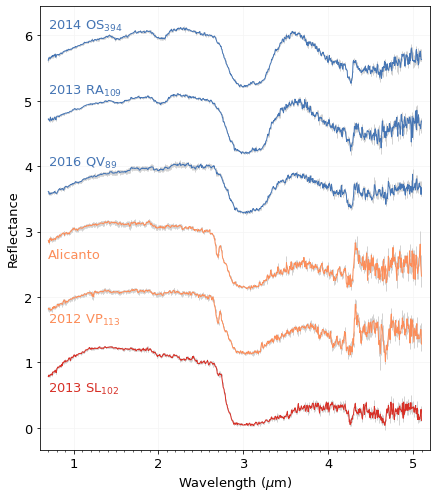
Bryan Holler, Leslie Young, Rosario Brunetto, Ana Carolina de Souza Feliciano, Ian Wong, Silvia Protopapa, Richard Cartwright, Susan Benecchi, Josh Emery, Simone Ieva, Noemí Pinilla-Alonso, and John Stansberry

Introduction. Trans-Neptunian objects (TNOs) record the history of planetary migration in their orbital architecture and the chemical diversity of the outer solar system in their largely unaltered surface compositions. Through the large Cycle 1 DiSCo program, Pinilla-Alonso et al. (2025) revealed 3 broad spectral types among TNOs with diameters <900 km, and suggested that those groups of objects formed at different heliocentric distances before being placed onto their current orbits via interactions with Neptune. But the origins of one particular population, the extreme trans-Neptunian objects (ETNOs), remains uncertain. The ETNOs are a subset of the detached TNO population with perihelia > 30 au and semi-major axes > 150 au (e.g., Trujillo & Sheppard 2014). Migration of Neptune is unable to explain the placement of the ETNOs on their current orbits, leading to more exotic theories to explain their existence, including: a larger eccentricity for Neptune in the past (Gladman et al. 2002), capture from or disruption of the primordial Kuiper belt by a passing star (Ida et al. 2000; Morbidelli & Levison 2004; Brasser & Schwamb 2015), perihelion lifting due to galactic tides (Gomes et al. 2005; Adams 2010; Kaib et al. 2011), orbital disruption due to a rogue planet (Gladman & Chan 2006; Huang et al. 2022), or the ongoing influence of an unidentified giant planet (Batygin & Brown 2016). These theories are extremely varied, so any new information about these objects should help to constrain their origins.

Observations. To contribute to our understanding of the ETNOs, we obtained near-infrared spectra of 6 ETNOs with the NIRSpec IFU on the James Webb Space Telescope (JWST) as part of program 4665 (PI: Holler). We obtained low resolving power (R~100) spectra from 0.6-5.2 μm using the Prism setting. The data were calibrated using the JWST calibration pipeline, ultimately producing 3D spectral data cubes, and 1D spectra were extracted and corrected using the “template PSF” technique described in, e.g., Wong et al. (2024) and Pinilla-Alonso et al. (2025).

The ETNOs observed in this program include (474640) Alicanto (2004 VN112), 2012 VP113, (765047) 2013 RA109, (765133) 2013 SL102, (543735) 2014 OS394, and (771740) 2016 QV89. Of note, 2012 VP113 is a “sednoid” with the largest known perihelion distance in the solar system at ~80 au. In preparation for the JWST observations and blind-pointing of the targets into the small IFU field of view, we obtained new astrometry of the targets with Gemini GMOS-N, resulting in numbers being assigned to 2013 RA109, 2013 SL102, and 2016 QV89.

Discussion. The spectra of the 6 targets are presented in the figure. At quick glance, we see 3 of the 6 ETNOs are of the “bowl” spectral type (blue), with signatures of water ice visible in the spectrum; two ETNOs are “double-dips” (orange) with very strong CO2 absorption features and reflection peaks around the 4.26-μm CO2 fundamental indicative of small grains (e.g., Brown & Fraser 2023; de Prá et al., 2025); and one ETNO is a “cliff” (red) with strong absorptions due to organics at longer wavelengths, similar to cold classical KBOs. The spectral diversity of the ENTOs is comparable to that seen in other “stirred” populations of TNOs, including resonant TNOs, hot classicals, and scattering disk objects (Pinilla-Alonso et al. 2025).

In this presentation we will also compare the ETNOs to Sedna, the largest of the ETNOs, and Quaoar (Emery et al. 2024); determine the nearest spectral matches to the ETNOs using a principle component analysis (PCA); discuss ETNO spectral diversity in the context of the detached TNO population, which were all observed to be double-dips in the DiSCo program (Pinilla-Alonso et al. 2025); and evaluate trends in the state of H2O ice (i.e., amorphous vs. crystalline) across the larger population of TNO bowls. In light of this information, we re-evaluate which of the origin theories remain viable and which no longer appear to be favored.

Acknowledgements. This work is based on observations made with the NASA/ESA/CSA James Webb Space Telescope. The data were obtained from the Mikulski Archive for Space Telescopes at the Space Telescope Science Institute, which is operated by the Association of Universities for Research in Astronomy, Inc., under NASA contract NAS 5-03127 for JWST. These observations are associated with programs #4665 & #2418. Based on observations obtained through program GN-2024B-Q-134 at the international Gemini Observatory, a program of NSF NOIRLab, which is managed by the Association of Universities for Research in Astronomy (AURA) under a cooperative agreement with the U.S. National Science Foundation on behalf of the Gemini Observatory partnership.

References
Adams, F. C. (2010). ARAA 48, 47-85.
Batygin, K., Brown, M. E. (2016). AJ 151, 22.
Brasser, R., Schwamb, M. E. (2015). MNRAS 446, 3788-3796.
Brown, M. E., Fraser, W. C. (2023). PSJ 4, 130.
de Prá, M. N., et al. (2025). Nat. Astro. 9, 252-261.
Emery, J. P., et al. (2024). Icarus 414, 116017.
Gladman, B., et al. (2002). Icarus 157, 269-279.
Gladman, B., Chan, C. (2006). ApJ 643, L135-L138.
Gomes, R. S., et al. (2005). CMDA 91, 109-129.
Huang, Y., et al. (2022). ApJL 938, L23.
Ida, S., et al. (2000). ApJ 528, 351-356.
Kaib, N. A., et al. (2011). Icarus 215, 491-507.
Morbidelli, A., Levison, H. F., (2004). AJ 128, 2564-2576.
Pinilla-Alonso, N., et al. (2025). Nat. Astro. 9, 230-244.
Trujillo, C. A., Sheppard, S. S. (2014). Nature 507, 471-474.
Wong, I., et al. (2024). PSJ 5, 87.

How to cite: Holler, B., Young, L., Brunetto, R., de Souza Feliciano, A. C., Wong, I., Protopapa, S., Cartwright, R., Benecchi, S., Emery, J., Ieva, S., Pinilla-Alonso, N., and Stansberry, J.: Compositional diversity within the extreme trans-Neptunian object (ETNO) population, EPSC-DPS Joint Meeting 2025, Helsinki, Finland, 7–13 Sep 2025, EPSC-DPS2025-16, https://doi.org/10.5194/epsc-dps2025-16, 2025.

18:18–18:30
|
EPSC-DPS2025-1035
|
ECP
|
On-site presentation
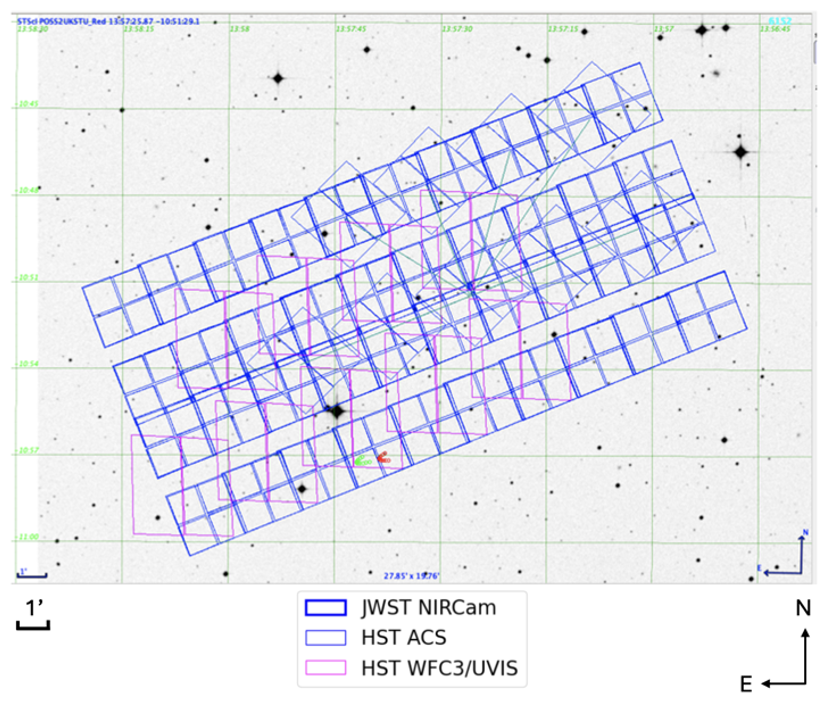
Anastasia Morgan, Marielle Eduardo, David Trilling, Wes Fraser, John Stansberry, Gary Bernstein, Bryan Hilbert, Matt Holman, Will Grundy, Stephen Tegler, Cesar Fuentes, and Kevin Napier

Introduction:  Trans-Neptunian objects (TNOs) exhibit a distinct bifurcation in surface colors that reflects differences in dynamical histories. Cold classical TNOs occupy low‑inclination, near‑circular orbits beyond Neptune and display extremely red optical to near-infrared colors, consistent across a wide size range down to ~40 km [1-4]. New Horizons’ close‑up study of Arrokoth confirmed this trend and revealed a low crater density, suggesting minimal collisional resurfacing [5,6]. Dynamically excited TNOs on resonant, scattered, and detached orbits span a broad range of  color from neutral to red [7,8]. As these bodies evolve inward into Centaurs and Jupiter‑family comets, solar heating and higher‑velocity impacts diversify their surfaces [9, 10].

A key question remains whether the smallest cold classicals with diameters less than 20 km retain primordial surface properties, or if frequent collisions lead to spectral neutralization or bluing. Our parallel program uses JWST NIRCam imaging to probe the size distribution of faint TNOs down to ~10 km and HST ACS+WFC3 observations to characterize color diversity at these scales. These data allow us to test whether collisional evolution or preservation of primordial material dominates surface color evolution in the cold classical belt.

Observations:  JWST Cycle 1 program #1568 conducted a pencil-beam survey from January 24 to February 4, 2023 using NIRCam filters F150W2 and  F322W2.  A 20-tile mosaic, centered at 13h RA and –10° Dec, targeted objects between 42-48 AU. Observations at three epochs separated by ~5 days allowed for detections of objects as small as ~10 km.

Simultaneously, HST Cycle 29 program #16720 ran from January 24 to February 3, 2023 using ACS filter F814W and WFC3/UVIS filter F350LP. Nine configurations aligned with the JWST footprint were each observed for 11 orbits. Due to differences in pointing constraints, only a subset of JWST discoveries overlap with HST coverage. Figure 1 shows the footprint of both observatories. A known TNO, 2015 GK56, was purposefully placed into both observations to test our recovery pipelines and can also be seen in Figure 1.

Figure 1. Observational footprints of JWST NIRCam (bold blue) and HST ACS (blue) and WFC3/UVIS (magenta) at 13h RA and -10° Dec. The tracks of 2015 GK56 can be seen in green and red.

Analysis:  We initially used aperture photometry for objects visible in single exposures, generating preliminary lightcurves via sinusoidal fitting. Colors were calculated from the mean magnitude difference of HST and JWST. Trailed PSF photometry is now being applied to all objects intersecting the HST fields to account for motion blur in the ~1200 s exposures.

Preliminary Results: TNO 2015 GK56 was recovered in both JWST and HST data. Preliminary lightcurve fitting yields a ~16-hour rotation period and 0.7 mag lightcurve amplitude (Figure 2). The “V-shaped” troughs and inverted “U-shaped” peaks match the signature of a contact binary [11]. Interestingly, its color is more neutral than expected for a cold classical.

Figure 2. HST ACS F814W preliminary lightcurve of 2015 GK56. Blue points show single-epoch photometry with a best-fit curve (solid orange line, left) and the right panel demonstrating the pronounced V-shaped minima and inverted U-shaped maxima that are characteristic of a contact binary.

Figure 3 shows a preliminary color-color diagram for objects detected in both JWST and HST. These results combine data from HST’s ACS/F814 and WFC3/F350LP filters with JWST’s NIRCam shot-wavelength (SW, F150W2) filter. All confirmed TNO detections have been observed in both SW and long-wavelength (LW, F322W2) filters, where we have SW/LW color information for each. However, only preliminary photometry from F150W2 is included in this analysis. Additionally, only two TNOs that currently have detections in the F350LP filter. Their distribution reveals a range of surface colors and is consistent with Gaussian-like color trends reported in [9].

Figure 3. Preliminary color-color diagram for TNOs detected in both JWST and HST. The central panel shows color indices (F350LP-F150W2) and (F814W-F150W2) for objects visible in single-exposure data. Color distributions for each filter combination are seen along the top and right axes. The red shaded region marks colors expected for a red spectrum based on Arrokoth, while the blue region corresponds to a neutral, flat spectrum. Error bars are not shown, as these are preliminary measurements. Typical uncertainties are estimated to be ± 0.1 magnitudes.

Future Work: Ongoing efforts include completing trailed PSF photometry for all ACS-detected objects and finalizing a model for the WFC3/F350LP filter. These refinements will improve our photometric accuracy and expand the sample of TNOs with reliable color measurements.

We will compare our measured color distributions to previously published photometry and spectra of TNOs to investigate whether small objects follow similar surface composition trends. We will explore correlations between color and other physical and orbital properties, including size, inclination, and dynamical classification.

In parallel, we will measure lightcurves from the PSF photometry to better characterize features across the sample such as rotational periods, amplitudes, and shapes. Collectively, this work will extend previous color surveys into a fainter regime and smaller size range, helping to determine whether small cold classical TNOs preserve primordial surfaces or have been modified by collisional and dynamical evolution over time.

References: [1] Tegler S. C. and Romanishin W. (2000) Nature, 407, 979. [2] Benecchi S. D. et al. (2019) Icarus, 334, 22. [3] Pike R. E. et al. (2017) Astron. J., 154, 101. [4] Fraser W. C. et al. (2023) Planet. Sci. J., 4, 80. [5] Stern A. et al. (2019) Science, 364, aaw977. [6] Grundy W. M. et al. (2020) Science, 367, aay3705. [7] Levison H. F. et al. (2008) Icarus, 196, 258. [8] Marsset M. et al. (2019) Astron. J., 157, 94. [9] Tegler S.C. et al. (2016) Astron. J., 152, 210. [10] Jewitt D. (2015) Astron. J., 150, 201. [11] Thirourin A. and Sheppard S. S. (2019) Astron J., 157, 228

How to cite: Morgan, A., Eduardo, M., Trilling, D., Fraser, W., Stansberry, J., Bernstein, G., Hilbert, B., Holman, M., Grundy, W., Tegler, S., Fuentes, C., and Napier, K.: Joint JWST and HST Deep Imaging to Characterize Cold Classical TNO Colors, EPSC-DPS Joint Meeting 2025, Helsinki, Finland, 7–13 Sep 2025, EPSC-DPS2025-1035, https://doi.org/10.5194/epsc-dps2025-1035, 2025.

Posters: Tue, 9 Sep, 18:00–19:30 | Finlandia Hall foyer

Display time: Tue, 9 Sep, 08:30–19:30
Chairpersons: Estela Fernández-Valenzuela, Thomas Müller
F138
|
EPSC-DPS2025-1053
|
On-site presentation
Kelsi Singer, Alan Stern, Anne Verbiscer, Simon Porter, William Grundy, Susan Bennechi, Marc Buie, Mihaly Horanyi, Alex Doner, Thomas Corbett, Andrew Poppe, Samantha Hasler, Laura Mayorga, Carly Howett, Wesley Fraser, Jj Kavelars, Fumi Yoshida, Takashi Ito, Ivy Knudsen, and Pontus Brandt

NASA’s New Horizons spacecraft continues to explore the Kuiper belt after its historic close flybys of the Pluto system in 2015 at ~33 astronomical units (AU) [1] and the cold classical Kuiper belt object (KBO) Arrokoth in 2019 at ~43 AU [2].  New Horizons is located at ~61.7 AU as of this writing in May 2025, and travels about 3 AU per year.  New Horizons has sufficient power, propellant, and communications capability to continue operations until the mid-to-late 2040s and, thus, should be able to collect data out to distances of ~120 AU or greater.


In its extended mission, New Horizons’ main planetary science focus is studying Kuiper belt dwarf planets and small KBOs, and their environment.  We will provide an overview of results for the dwarf planets and smaller KBOs observed by New Horizons from a distance ([3-6]; also see Porter et al., 2025 abstract at this conference).  New Horizons can observe KBOs from much higher phase angles than possible from Earth, and some of the observed KBOs come as close as 0.1 AU to the spacecraft.  This allows for the study of shapes, poles, surface properties, and  searches for close satellites in some cases.  New Horizons also made high-phase, color observations of the ice giants Uranus and Neptune [7] in coordination with the Hubble Space Telescope and as an exoplanet observation analogue.  Further, the New Horizons Student Dust Counter continues to observe elevated dust fluxes at larger distances than expected, and the team is exploring possible explanations for why the dust flux has not yet started to decrease as predicted by previous models [8, 9].  We will also highlight some new products and findings related to Arrokoth, including a new shape model [10], images draped onto the shape model, and a study placing Arrokoth’s crater size-frequency distribution into the context of those on other small bodies [11]. 


Looking towards the future of New Horizons: We will provide a status update on the ground-based, Subaru Telescope search [12-14] for a future close flyby target and other KBOs that New Horizons could observe as point sources.  We will also discuss how future work would enhance the chances of finding a future flyby target for New Horizons, including the additional use of machine learning/artificial intelligence, supercomputing, and potential observations from the Vera Rubin Observatory (also see Kavelaars et al. 2025 abstract in this conference) or the Roman Space Telescope.

References:

[1]  Stern S. A. et al., 2015, The Pluto system: Initial results from its exploration by New Horizons, Science 350, id.aad1815. doi:10.1126/science.aad1815

[2]  Stern S. A. et al., 2019, Initial results from the New Horizons exploration of 2014 MU69, a small Kuiper Belt object, Science 364. doi:10.1126/science.aaw9771

[3]  Verbiscer A. J. et al., 2024, The New Horizons Photometric Phase Angle Survey of Deep Outer Solar System Objects: From the Kuiper Belt to the Scattered Disk, 55th Lunar and Planetary Science Conference. 3040, 2531.

[4]  Verbiscer A. J. et al., 2022, The Diverse Shapes of Dwarf Planet and Large KBO Phase Curves Observed from New Horizons, The Planetary Science Journal 3, 95. doi:10.3847/PSJ/ac63a6

[5]  Verbiscer A. J. et al., 2019, Phase Curves from the Kuiper Belt: Photometric Properties of Distant Kuiper Belt Objects Observed by New Horizons, Astron. J. 158. doi:10.3847/1538-3881/ab3211

[6]  Porter S. B. et al., 2016, The First High-phase Observations of a KBO: New Horizons Imaging of (15810) 1994 JR1 from the Kuiper Belt, ApJ Letters 828. doi:10.3847/2041-8205/828/2/L15

[7]  Hasler S. N. et al., 2024, Observations of Uranus at High Phase Angle as Seen by New Horizons, The Planetary Science Journal 5, 267. doi:10.3847/PSJ/ad8cdb

[8]  Corbett T. et al., 2025, Production, Transport, and Destruction of Dust in the Kuiper Belt: The Effects of Refractory and Volatile Grain Compositions, Astrophys J. 979, L50. doi:10.3847/2041-8213/adab75

[9]  Doner A. et al., 2024, New Horizons Venetia Burney Student Dust Counter Observes Higher than Expected Fluxes Approaching 60 AU, pp. arXiv:2401.01230.

[10]  Porter S. B. et al., 2024, The Shape and Formation of Arrokoth, 55th Lunar and Planetary Science Conference. 3040, 2332.

[11]  Knudsen I. E. et al., 2024, An Analysis of Impact Craters on Small Bodies Throughout the Solar System, The Trans-neptunian Solar System.

[12]  Yoshida F. et al., 2024, A deep analysis for New Horizons' KBO search images, Publications of the Astronomical Society of Japan 76, 720-732. doi:10.1093/pasj/psae043

[13]  Fraser W. C. et al., 2024, Candidate Distant Trans-Neptunian Objects Detected by the New Horizons Subaru TNO Survey, The Planetary Science Journal 5, 227. doi:10.3847/PSJ/ad6f9e

[14]  Buie M. W. et al., 2024, The New Horizons Extended Mission Target: Arrokoth Search and Discovery, The Planetary Science Journal 5, 196. doi:10.3847/PSJ/ad676d

How to cite: Singer, K., Stern, A., Verbiscer, A., Porter, S., Grundy, W., Bennechi, S., Buie, M., Horanyi, M., Doner, A., Corbett, T., Poppe, A., Hasler, S., Mayorga, L., Howett, C., Fraser, W., Kavelars, J., Yoshida, F., Ito, T., Knudsen, I., and Brandt, P.: Update on NASA’s New Horizons Mission: Kuiper Belt Science Results and Future Plans, EPSC-DPS Joint Meeting 2025, Helsinki, Finland, 7–13 Sep 2025, EPSC-DPS2025-1053, https://doi.org/10.5194/epsc-dps2025-1053, 2025.

F139
|
EPSC-DPS2025-1527
|
ECP
|
On-site presentation
Multi-epoch stellar occultations by the large trans-Neptunian object (28978) Ixion
(withdrawn after no-show)
Yucel Kilic, Felipe Braga-Ribas, Chrystian Luciano Pereira, Pablo Santos Sanz, Bruno Sicardy, Giuliano Margoti, Luan Machado Catani, Bruno Morgado, Jose Luis Ortiz, Altair Ramos Gomes Júnior, Josselin Desmars, Orhan Erece, Murat Kaplan, Nicolas F. Morales Palomino, and Rodrigo Leiva and the Ixion stellar occultation team
F140
|
EPSC-DPS2025-21
|
On-site presentation
Laura Woodney, Sara Faggi, John Noonan, and Amanda Sickafoose

From the International Hally Watch to the international teamwork to observe D/Shoemaker-Levy 9 collide with Jupiter to the collaborative effort to characterize 67P for the Rosetta mission: observational campaigns have been a way for scientists to come together and coordinate to maximize scientific return.  Observational campaigns have proven to be an effective way to answer some of the biggest questions in astrophysics and they can do the same for Centaurs.  We can use campaigns to ask about composition, what drives sporadic activity, size, and how coma/ring morphology is governed.  This poster summarizes the suggestions that can be found in the Observational Campaigns chapter of the upcoming book Centaurs (2025, K. Volk, M. Womack & J. Steckloff, eds., IOP Press; 10.1088/2514-3433/ada267). It reviews upcoming observational windows and suggests types of campaigns for observers to  consider planning for Centaurs in the near future.  


How to cite: Woodney, L., Faggi, S., Noonan, J., and Sickafoose, A.: The Importance of Forming Observational Campaigns for Centaurs, EPSC-DPS Joint Meeting 2025, Helsinki, Finland, 7–13 Sep 2025, EPSC-DPS2025-21, https://doi.org/10.5194/epsc-dps2025-21, 2025.

F141
|
EPSC-DPS2025-24
|
On-site presentation
Maria Womack, Kathryn Volk, and Jordan Steckloff

Centaurs are an unstable, transitional population of small, icy bodies connecting the Jupiter-family comets (JFCs) to their reservoir population in the trans-Neptunian region. Due to the more extreme thermal environment of the giant-planet region relative to that of the trans-Neptunian objects (TNOs), Centaurs experience rapid dynamical and physical changes, thermophysically evolving these otherwise well-preserved objects. Many of these physical changes may be seen in the surface topography, ices, and refractory composition and volatiles emitted from active Centaurs. The dawn of several new observational assets and laboratory techniques whose data will be augmented with dramatically increased computing power indicates that Centaur research is at the start of a transformational era. Here we briefly summarize some of the foundational discoveries covered in earlier chapters of the new book CENTAURS and review what is needed to make significant progress on outstanding problems. We also present and discuss eight Centaur Priority Goals for the next ten years that we put in context of the 2023 U.S. National Academies of Sciences, Engineering, and Medicines decadal survey for Planetary Science and Astrobiology.

How to cite: Womack, M., Volk, K., and Steckloff, J.: CENTAURS: Highlights from the new book and the Next Ten Years for Centaur Research, EPSC-DPS Joint Meeting 2025, Helsinki, Finland, 7–13 Sep 2025, EPSC-DPS2025-24, https://doi.org/10.5194/epsc-dps2025-24, 2025.

F142
|
EPSC-DPS2025-227
|
ECP
|
On-site presentation
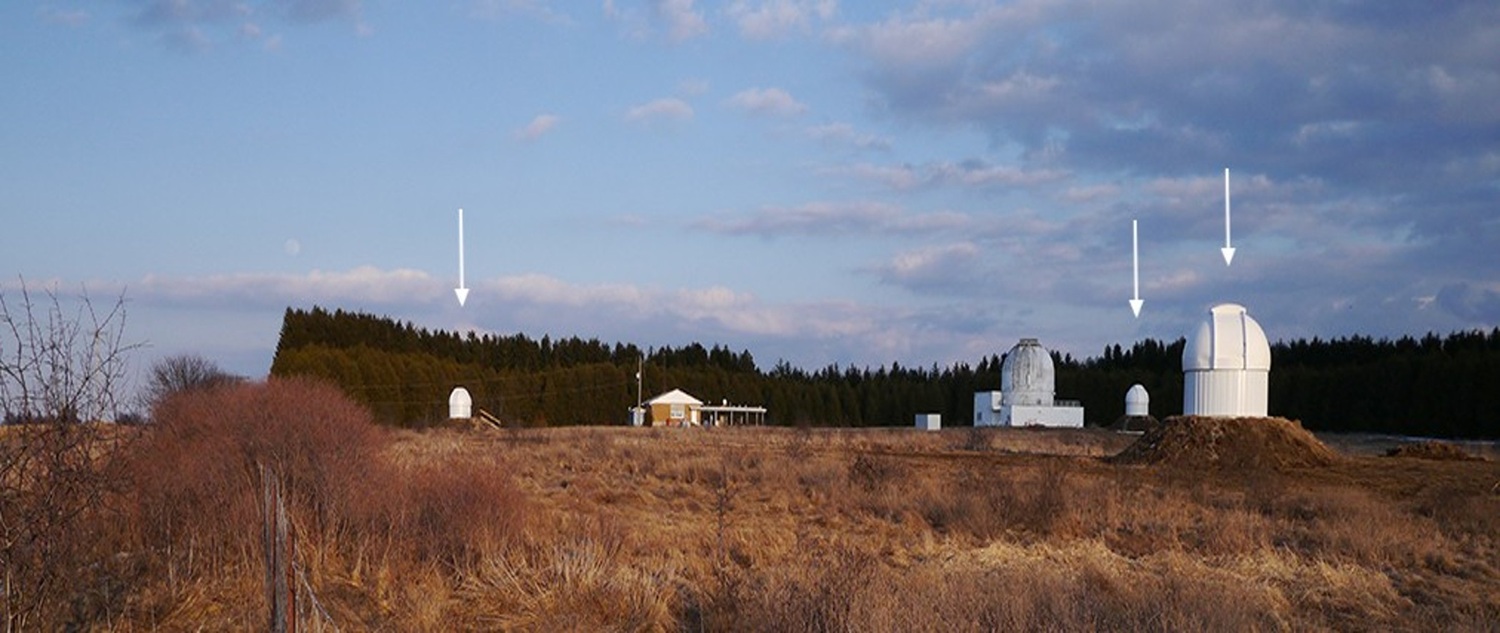
Anthony Girmenia, Stanimir Metchev, Toni Almeida, Connor Martz, and Michael Mazur

The size distribution of small Transneptunian objects (TNOs) approximately follows a power law n(D)∝D-q with logarithmic slope q that can adopt several values at different diameter ranges. The value of q for small TNOs is largely unconstrained due to the difficulty of imaging them directly. Observing serendipitous stellar occultations (SSOs) of stars by TNOs is currently the most promising method for measuring the size distribution of smaller kilometre-sized TNOs. Because of the rarity of SSO events occurring, millions of star-hours worth of observations are required to produce enough detections to form reasonable constraints on the values of q. Dedicated SSO surveys are therefore the ideal method for measuring the small size distribution. 

Western University’s Colibri Telescope Array [1] is a fast photometry wide-field observatory dedicated to detecting small kilometre-sized TNOs via SSOs. Colibri consists of three identical 0.5-meter prime-focus telescopes produced by Hercules Telescopes (Montréal, Canada), each equipped with a Kepler KL4040 sCMOS camera from Finger Lakes Instruments capable of acquiring 2×2 pixel-binned images at rates of up to 40 frames per second. This rate is matched to the Nyquist rate for observing the anticipated Fresnel diffraction pattern produced by kilometre-sized SSOs at opposition [2]. The system provides a field of view of 1.43×1.43 at 2.52′′ per binned pixel. The three telescopes monitor the same stellar fields for SSOs simultaneously, so that candidate events can be separated from false positives by coincidence checking. The Colibri Telescope Array is located at Elginfield Observatory (4311′33′′ N, 8118′57′′ W), north of London, Ontario, Canada. The observatory is operating semi-regularly with full robotic operations under development. Images of the facility and one of the telescopes are shown in Figures 1 and 2, respectively.

Figure 1: Elginfield Observatory. The arrows indicate the three domes of the Colibri Telescope Array. The no-arrow dome is for the no longer used 1.2 m Ritchey–Chrétien telescope. The observatory is 25 km north of London, Ontario, Canada.

Figure 2: One of the three Colibri telescopes: a Hercules 50 cm f/3 telescope with a Wynne corrector in prime focus, set on an Astro-Physics AP1600 GTO mount.

We present a trade study of imaging frequency vs. sensitivity to SSOs tailored to the Colibri Telescope Array. Observing at imaging rates below the Nyquist rate will increase the photometric sensitivity of the system at the cost of decreased temporal resolution. This has the effect of potentially under-sampling individual occultation events, while increasing the likelihood of detecting an occultation within the FOV because of increased sensitivity to fainter stars. To explore the optimal compromise between temporal resolution and photometric sensitivity, we have conducted comprehensive simulations of Colibri's observing program while operating at imaging cadences between 5 Hz and 40 Hz. 

The simulations realistically model important aspects of the observing program. Data-driven models of atmospheric extinction, the instrument's sensitivity, and weather losses at Elginfield are incorporated. We perform dynamic scheduling of target fields chosen from a pre-selected set of high stellar density fields that span the sky in RA to facilitate year-round observing. Our scheduling algorithm chooses the optimal field to observe at a given time based on predictions of the SSO detection rate of each field. Each simulation run consists of 10 years' worth of Colibri observations. 

Simulations were performed assuming an unbroken power law for the size distribution of TNOs that corresponds to upper limits from the TAOS I survey [3], sampling objects with 1 km < D < 90 km. The results are shown in Figure 3. The change in the total number of detections with imaging cadence shows complex behaviour without any clear trends. Concrete explanations for this behaviour are currently being investigated. We find that rapid imaging rates (≥ 30 Hz) seem to be required to optimize the number of small (D < 2 km) detections. Sensitivity to D < 2 km objects appears to decrease with decreasing imaging rate, as may be expected from sub-Nyquist sampling of the Fresnel diffraction pattern. Slower rates (e.g., 10 Hz) may be optimal for maximizing the total number of detections at the expense of sensitivity to small objects.

Figure 3: Results from 10 years of simulations of Colibri observations by framerate. Error bars correspond to √(NTotal). (Left) The total number of simulated SSO events that occur within Colibri’s FOV during observation. The total number of occultations increases with decreasing imaging cadence as sensitivity to fainter stars increases. (Right) The total number of simulated SSOs detected by framerate. The total number of detections is highest at 10 Hz, possibly suggesting that imaging at rates moderately below the Nyquist rate may be an optimal compromise between sensitivity and temporal resolution for maximizing the overall number of detections. Imaging cadences < 30 Hz show decreased sensitivity to small (D < 2 km) objects. Rapid imaging is required to maintain sensitivity to small TNOs at the possible expense of the total number of detections.

Our results suggest that Colibri can detect a significant number of kilometre-sized TNOs when fully operational, and that SSO surveys in general will be able to further constrain the values of q for small TNOs.

References:

[1] Michael J. Mazur, Stanimir Metchev, Rachel A. Brown, Ridhee Gupta, Richard Bloch, Tristan Mills, and Emily Pass. The colibri telescope array for kbo detection through serendipitous stellar occultations: A technical description. Frontiers in Astronomy and Space Sciences, 9, 2022.

[2] S. J. Bickerton, D. L. Welch, and J. J. Kavelaars. Kuiper Belt Object Occultations: Expected Rates, False Positives, and Survey Design. , 137(5):4270–4281, May 2009.

[3] Z. W. Zhang, M. J. Lehner, J. H. Wang, C. Y. Wen, S. Y. Wang, S. K. King, ´A. P. Granados, C. Alcock, T. Axelrod, F. B. Bianco, Y. I. Byun, W. P. Chen, N. K. Coehlo, K. H. Cook, I. de Pater, D. W. Kim, T. Lee, J. J. Lissauer, S. L. Marshall, P. Protopapas, J. A. Rice, and M. E. Schwamb. The TAOS Project: Results from Seven Years of Survey Data. , 146(1):14, July 2013.

How to cite: Girmenia, A., Metchev, S., Almeida, T., Martz, C., and Mazur, M.: The Colibri Telescope Array for TNO Detection through Serendipitous Stellar Occultations: Simulation of Scientific Performance, EPSC-DPS Joint Meeting 2025, Helsinki, Finland, 7–13 Sep 2025, EPSC-DPS2025-227, https://doi.org/10.5194/epsc-dps2025-227, 2025.

F143
|
EPSC-DPS2025-371
|
ECP
|
On-site presentation
Lucas McClure, Joshua Emery, Noemi Pinilla-Alonso, Rosario Brunetto, Sasha Cryan, Brittany Harvison, Elsa Hénault, Bryan Holler, Javier Licandro, Vania Lorenzi, Yvonne Pendleton, Dale Cruikshank, Thomas Müller, John Stansberry, Charles Schambeau, Aurélie Guilbert-Lepoutre, Nuno Peixinho, and Michele Bannister

Introduction:  Trans-Neptunian Objects (TNOs) harbor materials from the early solar nebula (e.g., Gladman et al. 2008; Tegler et al. 2016). Observations from the NIRSpec instrument onboard the James Webb Space Telescope (JWST) included >50 TNOs during Cycle 1 for the large program “Discovering the Compositions of TNOs” (DiSCo-TNOs; #2418; PI: N. Pinilla-Alonso). DiSCo-TNO observations built a spectral taxonomic system consisting of three major classes. “Bowl” and Double-Dip” TNOs show abundances of water and CO/CO2, respectively, which place their theoretical formation distance interior to the “Cliff” TNOs, which show spectral features potentially associated with methanol and a variety of complex hydrocarbons (Pinilla-Alonso et al. 2024). Cliff-type TNOs further separate spectrally into Cliff1 & Cliff2. Notably, all cold-classical KBOs exhibit Cliff2 spectra, though not all Cliff2s are cold-classical KBOs. Spectrally, Cliff1 spectra show deeper methanol features from 2 – 2.6 μm, redder near-infrared slopes, and deeper CO2 combination bands near 2.7 μm than Cliff2 spectra (Brunetto et al. 2025). Additionally, Cliff1 spectra show slightly wider 3-μm bands than Cliff2 spectra (Figure 1).

Figure 1: Spectra of Cliff-subclasses in the 3-μm region, highlighting their spectral differences, normalized to 2.6 μm.

Motivation & Methodology:  Spectral separation among the Cliff-type TNOs highlights the need to compositionally constrain this population by quantifying  abundances of methanol, water, and light hydrocarbons. We tested the overarching hypothesis from the aforementioned literature: Cliff-type TNO compositions encompass the materials found within the other TNO classes in addition to volatile materials that are indicative of distant formation. We performed targeted spectral band comparisons and employed Hapke spectral modeling of the 3-μm region for all DiSCo Cliff-type TNOs.

Results & Analysis:  We broadly find that mixtures of methanol, water, and tholins adequately reflect the general structure of the 3-μm band of Cliff-types. Both Titan and ice tholins serve as suitable substitutes for the variety of complex hydrocarbons that (possibly) reside on their surfaces.  Some Cliff-type spectra present features associated with a mixture of complex aliphatic molecules. We discuss the possible dynamical scenarios if some or all of these materials are contained on Cliff-type surfaces. (Pinilla-Alonso et al. 2024b; Licandro, J. et al. 2024).

Hapke models of the Cliff-type spectra further suggest two main compositional groups – one dominated by methanol and another dominated by tholins. These compositional groups align with the spectral subclasses (Figure 2). Further, some Cliff2 spectra are potentially best modeled when tholins include embedded amorphous carbon (AC) grains. The AC grains lower albedo enough to match Cliff-type spectra, and their contribution also maintains a physically reasonable surface for a distant TNO. Higher-albedo Cliff2 spectra are potentially best modeled when mixed with relatively higher amounts of (crystalline) water and/or methanol, though their ice abundances are still lower than those of Cliff1 spectra. We also present specific results related to the Mors-Somnus binary system (Souza-Feliciano et al. 2024) and the “outlier” Cliff-type, 2004 PG115 (Pinilla-Alonso et al. 2024a; Brunetto et al. 2025).

Figure 2: (a)  The collection of  spectra for each object in the Cliff1 (purple) and Cliff2 (gold) subgroups, along with (b) their corresponding best-fit models. Also shown are the average abundances of the primary components between the Cliff subclasses.


References:

Gladman, B. et al. (2008). The Solar System Beyond Neptune.

Tegler, S. C. et al. (2016) Astron. J. 152

Pinilla-Alonso, N. et al. (2024a). Nat. Astron., 9.

Brunetto, R. et al. (2025). AJL, 982.

Pinilla-Alonso, N. et al. (2024b). Astron. Astrophys., 692.

Licandro, J. et al. (2024). Nat. Astron., 9.

Souza-Feliciano, A. C. et al. (2024). Astron. Astrophys., 681.

How to cite: McClure, L., Emery, J., Pinilla-Alonso, N., Brunetto, R., Cryan, S., Harvison, B., Hénault, E., Holler, B., Licandro, J., Lorenzi, V., Pendleton, Y., Cruikshank, D., Müller, T., Stansberry, J., Schambeau, C., Guilbert-Lepoutre, A., Peixinho, N., and Bannister, M.: Compositional Characterization of Cliff-Type Trans-Neptunian Objects, EPSC-DPS Joint Meeting 2025, Helsinki, Finland, 7–13 Sep 2025, EPSC-DPS2025-371, https://doi.org/10.5194/epsc-dps2025-371, 2025.

F144
|
EPSC-DPS2025-539
|
On-site presentation
Jose L. Ortiz, Juan L. Rizos, Bruno Sicardy, Flavia Rommel, Felipe Braga-Ribas, Nicolas Morales, Estela Fernandez-Valenzuela, Mike Kretlow, Jose M. Gómez-Limón, Pablo Santos-Sanz, Yucel Kilic, Alvaro Alvarez-Candal, Josselin Desmars, Damya Souami, Monica Vara-Lubiano, Rene Duffard, and Rafael Morales

The Trans-Neptunian Object (TNO) provisionally designated 2002 KX14 has orbital characteristics placing it near the boundary between the cold and hot classical populations. To date, there are very few published measurements of the projected shapes and sizes of TNOs, resulting in limited knowledge of their true three-dimensional forms and the orientations of their spin axes. In this study, we present results based on six stellar occultations, five of them recently presented in Rizos et al. (2025), supplemented with new measurements and a reanalysis of existing data. Our findings suggest that 2002 KX14 is consistent with an oblate body, with a major axis of 460 ± 6 km and a minor axis of 337 ± 10 km. This corresponds to a projected-area equivalent diameter of 385 ± 8 km. This value is smaller than the diameter estimated from thermal observations, though it remains uncertain whether this discrepancy could be attributed to the presence of an undetected satellite. We also provide updated estimates of the geometric albedo and present an analysis of recent photometric observations of the object.

How to cite: Ortiz, J. L., Rizos, J. L., Sicardy, B., Rommel, F., Braga-Ribas, F., Morales, N., Fernandez-Valenzuela, E., Kretlow, M., Gómez-Limón, J. M., Santos-Sanz, P., Kilic, Y., Alvarez-Candal, A., Desmars, J., Souami, D., Vara-Lubiano, M., Duffard, R., and Morales, R.: Analysis of the Trans-Neptunian Object 2002 KX14 Using Six Stellar Occultations and Ground-Based Long- and Short-Term Photometry, EPSC-DPS Joint Meeting 2025, Helsinki, Finland, 7–13 Sep 2025, EPSC-DPS2025-539, https://doi.org/10.5194/epsc-dps2025-539, 2025.

F145
|
EPSC-DPS2025-1214
|
On-site presentation
TAOS II: The Transneptunian Automated Occultation Survey
(withdrawn after no-show)
Matthew Lehner and the The TAOS II collaboration
F146
|
EPSC-DPS2025-1363
|
On-site presentation
Amanda Sickafoose, Michael Person, Carlos Zulaaga, Stephen Levine, Timothy Brothers, Bastian Knieling, Tim Lister, David Osip, Patricio Rojo, Karsten Schindler, Joseph Brimacombe, Tim Carruthers, Abigail Colclasure, Petro Janse van Rensburg, Anja Genade, and Stephen Potter

Pluto is the only minor planet (excluding satellites) that is known to host a thin, global atmosphere. The atmosphere has microbar-level surface pressure, is composed primarily of nitrogen, and contains a layered haze made of organic materials (e.g. Gladstone et al., 2016, Science, 351, id. aad8866). Notably, Pluto’s atmosphere is intricately linked to its surface ices through vapor-pressure equilibrium (e.g. Elliot et al., 1989, Icarus, 77, 148). Because of the strong tie between the atmosphere and ices, the surface pressure is highly dependent on ice temperature, which is a function of orbital and seasonal timescales. On Pluto, with an eccentric orbit (e = 0.25) and high obliquity (~123 deg.), these changes are pronounced and the atmospheric properties can vary significantly on timescales of only a few decades. Thermophysical, volatile-transport models have been developed to study Pluto’s atmospheric evolution; predictions range from atmospheric contraction or collapse over the coming decades to an atmosphere that remains throughout Pluto’s entire revolution around the Sun (e.g. Young, 2013, ApJ Lett., 766, L22; Hansen et al. 2015, Icarus, 246, 183; Bertrand et al. 2018, Icarus, 309, 277; Johnson et al. 2021, Icarus, 356, id.114070).

Stellar occultation data are the most direct way to measure Pluto’s atmosphere from the Earth. Results from previous occultations reported that Pluto’s atmospheric pressure monotonically increased since its definitive discovery in 1988 through 2016 (Meza et al. 2019, A&A, 625, id.A136) and then that the atmosphere had possibly begun freezing out in 2018-2019 (Arimatsu et al. 2020, A&A 638, L5; Young et al. 2021, AAS DPS Meeting #53, id.307.06). Observations of an occultation in 2020 did not show a pressure drop and were interpreted to be either a continued pressure increase (Poro et al. 2021, A&A, 652, L7) or a plateau phase (Sicardy et al. 2021, ApJ Lett, 923, L31). Here, we report results from ten successfully-observed stellar occultations by Pluto between 2017 August and 2023 July that have not yet been published. The stellar magnitudes ranged from G=12.91 to 18.4 with geocentric relative velocities between 1.7 and 24.5 km/s.  Four of these events had successful chords from multiple sites, while six events were from single sites. We carried out atmospheric fits assuming clear, isothermal atmospheres as well as atmospheres with a haze layer. Our results indicate that Pluto’s atmospheric pressure has begun decreasing in recent years.

This work is supported by NASA grant 80NSSC21K043.

How to cite: Sickafoose, A., Person, M., Zulaaga, C., Levine, S., Brothers, T., Knieling, B., Lister, T., Osip, D., Rojo, P., Schindler, K., Brimacombe, J., Carruthers, T., Colclasure, A., Janse van Rensburg, P., Genade, A., and Potter, S.: Pluto’s Atmosphere in Decline, EPSC-DPS Joint Meeting 2025, Helsinki, Finland, 7–13 Sep 2025, EPSC-DPS2025-1363, https://doi.org/10.5194/epsc-dps2025-1363, 2025.

F147
|
EPSC-DPS2025-728
|
ECP
|
On-site presentation
Benjamin Proudfoot, Will Grundy, and Darin Ragozzine

The population of bodies beyond Neptune—generally called trans-Neptunian Objects (TNOs)—are critical to our understanding of the solar system. As leftover debris from planet formation, their orbital and physical characteristics inform our knowledge of the earliest moments of the solar system. Imprinted onto the orbital characteristics of the TNOs are signatures of planet migration and disturbances from stars in the Sun's birth cluster. Similarly, the physical characteristics of TNOs encode information about the composition of the protoplanetary disk, the conditions during planet formation, and the processes which enabled planetesimal formation. Unfortunately, physical characteristics of TNOs are difficult to probe given their extreme distances and small sizes. Thankfully, the abundant population of TNO binaries (TNBs) allow detailed physical characterization to be accomplished. 

One of the best times to characterize a TNB is during its mutual event season. Twice during each TNB’s heliocentric orbit, its binary mutual orbit appears edge-on (as seen from Earth) allowing for a series of occultations/eclipses between the binary components. Observing these events allows for detailed characterization of each components’ size, albedo, surface features, and even their surface thermal properties. Although this technique was used to great success for Pluto and Charon, limited success in observing and/or interpreting mutual events of TNBs has been had in the past two decades.

In this presentation, we will describe our threefold approach to improving the prediction of TNB mutual events. First, using the Hubble Space Telescope, we have observed 4 TNBs with upcoming/ongoing mutual event seasons. Second, we use precise ephemerides from the “Beyond Point Masses” project, which includes non-Keplerian precession into TNB orbital models. Third, we aim to provide well-characterized event predictions in a Bayesian framework that accounts for all sources of uncertainty in event predictions. With this approach, we will present updated predictions for the ongoing/upcoming mutual events of several TNBs.

How to cite: Proudfoot, B., Grundy, W., and Ragozzine, D.: Upcoming and ongoing mutual events of trans-Neptunian binaries, EPSC-DPS Joint Meeting 2025, Helsinki, Finland, 7–13 Sep 2025, EPSC-DPS2025-728, https://doi.org/10.5194/epsc-dps2025-728, 2025.

F148
|
EPSC-DPS2025-422
|
Virtual presentation
Jose David Balseca Cisneros, Adriano Campo Bagatin, Paula Gabriela Benavidez Lozano, and Toni Santana-Ros

We present a study focused on the detection of large, distant objects in the Solar System, specifically those of planetary size located beyond 100 AU. This search is motivated by models of the primordial planetesimal disk, which suggest that the early Solar System may have hosted hundreds to thousands of Pluto-sized bodies, and potentially a few Mars-sized or larger objects. These predictions, consistent with both dynamical simulations and accretion models, raise the possibility that some of these distant bodies may still exist but remain undetected.

To explore this, we analyze deep-sky images collected over the past four years by the 0.68-m Schmidt telescope at Mt. Bigelow and the 1.5-m Cass telescope at Mt. Lemmon, both part of the Catalina Sky Survey. Our approach involves co-adding wide-field unfiltered images from different nights to increase the sensitivity and reveal faint, slowly moving sources. Image alignment is performed using the Tycho Tracker software, and source detection is carried out via Python codes based on the Astropy library and a matched-filter technique. This stacking method allows us to reach a limiting magnitude of V ≈ 21.5, sufficient to detect distant objects in the trans-Neptunian region. We then compare source positions across different epochs to identify candidate moving objects. For those showing consistent motion, we determine preliminary orbits using the software Find Orb, which enables orbital fitting even with sparse and low-cadence data sets. This step is essential for distinguishing real distant Solar System bodies from false positives or artifacts.

The methodology described here offers a robust and scalable framework that can be applied to other panoramic multi-epoch surveys, improving our ability to uncover faint and distant members of the Solar System population.

.Keywords: Surveys, co-added images, match filter.

How to cite: Balseca Cisneros, J. D., Campo Bagatin, A., Benavidez Lozano, P. G., and Santana-Ros, T.: Looking for slow objects in the outer solar system, EPSC-DPS Joint Meeting 2025, Helsinki, Finland, 7–13 Sep 2025, EPSC-DPS2025-422, https://doi.org/10.5194/epsc-dps2025-422, 2025.

F149
|
EPSC-DPS2025-518
|
ECP
|
On-site presentation
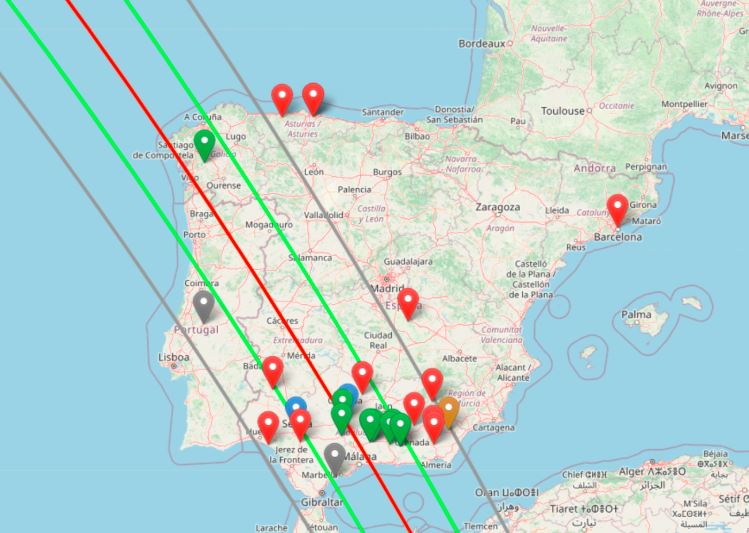
Victor de Ory Guimera, Pablo Santos-Sanz, Luan Catani, Juan Luis Rizos, José Luis Ortiz, Yücel Kiliç, Nicolás Morales, Flavia Luane Rommel, and José Luis Gutiérrez

On 6 November 2024, the Centaur (54598) Bienor occulted a background star located at coordinates RA 07h41m41.7944s, Dec +38°37′59.699″ (J2000). A total of 28 observation attempts were carried out across Spain and Portugal. Of these, 10 sites reported positive detections, 13 were negative (no disappearance observed), and the remaining suffered from technical or meteorological issues. This constitutes the most densely observed stellar occultation for Bienor—and among Centaurs, second only to Chariklo—for stellar occultations to date.

The occultation campaign was coordinated by the Instituto de Astrofísica de Andalucía (IAA-CSIC), involving a wide network of amateur and professional astronomers. The majority of the successful observations were obtained in Andalusia (Spain), with additional chords from Galicia, Catalonia, Asturias, Castilla-La Mancha, and central Portugal.

Light curves were initially processed with Python photometric routines and refined using the SORA occultation package (Gomes-Junior et al. 2022). Ingress and egress times were extracted via the ChiSquare technique and converted into chords projected in the sky plane. These chords were used to fit an apparent ellipse to the body of Bienor through a five-parameter χ² minimization (center, semi-major axis, oblateness, and position angle). Two negative observations were especially valuable in constraining the body’s edges.

The best-fit solution yields a projected ellipse with dimensions of 275 km × 90 km, with the long axis approximately oriented from south to north. The fit is consistent with previous occultation-based results but shows a slightly larger projected size and a deviation in expected orientation. No secondary events attributable to rings or satellites were detected within the campaign’s photometric sensitivity.

This work presents the most comprehensive multi-chord occultation dataset ever obtained for Bienor, offering significant constraints on its size, elongation, and projected shape. The data are currently being used to refine Bienor’s pole orientation and 3D shape models. A peer-reviewed publication based on this data is being prepared.


Figure 1

Ground path and observer locations for the 6 November 2024 Bienor occultation

Predicted occultation path and observing sites:  central line in red, uncertainty in green and grey. Green pins mark positive detections, red pins indicate negative results, and grey, blue and orange pins are weather-affected or inconclusive


Figure 2


An example of a light curve obtained from the Sierra Nevada Observatory (OSN, Granada, Spain). The drop in stellar brightness corresponds to when Bienor occulted the star. Relative flux (normalised to 1 outside of the occultation) is plotted against time in seconds since 00:00 UTC on 6 November 2024.

Figure 3

Chords and best-fit ellipse of Bienor’s projected silhouette. Observed chords (colored lines) from positive detections (10) and negative observations (2) were used to constrain Bienor's apparent shape. The best-fit ellipse, with ~275 × 90 km dimensions, is shown in black. Observers are identified in the legend.

Acknowledgments
I thank Pablo Santos-Sanz for his continuous support and mentorship as thesis advisor, Luan Catani for his expert guidance using the SORA software at the IAA, Yücel Kılıç for his invaluable help with the telescope setup on the night prior to the occultation; Juan Luis Rizos for collaborating with me during the event and in the following days to perform photometry; José Luis Ortiz for his invaluable help and guidance in the thesis on occultations; and José Luis Gutiérrez Sacristán for teaching telescope operations and providing remote assistance on the night of the occultation.


References

[1] André-Romain Gomes-Junior et al. (2022). SORA: Stellar Occultation Reduction and Analysis. Astronomy and Astrophysics, 658, A29.

[2] Juan Luis Rizos et al. (2024). A study of centaur (54598) Bienor from multiple stellar occultations and rotational light curves. Astronomy and Astrophysics, 689, A82.

[3] Estela Fernández-Valenzuela et al. (2023). The multichord stellar occultation by the centaur Bienor on January 11, 2019. Astronomy and Astrophysics, 669, A112.

[4] Bruno Sicardy et al. (2024). Stellar occultations by Trans-Neptunian Objects. The Astronomy and Astrophysics Review, 32(1), 6.

[5] José Luis Ortiz et al. (2019). Stellar occultations by Trans-Neptunian objects: From predictions to observations and prospects for the future. In M. A. Barucci et al. (Eds.), The Trans-Neptunian Solar System (pp. 413–437). Elsevier.

[6] Bruno Sicardy et al. (2024). Stellar occultations by trans-Neptunian objects. The Astronomy and Astrophysics Review, 32(1), 6.


How to cite: de Ory Guimera, V., Santos-Sanz, P., Catani, L., Rizos, J. L., Ortiz, J. L., Kiliç, Y., Morales, N., Rommel, F. L., and Gutiérrez, J. L.: The 6 November 2024, stellar occultation by the Centaur (54598) Bienor: preliminary results, EPSC-DPS Joint Meeting 2025, Helsinki, Finland, 7–13 Sep 2025, EPSC-DPS2025-518, https://doi.org/10.5194/epsc-dps2025-518, 2025.