OPS6 | Ice Giant Systems: Science and Exploration

OPS6

Ice Giant Systems: Science and Exploration
Conveners: Vincent Hue, Alyssa Rhoden | Co-conveners: Richard J. Cartwright, Leigh Fletcher, Mark Hofstadter, Thibault Cavalié, Krista Soderlund, Olivier Mousis, Robin Canup, Sierra Ferguson, Kurt D. Retherford
Orals THU-OB2
| Thu, 11 Sep, 09:30–10:30 (EEST)
 
Room Venus (Veranda 3)
Orals THU-OB3
| Thu, 11 Sep, 11:00–12:27 (EEST)
 
Room Venus (Veranda 3)
Orals THU-OB5
| Thu, 11 Sep, 15:00–16:00 (EEST)
 
Room Venus (Veranda 3)
Orals THU-OB6
| Thu, 11 Sep, 16:30–17:54 (EEST)
 
Room Venus (Veranda 3)
Orals FRI-OB2
| Fri, 12 Sep, 09:30–10:30 (EEST)
 
Room Uranus (Helsinki Hall)
Posters THU-POS
| Attendance Thu, 11 Sep, 18:00–19:30 (EEST) | Display Thu, 11 Sep, 08:30–19:30
 
Lämpiö foyer, L14–30
Thu, 09:30
Thu, 11:00
Thu, 15:00
Thu, 16:30
Fri, 09:30
Thu, 18:00
This session will cover all aspects of ice giant (IG) systems including (but not limited to) the atmospheric structure and composition, magnetospheres, interiors, satellites, and rings of the IGs. Interdisciplinary, crosscutting themes of ice giant planet exploration, such as the relationship to exoplanetary science and connections with heliophysics will also be considered in the session. The session will consist of a combination of solicited and contributed oral and poster presentations on new, continuing, and future studies of the ice giant systems and the importance of the ice giants to models of the formation and evolution of the giant planets and the Solar System.

We welcome abstracts that:
• Address the current understanding of ice giant systems, including atmospheres, interiors, magnetospheres, rings, and satellites including Triton.
• Advance our understanding of the ice giant systems in preparation for future exploration, both by remote sensing and in situ.
• Discuss what the ice giants can tell us about solar system formation and evolution leading to a better understanding of the current structure of the solar system and its habitable zone as well as extrasolar systems.
• Address outstanding science questions requiring future investigations including from spacecraft, remote sensing, theoretical, and laboratory work necessary to improve our knowledge of the ice giants and their relationship to the gas giants and the solar system.
• Present concepts of missions, instruments, and investigations relevant to future exploration of the ice giant planetary systems.

Due to the prioritization of the Uranus Orbiter and Probe (UOP) mission theme by the 2023 National Academy of Sciences "Origins, Worlds, and Life" planetary science decadal survey, we encourage the submission of abstracts that discuss broad science goals as they relate to the proposed objectives of the UOP mission. We welcome abstracts discussing measurements that could be made of the planet, satellites, and rings via remote sensing and/or in situ observations.

Session assets

Orals THU-OB2: Thu, 11 Sep, 09:30–10:30 | Room Venus (Veranda 3)

Chairpersons: Vincent Hue, Krista Soderlund
09:30–09:42
|
EPSC-DPS2025-405
|
On-site presentation
Sophia Zomerdijk-Russell, Jamie M. Jasinski, and Adam Masters

A central question that remains unresolved is whether global magnetic reconnection processes continue to dominate as drivers of the outer planetary magnetospheres. Uranus offers a unique opportunity to investigate solar wind-magnetospheric interactions in the outer solar system. Here, we assess the effectiveness of magnetic reconnection in driving Uranus’ magnetospheric dynamics by modeling the associated voltage applied to the planet’s dayside magnetopause. We present theoretical predictions of these reconnection voltages under various solar wind and magnetospheric configurations using models with much heritage from the Earth and other planets [1-9] and inputs based on Voyager 2 data. Figure 1 illustrates example outputs of the model viewed from along the upstream solar wind flow direction.

Figure 1a shows the planetary magnetic field confined by the magnetopause at a selected rotational phase during Uranus’ solstice season and Figure 1b shows the magnetosheath field that results from a draped northward interplanetary magnetic field (IMF). Figure 1c identifies regions on the magnetopause where reconnection is permitted (in green) and suppressed (in black). The solid red lines indicate maxima of magnetic shear angles between the reconnecting fields – proxies for reconnection X-line locations. The reconnection voltage is then calculated using the electric field, shown in Figure 1d, to determine the potential difference along these X-lines.

In this study, we investigate how variability in the structure of the internal field with season and solar cycle modulation of the solar wind conditions impact the reconnection voltages. Voltages predicted for a full Uranian year are summarized in Figure 2. Voltages depicted in each box are calculated at eight phases over one Uranus rotation and under 100 distinct solar wind conditions that have an 11-year solar cycle dependence. Figure 2 reveals that increasing the IMF strength –mimicking conditions during solar maximum – can increase the median voltage from approximately 17 kV to 31 kV. Across one Uranian year, the median predicted dayside reconnection voltage is relatively low at 22 kV. We also note that there is no clear seasonal dependence of the reconnection voltages between solstice and equinox.

Our results suggest that any potential seasonal variations are obscured by large dependencies of the voltages on prevailing solar wind conditions and diurnal phase, as showcased by the large range of each box in Figure 2 that spans multiple orders of magnitude [10].  In the future, these results could be tested with new in situ observations of the Uranian system that could aid in revealing whether global magnetic reconnection processes dominate solar wind-magnetospheric interactions.

References: [1] Cooling, B. M. A., et al. (2001). JGR: Space Phys, 106(A9), 18763–18775. [2] Doss, C. E., et al. (2015). JGR: Space Phys, 120(9), 7748–7763. [3] Kobel, E., & Flückiger, E. O. (1994). JGR: Space Phys, 99(12), 23617–23622. [4] Masters, A. (2014). JGR: Space Phys, 119(7), 5520–5538. [5] Masters, A. (2015b). GRL, 42(8), 2577–2585. [6] Masters, A. (2017). JGR: Space Phys, 122(11), 11,154-11,174. [7] Petrinec, S. M., et al. (1997). JGR: Space Phys, 102(A12), 26943–26959. [8] Swisdak, M., et al. (2003). JGR: Space Phys, 108(A5). [9] Zomerdijk- Russell, S., et al. (2023). JGR: Space Phys, 128(11), e2023JA031810. [10] Zomerdijk-Russell, S., et al. (under review). JGR: Space Phys.

How to cite: Zomerdijk-Russell, S., Jasinski, J. M., and Masters, A.: Uranus’ Coupling with the Solar Wind Through Magnetic Reconnection, EPSC-DPS Joint Meeting 2025, Helsinki, Finland, 7–13 Sep 2025, EPSC-DPS2025-405, https://doi.org/10.5194/epsc-dps2025-405, 2025.

09:42–09:54
|
EPSC-DPS2025-1281
|
Virtual presentation
Tom Nordheim, Adrienn Luspay-Kuti, Robert Grayson, Peter Kollmann, Kathleen Mandt, Lucas Liuzzo, and Ronald Vervack

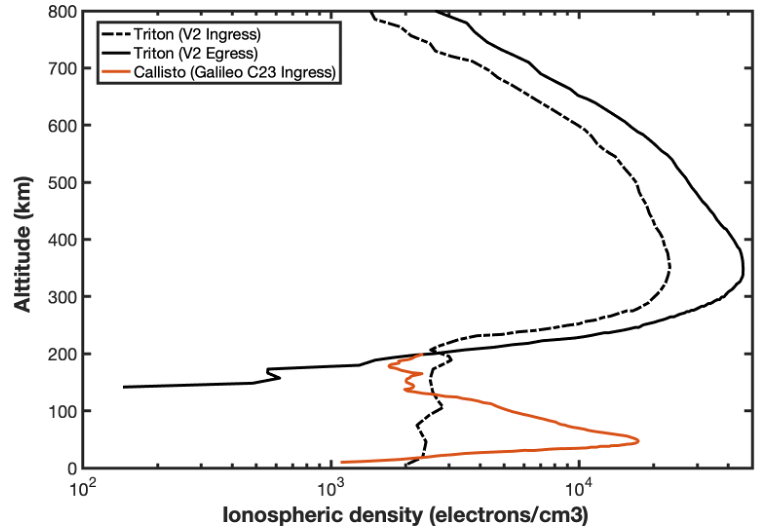
In 1989, Voyager 2 carried out the first, and thus far only, in-situ exploration of the Neptune system. This included a distant flyby of Neptune’s only major moon Triton – a large icy moon that may possibly be a captured Kuiper Belt Object. Based on radio occultation measurements during the flyby, Triton was found to have an intense ionosphere with peak electron densities on the order of 104 cm-3 [1]. This was surprising, as Neptune’s orbital location at 30 AU from the Sun means that the flux of ionizing solar UV photons is relatively low. It was therefore suggested that magnetospheric electron precipitation may be an important, and possibly dominant, energy input to Triton’s ionosphere [2], [3], [4]. However, subsequent modelling efforts were never able to fully explain the structure of Triton’s ionosphere from either solar photoionization or magnetospheric electron input [5], [6]. The question of what drives Triton’s intense ionosphere therefore remains unresolved.

Figure 1: Ionospheric densities at Triton as measured by Voyager 2 [1] during ingress (dashed black line) and egress (solid black line) compared to the most intense ionosphere measured by Galileo at Jupiter’s moon Callisto [7].

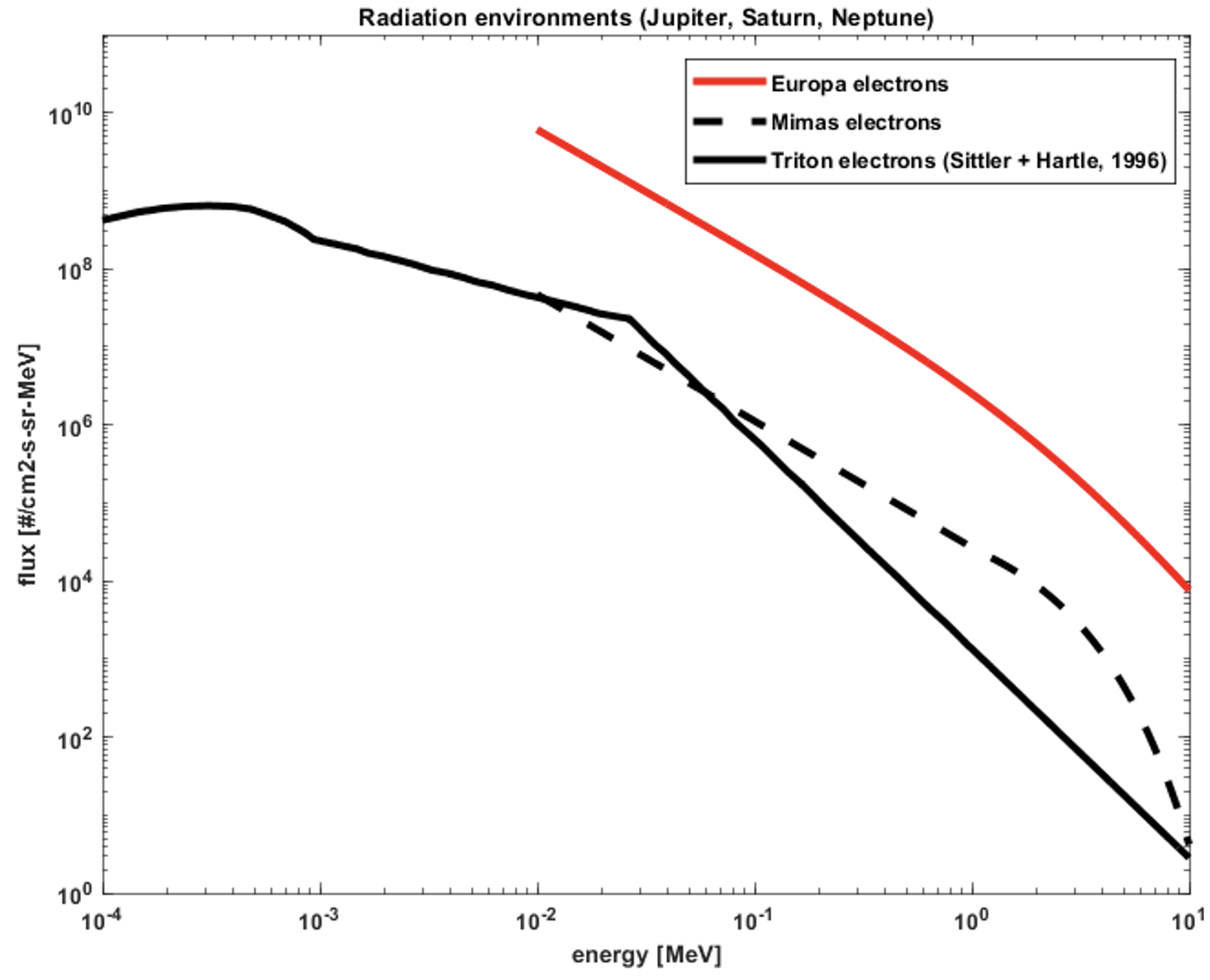
An important factor in determing the role of magnetospheric electron precipitation at Triton is our knowledge of Neptune’s magnetosphere and the “seed population” of magnetospheric electrons upstream of the moon. Most studies in the literature have considered either mono-energetic beams of electrons incident at the top of Triton’s atmosphere or a “best-guess” electron spectrum based on early analyses of the Voyager 2 magnetospheric measurements. An example of the most commonly used “best-guess” magnetospheric electron spectrum  [5] is shown below in Figure 2.

Figure 2:  Representative magnetospheric electron environment at Triton based on the “best guess” estimate by [5] compared to similar magnetospheric environments at Jupiter and Saturn.

Here, we revisit the question of the dominant energy input to Triton’s ionosphere using new models and analysis techniques that were not available at the time of the Voyager 2 Neptune encounter. This includes re-analyses of data from the Voyager 2 Plasma Science (PLS) and Low Energy Charged Particle (LECP) instruments near Triton’s location in Neptune’s magnetosphere, and charged particle transport modelling to simulate the resulting energy deposition and primary ionization rate due magnetospheric elctrons incident at the top of Triton’s atmosphere.

References:

[1] Tyler G. L., et al. (1989) Science, 246, 4936,1466–1473. [2] Strobel, D. F. et al. (1990) Geophys Res Lett, 17, 10, 1661–1664. [3] Majeed, T., et al. (1990) Geophys Res Lett, 17, 10, 1721–1724. [4] Yung, Y. L. and Lyons, J. R.  (1990) Geophys Res Lett, 17, 10, 1717–1720. [5] Sittler, E. C.  and Hartle, R. E. (1996) J Geophys Res, 101, A5, 10863–10876. [6] Krasnopolsky, V. A.  and Cruikshank, D. P. (1995) J Geophys Res, 100, E10, 21271. [7] Kliore, A. J.  et al. (2002) J Geophys Res Space Phys, 107, A11, 1–7.

How to cite: Nordheim, T., Luspay-Kuti, A., Grayson, R., Kollmann, P., Mandt, K., Liuzzo, L., and Vervack, R.:  Triton’s mysteriously intense ionosphere: Updates on magnetospheric charged particle fluxes and atmospheric energy deposition, EPSC-DPS Joint Meeting 2025, Helsinki, Finland, 7–13 Sep 2025, EPSC-DPS2025-1281, https://doi.org/10.5194/epsc-dps2025-1281, 2025.

09:54–10:06
|
EPSC-DPS2025-647
|
On-site presentation
Henrik Melin, Leigh Fletcher, Paola Tiranti, Heidi Hammel, Stefanie Milam, Tom Stallard, Emma Thomas, Katie Knowles, Luke Moore, and James O'Donoghue

The charged particle ionosphere is the interface-region between the atmosphere below and the space environment beyond. Observations from James Webb Space Telescope (JWST) have revealed the ionosphere with unprecedented sensitivity, revealing features of this region that were hitherto undetectable using existing facilities. Here, we present the spectral analysis of JWST NIRSpec Integral Field Unit (IFU) observation obtained in January 2023 that covered most of the disk of Uranus at three separate rotational phases, providing complete longitudinal coverage. Via the spectral analysis of the discrete H3+ emission lines contained in the near-infrared spectrum, we derive maps of temperature and density of the ionosphere across the visible portion of the planet. The H3+ reveal a host of intricate structures: 1) Northern and southern auroral emission, with the southern being very confined, and the northern more extended. 2) A dark band appears along the magnetic equator, analogous to the terrestrial equatorial plasma fountain 3) the H3+ radiance distribution across the disk, which is expected to be produced primarily via the ionisation of molecular hydrogen by solar photons, show a distribution that is intricate. Overall, we see the coolest temperatures at the geometric pole, no heating associated with the southern auroral oval, and very limited heating at the northern oval. This puts stringent limits on the amount of energy at the auroral process can contribute to the overall energy budget. 

How to cite: Melin, H., Fletcher, L., Tiranti, P., Hammel, H., Milam, S., Stallard, T., Thomas, E., Knowles, K., Moore, L., and O'Donoghue, J.: The Ionosphere of Uranus as Revealed by JWST, EPSC-DPS Joint Meeting 2025, Helsinki, Finland, 7–13 Sep 2025, EPSC-DPS2025-647, https://doi.org/10.5194/epsc-dps2025-647, 2025.

10:06–10:18
|
EPSC-DPS2025-967
|
ECP
|
On-site presentation
Emma Thomas, Tom Stallard, Henrik Melin, Luke Moore, Katie Knowles, Paola Tiranti, Mohammed 'Nahid' Chowdhury, Ruoyan Wang, Kate Roberts, Ben Attwood, Rosie Johnson, James O'Donoghue, and Russell Mapaye

Uranus stands as an enigma within the field of planetary science. What little we know of its ionosphere and aurorae have proven perplexing, whether this be ultraviolet (UV) or infrared (IR) emissions, considerable intensity and column density variability have been observed across the surface of Uranus’s ionosphere [Lamy et al., 2012, 2017, 2020, Lam et al., 1997, Melin et al., 2019 and Thomas et al., 2023 and 2025]. For IR emissions of the molecular ion H3+, a key tracer of energy in Uranus’s ionosphere, only two observations have published spatial intensity maps with a 10 year gap between investigations, this difference prevents a direct comparison as to the variability between emission intensities, temperatures and column densities. To address this, our investigation will study the shorter term variability of Uranus by mapping multiple half planet scans (using Keck-NIRSPEC) in October 2023 and January 2025, an example shown in Fig. 1, to identify ionospheric fluctuations in key auroral and non-auroral regions. Through comparison of these intensity scans with prior JWST observations in December 2021 our discussions will focus on short-term auroral and thermal drivers in Uranus’s ionosphere.

Figure 1. Averaged global projections (~ 5hr) of the spectral radiance of the Q(1,0-) H3+ emission line from Uranus as observed by Keck-NIRSPEC on the 29th September 2023. The intensity has been normalised in this figure with the S representing the ULS southern pole of Uranus.

How to cite: Thomas, E., Stallard, T., Melin, H., Moore, L., Knowles, K., Tiranti, P., Chowdhury, M. '., Wang, R., Roberts, K., Attwood, B., Johnson, R., O'Donoghue, J., and Mapaye, R.: Why is Uranus giving us the cold shoulder? Analysing planetary scans of H3+ infrared emissions from Uranus's ionosphere, EPSC-DPS Joint Meeting 2025, Helsinki, Finland, 7–13 Sep 2025, EPSC-DPS2025-967, https://doi.org/10.5194/epsc-dps2025-967, 2025.

10:18–10:30
|
EPSC-DPS2025-942
|
ECP
|
On-site presentation
William Saunders and Kunio Sayanagi and the Uranus Stellar Occultation Campaign 2025

Background: UV occultations measured by Voyager 2 (V2) during its flyby of Uranus in 1986 detected a warm stratosphere and extremely hot thermosphere [1,2], far in excess of solar irradiance [3,4] or internal heating [5]. These measurements imply that Uranus has the coldest lower stratosphere and yet the hottest thermosphere of any Solar System planet [6] (Figure 1, dotted line). Uranus also has the weakest vertical mixing of any giant planet [5]. The fundamental lack of understanding about the energy balance of Uranus’ atmosphere is an example of the “giant planet energy crisis” [7].

Furthermore, the V2 UV occultation measurements and models were in stark tension with Earth-based stellar occultations observed 1977-1996. In [8,9], we presented the results of processing 26 archival occultations using modern techniques, showing decreased stratospheric discrepancies, but thermospheric discrepancies remain. In [9], we presented a new 1-D atmospheric model based on the most reliable of these results, which shows a thermal structure similar to that of the other giant planets, and in contrast to some V2 measurements.

Motivation: Measurements of H3+ emissions indicate that Uranus’ thermosphere has cooled from 725K in 1992 to 425K in 2019 [7] and continues to cool to the present [10]. New stellar occultations have the potential to identify the present-day thermal structure and allow for comparison between different atmospheric layers to better understand energy transport in Uranus’ atmosphere.

Aims: On 2025 April 08 UT, Uranus occulted a bright star, creating the best stellar occultation opportunity in decades. We observed the occultation using 18 professional telescopes in the US and Mexico, involving over 35 astronomers and observers. Details about the campaign and team can be found at https://science.larc.nasa.gov/URANUS2025/. To our knowledge, this was the largest Uranus stellar occultation campaign ever organized, and the largest simultaneous observation of Uranus since the 1986 V2 flyby campaign. We will report on the execution of the campaign, as well as preliminary results on atmospheric and ring measurements. We will discuss anticipated results and their implications for the understanding of Uranus’ thermal structure, long-term variations, and potential use of aerocapture for orbital insertion of a spacecraft around Uranus. 

Background on Stellar Occultations: An Earth-based stellar occultation occurs when a solar system body appears to pass in front of a distant star. By observing the differential refraction of starlight through the atmosphere of the occulting body, we can determine the pressure, temperature, and density vs. altitude with high accuracy and vertical resolution in the stratosphere and lower thermosphere (∼0.1–100 microbar pressures). Observations of Uranus ring occultations are used to study the rings in detail and improve Uranus’ ephemeris [11]. 

Occultation Details: This stellar occultation was initially predicted and reported in [12]. The star has designations BD+18 489, SAO 93455, Gaia DR3 57460310166762752, and is an F5 white dwarf in a physical binary system with a parallax of 8.08 mas. Its magnitude is reported as V=9.05, R=9.70, K=7.95. The occultation occurred between approximately 02 and 03 UT on 2025 April 08; the view of Earth from the occultation at the mid-point is shown in Figure 2. All observations (with the exception of the IRTF) had to begin immediately after sunset and observe low in the Western horizon, creating a challenging observation. 

Occultation Campaign: Figure 3 is a map showing the locations of each site involved in the campaign. In preparation, each telescope’s team tested different combinations of filters, cadences, sub-frame windows, and/or modes to achieve the best possible signal-to-noise without any risk of saturating. Infrared or methane absorption band filters were used where available and achieved the best signal-to-noise. Of the 18 telescopes that attempted the observation, 14 had good weather and we anticipate 4-7 will produce high quality atmospheric light curves. 

Preliminary Results: We will present preliminary results in (1) atmospheric temperature structure, (2) long-term stratospheric variations, and (3) ring occultation measurements. We will report the thermal structure of Uranus’ stratosphere and lower thermosphere from inverting these light curves and the resulting vertically averaged stratospheric temperatures in 2025. We will compare these to past occultations from 1977-1996 as well as H3+ measurements of the thermosphere. We will report on the many detected ring occultations and how they are being used to improve Uranus’ ephemeris 

Implications for Aerocapture: Aerocapture is a maneuver for orbital insertion in which a spacecraft passes through the stratosphere of a planet to decelerate. If used for a mission to the ice giants, it would enable a much shorter cruise and larger science payload than a propulsive orbital insertion [13], but it is impeded primarily by large uncertainties in Uranus’ stratospheric densities [14]. We will discuss how our results may improve density measurements in support of aerocapture. 

Future Work: We are exploring how airborne and/or space-based observations of future occultations (especially a 2031 Uranus occultation of a 4th magnitude star) may improve upon the ground-based observations from 2025, based on initial work from [12]. We will discuss science and technology motivations as well as the instrument needs for the 2031 occultation. We will also report on critical lessons learned that may help with future occultation campaigns. 

References: [1] Herbert et al. (1987). [2] Stevens et al. (1993). [3] Marley & McKay (1999). [4] Li et al. (2018). [5] Pearl et al. (1990). [6] Young et al. (2001). [7] Melin (2020). [8] Saunders et al. (2023). [9] Saunders et al. (2024). [10] Luke Moore, personal communication. [11] French et al. 2024. [12] Saunders et al. (2022). [13] Soumyo et al. (2021). BAAS. [14] Report of the Aerocapture Demonstration Relevance Assessment Team 2023. [15] Mueller-Wodarg et al. (2008). [16] Orton et al. (2014).

We acknowledge NASA PSD for funding this work through grant 24-SSO24-0006.

Figure 1. Comparison of temperature-pressure profiles for atmospheres in the solar system. The V2 profile (dotted) [15] is compared to the Spitzer IR model (dot-dash) [16] and the Earth-based occultation model (dashed) [9]. Figure 14 in [9].

Figure 2. Globe of Earth showing the geometry of the occultation. Gray indicates after sunset.

Figure 3. Map of all observing sites that attempted observations. 

How to cite: Saunders, W. and Sayanagi, K. and the Uranus Stellar Occultation Campaign 2025: Uranus Stellar Occultation 2025: Report and Preliminary Results from the Largest Uranus Stellar Occultation Campaign, EPSC-DPS Joint Meeting 2025, Helsinki, Finland, 7–13 Sep 2025, EPSC-DPS2025-942, https://doi.org/10.5194/epsc-dps2025-942, 2025.

Orals THU-OB3: Thu, 11 Sep, 11:00–12:30 | Room Venus (Veranda 3)

Chairpersons: Thibault Cavalié, William Saunders
11:00–11:12
|
EPSC-DPS2025-110
|
ECP
|
On-site presentation
Vanesa Ramirez, Yamila Miguel, and Saburo Howard

Although Uranus and Neptune are commonly classified as ice giants, their exact compositions remain uncertain. Recent studies on outer solar system objects challenge the traditional view that these planets are primarily icy, suggesting the idea of a rock-dominated composition. Determining the proportions of ice and rocks within Uranus and Neptune is essential for understanding their formation and the broader history of the solar system. In this work, we calculate interior structure models for Uranus and Neptune. We explore the range of structure models that meet observational constraints, assessing ice and rock fractions and analyzing their impact on the planets interior. Our results suggest that Neptune's envelope is rock-enriched, with a minimum rock fraction of around 60%, while its mantle may contain more ices. For Uranus, models with larger ice fractions (over 50%) are needed to fit the radius and gravity data. These differences between Uranus and Neptune suggest possible distinct formation and evolution paths.

How to cite: Ramirez, V., Miguel, Y., and Howard, S.: Are Uranus and Neptune really ice giants?, EPSC-DPS Joint Meeting 2025, Helsinki, Finland, 7–13 Sep 2025, EPSC-DPS2025-110, https://doi.org/10.5194/epsc-dps2025-110, 2025.

11:12–11:24
|
EPSC-DPS2025-236
|
ECP
|
On-site presentation
Paula Wulff, Jonathan Aurnou, Krista Soderlund, and Hao Cao

The morphology of the magnetic fields of Uranus and Neptune are radically different to those of all other planets in our solar system. Despite only having in-situ measurements from one Voyager 2 fly-by of each planet, it is clear that they are not dominated by an axial dipole and are instead multipolar. However, due to the rarity of large-scale multipolar planetary magnetic fields in our solar system, the focus of numerical dynamo studies has primarily been on dipole dominated models. Here, we revisit existing numerical dynamo parameter surveys, selecting cases of particular interest. We focus on multipolar models that are in the regime where rotation dominates over convective turbulence (i.e., the low local Rossby number regime, Ro_ell<1). We have also performed simulations with high Ro_ell to quantitatively disambiguate between the two dynamical regimes by comparing the characteristics of these systems, such as their field strengths, flow characteristics, and spectra. In this comparison we reconsider the best ways to characterise multipolar dynamos. While many of the existing tools sweep them into one vast category of “non-dipolar” models, we find them to display a number of vastly differing properties. Characterisation of these models allows us to assess ice giant-like properties with our existing data as well as predict what higher resolution future measurements of their magnetic fields could reveal.

How to cite: Wulff, P., Aurnou, J., Soderlund, K., and Cao, H.: Bistability of ice giant dynamo action, EPSC-DPS Joint Meeting 2025, Helsinki, Finland, 7–13 Sep 2025, EPSC-DPS2025-236, https://doi.org/10.5194/epsc-dps2025-236, 2025.

11:24–11:36
|
EPSC-DPS2025-439
|
On-site presentation
Krista Soderlund, Chi Yan, Jonathan Aurnou, and Hao Cao

Uranus and Neptune present unique non-dipole-dominated magnetic fields that are also strongly non-axisymmetric (i.e., peak power for m>0). Their distinctly high power in the m = 1 component appears to be a persistent feature and, therefore, a key diagnostic for determining the mechanisms underlying magnetic field generation within these planets. Here, we highlight numerical dynamo models that successfully reproduce the large-scale features of ice giant magnetic fields, with the profile of radially varying electrical conductivity being a critical ingredient. Moreover, the magnetic fields in these dynamo models evolve rapidly with time. We thus hypothesize that Uranus' and Neptune's magnetic fields may have changed in intensity and/or orientation since the Voyager 2 flybys. This secular variation has implications for telescopic observations of auroral features (e.g., via the James Webb Space Telescope) and provides essential groundwork for the Uranus Orbiter and Probe Flagship and Triton Ocean World Surveyor New Frontier mission concepts prioritized in the Origins, Worlds, and Life Decadal Survey.

How to cite: Soderlund, K., Yan, C., Aurnou, J., and Cao, H.: Time-varying dynamo models consistent with Uranus’ and Neptune’s magnetic fields, EPSC-DPS Joint Meeting 2025, Helsinki, Finland, 7–13 Sep 2025, EPSC-DPS2025-439, https://doi.org/10.5194/epsc-dps2025-439, 2025.

11:36–11:51
|
EPSC-DPS2025-414
|
ECP
|
On-site presentation
Leandro Esteves, André Izidoro, and Othon Winter

1São Paulo State University, FEG, Department of Mathematics, Guaratinguetá, São Paulo, Brazil (leandro.esteves@unesp.br)

  • 2Rice University, Department of Earth, Environmental and Planetary Sciences, Houston, Texas, USA

The formation of Uranus and Neptune remains one of the outstanding problems in planetary science. Unlike Jupiter and Saturn, the ice giants possess relatively low masses and significantly tilted spin axes, with obliquities of ~98° and ~30°, respectively. These characteristics suggest that they experienced one or more giant impacts during their formation. However, the specific nature of these collisions—the number, mass ratio, and dynamical conditions of the impactors—remains debated.

Previous studies have explored the accretion of Uranus and Neptune through giant impacts between planetary embryos with comparable masses, typically around 5 M. These scenarios can successfully reproduce the current masses and mass ratio between the two planets, as well as their large obliquities, assuming stochastic impacts (Izidoro et al. 2015). However, these impacts often lead to the formation of planets with excessively rapid rotation, due to the large angular momentum delivered in approximately equal-mass collisions. This inconsistency with the present-day rotation periods of Uranus (~17.2 hours) and Neptune (~16.1 hours) presents a significant challenge.

An alternative hypothesis involves impacts between bodies with large mass ratios—for instance, a proto-Uranus (~13 M) and a much smaller embryo (~1 M). Smooth Particle Hydrodynamics simulations indicate that such large mass ratio collisions can dissipate more angular momentum and result in slower rotating planets, with spin periods more consistent with Uranus and Neptune (Reinhardt et al. 2020). In addition, depending on the impact geometry and location, these impacts can still generate large obliquities, particularly for Uranus, without significantly altering the mass ratio or total mass of the planets.

In this work, we explore both scenarios using a large suite of N-body simulations that incorporate key processes relevant to planet formation in a gaseous protoplanetary disk. Our simulations start with a population of planetary embryos with masses ranging from ~1 to 13 M and include the effects of type-I migration, as well as eccentricity and inclination damping from the gas disk. We investigate how the mass distribution of impactors and the dynamical environment influence the frequency and outcomes of collisions that can reproduce the observed characteristics of Uranus and Neptune. The high mass ratio scenario (HMR) simulations start with two massive protoplanets (~13 M) and several small embryos (0.5–3 M). The I15 scenario, based on Izidoro et al. (2015), involves only similar-mass embryos (~5 M).

Figure 1 illustrates the initial conditions used in simulations. The top panel shows the gas surface density as a function of radial distance, with the blue curve denoting how the giant planets shape the protoplanetary disk, following Morbidelli & Crida 2007. The vertical lines mark the approximate orbits of Jupiter, Saturn, and the range of distribution for embryos. The middle panel displays the normalized resultant torque, where negative values indicate inward migration toward the Sun and positive values represent outward migration. Lines are color-coded to denote varying body masses. The bottom panel depicts the approximate initial positions of Jupiter, Saturn, and the embryos, distributed between approximately 10 and 35 AU.

Our results show that scenarios with high mass ratio impactors are more likely to yield planets with slower spin rates, alleviating the angular momentum problem present in equal-mass collision (I15) scenario. However, these same simulations exhibit a significantly reduced probability of such collisions occurring. This is because gas damping is relatively inefficient for low-mass embryos (≲1 M), which tend to be dynamically excited and scattered by more massive protoplanets instead of merging with them. Consequently, although the final spin states are more favorable, the rarity of such collisions limits the overall success rate of this formation path.

Conversely, simulations involving similar-mass impactors result in a higher frequency of collisions and a greater number of systems that match the final masses of Uranus and Neptune. Nonetheless, most of these planets end up with excess angular momentum, highlighting the trade-off between collision frequency and rotational outcomes in these different formation scenarios.

Figure 2 shows the distribution of rotation periods for Uranus/Neptune analogues from simulations. The light-blue and dark-blue vertical lines represent the actual rotation periods of Uranus and Neptune, respectively. The four upper panels display planets that collided with specific small embryos in the High Mass Ratio (HMR) scenario simulations. The bottom panels show results from the I15 scenario with embryo masses of 6 M and 4-8 M. The percentage plotted in red indicates the fraction of simulations where at least two protoplanets collided with embryos, reached masses close to those of Uranus and Neptune, and preserved the early Solar System architecture.

Despite these contrasting dynamics, our statistical analysis shows that the overall probability of simultaneously reproducing the observed masses, mass ratio, and spin periods of Uranus and Neptune is comparable between the two scenarios, differing by no more than a factor of ~2. In both cases, the likelihood of achieving such an outcome remains low, on the order of 0.1–1%.

These findings suggest that both the large and small mass ratio impact scenarios remain viable from a planet formation perspective. The ultimate pathway may depend on additional factors such as the structure and evolution of the protoplanetary disk, the timing of giant planet migration, and stochastic dynamical interactions in the outer solar system. Future work incorporating improved models of gas disk evolution, pebble accretion, and spin-orbit coupling may further constrain the plausibility of these scenarios.

References: 

  • This work: Esteves, L., Izidoro, A. & Winter, O.C., 2025. Accretion of Uranus and Neptune: Confronting different giant impact scenarios. Icarus, 429, p.116428.
  • Izidoro, A. et al., 2015. Accretion of Uranus and Neptune from inward-migrating planetary embryos blocked by Jupiter and Saturn. A&A, 582, A99.
  • Morbidelli, A. & Crida, A., 2007. The dynamics of Jupiter and Saturn in the gaseous protoplanetary disk. Icarus, 191(1), pp.158–171.
  • Reinhardt, C. et al., 2020. Bifurcation in the history of Uranus and Neptune: the role of giant impacts. MNRAS, 492(4), pp.5336–5353.

How to cite: Esteves, L., Izidoro, A., and Winter, O.: Forming Uranus and Neptune through giant impacts: accretion scenarios with large and small impactor mass ratios in the early Solar System, EPSC-DPS Joint Meeting 2025, Helsinki, Finland, 7–13 Sep 2025, EPSC-DPS2025-414, https://doi.org/10.5194/epsc-dps2025-414, 2025.

11:51–12:03
|
EPSC-DPS2025-509
|
On-site presentation
Tom Benest Couzinou and Olivier Mousis

Uranus and Neptune are among the least studied bodies in our Solar System, and their composition and formation processes remain subjects of ongoing debate. Observations of these icy giants have shown that both planets are significantly enriched in carbon and moderately enriched in nitrogen relative to protosolar values, challenging current planet formation models. Additionally, measurements of the deuterium to hydrogen (D/H) ratio, obtained by the Herschel Space Telescope, reveal a supersolar value, although lower than that of comets. This D/H ratio provides valuable insights into the bulk composition of Uranus, offering clues to its formation conditions.

The goal of this study is to determine whether the CO/H2O ratio of Uranus, derived from its D/H measurement, is consistent with the composition of the protosolar nebula (PSN) during its evolution. To achieve this, we use an interior model of Uranus, assuming the planet is composed entirely of ice. From this model, we derive the CO/H2O ratio of Uranus based on its D/H ratio, with the assumption that the D/H ratio in its original ices mirrors that of comets. We then compare this CO/H2O ratio to the corresponding ratio in the PSN, using a protoplanetary disk model that accounts for the evolution of species in multiple phases, including clathrate hydrates.

Our preliminary results compare the CO/H2O ratio derived from Uranus' D/H ratio with the local CO/H2O ratio in the protosolar nebula at different epochs, providing insight into the conditions that existed during Uranus' formation. Exploration of different interior models, including variations in the ice/rock ratio within Uranus, can lead to variations in the bulk CO/H2O ratio of the planet. Therefore, our study also investigates the relationship between Uranus' ice/rock ratio and its formation conditions.

By combining observational data, interior models, and protoplanetary disk simulations, this work seeks to elucidate the link between Uranus' composition and the conditions of the PSN during the planet's formation.

How to cite: Benest Couzinou, T. and Mousis, O.: Uranus Revealed: What its D/H Ratio Tells Us About its Formation, EPSC-DPS Joint Meeting 2025, Helsinki, Finland, 7–13 Sep 2025, EPSC-DPS2025-509, https://doi.org/10.5194/epsc-dps2025-509, 2025.

12:03–12:15
|
EPSC-DPS2025-1346
|
On-site presentation
Bruno Reynard, Giorgia Confortini, Camille Delarue, and Christophe Sotin

The densities and moments of inertia of Jovian and Saturnian icy moons, dwarf planets, and other trans-Neptunian objects (TNOs) suggest the presence of a significant low-density carbonaceous component in their rocky cores. In a homogeneous accretion scenario, where these components are mixed in solar proportions, ices differentiate from the carbon-rich refractory core, while silicate hydration may occur. Thermal models that account for the presence of carbonaceous matter indicate that originally hydrated silicates are now largely dehydrated in the refractory cores of large moons and dwarf planets, due to interactions with volatiles released by the metamorphism of carbonaceous matter.

Progressive gas release from the slowly warming, carbonaceous matter-rich cores may sustain, up to the present day, the replenishment of ice-ocean layers with organics and volatiles, as well as outgassing to the surface. This process accounts for the observation of nitrogen, light hydrocarbons, and complex organic molecules at the surface, in the atmospheres, or in the plumes emanating from moons and dwarf planets. The formation of large carbon-rich icy bodies in the outer solar system suggests that a carbon-rich environment prevailed during ice giant planet formation—a scenario that could also lead to the formation of carbon-rich planets at the outskirts of extrasolar systems.

In the Neptunian system, Triton—presumed to be a captured TNO—shares density and surface composition characteristics with other large TNOs, including Pluto, Eris, Makemake, Gonggong, Quaoar, and others. Notably, the carbon-bearing molecules at the icy surfaces of TNOs shift from CO₂-dominated compositions in smaller objects (Pinilla-Alonso et al., 2024) to CH₄-rich compositions in the largest TNOs, including Triton (Brown, 2012; Emery et al., 2024; Grundy et al., 2024).

In the Uranian system, the latest estimates of regular satellite masses (Jacobson, 2014) reveal a power-law relationship between size and density, reflecting varying rock/ice ratios caused by fractionation processes (Reynard and Sotin, 2025). This relationship is explained by mild enrichment of rock relative to ice in the solids that aggregated to form the moons, following Rayleigh's law of distillation (Rayleigh, 1896). In the outer solar nebula, Rayleigh fractionation may account for the separation of a rock-dominated reservoir and an ice-carbon-dominated reservoir, now represented by CI carbonaceous chondrites/type-C asteroids and comets, respectively. Potential consequences for the composition of Uranus’s moons and targets for future exploration are discussed.


Acknowledgement. This work was supported by Institut National des Sciences de l’Univers through Programme National de Planétologie, by the Agence Nationale de la Recherche (ANR, project OSSO BUCO, ANR-23-CE49-0003) and by the European Union (ERC, PROMISES, project #101054470). Views and opinions expressed are, however, those of the authors only and do not necessarily reflect those of the European Union or the European Research Council. Neither the European Union nor the granting authority can be held responsible for them.

How to cite: Reynard, B., Confortini, G., Delarue, C., and Sotin, C.: Icy Moons as Probes of Carbon-Rich Conditions During Giant Planet Formation, EPSC-DPS Joint Meeting 2025, Helsinki, Finland, 7–13 Sep 2025, EPSC-DPS2025-1346, https://doi.org/10.5194/epsc-dps2025-1346, 2025.

12:15–12:27
|
EPSC-DPS2025-733
|
ECP
|
On-site presentation
Paul Huet, Quentin Kral, and Tristan Guillot

Late gas released in the young Kuiper Belt could have significantly contributed to the carbon enrichment of the atmospheres of Neptune and Uranus.

Even before the observation of planets in extrasolar systems, there were numerous observations of analogues to our Kuiper Belt, first detected by their infrared excess (Aumann et al., 1984; Eiroa et al., 2010). ALMA has revolutionized our understanding of such debris discs, and one of the most outstanding discoveries is the observation of CO gas in approximately 30 systems thus far (e.g., Moór et al., 2017; MacGregor et al., 2017; Matrà et al. 2017). Models suggest that this gas is not primordial but is produced within the belt through collisions or sublimation of CO ices (Kral et al., 2017, 2019).

In our Solar System, it is estimated that only a small fraction of the gas could currently be produced within the Kuiper Belt, all of which would be expelled by the stellar wind (Kral et al., 2021). However, the dynamical models of the young solar system suggest the existence, for at least 10 Myr, of a massive planetesimal belt, also referred to as the primordial Kuiper Belt, with masses ranging between 5 and 50 M (Liu et al., 2022; Griveaud et al., 2024). This massive belt would be equivalent to the extrasolar belts observed around young main-sequence stars.

Hence, our young Solar System could have hosted a secondary gas-rich disc that could have significantly altered the planets in the system. In particular, large amounts of CO gas could have been accreted onto Uranus and Neptune given that Kral et al. (2020) estimate that the accretion efficiency of gas onto planets in the debris disc is highly efficient.

Observations of Neptune and Uranus suggest that their atmospheres are enriched in carbon, with a C/H ratio approximately 80 times the protosolar value (see Guillot et al. 2023 and references therein). This could be explained by the formation process of the planets, but a significant fraction may also originate from late gas accretion. The amount of accreted carbon depends on the properties of the belt, such as its mass and lifetime, and thus on the dynamical history of the system. We therefore simulate the evolution of a gas disc for different belt origin and evolution corresponding to the Nice model with an initial compact configuration for planets (see Figure 1, Tsiganis et al., 2005; Griveaud et al., 2024) or the "rebound" instability with a more extended configuration for planets (see Figure 1, Liu et al., 2022). We also follow the evolution of the young "modern" Kuiper Belt after the dissipation of the primordial Kuiper Belt, since the Kral et al. (2021) model implies a higher mass production rate at the beginning of the belt's existence and therefore a putative gas disc for a significant timescale.

Figure 1: Schematic presenting a description of our set of simulations. The heavy belt cases are at the top (compact configuration) and middle (extended configuration), and the light cases are at the bottom. J, S, U, and N represent Jupiter, Saturn, Uranus, and Neptune, respectively. The different simulations vary in terms of the locations of planets, accretion efficiency, gas viscosity, and the belt’s mass. For the heavy belt configurations, the time when depletion starts is also a parameter. Each parameter has its own symbol and colour, as shown in the bottom part of the cartoon.

Our results indicate that the amount of carbon accreted onto Uranus and Neptune considering the modern Kuiper Belt is negligible. However, for all other dynamical models, the additional C/H ratio from the primordial Kuiper Belt is super-solar. Using a value of 50 M belt based on the latest version of the Nice model (for a low-viscosity protoplanetary disc, Griveaud et al., 2024) leads to the highests C/H ratios, close to the observed C/H ratios for Uranus and Neptune.

To distinguish between the accretion of late gas and the planetary formation process (pebble/planetesimal accretion) from the observations, we use the S/H ratios. During planet formation, both carbon and sulphur are accreted (Mousis et al., 2024). However, since late gas is only produced by CO/CO ices, only carbon is accreted during this stage. The S/H ratio is thus a tracer of early accretion of pebbles or planetesimals. By comparing the observed C/H and S/H ratios, we obtain a rough estimate of the amount of late gas accreted into the atmospheres of Uranus and Neptune. This estimate is of the same order of magnitude as our simulation with the 50 M belt (see Figure 2).

Figure 2: [C/H] for the fiducial simulation as a function of time. The filled areas correspond to predictions for Uranus (purple) and Neptune (blue). The uncertainties are shown via the extension of the filled areas and are due to uncertainties in the respective atmospheric masses. The solid and dashed black lines represent the maximum estimation of the gas disc contribution obtained from observations for Uranus and Neptune.

Since their atmospheres are much larger than those of Uranus and Neptune, we demonstrate that Jupiter and Saturn have experienced much less carbon enrichment due to late gas accretion. However, for our fiducial simulation, we still get significant enrichment in carbon due to late gas accretion.

We conclude our study by considering how this mechanism may be a universal process in extrasolar systems and how it could be detected in exoplanet atmospheres.


References :

Aumaan et al. 1994 ApJ, 278, L23-L27

Eiroa et al. 2010 A&A 518, L131

Griveaud et al. 2024 A&A 688, A202

Guillot et al. 2023 arXiv:2205.04100

Kral et al. 2017 MNRAS 469,521

Kral et al. 2019 MNRAS 489, 3670

Kral et al. 2020 NatAst 4, 769

Kral et al. 2021 A&A 653, L11

Liu at al. 2022, Nat 604, 643

MacGregor et al. 2017 ApJ 842,8

Matrà et al. 2017 ApJ 842, 9

Moór et al. 2017 ApJ 849, 123

Mousis et al 2024 Space Sci Rev, 220, 44

Tsiganis et al. 2005 Nat, 435,459

How to cite: Huet, P., Kral, Q., and Guillot, T.: Late gas released in the young Kuiper Belt could have significantly contributed to the carbon enrichment of the atmospheres of Neptune and Uranus., EPSC-DPS Joint Meeting 2025, Helsinki, Finland, 7–13 Sep 2025, EPSC-DPS2025-733, https://doi.org/10.5194/epsc-dps2025-733, 2025.

Orals THU-OB5: Thu, 11 Sep, 15:00–16:00 | Room Venus (Veranda 3)

Chairpersons: Leigh Fletcher, Tom Benest Couzinou
15:00–15:12
|
EPSC-DPS2025-485
|
On-site presentation
Unlocking the Secrets of Ice Giant Formation : The Role of Argon Isotopes in Decoding Uranus and Neptune's Composition
(withdrawn)
Olivier Mousis, Mark Hofstadter, Tom Benest Couzinou, Antoine Schneeberger, Robin Canup, Junjie Dong, Maryame El Moutamid, Tristan Guillot, Ravit Helled, Andre Izidoro, Jonathan Lunine, Simon Müller, Nadine Nettelmann, and Francis Nimmo
15:12–15:24
|
EPSC-DPS2025-798
|
ECP
|
On-site presentation
Tom Briand, Vincent Hue, Olivier Mousis, and Thibault Cavalié

Uranus and Neptune are the most distant and the least explored planets within our solar system. To this day, the formation history of these ice giants remains uncertain. Better understanding of their deep atmospheric composition helps constrain where and how both planets formed. Remote sensing techniques can only probe the atmosphere down to the ~1 bar level. Similarly, an entry probe as part of the Uranus Flagship mission may only measure the atmospheric composition down to a few bars. Several disequilibrium species in the deeper troposphere are quenched to the pressure levels these measurements are made. Atmospheric models are thus needed to interpret how the measured abundances reflect the deeper atmospheric composition

Using the thermochemical & diffusion model of Cavalie et al. (2017), we aim to take advantage of such disequilibrium species to further constrain Uranus and Neptune deep atmospheric composition. We have updated the model to consider the meridional variability of several parameters in the troposphere. We investigate how the main physical and chemical parameters affect the retrieved deep elemental abundances. We present preliminary ranges of deep oxygen abundances in both planets. We discuss how such values can be used in a protoplanetary disk formation model (Mousis et al. 2024), and what it may teach us about the formation of these planets.

How to cite: Briand, T., Hue, V., Mousis, O., and Cavalié, T.: Insights on the formation of Uranus and Neptune through thermochemical modelling, EPSC-DPS Joint Meeting 2025, Helsinki, Finland, 7–13 Sep 2025, EPSC-DPS2025-798, https://doi.org/10.5194/epsc-dps2025-798, 2025.

15:24–15:36
|
EPSC-DPS2025-61
|
On-site presentation
Patrick Irwin, Daniel Wenkert, Amy Simon, Emma Dahl, and Heidi Hammel

The radiative heat balance of Uranus has long been a mystery amongst the solar system giant planets. Jupiter, Saturn and Neptune all emit much more power thermally (Pout) than they absorb from the Sun (Pin) with Pout/Pin having values of 1.7 to 2.6. This shows that all three planets retain a considerable amount of heat left over from formation, which they are still slowly radiating away into space. In stark contrast, Uranus appears to be unexpectedly cold. Measurements made by Voyager-2 determined a radiative heat balance ratio of only Pout/Pin = 1.06 ± 0.08 (Pearl et al. 1990), which is consistent (to within error) with Uranus being in thermal equilibrium with the Sun and thus, perhaps, having no heat of formation left over at all. Meanwhile, Voyager-2 determined a radiative heat balance ratio for Neptune of Pout/Pin = 2.61 ± 0.28 (Pearl and Conrath, 1991), which is the largest ratio determined for any of the giant planets.

How can the radiative heat balance ratios of Uranus and Neptune, the solar system’s ‘Ice Giants’ be so different? And is Uranus really in thermal equilibrium with the Sun, with no internal heat of formation left over? To answer this last question, we have performed a modelling study (Irwin et al., 2025) using our NEMESIS radiative transfer tool (Irwin et al., 2008) and a newly developed ‘holistic’ atmospheric model of the aerosol structure in Uranus’s atmosphere, based upon observations made by HST/STIS, Gemini/NIFS and IRTF/SpeX from 2000 – 2009 (Irwin et al., 2022). Taking our fitted aerosol structure and extrapolating our calculations to all wavelengths, we have made a new estimate of the bolometric geometric albedo of Uranus during the period 2002 – 2009 of p* = 0.249. The bolometric geometric albedo is the fraction of sunlight reflected by the planet back towards an observer in line with the Sun, but to determine heat balance we need to calculate the bolometric Bond Albedo, which is the fraction of sunlight incident on the planet that is scattered into all directions. With our holistic aerosol model and NEMESIS, we can calculate the appearance of Uranus to an observer at any phase angle from the Sun, and integrating these modelled curves over all phase angles we can calculate the phase integral, q, which relates the geometric albedo, p, to the Bond albedo, A, through the relation A = pq.

From this modelling we determine a bolometric (i.e., integrated over all wavelengths) phase integral of 𝑞 = 1.36, and thus a bolometric Bond albedo of 𝐴 = 0.338 for the period 2002 – 2009. However, to determine the overall radiative heat balance of Uranus, we first need to account for the seasonal variation in 𝐴, which changes significantly during Uranus’s year due to the formation of a polar ‘hood’ of haze over the summer pole, which becomes thicker and more observable near the solstices. In addition, in terms of energy balance, we also need to account for the fact that the incident sunlight at Uranus varies significantly during its eccentric (e = 0.046) orbit about the Sun by ±10%. Also, since Uranus is significantly oblate and has high polar inclination, there is a small, but significant difference in its projected area towards the Sun between solstice and equinox, which affects the total power of sunlight received by the planet.

To estimate the orbital-average bolometric Bond albedo and radiative heat balance we used a simple seasonal model, developed by Irwin et al. (2024) to be consistent with the disc-integrated blue and green magnitude data from the Lowell Observatory from 1950 – 2016 (Lockwood, 2019). Taking all hood thickness/visibility, distance and projected area effects into account, we model how Uranus’s reflectivity and heat budget vary during its orbit and determine a new orbital-mean average value for the bolometric Bond albedo of 𝐴 = 0.349 ± 0.016 and estimate the orbital-average mean absorbed solar flux to be  𝑃in = 0.604 ± 0.027 W m−2. Assuming the outgoing thermal flux to be 𝑃out = 0.693 ± 0.013 W m−2, previously determined from Voyager 2 observations, we arrive at a new estimate of Uranus’s average heat flux budget of Pout/Pin = 1.15 ± 0.06. We find, however, that there is considerable variation of the radiative heat balance with time due mainly to Uranus’s orbital eccentricity, which leads Pout/Pin to vary from 1.03 near perihelion, to 1.24 near aphelion. We conclude that although Pout/Pin is still considerably smaller than for the other giant planets, Uranus is not in thermal equilibrium with the Sun.

References. 

Irwin et al. (2008) DOI:10.1016/j.jqsrt.2007.11.006; Irwin et al. (2022) DOI: 10.1029/2022JE007189; Irwin et al. (2024) DOI: 10.1093/mnras/stad3761;Irwin et al. (2025) DOI: 10.48550/arXiv.2502.18971; Lockwood (2019) DOI: 10.1016/j.icarus.2019.01.024; Pearl et al. (1990) DOI:  10.1016/0019-1035(90)90155-3; Pearl and Conrath (1991) DOI: 10.1029/91JA01087; Wenkert (2023) DOI: 10.17189/T2R8-RK88

How to cite: Irwin, P., Wenkert, D., Simon, A., Dahl, E., and Hammel, H.: The bolometric Bond albedo and energy balance of Uranus, EPSC-DPS Joint Meeting 2025, Helsinki, Finland, 7–13 Sep 2025, EPSC-DPS2025-61, https://doi.org/10.5194/epsc-dps2025-61, 2025.

15:36–15:48
|
EPSC-DPS2025-1033
|
On-site presentation
Yohai Kaspi and Ilai Guendelman

Uranus and Neptune are the most distant planets in the Solar System, and consequently, our observational data on them is limited. In recent years, several mission concepts have been proposed to explore these ice giants. For such missions to succeed, it is essential to develop tools that support both mission planning and the interpretation of future observations. One such tool is a general circulation model (GCM). However, no published GCM to date has successfully reproduced the observed wind patterns on Uranus or Neptune. To address this gap, we developed a new idealized GCM specifically designed to simulate atmospheric circulation on the ice giants. Using this model, we systematically investigate how the zonal wind structure and meridional circulation respond to variations in model configuration and physical parameters, with a particular focus on the depth of the simulated bottom pressure. Our results demonstrate that the circulation is sensitive to the depth of the model domain. Notably, when the model extends deep enough, the meridional structure of the radiative-equilibrium temperature becomes less critical. Additionally, we find that resolution dependence varies with model depth, indicating a significant role for eddy dynamics. This idealized GCM provides a foundational framework for developing more comprehensive models of Uranus and Neptune, ultimately supporting future observational and mission efforts.

How to cite: Kaspi, Y. and Guendelman, I.: An idealized general circulation model for the atmospheric circulation on Ice Giants , EPSC-DPS Joint Meeting 2025, Helsinki, Finland, 7–13 Sep 2025, EPSC-DPS2025-1033, https://doi.org/10.5194/epsc-dps2025-1033, 2025.

15:48–16:00
|
EPSC-DPS2025-1505
|
ECP
|
Virtual presentation
Gwenaël Milcareck, Jérémy Leconte, Sandrine Guerlet, Arthur Le Saux, Noé Clément, Thomas Dubos, Franck Montmessin, Aymeric Spiga, Déborah Bardet, Ehouarn Millour, Emmanuel Lellouch, Raphaël Moreno, Thibault Cavalié, and Oscar Carrion-Gonzalez

Atmospheric circulation on Uranus and Neptune is particularly intense and qualitatively similar between the two planets. It is characterized by a retrograde jet (westward wind) at the equator, reaching 400 m/s on Neptune, and a prograde jet (eastward wind) located at mid-latitude on each hemisphere, whose intensity reaches 250 m/s on both planets [1,2]. During the Voyager 2 flyby, the IRIS experiment revealed a complex and similar thermal structure between the two planets at tropopause level (between 70 and 800 mbar) [3,4]. A temperature minimum is observed at the equator and poles, while a temperature maximum is located at mid-latitude in each hemisphere. The origin of these jets and the associated thermal structure are still an open question within the community.

Because of its strong absorption bands, methane plays a major role in radiative exchange and therefore in the thermal structure of the atmospheres of icy giants [5]. Recently, a tropospheric latitudinal gradient in its abundance has been revealed on both planets [6,7]. Its molar fraction varies from 1 to 3% on Uranus and 2 to 6% on Neptune between the poles and equator respectively. Due to its high molecular weight compared to molecular hydrogen and helium, this results in a large difference in mean molecular weight between the poles and the equator. This variation reaches 10% on Uranus and 18% on Neptune.
Methane also varies vertically. Near 1.3 bar, methane condenses and its mole fraction decreases very rapidly in the tropopause. However, on Neptune, the stratospheric mole fraction of methane is higher than that present at the cold trap in the tropopause, suggesting that methane is being re-injected into the stratosphere by an unknown dynamic process.

These significant latitudinal and vertical variations in methane concentration raise the question of their influence on the temperature field and atmospheric circulation. Moreover the moist thermal wind equation predicts significant shear associated with the presence of this latitudinal gradient.

To reproduce the thermal and dynamic structure of ice giants, numerical simulations with a resolution of 1° were carried out between 10 bar and 0.01 mbar, using the DYNAMICO dynamic core [8] and coupling it to the seasonal radiative-convective model tailored for ice giants [5]. To take into account a variable molecular weight, the dynamic core solving the atmospheric primitive equations was modified. Parameterization of dry and moist convection required a complete rewriting of the convection criteria and enthalpy conservation to take into account of these molecular weight effects.

Simulations based on this model without latitudinal methane gradient and wet methane convection show a qualitatively similar meridional structure of the atmospheric circulation. However, the intensity of the jets is much less intense than the values obtained by cloud tracking since the Voyager 2 era. Prograde jets only reach 30 m/s, compared with 250 m/s in the observations. The simulated thermal structure also differs from that observed. The minima and maxima observed in the tropopause do not match those observed. At the tropopause, a maximum at each pole and a minimum at the equator are simulated.

By adding the latitudinal methane gradient, atmospheric circulation and thermal structure are profoundly modified. A clear acceleration of the jets has been observed, approaching quantitatively the velocity values of the jets observed on these planets. However, the simulated prograde jets are much thinner and closer to equatorial latitudes than those observed. As regards thermal structure, minima and maxima qualitatively similar to the extrema observed during Voyager 2's flyby were reproduced.

References

[1] Allison et al. (1991), Uranus atmospheric dynamics and circulation. 253–295.
[2] Limaye et al. (1991), Journal of Geophysics Research, 96:18941–18960.
[3] Orton et al. (2015), Icarus, 260:94–102.
[4] Fletcher et al (2014), Icarus, 231:146–167.
[5] Milcareck et al (2024), Astronomy & Astrophysics, 686:A303.
[6] Karkoschka and Tomasko (2009), Icarus, 202(1):287– 309.
[7] Karkoschka and Tomasko (2011), Icarus, 211(1):780– 797.
[8] Dubos et al. (2015), Geoscientific Model Development, 8(10):3131– 3150.

How to cite: Milcareck, G., Leconte, J., Guerlet, S., Le Saux, A., Clément, N., Dubos, T., Montmessin, F., Spiga, A., Bardet, D., Millour, E., Lellouch, E., Moreno, R., Cavalié, T., and Carrion-Gonzalez, O.: Radiative-convective and dynamic effect of the latitudinal and vertical methane gradient on Uranus and Neptune, EPSC-DPS Joint Meeting 2025, Helsinki, Finland, 7–13 Sep 2025, EPSC-DPS2025-1505, https://doi.org/10.5194/epsc-dps2025-1505, 2025.

Orals THU-OB6: Thu, 11 Sep, 16:30–18:00 | Room Venus (Veranda 3)

Chairpersons: Michael T. Roman, Camille Lefour, Tom Briand
16:30–16:42
|
EPSC-DPS2025-502
|
ECP
|
On-site presentation
Joseph Penn, Patrick Irwin, and Jack Dobinson

In 2018, analysis of Gemini-NIFS near-infrared observations revealed the probable presence of H2S above the main cloud deck on Neptune [1]. The spectral signature of the gas was found to be much stronger at Neptune's south pole compared to regions nearer the equator.

Conversely, analysis of Neptune's microwave emission with ALMA suggested strongly enhanced H2S abundances at midlatitudes [2], with much less at the south pole. Determining the true variation of H2S with latitude is crucial for understanding the tropospheric circulation of Neptune.

We present our analysis of observations of Neptune from VLT-SINFONI in 2018. Using a limb-darkening approximation, we are able to fit the reflected solar radiance from multiple zenith angles, which allows us to discriminate between gas and aerosol opacity. Despite the lower spectral resolution of this instrument compared to Gemini-NIFS, we are able to detect the H2S spectral signature. With our radiative transfer retrieval code, archNEMESIS [3], we use nested sampling to fit a parameterised cloud model (similar to that of [4]) to these observations over a range of latitudes. We prescribe a latitudinally varying deep methane abundance derived from recent VLT-MUSE observations [5], which enables us to constrain the depth of the cloud top.

Our retrieved results are in agreement with the results derived from ALMA [2] - we find a significant enhancement of deep H2S at Neptune's southern midlatitudes, decreasing towards the equator and the pole. Our results show a much deeper cloud top towards the pole, resulting in the increased cloud top column abundance of H2S observed here in the previous near-infrared analysis [1].

Figure 1: A comparison of fits to a spectrum extracted from the 50°S to 60°S latitude band, with a model including H2S (blue) and a model without H2S (red). Note the significant discrepancy around 1.58 microns. The models are fitted to spectra at two zenith angles simultaneously.

[1] Irwin, P. G., Toledo, D., Garland, R., Teanby, N. A., Fletcher, L. N., Orton, G. S., & Bézard, B. (2019). Probable detection of hydrogen sulphide (H2S) in Neptune’s atmosphere. Icarus, 321, 550-563.

[2] Tollefson, J., de Pater, I., Luszcz-Cook, S., & DeBoer, D. (2019). Neptune's latitudinal variations as viewed with ALMA. The Astronomical Journal, 157(6), 251.

[3] Alday, J., Penn, J., Irwin, P. G., Mason, J. P., & Yang, J. (2025). archNEMESIS: an open-source Python package for analysis of planetary atmospheric spectra. arXiv preprint arXiv:2501.16452.

[4] Irwin, P. G., Teanby, N. A., Fletcher, L. N., Toledo, D., Orton, G. S., Wong, M. H., ... & Dobinson, J. (2022). Hazy blue worlds: a holistic aerosol model for Uranus and Neptune, including dark spots. Journal of Geophysical Research: Planets, 127(6), e2022JE007189.

[5] Irwin, P. G., Dobinson, J., James, A., Wong, M. H., Fletcher, L. N., Roman, M. T., ... & de Pater, I. (2023). Latitudinal variations in methane abundance, aerosol opacity and aerosol scattering efficiency in Neptune's atmosphere determined from VLT/MUSE. Journal of Geophysical Research: Planets, 128(11), e2023JE007980.

How to cite: Penn, J., Irwin, P., and Dobinson, J.: Neptune's Latitudinal H2S Distribution: Reconciling Near-Infrared and Microwave Observations, EPSC-DPS Joint Meeting 2025, Helsinki, Finland, 7–13 Sep 2025, EPSC-DPS2025-502, https://doi.org/10.5194/epsc-dps2025-502, 2025.

16:42–16:54
|
EPSC-DPS2025-1130
|
ECP
|
On-site presentation
Ashley Walker, Sonya Smith, and Peter Gao

The atmospheric composition of Uranus and Neptune provides crucial insights into their origins, evolution, and has broad implications for exoplanetary science. Clouds and hazes play a pivotal role in these atmospheres, influencing radiative transfer, dynamics, and chemistry while also serving as tracers for wind patterns. Methane and Hydrogen Sulfide clouds potentially dominate the troposphere, whereas the stratosphere contains hazes likely composed of complex hydrocarbons. These aerosol layers develop and evolve through processes such as nucleation, condensation, coagulation, and evaporation. Despite their significance, the microphysics underlying these interactions and the interplay between distinct aerosol layers remain understudied. Our research utilizes the 1D Community Aerosol and Radiation Model for Atmospheres (CARMA) to simulate the aerosol distribution and processes within Uranus’s and Neptune’s atmospheres. By varying a number of model parameters (e.g. size and vertical distribution of condensation nuclei, contact angles, atmospheric mixing, etc.), this work provides a detailed framework to study the sensitivity of the clouds to material properties and atmospheric conditions. This study not only enhances our understanding of ice giant atmospheres and informs future mission design, but also provides a foundation for interpreting observations of exoplanetary atmospheres. 

How to cite: Walker, A., Smith, S., and Gao, P.: Modeling Aerosol Microphysics in Ice Giant Atmospheres , EPSC-DPS Joint Meeting 2025, Helsinki, Finland, 7–13 Sep 2025, EPSC-DPS2025-1130, https://doi.org/10.5194/epsc-dps2025-1130, 2025.

16:54–17:06
|
EPSC-DPS2025-1456
|
On-site presentation
Daniel Toledo, Pascal Rannou, Patrick Irwin, Bruno de Batz de Trenquelléon, Michael Roman, Noé Clément, Gwenael Milcareck, Victor Apestigue, Ignacio Arruego, and Margarita Yela

Radiative transfer analyses of spectra obtained from Uranus and Neptune have revealed the presence of
a cloud layer at pressures greater than ~2 bar (1,2). The detection of hydrogen sulfide (H₂S) gas above
this cloud layer on both planets (3,4) suggests that H₂S ice is the most likely main constituent. This
interpretation is further supported by the expectation that methane (CH₄) clouds condense at higher
altitudes (5). However, due to their depth and observational limitations, our understanding of the
properties of H₂S clouds on these planets remains very limited.
To investigate the properties of H₂S clouds in the atmospheres of Uranus and Neptune, we employed a
one-dimensional cloud microphysics model originally developed for Titan and Mars (6,7). The model
includes nucleation, condensation, evaporation, coagulation, and precipitation processes, and has
previously been used to simulate haze and CH₄ cloud microphysics in the Ice Giants (5,8,9).
Figure 1 shows, as an example, simulated H₂S ice profiles for Uranus using this microphysical model.
The vertical transport of H₂S gas is simulated using an eddy diffusion coefficient (Keddʏ), which controls
the supply of vapor for cloud nucleation and particle growth. We employed the Keddʏ profiles derived
in [10] for H₂S abundances of 10× and 30× solar. Since several cloud microphysical parameters for H₂S
remain uncertain (e.g., the contact parameter), different values are tested in the simulations. In the
example shown, the model indicates cloud bases near 5.3 bar for 10× solar abundance and 6.4 bar for
30× solar. Near the cloud base, particle mean radii range from 40 to 55 μm, depending on the assumed
contact parameter and abundance. At higher altitudes, particle sizes decrease; for instance, at ~3 bar,
mean radii are around 20 μm. In general, H₂S cloud simulations produce higher opacities than CH₄
clouds.
In this work, we will present a series of cloud microphysical simulations of H₂S clouds in the Ice Giants.
Various cloud properties, such as particle size distributions and precipitation rates, will be constrained.
We will also discuss the implications of our results for the atmospheric circulation of these planets and
for the future exploration of Uranus.

Figure 1. Vertical distributions of H2S ice (g/m³) for Uranus, simulated for different values of the cloud
contact parameter and deep H2S abundances. These simulations employ the Keddʏ profiles calculated in
[10] for the corresponding H2S abundances.

References: [1] P. G. Irwin, et al., JGR: Planets, 127, e2022JE007189. [2] L. Sromovsky, et al., Icarus,
Volume 317, (2019) [3] P. G. Irwin, et al., Nature Astronomy 2, 420 (2018). [4] P. G. Irwin, et al.,
Icarus 321, 550 (2019). [5] D. Toledo, et al., A&A, 694, A81 (2025). [6] P. Rannou, et al., Science 311,
201 (2006). [7] F. Montmessin, et al., JGR: Planets 107, 4 (2002). [8] D. Toledo, et al., Icarus, 333, 1-
11, (2019). [9] D. Toledo, et al., Icarus, Volume 350, (2020). [10] H. Ge, et al., The Planetary Science
Journal,5, 101(2024).


How to cite: Toledo, D., Rannou, P., Irwin, P., de Batz de Trenquelléon, B., Roman, M., Clément, N., Milcareck, G., Apestigue, V., Arruego, I., and Yela, M.: Microphysical Modeling of Hydrogen Sulfide Clouds in the Atmospheres of the Ice Giants, EPSC-DPS Joint Meeting 2025, Helsinki, Finland, 7–13 Sep 2025, EPSC-DPS2025-1456, https://doi.org/10.5194/epsc-dps2025-1456, 2025.

17:06–17:18
|
EPSC-DPS2025-1874
|
ECP
|
On-site presentation
Peter Stephenson, Tommi Koskinen, Dolon Bhattacharya, Julie Moses, and John Clarke

All the outer planets have much hotter thermospheres than expected from solar heating, a phenomenon known as the energy crisis, likely driven by strong energy deposition from their magnetospheres. Since the Voyager era, the upper atmospheres of Uranus and Neptune may both have cooled substantially, which can be driven by evolution of the magnetosphere-atmosphere interaction.

The upper atmospheres of the outer planets, comprised of H2, atomic H and He, can be probed remotely through ultraviolet emissions, which constrain the composition, temperature, and extent of their thermospheres. The atomic H emission at Lyman α is the brightest UV emission line from the outer planets and has been observed at Uranus, Neptune, Saturn, and Jupiter from the earth orbit and by missions to the respective systems. In particular, the Uranian Lyman α emissions have been observed over 35 years using different platforms, including the Hubble Space Telescope, and can continue to be used to track the evolution of the thermosphere remotely, in preparation for the Uranus Orbiter and Probe mission. The interpretation of Lyman α emissions, however, is challenging due to uncertainties in spectrograph calibration and the potential presence of supplementary emission sources, such as hot hydrogen or electron-excited emissions.

We examine the emissions from Saturn, Uranus and Neptune with observations from Cassini/UVIS, HST, and Voyager 2/UVS, comparing observed brightnesses to modelled emissions from the disk of each planet using a radiative transfer model. We model the scattering of Lyman α photons, from both the Sun and the interplanetary hydrogen background, by atomic H and H2 in the atmosphere using a model based on the doubling and adding of thin atmospheric layers. The model incorporates partial frequency redistribution which is critical for accurately modelling such optically thick atmospheres (τ>104 at the Lyman α linecenter).

We find that the observed emissions from Saturn and Neptune can be well reproduced by scattering from thermal H. At Uranus, a significant portion of the Lyman α emission arises from Rayleigh scattering by H₂, due to the unusually low mixing rate that places the methane homopause at deeper pressures than at Saturn or Neptune. This leads to an optically significant column of H₂ unique to Uranus. Across all three planets, scattered solar Lyman α flux is the dominant source of emission outside of auroral regions, with an additional 10-15% contribution from scattering of the interplanetary hydrogen background.

Scattering by thermal H and H2 can replicate the observed disk emissions, without requiring additional emission sources like hot hydrogen or electron-excited emissions. However, the atmospheric model fits based on other observation sets (i.e. UV stellar and solar occultations and IR emissions) are not unique, and we therefore explore how the modeled brightnesses depend on the range of atmospheric parameters allowed by available observations.

How to cite: Stephenson, P., Koskinen, T., Bhattacharya, D., Moses, J., and Clarke, J.: Lyman α Emissions from the Outer Planets: A Comparative Study from Saturn to Neptune , EPSC-DPS Joint Meeting 2025, Helsinki, Finland, 7–13 Sep 2025, EPSC-DPS2025-1874, https://doi.org/10.5194/epsc-dps2025-1874, 2025.

17:18–17:30
|
EPSC-DPS2025-1098
|
On-site presentation
Raphael Moreno, Oscar Carrión-González, Emmanuel Lellouch, Thibault Cavalié, Sandrine Guerlet, Gwenael Milcareck, Aymeric Spiga, Michael Roman, and Arielle Moullet

Measurements of winds in Neptune's stratosphere obtained by ALMA Doppler spectroscopy in 2016 by [1] have shown that stratospheric zonal winds at a pressure level of 1 mbar (-180 m/s)  appear to be less intense, by a factor of two, than tropospheric winds based on cloud tracking at 1 bar from Voyager observations (-400 m/s). These data also indicate a reversal of the circulation, from retrograde to prograde, at high southern latitudes. However, the spatial resolution of these data was insufficient for a detailed characterization of the high-latitude circulation.

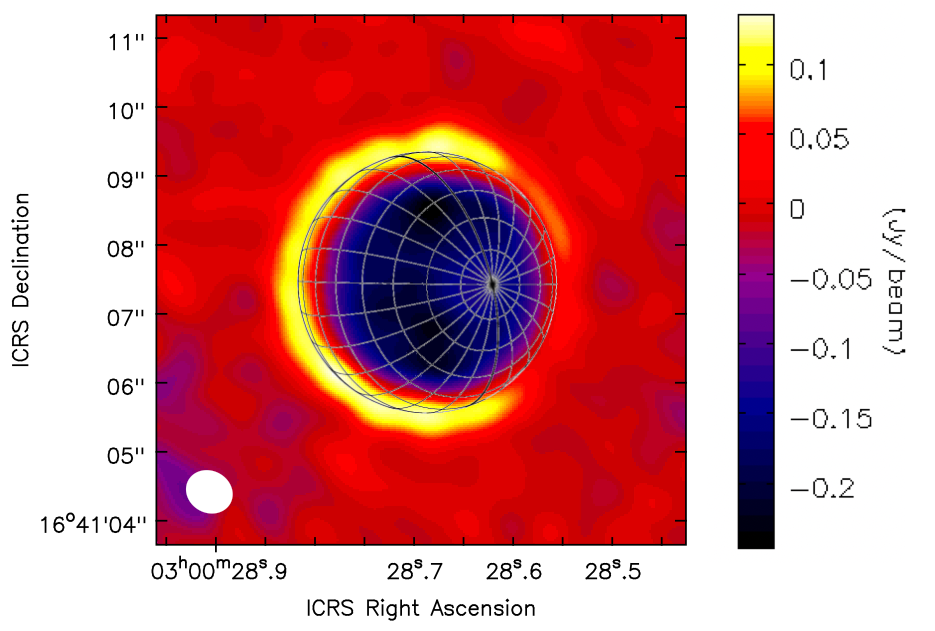
We present here higher spatial resolution ALMA maps of CO and HCN emission lines towards Neptune's limb to measure their Doppler shifts and derive a map of zonal winds in its stratosphere. Our observations - carried out in March-April 2025 - used the ALMA interferometer to map the CO(3-2) and HCN(5-4) rotational lines in Neptune's atmosphere at 345.796 and 354.505 GHz, respectively. These measurements were obtained using around 44 antennas of the 12m array, with an angular resolution of ~0.19'', allowing the mapping of around 12x12 independent pixels on the planetary disk (2.21").

We will present the analysis of these observations, which will include maps of the planet's zonal wind after subtraction of the planet's solid rotation, and compare these results with earlier measurements of the Doppler wind in Neptune's atmosphere [1]. Particular attention will be paid to the South Pole region, whose resolution will be improved by a factor of 2 compared with the observations of [1]. This growing ensemble of ALMA datasets opens the door to the long-term monitoring of the seasonal stability and potential variations of Neptune's stratospheric wind patterns.

Acknowledgements

ALMA is a partnership of ESO (representing its member states), NSF (USA) and NINS (Japan), together with NRC (Canada) and NSC and ASIAA (Taiwan), in cooperation with the Republic of Chile. The Joint ALMA Observatory is operated by ESO, AUI/NRAO and NAOJ.

References

[1] Carrion-Gonzalez et al. 2023 A&A 674, L3

How to cite: Moreno, R., Carrión-González, O., Lellouch, E., Cavalié, T., Guerlet, S., Milcareck, G., Spiga, A., Roman, M., and Moullet, A.: Characterization of South polar-winds in Neptune’s atmosphere from ALMA observations , EPSC-DPS Joint Meeting 2025, Helsinki, Finland, 7–13 Sep 2025, EPSC-DPS2025-1098, https://doi.org/10.5194/epsc-dps2025-1098, 2025.

17:30–17:42
|
EPSC-DPS2025-70
|
On-site presentation
Thibault Cavalié, Raphael Moreno, Camille Lefour, Thierry Fouchet, and Emmanuel Lellouch

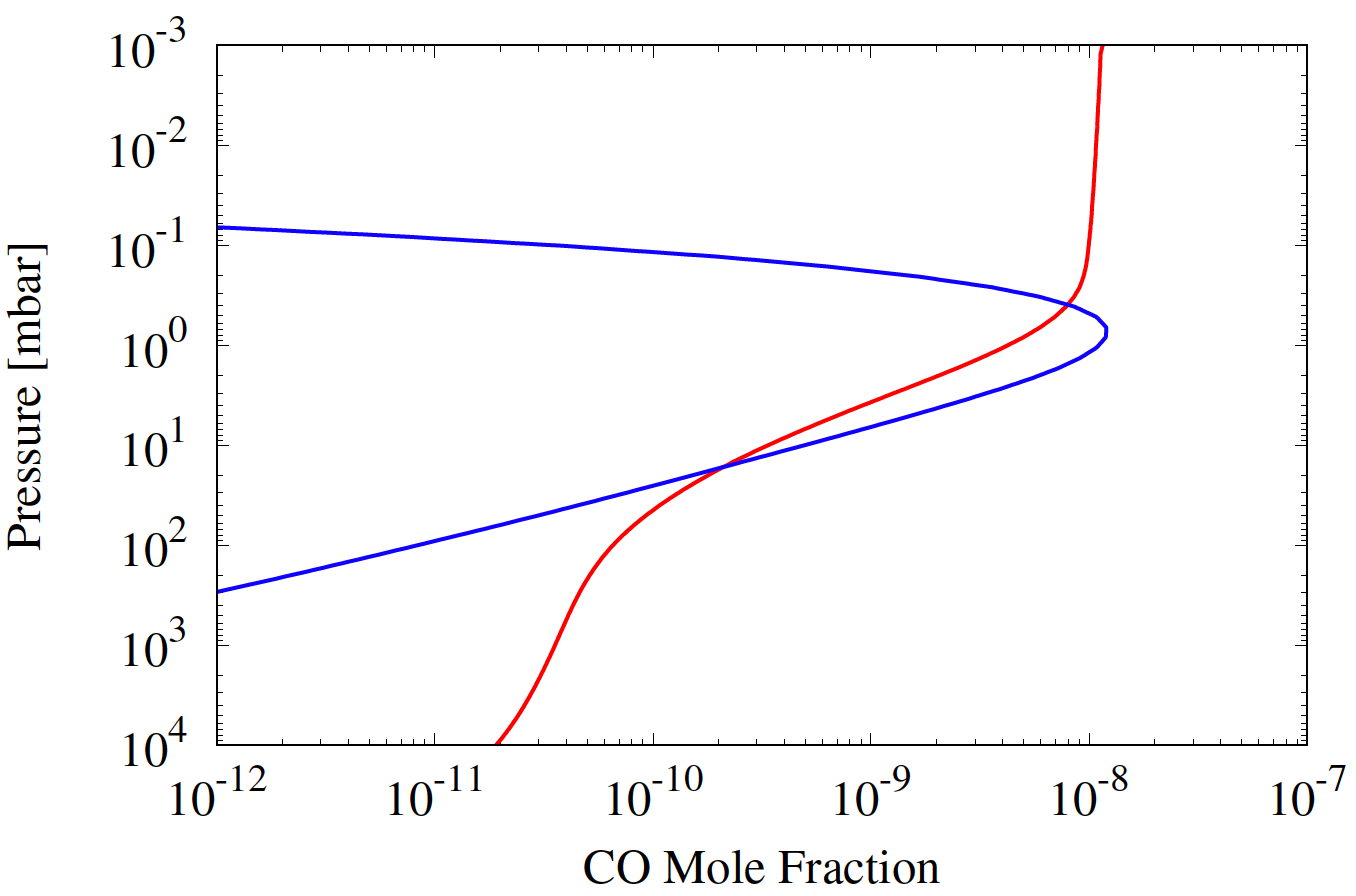
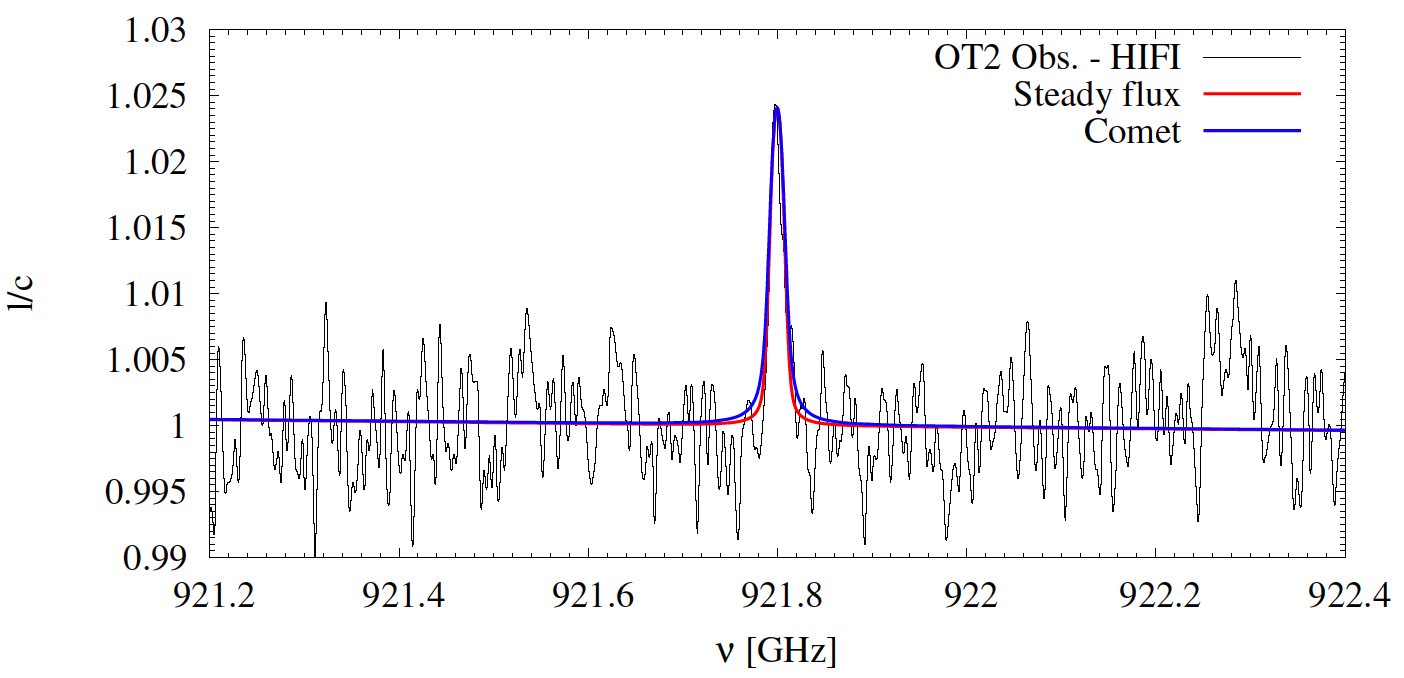
The Infrared Space Observatory and Spitzer have detected H2O and CO2 in the stratospheres of the giant planets and Titan (Feuchtgruber et al. 1997, Coustenis et al. 1998, Burgdorf et al. 2006). Their upper tropospheres are cold and H2O and CO2 condense into ice clouds (except CO2 in Jupiter and Saturn). These detections thus imply the presence of an external source of oxygen. Such source can be: (i) local (icy rings and/or satellites), (ii) interplanetary dust particles (IDPs), (iii) large comet impacts, or (iv) a combination of them. At Uranus, H2O probably comes from IDPs (Moses & Poppe 2017, Teanby et al. 2023). And while the dominant source of CO in Jupiter, Saturn, and Neptune seems to be comet impacts (Moreno et al. 2003, Cavalié et al. 2010, Lellouch et al. 2005), its nature remains unknown in Uranus despite the Herschel disk-averaged observations of Cavalié et al. (2014). Because the different sources have specific signatures in terms of spatio-temporal distributions, mapping observations of the stratosphere can be used to disentangle them. For instance, comets are sporadic and spatially localized (Lellouch et al. 1995), IDPs are steady, latitudinally and longitudinally uniform (Moses & Poppe 2017), and ring/satellite sources are localized (Cavalié et al. 2019). These differences have been used to constrain the origin of external sources on Jupiter (Lellouch et al. 2002, Cavalié et al. 2013), Saturn (Cavalié et al. 2010, 2019), and Neptune (Lellouch et al. 2005, Moreno et al. 2017). However, even though these sources cause different vertical and horizontal distributions in Uranus, all can reproduce the Herschel spectrum at 922 GHz (see Fig. 1). Consequently, Cavalié et al. (2014) could not discriminate the sources from this single disk-averaged line.

In October 2022, the CO(3-2) emission was mapped in the stratosphere of Uranus with ALMA (Fig. 2). We have retrieved and analyzed these data to constrain the horizontal and vertical distributions of CO. In this paper, we present our findings and their implications on the source of CO in the atmosphere of Uranus.

Fig. 1: (Left) Herschel observation of the CO(8-7) line in the stratosphere of Uranus at 922 GHz. The spectrum is expressed in terms of line-to-continuum ration (l/c). (Right) Vertical profiles obtained from 1D vertical diffusion modeling for a comet source (blue line) and from a steady flux of IDPs (red line). Figure adapted from Cavalié et al. (2014).


Fig. 2: Line area map of the CO(3-2) emission, as observed in the stratosphere of Uranus with ALMA in October 2022.


References:
Burgdorf et al. 2006. Icarus 184, 634
Cavalié et al. 2010. A&A 510, A88
Cavalié et al. 2013. A&A 553, A21
Cavalié et al. 2014. A&A 562, A33
Cavalié et al. 2019. A&A 630, A87
Coustenis et al. 1998. A&A 336, L85
Feuchtgruber et al. 1997. Nature 387, 159
Lellouch et al. 1995. Nature 373, 592
Lellouch et al. 2002. Icarus 159, 112
Lellouch et al. 2005. A&A 430, L37
Moreno et al. 2003. P&SS 51, 591
Moreno et al. 2017. A&A 608, L5
Moses and Poppe 2017. Icarus 297, 33
Teanby et al. 2023. Planet. Sci. J. 3, 96

How to cite: Cavalié, T., Moreno, R., Lefour, C., Fouchet, T., and Lellouch, E.: On the origin of CO in the stratosphere of Uranus, EPSC-DPS Joint Meeting 2025, Helsinki, Finland, 7–13 Sep 2025, EPSC-DPS2025-70, https://doi.org/10.5194/epsc-dps2025-70, 2025.

17:42–17:54
|
EPSC-DPS2025-182
|
On-site presentation
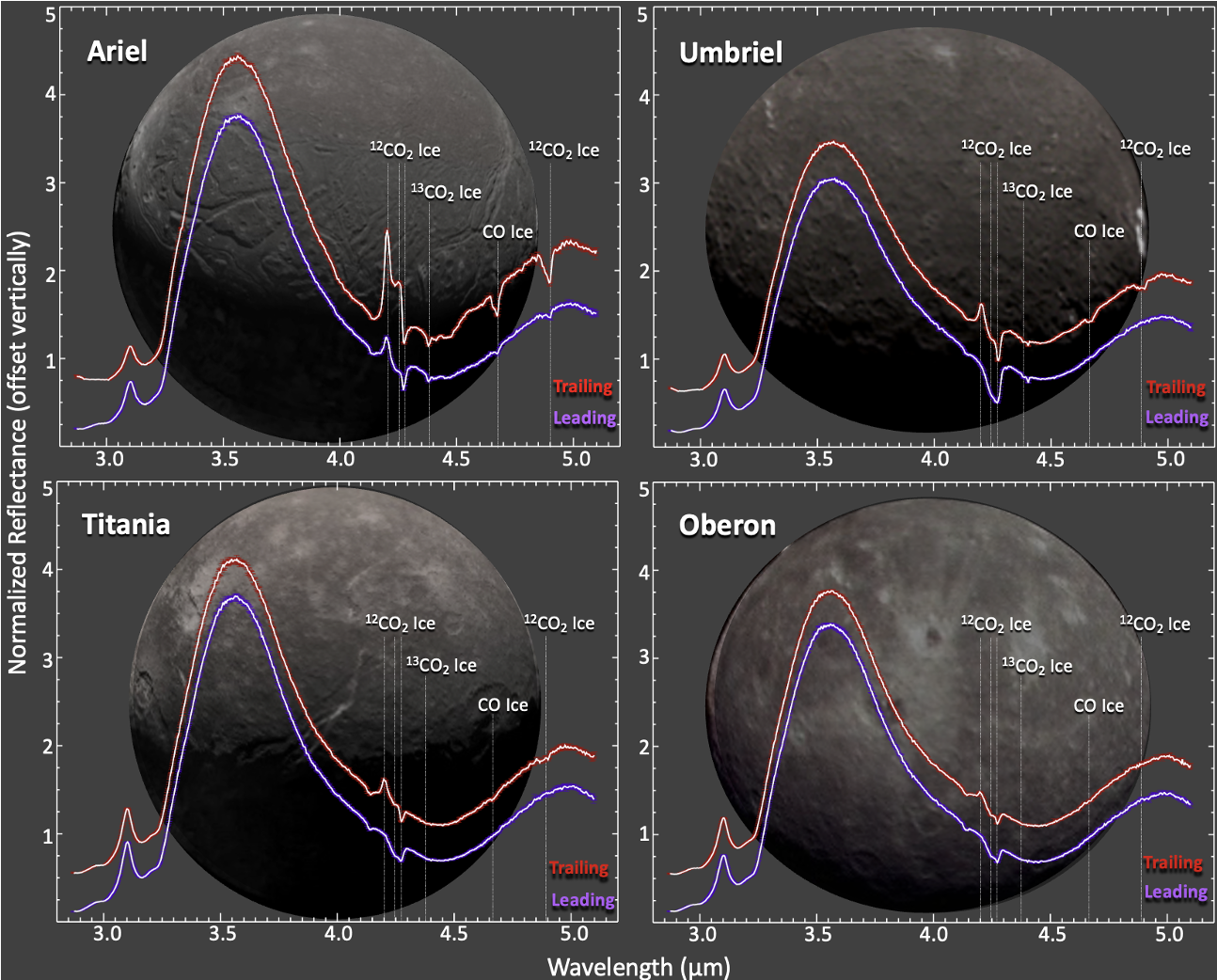
Richard J. Cartwright, William M. Grundy, Bryan J. Holler, Ujjwal Raut, Tom A. Nordheim, Marc Neveu, Christopher R. Glein, Matthew M. Hedman, Matthew Belyakov, Riley A. DeColibus, Geronimo L. Villaneuva, Silvia Protopapa, Stephen C. Tegler, Chloe B. Beddingfield, Eric Quirico, Julie C. Castillo-Rogez, and Lorenz Roth

Over the past 20+ years, ground-based observations have determined that the surfaces of the large Uranian moons Ariel, Umbriel, Titania, and Oberon are enriched in CO2 ice via the detection of a CO2 “triplet band” between 1.9 and 2.1 µm [1,2]. The spectral properties of the detected CO2 is strikingly similar to crystalline CO2 ice measured in the laboratory. The origin of CO2 on these moons and across the Uranus system, however, remains uncertain. CO2 ice is unstable at the estimated peak surface temperatures of these moons (80-90 K), and it must be replenished [3]. It has been suggested that CO2 could be formed radiolytically via irradiation of H2O ice mixed with carbon-bearing compounds, possibly explaining the stronger CO2 features detected on the trailing hemispheres of these satellites [1,2]. Alternatively, the large moons of Uranus are candidate ocean worlds that may host subsurface saline oceans, possibly enriched in carbonate (CO32-) species and CO2. These carbon-bearing compounds could be outgassed or exposed through geologic processes [4]. Understanding the origin of CO2 and other carbon oxides in the Uranus system is one of the key science questions driving the rationale for future measurements made by a near-infrared (NIR) mapping spectrometer onboard a Uranus orbiter [5].

More recent observations made with the NIRSpec spectrograph (G395M, 2.9 – 5.1 µm, R ~ 1000) on the James Webb Space Telescope (program 1786, [4]) were able to identify the strong CO2 asymmetric stretch fundamental mode (ν3), roughly spanning 4.2 to 4.4 µm, a wavelength range inaccessible from the ground due to telluric CO₂ absorption. The COν3  mode is a factor of ~1000 stronger than the CO2 triplet band measured in prior ground-based observations, and therefore, we predicted that the Uranian moons would exhibit strong and possibly saturated CO2 ice absorption features across the 4.2 to 4.4 µm wavelength range, similar to NIRSpec data of Neptune’s moon Triton [6]. However, the 12CO2 ice bands detected by NIRSpec on the trailing hemispheres of these moons are surprisingly weak, and instead, are convolved with scattering peaks that obscure these absorption features (Figure 1). NIRSpec also revealed 12CO2 on the leading hemispheres of these moons and hyper-volatile CO ice on their trailing sides. Furthermore, 13CO2 is present, primarily on the inner moons Ariel and Umbriel, and CO3-bearing species, carbon chain oxides (CXO2), and CN-bearing organics (nitriles) may also be present on Ariel and Umbriel (Figure 1). Thus, the surfaces of the large Uranian moons are enriched in carbon oxides, especially Ariel [4].

Figure 1: JWST/NIRSpec data (G395M) of the large Uranian moons, normalized to 1 at 4.14 µm and offset vertically for clarity.

At first glance, the detected species and their hemispherical distributions are broadly consistent with prior ground-based observations, supporting radiolytic production of CO2 and other carbon oxides via charged particles trapped in Uranus’ magnetosphere. However, none of the data display notable hydrogen peroxide (H2O2) combination modes near 3.51 µm, features that laboratory experiments have shown to emerge in irradiated H2O ice substrates (< 100 K), in particular when mixed with small amounts of CO2 [7], representing conditions relevant to the surfaces of Uranus’ moons. Furthermore, icy satellites at Jupiter and Saturn tend to display darker and redder trailing hemispheres over UV/VIS wavelengths due to irradiation by corotating plasma, but observations made with Hubble’s Space Telescope Imaging Spectrograph (~200 – 550 nm) indicate no such hemispherical asymmetry in albedo for the large moons of Uranus [8]. Because Uranus’ magnetosphere is notably offset from the orbital plane of its satellites (~59°) and seemingly devoid of heavy ions (i.e., Cn+, On+), it is possible that moon-magnetosphere interactions may be somewhat limited at Uranus. Instead, perhaps CO2 is primarily native to the large moons and exposed by geologic processes, such as cratering, tectonism, cryovolcanism, and outgassing.

Other observations by JWST (program 4645) have revealed that CO2 is present across the Uranian system, including in its rings, ring moons, and irregular satellites [9,10]. The origin(s) of CO2 on these smaller bodies and rings is presumably varied, but almost certainly includes native sources of CO2, especially on the far-flung irregular satellites that orbit well beyond the influence of Uranus’ magnetosphere and exhibit strong 4.27 µm and 2.7 µm features, consistent with native CO2. Similar to the large moons, CO2 ice is unstable on these small bodies and rings and must be replenished and trapped in more refractory compounds.

To gain a more complete understanding of the origin and nature of these species will require a Uranus orbiter equipped with a NIR mapping spectrometer and a charged particle suite making measurements during close passes [11]. We will present NIRSpec results and analyses for carbon oxides on the large moons Ariel, Umbriel, Titania, and Oberon and provide an update on the developing picture of the origin of carbon oxides in the Uranus system in the JWST era.

[1] Grundy, W. et al., 2006. Icarus 184.

[2] Cartwright, R.J. et al., 2022. The Planetary Science Journal, 3, 8.

[3] Sori, M.M. et al., 2017. Icarus, 290, pp.1-13.

[4] Cartwright, R.J. et al., 2024. The Astrophysical Journal Letters, 970, L29.

[5] National Academies of Sciences, Engineering, and Medicine 2023. Origins, Worlds, and Life:

Planetary Science and Astrobiology in the Next Decade.

[6] Wong, I. et al., 2023. AGU Fall Meeting Abstracts. P44B-08.

[7] Mamo et al. PSJ, submitted.

[8] Cartwright, R.J. et al., 2022. AAS/DPS Meeting 54, abstract 106.01.

[9] Belyakov, M. et al., 2024. AAS/DPS Meeting 56, abstract 405.02.

[10] Belyakov, M. et al., April 2025. Ice Giant Systems Seminar Series.

[11] Cartwright, R.J. et al., 2021. The Planetary Science Journal, 2 (3), p.120.

How to cite: Cartwright, R. J., Grundy, W. M., Holler, B. J., Raut, U., Nordheim, T. A., Neveu, M., Glein, C. R., Hedman, M. M., Belyakov, M., DeColibus, R. A., Villaneuva, G. L., Protopapa, S., Tegler, S. C., Beddingfield, C. B., Quirico, E., Castillo-Rogez, J. C., and Roth, L.: JWST Observes the CO2-rich Surfaces of Uranus’ Large Moons , EPSC-DPS Joint Meeting 2025, Helsinki, Finland, 7–13 Sep 2025, EPSC-DPS2025-182, https://doi.org/10.5194/epsc-dps2025-182, 2025.

Orals FRI-OB2: Fri, 12 Sep, 09:30–10:30 | Room Uranus (Helsinki Hall)

Chairpersons: Kurt D. Retherford, Richard J. Cartwright
09:30–09:42
|
EPSC-DPS2025-181
|
ECP
|
On-site presentation
Ryleigh Davis, Matthew Belyakov, Michael Brown, and Ian Wong

In the 1980’s, Voyager 2 discovered the abundant satellites and complex ring systems around the ice giants, with 13 small moons around Uranus and 7 around Neptune. Limitations posed by their size and scattered light from their host planets have left the compositions of these bodies and their associated rings largely unconstrained and their origins remain a subject of debate. Proposed formation scenarios include in situ formation within a circumplanetary disk, re-accretion from impact-generated debris following giant collisions, tidal disruption of a passing KBO, and fragmentation from disrupted regular satellites. We present the first NIR spectra of Proteus, Larissa, Galatea, and the Neptunian rings acquired with JWST/NIRSpec (Program 4645).

Neptune's inner moons are compositionally distinct from those at Uranus and all other outer solar system small bodies and moons, with very little CO2 and no clear signs of water-ice, despite a deep 3-μm OH-band. Surprisingly, Larissa, Galatea and the rings show a distinct 2.72-μm absorption band commonly seen on CM chondrites and main belt asteroids typically associated with phyllosilicates produced via post-accretional aqueous alteration, which requires temperatures drastically higher than expected at 30 AU. This is the first detection of such inner solar system like chondritic material past the orbit of Jupiter. One possible explanation is that these moons are the collisional remnants of an original regular satellite system that was destroyed during Triton’s capture. In this case, the presence of phyllosilicates may indicate that we are seeing material from the mantles of these originally differentiated moons, providing a unique window into the interior compositions of large differentiated outer solar system satellites. Further complicating this picture, the NIR spectra of the inner moons of Uranus- also obtained as part of our JWST observations – lack the hydrated minerals found at Neptune and instead appear similar to water-ice rich Kuiper belt objects. These spectra reveal fundamentally different surface compositions between the two systems, providing critical clues to their divergent formation and histories. We will combine this emerging compositional picture with our best understanding of the dynamical evolution of these satellite systems to explore possible origins of these moons and discuss implications for the early history of the ice giants.

How to cite: Davis, R., Belyakov, M., Brown, M., and Wong, I.: JWST Reveals Phyllosilicates on the Small Inner Moons of Neptune, EPSC-DPS Joint Meeting 2025, Helsinki, Finland, 7–13 Sep 2025, EPSC-DPS2025-181, https://doi.org/10.5194/epsc-dps2025-181, 2025.

09:42–09:54
|
EPSC-DPS2025-381
|
On-site presentation
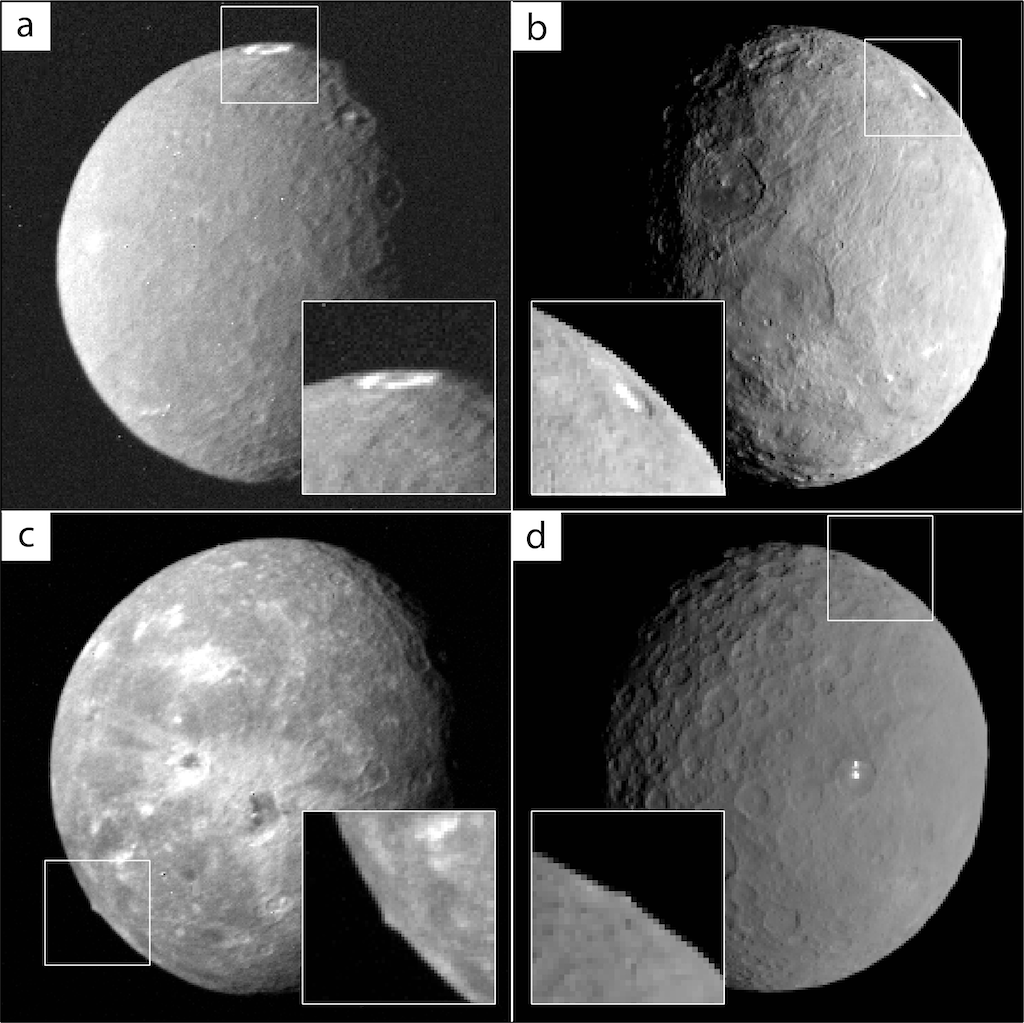
Jennifer Scully, C. Adeene Denton, Julie Castillo-Rogez, Michael Sori, Erin Leonard, Chloe Beddingfield, Richard Cartwright, Catherine Elder, Karl Mitchell, and Tom Nordheim

Introduction: Ceres is the only inner Solar System dwarf planet (2.77 AU, 940-km-diameter). There are intriguing parallels between Ceres and two of the large Uranian satellites, located at 19.19 AU: Umbriel (1,169-km-diameter) and Oberon (1,523-km-diameter). All three bodies are mid-sized objects, differentiated into icy shells and rocky interiors, and lack atmospheres or substantial present day tidal heating. The limited coverage and low resolution data of Umbriel and Oberon (~4-5 km/pixel, <40% coverage from Voyager 2) hampers our ability to define and test hypotheses about the origin and evolution of these moons. Because of the similarities between Umbriel, Oberon and Ceres, and because Ceres currently has the highest resolution datasets of any icy body (e.g., 35 m/pixel, ~100% coverage from Dawn), we leverage Dawn data to gain insights into specific surface features on Umbriel and Oberon.

Similar surface features on Ceres, Umbriel and Oberon: The overall morphometry and albedo contrast of the bright deposit in Umbriel’s Wunda crater (131-km-diameter) (Figure a) is reminiscent of the bright salt deposits in Ceres’ Occator crater (92-km-diameter), called faculae (Figure b). Wunda’s bright deposit is interpreted as cold-trapped CO2 ice (Sori+2017) or a cryovolcanic deposit (Plescia1987). Sodium-rich carbonates, organics and phyllosilicates may be present somewhere on Umbriel (Cartwright+2023). Occator’s bright faculae are salt deposits (De Sanctis+2016, Raponi+2019) interpreted to originate from brines that were emplaced from a subsurface impact-induced melt reservoir (Bowling+2019, Quick+2019, Scully+2020), which likely thermally merged with the remnants of an ancient subsurface ocean (Hesse&Castillo-Rogez2019).

We also find that the overall morphometry of an unnamed mountain on Oberon and Ceres’ Ahuna Mons are comparable in limb views (Figures c & d). Oberon’s 11 km high mountain may be the central peak of an impact crater (Smith+1986, Blanco-Rojas+in review), a type of tectonic feature, remnant equatorial ridge, or volcanic construct (Schenk&Moore2020). On Ceres, Ahuna Mons is ~4 km high and interpreted as an extrusive cryovolcanic dome (Ruesch+2016), formed by a slurry of brine and rock particles from the remnant subsurface ocean, sourced near the crust/mantle boundary (Ruesch+2019).

The aforementioned observations lead us to propose two new hypotheses:

  • Hypothesis #1: Brines sourced from an impact-induced melt reservoir (which may have been refreshed from a subsurface ocean) formed the bright deposit in Wunda crater on Umbriel.
  • Hypothesis #2: A slurry of brine and solids from the subsurface ocean formed the mountain on Oberon as a cryovolcanic dome.

We further explore our hypotheses using presently-available data via image analysis.

Wunda image analysis: We hypothesize that the dark central area in Wunda is a central peak, contributing to the annulus shape of Wunda’s bright deposit. Occator’s faculae are six times brighter than Ceres’ average surface (Schröder+2017). Thus, it is necessary to stretch the images of Occator to enhance detail in both the surroundings and in the faculae. We investigated whether similar stretch variations would enhance detail within, and around, Wunda’s bright deposit. We found that stretching the Umbriel data does not enhance particular areas within Wunda’s bright deposit as it did with the Ceres data. This is likely due to the Dawn Framing Camera (Schröder+2013) having a higher dynamic range and higher bit depth than the Voyager ISS NAC (Smith+1977). Moreover, Dawn’s orbital mission enabled fine-tuning of exposure times to image Occator’s faculae, which was not possible during Voyager 2’s singular flyby of Umbriel. Thus, the Voyager images cannot capture the full brightness variation of the bright Wunda deposit. Given the change in size of Occator’s faculae in images before and after stretching, we assume that the diameter of the Wunda bright material (~80 km) as measured by Smith+1986 is an overestimate.

Oberon image analysis: Ruesch+2016 found that the aspect ratio of  Ahuna Mons is 0.24, which is consistent with extrusive volcanic domes on the Earth and Moon (aspect ratios of ~0.2). We measure the aspect ratio of Oberon’s mountain to be 0.25+0.25-0.13, consistent with a cryovolcanic dome. Oberon’s mountain may alternatively be the central peak of an impact crater (Smith+1986). The aspect ratio of central peaks on Ganymede is 0.05 (Bray+2012) and of Aeneas crater on Dione is 0.06 (Moore+2004, Schenk1991), significantly lower than the (cryo)volcanic domes. However, the aspect ratio of the central peak of Herschel crater on Mimas is 0.24 (Moore+2004, Schenk1989). Therefore, further data is needed to discern between the cryovolcanic dome and central peak hypotheses.

Future observations: We define the types of observations a potential future Uranus Orbiter and Probe mission could make to further test our hypotheses. The mission could balance observations of the previously observed <40% portions of Umbriel and Oberon to resolve open questions about the formation of features, with observations of the >60% unobserved portions to better understand the global diversity and distributions of features. We derive that panchromatic images should require a spatial resolution of 1 km/pixel to resolve structure within Wunda’s bright deposit and the summit of Oberon’s mountain, both of which are required to test our hypotheses. The camera should have an appropriate dynamic range and exposure times to successfully image Wunda’s bright deposit. The composition of the bright deposit in Wunda is a key test for identifying its source (cold-trapped CO2 ice or subsurface brines), which we find could be tested with an IR spectrometer with a spectral range of 1-5 μm and spatial resolution of 8 km/pixel. Geophysical data from at least two flybys of Umbriel could test for the presence of a subsurface ocean. A new proposed passive sounding technique using Uranian Kilometric Radio (UKR) emissions could be used for ocean detection at Oberon (Romero-Wolf+2024).

Conclusions: We eagerly anticipate an orbiter in the Uranian system with the capability to test our hypotheses and predictions about the origin of Wunda’s bright deposit on Umbriel and the mountain on Oberon, which would contribute to the overall understanding of the evolution of these moons and their habitability potential (Weber&Leonard2024).

Figure. (a) Bright deposit in Wunda crater, Umbriel, ~4 km/pixel. (b) Faculae in Occator crater, Ceres, ~4 km/pixel. (c) The unnamed mountain on Oberon, ~5 km/pixel. (d) Ahuna Mons on Ceres, ~5 km/pixel.

How to cite: Scully, J., Denton, C. A., Castillo-Rogez, J., Sori, M., Leonard, E., Beddingfield, C., Cartwright, R., Elder, C., Mitchell, K., and Nordheim, T.: Leveraging Ceres to Gain Insights into the Candidate Ocean Worlds of Umbriel and Oberon that Orbit Uranus, EPSC-DPS Joint Meeting 2025, Helsinki, Finland, 7–13 Sep 2025, EPSC-DPS2025-381, https://doi.org/10.5194/epsc-dps2025-381, 2025.

09:54–10:06
|
EPSC-DPS2025-816
|
ECP
|
On-site presentation
Harrison Agrusa, Matija Ćuk, David Nesvorny, and Raphael Marschall

Naiad is the innermost moon of Neptune, orbiting within the synchronous orbit at less than 2 Neptune radii.  It was recently shown that Naiad is in a peculiar 73:69 mean motion resonance with Thalassa, Neptune’s next innermost moon [1]. Combining Naiad’s mass, estimated from its resonant interaction with Thalassa, combined with its size and shape estimated from Voyager 2 images [2], yield a bulk density of ~0.8 g/cm3, similar in density to other small icy moons. 

A closer inspection of Naiad’s dynamical and collisional environment leads to some contradictory conclusions. Based on its elongated shape and bulk density,  we show that Naiad is likely already within the Roche limit, suggesting it must have significant cohesive strength to hold itself together. This is difficult to reconcile with the idea that Neptune’s inner satellites should be weak, reaccumulated icy fragments from Neptune’s original satellite system that was destroyed during the capture of Triton [3,4]. We also demonstrate that Naiad may need ~Gyrs to reach its present inclination through the current 4th-order resonance with Thalassa. Due to the bombardment of Neptune by scattered disk objects, however, Naiad and Thalassa should both have much shorter collisional lifetimes depending on their collisional strengths and the size-frequency distribution of impactors [5, 6], meaning that this pristine resonance should have been destroyed. We discuss these contradictory ideas, some possible resolutions, and their implications for the Neptune system.


Acknowledgements: H.A. was supported by the French government, through the UCA J.E.D.I. Investments in the Future project managed by the National Research Agency (ANR) with the reference number ANR-15-IDEX-01.


[1] M. Brozović, M. R. Showalter, R. A. Jacobson, R. S. French, J. J. Lissauer, and I. De Pater, “Orbits and resonances of the regular moons of Neptune,” Icarus, vol. 338, p. 113462, Mar. 2020, doi: 10.1016/j.icarus.2019.113462.

[2] E. Karkoschka, “Sizes, shapes, and albedos of the inner satellites of Neptune,” Icarus, vol. 162, no. 2, pp. 400–407, Apr. 2003, doi: 10.1016/S0019-1035(03)00002-2.

[3] D. Banfield and N. Murray, “A dynamical history of the inner Neptunian satellites,” Icarus, vol. 99, no. 2, pp. 390–401, Oct. 1992, doi: 10.1016/0019-1035(92)90155-Z.

[4] C. B. Agnor and D. P. Hamilton, “Neptune’s capture of its moon Triton in a binary–planet gravitational encounter,” Nature, vol. 441, no. 7090, pp. 192–194, May 2006, doi: 10.1038/nature04792.

[5] J. E. Colwell, L. W. Esposito, and D. Bundy, “Fragmentation rates of small satellites in the outer solar system,” J. Geophys. Res. Planets, vol. 105, no. E7, pp. 17589–17599, Jul. 2000, doi: 10.1029/1999JE001209.

[6] K. Zahnle, P. Schenk, H. Levison, and L. Dones, “Cratering rates in the outer Solar System,” Icarus, vol. 163, no. 2, pp. 263–289, Jun. 2003, doi: 10.1016/S0019-1035(03)00048-4.

How to cite: Agrusa, H., Ćuk, M., Nesvorny, D., and Marschall, R.: The Curious Case of Neptune's Naiad, EPSC-DPS Joint Meeting 2025, Helsinki, Finland, 7–13 Sep 2025, EPSC-DPS2025-816, https://doi.org/10.5194/epsc-dps2025-816, 2025.

10:06–10:18
|
EPSC-DPS2025-530
|
ECP
|
On-site presentation
Mattia Rossi and Giacomo Lari

The Uranian satellite system has recently attracted increased interest due to its complex dynamical and geological history, particularly in the context of the proposed high-priority NASA Flagship mission to Uranus. To date, Voyager 2 remains the only spacecraft to have explored the system, providing observations of the five major regular moons: Miranda, Ariel, Umbriel, Titania, and Oberon. These moons display evidence of both ancient, heavily cratered terrains and signs of more recent resurfacing events. The nature of these moons arises from differences in their formation and composition, as well as from their coupled orbital and thermal evolution – each aspect influencing the other over time. Among the various forces at play, tidal interactions are particularly significant. Tides introduce dissipation in the system through friction processes, in which orbital and rotational energy is dissipated as heat in either (or both) the surface or interior of a planet or satellite. Additionally, moons within the system gain angular momentum from their hosting planet, resulting in an outward orbital migration. Variations in orbital distance can lead to encounters with mean-motion resonances. Although the system currently lacks any mean-motion resonance, the non-negligible orbital eccentricities of the moons and Miranda’s high inclination suggest that past resonant interactions may have played a significant role in shaping their current orbits (Tittemore & Wisdom 1988, 1989, 1990; Ćuk et al. 2020; Gomes & Correia 2024).

Past studies of the orbital evolution of the Uranian moons adopted a medium-low tidal dissipation rate for Uranus, as predicted by equilibrium tide theory (Goldreich & Soter 1966). Previously proposed evolutions constrained the value of Uranus's dissipation within ranges that would prevent capture into the 2:1 mean-motion resonance between Ariel and Umbriel. The reason, as shown by Tittemore & Wisdom (1990), is that it seems not to be possible to escape such a resonance, which would be incompatible with the present configuration.

However, recent theoretical developments and measurements indicate that Uranus may exhibit a higher tidal dissipation rate than previously assumed (e.g., Nimmo 2023; Jacobson & Park 2025). This enhanced dissipation leads to a faster orbital migration of its satellites, consistent with the so-called resonance locking, as proposed by Fuller et al. (2016). Consequently, resonant interactions that were previously considered unlikely now need to be reassessed. In particular, Ariel’s fast migration implies that crossing the 2:1 mean-motion resonance with Umbriel is almost certain and may have occurred in quite recent times (within the last 1 Gyr). This fact indicates that the entire orbital history of the Uranian moon system may need to be revised.

In this presentation, we focus on the potential crossing of the 2:1 mean-motion resonance between Ariel and Umbriel, where Ariel undergoes a rapid migration. Capture into this strong resonance may have induced significant tidal heating within Ariel, potentially explaining its resurfacing. To investigate this resonant encounter, we present numerical simulations based on an ad hoc dynamical model. Assuming a resonance locking regime, we show the possible outcomes of the resonant encounter. In particular, we find that for small initial eccentricities, the moons are always captured into resonance, as already described in Tittemore & Wisdom (1990). In addition, we explore mechanisms for exiting the 2:1 resonance, possibly involving resonant perturbations from other moons of the system. We present evolution histories that depend primarily on Ariel’s tidal dissipation rate, the timing of the Ariel-Umbriel resonance capture, and the initial orbital elements of the other satellites. We propose a parametric study, dependent on tidal parameters, capable of reproducing orbital element distributions consistent with the current orbital configuration of the system.

As a product of the above analysis, we derive constraints on the tidal parameters of Uranus and its moons. This study may therefore serve as a valuable input for future space missions – such as the Uranus Orbiter and Probe space mission concept – by guiding both astronomical and geophysical measurements. A higher tidal dissipation is expected to have a more significant impact on orbital dynamics and related observational uncertainties, potentially producing detectable signatures that future missions could confirm or rule out.


References:

Ćuk, M., El Moutamid, M., & Tiscareno, M. S. (2020). Dynamical history of the Uranian system. The Planetary Science Journal1(1), 22.

Fuller, J., Luan, J., & Quataert, E. (2016). Resonance locking as the source of rapid tidal migration in the Jupiter and Saturn moon systems. Monthly Notices of the Royal Astronomical Society458(4), 3867-3879.

Goldreich, P., & Soter, S. (1966). Q in the Solar System. Icarus5(1-6), 375-389.

Gomes, S. R., & Correia, A. C. (2024). Dynamical evolution of the Uranian satellite system II. Crossing of the 5/3 Ariel–Umbriel mean motion resonance. Icarus424, 116254.

Jacobson, R. A., & Park, R. S. (2025). The Orbits of Uranus, Its Satellites and Rings, the Gravity Field of the Uranian System, and the Orientation of the Poles of Uranus and Its Satellites. The Astronomical Journal169(2), 65.

Nimmo, F. (2023). Strong tidal dissipation at Uranus?. The Planetary Science Journal4(12), 241.

Tittemore, W. C., & Wisdom, J. (1988). Tidal evolution of the Uranian satellites: I. Passage of Ariel and Umbriel through the 5:3 mean-motion commensurability. Icarus74(2), 172-230.

Tittemore, W. C., & Wisdom, J. (1989). Tidal evolution of the Uranian satellites: II. An explanation of the anomalously high orbital inclination of Miranda. Icarus78(1), 63-89.

Tittemore, W. C., & Wisdom, J. (1990). Tidal evolution of the Uranian satellites: III. Evolution through the Miranda-Umbriel 3:1, Miranda-Ariel 5:3, and Ariel-Umbriel 2:1 mean-motion commensurabilities. Icarus85(2), 394-443.


How to cite: Rossi, M. and Lari, G.: Orbital evolution of the Uranian moons in a fast-migration regime, EPSC-DPS Joint Meeting 2025, Helsinki, Finland, 7–13 Sep 2025, EPSC-DPS2025-530, https://doi.org/10.5194/epsc-dps2025-530, 2025.

10:18–10:30
|
EPSC-DPS2025-180
|
ECP
|
On-site presentation
Matthew Belyakov, Ryleigh Davis, Michael Brown, and Ian Wong

Neptune is the only giant planet that lacks a regular satellite system. Triton constitutes over 99% of the Neptunian satellite system's mass and follows a retrograde and synchronous orbit, suggesting an early capture from the protoplanetary disk followed by tidal circularization. Discovered in 1949 by G. P. Kuiper, Nereid is the third largest Neptunian satellite. While typically classified as an irregular satellite due to its eccentric and inclined orbit, Nereid is unique among this population. Of the irregular satellites, Nereid has the lowest pericenter (0.012 Hill Radii), the highest mean eccentricity (e = 0.75), the lowest prograde inclination relative to the ecliptic of 6 degrees, and the largest radius at 175km -- twice as large as the next largest irregular satellite, Saturn's Phoebe. Its compositional properties also stand out: it is bluer and higher albedo (0.25) than similarly-sized Centaurs and Kuiper belt objects. We present JWST near-infrared spectroscopy of Nereid, finding it has a distinct composition among the giant planet satellites and small bodies observed with JWST NIRSpec thus far, with abundant water ice and a notable blue slope in the near-infrared that is unlike that of any Kuiper belt object. The uniqueness of Nereid's spectrum suggests the moon was not captured during the giant planet instability from the same population that formed the Kuiper belt. Instead, we propose that Nereid was once a regular satellite. By simulating the capture of Triton alongside an initially regular Nereid, we show the existence of a plausible dynamical pathway in which Nereid was initially a regular satellite that Triton perturbed onto its current orbit during a phase of rapid tidal circularization.

How to cite: Belyakov, M., Davis, R., Brown, M., and Wong, I.: Nereid was a Regular Satellite of Neptune, EPSC-DPS Joint Meeting 2025, Helsinki, Finland, 7–13 Sep 2025, EPSC-DPS2025-180, https://doi.org/10.5194/epsc-dps2025-180, 2025.

Posters: Thu, 11 Sep, 18:00–19:30 | Lämpiö foyer

Display time: Thu, 11 Sep, 08:30–19:30
L14
|
EPSC-DPS2025-165
|
On-site presentation
Valéry Lainey

Tidal dissipation in Uranus is a key factor in understanding this system, both in terms of the planet's internal structure and the orbital evolution of its moons. Observation of the moons' orbital motion remains so far the only way to access this physical parameter. By way of example, the use of a consistent interval of astrometric observations has been successfully employed to determine tidal dissipation in Jupiter and Saturn. Application to the Uranus system is more difficult, however, due to the lower precision of astrometric observations. In particular, some of the older observations are relatively biased, making them difficult to use.

We present here the results of an analysis based on observations beginning with the space age and restricted to the most reliable data from this system, including those from the Gaia probe. The question of older observations is also discussed.

How to cite: Lainey, V.: Tidal dissipation in Uranus from high accuracy data, EPSC-DPS Joint Meeting 2025, Helsinki, Finland, 7–13 Sep 2025, EPSC-DPS2025-165, https://doi.org/10.5194/epsc-dps2025-165, 2025.

L15
|
EPSC-DPS2025-393
|
On-site presentation
Ujjwal Raut, Ty Peterson, Bereket D Mamo, Benjamin D Teolis, Richard J Cartwright, Tom A Nordheim, Silvia Protopapa, Cesare Grava, Kurt D Retherford, and Danna N Qasim

IRTF/SpeX [1-3] and recent JWST observations [4] support possibly mm-thick CO2 ice deposits on the classical Uranian moons. The high obliquity of the Uranian system implies extreme seasons on these icy moons. The winter hemispheres endure ~ 20+ years of darkness with their surface temperature plummeting to ~20 K [5]. Solid CO2 is thermally stable over these frigid polar zones but is altered and eroded by the charged particles in Uranus’ magnetosphere that impact the moons’ surface. Laboratory irradiation [6] shows that charged particles dissociate CO2 mostly into CO and O2. At 25 K, a single 100 keV proton ejects ~15-20 molecules from the ice, and the sputtered flux is dominated by CO and O2. Every intact CO2 molecule in the sputtered ejecta is accompanied by ~10 CO and ~3 O2 molecules [6].

Figure 1: CO2 ice on the surface of the Uranian icy moons could be eroded by the impinging magnetospheric ions to generate CO/O2-rich bound exospheres. Laboratory irradiations [6] reveal that CO2 ice is readily sputtered by 100 keV protons at 50 K with yields reaching as high as ~ 2500 per ion. The sputtered flux is dominated by CO and O2, rather than intact CO2. The sputtering yield is drastically reduced (~ 100×) at 25 K, since the radiolytic byproducts CO and O2 are ‘thermally stable’ and thus retained more effectively in the ice at colder temperatures. See [6] for additional details on the Instrumentation and experimental conditions.

Seasonal transition dramatically alters erosion dynamics. At spring equinox, the winter hemispheres emerge into sunlight, which warms their surfaces to release volatile CO and O2 first, followed by CO2. This process triggers transient pressure spikes in their exospheres [7]. Sublimation rates rise exponentially with temperature, but CO2 sputtering, also temperature-dependent, may be an equally significant yet understudied erosion mechanism contributing to the moons’ exospheres. At 50 K, the same 100 keV proton ejects ~ 2500 molecules [CO:O2:CO2 1000:250:1] – two orders of magnitude above the 25 K yield (Figure 1, from [6]). Together, solar forcing and sputtering may accelerate CO2 loss from the summer hemispheres, potentially creating day-night exosphere asymmetries. CO, O2 and CO2 molecules from the sunlit sides migrate via ballistic hops, trapping at cold locations in the winter pole or even at the shadowed equatorial canyons [8]. Measurements of the velocity distributions of the sputtered species are needed to constrain escape fractions at various moons.

Adding new measurements of CO2 radiolysis and sputtering by keV electrons, we refine the dependence of CO2 sputtering yield on projectile stopping power. By combining these with Voyager 2 charged particle fluxes [9, 10], we report on estimates of survival time of mm-thick CO2 deposits against charged particle sputtering and discuss whether an endogenic source is needed to replenish the CO2 abundance at the surface of these moons. Geological markings on the young terrains of Ariel and Miranda (fault canyons, spreading grooves, coronae) support resurfacing from the interior [11, 12].

References:

 [1] Grundy W. M. et al. (2003) Icarus, 162, 1, 222-229. [2] Grundy W. M. et al. (2006) Icarus, 184, 2, 543-555. [3] Cartwright R. J. et al. (2015) Icarus, 257, 1, 428-456. [4] Cartwright R. J. et al. APJL, (2024). [5] M. M. Sori et al. (2017) Icarus, 290, 1-13. [6] Raut U. and Baragiola R. A. (2013), APJ, 772, 1, 53. [7] J. K. Steckloff et al. (2022) Icarus, 382, 115092. [8] S. M. Menten et al. (2024) JGR: Planets, 129, 7, e2024JE008376. [9] L. Lanzerotti et al. (1987), JGR: Space Physics, 92, A13, 14949-14957. [10] T.A. Nordheim et al. (2025) LPSC, 2803. [11] C.B. Beddingfield et al. (2025), PSJ, 6, 32. [12] E. Leonard et al. (2023), PSJ, 4, 235.

How to cite: Raut, U., Peterson, T., Mamo, B. D., Teolis, B. D., Cartwright, R. J., Nordheim, T. A., Protopapa, S., Grava, C., Retherford, K. D., and Qasim, D. N.: Condensed CO2 on the Uranian Moons: Erosion Timescales from Sublimation, Sputtering, and Implications for Internal Source., EPSC-DPS Joint Meeting 2025, Helsinki, Finland, 7–13 Sep 2025, EPSC-DPS2025-393, https://doi.org/10.5194/epsc-dps2025-393, 2025.

L16
|
EPSC-DPS2025-535
|
On-site presentation
Deconvolution and Data Analysis Tools Applied to GEMINI/NIFS Archival Data Enables Further Constrains on H2S Abundance in Neptunes Atmosphere
(withdrawn)
Jack Dobinson, Patrick Irwin, and Joseph Penn
L17
|
EPSC-DPS2025-658
|
ECP
|
On-site presentation
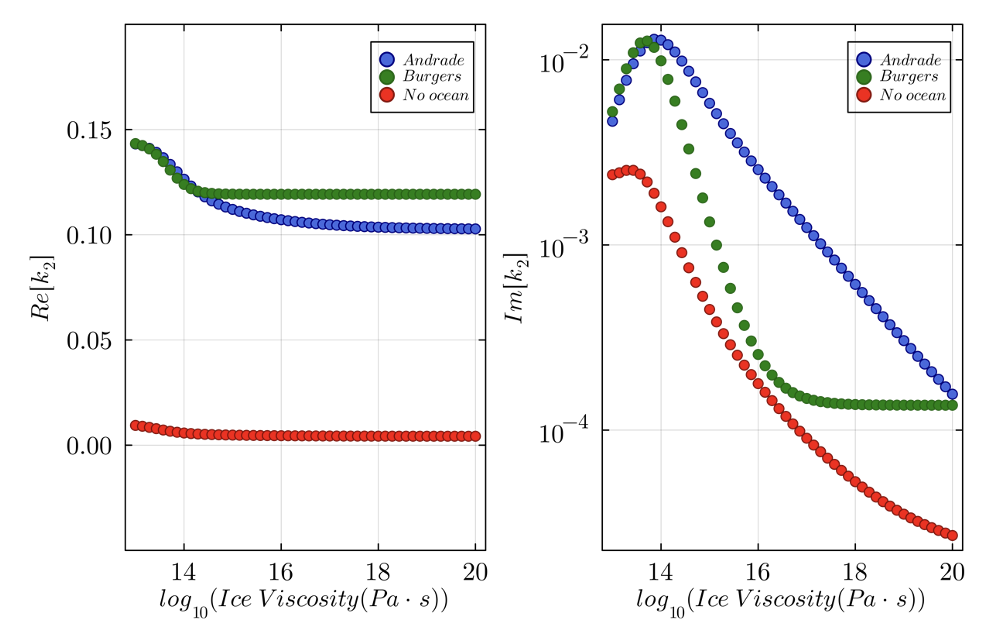
Anastasia Consorzi, Giuseppe Mitri, Daniele Melini, and Giorgio Spada

The major moons of Uranus (Miranda, Ariel, Umbriel, Titania and Oberon) might hide subsurface oceans underneath their ice shells, that is why they are scientific targets of great relevance. This fact and others make “the Uranus Orbiter and Probe (UOP) the highest-priority new Flagship mission for initiation in the decade 2023–2032”, as stated in the Planetary Science and Astrobiology Decadal Survey 2023-2032 [1]. Several recent studies have already investigated the possibility that these bodies may host a fluid layer below their surfaces [2,3,5]. A work by [7] showed that the presence or absence of a subsurface ocean would have a strong effect on the expected value of the tidal k2 Love number (LN), and that tidal deformations of these moons are mostly influenced by the characteristics of their ice shells. However, as stated in [8], the lack of experimental data on the flexural behavior of ice at tidal-like frequencies hinders the accurate attribution of an appropriate rheological model. For this reason, this work focuses on highlighting the importance of the rheological characterization of the ice shell of these bodies, and its influence on the determination of the values of the LNs k2, h2, and l2. These are a-dimensional coefficients that depend on the internal structure of a planetary body and describe the response of the planet (or satellite) to tidal forcing. The vertical LN h2 can be measured through altimetric techniques, while the potential LN k2 can be assessed with radio science experiments. Instead, the measurement of the horizontal LN l2 requires instrumentation that relies on land-based antennas, such as VLBI, making its estimate extremely complicated for the case of distant worlds. The first estimates of the LN k2   for the major moons of Uranus may be available in the next future: this quantity can be of great importance to further understand the interior structure of these moons and can provide significant hints on the presence of liquid oceans and their thermal status. In this work, through a series of forward models, we test the sensitivity of LNs to several internal parameters, i.e. the presence of a deep ocean, the rheology of the outer ice shell and the density structure of the moons.


Starting from Uranus’ moons masses and radii, we build a set of models which explore a range of possible rheological layering, including both the presence and absence of an ocean. For the rheological description of the ice shell, we adopted different creep laws (Andrade, Burgers, Sundberg-Cooper), already largely used in the literature to describe icy moons (see e.g. [6,8,9]). While the ocean is modeled as a Newtonian fluid, the inner core is assumed to be viscoelastic. For each model we compute the three LNs together with other parameters like the tidal quality factor Q, and the tidal lag φ, and we investigated the extent to which these quantities vary with changes in the ice shell properties (thickness, rheology, viscosity and rigidity).  The computations of LNs are carried out using ALMA [7], a numerical LNs calculator.  


In Fig. 1 we show the results obtained for Titania, considering an orbital frequency of 8.7 days. The use of different rheological models for the description of the ice shell has a strong effect especially on the imaginary part of the k2  LN, a quantity directly connected to the tidal dissipation:  being able to quantify this variability is then important to correctly assess the effects and consequences of tidal deformations on these bodies. Furthermore, as found in other studies (see e.g. [2] and [7]), we verified that models with a subsurface ocean have a k2  which can differ by an order of magnitude from the one of equivalent models without it (Fig. 1). Hence, it remains to be determined, once the number of flybys is known, whether and for which moons the measurement accuracy will be sufficient to distinguish between the two scenarios. Then, we found that both k2  and l2  are sensible to the presence of subsurface ocean, but a measure of l2  would be more effective to constrain its depth and thickness (Fig. 2, right). However, due to the nature of the horizontal displacements associated to the LN l2, obtaining its estimate may remain challenging in the near term.


Fig. 1: Real and imaginary part of the kLN as a function of the viscosity of the ice shell. “Andrade” and “Burgers” indicate 4-layer models including an elastic ice lid, a viscoelastic ice layer described by Andrade or Burgers rheology, a fluid ocean of 10 km, and an inner, viscoelastic core. The red dots represent a model equivalent to the “Andrade” one where the oceanic layer is replaced by ice. The presence of the ocean has a strong effect on the k2  value.

Fig. 2: The panel on the left depicts the ocean density (kg/m3) as a function of the ocean width and ice shell width (km). Next, we have respectively the LNs k2  and l2. The horizontal LN l2 seems to be proportional to the ocean thickness and depth.


ACKNOWLEDGEMENTS: GS, GM, DM and AC are grateful to the Italian Space Agency (ASI) for financial support through Agreement No. 2024‐5‐HH.0


References:

[1] National Academies of Sciences, Engineering, and Medicine. "Origins, Worlds, and Life: Planetary Science and Astrobiology in the Next Decade." (2023).

[2] Castillo‐Rogez, J., et al. (2023) JGR: Planets 128.1.

[3] Ćuk M. et al. (2020) Planet. Sci. J. 1 22.

[4] Hemingway, D. J., and F. Nimmo (2024) GRL 51.

[5] Gevorgyan, Y., et al. (2020) Icarus 343.

[6] Melini, D., et al. (2022) GJI 1502-1517.

[7] Petricca, F. et al. (2025) JGR: Planets 130.4.

[8] Tobie, G., et al. (2025) Sp. Sci. Rev. 221.1 (2025): 1-5.

How to cite: Consorzi, A., Mitri, G., Melini, D., and Spada, G.: Ice rheology and tidal Love numbers of Uranus’s moons., EPSC-DPS Joint Meeting 2025, Helsinki, Finland, 7–13 Sep 2025, EPSC-DPS2025-658, https://doi.org/10.5194/epsc-dps2025-658, 2025.

L18
|
EPSC-DPS2025-703
|
ECP
|
On-site presentation
Quirijn van Woerkom, Marc Rovira-Navarro, and Bart Root

Neptune’s moon Triton is most likely a captured Kuiper-belt object [1, 2]. After capture, Triton was deposited onto a highly eccentric and energetic orbit from which it circularised to its present day nearly circular orbit [3]. Triton’s circularisation was driven by tidal dissipation, which transformed orbital energy into heat. Where and when this energy was deposited in Triton's interior will have large consequences for its interior evolution and putative subsurface ocean.

The timescales estimated for this process vary wildly between past studies (ranging from ~10 Myr [4], 300-1500 Myr [1, 5-7] to ~3.5 Gyr [8]), and the corresponding predictions on interior evolution vary between large-scale melting of Triton’s silicate interior [6] to a silicate mantle that is hardly affected by tides [8]. This discrepancy arises from the use of various simplifying assumptions not necessarily appropriate at the high eccentricities Triton experienced (e.g. [9]): neglecting the tidal deformation due to higher-order tidal Fourier modes in the Darwin-Kaula expansion greater than O(e^2) [5, 10], assuming no or a linear frequency-dependence of the tidal response [7, 8], or imposing synchronous rotation on the moon [5, 8, 10]. In this work, we relax these assumptions and revisit Triton’s interior-orbital evolution.

To do so, we couple a high-fidelity dynamical evolution model based on the expressions of [11] to a 1D interior-evolution model of Triton. The thermal and orbital evolution models are coupled via the tidal response, given by the Love numbers. We compute the frequency-dependent Love numbers using the thin-shell theory of [12] and a Maxwell rheology. We simulate the thermal-orbital evolution of Triton over 5 Gyr after capture at an initial eccentricity of e=0.97, and compare our results against those predicted by dynamical models used in previous work.

We find that the assumptions made in previous work are largely not justified, and misestimate Triton’s evolution. Premature truncation of the Darwin-Kaula expansion leads to significant underestimation of tidal dissipation and consequently to significant overestimation of circularisation timescales; uncoupled models, in contrast, predict longer circularisation timescales. As opposed to what it is often assumed, Triton does not spend most of its evolution in synchronous rotation, instead cascading through a series of higher-order spin-orbit resonances until reaching lower eccentricities (~0.2).

In our simulations, Triton dissipates the vast majority of its orbital energy in its ice shell, resulting in the shell receding to thicknesses of 10 km or less over timescales of ~Gyrs or longer, but having negligible consequences for the silicate mantle, and leaving little macroscopic consequences after circularisation ends (Fig. 1). The reference viscosity of the shell strongly controls the timescale of evolution, which varies between 1-4 Gyr, but these results are otherwise not strongly dependent on chosen interior or thermal properties. We also find that Triton likely reached temperatures >1300 K which might enable formation of an iron core, though not as a result of tides. Ongoing work intends to evaluate the consequences of Andrade rather than Maxwell rheology.

As a result of Triton’s progression through spin-orbit resonances and high eccentricity, tidal dissipation is distributed across a wide range of forcing frequencies. The tidal response at these frequencies is dominated by the ice shell, which does not vary by more than an order of magnitude over these frequencies. Hence, we find that the (MacDonald) constant phase lag model used by [8] gives qualitatively accurate results despite the wide range of excited forcing frequencies. This result therefore hinges strongly on (1) the temperature profile in Triton’s shell, and (2) the corresponding viscosity values over this temperature range (~30-270 K), and so we encourage future exploration of those properties.

Fig. 1: evolution of Triton’s temperature profile over time (a) with and (b) without tidal heating for a shell melting point viscosity of 5e13 Pa.s; the two are indistinguishable after ~2 Gyr. The approximate solidus temperatures of water-ice (273 K) and silicate (1500 K) are marked, as well as temperatures at which one can expect silicate dehydration (800 K) as well as core formation by percolation of iron melt (1310 K) to occur. The stairstep pattern at the shell-ocean boundary is a plotting artefact.

[1]       W. B. McKinnon, ‘On the origin of Triton and Pluto’, Nature, vol. 311, pp. 355–358, 1984.

[2]       C. B. Agnor and D. P. Hamilton, ‘Neptune’s capture of its moon Triton in a binary-planet gravitational encounter’, Nature, vol. 441, no. 7090, pp. 192–194, May 2006, doi: 10.1038/nature04792.

[3]       E. Nogueira, R. Brasser, and R. Gomes, ‘Reassessing the origin of Triton’, Icarus, vol. 214, no. 1, pp. 113–130, Jul. 2011, doi: 10.1016/j.icarus.2011.05.003.

[4]       Q. van Woerkom and M. Rovira-Navarro, ‘The Orbital Evolution of High-Eccentricity (Exo)moons and Implications for Triton’, in Abstract (P41H-2998) presented at AGU24, 9-13 Dec., 2024.

[5]       P. Goldreich, N. Murray, P. Y. Longaretri, and D. Banfield, ‘Neptune’s Story’, Science (1979), vol. 245, pp. 500–504, 1989, [Online]. Available: https://www.science.org

[6]       W. B. McKinnon, J. I. Lunine, and D. Banfield, ‘Origin and evolution of Triton’, in Neptune and Triton, D. P. Cruikshank, Ed., University of Arizona Press, 1995, pp. 807–877.

[7]       A. C. M. Correia, ‘Secular evolution of a satellite by tidal effect: Application to Triton’, Astrophysical Journal, vol. 704, pp. L1–L4, 2009, doi: 10.1088/0004-637X/704/1/L1.

[8]       N. P. Hammond and G. C. Collins, ‘Triton’s Captured Youth: Tidal Heating Kept Triton Warm and Active for Billions of Years’, Planetary Science Journal, vol. 5, no. 9, Sep. 2024, doi: 10.3847/PSJ/ad6744.

[9]       J. P. Renaud et al., ‘Tidal dissipation in dual-body, highly eccentric, and nonsynchronously rotating systems: Applications to Pluto-Charon and the exoplanet TRAPPIST-1e’, Planetary Science Journal, vol. 2, no. 1, Feb. 2021, doi: 10.3847/PSJ/abc0f3.

[10]     M. N. Ross and G. Schubert, ‘The coupled orbital and thermal evolution of Triton’, Geophys Res Lett, vol. 17, no. 10, pp. 1749–1752, 1990, doi: 10.1029/GL017i010p01749.

[11]     G. Boué and M. Efroimsky, ‘Tidal evolution of the Keplerian elements’, Celest Mech Dyn Astron, vol. 131, no. 7, Jul. 2019, doi: 10.1007/s10569-019-9908-2.

[12]     M. Beuthe, ‘Enceladus’s crust as a non-uniform thin shell: II tidal dissipation’, Icarus, vol. 332, pp. 66–91, Nov. 2019, doi: 10.1016/j.icarus.2019.05.035.


How to cite: van Woerkom, Q., Rovira-Navarro, M., and Root, B.: Triton’s Path to Circularisation: Implications of Frequency-Dependent Tidal Dissipation and Ice Shell Feedback, EPSC-DPS Joint Meeting 2025, Helsinki, Finland, 7–13 Sep 2025, EPSC-DPS2025-703, https://doi.org/10.5194/epsc-dps2025-703, 2025.

L19
|
EPSC-DPS2025-840
|
ECP
|
On-site presentation
Sofya Dobrynina and Stefano Maffei

To date, Uranus and Neptune remain largely mysterious planets, with the only direct data available on them having been performed during the Voyager II flybys. The closest approach of the satellite to the two ice giants occurred at distances of 4.2 Uranus radii and 1.2 Neptune radii, respectively, meaning that the collected data was sparse and poorly constrained [1,2]. Nevertheless, magnetic field models have been proposed based on inverse modelling work, although these can only be reliably resolved up to spherical harmonic degree 3 or 4 [3]. This, as well as studies of Uranian auroral emissions [4], and of the ice giants’ rotation periods [5] suggest that the ice giants have a complex magnetic field dominated by higher degree components, as well as retrograde equatorial zonal winds.

Simulations of the magnetic fields of the ice giants have shown that a thin electrically conducting outer dynamo layer provides the best geometry to produce multipolar results [6]. It has also been demonstrated that, provided large supercriticality (above the critical Rayleigh number required for the onset of convection), multipolar dynamos may be obtained for both thick and thin shell geometries [7]. However, these simulations make use of the Boussinesq approximation of the magnetohydrodynamic (MHD) equations, omitting the large density contrasts within the planetary interior, and assume a constant electrical conductivity across the dynamo region, which does not reflect reality.

By contrast, this study models ice giant-like dynamos in the anelastic approximation using MagIC: a pseudospectral numerical code that solves the MHD equations in spherical shell geometry [8]. This allows us to model the large density contrasts between the inner boundary of the dynamo region and the outermost boundary of the planet with a suitable polytrope.  We also incorporate radially variable electrical conductivity to account for the steep drop-off of conductivity in the outer regions of the planets. The model geometry and boundary conditions are based on the latest internal structure models of the ice giants [9]. Chemical compositional gradients are omitted from the system. A systematic control parameter sweep is conducted on the Ekman, Rayleigh, and magnetic Prandtl numbers to determine the parameter configurations which can yield similar characteristic observables to those of Uranus and Neptune.

It is found that, for the parameters Ek = 10-3, Pm = 10, and density scale height equal to 5, multipolar dynamos and retrograde zonal winds are obtained for Rayleigh numbers which are more than 20 times supercritical. However, as Ek and Pm are decreased, even more turbulent conditions are required to obtain ice giant-like dynamos, which is consistent with previous high-turbulence studies. This paves the way for a more thorough understanding of the dynamics and structure of the ice giant interiors and provides an opportunity to incorporate more complex structural elements to the given successful configurations in future investigations.

References:

[1] N. F. Ness, et al. (1986) Science, 233(4759):85–89.

[2] N. F. Ness, et al. (1989) Science, 246(4936):1473–1478.

[3] R. Holme & J. Bloxham. (1996) JGR: Planets, 101(E1):2177–2200.

[4] F. Herbert. (2009) JGR: Space Physics, 114.

[5] R. Helled, et al. (2010) The Astrophysical Journal, 726.

[6] S. Stanley & J. Bloxham. (2006) Icarus, 184(2), 556-572.

[7] K. Soderlund, et al. (2013) Icarus, 224(1):97–113.

[8]  https://magic-sph.github.io/

[9] B. Militzer. (2024) Proceedings of the National Academy of Sciences, 121.


How to cite: Dobrynina, S. and Maffei, S.: Systematic parameter study of Ice Giant-like dynamos and magnetic fields, EPSC-DPS Joint Meeting 2025, Helsinki, Finland, 7–13 Sep 2025, EPSC-DPS2025-840, https://doi.org/10.5194/epsc-dps2025-840, 2025.

L20
|
EPSC-DPS2025-872
|
On-site presentation
New Spectroscopic Constraints on Uranus’ Hydrogen Sulfide Cloud System
(withdrawn)
Alex Akins, Mark Gurwell, Mark Hofstadter, A. James Friedson, Marzia Parisi, and Chris Mankovich
L21
|
EPSC-DPS2025-1184
|
ECP
|
On-site presentation
Jadilene Xavier, Andre Amarante, and Silvia Giuliatti Winter

The inner satellites of Uranus, most of which were discovered during the Voyager 2 mission in 1986, form a remarkably distinct system when compared to other known satellite groups in the Solar System. These moons are characterized by their small sizes, low reflectivity, and nearly circular orbits that lie very close to Uranus’s equatorial plane. These features give rise to a complex and highly sensitive orbital configuration, often described as a chaotic “orbital dance” due to the intense gravitational interactions among them. Many are packed so closely together that even small perturbations can trigger orbital instabilities on relatively short timescales.

The lack of well-constrained mass values, combined with the fact that several of these moons participate in chains of mean-motion or secular resonances, makes the system particularly intriguing from a dynamical standpoint.

In this work, we carried out a series of numerical simulations considering Uranus as the central body and incorporating all 13 known inner satellites. The main goal was to investigate the orbital stability of the system in light of the recently updated mass values for Cordelia, Ophelia, and Cressida (French et al., 2024). Additionally, we included revised values of Uranus’s gravitational zonal harmonics J2, J4, and J6 (Jacobson et al., 2025) in order to assess their impact on the long-term dynamical behavior of the system.

To diagnose potential changes in orbital stability resulting from these updates, we employed the frequency analysis method (Laskar, 1990), which enables us to quantify orbital diffusion and, consequently, to infer the degree of stability or instability over extended timescales. Preliminary results indicate that the satellites Desdemona, Juliet, Cressida, Bianca, Portia, and Rosalind are particularly sensitive to the changes in mass parameters and gravitational coefficients, exhibiting significant levels of orbital diffusion. Furthermore, we found that the libration amplitude of the resonant angle associated with the mean-motion resonance between Belinda and Perdita decreases considerably with the newly adopted parameters, suggesting a possible transition toward a more stable regime of dynamical coupling between these two moons.

Fig 1: Diffusion values as a function of Mab's orbital period, calculated for standard mass values and for the case in which updated mass values of Cordelia, Ophelia, and Cressida are added to the system.

How to cite: Xavier, J., Amarante, A., and Giuliatti Winter, S.: Stability of Uranus' Inner Satellites with Updated Masses for Cordelia, Ophelia, and Cressida., EPSC-DPS Joint Meeting 2025, Helsinki, Finland, 7–13 Sep 2025, EPSC-DPS2025-1184, https://doi.org/10.5194/epsc-dps2025-1184, 2025.

L22
|
EPSC-DPS2025-1877
|
Virtual presentation
Laurence M. Trafton and Henrik Melin

Observations of Uranus’ Near-IR emission spectrum are of interest because they show that the upper atmosphere – the ionosphere and thermosphere – has been cooling since at least the early 1990s [1-4]; yet, like for the other major planets, the corresponding temperature is higher than can be explained by EUV solar heating alone [5-8]. The source of the excess heat has been an open question since the Voyager epoch [9,10]. This heating is manifest by the high rovibrational temperatures of H2 and H3+  in Uranus’ thermosphere and ionosphere, respectively, as separately probed by Uranus’ K- and L-band emission spectra. Continued observation and study may illuminate this excess heating process; e.g., by characterizing the response time to seasonal changes by determining the epoch of the temperature downtrend reversal [11,12], or correlation with secular changes in the solar wind [13]. Moreover, Uranus is of interest as a candidate for a potential flagship mission.


We report on the ongoing processing of, and preliminary results from, recent K-band spectral image observations of Uranus’ near-IR H2 emission lines taken at the IRTF through the 4” slit of iSHELL, the facility high-resolution spectrograph [14]. This 32-pixel-wide slit admits Uranus’ whole 3.”8 dia. disk at opposition. This has the advantage of collecting photons from the whole disk, helping to offset the weak emission-line signal, which has been secularly declining. The high resolution of iSHELL, even with the 4” slit (R ~7000), helps to suppress both the sky background and Uranus’ continuum spectrum. This and the low signal level can lead to incomplete or excessive sky subtraction, with night sky emission from the telluric water lines partially filling in their absorption profiles, which are weak to begin with owing to Uranus’ suppressed continuum. This complicates correcting for the telluric absorption. The slit is aligned with Uranus’ central meridian, so the different lengths of the disk chords parallel to the dispersion variously affect the spectral resolution, as does - to a lesser extent - the planetary rotation. The monochromatic line spread function of the extracted 1-D emission-line spectrum for uniform intensity over the disk in the absence of significant seeing is a semi-ellipse, twice as high as wide. It is feasible to combine H2 emission lines that appear in overlapping orders and thereby offset the reduced S/N due to the strong order blaze attenuation there. The short 5” dekker of iSHELL in the K band requires nodding to sky. Since Uranus’ H2 emission extends beyond its disk, xspextool’s background sky subtraction at the slit ends for each wavelength pixel [15] must not be set, or the emission spectrum will be partly or fully subtracted out. With Uranus’ spectrum not pegged to zero, the residual continuum has to be fitted and subtracted out, leaving only the emission spectrum of interest. Once the emission lines are extracted and their variance determined, they can then be analyzed by conventional techniques to extract the rovibrational temperature and column abundance.


Observing runs at the IRTF with iSHELL during the 2023 and 2024 apparitions to obtain Uranus’ K-band H2 spectrum were successful. We present preliminary results and illustrate some of the phenomena and issues mentioned above.


References:

[1] Trafton, L. M., et al. (1999), ApJ, 524.

[2] Melin, H., et al. (2013, Icarus, 223.

[3] Melin, H., et al. (2019), Phil. Trans. Roy. Soc. A, 377.

[4] Melin, H. (2020), Phil. Trans. R. Soc., A 378.

[5] Herbert, F., et al. (1987), J. Geophys. Res., 92.

[6] Herbert, F., et al.  (1994), J. Geophys. Res., 99.

[7] Herbert, F., et al. (1999), Planet Spa.  Sci., 47.

[8] Stevens, M. H., et al. (1993), Icarus,  100.

[9] Eshleman, V.R., et al. (1979), Science, 204.

[10] Festou, M. C., et al. (1982), Geophys. Res. Lett., 9.

[11] Trafton, L. M., et al. (2023), Bull. Amer, Astron, Soc., 55.

[12] Trafton, L. M., et al. (2025), Icarus, 429.

[13] Masters, A., et al. (2024), Geophys. Res. Lett., 51.

[14] Rayner, J. T., et al. (2022), Publ. of the Astron. Soc. of the Pacific, 134.

[15] Cushing, M. C., et al. (2004), PASP, 116.

How to cite: Trafton, L. M. and Melin, H.: Spectral Image Observations of Uranus’ Near-IR H2 Emission Spectrum using iSHELL, EPSC-DPS Joint Meeting 2025, Helsinki, Finland, 7–13 Sep 2025, EPSC-DPS2025-1877, https://doi.org/10.5194/epsc-dps2025-1877, 2025.

L23
|
EPSC-DPS2025-1561
|
ECP
|
On-site presentation
Artem Lebedev, Giuseppe Mitri, Camilla Cioria, and Anastasia Consorzi

Introduction

The deep interiors of Uranus’s icy satellites may be composed of hydrated and dehydrated mineral layers. A previous study [1] described possible internal differentiation scenarios. In this study, we aim to better constrain their present-day internal structures by coupling a model of mineral assemblage evolution in the deep interior with a thermal evolution model.

Model

We developed a one-dimensional radial thermal evolution model coupled with a mineralogy model of the rocky interior, which also accounts for dehydration processes. The physical properties of the rocky layers are assumed to be at thermodynamic equilibrium. The model simulates thermal evolution from the satellites’ formation to the present day. Tidal heating is included by computing the tidal Love number k2 using the ALMA3 code [2].

We performed thermodynamic modeling of the mineral assemblages forming the rocky core by using the PerpleX software [3], following the approach described in [4].  Orgueil (CI) chondrite was used as the precursor material for both hydrated and dehydrated mineral assemblages.

Results

Here, we present the results for the largest satellite of Uranus, Titania. Figure 1 shows its thermal evolution for the average and most probable scenario. Panel A illustrates the temperature evolution across different layers, while Panel B shows the corresponding density. The white line outlines the boundary between ocean, ice and rocky interior. The subsurface ocean reaches the maximum depth of 70 km before gradually cooling. We assumed an initial ammonia concentration of 1% in the hydrosphere. Our results indicate that ammonia inhibits ocean freezing, leading to a concentration up to 26%, with a residual ocean thickness of ~12 km. The maximum temperature in the deep interior peaks at T ≤ 1000 K around 1.8 Gyr. Titania undergoes a radial contraction of ~15 km at 1.2 Gyr, followed by a gradual expansion to ~2 km at the present day.

Figure 1. Thermal evolution of Titania. Panel A shows the temperature profile over time, while Panel B illustrates the evolution of the density profile. The white line marks the boundary between ice shell, subsurface ocean and rocky interior.


The density profile supports that Titania’s deep interior underwent complete dehydration, revealing the gradual formation of a density boundary at a radius of ~310 km around ~ 0.6 Gyr. The current deep interior consists of dehydrated minerals surrounded by hydrated silicate layers, with water content decreasing with depth.

We used the Monte Carlo approach to explore different evolution scenarios by varying all relevant initial parameters according to their probability distributions. This method allows us to assess the influence of each parameter on the interior structure of Uranus’s satellites.


Acknowledgements

 A.L., G.M. and C.C. acknowledge support from the Italian Space Agency (2024-5-HH.0). This abstract was produced while A.L. (CUP E66E24000200005) was attending the PhD program in  PhD in Space Science and Technology at the University of Trento, Cycle XL, with the support of a scholarship financed by the Ministerial Decree no. 629 of 24th April 2024, based on the NRRP - funded by the European Union - NextGenerationEU - Mission 4 "Education and Research", Component 1 "Enhancement of the offer of educational services: from nurseries to universities” - In-vestment 4.1 “Extension of the number of research doctorates and innovative doctorates for public ad-ministration and cultural heritage”

References

[1] Castillo-Rogez J. et al. (2023) J.G.R. Planets, 128(1).

[2] Melini, D., Saliby, C. and Spada, G. (2022) Geophysical Journal International.

[3] Connolly, J. A. D. (1990). Am. J. Sc., 290(6), 666-718.

[4] Cioria C. and Mitri G. (2022) Icarus, 388.


How to cite: Lebedev, A., Mitri, G., Cioria, C., and Consorzi, A.: Thermal modelling of Uranus’s icy satellites based on the mineralogical evolution of the deep interior, EPSC-DPS Joint Meeting 2025, Helsinki, Finland, 7–13 Sep 2025, EPSC-DPS2025-1561, https://doi.org/10.5194/epsc-dps2025-1561, 2025.

L24
|
EPSC-DPS2025-1554
|
ECP
|
Virtual presentation
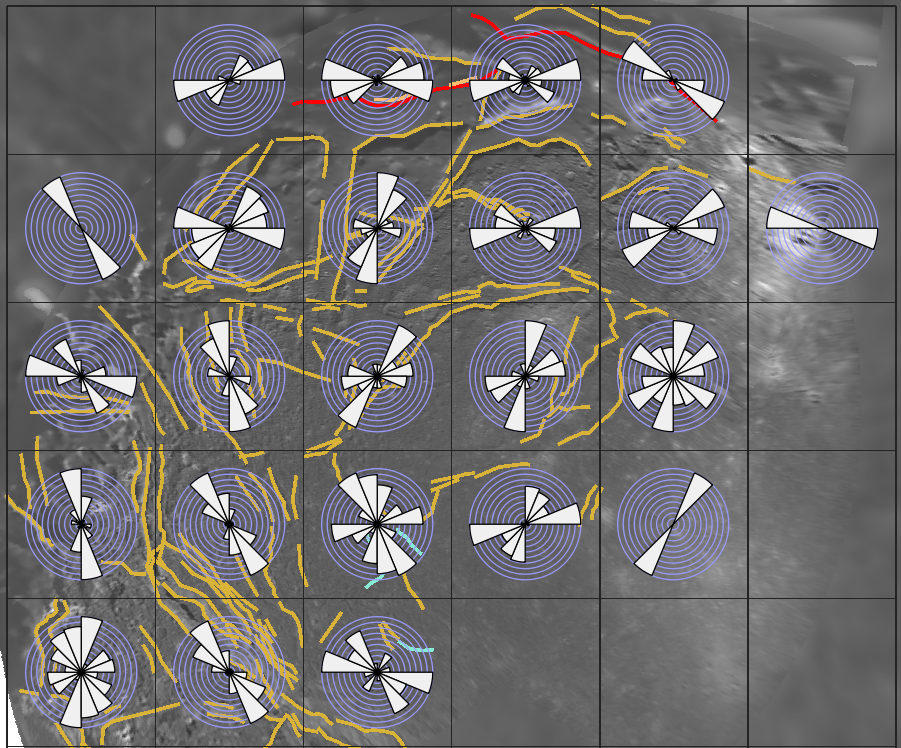
Susanna Tonoian, Alice Lucchetti, Matteo Massironi, Chloe B. Beddingfield, Luca Penasa, Maurizio Pajola, and Costanza Rossi

Introduction

Ariel, one of  Uranus’ icy satellites, has been known since the 19th century, with most of our current knowledge about its surface coming from the Voyager 2 flyby. Despite the limited number of images acquired during the mission, they remain the primary source of information onUranus’s icy moons. When combined with data from  more recent observations, such as those from the James Webb Space Telescope (JWST), they contribute to our understanding of the evolution of icy bodies by shedding light on both surface and subsurface processes.

Ariel's surface exhibits extensive resurfacing [1] and it is primarily composed of CO₂ and CO ices, and possibly NH-bearing species [2]. It is also considered as a candidate ocean world, potentially harboring a subsurface ocean [3]. The portion of Ariel’s terrain recorded by Voyager 2 has been mapped and classified into geological units based on both absolute and relative stratigraphic ages. Specifically, the Crater Plains unit is the oldest one with an estimated absolute age of approximately 1.3 – 0.6/+2.0 Ga [4] with a more tectonized region being 0.8 -0.5/+1.8 Ga, while three younger units have been identified through  relative dating with no absolute modeled age.

Given the diversity of surface features,such as medial grooves, fault scarps, grabens, deep troughs, and ridges [5],  conducted a detailed structural analysis is essential.This work aims to investigate the structural relationships among these features and explore their potential connection to Ariel’s subsurface. 

Data and Methods

For this study we used processed mosaics from Voyager 2 ISS images along with a digital elevation model (DEM) [1], both with a spatial resolution of 1 km. Building on previous mapping efforts [5] we are conducting additional mapping of structural features using QGIS software to perform the structural analysis. From this mapping, we derive statistical properties, such as feature orientation and lengths. To identify orientation patterns, we generate rose diagrams for different feature groups using the Line Direction Histogram plugin [6].

In addition, we analysed the DEM using VRGS software to investigate dip and dip direction trends via the Tensor Analysis inbuilt tool [7].

 Discussion and future work

The preliminary resulting orientation distribution of structural features, as shown in Figure 1, will provide insights into the stress field behavior of Ariel’s surface.  In the future, we will finalize the mapping deriving all the statistical properties of the analyzed surface features. Such investigation will help in reconstructing the influence of global processes such as tidal stress and contraction, as well as local processes associated with cryovolcanism and diapiric upwelling [8], [9]. Additionally, it will offer indirect evidence about Ariel’s interior, including possible subsurface ocean presence and internal layers differentiation. 

Figure 1. An example of the Rose diagrams with an applied grid of 300 km.

Indeed, to further investigate the icy crust, we will also apply fractal clustering methods to determine the possible thickness of icy fractured medium [10]. 

Acknowledgements: This activity has been developed under the ASI/UniBo-CIRI agreement n. 2024-5-HH.0.

References: [1] Schenk & Moore (2020) R. Soc. A 378. [2] Cartwright et al. (2024) ApJ Lett, 970, L29. [3] Castillo-Rogez et al. (2023) JGR Planets, 128, 1. [4] Kirchoff et al. (2022) Planet. Sci. J., 3, 2. [5] Beddingfield et al. (2025) Planet. Sci. J., 6, 2. [6] Tveite (2025) QGIS, Line direction histogram. [7] VRGeoscience Limited (2003) VRGS. [8] Barr & Hammond (2015) Phys. Earth Planet. Inter., 249, 18–27. [9] Beddingfield & Cartwright (2021) Icarus, 367, 114583. [10] Lucchetti et al. (2021) Planet. Space Sci., 195, 10514.

How to cite: Tonoian, S., Lucchetti, A., Massironi, M., Beddingfield, C. B., Penasa, L., Pajola, M., and Rossi, C.: Surface investigation of Ariel’s structural features, EPSC-DPS Joint Meeting 2025, Helsinki, Finland, 7–13 Sep 2025, EPSC-DPS2025-1554, https://doi.org/10.5194/epsc-dps2025-1554, 2025.

L25
|
EPSC-DPS2025-1529
|
On-site presentation
Abundances of He, Ne, Ar in the Atmospheres of the Ice Giants as predicted by Interior Models with stable stratification 
(withdrawn)
Nadine Nettelmann
L26
|
EPSC-DPS2025-693
|
On-site presentation
Paola Tiranti, Henrik Melin, Luke Moore, Emma Thomas, Katie Knowles, Tom Stallard, James O'Donoghue, Kate Roberts, and Khalid Mohamed

Uranus’ tumbling magnetic field, which switches polarities every half rotation (8.6 h), generates a dynamic and complex plasma environment which is still poorly understood. JWST Programme #5073 observed Uranus continuously for a full rotation (17.24 h) to investigate ionospheric dynamics and temporal variations. We use JWST/NIRSpec (which covers the wavelength range between 3-5μm) to extract H₃⁺ emission lines and use this ion to probe physical and chemical properties of Uranus’ ionosphere. Here, we present the first-ever H₃⁺ temperature and ion density vertical profiles up to 8,000 km above Uranus’ planetary limb across different longitudes. We find global median temperatures of 430 ± 5.0 K with peaks between 3,000 – 4,000 km across all ULS longitudes.  We observe localised temperature enhancements at lower altitudes (800 - 1,500 km) between 50 – 100° ULS and 250° ULS longitudes, corresponding to Uranus' northern and southern auroral regions. Ion densities peak (~10⁸ m⁻³) at 1,500 – 1,700 km, decreasing sharply above 3,000 km. The total H₃⁺ emission intensity distinctly peaks within the identified auroral longitude bands. This work provides crucial constraints for magnetosphere-ionosphere coupling models and offers new insights in the mechanisms driving Uranus’ aurora. Additionally, these parameters will help quantify the role of auroral heating in shaping the overall planetary budget in the upper atmosphere as well as establish essential context for future missions, including the proposed Uranus Orbiter and Probe (UOP).

How to cite: Tiranti, P., Melin, H., Moore, L., Thomas, E., Knowles, K., Stallard, T., O'Donoghue, J., Roberts, K., and Mohamed, K.: First Observations of Uranus’ H3+ Vertical Profiles with JWST, EPSC-DPS Joint Meeting 2025, Helsinki, Finland, 7–13 Sep 2025, EPSC-DPS2025-693, https://doi.org/10.5194/epsc-dps2025-693, 2025.

L27
|
EPSC-DPS2025-1021
|
On-site presentation
Davide Grassi, Francesco Camilloni, Francesco Biagiotti, Alessandro Mura, Giuseppe Piccioni, Christina Plainaki, Giuseppe Sindoni, Paolo Tortora, and Federico Tosi

Introduction:  As part of an ASI-funded project aimed at enhancing the readiness of the Italian scientific community for upcoming NASA-led missions to the icy giants, we are conducting a comprehensive validation of atmospheric visible and infrared radiative transfer tools. In this work, we present the initial results and the primary technical challenges addressed in the successful adaptation of the ARS (Атмосфера, Радиация, Спектр - Atmosphere, Radiation, Spectrum) code [1] to simulate spectra from the Uranus atmosphere in the visible and infrared wavelength ranges.

Physical context:  Simulating the spectra of icy giants' atmospheres requires accounting for a unique set of conditions, primarily driven by the extremely low temperatures found at these distant locations from the Sun. Among the key challenges are: (1) the significant depletion of optically active volatile species, such as water and ammonia, in the upper troposphere, which is probed at visible and infrared wavelengths; (2) the condensation of methane, the most optically active species, within the same pressure ranges; and (3) the dominant role played by Rayleigh scattering and collision-induced absorption (CIA) of molecular hydrogen in shaping the spectrum. Regarding the third point, we note that both Rayleigh scattering and CIA are poorly constrained by experiments at the very low temperatures relevant to the Uranus atmosphere, and no existing models fully account for CH4-induced H2 CIA in the wavelength range of interest.

Methods:  Our immediate goal has been to reproduce the Uranus spectra simulations presented in [2], which were derived using the state-of-the-art NEMESIS code [3], also developed by the same authors. These simulations were defined as best-fit models to experimental measurements obtained from the Hubble Space Telescope and ground-based observations at the IRTF. Given the detailed description of the input parameters provided in [2], adapting the ARS code has allowed us to focus on a few specific issues.
First, the ARS code, initially designed for line-by-line simulations and later adapted to include the correlated-k formalism, has now been further extended to work directly with gaseous cross-sections, as provided in databases such as EXOMOL [4]. However, we found that the theoretical data from these databases do not yet provide a satisfactory representation of methane absorption in the visible and near-infrared ranges. As a result, we resorted to experimental cross-sections presented in [5]. Second, we incorporated Rayleigh scattering by introducing a pseudo-aerosol into the simulation, with a density profile that matches the increase in volume cross-section with depth associated with the scattering phenomenon. We were somewhat surprised by the necessity to use discrete ordinate methods, such as DISORT [6], for modeling Rayleigh scattering, despite the relatively small number of terms in the corresponding Legendre decomposition of the phase function.

Fig. 1: Comparison between composite experimental Uranus spectrum at subsolar point (Hubble, IRTF) and ARS simulation.

Fig. 2: Jacobians for gaseous methane volume mixing ratio (α). The vertical profile is sampled in 200 points, uniformly distributed in the log P space.

Results: Ultimately, we were able to achieve a satisfactory match between the experimental spectra and the ARS simulations (see Fig. 1) in the range [0.4-1.9] μm, thus advancing the project to the computation of Jacobians for gaseous mixing ratios and aerosol densities (fig. 2) and to the assessment of retrieval capabilities of conceptual VISNIR spectro-imagers (Fig. 3), according to the methods summarized in [7]. 

Fig. 3: Comparison of diagonal elements of a priori (Sa) and a posteriori (S) state vector covariances, for different parts of the state vector. a1. a2 and a3 are three distinct aerosol populations. A priori covariances are set to 1. Any decrease from the a priori value represents a net information gain provided by the data. S/N 100 was assumed for this simulation. 

Future steps:  Our work will now aim to (1) extend the simulation spectral range to 5 μm (2) incorporating H3+ auroral emissions and (3) comparing the results with JWST spectra, once they become available in the literature [8].

Acknowledgments:  This work is supported by ASI through the agreement ASI/UniBo-CIRI n. 2024-5-HH.0.
We also gratefully acknowledge Dr. N. Ignatiev of IKI-RAS, Moscow, Russia, for granting permission to use his ARS code in this project.

References: [1] Ignatiev, N. I., Grassi, D., & Zasova, L. V. (2005) P&SS, 53, 1035-1042 [2] Irwin, P. G. J., Teanby, N. A., Fletcher, L. N., et al. (2022) JGRE, 127, e07189 [3] Irwin, P. G. J., Teanby, N. A., de Kok, R., et al. (2008) JQSRT, 109, 1136-1150 [4] Tennyson, J., & Yurchenko, S. N. (2012) MNRAS, 425, 21-33 [5] Karkoschka, E., & Tomasko, M. G. (2010) Icar, 205, 674-694 [6] Stamnes, K., Tsay, S.-C., Jayaweera, K., & Wiscombe, W. (1988) ApOpt, 27, 2502-2509 [7] Grassi, D., et al. (2010) P&SS, 58 (10), 1265-1278 [8] Roman, M., Fletcher, L., Hammel, H., et al. (2023) EGU 2024, abstract EGU-15491

How to cite: Grassi, D., Camilloni, F., Biagiotti, F., Mura, A., Piccioni, G., Plainaki, C., Sindoni, G., Tortora, P., and Tosi, F.: Simulations of Uranus Spectra at Visible and Near-Infrared Wavelengths Using ARS, EPSC-DPS Joint Meeting 2025, Helsinki, Finland, 7–13 Sep 2025, EPSC-DPS2025-1021, https://doi.org/10.5194/epsc-dps2025-1021, 2025.

L28
|
EPSC-DPS2025-1453
|
On-site presentation
Audrey Vorburger, Thomas Douçot, Ravit Helled, Peter Wurz, Daniel Kitzmann, Edward Haynes, Cornelia Heid, and Christophe Lovis

The Uranus Orbiter and Probe (UOP) mission has been designated as NASA’s highest-priority new flagship mission for the 2023–2032 decade. Aimed at investigating the origin, structure, and evolution of Uranus, the UOP mission seeks to address key outstanding questions about ice giants—arguably the least understood class of planets in our Solar System. Central to the mission concept is an atmospheric entry probe that will perform in situ measurements of Uranus’s atmospheric composition during descent. A mass spectrometer is the leading candidate for this task, offering the ability to directly quantify molecular and elemental abundances, including critical isotope ratios. These measurements are essential for constraining models of planetary formation, chemical evolution, and atmospheric dynamics, particularly in light of Uranus’s distinctive magnetosphere, subdued atmospheric activity, and unusual energy balance.

Some questions remain open about the mission preparation and execution. Where on the planet should the probe dive in tothe atmosphere? Which are the most important species to detect and measure? A multidisciplinary effort is needed to address such questions, including both theoretical and observational work. The current state-of-the-art atmospheric models for Uranus, derived from thermochemical equilibrium calculations, are severely degenerate due to massive uncertainties in elemental abundances and thermal profiles. They therefore act as snapshots. On one hand, we are working on quantitatively showing how the modelled atmospheres change when examining the whole space of parameters left by those uncertainties. This comparison will be crucial to determine which species will be the most important ones to measure within the probe’s reach, especially the condensibles which are thought to rule the atmospheric stability and consequently, heat transport. On the other hand, we will provide an observational support for this mission, by exploring the atmospheric composition and dynamics using high-resolution spectroscopy. With current and future cutting-edge spectrographs, we can combine spectrally and spatially resolved observations to probe both the composition and winds velocities across the planetary disk. This will help us find the best potential diving locations for the mass spectrometer, which should not present any local feature that would not be representative of the planet’s atmosphere.

On the technical side, in preparation for this mission opportunity, we are developing a dedicated mass spectrometer system as a potential European contribution to the UOP probe payload, building on Europe’s strong heritage in planetary science instrumentation. Our focus is on the design and prototyping of a laboratory system that integrates a time-of-flight mass spectrometer with a high-performance vacuum and gas handling subsystem. The instrument is being engineered for fully autonomous, reliable operation across the extreme and dynamic pressure regime expected during descent—ranging from deep vacuum (10⁻⁷ mbar) to high-pressure conditions (up to 20 bar). To achieve the mission’s scientific goals, the system includes gas pre-processing components designed to remove dominant species such as hydrogen, thereby enabling more accurate detection of minor species and heavy noble gases. A reference gas calibration unit is also being developed to ensure precise and repeatable isotope ratio measurements, addressing one of the most technically demanding aspects of the mission. In addition, we plan to incorporate a tunable diode laser spectrometer to provide complementary spectroscopic validation of selected gas species, enhancing the overall accuracy and robustness of the measurements. In this presentation, we will outline the key scientific drivers for the mass spectrometer experiment, demonstrate how our modeling and observational work directly informs species selection and dive-site planning, present the current status of the instrument prototyping, and discuss system-level considerations including operational sequences, entry conditions, and potential synergies with other instruments aboard the probe.

How to cite: Vorburger, A., Douçot, T., Helled, R., Wurz, P., Kitzmann, D., Haynes, E., Heid, C., and Lovis, C.: Mass Spectrometry at Uranus: Scientific Rationale, Instrument Design, and Site Selection for the UOP Mission, EPSC-DPS Joint Meeting 2025, Helsinki, Finland, 7–13 Sep 2025, EPSC-DPS2025-1453, https://doi.org/10.5194/epsc-dps2025-1453, 2025.

L29
|
EPSC-DPS2025-1195
|
On-site presentation
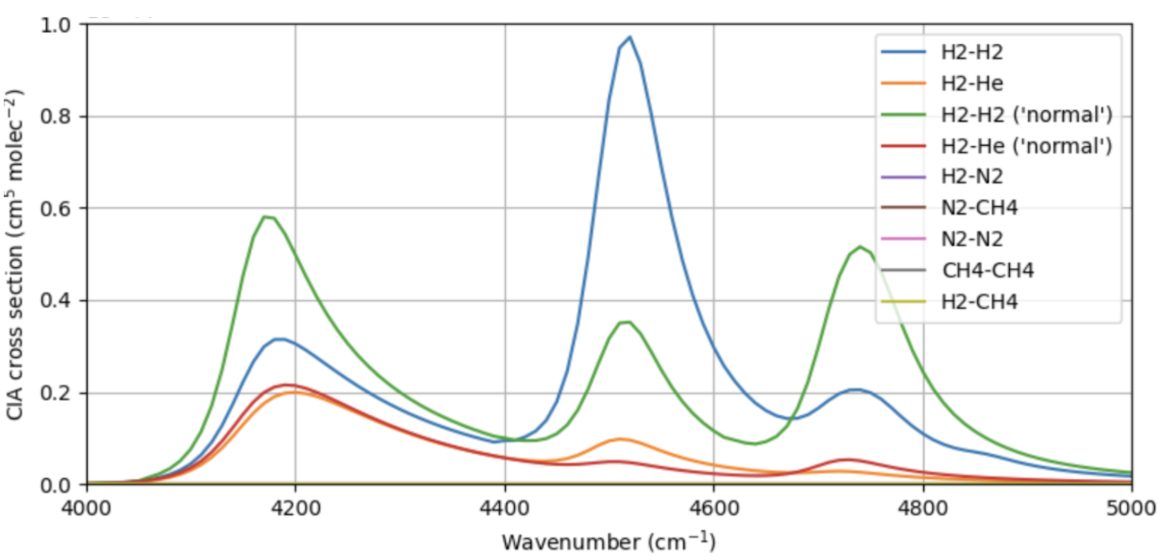
AnnaMarie Conly, Nancy Chanover, Anne Peck, and Emma Thomas

Although past and ongoing observations of Uranus have provided insights into its atmospheric composition and dynamics, key questions remain regarding its radiative balance and vertical mixing. Uranus’ extreme obliquity and low internal heat flux suggest an atmospheric circulation distinct from that of the other giant planets, yet the mechanisms governing its energy transport remain poorly constrained. Understanding how its obliquity shapes atmospheric temperatures, circulation patterns, and energy exchange is critical for accurate modeling of ice giant atmospheres.

Hydrogen (H2) molecules exist in two nuclear spin isomers: ortho-H2 (parallel spins) and para-H2 (antiparallel spins). The equilibrium ortho-to-para ratio is a function of local temperature, but interconversion requires external interactions with paramagnetic species or surfaces—processes introduced through vertical mixing. An equilibrated sample follows a strict temperature-dependent distribution at or below 270 K. Deviations from this distribution indicate inhibited mixing, particularly at levels where conversion timescales exceed transport timescales. Because the conversion from ortho- to para-H2 is weakly exothermic, it also contributes to the thermal energy budget. The para-H2 fraction can be inferred from the shape and strength of pressure-induced H2–H2 and H2–He collision-induced absorption (CIA) features in the near-infrared, particularly in the 2.0–2.5 μm range (Figure 1). These features are shaped by both the total H2 abundance and the ortho/para ratio, making them a sensitive diagnostic of vertical mixing and thermal disequilibrium.

We present efforts to retrieve the vertical para-H2 profile of Uranus using near-infrared spectra obtained in January 2023 with the James Webb Space Telescope (JWST) Near-Infrared Spectrograph (NIRSpec), covering the target 2.0–2.5 μm at R~2700. This region includes the strong CIA bands of H2 and absorption features from other gases, especially methane (CH4), which must be modeled accurately to isolate the CIA signal. The spectra, drawn from the Mikulski Archive for Space Telescopes, include approximately 3.15 hours of NIRSpec integration time, resulting in high signal-to-noise observations. We reduced the data using the most up-to-date version of the JWST calibration pipeline.

We use the Non-linear Optimal Estimator for Multivariate Spectral Analysis (NEMESIS) and archNEMESIS radiative transfer and retrieval frameworks to simultaneously retrieve the vertical profiles of para-H2, CH4 abundance, and atmospheric temperature. These tools solve the radiative transfer equation for a layered planetary atmosphere, incorporating gas absorption, thermal emission, and aerosol scattering. The forward model computes top-of-atmosphere radiance given an atmospheric state, while the inverse model iteratively adjusts that state to minimize residuals between observed and simulated spectra. Our retrieval framework avoids biases associated with fixed a priori profiles by treating each quantity as a free parameter, allowing us to quantify degeneracies and cross-dependencies between para-H2, CH4, and temperature.

Preliminary retrievals are expected to reveal a vertical gradient in the para-H2 fraction, highlighting any potential regions of sluggish vertical mixing. In an atmosphere where vertical mixing is efficient, the para-H2 profile should track the local thermodynamic equilibrium (LTE) distribution. However, in regions where vertical transport is weak relative to interconversion timescales, the para-H2 fraction will depart from LTE, particularly near the tropopause. Such deviations are diagnostic of the transport regime and mixing efficiency in Uranus’ atmosphere, which is thought to be shaped by seasonally modulated circulation and inhibited meridional exchange.

The results from this study will represent a direct retrieval of Uranus’ present-day para-H2 vertical profile from space-based data. Improved constraints on the disequilibrium distribution of ortho- and para-H2 provide key insights into vertical mixing rates, energy transport, and atmospheric circulation on Uranus. By characterizing a thermochemical tracer sensitive to both dynamical and radiative processes, this work contributes toward resolving broader questions about the structure and evolution of ice giant atmospheres—both within our solar system and in exoplanetary contexts. This work was supported by NASA’s Future Investigators in NASA Earth and Space Science and Technology (FINESST) program through grant number 80NSSC24K1816.

Figure 1. Collision-induced absorption cross sections across the 2.0-2.5 micron range.

How to cite: Conly, A., Chanover, N., Peck, A., and Thomas, E.: Investigating the Vertical Distribution of Para-H2 in Uranus’ Atmosphere, EPSC-DPS Joint Meeting 2025, Helsinki, Finland, 7–13 Sep 2025, EPSC-DPS2025-1195, https://doi.org/10.5194/epsc-dps2025-1195, 2025.

L30
|
EPSC-DPS2025-516
|
On-site presentation
Exploring the Enigmatic Depletion of Nitrogen and Sulfur in Uranus' Atmosphere: Clathrates, Oceans, and Formation Processes
(withdrawn)
Olivier Mousis, Mark Hofstadter, Alizée Amsler Moulanier, Tom Benest Couzinou, Tom Briand, Vincent Hue, and Antoine Schneeberger