TP9 | On the Quest to Solve Mercury's Secrets

TP9

On the Quest to Solve Mercury's Secrets
Convener: Willi Exner | Co-conveners: Riku Jarvinen, Rozenn Robidel, Jack Wright, Emma Caminiti, Sébastien Verkercke, Norbert Krupp, Johannes Benkhoff, Geraint Jones, Valeria Mangano, Anna Milillo
Orals TUE-OB2
| Tue, 09 Sep, 09:30–10:30 (EEST)
 
Room Mercury (Veranda 4)
Orals TUE-OB3
| Tue, 09 Sep, 11:00–12:30 (EEST)
 
Room Mercury (Veranda 4)
Orals TUE-OB5
| Tue, 09 Sep, 15:00–16:00 (EEST)
 
Room Mercury (Veranda 4)
Orals TUE-OB6
| Tue, 09 Sep, 16:30–18:00 (EEST)
 
Room Mercury (Veranda 4)
Orals WED-OB2
| Wed, 10 Sep, 09:30–10:30 (EEST)
 
Room Mercury (Veranda 4)
Posters THU-POS
| Attendance Thu, 11 Sep, 18:00–19:30 (EEST) | Display Thu, 11 Sep, 08:30–19:30
 
Finlandia Hall foyer, F46–70
Tue, 09:30
Tue, 11:00
Tue, 15:00
Tue, 16:30
Wed, 09:30
Thu, 18:00
The joint ESA/JAXA mission BepiColombo has successfully completed its 6 swingbys of Mercury and is now on a year-long intermission before orbit insertion in late 2026.
Its swingbys reached unexplored regions in the Hermean environment.
Thanks to previous observations by Mariner 10 and MESSENGER and the benefits of numerical modelling,
our understanding of Mercury's origin, formation, composition, interior structure, surface, exosphere and magnetospheric environment can be improved.

The period until orbit insertion provides a valuable opportunity to synthesize lessons learned from modeling, laboratory experiments, Earth-based observations, and data collected during BepiColombo’s cruise phase, as well as from the Mariner 10 and MESSENGER missions.

This session will host contribution efforts in planetary, geological, exospheric and magnetospheric science.
These contributions are based on available spacecraft observations, Earth-based observations, modelling of interior, surface and planetary environment, as well as theoretical and experimental approaches.
We welcome interdisciplinary contributions that "think outside the box" to propose new approaches for future BepiColombo observations.

This session is particularly timely and relevant as the scientific community prepares for the next phase of the BepiColombo mission.
By bringing together diverse contributions, we aim to build a comprehensive understanding of Mercury that will maximize the scientific return of BepiColombo’s orbital observations.

Session assets

Orals TUE-OB2: Tue, 9 Sep, 09:30–10:30 | Room Mercury (Veranda 4)

Chairpersons: Willi Exner, Johannes Benkhoff, Jack Wright
09:30–09:35
09:35–09:50
|
EPSC-DPS2025-1594
|
solicited
|
On-site presentation
Geraint H. Jones and Go Murakami

BepiColombo is a joint mission between the European Space Agency (ESA) and the Japanese Aerospace Exploration Agency (JAXA), to will carry out a comprehensive exploration of planet Mercury. The mission was launched on 20 October 2018 from the European spaceport Kourou in French Guiana, and is currently on a eight-year-long cruise to Mercury. BepiColombo consists of two orbiters: the Mercury Planetary Orbiter (MPO) and the Mercury Magnetospheric Orbiter (Mio). Following their release from the Mercury Transfer Module (MTM) one year from now, these orbiters will be put in orbit around the innermost planet of our Solar System in late 2026. Once in orbit, BepiColombo with its very comprehensive, interdisciplinary payload will perform measurements to increase our knowledge on the fundamental questions about Mercury’s evolution, composition, interior, magnetosphere, and exosphere. BepiColombo successfully completed the last of its 6 flybys of Mercury in January 2025, and will continue its cruise during the remainder of 2025 and much of 2026. Although the two BepiColombo orbiters are in a stacked configuration during the cruise, during which only some of the instruments can perform scientific observations, the mission has already produced some very valuable results, including striking observations of the planet using its three engineering monitoring cameras. We shall provide a summary of the mission status, a preview of the remaining plans for the mission up to and after arrival in orbit around Mercury, a broad overview of scientific results to date, and observations by the mission's monitoring cameras from the Mercury flybys.

How to cite: Jones, G. H. and Murakami, G.: BepiColombo: A Mission Update, EPSC-DPS Joint Meeting 2025, Helsinki, Finland, 7–13 Sep 2025, EPSC-DPS2025-1594, https://doi.org/10.5194/epsc-dps2025-1594, 2025.

09:50–10:02
|
EPSC-DPS2025-299
|
ECP
|
On-site presentation
Michaela Walterova

Introduction

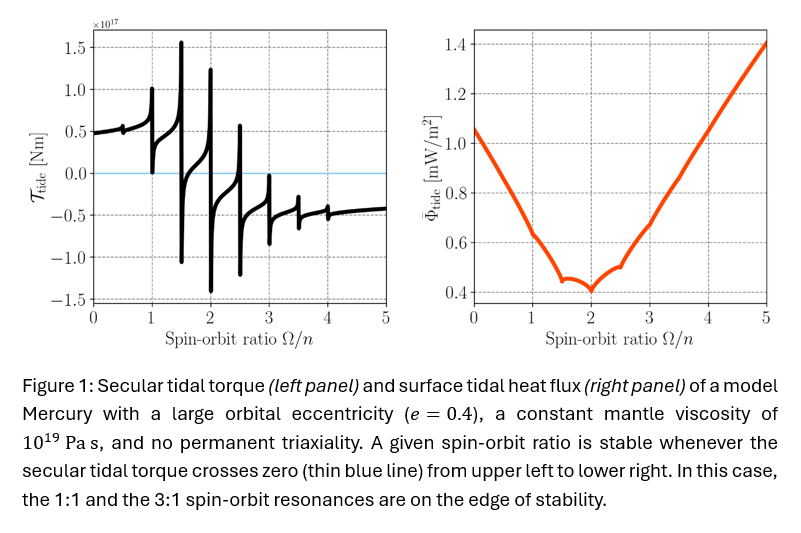
Owing to its proximity to the Sun, the large eccentricity of its orbit (e=0.2), and the action of tidal forces, Mercury is locked in a 3:2 spin-orbit resonance: it turns exactly three times around its rotation axis during two revolutions around the Sun. However, this might not have always been the case. As identified by several studies [1,2], the geographical distribution of large impact basins on Mercury’s surface indicates that the planet might have been locked in a different spin-orbit resonance in past, with the most likely rotation states being the 1:1 and the 2:1 resonances [2]. A past transition between spin states, which resulted in a change of the insolation and surface temperature patterns, is also indicated by the relaxation states of the basins and by the hemispheric nature of some tectonic features [3,4].

The stability of spin-orbit resonances depends on several factors (Figure 1), the most important ones being the orbital eccentricity, the planet’s rheological parameters, and its prolateness. Mercury’s orbit is subjected to relatively fast eccentricity variations between e=0 and e=0.3 with a period of ~106-107 years and potential chaotic high-eccentricity excursions beyond e=0.4 resulting from its proximity to an overlap of secular resonances with Venus and Jupiter [5,6]. While the present-day 3:2 spin-orbit resonance is, in general, stable for a range of eccentricities [7], its stability might be diminished at very small or large eccentricites, especially if Mercury’s mantle was more dissipative or if the planet was less prolate earlier in the history.


Model and Methods

This study combines the modelling of Mercury’s interior structure and the analysis of stable spin states under the varying action of solar tides. The interior structure is determined by Bayesian inversion, using the Markov Chain Monte Carlo (MCMC) method [8] and estimating the probability distributions over several interior structure parameters (e.g., the core size, the concentration of light elements in the core, and the temperature profile) consistent with empirically constrained observables (e.g., the mean density, the moment of inertia of the planet, the relative moment of inertia of the mantle, and the tidal Love numbers).

Selected interior profiles are then endowed with different viscosities and used in simulations of the orbital evolution of Mercury and the other solar system planets. I investigate the changes in Mercury’s rotation rate (including transitions between spin-orbit resonances) arising due to the variations in eccentricity and, potentially, due to the changes in the planet’s shape, which is subject to viscoelastic relaxation. At the same time, I evaluate the tidal heat rate and identify periods when it might have presented a non-negligible contribution to the planet’s thermal evolution. The orbital evolution is calculated with the symplectic integrator Rebound [9], coupled with a tidal model developed previously [10] and based on the Darwin-Kaula expansion of evolution equation as presented in [11]. The tidal model accepts as an input the radially-dependent elastic and rheological parameters of Mercury and outputs the tidal contribution to the evolution rates of all orbital elements as well as the closest stable spin-orbit resonance and the associated tidal heating.

Both in the interior structure inversion and in the tidal-orbital model, Mercury is described as a viscoelastic differentiated body. Its mantle is characterised by the Andrade rheological model, the inner core by the Maxwell model, and the outer core is an inviscid fluid. The tidal response is calculated using the normal mode theory [12].


Preliminary conclusions

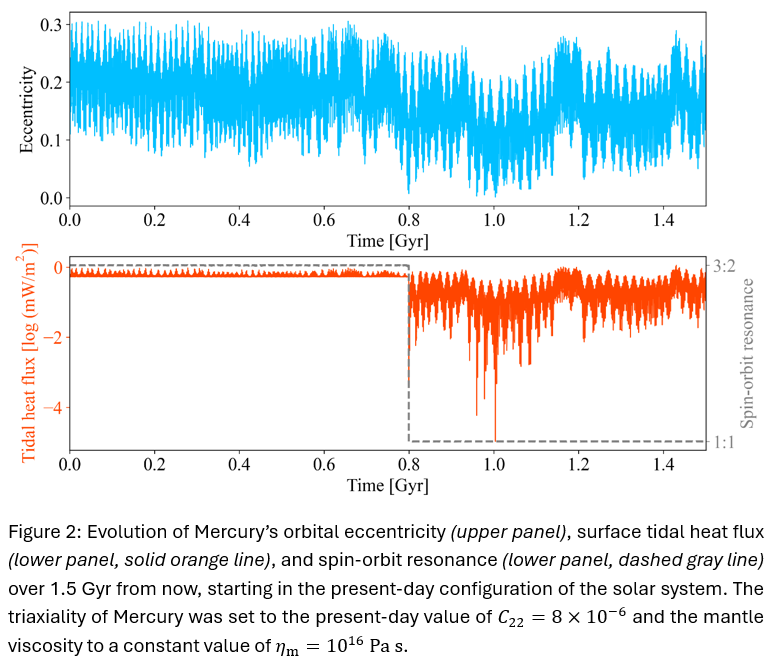
In concordance with previous studies of the planet’s interior structure [e.g., 13], the large tidal deformability, encoded in Mercury’s tidal Love number k2, points at a low-viscosity zone in the lower mantle. The zone has viscosities in the range 1013-1018 Pa s, which might potentially account for an increased tidal dissipation. According to the preliminary results, Mercury can transition from the 3:2 resonance to the 1:1 resonance in about 1 Gyr from now if it keeps its present-day shape and if it is indeed highly dissipative (Figure 2). A coupled study of the orbital and tidally-induced rotational evolution can provide constraints on the rheology and thus the thermal state of Mercury that are consistent with the stability of the 3:2 spin-orbit resonance or any other hypothetical spin state in past [1,2]. It also shows that the eccentricity variations, combined with decreased mantle viscosity, can lead to transitions between different spin states without the need for impact-induced resonant unlocking.


References

[1] Wieczorek et al. (2012), Nature Geoscience, 5(1):18-21, doi: 10.1038/ngeo1350.

[2] Knibbe & van Westrenen (2016), Icarus, 281:1-18, doi: 10.1016/j.icarus.2016.08.036.

[3] Szczech et al. (2024), Geophysical Research Letters 51(22), doi: 10.1029/2024GL110748.

[4] Szczech et al. (2025), submitted to AGU Advances.

[5] Lithwick & Wu (2011), The Astrophysical Journal, 739(31), doi: 10.1088/0004-637X/739/1/31.

[6] Laskar & Gastineau (2009), Nature, 459(7248):817-819, doi: 10.1038/nature08096.

[7] Noyelles et al. (2014), Icarus, 241:26-44, doi: 10.1016/j.icarus.2014.05.045.

[8] Foreman-Mackey et al. (2013), Publications of the Astronomical Society of the Pacific 125(925), doi: 10.1086/670067.

[9] Rein& Liu (2012), Astronomy & Astrophysics 537(A128), doi: 10.1051/0004-6361/201118085.

[10] Walterová & Běhounková (2020), The Astrophysical Journal 900(1), doi: 10.3847/1538-4357/aba8a5.

[11] Boué & Efroimsky (2019), Celestial Mechanics and Dynamical Astronomy 131(7), doi: 10.1007/s10569-019-9908-2.

[12] Takeuchi & Saito (1972), Methods in Computational Physics, 11:217-295, doi: 10.1016/B978-0-12-460811-5.50010-6.

[13] Goossens et al. (2022), The Planetary Science Journal, 3(2): id.37, doi: 10.3847/PSJ/ac4bb8.

How to cite: Walterova, M.: Spin-orbit resonances and tidal heating of Mercury in light of its chaotic orbital evolution, EPSC-DPS Joint Meeting 2025, Helsinki, Finland, 7–13 Sep 2025, EPSC-DPS2025-299, https://doi.org/10.5194/epsc-dps2025-299, 2025.

10:02–10:14
|
EPSC-DPS2025-449
|
On-site presentation
Hao Cao, Paula Wulff, Ankit Barik, and Krista Soderlund

Mercury, the innermost planet in the solar system, remains an enigma after the wealth of measurements collected by NASA's MESSENGER mission. The state of Mercury's iron-rich core and the dynamo action that generates Mercury’s relatively weak, axially aligned, north-south asymmetric internal magnetic field is not well understood. Here we investigate the dynamo action associated with one unique possibility of Mercury's core: a double-iron-snow (DIS) dynamo with an extended, stably-stratified basal iron snow zone. This DIS structure model is one possible scenario that fits most other geophysical constraints at Mercury, including the Moment of Inertia. Our three-dimensional numerical dynamo survey varying the convective forcing (Rayleigh number), relative electrical conductivity (magnetic Prandtl number), and Brunt-Väisälä frequency revealed that although a relatively weak surface magnetic field can be achieved within this set-up, the external magnetic field remains highly dipolar and north-south symmetric under most scenarios. We hypothesize that this symmetry preference is due to the magnetic anchoring effect of the basal iron snow zone and the electromagnetic screening effect of the top iron snow zone. Our results indicate that while the existence of a top iron-snow zone (or a stably stratified layer) can lead to a weak and more axisymmetric magnetic field, the existence of an extended basal iron-snow zone would prohibit the equatorial symmetry breaking in the magnetic field observed at Mercury. Thus, our dynamo modeling results argue against the existence of an extended basal iron snow zone inside Mercury's core at present.

How to cite: Cao, H., Wulff, P., Barik, A., and Soderlund, K.: Mercury’s enigmatic magnetic field: a dynamo case against an extended basal iron-snow layer in the liquid outer core? , EPSC-DPS Joint Meeting 2025, Helsinki, Finland, 7–13 Sep 2025, EPSC-DPS2025-449, https://doi.org/10.5194/epsc-dps2025-449, 2025.

10:14–10:26
|
EPSC-DPS2025-1118
|
On-site presentation
Isaac S. Narrett, Benjamin P. Weiss, Sarah C. Steele, and John B. Biersteker

Introduction:  Along with the discovery of Mercury’s dynamo-generated dipolar magnetic field (~200 nT at the equator), measurements from the MESSENGER spacecraft indicate the presence of crustal remanent magnetization [1, 2]. Mercury’s dipole field is anomalously weak (given its large core), which has elicited a variety of dynamo mechanisms (e.g., stable layers, iron-snow, double-diffusive convection, solar wind feedback, asymmetric heat flux, core growth) to explain this oddity [3]. Global measurements of crustal magnetization can give insights into the time-evolution of Mercury’s dynamo and interior.

MESSENGER measured the region spanning 40°-70° N and 120° E - 120° W, showing peak crustal field strengths of ~20 nT measured at ~20 km altitude, with no measurements made <30° N [1]. These crustal fields are co-located with ~3.9-3.7 Gyr old volcanic smooth plains [4, 5] and are inferred to be generated from thermoremanent magnetization (TRM) acquired in the presence of the ancient Hermean dynamo field.  Assuming uniform magnetization, paleointensities of 101-104 nT are compatible with the measurements, with large uncertainty due to the poorly constrained TRM efficiency,  χTRM, and source thickness (<70 km) [1].

Here, we aim to answer the following: (1) How strong must the Mercury dynamo have been to account for the crustal magnetization observed by MESSENGER? To answer this, we determine the minimum field strength needed to stand off the solar wind and produce a steady field that could magnetize the crust. In answering this, we show that future BepiColombo low-altitude (<100 km) measurements of crustal fields and surface composition (especially latitudes <30° N) can further constrain the strength of the ancient dynamo.

Objectives and Methods: First, we estimate the solar wind and interplanetary magnetic field (IMF) conditions for Mercury ~3.9-3.7 Gyr ago. We next use magnetohydrodynamic (MHD) simulations of the ambient surface magnetic field conditions. We then use these MHD simulations to create surface magnetic field timeseries, which we couple with thermal cooling and magnetization models to match with MESSENGER measurements.

Ancient solar wind, IMF conditions, and surface field timeseries. We use estimates of the ~0.5-0.7 Gyr-old Sun’s mass-loss and rotation rate to calculate solar wind speed, density, and IMF values at Mercury, assuming ancient Mercury had the same semi-major axis of 0.387 AU as today. We obtain solar wind speeds of 600–1000 km-s-1, densities of 200–3,500 amu-cm-3, and IMF strengths ≳300–600 nT, 1.5–3x stronger than Mercury’s modern dipole equatorial field [6].

To create the surface magnetic field timeseries for our magnetization models, we perform MHD simulations of the solar wind interacting with the Hermean dynamo field, varying the IMF and solar wind density for a fixed dipole field strength. We quantify the magnetic field history experienced at a given surface latitude by taking the surface magnetic field over all longitudes and mapping this magnetic field to a timeseries over the Hermean day (using longitude as a proxy for the time in the fixed surface point reference frame, given the axisymmetry of the dipole field [1]).

Crustal field calculations. From the MHD simulated surface magnetic field timeseries, we then estimate the TRM recorded in cooling volcanic deposits and compare the generated crustal fields to those measured by MESSENGER. We simulate cooling and TRM acquisition for three different structures: a cylindrical magmatic intrusion of diameter 2 km and length 8 km, a thin effusive volcanic disk of diameter 20 km and thickness 1 km, and a large cylindrical intrusion/lava flow of diameter 50 km and thickness 20 km. We then calculate the generated crustal fields from these sources with  χTRM values of various magnetic minerals. The main constraints on the candidate surface magnetic minerology are the MESSENGER measured average ~1.75 wt% Fe and likely extreme reducing conditions during formation like those for aubrite meteorites [7]. As such, we consider  χTRM values from aubrites [8] and Fe metal, FeNi alloys [1]. We note that magnetic carriers like suessite, schreibersite, and greigite could be stable in the reducing Hermean environment, but extensive TRM measurements are lacking [7]. Future BepiColombo measurements could provide further constraints on the surface magnetic minerology [9].

Results: We find that the Hermean dynamo field must have been >2,000 nT (10 stronger than at present) to magnetize the surface to MESSENGER measured anomalies at around 40° N latitude  [1]. (Fig. 1) We further find that crustal field measurements at low latitudes from BepiColombo could further constrain the ancient Hermean dynamo’s intensity. For example, the ancient dynamo intensity lower limit can be constrained to stronger values (possibly 20,000 nT) if BepiColombo measures similarly strong crustal fields (as did MESSENGER) at lower latitudes (e.g., 10° N).

Conclusions: In this study, we demonstrate that Mercury’s dynamo field at ~3.9-3.7 Gyr ago was very likely ≳2,000 nT to stand off the solar wind and magnetize the surface to the level inferred from MESSENGER data. The crustal magnetization may even have required a ~20,000 nT dynamo field if the Hermean surface magnetic mineralogy is dominated by Fe-metal or FeNi alloys.

Numerous dynamo models have been developed to explain Mercury’s modern planetary field. Our findings of a heightened, ancient dynamo field might point to different interior conditions ~3.9-3.7 Gyr ago, such that these stably stratified layers or Fe-snow zones were not present in that period. Furthermore, evidence for a stronger surface field might imply an enhanced heat flux or a larger inner core to power this ancient dynamo [10, 11]. Future low-altitude (<100 km) measurements of the lower latitude crustal field environment and surface mineralogy would help constrain the strength and time-evolution of the Hermean dynamo.


References:

[1]Johnson+2018,Mercury’s Internal Magnetic Field.[2]Hood+2018,JGR,2647-2666.[3]Heyner+2021,SSR,217.[4] Denevi+2013,JGR,891-907.[5]Wang+ 2021,GRL,e2021GL094503.[6]Vidotto+2021,LivingRevSolPhys,3.[7]Strauss+2016,JGR,2225-2238.[8]Rochette+2010,M&PS,405-427.[9]Rothery+2020,SSR 66.[10]Takahashi+2019,NatCommun,208.[11]Hauck+2018,Mercury’s Global Evolution,516-543.

Fig. 1: Crustal magnetic field parameter space for generating strongest MESSENGER-level magnetic field (BAltitude) measurements (blue and red markers) for (top) 200 nT dipole field and (bottom) 2000 nT dipole field at 10° N latitude. The horizontal axis shows three magnetized volumes with different diameters (D) and heights (H) and the vertical axis is TRM efficiency, χTRM. For the proposed magnetic materials (iron-metal or similar composition to Aubrites), the ancient Hermean dynamo needed to be >2000 nT, possibly even 20,000 nT, to magnetize the strongest measured crustal anomalies.

How to cite: Narrett, I. S., Weiss, B. P., Steele, S. C., and Biersteker, J. B.: Mercury’s Ancient Crustal Magnetization: A Stronger Dynamo can be Confirmed by Future BepiColombo Measurements, EPSC-DPS Joint Meeting 2025, Helsinki, Finland, 7–13 Sep 2025, EPSC-DPS2025-1118, https://doi.org/10.5194/epsc-dps2025-1118, 2025.

10:26–10:30

Orals TUE-OB3: Tue, 9 Sep, 11:00–12:30 | Room Mercury (Veranda 4)

Chairpersons: Geraint Jones, Jack Wright, Emma Caminiti
Mercury's surface 1
11:00–11:12
|
EPSC-DPS2025-1090
|
On-site presentation
Scott King, Austin Green, and Megan Duncan

Despite its small size and thin mantle, volcanism was pervasive across the surface of Mercury. A crustal thickness of 35–38 km taken together with a core-mantle boundary depth of approximately 400 km indicates that ~10% of the silicate material within Mercury has experienced melting. This melt is directly linked to the current surface composition, as measured during the MESSENGER mission, with the standard assumptions that the crust was generated through partial melting processes of the mantle and experienced little to no fractionation. The surface composition of Mercury is unlike that of any other body in the Solar System – rich in magnesium and sulfur, as well as other moderately volatile and volatile (e.g., carbon) elements, but poor in iron and titanium, suggesting the surface is dominated by Mg-rich silicate minerals and sulfides. This implies that the mantle has a similarly low FeO content, and a high S content, around 7–11 wt.%. Here we focus on the space and time localization of Northern Smooth Plains (NSP) volcanism on Mercury and the associated active uplift, which post-dates NSP volcanism. We hypothesize an endogenic origin to NSP volcanism that can be explained by a transitional form of temperature-dependent rheology.  We considered a set of spherical shell convection calculations with free-slip top (2440 km) and bottom (2020 km), constant temperature boundary conditions (440 K at the top and 1600 K at the bottom), and constant material properties throughout the domain except for rheology which is a strong function of temperature. The calculations have no internal heating and no cooling core boundary condition.

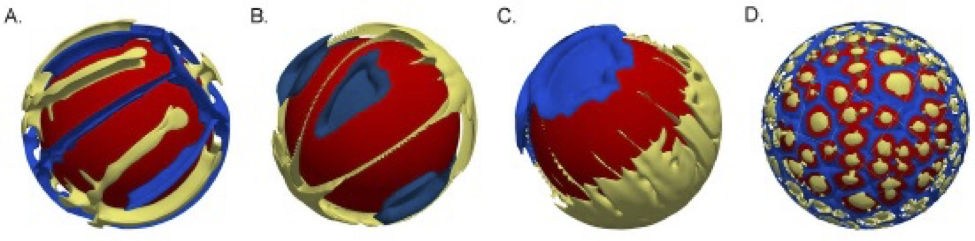
The steady-state planform of the convection is illustrated by the isocontours of temperature in Figure 1. With a viscosity contrast of 20 (Fig. 1a), there is a pattern of (yellow) upwelling linear features and (blue) downwelling linear features in the low to mid latitudes that are interrupted a ring-shaped downwelling near 60–70° latitude in both the northern and southern hemispheres, with a plume at each pole. With a viscosity contrast of 103 (Fig. 1b), we see a similar pattern of linear upwellings and downwellings at low and mid latitudes that merge into large upwelling plumes at the pole. Rather surprisingly, we find a transitional planform with a single upwelling hemisphere and a single downwelling hemisphere with a viscosity contrast of 104 (Fig. 1c). The transitional phase occurs at the same viscosity contrast in these calculations as seen calculations with an Earth-sized core. Finally, with a viscosity contrast of 105 (Fig. 1d) a stagnant lid forms with many small plume-lets (yellow) distributed evenly across the domain with downwelling sheets (blue) between them. The upwelling/downwelling hemisphere pattern (Fig. 1) is surprising because such a long-wavelength structure does not seem possible in a thin shell. We propose that activation energy and crustal rheology are key for the transitional upwelling/downwelling hemisphere form of convection (Fig 1c). The reduction in activation energy compared with olivine basalt is the result of sulfide and graphite within the silicate crust/lithosphere.

We propose this endogenic mechanism explains the observed concentrated region of volcanism expressed as the NSP. We demonstrate the relevance of these calculations to a cooling planet by adding a cooling core boundary condition and radiogenic Heat Producing Element (HPE) concentrations based on the surface abundances of K, Th, and U that were measured with the Gamma-Ray Spectrometer on MESSENGER. The volume and timing of melt generated using an iron free solidus will be compared with the NSP on Mercury. These time evolving calculations allow us to assess the observed post-volcanic uplift.

Figure 1: Isotherms from geodynamic models in a Mercury geometry thin silicate shell. Yellow denotes +100 °C above the mean mantle temperature; blue denotes     -100 °C below the mean mantle temperature. A. Roll pattern with viscosity contrast of 20; B. Roll pattern with viscosity contrast of 103; C. Hemispheric up/down pattern with viscosity contrast of 104; D. Many small plumes beneath a stagnant lid with viscosity contrast of 105.


How to cite: King, S., Green, A., and Duncan, M.: Mercury's Last Gasp: A Volcanic Origin for the Northern Smooth Plains, EPSC-DPS Joint Meeting 2025, Helsinki, Finland, 7–13 Sep 2025, EPSC-DPS2025-1090, https://doi.org/10.5194/epsc-dps2025-1090, 2025.

11:12–11:24
|
EPSC-DPS2025-1234
|
On-site presentation
Sébastien Besse, Mireia Leon-Dasi, Océane Barraud, and Alain Doressoundiram

Explosive volcanism has significantly shaped Mercury’s surface, but questions remain about the formation mode and timing of eruptions. While compound vents formed over prolonged periods have been documented (Jozwiak et al., 2018; Pegg et al., 2021), the occurrence of single-pulse eruptions is still to be confirmed. On Earth, such eruptions produce a symmetric “bullseye” pattern in pyroclast distribution, with clast size decreasing with distance (Kilgour et al., 2019). Although Mercury lacks particle size data at this scale, analysis of MASCS spectra (Besse et al., 2020 ; Barraud et al., 2021) with deep learning techniques (Leon-Dasi et al., 2023 ; 2025) allows us to track spectral changes with distance from the vent source. We create isochrone maps that provide information on the changes in spectral properties as well as the rate at which they change. We find multiple evidence of symmetric patterns, supporting single-pulse eruptions, as well as patterns suggesting multi-pulse eruptions at single vents and interrupted eruptions from multiple vents.

This analysis provides evidence on the complex volcanic history of Mercury through time with different eruption mechanism within the same eruption style (i.e., effusive Vs. explosive). On-going analysis shall provide insights on the timeline of these eruption mechanisms, particularly if some were favored during the last stages of volcanism on Mercury. 

How to cite: Besse, S., Leon-Dasi, M., Barraud, O., and Doressoundiram, A.: Tracking Eruption Patterns with Deep Learning, EPSC-DPS Joint Meeting 2025, Helsinki, Finland, 7–13 Sep 2025, EPSC-DPS2025-1234, https://doi.org/10.5194/epsc-dps2025-1234, 2025.

11:24–11:36
|
EPSC-DPS2025-1395
|
ECP
|
On-site presentation
Kaori Hirata, Tomohiro Usui, Patrick Peplowski, and Yudai Suzuki

Introduction

Observations by the Mercury Surface, Space ENvironment, GEochemistry, and Ranging (MESSENGER) spacecraft detected abundant volatiles on Mercury’s surface [1]. The K/Th ratios observed by Gamma-Ray Spectrometer (GRS), 6600 ± 2800, were higher than those on the other terrestrial planets [2, 3]. These observations led to several hypotheses regarding Mercury’s unique formation and evolutionary history [4-6]. However, these estimates were derived by integrating a whole GRS dataset, possibly biasing the global estimate. Indeed, due to MESSENGER’s elliptical orbit, GRS data were most effectively collected over Mercury’s northern high latitudes. To estimate a representative K/Th ratio over Mercury’s global surface, this study aims to determine the spatial variability of K and Th abundances. As a first step, we assumed geologically consistent spatial patterns of K and Th abundances and estimated the corresponding values.

Method

In this study, we assumed four geological end-member units on Mercury, each of which has a representative elemental composition. Based on this assumption, we applied a linear mixing model, where each GRS observation reflects a linear mixing of end-member compositions within observational footprint [7].

First, we produced an end-member map (Fig.1) by defining four end-member units that reflect diversity in surface geological context: Northern Plains (NP), Caloris Plains (CP), High-Mg Region (HMR), and Intercrater Plains (IcP). NP and CP are smooth plains with low crater densities, likely formed by young volcanism [7-9]. The HMR unit was identified in areas with elevated Mg/Si ratios (>0.55) [10], likely ancient terrain formed by early volcanic or impact-related processes [11,12]. All remaining regions were designated as the IcP unit.

Fig.1. End-member unit map showing the spatial distribution of the four end-member units, NP (yellow), CP (light green), HMR (red), and IcP (light blue). The sub-nadir points of the GRS measurements used in this study (black points) were limited to the northern hemisphere.

The footprint areas for each GRS observation were calculated using spacecraft’s orbital and attitude data. For each footprint, we determined the fractional coverage of the four end-member units by comparing it with the end-member unit map. To parametarize the GRS’s detection efficiency of gamma-rays emitted from the surface, a weighting scheme was applied based on the distance and emission angle between the spacecraft and a given point on the surface.

We then selected GRS observations with similar mixing ratio of the four units and integrated them to generate 20 composite gamma-ray spectra. From each spectrum, we estimated K and Th abundances from the 1461 keV and 2615 keV gamma-ray peaks, respectively. Finally, we solved an inverse problem using the fitted K and Th values and their associated mixing ratios to estimate the elemental abundances for each end-member unit (Fig. 2).

Fig.2. K abundances (vertical axis) and mixing ratios of the four end-member units (horizontal) for 20 gamma-ray spectra (colored circles) and the estimated end-member compositions (colored pentagrams).

Results and Discussion

Our analysis successfully estimated the K and Th abundances of the four end-member (Table 1). The K abundance was highest in the NP, exceeding that of the CP by over a factor of four. Relatively uniform Th abundance was estimated except in the HMR, which showed more than twice compared to the other units. As a result, the K/Th ratio showed a wide spatial variation, with the highest K/Th ratio of ~14,000 observed in NP.

Table 1. The end-member K and Th abundances [ppm], and K/Th ratios, and absolute and relative surface areas occupying the northern hemisphere, Au [km2] and AN,rel[%].

Using the estimated end-member compositions and their spatial coverage, we derived average values for Mercury’s northern hemisphere: K and Th abundances of 620 ± 20 and 0.13 ± 0.01 ppm, respectively, and K/Th ratio of 4900 ± 600. The estimated K/Th ratio is lower than, but consistent with previous global estimates, within the error bar range [2,3], suggesting that our model reduces the observational bias caused by uneven spatial coverage of the GRS observations.

To investigate the influence of exogenous contaminations by cratering impacts, we compared K/Th ratios with crater density, a proxy for impact frequency experienced by present surface. No clear trend was observed: NP and CP, both with low crater densities, exhibited the highest and lowest K/Th ratios, respectively, while HMR and IP with higher crater densities had intermediate values. In contrast, a negative correlation was found between K abundance and average surface temperature across units. This is consistent with the “thermal redistribution” hypothesis, where volatile elements concentrate in colder regions through surface-exosphere interactions [3,14]. These results imply that thermal redistribution dominates current surface K and Th compositions rather than the surface contamination of impact-delivered materials.

Conclusions

The reported high surface K/Th ratio was considered a clue to Mercury’s evolutionary history. This study re-analyzed MESSENGER GRS data using a compositional mixing model. Significant variation among four geologically defined end-member units was observed, with the Northern Plains showing the highest potassium concentrations. The estimated global average K/Th ratio was slightly lower than previous estimates, indicating succesful removal of observational bias. While no clear correlation was found with crater density, K abundances showed a negative correlation with surface temperature, supporting the thermal redistribution hypothesis. Applying this approach to thermal models or future observations may further improve our understanding of volatile behavior on Mercury.

References [1] Evans et al. (2012) JGR: Planets, 117, E00L07.  [2] Peplowski et al. (2011) Science, 333(6051), 1850-1852. [3] Peplowski et al. (2012) JGR: Planets, 117, E00L04. [4] Walsh et al. (2011) Nature, 475(7355), 206–209. [5] McCubbin et al. (2012) Geophys. Res. Lett., 39(9), 2012GL051711. [6] Hyodo et al. (2021) Icarus, 354, 114064. [7] Hirata et al. (2024) JGR: Planets, 130, e2024JE008788. [8] Ostrach et al. (2015) Icarus, 250, 602–622. [9] Ernst et al. (2015) Icarus, 250, 413–429. [10] Denevi et al. (2013) JGR: Planets, 118(5), 891-907. [11] Nittler et al. (2020) Icarus, 345, 113716. [12] Mojzsis et a. (2018) EPSL, 482, 536–544. [13] Weider et al. (2015) EPSL, 416, 109–120. [14] Peplowski et al. (2014) Icarus, 228, 86-95.

How to cite: Hirata, K., Usui, T., Peplowski, P., and Suzuki, Y.: Updated estimates of Mercury's global K/Th ratio: An unmixing approach to surface composition analysis, EPSC-DPS Joint Meeting 2025, Helsinki, Finland, 7–13 Sep 2025, EPSC-DPS2025-1395, https://doi.org/10.5194/epsc-dps2025-1395, 2025.

11:36–11:48
|
EPSC-DPS2025-1651
|
ECP
|
On-site presentation
Adam Fox, Adrian Martindale, Tiffany Barry, Simon Lindsay, John Bridges, Emma Bunce, Julia Cartwright, Bernard Charlier, Graeme Hall, Manon Lecaille, Olivier Namur, and Tuomo Tikkanen

Introduction

The BepiColombo mission to Mercury [1] will arrive in late 2026 and carries the Mercury Imaging X-ray Spectrometer (MIXS) [2]. MIXS will recover elemental abundances from the upper tens of microns of Mercury’s surface through X-ray fluorescence (XRF), using solar coronal X-rays as the excitation source. MIXS will map elemental abundances at greater spatial resolution than has been achieved previously at Mercury through novel X-ray optics; MIXS also uses solid state DEPFET detector technology [3] to achieve greater spectral resolution (~140 eV full-width at half-maximum at Mn Kα) than previous instrumentation. MIXS comprises two channels, a high spatial-resolution telescope, MIXS-T, and a wide field-of-view collimator, MIXS-C, with identical detectors. The DEPFET detectors will allow for spectrally-resolved measurements of fluorescence peaks from closely separated elements, as well as analysis of fluorescence lines at lower energy than previously possible. For some elements, MIXS will make the first XRF measurements at Mercury (e.g. O, Na, K), whilst for others, they will be measured globally with more precise spatial resolution than ever before (e.g. S, Fe).


Methodology

As peaks from new elements become resolvable, some remain close to the resolution limit; in this case strong neighbouring peaks can overlap with the peak of interest. In addition to this, other artefacts (e.g. escape peaks, diffraction peaks) which are a part of the instrument response can restrict analyses. In order to better understand the impact on elemental sensitivity that such artifacts may have with data from Mercury, we describe the analysis of a collection of synthetic materials with compositions that probe cases where peak-overlap may occur [4]. We have targeted several examples where geochemically significant results are impacted: overlap between Na-Mg, Al-Si, K-Ca, as well as detection limits for S and Mn. For example, Na may be a key volatile in Mercury’s hollows e.g. [5] and as such, resolving the peak from Mercury’s strong Mg peak will be crucial to investigating these features.


We are analysing these samples with the MIXS Ground Reference Facility (GREF) [2,6], a large vacuum chamber which provides ground observations using the qualification model MIXS detector in a controlled environment. The samples are prepared as pressed powder pellets from analytical-grade powders, mixed with a binder to allow for exposure to high-vacuum. Each sample is analysed under the same illumination and observation conditions, with a detector and electronics chain which is identical to that of the two flight models. The spectra are background-subtracted and the peaks fitted to extract the relationship between detected line intensity and abundance. These relationships will highlight the detection limits for certain elements and, in other cases, the relationships between fluorescence peaks from different elements.


Preliminary Results

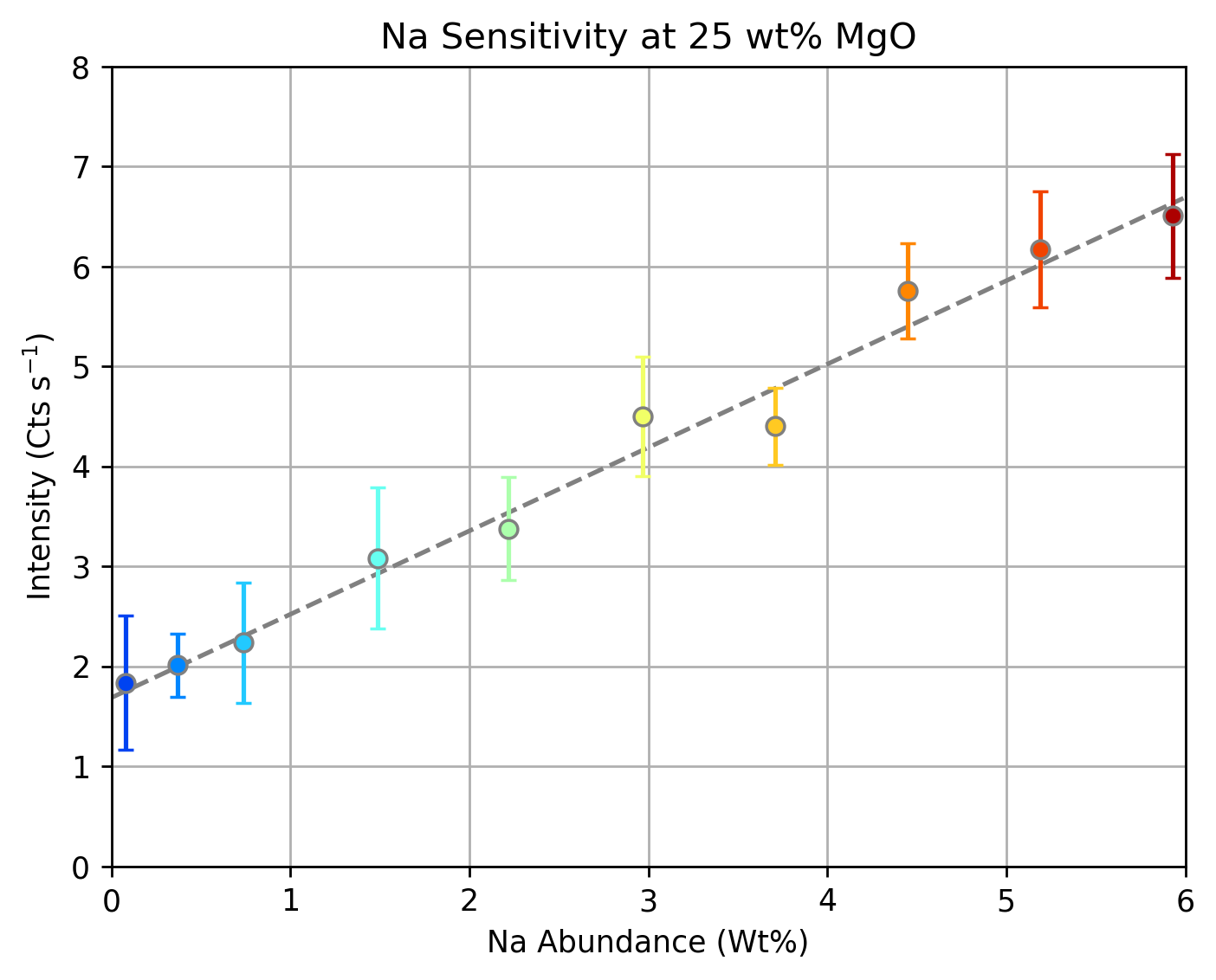
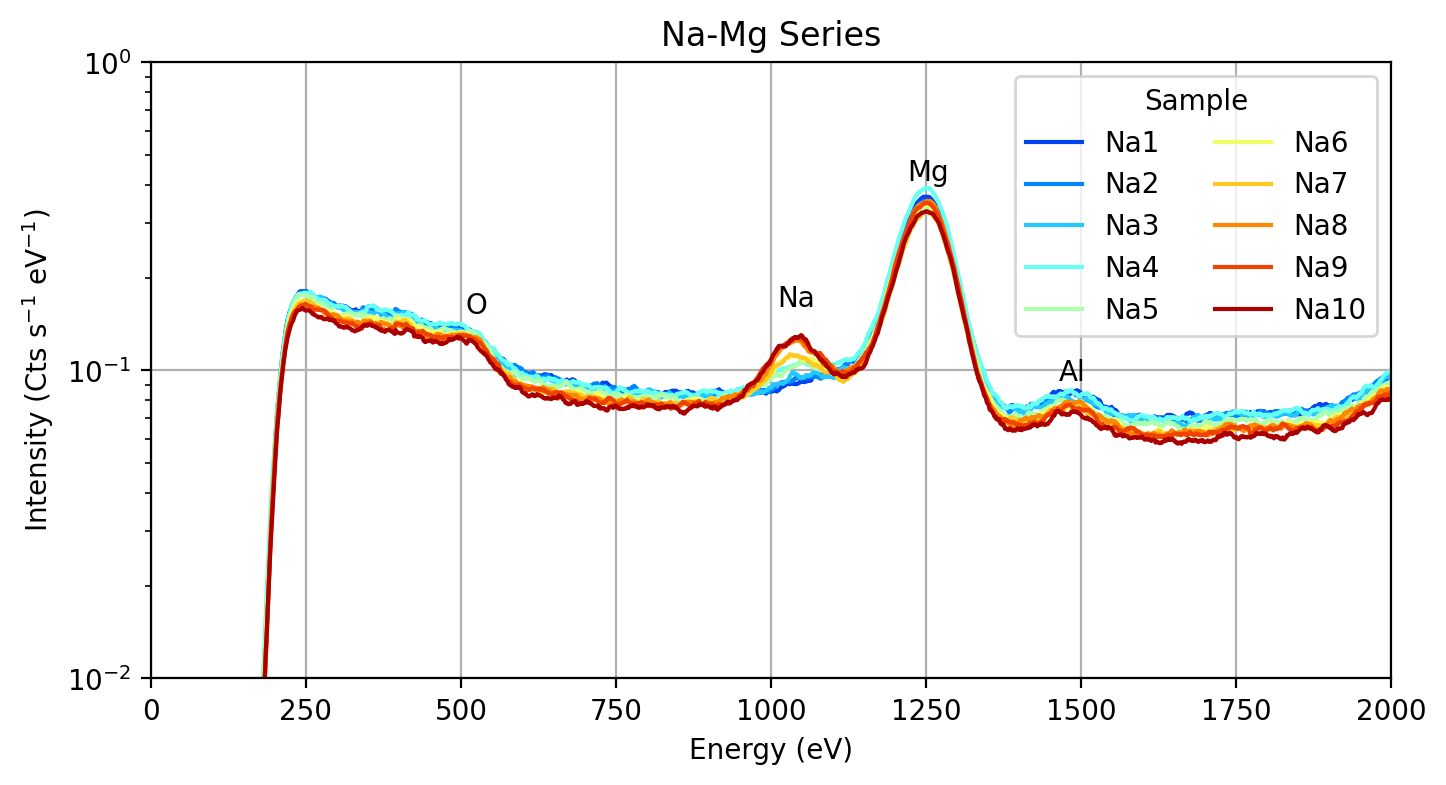
Figures 1 and 2 show some preliminary results from one of the series of samples which focuses on the sensitivity to Na in the presence of a Mg abundance which is similar to those expected within Mercury’s High Magnesium Terrane [7]. Figure 1 shows the calibrated spectra from each of those samples, which cover a Na2O range of 0.1-8 wt%. The Na peak ceases to be resolvable as a peak below ~3 wt% Na2O, however the results of the fitting, shown in Figure 2, suggest that MIXS detectors continue to have sensitivity at this level. For comparison, the Na2O at Mercury is estimated at ~3-8 wt% Na2O [7,8].


Next Steps

Our analyses will continue and, through fitting, will produce similar results for each of the other series of samples. This process will investigate escape peaks, diffraction peaks and enhancement effects via secondary fluorescence. The work will provide the basis for understanding the geochemical sensitivity that MIXS will achieve at Mercury, where detection limits will also be governed by count rate, correlated with solar flare state. At Mercury, the incident solar spectrum is highly variable and differs significantly in spectral shape from the laboratory X-ray source, this dataset will allow for better predictions of elemental sensitivity in data returned from Mercury. Interpretation of these experimental results will therefore inform refinements to the data analysis techniques that will be carried out on the MIXS data, thus providing crucial instrument information which will inform plans for observation campaigns of targets on Mercury’s surface. Maximising the returns of MIXS and BepiColombo will be key to driving our understanding of Mercury for decades to come.

Figure 1 – GREF X-ray spectra (around the peak of the Na K-series) from a series of samples targeting sensitivity to Na, increasing in Na abundance through samples Na1 to Na10.

Figure 2 – Fitted count rate to the Na peak from the spectra in Figure 1 after background subtraction.


References: [1] Benkhoff et al. (2021) Space Sci. Rev., 217:90(8). [2] Bunce et. al. (2020) Space Sci. Rev., 216:126(8). [3] Majewski et al. (2014) Exp. Astron., 37(3). [4] Lecaille et al. (2024) Geologica Belgica Luxemburga International Meeting., Liege. [5] Barraud et al. (2020) JGR Planets., 125(12) [6] Cartwright et al. (in prep.) [7] Peplowski and Stockstill-Cahill (2019) JGR Planets., 124(9). [8] Peplowski et al. (2014) Icarus., 228.

How to cite: Fox, A., Martindale, A., Barry, T., Lindsay, S., Bridges, J., Bunce, E., Cartwright, J., Charlier, B., Hall, G., Lecaille, M., Namur, O., and Tikkanen, T.: Experimental measurements of the elemental sensitivity of MIXS detectors in support of the BepiColombo mission, EPSC-DPS Joint Meeting 2025, Helsinki, Finland, 7–13 Sep 2025, EPSC-DPS2025-1651, https://doi.org/10.5194/epsc-dps2025-1651, 2025.

11:48–11:51
11:51–12:03
|
EPSC-DPS2025-1825
|
On-site presentation
Solmaz Adeli, Joern Helbert, Alessandro Maturilli, Mario D'Amore, Oceane Barraud, Thomas Säuberlich, Joerg Knollenberg, Bernd Ulmer, Karin Bauch, Akin Domac, Christian Wöhler, and Harald Hiesinger and the MERTIS Team

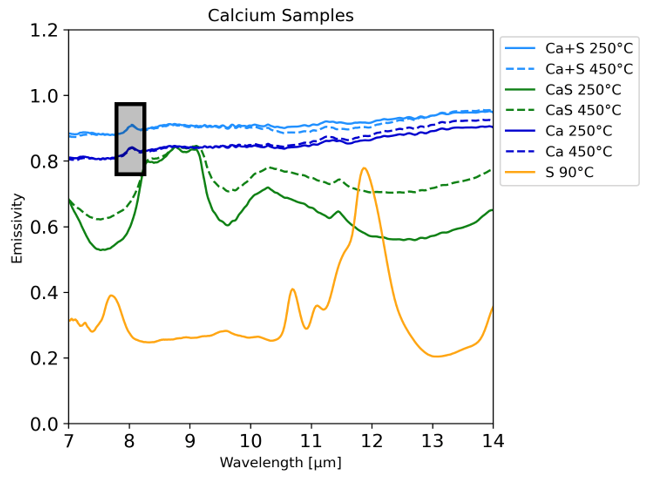
On December 1st, 2024, ESA/JAXA BepiColombo has become the 3rd spacecraft to observe the surface of Mercury, after Mariner 10’s flybys in 1974-75 and MESSENGER orbiting Mercury between 2011 and 2015. BepiColombo’s arrival is planned for November, 2026 - an 8 years journey which includes six flybys to guide the spacecraft into the orbit. The 5th flyby geometry has offered an exceptional and first-time opportunity for the MErcury Radiometer and Thermal Infrared Spectrometer (MERTIS) to observe the planet’s surface through its Space Port. MERTIS is composed of a spectrometer (TIS) operating in the spectral range of 7-14 µm and a radiometer (TIR) with two channels at 8-14 µm and 7-40 µm [1]. The 5th flyby has marked the first time that Mercury’s surface has been observed spectrally resolved in the mid-IR range by a spacecraft [2]. This spectral range allows to better understand Mercury’s surface composition, as it is sensitive to elemental sulfur and sulfides [1], and iron-poor rock-forming minerals that are supposed to be common on Mercury [3].

Our understanding of the surface mineralogy and composition of Mercury is poorly constrained due to the lack of significant absorption features in the visible and near-infrared spectra acquired during the MESSENGER mission. This work focuses on (1) mapping the surface variations observed in the mid-IR range of the MERTIS instrument, within the coverage of the 5th flyby; (2) investigating the correlation with already reported surface features and geological units; (3) studying the global (within the 5th flyby coverage) effect of various surface- and temperature-dependent parameters in the MERTIS mid-IR signal variations.

The BepiColombo 5th flyby allowed observation of the surface for about 36 minutes from a distance of ~37268 km, resulting in a spatial resolution of 26-30 km/px (TIS). The TIS channel recorded 1,410,841 pixels on the surface of Mercury in full spatial resolution data acquisition mode with spectral 1x2 binning (no spatial binning). Deep space observations before and after intercepting with the planet were performed in order to provide a reference for a cold and “no emission” target. Here we see an increase in the measured signal shortly before intercepting with Mercury of less than one percent of the maximum radiance. This effect seems to be wavelength-dependent and reduces with increasing wavelength. This is a clear hint that our data are affected by straylight to a moderate extent. Observation through the space port is the main reason, which comes with some previously unknown parameters, since the space port was not initially planned for science observations. The team is currently investigating this effect.

Data calibration: The data acquisition and processing architecture of the MERTIS instrument is described in detail in [5]. The MERTIS instrument is designed to look at Mercury through its planet port. The space port is meant as a calibration target with „no emission”, observing deep space [1]. The planet port view on MERTIS was characterized in the laboratory in a radiometric calibration campaign under space-like thermal-vacuum conditions [5, 6]. Since launch, MERTIS has had Moon [7] and Venus [8] observation campaigns, for which the instrument had to be reprogrammed to observe the target through the space port, which had not been planned to be used for scientific observations. The current calibration of the 5th flyby data of Mercury is based on the calibration methods developed during the cruise along Venus and the Moon.

Mercury Surface Features: The acquired signal is strongly influenced by the illumination and viewing conditions (i.e., the incidence and emission angle). The surface can have strongly varying temperatures, e.g. impact craters with a very cold rim and a hot rim. Other parameters such as regolith, roughness, grain size, porosity, albedo and composition affect the acquired signal and need to be investigated. In order to better understand the influence of temperature and temperature variations, efforts were made to model the thermal behaviour of the surface and to understand the effect of surface roughness [9, 10].

Impact craters are the best distinguishable features on global scales in the datasets of the 5th flyby. This is most likely due to the strong temperature differences they exhibit compared to their surrounding areas, due to their geometry and/or composition differences. One example is the Tolstoj crater under study in [11]. A larger dataset of crater compositions is investigated in [12]. The impact crater Bashō is another location where we observe anomalies in the mid-IR data. Similarly, MESSENGER visible images show that Bashō crater exhibits both dark and bright material.

A considerable number of bright spots, very bright impact craters, a few hollows and faculae were observed by MASCS/VIRS on-board MESSENGER and are also covered by the 5th flyby MERTIS dataset, providing the opportunity of comparing the two datasets [13]. Laboratory work and comparison with analogue samples are necessary steps to enable us to interpret the composition of the surface of Mercury, for more detail see [14, 15, 16].

The goal of this work is to map the surface variations within the mid-IR MERTIS dataset of the 5th flyby, using the TIS and TIR channels on regional scales, and to provide a comparison with the previously reported surface features, such as bright and dark spots, low-reflectance material, volatile-rich deposits, smooth and rough terrains, impact craters, intercrater plains, hollows and faculae, as well as to search for anomalies which are not detectable in the VIS and NIR spectral range.


[1] Hiesinger et al., Earth and Planetary Sci. L., 2008. [2] Hiesinger et al., LPSC, 2025. [3] Izenberg et al., Icarus, 2014. [4] Denevi et al., Cambridge Uni. Press, 2018 [5] D’Amore, M. et al, Infr. Remote Sens. Instr, 2018. [6] Walter, I., et al., Infrared Remote Sensing and Instr, XXI, 2013. [7] Barraud et al. SPIE 2024. [8] Helbert et al. Nature Comm. 2023. [9] Tenthoff et al., LPSC 2025. [10] Powell et al., LPSC 2025 [11] D’Amore et al., LPSC 2025. [12] Pasckert et al., LPSC 2025. [13] Barraud et al., LPSC 2025. [14] Maturilli et al., LPSC 2025. [15] Van den Neucker et al., LPSC 2025. [16] Morlok et al., LPSC 2025.

How to cite: Adeli, S., Helbert, J., Maturilli, A., D'Amore, M., Barraud, O., Säuberlich, T., Knollenberg, J., Ulmer, B., Bauch, K., Domac, A., Wöhler, C., and Hiesinger, H. and the MERTIS Team: BepiColombo's 5th Flyby: Early MERTIS Observations of Mercury's Surface Variations, EPSC-DPS Joint Meeting 2025, Helsinki, Finland, 7–13 Sep 2025, EPSC-DPS2025-1825, https://doi.org/10.5194/epsc-dps2025-1825, 2025.

12:03–12:15
|
EPSC-DPS2025-1029
|
On-site presentation
Moritz Tenthoff, Kay Wohlfarth, Christian Wöhler, Nico Schmedemann, Karin E. Bauch, Oceane Barraud, Nimisha Verma, Tyler M. Powell, Benjamin T. Greenhagen, Jörg Knollenberg, Mario D‘Amore, Jörn Helbert, Solmaz Adeli, and Harald Hiesinger and the MERTIS Team

Introduction

On December 1st, 2024, the ESA/JAXA spacecraft BepiColombo performed its fifth Mercury swing-by (MSB#5), during which the onboard Mercury Radiometer and Thermal Infrared Spectrometer (MERTIS) [1,2] observed Mercury’s surface for the first time [3]. MERTIS consists of a radiometer (TIR, two channels, 7-14 µm and 7-40 µm) and an imaging spectrometer (TIS, 80 channels, 7-14 µm). A thermal model is required to retrieve emissivity spectra from the TIS data and to address the anisotropic thermal emission caused by surface roughness. Possible approaches are simple semi-analytical roughness models fit to an emission phase function (EPF) [4,5] or fully numerical models. For this work, we use our numerical thermophysical roughness model [6], which has been validated for the lunar surface with Gaofen-4 [7], Diviner [8], and MERTIS [6] data.  We derive essential parameters to tailor the model to Mercury and retrieve spectral emissivities. Performing Principal Component Analysis (PCA) and clustering allows us to gain first insights into Mercury’s emissivity variations.

The planet baffle of MERTIS was blocked during MSB#5 due to BepiColombo’s stacked cruise configuration. The observations were instead taken through the space baffle. While the planet baffle was extensively calibrated before launch [9], the space baffle was initially not intended for target observations. The effects of the baffle complicate data calibration. Hence the results presented here should be considered preliminary. The team is currently investigating and improving the calibration [3].

Thermal Model

Many airless planetary bodies (e.g., Mercury, asteroids, and the Moon) are covered by a rough and highly insulating regolith. Different surface orientations on small spatial scales (mm-cm) lead to significant temperature variations on those scales. Consequently, the observed thermal emission is a superposition of multiple Planck functions. The thermal emission produced by a rough surface can significantly deviate from that of a smooth surface (corresponding to a single Planck function).

We model this subpixel roughness with fractal surfaces [6], including self-scattering and self-heating between the facets. Computing the model for every TIS pixel is computationally expensive. Instead, we evaluate the model for a uniform grid in the parameter space and interpolate the results according to the MSB#5 geometry. We estimate three main model parameters:

  • The bolometric directional-hemispherical albedo Adh, which controls the reflected solar irradiance.
  • The bolometric hemispherical emissivity εh, which controls the total emitted thermal radiance.
  • The surface roughness θ, which alters the directional thermal emission characteristic.

Model Parameter Estimation

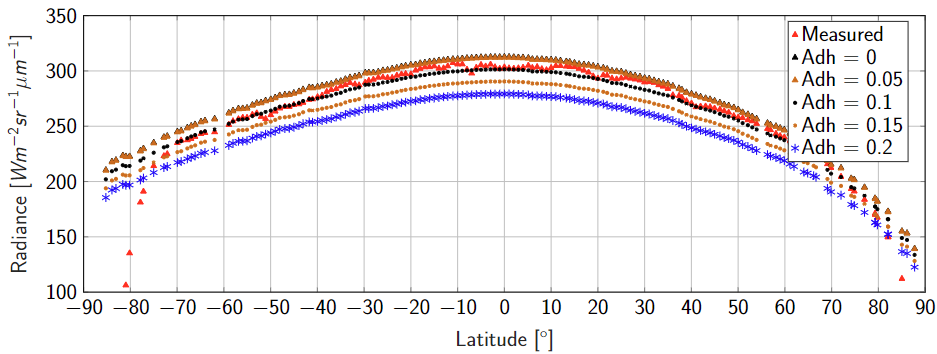
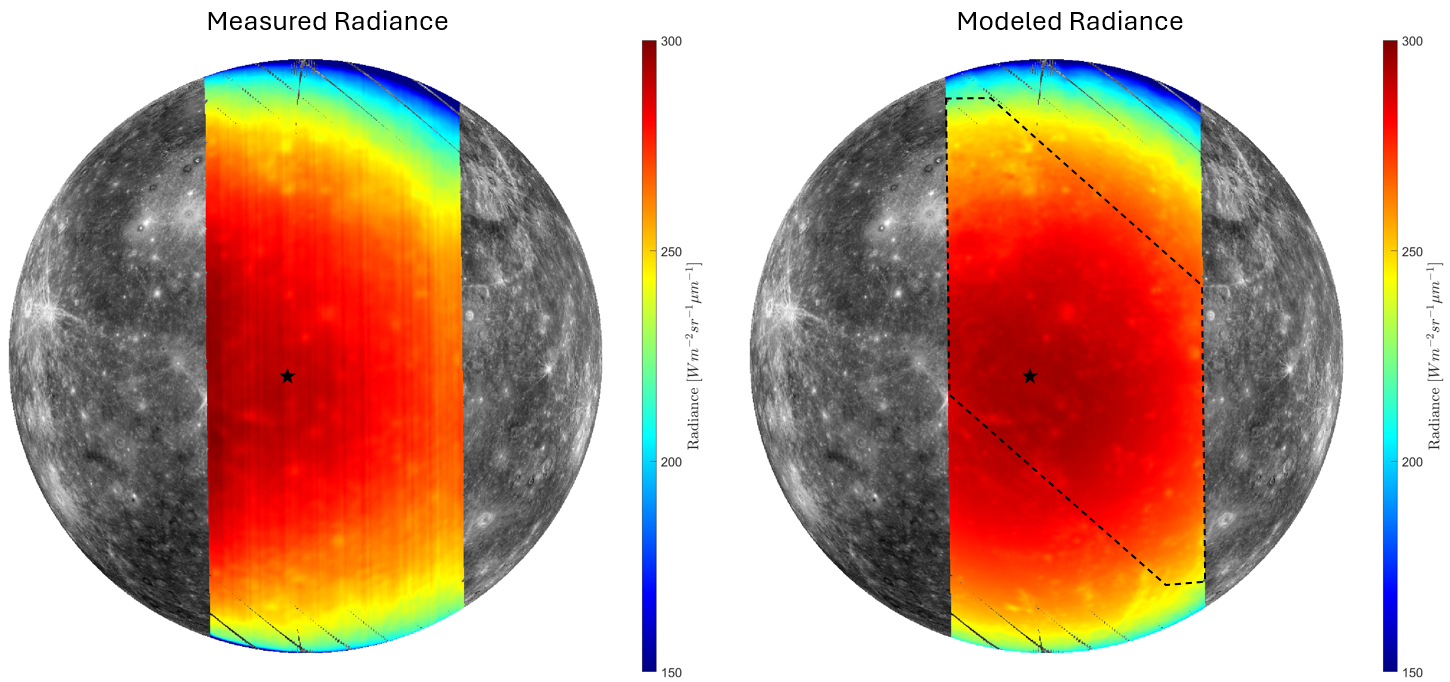
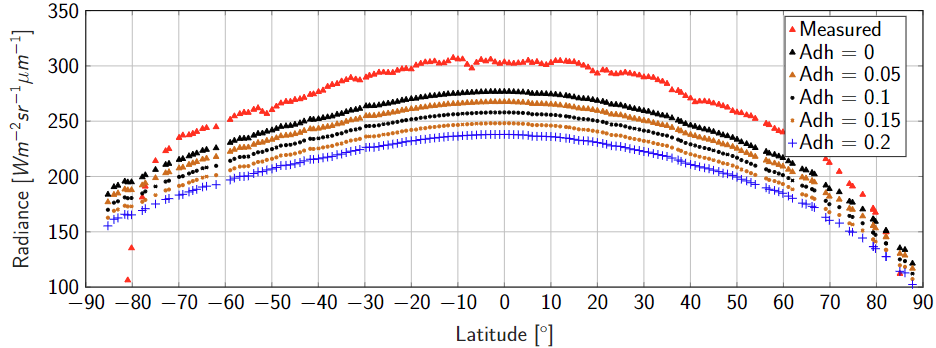
A theoretical analysis of laboratory data suggests that the bolometric emissivity of Mercury’s surface is lower than that of the Moon, which is often assumed to be εh = 0.95 [11]. Figure 1 shows modeled radiances for different global values of the directional-hemispherical albedo compared to the measured radiances. Even when Adh is set to values outside the plausible range, the model does not match the data. By reducing the bolometric emissivity to εh = 0.75 , we can reproduce the measured radiances (see Figure 2).

Figure 1. Radiances at 8.6 µm with εh = 0.95

Figure 2. Radiances at 8.6 µm with  εh = 0.75

We derived individual Adh values for each MERTIS measurement from MDIS data [10] to incorporate spatial albedo variations. Averaging the values yields 0.07.

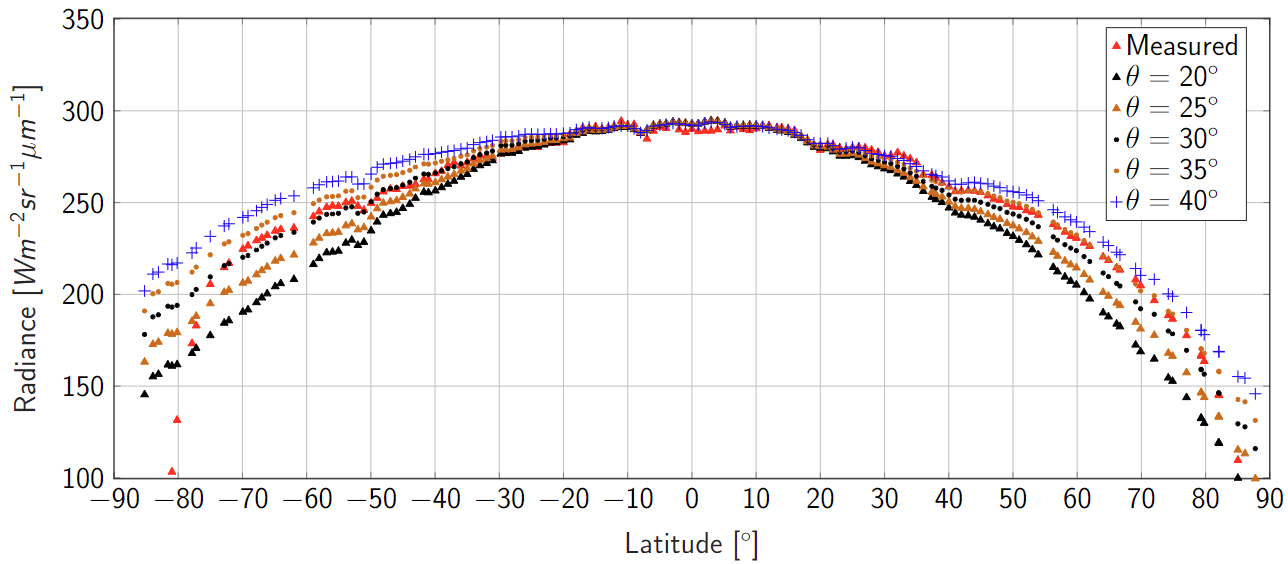
Figure 3 shows the same profile as Figure 1 and 2 for different surface roughness parameter values. Near the subsolar point, a rough model behaves like a smooth model, and the parameter has no effect. However, a smooth model cannot fit the data for increasing latitudes due to thermal beaming [12]. We find that a roughness between 30° and 35° is required to explain the data.

Figure 3. Radiances at 8.6 µm for different roughness values.

Figure 4 shows the radiances gridded to a perspective projection. While the model agrees with the data in the latitudinal direction, there is an offset in the longitudinal direction. However, the highest temperature of a slowly rotating body like Mercury should be centered on the subsolar point and decrease in all directions with increasing incidence angle. This offset is likely caused by the unusual observation conditions. We used a wavelength-independent and pixel-position-dependent fourth-order polynomial fit to correct the radiance scaling without affecting the shape of the spectra.

Figure 4. Radiances at 8.6 µm. The black star marks the subsolar point. The dashed area is investigated in Figure 5.

High-Level Emissivity Analysis

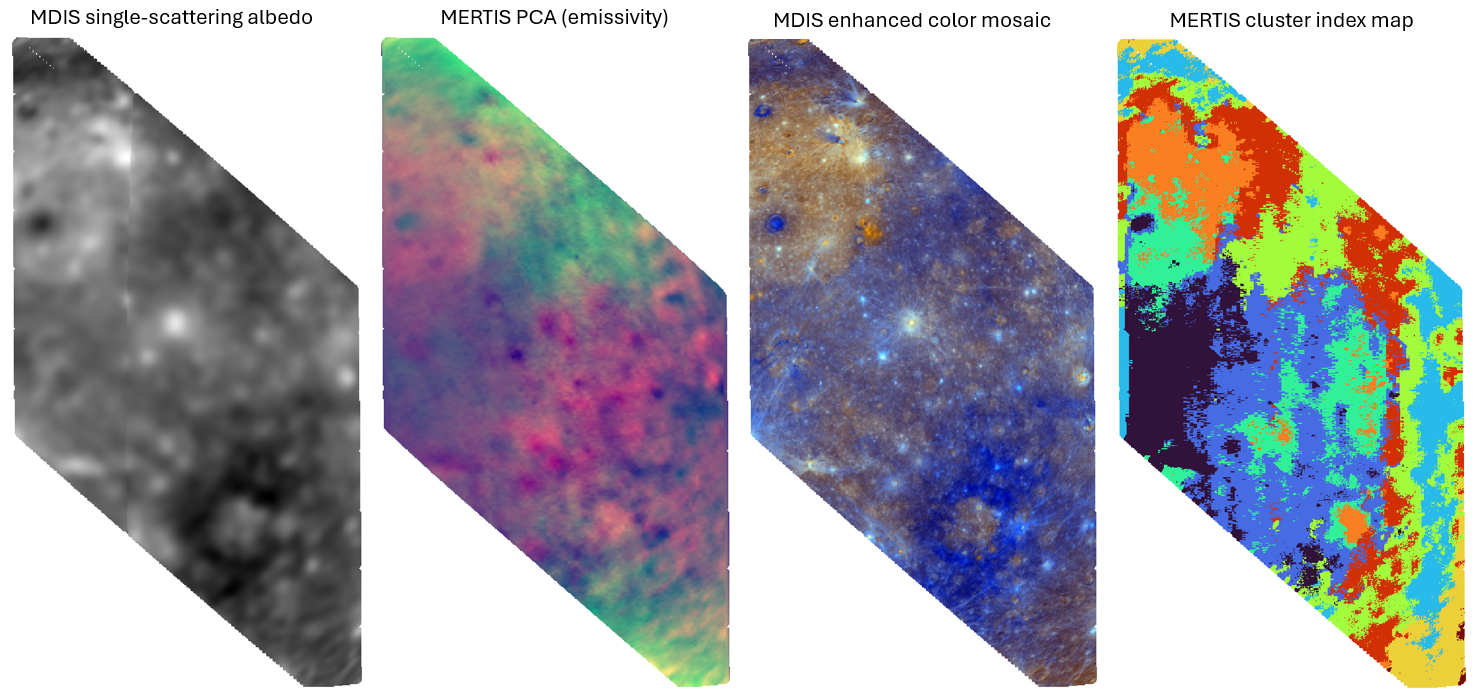
Selecting only frames where all 100 TIS pixels saw Mercury allows us to use Fourier filtering to suppress the striping artefacts. To reduce the dimensionality of the data and visualize spatial variations, we applied a PCA to the retrieved spectral emissivities. We only use the first two components PC1 and PC2. Figure 5 shows a false color image with PC1 in red, PC2 in green and a constant value of 0.5 in blue. Further, we used a self-organizing feature map (SOM) to cluster the features PC1 and PC2 into 9 clusters.

Figure 5. Comparison between maps derived from MDIS [10,13] and MERTIS data. The Caloris basin is visible in the PCA image and cluster index map. Several show up in the emissivity-derived maps. The low reflectance material around Tolstoj vanishes, and the Tolstoj interior is assigned to the same cluster as part of the Caloris interior.

References

[1] Hiesinger, H., et al. 2010, Planet Space Sci. 58 [2] Hiesinger, H., et al. 2020, Space Sci. Rev., 216, 147 [3] Adeli, S., et al., EPSC 2025. [4] Jhoti, E., et al. (2023), TherMoPS IV, 48 [5] Powell, T., et al. 2025, LPSC 2025 [6] Wohlfarth, K., et al., 2023, Astronomy & Astrophysics, 674, A69. [7] Wu, Y., et al. 2021, Geophys. Res. Lett., 48 [8] Bandfield, J. L., et al. 2015, Icarus, 248, 357 [9] D’Amore, M. et al. 2018, Infr. Remote Sens. Instr, 26 897-904 [10] Becker, K. J., et al. Lunar Planet. Sci. Conf. 43. No. 2654. 2012. [11] Wohlfarth, K. 2025, 10.5281/zenodo.14727529 [12] Delbo, M. et al. 2015,AsteroidsIV,107 [13] B. W. Denevi et al., LPSC2016, 1264 (2016).

How to cite: Tenthoff, M., Wohlfarth, K., Wöhler, C., Schmedemann, N., Bauch, K. E., Barraud, O., Verma, N., Powell, T. M., Greenhagen, B. T., Knollenberg, J., D‘Amore, M., Helbert, J., Adeli, S., and Hiesinger, H. and the MERTIS Team: MERTIS Thermal Modeling: Mapping Emissivity Variations from BepiColombo’s Mercury Swingby 5, EPSC-DPS Joint Meeting 2025, Helsinki, Finland, 7–13 Sep 2025, EPSC-DPS2025-1029, https://doi.org/10.5194/epsc-dps2025-1029, 2025.

12:15–12:30
|
EPSC-DPS2025-1078
|
ECP
|
solicited
|
On-site presentation
Autumn Shackelford, Kerri Donaldson Hanna, Jeffrey Gillis-Davis, Zia Rahman, Brittany Cymes, Roy Christoffersen, and Lindsay Keller

Introduction: 

Nanophase iron (npFe) is known to be the cause of increasing optical maturity (spectral reddening, an overall darkening, and decreasing prominence of spectral features) on the Moon and S-type asteroids [e.g., 1, 2], but what happens when Fe is in short supply? How do highly reduced surfaces behave in a harsh space weathering environment? MESSENGER observations of Mercury found no features due to Fe2+ in visible-to-near-infrared (VNIR) spectra  of the surface [e.g., 3], and  other instruments confirmed that the surface contained less than 1% FeO [e.g., 4, 5]. If npFe is an unlikely space weathering product on reduced bodies [6], could carbon play a role in the optical and microstructural maturation of these regoliths?

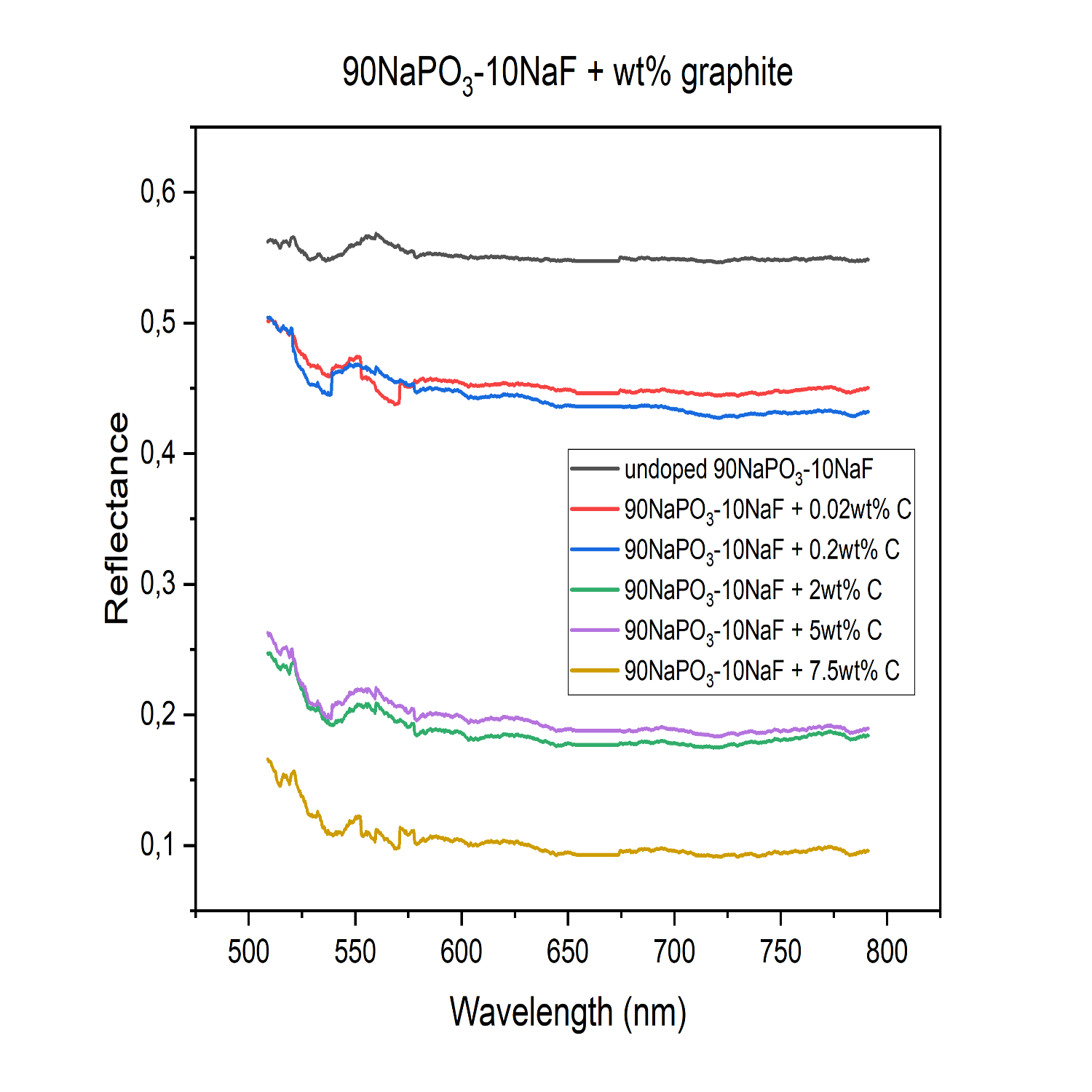
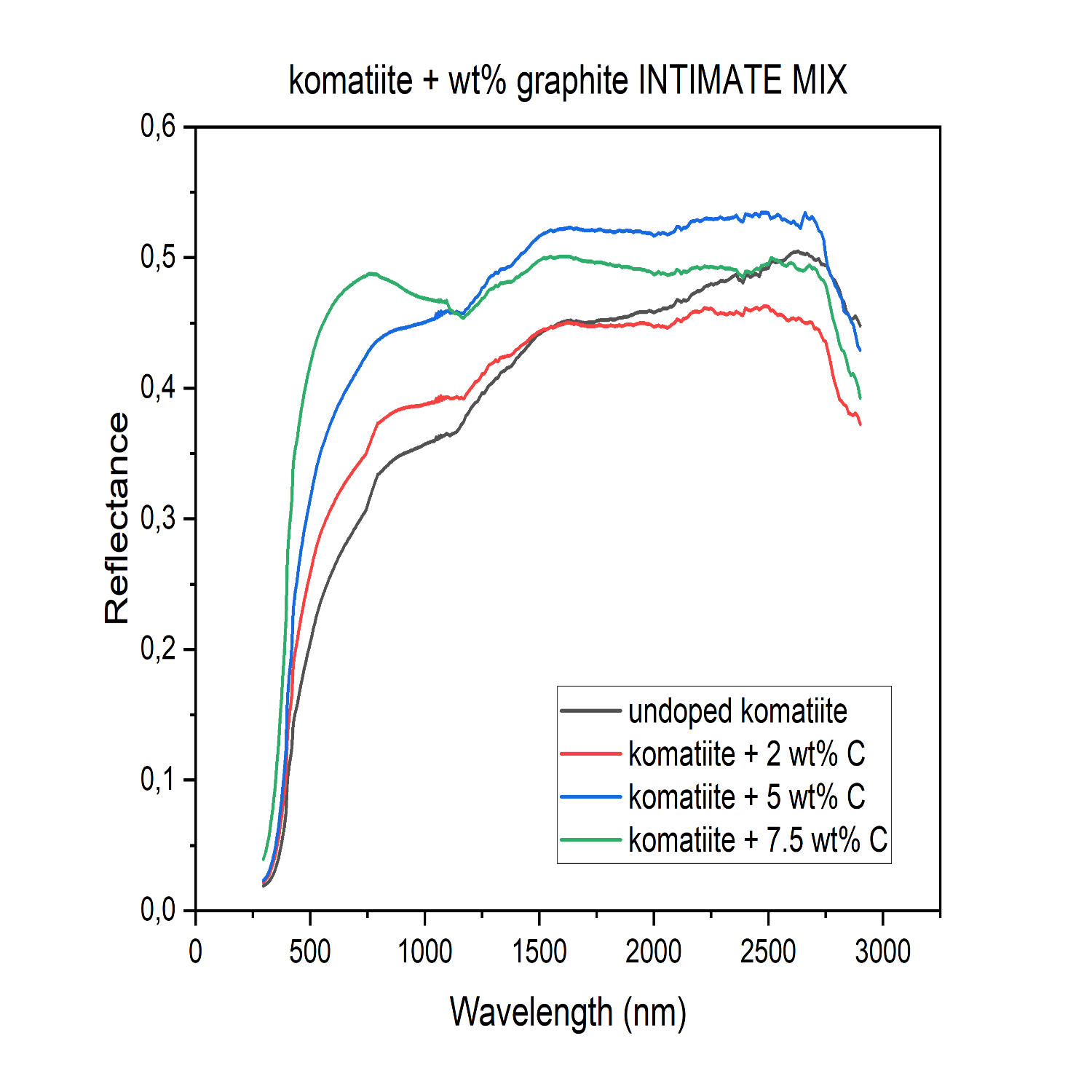
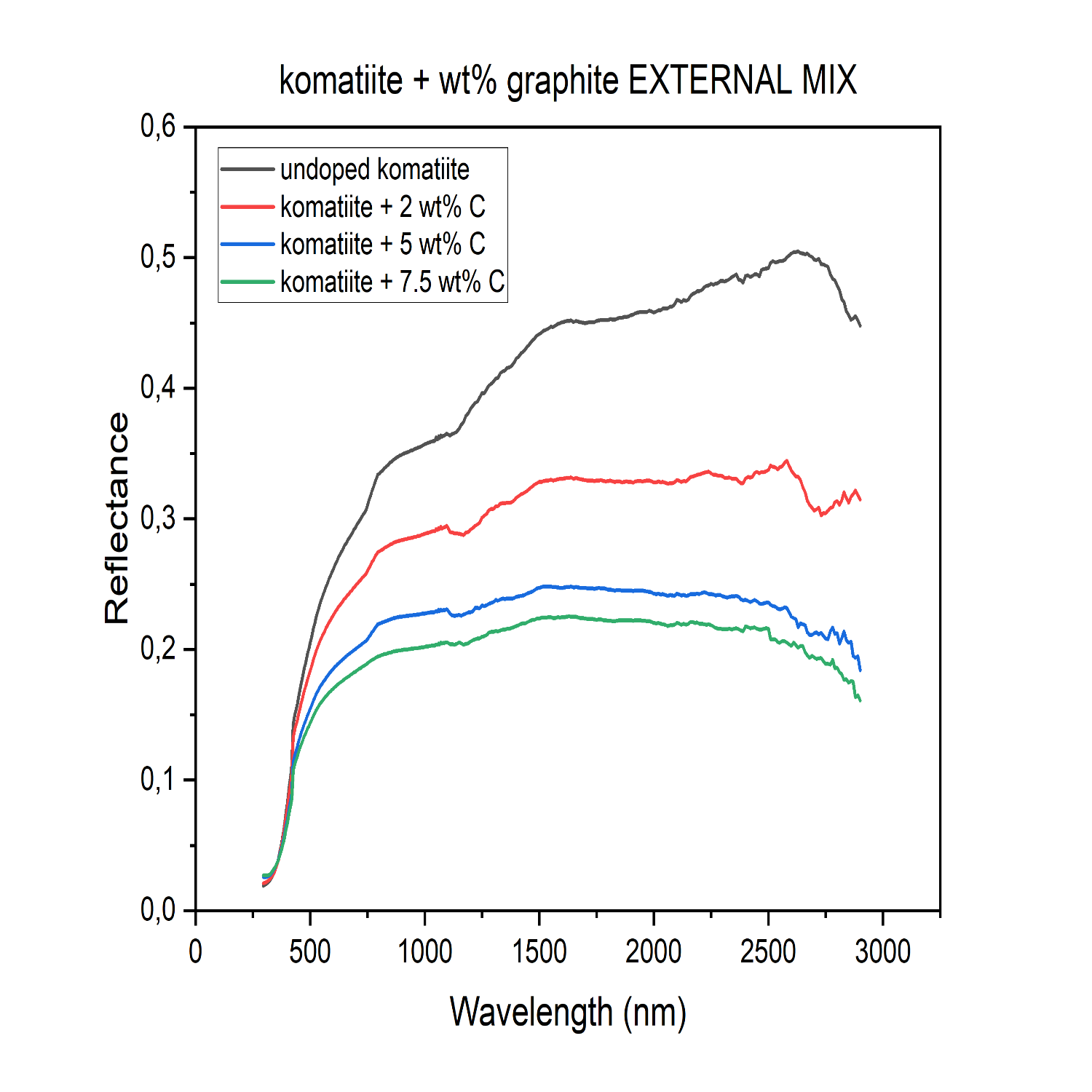
Carbon is hypothesized to be present as a darkening agent on the surface of Mercury and on carbonaceous asteroids [e.g., 7, 8]. On Mercury, this carbon may be exogenic material introduced by impactors [9] or endogenic material excavated from a theorized graphite floatation crust [7]. Carbon may exist in concentrations of up to 5 wt. % both within Mercury’s low reflectance material and throughout carbonaceous asteroids [10, 11]. To better understand the role carbon may play in space weathering on Mercury and C-type asteroids, we utilized pulsed laser irradiation to simulate aspects of micrometeorite bombardment on powders of low- to no-iron silicates mixed with C-bearing opaques.

We present VNIR reflectance spectra from 0.3-2.5 µm, transmission electron microscopy (TEM), and energy dispersive X-ray spectroscopy (EDS) analyses of two select samples from our sample suite.

Samples and Methods: 

Sample Suite. This abstract focuses on two analogs from our sample suite of twelve: (1) San Carlos olivine (SCO, < 75 µm), to use as a testbed/proof of concept for its frequent use in space weathering experiments and (2) a mixture of 95 wt. % synthetic enstatite (ENST+CB, < 80 µm) and 5 wt. % of carbon black (< 1 µm). The enstatite was produced by MatExcel and contains 0.03 wt. % Fe.

Simulated Space Weathering. Two lasers of differing pulse widths (6 ns and 100 ns) were used to simulate aspects of micrometeorite bombardment on our samples using the Washington University Laser Space Weathering Laboratory [12]. Each sample was weathered at ~10-7 torr for the amount of time it takes for San Carlos olivine to reach VNIR optical maturity [7] with this experimental setup.

Results:

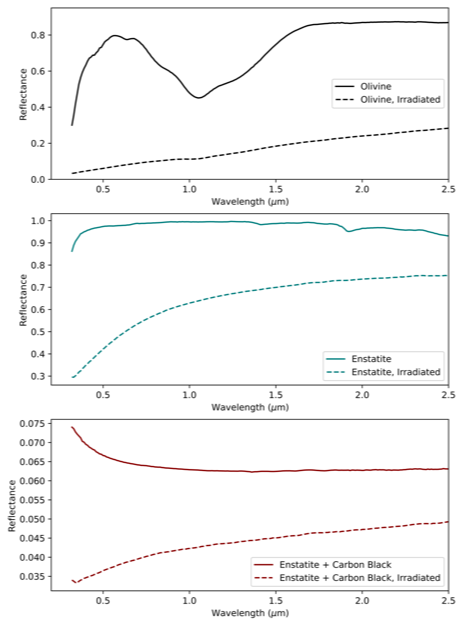
VNIR Spectral Results. VNIR spectra from 0.3-2.5 µm are presented in Figure 1 for our SCO and ENST+CB samples. The pure enstatite sample (ENST) is shown for comparison and to illustrate the lack of 1-µm feature due to Fe2+. As expected, the SCO spectrum darkens (~76% decrease @ 1.05 µm), reddens (~2100% increase over 1.75-2.5 µm), and experiences reduction in prominence of the 1-µm feature. The ENST+CB spectrum darkens (~44% decrease at 0.56 µm) and reddens (~198% increase over 0.4-0.55 µm) as well, though this reddening is more complex. The ENST+CB slope in this region flipped from negative (blue) to positive (red), thereby experiencing a major change in spectral behavior.

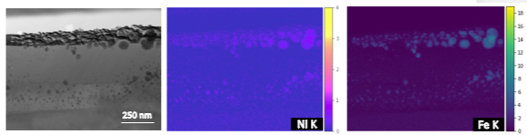
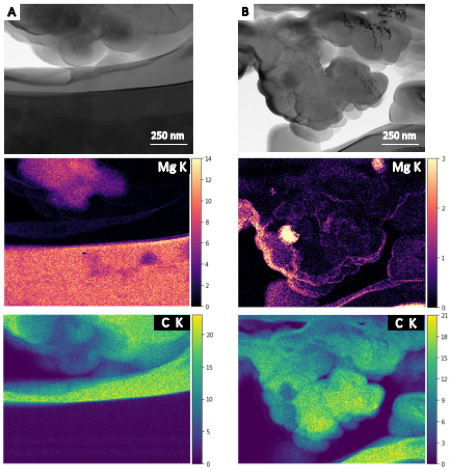
TEM and EDS results. Both TEM and EDS data of the SCO sample show all expected, classical space weathering products. This includes a melt layer ranging from ~0.06-1.78 µm in thickness, metallic npFe of varying sizes (~8-230 nm), and concentrations, vesicles, and regions of olivine recrystallization. EDS and selected area electron diffraction (SAED) patterns show that the npFe present is likely metallic in nature, but that some of the npFe could also include Ni (Figure 2). Analyses of the ENST+CB sample revealed a thin melt layer (~0.03-0.24 µm) with vesicles of varying shapes and sizes dispersed in the thickest portions of the melt. No nanophase opaques are seen. We note that the melt is depleted in Si and enriched in Mg when compared to the bulk. Finally, both carbon black aggregates are noted to have trapped silicate melt splashes as a direct result of the weathering process (Figure 3).

Acknowledgments: FIB preparation and TEM/EDS analysis were performed with and supported by the NASA Facility for Astromaterials Research at Johnson Space Center under NFAR_2024_0028. This work was also directly supported by NASA's Solar System Exploration Research Virtual Institute cooperative agreement notice 80NSSC19M0214 for the Center for Lunar and Asteroid Surface Science (CLASS).

 References: [1] Pieters & Noble (2016) JGRP, 121, 1865-1884. [2] Cudnik (2023) Springer, 943-949. [3] Warell et al. (2006) Icarus, 180, 281-291. [4] Evans et al. (2012), JGRP, 117(E12). [5] Weider et al. (2014), Icarus, 235, 170-186. [6] Nobel & Pieters (2001). [7] Vander Kaaden & McCubbin (2015) JGRP, 120, 195-209. [8] Vilas and Hendrix (2020) AGU 2020. [9] Bruck Syal et al. (2015) Nat. Geo., 8, 352-356. [10] Klima et al. (2018), GRL, 45, 2945-2953. [11] Glavin et al. (2018), Prim. Met. and Ast., 205-271. [12] Gillis-Davis (2022) EPSC 2022, #1193.

Figure 1. SCO (top), ENST (middle), and ENST+CB (bottom) spectra before and after irradiation. Note the different scales for reflectance on the y-axis for each plot. Spectra were taken by Dr. Takahiro Hiroi at RELAB.

Figure 2. TEM image of SCO alongside elemental maps of Ni and Fe over the same region. The spatial correlation of Fe and Ni detections are indicative of possible npFe-Ni alloys.

Figure 3. BF STEM images of both carbon black aggregates present above the enstatite bulk with elemental maps for Mg and C obtained via EDS. Each color bar displays normalized counts for each map to obtain better image contrast. A) Aggregate displaying Mg enrichment. B) Aggregate with distinct melt spherule embedded within, evidenced by the bright Mg-rich deposit and corresponding C-depleted region.

How to cite: Shackelford, A., Donaldson Hanna, K., Gillis-Davis, J., Rahman, Z., Cymes, B., Christoffersen, R., and Keller, L.: Space Weathering Effects on Mercurian Surface Analogs: Insights from Coordinated Spectral, Microstructural, and Chemical Analyses, EPSC-DPS Joint Meeting 2025, Helsinki, Finland, 7–13 Sep 2025, EPSC-DPS2025-1078, https://doi.org/10.5194/epsc-dps2025-1078, 2025.

Orals TUE-OB5: Tue, 9 Sep, 15:00–16:00 | Room Mercury (Veranda 4)

Chairpersons: Anna Milillo, Emma Caminiti, Willi Exner
Mercury's surface 2
15:00–15:12
|
EPSC-DPS2025-1742
|
On-site presentation
Julia Cartwright, Simon Lindsay, Tiff Barry, Graeme Hall, Adam Fox, Adrian Martindale, and Emma Bunce

As the smallest and least explored terrestrial planet, Mercury’s surface composition, partially characterised following the successful NASA MESSENGER mission (2011-2015) (e.g. [1]), represents a geochemical conundrum. As the closest planet to the Sun, Mercury has experienced high temperatures in its past, which should have stripped away any/all volatiles and leaving behind stable refractory elements. However, MESSENGER data revealed unexpected surface compositional variability, with evidence for distinct geologic terranes alongside evidence for unusual regions enriched in moderately volatile elements [2-4]. There were also clues that suggested formation under reducing conditions in the form of low iron concentrations coupled with high sulphur and carbon contents (e.g., [5]), alongside evidence for explosive volcanism [6].  The ESA/JAXA BepiColombo mission, scheduled to arrive at Mercury in 2026, features a suite of instrumentation that has the potential to obtain improved compositional data for the surface. Specifically, the Mercury Imaging X-ray Spectrometer (MIXS), designed and built at the University of Leicester (UoL), has the capability to acquire higher resolution surface elemental composition data (max. achievable resolution ~ 10 km vs. ~ 200 km non-imaging field of view for MESSENGER XRS [1]). MIXS uses X-Ray Fluorescence (XRF) with solar-coronal X-rays and charged particles as the excitation source, which subsequently interact with the Mercurian regolith, releasing X-rays characteristic of elemental compositions [7]. Importantly, the MIXS instrument features new technology including optics and a novel depleted p-channel field effect transistor (DEPFET) detector [7]. To gain the highest science output, ground-truthing the spectra gathered by MIXS with spectra gathered in the lab will allow for the best interpretation of Mercurian terranes and features.

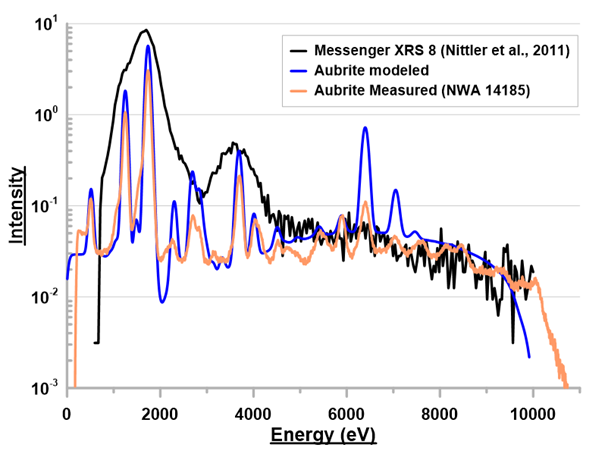
We are using the MIXS Ground Reference Facility (GREF) based at UoL, which is equipped with flight-like MIXS instrumentation including a flight spare DEPFET detector and an X-ray source, where the facility can be run under vacuum and cooled to mimic the space environment [8]. With GREF, we are applying XRF to Mercurian analogues including meteorites (e.g., aubrites, enstatite chondrites), terrestrial samples (e.g., boninites, komatiites) alongside synthesised materials that share properties with Mercury (e.g., the Mercury-Y blind sample [9]), or that can be used to establish measurement sensitivity (e.g., [10]), to establish a sample library to allow for direct comparison with incoming mission data from MIXS. In particular, we are looking to explore the volatile enrichments on the surface, while also establishing the effects of topography and space weathering. Our preliminary results confirm the higher resolution capabilities of MIXS compared to MESSENGER [11] and successful forward modelling of appropriate compositions including aubrite Northwest Africa (NWA) 14185 (Fig. 1). We are continuing to analyse a range of materials, to help establish a sample library for comparison with MIXS data while maximising the science-returns of the BepiColombo mission to understand Mercury’s history.


[1] Solomon S. C., Nittler, L. R., Anderson B. J. (2018) Mercury: The View after MESSENGER (Book). [2] Peplowski P. N. & Stockstill-Cahill, K. (2019) JGR:Planets 124:9:2414-2429. [3] Vander Kaaden K. E., & McCubbin F.M. (2016) GCA 173:246-263. [4] Weider S. Z. et al., (2015) EPSL 416:109-120. [5] Namur O. & Charlier B. (2017) Nature Geoscience 1:9-13. [6] Pegg D. L. et al., (2021) Icarus 365:114510. [7] Bunce E. J. et al., (2020) Space Science Reviews 216:8:126. [8] Cartwright J. A., et al., (In Prep) RASTI. [9] Barraud O. et al., (2025) EPSC. [10] Fox A. J. D. et al., (2025) EPSC. [11] Nittler L. R. et al., (2011) Science 333:6051:1847-1850. [12] Keil K. (2010) Geochemistry 70:4:295-317.

  Figure 1: Plot showing diagnostic X-ray energy vs. Intensity. Example MESSENGER data [11], Aubrite modelled data based on overall compositions [12] on GREF, Aubrite measured for NWA 14185 on GREF.


How to cite: Cartwright, J., Lindsay, S., Barry, T., Hall, G., Fox, A., Martindale, A., and Bunce, E.: Exploring Mercury’s Surface Compositions through the Mercury Imaging X-ray Spectrometer (MIXS) Ground Reference Facility (GREF), EPSC-DPS Joint Meeting 2025, Helsinki, Finland, 7–13 Sep 2025, EPSC-DPS2025-1742, https://doi.org/10.5194/epsc-dps2025-1742, 2025.

15:12–15:24
|
EPSC-DPS2025-1747
|
On-site presentation
Océane Barraud, Iris Weber, Alessandro Maturilli, Kerri Donaldson Hanna, Adrian Martindale, Cristian Carli, Camille Cartier, Aurélie Van den Neucker, Johannes Benkhoff, Jessica Flahaut, Deborah Domingue, Alain Doressoundiram, Christian Renggli, Antti Penttilä, Solmaz Adeli, and Geraint Jones and the Mercury-Y team

Introduction. The ESA-JAXA BepiColombo mission consists of two scientific spacecraft that, after arrival at Mercury, will be placed in separate polar orbits [1, 2]. The Mercury Planetary Orbiter (MPO) will focus on Mercury’s surface while the Mercury Magnetospheric Orbiter (MMO-Mio) will focus on Mercury’s environment and interactions with the Sun. The instruments of most relevance to studying Mercury’s surface are the BepiColombo Laser Altimeter (BELA), the Mercury Radiometer and Thermal Imaging Spectrometer (MERTIS), the Mercury Gamma-Ray and Neutron Spectrometer (MGNS), the Mercury Imaging X-ray Spectrometer (MIXS), and the Spectrometers and Imagers for MPO BepiColombo Integrated Observatory System (SIMBIO-SYS) [3]. Additionally, BepiColombo will study the surface-environment interactions of Mercury with the Hermean Exosphere by Ultraviolet Spectroscopy (PHEBUS) and the Search for Exosphere Refilling and Emitted Neutral Abundances (SERENA) instruments, as well as MIXS [4]. Laboratory studies of Mercury analogs under simulated conditions are crucial for interpreting future remote-sensing data. The Mercury-Y Lab project was launched at the Mercury Laboratory Workshop (MLW) 2024, held at the Institute of Planetary Research of the German Aerospace Center (DLR) in Berlin (09/2024). The project consists of creation of a unique blind analog sample named ‘Mercury-Y’, distributed to MPO research partners, and laboratory analysis of the blind analog under conditions similar to the future observations of the BepiColombo MPO instruments, using representative instrumentation where possible. The primary objective of the various laboratory teams will be to determine the mineralogical and elemental composition alongside the physical properties of the blind sample. Here, we present the protocol for creating Mercury-Y, the laboratories and instrumental teams involved, the objectives of the project and the first results.. 

Blind sample. The Mercury-Y blind sample was designed to replicate the regolith of Mercury, leveraging our current understanding of Mercury’s surface composition derived from NASA MESSENGER observations [e.g., 5] and petrological studies [e.g., 6]. It was developed in collaboration with the Planetary Spectroscopy Laboratory (PSL) at the Institute of Planetary Research, DLR Berlin, and the Infrared and Raman for Interplanetary Spectroscopy (IRIS) laboratory at the Institute for Planetology at the University of Münster, following extensive discussions on the experimental constraints of each laboratory during and following MLW2024. Mercury-Y comprises  a mixture of terrestrial and synthetic components and was delivered to participating teams as a powder. Its bulk chemical composition, including trace and volatile elements, has been characterized at the Service d’Analyse des Roches et des Mineraux (SARM, CRPG, Nancy), and will form the basis of comparison for the project. The composition of the sample will not be revealed to the teams until the completion of the project.

Experimental procedure. The experimental procedure implemented for this project consists of performing laboratory measurements similar to BepiColombo experiments. Visible to near-infrared bi-directional reflectance is measured to simulate SIMBIO-SYS and BELA observations. Thermal infrared emissivity is measured at surface temperatures up to 700 K and under environments simulating near‐surface conditions of airless bodies to simulate MERTIS observations. X-ray fluorescence experiments are performed which mimic the interaction between MIXS, the solar flux and the Mercury surface using the MIXS qualification model detector within a ground reference facility (GREF). Particle back scattering and sputtered ions are measured in-situ after ion bombardment to simulate future observations by SERENA. Finally, high-temperature evaporation processes are simulated and analyzed at Mercury surface conditions, supporting the anticipated measurements from the BepiColombo SERENA and PHEBUS instruments.

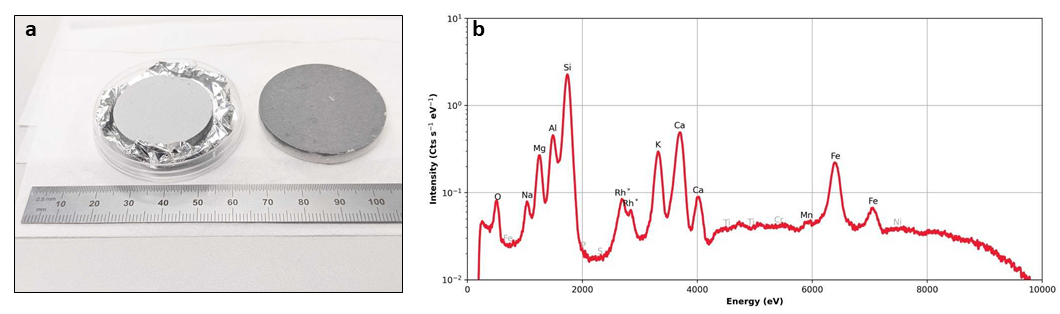
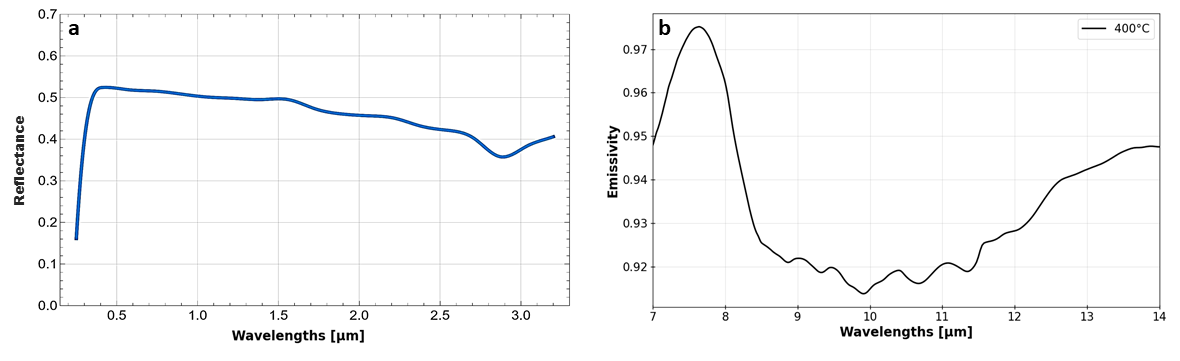
Preliminary results. The primary objective of the measurements is to determine the blind sample's mineralogical and chemical composition, alongside its physical properties. The first reflectance measurements in the SIMBIO-SYS domain do not show significant absorption by mafic minerals such as olivine or pyroxene (Fig 1a). A strong drop in reflectance is observed at shorter wavelengths, with a blue slope in the visible and near-infrared (reflectance decreases as the wavelength increases). At 400°C, the emissivity measurements in the domain of MERTIS exhibits several spectral features, including multiple vibrational bands (Reststrahlen bands) and a highly contrasted emission maximum (Christiansen feature) just before 8 µm (Fig 1b). Preliminary X-ray fluorescence measurements with MIXS-GREF show the presence of Na, Mg, Al, Si, K, Ca and Fe (Fig 2). In comparison to other terrestrial silicate materials analysed previously on MIXS-GREF, Mercury-Y is enriched in Na and Mg, whilst being depleted in Al and Fe. We observed K to be significantly enriched compared to measured Mercury abundances, while S is entirely absent [5].

Figure 1: (a) Visible to near-infrared hemispherical reflectance (i=30°) measured at University of Helsinki in the wavelength domain of SIMBIO-SYS. (b) Emissivity at 400°C measured at PSL-DLR, Berlin in the wavelength domain of MERTIS.

Next steps. The teams are invited to cross-check the measurements in order to refine each other's results. This analysis stage is crucial to optimize the scientific results obtained by each lab/instrumental team. In a second phase, we will distribute a transformed/altered Mercury-Y sample, created to mimic space-weathering processing (e.g. thermal cycles, irradiation) and will run similar laboratory experiments. This further analysis will allow the teams to investigate the effects of space weathering on BepiColombo measurements, and to determine how these processes need to be considered when attempting to characterise Mercury’s surface composition.

Figure 2: (a) Mercury-Y pellets produced and used by the MIXS team for X-ray measurements. The lighter pellet is composed of the Mercury Y sample only while the darker pellet contains PVA-based binder (b) X-ray fluorescence spectrum recorded with the MIXS Ground Reference Facility (10 kV source, i=30°) from a Mercury-Y pressed pellet with a PVA-based binder. Note the Rh peaks are scattered from the X-ray source and do not represent fluorescence from the sample itself.

References: [1] Benkhoff, J., et al. (2021). Space Sci Rev 217(8), 90. [2] Murakami, G., et al. (2020) Space Sci Rev 216, 113. [3] Rothery, D. A., et al. (2020). Space Sci Rev 216, 1-46. [4] Milillo et al 2020, SSR special issue [5] Peplowski, P. N., & Stockstill‐Cahill, K. (2019). JGR: Planets, 124(9), 2414-2429. [6] Namur, O., and Charlier, B. (2017). Nature Geoscience, 10(1), 9-13.

How to cite: Barraud, O., Weber, I., Maturilli, A., Donaldson Hanna, K., Martindale, A., Carli, C., Cartier, C., Van den Neucker, A., Benkhoff, J., Flahaut, J., Domingue, D., Doressoundiram, A., Renggli, C., Penttilä, A., Adeli, S., and Jones, G. and the Mercury-Y team: Mercury-Y: A preparatory laboratory study for BepiColombo mission, EPSC-DPS Joint Meeting 2025, Helsinki, Finland, 7–13 Sep 2025, EPSC-DPS2025-1747, https://doi.org/10.5194/epsc-dps2025-1747, 2025.

15:24–15:36
|
EPSC-DPS2025-631
|
ECP
|
On-site presentation
Anna Irene Landi, Rosario Brunetto, Cateline Lantz, Cristian Carli, Fabrizio Capaccioni, and Giovanni Pratesi

Introduction

Aubrites are a rare group of highly reduced achondrites. They are characterized by very low amounts of FeO in silicates and the presence of sulphides composed of typically lithophile elements, indicating a formation under extremely reducing conditions [1]. Their highly reduced nature and mineralogy suggest that aubrites represent promising analogues of Mercury’s surface rocks [2] based on MESSENGER mission results [3]. Mercury’s surface is affected by space weathering processes that influence its spectral properties increasing the VIS spectral slope (spectral reddening) and suppressing the absorption features in the VIS-NIR spectral range, due to the presence of iron nanoparticles (npFe0) [4]. For a more consistent comparison between the spectral properties of Mercury’s surface and of its potential analogues, the effect of space weathering should be considered. So far, space weathering simulations through ion irradiation on natural highly reduced materials have been conducted on one enstatite chondrite [5]. In this study we investigate ion irradiation spectral effects in the visible-middle infrared region on four aubrites: Norton County, Rantila, Peña Blanca Spring and NWA 14185.


Methods

The aubrite samples were crushed into powder (≤100 μm) and pressed to create pellets for the ion irradiation experiments [e.g. 6,7,8]. To simulate the solar wind irradiation affecting Mercury’s surface, we performed two separate ion irradiation experiments using He+ at 20 keV and C+ at 30 keV. He+ was chosen because helium represents an important component of the solar wind ions. C+ was chosen to simulate the effects of another solar wind species, whose irradiation effects on meteorites have been investigated only in a few studies [9].

The irradiation experiments were conducted under vacuum (P ~ 10-7 mbar) using the SIDONIE electromagnetic isotope separator at the IJCLab, Université Paris-Saclay, Orsay, France. The whole sample surface was irradiated at every fluence step (1 x 10¹⁶, 3 x 10¹⁶, 6 x10¹⁶ and 1 x 10¹⁷ ions/cm2).

The visible (VIS) and near-infrared (NIR) reflectance spectroscopy measurements were conducted in-situ, in vacuum and at room temperature, through the INGMAR (IrradiatioN de Glaces et Météorites Analysées par Réflectance VIS-IR) setup, of IAS (Institut d'Astrophysique Spatiale)- IJCLab, Université Paris-Saclay, Orsay, France. VIS bidirectional reflectance spectra were acquired using a halogen visible source and a Maya2000Pro (Ocean Optics) spectrometer. NIR bidirectional reflectance spectra were acquired using a Fourier Transform spectrometer (Tensor37 Bruker). Middle-infrared (MIR) reflectance spectra were taken ex-situ on fresh samples and on samples after the final irradiation dose at SMIS (Spectroscopy and Microscopy in the Infrared using Synchrotron) beamline of the Synchrotron SOLEIL, France, using an Agilent Cary 670/620 micro-spectrometer equipped with MCT detector.


Preliminary results and discussion

Spectral effects of ion irradiation show a common general trend for all the investigated samples, and it is possible to observe some differences in the spectral effects produced by the two different ions. The main effects in the VIS-NIR range are a general spectral darkening and reddening, progressive with the increasing of irradiation doses. The extent of darkening and reddening varies among the samples, for both He+ and C+ irradiations. A possible explanation is that the samples present some differences in their mineralogy and mineral chemistry. For example, Rantila aubrite presents higher FeO contents (up to 0.3 wt%) in silicates than the other samples (<0.02 wt%) which causes a visible absorption band at ~0.9 μm, while the other samples are almost featureless. Rantila spectra also show a small absorption feature around 0.5 µm attributable to a spin-forbidden Fe2+ absorption in olivine [10], which is present in larger amount in this sample than in the others. These absorption features flatten with increasing irradiation doses, for both He+ and C+. Some absorption features are visible in the 1.9-2.1 μm region due to a minor terrestrial aqueous alteration of the samples. These features do not seem to be affected by irradiation.

In the MIR range we observe a shift in the position of the Christiansen feature (CF) and the Reststrahlen bands (RBs) between the spectra of fresh and irradiated samples. Also, the reflectance intensity of the RBs decreases, and they become less sharp.


Ongoing activities and perspectives

The data analysis is still ongoing, and additional investigations are planned on rock fragments of these aubrites to compare the effects of He⁺ and C⁺ irradiation on powders (pellets) and rocks. Studying the spectral properties of these highly reduced meteorites could support the future investigation of Mercury with the ESA's BepiColombo mission [11]. In particular, the knowledge of the spectral properties of reduced meteorites, in correlation with their mineralogy, could be useful in the interpretation of the future data from the Visible and near-Infrared Hyperspectral Imager (VIHI)/Spectrometer and Imaging for MPO BepiColombo Integrated Observatory SYStem (SIMBIO- SYS) [12] and the Mercury Radiometer and Thermal Infrared Spectrometer (MERTIS) [13] which will map the surface in the 0.4-2 μm and 7–14 μm, respectively.


Acknowledgements

This research is supported by the Italian Space Agency (ASI) under ASI-INAF agreement 2017-47-H.0 (Bepicolombo SIMBIO-SYS) and financed by the Space It Up project funded by the Italian Space Agency, ASI, and the Ministry of University and Research, MUR, under contract n. 2024-5-E.0 – CUP n. I53D24000060005. It has been conducted during and with the support of the Italian national inter-university PhD programme in Space Science and Technology, University of Trento.


References:

[1] Keil K (2010) Chem Erde 70 : 295-317

[2] Wilbur Z E et al. (2022) Meteorit. Planet. Sci. 57: 1387-1420

[3] Nittler L R & Weider S Z (2019) Elements 15: 33-38

[4] Domingue D et al. (2014) Space Sci Rev 181

[5] Vernazza P et al. (2009) Icarus 202 : 477-486

[6] Brunetto R et al. (2014) Icarus 237: 278–292

[7] Lantz C et al. (2017) Icarus 285 : 43–57

[8] Caminiti E et al. (2024) Icarus 420

[9] Fulvio D et al. (2012) A&A 537

[10] Carli C et al. (2018) Meteorit. Planet. Sci. 53: 2228–2242

[11] Benkhoff J et al. (2021) Space Sci Rev 217

[12] Cremonese G et al. (2020) Space Sci Rev 216

[13] Hiesinger H et al. (2020) Space Sci Rev 216

How to cite: Landi, A. I., Brunetto, R., Lantz, C., Carli, C., Capaccioni, F., and Pratesi, G.: Ion irradiation of aubrites: visible to mid-infrared spectroscopic effects of space weathering simulation on Mercury analogues, EPSC-DPS Joint Meeting 2025, Helsinki, Finland, 7–13 Sep 2025, EPSC-DPS2025-631, https://doi.org/10.5194/epsc-dps2025-631, 2025.

15:36–15:48
|
EPSC-DPS2025-1417
|
On-site presentation
Cristian Carli, Francesca Zambon, Federico Carminati, Lorenza Giacomini, Anna Galiano, Matteo Massironi, Fabrizio Capaccioni, Gianrico Filacchione, and Pasquale Palumbo

Introduction

Hollows are peculiar surface features that were highlighted by the MESSENGER mission [e.g. 1]. They are small cavities showing flat-floored and rimless depressions often clustered in fields and relatively bright. They are also associated with a peculiar cyan color within the RGB of the enhanced color mosaic [2]. This color variation mainly indicates a higher reflectance and a bluer slope within the 400-1000nm wavelength range [3]. In literature, few cases have been deeply spectroscopically investigated at the best spatial resolution possible, and only for the hollow field in the Dominici crater was reported a potential absorption around 600-700nm [e.g. 4,5,6] with a subsequent inflection around 1000nm, which could indicate another absorption [5,6]. The putative absorption has been attributed to some sulfides (e.g. CaS, [4]) or with some chloride (e.g. NaCl, [6]). Whereas [5] argues to the possibility of attributing that absorption to rock forming minerals considering transitional elements, different from iron, on mafic silicates.

Here we investigated four different hollow fields widespread on the floor of Eminescu, Hopper, Sander and Warhol Craters, which shows a relatively high 600nm Band Depth parameters [7] and a high reflectance in correspondence of the hollow fields.

Data and Analytical Approach

MDIS 8 color mosaics have been produced with the same process described in [8] at different spatial resolutions taking care of the original image resolution from circa 385m/px up to 1600m/px. Global BDR, LOI and, preliminary, 8 color enhanced color mosaics, together with the best spatial resolution NAC and WAC images for each crater were used for morphological mapping. We used the ad-hoc color mosaics to stretch the enhanced color combination and better highlight the variability within the hollow fields and with respect to the surrounding terrains. Moreover, we investigate the spectral variability within the hollow fields of each crater, defining specific trends with respect to the different surrounding materials.

Preliminary Results

First, we analyzed the two different cases of Warhol and Hopper craters, where we have relatively high (385m/px) and low (1600m/px) color mosaics. We showed that the hollows are principally present on the crater floor, and partially on the exposed bedrock of the central pick, with a higher concentration of hollows around the central pick or on contact with the crater wall (in Figure1 an example for Warhol crater). Crater floors are mainly characterized by smooth material representing plains formed due to the refilling after the impact.

The Enhanced color mosaics of the selected images show a widespread distribution of bright and cyan deposits feeding almost all the crater floor of Warhol and Hopper (see figure1b for Warhol). If we stretched the enhanced color mosaics zooming on regions enriched on hollow fields, we highlighted a color variation emphasizing the fields with respect to the surrounding materials (e.g. Figure1c). We then investigate the spectral variation within different regions of interest (R.O.I.) on the hollow fields (see figure1b) showing that the spectral features are always consistent one to each other (Figure1d), with the presence of the putative band and the inflation towards the infrared. The main variation seems to be the relative reflectance values from 0.10 up to 0.15 at 560nm.

Moreover, if we zoom on specific R.O.I.s we can see how the stretched enhanced color mosaics match with the pixels showing morphological evidence of the hollows. As an example, here, we consider the area (figure2a) consistent with the brown R.O.I. on figure1b. Considering a specific transect that moves from the central area of an isolated hollow/small hollows field and the surrounding halo we can highlight a reduction of the absorptions where the morphological evidence indicating the hollow disappears. Thus suggesting a variation of composition with respect to the material deposited outside the hollows. The change in spectral slope seems to be the last to modify towards reddening and darkening spectra (Figure2b). Isolating the absorption band around 600-700nm shows how spectrally the main contribution of the material characterizing the composition of the hollows seems to involve the 630nm filter (Figure2c), which disappears on spectra outside the hollows, where the apparent absorption is mainly attributable to the 750nm filter.

Implications

The spectral variability within different regions of interest we investigated on Warhol crater, as well as in Hopper crater, and in the ongoing investigation on Eminescu and Sander craters, seems to highlight as the isolated hollows and hollow fields are characterized by the 600-700nm absorption and an inflation towards 1000nm. Stretching the enhanced color mosaics on hollow fields permits to better constrain the regions characterized by these features which match with the morphological counterpart of the hollows. Hollows spectral properties seem to suggest that they are compositionally different from the surrounding, as already shown for Dominici crater, taking also into account that the surrounding terrains on those craters look like to have different spectral properties. Moreover, it seems that a net change is present on the absorptions moving from inside to outside of a specific hollow/hollows field indicating that the halo could have spectral properties different from the hollow itself. This could highlight that the peculiar spectral properties of the hollows could be to assign to the material that characterized the region inside the hollows than those attributed to the halo, maybe revealing the evidence of the rock forming minerals instead of secondary alteration phases (e.g. sulfides or chlorides).

The spatial resolution will play an important role in understanding the possible nature of the material present in the hollows and to understand the hollows formation. Hollows can be considered as one of the most interesting targets for the BepiColombo mission, where we could combine the higher spectral range and the high spatial resolution from the SIMBIO-SYS instrument.

Acknowledgment

This research is funded from the Italian Space Agency (ASI) within SIMBIOS-SYS project under ASI-INAF agreement 2024-18-HH.0.

 References

[1] Blewett et al.(2011) Science 333. [2] Denevi et al.(2011) Science 333.  [3] Blewett et al.(2013) JGR 118. [4] Vilas et al.(2016) GRL 43.[5] Lucchetti et al.(2018) JGR 123. [6] Emran & Stack (2025) Icarus 435. [7] Klima et al.(2018) GRL, 45. [8] Zambon et al.(2022) JGR 127.


How to cite: Carli, C., Zambon, F., Carminati, F., Giacomini, L., Galiano, A., Massironi, M., Capaccioni, F., Filacchione, G., and Palumbo, P.: Comparison of extended hollow fields in Warhol, Hopper, Sander and Eminescu craters, EPSC-DPS Joint Meeting 2025, Helsinki, Finland, 7–13 Sep 2025, EPSC-DPS2025-1417, https://doi.org/10.5194/epsc-dps2025-1417, 2025.

15:48–16:00
|
EPSC-DPS2025-878
|
ECP
|
On-site presentation
Noah Jäggi, Océane Barraud, and Catherine A. Dukes

The formation of hollows on Mercury—small, irregular, depressions often surrounded by brighter halos—has been thought to be driven by the preferential loss of volatile components due to intense solar radiation, micrometeoroid bombardment, and thermal cycling, leaving behind a refractory, spectrally distinct layer. One such process is the decomposition of regolith sulfides under solar wind ion irradiation.

Previous ion irradiation experimental studies on sulfides such as NiS, CuS, CoS, FeS, and MoS have demonstrated the formation of metallic surface layers through cation chemical segregation and preferential sulfur loss [1-5]. Laboratory observations of Fe surface-enhancement with subsequent visual darkening for ion and laser irradiated troilite (FeS)  and recently, pentlandite [(Fe,Ni)9S8], thereby informed the hypothesis that similar process could occur with Mercury-relevant sulfides [e.g., 6, 7].  Instead of FeS, however, Mercury appears depleted in Fe at the surface, and sulfides are expected to contain mostly Mn, Ti, Cr, Mg, and Ca, based on the correlation with sulfur on the planet’s surface as inferred from MESSENGER’s X-Ray Spectrometer (XRS) and Gamma-Ray Spectrometer (GRS)  data [8-10].

To test if sulfides relevant to Mercury darken under ion irradiation, we focus on MgS and CaS, two sulfides that also were proposed as likely hollow-forming material based on visible-to-near-infrared spectral analysis [11]. Unlike their transition-metal counterparts, these sulfides exhibit irradiation-hardening behavior, resisting the formation of a metallic top layer when exposed to solar wind-speed protons and helium ions [12]. This suggests that their response to space weathering differs fundamentally from that of previously studied sulfides, which also impacts how global exospheric models incorporate sputtered sulfur. Notably, our data reveal that MgS and CaS undergo significant brightening under irradiation in not only the visible-to-near-infrared (VNIR), but also the thermal infrared (TIR) spectral range. This optical alteration for stoichiometrically sputtered sulfide species aligns with the observed reflectance properties of hollows’ bright halos on Mercury.

We therefore propose that irradiation-hard sulfides, such as MgS and CaS, could be responsible for the bright spectral signatures surrounding hollows. However, rather than forming metal-rich coatings, these compounds develop radiation-resistant, chemically stable surfaces that enhance reflectance while maintaining their compositional and structural integrity under Mercury’s extreme solar radiation conditions. This mechanism offers a new perspective on hollow bright material formation, emphasizing the role of non-transition-metal sulfides in shaping the planet’s surface evolution.

[1] Feng and Chen (1974), J. Phys. C, 7(5), L75

[2] Coyle et al. (1980), J. Electron Spectrosc. Relat. Phenom., 20(2), 169–182

[3] Loeffler et al. (2008), Icarus, 195(2), 622–629

[4] Christoph et al. (2022), J. Geophys. Res. Planets, 127(5)

[5] Chaves et al. (2025), Meteorit. Planet. Sci., in process

[6] Blewett et al. (2011), Science, 333(6051), 1856–1859

[7] Blewett et al. (2013), J. Geophys. Res. Planets, 118(5), 1013–1032

[8] Nittler et al. (2011), Science, 333(6051), 1847–1850

[9] Weider et al. (2012), J. Geophys. Res. Planets, 117(10), 1–15

[10] Weider et al. (2015), Earth Planet. Sci. Lett., 416, 109–120

[11] Barraud, Besse and Doressoundiram (2023), Sci. Adv., 9(12)

[12] Jäggi et al. (2024), 55 Lunar Planet. Sci. Conf., Abstract #1306

How to cite: Jäggi, N., Barraud, O., and Dukes, C. A.: Radiation-Hard Sulfides as Mercury Hollow Bright Material, EPSC-DPS Joint Meeting 2025, Helsinki, Finland, 7–13 Sep 2025, EPSC-DPS2025-878, https://doi.org/10.5194/epsc-dps2025-878, 2025.

Orals TUE-OB6: Tue, 9 Sep, 16:30–18:00 | Room Mercury (Veranda 4)

Chairpersons: Sébastien Verkercke, Anna Milillo, Rozenn Robidel
Mercury's Exosphere
16:30–16:42
|
EPSC-DPS2025-1695
|
ECP
|
On-site presentation
Azar Arghavanian, Oliver Stenzel, and Martin Hilchenbach

This study introduces an automated method for extracting and tracking geomorphic features on Mercury by leveraging high-resolution Digital Terrain Models (DTMs) generated from MESSENGER’s Mercury Laser Altimeter (MLA) data (Cavanaugh et al., 2007). The DTMs are produced using a robust RANSAC-based region-growing technique, ensuring detailed and accurate terrain representation of Mercurian landscapes (Arghavanian, et al., 2024). Feature identification begins with principal curvature analysis of the DTMs to detect key geomorphic structures such as valleys and ridges (Besl, 1988), (Richards, 2013). To enhance classification accuracy and minimize false positives, particularly in complex volcanic terrains the algorithm integrates morphological parameters (Byrne, et al., 2013), (Du, et al., 2020), including solidity and width-to-length ratios. Cross-sectional profiles are then extracted along local directions of maximum curvature, utilizing an adaptive section length (or ‘bandwidth’) to optimize feature validation. Each cross section undergoes thorough analysis to confirm geomorphic interpretations and refine feature delineation (Arghavanian& Leloglu, 2024). Application of this algorithm to volcanic regions on Mercury demonstrates its efficiency and reliability in planetary geomorphic feature classification, contributing to a deeper understanding of Mercurian surface processes.

References:

Arghavanian A., Stenzel O., Hilchenbach M., 2024, Smooth Hermean surface extraction by region growing from Messenger Laser Altimeter Data, EPSC 2024 conference, Berlin, Germany.

Arghavanian A. & Leloğlu U. M., 2024. Extraction and classification of channels from LiDAR in plains by channel tracking. Environmental Modelling and Software, Volume 171, p. 105838.

Besl P. J., 1988. Surfaces in Range Image Understanding. 1th ed. New York, USA.: Springer.

Byrne P. K., Klimczak C., Williams D. A., Hurwitz D. M., Solomon S. C., James W. Head, Preusker F., Oberst J., 2013, An assemblage of lava flow features on Mercury, Journal Of Geophysical Research: Planets, VOL. 118, 1303–1322, doi:10.1002/jgre.20052.

Cavanaugh J.F. et al. (2007) ‘The Mercury Laser Altimeter Instrument for the MESSENGER Mission’, Space Science Reviews, 131(1), pp. 451–479. Available at: doi.org/10.1007/s11214-007-9273-4.

Du J., Wieczorek M. A., Fa W., 2020, Thickness of lava flows within the northern smooth plains on Mercury as estimated by partially buried craters, Geophysical Research Letters, 10.1029/2020GL090578

Richards, J. A., 2013. Remote Sensing Digital Image Analysis. 5th ed. Canberra, Australia: springer.


How to cite: Arghavanian, A., Stenzel, O., and Hilchenbach, M.: Hermean curvature-based geomorphic feature classification using Laser Altimetry data, EPSC-DPS Joint Meeting 2025, Helsinki, Finland, 7–13 Sep 2025, EPSC-DPS2025-1695, https://doi.org/10.5194/epsc-dps2025-1695, 2025.

16:42–16:54
|
EPSC-DPS2025-458
|
ECP
|
On-site presentation
Paul S. Szabo, Andrew R. Poppe, Shane R. Carberry Mogan, Shahab Fatemi, Andreas Mutzke, Jia Huang, Weijie Sun, and Jiutong Zhao

Solar wind ions that impact Mercury contribute to alteration of its surface and erosion via sputtering [1]. The exact contribution of sputtering to the weathering of Mercury’s surface is, however, still unclear. To provide updated estimates of sputtering as a source for Mercury’s exosphere, we use a combination of two simulation approaches: the Amitis hybrid code and the SDTrimSP-3D ion-surface interaction model [2,3]. In doing so, we first simulate the global interaction of Mercury’s magnetic field with the solar wind to derive energy-resolved precipitation maps (see Figures 1 and 2). These precipitation fluxes are then combined with sputter yields for a regolith-covered surface to calculate sputter flux maps and global sputter source rates. In this work, we specifically consider the sputtering of the refractory elements Ca and Mg, which have been observed by both NASA’s MESSENGER mission and ESA and JAXA’s BepiColombo [4-7]. Due to their strong bonds at the surface, only sputtering and micrometeoroid impact vaporization are candidate processes for releasing these atoms into the exosphere.

Figure 1: Due to Mercury’s magnetic field, ions impact the surface only at specific locations.


Our simulations consider a range of solar-wind upstream parameters, as the variability of Mercury’s space environment affects the flux of ions to the surface significantly. First, we consider average solar wind conditions and find that sputter rates of Ca and Mg are 1-2 orders of magnitude too low to explain MESSENGER observations. This is in line with micrometeoroid models that predict the seasonal dependence of their exospheric sources, and the dawn-centered emission well [8]. Our study suggests that the sputter yields in previous models have been overestimated, and it supports that micrometeoroid impact vaporization dominates refractory exospheres at most times.


Figure 2: Compared to average precipitation conditions (left, dynamic pressure of 9 nPa), the ion flux to the surface under strong CME impacts is vastly increased (right, 428 nPa).


However, under extreme space weather conditions during the impacts of coronal mass ejections (CMEs), we see a significant change of the exospheric regime. The solar wind pressure has been observed to increase by up to around a factor of 50 compared to regular conditions [9]. This has been reported to lead to compression and even vanishing of Mercury’s dayside magnetosphere [10]. As the planet’s dayside surface becomes exposed directly to the solar wind, our simulations show that surface precipitation and sputtering increase by as much as two orders of magnitude (see Figure 2). Under such conditions, sputtering exceeds the source rates for Ca and Mg exospheres from micrometeoroids. We thus infer that a temporary reconfiguration of Mercury’s exosphere occurs during strong CME impacts, especially when the solar wind dynamic pressure reaches more than 100 nPa. This is further underlined by Direct Simulation Monte Carlo (DSMC) simulations of the spatial distribution of atoms in Mercury’s exosphere [11]. Compared to a micrometeoroid-dominated dawn-centered exosphere under average SW conditions [12], we demonstrate the distribution of refractory atoms becomes centered on the dayside due to the vast sputtering increase. The upcoming BepiColombo mission will provide plenty of opportunities to observe such events to better understand how Mercury’s exosphere, surface, and space environment are connected.


References

[1]  P. Wurz, et al., Space Science Reviews 218.3 (2022), 10.

[2]  S. Fatemi, et al., Journal of Physics: Conference Series 837.1 (2017).

[3]  U. Von Toussaint, et al., Physica Scripta,  2017.T170 (2017), 014056.

[4]  M.H. Burger, et al. Icarus 238 (2014), 51.

[5]  A.W. Merkel, et al., Icarus 281 (2017), 46.

[6]  R. Robidel, et al., Journal of Geophysical Research: Planets 128.12 (2023), e2023JE007808.

[7]  Y. Suzuki, et al. Journal of Geophysical Research: Planets 129.10 (2024), e2024JE008524.

[8]  P. Pokorný et al., The Astrophysical Journal 863.1 (2018), 31.

[9]  R. M. Winslow et al., The Astrophysical Journal 889.2 (2020), 184.

[10]  J.A. Slavin, et al., Journal of Geophysical Research: Space Physics 124.8 (2019), 6613.

[11]  S.R. Carberry Mogan, et al.,  Journal of Geophysical Research: Planets 127.11 (2022), e2022JE007294.

[12]  J.-Y. Chaufray, et al., Icarus 384 (2022), 115081.

How to cite: Szabo, P. S., Poppe, A. R., Carberry Mogan, S. R., Fatemi, S., Mutzke, A., Huang, J., Sun, W., and Zhao, J.: Sputtering Contributions to Mercury’s Exosphere During Average and Extreme Solar Wind Conditions, EPSC-DPS Joint Meeting 2025, Helsinki, Finland, 7–13 Sep 2025, EPSC-DPS2025-458, https://doi.org/10.5194/epsc-dps2025-458, 2025.

16:54–17:06
|
EPSC-DPS2025-304
|
ECP
|
On-site presentation
Martina Moroni, Rozenn Robidel, Anna Milillo, Alessandro Mura, Eric Quemerais, Valeria Mangano, Alessandro Aronica, Alessandro Brin, Elisabetta De Angelis, Pier Paolo Di Bartolomeo, Adrian Kazakov, Stefano Massetti, Stefano Orsini, Christina Plainaki, Grace Richards, Rosanna Rispoli, Roberto Sordini, and Mirko Stumpo

Meteoroid bombardment of Mercury’s surface causes seasonal variability in its calcium (Ca) exosphere, as observed by the MESSENGER mission [1, 2]. The observed high-energy Ca source exhibits a dawn enhancement and a distinct dawn–dusk asymmetry, consistent with the directionality of meteoroid impacts. The most likely mechanism generating Mercury’s Ca exosphere involve a combination of processes, including the release of both atomic and molecular surface materials [3].

In this study, we use the exosphere generation model developed at the Institute for Space Astrophysics and Planetology (IAPS) [6] to simulate the 3D spatial distribution of atomic Ca and Ca-bearing molecules produced by the Meteoroid Impact Vaporization (MIV) process. The model includes two distinct populations: a high-energy Ca component, originating from shock-induced, non-equilibrium dissociative ionization and neutralization of Ca+ during the vapor cloud expansion, and a lower energy Ca component, generated through the photo-dissociation of Ca-bearing molecules released by MIV [4,5].

Model parameters, such as the photolysis lifetime of the molecules and the relative abundances of atomic and molecular Ca components involved in the different released processes, play a crucial role in shaping Mercury’s Ca exosphere, but they are still not well constrained by observations.

In order to better understand the mechanisms governing the release and distribution of the Ca exosphere, we compare model simulations with data acquired by the PHEBUS spectrometer (Probing of Hermean Exosphere By Ultraviolet Spectroscopy) onboard ESA-JAXA’s BepiColombo spacecraft, currently in the cruise phase towards its destination. During the first three Mercury flybys, performed in 2021, 2022 and 2023, PHEBUS was able to observe the Ca emissions near closest approach using the two visible channels dedicated to the Ca measurements [7]. The three flybys had similar trajectories: the spacecraft approached from the planet’s nightside, crossing the shadow and reaching the closest approach about 200 km above the surface, then moved to the planet’s dayside. However, during the third flyby, the closest approach was slightly further at 235 km of altitude, and PHEBUS’s lines of sight was pointing southward, in the opposite direction with respect to the first two flybys where it was pointing northward (Fig. 1).

We reconstructed the geometry of the observations for each flyby and simulated the Ca exosphere under those conditions. Then, we derived Ca altitude profiles along the PHEBUS line of sight and compared them with the observational ones. Preliminary results suggest that a high-energy Ca component with a temperature of approximately 50,000 K is consistent with the observed intensities, while the contribution from a low-energy component seems to be negligible. The absence of lower energy component in the PHEBUS Ca observations is consistent with the MESSENGER data. This does not necessarily imply that this component, expected by the surface release modeling after micro-meteoroid impact, does not exist. It could be due to limitations in PHEBUS’s observations.

It should be noted that the constrained set of model parameters offers the opportunity to also investigate the seasonal variability of the Ca source rate and to reconstruct the exospheric seasonal Ca profile along Mercury’s orbit. Our theoretical calculations (Fig. 2) show good agreement with MESSENGER/UVVS data, supporting the interpretation of seasonal effects driven by meteoroid flux variations. During nominal mission, PHEBUS will collect extensive data along Mercury’s orbit, that will be complemented by SERENA-Strofio in situ measurements, so we’ll be monitoring seasonal variations too and these data could be used to compare with the model. This study allows evaluation of the consistency between the modeled and observed Ca distributions, and helps constrain the physical parameters governing exospheric source processes. Our results advance our understanding of the MIV process on Mercury, providing a valuable tool for interpreting data and guiding observational strategies for the ESA/JAXA BepiColombo mission, which will insert into Mercury’s orbit at the end of 2026.

Figure 1: Geometry of PHEBUS observations during the first three flybys of Mercury: spacecraft arrived on the planet's nightside, crossed its shadow and then moved to its dayside

Figure 2: Simulation of seasonal Ca content in Mercury's exosphere due to the meteoroid flux (red line) compared with the observations (blue line) [2] along the orbit, and, hence, True Anomaly Angle (TAA)

References

[1] Burger, M.H., Killen, R.M., McClintock, W.E., Vervack, R.J., Merkel, A.W., Sprague, A.L., Sarantos, M., 2012. “Modeling MESSENGER observations of calcium in Mercury’s exosphere”. J. Geophys J. Res. 117

 [2] Burger, M.H., Killen, R.M., McClintock, W.E., Merkel, A.W., Vervack, R.J., Cassidy, T.A., and Sarantos, M., 2014. “Seasonal variations in Mercury’s dayside calcium exosphere”, Icarus 238, 51–58

[3] Killen, R.M., and Hahn, J.M., 2015. “Impact vaporization as a possible source of Mercury’s calcium exosphere”, Icarus 250, 230-237

[4] Killen, R.M., 2016. “Pathways for energization of Ca in Mercury’s exosphere”, Icarus 268, 32–36.

[5] Moroni, M., Mura, A., Milillo, A., Plainaki, C., Mangano, V., et al., 2023. “Micro-meteoroids impact vaporization as source for Ca and CaO exosphere along Mercury's orbit”, Icarus401, 115616

[6] Mura, A., Milillo, A., Orsini, S., and Massetti, S., 2007. “Numerical and analytical model of Mercury’s exosphere: dependence on surface and external conditions”, Planet. Space Sci. 55, 1569–1583

[7] Robidel, R., Quémerais, E., Chaufray, J. Y., Koutroumpa, D., Leblanc, F., Reberac, A., et al., 2023. “Mercury's exosphere as seen by BepiColombo/PHEBUS visible channels during the first two flybys”, Journal of Geophysical Research: Planets, 128(12)


How to cite: Moroni, M., Robidel, R., Milillo, A., Mura, A., Quemerais, E., Mangano, V., Aronica, A., Brin, A., De Angelis, E., Di Bartolomeo, P. P., Kazakov, A., Massetti, S., Orsini, S., Plainaki, C., Richards, G., Rispoli, R., Sordini, R., and Stumpo, M.:  Modelling of Mercury’s Ca exosphere observed by PHEBUS during the First Three Flybys, EPSC-DPS Joint Meeting 2025, Helsinki, Finland, 7–13 Sep 2025, EPSC-DPS2025-304, https://doi.org/10.5194/epsc-dps2025-304, 2025.

17:06–17:18
|
EPSC-DPS2025-685
|
On-site presentation
Matthew Burger, Rosemary Killen, Ronald Vervack, and Carl Schmidt

Mercury’s escaping atmosphere is known to form an extended, comet-like sodium tail that extends as far as 1500 Mercury radii (RM) from Mercury (Baumgardner et al. 2008, Schmidt et al. 2010). The tail forms due to radiation pressure, a consequence of the resonant scattering of sunlight, the primary sodium emission mechanism at Mercury. Resonant scattering is the process by which photons at wavelengths corresponding to resonant transitions in an atom are absorbed and quickly reemitted. Because incident photons originate from the direction of the Sun and are reemitted isotropically, there is a change in the total momentum of the photons. This momentum is imparted tot he atoms, resulting in a net force directed radially away from the Sun.

The magnitude of radiation acceleration is proportional to the photon scattering coefficient, the so-called g-value, the product of the incident photon flux at the resonant wavelength and the scattering probability per atom (Chamberlain 1961). The Na g-value varies by over an order of magnitude during a Hermean year due Mercury’s changing distance from the Sun and variations in the solar flux at the Doppler-shifted resonance wavelength caused by deep Fraunhofer absorption lines in the solar spectrum. Figure 1 shows the radiation acceleration as functions of velocity (Panel a) and true anomaly angle (TAA, Panel b) for Na, Ca, and Mg at Mercury.

We will explore seasonal variations in the extended Na tail out to 1500 RM for proposed exospheric Na source processes from Mercury such as photon stimulated desorption, micrometeoroid impact vaporization, and ion sputtering. Because of the difficulty of observing the tail from ground-based telescopes, observations have only been made at a small range of true anomaly angles. Our models will result in predictions of the extent of the tail at other true anomalies and suggest methods by which it can be observed.

Figure 1: (a) Radiation acceleration, ar,  for Na (red), Mg (magenta), and Ca (blue) as a function of an atom’s radial velocity relative to the Sun at a solar distance of 0.39 AU. The dotted lines show ±10 km s-1, Mercury’s minimum and maximum radial velocity relative to the Sun. (b) Radiation acceleration of the same species as a function of Mercury’s TAA for an atom at rest relative to Mercury. The scale of the left shows the magnitude of ar near Mercury. The scale on the right shows for both (a) and (b) the ratio of the radiation acceleration to the surface gravitational acceleration. From Burger et al., submitted (2025).

References

Baumgardner, J., Wilson, J., Mendillo, M. 2008. Imaging the sources and full extent of the sodium tail of the planet Mercury. Geophysical Research Letters 35. doi:10.1029/2007GL032337

Burger, M. H., et al., 2025. Effects of the Changing g-Value on Mercury’s Exospheric Structure, Planetary Science Journal, submitted.

Chamberlain, J. W. 1961. Physics of the aurora and airglow. International Geophysics Series, New York: Academic Press, 1961.

Schmidt, C. A., Wilson, J. K., Baumgardner, J., Mendillo, M. 2010. Orbital effects on Mercury’s escaping sodium exosphere. Icarus 207, 9–16. doi:10.1016/j.icarus.2009.10.017


How to cite: Burger, M., Killen, R., Vervack, R., and Schmidt, C.: Models of Seasonal Variations in Mercury’s Extended Sodium Tail Due to Variations in the g-Value, EPSC-DPS Joint Meeting 2025, Helsinki, Finland, 7–13 Sep 2025, EPSC-DPS2025-685, https://doi.org/10.5194/epsc-dps2025-685, 2025.

17:18–17:21
17:21–17:33
|
EPSC-DPS2025-1538
|
On-site presentation
Alessandro Mura, Anna Milillo, Valeria Mangano, Francois Leblanc, Martina Moroni, Christina Plainaki, Stefano Massetti, Stefano Orsini, Mirko Stumpo, and Pierpaolo Dibartolomeo

Observations of Mercury’s sodium exosphere reveal a distinctive annual variability, with two intensity peaks occurring near aphelion and perihelion. We identify a "hot pole" of micrometeoroid impact vaporization (MMIV) as a critical source of sodium, which is active for all Mercury orbit, with prevalence on the dawn side, but whose effect is evident to explain Mercury’s aphelion Sodium peak. On a yearly cycle, the MMIV is more enhanced in two regions, located at 90° and 270° longitude at the equator. Using new data from the Themis telescope, we confirmed this hypothesis by employing a Markov Chain Monte Carlo (MCMC) method to rigorously test the relevance of this asymmetric source. This model accurately captures both the magnitude and the seasonal patterns of Mercury’s Na exosphere. The results highlight the combined effect of Mercury’s rotation and orbital position in modulating sodium source and loss processes, explaining the observed dawn-side enhancements. Additionally, the model underscores the necessity of a persistent sodium supply on the nightside, potentially driven by plasma interactions or micrometeoroid precipitation, while also shedding light on the still-puzzling dusk-side sodium increases observed by MESSENGER during its inbound passes.

Figure: Yearly-averaged MMIV precipitation onto the surface of Mercury (from Mura et al., 2023 https://doi.org/10.1016/j.icarus.2023.115441). The two regions at 90 and 270 of longitudes are "hot poles" of MMIV precipitation.

How to cite: Mura, A., Milillo, A., Mangano, V., Leblanc, F., Moroni, M., Plainaki, C., Massetti, S., Orsini, S., Stumpo, M., and Dibartolomeo, P.: The effect of asymmetrical MMIV flux on the yearly variability of Mercury's Sodium exosphere, EPSC-DPS Joint Meeting 2025, Helsinki, Finland, 7–13 Sep 2025, EPSC-DPS2025-1538, https://doi.org/10.5194/epsc-dps2025-1538, 2025.

17:33–17:45
|
EPSC-DPS2025-759
|
ECP
|
On-site presentation
Valentin Steichen, Stefano Livi, François Leblanc, and Jared Schroeder

The Strofio neutral mass spectrometer aboard the BepiColombo Mercury Planetary Orbiter (MPO) will deliver unprecedented in situ mass-resolved measurements of Mercury’s exosphere. Designed to detect neutral atoms and molecules with high mass resolution via time-of-flight analysis (m/Δm ≥ 60), Strofio enables identification of exospheric constituents as the spacecraft traverses low-altitude polar orbits. Despite lacking intrinsic energy resolution, Strofio offers valuable directional sensitivity through its collimated field of view, spacecraft-relative velocity, and TOF measurements. These allow partial reconstruction of the particles’ distribution function. However, interpreting the resulting signals to infer exospheric source distributions requires a dedicated modeling framework that accounts for the ballistic, collisionless nature of Mercury’s exosphere and the instrument’s measurement geometry.

This work presents a signal inversion framework developed to translate Strofio’s detection count rates into surface production properties, including source location, emission mechanisms, and relative contribution of physical processes. The method is based on a Liouville Algorithm (LA), which propagates virtual particles backward in time from the point of detection through Mercury’s gravitational field to the planetary surface. Liouville’s theorem ensures that phase space density is conserved along these trajectories, allowing the surface source distribution to be mapped to the detector location. By integrating over the instrument’s known field of view, the algorithm calculates the expected count rate for a given surface emission model.

To support global exospheric context, the Exospheric Global Model or EGM (Leblanc et al., 2017) – a 3D Forward Monte Carlo model – is also included in the framework. EGM simulates large ensembles of particles launched from the surface, tracking their trajectories under gravity and/or optional forces. It is particularly useful for modeling multi-hop transport and determining steady-state surface coverage for volatile species. The LA model and EGM are used in a hybrid configuration where the FMC estimates the steady-state distribution of re-emitted particles, and the LA predicts the resulting Strofio signal. This combined approach ensures physical self-consistency and computational efficiency.

Importantly, the framework incorporates Strofio’s exact detection geometry and TOF characteristics. The instrument’s collimation angle, sensitivity function, and mass resolution are included in the integration to faithfully simulate the expected signal. Loss processes such as photoionization or detector dead time can also be included in the signal mapping, ensuring realistic comparison with observed data.

In summary, this framework enables Strofio to fulfill its science goals by linking count rates in time-of-flight spectra to the physical and spatial properties of Mercury’s surface sources. By combining Liouville-based inversion with targeted forward simulations and instrument-specific integration, the model transforms directional data into actionable scientific insight.

How to cite: Steichen, V., Livi, S., Leblanc, F., and Schroeder, J.:  Decoding Neutral Emission Mechanisms in Mercury’s Exosphere from STROFIO Mass Spectra, EPSC-DPS Joint Meeting 2025, Helsinki, Finland, 7–13 Sep 2025, EPSC-DPS2025-759, https://doi.org/10.5194/epsc-dps2025-759, 2025.

17:45–18:00
|
EPSC-DPS2025-1292
|
solicited
|
On-site presentation
Go Murakami and Geraint Jones

The ESA-JAXA joint mission BepiColombo is still on the track to Mercury. The two spacecraft for BepiColombo, Mio (Mercury Magnetospheric Orbiter: MMO) and Mercury Planetary Orbiter (MPO), are combined with MMO Sun Shield (MOSIF) and Mercury Transfer Module (MTM) during the cruise phase. BepiColombo will arrive at Mercury in November 2026, and it has 8-years cruise with the heliocentric distance range of 0.3-1.2 AU. The long cruise phase also includes 9 planetary flybys: once at the Earth, twice at Venus, and 6 times at Mercury. On 8 January 2025 we completed the last (6th) Mercury flyby successfully. Even before arrival, we already obtained fruitful science data from Mercury during the Mercury flybys. We performed science observations with almost all the instruments onboard Mio and successfully obtained comprehensive data of Mercury’s magnetosphere such as magnetic fields, plasma particles, and waves. Here we present the overview and initial results of the science observations during the Mercury flybys.

How to cite: Murakami, G. and Jones, G.: Overview and initial results of BepiColombo Mercury flybys, EPSC-DPS Joint Meeting 2025, Helsinki, Finland, 7–13 Sep 2025, EPSC-DPS2025-1292, https://doi.org/10.5194/epsc-dps2025-1292, 2025.

Orals WED-OB2: Wed, 10 Sep, 09:30–10:30 | Room Mercury (Veranda 4)

Chairpersons: Riku Jarvinen, Norbert Krupp, Geraint Jones
Mercury's Magnetosphere
09:30–09:42
|
EPSC-DPS2025-1795
|
ECP
|
On-site presentation
Liam Edwards, Emilia Kilpua, Rami Vainio, Manuel Grande, David Lawrence, Sae Aizawa, Arto Lehtolainen, and Eero Esko

Mercury hosts a dynamic and highly variable magnetosphere shaped by its weak intrinsic magnetic field and the intense pressure of the solar wind. Previous observations from spacecraft sent to the planet have provided key insights into Mercury’s magnetospheric structure and energetic particle populations, revealing transient and highly variable energetic electron enhancements within the planet’s magnetosphere. We present BepiColombo/SIXS observations of energetic electron populations in Mercury’s magnetosphere during the spacecraft’s first three flybys of the planet. Although no such populations were observed during the first flyby, strong energetic electron signatures were observed during the second and third flybys. We also present energetic electron and proton observations during the fourth and sixth flybys showing strong planetary shielding and magnetic mirroring effects during SEP events. Additionally, we present the highest time resolution energy spectra (> 70 keV) produced at Mercury. These observations are further discussed in the context of previous observations (e.g. MESSENGER).

How to cite: Edwards, L., Kilpua, E., Vainio, R., Grande, M., Lawrence, D., Aizawa, S., Lehtolainen, A., and Esko, E.: Energetic Particle Observations During BepiColombo’s Mercury Flybys, EPSC-DPS Joint Meeting 2025, Helsinki, Finland, 7–13 Sep 2025, EPSC-DPS2025-1795, https://doi.org/10.5194/epsc-dps2025-1795, 2025.

09:42–09:54
|
EPSC-DPS2025-334
|
On-site presentation
Lina Hadid and the MSA-MIA-MEA/MPPE-LEP, MPO-MAG and MGF

On 8 January 2025, BepiColombo performed its sixth and final Mercury gravity assist, following a unique trajectory during cruise from the night-side southern hemisphere to the day-side northern hemisphere, crossing the cusp region at altitudes as low as ~295 km. This high-latitude, low-altitude path provided an unprecedented opportunity to investigate Mercury’s inner magnetosphere dynamics. Despite limitations due to the spacecraft’s cruise-mode configuration, the magnetometer (MPO-MAG; Heyner et al., 2021) and the Mercury Plasma Particle Experiment (MPPE; Saito et al., 2021), particularly the Mass Spectrum Analyzer (MSA; Delcourt et al., 2016) and Mercury Ion Analyzer (MIA), acquired valuable ion measurements.

We present new observations of cold planetary ions (Na⁺/Mg⁺ and K⁺/Ca⁺, down to ~10 eV/e) and a potential detection of additional species such as Si⁺ in the central plasma sheet. Energetic H⁺ ions (~10 keV/e) were also detected and are consistent with a ring current configuration, as supported by backward-traced test particle simulations.

Most notably, we report the first evidence of sporadic ion injections into Mercury’s polar regions. Dispersed H⁺ signatures (>1 keV/e) suggest injections of solar wind ions from the night-side magnetotail, while heavy ion dispersions indicate localized planetary ion injections and bounce motion near the planet. These results highlight dynamic processes, possibly substorm-like activity, shaping Mercury’s plasma environment.

How to cite: Hadid, L. and the MSA-MIA-MEA/MPPE-LEP, MPO-MAG and MGF: Planetary ion species and sporadic plasma sheet ion injections observed during BepiColombo’s sixth Mercury flyby, EPSC-DPS Joint Meeting 2025, Helsinki, Finland, 7–13 Sep 2025, EPSC-DPS2025-334, https://doi.org/10.5194/epsc-dps2025-334, 2025.

09:54–10:06
|
EPSC-DPS2025-1442
|
On-site presentation
Nicolas André and the MEA-MPPE Team

On 8 January 2025, the ESA/JAXA BepiColombo mission flew by Mercury for the sixth time at an altitude of 295 km. The spacecraft took on a unique route through Mercury’s magnetic and particle environment, crossing the equator opposite the Sun on Mercury’s night side before flying over the planet’s north pole. During eclipse, in the cold shadow of the planet, as well as above the northern pole the spacecraft passed through regions where charged particles precipitate from the planet’s magnetic tail and from the solar wind towards its surface. We will detail the original electron observations obtained by the Mercury Electron Analyzer during Mercury’s sixth flyby, and compare and contrast them with electron observations obtained during previous BepiColombo flybys. All together, these new observations will provide new insights into the diversity of structures observed in these regions and the underlying mechanisms responsible for their formation and dynamics.

How to cite: André, N. and the MEA-MPPE Team: Observations from the Mercury Electron Analyzer onboard BepiColombo during its sixth Mercury flyby  , EPSC-DPS Joint Meeting 2025, Helsinki, Finland, 7–13 Sep 2025, EPSC-DPS2025-1442, https://doi.org/10.5194/epsc-dps2025-1442, 2025.

10:06–10:18
|
EPSC-DPS2025-692
|
ECP
|
On-site presentation
Willi Exner, Daniel Teubenbacher, Rozenn Robidel, and Norbert Krupp

Mercury's environment is populated with a tenuous exosphere consisting mostly of sodium. After ionization by solar radiation, these sodium ions take peculiar paths through the magnetosphere; being trapped along dipolar magnetic field lines, re-impacting on the surface, or being lost downstream.
Using the global 3D hybrid model AIKEF, we will investigate the effect of different interplanetary magnetic field (IMF) directions onto the ion's pathways through the magnetosphere. These model cases are then compared to BepiColombo plasma observations made along the swingbys 12346, aiding the magnetometer observations in the determination of the upstream IMF direction cases.

How to cite: Exner, W., Teubenbacher, D., Robidel, R., and Krupp, N.: Sodium Ion Distribution in Mercury's Magnetosphere as seen from MSB12346, EPSC-DPS Joint Meeting 2025, Helsinki, Finland, 7–13 Sep 2025, EPSC-DPS2025-692, https://doi.org/10.5194/epsc-dps2025-692, 2025.

10:18–10:30
|
EPSC-DPS2025-1088
|
On-site presentation
Xianzhe Jia and Changkun Li

MESSEGER observations at Mercury have uncovered a highly dynamic magnetosphere, primarily driven by magnetic reconnection between the IMF and the planet’s intrinsic field. Frequent reconnection at Mercury’s dayside magnetopause efficiently couples the solar wind to the magnetosphere, resulting in the acceleration and heating of solar wind particles as they enter the magnetosphere. In this study, we present findings from global coupled fluid-kinetic simulations of Mercury’s magnetosphere (Li et al., 2024, JGR), focusing on the dynamics in the cusp region. These simulations utilize the MHD-AEPIC (MHD with Adaptively Embedded PIC) model, conducted with varying solar wind and IMF conditions. Our results reveal frequent occurrences of filamentary structures in the cusp region, marked by significant reductions in magnetic field strength and notable increases in plasma density and pressure. These features closely resemble those of the so-called “cusp filaments” observed by MESSENGER (e.g., Poh et al., 2016, JGR). By tracking their evolution in our simulations, we demonstrate that cusp filaments essentially represent the high-latitude extensions of flux transfer events (FTEs). Additionally, we examine the spatial distribution and variability of solar wind proton precipitation onto the planetary surface through the cusps, which is crucial for understanding surface weathering and exosphere generation at Mercury. Our simulations indicate global precipitation rates ranging from 0.7 to 2.5×1025 particles per second, consistent with MESSENGER observations, and these rates increase with decreasing solar wind Mach number and IMF clock angle. Moreover, we observe a notable dawn-dusk asymmetry in proton precipitation patterns, with enhanced dawnside precipitation, aligning with asymmetries predicted in magnetopause reconnection occurrences by previous MHD-AEPIC simulations.

How to cite: Jia, X. and Li, C.: Dynamics in Mercury’s magnetospheric cusps: New insights from global coupled fluid-kinetic simulations, EPSC-DPS Joint Meeting 2025, Helsinki, Finland, 7–13 Sep 2025, EPSC-DPS2025-1088, https://doi.org/10.5194/epsc-dps2025-1088, 2025.

Posters: Thu, 11 Sep, 18:00–19:30 | Finlandia Hall foyer

Display time: Thu, 11 Sep, 08:30–19:30
Chairpersons: Sébastien Verkercke, Geraint Jones, Johannes Benkhoff
F46
|
EPSC-DPS2025-161
|
On-site presentation
Giuseppe Mitri and Camilla Cioria

Mercury’s highly reducing formation environment has profoundly influenced its internal structure and long-term evolution, setting it apart from the other terrestrial planets. Unlike Earth, Venus, or Mars—characterized by olivine-rich mantles and sulfur-enriched metallic cores—Mercury likely possesses a silicon-enriched metallic core and a mantle rich in pyroxenes. These distinctive properties result from early planetary differentiation under extremely low oxygen fugacities, estimated to lie between 2.6 and 7.3 log units below the iron-wüstite (IW) buffer. Such conditions promote silicon partitioning into the core and stabilize pyroxene phases in the silicate mantle. The primary objective of this study is to investigate how mantle composition—through its control on viscosity—affects heat extraction from the deep interior and governs the timing and extent of inner core solidification.

We developed a coupled numerical model that self-consistently simulates the thermal evolution of Mercury’s mantle and core. The mantle model solves conservation equations for mass, momentum, and energy in a two-dimensional Cartesian geometry using a finite-difference method. A non-Newtonian rheology based on dislocation creep is implemented, with flow laws derived from experimental data for dry peridotite and orthopyroxene (as a proxy for pyroxenitic material). We explored a wide parameter space of pyroxenite content (0–40 wt%) and mantle thickness (300–500 km). The core model, based on an Fe–Si alloy (9 wt% Si in the liquid, 3.8 wt% in the solid), follows an analytical formulation describing the core’s thermal, density, and phases’ stability evolution, including latent heat and gravitational energy release during inner core crystallization.

Our results demonstrate that the rheological properties of a pyroxene-rich mantle play a critical role in Mercury’s interior evolution. Increased pyroxenite content reduces mantle viscosity, enabling vigorous and long-lasting convection. This enhances heat extraction from the core and favours the progressive growth of a solid inner core over geological timescales. Conversely, a more viscous, peridotite-dominated mantle suppresses convection earlier in planetary history.

To evaluate the plausibility of the modelled scenarios, we compute the time evolution of Mercury’s normalized moment of inertia, constrained by MESSENGER gravity and rotation data. These data support the presence of a partially molten core, and a mantle mechanically decoupled from a solid inner core.

These findings have implications for the origin and persistence of Mercury’s magnetic field. A long-lived outer liquid core may sustain dynamo activity. Moreover, the model-derived histories of radial contraction and internal temperature evolution are consistent with observed tectonic features.

How to cite: Mitri, G. and Cioria, C.: Core and Mantle Evolution of a Reduced Mercury, EPSC-DPS Joint Meeting 2025, Helsinki, Finland, 7–13 Sep 2025, EPSC-DPS2025-161, https://doi.org/10.5194/epsc-dps2025-161, 2025.

F47
|
EPSC-DPS2025-1761
|
ECP
|
On-site presentation
Alessandro Pisello, Maximiliano Fastelli, Enrico Scricciolo, Gabriele Scognamiglio, Marco Baroni, Alessandro Musu, Paola Comodi, and Diego Perugini

Introduction: 

Volcanic and magmatic processes shaped the surfaces and contributed to the mineral diversity of Mercury. Beyond the ubiquitous presence of effusive products (smooth plains) explosive volcanism is suggested by the presence of depressions surrounded by high-reflectance halos, interpreted as eruptive centers, as well as calderas and vents linked to impact structures or faults  [1]. BepiColombo hosts SIMBIO-SYS and MERTIS, two instruments that will characterize the surface of Mercury with different methodologies:
SIMBIO-SYS (Spectrometer and Imagers for MPO BepiColombo Integrated Observatory System) is a system for imaging and spectroscopic analysis. Its goals are to study surface geology, volcanism, tectonics, age, composition, and geophysics. One of the systems of SIMBIO-SYS is the Visible Infrared Hyperspectral Imager Channel (VIHI), which performs hyperspectral imaging to map the planet's mineralogical composition in the Visible and Near Infrared (VNIR) range [2].
MERTIS (MErcury Radiometer and Thermal Infrared Spectrometer) aims to provide detailed mineralogical information about Mercury’s surface by globally mapping spectral emittance with high spectral resolution. Operating in the 7-14 µm wavelength range with high spectral resolution, MERTIS can detect key surface features like the Christiansen feature (CF), Reststrahlen bands (RB), and Transparency features (TF) [3].

The interpretation of spectral data from these instruments needs to be based on the spectral response of the reference material. This is complicated by factors such as mineral composition, elemental abundance, temperature, surface roughness, and particle size, which all contribute to spectral response. This study aims to explore the VNIR and MIR spectral response with the goal of building a comprehensive database of Mercury-like silicate glasses to support future spectral interpretations of Mercury's surface, where volcaniclastic materials are thought to be abundant.


NVP

NVP_Na

NVP_Mg

SiO2

58.09

55.89

53.85

TiO2

0.98

0.90

0.90

Al2O3

15.54

15.11

12.44

 FeO

2.93

3.36

3.34

MgO

16.82

13.80

22.76

CaO

5.04

4.36

6.35

Na2O

0.30

6.35

0.16

K2O

0.32

0.22

0.19

Table 1: The compositions of three starting materials prepared for this study, taken from [4].

Methods:

Material preparation: Three compositions resembling that of the Northern Volcanic Plains (NVP) on Mercury were chosen: an iron-poor potassium-rich composition resembling the composition of NVP [4] the same one with an addition of Na (NVP_Na), and another with an addition of Mg (NVP_Mg) (Table 1). From these compositions, glasses were reproduced  following the procedure illustrated in [6]. Glasses were ground and sieved into grain size fractions: 0–25 µm, 25–38 µm, 38–63 µm, 63–106 µm, 106–150 µm. From these, also Gaussian-like distributions of powders were produced, characterized by mean values of 30, 80, and 120 µm, and standard deviations of 20 and 40 µm.

Spectral Analyses: Spectroscopic analysis was performed using a FT-IR apparatus consists of a Bruker Invenio-X spectrometer coupled with Harrick Praying Mantis™ for Diffuse Reflectance Infrared Fourier Transform Spectroscopy (DRIFTS). Samples were measured in atmosphere and corrected to a background measured with a mirror. To focus on SIMBIO-SYS and MERTIS spectral range, we present the spectra in the wavelength ranges 0.4-2µm  and 7 to 14 µm.

Results and perspectives:

VNIR: the spectral shape of all samples is characterized by a generally positive slope and a prominent absorption at ca 1.1 µm, and a second, very weak, absorption at ca. 1.9 µm. These features are the usual ones observed for silicate glasses [5] and are linked to the presence of Fe-O bonds, which are not detectable in iron-free samples.

MIR: shape of spectra in this spectral range is influenced by both chemical and granulometric characteristics. First, it is linked to the connectivity rate of the silicate structure consisting of tetrahedral units T, primarily Si, Al, and Ti, namely by the amount of bridging oxygens (BO). Moreover, the vibrations in T-O bonds occur at different wavelengths depending on the number of BO between two Si-tetrahedra (BO) and therefore on the amount of Si, Al and Ti present in the structure [6]. In our set of spectra, local maxima at 10 µm detectable for all spectra can be correlated to T-O bonds and can be assigned to RB feature. All spectra show a local negative peak at ∼8 μm that can be recognized as the CF, a local minimum which appears on both amorphous and crystalline materials, and that is often used as a diagnostic feature for igneous products.  Moreover, the presence of fine material produces the presence of TF at ca. 12 μm, occurring when a large surface/volume ratio determines a larger ratio of scattered/absorbed light. Only the spectra related to the finest products show such a feature, reasonably, in our set of spectra.

All these spectra will be made available on the SSDC-ASI portal of the PVRG group [7, https://www.ssdc.asi.it/rockspectra/], and the use of these spectra as reference material will be pivotal for the interpretation with data acquired by the instrument onboard the BepiColombo mission such as SIMBIO-SYS and MERTIS. Ongoing parametrization and analyses on these data will also provide models for the identification of putatively unknown igneous materials on Mercury.

References:

[1] https://doi.org/10.1002/jgre.20075

[2] https://doi.org/10.1007/s11214-020-00704-8

[3] https://doi.org/10.1007/s11214-020-00732-4

[4] https://doi.org/10.1002/2015JE004792

[5] https://doi.org/10.1016/j.icarus.2021.114801

[6] https://doi.org/10.1016/j.icarus.2022.115222

[7] https://doi.org/10.5194/epsc2022-539

Additional Information: 

 We acknowledge ASI-UniPG agreement 2019-2-HH.0. Part of this work was supported by the Ministero dell’Istruzione dell’Università e della Ricerca (MUR) through the program “Dipartimenti di Eccellenza 2023-2027” (Grant SUPER-C).

How to cite: Pisello, A., Fastelli, M., Scricciolo, E., Scognamiglio, G., Baroni, M., Musu, A., Comodi, P., and Perugini, D.: Spectroscopy (VNIR-MIR) of lab-made silicate glasses as analogues for volcaniclastic materials on Mercury: insights on chemical composition and grain size, EPSC-DPS Joint Meeting 2025, Helsinki, Finland, 7–13 Sep 2025, EPSC-DPS2025-1761, https://doi.org/10.5194/epsc-dps2025-1761, 2025.

F48
|
EPSC-DPS2025-664
|
On-site presentation
Andreas Morlok, Pasckert Jan Hendrik, Schmedemann Nico, Weber Iris, Reitze Maximilian, Heyer Thomas, Wohlfarth Kay, Bauch Karin, Tenthoff Moritz, Renggli Christian, Klemme Stephan, Hiesinger Harald, Wöhler Christian, and Adeli Solmaz

Introduction: 

The MERTIS (MErcury Radiometer and Thermal Infrared Spectrometer) is a mid-infrared imaging instrument onboard the BepiColombo ESA/JAXA mission to Mercury expected to arrive in 2026. Part of the instrument suite is MERTIS, the Thermal Infrared spectrometer (TIS), covering the wavelength range from 7 to 14 µm, which will map the mineralogy of the surface of Mercury [1,2].

MERTIS provided the first thermal infrared data of the hermean surface from a spacecraft after Mariner 10 [3], since it was among the few instruments used during the 5th flyby at Mercury. Owing to the distance of nearly 40000 km during the flyby, the pixel footprint is relatively large (~30 km), but already allows distinguishing surface details.

The main challenge even with the first batch of spectra is to obtain quantitative mineralogical information from the vast amount of data. The standard methods of quantitative mineralogical data analysis are unmixing routines. However, for the accurate modal mineralogy, these routines but are time-intensive and require additional inputs [e.g., 4]. Band ratios are a powerful alternative to obtain a fast first impression of the surface mineralogy and perform mapping.

Techniques: 

The characteristic bands of minerals are difficult to identify in mixtures as expected for surface regolith owing to overlapping features and additional physical effects (e.g., temperature). Our goal is to find easy to identify bands in complex mineral mixtures.

In the first step to identify such band ratios, 28 synthetic mixtures with exactly defined modal mineralogy were used [5,6]. We used only the spectra of the finest size fraction (0-25µm), which is probably the dominant grain size on the hermean surface [2]. We computed emissivity spectra from our reflectance spectra using Kirchhoffs‘ law [7]. While this is a simplified approach, future studies will take the directional hemispherical laboratory setup into account.

In order to avoid absolute spectral intensities, we modelled band ratios between features, where the integrated area of two bands is divided. MERTIS spectra consist of 80 channels, binned by a factor of 2.

Using a Python code, ,we calculated all possible ratio combinations for the spectra of all mixtures – starting with bands consisting of one channel, to bands with a width of 40 channels. The results are 28 arrays with all possible band ratio intensities for each spectrum.

To relate these ratios with mineralogical composition, all the band ratios for a given synthetic mixture were correlated with the known modal mineralogy for 6 phases of this mixture (Glass, Forsterite, Diopside, Plagioclase, Enstatite and Quartz). Thus, we identified the band ratios with the strongest correlations to a given mineral phase (Table 1). 

Data Processing:

We used  Python to develop routines for data processing. Open-source package we used were Pandas, NumPy, SciPy, and Matplotlib [8-11].

Results: For all six phases, remarkably high correlations r = 0.89 – 0.99 were found (r=correlation coefficient). Table 1 presents the wavelength ranges for the two bands of the highest correlations of each mineral phase.

Summary and Outlook:

We have identified characteristic band ratios based on synthetic laboratory spectra for the use on hermean surface spectra. In the following step, we will apply these ratios to create mineral maps of the hermean surface using the processed MERTIS emissivity spectra of the 5th flyby.

Acknowledgments:  MPR, JHP, MPR, IW, AM, KEB, and JHP were funded by DLR grant number 50 QW 2201 A. KW and MT were partially funded by DLR grant number 50 QW 2201 B.


References: [1] Benkhoff J. et al. (2010) Planetary and Space Science 58, 2-20 [2] Hiesinger H. et al. (2020) Space Science Reviews, 216, 1-37, 115498 [3] Chase, S. C. (1976) Icarus 28, 565-578 [4] Bauch K.E. et al. (2023) LPSC 54, 2247 [5] Morlok A. et al.  (2024) Icarus 425, 116078 [6] Morlok A. et al. (2023) Icarus 396 [7] King, P. et al. (2004) In: Mineral, Assoc. of can. Short Course Ser. 33. Min. Ass. of Canada, Ottawa, 93-133 [8] McKinney, W. (2010) Proceedings 9th Python Sci. Conf. 56-61 [9] Harris et al.  (2020) Nature 585,357-362 [10] Virtanen, P. (2020) Nature Methods 17, 261-272 [11] Hunter, J.D. (2007) Computing in Sci. & Eng. 9, 90-95


Phase

r

BAND 1

BAND 2

ID 158 Glass

0.89

8.49-10.41

8.84-10.59

ID 249 Forsterite

0.97

7.96-8.84

7.53-9.19

ID 22 Diopside

0.96

9.19-12.08

7.18-9.63

ID 28 Plagioclase

0.94

12.16-12.86

12.78-13.83

ID 53 Enstatite

0.98

7.18-12.43

7.18-13.83

ID 13 Quartz

0.99

7.18-8.31

7.35-8.40

Table 1: Band pairs BAND 1 and BAND 2 (range of each band in µm) of the highest correlations. r = corre-lation coefficient. ID = database identification number.

Figure 1: Comparison of laboratory spectra. For presentation purposes we show the data in reflectance. The light gray and pink shaded areas: range for the two bands having the highest correlation with the given mineral phase (Table 1). ID = database identification number


How to cite: Morlok, A., Jan Hendrik, P., Nico, S., Iris, W., Maximilian, R., Thomas, H., Kay, W., Karin, B., Moritz, T., Christian, R., Stephan, K., Harald, H., Christian, W., and Solmaz, A.: MERTIS at Mercury: Mapping the Hermean Surface Mineralogy, EPSC-DPS Joint Meeting 2025, Helsinki, Finland, 7–13 Sep 2025, EPSC-DPS2025-664, https://doi.org/10.5194/epsc-dps2025-664, 2025.

F49
|
EPSC-DPS2025-1803
|
ECP
|
On-site presentation
Nimisha Verma, Jörn Helbert, Mario D'Amore, Alessandro Maturilli, Oceane Barraud, Aurelie Van den Neucker, Giulia Alemanno, Akin Domac, Joerg Knollenberg, Tyler Powell, Benjamin Greenhagen, Kay Wohlfarth, Moritz Tenthoff, Christian Woehler, Solmaz Adeli, and Harald Hiesinger

1. Introduction:

Mercury is a fascinating planet for thermal modelers. With extreme temperatures ranging from 100 K at night to over 700 K during the day [1, 2], and its 3:2 spin-orbit resonance with the sun [3], modelling Mercury’s thermal environment presents a unique challenge. Because of its proximity to the Sun and the orbit-spin resonance, Mercury also experiences differences in regional temperature identified as “hot” and “cold” poles. Various factors influence the temperature on Mercury’s surface like the albedo variation of impact craters, topography, surface morphology, distance to the sun, density and conduction of the material etc.

Over the years, many studies have attempted to model the thermal properties of Mercury, often by using the Moon as a reference due to both being an airless body [4, 5]. From Mariner 10 to BepiColombo, the accuracy of these thermal models for Mercury has significantly improved, thanks to mission data. However, due to limited knowledge about the surface composition and other constraints, thermal models still require further refinement.

In this study, we present a thermal model aimed at improving our understanding of Mercury’s local temperature behavior, ahead of MERTIS’s arrival at Mercury.

2. MERTIS and the observation area:

MERTIS (Mercury Radiometer and Thermal infrared Imaging Spectrometer), onboard the ESA-JAXA mission BepiColombo, is a thermal infrared spectrometer (TIS) and radiometer (TIR) that is part of the Mercury Planetary Orbiter payload [6]. TIS has a spectral range of 7-14 μm with a resolution of 90 nm, and TIR, a radiometric range of 7-40 μm, divided into two bands - 8-14 μm and 7-40 μm [6].

One of the primary objectives of MERTIS is to study surface temperature distribution on both day and night side of Mercury. It first observed Mercury during BepiColombo’s 5th flyby on 1st December, 2024. The spacecraft achieved its closest approach at 37,000 km and MERTIS was able to observe the planet, through its space baffle, for 37 minutes, with a pixel resolution of 27 km for TIS and 100 km for TIR.

The observed area extended from 140°E to 230°E longitude on Mercury and covered major craters such as Bashō crater in the south and parts of Caloris Basin in the north including the hot pole at 180°. MERTIS was able to observe the planet with an incidence angle of as little as 0.2° to as high as 95.00°, where the Sun is below the horizon, covering therefore a large range of local time.

3. Methodology:

The thermal model in our study takes the energy balance thermal equation for airless bodies as a reference to calculate the temperature distribution within the observed area, where absorbed solar energy equals emitted thermal radiation.

Equation 1: Energy balance equation for airless bodies.

Where:                                  

                                   T = Temperature                                                   A = Bond Albedo - 0.058

                                   S = Solar Flux                                                          𝜎 = Stefan-Boltzmann Constant

                                    𝜀 = Surface emissivity

The incoming radiation, or solar flux is calculated using a constant bond albedo [2], the distance from the sun and the incidence angle. The incidence angles of more than 90° are ignored as this indicates that the sun is below the horizon.

Equation 2: Incident solar energy or solar flux.

Where:

F0 = Solar constant for Mercury at distance from the sun.

𝜃 = Incidence angle (<90°)

For this study, the emitted radiation was computed using a weighted surface emissivity based on FeO-poor, Mg-rich silicates like enstatite, with additional contributions from forsterite and albite. It is important to note that the results shown in Figure 1 are based on these assumed emissivity values (Enstatite = 0.81, Forsterite= 0.84, Albite = 0.80), which are almost consistent with the known properties of the minerals. Current measurements of mineral emissivity are being conducted, and the corresponding bolometric emissivity will be incorporated into the model in future iterations for more accurate temperature calculations.

4. Results and future steps:

Regions around longitude 0° and 180° are typically referred to as Mercury’s hot poles [1], due to Mercury’s spin-orbit resonance, which makes the region around these longitudes hotter than the surrounding regions.  The initial results from our thermal model calculates the peak temperature around the 180° longitude near the subsolar point of observation area, coincidently, aligning well with these hot poles.

As a next step, we aim to incorporate surface roughness effects using the approach developed by [7, 8, 9]. This addition will help evaluate the effects of surface variability on the temperature. Furthermore, emissivity spectra for minerals will also be refined using laboratory-based mineral profiles derived from a parallel spectral profile study [10].

Figure 1: Temperature distribution calculated for ROI using the thermal model.

References


[1]

S. Chase et. al., „Mariner 10 infrared radiometer results: Temperatures and thermal properties of the surface of Mercury,“ Icarus, pp. 565-578, 1976.

[2]

D. Morrison, „Thermophysics of the planet Mercury,“ Space Science, pp. 271-307, 1970.

[3]

A. C. M. Correia et.al „Mercury's capture into the 3/2 spin-orbit resonance as a result of its chaotic dynamics,“ Nature, pp. 848-850, 2004.

[4]

A. R. Vasavada et. al., „Near-Surface Temperatures on Mercury and the Moon,“ Icarus, pp. 179-193, 1999.

[5]

K. E. Bauch et. al., „Estimation of lunar surface temperatures and thermophysical properties: Test of a thermal model in preparation of the MERTIS experiment onboard BepiColombo,“ Planetary and Space Science, pp. 27-36, 2014.

[6]

H. Hiesinger et.al. „The Mercury Radiometer and Thermal Infrared Spectrometer (MERTIS) for the BepiColombo mission,“ Planetary and Space Science, pp. 144-165, 2010.

[7]

K. Wohlfarth et. al., „An advanced thermal roughness model for airless planetary bodies: Implications for global variations of lunar hydration and mineralogical mapping of Mercury with the MERTIS spectrometer,“ Astronomy and Astrophysics, 2023.

[8]

M. Tenthoff, „Thermal Modeling of Mercury's Surface: Parameter Estimation from MERTIS Flyby Data,“ in LPSC 2025, 2025.

[9]

M. Tenthoff et. al., „MERTIS Thermal Modeling: Mapping Emissivity Variations from BepiColombo’s Mercury,“ in EPSC-DPS 2025, Helsinki, Finland, 2015.

[10]

N. Verma et. al.,“ in EPSC-DPS 2025, Helsinki, Finland, 2025.


How to cite: Verma, N., Helbert, J., D'Amore, M., Maturilli, A., Barraud, O., Van den Neucker, A., Alemanno, G., Domac, A., Knollenberg, J., Powell, T., Greenhagen, B., Wohlfarth, K., Tenthoff, M., Woehler, C., Adeli, S., and Hiesinger, H.: Modelled temperature profiles for the observed area for MERTIS during the 5th flyby of BepiColombo., EPSC-DPS Joint Meeting 2025, Helsinki, Finland, 7–13 Sep 2025, EPSC-DPS2025-1803, https://doi.org/10.5194/epsc-dps2025-1803, 2025.

F50
|
EPSC-DPS2025-1516
|
ECP
|
On-site presentation
Nimisha Verma, Jörn Helbert, Mario D'Amore, Alessandro Maturilli, Oceane Barraud, Aurelie Van den Neucker, Giulia Alemanno, Akin Domac, and Solmaz Adeli

1. Introduction:

Studies based on MESSENGER mission data have shown that the elemental composition of Mercury differs significantly from that of other rocky planets in the Solar System  [1]. MESSENGER have revealed that Mercury’s surface has a low abundance of iron (Fe), which is typically found in higher concentrations on other rocky bodies [1, 2]. However, Mercury shows a higher concentration of magnesium, often mixed with different elements depending on the surface type [1, 2, 3]. Over the years, different studies have been conducted to understand the surface mineralogy of Mercury based on these initial understandings from the MESSENGER data. While we do have a good idea about the elemental abundances observed on Mercury, the exact mineralogical composition and its distribution remain poorly constrained.

Although planned before MESSENGER entered orbit, the joint ESA-JAXA mission BepiColombo, launched in 2018, is equipped to address many of the new scientific questions raised by MESSENGER's findings. One of the instruments onboard BepiColombo is MERTIS (MErcury Radiometer and Thermal infrared Spectrometer) as part of the Mercury Planetary Orbiter (MPO) payload. MERTIS aims to investigate the mineral composition of Mercury and understand the planet’s thermal behavior [6]. It consists of an infrared spectrometer (TIS) with a spectral range of 7-14 μm with a resolution of 90 nm, and a radiometer (TIR) with a radiometric range of 7-40 μm, split into two bands - 8-14 μm and 7-40 μm [6].

In order to study the surface using MERTIS and bridge the gap towards understanding the mineral distribution, we are developing a spectral identification framework at the Planetary Spectroscopy Laboratories (PSL), DLR, Berlin, based on laboratory measurements of various Mercury analogs such as FeO-free enstatite, forsterite, albite etc. These measurements will serve as the foundation for a machine learning (ML) based identification algorithm, which will classify individual and mixed minerals [7] using distinctive spectral fingerprints identified from these spectra.

2. Dataset and Methodology:

The dataset for the spectral identification framework will consist of the emissivity spectra measured at PSL using Mercury analogs such as magnesium-rich and FeO-poor minerals like enstatite, forsterite, olivine, labradorite, microcline, anorthoclase etc. [7]. In addition, several mixes of pure minerals with varying grain sizes (<25 µm, 25-63 µm and >125 µm) are being prepared to understand the influence of mixture and grain size on emissivity measurements at Mercury day-side temperature. PSL is equipped to measure emissivity spectra in vacuum (0.7 mbar) in the spectral range of MERTIS with temperatures from 100° to above 400° for a large suite of Mercury surface analogs. Out of the three spectrometers, one is equipped with an external chamber to measure the emissivity of solid samples (powder or slab). A shutter allows separating the spectrometer from the external chamber, that can be evacuated to the same pressure as the spectrometer [7].

To expand our library of emissivity spectra, we also aim to create synthetic spectra using various ratios of above-mentioned minerals using linear and non-linear mixing algorithms. These synthetic spectra will be cross-referenced with the laboratory measured spectra to calculate accuracy. The main goal for these different steps is to create a library of emissivity spectra dedicated to the MERTIS range and to automate and ease the process of identifying the mineral distribution on the surface of Mercury.

3. Preliminary results and future work:

Emissivity measurements are currently being conducted at the Planetary Spectroscopy Laboratories, DLR, Berlin [7] on a broad range of Mercury analog minerals.  In parallel, we are also developing an algorithm to extract and classify distinct spectral features from the measured spectra. We aim to use an unsupervised machine learning approach—specifically, using autoencoders—to detect key spectral features. This method will facilitate the identification of unique spectral features for minerals with different grain sizes and mixtures using both laboratory and synthetically generated emissivity spectra. To evaluate the algorithm’s performance, we will test it on unknown mixtures, prepared and measured in the lab, and assess its ability to correctly identify their mineralogical components.

References


[1]

L. R. Nittler et. al., "The Major-Element Composition of Mercury’s Surface from MESSENGER X-ray Spectrometry," Science, pp. 1847-1850, 2011.

[2]

L. G. Evans et.al., "Major‐element abundances on the surface of Mercury: Results from the MESSENGER Gamma‐Ray Spectrometer," Journal of Geophysical Research: Planets, vol. 117, no. E12, 2012.

[3]

N. R. Izenberg et. al., "The low-iron, reduced surface of Mercury as seen in spectral reflectance by MESSENGER," Icarus, vol. 228, pp. 364-374, 2014.

[4]

O. Barraud et.al., "Low sulfide concentration in Mercury’s smooth plains inhibits hollows," Science Advances, vol. 9, 2023.

[5]

M. S. Robinson et. al., "Reflectance and Color Variations on Mercury: Regolith Processes and Compositional Heterogeneity," Science, vol. 321, no. 5885, pp. 66-69, 2008.

[6]

H. Hiesinger and J. Helbert, "The Mercury Radiometer and Thermal Infrared Spectrometer (MERTIS) for the BepiColombo mission," Planetary and Space Science, vol. 58, no. 1-2, pp. 144-165, 2010.

[7]

A. Maturilli et. al., "Emissivity spectra of analogue materials at Mercury T-P conditions," in LPSC, 2017.

[8]

H. Hiesinger et. al., "Studying the Composition and Mineralogy of the Hermean Surface with the Mercury Radiometer and Thermal Infrared Spectrometer (MERTIS) for the BepiColombo Mission: An Update," Space Science Reviews, p. 110, 2020.


How to cite: Verma, N., Helbert, J., D'Amore, M., Maturilli, A., Barraud, O., Van den Neucker, A., Alemanno, G., Domac, A., and Adeli, S.: Spectral fingerprints of pure and mixed minerals: Laboratory characterization and ML Integration, EPSC-DPS Joint Meeting 2025, Helsinki, Finland, 7–13 Sep 2025, EPSC-DPS2025-1516, https://doi.org/10.5194/epsc-dps2025-1516, 2025.

F51
|
EPSC-DPS2025-1361
|
On-site presentation
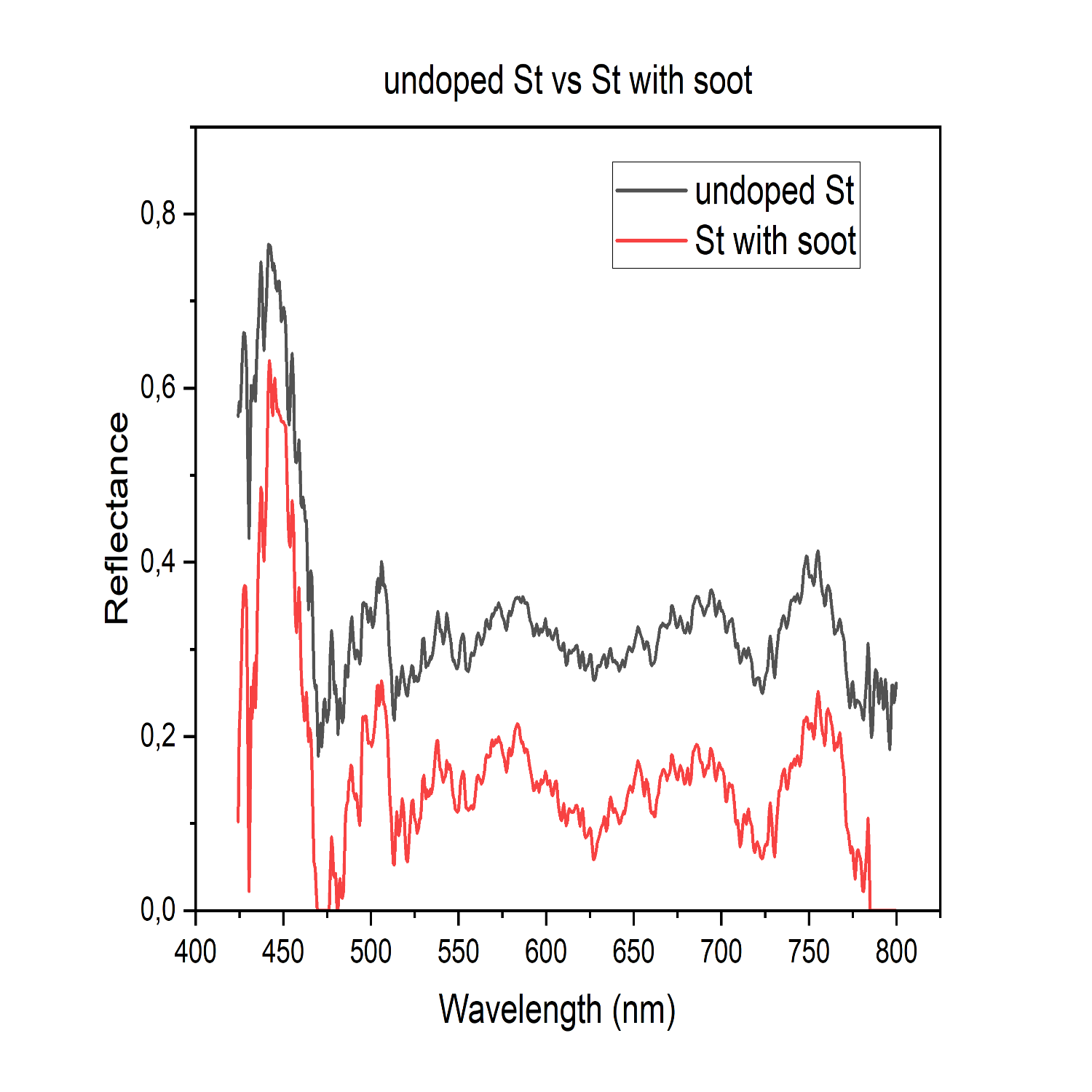
Giorgia Incaminato, Mikko Vuori, Antti Penttilä, Cristian Carli, Alessandro Maturilli, Anna Galiano, Laeticia Petit, Nirajan Ojha, Khaldoon Nasser, Markku Vainio, and Karri Muinonen

It is of crucial importance to gain a more profound comprehension of the evolution and formation of Mercury, one of the terrestrial planets in the Solar System. The absence of a significant atmosphere, temperature oscillations, and the continuous exposition to solar wind, result in Mercury surface being a mixture of crystalline and glassy materials (Wurz et al., 2025).

The particularity about the Mercury surface is that it has a remarkably low reflectance, but NASA’s MESSENGER mission did not detect the absorption band of iron in the NIR, implying the iron content on Mercury surface would be low compared to other dark planetary bodies (Syal et al. 2015). However, observations and modelling suggest that a darkening agent is needed to explain the low reflectance in the Vis-NIR spectra of Mercury surface. The agent is thought to be carbon, particularly in the form of graphite (Lark et al. 2023).

We proposed to test if introducing carbon would darken the Mercury surface analogue materials to the desired level. To investigate this, the material UV-Vis-NIR spectral reflectances were analysed. We prepared three types of samples: “St” glass externally mixed with soot (Figure 1), 90NaPO3-10NaF (mol%) glass (Figure 2), and komatiite (volcanic glass 12%, olivine 35%, clinopyroxene 15%, plagioclase 21%, spinel 9%, opaques 4%, and serpentine 3%) to which different amounts of graphite up to 7.5-wt% were added into the glass batch prior to the melting. Komatiite is recognized as a good analogue for the Mercury surface (Caminiti et al. 2024; Wieder et al. 2012). The phosphate glass was melted at 750°C, whereas komatiite was melted at 1600°C.

Analysis of the UV-Vis-NIR reflectance spectra of the komatiite glass revealed that graphite did not survive the melting process. The undoped komatiite showed the lowest reflectance and increasing the initial graphite content resulted in a brighter, rather than darker glass (Figure 3). High temperature and the presence of atmospheric oxygen in the furnace probably led to its oxidation, releasing it as CO or CO2.

To qualitatively evaluate the surface properties of the grains and determine with precision the cause of what is suggested by the reflectance spectra of the komatiite intimately mixed with graphite, Scanning Electron Microscopy (SEM) was performed. The SEM analysis showed a progressive change in size, shape, and roughness of the grains with the increase of graphite initially added, with a direct correlation between their morphological irregularity and the graphite content used in the melting process of komatiite, which directly affect the optical properties of the material, leading to a higher reflectance for the komatiite powder with an initially higher -wt% of graphite. To evaluate the effect of graphite also on the komatiite, graphite was added externally in the same -wt% as previously. The reflectance spectra show that, when graphite is externally added, its effect is in line with the expectations for decreasing reflectance with increasing concentration (Figure 4).

Our study confirms that graphite is an effective darkening agent and could plausibly contribute to the low reflectance of the Mercury surface. The main challenge has been the melting of the glass in an oxygenated environment, so future work will focus on replicating the melting process in an oxygen-free atmosphere.

Figure 1: Spectral reflectance of the St glass powders. In black the reflectance spectrum of the undoped St glass powder; in red the reflectance spectrum of the St glass powder externally doped with 0.05 wt% of soot.


Figure 2:  Spectral reflectance of the 90NaPO3-10NaF (mol%) glasses with various wt% of graphite, designated as C, intimately added. As the amount of graphite added increases, reflectance decreases.


Figure 3: Spectral reflectance of the komatiite glasses with various wt% of graphite, designated as C, intimately added. The spectra reveal that, as the amount of graphite initially added to the glass composition prior to the melting increases, the reflectance increases. 


Figure 4: Spectral reflectance of the komatiite glasses with various wt% of graphite, designated as C, externally added. The spectra reveal that as the amount of graphite externally added to the glass increases, the reflectance decreases.


Caminiti, E., et al. (2024). Icarus, 420, 116191.

Lark, L. H., et al. (2023). Earth and Planetary Science Letters, 613, 118192.

Syal, M. B., et al. (2015). Nature Geoscience, 8(5), 352–356.

Weider, S. Z., et al. (2012). J. Geophys. Res., 117, E00L05.

Wurz, P., et al. (2025). The Planetary Science Journal, 6(1), 24.


How to cite: Incaminato, G., Vuori, M., Penttilä, A., Carli, C., Maturilli, A., Galiano, A., Petit, L., Ojha, N., Nasser, K., Vainio, M., and Muinonen, K.: Mercury surface UV-Vis-NIR spectral reflectance: Role of Graphite, EPSC-DPS Joint Meeting 2025, Helsinki, Finland, 7–13 Sep 2025, EPSC-DPS2025-1361, https://doi.org/10.5194/epsc-dps2025-1361, 2025.

F52
|
EPSC-DPS2025-950
|
On-site presentation
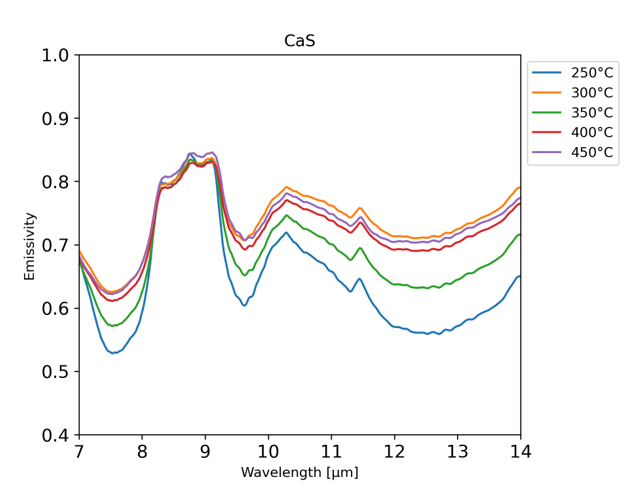
Elise Merchak, Alessandro Maturilli, Giulia Alemanno, and Jörn Helbert

Introduction: We are investigating the ability for the BepiColombo mission to identify sulfides on the surface of Mercury with the MIXS x-ray spectrometer and the MERTIS thermal infrared spectrometer. The phase in which sulfur exists on Mercury’s surface is unknown; the Mercury Radiometer and Thermal Infrared Spectrometer (MERTIS) will be able to examine the mineralogical phases that exist on the surface [1,2]. This paired with the Mercury Imaging X-ray Spectrometer’s (MIXS) ability to determine the elemental composition of the first 10-20 μm of the surface will provide a detailed map of the composition [3].
Spectra were collected at the Deutsches Zentrum für Luft- und Raumfahrt in the Planetary Spectroscopy Laboratory (PSL) for this project [4]. Three sulfides, CaS, MgS, and FeS were the primary targets of this study, and mixtures of the endmember elements were created to compare with the sulfides. Emissivity and reflectance measurements were taken at the same wavelengths as those covered by the MERTIS instrument to determine if sulfides will be detectable by BepiColombo. Our aim is to observe any spectral features that can be attributed to the sulfide bonds.

Methods: A set of 10 samples was measured in reflectance and emissivity. The three sulfides, CaS, MgS, and FeS, and corresponding mixtures were created of their two endmembers at the same weight percent as those found in the sulfides. For instance, our Ca+S mixture was 55.6% Ca and 44.4% S to simulate the weight percent of CaS. Measurements of the individual elements were also taken.
Emissivity measurements were taken with a Bruker Vertex 80V FTIR attached to a vacuum chamber with an internal heating mechanism [4]. Samples were placed in steel cups that would be heated through an induction system from below. Measurements were taken in MIR wavelengths (2-16 microns) to to cover the spectral range of the the MERTIS instrument (7-14 microns) [1]. Measurements were taken at 250, 300, 350, 400, and 450°C. The procedure for sulfur bearing samples was altered to allow for proper signal collection after sulfur outgassing. A beaker was placed on top of the sample, and it was heated to 250°C to allow sulfur to offgass and adhere to the beaker rather than the chamber ,mirror, and instrument itself. The sample was cooled, the beaker was then removed and the data collection continued as normal.
Bidirectional reflectance measurements were taken of each sample before and after the heating process. These were taken across multiple wavelengths including UV, VIS, VNIR and MIR. This allowed us to spot the irreversible spectral changes to the samples due to the heating process.

Results: Calcium and magnesium sulfides were both stable across the simulated Mercury temperatures and their distinct absorption features could be observed in each measured temperature. The positions of the spectral feature changed due to the increase in temperature, but important diagnostic features remained detectable, as seen in figure 1.
 Some features in the sulfide spectra were not observed in those of the sulfur mixtures, displaying the ability for the sulfides to be distinguishable from mixtures. An example can be seen in figure 2 where the CaS spectrum has a large emission feature at 8-9 microns that is not seen in either the Ca or Ca+S spectra. An explanation of this distinction is that elemental sulfur found in the mixtures is not stable and degasses at high temperatures, which would explain the similarity of the mixture and the Ca spectra at high temperatures. It is commonly understood that sulfur is unstable at high temperatures, but our experiments also show that the sulfur remains in the system if bound to other molecules in a sulfide. This is demonstrated in both the CaS and MgS samples.
Iron sulfide proved to be harder to distinguish from iron sulfur mixtures due to the high emission rates of both. The spectra were bright and had few features. We found that at the wavelengths used by the MERTIS instrument, CaS and Mgs should be able to be identified but FeS cannot.

Figure 1:  Calcium Sulfide spectra at each measured temperature, 250°C to 450°C

Figure 2:  Highest (450°C) and lowest (250°C) temperature spectra for all calcium samples, Ca+S mixture, CaS, and Ca. The sulfur spectra included was collected at 90°C due to the instability of pure sulfur.

Significance of this Work:  Bepicolombo’s MERTIS and MIXS instruments will soon provide new data that will aid in our understanding of Mercury’s surface composition. It is currently unknown the state in which the sulfur on the surface exists. MIXS will aid in identifying the sulfur and other elements on the surface, and MERTIS will provide mineralogical phase data on these areas. Laboratory measurements are necesary to understand this future data and have a dataset with which to compare. Our work shows the spectral features which will be observed by MERTIS if sulfides or sulfur mixtures are observed.

Acknowledgements: The University of Arkansas’ Sturgis International Fellowship allowed the first author to visit the DLR in Berlin for four months to collect this data.

References : [1] Hiesinger et al. (2020) Studying the Composition and Mineralogy of the Hermean Surface with the Mercury Radiometer and Thermal Infrared Spectrometer (MERTIS) for the BepiColombo Mission: An Update, Space Sci Rev, 216, no. 6, p. 110. [2] Sprague et al. (1995) Sulfur at Mercury, Elemental at the Poles and Sulfides in the Regolith, Icarus 118 p.211-215. [3] Bunce et al. (2020) The BepiColombo Mercury Imaging X-Ray Spectrometer: Science Goals, Instrument Performance and Operations, Space Sci Rev, 216, no. 8, p. 126. [4] Maturilli et al. (2018) The Planetary Spectroscopy Laboratory (PSL) – wide spectral range, wider sample temperature rage; Proc. SPIE 10765, Infrared Remote Sensing and Instrumentation XXVI, 107650A.

How to cite: Merchak, E., Maturilli, A., Alemanno, G., and Helbert, J.: Laboratory investigation of spectral signatures of Sulfides and Sulfur Mixtures as seen by the MERTIS and MIXS Instruments, EPSC-DPS Joint Meeting 2025, Helsinki, Finland, 7–13 Sep 2025, EPSC-DPS2025-950, https://doi.org/10.5194/epsc-dps2025-950, 2025.

F53
|
EPSC-DPS2025-1615
|
ECP
|
On-site presentation
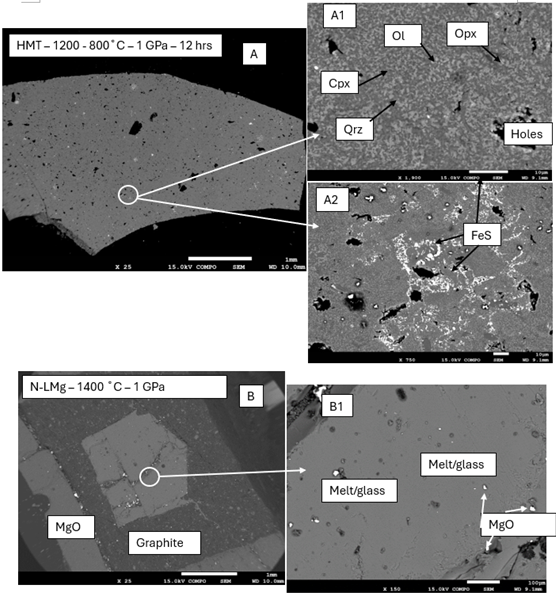
Dilan H. F. Diyalanthonige, Takashi Yoshino, Matthew. R.M. Izawa, Adrian Martindale, and Tiffany. L. Barry

Introduction 

Data from NASA’s MESSENGER (MErcury Surface, Space ENvironment, GEochemistry, and Ranging) mission have revealed a chemically diverse surface on Mercury. Surface composition has been constrained using X-ray Spectrometry (XRS), Gamma-Ray Spectrometry (GRS), and Neutron Spectrometry (NS) [1], [2]. Despite regional variations, two common features stand out: a high sulfur concentration (up to 4 wt.%) and a notably low iron content (as low as 1 wt.%) [1], [2], [3], [4], [5], [6], [7]. These observations are consistent with extremely reducing conditions (oxygen fugacity, ƒO₂, between IW–3 and IW–7), which are markedly different from other terrestrial bodies. Under such reducing conditions, sulfur becomes lithophile and its solubility in FeO decreases [3]. As a result, the geochemical behaviour of major elements like Mg and Ca changes, with these typically lithophile elements partitioning into chalcophile phases [3], [4]. During Mercury’s magma ocean crystallization, sulfur would have progressively concentrated in the residual melt. The main predicted sulfides include Mg-rich niningerite (MgS) and Ca-rich oldhamite (CaS). Recent studies suggest that these sulfides, being less dense than the silicate matrix, may have floated or become sequestered in the upper mantle [3], [6]. However, experimental data on the formation of MgS and CaS, especially in Fe-free systems, are limited.

This study aims to create Mercury surface fully crystalline sample analogs that can be compared to results from remote sensing from the upcoming BepiColombo mission (e.g. using MIXS data). Controlled slow-cooling experiments in a piston-cylinder are used to ensure full crystallinity and simulate natural crystallization histories of each sample. Additionally, to understand the conditions required for the formation of various sulfide phases (e.g.FeS, CaS, MgS) under Mercury-like conditions, we try to change the samples with different conditions such as the presence of Fe, a range of sulfur contents (1–4 wt.%) and reducing conditions near and below the IW buffer.

Experimental Methods

Synthetic compositions were selected to represent the geochemical variability of Mercury’s surface, including 1) High-Mg Terrane (HMg), 2) Intermediate High-K Terrane (IHK), 3) North Low-Mg Terrane (N-LMg), and 4) Rachmaninoff Basin (RB),
[2], and regional divisions from [1], [7]. Synthetic analogs were prepared using a mixture of analytical-grade oxides and carbonates, which were decarbonated at 1000 °C for 4–10 hours. For samples containing Fe, reduction was carried out in a H₂–CO₂ gas mixing furnace to achieve oxygen fugacity (ƒO₂) below the iron-wüstite (IW) buffer following equilibrium: 2Fe(metal) + O2(gas) -> 2FeO(silicate). In case for Fe-free samples the samples were baked into 1000 °C. In case of more reduced compositions the addition of metallic Si was used in place of SiO₂ following equilibrium buffer:  Si(metal) + O₂(gas) → SiO₂(silicate).   

The powdered starting materials were loaded into graphite capsules (C-CO2 buffer) to maintain reducing conditions during the experiments. Capsules were placed in a piston-cylinder assembly (Fig. 2) and subjected to a pressure of 1 GPa. After reaching the pressure established samples were heated to above liquidus temperature and the slowly cooled to below solidus to promote crystallization. Post-run products were sectioned and analyzed using SEM/EDS.  

Preliminary Results

HMg-Terrane:
At 1 GPa, with slow cooling from 1200 °C to 800 °C over 12 hours, the sample yielded a multi-phase assemblage with <10% residual glass. Identified phases include quartz, orthopyroxene, clinopyroxene, olivine, and FeS (Fig. 1A).

N-LMg, IHK, RB Terranes:

The first experiment was done at 1 GPa and 1400 °C (rapid quenched), samples were fully glassy (Fig. 1B).

The second experiments on these three samples under slow cooling (1200 °C → 800 °C over 20 hours), samples developed multi-phase assemblages but retained >20% residual silicate glass. Dominant crystalline phases include pyroxene and quartz. Sulfur was retained in the melt, suggesting that S might have still been siderophile at fO2 buffer around -1IW.

Discussion

Initial experiments indicate that sulfur-bearing phases can crystallize under reducing conditions relevant to Mercury's upper mantle and crust with the presence of Fe. It is probable that at this stage the main factors are the siderophile nature of S and following this FeO(silicate) + S(metal) = FeS(metal) + O(gas). The evidence of such comes from High-Mg (HMg), produced a well-crystallized assemblage. Observed phase was FeS and small amount of S was present into the matrix (melts too small to detect) (Fig. 1A). Crystallisation of the remaining sample lead to the formation of Mg-rich olivine, orthopyroxene, then Ca-rich phase clinopyroxene and lastly quartz. The use of graphite capsules likely buffered the oxygen fugacity to values between IW and IW–1, this was confirmed by the presence of FeS and absence of FeO in HMg.

In contrast, quenched experiments of the North Low-Mg (N-LMg), Intermediate High-K (IHK), and Rachmaninoff Basin (Rach) analogs at 1400 °C were entirely glassy, indicating melt stability at temperature above liquidus. On the second set slow cooling (1200 °C to 800 °C over 20 hours), these samples produced partially crystallized assemblages still with >20% modal glass with Mg-rich orthopyroxene, clinopyroxene and quartz as dominant phases (see Fig. 1B). Despite reducing conditions near the IW buffer, neither CaS or MgS were not clearly observed, suggesting either (1) fOwere not low enough to render S lithophile, also (2) insufficient sulfur concentration to start to form any solid solution, or (3) sulfur remained dissolved in the melt due to temperature not low enough to fully crystallise the samples.

These observations imply that under IW to sub-IW conditions, sulfur retention in the melt is likely to persist until after crystallisation of the other major phases. Previous study [3] has shown that in this fO2 condition, FeS is the main to form and at lower fO CaS will start to form and then MgS (Fig. 3 A and B). However, the absence of Fe should be replaced with another form of sulfide in case of fully crystallinity.

Further work will explore the effect of increased sulfur content and variable Fe concentrations to better constrain sulfide saturation limits, the stability of CaS and MgS phases in Fe-free systems, and the implications for Mercury’s crustal sulfide distribution. These insights are crucial for interpreting remote sensing data from the BepiColombo mission, particularly the MIXS instrument suite.

Figures

How to cite: Diyalanthonige, D. H. F., Yoshino, T., Izawa, M. R. M., Martindale, A., and Barry, T. L.: Preliminary study on Mercury surface analogs evidence for Sulfur phases, EPSC-DPS Joint Meeting 2025, Helsinki, Finland, 7–13 Sep 2025, EPSC-DPS2025-1615, https://doi.org/10.5194/epsc-dps2025-1615, 2025.

F54
|
EPSC-DPS2025-1249
|
On-site presentation
Matthew R. M. Izawa, Dilan H. F. Diyalanthonige, Takashi Yoshino, Diego D. Uribe, Phillip J. A. McCausland, and Roberta L. Flemming

A number of past experimental studies have shown that plausible Hermean surface compositions may be derived via melting of enstatite chondrite percursors, in particular EH chondrites (e.g., 1,2). A current serious difficulty in studying Mercury is the complete absence of known material samples (meteorites or sample returns). While known enstatite meteorites themselves are not plausible as current constituents of Mercury, their broad geochemical and mineralogical kinship with Mercury may make them useful analogues for some aspects of Hermean geological processes, as has been argued for other enstatite metachondrites (3). Here we present new mineral chemical and petrographic information for several metamorphosed enstatite meteorites and suggest Hermean environments and processes for which they may provide useful analogues.

Lapaz Icefield (LAP) 02225: Impact melting and rapid solidification near the surface. The meteorite LAP 02225 is an unbrecciated, lightly-shocked rock of enstatite chondrite parentage consisting of hollow enstatite laths (up to 100s of microns in the long dimension, parallel to the b-axis) in a matrix of metallic iron, sulphides, and fine-grained plagioclase. The LAP 02225 meteorite is the product of rapid solidification of a total melt of EH composition. While plausible near-surface rocks on Mercury are generally unlikely to contain such high amounts of Fe metal and sulfide, this sample provides a useful analogue for the silicate mineralogy of rapidly-cooled impact melts on a broadly EH-chondrite like Mercury, such as the upper surfaces of large impact melt sheets.


F igure 1: Reflected light (A), Plane-polarized light (B), and crossed-polarized light (C) images of a representative area of LAP 02225. Large, hollow and commonly twinned laths of enstatite are hosted in a fine-grained matrix dominated by enstatite, plagioclase, metal and sulphides. The textures in this meteorite are consistent with rapid solidification of a total (impact) melt, corresponding to the upper part of a large impact melt sheet.


Northwest Africa (NWA) 8173: Extreme metal sulphidation and metasomatism. The exsolution of fine graphite flakes in Fe0 may result from the competition between Si and C as alloying elements. The preponderance of MgS-dominant sulphides (with Fe-bearing niningerite the most common sulphide) may reflect extreme sulphidation. Exsolution of troilite occurs both along the octahedral (111) planes of niningerite, as well as in anastomosing veins cross-cutting and overprinting the existing sulphide textures. Exsolved troilite itself commonly encloses blebs of oldhamite (CaS). NWA 9173 may provide analogues for regions of focused S-rich alteration and metasomatism associated with endogenic or exogenic heating (magma bodies and impact melts).


F igure 2: Textural relations between silicates and sulphides in NWA 8173 (A). The host sulphide phase is cubic (Mg,Fe)S, the exsolved phase is troilite (hexagonal stoichiometric FeS). Exsolved troilite occurs either as plates along the (111) planes of host niningerite, or as anastomosing veins that cross-cut and overprint the octahedral exsolution (B). Graphite occurs as minute flakes hosted in Si-bearing Fe0, consistent with the exsolution of graphite (C).


NWA 4301 and Zakłodzie: Impact-melting followed by cooling, assimilation, re-equilibration, and extensive separation of graphite. Annealing and incorporation of cold country rock into melt sheets. Both NWA 4301 and Zakłodzie contain significant amounts of graphite that are associated with Si-bearing Fe0 (or weathering products of Fe0), consistent with separation of a graphitic melt from the metal-sulphide, possibly the result of Si enrichment in the Fe0. These meteorites are consistent with slow cooling of large impact melt sheets, a process also likely to have been important throughout Mercury’s geological history. Alternatively, the segregation of graphite here could provide an analogue to the first stages of the formation of a potential graphite flotation crust on early Mercury (4).


Figure 3: Backscattered electron (BSE) images of representative silicate-metal-sulphide-graphite textures in NWA 4301 (A) and Zakłodzie (B). In both meteorites, both metal and sulphides have been strongly affected by terrestrial weathering, however, the association between graphite and (former) metal is clear. Silicates are dominated by equant-textured enstatite.


Queen Alexandra Range (QUE) 94204: Incipient differentiation of plagioclase-silica-pyroxene partial melts, and Fe-FeS from an enstatite-dominant restite. With progressive heating and equilibration, Fe0 becomes progressively enriched in Si potentially leading towards a very Si-rich core. The occurrence of cristobalite at the interface between metal and enstatite may be connected to the disproportionation of Si with some entering the Fe0 structure and some forming SiO2 (thus further reducing the fO2 of the bulk system).


F igure 4: Reflected light (A), Plane-polarized light (B), and crossed-polarized light (C) images of a representative area of QUE 94204. Enstatite is the dominant mineral, with metal and sulphides either enclosed within as rounded bodies, or concentrated in the interstices of enstiatite grains along with sodic plagioclase and cristobalite.


While enstatite meteorites should not be expected to provide perfect geochemical, mineralogical, or spectral analogues for Mercury, they can provide insights into the kinds of geological processes that have shaped the current Hermean surface. We eagerly anticipate both the future recovery or identification of meteorites from Mercury, or sample returns from the Hermean surface.


1. Boujibar et al. (2025) Icarus 437, 116602

2. McCoy et al. (1999) MAPS 34(5) 735-746

3. Udry et al. (2019) MAPS 54, (4) 785-810

4. Vander Kaaden, & McCubbin (2015), J. Geophys. Res. Planets, 120, 195–209.

How to cite: Izawa, M. R. M., Diyalanthonige, D. H. F., Yoshino, T., Uribe, D. D., McCausland, P. J. A., and Flemming, R. L.: Enstatite metachondrites as Mercury surface analogue materials: Potential and limitations, EPSC-DPS Joint Meeting 2025, Helsinki, Finland, 7–13 Sep 2025, EPSC-DPS2025-1249, https://doi.org/10.5194/epsc-dps2025-1249, 2025.

F55
|
EPSC-DPS2025-1748
|
On-site presentation
Antti Penttilä

The regolith on the surface of atmosphereless Solar System objects, such as asteroids, moons, and some planets, is affected by space weathering. On iron-bearing minerals such as olivine, space weathering introduces nano- and micron-sized free iron inclusions in the thin surface layer of the host material. These iron inclusions will darken the overall reflectance in the UV-Vis-NIR range, and depending on the inclusion size, can also introduce a positive slope in the reflectance spectra.

Iron is not the only possible darkening agent in regolith. For example, Mercury is relatively dark with Bond albedo around 9 % and reflectance spectra from the MASCS instrument on NASA MESSENGER mission in UV-Vis-NIR typically between 2 and 8 % [1]. However, the MESSENGER mission did not detect iron on the surface[2], and carbon, in the form of graphite, is one possible darkening agent for the Mercury surface[3].

Laboratory analogues to regolith materials are an important step in understanding the composition of the regolith, and among other properties, reflectance spectra of the analogue material should match the one of the targets. With iron and space weathering, the experimental methods such as laser pulses simulate the weathering mechanism, thus creating the iron inclusions in the surface layer of the particles. With graphite, however, analogue materials have usually been external mixtures. Incaminato et al.[4] touch this issue and note about the problem in creating internal mixtures with graphite and a host material. If the host material needs to be melted to get graphite in, the graphite can react with oxygen in high temperatures by forming CO and CO2 and evaporate. The solution to this problem could be to melt and mix the materials in an oxygen-free atmosphere, but to our knowledge, this has not been tested.

As a motivation for conducting internal mixtures with graphite in oxygen-free environment, we point out that the scattering properties of materials change as they are embedded in a host material instead of air or free space. There are two mechanisms behind this. First, the wavelength of light is lower in a material with a refractive index (the real part) above 1. Therefore, the effective size of the inclusion (the physical size in relation to the wavelength) will be larger. This can be especially important with small inclusions with sizes in the scale of some tens to some hundreds of nanometers. Second, the contrast between the refractive indices of the inclusion and the host decreases. This will decrease the scattering cross section of the inclusion.

The final difference in the reflectance of mixtures where the darkening agents are mixed externally or internally depend on the size of the inclusions, the size of the host particles, and their complex refractive indices, including extinction, but we can simulate the effect. In our preliminary tests with small (radius of 10 nm) iron or graphite inclusions either outside or inside a single 100-μm-radius olivine host particle, we can see how the cases with internal mixture produce lower scattering cross sections and higher absorption cross sections compared with external mixtures. In the albedo and reflectance spectra consisting of these particles, this would result in lower values for the internal mixtures.

We will expand the cases studied with larger inclusions and conduct radiate transfer simulations to quantify the final effect in the reflectance of a macroscopic surface. These results should underline the importance of mimicking properly the probable internal mixture of graphite with, e.g., Mercury analogue materials[5].

How to cite: Penttilä, A.: On the difference between internally or externally mixed darkening agent on regolith reflectance, EPSC-DPS Joint Meeting 2025, Helsinki, Finland, 7–13 Sep 2025, EPSC-DPS2025-1748, https://doi.org/10.5194/epsc-dps2025-1748, 2025.

F56
|
EPSC-DPS2025-1515
|
ECP
|
On-site presentation
Natalia Amanda Vergara Sassarini, Cristian Carli, Cristina Re, Adriano Tullo, Riccardo La Grassa, Matteo Massironi, and Gabriele Cremonese

Introduction

Low-Reflectance Material (LRM) represents a widespread surface unit on Mercury, typically occurring as basin ejecta and characterized by the lowest reflectance values among the planet’s surface materials (e.g., Peplowski et al., 2015; Klima et al., 2018). LRM deposits are predominantly of pre-Tolstojan age (>3.9 Ga; Denevi et al., 2018), and their compositional modeling suggests they may contain up to ~4 wt% graphite, a conclusion supported by both reflectance analyses and modeled gamma ray and neutron spectra (Peplowski et al., 2016; Klima et al., 2018). These findings support the hypothesis that LRM may be remnants of an early graphite-rich crust (Vander Kaaden & McCubbin, 2015; 2018), later excavated and redistributed across the surface by large impact events (Lark et al., 2023).

Method and Analytical approach

Previous efforts to map and characterize LRM have largely relied on spectral techniques, using combinations of reflectance ratios and principal component analyses to delineate their distribution (e.g., Peplowski et al., 2015; Klima et al., 2018). While these approaches have yielded important constrains on LRM distributions and possible compositional information, they offer limited integration with the morphological and stratigraphical context of the surface.

In contrast to terrestrial geology, where lithology, morphology, and in situ measurements are jointly assessed, in general, planetary investigations must rely exclusively on remote sensing data. Given these observational constraints, integrated methodologies that combine compositional (i.e., spectral) and morphological data are essential for inferring geologically meaningful information from remote observations.

To address this need, we previously developed an unsupervised learning framework for generating exploratory classification maps of Mercury’s surface, integrating spectral and topographic inputs into multidimensional data cubes (Figure 1, see also Vergara Sassarini et al., 2025). As a case study, we selected the Hokusai quadrangle and used as a starting dataset the 665 m/px DTM (Becker et al., 2016) and the 8-color map (Zambon et al., 2022) to build 3 different cubes: morphological (DEM + TRI-ruggedness), spectral (430-1000nm + 750-1000nm + 430-560nm spectral slopes +  750nm band), and a morpho-spectral cube that contains both spectral and morphology data. These cubes were processed using a Gaussian Mixture Model based approach to derive surface classes that reflect both compositional and morphological characteristics of the surface.  

Figure 1. A. Workflow for the generation of exploratory classification maps based on unsupervised clustering and B. morpho-spectral predictions for H05 quadrangle (Vergara Sassarini et al., 2025).

From the derived morpho-spectral map (Figure 1B), we identified several clusters that spatially correspond to known LRM units, as observed in enhanced color imagery (Figure 2A). Notably, the LRM-related clusters exhibit internal diversity (Figure 2B), suggesting potential compositional heterogeneities.

Figure 2. Comparison between LRM (blue colors) in A. Mercury Dual Imaging System (MESSENGER) enhanced color 665 m/pixel global mosaic (Denevi et al., 2016) and B. Isolated clusters from Vergara Sassarini et al., 2025.

To investigate these heterogeneities, this ongoing work will include a detailed analysis of the reflectance spectra across the derived LRM-related clusters to test for relatively compositional differences among them. We also aim to refine the input cubes used during fitting by including additional spectral ratio layers or PCA-derived features that may improve the clustering sensitivity to subtle spectral variations. As a future application, we intend to apply this integrated and tailored classification model to selected regions of interest on other regions of the planet different from Hokusai Quadrangle, with the goal of producing a global-scale distribution map of LRM, investigating their possible heterogeneity highlighted by this preliminary investigation. Such automated, multi-dimensional classification will be essential for identifying regions of interest for detailed investigation with the high-resolution data expected from SIMBIO-SYS (Cremonese et al., 2020) data on the BepiColombo's mission (Benkhoff et al., 2021).


Acknowledgments

This study has been supported from the Italian Space Agency (ASI) under ASI-INAF agreement 2024-18-HH.0.

References

Becker, K. J., Robinson, M. S., Becker, T. L., Weller, L. A., Edmundson, K. L., Neumann, G. A., ... & Solomon, S. C. (2016, March). First global digital elevation model of Mercury. In 47th annual lunar and planetary science conference (No. 1903, p. 2959).

Benkhoff, J., Murakami, G., Baumjohann, W., Besse, S., Bunce, E., Casale, M., … Zender, J. (2021). BepiColombo—Mission overview and science goals. Space Science Reviews, 217(8), 90.

Cremonese, G., Capaccioni, F., Capria, M. T., Doressoundiram, A., Palumbo, P., Vincendon, M., … Turrini, D. (2020). SIMBIO-SYS: Scientific cameras and spectrometer for the BepiColombo mission. Space Science Reviews, 216(5), 1–78.

Klima, R. L., Denevi, B. W., Ernst, C. M., Murchie, S. L., & Peplowski, P. N. (2018). Global distribution and spectral properties of low‐reflectance material on Mercury. Geophysical Research Letters, 45(7), 2945-2953.

Lark, L. H., Head, J. W., & Huber, C. (2023). Evidence for a carbon-rich Mercury from the distribution of low-reflectance material (LRM) associated with large impact basins. Earth and Planetary Science Letters, 613, 118192.

Peplowski, P. N., Lawrence, D. J., Evans, L. G., Klima, R. L., Blewett, D. T., Goldsten, J. O., ...Weider, S. Z. (2015). Constraints on the abundance of carbon in near-surface materials on Mercury: Results from the MESSENGER Gamma-Ray Spectrometer. Planetary and Space Science, 108, 98-107. 

Vander Kaaden, K. E., & McCubbin, F. M. (2015). Exotic crust formation on Mercury: Consequences of a shallow, FeO‐poor mantle. Journal of Geophysical Research: Planets, 120(2), 195-209

Vergara Sassarini, N. A., Re, C., La Grassa, R., Tullo, A., and Cremonese, G.: Mercury: explorative geological maps through unsupervised learning, EGU General Assembly 2025, Vienna, Austria, 27 Apr–2 May 2025, EGU25-19408

Zambon, F., Carli, C., Wright, J., Rothery, D. A., Altieri, F., Massironi, M., ... & Cremonese, G. (2022). Spectral units analysis of quadrangle H05‐Hokusai on Mercury. Journal of Geophysical Research: Planets, 127(3), e2021JE006918.

How to cite: Vergara Sassarini, N. A., Carli, C., Re, C., Tullo, A., La Grassa, R., Massironi, M., and Cremonese, G.: Investigating Low-Reflectance Material (LRM) on Mercury using an integrated spectro-morphologic clustering approach, EPSC-DPS Joint Meeting 2025, Helsinki, Finland, 7–13 Sep 2025, EPSC-DPS2025-1515, https://doi.org/10.5194/epsc-dps2025-1515, 2025.

F57
|
EPSC-DPS2025-1503
|
ECP
|
On-site presentation
Mafalda Ianiri, Giuseppe Mitri, Francesca Zambon, and Pascal Allemand

INTRODUCTION

Mercury's surface has undergone intense modification by impact cratering and space weathering, which makes delineating distinct geological units particularly complex. In this study, we focus on Glinka crater (Fig. 1), situated in the Beethoven quadrangle (H-07), an area marked by diverse spectral and morphological features including impact structures, a candidate pyroclastic vent [1], tectonic ridges [2], and hollows [3] [4]. Our objective is to identify and classify surface units by applying an integrated methodology that combines compositional information from spectral data with detailed morphological and structural analysis. This hybrid approach is intended to enhance the geological interpretation of the crater and provide insights into the interplay between impact, volcanic, and tectonic activity.


METHODS

The analysis is based on a combination of MESSENGER MDIS datasets and derived topographic products. We produced a 121 m/pixel monochromatic NAC mosaic and two higher-resolution ones (56 and 14 m/pixel) for detailed mapping. Spectral data were derived from a WAC 8-filter multispectral cube [6] (268 m/pixel), while topographic derivatives were extracted from a DEM at 222 m/pixel [7]. The data were processed using ISIS3 employing the Kaasalainen–Shkuratov photometric correction model considering the parameters derived by [8] and analyzed in ENVI and GIS environments.

Four spectral parameters were selected [9]: R750, global slope, NIR slope, and UV/VIS slope. Each was classified into five intervals using k-means clustering. The combined classification led to the extraction of over 400 initial spectral units, subsequently filtered and merged into ten representative SUs. These were then correlated with morpho-structural features, allowing the construction of a hybrid map that integrates both spectral and geological observations.


RESULTS

The classification identified ten distinct spectral units (SUs), each defined by unique combinations of reflectance and spectral slope values (Fig.1). Some units display high reflectance and low slopes (e.g., SU 3 and SU 8), while others show steep slopes, especially in the visible or NIR range (e.g., SU 5, SU 7, SU 10). A hybrid geological map (Fig. 2) was constructed by integrating these spectral units with geomorphological elements such as crater rims, terraces, central uplifts, and tectonic ridges.

In the hybrid geological map, the spectral units were grouped into seven hybrid units (A–G), each associated with specific morphologic or structural contexts.

Unit A (SU 2) is the most spatially widespread unit in the study area. It is characterized by the lowest reflectance among all SUs, along with high global and IR slopes and moderate UV/VIS slope. It forms spectrally homogeneous surfaces over broad, morphologically indistinct regions.

Unit B (SU 1) appears scattered across the study area and does not correspond to a single ejecta blanket, unlike other ejecta-related units (e.g., Units C and D).
Unit C (SU 3) is optically bright and spectrally flat, arranged in radial patterns around impact craters, consistent with fresh ejecta blankets.
Unit D (SU 4) shows an ejecta-like distribution but differs spectrally from other ejecta units due to its steeper slopes.

Unit E (SU 7), one of the brightest and spectrally steepest units, exhibits an irregular lobate morphology resembling ejecta and is spatially located above parts of Unit D. Interestingly, SU 7 spectral behaviour is also present in Unit G (SU 7 + 10), which surrounds the central vent and forms a compact, circular deposit. This recurrence highlights a spectral similarity across units with different geological context spatial configurations.


DISCUSSION AND ONGOING WORK

Preliminary spatial relationships between hybrid units reveal potential stratigraphic links. Unit E appears to partially overlie Unit D, suggesting a relative sequence between two spectrally distinct surfaces. While both display ejecta-like morphologies, the higher reflectance and steeper spectral slopes of Unit E set it apart from the underlying Unit D. This configuration may reflect differences in composition or emplacement history and will be further explored through stratigraphic and contextual mapping.

Unit G, located at the centre of the crater and surrounding the presumed pyroclastic vent, stands out for its spatial and spectral coherence. Its confinement to the vent area and extreme spectral characteristics support its interpretation as a unique, compositionally distinct surface unit.

Crater counting (CSFD) is currently underway on selected ROIs to estimate the relative age of key units and distinguish potentially coeval from diachronous deposits. Unit B, a spectrally neutral ejecta-like unit with scattered distribution, is under investigation to determine whether it includes ejecta from multiple impacts. Its subdivision is being approached through a combination of crater counts, morphologic context, and analysis of adjacent areas.

Current analyses are also addressing the recurrence of SU 7 spectral characteristics across different geological contexts. This spectral configuration appears both in an ejecta-like deposit (Unit E) and in the vent-associated Unit G. We are working to clarify whether this similarity reflects comparable compositions, distinct emplacement mechanisms, or post-depositional alterations.

We are also investigating potential interactions between pyroclastic and tectonic processes. Specifically, we are analyzing spatial and stratigraphic relationships between spectrally red-bright units surrounding the vent and the compressional ridges that intersect it. These investigations aim to reconstruct the relative timing of magmatic and tectonic events and evaluate possible genetic connections.


Acknowledgements  

M.I. and G.M. acknowledges support from the Italian Space Agency (2022-16-HH.1-2024).


References

[1] Kerber L. et al. (2011) PSS 59, 1895-1909.
[2] Thomas R. J. et al. (2014) Icarus 229, 221-235.

[3] De Toffoli B. et al. (2024) Earth Space Sci. 11.

[4] Man B. et al. (2023) Nat.Geosci. 16, 856-862.

[5] Hawkins S.E. et al. (2007), Space Sci. Rev. 131, 247-338.

[6] MESSENGER MDIS Data Users’ Workshop (2015), LPSC XLVI.

[7] Domingue D. L. et al. (2016) Icarus 268, 172-203.

[8] Preusker F. et al. (2017) PSS 142, 26-37.

[9] Zambon F. et al. (2022) JGR:Planets 127.


Figure 1. Spectral map


Figure 2. Hybrid map

How to cite: Ianiri, M., Mitri, G., Zambon, F., and Allemand, P.: Geological Complexity of Glinka Crater (Mercury): A Hybrid Mapping Approach Based on Spectral and Morphological Analysis, EPSC-DPS Joint Meeting 2025, Helsinki, Finland, 7–13 Sep 2025, EPSC-DPS2025-1503, https://doi.org/10.5194/epsc-dps2025-1503, 2025.

F58
|
EPSC-DPS2025-1025
|
On-site presentation
Deborah Domingue, John Weirich, Eric Palmer, Frank Chuang, Alexis Rodriguez, and Lauren Jozwiak

Introduction: Observations from the MESSENGER mission has shown us that Mercury is a volatile-rich planet, beginning with the detection of such volatile species as sodium and chloride (Evans et al. 2015), potassium (Peplowski et al. 2012), and sulphur (Nittler et al. 2011; Evans et al. 2012). Several landforms associated with the presence or interactions with volailtes include hollows (Blewett et al. 2011. 2013, 2016a), pyroclastic vents (Strom et al. 1975; Head wet al. 2008; Goudge et al. 2014; Byrne et al. 2018; Galiano et al. 2022), chaotic terrains (Rodriguez et al. 2020), and glacier-like flow features (Rodriguez et al. 2023). Here we present the photometric analyses of examples of these landforms, and the implications for the regolith properties.

Figure 1. Location of one of the regions examined in Raditladi basin that includes both hollows and glacier-like flows. The bottom panel of four images, clockwise from upper left, are the single scattering albedo, surface roughness, scattering function amplitude parameter, and scattering function partition parameter.

Data and methods: Images acquired by MESSENGER’s Mercury Dual Imaging System (MDIS) were used in these analyses. The techniques of stereophotoclinometry (SPC) were used to create digital terrain models (DTMs) of the study areas. The result is a set of images, each tied to the regional DTM, that includes information about the incidence, emission, and phase angle values that account for topography in addition to reflectance values for each pixel in the image. The Hapke set of equations were used to model the photometric properties of each region.


Results: Examples of the some of the regions examined include the hollows and glacier-like flows in Raditladi (Fig. 1) and the Nathair Facula pyroclastic vent (Fig. 2).

Figure 2. Nathair facula vent region examined. The four panel, clockwise from upper left, are the single scattering albedo, surface roughness, scattering function amplitude parameter, and scattering function partition parameter.


Conclusions: The results from these analyses show distinct regolith properties between the basin floor, the glacier-like flow, and the hollows within Raditladi. The regolith properties near the Nathair Facula vent indicate distinctive textures for the vent deposit.


References:

Blewett, D.T. et al., 2011. Science 333 (6051), 1856–1859.

Blewett, D.T. et al., 2013. J. Geophys. Res. – Planets 118 (5), 1013–1032.

Blewett et al. 2016a. Mercury: The View after MESSENGER, Cambridge University Press.

Byrne, P.K., et al 2018. In: Solomon, SC, Nittler LR, Anderson BJ (eds) Mercury: The View after MESSENGER. Cambridge University Press, Cambridge. Pp 287 – 323.

Evans, L.G. et al. Icarus 257, 417-427 (2015).

Evans, L.G., et al. 2012. J. Geophys. Res., 117, E00L07, doi:10.1029/2012JE004178.

Galiano, A. et al. 2022. Icarus, Volume 388, article id. 115233, doi: 10.1016/j.icarus.2022.115233

Goudge, T. A., et al., 2014. J. Geophys. Res. Planets, 119, 635–658.

Head. J.W., et al. 2008. Science, 321, 69 – 72, doi:10.1126/science.1159256

Nittler, L. R., et al., 2011. Science 333, 1847–1850, doi:10.1126/science.1211567.

Peplowski, P. N., et al. 2012. J. Geophys. Res., 117, E00L04.

Rodriguez, J.A.P., et al., 2020. Nature Scientific Reports, 10, 4737, 2020,

Rodriguez, J.A.P., et al., 2023. Planetary Science Journal, 4:219 doi:10.3847/PSJ/acf219

Strom, R.G., et al. 1975. J. Geophys. Res, 80, 2478 – 2507, doi:10.1029/JB080i017p02478.


Acknowledgments:

This project was supported by NASA’s Solar System Working’s program 80NSSC21K0165 and NASA’s Discovery Data Analysis program 80NSSC24K0066.

How to cite: Domingue, D., Weirich, J., Palmer, E., Chuang, F., Rodriguez, A., and Jozwiak, L.: Photometric properties of volatile associated landforms, EPSC-DPS Joint Meeting 2025, Helsinki, Finland, 7–13 Sep 2025, EPSC-DPS2025-1025, https://doi.org/10.5194/epsc-dps2025-1025, 2025.

F59
|
EPSC-DPS2025-1388
|
On-site presentation
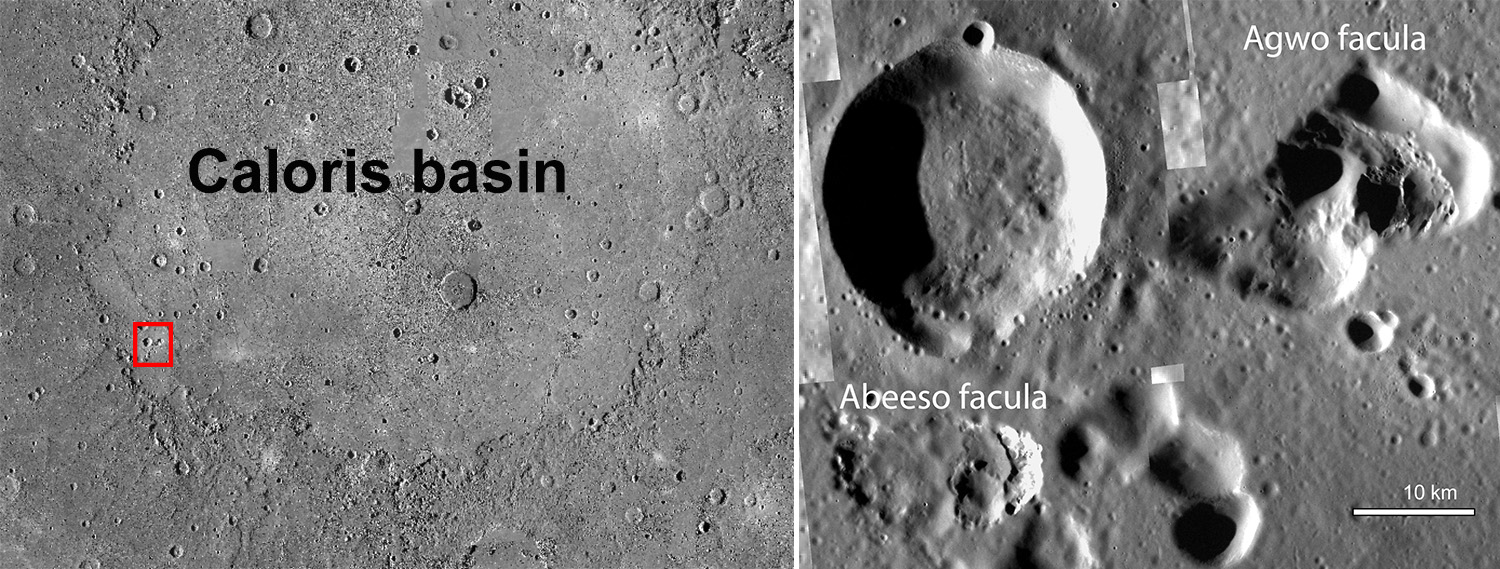
Lorenza Giacomini, Anna Galiano, Valentina Galluzzi, Giovanni Munaretto, David A. Rothery, Deborah Domingue, John Weirich, Lauren M. Jozwiak, Mario D'Amore, and Cristian Carli

Introduction:

On Mercury, faculae are high-albedo, spectrally red, deposits originating from explosive volcanic eruptions (Kerber et al., 2009; Goudge et al., 2014; Thomas et al., 2014) whose source are likely rimless depressions. These depressions are usually located in the center of the facula and interpreted to be volcanic vents. In this work we analyzed the Agwo Facula and Abeeso Facula, sited in the western margin of Caloris basin (Fig.1) (22.39°N, 146.16°E and 21.82°N, 145.29E, respectively), performing a high resolution geomorphological map of both the sites.

Fig.1 Left panel: Location of Agwo Facula and Abeeso Facula; right panel: Enlarged view of the area of interest showing the different derived mosaics overlapping the MDIS BDR basemap.


Data and methods:

In order to compile the maps of the two faculae we used MDIS (MESSENGER Mercury Dual Imaging System) mosaics. In particular, for Agwo Facula the main basemap is represented by derived mosaics with a spatial resolution ranging from 20 m/pixel to 28 m/pixel and with different illumination conditions. Additionally, a BDR (Basemap reduced Data Record) MDIS mosaic, with a resolution of 166 m/pixel, was considered. MDIS Wide Angle Camera (WAC) color maps, based on the reflectance at 750 nm and the visible spectral slope between 480 and 830 nm, respectively, were also used as part of the analysis. These latter maps helped determine the areal extent of the pyroclastic deposits. Finally, a Digital Terrain Model (DTM) of the region, derived from MDIS images using the technique of stereophotoclinometry (SPC) with a spatial resolution of 20 m/pixel, helped us to better characterize the facula’s topography.

For Abeeso Facula the main basemaps were MDIS derived mosaics with a spatial resolution ranging from 25 to 56 m/pixel and with different illumination conditions. Also for this area, the BDR MDIS mosaic (166 m/pixel) and MDIS WAC color maps were used as ancillary basemaps.

Results:

The geomorphological maps highlight that both Agwo Facula and Abeeso Facula experienced several explosive episodes. In particular for Agwo, through the cross-cutting relationship observed among the pits, we recognized at least eight eruptive events. The terrain within the pits shows different surface texture and albedo that allowed the distinction of several geological units: from the older and smoother surfaces to the younger and rougher textured surfaces.

On the other hand, Abeeso Facula experienced at least four different explosive episodes: the western pit is the largest and oldest one, with a smoother surface texture, whereas the eastern pit is the smallest of the cluster showing a crisper morphology, that suggests a younger age.

Moreover, differently from Agwo, Abeeso shows several hollows, located in the eastern and north-western section of the perimeter of the depression.

Conclusion:

The morphological and spectral characteristics of pits suggest that both Agwo Facula and Abeeso Facula are the result of multiple eruptions, which likely occurred at different times. However, apart from their similarities, Abeeso shows hollow features not observed on Agwo. This, despite their proximity, suggests a different composition of the substrate hosting the faculae.

References:

Kerber, L., Head, J.W., Solomon, S.C., Murchie, S.L., Blewett, D.T., Wilson, L., 2009. Earth Planet. Sci. Lett. 285, 263–271.

Goudge T.A., Head J.W., Kerber L., Blewett D.T., Denevi B.W., Domingue D.L., Gillis-Davis J.J., Gwinner K., Helbert J., Holsclaw G.M., Izenberg N.R., 2014. J. Geophys. Res., 119(3), pp. 635-658.

Thomas R.J., Rothery D.A., Conway S.J., Anand M., 2014. J. Geophys. Res., 119(10), pp. 2239-2254.


Acknowledgment

This research was supported by the International Space Science Institute (ISSI) in Bern, through ISSI International Team project #552 (Wide-ranging characterization of explosive volcanism on Mercury: origin, properties, and modifications of pyroclastic deposits). Contributions by D. Domingue and J. Weirich were also supported by NASA’s Solar System Working’s grant 80NSSC21K0165. We gratefully acknowledge funding from the Italian Space Agency (ASI) under ASI-INAF agreement 2024-18-HH.0.

How to cite: Giacomini, L., Galiano, A., Galluzzi, V., Munaretto, G., Rothery, D. A., Domingue, D., Weirich, J., Jozwiak, L. M., D'Amore, M., and Carli, C.: High resolution geomorphological analysis of Agwo Facula and Abeeso Facula (Mercury), EPSC-DPS Joint Meeting 2025, Helsinki, Finland, 7–13 Sep 2025, EPSC-DPS2025-1388, https://doi.org/10.5194/epsc-dps2025-1388, 2025.

F60
|
EPSC-DPS2025-256
|
ECP
|
On-site presentation
Michele Lissoni, Alain Doressoundiram, and Sebastien Besse

Space weathering (SpWe), the physical and chemical alteration of planetary surfaces due to exposure to the space environment, and namely to micrometeorite impacts and solar wind particles, is the primary process that continues nowadays to modify the surface of Mercury. The effects of SpWe include the amorphization of regolith grains, the chemical reduction of the surface leading namely to the transformation of ferrous oxide (FeO) into nanophase particles of elemental iron, and the darkening and reddening of the surface’s visible and near-infrared reflectance spectrum (Domingue et al. 2014).

These effects have however been ascertained primarily through the study of lunar samples and it is unclear to what degree they can be generalized to Mercury. The planet’s proximity to the Sun suggests that SpWe should be more intense, an assumption borne out by the absence of the FeO 1 µm absorption band, which implies that most FeO has already been converted to nanophase iron (Izenberg et al. 2014). If that were so, however, SpWe should have reached saturation across the planet (Leon-Dasi et al. 2025). This is clearly not the case, as demonstrated by the prominent presence of high-albedo terrains with a low degree of weathering, mostly associated with recent impact craters and their ejecta. Furthermore, intense SpWe is supposed to deplete volatile elements in the planetary surface, but these have been observed to persist on Mercury (Weider et al. 2012). Mercury’s magnetic field, finally, might influence SpWe by regulating the solar wind particle flux to the surface (Lavorenti et al. 2023). However, no correspondence has so far been found between the expected particle fluxes and the surface’s spectral properties.

In order to investigate these questions, we have focused on the ejecta of recent impact craters. Distinguished by their higher albedo, these are the most widespread surfaces where SpWe can be confidently said not to have reached saturation. A comparison between their spectra and those of more weathered terrains could thus provide information on the effect of SpWe and make it possible to develop a reliable quantitative SpWe spectral indicator. Furthermore, comparing ejecta spectra from the same crater, which have the same age, but in different locations could reveal SpWe spatial patterns across Mercury. Finally, comparing ejecta spectra from different craters could provide information on the age of said craters.

Unfortunately, crater ejecta on Mercury have not so far been systematically mapped. Mercury quadrangle maps (Galluzzi et al. 2016) contain a partial map, but they are not yet complete and crater ejecta have been mapped unevenly across them. We have thus created a more complete map through deep learning. We trained a convolutional neural network model for semantic segmentation on multi-band images of Mercury’s surface produced by the MDIS/WAC instrument of the MESSENGER mission, having classified the crater ejecta in these images either manually or by using the quadrangle maps. We then used this neural network to produce a planet-wide map of crater ejecta. We then built a second deep learning tool that assigned the ejecta to their progenitor crater, on the basis of the ejecta shape and orientation.

We present the resulting ejecta map, a valuable resource for SpWe studies. It will now be possible to systematically retrieve the spectra of ejecta measured by the MESSENGER MASCS/VIRS hyperspectral instrument. The ejecta map could also prove useful to reconstruct the dynamics of the progenitor impacts and perhaps even the characteristics of the impactors. The deep learning tools we have developed could furthermore help map crater ejecta on the Moon or on other bodies.


References

Domingue et al., 2014, Space Science Reviews, 181, 121-214.

Izenberg et al., 2014, Icarus, 228, 364-374.

Galluzzi et al. 2016, Journal of Maps, 12(sup1), 227-238.

Lavorenti et al., 2023, PSJ, 4(9), 163.

Leon-Dasi et al., 2025, Icarus, 429, 116421.

Weider et al., 2012, JGR: Planets, 117(E12).

How to cite: Lissoni, M., Doressoundiram, A., and Besse, S.: Deep learning map of fresh crater ejecta on Mercury: a resource for space weathering studies, EPSC-DPS Joint Meeting 2025, Helsinki, Finland, 7–13 Sep 2025, EPSC-DPS2025-256, https://doi.org/10.5194/epsc-dps2025-256, 2025.

F61
|
EPSC-DPS2025-712
|
ECP
|
On-site presentation
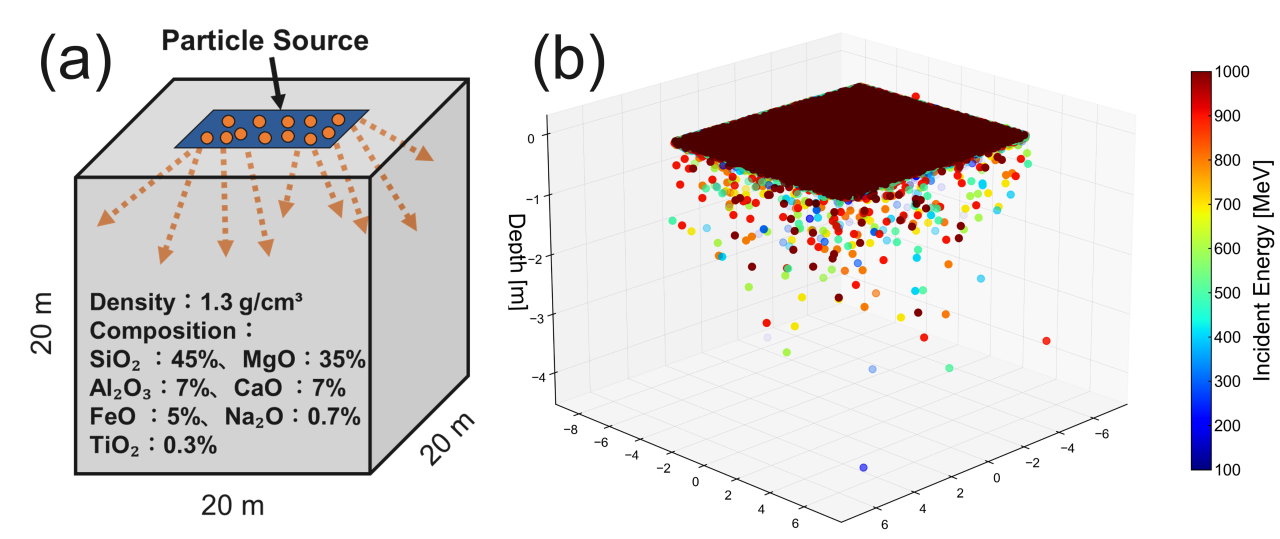
Gaku Kinoshita

Understanding Mercury's evolution requires disentangling the effects of space weathering from remote sensing observations of the planetary surface. Space weathering processes fall into two broad categories: (i) stochastic micrometeoroid impacts and (ii) radiation effects from the solar wind and galactic cosmic rays (GCRs) (Mesick et al., 2018). This study focuses on the latter and aims to quantitatively evaluate GCR-induced space weathering using Geant4 radiation transport simulations (Allison et al., 2016).

GCRs consist mainly of protons with energies ranging from several hundred MeV to several GeV, originating from outside the solar system and accelerated by supernova explosions (Simpson, 1983). Previous work by Gurtner et al. (2004) explored GCR interactions with Mercury’s surface using Geant4, but relied heavily on assumptions due to limited observational data from Mariner 10. With the advancements brought by MESSENGER and BepiColombo, a reassessment based on updated environmental and surface composition data is now necessary.

This study addresses two main objectives: (1) characterization of the near-Mercury GCR environment based on models and observations, and (2) simulation-based estimation of energy deposition by cosmic-ray protons into Mercury’s surface. For (1), we assessed the effect of Mercury’s magnetosphere on GCR penetration using the KT17 magnetic field model (Korth et al., 2017). We calculated Larmor radii and particle rigidity to estimate the shielding effect. We also analyzed high-energy particle data from the “SPM” radiation housekeeping monitor (Kinoshita et al., 2025) onboard BepiColombo/MMO (Murakami et al., 2020). The SPM continuously observes galactic cosmic rays (GCRs) during BepiColombo’s cruise phase; in this study, we focus on measurements obtained during the Mercury swing-by.

For (2), we constructed a model of Mercury-analog material in Geant4 and simulated incident proton trajectories (see Fig. 1). We recorded parameters such as incident energy, deposited energy, angle of incidence, and maximum penetration depth to examine their interdependencies. These results provide key insights for interpreting upcoming observations of Mercury’s surface by X-ray, gamma-ray, and neutron spectrometers following BepiColombo’s orbital insertion at the end of 2026.

Figure 1. (a) Mercury surface simulant constructed in the Geant4 model environment. (b) Relationship between the incident energy of protons and their penetration depth into the simulated surface. (This is a preliminary result; future work will further refine simulation settings.)

References

[1] Allison, J., Amako, K., Apostolakis, J., Arce, P., Asai, M., Aso, T., et al. (2016). Recent developments in Geant4. Nuclear Instruments and Methods in Physics Research Section A: Accelerators, Spectrometers, Detectors and Associated Equipment, 835, 186–225. https://doi.org/10.1016/j.nima.2016.06.125

[2] Gurtner, M., Desorgher, L., Flückiger, E. O., & Moser, M. R. (2006). A Geant4 application to simulate the interaction of space radiation with the Mercurian environment. Advances in Space Research, 37(9), 1759–1763.

[3] Kinoshita, G., Ueno, H., Murakami, G., Pinto, M., Yoshioka, K., & Miyoshi, Y. (2025). Simulation for the calibration of radiation housekeeping monitor onboard BepiColombo/MMO and application to the inner heliosphere exploration. Journal of Geophysical Research: Space Physics, 130, e2024JA033147. https://doi.org/10.1029/2024JA033147

[4] Korth, H., Johnson, C. L., Philpott, L., Tsyganenko, N. A., & Anderson, B. J. (2017). A dynamic model of Mercury’s magnetospheric magnetic field. Geophysical Research Letters, 44, 10,147–10,154. https://doi.org/10.1002/2017GL074699

[5] Mesick, K. E., Feldman, W. C., Coupland, D. D. S., & Stonehill, L. C. (2018). Benchmarking Geant4 for simulating galactic cosmic ray interactions within planetary bodies. Earth and Space Science, 5, 324–338. https://doi.org/10.1029/2018EA000400

[6] Murakami, G., Hiroyuki, O., Shoya, M., Taeko, S., Yasumasa, K., Yoshifumi, S., et al. (2020). Mio—First comprehensive exploration of Mercury’s space environment: Mission overview. Space Science Reviews, 216(7), 113. https://doi.org/10.1007/s11214‐020‐00733‐3

[7] Pieters, C. M., & Noble, S. K. (2016). Space weathering on airless bodies. Journal of Geophysical Research: Planets, 121, 1865–1884. https://doi.org/10.1002/2016JE005128

How to cite: Kinoshita, G.: Assessment of Cosmic-Ray-Induced Space Weathering on Mercury’s Surface Using Geant4 Simulations, EPSC-DPS Joint Meeting 2025, Helsinki, Finland, 7–13 Sep 2025, EPSC-DPS2025-712, https://doi.org/10.5194/epsc-dps2025-712, 2025.

F62
|
EPSC-DPS2025-687
|
ECP
|
On-site presentation
Jared Schroeder, Stefano Livi, and Frederic Allegrini

The Strofio neutral mass spectrometer, part of the SERENA suite aboard BepiColombo, experienced a launch anomaly that left one of its electrodes (D5) permanently shorted to ground (0 V). Following an extensive diagnostic and testing campaign, we report major progress in recovering and even enhancing Strofio's operational capabilities despite this hardware limitation. In particular, molecular beam testing conducted in February 2025 led to the discovery of a new operational configuration that restores full mass range coverage (3–64 amu) with excellent mass resolution (m/Δm > 100 at mass 40). This configuration overcomes the constraints imposed by the D5 anomaly but requires alternating between two distinct modes to resolve the H and H₂ peaks (masses 1 and 2), mitigating spectral overlap effects inherent to Strofio’s rotating field time-of-flight technique. We present the updated operational parameters, validate the instrument’s performance under this new mode, and discuss the planned cross-calibration with other instruments in the SERENA suite to ensure data consistency. These advancements represent a significant restoration of Strofio's scientific capabilities and position the instrument to deliver high-quality compositional data during BepiColombo’s orbital mission at Mercury.

How to cite: Schroeder, J., Livi, S., and Allegrini, F.: Status Update on Strofio: Recovery and Performance Advancements Post-Launch Anomaly, EPSC-DPS Joint Meeting 2025, Helsinki, Finland, 7–13 Sep 2025, EPSC-DPS2025-687, https://doi.org/10.5194/epsc-dps2025-687, 2025.

F63
|
EPSC-DPS2025-847
|
ECP
|
On-site presentation
Rozenn Robidel, Eric Quemerais, and Nancy L. Chabot

Radar-bright features near Mercury’s poles were first identified through ground-based radar observations, which suggested the presence of water ice at or near the surface in these regions [1,2]. Subsequent data from MESSENGER revealed a strong correlation between these radar-bright deposits and deep impact craters that remain in persistent shadow – areas where sunlight never reaches the crater floors and where surface temperatures are low enough for water ice to be thermally stable [3,4]. This stability is especially likely if the ice is insulated by a layer of organic-rich volatile compounds, as suggested by topographic, thermal, and spectral measurements from MESSENGER [5-8].

In these permanently shaded regions (Figure 1), the main source of illumination is solar Lyman-α radiation at 121.6 nm, produced by the scattering of solar photons by interplanetary hydrogen. This process generates a diffuse ultraviolet glow that uniformly bathes Mercury’s surface. If water ice is present, it is expected to induce detectable variations in surface albedo at this wavelength, as the Lyman-α reflectance from icy areas should be lower than that of the surrounding regolith.

Figure 1: North Polar Stereographic view of Mercury. The pink circles represent the Permanent Shadowed Regions (PSRs). 

The EUV (Extreme Ultraviolet) detector of the PHEBUS (Probing the Hermean Exosphere By Ultraviolet Spectroscopy) instrument on board BepiColombo [9], operating in the 55–155 nm wavelength range, is well-suited to investigate this phenomenon. PHEBUS/EUV will enable the detection of variations of surface reflectance variations at Lyman-α, offering a unique opportunity to confirm the presence of surface or near-surface water ice in Mercury’s polar regions. In this study, we identify potential observation opportunities for these PSRs with PHEBUS/EUV during the nominal science phase of the BepiColombo mission, starting in April 2027. Observations of Mercury’s polar regions on the night side, near the terminator, with PHEBUS are scheduled during the so-called “terminator seasons” (Figure 2). However, these observations come with a risk that needs to be carefully considered: because the observations involve pointing close to the illuminated surface of Mercury, even a small misalignment could allow direct sunlight to enter the baffle and irreversibly damage the detector. Scheduling the observations toward the end of the mission would ensure that most exospheric data will have already been acquired, minimizing the risk of detector degradation.

Figure 2: The diagram shows the orbit of Mercury as seen from the Sun's north pole and the polar orbits of BepiColombo (green). It also indicates the boundaries of the four seasonal phases during Mercury's 88-day orbital period: in blue, the perihelion season, in orange the aphelion season and in magenta, the terminator seasons.


References:

[1] Harmon, J. K., & Slade, M. A. (1992). Radar mapping of Mercury: Full-disk images and polar anomalies. Science, 258(5082), 640-643.

[2] Slade, M. A., Butler, B. J., & Muhleman, D. O. (1992). Mercury radar imaging: Evidence for polar ice. Science, 258(5082), 635-640.

[3] Chabot, N. L., Ernst, C. M., Denevi, B. W., et al. (2012). Areas of permanent shadow in Mercury's south polar region ascertained by MESSENGER orbital imaging. Geophysical Research Letters, 39(9).

[4] Chabot, N. L., Ernst, C. M., Harmon, J. K., et al. (2013). Craters hosting radar‐bright deposits in Mercury's north polar region: Areas of persistent shadow determined from MESSENGER images. Journal of Geophysical Research: Planets, 118(1), 26-36.

[5] Neumann, G. A., Cavanaugh, J. F., Sun, X., et al. (2013). Bright and dark polar deposits on Mercury: Evidence for surface volatiles. Science, 339(6117), 296-300.

[6] Paige, D. A., Siegler, M. A., Harmon, J. K., et al. (2013). Thermal stability of volatiles in the north polar region of Mercury. Science, 339(6117), 300-303.

[7] Chabot, N. L., Ernst, C. M., Denevi, B. W., et al. (2014). Images of surface volatiles in Mercury’s polar craters acquired by the MESSENGER spacecraft. Geology, 42(12), 1051-1054.

[8] Chabot, N. L., Ernst, C. M., Paige, D. A., et al. (2016). Imaging Mercury's polar deposits during MESSENGER's low‐altitude campaign. Geophysical Research Letters, 43(18), 9461-9468.

[9] Quémerais, E., Chaufray, J. Y., Koutroumpa, D., et al. (2020). PHEBUS on Bepi-Colombo: post-launch update and instrument performance. Space Science Reviews, 216, 1-23.

How to cite: Robidel, R., Quemerais, E., and Chabot, N. L.: Potential for Water Ice Detection at Mercury’s Poles: Contribution of Night-Side Observations by BepiColombo/PHEBUS Near the Terminator., EPSC-DPS Joint Meeting 2025, Helsinki, Finland, 7–13 Sep 2025, EPSC-DPS2025-847, https://doi.org/10.5194/epsc-dps2025-847, 2025.

F64
|
EPSC-DPS2025-406
|
ECP
|
On-site presentation
Martina Moroni, Anna Milillo, Alessandro Mura, Apostolos Christou, Petr Pokorny, Valeria Mangano, Alexey Berezhnoy, Alessandro Aronica, Alessandro Brin, Elisabetta De Angelis, Pier Paolo Di Bartolomeo, Adrian Kazakov, Cristina Leto, Stefano Massetti, Stefano Orsini, Christina Plainaki, Grace Richards, Rosanna Rispoli, Roberto Sordini, and Mirko Stumpo

The NASA/MESSENGER (MErcury Surface, Space ENvironment, GEochemistry, and Ranging) mission provided measurements of Mercury’s Ca exosphere, allowing the study of its morphology and its seasonal variations. Observations of Ca column densities exhibit a scale height consistent with a temperature > 50,000 K, with a source located mainly on the dawn-side of the planet [1]. Although the Micro-Meteoroid Impact Vaporization (MMIV) process is considered as the main source of exospheric Ca, previous estimates have not yet been able to justify the observed intensity and energy. In addition, the observed seasonal Ca dependence shows an excess emission shortly after Mercury’s perihelion at TAA ∼25° and at TAA ∼ 150°. These enhancements have been attributed to the vaporization of surface material induced by meteor stream impacts, possibly resulting from Comet Encke [2,4,9].

In this work, we investigate the role of the MMIV process in shaping the Mercury’s Ca exosphere using the exospheric Monte Carlo model developed at the Institute for Space Astrophysics and Planetology (IAPS) [7]. We extend the model by including simulations of both meteoroid background flux [10] and the Encke stream flux [2], considering both low (< 10000 K) and high-energy (> 20000 K) Ca components released by meteoroid impacts [5,6]. We assume a non-homogeneous surface Ca abundance, with Ca-rich regions based on MESSENGER’s surface composition data [8]. This assumption, combined with Mercury’s 3:2 spin-orbit resonance, results in periodic exposure of Ca-rich regions to varying meteoroid fluxes, modulating the exospheric Ca structure over its 2-year orbit. As a consequence, the exosphere evolves differently in even and odd Mercury years (Fig. 1). Furthermore, dust dynamics studies [3] indicate that Encke stream particles of different ages follow slightly different orbits and impact Mercury at distinct TAAs, velocities, and arrival directions. 

By combining the effects of background meteoroid fluxes and the Encke stream, we can perform more accurate modelization of the exospheric Ca variability across Mercury's 2-year.

We compare our results with MESSENGER observations of the dayside Ca exosphere and show that the simulated Ca distribution from the background meteoroid flux is in good agreement with data between TAA 0° and 270°. However, the contribution from the Encke stream results in lower than observed Ca abundances (Fig. 2). This can be attributed to the underestimation of the total stream mass influx and/or the uncondensed Ca fraction in the model. To better reproduce the observed Ca peaks, both parameters likely need to be significantly higher than the values currently adopted from the literature.

We will show that by considering a higher relative contribution of the energetic Ca component (~ 50,000 K) the observed exospheric intensities are better reproduced. This is consistent with observations, which show no direct evidence of a low-energy Ca population. Despite the model’s success in reproducing key features of the Ca exosphere, it fails to reproduce the observed Ca decrease between TAA 270° and 300°, suggesting that additional mechanisms may influence exospheric dynamics.

Overall, this study shows the complexity of the processes governing the refilling of the exosphere and underline the need for accurate calibration of model parameters. Future high-quality data provided by the ESA/JAXA BepiColombo, starting its nominal phase in 2026, will be crucial for providing deeper insights into the dynamic of the Ca exosphere and refining the accuracy of our model.

Figure 1: Seasonal Ca content in Mercury's exosphere due to the meteoroid background flux over the course of Mercury's 2-year orbital cycle. Comparison of simulation with ones of Burger et al. (2014) obtained through a best fit to the UVVS observations

Figure 2: Seasonal Ca content in Mercury's exosphere due to the meteoroid background flux (black line), and the background including the cometary contribution (orange line), averaged over the course of Mercury's 2-year orbital cycle, compared with the observations (Burger et al., 2014; blue line) along the orbit, and, hence, TAA

References

 [1] Burger, M.H., Killen, R.M., McClintock, W.E., et al., 2014. “Seasonal variations in Mercury’s dayside calcium exosphere”, Icarus 238, 51–58

[2] Christou, A. A., R. M. Killen, and M. H. Burger, 2015, “The meteoroid stream of comet Encke at Mercury: Implications for MErcury Surface, Space ENvironment, GEochemistry, and Ranging observations of the exosphere”, Geophys. Res. Lett., 42, 7311–7318

[3] Christou, A. A., Egal, A., Georgakarakos, N., 2024, “The Taurid resonant swarm at Mercury”, Monthly Notices of the Royal Astronomical Society, 527(3), 4834-4846.

[4] Killen, R. M., and J. M. Hahn, 2015, “Impact vaporization as a possible source of Mercury’s calcium exosphere”, Icarus, 250, 230–237

[5] Killen, R.M., 2016, “Pathways for energization of ca in Mercury’s exosphere”, Icarus 268, 32–36

[6] Moroni, M., Mura, A., Milillo, A., Plainaki, C., Mangano, V., et al., 2023, “Micro-meteoroids impact vaporization as source for Ca and CaO exosphere along Mercury's orbit”, Icarus, 401, 115616

[7] Mura, A., Milillo, A., Orsini, S., Massetti, S., 2007, “Numerical and analytical model of Mercury’s exosphere: dependence on surface and external conditions”, Planet. Space Sci. 55, 1569–1583

[8] Nittler, L. R., Frank, E. A., Weider, S. Z., Crapster-Pregont, E., Vorburger, A., Starr, R. D., Solomon, S. C., 2020, “Global major-element maps of Mercury from four years of MESSENGER X-Ray Spectrometer observations”, Icarus, 345, 113716.

[9] Plainaki, C., Mura, A., Milillo, A., Orsini, S., Livi, S., Mangano, V., Massetti, S., Rispoli, R., De Angelis, E., 2017, “Investigation of the possible effects of comet Encke’s meteoroid stream on the Ca exosphere of Mercury”, J. Geophys. Res. Planets 122, 1217–1226.

[10] Pokorný, P., Sarantos, M., & Janches, D., 2018, “A comprehensive model of the meteoroid environment around Mercury”, The Astrophysical Journal, 863(1), 31

How to cite: Moroni, M., Milillo, A., Mura, A., Christou, A., Pokorny, P., Mangano, V., Berezhnoy, A., Aronica, A., Brin, A., De Angelis, E., Di Bartolomeo, P. P., Kazakov, A., Leto, C., Massetti, S., Orsini, S., Plainaki, C., Richards, G., Rispoli, R., Sordini, R., and Stumpo, M.:  Effects of Comet Encke’s meteoroid stream on the seasonal variation of Mercury’s Ca exosphere, EPSC-DPS Joint Meeting 2025, Helsinki, Finland, 7–13 Sep 2025, EPSC-DPS2025-406, https://doi.org/10.5194/epsc-dps2025-406, 2025.

F65
|
EPSC-DPS2025-615
|
On-site presentation
Rosemary Killen, Ronald Vervack, and Matthew Burger

Calcium vapor ejected into Mercury's exosphere has been found to be of extreme temperature, exceeding 20,000 K (Killen et al., 2005; Killen, 2016; Burger et al. 2012). Killen (2016) suggested that Ca is first ejected from the surface as a molecule (e.g., CaO, CaS) by impact vaporization, and subsequently gains energy by photodissociation. The problem with this scenario is that photodissociation fails to impart quite enough energy to result in a 20,000 K vapor. We suggest another possible mechanism for heating the Ca: impact ionization with subsequent recombination. The peak of the impact velocity distribution at the Moon is 10 km/s and that for Mercury is nearly 20 km/s, thus more than half of impacts onto the Moon and most impacts onto Mercury have impact velocities >10 km/s (Cintala, 1992).

Kurosawa et al. (2010) used a 1030 J laser with 2.5 ns shots onto diopside to simulate >10 km/s impacts. The results of these experiments showed that, initially, 25 - 50 ns after the laser shot, emission lines of Mg+, O+, and Ca+ were observed. The number of electrons then drastically decreased, suggesting that electron recombination was a key factor in the evolution of the vapor cloud. Kurosawa et al. suggest that ion-recombination plays an important role in heating the neutral vapor, which they observed at ~20,000 K, with the heating caused by release of the specific heat of ionization.

To the extent that these experiments simulate an impact, they may be directly relevant to the potential heating of Ca vapor in Mercury's exosphere.

References

  • Burger, M. H., R. M. Killen, W. E. McClintock, R. J. Vervack, Jr., A. W. Merkel, A. L. Sprague, and M. Sarantos, Modeling MESSENGER Observations of calcium in Mercury's exosphere, Journal of Geophysical Research, 117, 0L11B, doi:10.1029/2012JE004158, 2012.
  • Cintala, Mark J., Impact-Induced thermal effects in the lunar and Mercurian regoliths. Journ. Geophys. Res. 97 E1, 947-973, 1992.
  • Killen, R. M. Pathways for energization of Ca and Mg in Mercury's exosphere. Icarus, 268, 32–36, 2016. doi: 1016/j.icarus.2015.12.035
  • Killen, R. M., T. Bida, and T. H. Morgan, The calcium exosphere of Mercury, Icarus, 173#2, 300-311, 2005.
  • Kurosawa, S. Sugita, T. Kadono et al., Roles of Shock-Induced Ionization due to >10 km/s Impacts on Evolution of Silicate Vapor Clouds. Abstract 1785. 41st Lunar and Planetary Science Conference, 2010.

How to cite: Killen, R., Vervack, R., and Burger, M.: Impact Ionization as a Potential Heating Mechanism for Ca in Mercury's Exosphere, EPSC-DPS Joint Meeting 2025, Helsinki, Finland, 7–13 Sep 2025, EPSC-DPS2025-615, https://doi.org/10.5194/epsc-dps2025-615, 2025.

F66
|
EPSC-DPS2025-528
|
On-site presentation
David Phillips, Riku Jarvinen, Ilja Honkonen, and Esa Kallio

We present analyses of ultra-low frequency (ULF) waves in Mercury's ion foreshock in our global hybrid particle-in-cell simulation code, RHybrid (paRallel Hybrid). The model treats ions as macroscopic particle clouds moving under the Lorentz force while electrons are a charge-neutralising, massless fluid. Magnetic field is advanced by Faraday's law and coupled self-consistently with ion dynamics (ion charge density and ion electric current density) via non-radiative Maxwell's equations. Mercury is described as a particle absorbing obstacle with a dipole magnetic field.

We study a broad parameter space of scenarios for the interplanetary magnetic field (IMF) and solar wind at Mercury, in particular analysing the properties of the resulting ion foreshock and associated ULF waves, such as the power spectral density, frequency, wavelength, phase speed, and polarisation among others, as well as the velocity distribution of the scattered suprathermal ions. We also compare these results among the different scenarios to investigate the response of the ion foreshock to different IMF (field strength, Parker spiral angle) and solar wind conditions (slow, moderate and fast stream).

With this work, we prepare for further development of the Finnish Meteorological Institute's free and open source space weather particle simulation platforms, and for the interpretation of upcoming observations from the BepiColombo mission.

How to cite: Phillips, D., Jarvinen, R., Honkonen, I., and Kallio, E.: Global hybrid-particle simulations of Mercury's ion foreshock and ULF waves, EPSC-DPS Joint Meeting 2025, Helsinki, Finland, 7–13 Sep 2025, EPSC-DPS2025-528, https://doi.org/10.5194/epsc-dps2025-528, 2025.

F67
|
EPSC-DPS2025-578
|
On-site presentation
Ilja Honkonen, Riku Jarvinen, and David Phillips

RHybrid (paRallel Hybrid) is a highly parallel hybrid particle-in-cell (PIC) space plasma simulation platform based on the macroscopic particle cloud-in-cell (CIC) technique for kinetic ions and the staggered Cartesian mesh grid method for electric and magnetic fields and charge-neutralizing fluid electrons. RHybrid has been used extensively for interpretation of spacecraft observations from plasma environments of Mercury, Venus, Mars and in studies of other solar system objects as well as extrasolar objects. Typically, RHybrid is applied for the solar wind interactions (space weather) of planets, where the size of the obstacle to the solar wind is smaller than Earth's magnetosphere. Alternatively, in simulations of larger magnetospheres, like that of Earth, the inner magnetosphere can be treated as a boundary condition to reduce computational costs.

Contrary to its non-parallel predecessor the HYB model, RHybrid does not yet support adaptive mesh refinement (AMR), nor temporal adaptivity, that is, substepping. In AMR, spatial resolution is increased (grid cell size decreased) in selected regions in order to better capture relevant phenomena while lowering computational requirements in other regions with less resolution. Temporal substepping also lowers computational requirements by solving certain regions only when necessary instead of solving everything whenever a solution is required anywhere in the simulated volume. AMR and substepping can each potentially reduce the time to solution by an order of magnitude, hence implementing both could allow running 100 times as many simulations as before with the same computational resources, or run 100 times larger simulations than before, or any combination thereof. Here we present our current progress towards a novel hybrid PIC/CIC model via adding AMR and substepping to RHybrid.

We discuss existing algorithms for AMR and substepping and our contributions as well as show various tests in 1, 2 and 3 dimensions in order to verify the new code. This development enables us to prepare for the interpretation of upcoming observations from the BepiColombo mission and to resolve Mercury's space weather self-consistently with ion kinetic effects at an unprecedented accuracy in terms of both the spatial resolution and the resolution of particle velocity distributions.

How to cite: Honkonen, I., Jarvinen, R., and Phillips, D.: On enhancing parallel global hybrid-particle model with run-time adaptive mesh refinement and temporal substepping, EPSC-DPS Joint Meeting 2025, Helsinki, Finland, 7–13 Sep 2025, EPSC-DPS2025-578, https://doi.org/10.5194/epsc-dps2025-578, 2025.

F68
|
EPSC-DPS2025-250
|
On-site presentation
Riku Jarvinen, Esa Kallio, David Phillips, Ilja Honkonen, and Samuel Grant

We present a study of Mercury’s space weather using our global 3D open source hybrid-particle modelling platform, RHybrid (paRallel Hybrid). The model resolves the kinetic motion of ions via the Lorentz force and the fluid dynamics of charge-neutralising electrons through Ohm’s law, self-consistently coupled with the evolution of the magnetic field via Faraday’s law. Efficient parallelisation for high-performance computing enables the code to resolve spatial structures and ion velocity distributions with high resolution. Mercury’s surface is modelled as a particle-absorbing inner boundary, while the crust–mantle region is represented as a resistive spherical shell atop an ideally conducting core. The planetary magnetic field is modelled as a dipole offset northward from the planet’s centre. Here, the RHybrid model is applied to simulate the interaction between the Hermean magnetosphere and the solar wind under selected upstream solar wind and interplanetary magnetic field conditions. We focus on the BepiColombo mission’s swingbys of Mercury and the interpretation of in situ observations, including the properties and boundaries of charged particles, the magnetic field, and plasma waves in the Hermean plasma environment.

  • Jarvinen R., Alho M., Kallio E., Pulkkinen T.I. (2020), Ultra-low frequency waves in the ion foreshock of Mercury: A global hybrid modeling study, Mon. Notices Royal Astron. Soc., 491, 3, 4147-4161, doi:10.1093/mnras/stz3257
  • Kallio E., Jarvinen R., Massetti S., Alberti T., Milillo A., Orsini S., De Angelis E., Laky G., Slavin J., Raines J.M., Pulkkinen T.I. (2022), Ultra-low frequency waves in the Hermean magnetosphere: On the role of the morphology of the magnetic field and the foreshock, Geophys. Res. Lett. 49, 24, doi:10.1029/2022GL101850
  • RHybrid repository: https://github.com/fmihpc/rhybrid

How to cite: Jarvinen, R., Kallio, E., Phillips, D., Honkonen, I., and Grant, S.: Global hybrid-particle modelling of Mercury’s space plasma environment and BepiColombo observations, EPSC-DPS Joint Meeting 2025, Helsinki, Finland, 7–13 Sep 2025, EPSC-DPS2025-250, https://doi.org/10.5194/epsc-dps2025-250, 2025.

F69
|
EPSC-DPS2025-1468
|
On-site presentation
Anna Milillo, Willi Exner, Ali Varsani, Daniel Heyner, Lina, Z. Hadid, Wolfgang Baumjohann, Stas Barabash, NIcolas Andrè, Valeria Mangano, and Sae Aizawa and the MPO/SERENA, MPO-MAG, Mio-MGF, Mio/MPPE-MEA and MSA teams

Thanks to MESSENGER observations, we know that Mercury’s magnetosphere is highly dynamic, and it can be fully reconfigured in a few minutes, with strong influences of external conditions.

BepiColombo mission includes a comprehensive payload for the investigation of the environment. During the cruise phase, not all the sensors can operate for science measurements, however, during the swing-bys the magnetic field and particles in Mercury’s magnetosphere were successfully measured by the MPO and Mio payloads. In this presentation, we will focus on Mercury’s swing-by 2 (MSB2) on 23 June 2022 showing a good example of highly dynamic magnetosphere.

During this swing by, BepiColombo passed from dusk in the far tail toward dawn in the dayside. The trajectory was in the southern hemisphere in a nearly equatorial path as shown in figure 1.

Figure 1. Second Mercury swing-by trajectory in x-y MSO coordinates

According to the magnetic field data (MPO-MAG and MGF) before and after the flyby, the IMF z component turned from northward to southward, as it was suggested by comparing the observed magnetic field data during the crossing to the simulated ones (Exner et al., JGR-SP, 129,  2024). The solar wind observed by SERENA-PICAM before and after the swing-by shows a high variability in the energy. In the inner tail, signatures of plasma sheet populations streaming toward the planet have been observed. The ion energies (SERENA-MIPA and PICAM) reached up to 10 keV and electron (MPPE-MEA) up to 1 keV close to the dawn side of the planet. This population could be the signature of plasma convected and energized from the tail toward the so-called horn, or it could be a signature of partial ring current. Mass analysis (MPPE-MSA) shows that the origin of these ions is probably the solar wind. In the dayside, the magnetopause boundary was clearly identifiable together with a weak low latitude boundary layer. While the bow shock crossing was not clearly distinguishable, showing energy-dispersion signatures and a flapping boundary. Upstream the bow shock, foreshock ions have been observed by SERENA-PICAM and MPPE-MSA in agreement with a quasi-parallel IMF configuration. Mass analysis show that the foreshock ions have a component of He++ and heavy ions. A population at lower energy (about 10s eV) observed by MPPE-MSA is the signature of spacecraft outgassing.

Simultaneous Na ground-based observations have been obtained by the THEMIS solar telescope during the whole day. These observations show a highly variable exospheric intensities, that could be related to the variability of the solar wind and of the interplanetary magnetic field.

How to cite: Milillo, A., Exner, W., Varsani, A., Heyner, D., Hadid, L. Z., Baumjohann, W., Barabash, S., Andrè, N., Mangano, V., and Aizawa, S. and the MPO/SERENA, MPO-MAG, Mio-MGF, Mio/MPPE-MEA and MSA teams: Mercury’s Environment Observed by BepiColombo during the Second Mercury’s Swing-by, EPSC-DPS Joint Meeting 2025, Helsinki, Finland, 7–13 Sep 2025, EPSC-DPS2025-1468, https://doi.org/10.5194/epsc-dps2025-1468, 2025.

F70
|
EPSC-DPS2025-1067
|
On-site presentation
Valeria Mangano, Stefano Massetti, Dario Del Moro, Pier Paolo Di Bartolomeo, Anna Milillo, Martina Moroni, Stefano Orsini, Francois Leblanc, Daniel Heyner, Ali Varsani, Gunter Laky, Yoshifumi Saito, Nicolas André, Mathias Rojo, Alessandro Aronica, Alessandro Brin, Elisabetta De Angelis, Adrian Kazakov, Cristina Leto, and Christina Plainaki and the SERENA team

On 19 June 2023 the ESA-JAXA double spacecraft BepiColombo performed its third flyby around Mercury with a closest approach on the nightside at an altitude of 200 km above the surface and an almost equatorial trajectory that crossed the tail magnetosphere (Figure 1, left).

During the days around the flybys many instruments onboard the spacecraft were operative to get new in-situ measurements of the planetary environment, providing data of magnetic field, of the solar wind and plasma, ions, electrons and neutral particles, radiation, dust particles.

Also from the Earth, an observing campaign of Mercury was performed from the solar telescope THEMIS in the Canary Island of Tenerife, to detect the exospheric morphology and variability for the 5 days around the flyby. Thanks to the favourable orbital configuration (Figure 1, right), the good performances of the high resolution spectrograph MTR and of the specific characteristics of the solar telescope THEMIS and its adaptive optics, it is possible to observe Mercury during all the daytime, i.e. many hours/day.

The high resolution spectrograph can image separately the two D emission lines at 5890-96 A of sodium, and a scanning system provide a full image of the planet in about 30 minutes. Sodium is a well-known exospheric component of Mercury, and it is well detectable also from the ground, thanks to the fact that its emission lies in a region free from telluric lines, and it is then able to provide a time series of sodium exospheric images to study its morphology and variability.

The exosphere, that is neutral gaseous environment of the planet, is the result of many different interactions occurring between the outer space (solar wind particles and radiation, dust…) with the planetary surface, causing release of particles. The interplanetary magnetic field, interacting with the intrinsic planetary magnetic field, seems to be a primary driver of the two peculiar peaks of emission occurring at high latitude, often observed during ground based observations (Figure 2).

To study to exosphere thus means to enhance our understanding of Mercury’s overall environment and the physical processes that generate and sustain it.

In our work we provide the results coming from the analysis of the days around the third flyby at Mercury by completing ground-based data with in-situ measurements of the magnetic field and the ion and electron populations.

Figure 1: (left) BepiColombo trajectory on the XY plane during the third flyby (in red) compared to the previous ones; (right) Inner Solar System configuration during the contemporary observations from Earth-based solar telescope THEMIS (Sun in the center, Earth in blue, Mercury in green).


Figure 2: Example of sodium intensity emission in D2 line observed on June 19, 2023, showing the typical 2-peaks pattern in the solar direction, with the northern one more intense. Sun in on the left, the disk of Mercury is shown (black circle) and also the dusk terminator (white line).

How to cite: Mangano, V., Massetti, S., Del Moro, D., Di Bartolomeo, P. P., Milillo, A., Moroni, M., Orsini, S., Leblanc, F., Heyner, D., Varsani, A., Laky, G., Saito, Y., André, N., Rojo, M., Aronica, A., Brin, A., De Angelis, E., Kazakov, A., Leto, C., and Plainaki, C. and the SERENA team: The third BepiColombo flyby to Mercury: ground based observation of the exosphere and in-situ measurements, EPSC-DPS Joint Meeting 2025, Helsinki, Finland, 7–13 Sep 2025, EPSC-DPS2025-1067, https://doi.org/10.5194/epsc-dps2025-1067, 2025.