TP4 | Exploring Venus: Unveiling Mysteries of Earth’s Twin from Core to Atmosphere

TP4

Exploring Venus: Unveiling Mysteries of Earth’s Twin from Core to Atmosphere
Conveners: Giulia Alemanno, Océane Barraud | Co-conveners: Ana-Catalina Plesa, Thomas Widemann, Anne Grete Straume-Lindner, Erika Kohler
Orals MON-OB2
| Mon, 08 Sep, 09:30–10:30 (EEST)
 
Room Sun (Finlandia Hall)
Orals MON-OB4
| Mon, 08 Sep, 14:00–16:00 (EEST)
 
Room Sun (Finlandia Hall)
Orals MON-OB5
| Mon, 08 Sep, 16:30–18:00 (EEST)
 
Room Sun (Finlandia Hall)
Orals TUE-OB2
| Tue, 09 Sep, 09:30–10:30 (EEST)
 
Room Sun (Finlandia Hall)
Orals TUE-OB3
| Tue, 09 Sep, 11:00–12:30 (EEST)
 
Room Sun (Finlandia Hall)
Orals TUE-OB5
| Tue, 09 Sep, 15:00–16:00 (EEST)
 
Room Sun (Finlandia Hall)
Orals TUE-OB6
| Tue, 09 Sep, 16:30–18:00 (EEST)
 
Room Sun (Finlandia Hall)
Posters MON-POS
| Attendance Mon, 08 Sep, 18:00–19:30 (EEST) | Display Mon, 08 Sep, 08:30–19:30
 
Finlandia Hall foyer, F16–52
Mon, 09:30
Mon, 14:00
Mon, 16:30
Tue, 09:30
Tue, 11:00
Tue, 15:00
Tue, 16:30
Mon, 18:00
Venus, often referred to as Earth's sibling due to its similar size, mass, and proximity, remains one of the most intriguing and enigmatic planets in our Solar System. Despite these similarities, Venus has followed an evolutionary path that is drastically different, presenting a profound enigma for planetary scientists.
Today, Venus is once again in the spotlight of planetary exploration, with an exciting wave of missions set to transform our understanding of this enigmatic world. Future missions such as ESA's EnVision and NASA's VERITAS and DAVINCI aim to explore Venus, uncovering clues about its geological history and activity, interior structure, atmospheric composition, and climate evolution. Beyond these missions, a diverse array of scientific activities, including ground-based observations, laboratory experiments, and theoretical modeling are contributing to a comprehensive understanding of Venus.
We welcome contributions from all areas of Venus research, including interior processes, surface geology, atmospheric dynamics, laboratory simulations, and mission data analysis. By bringing together diverse expertise, this session aims to enhance our understanding of Venus' history and current state, while exploring its broader implications for planetary evolution throughout the Solar System and beyond.

Session assets

Orals MON-OB2: Mon, 8 Sep, 09:30–10:30 | Room Sun (Finlandia Hall)

Chairpersons: Thomas Widemann, Ana-Catalina Plesa
Future missions and ground-based
09:30–09:42
|
EPSC-DPS2025-850
|
On-site presentation
Anne Grete Straume-Lindner, Mitchell D. Schulte, and Anne Pacros and the Envision Science Working Team (SWT) and Project Teams

EnVision is ESA’s next mission to Venus in partnership with NASA, where NASA provides the Synthetic Aperture Radar payload and mission support for critical phases [1]. The mission was adopted in January 2024, and ESA awarded Thales Alenia Space (TAS) the contract to build the Envision spacecraft on 28 January 2025. The launch is scheduled for 2031, and the science operations at Venus would start in summer 2034, after the mission cruise and aerobraking phase around Venus to achieve a low Venus polar orbit. EnVision will provide a holistic view of the planet from its inner core to its upper atmosphere, studying the planets history, geological activity and climate. It aims to establish the nature and current state of Venus’ geological evolution and its connection with the atmosphere. The overall science objectives are to: (i) characterize the sequence of events that formed the regional and global surface features of Venus, as well as the geodynamic framework that has controlled the release of internal heat over Venus history; (ii) determine how geologically active the planet is today; (iii) establish the interactions between the planet and its atmosphere at present and through time. Furthermore, EnVision will look for evidence of past liquid water on the planet surface.

The nominal science phase of the mission will last six Venus cycles (~four Earth years), and ~210 Tbits of science data will be downlinked using a Ka-/X-band communication system. The science objectives will be addressed by five instruments and one experiment, provided by ESA member states and NASA. The NASA provided VenSAR S-band radar will perform targeted surface imaging as well as polarimetric and stereo imaging, radiometry, and altimetry. The high-frequency Subsurface Radar Sounder (SRS) will sound the upper crust in search of material boundaries for the first time. Three spectrometers, VenSpec-U, VenSpec-H and VenSpec-M, operating in the UV and Near- and Short Wave-IR, respectively, will map trace gases, search for volcanic gas plumes above and below the clouds, and map surface emissivity and composition. A Radio Science Experiment (RSE) investigation will exploit the spacecraft Telemetry Tracking and Command (TT&C in Ka-/X bands) system to determine the planet’s gravity field and to sound the structure and composition of the middle atmosphere and cloud layer in radio occultation. ASI, DLR, BelSPO, and CNES lead the procurements of the SRS, VenSpec-M, VenSpec-H and VenSpec-U instruments and the Radio Science Experiment (RSE), respectively. All instruments have heritage and robust margins relative to the requirements, with designs suitable for operation in the Venus environment, and were chosen to meet the broad range of measurement requirements needed to support the EnVision scientific objectives. The EnVision science teams will adopt an open data policy, with public release of the scientific data after validation and verification. Public calibrated data availability are provided <6 months after data downlink.

In 2024, the Envision Science Working Team and its appointed Regions of Interest (ROI) Working Group started to work on a refined version of the Venus ROIs to be observed by the instruments and experiment. In particular, the planning of the VenSAR SAR imaging observations requires careful preparation and optimization, due to the high data rates and inter-planetary downlink limitations, balancing the observation needs between the mission instruments and experiment. Further activities include the maturation of the instrument and mission design, science performance simulations and confirmation, definition and preparations of the characterization, calibration, operations and data processing. Finally, the Envision science community is steadily growing with several scientific activities on-going to prepare for mission data exploitation.

The scientific objectives, instrumentation, and status of the EnVision mission will be presented, including an overview of on-going scientific and technical activities and the next steps in the mission preparation.

Acknowledgements: The Envision instrument (science) teams, further project team members, and industry partners.

References:

[1] ESA (2023): EnVision, Understanding why Earth’s closest neighbour is so different, ESA Definition Study Report, https://www.cosmos.esa.int/web/envision/links.

How to cite: Straume-Lindner, A. G., Schulte, M. D., and Pacros, A. and the Envision Science Working Team (SWT) and Project Teams: The EnVision Mission to Venus – mission overview and science preparations, EPSC-DPS Joint Meeting 2025, Helsinki, Finland, 7–13 Sep 2025, EPSC-DPS2025-850, https://doi.org/10.5194/epsc-dps2025-850, 2025.

09:42–09:54
|
EPSC-DPS2025-649
|
ECP
|
On-site presentation
Moa Persson and the Inanna mission core team

Why did Venus, once likely similar to Earth, evolve into a scorching world with a dense, toxic atmosphere? In the coming decade, Venus will be in the spotlight, with a new generation of missions descending through its clouds or probing its surface to explore its geologic past in search of answers. However, one critical part of the puzzle remains: How has the long-term influence of the space environment affected the evolution of Venus’ atmosphere?

Inanna, a new mission proposed to the European Space Agency’s M8 call, is designed to address this missing piece of the puzzle. It is the first mission fully dedicated to comprehensively investigate how the interplay between the solar wind and the Venusian ionosphere, the ionised uppermost part of the atmosphere, has driven atmospheric escape over time. Inanna is a two-spacecraft mission: the main Venus Orbiter, carrying instruments for in situ measurements of ions, neutrals, and electromagnetic fields, and the Solar Wind Monitor, which will spend most of its time in the solar wind to continuously characterize the solar wind and interplanetary magnetic field. This unique configuration will finally provide us with the means to disentangle the temporal variations in solar forcing from spatial structures in Venus’ induced magnetosphere, and give us solid evidence for how the Venusian atmosphere has evolved via interactions with outside forces through time.

By capturing both the drivers and the planetary response, Inanna will characterize the dynamic processes that accelerate and remove particles from Venus’ upper atmosphere. Deep dip campaigns of the Venus Orbiter, reaching down to or below the ionospheric peak at ~150 km, will show how energy and momentum from the solar wind couple into the atmosphere, and how atmospheric escape varies with region, composition and solar conditions. In addition, instruments to measure winds, temperature, and composition in the upper mesosphere, thermosphere, and ionosphere will help assess how energy and momentum may propagate upward from lower atmospheric layers.

While other upcoming missions focus on the history of Venus’ interior and lower atmosphere, Inanna complements and extends them by offering crucial insight into what has been lost to space and how that loss has occurred. Understanding this is essential to piecing together the full story of Venus’ transformation through time. In this presentation we will highlight the Inanna mission concept, its scientific goals, and how we plan to achieve them.

How to cite: Persson, M. and the Inanna mission core team: Inanna: Decoding the Role of Space in Venus’ Atmospheric Evolution Through Time, EPSC-DPS Joint Meeting 2025, Helsinki, Finland, 7–13 Sep 2025, EPSC-DPS2025-649, https://doi.org/10.5194/epsc-dps2025-649, 2025.

09:54–10:06
|
EPSC-DPS2025-1588
|
On-site presentation
Christophe Sotin, Guillaume Avice, Rita Parai, Arnaud Borner, Agnes Francastel, Sebastien Lebonnois, Jason Rabinovitch, and Francis Rocard

Measuring the abundances of noble gases and their isotope ratios in Venus atmosphere is an essential investigation to understand Venus global evolution [1]. We propose a small satellite concept (ESA F-type mission) that would skim through Venus atmosphere below the homopause to collect samples that will be brought back to Earth and analyzed by the most sophisticated instruments in international laboratories. The science objectives are to determine the origin and geological evolution of Venus and to assess its potential habitability in the past. They are critical in the context of exoplanets detection to assess whether a terrestrial exoplanet is more likely to be Earth-like or Venus-like, which has profound astrobiological implications.

This mission concept has been proposed in response to the ESA call for F3 mission. It has matured from previous mission concepts [2]. It has also beneficiated from targeted work on the fractionation of noble gases during high velocity sampling [3]. Finally, a recent study by a CNES team showed that such a mission is feasible within the constraints (launch vehicle, mass, cost, …) of the ESA F3 call.

We show that measurements of key elemental ratios of noble gases and of Kr and Xe isotopes at high precision in ground-based laboratories would allow determining the origin of Venus’ atmosphere but will also put constraints on how much xenon has been escaping during hydrogen escape episodes. Measurements will also be able to put constraints on the time of outgassing of Venus’ interior into the atmosphere via measurements of radiogenic excesses of noble gas isotopes produced by extinct (129I) and extant (238U) radionuclides.

The two main consequences of hyper-velocity sampling are: i) molecules are likely to be dissociated due to the high-enthalpy flight regime; ii) the atmospheric samples will be fractionated due to differential diffusion in the flow path. Numerical simulations [3] show that elemental and isotopic fractionations are mass-dependent and can be accounted for. Importantly, simulation results show that the isotopic ratios of xenon, due to its high mass, are little affected by fractionation. It highlights the complementarity between VATMOS-SR and the NASA DAVINCI mission with the later providing the in-situ density and the former the exquisite resolution on the isotopic ratios that is required to answer the science questions.

The VATMOS-SR mission would launch in July 2034 and would bring back the samples one year later. Samples will be distributed to European and other international partners for measurements to be performed within a couple of years after landing. This sample return mission may be the first return of a planetary sample.

[1] Avice et al. (2022) Space Science Reviews 218, 60. doi:10.1007/s11214-022-00929-9 [2] Sotin, et al. (2019) EPSC-DPS Joint Meeting 2019, EPSC–DPS2019–989. [3] Borner et al. (2025) submitted.

How to cite: Sotin, C., Avice, G., Parai, R., Borner, A., Francastel, A., Lebonnois, S., Rabinovitch, J., and Rocard, F.: VATMOS-SR: A Fast Mission to Return Samples from Venus Atmosphere, EPSC-DPS Joint Meeting 2025, Helsinki, Finland, 7–13 Sep 2025, EPSC-DPS2025-1588, https://doi.org/10.5194/epsc-dps2025-1588, 2025.

10:06–10:18
|
EPSC-DPS2025-1409
|
On-site presentation
Giulia Alemanno, Séverine Robert, and Emmanuel Marcq and the VenSpec Team

The ESA EnVision mission aims to provide a comprehensive understanding of Venus by investigating its geology and atmosphere, seeking to uncover why Venus and Earth, despite their similarities, have experienced such different evolutionary paths. 
A key payload on EnVision is the VenSpec Suite, designed to deliver unprecedented insights into Venus’ geological activity, atmospheric composition, and surface evolution. By targeting signatures of volcanic activity and mapping both surface and atmospheric features, VenSpec will seek to understand the processes shaping Venus today and in the past, and to provide insights into the evolution and habitability of terrestrial planets

The VenSpec Suite Instruments: The VenSpec Suite is following the holistic approach of the EnVision mission by studying the coupled system of surface and atmosphere on Venus with three complementary instruments, VenSpec-M, VenSpec-H, VenSpec-U and a Central Control Unit (CCU):

  • VenSpec-U is an ultraviolet spectral imager (at low and high spectral resolution between 190 and 380 nm) [1]. By probing how volcanic outgassing and atmospheric dynamics interact through the upper cloud level, VenSpec-U complement and enhance the VenSpec-H and VenSpec-M observations.
  • VenSpec-H is an infrared spectrometer, with four spectral bands in the near IR between 1.16 and 2.48 μm, that will provide measurements of atmospheric gases in the troposphere and mesosphere of Venus at high spectral resolution [2]. These observations will help identify volcanic plumes and gas exchanges with the surface, in coordination with VenSpec-M and VenSpec-U. Polarization filters are also included in the design to characterize the hazes in the mesosphere.
  • VenSpec-M is a multispectral imaging spectrometer in 14 near-IR transparency windows (0.79–1.51 μm). It will observe the Venus surface across five atmospheric windows around 1 μm and monitor the planet for volcanic activity using clouds and water vapor bands [3]. To retrieve calibrated emissivity data from the Venus surface, VenSpec-M will utilize improved topography from NASA VERITAS’s VISAR and EnVision’s VenSAR-derived Digital Elevation Models (DEMs).
  • The CCU is a simple and robust interface to the spacecraft, providing an abstraction layer between the channels and the spacecraft. The CCU offers a harmonized power and data interface to the spacecraft and allows the channels to design a simple, tailored internal interface to the CCU [4].

VenSpec Scientific Objectives: VenSpec will deliver crucial data for understanding Venus’ present state and evolutionary history, with the following primary objectives:

  • Comprehensive Volcanic Activity Search - VenSpec will perform a thorough search for volcanic activity by detecting atmospheric, thermal, and compositional signatures, as well as by mapping surface composition globally;
  • Atmosphere-Surface Coupling – The VenSpec suite is designed to follow volcanic plumes from their source near the surface (VenSpec-M, VenSpec-H) through the middle atmosphere (VenSpec-H) and up to the cloud tops (VenSpec-U), offering a holistic view of gas exchanges and atmospheric processes;
  • Tropospheric trace gases - VenSpec-H will detect and quantify key volcanic and cloud-forming gases (SO₂, H₂O, HDO, OCS, CO, HCl) in the atmosphere, lower and upper;
  • Surface Composition - VenSpec-M will provide near-global data on rock types and surface weathering, helping to understand crustal evolution and the history of volcanic resurfacing;
  • Upper Atmosphere Studies - VenSpec-U and -H will monitor trace gases (CO, H2O, OCS, SO, SO₂), cloud top altitude and the mysterious UV absorber in the upper clouds, shedding light on atmospheric chemistry and its links to volcanism

The VenSpec Joint Science Team: The VenSpec Suite is coordinated by a joint science team that ensures seamless integration and cooperation among the instruments. Rather than by channel, the science team is organized into interdisciplinary working groups that leverage synergies across all channels and foster collaboration among researchers and institutions. This structure enables more holistic investigations and promotes the sharing of data, models, and expertise.

Six cross-instrument Working Groups (WG) are currently actively engaged in preparatory science activities:

  • Solar-Related Studies WG – focuses on a coordinated work to obtain good solar calibration and absolute measurements especially for VenSpec-U and VenSpec-H;
  • Regions Of Interest WG – joints effort to produce a VenSpec targets list as input for the EnVision Regions Of Interest list based on scientific rationales and EnVision science requirements [5];
  • Laboratory Investigations WG - supports the suite through laboratory experiments that simulate Venus’ surface and atmospheric conditions. The group fosters synergies between different laboratories and experimental approaches, providing essential reference data for instrument calibration and interpretation [6].
  • Atmospheric Modelling WG – investigates models of Venus’ atmosphere, including cloud chemistry, sulfur processes (e.g., in-droplet S chemistry), and tropospheric and mesospheric SO₂ dynamics. Provide key chemical species vertical profiles to the Radiative Transfer WG.
  • Radiative Transfer WG – focuses on radiative transfer codes intercomparison, i.e. methods, approximations and applications will be discussed.
  • Ground-Based Observations WG - acts as a bridge between the Venus observation community and the radiative transfer modeling team. This group coordinates ground-based monitoring of atmospheric variability and dynamics, and advocates for Venus observations that complement space-based measurements [7].

These groups aim to address the most pressing questions about Venus’ surface and atmosphere through coordinated scientific strategies.

References: [1] Marcq et al. (2025, this meeting); [2] Robert et al. (2025, this meeting?); [3] Alemanno et al. (2025, this meeting); [4] Fitzner et al. (2024), SPIE Proc. 131440D. [5] Barraud et al. (2025a, this meeting); [6] Barraud et al. (2025b, this meeting); [7] Hueso et al. (2025, this meeting)

How to cite: Alemanno, G., Robert, S., and Marcq, E. and the VenSpec Team: Synergistic Observations of Venus’ Surface and Atmosphere: The Role of VenSpec on the ESA EnVision Mission, EPSC-DPS Joint Meeting 2025, Helsinki, Finland, 7–13 Sep 2025, EPSC-DPS2025-1409, https://doi.org/10.5194/epsc-dps2025-1409, 2025.

10:18–10:30
|
EPSC-DPS2025-356
|
On-site presentation
Emilie Royer, Sergio Avina, Eliot Young, Mark Bullock, and Thomas Navarro

Airglow emissions in the upper atmosphere of Venus offer valuable tracers for probing atmospheric dynamics between 90 and 120 km. The 1.27 μm O₂ airglow, which contribution function is near 95 km altitude, is particularly useful as it lies in the transition region at the interface of two distinct circulation regimes: the retrograde super-rotating zonal flow (RSZ) below ~100 km and the sub-solar to anti-solar (SSAS) circulation above. Convergence of the SSAS near the anti-solar point results in O2 airglow from the downwelling excited O2. Although often concentrated at equatorial midnight, peak fluxes are often observed morning-ward of midnight, and exhibit excursions to high latitudes. Observations from ESA's Venus Express (2006–2014), particularly from the VIRTIS instrument, highlighted this complexity and revealed a secondary brightness maximum at ~30°N and ~50°N—features not captured by current global circulation models. Recent modeling efforts, however, suggest that periodic atmospheric waves, such as a ~5-day Kelvin wave, may modulate the O₂ nightglow’s intensity and latitudinal structure.

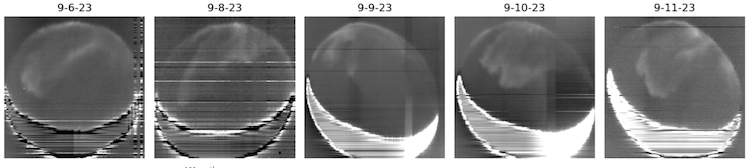
We present a novel approach using ground-based infrared spectroscopy with the NASA IRTF SpeX instrument to detect and analyze Venus’ O₂ nightglow at 1.27 μm. While the SpeX dataset (2001–present) was originally aimed at cloud studies, it includes regular detections of the O₂ airglow, typically two images per night during Venus observations. By scanning the slit across the planet's disk, we retrieve spatially resolved airglow signals on both the disk and limb, as shown in Figure 1.

Figure1. IRTF SpeX reconstructed images of the O2 (a1Δg) 1.27 mm airglow showing a hint of a 5-day pattern over a series of images taken between 09-06-2023 and 09-11-2023. On all images, the North is located to the left of the image, the South is to the right. The saturated crescent area represents the dayside of Venus, while the airglow is visible as white patches along the limb and on the disk on the nightside.

Our analysis focuses on extracting temporal and spatial variations in the O₂ emission across a range of observation periods—before, during, and after the Venus Express mission—offering new constraints on atmospheric variability. The data allow for short-term morphology analysis on nights with multiple images and support long-term trend studies over a 23-year period. These ground-based results complement spacecraft datasets and enable us to evaluate model predictions, including those involving Kelvin wave-driven modulation of the nightglow.

This work demonstrates the value of archived ground-based observations for planetary atmosphere studies and provides an important, underutilized dataset for understanding the structure and variability of Venus' upper atmosphere.

References

Gérard, J.-C., Soret, L., Saglam, A., Piccioni, G., Drossart, P. (2010), The distributions of the OH Meinel and O2 (a1 – X3Σ) nightglow emissions in the Venus mesosphere based on VIRTIS observations. Adv. Space Res. 45, 1268–1275, doi:10.1016/j.asr.2010.01.022

Gérard, J.-C., Soret, L., Piccioni, G., Drossart, P. (2014), Latitudinal structure of the Venus O2 infrared airglow: a signature of small-scale dynamical processes in the upper atmosphere. Icarus 236, 93–103, doi:10.1016/j.icarus.2014.03.028

Navarro, T., Gilli, G., Schubert, G., Lebonnois, S., Lefèvre, F., & Quirino, D. (2021). Venus’ upper atmosphere revealed by a GCM: I. Structure and variability of the circulation. Icarus, 366, 114400.

Evodkimova, D., Fedorova, A., Zharikova, M., Montmessin, F., Korablev, O., Soret, L., Gorivov, D., Belyaev, D. and Bertuax, J-L. (2025), Night O2 (a1Dg) airglow spatial distribution and temporal behavior on Venus based on PSICAv IR/Vex nadir dataset, Icarus, Vol. 429, 116417

How to cite: Royer, E., Avina, S., Young, E., Bullock, M., and Navarro, T.: Long-Term Ground-Based Monitoring of the Venusian O₂ Nightglow, EPSC-DPS Joint Meeting 2025, Helsinki, Finland, 7–13 Sep 2025, EPSC-DPS2025-356, https://doi.org/10.5194/epsc-dps2025-356, 2025.

Q&A (10 min)

Orals MON-OB4: Mon, 8 Sep, 14:00–16:00 | Room Sun (Finlandia Hall)

Chairpersons: Thomas Widemann, Anne Grete Straume-Lindner
Atmosphere dynamics
14:00–14:12
|
EPSC-DPS2025-255
|
On-site presentation
Takeshi Horinouchi, Toru Kouyama, Masata Imai, Shin-ya Murakami, Yeon Joo Lee, Atsushi Yamazaki, Manabu Yamada, Shigeto Watanabe, Takeshi Imamura, Javier Peralta, and Takehiko Satoh
The Venus orbiter Akatsuki started its observation in December 2015, and it provided valuable data on the atmosphere of Venus until its signal was lost in April 2024. We published a paper with the same title as this presentation by using the winds obtained by tracking clouds obtained at two ultraviolet wavelengths by Akatsuki/UVI until March 2023 (Horinouchi et al., 2024). In this presentation, we will present its findings and further updates by adding observations that were not used in the paper.
  •  The zonal winds associated with the superrotation are found to vary in many ways. There exists hemispheric asymmetry across the equator, and it varies with time. On average, the superrotation in the southern hemisphere was faster over the observational period, but it reverted sometimes.
  •  Earlier studies sought periodic variabilities on the order of hundred days or decades (e.g., Kouyama et al. 2013, Khatuntsev et al. 2013, 2022), which can result from periodical forcings. However, mean zonal winds representing the superrotation exhibited broad low-frequency variability with spectra resembling the red noise spectra (Fig. 1). This is indicative of the presence of internal variability rather than responses to periodical external forcing, indicating needs for paradigm shift.
  •  Long-term variability over the Venus Express and Akatsuki periods until 2020 appears that the superrotation was accelerated gradually and maximized during the Venus Express period and was then decelerated during the Akatsuki period. However, in 2021, it appears that the superrotation started fluctuating more rapidly and abruptly (Fig. 2).
  •  Earlier studies found planetary-scale wave with zonal-wavenumber 1 at periods around 4 and 5 days, which were interpreted as equatorial Kelvin and Rossby waves, respectively. We found that the two waves coexist. While the ~5-day waves have nearly constant frequencies, the ~4-day waves have variable phase speeds that follow the superrotation speed. This finding provides insight on their origins, that the ~5-day waves are likely to extend over a large depth below the cloud top and that the ~4-day waves are likely to be confined near the cloud top. It further provides implications on their excitation mechanism.
  •  The presence of wind variability at periods of 10 to 15 days is suggested for the first time.
  •  Wind distribution of the thermal tides at around the cloud top was quantified better than in previous studies.
  •  The variability in winds obtained in this study and the variability in constituents in previous studies are compared.
The Horinouchi et al. (2024) paper includes methodological development regarding the co-use of the discrete Fourier transform (DFT by FFT) and the Lomb-Scargle (LS) periodogram for better spectral estimation from data with observation pauses.
 
Reference: 
Horinouchi et al. (2024) https://doi.org/10.1029/2023JE008221
Khatuntsev et al. (2013) https://doi.org/ 10.1016/j.icarus.2013.05.018
Khatuntsev et al. (2022) https://doi.org/10.3390/atmos13122023
Kouyama et al. (2013)  https://doi.org/10.1029/2011JE004013
 
Fig. 1: Figure 8 of Horinouchi et al. (2024). Power spectral density averaged between 20degS and 20degN for (a, c) zonal and (b, d) meridional winds obtained from (a, b) 283-nm and (c, d) 365-nm images computed by (blue) the DFT and (black) the LS methods from by using nearly the whole analysis period (Type A). For spectral stability, the 1-2-1 three-point smoothing filter is applied with frequency once for f≥1×10^(-2)  day^(-1), twice for f≥2×10^(-2)  day^(-1), and three times for f≥4×10^(-2)  day^(-1). The red lines indicate spectral slopes of -1 and -2. The dotted curves in (a, c) show subjectively fit red noise spectra (see the text). Also shown on the abscissas is the period defined by f^(-1), which is equal to the ground-based period if fluctuations represented by the spectra are zonally uniform.
 
Fig. 2: Updated Figure 7a of Horinouchi et al. (2024). Black dots are the zonal winds obtained in this study from the 365-nm images, which are averaged over 11-13 LT and 24degS-18degS and binned over 5 days only when valid data are available for 3 or more days in each bin. Blue dots are the same but for zonal winds obtained from VEx/VMC, which were derived by Kouyama et al. (2013).


How to cite: Horinouchi, T., Kouyama, T., Imai, M., Murakami, S., Lee, Y. J., Yamazaki, A., Yamada, M., Watanabe, S., Imamura, T., Peralta, J., and Satoh, T.: Long-Term Variability of Mean Winds and Planetary-scale Waves around Venusian Cloud Top Observed with Akatsuki/UVI, EPSC-DPS Joint Meeting 2025, Helsinki, Finland, 7–13 Sep 2025, EPSC-DPS2025-255, https://doi.org/10.5194/epsc-dps2025-255, 2025.

14:12–14:24
|
EPSC-DPS2025-35
|
Virtual presentation
Maarten Roos-Serote, Colin F. Wilson, Ryan J. MacDonald, Silvia Tellmann, Yeon Joo Lee, and Igor V. Khatuntsev

Venus exhibits strong and changing contrasts at ultraviolet wavelengths apparently related to the clouds and the dynamics in the cloud layer, but to date their origin continues to be unknown.


In this work we analyse the possibility of correlation between the UV-brightness and the temperature structure in the atmosphere using unique data from Venus Express. On the one hand these data are measurements of the temperature structure from radio occultation data (VeRa experiment) in very small areas on Venus, on the other hand they are UV-images of the same spot up to 11 hours before and a few hours after the radio occultation experiment (VMC instrument). This type of analysis has not been presented before, as no such data exists from earlier missions.

(Three images each two hours apart taking during ingress of orbit 2805 on 25 December 2013. The yellow star indicates the spot of the VeRa radio occultation that happens after 8h, 6h and 4h respectively (left to right) of the moment of the image. The red rectangles are the wind-advected latitude / longitude boxes corresponding to VeRa location advected by the zonal and meridional winds. The boundaries of the boxes are measures of the uncertainties in the zonal and meridional winds.)

The South Polar Dynamics Campaign that was done during the last month of 2013 focussed on getting images and radio occultations on each VEX orbit. In addition, we found other orbits where this occurred. In total we identified 56 orbit with suitable data for this study. We apply a phase angle correction to compensate for the changing viewing geometry between the individual images and account for the advection of clouds by zonal and meridional winds.

(Spearman’s rank correlation coefficients for UV Radiance Factor Ratio as a function of temperature (left column) and normalised temperature (right column), at levels between 65 and 75 km altitude for three latitude bins. The largest effect is at the lower and higher altitudes, where the change of temperature with latitude is strongest. The corresponding one-sided p-value for each of the correlations is shown in the bottom panels. We choose a limit of p < 0.02 to claim significance, which is indicated by the green area at the bottom of the plots. Only for 67 km altitude in the uncorrected temperature and 67 and 68 km altitude in the normalised temperature correlation does the p-value drop below the limit.)


(The Radiance Factor Ratio versus temperature (left) and normalised temperature (right) at 67 km altitude. Normalisation is done relative to a linear least square fit to the temperature as a function of latitude at each level between 50 and 80 km altitude.)


After very carefully taking into account all the sources or error and uncertainty We find a possible anti-correlation between UV-brightness and atmospheric temperature around 67 km altitude for low latitudes, with a one percent probability this finding is due to chance (p-value= 0.01). Heating in this altitude and latitude region due to an increase in the UV-absorber has been predicted by radiative forcing studies (for example, Crisp 1986). If we assume the temperature difference we observe between UV-bright and UV-dark areas are due to this heating, then it is possible to compare this value to what is expected from the model heating rate calculations. The theoretical number would be on the order of 10-20 K, the measured value is on the order of 10 K, and thus is of the same order. This is encouraging, particularly given that this is observed only in the low latitude region, where solar heating would be expected to be most significant, and because the altitude range where the heating is observed also corresponds to that in Crisp’s model. This could be the first observational evidence for a direct link between UV-brightness and atmospheric temperature in the 65 - 70 km altitude region in the clouds of Venus.

How to cite: Roos-Serote, M., Wilson, C. F., MacDonald, R. J., Tellmann, S., Lee, Y. J., and Khatuntsev, I. V.: Correlation between temperature structure and UV contrasts in the clouds of Venus from Venus Express VMC and VeRa data., EPSC-DPS Joint Meeting 2025, Helsinki, Finland, 7–13 Sep 2025, EPSC-DPS2025-35, https://doi.org/10.5194/epsc-dps2025-35, 2025.

14:24–14:36
|
EPSC-DPS2025-591
|
ECP
|
On-site presentation
Peng Han and Sébastien Lebonnois

Introduction

The Venus PCM (Planetary Climate Model) [1,2] has been using a pre-computed net exchange rate (NER) matrix formalism to calculate the infrared radiative transfer in the wavelength range, from 1.7 to 250 μm. This implementation allows the Venus PCM to compute temperature self-consistently. In this work, we present recent improvements done to the infrared radiative transfer, in order to improve the Venus PCM performances and reliability. The influence from different optical parameters on the deep atmosphere (below the clouds) temperature and layer stability has also been evaluated to help better understand the thermodynamic processes under the cloud.

Update of the opacity properties

When calculating the NER coefficients, correlated-k distribution for gas opacity, cloud opacities, and collision induced absorptions (CIA) for CO2 and H2O are integrated [3]. As the dominant gas compound, COdominates most of the energy exchange. In this work, the high-resolution spectrum data of different molecules are updated to the latest version. An up-to-date combination of empirical corrections of sub-lorentzian far-wing profiles of CO2 is considered [4,5,6]. CIA have been updated to their latest measurements[7], in particular in the key spectral region between 3 and 10 microns. The influence of this update on the energy exchange, as discussed in [8], will be presented.

Impact on the temperature and layers

Simulations

We use the Venus PCM in a 1-dimensional configuration, using a fixed solar input corresponding to the global average of solar radiation received by Venus, and run simulations for 2000 Venus days to reach equilibrium. The details of the opacity in the windows located from 2 to 10 microns is crucial as these spectral regions control the energy exchanges in the deep atmosphere and strongly affect the temperature profile from cloud base to surface[8]. After the update of the CIA and CO2 line shape, our results indicate that these windows are not opaque enough to reproduce the observed temperature profile, given the solar heating rate distribution used[9][10], as shown in Figure 1.

Figure 1. Temperature profile applying different continuum settings (unit: cm-1 amg-2 , added in wavenumber from 500 cm-1 to 3570 cm-1, and in altitude from 30km ~ 50km) from the 1D configuration of the Venus PCM after 2000 Venus days of simulations, Haus’ table is used to get the solar input, the correlated-k distribution is calculated from the latest version high-resolution spectrum data and the newest CIA data are taken from [7].

Cloud-base temperature

The temperature at the cloud base is slightly under-estimated in our simulations. It mostly depends on the amount of solar energy absorbed in the middle cloud and below, as this energy is balanced by thermal emission mostly to space in the 10-30 micron spectral region at the top of the convective layer (interface between upper and middle cloud).

Temperature profile in the stable layer below the cloud base

With the obtained shape of the opacity in the 2-10 micron spectra region, energy exchanges between lower layers and the cloud base are too efficient in the stable layer (30-50 km), leading to under-estimated temperatures in the deep atmosphere. Some tests are done to evaluate the impact of additional continuum added to slightly close these windows (3-10 microns) on the temperature below the cloud. This additional continuum might be related to the lower haze, so we apply it from 30 to 50 km only. This hypothesis remains to be more fully assessed. The impact of this additional continuum is illustrated in Figure 1. In our results, this additional opacity seems to be also needed below 30 km to reach the observed T profile.

Comparison with the radiative transfer model developed at CPS (Japan) by Takahashi et al [11][12][13] is also done. Differences may be explained by several factors, but here we illustrate the comparison in Figure 2 by comparing extinction coefficients obtained in their work at 5x10⁶ Pa with the extinction computed at the same level in our work.

Figure 2. The absorption coefficient of the CPS radiative transfer model (adapted from figure 11 of [12]), compared with the one obtained in the Venus PCM, both at the 5x10⁶ Pa level (roughly 10 km altitude).

References

[1] Lebonnois, S., Sugimoto, N., & Gilli, G. (2016). Icarus, 278, 38-51, doi : 10.1016/j.icarus.2016.06.004

[2] Garate-Lopez, I., & Lebonnois, S. (2018). Icarus, 314, 1-11, doi : 10.1016/j.icarus.2018.05.011

[3] Eymet, V., Fournier, R., Dufresne, J. L., Lebonnois, S., Hourdin, F., & Bullock, M. A. (2009). Journal of Geophysical Research: Planets, 114(E11), doi : 10.1029/2008JE003276

[4] Tran, H., Boulet, C., Stefani, S., Snels, M., & Piccioni, G. (2011). Journal of Quantitative Spectroscopy and Radiative Transfer, 112(6), 925-936, doi : 10.1016/j.jqsrt.2010.11.021

[5] Tonkov, M. V., Filippov, N. N., Bertsev, V. V., Bouanich, J. P., Van-Thanh, N., Brodbeck, C., ... & Le Doucen, R. (1996). Applied optics, 35(24), 4863-4870.

[6] Pollack, J. B., Dalton, J. B., Grinspoon, D., Wattson, R. B., Freedman, R., Crisp, D., ... & Tipping, R. (1993). Icarus, 103(1), 1-42, doi : 10.1006/icar.1993.1055

[7] Tran, H., Hartmann, J. M., Rambinison, E. & Turbet, M. (2024). Icarus 422, 116265, doi: 10.1016/j.icarus.2024.116265

[8] Lebonnois, S., Eymet, V., Lee, C., & Vatant d'Ollone, J. (2015). Journal of Geophysical Research: Planets, 120(6), 1186-1200, doi :  10.1002/2015JE004794

[9] Haus R, Kappel D, Arnold G.(2015). Planetary and Space Science, 117:262-294. doi:10.1016/j.pss.2015.06.024

[10] Garate-Lopez I, Lebonnois S. (2018) . Icarus;314:1-11. doi:10.1016/j.icarus.2018.05.011

[11] Takahashi, Y. O., Hayashi, Y.-Y., Hashimoto, G. L., Kuramoto, K. & Ishiwatari, M. (2023). Journal of the Meteorological Society of Japan 101, 39–66, doi: 10.2151/jmsj.2023-003.

[12] Takahashi, Y. O. et al. (2024). Journal of the Meteorological Society of Japan, 102, 469–483, doi: 10.2151/jmsj.2024-025.

[13] Our team would like to express our deep sorrow, as Yoshiyuki O Takahashi passed away on April 30th, this year.

How to cite: Han, P. and Lebonnois, S.: Effect of the different opacity factors on deep atmosphere temperature and layers in the Venus PCM, EPSC-DPS Joint Meeting 2025, Helsinki, Finland, 7–13 Sep 2025, EPSC-DPS2025-591, https://doi.org/10.5194/epsc-dps2025-591, 2025.

14:36–14:48
|
EPSC-DPS2025-1141
|
On-site presentation
Tatsuro Iwanaka, Takeshi Imamura, Shohei Aoki, Emmanuel Marcq, and Hideo Sagawa

Background

The cloud layer of Venus, composed of sulfuric‑acid aerosols, plays a key role in controlling the solar energy input of the atmosphere through its effect on planetary albedo. To clarify the sequence of processes whereby sulfur dioxide (SO2), the chemical precursor of the clouds, is transported to the cloud‑top region and photochemically converted to sulfuric acid, it is essential to understand the detailed temporal and spatial distribution of SO2 in detail. Observations have been conducted with both ground‑based telescopes [1] and spacecraft [2, 3]; however, these measurements are spatially sparse and temporally sporadic. As a result, the relationship between SO2 variability and atmospheric activities, as well as the evaluation of sulfur cycle and cloud formation scenarios, remains unresolved. The ultraviolet imager (UVI) onboard the Japanese Venus orbiter Akatsuki [4, 5] captures full‑disk images of Venus in two narrowband filters: 283 nm, centered on a SO2 absorption band, and 365 nm, where absorption by an unidentified UV absorber dominates. UVI acquires nearly simultaneous two‑wavelength disk-resolved images every two hours, and its temporal and spatial resolution offers the potential to relate the variation of SO2 and atmospheric dynamics from planetary‑scale waves down to mesoscale phenomena. However, the absorptions of SO2 and the unidentified absorber are mixed in these two‑wavelength images, making it difficult to analyze the detailed variation of SO2 so far. In this study, we separated the absorption contributions of SO2 and the unidentified absorber.


Dataset and Retrieval methods

In this study, we analyzed over 15,000 pairs of 283 and 365 nm UV images taken by Akatsuki/UVI. These UV images are Level 3b data products, which are calibrated radiance maps in the longitude-latitude coordinate (0.125 degree grid). To reduce computational cost, the data were spatially binned to a resolution of 1 degree. We compared the observed reflectance distributions at 283 and 365 nm with simulated reflectance generated by the radiative transfer calculations, and drive the best-fitted pair of the mixing ratio of SO2 and the imaginary part of the cloud refractive index (ni) as a proxy of the unidentified absorber by an iterative algorithm. Additionally, we performed sensitivity tests to examine the effects of cloud altitude and wavelength dependence of ni on the retrieved results.


Results

We first composited all the data from 2015 to 2022 and found that the SO2 mixing ratio peaks at the equator, decreases toward mid-latitudes, and exhibits a local maximum at 14–15 h local time. We interpret this distribution as a result of the equatorial upwelling in the Hadley-type meridional circulation and vertical movement caused by thermal tides with wavenumber 2, which lifts SO2-rich air from the lower altitudes to the cloud top. This pattern is consistent with the results of a general circulation model coupled with photochemistry [6] and previous Venus Express/SPICAV-UV observations [3], at least with respect to latitude.

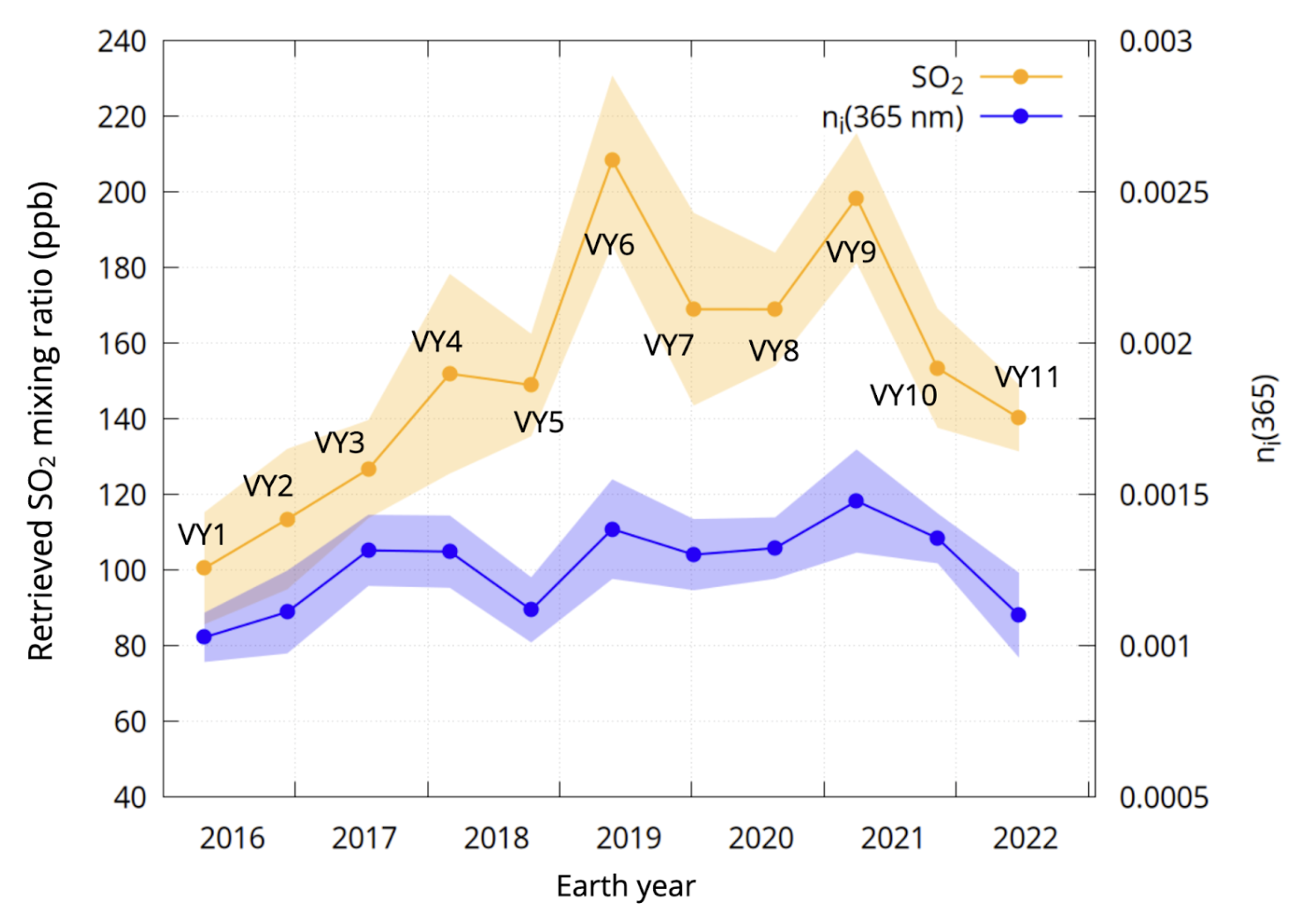
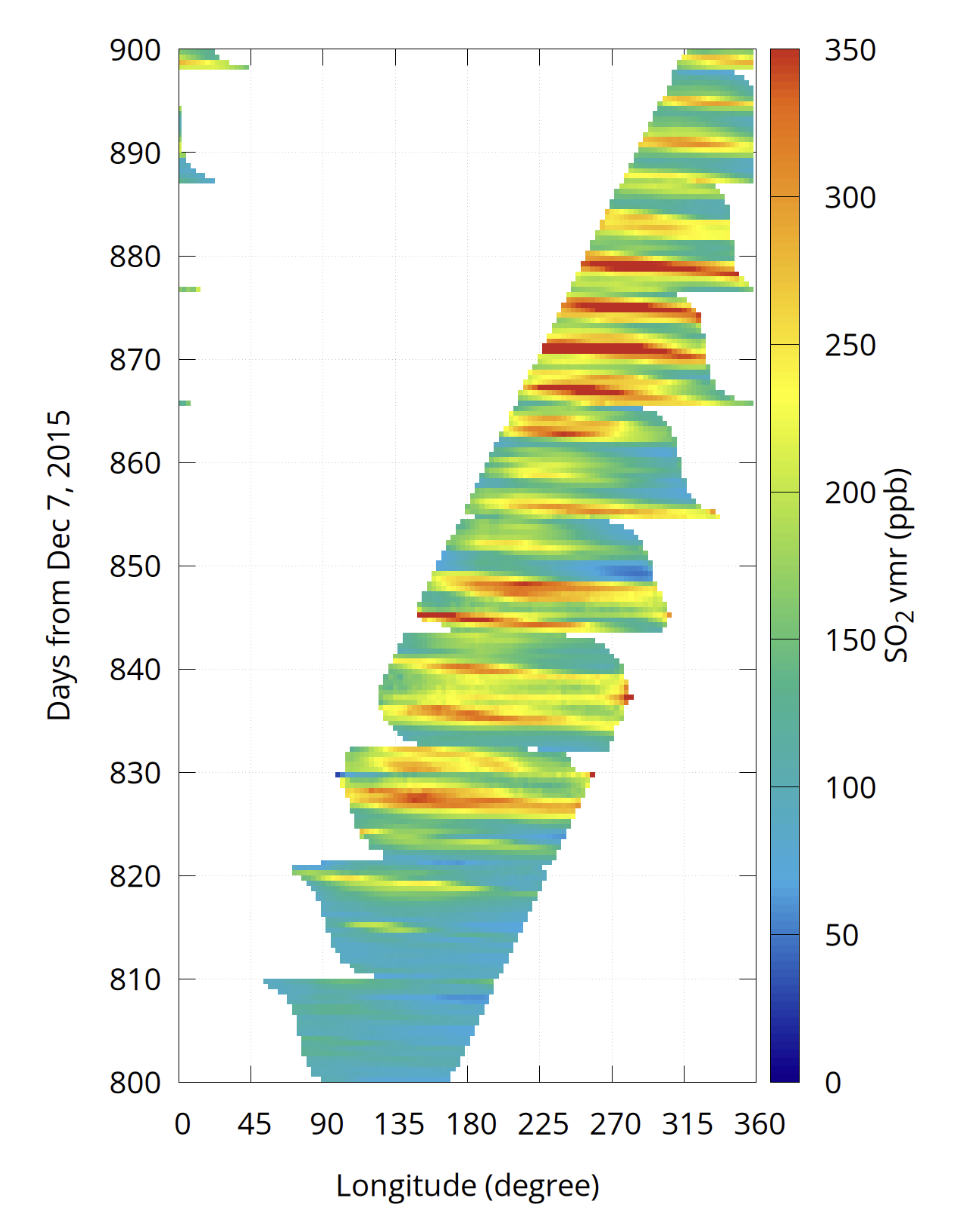
The longitude-time Hovmöller diagram (Figure 1) shows a consistent feature that moves with a period of 4 days, suggesting the dynamical influence of the Kelvin wave. On a multi-year time scale, the mean SO2 mixing ratio increased from 2016 to 2019 and decreased by 2022 (Figure 2), in agreement with ground-based infrared observations [1]. The long-term variations of the unidentified absorber show a similar trend to those of SO2. These variations are also correlated with changes in the mean zonal wind derived from Akatsuki cloud tracking data [7]. Because the effect of absorption by the unidentified absorber extends into the visible wavelengths where solar irradiance is strong [8], these variations suggest that enhanced solar heating may intensify thermal tides, leading to dynamical feedback that further amplifies wind speeds and further enhances SO2 transport.


In this presentation, we highlight these newly analyzed variations across multiple temporal and spatial scales.


Figure 1: Hovmöller diagram of SO2 mixing ratio from Feburuary 22 to Jun 2, 2018.


Figure 2: Long-term variation of the mean SO2 mixing ratio (orange) and ni (blue) with 1-σ standard deviations (shaded). VY stands for the Venusian year from December 15, 2015


References

[1] Encrenaz T. et al., A&A, 674, A199 (2023)  

[2] Esposito LW et al., JGR-Atmospheres, 93, 5267 (1988)  

[3] Marcq E. et al., Icarus, 335, 113368 (2020)  

[4] Nakamura M. et al., Earth Planet. Space, 68, 75 (2016)  

[5] Yamazaki A. et al., Earth Planet. Space, 70, 23 (2018)  

[6] Stolzenbach A. et al., Icarus, 395, 115447 (2023)  

[7] Horinouchi T. et al., JGR–Planets, 129, e2023JE008221 (2024)  

[8] Moroz VI et al., Sov. Phys. Usp., 28, 524 (1985)

How to cite: Iwanaka, T., Imamura, T., Aoki, S., Marcq, E., and Sagawa, H.: Multiple temporal and spatial scales variation of sulfur dioxide at the Venusian cloud-top, EPSC-DPS Joint Meeting 2025, Helsinki, Finland, 7–13 Sep 2025, EPSC-DPS2025-1141, https://doi.org/10.5194/epsc-dps2025-1141, 2025.

Q&A (8 min)
14:48–15:00
|
EPSC-DPS2025-1481
|
ECP
|
On-site presentation
Lucile Conan, Emmanuel Marcq, Benjamin Lustrement, Maxence Lefèvre, Nicolas Rouanet, Baptiste Leduc, Abraham Diaz Damian, Lucio Baggio, Sandrine Bertran, Séverine Robert, Océane Barraud, and Giulia Alemanno

Context

The VenSpec-U instrument[1] onboard the future ESA EnVision mission, will be one of the three spectrometers of the VenSpec suite, that will study Venus’ surface and atmosphere. VenSpec-U will focus on the upper part of the atmosphere and will perform UV observations of the cloud top. It will measure the backscattered sunlight on the dayside of Venus, from which radiance factor spectra will be derived by taking the incoming solar spectral irradiance into account. The scientific objectives of VenSpec-U will regard both the chemical composition and the dynamical properties of the atmosphere. Four main elements to investigate can be derived from these science goals. The firsts are the abundance of sulphured species, including especially SO2 and SO. These species will be identified separately thanks to the “High Resolution” (HR) channel of the instrument, that will have a spectral resolution of 0.3 nm to cover the 205-235 nm wavelength range corresponding to the common absorption band of SO2 and SO. The third objective is to monitor the unidentified UV absorber and its spectral characteristics. To that end, the “Low Resolution” (LR) channel of the instrument will operate from 190 nm to 380 nm, with a spectral resolution of 2-5 nm. Finally, VenSpec-U will investigate the small scale spatial variability of the cloud-top, by performing observations with a pushbroom observation strategy that allows the acquisition of images, at spatial samplings ranging from 3 to 24 km.


Objective and method

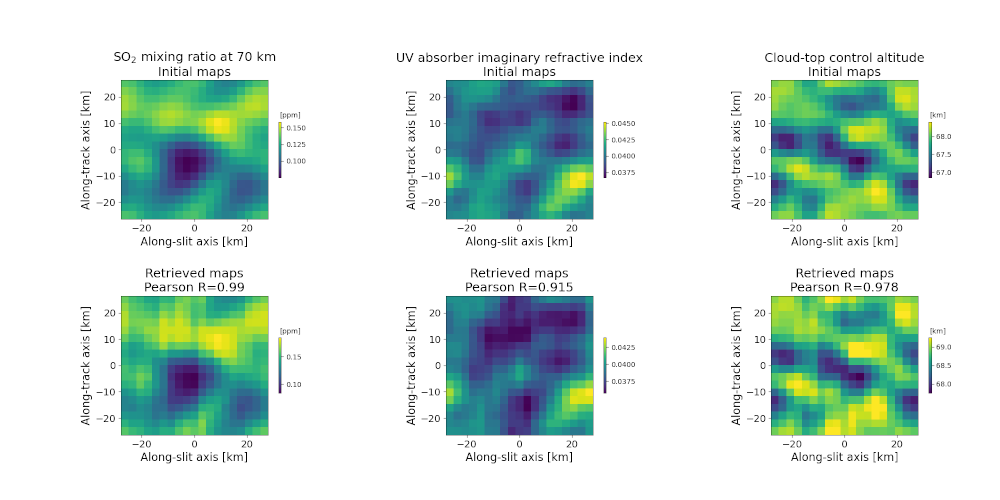
This study is focused on the imaging capabilities of VenSpec-U, in order to estimate the performances of the instrument for the retrieval of the small scale spatial features of Venus’ atmosphere, such as convection cells and atmospheric wave patterns. To do so, several numerical models are combined in order to simulate images as produced by VenSpec-U. The whole acquisition process aims to be modelled, from the observed scene at the cloud-top of Venus, to the consideration of the instrument’s behaviour inducing degradations of the images and spectra. The simulation of the observed scene is based on a mesoscale model of Venus’ atmosphere[2], from which maps of the key parameters that aimed to be monitored by VenSpec-U are derived, and radiance factor spectra are generated using a radiative transfer model adapted to the instrument’s wavelength range[3]. An instrumental model has then been developed in order to simulate the formation of images, by following successively the main steps occurring in the process, including the effects of optical components and detector as well as the main onboard data processing operations. A simple inversion algorithm is then applied. This latter is based on the simulation of a solar observation, which is foreseen for the inflight calibration of VenSpec-U, coupled to the inverse radiative transfer model that allow to process the degraded spectra to retrieve the maps of atmospheric parameters. These maps can then be compared to the initial maps used as inputs of the model binned to match the targeted spatial sampling (Fig. 1).

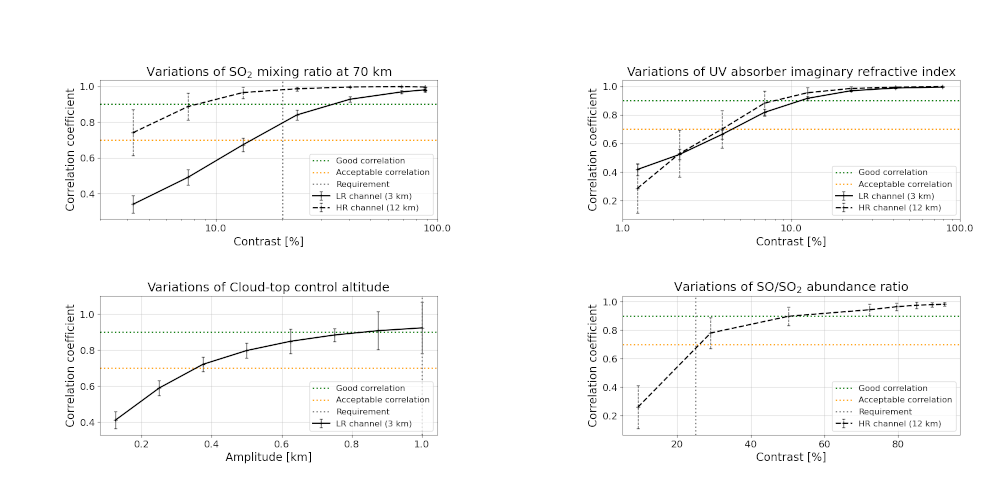
By modifying the amplitude of the spatial features on the initial maps, detection threshold for each parameter can be estimated so that the compliance with the targeted performances in terms of small scale variability imaging can be assessed (Fig. 2). This study has been performed for optimal observation conditions, but could however be repeated for various configurations in order to estimate their impact on the resulting detection thresholds and global performances of VenSpec-U as an imager.

Figure 1: Comparison between initial (top) and retrieved maps (bottom) of the three atmospheric parameters targeted by the LR channel: SO2 mixing ratio (left), UV absorber imaginary refractive index (center), cloud-top control altitude (right)

Figure 2: Evolution of the correlation between the initial and retrieved maps of the four atmospheric parameters targeted by VenSpec-U: SO2 mixing ratio (top left), UV absorber imaginary refractive index (top right), cloud-top control altitude (bottom left), SO/SO2 abundance ratio (bottom right)


References

[1] Emmanuel Marcq, Franck Montmessin, Jérémie Lasue, Bruno Bézard, Kandis L. Jessup, et al.. Instrumental requirements for the study of Venus’ cloud top using the UV imaging spectrometer VeSUV. Advances in Space Research, 2021, 68 (1), pp.275-291. ⟨10.1016/j.asr.2021.03.012⟩. ⟨insu-03179739⟩

[2] Lefèvre, M., Lefèvre, F., Marcq, E., Määttänen, A., Stolzenbach, A., & Streel, N. (2024). Impact of the turbulent vertical mixing on chemical and cloud species in the Venus cloud layer. Geophysical Research Letters, 51, e2024GL108771. https://doi.org/10.1029/2024GL108771

[3] Lucile Conan, Emmanuel Marcq, Benjamin Lustrement, Nicolas Rouanet, Léna Parc, et al.. The VenSpec-U spectrometer onboard EnVision: sensitivity studies. Infrared Remote Sensing and Instrumentation XXXII. Proceedings SPIE 13144, Aug 2024, San Diego, United States. 43 p., ⟨10.1117/12.3027500⟩. ⟨insu-04733439⟩

How to cite: Conan, L., Marcq, E., Lustrement, B., Lefèvre, M., Rouanet, N., Leduc, B., Diaz Damian, A., Baggio, L., Bertran, S., Robert, S., Barraud, O., and Alemanno, G.: Observability of small scale atmospheric spatial variability by the VenSpec-U instrument onboard EnVision, EPSC-DPS Joint Meeting 2025, Helsinki, Finland, 7–13 Sep 2025, EPSC-DPS2025-1481, https://doi.org/10.5194/epsc-dps2025-1481, 2025.

15:00–15:12
|
EPSC-DPS2025-4
|
On-site presentation
Norihiko Sugimoto, Yukiko Fujisawa, Nobumasa Komori, Hiroki Ando, Masahiro Takagi, Shinya Kuwayama, Toshiki Matsushima, Hiroki Kashimura, Jianyu Liang, and Takemasa Miyoshi and the AFES-Venus and ALEDAS-V teams

We have developed the Venusian general circulation model (GCM) named AFES-Venus (Atmospheric GCM for the Earth Simulator for Venus) [1, 2] and the data assimilation system based on the Local Ensemble Transform Kalman Filter (LETKF) named ALEDAS-V (AFES-LETKF data assimilation system for Venus) [3]. Here, we will introduce recent improvements of AFES-Venus and ALEDAS-V and newly obtained results.

So far, AFES-Venus reproduced the cold collar in the polar region [4], the planetary-scale streak structure observed by Akatsuki infrared (IR2) camera [5], a fully developed super-rotation [6], and spontaneous gravity waves radiated from the thermal tides [7]. The thermal tides [8] and the planetary-scale short periods (Kelvin and Rossby) waves [9, 10] consistent with observations were also reproduced by improving the profiles of static stability and solar heating. Dependency of the super-rotation on the magnitude of horizontal hyper diffusion was investigated with medium- and high-resolution simulations [11]. Recently we have implemented radiative and cloud microphysical processes into AFES-Venus (Fig.1). We have also investigated disturbances [12] and energy cycles [13] in the Venus atmosphere using Bred vectors.

ALEDAS-V improved the horizontal structures of thermal tides with the data assimilation of horizontal winds derived by cloud tracking of ultra-violet images (UVI) from Venus Express [14] and Akatsuki [15]. Although the observed horizontal winds are limited to low latitudes on the day side, the zonal-mean zonal winds and temperature were also modified globally [15]. The first analysis data in which horizontal winds obtained by Akatsuki UVI are assimilated will be released soon. The cold collar was also realistically reproduced in the analysis data [16]. We have also conducted several observing system simulation experiments (OSSEs) assuming Akatsuki Longwave Infrared Camera (LIR) observations [17]. Now we are trying to assimilate temperature obtained by Akatsuki LIR.

Fig.1: Zonal mean zonal wind [m s1] (contours) and static stability [K km1] (shading) for the original AFES-Venus (left: EXP-DYN) and that with a new radiative transfer process (EXP-RAD).

References: [1] Sugimoto+2014 JGR-Planets, 119, 1950–1968. [2] Sugimoto+2014 GRL, 41, 7461–7467. [3] Sugimoto+2017 Sci. Rep.. 7, 9321. [4] Ando+2016 Nature Comm., 7, 10398. [5] Kashimura+2019 Nature Comm., 10, 23. [6] Sugimoto+2019 GRL, 46, 1776–1784. [7] Sugimoto N+2021 Nature Comm., 12, 3682. [8] Suzuki+2022 JGR-Planets, 127, 7243. [9] Takagi+2022 JGR-Planets, 127, 7164. [10] Takagi+2023, JGR-Planets, 128, 7922. [11] Sugimoto+2023 Earth, Planets and Space, 75, 44. [12] Liang+2024 JGR-Planets, 129, 8067. [13] Liang+2025 GRL, 52, 112663. [14] Sugimoto+2019 GRL, 46, 4573–4580. [15] Fujisawa+2022 Sci. Rep., 12, 14577. [16] Ando+2023 JGR-Planets, 128, 7689. [17] Sugimoto+2022 Geoscience Lett., 9, 44.

How to cite: Sugimoto, N., Fujisawa, Y., Komori, N., Ando, H., Takagi, M., Kuwayama, S., Matsushima, T., Kashimura, H., Liang, J., and Miyoshi, T. and the AFES-Venus and ALEDAS-V teams: Recent improvements of general circulation model (AFES-Venus) and data assimilation system (ALEDAS-V) for the Venus Atmosphere, EPSC-DPS Joint Meeting 2025, Helsinki, Finland, 7–13 Sep 2025, EPSC-DPS2025-4, https://doi.org/10.5194/epsc-dps2025-4, 2025.

15:12–15:24
|
EPSC-DPS2025-153
|
ECP
|
On-site presentation
Maureen Cohen, James Holmes, Stephen Lewis, Manish Patel, and Sébastien Lebonnois

Because of its rotation period of 243 days, Venus is considered a slowly rotating planet. However, its persistent superrotating atmospheric jets, which increase in speed from surface to cloud tops, effectively set a faster rotation speed than the surface rotation. Using the Venus Planetary Climate Model and wind measurements taken by the Pioneer Venus entry probes, we show that the Rossby radius of deformation of the atmosphere varies with height. The atmosphere falls into three circulation regimes: (1) from the surface to 20 km, the Rossby radius of deformation exceeds the planetary radius and no Rossby waves form; (2) from 20 to 50 km, the tropical Rossby radius becomes smaller than the planetary radius, and a circulation regime characterized by a superrotating equatorial jet and mid-latitude Rossby gyres appears; (3) from 50 to 70 km, the extratropical Rossby radius becomes smaller than the planetary radius, the jet develops mid-latitude maxima, and the Rossby gyres shift to high latitudes. Studies of exoplanetary circulation regimes as a function of rotation period have repeatedly shown a similar progression. While observing the circulations of exoplanets to confirm these predictions is not currently possible, the presence of different circulation regimes on Venus and their dependence on altitude could be tested by observing campaigns. Such evidence would be the first observational support for the theory connecting differences in planetary rotation periods to circulation regime transitions and would ground predictions of exoplanet circulations in a validated framework.

Figure 1: Horizontal and vertical winds (left column) and wave structure (right column) of the general circulation of the Venus atmosphere in a simulation by the Venus Planetary Climate Model.

How to cite: Cohen, M., Holmes, J., Lewis, S., Patel, M., and Lebonnois, S.: Three Worlds in One: Venus as a Natural Laboratory for the Effect of Rotation Period on Atmospheric Circulation, EPSC-DPS Joint Meeting 2025, Helsinki, Finland, 7–13 Sep 2025, EPSC-DPS2025-153, https://doi.org/10.5194/epsc-dps2025-153, 2025.

Q&A (6 min)
15:24–15:36
|
EPSC-DPS2025-964
|
ECP
|
On-site presentation
Daniela Espadinha, Pedro Machado, Javier Peralta, José Silva, and Francisco Brasil

Amidst the planets of our Solar System, Venus remains one of the most intriguing subjects of scientific interest. Despite its many similarities with our home planet Earth, the evolution of this planet followed a path that resulted in a world vastly different from its neighbouring planet. Among the well-known characteristics that make Venus so unique, such as the slow rotation rate or the extreme surface temperature, its atmosphere is, without a doubt, one of the most striking. The Venusian atmosphere is a dense and inhospitable mixture primarily composed of carbon dioxide, with thick clouds of sulfuric acid. It also exhibits superrotation, where winds move much faster than the planet's rotation. To fully understand the dynamics of Venus clouds, the study of atmospheric gravity waves is a crucial step.


Atmospheric gravity waves are periodic oscillatory disturbances driven by buoyancy which are critical components in the global circulation of planetary atmospheres. These waves, which require a stably stratified atmosphere to propagate, facilitate the transfer of energy, momentum, and chemical species, significantly impacting weather systems. On Venus, atmospheric gravity waves play an essential role in the dynamics of its atmosphere. Despite previous studies that have mapped the presence of these waves in various wavelengths across Venus's cloud deck, many aspects remain poorly understood, particularly their role in driving the planet’s superrotation.


This work leverages observations from Akatsuki’s Ultraviolet Imager (UVI) to explore wave-like structures on the dayside of Venus's atmosphere at a wavelength of 365 nm. By analyzing data from Akatsuki’s public database, we aim to characterize the population of atmospheric gravity waves, measuring their physical properties (e.g., crest number, horizontal wavelength, packet length, width, and orientation) and dynamical characteristics such as the intrinsic phase velocity and vertical wavelength). Additionally, we will investigate the local time dependence and oscillation frequencies of these waves to understand their excitation sources, including atmospheric convection. This research builds on previous studies by Peralta et al. (2008), Silva et al. (2021) and Silva et al. (2024), advancing our understanding of Venus’s atmosphere and the mechanisms underlying its dynamics.


[1] Peralta et al., Characterization of mesoscale gravity waves in the upper and lower clouds of venus from vex-virtis images. Journal of Geophysical Research: Planets, 113(E5), 2008.
[2] Piccialli et al., High latitude gravity waves at the venus cloud tops as observed by the venus monitoring camera on board venus express. Icarus, 227:94 111, 01 2014.
[3] Silva et al., Characterising atmospheric gravity waves on the nightside lower clouds of Venus: a systematic analysis, AA 649 A34, 2021.
[4] Silva et al., Atmospheric gravity waves in Venus dayside clouds from VIRTIS-M images, Icarus, Volume 415, 2024, 116076, ISSN 0019-1035.

Acknowledgements: This work was supported by the Portuguese Fundação Para a Ciência e a Tecnologia of reference PTDC/FIS-AST/29942/2017, through national funds and by FEDER through COMPETE 2020 of reference POCI-01-0145-FEDER-007672, and through a grant of reference 2020.06389.BD.

How to cite: Espadinha, D., Machado, P., Peralta, J., Silva, J., and Brasil, F.: Morphological and dynamical characterisation of Gravity Waves on Venus’ atmosphere using Akatsuki´s UVI instrument, EPSC-DPS Joint Meeting 2025, Helsinki, Finland, 7–13 Sep 2025, EPSC-DPS2025-964, https://doi.org/10.5194/epsc-dps2025-964, 2025.

15:36–15:48
|
EPSC-DPS2025-682
|
On-site presentation
Takeshi Imamura, Hiroyuki Koyama, Takao M. Sato, Toru Kouyama, and Makoto Taguchi

Planetary-scale waves are expected to be crucial in driving the Venusian planetary-scale atmospheric circulation. To understand the interaction between the waves and the mean flow, we obtained temporal frequency spectra of the cloud-top brightness temperature using thermal infrared images taken by the Longwave Infrared Camera (LIR) onboard Akatsuki over a period of 10 Venus years. Waves in the equatorial region with periods of around 3.5–4.3 days were identified as Kelvin waves, while waves in the mid-latitude with periods of about 5.0–6.0 were identified as Rossby waves. The mid-latitude waves with periods 5.0–6.0 days tend to accompany additional local amplitude maxima near the equator, especially when observed at small emission angles. Considering the contribution function of LIR extends to lower altitudes for smaller emission angles, the result implies the waves arise from Rossby-Kelvin instability and the associated Kelvin modes reside below the cloud top. Mid-latitude peaks are also sometimes seen around periods of 3.5–4.0 days and coupled with equatorial modes, indicative of Rossby-Kelvin instability. The periods and amplitudes of the waves change with time, and the variations seem to correlate with the background wind in such a way that waves with small intrinsic frequencies are less prominent.

Figure: Latitudinal distributions of the wave amplitudes at the period of (a) 5.04 days and (b) 3.71 days for the emission angle ranges of 30–40 (blue solid), 40–50 (orange dashed), and 50–60 (green dotted). 

How to cite: Imamura, T., Koyama, H., Sato, T. M., Kouyama, T., and Taguchi, M.: Venusian planetary-scale waves observed by Akatsuki LIR: Rossby-Kelvin instability and long-term variation, EPSC-DPS Joint Meeting 2025, Helsinki, Finland, 7–13 Sep 2025, EPSC-DPS2025-682, https://doi.org/10.5194/epsc-dps2025-682, 2025.

15:48–16:00
|
EPSC-DPS2025-163
|
On-site presentation
Hiroki Ando, Katsuyuki Noguchi, Takeshi Imamura, Masahiro Takagi, Norihiko Sugimoto, Yoshihisa Matsuda, Silvia Tellmann, Martin Pätzold, Bernd Häusler, Raj Choudhary, and Maria Antonita

The vertical structure of the thermal tide in the Venusian low-latitude region (0˚-30˚ latitudes) was investigated by the Akatsuki radio occultation measurements. The result shows that the phase of the diurnal tide little varies in the vertical direction, while that of the semidiurnal tide tilts toward earlier local times with increasing altitude above 65 km and tilts in the same direction with decreasing altitude below 50 km. This indicates that the semidiurnal tide is excited between 50 and 65 km altitudes and propagates upward above these heights and downward below. The vertical momentum flux associated with the semidiurnal tide in low latitudes was calculated above 58 km, and the associated acceleration rate near the cloud top was estimated. As a result, the estimated accleration rate was comparable to those expected in the previous numerical studies. Our results observationally confirmed the simultaneous upward and downward propagations of the thermal tide, which can account for the vertical shear of the Venusian atmospheric superrotation in low latitudes, supporting the previous theoretical predictions.

How to cite: Ando, H., Noguchi, K., Imamura, T., Takagi, M., Sugimoto, N., Matsuda, Y., Tellmann, S., Pätzold, M., Häusler, B., Choudhary, R., and Antonita, M.: Vertical propagation of Venusian thermal tides above and below clouds investigated by Akatsuki radio occultation, EPSC-DPS Joint Meeting 2025, Helsinki, Finland, 7–13 Sep 2025, EPSC-DPS2025-163, https://doi.org/10.5194/epsc-dps2025-163, 2025.

Q&A (6 min)

Orals MON-OB5: Mon, 8 Sep, 16:30–18:00 | Room Sun (Finlandia Hall)

Chairpersons: Anne Grete Straume-Lindner, Gabriella Gilli
Atmosphere dynamics and atmosphere microphysics
16:30–16:45
|
EPSC-DPS2025-403
|
ECP
|
solicited
|
On-site presentation
Ema Salugová, Emmanuel Marcq, Zili He, and Sandrine Vinatier

Observations of solar light backscattered by Venus' cloud top in the ultraviolet domain carry a rich scientific content, since they can be used to monitor absorbing species column densities, namely trace species like SO2 and SO[1,2], but also the well-mixed main constituent CO2 (which helps in constraining cloud top altitude) as well as the infamous UV absorber whose composition is still unknown as of 2025. These observations have revealed a large spatial and temporal variability at various scales, whose origin is still debated (atmospheric oscillations and/or volcanic plume forcings?)

Data analysis was usually performed using plane-parallel or pseudo-spherical radiative transfer models based on publicly available codes such as e.g. DISORT[3]. However, applying such models was not relevant at high emission or solar zenith angles (e.g. near dusk or dawn, or at very high latitudes), nor at very small horizontal scales comparable to the photon free mean path between two scattering events. To circumvent these limits, we used a 3D Monte Carlo solver provided by the MesoStar> company, and previously used to study Titan's atmosphere[4].

Preliminary results show that:

  • 1D pseudo-spherical and spherical Monte-Carlo models agree for nadir observations up to solar zenith angles as high as 75°;
  • Analysis of SPICAV-UV/Venus Express data near the terminator exhibit a already known decrease in SO2 with increasing latitude, as well as dusk/dawn asymmetry in SO2 column density (to be further investigated and confirmed);
  • Horizontal UV contrasts at Venus' cloud top are typically blurred over a typical scale of ~10 km due to multiple scattering in the horizontal direction by the upper haze.

This work has been funded by the French National Research Agency (ANR), project RaD3-net, grant number ANR-21-CE49-0020-01.

References
[1] Marcq et al., Icarus (2020)
[2] Marcq et al., Nat Geosci (2013)
[3] Laszlo et al., in Light Scattering reviews (2016)
[4] He et al., JQSRT (2025, accepted)

How to cite: Salugová, E., Marcq, E., He, Z., and Vinatier, S.: 3D Monte-Carlo modeling of Venus' reflectance in UV, EPSC-DPS Joint Meeting 2025, Helsinki, Finland, 7–13 Sep 2025, EPSC-DPS2025-403, https://doi.org/10.5194/epsc-dps2025-403, 2025.

16:45–16:57
|
EPSC-DPS2025-596
|
On-site presentation
Rachel Navon, Eli Galanti, and Yohai Kaspi

Venus’s atmosphere is characterized by pronounced thermal tides, which have been extensively studied at the cloud level through direct observations and numerical simulations. There, a semi-diurnal tide dominates the equatorial region and a diurnal signal is more prominent at high latitudes. Due to the lack of measurements at the lower levels of the atmosphere, less attention has been given to the significance of the thermal forcing close to the surface. However, understanding the surface thermal tide has significant implications for Venus's atmospheric dynamics, and for future exploration of Venus's atmosphere, for example, via the effect of the surface pressure variations on the atmospheric loading on the gravity field.
Using idealized simulations from a Venus PCM - LMDZ (Lebonnois et al. 2010), we examine surface thermal tides and planetary-scale wave activity in the lower atmosphere, a region that remains largely unconstrained by direct observations. The analysis focuses on the surface pressure anomalies induced by solar forcing, which exhibit a systematic phase lag relative to the sub-solar point. 
Here we find that the phase lag’s dependence on solar day length across simulations reveals a consistent radiative timescale governing the thermal response of the near-surface atmosphere.
As the solar day shortens, the pressure response transitions from a predominantly diurnal to a semi-diurnal structure, suggesting a resonance between the forcing frequency and the thermal response of the lower atmosphere. In addition to the tidal signal, a large-scale wave mode emerges in the simulations, confined vertically below the cloud layer around 15 km altitude. This wave displays properties consistent with an internal gravity wave, including westward propagation, and peak amplitude in a stably stratified layer. Its period remains largely insensitive to the imposed solar day, suggesting it is governed by intrinsic atmospheric structure rather than external forcing.

How to cite: Navon, R., Galanti, E., and Kaspi, Y.: The phase of Venus’s surface thermal tide simulated with a Venus PCM, EPSC-DPS Joint Meeting 2025, Helsinki, Finland, 7–13 Sep 2025, EPSC-DPS2025-596, https://doi.org/10.5194/epsc-dps2025-596, 2025.

16:57–17:09
|
EPSC-DPS2025-624
|
On-site presentation
Silvia Tellmann, Martin Pätzold, and Janusz Oschlisniok

Atmospheric waves are present in the Venus atmosphere across a wide range of spatial scales and may play a significant role in the planet's energy and momentum budget. Small-scale temperature fluctuations, likely caused by gravity waves, are a common feature in the atmospheres of all planets. These gravity waves play a crucial role in redistributing energy and momentum within the atmosphere. Several instruments have detected gravity waves in the Venusian mesosphere and upper cloud region, but their role in maintaining the atmospheric superrotation is not yet fully understood.

From 2006 to 2014, the Venus Express Radio Science Experiment (VeRa) investigated the neutral atmosphere and ionosphere of Venus in Earth occultation geometry using the spacecraft's radio subsystem at two coherent frequencies, X-band (8.4 GHz) and S-band (2.3 GHz). Radial profiles of neutral number density, derived from altitudes between 40 and 90 km, are then converted into vertical profiles of temperature and pressure, assuming hydrostatic equilibrium.

VeRa atmospheric profiles in the upper troposphere and mesosphere show high variability due to atmospheric waves and turbulence. Small-scale temperature fluctuations originating from internal gravity waves with vertical wavelengths of only a few kilometers are detectable in the VeRa profiles.

The high vertical resolution of VeRa’s temperature profiles offers a unique opportunity to study small vertical temperature fluctuations that would otherwise be unobservable by any other remote sensing technique. These studies are crucial for understanding Venus's poorly constrained energy and momentum budgets.

The observed wave structures are analyzed using standard wave theory to investigate their vertical and horizontal structure as a function of latitude, altitude, and local time.

How to cite: Tellmann, S., Pätzold, M., and Oschlisniok, J.: Small-Scale Gravity Waves in the Venus Atmosphere as seen by the VeRa Experiment on Venus Express, EPSC-DPS Joint Meeting 2025, Helsinki, Finland, 7–13 Sep 2025, EPSC-DPS2025-624, https://doi.org/10.5194/epsc-dps2025-624, 2025.

17:09–17:21
|
EPSC-DPS2025-595
|
ECP
|
On-site presentation
José Silva, Javier Peralta, Takeshi Imamura, Maxence Lefèvre, Pedro Machado, Alejandro Cardesín, Hiroki Ando, Francisco Brasil, Daniela Espadinha, and Yeon Joo Lee

Venus is a planet that has garnered renewed interest in recent years. Regarded as Earth’s twin, as it shares many of its basic properties with our home in the Solar System. However, upon close inspection, similarities between the two planets end, whose present conditions in contrast to Earth expose how different the evolution of Venus must have been. Many unanswered questions remain regarding the process that led to Venus’ current conditions, which have motivated at least one future space mission towards the planet in the 2030’s, EnVision. In the meantime, it continues to be an exciting target for new discoveries as we try to peer deeper into our neighbouring planet.

The atmosphere of Venus is on such subject of continuous research, with a thick layer of clouds speeding around the globe in approximately four days in its uppermost regions. Approximately 90 times as massive as Earth and mostly composed of carbon dioxide, its lower troposphere and near-surface conditions are extremely challenging to access with remote observations. However, processes that are observable in the cloud layer between roughly 50-70 km of altitude manifest a tentative connection to the surface. One of these is the presence of stationary features which seem correlated with prevalent topography on the surface.

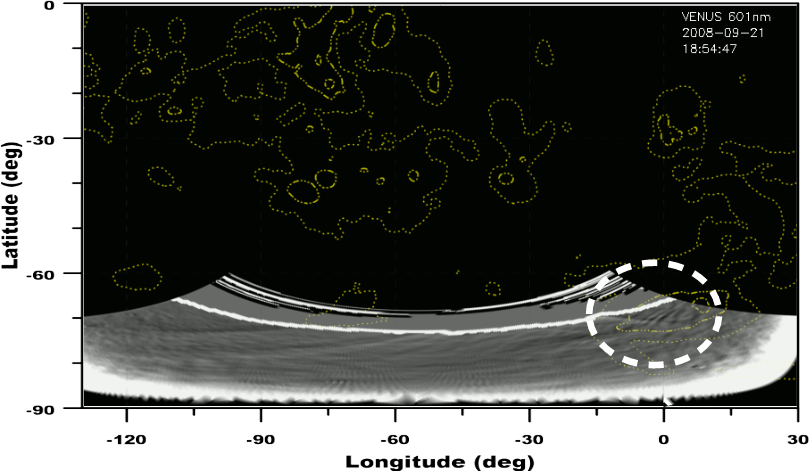
In the past decade, bow-shaped stationary features jumped to the spotlight with the observation of a planetary scale feature by the Japanese space mission Akatsuki in December 2015 [Fukuhara et al. 2017]. Further detections by ESA’s Venus Express mission between 2006-2008 [Peralta et al. 2017] reinforced these findings. Several instruments onboard Akatsuki have thus far provided a continuous cover of the planet’s cloud layer, including further detection and characterization of stationary features on the top of the clouds with the Ultraviolet Imager (UVI) [Kitahara et al. 2019] which is sensitive to ultraviolet radiation, and at slightly lower levels thanks to the capabilities of the Longwave Infrared Camera (LIR) [Fukuya et al. 2022] which senses the thermal emission from the upper clouds at mid-infrared. Such features have also been reported using the IR2 camera [Sato et al. 2020], using dayside observations at 2.02 microns sensitive to one of the CO2 absorption bands. Most of these features have been interpreted as a form of atmospheric gravity wave, in this case generated by flow over prominent topography.

Gravity waves are periodic perturbations in which the buoyancy of the perturbed fluid acts as the restoring force. These waves require a forcing mechanism to be generated, and a statically stable environment so that they can propagate through the fluid in which they are generated. Given that their properties allow them to carry energy and momentum across the atmosphere, especially in the vertical direction, they become a crucial subject matter for atmospheric science. For the case of Venus, they represent a good opportunity to investigate the conditions in which objects like stationary waves might form, and if they are of orographic origin. As they are observed in the cloud layer of Venus, which for dayside visible and mid-infrared observations usually represents a region between 60-70 km of altitude, they may establish a link between the cloud layer and the surface. However, a positive static stability environment, which is necessary for the propagation of these waves, does not seem to always be verified between the surface and the cloud layer. There lies the puzzle of explaining the existence of such phenomena in the cloud layer, although considerable efforts have already been directed in this front with some success, through atmospheric modeling [Imamura et al. 2018, Lefèvre et al. 2020]. Several of these efforts mention the need for extended observations of these features for a more robust interpretation of the generation and propagation of stationary waves on Venus.

We present here a contribution in this front, taking advantage of data from multiple instruments to detect and characterise stationary features which resemble gravity waves on the dayside of Venus. We used data from the VIRTIS instrument onboard the Venus Express mission, using multiple wavelengths that can detect contrasting features in the clouds at several levels of the cloud layer. To complement this selection, we used data from the IR2 instrument with the 2.02 micron filter, following up on previous observations and performed a reanalysis of the structures reported in Kitahara et al. (2019) detected most strongly at 283 nm with the UVI instrument. To our surprise the distribution of features does not seem to be completely correlated with noteworthy topography and some exhibit morphologies that have not been documented for waves of this kind on Venus. The length scales of the new features are in the mesoscale range with horizontal wavelengths mostly between 100-200 km, and whose properties are in good agreement with previous studies of this phenomena on Venus, albeit with an arguably more diverse range of shapes and a wider geographical distribution and local time.

References

Fukuhara et al. 2017, Nat. Geoscience; DOI: 10.1038/NGEO2873

Fukuya et al. 2022, Icarus; DOI: 10.1016/j.icarus.2022.114936

Imamura et al. 2018, JGR Planets; DOI: 10.1029/2018JE005627

Kitahara et al. 2019, JGR Planets; DOI: 10.1029/2018JE005842

Kouyama et al. 2017, Geophys. Res. Lett.; DOI: 10.1002/2017GL075792

Lefèvre et al. 2020, Icarus; DOI: 10.1016/j.icarus.2019.07.010

Peralta et al. 2017, Nat. Astronomy; DOI: 10.1038/s41550-017-0187

Sato et al. 2020, Icarus; DOI: 10.1016/j.icarus.2020.113682

How to cite: Silva, J., Peralta, J., Imamura, T., Lefèvre, M., Machado, P., Cardesín, A., Ando, H., Brasil, F., Espadinha, D., and Joo Lee, Y.: Cross-Instrument stationary features on Venus’ dayside atmosphere, EPSC-DPS Joint Meeting 2025, Helsinki, Finland, 7–13 Sep 2025, EPSC-DPS2025-595, https://doi.org/10.5194/epsc-dps2025-595, 2025.

Q&A (8 min)
17:21–17:36
|
EPSC-DPS2025-97
|
ECP
|
solicited
|
On-site presentation
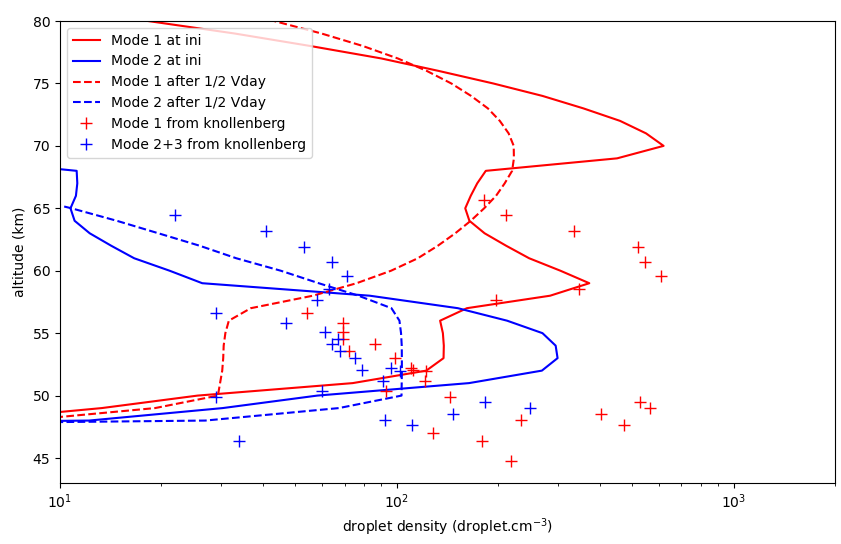
Nicolas Streel, Anni Määttänen, Franck Lefèvre, and Aurélien Stolzenbach

Introduction

The clouds of Venus are unique in the solar system, comprising multiple layers at an altitude ranging from 50 to 70 kilometres and enveloping the entire surface of the planet. They consist of droplets of liquid sulphuric acid (70-95% by mass) and water, exhibiting a bi- or tri-modal size distribution. It has been observed that the three modes have a radius of approximately 0.3, 1 and 2 micrometres, respectively(1).

Modelling these clouds represents a significant challenge in comprehending the dynamics of Venus atmosphere. However, the models that have been developed so far are mainly in 1D(26), and the few 2D and 3D models are limited to simplified equilibrium schemes(710). The present study focuses on the first 3D modelling of Venus clouds employing a comprehensive microphysics model, and its 1D validation. The Venus PCM(11, 12), a GCM that incorporates a comprehensive chemistry model, a radiative transfer scheme and a parametrisation of the clouds, is used in this study. The existing cloud parametrisation(10) assumes that the clouds are in a state of constant thermodynamical equilibrium with the water vapour and sulfuric acid at each timestep.

Method

We have coupled the MAD-VenLA model from the work of Guilbon(13) and Määttänen(14) to the Venus PCM. MAD-VenLA is a modal model that describes two particle modes that have a lognormal form and a fixed standard deviation. MAD-VenLA includes a scheme of homogeneous nucleation(15), a simplified parametrisation of heterogeneous nucleation, Brownian coagulation, condensation and evaporation(14). In addition, MAD-VenLA incorporates mode-merging(16) that allows transfer particles from one mode to another. The sedimentation scheme uses the Stokes terminal speed modified by the Cunningham correction.

Results

A key issue we have with the coupling of the 0D microphysical scheme and the 3D GCM is the difference between the timestep lengths (1s for 0D, 7 minutes for 3D). For ensuring stability of the calculations with the longer timestep in 3D,  we have updated the solution of the condensation/evaporation scheme with a Runge-Kutta 4 scheme. We also adapted for our purpose the state-of-the-art sedimentation scheme adapted from Stolzenbach(10).

The goal of this study is to link a complete microphysical scheme to a state of the art GCM to reproduce realistic clouds in regards to 3D dynamical regime. Before presenting the 3D simulation results, we examine 1D simulations of several Venus Days. These tests aim to validate the behaviour of the microphysical scheme by comparing it to the observations and to other microphysical schemes (Fig 1,2).

We will present our first 3D simulations that are relatively short simulations initialized with the equilibrium state computed with the parametrisation from Stolzenbach(10). These simulations did not yet reach the steady states but they provide a first look the both vertical and the horizontal distributions of the cloud droplets.(Fig 3.)

We are planning to run longer 3D simulations to reach a steady-state in order to compare the simulated clouds to the observations of the past missions and also give information for the upcoming ones (EnVision, etc.).

Figure 1: Droplet density profile (in droplet.cm-3) of mode 1 (in red) and mode 2 (in black)  particles at the initialization (full line) and after half a Venusian day (dashed line) with the 1D version of the Venus PCM. The outputs are compared to the Knollenberg data (crosses). Since MAD-VenLA is only composed of 2 modes, we sum up the mass of the mode 2 and mode 3 from the Knollenberg data.

Figure 2 : Mass-loading profile (in mg.m-3) of mode 1 (in red)  and mode 2 (in blue)  particles at the initialization (full line) and after half a Venusian day (dashed line) with the 1D version of the Venus PCM. The outputs are compared to the Knollenberg data (crosses). Since MAD-VenLA is only composed of 2 modes, we sum up the mass of the mode 2 and mode 3 from the data.

Figure 3: Horizontal map of the distribution of the 3rd order moment of mode 2 droplets after 2 terrestrial days at 55 km of altitude. This map is the result of a 3D simulation with the Venus PCM with MAD-VenLA. It presents the distribution of the volume of the droplets in each pixel.

References

  • R. G. Knollenberg, D. M. Hunten, J. Geophys. Res. 85, 8039–8058 (1980).
  • E. P. James, O. B. Toon, G. Schubert, Icarus. 129, 147–171 (1997).
  • T. Imamura, G. L. Hashimoto, J. Geophys. Res. 103, 31349–31366 (1998).
  • M. Yamamoto, M. Takahashi, J. Geophys. Res. 111, 2006JE002688 (2006).
  • K. McGouldrick, E. L. Barth, Planet. Sci. J. 4, 50 (2023).
  • H. Karyu et al., Planet. Sci. J. 5, 57 (2024).
  • C. Lee, S. R. Lewis, P. L. Read, Icarus. 206, 662–668 (2010).
  • H. Ando, M. Takagi, N. Sugimoto, H. Sagawa, Y. Matsuda, Journal of Geophysical Research: Planets, in press, doi:10.1029/2019JE006208.
  • H. Karyu et al., Journal of Geophysical Research: Planets, in press, doi:10.1029/2022JE007595.
  • A. Stolzenbach, F. Lefèvre, S. Lebonnois, A. Määttänen, Icarus. 395, 115447 (2023).
  • S. Lebonnois, N. Sugimoto, G. Gilli, Icarus. 278, 38–51 (2016).
  • G. Gilli et al., Icarus. 281, 55–72 (2017).
  • S. Guilbon, thesis, Université Paris Saclay (COmUE) (2018).
  • A. Määttänen, S. Guilbon, J. Burgalat, F. Montmessin, Advances in Space Research. 71, 1116–1136 (2023).
  • A. Määttänen et al., JGR Atmospheres. 123, 1269–1296 (2018).
  • E. Whitby, F. Stratmann, M. Wilck, Journal of Aerosol Science. 33, 623–645 (2002).

How to cite: Streel, N., Määttänen, A., Lefèvre, F., and Stolzenbach, A.: Detailed microphysics coupled with the Venus Planetary Climate Model : One-dimensional and three-dimensional simulations, EPSC-DPS Joint Meeting 2025, Helsinki, Finland, 7–13 Sep 2025, EPSC-DPS2025-97, https://doi.org/10.5194/epsc-dps2025-97, 2025.

17:36–17:48
|
EPSC-DPS2025-1290
|
On-site presentation
Takao Sato and Takehiko Satoh

Venus is completely shrouded by optically thick clouds of sulfuric acid that are located between ~47 and 70 km. The cloud tops have been investigated through imaging, spectroscopy, and polarimetry in a broad range of wavelengths, from UV to mid-infrared, as well as in-situ measurements. For example, Ignatiev et al. (2009) studied the cloud top altitude from the depth of CO2 absorption band at 1.6 μm acquired by VIRTIS onboard Venus Express. They found that the cloud tops decreased poleward of 50° and this depression coincided with the eye of the polar vortex. Sato et al. (2020) described the dayside cloud top structure of Venus using the 2.02-μm channel (designed for sensing at a CO2 absorption band) of the 2-μm camera (IR2) onboard Akatsuki. They showed that the latitudinal structure of the cloud top altitude was symmetric with respect to the equator. The average cloud top altitude was 70.5 km in the equatorial region and showed a gradual decrease of ~2 km by the 45° latitude. It rapidly dropped at latitudes of 50–60° and reached 61 km in latitudes of 70–75°.

We have investigated the solar phase angle dependence of the reflected sunlight in the low-latitude region (30°S–30°N) using the complete set of 2.02-μm images. A total of 374 images taken from December 11, 2015, to October 29, 2016 were selected by carefully excluding those with saturated pixels and/or defect image tiles. In general, the reflected sunlight gets more intense as solar phase angle increases due to the forward scattering of aerosols in the atmosphere. Interestingly, the curve of the reflected sunlight in solar phase angles higher than 90° acquired in Orbit #29–30 was approximately twice more gradual than that acquired in Orbit #11–12. Because these data were taken under the similar geometry, the difference is likely to be caused by some real variations in the cloud top structure. Such solar phase angle dependence of the reflected sunlight or brightness temperature in the same region was also studied using images taken in the same observation period but at other wavelengths: 283 nm and 365 nm from the Ultraviolet imager (UVI), 0.9 μm from the 1-μm camera (IR1), and 10 μm from the Longwave infrared camera (LIR). This multispectral comparison showed that no significant difference in the curve between Orbit #11–12 and #29–30 was detected at the wavelengths other than 2.02 μm. Wavelengths at 283 nm, 365 nm, and 0.9 μm are sensitive to optical thickness of aerosols but insensitive to their vertical distributions; therefore, vertical distributions of Modes 1 and 2 particles characterized by scale height are key parameters to make the difference in the curve of the reflected sunlight discovered from the 2.02-μm images. To support this hypothesis, we selected the data to make two groups: Group 1 (including Orbit #11–12) and Group 2 (including Orbit #29–30). For each group, the observed solar phase angle dependence and the center-to-limb variation of the reflected sunlight in the low-latitude region were used to retrieve cloud top altitude zc and cloud scale height H by means of radiative transfer calculation. While the best-fit combination for Group 1 is obtained at (zc, H) = (70.4 km, 5.5 km), that for Group B is found at (zc, H) = (69.9 km, 3.5 km). The results quantitatively show that the difference can be explained by the 2-km difference of cloud scale height.

In this presentation, we present the solar phase angle dependence of the reflected sunlight or brightness temperature using the five wavelengths of Akatsuki’s instruments. The details of the radiative transfer model and fitting results are shown. Finally, we will discuss whether the best-fit models retrieved from Groups 1 and 2 are compatible with the data at other wavelengths.

How to cite: Sato, T. and Satoh, T.: Short-term variation in the dayside cloud top structure of Venus: A search for a cause using multispectral images of Akatsuki, EPSC-DPS Joint Meeting 2025, Helsinki, Finland, 7–13 Sep 2025, EPSC-DPS2025-1290, https://doi.org/10.5194/epsc-dps2025-1290, 2025.

17:48–18:00
|
EPSC-DPS2025-483
|
ECP
|
On-site presentation
João Dias, Pedro Machado, Séverine Robert, Hideo Sagawa, Takao Sato, and Shohei Aoki

The measurement of isotopic ratios on Venus is crucial to track atmospheric loss though time, constrain planetary origin and trace surface-atmosphere interactions [1]. The deuterium to hydrogen ratio (D/H) is found to be 157 times greater than that of Earth's oceans [2, 3], suggesting Venus once had a larger quantity of water. The carbon and oxygen isotopic ratios, ¹²C/¹³C and ¹⁶O/¹⁸O, have been measured by the Pioneer Venus and Venera missions [4, 5], as well as through ground-based infrared spectroscopy [6, 7, 8, 9]. They are consistent with Earth’s ratios within uncertainties (¹²C/¹³C ~ 89, ¹⁶O/¹⁸O ~ 500), suggesting little escape or photochemical alteration of CO2 through time.

We present new simultaneous measurements of bulk-averaged ratios of ¹⁶O/¹⁸O, ¹6O/17O and ¹²C/¹³C, measured on CO2, on Venus’ dayside, from high spectral resolution (R ~ 80 000) iSHELL/IRTF observations, using the H3 mode (1.64-1.82 µm), performed on the 2nd February 2024. Venus angular diameter was 12.2'', with an illuminated fraction of 86.1 %. Wavelength calibration, flat fielding, dark correction and sky subtraction were performed using the Spextool data reduction software [10, 11]. Absolute flux calibration could not be performed since the SNR of our standard star was too low.

We selected spectral order 314 (1.660–1.667 µm) to estimate the ¹⁶O/¹⁸O ratio, order 316 (1.650–1.657 µm) for the ¹⁶O/17O ratio, and order 311 (1.676–1.683 µm) to determine the ¹²C/¹³C ratio. Pairs of adjacent isotopologue lines were selected, with a minimum telluric and solar contamination. Forward models were simulated using ASIMUT-ALVL [12] for a range of possible isotopic ratios (scalers 0.85-1.15). For each line pair, the line depth ratio method [7, 13, 14] was used to obtain the best fit isotopic ratio, by comparison of the measured line depth ratio with the modeled one through a simple linear interpolation.

The following preliminary weighted averaged isotopic ratios were computed: ¹⁶O/¹⁸O ~ 507 ± 50, ¹⁶O/17O ~ 2745 ± 152 and ¹²C/¹³C ~ 90 ± 6, which are consistent with previously reported values [7, 8, 9]. The main limitations of our current measurements arise from uncertainties in line intensities (approximately 5%, based on the HITRAN database), the lack of an absolute flux calibration source with sufficiently high signal-to-noise ratio and uncertainties in the assumed temperature profile in the forward modeling. Ongoing analysis of data from mode H3 (1.64-1.82 µm), and from mode K3 (2.26-2.55 µm), which covers the OCS isotopologues absorption features at 2.42-2.46 µm, will be explored to get an estimate of the ratios of 35Cl/37Cl and 32S/34S, respectively,  opening an opportunity to shed some light on current volcanic outgassing processes, photochemistry and sulphur cycle dynamics.

References. (1) Avice et al. 2022, Space Science Reviews (2) Donahue et al., 1997, Science (3) Bézard et al. 2007, JGR Planets (4) Hoffman et al. 1980, JGR Space Physics (5) Istomin et al. 1980, 23rd COSPAR meeting, Budapest, Hungary (6) Kuiper et al. 1962, Comm. Lunar Planet. Lab (7) Beźard et al. 1987, Icarus (8) Hedelt et al. 2011, A&A (9) Iwagami et al. 2015, Planetary and Space Science (10) Cushing et al. 2004, PASP 116 (11) Vacca et al. 2003, PASP 115 (12) Vandaele et al. 2006, ESRIN, Italy (13) Krasnopolsky et al. 2010, Icarus (14) Encrenaz et al. 2012, A&A

Funding. JAD acknowledges funding through the research grants UIDB/04434/2020 and UIDP/04434/2020 and a fellowship grant 2022.09859.BD. SR acknowledges funding by the Belgian Science Policy Office (BELSPO) with the financial and contractual coordination by the ESA Prodex Office (PEA 4000144206).

How to cite: Dias, J., Machado, P., Robert, S., Sagawa, H., Sato, T., and Aoki, S.: Measuring Isotopic Ratios on Venus’ Dayside using iSHELL/IRTF Observations, EPSC-DPS Joint Meeting 2025, Helsinki, Finland, 7–13 Sep 2025, EPSC-DPS2025-483, https://doi.org/10.5194/epsc-dps2025-483, 2025.

Q&A (6 min)

Orals TUE-OB2: Tue, 9 Sep, 09:30–10:30 | Room Sun (Finlandia Hall)

Chairpersons: Takeshi Imamura, Erika Kohler
Atmosphere chemistry and spectroscopy - Part I
09:30–09:42
|
EPSC-DPS2025-1039
|
ECP
|
On-site presentation
Joanna Egan, Wuhu Feng, Alexander James, James Manners, Daniel Marsh, and John Plane

Understanding the composition and distribution of the unknown UV absorber (Figure 1) in the Venusian atmosphere has been an open question in planetary science for close to 100 years. Ferric chloride (FeCl3) has been proposed as the cause of the absorption [1], but the absorption spectrum of FeCl3 generally used in the literature was measured in ethyl acetate [2], which is not present on Venus and produces an absorption spectrum with little similarity to the Venusian absorber [3].

Figure 1: A false colour image of Venus. Regions of UV absorption appear orange. The cause of this absorption is unknown. Image credit: NASA/JPL-Caltech. 

 We have measured the absorption spectrum of FeCl3 in sulphuric acid with small quantities of HCl added, and we found that it is much more similar in shape to the observed spectrum of the unknown absorber than prior FeCl3 spectra available in the literature (Figure 2). 

Figure 2: Comparison of the FeCl3 spectra in ethyl acetate [2] and sulphuric acid (this work) with a spectrum of the unknown UV absorber recorded by MASCS/MESSENGER [3].

When added to sulphuric acid, a mixture of ferric chloride and ferric sulphate ions are observed. We estimated the molar partitioning of the species in the mixtures by performing least squares fitting to reproduce each measured spectrum from spectra of pure ferric sulphate (measured for Fe2(SO4)3 in 75-78 wt% aqueous H2SO4) and pure ferric chloride (measured for FeCl3 in 5-37 wt% aqueous HCl).

The fraction of the observed absorption that can be reproduced by FeCl3 was investigated using three models: the global Planetary Climate Model for Venus (PCM-Venus) to model the photochemistry and 3D transport of the candidates in the atmosphere [4], a 1D sectional aerosol model to predict agglomeration and sedimentation as a transport mechanism of FeCl3 particles [5], and the 1D multiple scattering radiative transfer model SOCRATES [6]. 

The required concentrations of FeCl3 in the different cloud modes to reproduce observations taken by MESSENGER/MASCS during its June 2007 Venus flyby [3] were estimated for different cloud modes using SOCRATES. The full absorption can be explained by approximately 1.5 - 2 wt% FeCl3 in the mode 1 cloud droplets (Figure 3). Some contribution from ferric sulphate ions is also expected, but absorbs in the same wavelength region as SO2, so its precise contribution could not be reliable constrained.

Figure 3: Comparison of MASCS/MESSENGER measured reflectance (crosses) [3] with the modelled spectrum with SO2 only (blue line), and with 1.2 – 2.0 wt% FeCl3 in mode 1 cloud droplets (orange and red lines).

Iron chemistry was added into PCM-Venus in order to predict the abundance of gas-phase FeCl3 produced by the reaction of gas-phase HCl with iron produced by the ablation of cosmic dust particles around 115 km. Mean gas and dynamical profiles from the PCM were used to initialise the agglomeration and sedimentation model, which was then run for many Venus years to reach steady state. Agglomeration and sedimentation modelling of FeCl3 suggests that the PCM-modelled FeCl3 column abundance above 60 km can account for more than 40% of the observed absorption. The flux of meteoric iron into the Venusian atmosphere has not been measured, and may be significantly higher than assumed in this work [7].


References 

[1] Zasova et al. 1981, https://doi.org/10.1016/0273-1177(81)90213-1 

[2] Aoshima et al. 2013, http://doi.org/10.1039/C3PY00352C

[3] Pérez-Hoyos et al. 2018, https://doi.org/10.1002/2017JE005406 

[4] Martinez et al. 2024, doi.org/10.1016/j.icarus.2024.116035 

[5] Frankland et al. 2017, https://doi.org/10.1016/j.icarus.2017.06.005 

[6] Manners et al. 2022, SOCRATES Technical Guide, available at: https://code.metoffice.gov.uk/trac/socrates 

[7] Carrillo-Sánchez et al. 2020, https://doi.org/10.1016/j.icarus.2019.113395

How to cite: Egan, J., Feng, W., James, A., Manners, J., Marsh, D., and Plane, J.: Investigation of ferric chloride as the cause of the Venusian NUV absorption, EPSC-DPS Joint Meeting 2025, Helsinki, Finland, 7–13 Sep 2025, EPSC-DPS2025-1039, https://doi.org/10.5194/epsc-dps2025-1039, 2025.

09:42–09:54
|
EPSC-DPS2025-479
|
On-site presentation
Arnaud Mahieux, Pascal Rosenblatt, Amina Bissery, Séverine Robert, Loïc Trompet, Arianna Piccialli, and Ann Carine Vandaele

Until the ESA Venus Express mission, the Venus mesosphere was a poorly understood region of Venus’s atmosphere. This mission revealed the composition and thermal structure of the mesosphere and lower-thermosphere [1] with the help of its suite of instruments: VIRTIS [2], SPICAV-IR and SPICAV-UV [3], VeRA [4], and SOIR [5].

In particular, the SOIR instrument performed solar occultation measurements in the IR region (2.2 - 4.3 µm) at a spectral resolution of 0.12 cm-1, among the highest of all space instruments. It combined an echelle spectrometer and an Acousto-Optical Tunable Filter for the order selection. SOIR performed more than 1500 solar occultation measurements leading to about two millions spectra [6].

Above 100 km, SOIR could derive the CO2 and CO concentration, up to ~170 km, and, using the hydrostatic equation, the temperature could be obtained [7, 8].

Towards the end of the Venus Express mission, an aerobreaking campaign (VExADE) was conducted, making the spacecraft dive into the atmosphere down to altitudes of ~130 km [9]. This experiment used the accelerometer data to compute the total mass density by computing the forces that were measured by the spacecraft due to aerobraking .

In this work, we use the data from both the SOIR and VExADE experiments to derive the high altitude concentrations of N2 and atomic oxygen, providing information that is not yet available for this atmospheric region. Indeed, N2 and O are not measurable in the infrared using a spectrometer since these species do not have absorption lines in this spectral region. Moreover, from previous observations obtained by the Pioneer Venus mass spectrometer [10], N2 and CO could not be differentiated due to their same molar masses.

We will present the results and discuss their impact on the photochemistry, CO and O being byproducts of the CO2 photodissociation occurring in the Venus mesosphere. We will also compare our results to the ones obtained from the state-of-art Global Circulation Model (GCM) Venus Climate Database [11].


References:

[1] Limaye, S.S., et al. (2018), Space Science Reviews

[2] Drossart, P., et al. (2007), Planet. Space Sci.

[3] Bertaux, J.L., et al. (2007), Planet. Space Sci.

[4] Tellmann, S., et al. (2012), Icarus

[5] Nevejans, D., et al. (2006), Applied Optics

[6] Vandaele , A.C., et al. (2016), Adv. Space Res.

[7] Mahieux, A., et al. (2023), Icarus

[8] Mahieux, A., et al. (2015), Planet. Space Sci.

[9] Müller-Wodarg, I.C.F., et al. (2016), Nature Physics

[10] von Zahn, U., et al. (1980), J. Geophys. Res.

[11] Gilli, G., et al. (2021), Icarus


How to cite: Mahieux, A., Rosenblatt, P., Bissery, A., Robert, S., Trompet, L., Piccialli, A., and Vandaele, A. C.: Determination of the Venus upper atmosphere gas concentration combining the SOIR/Venus Express and Torque aerobreaking observations, EPSC-DPS Joint Meeting 2025, Helsinki, Finland, 7–13 Sep 2025, EPSC-DPS2025-479, https://doi.org/10.5194/epsc-dps2025-479, 2025.

09:54–10:06
|
EPSC-DPS2025-1266
|
On-site presentation
Kandis Lea Jessup, Arnaud Mahieux, Emmanuel Marcq, Aditya Bhushan, and Franklin Mills

The composition and chemical processing occurring within the Venus atmosphere is derived by a combination of direct observation (both in-situ and remote) and chemical and climate modeling (Widemann et al. 2024, Marcq et al. 2018). Chemical modeling and atmospheric properties retrievals from observations are interdependent efforts. Venus’s bulk atmosphere is composed of CO2 (96.5%) and N2 (3.5%), while SO2 (~0.015%), Argon (0.007%) and water (0.002%) round out the top 5 gas species present in the Venus atmosphere. Observations and chemical modeling indicate that Venus's clouds also host a myriad of sulfur, oxygen, nitrogen, hydrogen, chlorine, carbon and oxygen trace gas species. While it is understood that the Venus clouds are dominantly composed of H2SO4 aerosol, and that the H2SO4 gas within the atmosphere is formed by chain reaction of SO2 photolysis leading to formation of SO3 and the interaction of SO3 with H2O—many questions remain about what controls the abundance of H2SO4, H2O and SO2 in the Venus atmosphere (Marcq et al. 2018, Bierson et al. 2020, Rimmer et al. 2021, Dai et al. 2022). Unequivocal answers to these questions are dependent on how precisely we can identify and quantify the other trace gas and aerosol forming species present in the atmosphere and their propensity to interact with Venus’s sulfur, oxygen and water budgets.  (Mogul et al. 2021, Rimmer et al. 2021, Jiang et al. 2023, Jessup et al. 2020)

Progress in resolving these questions is being made as chemical and climate modeling become increasingly sophisticated (Stolenzbach et al. 2023, Dai et al. 2022, Dai et al. 2024). Likewise, efforts to advance and improve lab and theoretical studies of the physical properties of gases and aerosols that may be present in the Venus atmosphere are on-going (Frandsen et al. 2024, Skog et al. 2024, Jiang et al. 2023, Heays et al. 2017 Heays et al. 2023). These advances and the anticipation of several new Venus missions, motivates the review/re-analysis of several previously obtained remote/in-situ datasets (Mogul et al. 2021, Mahieux et al. 2024, Mahieux et al. 2023, Lincowski et al. 2021). As a result, several sulfur-based species previously not conclusively observed have now been definitively detected within remote sensing data (Mahieux et al. 2023), while debate rages on about species detected via in situ observation opportunities (Lincowski et al. 2021, Mogul et al. 2021).


Several gases recently positively detected by SOIR have absorption at UV wavelengths coincident with previously obtained Hubble Space Telescope spectra (Jessup et al. 2015, Jessup et al. 2020). We present a summary of the detectability of these species in the previously obtained Hubble data. We discuss what these and the recent SOIR retrievals may mean for anticipated monitoring of the Venus cloud top and middle atmosphere at UV and other wavelengths via the EnVision/VenSpec instrument (Marcq et al. 2021). We also discuss to what extent the detectability of these species at UV wavelengths impacts open controversial in-situ detections (Mogul et al. 2021); especially those that may directly impact the sulfur cycle or other cloud level atmospheric constituents (Rimmer et al. 2021).


REFERENCES:

Widemann, T., Smrekar, S.E., Garvin, J.B. et al. Venus Evolution Through Time: Key Science Questions, Selected Mission Concepts and Future Investigations. Space Sci Rev 219, 56 (2023). https://doi.org/10.1007/s11214-023-00992-w

Marcq, E., Mills, F. P., Parkinson, C., Vandaele, A.C. Composition and Chemistry of the Neutral Atmosphere of Venus space Sci Rev (2018) 214:10 DOI 10.1007/s11214-017-0438-5.

Bierson, C. J., & Zhang, X. (2020). Chemical cycling in the venusian atmosphere: A full photochemical model from the surface to 110 km. Journal of Geophysical Research: Planets, 125, e2019JE006159. https://doi.org/10.1029/2019JE006159

Rimmer, P. B. , Jordan, S.,  Constantinou, T., Woitke,  Shorttle, O. , Hobbs, R., and Paschodimas, A., Hydroxide Salts in the Clouds of Venus: Their Effect on the Sulfur Cycle and Cloud Droplet pH. Planetary Science Journal, 2:133 (25pp), 2021 https://doi.org/10.3847/PSJ/ac0156

Dai, L., Zhang, X., Shao, W. D., Bierson, C. J., & Cui, J. (2022). A simple condensation model for the H2SO4-H2O gas-cloud system on Venus. Journal of Geophysical Research: Planets, 127, e2021JE007060. https://doi.org/10.1029/2021JE007060

Dai, L., Shao, W. , and Sheng, Z., An investigation into Venusian atmospheric chemistry based on an open-access photochemistry-transport model at 0–112 km. Astronomy &Astrophysics, 689, A55 (2024) https://doi.org/10.1051/0004-6361/202450552

Jiang, C., Rimmer, Paul B. Rimmer,  et al. Iron-sulfur chemistry can explain the ultraviolet
absorber in the clouds of Venus., Sci. Adv. 10, eadg8826 (2024)

Mogul, R.   Limaye S.L.,  Way, M. J.,  Cordova, J. A., (2021)Venus' Mass Spectra Show Signs of Disequilibria in the Middle Clouds Geophys. Res. Letters. 48, Issue7, 2021e2020GL091327, https://doi.org/10.1029/2020GL091327

Jessup, K.-L., Marcq, E., Bertaux, J.-L., Mills, F.~P., Limaye, S., Roman, A.2020.\On Venus' cloud top chemistry, convective activity and topography: A perspective from HST. Icarus 335. doi:10.1016/j.icarus.2019.07.006

Stolzenbach, A.,  Lefèvre, F., Lebonnois, S.,  Määttänen, A., Three-dimensional modeling of Venus photochemistry and clouds, Icarus, Volume 395, 2023,115447, https://doi.org/10.1016/j.icarus.2023.115447.

Heays, A. N., Stark, G., Lyons, J. R., de Oliveira, N., Lewis, B. R., & Gibson, S. T. (2022). https://doi.org/10.1080/00268976.2022.2153092

Heays,A., Bosman, A.D. and E.F. Dishoeck Photodissociation and photoionization of atoms and molecules of astrophysical interest, Astronomy &Astrophysics 602,A105(2017) DOI:10.1051/0004-6361/201628742

Skog, R., Frandsen, B., Kurten, T., 2024. Simulating UV-VIS Spectra for Polysulfur Species in the Venusian Atmosphere.E GU General Assembly Conference Abstracts. doi:10.5194/egusphere-egu24-8798

Frandsen, B. and Skog, R.: Breaking New Ground in Venusian Atmospheric Sulfur Chemistry, EGU General Assembly 2024, Vienna, Austria, 14–19 Apr 2024, EGU24-7533, https://doi.org/10.5194/egusphere-egu24-7533, 2024.

Emmanuel Marcq, Franck Montmessin, Jérémie Lasue, Bruno Bézard, Kandis Lea Jessup, et al. Instrumental requirements for the study of Venus' cloud top using the UV imaging spectrometer VeSUV. Advances in Space Research, 2021, 68 (1), pp.275-291. 10.1016/j.asr.2021.03.012. insu-03179739


Jessup, K. L. Emmanuel Marcq, Franklin Mills. Arnaud Mahieux, et al. Coordinated Hubble Space Telescope and Venus Express Observations of Venus’ upper cloud deck Icarus 258 (2015) 309–336 http://dx.doi.org/10.1016/j.icarus.2015.05.027

Andrew P. Lincowski, Victoria S. Meadows, David Crisp, et al., 2021 ApJL 908 L44DOI 10.3847/2041-8213/abde47

Mahieux, S. Viscardy, K.L. Jessup, F.P. Mills, et al.  H2CO, O3, NH3, HCN, N2O, NO2, NO, and HO2 upper limits of detection in the Venus lower-mesosphere using SOIR on board Venus Express.  https://doi.org/10.1016/j.icarus.2023.115862

How to cite: Jessup, K. L., Mahieux, A., Marcq, E., Bhushan, A., and Mills, F.: Prospective Venus Cloud trace species detectability as inferred from Hubble, EPSC-DPS Joint Meeting 2025, Helsinki, Finland, 7–13 Sep 2025, EPSC-DPS2025-1266, https://doi.org/10.5194/epsc-dps2025-1266, 2025.

10:06–10:18
|
EPSC-DPS2025-1256
|
On-site presentation
Ehouarn Millour, Sebastien Lebonnois, Irina Kovalenko, Antoine Martinez, Francois Forget, Aymeric Spiga, Fabrice Cipriani, and The VCD development team

Based on the state-of-the-art Venus Planetary Climate Model (PCM, formerly known as the Venus IPSL GCM) developed by our team[1-3], we have generated a Venus Climate Database (VCD) (http://www-venus.lmd.jussieu.fr/). This tool was developed with funding from ESA in the context of the preparation of the upcoming EnVision mission. The latest version of the VCD, VCD2.3, was released in fall 2023.


The VCD provides mean values and statistics of the main meteorological variables (atmospheric temperature, density, pressure and winds) as well as atmospheric composition and related physical fields. It extends from the surface up to and including the thermosphere (~250km). The database contains high resolution temporal outputs (using 24 hourly bins) enabling a good representation of the diurnal evolution of quantities over a climatological Venusian day.

As the goal of the VCD is to provide information about the state of the Venusian atmosphere, various realistic settings have been used to run a series of baseline GCM simulations, namely:

- Simulations using various Extreme UltraViolet (EUV) input from the Sun, as this forcing influences significantly the thermosphere (~120km and above).

- Some supplementary simulations with extreme values of UV cloud albedo, to bracket the state of the atmosphere below the thermosphere.


In addition to the aforementioned VCD scenarios, the following features are available:

- A "high resolution" mode based on a high resolution topography map (at 23 pixels/degree).

- Access to the Venusian intra-hour variability (RMS) of main meteorological variables, as well as the Venusian day-to-day variability thereof.

- The possibility to add perturbations to the climatological fields in order to generate realistic weather conditions.


VCD2.3 is distributed as (i) a main Fortran subroutine that users can interface and directly call from their own programs, interfaces to call this gateway routine using other programming languages (e.g. C, Python, IDL, Matlab, ...) are also provided; (ii) a web interface, for quick looks (http://www-venus.lmd.jussieu.fr).


We are currently working on the next version of the VCD, which should include not only updated Venus PCM simulation outputs (improved gravity waves scheme and better tuning of atmospheric oxygen) , but also some improvements in the VCD software (a redesigned gravity waves variability scheme, in line with the PCM updates) as well as on the inclusion of Global Climate Model simulation outputs from other teams.


References:

[1] Martinez, A .et al. Exploring the variability of the venusian thermosphere with the IPSL Venus GCM, Icarus (2023), DOI: 10.1016/j.icarus.2022.115272

[2] Stolzenbach, A. et al. Three-dimensional modeling of Venus photochemistry and clouds, Icarus, (2023), DOI: 10.1016/j.icarus.2023.115447

[3] Martinez, A. et al. Three-dimensional Venusian ionosphere model, Icarus (2024), DOI: 10.1016/j.icarus.2024.116035

How to cite: Millour, E., Lebonnois, S., Kovalenko, I., Martinez, A., Forget, F., Spiga, A., Cipriani, F., and development team, T. V.: The Venus Climate Database, current and future versions, EPSC-DPS Joint Meeting 2025, Helsinki, Finland, 7–13 Sep 2025, EPSC-DPS2025-1256, https://doi.org/10.5194/epsc-dps2025-1256, 2025.

10:18–10:30
|
EPSC-DPS2025-1428
|
On-site presentation
Justin Erwin, Séverine Robert, Emile Ducreux, Itziar Garate Lopez, Jaime Reyes Guerrero, Alejandro Cardesin, and Nils Mueller

The 2030s will see the arrival of several spacecrafts, with multiple spectrometers designed to measure the atmosphere or surface using the transparency windows through the clouds on the nightside. In this work we summarize the data analysis of the VIRTIS-M dataset most relevant to the upcoming missions. We compare these results to simulations using these latest available inputs to investigate discrepancies and discuss the needs for improvements in preparation for the future missions.

The VIRTIS (Visible and Infra-Red Thermal Imaging Spectrometer) instrument was the imaging spectrometer on-board Venus Express. The mapping channel (VIRTIS-M) covering the 0.25 - 5.1µm range (Cardesín-Moinelo et al., 2020) and observed the surface and lower atmosphere on the Venus nightside. Several instruments as part of the upcoming Venus missions will study within this range. In particular, Venus Emissivity Mapper and VenSpec-M are mappers that will investigate between 0.86 and 1.18 µm (Hagelschuer et al., 2024) and VenSpec-H is a high-resolution spectrometer that will investigate between 1.1 and 2.5 µm (Robert et al., 2025). We study the expected radiance at the top of atmosphere (TOA) on nightside, since this effect the instrument performance (e.g. SNR) and geographic/measurement coverage.

Previous works have thoroughly analyzed the transparency windows (Cardesín-Moinelo et al. 2020; Mueller et al., 2020). We summarize the previous work between 1 and 2.5 µm and reanalyze in the view of upcoming missions to make consistent database for the TOA radiances.

Figure 1 Average and standard deviation of Venus TOA radiance from VIRTIS-M in 3 transparency windows (left 1.18 µm, center 1.74 µm, right 2.4 µm). The averages are separated into 4 latitude bins in the southern hemisphere: 0 to -30°: low-latitude; -30° to -60°: mid-latitude; -60° to -75°: cold collar; and -75° to -90°: polar vortex. Some filtering and corrections as suggested in the literature were applied.

The nightside TOA radiances have been previously modelled and used for the retrieval of atmospheric and surface parameters. The transparency window TOA radiances are highly impacted by the aerosols scattering and CO2 absorption. Parameterizations of these effects are used in separate spectral ranges to efficiently approximate their true features. We implement these together in a radiative transfer model to present our best effort at a global model of the nightside TOA radiances expected for the future mission.

We use the ASIMUT-ALVL radiative transfer model to simulate the TOA radiances. The Venus Climate Database (Lebonnois et al., 2010) is used for atmospheric temperature, pressure, and molecular Volume Mixing Ratio (VMR). The commonly used results from Haus et al. (2016) are used for the vertical profiles of the 4 aerosols sizes. HITRAN 2020 (Gordon et al., 2022) and the Voigt line profile with CO2 pressure broadening (when available) is used for all molecules except CO2. For CO2, the sub-Lorentzian profile of Bézard et al. (2011) is used along with the continuum values from several works (Bézard et al., 2009; Bézard et al., 2011; Haus et al., 2010; Kappel et al., 2012).

The TOA radiances are presented in comparison with the data analysis from above. There are notable differences across the wavelength regions. We aim to correlate these to specific physical features to propose as useful targets for future updates.


References

Bézard, B., Tsang, C., Carlson, R., Piccioni, G., Marcq, E., and Drossart, P., “Water vapor abundance near the surface of Venus from Venus Express/VIRTIS observations,” Journal of Geophysical Research: Planets 114 (2009).

Bézard, B., Fedorova, A., Bertaux, J.-L., Rodin, A., and Korablev, O., “The 1.10- and 1.18-m nightside windows of Venus observed by SPICAV-IR aboard Venus Express,” Icarus 216 (2011).

Cardesín-Moinelo, G. Piccioni, A. Migliorini, D. Grassi, V. Cottini, D. Titov, R. Politi, F. Nuccilli, P. Drossart, “Global maps of Venus nightside mean infrared thermal emissions obtained by VIRTIS on Venus Express,” Icarus 343 (2020).

Gordon, I., Rothman, L., Hargreaves, R., Hashemi, R., Karlovets, E., Skinner, F., et al., "The HITRAN2020 molecular spectroscopic database", J. Quant. Spectrosc. Radiat. Transfer 277, (2022).

Hagelschuer, T., Pertenais, M., Walter, I., Dern, P., del Togno, S., Säuberlich, T., Pohl, A., Rosas Ortiz, Y.M., Westerdorff, K., Kopp, E., Fitzner, A., Arcos Carrasco, C., Wendler, D., Ulmer, B., Ziemke, C., Rufini Mastropasqua, S., Lötzke, H.-G., Alemanno, G., Carron, J., Réess, J.M., Vandaele, A.C., Robert, S., Marcq, E., Helbert, J., Peter, G., “The Venus Emissivity Mapper (VEM): instrument design and development for VERITAS and EnVision,” Infrared Remote Sensing and Instrumentation XXXII, Proceedings of the optical engineering + applications conference (2024).

Haus, R. and Arnold, G., “Radiative transfer in the atmosphere of Venus and applications to surface emissivity retrieval from VIRTIS/VEX measurements,” Planetary and Space Science 58 (2010).

Haus, R., Kappel, D., Tellmann, S., Arnold, G., Piccioni, G., Drossart, P., Häusler, B., “Radiative energy balance of Venus based on improved models of the middle and lower atmosphere,” Icarus 272 (2016).

Kappel, D., Arnold, G., Haus, R., Piccioni, G., and Drossart, P., “Refinements in the data analysis of VIRTIS-M-IR Venus nightside spectra,” Advances in Space Research 50 (2012).

Lebonnois, S., Hourdin, F., Eymet, V., Crespin, A., Fournier, R., Forget, F., “Superrotation of Venus' atmosphere analyzed with a full general circulation model,” Journal of Geophysical Research (Planets) 115 (2010).

Mueller, N., Smrekar, S., Tsang, C., “Multispectral surface emissivity from VIRTIS on Venus Express,” Icarus 335 (2020).

Robert, S., Erwin, J., De Cock, R., Thomas, I.R., Pereira, N., Jacobs, L., Berkenbosch, S., Bolsée, D., Vanhellemont, F., Neefs, E., Aoki, S., Bézard, B., Marcq, E., Alemanno, G., Helbert, J., Vandaele, A.C., “Scientific objectives and instrumental requirements of the infrared spectrometer VenSpec-H onboard EnVision”. Journal of Applied Remote Sensing 19.1 (2025).

How to cite: Erwin, J., Robert, S., Ducreux, E., Garate Lopez, I., Reyes Guerrero, J., Cardesin, A., and Mueller, N.: Venus nightside radiances data analysis and model comparison in view of upcoming Venus missions, EPSC-DPS Joint Meeting 2025, Helsinki, Finland, 7–13 Sep 2025, EPSC-DPS2025-1428, https://doi.org/10.5194/epsc-dps2025-1428, 2025.

Q&A (10 min)

Orals TUE-OB3: Tue, 9 Sep, 11:00–12:30 | Room Sun (Finlandia Hall)

Chairpersons: Gabriella Gilli, Michael Way
Atmosphere chemistry and spectroscopy - Part II
11:00–11:15
|
EPSC-DPS2025-306
|
ECP
|
solicited
|
On-site presentation
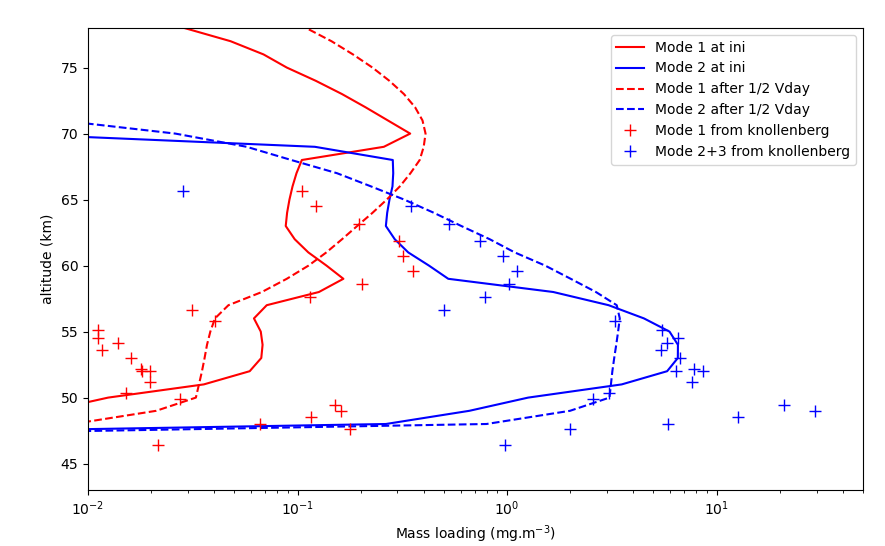
Maxence Lefevre, Franck Lefevre, Anni Määttänen, Benjamin Frandsen, Robert Skog, Aurélizen Stolzenbach, and Ashwin Braude

1. Introduction

The cloud layer of Venus between 47 and 70 km is home to a vivid sulfur chemistry and microphysics, with SO2 as the major gas species and condensed phase composed of H2SO4 and H2O. This cloud layer has been extensively observed and modelled. The main discrepancy between the observation and models in the SO2 vertical gradient throughout the cloud, no chemical model is able to reproduce the 3 order of magnitude decrease between the base and top of the cloud layer. Polysulfur chemistry could a candidate for buffering significant sulfur atoms, as it can grow into long chain and possibly condense. Strong absorption in Spectrophotometer data from VENERA 11, 12, 13 and 14 at 450–600 nm between 10 and 30 km recorded strong absorptions attributed most commonly to gaseous elemental sulfur Sx (Maiorov et al., 2005), and correlating S3 spectral features from Venera-11 with an increase with altitude from 0.03 ppbv at 3 km to 0.1 ppbv at 19 km (Maiorov et al., 2005). The presence of S3 and other sulfur allotropes polysulfur (Sx) in the clouds has been hypothesized from Vega probes (Porshnev et al., 1987), but no definitive detection of Sx in this region has been performed. Sx is a potential candidate to the UV unknown absorbed (Toon et al., 1982; Pérez-Hoyos et al., 2018). H2S were measured at ppm values below the clouds by the Pioneer Venus mission. (Hoffman et al., 1980; Oyama et al., 1980). DAVINCI will measure sulfur allotropes and H2S in the deep atmosphere (Garvin et al., 2022). For the first time in 3D and with realistic photolysis, we studied the impact of these species into the Venus cloud chemistry.

2. Model
The 3D Venus Planetary Climate Model (PCM) is used (Garate-Lopez and Lebonnois, 2018). The photochemical model describes the comprehensive chemistries of CO2, CO, hydrogen, oxygen, chlorine, sulfur and nitrogen down to roughly 35 km (Stolzenbach et al., 2023; Streel et al., 2025). In this study we added five species H2S, HS, S3, S4, S8 and 34 reactions to the gas phase chemistry. The PCM takes into account the condensation of H2SO4 and H2O based on the hypothesis that clouds are at all times in a state of thermodynamic equilibrium, i.e. following exactly the saturation pressure profile of the calculated equilibrium H2SO4 aqueous solution. The same philosophy is used for the polysufur condensation/evaporation in the model. We allow S2, S3, S4 and S8 to condense following (Zahnle et al., 2016). Photolysis rates are calculated online, following the same formalism as in the Mars version of the PCM (Lefèvre et al., 2021). The
screening effect of all ultraviolet-absorbing species in the computation of the photolysis rates is taken into account. The radiative transfer computation is performed over the range of 0-815 nm. Four photodissociations were added following recent theoretical calculations, and the spectra of S2 was updated.

3. Results
Fig 1 shows the zonal-mean distribution of condensed S2, reaching 0.25 ppm at the cloud-top. It is the dominating species of the sulfur allotrope due to its low saturation mixing ratio. In total this chemistry can store up 0.5 ppm with a low SO2 value below the clouds, and around 4 ppm with realistic SO2 values. Polysulfur cloud chemistry appears to be a substantial sulfur buffers but not large enough to explain the SO2 cloud vertical gradient. H2S is stable with few tenths of ppm in the lower clouds.

Fig 1: Zonal-mean distribution of condensed S2 in ppmv

References
Garate-Lopez, I., & Lebonnois, S. (2018). Icarus, 314:1–11.
Garvin, J. B., Getty, S. A., Arney, G. N., et al. (2022). The Planetary Science Journal, 3(5):117.
Hoffman, J. H., Hodges, R. R., Donahue, T. M., et al. (1980). Journal of Geophysical Research, 85:7882–7890.
Lefèvre, F., Trokhimovskiy, A., Fedorova, A., et al. (2021). Journal of Geophysical Research (Planets), 126(4):e06838.
Maiorov, B. S., Ignat’ev, N. I., Moroz, V. I., et al. (2005). Solar System Research, 39(4):267–282.
Oyama, V. I., Carle, G. C., Woeller, F., et al. (1980). Journal of Geophysical Research, 85:7891–7902.
Pérez-Hoyos, S., Sánchez-Lavega, A., García-Muñoz, A., et al. (2018). Journal of Geophysical Research (Planets), 123:145–162.
Porshnev, N. V., Mukhin, L. M., Gel’Man, B. G., et al. (1987). Kosmicheskie Issledovaniia, 25:715–720.
Stolzenbach, A., Lefèvre, F., Lebonnois, S., et al. (2023). Icarus, 395:115447.
Streel, N., Lefèvre, F., Martinez, A., et al. (2025). Submitted to JGR: Planets.
Toon, O. B., Turco, R. P., & Pollack, J. B. (1982). Icarus, 51:358–373.
Zahnle, K., Marley, M. S., Morley, C. V., et al. (2016). The Astrophysical Journal, 824:137.

How to cite: Lefevre, M., Lefevre, F., Määttänen, A., Frandsen, B., Skog, R., Stolzenbach, A., and Braude, A.: Sulfur allotropes and sulfur hydrides on the Venus cloud chemistry, EPSC-DPS Joint Meeting 2025, Helsinki, Finland, 7–13 Sep 2025, EPSC-DPS2025-306, https://doi.org/10.5194/epsc-dps2025-306, 2025.

11:15–11:27
|
EPSC-DPS2025-1437
|
ECP
|
On-site presentation
Fabian Weichbold, Helmut Lammer, Manuel Scherf, Daniel Schmid, Cyril Simon-Wedlund, Christian Mazelle, Tereza Constantinou, Martin Volwerk, Peter Woitke, Petr Eminger, and Martin Ferus

Venus, has been studied by numerous space missions over decades, yet its past water inventory remains poorly constrained, obscuring insights into planetary evolution and the emergence of habitability. A critical factor in understanding its history is the atmospheric deuterium-to-hydrogen (D/H) ratio, which offers insights into Venus' water loss and atmospheric escape mechanisms. Previous measurements of this ratio have been confined to altitudes near or below the exobase of about 250 km, based on remote sensing and in situ water vapor observations. In this study, we reanalyze magnetic field data from Venus Express to examine pick-up generated ion cyclotron waves (PCWs) caused by hydrogen ions. For the first time, we also apply the same method to study PCWs generated by the pick-up of deuterium ions, presenting the first altitude-dependent density profile of deuterium in Venus' extended exosphere. Our results also align with recent studies and indicate that the escape rates of deuterium and hydrogen fractionate insufficient to support the existence of a late-stage ocean on Venus, reinforcing the notion that Venus may have never been habitable due to its inability to retain significant water over time.

How to cite: Weichbold, F., Lammer, H., Scherf, M., Schmid, D., Simon-Wedlund, C., Mazelle, C., Constantinou, T., Volwerk, M., Woitke, P., Eminger, P., and Ferus, M.: Constraining Venus’ Water Loss History through D/H Ratio Observations from Ion Cyclotron Wave Analysis in the extended Exosphere, EPSC-DPS Joint Meeting 2025, Helsinki, Finland, 7–13 Sep 2025, EPSC-DPS2025-1437, https://doi.org/10.5194/epsc-dps2025-1437, 2025.

11:27–11:39
|
EPSC-DPS2025-603
|
On-site presentation
Benjamin Frandsen, Robert Skog, Wen Chao, Gregorgy Jones, Kayla Pham, Frank Mills, Mitchio Okumura, Mads Andersen, Carl Percival, and Frank Winiberg

Venus has a thick atmosphere with many of its chemical and photochemical processes yet to be fully understood. While it mainly consists of relatively inert CO₂ and N₂, the trace gases, which include chlorine and sulfur compounds, are responsible for Venus's rich and diverse chemistry and photochemistry. Given that chlorine has two stable isotopes and sulfur has four, there are plenty of opportunities for naturally occurring isotopic effects in Venusian atmospheric chemistry. Oxygen, carbon, and hydrogen also typically participate in Venusian chlorine and sulfur chemistry, providing further diversity in isotopes to study.

Using high-level computational chemistry methods in synergy with experimental kinetics, we model temperature-dependent rate coefficients. Furthermore, the computational chemistry approaches are used to model mass-dependent rate coefficients to study how isotopic fingerprints in the reactants and products from the chemistry may arise. I will present our recent work involving CO oxidation in the Venusian atmosphere and how the measurement of isotopic signals can inform us which chemical mechanism dominates CO oxidation on Venus. The discrepancy between models and observations of O₂ abundance in the Venusian mesosphere remains an issue. The Cl radical oxidation of CO may explain the missing O₂ in the Venusian mesosphere, as the cycle consumes O₂ efficiently: Cl + CO ↔ ClCO + O₂ → ClC(O)OO → ClO + CO₂. The initial equilibrium between Cl and CO is identified as the bottleneck for propagating the radical oxidation cycle.

We show how the isotopic fingerprint in CO from the Cl radical oxidation cycle is ripe for detection on Venus through microwave spectroscopy and how important getting the isotopic ratio correct is for retrievals of other properties. Alternative CO oxidation mechanisms are also explored, and other isotopic fingerprints may be investigated, for example, for the ClO radical, which has been observed in the Venusian atmosphere. Our work provides quantitative numbers for isotopic fractionation, which are needed to interpret which chemical processes dominate on Venus. Fractionation of naturally occurring isotopes on Venus provides detectable signatures for future missions through either spectroscopy (IR or microwave) or mass spectrometry. Notably, NASA’s DAVINCI mission will include a mass spectrometer in its payload.

Our work is a collaboration between theory and experiments, providing a detailed mechanistic and quantitative understanding of CO chemistry in the Venusian mesosphere. It is additionally relevant to understanding the isotopic fractionation of the atmosphere of Archean Earth (pre-oxygen era) and Noachian Mars, where large mass-independent signatures of CO related compounds can be found, e.g., in Martian soil carbon.

How to cite: Frandsen, B., Skog, R., Chao, W., Jones, G., Pham, K., Mills, F., Okumura, M., Andersen, M., Percival, C., and Winiberg, F.: CO Oxidation in the Venusian Mesosphere and Associated Isotopic Fingerprints Enabling Detection and Chemical Mechanism Insights, EPSC-DPS Joint Meeting 2025, Helsinki, Finland, 7–13 Sep 2025, EPSC-DPS2025-603, https://doi.org/10.5194/epsc-dps2025-603, 2025.

11:39–11:51
|
EPSC-DPS2025-1089
|
On-site presentation
Rakesh Mogul, Mikhail Zolotov, Michael Way, and Sanjay Limaye

Introduction

In this work, we describe new and transformative insights into the composition of Venus’ aerosols using uncharacterized data acquired by the Pioneer Venus Large Probe (PVLP), which descended through Venus’ atmosphere in 1978 [1]. During the descent, the PVLP inadvertently collected cloud aerosols and measured the decomposition of their contents [2]. In the initial post-flight PVLP investigations, aerosol collection and analysis were inferred for the Large Probe Neutral Mass Spectrometer (LNMS) [2] and considered for the Large Probe Gas Chromatograph (LGC) [3].

Here, we demonstrate that the LNMS data contain several uncharacterized mass signals, which directly relate to the thermal decomposition of aerosols possessing a heterogeneous chemical composition. Accordingly, we re-analyzed and re-interpreted the altitude trends from the LNMS data and LGC results as the evolved gas analyses that followed the temperature gradient of the PVLP descent (-30 to 462 ˚C, ~ 65 to 0 km [4]).

Methods

Thermal decomposition profiles from the LNMS data were constructed by plotting the number densities for SO2, H2O, SO3, and O2 against the LNMS inlet temperatures, which were heated during operation. The LNMS inlet temperatures were obtained using data from the LNMS project reports [5] and PVLP descent timeline [6]. The mass spectra obtained at the electron ionization energies of 70, 30, and 22 eV were independently treated using the procedures described in [7-9]. The peaks for SO2, H2O, SO3, and O2 in the thermal profiles were fit to Gauss functions and the regressions minimized by least squares analysis. Using the stoichiometry in Reactions 1-3, the peak areas for SO2 and H2O were converted to weight percent (w%) and mass loading (mg m-3) for H2SO4, Fe2(SO4)3, and H2O (after correction for the H2O from Reaction 1). Review of the LNMS CO2 density profile [9] revealed that aerosols were collected between ~ 51.0 to 48.4 km. The collection column was treated as a cylinder with a height of 2.6 km and diameter of 0.98 m, which equaled the outer PVLP diameter [10].

H2SO4  →  SO3  +  H2O                   (1)

SO3  →  SO2  +  0.5 O2                    (2)

Fe2(SO4)3  →  Fe2O3 +  3 SO3       (3)

Results and Discussion

The LNMS mixing ratios (x) for SO2 and H2O (Fig. 1) are inconsistent with other Venus measurements obtained spectroscopically. Yet, after aerosol capture (< 51.0 km, Fig. 1), the LNMS and LGC xSO2 and xH2O are within error (or comparable). Moreover, the cloud xH2O from the LNMS are lower than other Venus measurements obtained by direct analyses (Fig. 1). These combined results suggest that the xSO2 and xH2O from the LNMS and LGC do not represent atmospheric gases. Instead, the LNMS and LGC xSO2 and xH2O the represent the gases released during the thermal decomposition of the captured aerosols. The differing maxima observed in the LNMS xSO2 and xH2O (at ~ 35 and 10 km) suggest the decomposition of ≥ 2 sulfate-bearing compounds from the captured aerosols.

Re-expression of the LNMS data as evolved gas profiles (Fig. 2) revealed the temperature-dependent release of SO2, H2O, SO3, and O2 from the captured aerosols. Parsing of the LNMS data additionally revealed signals consistent with the release of metal-bearing species (e.g., FeO+ and MgSO4+). These results are consistent with an aerosol composition including H2SO4, hydrated ferric sulfates, possibly hydrated magnesium sulfate, and other hydrates. The thermal decomposition reactions for H2SO4 and ferric sulfates are provided in Reaction 1-3. The inferred aerosol relative abundances amounted to 22 ± 4 wt% H2SO4, 16 ± 3 wt% Fe2(SO4)3 (projected), and 62 ± 8 wt% H2O. The aerosols H2O predominantly released from hydrates between ~ 270–460 ˚C (59 ± 8 wt%), consistent with the loss of H2O from hydrated iron and magnesium sulfates and other hydrates (e.g., [11, 12]).

Thus, this work reveals that Venus’ aerosols contain a previously underestimated reservoir of water and possible altered materials derived from iron and magnesium of cosmic origin. These results provide new considerations for cloud chemistry models and cloud habitability discussions.


Figure 1. The LNMS apparent mixing ratios for (A) SO2 and (B) H2O compared to the LGC and other Venus measurements. Brackets to the right side of the plots indicate where the differing aerosol components decomposed. The LNMS values (squares) were obtained from the spectra obtained at 70 eV (red squares) and 30 and 22 eV (green squares). The LGC (yellow circles) error bars represent the reported 3 s confidence intervals. The comparative Venus values (green triangles) for (A) SO2 and (B) H2O are respectively labeled in the top legends. Pertinent abbreviations include NIR (near infrared spectroscopy), GC (gas chromatograph), UVS (UV spectroscopy), V12 (Venera 12), V13/14 (Venera 13 and 14), and V11/13/14 (Venera 11, 13, and 14).


Figure 2 The LNMS evolved gas profiles for (A) SO2 and (B) H2O expressed against the LNMS inlet temperatures (lower x-axis) and associated altitudes (upper x-axis). Number densities are from the 70 (circles), 30 (squares), and 22 eV (diamonds) spectra. Fits to the LNMS data (solid red lines) represent the sum of the numbered Gauss peaks (dashed lines). Temperatures at maximum decomposition (TD) for each peak (n) are listed. Dotted lines demark the LNMS clog (~ 50-25 km).


References

[1] Fimmel R. O. Pioneer Venus (1983) Scientific and Technical Information Branch, NASA.

[2] Hoffman J. H. et al. (1980) JGR Space Sci., 85, 7882-7890.

[3] Oyama V. I. et al. (1979) Science, 205, 52-54.

[4] Seiff A. et al. (1985) Adv. Space Res., 5, 3-58.

[5] Final Report, Large Probe Neutral Mass Spectrometer, August 31, 1978, NASA Ames Research Center History Archives, Collection Number AFS8100.15A.

[6] Seiff A. et al. (1980) JGR Space Sci., 85, 7903-7933.

[7] Mogul R. et al. (2021) GRL, 48, e2020GL091327.

[8] Mogul R. et al. (2023) Icarus, 392, 115374.

[9] Mogul R. et al. (2023) MethodsX, 11, 102305.

[10] Dutta S. et al. In AIAA SCITECH 2023 Forum (2023), 1165.

[11] Lauer Jr H. et al. In 31st Lunar and Planetary Science (2000), 20000085925.

[12] Spratt H. et al. (2014) J. Therm. Analysis Calorim., 115, 101-109.

How to cite: Mogul, R., Zolotov, M., Way, M., and Limaye, S.: Iron sulfate, sulfuric acid, and water are major components in Venus’ aerosols , EPSC-DPS Joint Meeting 2025, Helsinki, Finland, 7–13 Sep 2025, EPSC-DPS2025-1089, https://doi.org/10.5194/epsc-dps2025-1089, 2025.

Q&A (8 min)
11:51–12:06
|
EPSC-DPS2025-753
|
ECP
|
On-site presentation
Émile Ducreux, Bruno Grouiez, Bastien Vispoel, Robert R. Gamache, Muriel Lepère, Laurence Régalia, and Séverine Robert

Upcoming missions to Venus will be equipped with advanced spectrometers capable of resolving fine atmospheric spectral features. To fully exploit this observational potential, accurate spectroscopic parameters adapted to Venus’ CO2-rich atmosphere are required. In particular, the retrieval of water vapor concentrations relies heavily on appropriate collisional parameters. However, current spectroscopic databases lack CO2-broadening parameters for H2O, and air-broadening parameters are often used as substitutes (Jorge et al., 2024), which can introduce significant biases in retrieved H2O concentrations.

To address this issue and to follow up the work of Régalia et al. (2019), new high-resolution infrared spectra of H2O broadened by CO2 were recorded in spectral regions of planetary interest (1.18, 2.34, and 2.7 µm), using the Fourier Transform Spectrometer at the GSMA laboratory in Reims, France. For 187 isolated H2O transitions, CO2-broadened half-widths and pressure-shift coefficients were determined through a multi-spectrum fitting procedure using the Voigt profile (Plateaux et al., 2001; Lyulin, 2015). To take into account finer physical effects, a quadratic speed-dependent Voigt profile (Ngo et al., 2012, 2013) was also applied, allowing the measurement of speed-dependence coefficients for 106 transitions.

The Voigt experimental results were used to improve the molecular interaction potential of the H2O–CO2 collision system. Since experimental data alone are not sufficient to entirely model an atmospheric spectrum, new calculations were performed using the semi-classical Complex Robert-Bonamy-Ma (CRBM) formalism (Robert & Bonamy, 1979; Ma et al., 2007). This allowed the determination of half-widths and pressure shifts for thousands of H2O transitions. Several key atmospheric windows of Venus were considered: 1.18, 1.38, 1.74, and 2.34 µm. The resulting calculated linelist can now be directly used in radiative transfer applications (Ducreux et al., 2024, 2025 submitted).

The impact of using these new CO2-collisional parameters for water vapor retrievals was evaluated through simulations using the ASIMUT-ALVL radiative transfer code (Vandaele et al. 2006; Spurr, 2008). Venusian spectra were simulated in different infrared windows probing various altitude ranges on both the nightside and dayside of the planet. For each case, 1000 spectra were generated using the new CO2-specific linelist, with added Gaussian noise based on a selected signal-to-noise ratio. Retrievals were then performed using the standard air-broadening linelist from HITRAN2020 (Gordon et al., 2022) for the entire statistical sample. The dependence on spectral resolution and signal-to-noise ratio were also investigated. The results demonstrate that relying on spectroscopic parameters not suited for a CO2-rich atmosphere can lead to significant errors in retrieving water vapor concentrations on Venus. This highlights the inadequacy of air-broadening parameters for a CO2-dominated environment and highlights the necessity of dedicated spectroscopic data for accurate retrievals.

Moreover, the need for accurate spectroscopic parameters to study CO2-rich atmospheres also applies to the main deuterated isotopologue of water vapor, HDO. New spectra of HDO broadened by CO2 were therefore recorded in the same spectral regions as H2O and CO2-collisional parameters for HDO have been derived to build a measured linelist, which will soon be augmented with CRBM calculations. The final objective is to provide the planetary community with a CO2-specific linelist for HDO, suitable for radiative transfer modelling in CO2-rich planetary atmospheres.

How to cite: Ducreux, É., Grouiez, B., Vispoel, B., Gamache, R. R., Lepère, M., Régalia, L., and Robert, S.: New CO2-collisional parameters for H2O: their impact on water vapor retrievals in Venus’ atmosphere, EPSC-DPS Joint Meeting 2025, Helsinki, Finland, 7–13 Sep 2025, EPSC-DPS2025-753, https://doi.org/10.5194/epsc-dps2025-753, 2025.

12:06–12:18
|
EPSC-DPS2025-1368
|
ECP
|
On-site presentation
Alberto Mendi-Martos, Gabriella Gilli, Aurélien Stolzenbach, Antoine Martinez, and Luisa Lara

Introduction

Venus is set to be a key part of the next decades of planetary exploration with several missions planned by NASA and ESA (DAVINCI, VERITAS, EnVision). These missions aim to better understand how Venus and the Earth started being so similar but evolved into such different worlds. Modelling the Venus atmosphere is essential to support past and future observations. The Venus Planetary Climate Model (Venus PCM) used in this study is a 3D model that has been developed by the Laboratoire de Météorologie Dynamique (LMD) for more than 15 years in collaboration with other institutions, including the Instituto de Astrofísica de Andalucía (IAA-CSIC) [1,2,3].

The Venus PCM has been used to simulate the Venus photochemistry and clouds from the surface to the bottom of the thermosphere [4], and here we use the last version of the model with the goal of shedding a light on the mesospheric SO2 issue. Not only is this species highly variable in Venus mesosphere, but reproducing the observed SO2 depletion in the cloud layer also remains challenging. In particular, the three orders of magnitude depletion is not well reproduced by models, which can only simulate a decrease from 10 ppmv at 40 km to 0.1 ppmv at 80 km [4].

The interest of studying SO2 lies in its fundamental role in the cloud formation in Venus. In particular, SO2 is the source to form the sulfuric acid H2SO4 that is part of the binary mixture (H2SO4-H2O) that defines the droplets in the clouds of Venus.

Implementation of in-droplets sulphur chemistry

In this work, we aim to reproduce the observed variation of SO2 with altitude by using in-droplet sulphur chemistry for the first time in the Venus PCM, following the work by [5], in which they consider that clouds contain hydroxide salts like NaOH, which drive the droplet chemistry. NaOH is a proxy used in that study to represent other plausible sources of delivered hydrogen. They presented the following set of chemical reactions, whose rates are tuned to emulate the dissolution of SO2 into the cloud droplet, and its release into gas phase when the droplet rains out and evaporates

As a first step, we implemented this set of chemical reactions in the Venus PCM. Preliminary results show that we can dissolve SO2into the clouds using the chemical reactions from [5] with SO2 initialized to a value of 150 ppmv below 40 km, in line with available observations.

We will present on-going work aimed to implement the full set of reactions proposed by [5] and we will discuss the implication of model results in the interpretation of future Envision observations.


Keywords: Venus atmosphere, General Circulation Model, cloud, chemistry.


Acknowledgments: Severo Ochoa grant CEX2021-001131-S funded by MICIU/AEI/ 10.13039/501100011033; Program EMERGIA 2021 (EMC21 00249); Spanish MCIU, the AEI and EC-FEDER funds under project PID2021-126365NB-C21.

References:
[1] Lebonnois et al. 2010, JGR, Vol.115, Issue E6
[2] Gilli et al. 2021, Icarus, Vol. 366, 114432
[3] Martinez et al. 2024, Icarus, Vol. 415, 116035
[4] Stolzenbach et al. 2023, Icarus, Vol. 395, 115447
[5] Rimmer et al. 2021, Planet. Sci. J., Vol. 2, 133

How to cite: Mendi-Martos, A., Gilli, G., Stolzenbach, A., Martinez, A., and Lara, L.: Towards in-droplet sulphur chemistry in the Venus clouds with the Venus Planetary Climate Model, EPSC-DPS Joint Meeting 2025, Helsinki, Finland, 7–13 Sep 2025, EPSC-DPS2025-1368, https://doi.org/10.5194/epsc-dps2025-1368, 2025.

12:18–12:30
|
EPSC-DPS2025-629
|
ECP
|
On-site presentation
Dan Li, Franck Montmessin, Franck Lefèvre, Guillaume Petzold, Qiuyu Xu, Nicolas Streel, and Sébastien Lebonnois

The study of HDO and the deuterium/hydrogen (D/H) ratio plays a critical role in reconstructing the past and present climate of Venus. These isotopic tracers offer valuable insights into the planet’s hydrological history, atmospheric escape processes, and potential ancient reservoirs of water. In particular, variations in D/H can shed light on the mechanisms that led Venus to become the hot, arid world we observe today.

In this work, we present the first fully three-dimensional simulation of the HDO cycle on Venus, by implementing HDO in both gas and liquid phases within the Venus Planetary Climate Model (VPCM). Our model allows us to explore the spatial and temporal behavior of HDO, and how it interacts with the atmospheric dynamics and cloud chemistry of Venus.

One of our key findings is that the vertical distribution of D/H is strongly influenced by processes previously neglected in earlier models. Notably, we show that the presence of deuterated sulfuric acid (HDSO₄) in Venusian clouds can significantly alter the D/H profile and must be taken into account in future studies.

We also assess the individual effects of isotope fractionation during three key processes: condensation, molecular diffusion, and photolysis. Our analysis reveals that photolysis-induced fractionation dominates the D/H ratio in the upper atmosphere, driving its increase to approximately 480 × VSMOW (Vienna Standard Mean Ocean Water) at altitudes near 130 km.

In addition, we observe notable diurnal variations in the abundances of H₂O, HDO, and D/H in the upper atmosphere, consistent with expectations based on solar-driven atmospheric dynamics.

Overall, our results highlight the complex interplay of physical and chemical processes controlling the distribution of water isotopologues on Venus. These findings not only refine our understanding of the present Venusian atmosphere but also provide essential constraints for reconstructing its climatic evolution and water loss history.

How to cite: Li, D., Montmessin, F., Lefèvre, F., Petzold, G., Xu, Q., Streel, N., and Lebonnois, S.: Understanding the Importance of HDO and D/H on Venus, EPSC-DPS Joint Meeting 2025, Helsinki, Finland, 7–13 Sep 2025, EPSC-DPS2025-629, https://doi.org/10.5194/epsc-dps2025-629, 2025.

Q&A (6 min)

Orals TUE-OB5: Tue, 9 Sep, 15:00–16:00 | Room Sun (Finlandia Hall)

Chairpersons: Ana-Catalina Plesa, Océane Barraud
Interior
15:00–15:12
|
EPSC-DPS2025-576
|
ECP
|
On-site presentation
Oguzcan Karagoz, Oğuz Hakan Göğüş, Thomas Kenkmann, Ömer Bodur, Açelya Ballı Çetiner, and Özge Dinç Göğüş

Introduction

The Venusian surface is profoundly shaped by complex endogenic phenomena, among which coronae represent critical insights into mantle-lithosphere interactions distinct from Earth’s plate tectonics. These volcanic-tectonic structures, circular to elliptical in geometry and spanning from tens to over a thousand kilometers, serve as windows into Venus's internal dynamics. Contrasting Earth's tectonic activity, Venus exhibits alternative geodynamic modes, including stagnant lid [1], episodic lid [2], and plutonic squishy lid regimes [3], dictated by its unique thermal state and lithospheric properties. Such conditions have led to extensive resurfacing events, resulting in a planetary surface younger than one billion years [4].

Various numerical and conceptual models have been proposed for coronae formation. Early models emphasized diapir-driven processes creating dome-shaped topography, followed by gravitational relaxation into annular configurations [5], the retrograde subduction as a potential mechanism for larger coronae, exhibiting trench-outer rise morphology [6]. Recent modeling has revealed complex plume-lithosphere interactions, including lithospheric instabilities at plume margins [4], plume-induced subduction [7], and intricate processes such as episodic subduction and plume underplating [8]. Peel-back delamination [4], plume-induced melt accumulation dynamics [9], and fracture-rim relationships [10]. These diverse mechanisms suggest corona formation may involve multiple processes rather than a singular mechanism.

Here, we present results from three-dimensional scaled analog experiments designed to investigate the influence of lithospheric drips—downward-moving dense lithospheric segments—and mantle dynamics on corona evolution. Employing precisely scaled laboratory simulations, complemented by detailed structural analyses, we demonstrate the significant role lithospheric instabilities play in governing deformation patterns and morphological characteristics of coronae. Our approach effectively reconciles modeled strain distributions with observed corona structures, highlighting the fundamental importance of mantle downwellings as drivers of tectonic complexity on Venus, thus expanding our understanding beyond conventional tectonic paradigms.

Results & Conclusion

The Venusian surface presents intricate tectonic patterns that have persistently challenged conventional geodynamic interpretations. Historically, mantle plume processes have dominated explanations of corona formation, potentially overshadowing the significant role lithospheric drips may play. In this work, we argue for a refined geodynamic model that explicitly incorporates lithospheric instabilities alongside mantle plumes to explain observed corona structures more comprehensively. Experimental outcomes clearly demonstrate spatial associations between areas of crustal thickening and shortening at corona troughs and corresponding subsurface downwelling zones, coupled simultaneously with tensile regimes inducing localized crustal stretching. These laboratory-derived models yield temporal deformation predictions that strongly align with structural observations at Atahensik Corona [11].

Terrestrial analogs underscore the critical role lithospheric instabilities—specifically drip processes—have in crustal deformation, producing characteristic central compression zones surrounded by peripheral extensional regions [12]. Our quantitative analysis of asymmetric corona topography reveals systematic correlations between corona rim elevation and central depression depth. Further structural analysis, examining cross-cutting fault relationships, elucidates a clear sequence of deformation marked by oblique faulting to radial and concentric patterns as the geodynamic regime evolves. During the evolution of the model, our results sequentially predict crustal thickening driven by surface stresses, initiating with subsidence, progressing through concentric trough, and this dynamic regime is consistent with observed fault developments. These structural criteria offer measurable parameters capable of distinguishing between coronae driven predominantly by mantle plume processes and those significantly influenced by lithospheric dripping. The coexistence of extensional and compressional tectonic features, such as rift zones adjacent to fold-and-thrust belts, emphasizes the value of integrating lithospheric drip processes into broader planetary tectonic frameworks.

References

[1] Solomatov & Moresi, (1996) [2] Turcotte, D. L. (1993) [3] Lourenço, D. L., et al. (2020) [4] Adams, G.F., et al. (2022) [5] Janes, D.M., et al. (1992) [6] Sandwell, D.T. and Schubert, G. (1992) [7] Davaille, A., et al. (2017) [8] Piskorz, D., et al. (2014) [9] Gülcher, A.J.P., et al. (2020) [10] Schools, J.W. and Smrekar, S.E. (2024) [8] Sabbeth, L., et al. (2024) [11] Kenkmann, T., et al. (2024) [12] Andersen, J., et al., (2024).

How to cite: Karagoz, O., Göğüş, O. H., Kenkmann, T., Bodur, Ö., Çetiner, A. B., and Göğüş, Ö. D.: Lithospheric Dripping explains Corona Formation on Venus, EPSC-DPS Joint Meeting 2025, Helsinki, Finland, 7–13 Sep 2025, EPSC-DPS2025-576, https://doi.org/10.5194/epsc-dps2025-576, 2025.

15:12–15:24
|
EPSC-DPS2025-739
|
ECP
|
On-site presentation
Flavia Giuliani, Fabrizio De Marchi, Daniele Durante, Gael Cascioli, Luciano Iess, Erwan Mazarico, and Suzanne Smrekar

The Venus Emissivity, Radio Science, InSAR, Topography, And Spectroscopy (VERITAS) mission, a Discovery class mission selected by NASA in 2021, is designed to answer fundamental questions about Venus’s geological activity and evolution, internal structure, and potential evidence of past or present interior water. VERITAS will carry two instruments – an X-band interferometric SAR (VISAR) and a near-infrared imaging spectrometer (VEM) – as well as a gravity science experiment to address these scientific objectives.


The VERITAS gravity science experiment will produce a global gravity map of significantly higher and more uniform spatial resolution than that achieved by the Magellan mission. Numerical simulations predict that VERITAS will achieve a gravity field spatial resolution between 85 and 120 km, with 90% of the planet mapped at a resolution better than 106 km. Additionally, VERITAS will retrieve important parameters related to Venus’s tidal response and rotational state, providing key constraints on its interior structure.

The gravity science investigation will rely on radio tracking data composed of range and Doppler measurement, collected via two coherent and simultaneous radio links in X and Ka bands. Thanks to the state-of-the-art quality of Doppler tracking data, the system is expected to deliver Doppler accuracy of approximately 18 μm/s  at 10 second integration time, for Sun-Probe-Earth (SPE) angles above 15°.


Previous simulations were performed under the reasonable assumption of white noise (uncorrelated measurements) in the tracking data. In this work, we present a more realistic analysis incorporating colored noise components (i.e. correlated measurement, with frequency dependent characteristics) into the Doppler error model. We quantify their impact on gravity field recovery and evaluate the validity of the white noise assumption.


Our analysis was carried out using JPL’s MONTE Orbit Determination software. The enhanced noise model includes contributions from both signal propagation effects and instrumentation noise from ground and onboard systems. Noise sources may be stationary or time-varying (e.g. seasonal variations in the troposphere, SPE dependence in plasma), and exhibit either white or colored spectral profiles (e.g.  plasma, frequency and timing systems). Colored components were generated using the algorithm described by [1] and incorporated into the filtering process via a whitening procedure applied prior to estimation, which normalizes residuals, flattens the power spectral density and decorrelates the measurement, since filtering processes in orbit determination typically assume uncorrelated measurements.


We present comparative results for the white-noise and colored-noise scenarios, focusing on gravity field recovery up to degree 220 in spherical harmonics.

The methodology developed for this study is not limited to VERITAS and can be applied to other radio science experiments.


[1] Timmer, J. and Koenig, M. (1995). On generating power law noise. Astronomy and Astrophysics, 300:707.

How to cite: Giuliani, F., De Marchi, F., Durante, D., Cascioli, G., Iess, L., Mazarico, E., and Smrekar, S.: Modeling Colored Noise in Doppler Tracking Data: Mapping Venus’s Gravity Field with VERITAS, EPSC-DPS Joint Meeting 2025, Helsinki, Finland, 7–13 Sep 2025, EPSC-DPS2025-739, https://doi.org/10.5194/epsc-dps2025-739, 2025.

15:24–15:36
|
EPSC-DPS2025-1571
|
On-site presentation
Helene Massol and Anne Davaille

The physical processes involved in the transition of a planet from a liquid magma ocean (‘MO’) to a convective solid mantle are still debated. Highly turbulent penetrative convection prevails when the MO is still liquid on the surface. But as the MO cools down in interaction with its atmosphere its upper surface thermal boundary layer (‘TBL’) will eventually first becomes partially molten, then solid. As soon as the rheological front, with a melt content less than 40%, reaches the surface, the upper part of the TBL could behave like a solid skin. This has led to suggest that MO cooling would always end up in a stagnant lid regime of convection, whereby mantle convection proceeds under a surface plate that remains stagnant, limiting the heat and volatile transfers to the atmosphere. This would help retaining water within the mantle, but would render the onset of subduction and plate tectonics more difficult (how to break a thick lid?). On the other hand, another family of cooling MO models suggests that the numerous impacts during the early stages of a planet would break repeatedly any floating skin on the MO, so that it would be difficult to establish a stagnant lid regime.

Laboratory experiments of penetrative convection-evaporation using visco-elasto-plastic colloidal dispersions (Di Giuseppe et al, 2012) suggest that two other phenomena could also be at play to destabilize the first solid skin: (1) melt flowing through a porous skin would generate in-plane compression that could generate buckling, exceed the yield strength of the material and initiate subduction; (2) rapid thermal contraction due to large temperature gradients across the skin could generate stresses large enough to exceed the yield strength and initiate subduction. We use these insights to explore the growth and stability of the TBL at the surface of a cooling magma ocean which interacts with a H₂O-CO₂ atmosphere. Our results indicate that, while on Earth, thermal stresses due to cooling could easily exceed the early lithosphere yield strength, this might not have been the case on Venus. On Venus, this process is strongly influenced by atmospheric conditions. For a high albedo of 0.5, the upper TBL could yield as early as 1.5 million years after cooling begins, similar to Earth, and therefore the MO stage would end up directly into a convective regime with repeated breaking and foundering of the lithosphere (e.g. subduction). But for an albedo of 0.3, thermal stresses never overcome the TBL’s yield strength. In such a scenario, the MO stage would end in a stagnant lid regime, which could act as a barrier to heat transfer and potentially filter degassing.

How to cite: Massol, H. and Davaille, A.: On the stability of the first solid skin at the surface of a magma ocean: stable on early Venus, breaking on early Earth ?, EPSC-DPS Joint Meeting 2025, Helsinki, Finland, 7–13 Sep 2025, EPSC-DPS2025-1571, https://doi.org/10.5194/epsc-dps2025-1571, 2025.

15:36–15:48
|
EPSC-DPS2025-291
|
On-site presentation
Nathan McGregor, Cédric Gillmann, Francis Nimmo, Gregor Golabek, Alain Plattner, and Jack Conrad

Summary

The interior properties of Venus are still poorly constrained. We tested a new method to constrain its mantle viscosity. To do so we have used a unique feature of Venus’ surface: Baltis Vallis, a lava channel about as long as the Nile River on Earth. Since its formation, the terrain along Baltis Vallis has been deformed by the planet’s tectonics. We used mantle dynamics simulations from the StagYY code to model topography (elevation) and the rate at which it possibly changed (decorrelation time) during Venus’ recent history. Comparison with the properties of Baltis Vallis lead us to favor simulations using lower mantle viscosities (1020 Pa s).

Figure 1: Location and topography of Baltis Vallis on Venus. Left panel: a global mosaic overlain with colorized topography showing Baltis Vallis's location. Right panel: a topographic map of Baltis Vallis in Atla Regio.


Background and motivation

Baltis Vallis (BV) is a 6,800-km long lava channel on Venus. Its apparent uphill flow direction must be a consequence of deformation changing topography after flow emplacement. The topography of BV thus retains a record of Venus’ convection history, as mantle convection causes time-dependent surface deformation. Venus’ mean surface age is likely in the range 300-500 Ma. The observed deformation of BV indicates that mantle convection was active over the past ∼400 Myr and provides constraints on the length scales and vertical amplitudes involved. We place constraints on Venus’ present-day internal structure and dynamics by comparing dynamical topography produced by numerical convection codes with the topography of BV.


Methods

Our approach contrasts with previous studies by using an established feature of the surface of Venus, Baltis Vallis, and its time-dependent topography instead of global spectral analysis at a single prescribed time (present-day, and its assumed corresponding simulated time in models). We simulate time-dependent stagnant-lid mantle convection on Venus with a suite of coupled interior-surface evolution models for a range of assumed mantle properties. Models are designed to reproduce as closely as possible a present-day quasi steady-state behavior and run for 1.5 Gyr, representing the state of Venus since the time of the formation of the bulk of its surface. StagYY simulates dynamic topography by calculating it from the vertical component, at the free slip surface, of the stress tensor due to the convection. StagYY includes both the effects of thermal and density variations on mantle dynamics, as well as partial melting (crust formation) and phase transitions. The viscoplastic rheology is temperature- and depth-dependent with Newtonian diffusion creep. In the current test of the methodology, only extrusive melt is considered, and the convection is forced into a stagnant-lid-like regime during the studied era by making plastic yielding impossible, as a proxy for recent evolution. Reference viscosity is varied between 1019 and 1021 Pa.s.

We compare the simulated topography of model BV profiles to the actual topography of BV using two metrics: the root-mean-square (RMS) height and the “decorrelation time”. The correlation between model BV topography at time τ2 and an earlier time τ1 is calculated. When this correlation first falls to zero, the decorrelation time is then τ2 – τ1. The decorrelation time is inspired by the observation of BV’s present-day uphill flow and the inference that the present-day topography must be uncorrelated. A model is considered successful if the decorrelation time is less than the surface age of Venus.

Figure2: Decorrelation time and RMS height for all models. The range for Baltis Vallis's RMS height is shown as a red shaded area.


Results

The relatively short decorrelation time required (likely 250 Myr) and the relatively low RMS topography of Baltis Vallis (217 m) both imply vigorous convection. From 14 three-dimensional mantle convection models, each initialized with different parameters, we identified two convection models that best fit our metrics. These models have a viscosity contrast ∆η of 108 and 107, respectively, and both have a Rayleigh number Ra of 108. Although Venus’ heat flux is highly uncertain, our model fluxes are consistent with some inferred heat fluxes. Models with higher total surface heat fluxes tend to yield lower decorrelation times; our favored models have some of the highest heat fluxes. We also find that models with a higher Ra tend to have a lower RMS height.

Our favored models have vigorous convection beneath a stagnant lid, and high surface heat fluxes. The viscosity of the lower mantle in these models is 1020 Pa s, roughly two orders of magnitude lower than that of Earth’s. This difference could be either the result of a warmer mantle on Venus, here due to the stagnant-lid-like insulation of the mantle leading to the increase of the interior temperature, or the presence of volatile species, for example water, if outgassing is prevented by high surface pressures. The majority of the surface heat flux is due to melt advection, indicating high rates of volcanic resurfacing. To be consistent with surface ages of volcanic activity inferred from surface observation, most of the melt should be intruded, which will likely change the thermal structure of the crust and lithosphere. Our calculated core-mantle boundary heat fluxes indicate that a dynamo should be operating, unless the core is stably stratified due to compositional layering. While current data are insufficient to test these predictions, once paired with forthcoming observations from several new Venus missions, our work will be able to bring Venus’ interior into sharper focus.

Figure 3: Radial mantle viscosity profiles (laterally averaged) for our preferred models (solid lines), shown alongside estimated viscosity-depth profiles for Earth (dashed lines) and Venus (dash-dotted lines) from other studies.

How to cite: McGregor, N., Gillmann, C., Nimmo, F., Golabek, G., Plattner, A., and Conrad, J.: Probing the viscosity of Venus's mantle using dynamic topography at Baltis Vallis, EPSC-DPS Joint Meeting 2025, Helsinki, Finland, 7–13 Sep 2025, EPSC-DPS2025-291, https://doi.org/10.5194/epsc-dps2025-291, 2025.

15:48–16:00
|
EPSC-DPS2025-620
|
On-site presentation
Thomas Kenkmann and Oguzcan Karagoz

Introduction

Venus’ surface is densely populated with fractures, faults, and shear zone networks of different dimensions. This study aims to pursue a detailed investigation on large-scale shear zones of Eastern Aphrodite Terra, a high relief region on Venus that expands along the equator. The area  is radar-bright due to the presence of high fracture densities. The key feature of Eastern Aphrodite Terra is an interconnected network of straight and deep ENE-WSW to E-W trending chasmata (Fig. 1a), and large coronae, which are surrounded by deep arcuate troughs. The origin of the chasmata system is a subject of scientific debate. Herrick et al. (1989) and others proposed that chasmata are rifts, that were formed above a dynamic mantle upwelling system. Others suggested that neither divergent nor convergent tectonics occur along the troughs of Eastern Aphrodite Terra, but vertical adjustments dominate that are related to mantle up-welling and down-welling (e.g., Hansen and Phillips, 1993). In contrast, the arc-shaped and asymmetric troughs that surround the large coronae in this region were explained by convergent tectonics (e.g., Sandwell and Schubert 1992; Kenkmann et al. 2024).

Fig. 1. Diana Chasma South. A) Elevation map of Diana Chasma and adjacent area. The region of interest ROI is shown in B as original SAR data and in C) as inverted SAR data. D) Detail region of interest (ROI) of C) with location of the shear zone including dip angle and strike of the fault plane and altitude information. E) Geological map with mapped fractures, smooth patches and rugged terrain at the fault terrace. The trace of the profile is indicated. F) Fracture density map. G) Vertically exaggerated topographic profile. Note that the dip of the fault is not vertically exaggerated. H) inverted SAR of area shown in f). Hw and fw indicates hanging wall and footwall.

Observations and Measurements

  • The equatorial chasmata system of Eastern Aphrodite Terra is among those regions on Venus that has the strongest relief (Fig. 1a). Most of the valleys are asymmetric in cross-section with a steeper slope of up to 40 ° inclination and a gentle slope of roughly 5° (Fig. 1g).
  • We mapped distinct large-scale shear zones along the chasmata (Fig. 1c-e) and the arcuate troughs surrounding coronae in that region. The lengths of the mapped faults range between 218 km and 706 km. The faults always intersect the steep chasmata slopes.
  • The faults dip at angles of 25°-37°, opposite to the slopes (Fig. 1d). Faults are strongly localized and associated with damage zones of intense fracturing (Fig. 1e-f). The fault planes themselves are partly exposed and form distinct terraces along the steep slopes (Fig. 1g).
  • In close vicinity to the shear zones are patchy, small-scale hills of delicate rugged terrain, which are surrounded by radar smooth, pristine, pond like halos that partly show flow features and cover exposed parts of the shear zones (Fig. 1e, h).
  • Elevation corrected radar emissivity data of the hanging wall and footwall of the shear zones, as well as of the associated rugged terrain and radar smooth planes mostly differ from each other.
  • Locally, small-scale and fresh landslide deposits emanating from the steep hanging wall of the shear zone occur in the vicinity of the shear zones.

Interpretation

The occurrence of the shear zones along the steep slopes of the asymmetric chasmata suggests that they were formed by thrusting. The exposure of their fault planes, however, indicates that they got later reactivated as normal faults (Fig. 1g). The immediate proximity of landslides with shear zones points to a seismic trigger of the mass movements. The rugged and patchy hills surrounding by smooth halos are interpreted as fault breccia mixed with a fluid-like phase extruded from the faults. When the material reached the surface the low viscous material dispersed fluidly around the blocky rugged material and covered the local relief. We propose that the low viscous material is melt since a fluid phase is unlikely to occur at the present conditions on Venus. Emissivity data indicates that the extruded possible melt is compositionally different from the rugged material and from the hanging wall and footwall lithologies of the shear zones.

The melts may originate from relatively shallow crustal depths from nearby volcanic edifices and corona interiors. The shear zones serve as ascent paths for melts, lower the friction coefficients on the shear planes and with this contribute to deformation localization. Alternatively, we discuss a possible formation by frictional melting in the environment on Venus. The morphological distinctiveness and freshness of the shear zones, which are not cut by fractures, and their systematic association with delicate melt ponds and coarse breccia indicates that the shear zones are very young tectonic features that have not been geologically overprinted in any way.

References

Hansen, V. L., & Phillips, R. J. (1993). Tectonics and volcanism of east Aphrodite Terra, Venus: No subduction, no spreading. Science, 260(5107), 526–530.

Herrick, R. R., Bills, B. G., & Hall, S. A. (1989). Variations in effective compensation depth across Aphrodite Terra, Venus. Geophysical Research Letters, 16(6), 543–546

Kenkmann, T., Karagoz, O., & Veitengruber, A. (2024). Structural analysis and evolution of large Venusian coronae: Insights from low-angle faults at coronae rims. Planetary and Space Science, 250, 105955.

Sandwell, D. T., & Schubert, G. (1992). Evidence for retrograde lithospheric subduction on Venus. Science, 257, 766–770.


How to cite: Kenkmann, T. and Karagoz, O.: Neo-tectonic activity and indications for fault-melt interaction along Aphrodite Terra´s Chasmata system, Venus., EPSC-DPS Joint Meeting 2025, Helsinki, Finland, 7–13 Sep 2025, EPSC-DPS2025-620, https://doi.org/10.5194/epsc-dps2025-620, 2025.

Q&A (10 min)

Orals TUE-OB6: Tue, 9 Sep, 16:30–18:00 | Room Sun (Finlandia Hall)

Chairpersons: Océane Barraud, Giulia Alemanno
Surface
16:30–16:45
|
EPSC-DPS2025-1169
|
ECP
|
solicited
|
On-site presentation
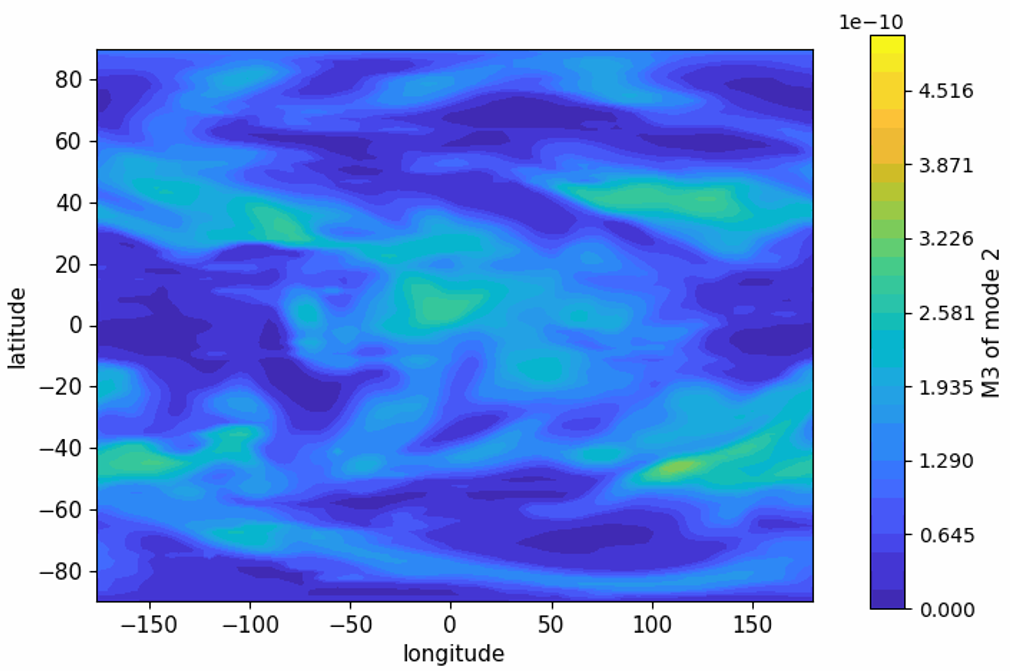
Venus-Analog Laboratory Measurements: Supporting DAVINCI and Future Venus Exploration
(withdrawn)
Erika Kohler, James Garvin, Aurelie Van den Neucker, Giulia Alemanno, Giada Arney, Stephanie Getty, Natasha Johnson, Jacob Lustig-Yaeger, Alessandro Maturilli, and Michael Ravine
16:45–16:57
|
EPSC-DPS2025-1485
|
On-site presentation
Nils Müller, Shubham Kulkarni, Maxence Lefevre, Emmanuel Marcq, Raphael Garcia, Matthias Grott, and Heike Rauer

Volcanic outgassing shapes the evolution of the atmospheres of terrestrial planets, but is itself affected by the atmospheric pressure (Head and Wilson 1986, Phillips et al. 2001, Gaillard and Scaillet 2014). Outgassing can take place in form of explosive eruptions where the exsolution of volatiles from ascending magma accelerates the ascent and drives further exsolution. Observations by Pioneer Venus and Venus Express show that the abundance of SO2 above the cloud layer (>70 km) varies by two to three orders of magnitude on timescales ranging from weeks to decades and one of the hypotheses brought forward is that explosive eruption plumes cause enhanced mixing between the SO2-rich (>100 ppm) lower atmosphere below the clouds, and the SO2-poor (<1 ppm) upper atmosphere above the clouds. (Esposito 1988, Marcq et al. 2013). Models of eruption plumes however show that only very intense eruptions originating at relative high elevations can reach this height (Glaze 1999). On Earth, eruptions of this intensity are rare, lower volume rate eruptions are more frequent. Plume height scales with volume rate (e.g. Glaze 1998, Airey et al. 2015). Thus there is a high probability that there are significantly more plumes that do not reach the cloud layer. Even if the SO2 variation has a non-volcanic origin, there is evidence suggesting explosive eruptions in form of diffuse deposits that are interpreted as being formed by pyroclastic flows from collapsing volcanic ash plumes (e.g Campbell et al. 2017). A re-analysis of Venera 13 descent spectroscopic measurements suggests the presence of particles that could be volcanic ash at altitudes around 4 km (Kulkarni et al. 2025).
The frequency of such explosive eruptions is of high scientific interest. The atmospheric pressure suppresses exsolution so that the transition from an effusive to an explosive eruption requires a combination of high eruption rates and high abundance of magmatic volatiles, most importantly H2O (Airey et al. 2015). The volatile content of Venusian magmas and outgassing efficiency is important for understanding the evolution of the atmosphere (Galliard et al. 2014). The search for locally enhanced H2O abundance is an objective of near-infrared imaging of atmospheric windows by upcoming missions to Venus (e.g. Wilson et al. 2024) . The H2O abundance is derived from increased extinction of thermal emission at wavelength of H2O absorption lines relative to wavelengths with no sensitivity to H2O (e.g. Bézard et al. 2009), thus requires at least two spectral bands.
The ash entrained in a volcanic plume is however also a significant source of extinction that can reach a large areal extent. On Venus the surface and atmospheric thermal emission radiance in near infrared window regions is sufficiently bright to be measurable through the cloud layer with optical thicknesses on the order of 20-40, however this is due to the very high single scattering albedo of cloud droplets allowing multiple scattering without significant absorptions. The single scattering albedo of volcanic ash particles is lower, resulting in a strong reduction of diffusely transmitted radiance. In large (Plinian) eruption plumes the hot ash gas mixture buoyantly rises until it reaches near ambient temperature, at which the finer ash particles spread out laterally, forming a so-called umbrella layer. The umbrella regions of eruption plume can be hundreds of km in diameter (e.g. Gupta et al. 2022) which is large compared to the blurring effect caused by multiple scattering of thermal infrared radiation within the clouds (~ 90 km) (Hashimoto and Imamura 2001). 
We model the effect of a Plinian eruption plume umbrella layer on radiance observed in the near infrared window regions using the NEMESIS radiative transfer code (Irwin et al. 2008), in order to understand under which conditions a plume would be clearly visible. This is done by introducing various amounts of ash particles with optical properties from Deguine et al. (2020) at various altitudes between the surface and cloud layer. We assume that the particles at the outside of the plume quickly equilibrate with the environment and are thus at ambient temperature. This is supported by Earth remote sensing observations of exceedingly cold brightness temperatures at the top of eruption plume umbrella layers at high altitudes (e.g. Gupta et al. 2022). If the ash layer is sufficiently opaque and at sufficiently higher altitude than the source region of the background emission there is a reduction in top of atmosphere radiance that exceeds the modulation that can be introduced by Venus cloud opacity variations. 
Under these conditions a plume can be clearly distinguished in images at just a single wavelength. This would allow imagers with a spectral filter such as Venus Express VMC, Akatsuki IR1, or Parker Solar Probe WISPR to detect such a plume while water vapor abundance measurements have so far mostly been proposed for multispectral or hyperspectral instruments. With a sufficient imaging frequency, even plumes signatures that do not exceed the typical modulation by clouds could be distinguished via their lower zonal velocity. 
The above existing and planned Envision and VERITAS datasets could detect eruption plumes but do not represent a very extensive monitoring capability due to the limited frequency and areal coverage of imaging. However, there are mission concepts focused on monitoring to search for seismic waves via airglow (e.g. Garcia et al. 2024).  Our model shows that a plume umbrella of an optical thickness of 10 at an altitude of >10 km would result in a radiance reduction of 50 % in the thermal emission background of the 1.27 µm airglow band. Mission concepts involving frequently imaging much of the nightside of Venus at a near infrared window wavelengths such as 1.27 µm present the best chance of detecting an volcanic eruption plume. 

References:

Head&Wilson1986.doi:10.1029/JB091iB09p09407 
Phillips&al.2001.doi:10.1029/2000GL011821
Gaillard&Scaillet2014.doi:10.1016/j.epsl.2014.07.009
Esposito&al.1988, doi:10.1029/JD093iD05p05267
Marcq&al.2013.doi:10.1038/ngeo1650
Glaze1999.doi:10.1029/1998JE000619
Airey&al.2015.doi:10.1016/j.pss.2015.01.009
Campbell&al.2017.doi:10.1002/2017JE005299
Kulkarni&al.2025.doi:10.1029/2024JE008728
Wilson&al.2024.doi:10.1007/s11214-024-01054-5
Bézard&al.2009.doi:10.1029/2008JE003251
Gupta&al.2022.doi:10.1038/s43247-022-00606-3
Hashimoto&Imamura2001.doi:10.1006/icar.2001.6713
Irwin&al.2008.doi:10.1016/j.jqsrt.2007.11.006
Deguine&al.2020.doi:10.1364/AO.59.000884
Garcia&al.2024.doi:10.1029/2024EA003670

How to cite: Müller, N., Kulkarni, S., Lefevre, M., Marcq, E., Garcia, R., Grott, M., and Rauer, H.: Detecting volcanic ash of eruption plumes on Venus by imaging in the near infrared windows, EPSC-DPS Joint Meeting 2025, Helsinki, Finland, 7–13 Sep 2025, EPSC-DPS2025-1485, https://doi.org/10.5194/epsc-dps2025-1485, 2025.

16:57–17:09
|
EPSC-DPS2025-275
|
On-site presentation
Dmitrij Titov, Mikhail Ivanov, Alexander Basilevsky, and Maarten Roos

Imaging of the Venus night side in the 1 µm spectral transparency “window” is a powerful tool to sound the surface mineralogy in the presence of thick clouds. Venus Monitoring Camera onboard Venus Express provided thousands of night side images covering low latitudes of the planet (30S – 30N). The first results of the geological analysis were published, for instance, by Basilevsky et al. (2012). Here we will present selected preliminary results of the geological analysis of the new data set derived in the framework of the ESA-MPS (Max Planck Institute for Solar System Research) contract (Shalygin and Shalygina, 2023).  

For the current analysis we selected several representative examples of geological units: shield plains, the lower unit of regional plains, lobate plains, and tesserae. The analysis suggests statistically significant spatial variations of the surface emissivity for the plains units likely indicating presence of non-basaltic components in the materials of lobate plains. The emissivity values of tesserae areas in Phoebe and Beta Regions show strong bimodality:  ~0.31±0.04 (3σ) for Phoebe Regio and ~0.50±0.18(3σ) for Beta Regio. If confirmed the bimodality would indicate significant compositional variations within a single morphological unit of tessera. Also, an anti-correlation between emissivity and elevation was found within specific units. This might suggest both emissivity changes with altitude as well as an artefact of not completely corrected atmospheric effects like temperature lapse rate and gas absorption coefficient, which role requires additional sensitivity studies.

References

A.T. Basilevsky, E.V. Shalygin, D.V. Titov et al. Geologic interpretation of the near-infrared images of the surface taken by the Venus Monitoring Camera, Venus Express. Icarus 217, pp 434-450, 2012.

E. Shalygin and O. Shalygina. Surface and cloud properties from VMC/Venus Express observations. Final Report (VMC-MPS-FR), ESA Contract 4000126833/18/NL/IB/gg, 2023.

How to cite: Titov, D., Ivanov, M., Basilevsky, A., and Roos, M.: Surface mineralogy from the Venus Monitoring Camera observations: preliminary results from the re-processed images in 1 micron transparency “window”, EPSC-DPS Joint Meeting 2025, Helsinki, Finland, 7–13 Sep 2025, EPSC-DPS2025-275, https://doi.org/10.5194/epsc-dps2025-275, 2025.

17:09–17:21
|
EPSC-DPS2025-883
|
ECP
|
On-site presentation
Shaifali Garg and Christian Woehler

Understanding the geological evolution and current activity of Venusian volcanoes is essential for constraining the planet's resurfacing history and interior dynamics. This study presents a focused multi-dataset remote sensing analysis of Idunn Mons, one of Venus’ most prominent volcanic edifices, leveraging multi-angle Synthetic Aperture Radar (SAR) data alongside dielectric property maps, topographic data, and VIRTIS-derived spectral emissivity layers.

The core objective of this investigation is to detect anisotropic radar backscatter patterns caused by slope orientations, surface textures, and material flow directions on Idunn Mons, while also identifying regions of potential recent volcanic resurfacing. Aligned and co-registered left-looking and right-looking Magellan SAR images are processed to calculate a Radar Asymmetry Index (RAI), differentiating east- and west-facing slopes and highlighting variations potentially linked to surface anisotropy or resurfacing events.

These radar datasets are subsequently stacked with dielectric maps, GTDR topography, and VIRTIS FFT emissivity layers to create a multi-dimensional dataset. Unsupervised clustering techniques, including Self-Organizing Maps (SOM) and K-means clustering, are applied to this dataset both with and without the RAI as an input parameter. The study evaluates the effectiveness of these clustering methods in delineating volcanic flow textures, unit boundaries, radar-dark backscatter zones, and potential volcanic features.

Preliminary results demonstrate that integrating RAI enhances the detection of flow-like structures and flank asymmetries, while clustering outputs overlaid on topography and slope direction maps reveal correspondences between cluster classes and geomorphological features such as radial flows, summit regions, and dielectric anomalies. The analysis further explores potential spatial relationships between low backscatter zones and high emissivity areas detected by VIRTIS, which may indicate recent or ongoing volcanic activity.

This study advances geological mapping methodologies for Venus by integrating radar asymmetry analysis with multi-layered clustering-based terrain segmentation. The findings contribute to refining remote sensing techniques for planetary surfaces lacking in-situ observations and provide valuable insights for future mission planning and Venusian volcanology research.

How to cite: Garg, S. and Woehler, C.: Multi-Dataset Analysis of Idunn Mons: Integrating SAR Look Angle, Dielectric, Topography, and Emissivity Data for Volcanic Terrain Mapping on Venus, EPSC-DPS Joint Meeting 2025, Helsinki, Finland, 7–13 Sep 2025, EPSC-DPS2025-883, https://doi.org/10.5194/epsc-dps2025-883, 2025.

Q&A
17:21–17:36
|
EPSC-DPS2025-686
|
ECP
|
solicited
|
Virtual presentation
Barbara De Toffoli, Riccardo Pozzobon, Leonardo Carrer, and Francesco Sauro

Introduction:

The existence of lava tubes on planetary bodies has long been a subject of interest in planetary geology, with confirmed instances on the Moon, Mars, and Earth [1,2]. These subsurface cavities not only provide insights into volcanic processes but also represent primary targets for the Subsurface Radar Sounder (SRS) instrument planned for the EnVision mission to Venus. The SRS aims to penetrate the planet's surface to depths of several hundred meters, potentially revealing the internal structure of lava tubes and other underground features [3]. However, until now, the presence of lava tubes on Venus has remained speculative due to limitations in observational data [4].

We present the first compelling evidence for the existence of lava tubes on Venus, based on an extensive analysis of pit alignments on Venusian large volcanoes. Our investigation focused on volcanoes larger than 100 km in diameter [5], utilizing radar imagery and topographic data from past Venus missions.


Results:

Our survey revealed four distinct instances of sinuous pit chains that do not appear to be associated with tectonic extensional structures. These alignments exhibit characteristics consistent with the collapse features observed above lava tubes on other planetary bodies. Key findings include: (i) morphometry: in plan-view the identified pit alignments display a curvilinear arrangement, typical of collapsed sections of lava tubes. Higher sinuosity has been observed for these instances compared to a sample of pit alignments produced by tectonic collapses; (ii) dimensions: pits’ width and depth cannot exceed those of the underlying lava tube, while pits that form on tectonic structures show a correlation between their diameter and depth; (iii) geological context: all four instances are not only located on the flanks of shield volcanoes, in areas characterized by extensive lava flows which is consistent with the formation environment of lava tubes on other planetary bodies, but they also develop in a direction consistent with the slope of the terrain on which they were observed, thus consistent with the hypothesis that they are the product of lava flowing on an inclined surface. Additionally, the inferred geometry of the cavities matches the crusting-over formation process typically associated with non-inflating lava tube development [6,7]. This process involves the solidification of the upper layer of a lava flow while the underlying molten lava continues to drain, leaving behind a hollow conduit. However, the volumes estimated for the Venusian lava tubes based on the visible extent of the pit alignments and assuming continuity between collapse features, are comparable to those observed on the Moon (fig.1) , implying the presence of cavities larger than those observed on Earth [1].

Figure 1. Collapse width W versus linear volume V1 expressed in a logarithmic plot, along with power laws trend lines for each planetary body and for the whole dataset (black line) are shown.


Conclusions:

This study presents the first observational evidence for the existence of lava tubes on Venus, significantly expanding our understanding of the planet's volcanic processes and geological evolution. The discovery of these structures not only enhances our knowledge of planetary speleogenesis but also has implications for future exploration strategies. The characteristics of the observed Venusian lava tubes, particularly their large scale, suggest that Venus may host some of the most extensive subsurface cavities in the solar system. However, the limitations in current observational data emphasize the need for future high-resolution imaging missions to Venus to fully map and characterize its lava tube systems. As we continue to explore the volcanic landscapes of Venus, these newly discovered lava tubes may help constrain models of the planet's thermal and tectonic evolution, and offer exciting possibilities for understanding the planet's past and present conditions.


Acknowledgement: B.D.T. is supported by the European Union – NextGenerationEU and by the 2023 STARS Grants@Unipd programme HECATE.

References: [1] Sauro et al., Earth-Science Reviews 209 (2020): 103288. [2] Carrer et al., Nat. Atro. 8.9 (2024): 1119-1126. [3] Bruzzone et al. EnVision Int. Venus Sci. Works. (2023). [4] Carrer et al., IEEE Tran. on Geos. Rem. Sens. (2024). [5] Hahn and Byrne. JGR: Planets 128.4 (2023): e2023JE007753. [6] Hon et al., Hawaii. Geol. Soc. Am. Bull. 106 (3), 351–370, (1994). [7] Peterson, et al., Hawaii. Bull. Volcanol. 56 (5), 343–360, (1994).

How to cite: De Toffoli, B., Pozzobon, R., Carrer, L., and Sauro, F.: First Evidence of Lava Tubes on Venus, EPSC-DPS Joint Meeting 2025, Helsinki, Finland, 7–13 Sep 2025, EPSC-DPS2025-686, https://doi.org/10.5194/epsc-dps2025-686, 2025.

17:36–17:48
|
EPSC-DPS2025-1203
|
On-site presentation
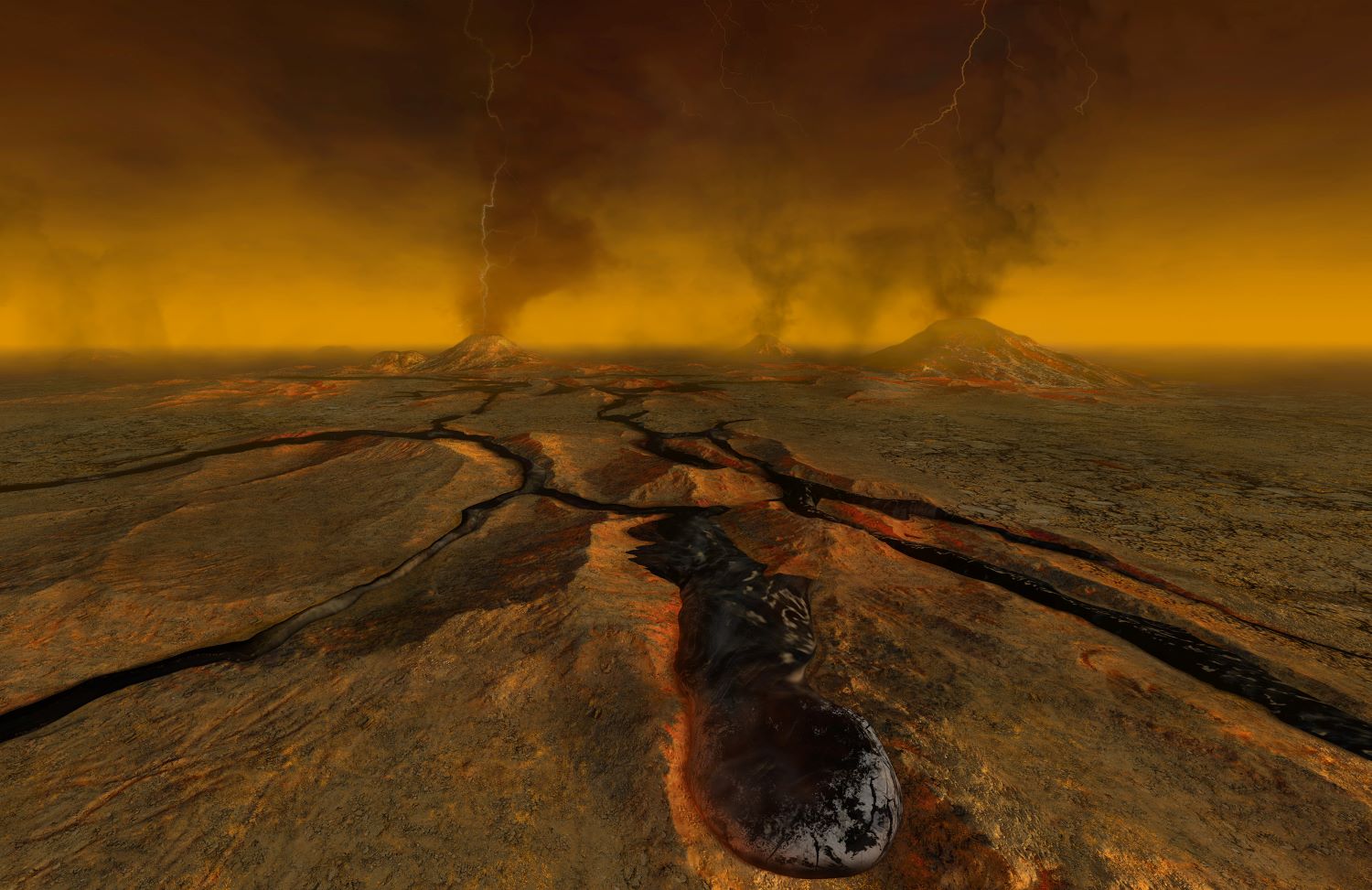
Joseph O'Rourke, Allyson Trussell, David Williams, Ian Flynn, Benjamin Black, and Madison Borrelli

Introduction

Venus is a volcanic wonderland—replete with lava channels at scales unseen on any other planetary body. Some lava channels on Venus resemble those seen on Mars and Earth’s Moon. For example, Venus hosts sinuous rilles with lengths of ~10–300 km and widths up to several km. However, many channels look more like the fluvial features observed on other terrestrial planets. Canali are long, narrow channels, over ~1 km wide, ~24 m deep, and ~500 km long on average. One canale, Baltis Vallis, is ~6,800 km long, making it the longest channel found in the Solar System. The goals of our project are (1) to better understand the formation of these enigmatic features and (2) to help prioritize follow-up investigations by future missions.

Importance of Carbonatite Lavas in Outgassing Venus’s Modern-day Atmosphere

Venus diverged from Earth’s evolutionary path through the development of a CO2-dominated atmosphere, though studies dispute whether this atmosphere emerged immediately after accretion or following a protracted period of surface habitability. Observations of widespread volcanic features suggest that volcanic outgassing may have played a pivotal role in the transformation of Venus. However, basaltic lavas would only outgas a minor fraction of the CO2 in the current atmosphere from the volume of the current crust. Here we show that carbonatite lavas possess the unique properties required to (mechanically) erode the canali. Our results suggest that eruption of these carbonatites may have delivered a total mass of CO2 comparable to that of the modern atmosphere, potentially resolving one challenge to the formation of Venus’s atmosphere within the recent past.

Eruption Properties Required to Form the Venusian Sinuous Rilles

Depth profiles of lava channels reveal whether thermal or mechanical erosion is the dominant process. Canali appear to have roughly constant depths along their exceptional lengths, which is most consistent with mechanical erosion. In contrast, thermal erosion likely formed the sinuous rilles, which exhibit depths that decrease along track. For example, one previous study showed that tholeiitic basalt could form some rilles. They calculated initial lava thickness of ~2–6 m and eruption durations between several months and a few years. We use our models to test the eruption properties required to form the sinuous rilles with various types of basaltic and komatiitic lavas. Using the Markov Chain Monte Carlo method, we compute the statistical probability distributions for these properties, considering the uncertainties on several model parameters.

Implications for Venus Exploration

Upcoming missions to Venus will provide a generational leap in our understanding of lava channels. The EnVision and VERITAS orbiters will return higher-resolution images and topography of canali and rilles. Multispectral images may allow us to infer the composition of channel-forming lavas. Carbonatite on Venus may weather to form patchy coatings of anhydrite in the presence of SO2. Carbonatites and sulfates would exhibit low NIR emissivity. Laboratory studies of their emissivity under Venus’s atmospheric and temperature conditions should be performed to distinguish them from other weathering products. The subsurface radar sounder on EnVision may also elucidate the structure of lava flows in and around these channels. Ultimately, the volumes of lava that formed canali and rilles might be small relative to that of the crust. However, these channels can reveal processes that shaped the big-picture evolution of Venus over time, and in turn how Venus serves as an exemplar for the evolution of terrestrial (exo)planets.

(Artist's impression of carbonatite lava forming canali on Venus, by Hernán Cañellas)

How to cite: O'Rourke, J., Trussell, A., Williams, D., Flynn, I., Black, B., and Borrelli, M.: Formation of Lava Channels on Venus: Implications for Eruption Properties and Atmospheric Outgassing, EPSC-DPS Joint Meeting 2025, Helsinki, Finland, 7–13 Sep 2025, EPSC-DPS2025-1203, https://doi.org/10.5194/epsc-dps2025-1203, 2025.

17:48–18:00
|
EPSC-DPS2025-1577
|
ECP
|
On-site presentation
Diogo Quirino, Michael J. Way, J. A. Mattias Green, João C. Duarte, and Pedro Machado

The modern atmosphere of Venus shows a substantially lower abundance of water vapour [1-3] and a high deuterium to hydrogen ratio (D/H) compared to Earth [3, 4]. This high D/H ratio suggests a significantly larger initial water reservoir than today. Some climate modelling studies suggest that early Venus might have had an initial benign climate, with the dayside cloud-albedo feedback supporting early and prolonged surface Habitability – also based on the planet’s slow-rotation [5, 6, 7]. According to this hypothesis, this benign early climate is theorised to end by large-scale volcanism in the form of multiple large igneous provinces, eventually leading to the present runaway greenhouse state we currently observe on modern Venus [8]. Water vapour photodissociation and preferential loss of the lighter hydrogen would explain the observed D/H ratio [9]. Other climate modelling studies claim that warming from nightside stratospheric clouds could prevent water condensation in the first place [10].

Assuming surface water condensation from the steam atmosphere in the first place, we simulate a hypothetical ocean on Venus at 2.9 Ga by using a 3D General Circulation model (GCM). We use the 3D GCM ROCKE-3D (Resolving Orbital and Climate Keys of Earth and Extraterrestrial Environments with Dynamics), developed at the NASA Goddard Institute for Space Studies [11]. The simulations use a spatial resolution of 4ºx5º (latitude x longitude), a 40-layer atmosphere (with a top pressure: 0.1-hPa) and a 13-layer fully dynamic ocean [12] coupled to the atmosphere. For the reference simulation, we select a modern Venus topography following the NASA/Magellan archive. We simulate a 310-m global equivalent layer (GEL), covering ~60% of the surface of Venus. Ocean volume is 1.4 x 10¹⁷ m3, one order of magnitude below that of modern Earth’s Ocean [5]. We set insolation to 2001 W/m2 or 1.47 times that of modern Earth, representing conditions at 2.9 Ga. The atmospheric composition was set to be Archean Earth-like (1.013 bar N2, 400 ppm CO2, 1 ppm CH4) [6]. Other planetary parameters follow the modern values of Venus’s surface gravity, radius, obliquity, eccentricity and rotation rate (retrograde slow-rotator: -243 days) [5].

We will discuss the main physical oceanographic parameters (e.g., potential temperature, salinity, potential density) and ocean circulation. Our simulations point to the existence of a significant monthly-long diurnal cycle, allowing for the development of a considerable mixed layer depth at the equator during the nighttime. This diurnal cycle results in the inversion of the equatorial surface current, from a -125 cm/s westward at midday to 50 cm/s eastward at the evening terminator. The highly saline Southern Ocean is controlled by a mass balance that favours evaporation, and is influenced by a limited exchange due to the presence of a strait-like feature preventing denser water to cross the sill. In addition, the model shows the development of a complex «meridional overturning circulation», controlled by the bathymetry and a southern «closed» basin. We will compare this ocean circulation results with a simulation of a deeper ocean on the paleo-Venus, assuming a 1000-m GEL with a modern Venus-like topography.

Moreover, we will study the impact of the paleo bathymetry/topography in the ocean circulation and tidal dissipation. Initial simulations are based on the NASA/Magellan altimetry database. However, modern volcanic rises might not have been present in the early Venus. Venusian tides are simulated using the portable Oregon State University Tidal Inversion Software (OTIS), a model extensively used for deep-time, present-day and future tides on Earth [13 – 16] and on Venus with a modern topography [17]. We will draw conclusions for the importance of studying ocean circulation, landmass configuration, and interactions between atmosphere-ocean for Earth-sized exoplanets located in the vicinity of the inner edge of the Habitable Zone.


References: [1] Bézard B., et al.,2011.Icarus.216:173; [2] Cottini et al.,2015. Space Sci.113:219; [3] Encrenaz T, et al.,2015. Space Sci.113:275; [4] Krasnopolsky V, et al.,2013.Icarus.224:57; [5] Way M.J., et al.,2016.GRL.43; [6] Way M.J. & Del Genio A.D. (2020).JGR:Planets.125; [7] Yang J, et al., 2014, ApJL., 787, L2 [8] Way M, et al.,2022. Sci. J.3:92; [9] Chaffin M, et al.,2024.Nature.629:307; [10] Turbet M., et al.,2021.Nature.598:276; [11] Way M.J., et al.,2017.ApJS.213:12; [12] Russell G.L., et al.,1995.Atmos-Ocean.33:683 ; [13] Egbert, G.D., et al., 2004, JGRC, 109, C03003 ; [14] Green, J., et al., 2017, E&PSL, 461,46 ; [15] Green, et al., 2018, GeoRL, 45, 3568 ; [16] Wilmes, S.-B., 2017, JGRC, 122, 8354 ; [17] Green, et al., 2019, ApJL,876, L22.

Funding: DQ acknowledges FCT a PhD fellowship 2023.05220.BD

How to cite: Quirino, D., Way, M. J., Green, J. A. M., Duarte, J. C., and Machado, P.: Ocean circulation and tides on a temperate paleo-Venus, EPSC-DPS Joint Meeting 2025, Helsinki, Finland, 7–13 Sep 2025, EPSC-DPS2025-1577, https://doi.org/10.5194/epsc-dps2025-1577, 2025.

Q&A (8 min)

Posters: Mon, 8 Sep, 18:00–19:30 | Finlandia Hall foyer

Display time: Mon, 8 Sep, 08:30–19:30
Chairpersons: Anne Grete Straume-Lindner, Giulia Alemanno, Océane Barraud
Atmosphere
F16
|
EPSC-DPS2025-1427
|
ECP
|
On-site presentation
Yann Musseau, Caroline Dumoulin, Gabriel Tobie, Tanguy Bertrand, and Sébastien Lebonnois

Venus’ rotation is the slowest of all the planets in the solar system and is in the retrograde direction. It is commonly admitted that such a rotation state results from the balance between the torques created by solid and atmospheric tides (Dobrovolskis et Ingersoll, 1980; Correia et Laskar, 2001, 2003; Revol et al., 2023). The internal viscous friction associated with gravitational tides drives the planet into synchronization while the bulge due to atmospheric thermal tides tends to accelerate the planet out of this synchronization (Correia et Laskar, 2001; Leconte et al., 2015).

The atmospheric thermal perturbations arise from the contrast in atmospheric temperature distribution caused by the day-night cycle. This results in a transfer of energy toward cooler regions through atmospheric circulation, leading to higher surface pressure anomalies concentrated in the cooler regions and lower surface pressure anomalies in the warmer regions. Because the atmospheric heat peak created by the solar insolation occurs in the early afternoon, the atmospheric pressure bulge forms with a delay between its main axis and the Venus-Sun direction (Gold et Soter, 1969; Dobrovolskis et Ingersoll, 1980). This lag creates an atmospheric thermal torque due to the gravitational attraction of the Sun, which tends to push Venus’ rotation out of synchronization.

Using Global Climate Model (GCM) numerical simulations, we showed in a previous study (Musseau et al., 2024) that ignoring the topography when evaluating the thermal tides (like in previous studies (Leconte et al., 2015; Auclair-Desrotour et al., 2017; Revol et al., 2023)) significantly underestimates the amplitude of the atmospheric torque and its variations throughout a Venusian day. Quantifying the effect of topography is mandatory to correctly estimate both past Venus’ rotational evolution and current dynamical signatures of atmopsheric tides. To better understand the coupling between thermal tides and topography, we performed a series of atmospheric simulations using the Venus Planetary Climate Model (VPCM) (Lebonnois et al., 2016), exploring various configurations of the topography. Our results highlight the link between topography and thermal tides, showing that the variations of the torque over a day are mainly controlled by the near equator altitude at the subsolar longitude.

As shown by Correia et Laskar (2001) and, more recently, Revol et al. (2023), the rotation state (obliquity and rotation rate) may have changed in a recent past, and may be still evolving. Any change in rotation state may affect the strength of the atmospheric tides and hence in return affect the rotation rate (Leconte et al., 2015). Here, we evaluate the strength of the atmospheric tides using VPCM simulations performed with different rotation periods. First GCM simulations and their implications for the rotation evolution will be presented and discussed during the conference.

How to cite: Musseau, Y., Dumoulin, C., Tobie, G., Bertrand, T., and Lebonnois, S.:  Investigating the influence of topography and rotation rate of Venus on atmopsheric thermal tides, EPSC-DPS Joint Meeting 2025, Helsinki, Finland, 7–13 Sep 2025, EPSC-DPS2025-1427, https://doi.org/10.5194/epsc-dps2025-1427, 2025.

F17
|
EPSC-DPS2025-104
|
On-site presentation
Arianna Piccialli, Davide Grassi, Sebastien Lebonnois, Alessandra Migliorini, Giuseppe Piccioni, Pierre Drossart, and Romolo Politi

Introduction:  We present zonal thermal winds derived by applying the cyclostrophic balance from the Visible and Infrared Thermal Imaging Spectrometer (VIRTIS) temperature retrievals. VIRTIS was one of the experiments on board the European mission Venus Express [1]. For this study, we analyzed the complete VIRTIS-M dataset acquired between December 2006 and January 2010 [2,3], which we used to investigate both the day-to-day and local time variability.

Mesosphere dynamics: Venus offers a unique environment for investigating atmospheric dynamics on a planet with slow rotation. The dynamics of its upper atmosphere (60-120 km) is a combination of the retrograde zonal wind found in the lower mesosphere and the solar-to-antisolar winds that characterize the thermosphere. This region experiences intense turbulence and marked variability both over short periods and across extended timescales. Additionally, a variety of wave phenomena, spanning multiple spatial scales, have been observed at and above the clouds, and are believed to significantly influence the overall atmospheric circulation. Despite extensive observations, the basic processes driving the super-rotation – where the cloud-level winds move roughly 80 times faster than the rotation of the planet itself – as well as other dynamical features of Venus circulation, remain insufficiently understood [4].

Temperature maps: We used temperature retrievals derived from the VIRTIS experiment on board the European mission Venus Express [1]. VIRTIS consisted of two channels: VIRTIS-M and VIRTIS-H. In this study, we analyzed the complete VIRTIS-M dataset acquired between December 2006 and January 2010, corresponding to orbits #23 to #843 [2,3,14]. The VIRTIS observations examined in this study span the nightside of both hemispheres, with significantly denser coverage in the southern hemisphere (see Figure 1.)

Figure 1: Number of VIRTIS-M temperature retrievals (about 470000 profiles in total) used in this work [15], distributed over local solar time and latitude.

Winds maps: Different techniques have been used to obtain direct observations of wind at various altitudes: tracking of clouds in ultraviolet (UV) and near infrared (NIR) images give information on wind speed at cloud top (~70 km altitude) [5] and within the clouds (~61 km, ~66 km) [6], while ground-based measurements of doppler-shift in CO2 band at 10 μm [4] and in several CO (sub-)millimeter lines [7,8] sound thermospheric and upper mesospheric winds, showing a strong variability.

In the mesosphere, at altitudes where direct observations of wind are not possible, zonal wind fields can be derived from the vertical temperature structure using the thermal wind equation. Previous studies [9,10,11,12] showed that on slowly rotating planets, like Venus and Titan, the strong zonal winds at cloud top can be successfully described by an approximation of the Navier–Stokes equation, the cyclostrophic balance in which the equatorward component of the centrifugal force is balanced by the meridional pressure gradient. Figure 2 shows an example of zonal wind derived from VIRTIS temperature retrievals combining all cubes in orbit #151.

Figure 2: Latitude-altitude cross section of zonal thermal wind speed (m/s) derived from VIRTIS-M temperature profiles for orbit VI0151 assuming cyclostrophic balance. Contour interval is 5 m/s, some contours have been removed to render the plot clearer.

Orbit-to-orbit variations: We retrieved the wind field for 63 orbits (#VI0023 - #VI0374) acquired between 14 May 2006 and 30 April 2007. We analyzed the orbit-to-orbit variations by averaging the wind speeds over latitudinal bins of 30°. Figure 3 shows the averaged wind speeds at an altitude of ~68 km.

Figure 3: Orbit-to-orbit variations of wind velocities averaged over latitudinal bins of 30°, and at four different pressure levels. The pressure level is 50 mbar (≈68 km). Different symbols and colors refer to different latitudinal bins, as showed in the legend.

Within each latitudinal bin, the wind present a clear hemispheric symmetry. In addition, we can observe a midlatitude jet (30-60°) with a maximum speed of ~110 m/s. The wind appear to be stable over time.

Local time variations: To investigate how zonal winds vary with local time in greater detail, we divided the temperature profiles into local time intervals of 1 h and then retrieved the wind speed for each local time bin. Finally, we interpolated the latitudinal wind profiles to a latitudinal grid of 5°. Figure 4 (Left) shows the wind anomaly at 20 mbar on a latitude (5°) and local time (1 h) grid. We observe a pattern compatible with thermal tides, with a pronounced minima before midnight. A preliminary comparison with simulations from the Venus Climate Database (VCD) shows a good agreement Figure 4 (Right) [13].

Figure 4: Horizontal cross-section of wind anomaly at 20 mbar. (Left) VIRTIS observations; (Right) Simulations acquired by the VCD.

References: [1] Drossart, P. et al. (2007) PSS, 55:1653–1672. [2] Grassi D. et al. (2008) JGR, 113, 2, E00B09. [3] Migliorini, A. et al. (2012) Icarus 217, 640–647. [4] Sanchez-Lavega, A. et al. (2017) Space Science Reviews, Vol. 212, Iss. 3-4, pp. 1541-1616. [5] Goncalves R. et al. Atmosphere, 12:2., (2021) doi: 10.3390/atmos12010002. [6] Hueso, R. et al. (2012) Icarus, Vol. 217, Iss. 2, p. 585-598. [7] Sornig, M. et al. (2013) Icarus 225, 828–839. [8] Rengel, M. et al. (2008) PSS, 56, 10, 1368-1384. [9] Piccialli, A. et al. A&A, 606, A53 (2017) doi: 10.1051/0004-6361/201730923 [10] Newman, M. et al. (1984) J. Atmos. Sci., 41, 1901-1913. [11] Piccialli A. et al. (2008) JGR, 113,2, E00B11. [12] Piccialli A. et al. (2012) Icarus, 217, 669–681. [13] Martinez et al 2023 https://doi.org/10.1016/j.icarus.2022.115272. [14] Grassi, D., et al., (2014) JGR (Planets), 119, 837–849, doi:10.1002/2013JE004586.

How to cite: Piccialli, A., Grassi, D., Lebonnois, S., Migliorini, A., Piccioni, G., Drossart, P., and Politi, R.: Zonal Wind Variability in Venus’ Mesosphere from VIRTIS/VEx Temperature Retrievals, EPSC-DPS Joint Meeting 2025, Helsinki, Finland, 7–13 Sep 2025, EPSC-DPS2025-104, https://doi.org/10.5194/epsc-dps2025-104, 2025.

F18
|
EPSC-DPS2025-48
|
Virtual presentation
Yukiko Fujisawa, Norihiko Sugimoto, Nobumasa Komori, Masataka Imai, Masahiro Takagi, Hiroki Ando, and Toru Kouyama
At the cloud-top level, around 65–70 km on Venus, there exists a zonal wind with a velocity of about 100 m/s, which is a remarkable phenomenon known as super-rotation. Planetary-scale waves with a zonal wavenumber of 1 and periods of about 4-day and 5-day have also been observed at this altitude and have been interpreted as equatorial Kelvin waves and Rossby waves, respectively (Del Genio and Rossow, 1990 [1]; Kouyama et al., 2015 [2]; Kajiwara et al., 2021 [3]). The intensity of these waves has been shown to vary over time based on long-term observational data of the horizontal wind distribution obtained from cloud tracking by the Ultraviolet Imager (UVI) onboard the Venus orbiter "Akatsuki" (Imai et al., 2019 [4]; Horinouchi et al., 2024 [5]). Numerical model studies suggest that these waves are excited by the Rossby-Kelvin instability and that angular momentum transport by these waves contribute to the long-term variations in super-rotation (Takagi et al., 2022 [6]). 
 
We have previously assimilated horizontal winds obtained from Akatsuki cloud tracking into the world’s first Venus data assimilation system and successfully produced the Venus objective analysis dataset, ALERA-V v1.0 (Fujisawa et al., 2024 [7], 2025 [8]). In addition, in an observation system simulation experiment using the same system, we assimilated synthetic data, including Kelvin waves, and confirmed that Kelvin waves can be reproduced through data assimilation (Sugimoto et al., 2021 [9], 2022 [10]). In this study, we will prepare objective analysis dataset for a period different from that of Fujisawa et al. (2024 [7], 2025 [8]). The goal of this study is to prepare this dataset, which has fewer temporal and spatial restrictions than the observational data, in order to extract a 4-day wave that suggests a Kelvin wave-like structure. This wave was difficult to extract in Imai et al. (2019) [4] due to its weak signal, and it is expected that the structure of this wave can be clarified using the objective analysis dataset.
 
“ALEDAS-V” (AFES-LETKF data assimilation system for the Venus atmosphere; Sugimoto et al., 2017) [11] is used for assimilation, and "AFES-Venus" (Atmospheric General Circulation Model for the Earth Simulator for Venus; Sugimoto et al., 2014) [12] is used for ensemble forecasts. AFES-Venus is a fully nonlinear dynamical general circulation model that assumes hydrostatic equilibrium and is designed for the Venus atmosphere. ALEDAS-V, which uses a local ensemble transform Kalman filter, is the first data assimilation system for the Venus atmosphere. Zonal and meridional winds were assimilated at the cloud top altitude of 70 km using cloud tracking data obtained from the UVI 365-nm images (Horinouchi et al., 2024) [13]. The settings, other than the assimilation period, are the same as those in Fujisawa et al. (2022). The assimilation period is from June 1 to December 31, 2017, during which the existence of Kelvin waves was suggested by Imai et al. (2019) [4]. The objective analysis (assimilated case) is compared with the free run (case without data assimilation).
 
The figure shows the power spectral density of the zonal winds at an altitude of 70 km over a 120-day period starting from July 1, 2017. Panels (a) and (b) represent the free run and objective analysis, respectively. The free run shows signals with periods of 5.8-day and 7.5-day (Panel a), which are comparable to the results from a numerical model by Takagi et al. (2022) [6]. Takagi et al. (2022) [6] indicated that the 5.8-day wave is dominated by a Rossby mode with a peak amplitude at mid-latitudes at an altitude of 70 km. They also noted that the 6.5-7.6-day wave, which is close to the 7.7-day period, is dominated by an antisymmetric structure centered on the equator. The results of the free run in this study show signals at mid-latitudes (50-60 degrees latitude) and high latitudes (70-90 degrees latitude), which differ from the characteristics observed by Takagi et al. (2022) [6]. Future work will need to consider whether these differences are due to variations in the settings of the numerical model.
 
The objective analysis shows signals with periods of 3.7-day and 5.1-day (Panel b). These can be compared with those of Imai et al. (2019) [4], who analyzed the observational data from Akatsuki. Imai et al. (2019) [4] revealed that the 3.5-4.0-day mode shows Kelvin wave characteristics with amplitude confined to the equatorial region, while the 5.0-5.5-day mode shows Rossby wave characteristics with amplitude at latitudes higher than 35 degrees. The 3.7-day and 5.1-day signals in the objective analysis of this study are in good agreement with the characteristics described by Imai et al. (2019) [4]. This indicates that the objective analysis successfully captured the short-period disturbances. In the future, we plan to continue analyzing the structure of these waves.
 
Figure. Power spectral density of zonal winds for high-frequency components: (a) free run, (b) objective analysis. 
 
[1] Del Genio, A. D. & Rossow, W. B. (1990) J. Atmos. Sci., 47(3), 293–318.
[2] Kouyama, T., et al. (2025) Icarus, 248, 560–568.
[3] Kajiwara, N., et al. (2021) J. Geophys. Res. Planets, 126(12), e2021JE007047.
[4] Imai, M., et al. (2019) J. Geophys. Res. Planets, 124(10), 2635–2659. 
[5] Horinouchi, T., et al. (2024) J. Geophys. Res. Planets, 129(3), e2023JE008221.
[6] Takagi, M., et al. (2022) J. Geophys. Res. Planets, 127(4), e2021JE007164.
[7] Fujisawa, Y., et al. (2022) Sci. Rep. 12, 14577.
[8] Fujisawa, Y., et al. (2025) ALERA-V version 1.0: an experimental objective analysis dataset of Venus atmosphere (1.0) [Data set]. Zenodo. 
[9] Sugimoto, N., et al. (2021) Atmosphere, 12, 14.
[10] Sugimoto, N., et al. (2022) Atmosphere, 13, 182. 
[11] Sugimoto, N., et al. (2017) Sci. Rep. 7(1), 9321. 
[12] Sugimoto, N., et al. (2014) J. Geophys. Res. Planets 119, 1950–1968.
[13] Horinouchi, T., et al. (2024) Venus Climate Orbiter Akatsuki Cloud Motion Vector Data Set v1.3, JAXA Data Archives and Transmission System. 

How to cite: Fujisawa, Y., Sugimoto, N., Komori, N., Imai, M., Takagi, M., Ando, H., and Kouyama, T.: Preparation of an Objective Analysis Dataset with Akatsuki Horizontal Winds Assimilation for Studying Planetary-Scale Waves in the Venus Atmosphere, EPSC-DPS Joint Meeting 2025, Helsinki, Finland, 7–13 Sep 2025, EPSC-DPS2025-48, https://doi.org/10.5194/epsc-dps2025-48, 2025.

F19
|
EPSC-DPS2025-125
|
On-site presentation
Sanjay Limaye

The  thermal infrared images from the LIR camera on Akatsuki  orbiter allow detrmining the altiutde and the temperature at the limb (unit slant optical depth).  With the near equatorial orbit of Akatsuki around Venus, each full disk image provide near pole to pole latitude coverage at the limb. T he limb temperatures provide a very useful to characterize the Venus thermal structure in an altitude reion (~ 80-90 km above the mean surface) where few direct measurements are available. By analyzing all available images acquired during the Akatsuki mission (7 December 2015 - February 2022), brightness temperatures are obtained at all local times and latitudes at the limb altitudes.  It has been possible to determine the limb location to a very high accuracy despite the low angular resolution of the LIR camera and the highly elliplital orbit which results in nominal pixel size ranging from ~50 km  forfull disk  images acquired at ~ 50,000 km that fill the 248 x 320 pixel sensor and as low as 300 km at apoapsis. Both sub-pixel sampling and Gauss fits to the gradient were used to determine the peak radial gradient of intensity to locate the slant unit optical depth.  The technique also yields an estimate of the vertical gradient of the brightness temperature which is a very good proxy for the atmospheric temperature lapse rate at the limb.


How to cite: Limaye, S.: Venus limb temperatures from Akatsuki Longwave Infrared Radiometer (LIR) camera at all latitudes and local times, EPSC-DPS Joint Meeting 2025, Helsinki, Finland, 7–13 Sep 2025, EPSC-DPS2025-125, https://doi.org/10.5194/epsc-dps2025-125, 2025.

F20
|
EPSC-DPS2025-1674
|
On-site presentation
Venus: a Pristine Laboratory for Study of Fundamental Heliophysics Processes Governing Magnetosphere - Ionosphere - Thermosphere Coupling
(withdrawn after no-show)
Michael Chaffin, Gwen Hanley, Chris Fowler, and Rob Lillis and the Kestrel Mission Concept Team
F21
|
EPSC-DPS2025-189
|
ECP
|
On-site presentation
Miyu Sugiura, Takeshi Imamura, Hiroki Ando, Bernd Häusler, Paetzold Martin, and Tellmann Silvia

In the Venusian atmosphere at 50-70km altitudes, there is a thick cloud layer composed of H₂SO₄ and H₂O liquid. Around the cloud base, the clouds absorb infrared radiation from the lower atmosphere, driving convection in the lower and middle clouds (50–55 km altitude) to form the troposphere. Above this convective layer (around 60 km and higher), atmospheric gravity waves propagate.

Previous studies have revealed that the tropopause height increases up to around 60° latitude and then decreases toward the poles (Ando et al. 2020). However, the mechanism determining the tropopause height remains unclear. On the other hand, as described below, we found that the tropopause height varies by several kilometers with time scales of a few days. The variations seem to be correlated with the quasi-periodic variations in the temperature structure, one of which was reported by Ando et al. (2017). The temperature variations were suspected to be driven by Rossby waves.

This study aims to advance our understanding of the dynamics of the tropopause, focusing on the day-to-day variations in the tropopause height in the polar region. We examine two main issues: first, how planetary-scale waves influence the tropopause height; and second, whether the tropopause height is determined by the strength of convection.

By analyzing the radio occultation data from the Venus Express mission in the polar region, we found that, in addition to the previously known temperature variations caused by planetary-scale waves, the tropopause height varies in sync with these temperature changes (Fig. 1). The variation is attributed to the latitudinal displacement of the tropopause caused by planetary-scale waves.
We also focused on the amplitude of gravity waves as an indicator of the convection strength. The relationship between the gravity wave amplitude and the tropopause height was studied, and no significant correlation was found between them. This implies that the tropopause height may not directly reflect the strength of convection, or that other sources of gravity wave excitation may play a more dominant role.

Fig.1 Time evolution of the vertical distribution of temperature deviation (contours) and the tropopause height (black dots). The temperature deviation is calculated by subtracting the period-averaged temperature profile from each day's profile. The tropopause height is defined as the transition altitude where the static stability is smaller than 8 K/km below and larger than 8 K/km above. The data were obtained from radio occultation observations by ESA’s Venus Express. The top panel uses data observed approximately every day from January 19 to 25, 2008, and the bottom panel from February 9 to March 4, 2008.

How to cite: Sugiura, M., Imamura, T., Ando, H., Häusler, B., Martin, P., and Silvia, T.: Study on the variation of Venusian polar tropopause using Venus Express radio occultation, EPSC-DPS Joint Meeting 2025, Helsinki, Finland, 7–13 Sep 2025, EPSC-DPS2025-189, https://doi.org/10.5194/epsc-dps2025-189, 2025.

F22
|
EPSC-DPS2025-1241
|
ECP
|
On-site presentation
Ting-Juan Liao, Dave Crisp, and Yuk Yung

The Venus mesosphere (~60 - 100 km) is bounded below by the massive, cloudy, super-rotating troposphere and above by the thermosphere/cryosphere. Despite the fact that Venus has negligible obliquity (< 4K) and that the mesosphere is subjected to intense solar radiative forcing, most of this atmospheric layer has an anomalous, reversed pole-to-equator thermal structure with polar temperatures up to 10 K warmer than those over the equator [1]. This thermal structure implies net (solar – thermal) radiative heating in the Venus mesosphere. Here, we employ the Spectral Mapping Radiative Transfer (SMART) model to estimate the net heating rates. We used updated constraints on the atmospheric thermal structure and composition from ground-based observations and results from the Venus Express mission. The net heating is thought to be maintained by a thermally-indirect meridional circulation driven by interactions between the zonal super-rotation and atmospheric thermal tides [2]. Also, we updated Sulfur dioxide concentration to reach global heat balanced. The meridional circulation could play a critical role in the transport of trace gases and the production of sulfuric acid aerosols at levels throughout the Venus mesosphere. This circulation may imply the lofting of sulfuric acid aerosols containing enriched HDO, thereby explaining the dramatic enhancement of the D/H ratio[3] in the upper atmosphere of Venus > 100 km.


[1] Limaye, S.S., Grassi, D., Mahieux, A. et al.Venus Atmospheric Thermal Structure and Radiative Balance. Space Sci Rev 214, 102 (2018).

[2] Crisp, D. (1986). Radiative forcing of the Venus mesosphere: I. solar fluxes and heating rates. Icarus, 67(3), 484-514.

[3] Mahieux, Arnaud, Sébastien Viscardy, Roger Vincent Yelle, Hiroki Karyu, Sarah Chamberlain, Séverine Robert, Arianna Piccialli et al. "Unexpected increase of the deuterium to hydrogen ratio in the Venus mesosphere." Proceedings of the National Academy of Sciences 121, no. 34 (2024): e2401638121.

How to cite: Liao, T.-J., Crisp, D., and Yung, Y.: Thermal anomaly on Venus’s mesosphere, EPSC-DPS Joint Meeting 2025, Helsinki, Finland, 7–13 Sep 2025, EPSC-DPS2025-1241, https://doi.org/10.5194/epsc-dps2025-1241, 2025.

F23
|
EPSC-DPS2025-1707
|
On-site presentation
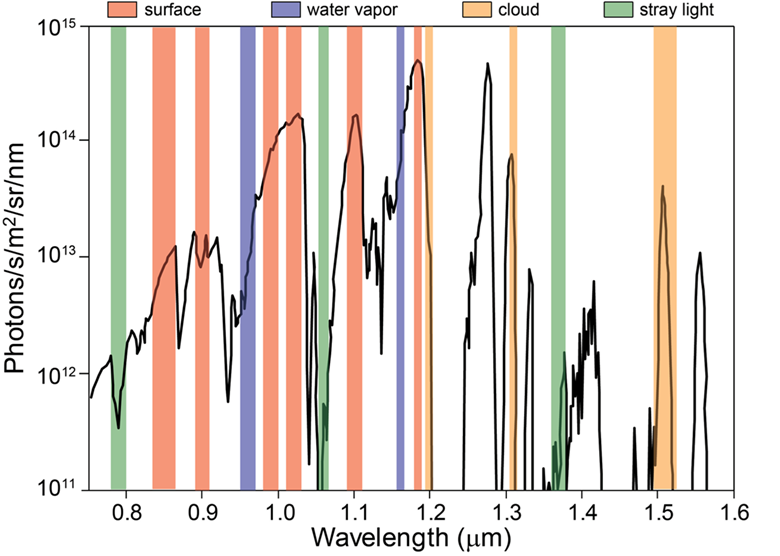
Ankita Das, Nils Müller, David Kappel, Franz Schreier, John Lee Grenfell, Heike Rauer, Ana-Catalina Plesa, and Giulia Alemanno

Introduction

Obtaining data from Venus’ atmosphere and surface is a unique challenge. Measurements in these spectral regions as shown in Figure 1 can be utilized to constrain surface emissivity, water vapor abundance in lower atmosphere, and cloud properties thus paving way for surface and near-surface atmosphere studies. In order to process the data from these missions once they are available, Atmosphere Radiative Transfer Modelling (ARTM) of the Venusian atmosphere is a necessary first step. Here we present on-going work on our Venus ARTM which will be relevant for interpreting future data.

Figure 1: Example of simulated Venus nightside emission spectrum overl-ayed with spectral regions intended for data preprocessing and determination of surface and atmosphere properties [3]

SPICAV dataset from Venus Express:

The Spectroscopy for the Investigation of the Characteristics of the Atmosphere of Venus (SPICAV) suite on board Venus Express (VEX) made relatively high-resolution observations of Venus’ nightside in the spectral range of 0.65–1.7 um. The synthetic radiance generated by our ARTM is compared to SPICAV IR night-side observations on orbit 34 (Latitude=27.01o, longitude=342.37o, Local time=2.17 h, emission angle=33.27o) ([9]; additional processing by [17]).

Comparison of line databases

One important aspect of the model is absorption by gases. In the Venusian atmosphere, absorption features are dominated by CO2 and H2O lines. Modeled absorption cross-sections are governed by the line list chosen. Accurate line lists are essential for high temperature atmospheres like Venus. The high-resolution transmission molecular absorption database (HITRAN) is a frequently used line database in radiative transfer modelling [4] . Several Venus atmospheric studies (e.g. [5]), however, have relied on the database of Pollack et al. 1993 for CO2 lines, referred to as “Hot CO2” from here on. Newer line databases have been developed for high temperature atmospheres such as high temperature molecular spectroscopic database (HITEMP 2024) [11]. These are yet to be applied to Venusian atmospheric studies. As part of this work we compare absorption cross sections generated by using different line databases for relevant species present in the Venusian atmosphere: HITRAN 2020, HITEMP 2010, Hot CO2, HITEMP 2024 ([4]; [7]; [6] and [11]). Comparison studies for CO2 absorption using different line databases (Figure 2) show that HITEMP 2024 has the highest absorption cross-section in the water vapor sensitive bands (1.1 and 1.18 microns). This indicates that HITEMP 2024 database might be more accurate, considering weak absorption lines, and is hence more appropriate for modelling Venus night-side thermal emission.


Figure 2: Comparison of CO2 absorption lines from several line databases (Hot CO2, HITEMP 2010, HITRAN 2020, HITEMP 2024) using the Voigt line shape [6, 7, 4, 11]

 Radiative Transfer Model

Our constructed ARTM is a combination of Py4CATS [8] and Helios-k [15] for producing gaseous absorption coefficients with sub-Lorentzian line shape [5] and the DISORT algorithm [10] for generating radiance. Additionally, we consider 75% mono-dispersed H2SO4 clouds [18] [16]. Our ARTM was validated against the Planetary Spectrum Generator (PSG) [19]. Through our work we aim to test our ARTM for the following scenarios in comparison to the SPICAV IR data:

  • Temperature profiles - General Circulation Models (GCMs) near the planetary boundary layer [14] indicate deviations in the temperature profile from the VIRA model [12] which has been used in previous studies. Lebonnois and Schubert (2017) propose that the apparently super-adiabatic lapse rate observed by VeGa 2 may be real and could be explained by a gradient of molecular density of the atmosphere.
  • Continuum absorption in different windows
  • Water vapor gradient in lower atmosphere - Water vapor abundance near the surface can point to local sources such as volcanic outgassing and can lead to exciting science.

Preliminary results and Summary

We modelled Venus night-side radiances for near nadir geometry and 0.5-micron mono-dispersed H2SO4 aerosols (mode 2 clouds) [19]. The continuum opacities have been fitted at each spectral window and the cloud opacities have been scaled in order to reproduce radiances found in the SPICAV IR dataset as shown in Figure 3. Here we assume an emissivity of 1.0 and zero surface elevation.

Figure 3: Venus night-side NIR radiances produced by our ARTM compared with SPICAV radiances We use a cloud factor of 19.5% relative to cloud profile in [18]; continuum opacities for individual windows are in cm-1/am2

Our current ARTM produces a good fit to the SPICAV spectrum using the HITEMP 2024 database. We aim to further improve our model to achieve a better estimate of continuum opacity and near surface properties.

Bibliography

[1] Smrekar S. et al. (2022) IEEE Aerospace Conference (AERO) pp. 1-20

[2] Allen D. A. et al. (1984) Nature, 307, 222–224

[3] Helbert et al., (2021) Planetary Science and Astrobiology Decadal Survey 2023-2032

[4] Gordon I. E. et al. (2022) J. Quant. Spectrosc. Radiat. Transfer, 277, 107949

[5] Bézard B. et al. (2011) Icarus, 216(1), 173–83

[6] Pollack J. B. et al. (1993) Icarus, 103, 1–42

[7] Rothman L. S. et al. (2010) J. Quant. Spectrosc. & Radiat. Transfer, 111(12-13), 2139–2150

[8] Schreier F. et al. (2019) Atmosphere, 10(5), 262

[9] Korablev O. et al. (2006) J. Geophys. Res. 111(E9)

[10] Stamnes et al. (1988) Applied Optics, 27(12), 2502-2509

[11] Hargreaves R. J et al. (2025) J. Quant. Spectrosc. Radiat. Transfer 333

[12] Seiff  A. et al. (1985) Advances in Space Research, 5(11):3–58

[13] Lebonnois S. and Schubert, G. (2017) Nature Geoscience, 10(7):473–477

[14] Lebonnois  S. et al. (2018) Icarus, 14 314:149–158

[15] Grimm J. S. and Heng, K. (2015) ApJ 808 182

[16] Palmer K. F. and Williams, (1975) Appl. Opt., 14 pp. 208-219

[17] Kappel D. et al. (2016) EGU General Assembly Vol. 18, EGU2016-7578-1

[18] Bierson J. C and Zhang X. (2019) EPSC-DPS Vol. 13, EPSC-DPS2019-853-1

[19] Villanueva G. L. et al. (2018) J. Quant. Spectrosc. & Radiat. Transfer, 217, 86 – 104


How to cite: Das, A., Müller, N., Kappel, D., Schreier, F., Grenfell, J. L., Rauer, H., Plesa, A.-C., and Alemanno, G.: An Atmospheric Radiative Transfer Model to Constrain Lower-Atmospheric Characteristics of the Venusian Atmosphere, EPSC-DPS Joint Meeting 2025, Helsinki, Finland, 7–13 Sep 2025, EPSC-DPS2025-1707, https://doi.org/10.5194/epsc-dps2025-1707, 2025.

F24
|
EPSC-DPS2025-1045
|
On-site presentation
Kevin McGouldrick and Erika Barth
The clouds and aerosols of Venus constitute a nearly 40 km thick region (when considering both the clouds and historically-named hazes) that is sustained by a strongly coupled combination of multiple physical processes including cloud microphysics, photochemistry, solar heating and radiative cooling, and mesoscale and global dynamics.  Though simplifications can be made by ignoring or holding constant some of these processes, faithful simulation of these clouds and aerosols requires consideration of this coupling.  We present here a first 1D model of the Venus clouds and aerosols between 40 km and 80 km altitude that simultaneously calculates cloud microphysics, simplified diurnally-varying photochemical production and loss, radiative transfer, diurnally-varying solar heating, radiative cooling, and parameterized convective mixing.
This model is built on the PlanetCARMA framework, which has previously been shown to accurately reproduce the Venus clouds and aerosols when simulating microphysics, simplified diurnally-varying photochemistry, and vertical mixing dictated by a parameterized eddy diffusion coefficient that was static in time.  Here, we re-apply the radiative dynamic feedback that had been previously applied by the authors to a 40 km to 60 km microphysics model of the Venus Clouds.  This involves coupling to that microphysics model the delta-scaled two-stream radiative transfer model that is already part of PlanetCARMA, as well as the addition of a time-varying eddy diffusion coefficient that is calculated as a function of the vertical gradient of the potential temperature by means of a Richardson Number parameterisation.
We show that this updated radiative-dynamic feedback model of nearly the entire domain occupied by condensed sulfuric acid in the atmosphere of Venus faithfully reproduces the observed distribution of the clouds in terms of Cloud Liquid Content, effective radius, Photochemical, Condensational, and Total Cloud opacity, and cloud column abundance; it also produces emitted nightside near infrared radiances consistent with observations.  Long-period (on the order of an Earth-year) oscillations are seen in some simulations.  We also compare with observations the variations in the vertical structure of the simulated Venus clouds and hazes as a function of latitude, quantifying their dependence upon changes in the photochemistry and cloud top radiative cooling that results from the changing Sun angle with both time and latitude.
Observations of the clouds of Venus exhibit variations at a wide range of spatial and temporal scales.  Completion of this model brings us another step closer to being able to determine the root causes of these variations and better understand the role of clouds in the climate and evolution of Venus and other rocky planets.

How to cite: McGouldrick, K. and Barth, E.: Latitude Dependence of the Venus Cloud System Radiative-Dynamic Feedback, EPSC-DPS Joint Meeting 2025, Helsinki, Finland, 7–13 Sep 2025, EPSC-DPS2025-1045, https://doi.org/10.5194/epsc-dps2025-1045, 2025.

F25
|
EPSC-DPS2025-366
|
On-site presentation
Therese Encrenaz, Thomas Greathouse, Rohini Giles, Thomas Widemann, Bruno Bézard, Franck Lefèvre, Maxence Lefèvre, Wenchen Shao, and Emmanuel Marcq

Sulfur and water play a key role in the chemistry, dynamics, and radiative transfer taking place in the atmosphere of Venus. Temporal and local variations in SO2 and HDO, monitored within or above the clouds, can be indicators of photochemical/thermochemical processes or dynamical changes. Since 2012, ground-based monitoring of the SO2 ν2 and ν3 bands, centered at 7.4 mm and 18.9 mm respectively, has been performed with TEXES at the IRTF to probe different atmospheric levels atop and within the clouds ; according to the model, the cloud top, probed at 7.4 mm, is at z = 62 km; the lower level, probed at 19 mm, is at z = 57 km. HDO (used as a proxy of H2O) was simultaneously recorded at 7.4 mm. Since 2021, a third measurement has been systematically added at 8.6 mm to probe a higher atmospheric level (z = 67 km) in the n1 SO2 band.


As reported in our previous analyses, the SO2 mixing ratio shows strong variations as a function of time but also over the disk, indicating the formation of SO2 plumes. These local maxima appear sporadically on the SO2 maps and stay visible over a few hours, but less than a day. In contrast, the H2O abundance is uniform over the disk and shows moderate variations as a function of time (Encrenaz et al. A&A 674, A199, 2023).


Data recorded since 2021 have led to two main results:


1) The long-term variations of H2O and SO2 abundances at the cloud top were found to be anticorrelated between 2014 and 2019, but do not show this anticorrelation after 2021. While the disk-integrated H2O abundances are more or less constant around 750 ppbv, the disk-integrated SO2 abundances show variations with time by a factor up to 5 (from 100 to 500 ppbv) on a time scale of 2 months.


2) The n1 SO2 band observed at 8.6 mm, probing around z = 67 km, is now detected on all datasets for which SO2 is higher than 300 ppbv at the cloud top.  From these data, we infer that the SO2 volume mixing ratio (vmr) at 67 km is about ten times lower than its value at the cloud top (z = 62 km in our model). The SO2 vmr gradient is also retrieved from the data at 7.4 mm (z = 62 km) and 18.9 mm. It is found to be close to 0 in most occasions (implying a constant vmr between 57 and 62 km), with a few exceptions where it can be either negative or positive ; the strongest negative values have been found at a period of high plume activity.


How to cite: Encrenaz, T., Greathouse, T., Giles, R., Widemann, T., Bézard, B., Lefèvre, F., Lefèvre, M., Shao, W., and Marcq, E.: Water and sulfur dioxide thermal mapping on Venus : Long-term monitoring and vertical distribution of SO2 within and  above the clouds, EPSC-DPS Joint Meeting 2025, Helsinki, Finland, 7–13 Sep 2025, EPSC-DPS2025-366, https://doi.org/10.5194/epsc-dps2025-366, 2025.

F26
|
EPSC-DPS2025-679
|
ECP
|
On-site presentation
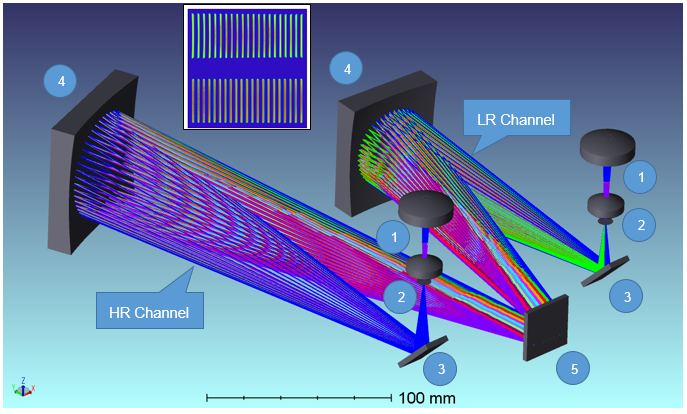
Yo Kawamura, Tatsuya Yoshida, Naoki Terada, Yuki Nakamura, Shungo Koyama, Hiroki Karyu, and Takeshi Kuroda

Venus likely lost a significant fraction of its initial water during an early runaway greenhouse (RG) phase (e.g., Hamano et al., 2013). Under the RG condition, surface water fully evaporates, creating an H2O-dominated atmosphere. Intense ultraviolet (UV) irradiation from the young Sun drives H2O photolysis, and the liberated hydrogen subsequently escapes to space (Kasting, 1988). Previous studies suggest that RG Venus could have lost several tens of terrestrial oceans (1.4 × 10²¹ kg; hereafter TO) within 1 Gyr (e.g., Gillmann et al., 2009).

Recently, two atmospheric photochemical processes—H2O reproduction and UV shielding by O2—were shown to suppress water loss in an H2O-dominated atmosphere of a terrestrial exoplanet orbiting an M dwarf (Kawamura et al., 2024). However, the impact of these processes on water loss around G-type stars like Venus, and their dependence on atmospheric composition, remains poorly understood.

Here, we quantify these effects using a one-dimensional photochemical model based on PROTEUS (Nakamura et al., 2023). The model simulates vertical profiles of H2O–CO2 atmospheres under RG conditions by solving chemical reactions and diffusion. It solves 51 reactions including H2O, CO2, and their photolysis products (H, OH, H2, O(1D), O3, O2, O, HO2, H2O2, CO, and HOCO) following Chaffin et al. (2017). To estimate the water loss rate, we impose diffusion-limited hydrogen escape as the upper boundary condition. Additionally, we consider intense UV irradiation conditions characteristic of the active young Sun (Claire et al., 2012). We considered a variety of atmospheric parameters, with H2O inventories ranging from 0.1 to 10 TO and CO2 inventories from 1 to 50 times the mass of the current Venusian Atmospheric Carbon Dioxide (4.69 × 10²⁰ kg; hereafter VACD).

Our results show that the water loss rate on the RG Venus is significantly suppressed by the two previously identified photochemical processes and by additional UV shielding from CO2 and O3. In an atmosphere with 5 TO of H2O and 1 VACD of CO2, these combined effects reduce the loss rate to 5.4 TO Gyr-1, substantially below previous estimates. At 50 VACD of CO2, enhanced UV shielding by CO2 further decreases the rate. These findings suggest that Venus retained substantial water for much longer than previous studies suggested. Moreover, if the RG phase duration is controlled by the water loss rate (Hamano et al., 2013), it may have persisted for several Gyr.

How to cite: Kawamura, Y., Yoshida, T., Terada, N., Nakamura, Y., Koyama, S., Karyu, H., and Kuroda, T.: Reduced water loss due to atmospheric photochemistry under a runaway greenhouse condition on Venus, EPSC-DPS Joint Meeting 2025, Helsinki, Finland, 7–13 Sep 2025, EPSC-DPS2025-679, https://doi.org/10.5194/epsc-dps2025-679, 2025.

F27
|
EPSC-DPS2025-395
|
On-site presentation
Emmanuel Marcq, Jérémie Lasue, Sandrine Vinatier, Luisa Lara, Sandrine Bertran, Benjamin Lustrement, Lucile Conan, Eliott Simonnet, Anthony Juin, Séverine Robert, Océane Barraud, and Giulia Alemanno and the The VenSpec-U team

ESA's Cosmic Vision M5 Envision mission to Venus will depart in December 2031 and begin its scientific mission in 2034, with its nominal mission lasting for four years. Its payload includes the VenSpec-U ultraviolet imaging spectrometer, designed and built by a consortium of French laboratories (LATMOS, IRAP, LIRA). Its scientific objectives are dedicated to the mapping of sulfur gases (sulfur dioxide SO2 and sulfur monoxide SO) at the planet's clouds top near an altitude of 70 km, as well as the characterization of upper cloud variability, in particular that of the ultraviolet absorber whose composition still eludes us. Its horizontal resolution will be of the order of 10 km, enabling us to constrain the interplay between photochemistry, and atmospheric dynamics on small scales such as gravity waves, convection cells, or enhanced vertical mixing that might be trigered by buoyant volcanic plumes [1].

Operating in nadir or near-nadir viewing and in pushbroom geometry with a 20° transverse field of view (on the order of 100 km across considering the low polar orbit of EnVision), the instrument will analyze sunlight backscattered by clouds on the day side of the planet using two optical channels sharing a single CMOS detector. One channel will take advantage of its high spectral resolution (0.3 nm) over a reduced range (205-235 nm) to resolve the spectral lines of sulfur monoxide and dioxide to characterize the chemical cycle of sulfur. The other channel, with a comparatively lower spectral resolution (2 to 5 nm) over an extended range (190-380 nm), will enable us to study the evolution of sulfur gases and the ultraviolet absorber with good spatial sampling [2, 3]. In addition to its nominal observation mode, the instrument will perform regular calibrations using solar observations (via blank diffusers or pinholes) at least very 112 days, as well as flat fielding using internal UV calibration LEDs.

Figure 1. Optical layout of the two channels of VenSpec-U including: (1-2) entrance objectives lenses, (3) visible rejection filters, (4)
Toroidal holographic gratings, (5) shared CMOS detector.

References

[1] Marcq E. et al. (2021) Adv. Space Res., 68(1), 275-291.
[2] Conan L. et al. (2024) SPIE proceedings, Vol. 13144, pp. 197-239.
[3] Lustrement B. et al. (2024) SPIE proceedings, Vol. 13144, pp. 164-196. 
https://venspec-u.projet.latmos.ipsl.fr/index.html


How to cite: Marcq, E., Lasue, J., Vinatier, S., Lara, L., Bertran, S., Lustrement, B., Conan, L., Simonnet, E., Juin, A., Robert, S., Barraud, O., and Alemanno, G. and the The VenSpec-U team: The VenSpec-U instrument on board EnVision, EPSC-DPS Joint Meeting 2025, Helsinki, Finland, 7–13 Sep 2025, EPSC-DPS2025-395, https://doi.org/10.5194/epsc-dps2025-395, 2025.

F28
|
EPSC-DPS2025-148
|
On-site presentation
Hiroki Karyu, Takeshi Kuroda, Arnaud Mahieux, Sébastien Viscardy, Anni Määttänen, Naoki Terada, Séverine Robert, Ann Carine Vandaele, and Michel Crucifix

Sulfuric acid clouds on Venus play a pivotal role in atmospheric radiation, chemistry, and material transport. Therefore, understanding the mechanisms underlying cloud formation on Venus is essential for gaining a better insight into the planet’s climate and atmospheric processes. Cloud formation on Venus begins with the nucleation process, which provides cloud condensation nuclei (CCN) necessary for subsequent condensational growth. Elemental sulfur is frequently assumed to be the primary CCN substance, as its vapor can be readily produced through photochemical reactions and solidifies upon condensation. Meteoric dust has been proposed as CCN as well and cloud droplets could also form by homogeneous nucleation.

Cloud microphysics models are effective tools for exploring the mechanisms of cloud formation and have been widely applied in studies of Venus. Previous modeling studies that assumed elemental sulfur as CCN have successfully reproduced observed cloud structures [1,2,3,4]. However, these studies have typically simplified the CCN production process by directly injecting particles with predefined sizes ranging from 0.01 to 0.1 µm, rather than explicitly calculating the CCN production rate based on nucleation theory. In addition, the elemental sulfur CCN are also provided from the lower model boundary at ~40 km altitude in the previous studies, despite uncertainties about the stability of elemental sulfur as a solid phase at these altitudes. Consequently, the fundamental initial step of cloud formation on Venus remains poorly understood.

In this study, we perform 1D cloud microphysics simulations incorporating elemental sulfur vapor and its nucleation process to investigate the origin of Venus’ clouds.  A cloud microphysics model used here is the Simulator of Particle Evolution, Composition, and Kinetics (SPECK) [5]. SPECK accurately calculates condensation processes and is particularly suitable for aerosols with diverse compositions. Thus, it effectively simulates particle evolution from nucleation through condensation and coagulation, tracking interactions among particles with different composition. Our model includes three condensable vapor species: sulfuric acid, water, and elemental sulfur (S8). The homogeneous nucleation of sulfuric acid occurs via binary nucleation with water [6], while the nucleation of S8 is computed using a classical homogeneous nucleation theory. The size bins of the model range from 1 nm to 30 µm, and homogeneously nucleated particles are introduced into the smallest bin size of 1 nm. The model also considers the heterogeneous nucleation of sulfuric acid and water on the formed elemental sulfur particles. The vertical model domain spans altitudes from 40 km to 100 km, encompassing the entire cloud structure from the lower clouds to the upper haze. In addition to homogeneously nucleated particles, our model incorporates meteoric smoke particles (MSPs) as CCN with a radius of 1 nm. MSPs, assumed to consist of olivine, are introduced at the top of the model domain since the production of MSP is expected to occur around 115 km [7]. A parameter study is conducted with respect to the meteoric dust ablation flux ranging from 1 t d-1 to 1000 t d-1.

Figure 1. (a) Homogeneous nucleation rate of sulfuric acid and water (blue solid line) and S8 (red-dashed line). (b) Heterogeneous nucleation rate of sulfuric acid onto S8 particles.


Our results indicate that different nucleation processes dominate at different altitudes. Specifically, homogeneous nucleation of elemental sulfur prevails below 70 km altitude, whereas homogeneous nucleation of sulfuric acid dominates above 80 km (Figure 1a). The S8 particles are eventually activated through heterogeneous nucleation and become coated by sulfuric acid solution (Figure 1b). This suggests that cloud particles below 70 km and haze particles above 70 km have distinct origins. Parameter studies varying the MSP injection flux by three orders of magnitude resulted in negligible differences in the upper haze structure, consistent with previous findings [2]. Additionally, we confirmed that elemental sulfur particles evaporate below the cloud base due to higher temperatures. This result raises questions about the previous assumption that elemental sulfur serves as CCN around the cloud base, highlighting the possibility that alternative CCN substances such as minerals [8] or salts [9] may be more suitable.


[1] Imamura & Hashimoto (2001), JAS

[2] Gao et al. (2014), Icarus

[3] McGouldrick & Barth (2023), PSJ

[4] Karyu et al. (2024), PSJ

[5] Karyu et al. (2025), ESS, under review

[6] Määttänen et al. (2018), JGR

[7] Carillo-Sanchez et al. (2020), Icarus

[8] Krasnopolsky (2017), Icarus

[9] Rimmer et al. (2020), PSJ

How to cite: Karyu, H., Kuroda, T., Mahieux, A., Viscardy, S., Määttänen, A., Terada, N., Robert, S., Vandaele, A. C., and Crucifix, M.: Investigating the Origin of Venus’ Clouds Using a Cloud Microphysics Model, EPSC-DPS Joint Meeting 2025, Helsinki, Finland, 7–13 Sep 2025, EPSC-DPS2025-148, https://doi.org/10.5194/epsc-dps2025-148, 2025.

F29
|
EPSC-DPS2025-1645
|
On-site presentation
Justin Erwin, Shohei Aoki, Ankita Das, Itziar Garate Lopez, Cédric Gillman, Nils Mueller, Jaime Reyes Guerrero, Hideo Sagawa, Daphne Stam, Victor Trees, Ann Carine Vandaele, Sandrine Vinatier, Yeon Joo Lee, Giulia Alemanno, Océana Barraud, Emmanuel Marcq, and Séverine Robert

The VenSpec suite is a set of three spectrometers on board the EnVision M5 mission, which was adopted by ESA in 2024 to be launched in late 2031. EnVision is a medium class mission designed to assess, and possibly quantify, the nature and current state of geological activity on Venus, and its relationship with the atmosphere, to understand how Venus and Earth could have evolved so differently. The suite is composed of VenSpec-M (an infrared mapper), VenSpec-U (a UV spectral imager), and VenSpec-H (a high-resolution infrared spectrometer). The three spectrometers observe in NADIR and complement each other’s day and night side observations.

The Radiative Transfer Modelling (RTM) working group is composed of scientists within the VenSpec suite science team interested in the topic of radiative transfer and its application to Venus’ science. The group is a place to exchange knowledge and best practices for RTM in Venus atmosphere. The team will adapt the knowledge learned from previous space missions, past and ongoing ground-based measurement campaigns, and laboratory measurements to improve the RTM and, therefore, the future science return of the EnVision mission.

This presentation will outline the high-level topics, strategies of the working group, and overlap with the other working groups within the VenSpec Science Team. Some of the topics are

  • RTM intercomparison (forward models, codes, retrieval methods, assumptions, inputs, outputs, etc.)
  • Overlapping and/or complementary spectra bands. How can simultaneous observations be used to increase the science return?
  • How can volcanism and active geography be observed with the VenSpec suite?
  • Atmosphere models and reference scenarios (in collaboration with the VenSpec Atmospheric modelling Working Group)
  • Surface and emissivity models and parameterization (in collaboration with the VenSpec Laboratory Investigation Working Group)
  • Updates to molecular line lists, absorption cross sections, and aerosol/scattering phase functions (in collaboration with the VenSpec Laboratory Investigation Working Group)
  • Previous satellite and ground-based data analyses (in collaboration with the VenSpec Ground Observation Working Group)

This presentation mainly serves to advertise the current membership (both the people and the institutes) and advertise for other interested parties.

How to cite: Erwin, J., Aoki, S., Das, A., Garate Lopez, I., Gillman, C., Mueller, N., Reyes Guerrero, J., Sagawa, H., Stam, D., Trees, V., Vandaele, A. C., Vinatier, S., Lee, Y. J., Alemanno, G., Barraud, O., Marcq, E., and Robert, S.: VenSpec Radiative Transfer Modeling Working Group, EPSC-DPS Joint Meeting 2025, Helsinki, Finland, 7–13 Sep 2025, EPSC-DPS2025-1645, https://doi.org/10.5194/epsc-dps2025-1645, 2025.

F30
|
EPSC-DPS2025-1652
|
On-site presentation
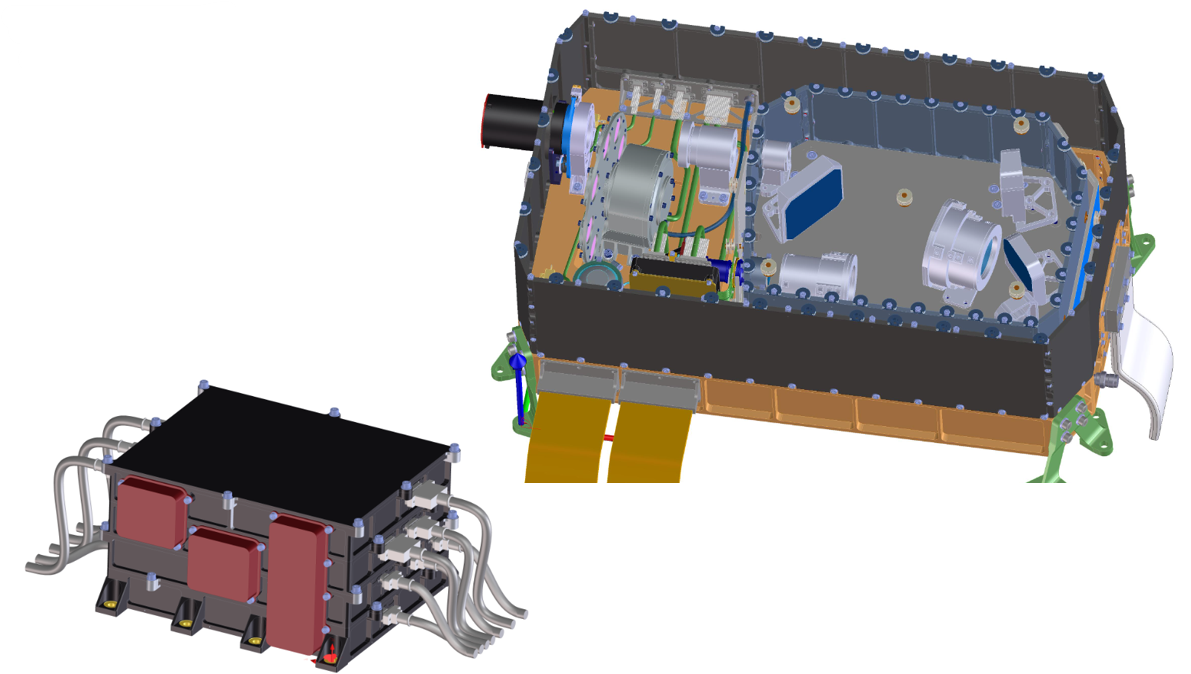
Séverine Robert, Justin Erwin, Eddy Neefs, Roderick De Cock, Ann Carine Vandaele, Sophie Berkenbosch, Lars Jacobs, Nuno Pereira, Emile Ducreux, João Dias, Pedro Machado, Paul Tackley, Martin Ferus, Michiel Min, Luisa M. Lara, Jörn Helbert, Océane Barraud, Emmanuel Marcq, and Giulia Alemanno and the more members of the BIRA-IASB VenSpec-H team

VenSpec-H is part of the VenSpec suite [1], also including an IR mapper and a UV spectrometer [2]. The suite science objectives are to search for temporal variations in surface temperatures and tropospheric concentrations of volcanically emitted gases, indicative of volcanic eruptions; and to study surface-atmosphere interactions. Maintenance of the clouds requires a constant input of H2O and SO2. A large eruption would locally alter the composition by increasing abundances of H2O, SO2, and CO and perhaps decreasing the D/H ratio. Observations of changes in lower atmospheric SO2, CO, and H2O vapour levels, cloud level H2SO4 droplet concentration, and mesospheric SO2, are therefore required to link specific volcanic events with past and ongoing observations of the variable and dynamic mesosphere, to understand both the importance of volatiles in volcanic activity on Venus and their effect on cloud maintenance and dynamics. VenSpec-H’s main scientific objectives are (1) to better constrain the composition of the atmosphere both below and above the clouds to relate changes in the composition to changes on the surface or geological processes such as volcanism; (2) to investigate short and long-term trends in the composition to better grasp the climate evolution on Venus [3].

VenSpec-H is designed to measure H2O, HDO, CO, OCS, and SO2 on both the night and day side to contribute to this investigation. VenSpec-H is a nadir-pointing, high-resolution (R~8000) infrared spectrometer that will perform observations in different spectral windows between 1 and 2.5 µm. Spectra in these bands will be recorded sequentially with the help of a filter wheel and will allow the sounding of different layers in the Venusian atmosphere: close to the surface (1.17 µm), 15-30 km (1.7 µm), 30-40 km (2.4 µm) and above the clouds (1.38 & 2.4 µm) [4]. Two additional polarization filters will be used during dayside observations to better characterize the clouds’ properties and mitigate the impact of polarization. A 3D drawing of the instrument and its electronic box is shown in Fig. 1.

Figure 1: 3D drawings of the electronic box (left) and the optical bench (right), from Neefs et al., 2025 [4].

Significant progress has been made recently on the technical side. The optical components (FFCP and grating) passed their TRL evaluation campaigns by proving performance under thermovacuum conditions. The filter wheel mechanism succeeded by completing a lifetime test (>1M movements) under thermovacuum tests, in addition to shock and vibration testing. The B1 breadboard was manufactured, which contained warm and cold baseplates with feet and flexures and aluminum boxes. Mass dummies for other components (filter wheel, detector, turn window unit, and optical components) were used to perform and shock and vibration test. Some of the engineering models of the Integrated detector and cooler assembly (IDCA) were delivered. Prototype electronics were built to control and readout the IDCA and performance tests were made. The development of critical elements are described in [5]. Mechanical design continues, as updates to all subsystems need to be integrated to ensure compatibility.

The expected instrument performance and the ability to meet the science requirements are continuously investigated, for instance, by revisiting previous datasets [6] or by performing modelling exercises [7]. The planning of calibrations and operations is also ongoing work.


Building a new instrument is a challenge that requires an incredible team and support. There are so many aspects to it and nothing can be left to chance. Luckily, VenSpec-H is in good hands. In this presentation we will highlight the most important achievements of the past year.


References

[1] J. Helbert et al., “The VenSpec suite on the ESA EnVision mission to Venus”, Proc. SPIE 11128, Infrared Remote Sensing and Instrumentation XXVII, 1112804 (2019).

[2] E. Marcq et al., “Instrumental requirements for the study of Venus’ cloud top using the UV imaging spectrometer VeSUV”, Advances in Space Research, 68 (2021) 275-291.

[3] S. Robert et al., “Scientific objectives and instrumental requirements of the infrared spectrometer VenSpec-H onboard EnVision”, Journal of Applied Remote Sensing, 19 (2025) 014525

[4] E. Neefs et al., “VenSpec-H spectrometer on the ESA EnVision mission: Design, modeling, analysis”, Acta Astronautica, 226 (2025) 178-201.

[5] R. De Cock et al. “Design of the VenSpec-H instrument on ESA’s EnVision mission: development of critical elements, highlighting the wavefront corrector and grating”, Journal of Applied Remote Sensing, 19 (2025) 014523.

[6] J.T. Erwin et al., “Venus nightside radiances data analysis and model comparison in view of upcoming Venus missions”, EPSC-DPS, 2025

[7] J. Dias et al., “Volcanic gas plumes’ effect on the spectrum of Venus”; Icarus, 438 (2025) 116589.


Acknowledgements

This work has been performed with the support of the Belgian Science Policy Office (BELSPO) contract 4000144206, with the financial and contractual coordination by the ESA Prodex Office. EM acknowledges support from CNES and ESA for all EnVision-related activities.

How to cite: Robert, S., Erwin, J., Neefs, E., De Cock, R., Vandaele, A. C., Berkenbosch, S., Jacobs, L., Pereira, N., Ducreux, E., Dias, J., Machado, P., Tackley, P., Ferus, M., Min, M., Lara, L. M., Helbert, J., Barraud, O., Marcq, E., and Alemanno, G. and the more members of the BIRA-IASB VenSpec-H team: VenSpec-H spectrometer on the ESA EnVision mission: Instrument’s status, EPSC-DPS Joint Meeting 2025, Helsinki, Finland, 7–13 Sep 2025, EPSC-DPS2025-1652, https://doi.org/10.5194/epsc-dps2025-1652, 2025.

F31
|
EPSC-DPS2025-477
|
On-site presentation
Ricardo Hueso, Shohei Aoki, Giulia Alemanno, Severine Robert, Emmanuel Marcq, Océane Barraud, Solmaz Adeli, Rommy Aliste, Gabriele Arnold, Pedro Machado, Arnaud Mahieux, Itziar Garate-Lopez, Cedric Gillmann, Kandis Lea Jessup, Yeon Joo Lee, Javier Peralta, Arianna Piccialli, Hideo Sagawa, Thomas Widemann, and Veronika Strnadova

EnVision is an ESA mission to Venus that will orbit Venus in 2034 and aims to provide a holistic view of Earth’s sister planet from its inner core to its upper atmosphere [1]. The mission is developed in partnership with NASA and has science goals that address the study of the planet’s geologic history, its current geologic and atmospheric active processes and the evolution of its interior, surface and climate as a coupled system. To address these goals, EnVision will be placed in a low altitude polar orbit that will allow the mission instruments to acquire data of the planet, its surface and atmosphere at exquisite spatial and spectral resolution. EnVision’s instruments include a suite of three spectrometers grouped together in the VenSpec suite [2]: VenSpec-U (190-380 nm) [3], VenSpec-H (1.16-2.48 µm) [4] and VenSpec-M (0.79-1.51 µm) [2]. The VenSpec suite will map trace gases and atmospheric chemistry, search for volcanic gas plumes above and below the clouds, map surface emissivity and composition and will investigate Venus atmosphere and surface emissivity and composition.

The Venus Ground-Based Observations Working Group has been established in support of EnVision and its VenSpec instrument with the objective of enhancing the scientific return of the mission through coordinated Earth-based observations. The goals of the Working Group are: (1) To provide spectroscopic data that will be useful to test observation strategies and retrieval pipelines with the VenSpec instrument, across the whole range of available wavelengths that can be used to characterize Venus atmosphere and it surface. (2) To coordinate the monitoring of Venus atmosphere, its dynamics and its variability providing knowledge about the evolution of atmospheric features and the global characterization of the atmosphere in the decade since Akatsuki to EnVision. (3) To support and prepare for Venus observations during Envision’s science phase in 2035 and onwards, providing context to the observations that will be acquired by Envision and its VenSpec instrument. 

Examples of current and planned Venus observations and monitoring include observing campaigns with ground-based telescopes such as the Canadian France Hawaiian Telescope (CFHT), NASA’s IRTF or ALMA among others. Members of the WG also run frequent observing campaigns at Calar Alto Observatory and plans for long-term monitoring of Venus with Earth-Orbit CubeSats [5]; and contributions from amateur astronomers providing spatially resolved observations of Venus clouds and surface.

We here explain the structure of the working group, the open channels for information sharing, and the potential time lines for observing campaigns. This presentation is an open call to the community to provide Venus observational data and to join the Working Group.

References: [1] Widemann, T., Straume Lidner, A. G., Schulte, M., and Pacros, A.: Science objective and status of the EnVision Mission to Venus, EGU General Assembly 2025, EGU25-21105, https://doi.org/10.5194/egusphere-egu25-21105, 2025. [2] Alemmanno et al. Synergistic Observations of Venus’ Surface and Atmosphere: The Role of VenSpec on the ESA EnVision Mission (2025, this meeting). [3] Marcq et al. (2025, this meeting). [4] Robert et al. (2025, this meeting). [5] Lee, Y. J.: Long-term Monitoring Plan of Venus using Earth-orbiting CubeSats.Europlanet Science Congress 2024, id. EPSC2024-158, 2024

How to cite: Hueso, R., Aoki, S., Alemanno, G., Robert, S., Marcq, E., Barraud, O., Adeli, S., Aliste, R., Arnold, G., Machado, P., Mahieux, A., Garate-Lopez, I., Gillmann, C., Jessup, K. L., Lee, Y. J., Peralta, J., Piccialli, A., Sagawa, H., Widemann, T., and Strnadova, V.: Goals and Structure of Envision’s VenSpec Ground-Based Observations Working Group, EPSC-DPS Joint Meeting 2025, Helsinki, Finland, 7–13 Sep 2025, EPSC-DPS2025-477, https://doi.org/10.5194/epsc-dps2025-477, 2025.

Surface
F32
|
EPSC-DPS2025-1412
|
ECP
|
On-site presentation
Comparative study of the retrievals from Venera 11, 13, and 14 spectrophotometric data.
(withdrawn)
Shubham Kulkarni, Patrick Irwin, Colin Wilson, and Nikolay Ignatiev
F33
|
EPSC-DPS2025-1653
|
On-site presentation
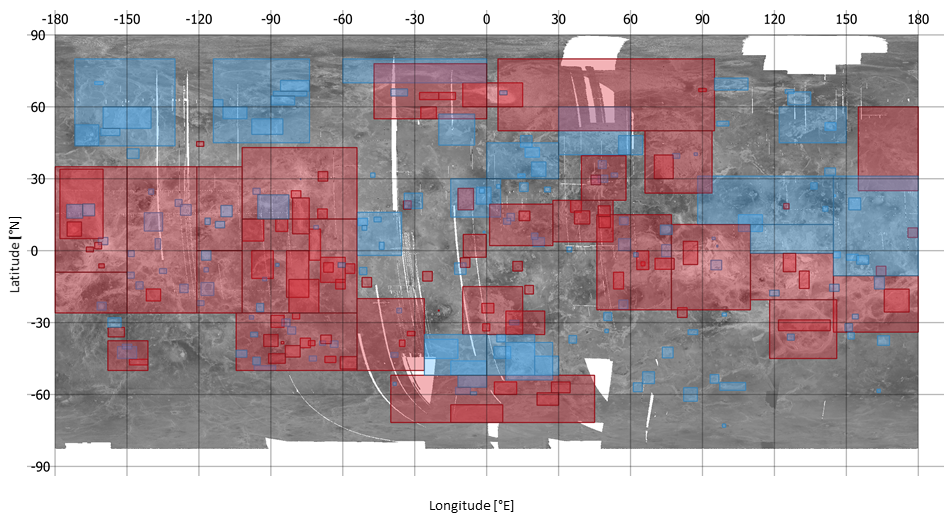
Océane Barraud, Giulia Alemanno, Aurélie Van den Neucker, Julia Maia, Séverine Robert, Emmanuel Marcq, and Jörn Helbert and the VenSpec ROI WG team

The VenSpec consortium [1] aboard the ESA EnVision mission is composed of three channels VenSpec-M (push-broom NIR multispectral imager) [2], VenSpec-U (UV spectral imager) [3], and VenSpec-H (a high-resolution IR spectrometer) [4] designed to observe the surface and atmosphere of Venus. VenSpec will perform a comprehensive search for past and current volcanic activities by targeting atmospheric, thermal, and compositional signatures, as well as a global map of surface composition. In order to achieve the science objectives of the mission, the VenSpec science team is structured into interdisciplinary Working Groups (WGs) that leverage synergies across the three instrument channels and foster collaboration among researchers and institutions. Among those, the Regions of Interest (RoI) WG is defining a list of targets on the surface of Venus of major interest to meet the VenSpec Suite’s science objectives.

The VenSpec Regions of Interest WG is working closely with the VenSAR (Venus Synthetic Aperture Radar), and SRS (Subsurface Radar Sounder) instrument teams alongside the Envision Science Working Team and its appointed Regions of Interest (ROI) WG, an ESA-coordinated inter-instrument working group [5]. The combined target list and prioritization assessment of all instruments’ teams will serve as base for EnVision's orbit definition during the mission's science phase. This effort aims to define shared Venus regions of interest that align with the operational constraints of VenSAR while optimizing the scientific priorities of the mission. For example, in the case of VenSpec-M focused on mapping at least 60% of Venus’s surface, its scientific return will be significantly enhanced through coordinated observations with the other instruments, particularly by acquiring high-resolution digital elevation models (DEMs) over high priority targets of VenSpec.

The VenSpec RoI WG unites a wide range of international researchers with a wide range of expertise working together to provide a comprehensive and diverse target list. Although the targets lie on the surface, all three VenSpec channels are actively represented within the WG, contributing collaboratively to optimize scientific outcomes. Over the past six months, the group has convened more than a dozen times to refine and consolidate the target selection process. As a result, the current VenSpec target list comprises over 320 locations, encompassing a broad diversity of geological features—from tectono-magmatic features to aeolian landforms including impact and volcanic features—distributed across a wide range of latitudes and longitudes (Figure 1). The target list has been developed based on a comprehensive set of parameters, including target prioritization, spatial extent, relevance to key scientific objectives, and whether there are publications discussing these features. . To ensure transparency in the prioritization process, the VenSpec Regions of Interest Working Group (ROI WG) has implemented a voting system, categorizing targets into two main groups: high-priority “must-have” targets and secondary targets. Among the high-priority must-have targets of VenSpec instrument are

  • Landing Sites of the Venera, Vega and DAVINCI missions; that will contribute to refine the calibration of the VenSpec-M channel.
  • Venusian Hotspots; identified by the Visible and Infrared Thermal Imaging Spectrometer (VIRTIS) aboard ESA’s Venus Express mission, have been interpreted as sites of active or recently active surface processes [6]. Volcanic features that show potential surface changes between different Magellan cycles have also been given high-priority due to likely ongoing activity [e.g., 7].  These regions are of high scientific interest for all three VenSpec channels. VenSpec-M will investigate thermal and compositional anomalies at these locations, contributing to our understanding of crustal evolution and the volcanic resurfacing history. In parallel, VenSpec-M and VenSpec-H will track volcanic plumes from their source near the surface through the middle atmosphere, while VenSpec-U will extend these observations to the cloud tops. Together, these coordinated measurements will provide a comprehensive view of gas exchanges and atmospheric dynamics linked to volcanic activity.
  • Key regions representing diverse surface features relevant to Venus’s geological evolution; for example, Ovda Regio has been chosen to represent crustal plateaus, Maxwell Montes as a characteristic mountain belt and Aramaiti as an example of Type 1 Corona located in a volcanic plain. Some surface features within these regions are direct or indirect indicators of Venus's internal geodynamic processes, such as impact craters (e.g., Sabin Crater) and rift-related structures. This selection ensures comprehensive coverage of the planet’s diverse surface features relevant to Venus’s geodynamic evolution.

Figure: Map of the VenSpec Region of Interest colored by priority: high-priority “must-have” targets in red and secondary targets in blue.

The work of the VenSpec Regions of Interest Working Group alongside the EnVision ROI WG represents a critical step in optimizing the scientific return of the EnVision mission. Through interdisciplinary collaboration, strategic coordination with other instrument teams, and the careful prioritization of surface targets, the WG is ensuring that VenSpec observations will directly address key questions about Venus’s geological and atmospheric evolution. As the mission advances, this evolving target list will remain central to maximizing the value of synergistic, multi-instrument investigations of our enigmatic sister planet.

References: [1] Alemanno et al., (2025a, this meeting) [2] Alemanno et al., (2025b, this meeting). [3] Marcq et al. (2025, this meeting). [4] Robert et al. (2025, this meeting). [5] Straume-Linder et al. (2025, this meeting). [6] Mueller et al. (2008), JGR DOI: doi.org/10.1029/2008JE003118. [7] Herrick and Hensley (2023) Science DOI: doi.org/10.1126/science.abm7735.

How to cite: Barraud, O., Alemanno, G., Van den Neucker, A., Maia, J., Robert, S., Marcq, E., and Helbert, J. and the VenSpec ROI WG team: Defining Surface Targets for the EnVision’s VenSpec Suite: Collaborative Strategies of the Regions of Interest Working Group, EPSC-DPS Joint Meeting 2025, Helsinki, Finland, 7–13 Sep 2025, EPSC-DPS2025-1653, https://doi.org/10.5194/epsc-dps2025-1653, 2025.

F34
|
EPSC-DPS2025-1354
|
ECP
|
On-site presentation
Mirco Bussmann, Christian Reinhardt, Thomas Meier, Joachim Stadel, Cedric Gillmann, Paul Tackley, and Ravit Helled

Among the planets in the solar system, Venus is the most similar to Earth in terms of mass, radius, bulk density, and semi-major axis. Despite these similarities, Venus exhibits very different surface and atmospheric conditions, including surface pressures over 90 times higher, average temperatures of about 740 K, a dense carbon dioxide atmosphere, and clouds composed of sulfuric acid. Furthermore, Venus rotates slowly in a retrograde direction and has no moon. The origin of these differences remains unknown. One possibility is that Venus and Earth shared similar primordial conditions and later diverged during their evolution; another is that they were different from the start. While Earth likely suffered a giant impact that led to the formation of the Moon, it remains uncertain whether Venus experienced such impacts and whether they influenced its current-state characteristics. 

Giant impacts are thought to be common in the young solar system and, if occurred on Venus, could have affected its thermal evolution, rotational characteristics and presence or lack of moons. In this study, we explore a range of possible giant impacts on Venus using Smoothed Particle Hydrodynamics (SPH) simulations [1, 2, 3, 4]. Assuming a differentiated Venus and impactor composed of a 30% iron core and a 70% forsterite mantle. We simulate collisions with impactors of 0.01 - 0.1 Earth masses, at velocities of 10 - 15 km/s, across varying impact angles and pre-impact rotation states. We show how different impact conditions affect Venus’ post-impact rotation period, thermal profile, and the formation of a debris disk. 

We find that a wide range of giant impact scenarios are compatible with Venus’ present-day rotation period and lack of a moon. This implies that it is possible that Venus, like the other terrestrial planets, suffered from a giant impact shortly after its formation which influenced Venus’ subsequent thermal evolution. In a subsequent study (Gillmann et al., in prep.) we follow the thermal evolution of post-impact Venus and investigate which impact conditions are consistent with present-day Venus.


References

[1] Potter et al. 2017, doi.org/10.1186/s40668-017-0021-1

[2] Reinhardt & Stadel 2017,  doi.org/10.1093/mnras/stx322

[3] Reinhardt et al. 2020, doi.org/10.1093/mnras/stz3271

[4] Meier et al. 2021, doi.org/10.1093/mnras/stab1441

How to cite: Bussmann, M., Reinhardt, C., Meier, T., Stadel, J., Gillmann, C., Tackley, P., and Helled, R.: Did Venus suffer a giant impact?, EPSC-DPS Joint Meeting 2025, Helsinki, Finland, 7–13 Sep 2025, EPSC-DPS2025-1354, https://doi.org/10.5194/epsc-dps2025-1354, 2025.

F35
|
EPSC-DPS2025-1324
|
ECP
|
On-site presentation
Lauren Jennings, Giulia Alemanno, Alessandro Maturilli, Ana-Catalina Plesa, Solmaz Adeli, Christian Renggli, and Stephan Klemme

The atmosphere of Venus is predominately composed of CO2, with minor amounts of N2, H2O and SO2 (e.g. Fegley 2014). This combination of gases, in conjunction with a high surface temperature (~460 °C), means that the weathering processes on Venus are very distinct from Earth. Information about the surface composition of Venus have been obtained thanks to the Venera and Vega missions (e.g. Surkov et al. 1986) which indicate that Venus is comprised of basaltic rocks very similar to terrestrial compositions (e.g. Treiman 2007). As such, numerous weathering experiments and modelling attempts of basalts under Venusian or near-Venusian atmospheric conditions have been conducted (see Filiberto and McCanta 2024) with multiple studies showing that calcite (CaCO3) and anhydrite (CaSO4) can form on the surface of basalts as a result of gas-rock interactions (e.g. Semprich et al. 2020, Reid et al. 2024; Renggli et al. 2020). The abundance of these minerals is dependent on time, thereby providing constraints on the timing of volcanic activity on Venus. Accurately identifying how recently Venus was volcanically active is important to understanding not only how Venus has evolved, but to put our own planet, the Earth, and Earth-like exoplanets in a global planetary context (e.g. Widemann et al. 2023). Analysing these weathering features and compositional differences on Venus will be achievable with the EnVision (ESA) and VERITAS (NASA) orbiters, which are set to launch in the 2030’s (Ghail et al. 2012; Smrekar et al. 2022). Both of these orbiters will be equipped with a suite of spectroscopic instruments (including VenSpec-M and the Venus Emissivity Mapper, respectively) that will be capable of analysing the surface within the near-infrared (NIR) spectral range between 0.86 and 1.18 μm (e.g. Smrekar et al. 2022). As such, the aim of this work is to understand how the proportions of calcite and anhydrite will affect the emissivity spectra of basalt under near-Venus surface conditions. This will be achieved through a series of mixtures that simulate the varying degrees of weathering observable on Venus by changing the total surface area coverage of each component. The Planetary Spectroscopy Laboratory (PSL, DLR in Berlin) is uniquely equipped with an emissivity chamber that can analyse emissivity spectra under Venus temperatures (~460 °C) and near-vacuum conditions (~0.7 mbar), thus allowing analogue samples to be studied under similar conditions that will be encountered by the EnVision and VERITAS orbiters.

Figure (1): sample mixtures before (left samples) and after (right sample) mixing.

Natural samples of tholeiitic basalt, anhydrite and calcite were crushed, manually or through the use of a Fritsch Disk Mill Pulverisette 13, and separated with a Retsch Vibratory Sieve Shaker AS 200 digit to a grain size of 300 – 350 μm at the Universität Münster; the bulk composition and purity of the natural samples was analysed with a scanning electron microscope (SEM) and energy-dispersive X-ray spectroscopy (EDS). Three pure end member mixtures were prepared for each natural sample along with two 1:1 mixtures of basalt with either calcite or anhydrite, and one mixture of 2:1:1 basalt, calcite and anhydrite (Figure 1); all mixtures were prepared to weigh ~10 g and dried for ~24 hours at 110 °C to remove excess H2O. Emissivity measurements were completed at PSL under near-vacuum conditions and at temperatures ranging ~400 – 480°C; samples were heated in custom-made ceramic sample holders using an induction system and the temperature was measured at the sample surface. Hemispherical reflectance measurements in the NIR were also collected at PSL under vacuum in a modified gold-coated hemispherical unit. These reflectance measurements were completed on the mixtures prior to and following heating as they are used in the calibration of the emissivity spectra.

Preliminary analysis of the measured spectra shows that the pure basalt emissivity measurements are distinguishable from mixtures of basalt with calcite, as the latter spectrum displays a downward slope; this suggests that identifying calcite on Venus using emissivity data is possible and could be used to imply if the source area has new or old lava flows. The emissivity spectra of mixtures of basalt with anhydrite, however, were less distinguishable from the pure basalt spectrum, suggesting it will be more difficult to identify the presence of anhydrite if it is not of significant quantity (i.e. more than 50% surface coverage).  

Mineral spectral differences can be observed using emissivity measurements under Venus conditions. Future plans involve the acquisition of measurements on a larger range of suspected gas-rock reaction minerals, proportions of reaction minerals to surface rock, and with different surface rock compositions, in order to aide analysis for when the EnVision and VERITAS orbiters arrive at Venus.

References:

Fegley, B., JR., (2014) Treatise on Geochemistry (Second Edition, S. 127–148), Elsevier.

Filiberto, J. & McCanta, M. C., (2024) American Mineralogist, 109(5), 805–813.

Ghail, R. C., et al., (2012) Experimental Astronomy, 33(2-3), 337–363.

Reid, R. B., et al., (2024) Journal of Geophysical Research: Planets, 129(10).

Renggli, C. J., et al., (2019) Journal of Geophysical Research: Planets, 124(10), 2563–2582.

Semprich, J., Filiberto, J., & Treiman, A. H., (2020) Icarus, 346, 113779.

Smrekar, S., et al., (2022) In 2022 IEEE Aerospace Conference (AERO) (S. 1–20).

Surkov, Y. A., et al., (1986) Lunar and Planetary Science Conference Proceedings, 91, 215-E218.

Treiman, A. H., (2007) in Geophysical Monograph Series. Exploring Venus as a Terrestrial Planet (Bd. 176, S. 7–22). American Geophysical Union.

Widemann, T., et al., (2023). Space Science Reviews, 219(7), 56.

How to cite: Jennings, L., Alemanno, G., Maturilli, A., Plesa, A.-C., Adeli, S., Renggli, C., and Klemme, S.: Emissivity Measurements of Basalt, Calcite and Anhydrite mixtures to simulate weathered surface rocks on Venus, EPSC-DPS Joint Meeting 2025, Helsinki, Finland, 7–13 Sep 2025, EPSC-DPS2025-1324, https://doi.org/10.5194/epsc-dps2025-1324, 2025.

F36
|
EPSC-DPS2025-1787
|
On-site presentation
Océane Barraud, Alessandro Maturilli, Giulia Alemanno, Séverine Robert, Emmanuel Marcq, and Jörn Helbert and the VenSpec Laboratory Investigation WG team

The VenSpec Suite, aboard ESA’s EnVision mission to Venus, is coordinated by a joint science team that ensures seamless integration and cooperation among the instruments [1]. Rather than organizing efforts by instrument channel, the science team is structured into interdisciplinary Working Groups (WGs) that leverage synergies across all channels and foster collaborations among researchers and institutions. Among them, the Laboratory Investigations Working Group (WG) plays a central role in supporting the VenSpec Suite’s science objectives through laboratory experiments that simulate Venus’ extreme surface and atmospheric conditions. The group unites a wide range of international laboratories and researchers. Their common goal is to provide essential reference data for instrument calibration, radiative transfer modelling validation, and interpretation of surface and atmospheric observations from the three VenSpec instruments: VenSpec-H (high-resolution IR spectrometer) [2], VenSpec-U (UV spectral imager) [3], and VenSpec-M (push-broom NIR multispectral imager) [1],

The Laboratory Investigations WG addresses a broad array of key scientific themes:

  • Venus surface composition, formation and evolution: Ongoing studies include laboratory spectral investigations of analog materials spanning mafic to felsic compositions. Emissivity measurements at Venus surface temperatures are carried out at the Planetary Spectroscopy Laboratories (PSL) facility at the German Aerospace Center (DLR), providing high-temperature NIR spectra critical for interpreting VenSpec-M data. Current experiments include investigation of the influence of mineral mixtures (as both different particulated rocks or systematic mixing), grain size, and surface weathering, supporting the development of spectral libraries directly relevant to the VenSpec-M channel [e.g., 4].
  • Sample characterization: The WG focuses on analyzing both natural rock and mineral samples. Comparisons between isolated mineral spectra and those embedded in rock matrices—highlighted by the PTAL database and Earth analogue studies—enhance our understanding of surface spectral variability and support the construction of relevant reference datasets.
  • Surface temperature studies: Experimental campaigns aim to quantify the temperature dependence of emissivity, reflectance, and spectral contrast data. These measurements are essential for interpreting surface spectral signals in Venus’ high-temperature environment and for applying atmospheric corrections to remote sensing data.
  • Surface/Atmosphere interactions: Collaborative efforts, including those with the Hot Environments Lab (HEL) at NASA Goddard, investigate how Venus’ atmosphere may chemically or physically alter surface materials and affect spectral signatures. These studies are vital for disentangling surface and atmospheric contributions in observational data.

In the atmospheric domain, the WG contributes to:

  • Atmospheric investigations and aerosol Studies: Several laboratories are equipped with innovative techniques - including Raman spectroscopy and micro-chamber setups - to simulate Venus conditions and characterize aerosol properties [e.g. 5]. These studies aim to constrain the scattering and absorption behavior of aerosol species and their role in radiative transfer processes, and monitor the chemical composition and heterogeneous reaction on the surface of the aerosol.
  • Gaseous (Photo) Chemistry: The WG will explore photochemical reactions governing Venus’ dense CO₂-rich atmosphere. These experiments feed directly into models of atmospheric composition, structure, and evolution, and inform the interpretation of trace gas observations from VenSpec-U and VenSpec-H.
  • CO₂ broadening and continuum spectroscopy: Dedicated laboratory efforts will address pressure- and temperature-dependent absorption behavior of CO₂, the dominant atmospheric constituent. These measurements are essential for atmospheric modeling and retrievals from IR and UV spectral data.
  • Atmospheric Chemistry at High Temperature: This WG explores the VUV-absorption cross-section of several atmospheric species such as CO2, C2H2, NH3, HCN, CH3SH at relevant Venus atmospheric temperature [e.g., 6]. These measurements are essential for the interpretation of observations from VenSpec-U.

The Laboratory Investigations WG fosters the sharing of laboratory capabilities and facilities, promoting transparency and coordination among its members. The group will aim to compile a shared inventory of ongoing investigations, available samples, and experimental methodologies. This effort will help avoid duplication, identify knowledge gaps, and guide the prioritization of future work. Synergies with Earth-analogue field studies - such as NASA EMIT remote sensing observations of Venus-like regions - are also being investigated. Comparisons between remote and laboratory-acquired spectra aim to bridge differences in resolution and context, improving the relevance of terrestrial analogues for Venus science.

The WG maintains strong links with the Atmospheric Modeling and Radiative Transfer Working Groups. Key areas of joint focus include the correction of surface spectra for atmospheric effects and modeling of surface-emitted radiation as it propagates through the dense Venusian atmosphere. Overall, the activities of the Laboratory Investigations WG are developed in close synergy with the other WGs within the VenSpec science team [e.g., 7, 8]. This ensures optimal cross-investigation strategies and integrated science planning, helping to maximize the scientific return of the EnVision mission.

In summary, the Laboratory Investigations WG provides foundational, cross-disciplinary support to the VenSpec Suite through coordinated laboratory campaigns, targeted spectral measurements, and strong integration with the modeling and observational communities. Its work is essential to interpreting future EnVision data and unlocking new insights into Venus’ geology, atmospheric chemistry, and evolutionary history.

References: [1] Alemanno et al. (2025, this meeting); [2] Robert et al. (2025, this meeting); [3] Marcq et al. (2025, this meeting); [4] Alemanno et al. (2024) EPSC2024-303, https://doi.org/10.5194/epsc2024-303, 2024. [5] Ubukata et al. (ACS Earth and Space Chemistry, 2025, under review). [6] Venot et al. (2018) Astronomy & Astrophysics, 609, A34. [7] Barraud et al. (2025, this meeting); [8] Hueso et al. (2025, this meeting)

How to cite: Barraud, O., Maturilli, A., Alemanno, G., Robert, S., Marcq, E., and Helbert, J. and the VenSpec Laboratory Investigation WG team: From Core to Clouds: Laboratory Synergy within the EnVision’s VenSpec Science Team, EPSC-DPS Joint Meeting 2025, Helsinki, Finland, 7–13 Sep 2025, EPSC-DPS2025-1787, https://doi.org/10.5194/epsc-dps2025-1787, 2025.

F37
|
EPSC-DPS2025-536
|
ECP
|
On-site presentation
Nicholas Montiel and Barbara De Toffoli

Introduction:

Coronae are ovoid tectonic and magmatic features that are unique to Venus. Because Venus is likely to be geologically active in the present day, yet lacks an apparent system of plate tectonics, understanding the relationship between coronae, volcanism, and tectonism is important to characterize Venus’s geology and geophysical state over its history. At long spherical harmonic wavelengths volcanoes and coronae often associated [1] but at regional scales there is a general anti-correlation related to spatial separation of volcanoes and coronae. A contextual view of this pattern is needed to understand the structures and processes underlying coronae formation and evolution.

Taking advantage of recently produced global datasets for Venusian volcanoes [2] and coronae [3], we investigate the population density of volcanoes in and around coronae and for different geological units. The stand-out result is the lack of volcanoes in the region surrounding coronae relative to the population within coronae and other geological units, especially those of the plains which dominate the planet’s surface (Fig. 1). A possible interpretation of this pattern of volcanism is that the development of coronae erases preexisting geological features in their surroundings. 

Figure 1: Mean volcano densities, calculated for different geological units on Venus [4]. Rift zones exhibit the least volcanoes per unit area. It is likely that ongoing tectonic activity at rift zones erodes any volcanic edifice as fast or faster than they are formed. This contrasts with the plains units where any volcanism is likely preserved due to lesser impact of mechanical erosion or tectonic activity [5, 6]. Coronae and the circum-coronal regions (50% means the ring around the corona up to 1.5 times its radius from the center, 100% means the same but up to 2 times its radius) lie between these extremes, with more volcanoes in the corona than in its vicinity.


Methods:

If corona activity is erasing evidence of ongoing volcanism, then putatively active coronae (as defined by local gravity anomalies) should correlate with decreased volcano population densities in their vicinity compared to older, extinct coronae. To test this, we use Boolean statistical methods [7] to develop correlation indices between corona characteristics, geological context, and volcano populations (Fig. 2). 


Figure 2: Correlation indices between corona characteristics (rows) and volcano populations (columns), showing how the likelihood of a corona to have an area “clean” of volcanoes relative to its interior varies with corona morphology and geological context. Topographic Groups (TG) describe topographic profiles across coronae [8] and volcano population density is recorded in units of volcanoes per 100 km2. “Ring (100%)” refers to the thickness of the ring around the corona being 100% of the radius of the corona. Coronae in plains units are the most likely to exhibit a “clean” region in around them, while those in rifts and in deformed belts the least likely. If the morphology of a corona is domal or plateau-like (TGs 1, 2, 3,) or lacks a trough at its boundary than that corona is less likely to exhibit a clean cicrum-coronal region. These morphologies are strong correlated with being in a rift setting, suggesting a link between rifts, coronae, and patterns of volcanism.

We also use terrestrial eruption rates to predict patterns of volcanism for different geological settings on Venus. By comparing predicted volcano populations to observed populations, as well as populations of volcanoes in and around coronae to the geological unit the corona is embedded in, the degree of volcanic activity can be characterized across Venus’ surface. If volcanic populations in the clean regions around coronae are reduced proportionally to the background rate of volcanism for that specific geological unit across all of Venus, than the suppression of volcanism is likely a result of coronae destroying evidence of volcanism in their vicinity. If not, then other factors, such as the thermal state and structure of the lithosphere, control the interactions between volcano populations and coronae. To further test this, we also look for evidence of deformed and embayed volcanoes in the vicinity of coronae in Magellan imagery.


Results:

We present the results of these analyses to constrain the degree of volcanic and tectonic activity for different geological settings, inside coronae, and in the coronal regions on Venus. Correlations between volcano populations, corona morphologies, and rift zones suggest that extensional, geodynamic processes may be interfering with the expression of volcanism around coronae. Outside of these zones, however, coronae generally lack evidence of volcanism in their vicinity, likely as a result of erosion or burial by tectonic and volcanic activity originating from the corona itself or by a geodynamic process that suppresses volcanism. Future work characterizing the geophysical properties of coronae (especially gravitational anomalies) and higher resolution maps will be able to definitely distinguish between these possibilities.


References:

[1] Tucker W. S. & Dombard A. J. (2024). JGR: Planets, 129(5), e2023JE008219.

[2] Hahn R. M. and Byrne P. K. (2023) JGR: Planets, 128.4, e2023JE007753. 

[3] Gülcher A. J. P., et al. (2025). LPI Contributions, 1944.

[4] Ivanov M. A. & Head J. W. (2011). Planetary and Space Science, 59(13), 1559-1600.

[5] Carter L. M. et al. (2023).Space Science Reviews, 219(8), 85.

[6] Herrick R. R. et al. (2023). Space Science Reviews, 219(4), 29.

[7] De Toffoli B. et al. (2024). Earth and Space Science, 11, e2024EA003854. 

[8] Smrekar S. E., & Stofan E. R. (1997). Science, 277(5330), 1289-1294.

How to cite: Montiel, N. and De Toffoli, B.: Investigating the Relative Absence of Volcanism Around Coronae, EPSC-DPS Joint Meeting 2025, Helsinki, Finland, 7–13 Sep 2025, EPSC-DPS2025-536, https://doi.org/10.5194/epsc-dps2025-536, 2025.

F38
|
EPSC-DPS2025-506
|
ECP
|
On-site presentation
Davide Sulcanese, Giuseppe Mitri, Camilla Cioria, Edoardo Santero Mormile, Mafalda Ianiri, Suzanne E. Smrekar, and Scott Hensley

The tectonic and volcanic evolution of Venus remains a fundamental open question in planetary science. The absence of a globally recognized system of mobile lithospheric plates, as seen on Earth, suggests that alternative geodynamic regimes must be considered to explain the planet’s surface features [1, 2, 3, 4, 5]. In this context, localized deformation and regional-scale tectonic activity offer useful frameworks for investigating how Venus may accommodate internal heat and lithospheric stresses.

In this study, we present a geological and geomorphological analysis of two adjacent regions in Vinmara Planitia, based on Magellan radar and altimetric datasets [6]. These areas exhibit contrasting structural and topographic patterns, including arcuate ridge belts, extensional fault systems, organized and diffuse volcanism, and broad elevation gradients. Detailed mapping and morphometric analyses reveal features suggestive of significant lithospheric deformation, including broad elevation variations and fault systems that suggest lithospheric deformation, which are reminiscent of processes typically associated with convergent and extensional tectonic settings on Earth.

Additionally, we integrate gravity and radio thermal emissivity data from the Magellan mission to investigate subsurface structure and potential thermal variations. The gravity anomalies suggest density heterogeneities beneath key tectonic structures, while emissivity trends may indicate compositional differences or varying degrees of surface alteration. These observations, although limited by spatial resolution, provide supportive context for the tectonic interpretations derived from surface morphology.

The spatial configuration and inferred relative motion between these regions suggest a dynamic interaction among these areas, potentially driven by a combination of surface deformation and deeper lithospheric or mantle contributions. Rather than invoking a globally coherent tectonic framework, our findings support the idea that Venus may experience localized, possibly transient, episodes of lithospheric mobility. This is consistent with recent models proposing a fragmented or partially mobile lithosphere, where short-lived deformation zones can emerge in response to regional stresses or mantle-driven processes [5, 7].

While further data are necessary to fully characterize the nature and evolution of these structures, our analysis highlights the potential for active or recent deformation in the Venusian lowlands. Future orbital missions with higher resolution topography, gravity, and spectral imaging will be critical for testing the hypothesis of spatially confined lithospheric activity and for refining our understanding of how planets like Venus manage internal heat in the absence of a global pattern of plate tectonics [8, 9].


Acknowledgements:

D.S and G.M. acknowledge support from the Italian Space Agency (Grant No. 2022-15-HH.0).

Bibliography

[1] Solomatov, V. S. & Moresi, L. N. Stagnant lid convection on Venus. Geophys. Res. Planets 101, 4737-4753 (1996).

[2] Lenardic, A. The diversity of tectonic modes and thoughts about transitions between them. Trans. R. Soc. A 376, 20170416 (2018).

[3] Solomatov, V. S. & Moresi, L. N. Three regimes of mantle convection with non-Newtonian viscosity and stagnant lid convection on the terrestrial planets. Res. Lett. 24, 1907-1910 (1997).

[4] Moresi, L. & Solomatov, V. Mantle convection with a brittle lithosphere: Thoughts on the global tectonic styles of the Earth and Venus. J. Int. 133, 669-682 (1998).

[5] Lourenço, D. L., Rozel, A. B., Ballmer, M. D. & Tackley, P. J. Plutonic-squishy lid: A new global tectonic regime generated by intrusive magmatism on Earth-like planets. Geophys. Geosyst. 21, e2019GC008756 (2020).

[6] Ford, J. P. Guide to Magellan Image Interpretation (NASA, 1993).

[7] Byrne, P. K. et al. A globally fragmented and mobile lithosphere on Venus. Natl Acad. Sci. USA 118, e2025919118 (2021).

[8] Smrekar, S. et al. VERITAS (Venus emissivity, radio science, InSAR, topography, and spectroscopy): A discovery mission. IEEE Aerosp. Conf. 1-20 (2022).

[9] EnVision Definition Study Report (2023) ESASCI-DIR-RP-003

How to cite: Sulcanese, D., Mitri, G., Cioria, C., Santero Mormile, E., Ianiri, M., Smrekar, S. E., and Hensley, S.: Localized Lithospheric Deformation in Vinmara Planitia, Venus: Insights from Morphological and Geophysical Observations, EPSC-DPS Joint Meeting 2025, Helsinki, Finland, 7–13 Sep 2025, EPSC-DPS2025-506, https://doi.org/10.5194/epsc-dps2025-506, 2025.

F39
|
EPSC-DPS2025-991
|
On-site presentation
Giulia Alemanno, Ana-Catalina Plesa, Nils Müller, Alessandro Maturilli, Jörn Helbert, Darby Dyar, Till Hagelschuer, Martin Pertenais, Gisbert Peter, Océane Barraud, Séverine Robert, Emmanuel Marcq, Thomas Widemann, and Suzanne E. Smrekar

Introduction: Understanding Venus’ surface composition and volcanic activity is central to addressing key questions about the planet’s evolution. These characteristics are tied to the degree of planetary differentiation Venus has undergone, as well as to post-formation geologic processes. Observations suggest Venus has been volcanically active in the past and is most likely active today. Venus Express revealed thermal anomalies and emissivity variations that suggested differences between fresh and weathered surface basaltic material, pointing to recently active hot spots[1,2,3,4]. Supporting this, gravity, topography, and deformation features observed at these locations are consistent with mantle plume activity beneath the surface[5,6]. Atmospheric sulfur dioxide (SO₂) fluctuations recorded by Pioneer Venus and Venus Express might reflect episodic volcanic outgassing[7,8,9] and accelerate surface alteration. Estimates of lithospheric thickness, used as a proxy for surface heat flow, suggest values comparable to Earth's most volcanically active regions[10]. Reanalysis of Magellan radar data has identified surface changes consistent with active eruptions[11,12].
However, key questions about surface composition and the intensity of recent magmatic processes on Venus remain unanswered. This will soon change, as three missions - NASA’s VERITAS and DAVINCI, and ESA’s EnVision - will investigate Venus with unprecedented detail. All three missions will include instruments targeting the 1 µm spectral windows, where the FeO absorption feature, a key indicator of mafic mineralogy, can be detected[13,14]. VERITAS and EnVision will carry Venus Emissivity Mappers (VEM on VERITAS, VenSpec-M on EnVision)[15,16], while DAVINCI will image the surface in this spectral range during flybys using VISOR and descent using VenDI[17].

The VenSpec-M/VEM Instrument: VenSpec-M/VEM builds on the heritage of VIRTIS on Venus Express. It is a push-broom multispectral imager designed to reveal the planet’s elusive surface characteristics and monitor its volcanic activity in the 1 μm region. The instrument incorporates a sophisticated 14-band filter assembly (ranging from 0.79 μm to 1.51 μm) and uses an InGaAs detector. By targeting specific spectral windows in Venus atmosphere, VenSpec-M/VEM will provide critical insights into surface composition and geological features not available with previous missions. On EnVision, VenSpec-M is part of the VenSpec Suite, working alongside VenSpec-H (high-resolution IR spectrometer)[18] and VenSpec-U (UV spectral imager)[19], together providing a comprehensive view of Venus surface-atmosphere processes.

VenSpec-M/VEM Science Goals: The instrument addresses Venus’ history and evolution through:

  • Rock type mapping. Six narrow surface band filters, ranging from 0.86 to 1.18 µm, covering five windows in the Venus atmosphere, will be used to identify different rock types based on their Fe contents, potentially identifying continent-like rocks. This in turn would have important implications for Venus’ past, as it can suggest the past presence of liquid water on the planet’s surface.
  • Search for active volcanism. The VenSpec-M/VEM instrument will detect active volcanic eruptions by analyzing surface thermal signatures in the five surface bands and two additional water vapor bands that are sensitive to water vapor from volcanic outgassing. Previous studies using the VIRTIS data focused on detecting eruptions with effusion rates in excess of 500 to 1000km3/yr. The improved signal-to-noise ratio of the VenSpec-M/VEM instrument will enable detection of eruptions with effusion rates one order of magnitude lower, significantly enhancing volcanic activity monitoring capabilities on Venus[20].
  • Combined atmospheric-surface investigations. The VenSpec suite is designed to observe volcanic plumes from their origin near the surface (VenSpec-M, VenSpec-H), through the middle atmosphere (VenSpec-H), and up to the cloud tops (VenSpec-U), providing a comprehensive view of gas exchanges and atmospheric processes.

VenSpec-M/VEM On-going Science Activities: A set of preparatory science activities are going on within the VenSpec-M, VEM and VenSpec Suite teams:

  • Laboratory measurements. Spectral measurements are being acquired at DLR’s Planetary Spectroscopy Laboratory (PSL) to build a comprehensive dataset for the interpretation of VenSpec-M/VEM data. It will include measurements on basaltic and granitic samples; investigation of mineral mixtures in emissivity[21]; study of the emissivity response of weathered vs. unweathered Venus analogs[22]; and measurements on samples collected during field campaigns using a VEM instrument emulator to improve data interpretation and calibration techniques[23]. Surface mapping performed by VEM combined with that of VenSpec-M on EnVision will look for emissivity changes and provide extended coverage of Venus surface.
    Moreover, a combined laboratory effort within the VenSpec Suite aims to support the overall VenSpec Science outcome through laboratory experiments that simulate Venus’ surface and atmospheric conditions. This effort fosters synergies between different laboratories and experimental approaches, providing essential reference data for instrument calibration and interpretation[24].
  • Atmospheric modelling. The team is investigating radiative transfer models[25] to understand how emissivity translates into radiance at top of the atmosphere. This will provide calibration and error estimation support for the VenSpec-M/VEM instrument. Work on atmospheric modeling and radiative transfer is a coordinated effort within the VenSpec Suite.
  • Interior modeling. Effects of mantle bulk composition on surface emissivity and geodynamic evolution connecting laboratory measurements and VenSpec-M/VEM data are being investigated using geodynamic models[26]. VEM/VenSpec-M data and high-resolution gravity data [28] will be combined to assess the similarities in bulk composition between the plateaus and continents on Earth[27].

Conclusion: The VenSpec-M/VEM instruments onboard the EnVision and VERITAS missions, alongside the rest of the payload, stand ready to advance our understanding of Venus. These missions hold the potential to uncover the mysteries of Venus' evolution, providing valuable insights into planetary differentiation and ongoing geological processes.

Acknowledgements: A portion of this research was conducted at the Jet Propulsion Laboratory, California Institute of Technology, under contract 80NM0020F0035 with NASA.

References: [1]Helbert et al. (2008). [2]Smrekar et al. (2010). [3]D’Incecco, et al. (2017). [4]Shalygin, et al. (2015). [5]Kiefer & Hager (1991). [6]Smrekar & Phillips (1991). [7]Esposito, (1984). [8]Esposito et al. (1988). [9]Marcq, et al. (2013). [10]Smrekar, et al. (2023). [11]Herrick & Hensley (2023). [12]Sulcanese et al. (2024). [13]Helbert et al. (2021). [14]Mueller et al. (2008). [15]Helbert et al. (2018). [16]Helbert et al. (2019). [17]Garvin et al. (2022). [18]Robert et al. (2025). [19]Marcq et al. (2025), this meeting. [20]Mueller et al. (2017). [21]Alemanno et al. (2024) . [22]Alemanno et al. (2025). [23]Garland et al. (2025). [24]Alemanno et al. (2025), this meeting. [25]Das et al. (2024). [26]Jennings et al. (2025), this meeting. [27]Baccarin et al. (2025). [28]Guiliani et al. (2025).

How to cite: Alemanno, G., Plesa, A.-C., Müller, N., Maturilli, A., Helbert, J., Dyar, D., Hagelschuer, T., Pertenais, M., Peter, G., Barraud, O., Robert, S., Marcq, E., Widemann, T., and Smrekar, S. E.: Mapping Venus in Emissivity: The Venus Emissivity Mapper, VenSpec-M on EnVision and VEM on VERITAS missions to Venus, EPSC-DPS Joint Meeting 2025, Helsinki, Finland, 7–13 Sep 2025, EPSC-DPS2025-991, https://doi.org/10.5194/epsc-dps2025-991, 2025.

F40
|
EPSC-DPS2025-1738
|
On-site presentation
Ines Belgacem, Jayne Lefort, Adam McSweeney, Ishuwa Sikaneta, Thomas Voirin, Philippa Mason, Sajjad Faroughi, Amin Nadimy, Holly Raynor, Paul Eckstein, Bernhard Geiger, Bjorn Grieger, Arnaud Mahieux, Anne Grete Straume-Lindner, and Mitchell Schulte and the ROI Working Group of the Envision SWT team

EnVision is ESA’s fifth Medium-class mission in the Cosmic Vision programme. It has been adopted in January 2024 and is set to launch in 2031, in partnership with NASA.

EnVision's scientific goal is to study Venus from its core to its atmosphere, focusing on the planet's history, activities, and climate [EPSC-DPS2025-850]. The mission seeks to understand Venus' geological evolution, current geodynamic state, and interactions with its atmosphere. Additionally, EnVision will search for signs of past liquid water on Venus' surface.

A crucial part of fulfilling these objectives will be to observe high value targets from diverse types of terrains and across the entire surface to help piece together its history, look for activity and to understand surface atmosphere interactions. To that end, the EnVision science team has been working on a list of regions of interest to be observed with the VenSAR instrument, EnVision’s Synthetic Aperture Radar payload provided by NASA to obtain repeat imaging, stereo imaging, and polarimetry data at medium and/or high resolution. A further focus of the group has been to determine which other observations need to be done in synergy, including VenSAR altimetry and radiometry observations, observations by the subsurface radar SRS, and surface and atmosphere observations by the VenSpec suite.

The data generation is relatively high for a planetary mission, varying between 70 and 350 Gbit/Day and the data downlink rates vary by a factor of 10 during a synodic period. The data rate and observation plan also need to be well distributed across the 5 instruments and the radio science experiment. Full SAR coverage cannot be achieved within the 6 Venus cycles, and coverage distribution will be dependent on the arrival date. The observing plan and hence location of observations must be adapted to the allowed data rates; observations with higher data rates such as polarimetry or high-resolution observations, can only be planned at certain times. More operational limitations such as thermal constraints (e.g. MZ face remaining cold or cool down periods to be observed in certain conditions) further complicates the planning.

The challenge of balancing the data generation, storage and downlink, means that not all potential targets can be observed, and selection and prioritization is required. The SAR imaging observations have requirements on viewing angle and overlap for stereo observations and change detection measurements (requiring 3 repeat observations), thus further limiting the opportunities to observe targets. This has been a particular focus of the EnVision Science Working Team (SWT), the instrument science teams as well as the ESA science planning team, who aim to demonstrate that the coverage in area and target type meet the mission’s objective.  In this presentation, we want to break down the different operational challenges we are facing and the tools and methods we are developing to address them.

How to cite: Belgacem, I., Lefort, J., McSweeney, A., Sikaneta, I., Voirin, T., Mason, P., Faroughi, S., Nadimy, A., Raynor, H., Eckstein, P., Geiger, B., Grieger, B., Mahieux, A., Straume-Lindner, A. G., and Schulte, M. and the ROI Working Group of the Envision SWT team: Planning observations of EnVision regions of interest, EPSC-DPS Joint Meeting 2025, Helsinki, Finland, 7–13 Sep 2025, EPSC-DPS2025-1738, https://doi.org/10.5194/epsc-dps2025-1738, 2025.

F41
|
EPSC-DPS2025-1518
|
ECP
|
On-site presentation
Julia Álvarez-Lozano, Ignacio Romeo, Javier Ruiz, Hodei Uzkeda, and Alberto Jiménez-Díaz

Most of the Venus surface is geologically young1, while the locally oldest materials are tessera terrains covering around 8% of the surface2. Most tesserae feature a penetrative extensional fabric characterized by long narrow graben so called ribbons. Ribbon-bearing tesserae are typically found on Venusian crustal plateaus, elevated, quasi-circular regions with steep edges and flat tops. They show small gravity anomalies, low gravity to topography ratios and shallow apparent compensation depths (ADC), all of which suggest a thickened crust3.

The tectonic patterns of crustal plateaus are highly complex, featuring both extensional and compressional structures across a wide range of wavelengths and spacings. While radial extension is widely accepted as the final evolutionary phase, earlier stages are debated. The plume and lava pond hypotheses suggests a strong brittle layer thickening during cooling causing an increase of the structures wavelength (or spacing) with time4,5,6. Other works provide evidence of initial compression followed by extension7,8,9. Moreover, different wavelengths of structures can simultaneously be caused by the tectonic deformation of a layered crust [10]. Recently, dyke swarm emplacement has been linked to ribbon formation11, which provides an elegant explanation to the persistent spacing.

Despite all crustal plateaus feature thick crusts associated to negative gravity anomalies, a wide range of crustal thicknesses, topographic elevations, and Bouguer anomalies is observed12. At one end, Ovda Regio exhibits a significantly thickened crust, high topography, and a large Bouguer anomaly, while the opposite is true for Alpha Regio. In this study, we conduct a structural analysis of tessera terrain and calculate the total extension produced, with the aim of identifying possible relations between the main geophysical features and ribbon formation.

Geologic mapping and structural analysis of Ovda Regio and Alpha Regio were made using high-resolution SAR images (~75m resolution) and altimetry (10 to 20 km horizontal resolution and 50 to 100 m vertical resolution) from NASA Magellan mission. Data visualization was performed using QGIS. The digitization of regularly-spaced, long narrow graben allowed us to identify and evaluate the presence of different extensional families, as well as their orientations and spatial continuity.

Once regularly-spaced long narrow graben (ribbons) were identified in Ovda Regio and Alpha Regio, the study areas were subdivided into a 200 x 200 km grid. For subsequent analysis, we selected the zones within each grid cell exhibiting the maximum density of normal faults (to evaluate the maximum registered extension). Assuming a pure dip slip kinematics for the normal faults, the maximum observed extension was calculated along lines perpendicular to each fault set. Average fault heave was obtained assuming a fault dip of 60º (typical of normal faults) and a fault throw inferred from partially lava filled grabens at fold limbs. In areas where two graben sets coexist, the resultant extension was obtained by adding the deformation of each set. The estimated maximum extension was obtained by summing the heave of all the normal faults present. A stretching value was calculated for each grid cell, and was subsequently represented by deformation ellipses. Finally, we compared the stretching values with the crustal thickness12,13in the same 200 x 200 km areas for both regions Ovda and Alpha.

Previous estimates of stretching generated by ribbon within Fortuna Tessera have ranged from 58% to 84%5. However, our analysis of Ovda Regio and Alpha Regio revealed maximum stretch values of 12%. We found a general trend where maximum stretch values generated by ribbons are higher in areas of lower crustal thickness, suggesting that ribbon play a role during gravitational collapse rather than being involved in plateau construction.

References

[1] Schaber, G. G. et al. (1992). JGR: Planets, 97(E8), 13257-13301.

[2] Ivanov, M. A., & Head, J. W. (2011). PSS, 59(13), 1559-1600.

[3] Grimm, R. E. (1994). JGR: Planets, 99(E11), 23163-23171.

[4] Hansen, V. L., & J. J. Willis (1996). Icarus 123, 296-312.

[5] Hansen, V. L., & Willis, J. J. (1998). Icarus, 132(2), 321-343.

[6] Hansen, V. L. (2006). JGR: Planets, 111(E11).

[7] Gilmore, M. S. el al. (1998). JGR: Planets, 103(E7), 16813-16840.

[8] Gilmore, M. S. et al. (1997). JGR: Planets, 102(E6), 13357-13368.

[9] Romeo, I., Capote, R., & Anguita, F. (2005). Icarus, 175(2), 320-334.

[10] Romeo, I., & Capote, R. (2011). PSS, 59(13), 1428-1445.

[11] Hanmer, S. (2020). Earth-Science Reviews, 201, 103077.

[12] Jiménez-Díaz, A. et al. (2015). Icarus, 260, 215-231.

[13] Maia, J. S., & Wieczorek, M. A. (2022). JGR: Planets, 127, e2021JE007004.

Acknowledgements

This work was supported by the Spanish Agencia Estatal de Investigación through the research project PID2022-140686NB-I00 (MARVEN), the associated predoctoral grant CT21/24 and grant PR3/23-30839 (GEOMAVE), funded by the Universidad Complutense de Madrid.

How to cite: Álvarez-Lozano, J., Romeo, I., Ruiz, J., Uzkeda, H., and Jiménez-Díaz, A.: Tesserae extension estimation and comparison with crustal plateau thickness, Venus, EPSC-DPS Joint Meeting 2025, Helsinki, Finland, 7–13 Sep 2025, EPSC-DPS2025-1518, https://doi.org/10.5194/epsc-dps2025-1518, 2025.

F42
|
EPSC-DPS2025-1969
|
On-site presentation
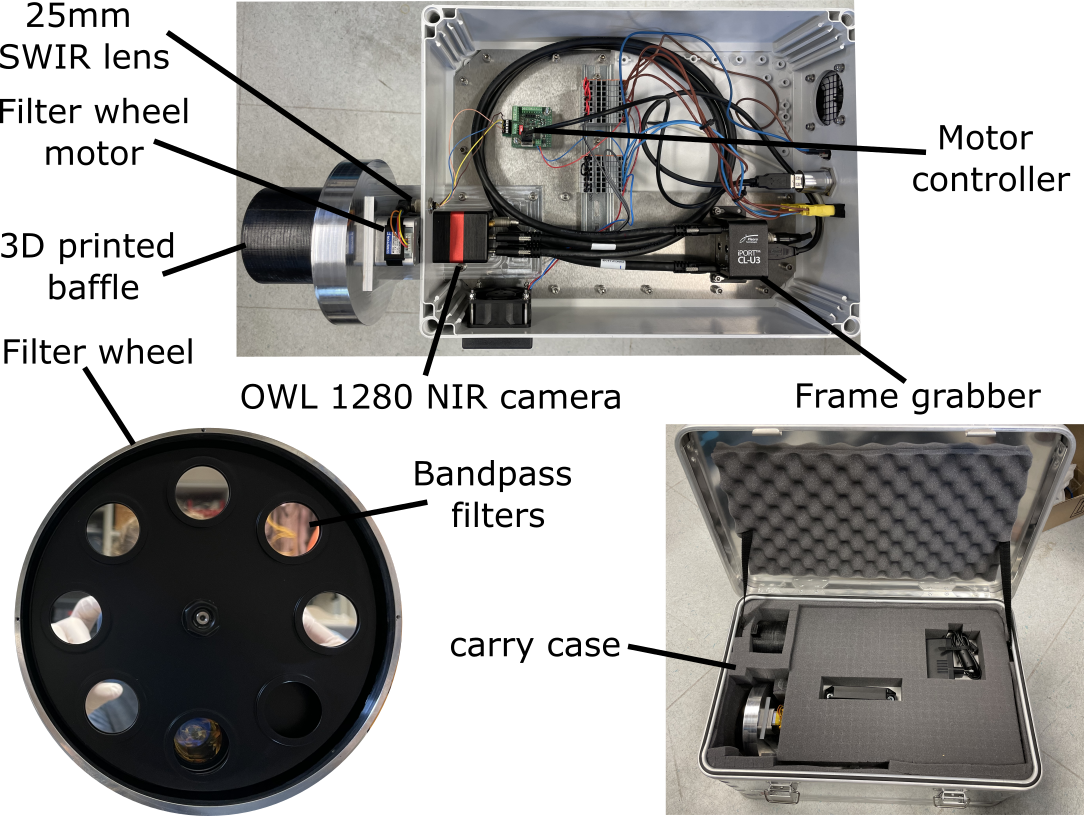
Stephen P. Garland, Solmaz Adeli, Nils Müller, Christian Althaus, Melinda Darby Dyar, Suzanne E. Smrekar, Daniel C. Nunes, Akin Domac, Giulia Alemanno, Océane Barraud, Alessandro Maturilli, Laura Breitenfeld, Christopher W. Hamilton, Frank Trauthan, Dennis Wendler, Till Hagelschuer, Shreya Chauhan, Gisbert Peter, and Jörn Helbert and the The VERITAS Science Team

Introduction
Several major missions to Venus are planned for launch in the early 2030’s, amongst them are NASA’s VERITAS [1] and ESA’s EnVision [2] missions. The VERITAS mission will launch with the Venus Emissivity Mapper (VEM) instrument [3] designed to measure the emissivity of Venus’s surface and atmosphere. Despite being our closest neighbor, we know surprisingly little about Venus, partly due to its optically dense atmosphere of CO2 with clouds of H2SO4, making direct surface observations challenging. The VEM instrument will overcome this challenge by exploiting 6 narrow bands of higher atmospheric transmission in the near infrared (NIR) between 0.86 and 1.18 µm, with the goal of distinguishing felsic from mafic rock types and contributing to the detection of recent or active volcanism [1]. Additional bands observing the cloud and atmosphere composition can be used to correct for atmospheric effects and distortion. In preparation for the mission, extensive work is being carried out on the spectroscopy of Venus analogs in the laboratory, as well as at Venus analog field sites. In this framework the VERITAS Science Team undertook a 2-week field campaign at analog sites in Iceland in August 2023 [4]. As part of this field campaign, of which the major goal was to ground truth radar measurements with detailed lidar scans [4], a team was dedicated to investigating the NIR spectral properties of the sites. To this end an emulator of VEM was constructed for field work [5,6] with the goal of obtaining VEM-like data to train scientists and to investigate the response of various surfaces in the NIR from reflectance and emission spectra collected both in the field, including from hot lavas, and in the lab.

The camera setup
A top view of the camera system is shown in Figure 1. The system is based around a cooled NIR InGaAs OWL 1280 Camera from the company Raptor Photonics, sensitive in the range 0.6 to 1.7µm. A frame grabber (Pleora Technologies, iPort CL-U3) was used to read out images from the camera via a Camera Link interface. In front of this, we positioned a filter wheel containing 6 commercially available 1” bandpass filters from Thorlabs with central wavelengths closely matching those chosen for VEM: 860nm, 910nm, 990nnm, 1030nm, 1100nm, 1200nm. Between the detector and the filter wheel a C-mount 25mm SWIR lens was fitted. The detector, frame grabber and motor controller unit were accommodated inside a dustproof casing with two fans for cooling of the camera housing, which requires heat dissipation due to the inbuilt TEC for detector cooling. The camera system can be mounted on a tripod and packed into a transport box. The camera was calibrated using an integration sphere with halogen light sources, allowing radiance values to be calculated for measurements through each filter [5].

Figure 1. The VEMulator 2.0 camera system.

Field and laboratory measurements
The VEMulator2.0 camera system was originally intended for measuring reflectance spectra in the NIR as part of the VERITAS Science Team 2023 field campaign to Venus analog sites in Iceland. By chance, during the field campaign, a volcanic eruption occurred on the Reykjanes peninsula. By the time the team arrived at the site, the eruption was no longer active, however the crater region still exhibited hot spots up to around 400 °C. VEMulator2.0 measurements were made at nighttime with low ambient light levels with a simultaneous measurement using a FLIR thermal infrared camera to estimate the temperature (Figure 2). Initial calculations of emissivity from a brighter hot spot (210 °C from the FLIR measurement) were not consistent with an independent laboratory-measured spectrum of basalt from the eruption site. The radiance values are more consistent with a basalt in the temperature range of 240°C to 280°C. In fact, the discrepancy is more likely due to the presence of light-toned deposits observed in context photos in this region, which likely have lower emissivity values. This contribution analyzes this problem in more depth, with the support of reference measurements performed at the Planetary Spectroscopy Laboratory [7], by examining different contributions to the observed spectra, such as emission from material at multiple temperatures, and compositional inhomogeneities.

Figure 2. a). Raw pixel values from a region of an image taken with VEMu2.0 using the 860 nm filter. The red square shows a region of interest. b). The same field of view with a FLIR thermal infrared camera showing calibrated temperatures. The red square shows the same regions of interest. From [5].

Acknowledgments: S. P. Garland, S. Adeli, N. Müller, A. Domac received funding from the European Union's Horizon 2020 research and innovation programme under grant agreement No 871149. 

References
[1] Smrekar, S. (2022) IEEE Aerospace Conf. [2] Ghail, R. C. et al. (2012) Exp. Astron., vol. 33, no. 2, pp. 337–363 [3] Helbert, J., et al. (2022) SPIE. [4] Nunes, D. et al. (2024) LPSC 55. [5] Garland, S. et al. (2024) SPIE. [6] Adeli, S. et al. (2024) LPI Contributions, vol. 3040, p. 1286. [7] Helbert, J. et al. (2023) SPIE.

How to cite: Garland, S. P., Adeli, S., Müller, N., Althaus, C., Dyar, M. D., Smrekar, S. E., Nunes, D. C., Domac, A., Alemanno, G., Barraud, O., Maturilli, A., Breitenfeld, L., Hamilton, C. W., Trauthan, F., Wendler, D., Hagelschuer, T., Chauhan, S., Peter, G., and Helbert, J. and the The VERITAS Science Team: The Venus Emissivity Mapper Emulator 2.0: a NIR camera system for Venus analogue measurements in the field and in the laboratory, EPSC-DPS Joint Meeting 2025, Helsinki, Finland, 7–13 Sep 2025, EPSC-DPS2025-1969, https://doi.org/10.5194/epsc-dps2025-1969, 2025.

F43
|
EPSC-DPS2025-1259
|
On-site presentation
Paul Byrne

A major topic in planetary habitability is why, when, and how Venus and Earth diverged in their climate conditions. One hypothesis holds that Venus has been in a post-runaway greenhouse state since the solidification of its magma ocean. Another is that Venus was once Earth-like, with liquid water stable at its surface. Under the latter scenario, Venus could have remained habitable for billions of years until some mechanism triggered a runaway greenhouse—possibly the coeval eruption of two or more large igneous provinces that injected sufficient CO2 to overwhelm a putative carbon–silicate cycle.

The average model age for the Venus surface is about ~700 Myr, although this value is subject to considerable uncertainty. Even so, the question arises: could Venus have plausibly undergone a transition from an Earth-like state to its present climate within that ~700 Myr timeframe? The answer is yes.

To illustrate the plausibility of such a transition, which is characterized by the loss of oceans and the emplacement of expansive volcanic plains, consider the volume of modern Earth’s ocean basins of 1.34×10⁹ km3. There are numerous estimates for Earth’s present eruptive flux, ranging from a low of 3.4 km3/yr to 22.5 km3/yr. These eruptive values bracket the time needed to entirely fill Earth’s ocean basins with volcanic products to as long as 390 Myr to as rapidly as 60 Myr. Modern Venus has a surface occupied by about 72% volcanic plains. Were such plains occupying former ocean basins of an average depth comparable to that of Earth of 4 km, and under the assumption that Venus has a comparable eruptive flux to Earth, the fill times are virtually identical: 59–390 Myr.

An important constraint on any scenario under which modern Venus transitioned from an Earth-like state is the fate of O2. With the onset of a runaway greenhouse, any oceans present would have evaporated and eventually be photodissociated by solar UV radiation into its component hydrogen and oxygen. The H was likely subject to thermal or non-thermal escape mechanisms, but the O2 would have been too massive to be lost to space. A likely repository of photodissociated O2, then, would have been the planet’s crustal rocks.

The oxidation state of Venus’ crust is poorly known, as is the ability of the crust to serve as an oxygen sink (which depends on lithology and oxygen fugacity). Nevertheless, should a clement Venus have had a comparable water ocean volume to Earth, the photodissociated O2 could have been sequestered in an oxidized layer of basalt 50 km thick. Again, given the effusive flux of modern Earth, a layer of this thickness would be emplaced in 740 Myr—remarkably similar to the current estimated average model age for the planet surface. And, if hydration reactions were possible (akin to water–rock reactions on Earth), an oxidized layer as thin as 10 km is required, which could have been emplaced in as little as 147 Myr.

None of these calculations establishes that Venus was once Earth-like, with a comparable hypsometry and ocean volume. Instead, they demonstrate that Venus could have been Earth-like within the Phanerozoic, acquiring vastly different climate, volcanic, tectonic, and geodynamic properties within a relatively short period of geological time. Future remote-sensing and in situ missions to Venus are necessary to fully establish the climatic and geological history of the planet. Of note, Earth’s climate may enter a runaway greenhouse under increasing solar luminosity within perhaps the next billion years or so. Assuming its eruptive flux remains relatively constant, the calculations here show that Earth could acquire the major planetary properties of Venus within only a few hundred million years, too.

How to cite: Byrne, P.: Modern Venus Could Have Been Earth-like Several Hundred Million Years Ago, EPSC-DPS Joint Meeting 2025, Helsinki, Finland, 7–13 Sep 2025, EPSC-DPS2025-1259, https://doi.org/10.5194/epsc-dps2025-1259, 2025.

F44
|
EPSC-DPS2025-1305
|
On-site presentation
Henrik Hargitai, Damján Szabó, Miklós Vincze, and Ákos Kereszturi

Introduction: Seventy years into spaceborne planetary investigations, the community still lacks comprehensive planetary GISs that integrate feature data within a unified or easy-to-compile system. Such a platform or service would be essential not only for setting up individual research projects, but also for enabling faster, and more effective mission planning. Although similar projects have been proposed for decades (Hargitai 2016), they could never be fully realized, primarily because they would not generate new data, but instead rely on the reuse and restructuring of existing information. As a result, each reserarcher and mission team need to build their own system from scratch. This paper presents what may be the first attempt to establish a public, multipurpose, systematic, feature-based geospatial dataset for Venus, supported by ESA. Such system enables users to explore, query, overlay,  and quantitatively analyze dozens of complementary, vector-based data layers enriched with detailed attribute tables.

Background: The concept of a digital planetary cartographic database goes back to 1981 when R. M. Batson proposed such project to include photo imagery and DTMs, noting that “future additions ... may include information from geologic maps” (Batson 1981). Perhaps the earliest spacecraft-based feature catalog, that of Mars, was created by W. K. Hartmann in 1972 titled “Catalog of all craters on Mars larger than 64 km in diameter”, sent in a letter to the Mariner 9 TV team.

Feature-based mapping, as opposed to complex and region-specific geologic unit mapping, proved to be especially valuable for Venus. Magellan radar data was used for the initial global mapping of volcanic, impact, structural and tectonic features, culminating in several publications in 1992. The Magellan Venus mission also pioneered the creation of a comprehensive multilayer GIS: Price and Suppe (1995) developed the first Venus feature GIS compiled directly on Magellan C1-MIDR data and digitizing existing maps (Tanaka et al. 1997). In their paper, they already foresaw the potential future use of such GIS. That dataset has since been converted to ArcGIS format and made available on the ArcGIS platform in 2024 (https://www.arcgis.com/home/item.html?id=962dcfd6b5b64b21a922bc9b6c94ad78).

One of the first digital, tabulated feature catalogs was published in the Venus II book’s CD-ROM supplement in 1997, where original GIS data were incuded only as low-resolution GIF images. A year earlier USGS Flagstaff published Schaber’s impact crater database online, one of the earliest examples of planetary feature data made available digitally on the web. By 2025, however, this database survives only as a printed, then photocopied and scanned document from that era archived as a pdf file by author (https://pubs.usgs.gov/of/1996/0688/), and on the 1996-captured USGS webpage via the Wayback Machine. This illustrates how early digital databases risk being lost, if they are not actively curated, for example, through incorporation into continuously maintained GIS services. Yet, even government-maintained USGS resources can disappear over time. This underscors the importance of selecting robust, long-term data hosting platforms and preservation strategies to preserve the results (or, often, byproducts) of previous planetary geologic or geomorphic studies.

Venus GIS: In the 30 years since the dawn of digital Venus mapping, more than 70 different feature catalogs had been published in the literature in various forms, ranging from tables to images to illustrator or GIS program made raster or vector files (Fig. 1). The number of published catalogs re-analyzing existing Magellan data has increased significantly in recent years (since 2023), resulting from for planning the missions of the 2030. These provide the pieces of data for a still-unrealized comprehensive Venus GIS.

The feature mapping of Venus by 2025 yielded in approximately 100,000 feature data entities - points, polylines and polygons. These need to be cross-referenced to filter out duplicates across different catalogs and in multiple versions of the same catalogs published over the years. After correlation, each data table is converted into centerpoint vector files with all available attributes, and polyline/polygon files if such data is available. Raster image and non-georeferenced vector data, or outdated digital map formats (e.g., gmt) is converted to GIS formats. Wherever possible, centerpoint data is replaced by outlines mapped directly from the Venus Magellan SAR FMAP mosaics. Geologic units would be added from the original mapping files of formal geologic mapping projects. The features and units would be grouped according to geologic process categories. The resulting GIS would integrate updated data obtained directly from the authors of existing catalogs. Each feature would be linked to its original source and publication reference, ensuring traceability across the GIS.

Creating such GIS requires a coprehensive search and processing phase that extends well beyond the scope of a typical astrogeologic study. It requires a dedicated, multi-year effort focusing solely on GIS development and data integration. This paper reports on the results from the first year of that undertaking.

Cataloguing and creating training data of Venusian arachnoids and novae: The cataloging and visualization of volcano-tectonic structures on the surface of Venus is an important part in the creation of the Venus GIS. The main objectives of this sub-taks were to merge the databases of arachnoids and novaes; to take representative samples of these formations, and then to determine the regions with the highest density and variability of volcanotectonic features (Fig. 2) to provide training data and test/control area for machine learning based mapping.

Using all the available databases and filtering out duplicates, we created attribute tables for both types of structures. For the novae, we connected the endpoints of the trenches one by one, while for the arachnoids, we followed the protruding “legs,” or, if these were absent, the circular outline. In both cases, we used a map magnification level that ensured the accuracy of the drawings.

Acknowledgment: The project is supported by the VERATAC PRODEX project of ESA (4000144802)

How to cite: Hargitai, H., Szabó, D., Vincze, M., and Kereszturi, Á.: An integrated, feature-based Geographic Information System for Venus , EPSC-DPS Joint Meeting 2025, Helsinki, Finland, 7–13 Sep 2025, EPSC-DPS2025-1305, https://doi.org/10.5194/epsc-dps2025-1305, 2025.

F45
|
EPSC-DPS2025-612
|
ECP
|
On-site presentation
João Dias, Pedro Machado, Séverine Robert, Justin Erwin, Maxence Lefèvre, Colin F. Wilson, Diogo Quirino, and João C. Duarte

The composition and the variability of the lower atmosphere of Venus are critical to understanding the surface-atmosphere interactions, the atmospheric evolution and the volatile exchanges between the interior and the atmosphere [1, 2, 3]. The lower atmosphere can be investigated on the near-infrared spectral windows on the nightside, centered at 1.18 µm (0-15 km), 1.74 µm (20-30 km) and 2.3 µm (30-45 km) [4, 5]. The principal gases in a volcanic plume on Venus may well be similar to those on Earth, namely CO2, SO2, H2O and CO. but different relative abundances are expected [6]. Models and observations suggest a constant abundance of water and no known sinks below the clouds (0-45 km) [7, 8], such that abundance variability should produce a signal in the spectrum of Venus, which can be studied at different altitudes using the near-infrared spectral windows on the nightside [9].

On a previous study, we used the Planetary Spectrum Generator (PSG) [10, 11, 12] to simulate the nightside 2.3 µm spectrum of Venus, using a VIRA atmospheric template for temperature and molecular vertical abundance profiles and four aerosol modes, of effective radii of 0.49 µm, 1.18 µm, 1.56 µm and 4.25 µm [13, 14]. We simulated the effect of a volcanic gas plume rising to a ceiling altitude, for species such as H2O, CO, OCS, HF and SO2. We concluded that for possible H2O, CO and OCS plumes that reach 40 km of height detection could be achievable with a minimum SNR ~ 50 [15].

Here, we present new results regarding detectability of H2O plumes on the 1.18 µm window, with a maximum sensitivity for the altitude range 0-15 km. Furthermore, constraints will be presented regarding retrieval of small H2O enhancements (<10%) and respective abundance profiles. Our findings will inform future studies with ground-based instrumentation, such as iSHELL/IRTF spectrograph [16], and future space-based instrumentation, such as the VenSpec-H instrument on EnVision [17, 18].

References. (1) Gilmore et al. 2023, Space Sci Rev. (2) Gillmann et al. 2022, Space Sci Rev (3) Wilson et al. 2024, Space Sci Rev (4) Bézard et al. 2009, JGR Planets (5) Tsang et al. 2009, Journal of Quantitative Spectroscopy and Radiative Transfer (6) Gaillard and Scaillet 2014, Earth and Planetary Sciences Letters (7) Bézard and de Bergh 2007, JGR Planets (8) Marcq et al. 2023, Icarus (9) Wilson et al. 2024, Space Science Reviews (10) Villanueva et al. 2018, Journal of Quantitative Spectroscopy and Radiative Transfer; (11) Smith et al. 2013, JGR Planets (12) Dias et al. 2022, Atmosphere (13) Zasova et al. 2006, Cosmic Research; (14) Haus et al. 2010, Icarus (15) Dias et al. 2025, Ivarus (16) Rayner et al. 2022, Publications of the Astronomical Society of the Pacific (17) Robert et al. 2021, EPSC 2021 (18) Neefs et al. 2025, Acta Astronautica.

Funding. JAD acknowledges funding through the research grants UIDB/04434/2020 and UIDP/04434/2020 and a fellowship grant 2022.09859.BD. JTE and SR acknowledge funding by the Belgian Science Policy Office (BELSPO) with the financial and contractual coordination by the ESA Prodex Office (PEA 4000144206).

How to cite: Dias, J., Machado, P., Robert, S., Erwin, J., Lefèvre, M., F. Wilson, C., Quirino, D., and C. Duarte, J.: VOLCANIC GAS PLUMES’ EFFECTS ON THE SPECTRUM OF VENUS – THE 1.18 µM WINDOW, EPSC-DPS Joint Meeting 2025, Helsinki, Finland, 7–13 Sep 2025, EPSC-DPS2025-612, https://doi.org/10.5194/epsc-dps2025-612, 2025.

Interior
F46
|
EPSC-DPS2025-1986
|
On-site presentation
Ana-Catalina Plesa, Christine Thomas, Stuart James Russell, Lauren Jennings, Julia Maia, Stephan Klemme, and Doris Breuer

Similar to the Earth in size, mass and potentially also the composition, Venus is often referred to as our sister planet. However, today’s Venus represents one of the most extreme places in the Solar System. It possesses a dense CO2 atmosphere with a surface pressure 90 times higher than the Earth and surface temperatures able to melt lead. Its young surface is dominated by volcanic features at all spatial scales (Hahn & Byrne, 2023), and recent reanalysis of Magellan radar data suggests that Venus might be volcanically active today (Herrick & Hensley, 2023; Sulcanese et al., 2024).

Venus also possesses a large variety of tectonic features at its surface, ranging from rift zones of thousands of kilometers in length (Foster and Nimmo, 1996), to wide-spread distribution of wrinkle ridges (Billoti and Suppe, 1999), and a substantial number of round formations consisting of a ring wall and radial cracks and fractures in the interior (the so-called coronae), some of which have been associated with regional subduction processes (Davaille et al., 2017). These tectonic structures and the growing evidence for a geologically active Venus at present day point toward a potentially seismically active planet.

In the absence of seismic measurements, the seismicity of Venus is poorly constrained and estimates only stem from theoretical models. A recent study (van Zelst et al., 2024) that scaled the Earth seismicity to Venus, by using Earth-analogs for different tectonic settings on Venus, suggests that our sister planet might experience several thousands of quakes with magnitude 4 or higher per Earth year. The seismogenic layer thickness, the layer in which quakes can nucleate, is closely linked with the thermal state of the lithosphere. The latter has been derived using the elastic lithosphere thickness obtained from local flexural analyses, geodynamics models, and temperature variations associated with density anomalies retrieved from geophysical inversions of gravity and topography data. The seismogenic thickness estimates show a range of values from about 4 to 40 km (Maia et al., 2024), indicating that quakes can occur on Venus.

In this study, we combine global scale thermal evolution models in a 3D spherical geometry with thermodynamic calculations, and seismic wave propagation codes to investigate seismic body and surface waveforms on Venus. We use the geodynamical convection code GAIA-v2 (Hüttig et al., 2013) to compute the full thermal evolution of Venus. The conservation equations of mass, linear momentum, and thermal energy are solved numerically to obtain the spatial distribution of the temperature field in the interior of Venus at present day. Our models use a pressure- and temperature-dependent viscosity following Arrhenius law, and include pressure- and temperature-dependent thermal expansivity and conductivity adopting the parametrizations described in Tosi et al., (2013). We consider partial melting and the effects of magmatic intrusions that can considerably affect the thermal state of the lithosphere (Herrera et al., 2024), leading to the so-called plutonic squishy lid geodynamic regime (Lourenço et al., 2020), in which regional scale surface mobilization and lithospheric foundering can occur. Furthermore, we consider the effects of core cooling and radioactive decay as appropriate for thermal evolution modeling. In our models we vary the size of the core and the viscosity of the mantle. For the viscosity we test reference values of 1e20, 1e21, and 1e22 Pa s, and vary its increase with depth over several orders of magnitude. As the interior structure of Venus is poorly constrained, we investigate models with a core radius between 3025 km and 4000 km (Margot et al., 2021).

We use the present-day thermal state of the interior as obtained from our geodynamic models to calculate the distribution of seismic velocities in the interior of Venus. For each of our geodynamic models, we test various compositions for Venus’ mantle that have been proposed in the literature, including an iron-poor and iron-rich composition as tested in Dumoulin et al. (2017), and also include a mantle composition with an iron content similar to Earth's mantle that is able to reproduce the Venera 14 basalts (Jennings et al. 2024).  We calculate the seismic velocities at each location in the 3D model using the thermodynamic formulation and thermodynamic database of Stixrude and Lithgow-Bertelloni (2024) with the Perple_X software (Connolly, 2009).

In a next step, the full 3D seismic wavespeeds are included into a seismic wave propagation code to calculate synthetic waveforms for geodynamic models in a plutonic squishy lid regime that show local-scale resurfacing, as well as models with episodic and continuous large-scale surface mobilization. Such calculations will inform us about the expected seismic waveforms on Venus for models that are compatible with currently available observational constraints on the Venusian interior.


References:

Billoti, F. & Suppe, J. (1999). Icarus.

Connolly, J. A. D. (2009). G3.

Davaille, A., Smrekar, S. E., & Tomlinson, S. (2017). Nat. Geosci.

Dumoulin, C., Tobie, G., Verhoeven, O., Rosenblatt, P., & Rambaux, N. (2017). JGR: Planets.

Foster, A. & Nimmo, F. (1996). EPSL

Hahn, R. M., & Byrne, P. K. (2023). JGR: Planets.

Herrick, R. H. & Hensley, S. (2023). Science.

Herrera, C., Plesa A.-C., Maia, J., Jennings, L., & Klemme, S. (2024). EPSC 2024.

Hüttig, C., Tosi, N., & Moore, W. B. (2013). PEPI.

Jennings, L., Collinet, M., Plesa, A.-C., Herrera, C., Maia, J., & Klemme, S. (2024). EPSC 2024.

Stixrude, L., & Lithgow-Bertelloni, C. (2024). GJI.

Lourenço, D. L., Rozel, A. B., Ballmer, M. D., & Tackley, P. J. (2020). G3.

Maia, J., Plesa, A.-C., van Zelst, I., Brissaud, Q., De Toffoli, B., Garcia, R., Ghail, R., Gülcher, A., Horleston, A., Kawamura, T., Klaasen, S., Lefèvre, M., Lognonné, P., Näsholm, S. P., Panning, M., Smolinski, K., Solberg, C., & Stähler, S. (2024). EPSC 2024.

Margot, J. L., Campbell, D. B., Giorgini, J. D., Jao, J. S., Snedeker, L. G., Ghigo, F. D., & Bonsall, A. (2021). Nat. Astron.

Sulcanese D., Mitri, G., & Mastrogiuseppe, M. (2024). Nat. Astron.

Tosi, N., Yuen, D. A., de Koker, N., & Wentzcovitch, R. M. (2013). PEPI.

van Zelst, I., Maia, J., Plesa, A.-C., Ghail, R., & Spühler, M. (2024). JGR: Planets.

How to cite: Plesa, A.-C., Thomas, C., Russell, S. J., Jennings, L., Maia, J., Klemme, S., and Breuer, D.: Seismic Velocities in the Interior of Venus: Estimates from Global Geodynamic Models, EPSC-DPS Joint Meeting 2025, Helsinki, Finland, 7–13 Sep 2025, EPSC-DPS2025-1986, https://doi.org/10.5194/epsc-dps2025-1986, 2025.

F47
|
EPSC-DPS2025-1303
|
On-site presentation
Ignacio Romeo, Alberto Jiménez-Díaz, Marina Mendiburu-Eliçabe, Isabel Egea-González, Rebecca Hahn, Paul Byrne, Julia Álvarez-Lozano, and Javier Ruiz

Venus, a planet that is 95% the size of Earth with a probably similar composition and internal energy, still has a debated mechanism of cooling along its geodynamical history1-6 . The volcanic plains, covering 77% of the planet’s surface, probably hold the clues to understand the current geodynamical regime. Proposed evolutions include: (1) mantle convection with episodic lithospheric overturns5,6,7, (2) global volcanic resurfacing driven by a transition from mobile to stagnant lid2, (3) a “plutonic squishy lid” regime8 allowing the observed lateral movement of lithospheric blocks9, or (4) a “deformable episodic lid” regime producing lithospheric overturns with a mobile lithosphere between them6, among others.

We have performed a statistical analysis of the effective elastic lithospheric thickness (Te), the internal load factor (F) and the crustal thickness (Tc)10 using data from the volcanic plains. We found that the lithosphere of the volcanic plains is not spatially homogeneous, containing three provinces with statistically different properties. One province (the so-called BAT region), shaped by active plumes and rifts systems, has a relatively thick crust, and exhibits a wide range of effective elastic lithospheric thickness (Te). The lithosphere of the remaining volcanic plains (61% of the surface) displays a dichotomous nature, with the northern plains showing a thinner lithosphere than the southern plains. There is a strong correlation between volcano spatial density11 and the units obtained from the geophysical data. The northern plains, characterized by a thin lithosphere, feature twice the number of volcanoes per unit area compared to the southern plains.

These global-scale differences in the Venus lithosphere imply a complex geodynamical regime, with significant lateral variations in the mechanical properties and the involved geodynamical processes. The geodynamical models of mantle convection and planetary evolution, has to take into account that the lithosphere of Venus is heterogeneous and presents strong lateral variations.


References

1. Turcotte, D. L. How does Venus lose heat?. J.. Geophys. Res. 100(E8), 16931-16940 (1995).

2. Phillips, R. J., & Hansen, V. L. Geological evolution of Venus: Rises, plains, plumes, and plateaus. Science 279(5356), 1492-1497 (1998).

3. Romeo, I., & Turcotte, D. L. Resurfacing on Venus. Planet. Spa. Sci. 58(10), 1374-1380 (2010).

4. Hansen, V. L. Global tectonic evolution of Venus, from exogenic to endogenic over time, and implications for early Earth processes. Phil. Trans. Roy. Soc: Math. Phys. Eng. Sci. 376 (2132), 20170412 (2018).

5. Uppalapati, S., Rolf, T., Crameri, F., & Werner, S. C. Dynamics of lithospheric overturns and implications for Venus's surface. J. Geophys. Res. 125(11), e2019JE006258 (2020).

6. Tian, J., Tackley, P. J., & Lourenço, D. L. The tectonics and volcanism of Venus: New modes facilitated by realistic crustal rheology and intrusive magmatism. Icarus 399, 115539. (2023).

7. Karlsson, R. V. M. K., Cheng, K. W., Crameri, F., Rolf, T., Uppalapati, S., & Werner, S. C. Implications of anomalous crustal provinces for Venus' resurfacing history. J. Geophys. Res. 125(10), e2019JE006340 (2020).

8. Lourenço, D. L., Rozel, A. B., Ballmer, M. D., & Tackley, P. J. Plutonic‐squishy lid: A new global tectonic regime generated by intrusive magmatism on Earth‐like planets. G3 21(4), e2019GC008756 (2020).

9. Byrne, P. K., Ghail, R. C., Şengör, A. C., James, P. B., Klimczak, C., & Solomon, S. C. A globally fragmented and mobile lithosphere on Venus. PNAS, 118(26), e2025919118 (2021).

10. Jiménez-Díaz, A., Ruiz, J., Kirby, J. F., Romeo, I., Tejero, R., & Capote, R. Lithospheric structure of Venus from gravity and topography. Icarus 260, 215-231 (2015).

11. Hahn, R. M., & Byrne, P. K. A morphological and spatial analysis of volcanoes on Venus. J. Geophys. Res. 128(4), e2023JE007753 (2023).


Acknowledgments

This work was supported by the Spanish Agencia Estatal de Investigación through the research project PID2022-140686NB-I00 (MARVEN) and grant PR3/23-30839 (GEOMAVE), funded by the Universidad Complutense de Madrid.

How to cite: Romeo, I., Jiménez-Díaz, A., Mendiburu-Eliçabe, M., Egea-González, I., Hahn, R., Byrne, P., Álvarez-Lozano, J., and Ruiz, J.: Lateral variations in lithospheric thickness linked to the spatial density of volcanoes on the volcanic plains of Venus, EPSC-DPS Joint Meeting 2025, Helsinki, Finland, 7–13 Sep 2025, EPSC-DPS2025-1303, https://doi.org/10.5194/epsc-dps2025-1303, 2025.

F48
|
EPSC-DPS2025-1946
|
ECP
|
On-site presentation
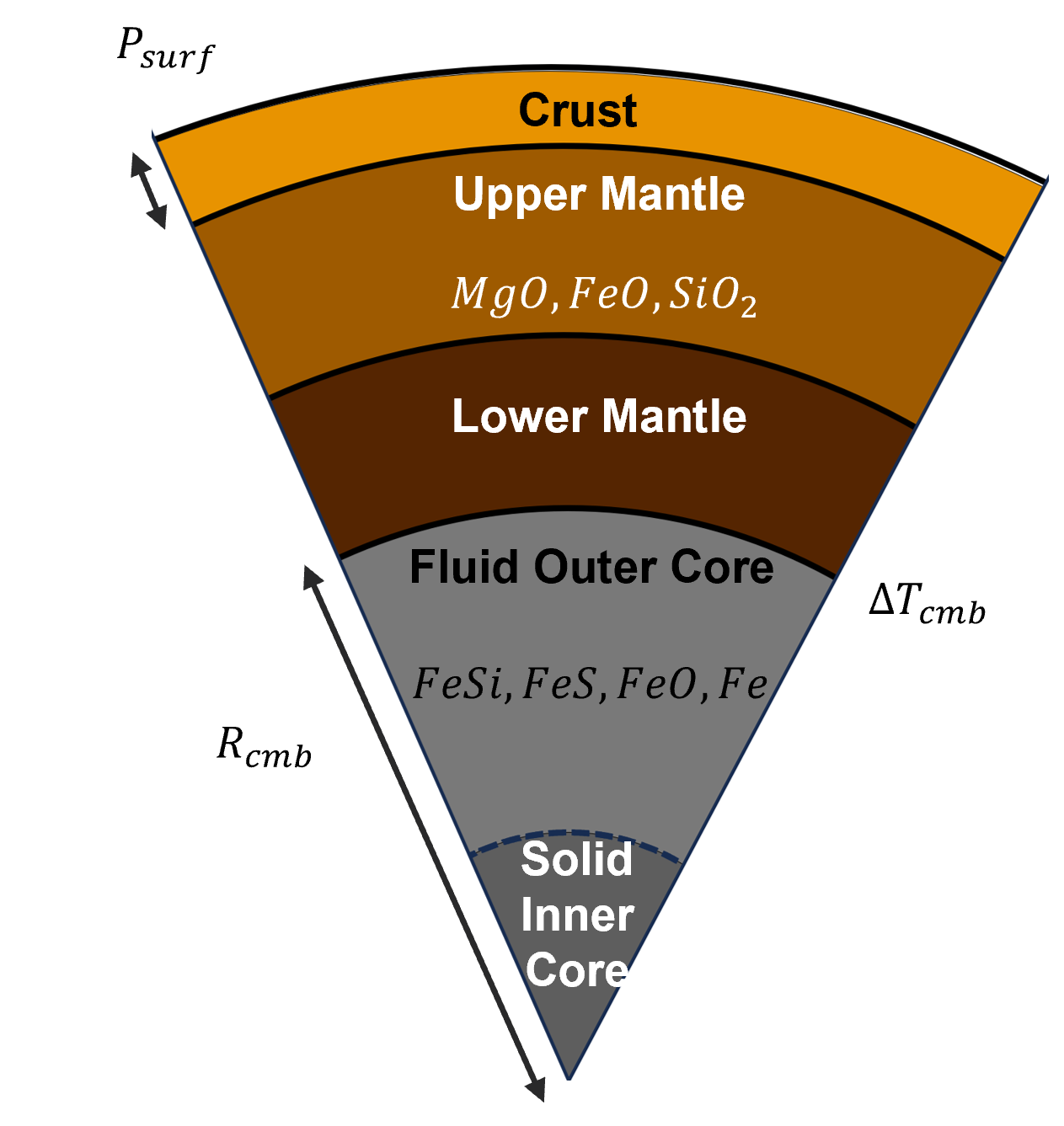
Anna Maria Gargiulo, Antonio Genova, Martina Ciambellini, Tommaso Torrini, Gabriel Tobie, Pascal Rosenblatt, and Caroline Dumoulin

Introduction

The upcoming decade of Venus exploration, supported by unprecedented measurement accuracies, is expected to yield tight constraints on the planet’s interior structure. Key geophysical properties that enable inference of Venus’ interior include the Moment of Inertia (MoI), mass, and tidal Love number k2. Although current estimates and their associated uncertainties limit a detailed characterization of the deep interior, the combination of these parameters is essential for deriving consistent interior structure models. By using present observational accuracies, we investigate Venus’ interior through a Bayesian inference approach based on the Markov Chain Monte Carlo (MCMC) method [1]. In our study we account for an accurate modeling of the possible composition of the core and the mantle and retrieve pressure, temperature and density profiles that are consistent with the probability distributions of the observations.

Geophysical Constraints

Venus’ high surface temperature and pressure of about 730 K and 92 bar [2], resulting from its dense atmosphere, along with its lack of plate tectonics [3] and magnetic field, suggest significant differences in internal dynamics compared to Earth. If an Earth-like dynamo [4] were active on Venus, it would have implied convection mechanisms in an outer fluid core surrounding a solid inner core. The absence of a global magnetic field, instead, could be explained by an insufficient cooling of Venus’ core [5], or by limited convection in the mantle, insufficient to start the dynamo process [6]. While the existence of a solid inner core, thus, cannot be excluded, the lack of seismic data prevents better constraints on the mantle-core boundary. Venus’ slow rotation and consequent small oblateness hinder the determination of its MoI based solely on gravity data. Margot et al., 2021 [7] determined Venus’ MoI of 0.337± 0.024 (1-σ) through Earth-based radar observations of Venus’ spin vector. The tidal Love number k2 = 0.295±0.033 (1-σ) [8] is the only direct constraint on Venus’ interior structure, although the current uncertainty doesn’t allow definitive conclusions regarding the state of the core [9].

Interior Model Inversion

A multi-layered configuration is assumed for the internal structure of Venus, including a crust, upper and lower mantle and an iron-rich core (Figure 1) [10]. The model accounts for both fully molten and partially solidified core scenarios, including a fluid outer core and a solid inner core. To obtain an accurate modeling of the structure of Venus, variations in mantle and core compositions are included in this study.

The first step of the proposed approach is to identify a set of free parameters that can be explored to generate internal structure models. The crust is assumed to have uniform density. The upper mantle, whose constituents are assumed to be MgO, FeO and SiO2, extends to 25 GPa, which is the phase transition pressure of the Olivine to Perovskite. The lower mantle is assumed to have a homogeneous chemical composition with respect to the upper mantle. The model also considers a fluid core composed of FeSi, FeS, and FeO mixed with pure iron, as well as the potential presence of a solid core of pure iron, provided the required pressure and temperature conditions for solidification are satisfied.

Further assumptions governing the generation of interior structure models include a single-stage core segregation at a certain segregation pressure, with mantle composition derived via a metal-silicate partitioning model [11]. The temperature at the crust-mantle interface is sampled within a range compatible with basaltic magma generation. A temperature drop at the core-mantle interface is also accounted for. Our MCMC method explores the parameter space using the Metropolis Hastings algorithm, and convergence is checked through the Gelman-Rubin criterion. The posterior distribution of the properties of Venus’ interior provides models that match the observed values of mass, MoI and k2. The planet’s tidal response is computed using PyALMA [12], assuming Andrade rheological model and constant viscosities.

Our preliminary results based on current geophysical measurements show a distribution of models with a core radius between 3250 and 3650 km (1-σ) (Figure 2), consistent with previous estimates [7,9]. A subset of models highlighted in orange (~6%) supports the existence of a solid inner core, while those highlighted in green indicate a Perovskite to post-Perovskite phase transition in the lower mantle. The method's convergence is validated by the 2D histograms of the target values for mass, MoI, and k2 (Figure 3), which align with the observed constraints.

It should be noted that the adopted compositional assumptions, combined with the observed uncertainty in k2, impose tighter constraints on the MoI than current geophysical estimates, ensuring consistency with the measured mass.

Summary

We present here a robust Bayesian inference approach to evaluate the likely interior structure of Venus based on multidisciplinary geophysical constraints. Current estimates of the tidal Love number k2 are key to inferring Venus’ interior providing more stringent constraints than the moment of inertia. The proposed methodology offers a flexible framework that can be extended to incorporate more precise data from upcoming missions enabling deeper insights into Venus’s core and mantle.

References:
[1] Genova A. et al (2019) GRL 46(7), 3625–3633
[2] Lebonnois S. et al., (2010) JGR, 115(E6).
[3] Kaula, W. M. (1994). Philos.Trans.R.Soc. A, 349 (1690).
[4] Elsasser W. M. (1956) Rev.Mod.Phys 28(2), 135–163.
[5] Stevenson, D. J (1983) Icarus, 54(3), 466–489
[6] Nimmo, F. (2002) Geology, 30(11), 987.
[7] Margot J.L. et al (2021) Nat.Astron. 5(7), 676–683.
[8] Yoder C. F. and Ahrens, T. (1995) AGU, 1.
[9] Dumoulin C. et al. (2017) JGR 22(6), 1338–1352.
[10] Shah O. et al (2022) ApJ, 926, 2.
[11] Fischer R.A. et al (2015). Geochim.Cosmochim.Acta., 167, 177–194.
[12] Petricca F. et al. (2024) Icarus, 417, 116120.

Figure 1. Schematic representation of Venus' interior.

Figure 2. Histograms of the posterior core radius distribution from MCMC models (blue), models with solid core (orange), and models showing Perovskite to post-Perovskite transition (green).

Figure 3. MCMC convergence: 2D histograms of mass, k2, and MoI from the inversion models. Red shows mean values and 3-sigma uncertainty ellipses; white indicates measured values.

How to cite: Gargiulo, A. M., Genova, A., Ciambellini, M., Torrini, T., Tobie, G., Rosenblatt, P., and Dumoulin, C.: Inferring Venus interior structure based on present geophysical constraints, EPSC-DPS Joint Meeting 2025, Helsinki, Finland, 7–13 Sep 2025, EPSC-DPS2025-1946, https://doi.org/10.5194/epsc-dps2025-1946, 2025.

Gravity and radio occultation
F49
|
EPSC-DPS2025-718
|
ECP
|
On-site presentation
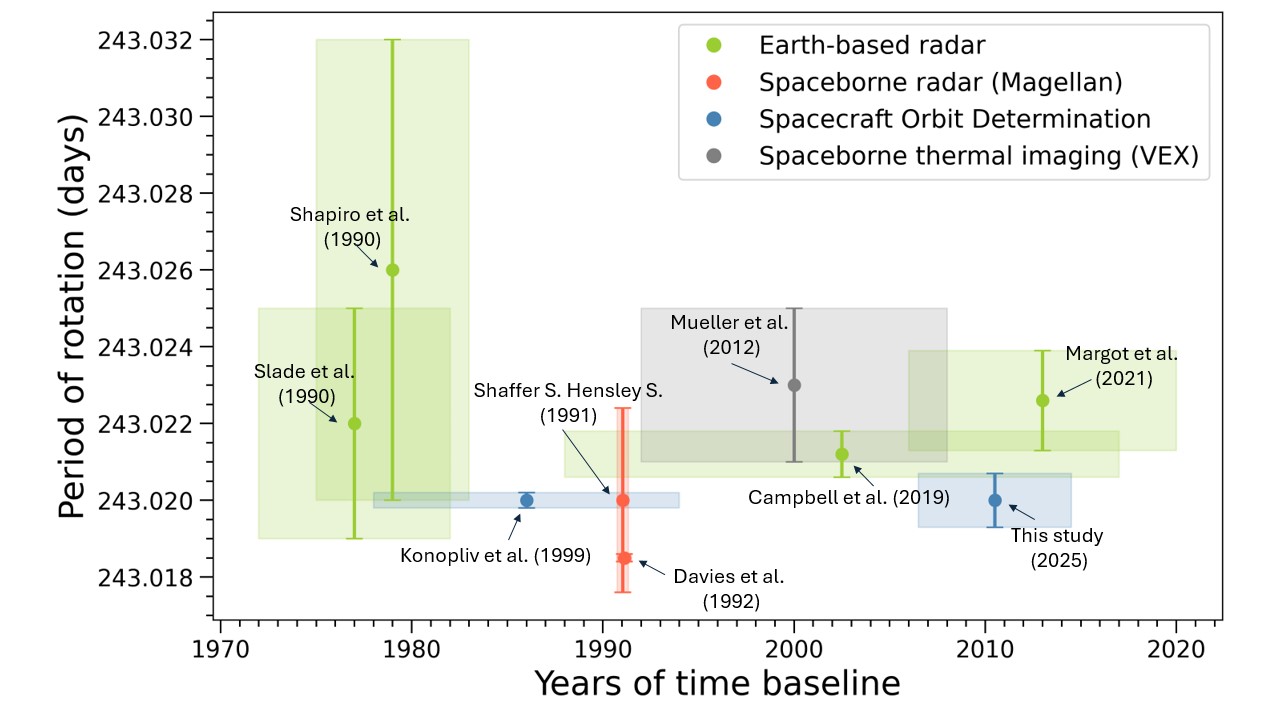
Maëva Lévesque, Pascal Rosenblatt, Jean-Charles Marty, and Caroline Dumoulin

Venus has a long and retrograde rotation period compared to other planets in the Solar System. Its rotation period of 243 days has been measured using different methods from Earth or from the Venus’ orbit. However, this value remains poorly constrained with a large variability of about 7 minutes. Currently, models that take into account various factors influencing the Length-of-Day (LOD) can explain only 3 minutes of the observed variation. These effects include the tidal torque exerted by the Sun on Venus or the coupling between the atmosphere and the surface. Accurately tracking the Venus’ rotation period could therefore help us to better understand these processes [1].

In this study, we investigate navigation tracking data from the Venus Express (VEX) spacecraft, in order to derive a new solution for the rotation period of Venus. We use a method called Precise Orbit Determination (POD). It consists of performing a least squares adjustment of the difference between collected and generated Doppler data. Collected Doppler data correspond to the Doppler effect on the radio-link carrier frequency between the spacecraft and a ground-based antenna, and due to the motion of the spacecraft around the planet. Generated Doppler data are derived from the trajectory computed by numerical integration of the forces governing the spacecraft’s motion. The least-squares adjustment is performed over successive arcs of 7 days in the case of Venus Express and uses the GINS (Géodésie par Intégrations Numériques Simultanées) software.

We determined a rotation period for Venus of 243.0202 ± 0.0008 days using these tracking data from Venus Express over the 8 years of the mission. As shown in Figure 1, this result aligns well with previous estimates obtained through different methods and datasets. However, the associated uncertainty is relatively large compared to earlier measurements using Magellan and Pioneer Venus Orbiter (PVO) tracking data [3]. This uncertainty reflects the influence of the atmospheric model employed in our POD computations (such as Hedin, Venus-GRAM, or Venus Climate Database) and the difficulty in accurately resolving velocity anomalies introduced by the spacecraft’s daily desaturation maneuvers.


Figure 1: Estimates of Venus' rotation period, along with their measurement time baseline and corresponding error-bars at 1-sigma (Lévesque et al. (2025), under review)​.

In Figure 1, the different estimates of Venus’s rotation period are generally averaged over one year or more. To investigate potential shorter variations in our results, we computed a separate estimate of the rotation period every 12 arcs, corresponding to approximately three months of data (shown in black in Figure 2). Values in red represents the measurements of instantaneous periods obtained by Margot et al. (2021) [4] relative to the operating period of VEX. A comparison of the median values shows that these two independent methods yield consistent results over the same time span. In both studies the dispersion is too large to see a variation in the Length of Day or a clear periodic signal. Therefore, more precise measurements are needed in order to see possible variations in the LOD.


Figure 2: Time series of Venus's rotation period, with one value reported for every 12 arcs. The results of our study are shown in black, while the findings from Margot et al. (2021) covering the period from mid-2006 to 2014 are displayed in red. In grey, the 3 minutes amplitude predicted by the theory (Lévesque et al. (2025), under review).​

The rotation period estimate from our study was determined simultaneously with the orientation of Venus’s rotation axis, defined by its right ascension and declination. Figure 3, adapted from Margot et al. (2021) [4], presents results from various studies along with their 1-sigma uncertainties. In our case, the uncertainties are relatively large, preventing us from  determining the precession rate.


Figure 3: Spin axis orientation of Venus with 1 sigma uncertainties, i.e. 2D confidence intervals at 68.3 % levels. Modified from Margot et al. (2021) (Lévesque et al. (2025), under review)

Our ability to accurately estimate Venus’s geophysical parameters using Venus Express tracking data remains limited. Upcoming missions like NASA’s VERITAS and ESA’s EnVision are expected to provide crucial new data to improve this estimation. Scheduled for launch in 2031, EnVision will study Venus from its deep interior to the upper atmosphere. Thanks to its near-polar, low-eccentricity orbit, the mission will provide greater sensitivity to the planet's gravity field and rotational state. We carried out simulations to predict EnVision’s performances [5]. The predicted 3-sigma uncertainty in the rotation period is 1,3 seconds, compared to the uncertainty of more than 1 minute obtained with VEX. For the precession rate, the 3-sigma uncertainty is 1.2%, compared to 7% obtained with ground-based radar data [4].


[1] Cottereau, L. et al.: The various contributions in Venus rotation rate and LOD, Astron.Astrophys. 531, A45, 2011

[2] Konopliv A. S. et al.: Venus Gravity: 180th Degree and Order Model. Icarus 139, 3–18, 1999

[3] Margot, J. L. et al.: Spin state and moment of inertia of Venus, Nat Astron 5:676–683, 2021

[4] Rosenblatt, P. et al.: EnVision gravity experiment: Joint inversion of Doppler tracking data and tie-points monitoring from SAR images. Vol. 17, EPSC2024-410, 2024

How to cite: Lévesque, M., Rosenblatt, P., Marty, J.-C., and Dumoulin, C.: Measurement of the spin of Venus using radio tracking data from Venus Express and expected outcomes from EnVision, EPSC-DPS Joint Meeting 2025, Helsinki, Finland, 7–13 Sep 2025, EPSC-DPS2025-718, https://doi.org/10.5194/epsc-dps2025-718, 2025.

F50
|
EPSC-DPS2025-1446
|
On-site presentation
Nicolas Rambaux, Pascal Rosenblatt, Pierre-Louis Phan, and Caroline Dumoulin

Introduction
Venus is an intriguing planet because it is similar to Earth in terms of mass and size, but has followed a different evolutionary path, with a thick atmosphere and inhospitable surface. Future space missions EnVision (ESA) and VERITAS (NASA) will explore Venus to better understand this planet. In particular, Envision will carry out Radio Science Experiment, RSE [1] and radar measurements VENSAR experiment [1]. Here, we focus on the potential determination of Venus's rotational motion through these observations. Rotational and gravity data are crucial for revealing the planet's internal structure and the atmospheric coupling.

Rotational model
Venus' spin axis motion is described in space in terms of precession and nutation [2], which are the secular motion of the rotational axis and its periodic motion, variation in length-of-day [3], and through polar motion that is the rotation axis motion relative to the surface [4]. Today, the precession motion has been determined by the radar interferometry measurements [5], while length-of-day variations have been detected through VEX and radar interferometry measurements, but these determinations are still debated [6,5,7,2]. The polar motion has been recently investigated and its amplitude may be detectable through Envision mission [3]. Here, we will present updated precession-nutation and length-of-day models of Venus rotation.

Doppler tracking and radar tie-point
The RSE experiment will determine the gravity field, which is, by definition, attached to the body, thereby enabling the determination of the body's orientation and spin rate [8]. The VENSAR experiment will acquire radar images of selected regions of interest, covering approximatively 20% of Venus's surface with spatial resolution of 30 meters and 10 meters [1]. The planned temporal coverage spans six Venusian cycles, equivalent to 1400 Earth-days. We present first simulations of spin recovery through the control point network, suggesting that it will be possible to constrain Venus' precession to within few percent. Additionally, combined simulations of Doppler tracking and tie-points monitoring in VENSAR images show a two to three improvement in the determination of rotational parameters.

References:
[1] ESA. 2023, EnVision - Understanding why Earth’s closest neighbour is so different, Definition Study Report (Red Book), ESA document reference
[2] Cottereau, L., Souchay, J., 2009. Rotation of rigid Venus: a complete precession-nutation model. Astron. Astrophys. 507, 1635–1648.
[3] Cottereau, L., Rambaux, N., Lebonnois, S., and Souchay, J. (2011). The various contributions in Venus rotation rate and LOD. Astronomy and Astrophysics, 531:A45.
[4] Phan P.L, and Rambaux, N., Polar motion of Venus, Astronomy and Astrophysics, submitted
[5] Margot, J.-L., Campbell, D. B., Giorgini, J. D., et al. 2021, Nature Astronomy,5, 676
[6] Mueller, N.T., Helbert, J., Erard, S., Piccioni, G., Drossart, P., 2012. Rotation period of Venus estimated from Venus Express VIRTIS images. Icarus 217, 474–483.
[7] Campbell, B.A., Campbell, D.B., Carter, L.M, Chandler, J.F., et al., 2019, Icarus 332, 19-32
[8] Rosenblatt, P., Rambaux, N., Dumoulin, C., Marty, J.-C., Phan, P.-L., and Laurent-Varin, J.: EnVision gravity experiment: Joint inversion of Doppler tracking data and tie-points monitoring from SAR images., Europlanet Science Congress 2024, Berlin, Germany, 8–13 Sep 2024, EPSC2024-410, https://doi.org/10.5194/epsc2024-410, 2024.


How to cite: Rambaux, N., Rosenblatt, P., Phan, P.-L., and Dumoulin, C.: Venus rotational motion and its resolution through the upcoming EnVision mission, EPSC-DPS Joint Meeting 2025, Helsinki, Finland, 7–13 Sep 2025, EPSC-DPS2025-1446, https://doi.org/10.5194/epsc-dps2025-1446, 2025.

F51
|
EPSC-DPS2025-642
|
On-site presentation
Janusz Oschlisniok, Martin Pätzold, Silvia Tellmann, Caroline Dumoulin, and Pascal Rosenblatt

Radio occultation measurements at Venus have provided invaluable insights into the planet's atmospheric properties. One particularly intriguing phenomenon observed during these measurements is radio scintillations, characterized by rapid fluctuations in signal intensity. Radio scintillations are caused by small-scale irregularities in the refractive index associated with small-scale variations of the atmospheric density. A possible source of these density variations is vertical propagating internal gravity waves, which originate in the convective layer between about 50 and 55 km altitude.

The frequency dependent radio scintillations were observed at altitude regions of enhanced atmospheric stability, where the propagation of gravity waves is supported. This suggests that gravity waves provide a plausible explanation for the occurrence of radio scintillations. Consequently, the analysis of radio scintillations offers valuable insights into the intensity and global distribution of gravity waves, as well as the strength of the convective winds.

We present the results of a scintillation analysis based on Venus Express X-band radio occultation data and compare them with previous measurements and model calculations. Additionally, we discuss the expected outcomes of the EnVision radio scintillation analysis and highlight the advantages of utilizing both X-band and Ka-band radio signals.

How to cite: Oschlisniok, J., Pätzold, M., Tellmann, S., Dumoulin, C., and Rosenblatt, P.: Scintillations observed in radio occultation measurements at Venus, EPSC-DPS Joint Meeting 2025, Helsinki, Finland, 7–13 Sep 2025, EPSC-DPS2025-642, https://doi.org/10.5194/epsc-dps2025-642, 2025.

Future missions
F52
|
EPSC-DPS2025-1948
|
On-site presentation
Lucia Marinangeli, Patrick J. McGovern, Giulia Alemanno, Yoshifumi Futaana, James A. Holmes, Ivan López Ruiz-Labranderas, Arianna Piccialli, Tatiana Bocanegra-Bahamon, Larry W. Esposito, Tracy Gregg, Joseph G. O’Rourke, Jason Rabinovitch, James Garvin, Thomas Widemann, Sue Smrekar, Takeshi Imamura, Hiroki Ando, and Yoen Joo Lee and the NASA and ESA representatives

The selection of three new missions to Venus opens a new era to explore the planet and its evolution: ESA’s EnVision and NASA’s VERITAS and DAVINCI missions plan to observe Venus in the next decade.  ESA and NASA established a joint Venus Science Coordination group (VeSCoor) as a forum for dialogue within the broader Venus scientific community, in support of the upcoming ESA and NASA missions to Venus [1].
The NASA VERITAS mission will study the surface and interior with an interferometric synthetic aperture radar and infrared instrument that provide global topography, imaging, rock type, and targeted surface deformation, plus radio science for interior structure [2].
The NASA DAVINCI mission a descent probe that will determine the composition and history of Venus’ atmosphere as well as make additional measurements of the planet’s surface and atmosphere. DAVINCI consists of a spacecraft hosting a carrier and a descent probe, with seven in-situ, imager and spectrometer instruments [3].
EnVision, an ESA orbital mission in collaboration with NASA, will simultaneously investigate Venus’ history, activity and climate, from its inner core, to its surface, and further up to its upper atmosphere. EnVision’s science payload consists of five instruments (radar, spectrometers, sounding radar and radio science experiment) [4].
These missions will offer unprecedented complementary views of Venus and determine fundamental characteristics of the planet and its long term evolution [5, 6].
In this scenario, VeSCoor’s primary goals are to identify new, unanticipated scientific approaches and outcomes based on synergies among the missions to Venus and suggest studies to enhance overall scientific return. However, VeSCoor will not evaluate or propose changes to the current mission profiles, scientific objectives, or requirements.
The group was initially made up of 12 members from the Venus science community (Figure 1), 6 selected by ESA and 6 by NASA, plus 3 representatives of the EnVision, VERITAS and DAVINCI missions [7]. Membership in VesCoor is initially set to a 2 year term, but may be renewed at the discretion of NASA and ESA. A scientific observer from South Korea has subsequently joined the group along with two members selected by JAXA.
VeSCoor members’ expertises cover different scientific disciplines to provide a comprehensive view of Venus as a planet, and hence, as a complex system.
Representatives from NASA and ESA agencies are involved as observers to provide support to the group’s activities.
The Group meets in-person twice a year to discuss science objectives and receive updates on the missions’ development. The outcomes of the discussion will be part of public documents available soon. Three working groups (Interiors, Surfaces, and Atmospheres) have been created to address the identified topics, and to discuss specific actions that could facilitate progress in advance of the missions.

The first in-person meeting was held in February 2024 in Virginia, USA (Figure 2). Mission representatives from VERITAS, EnVision, and DAVINCI presented descriptions of mission science payloads, timelines, expected science returns, and current activities. VeSCoor members worked on developing the "Rules of the Road" document that establishes rules of conduct and communication.

The second in-person meeting of VeSCoor was held in the ESA ESTEC establishment on November 2024 (Figure 3). We included in the discussion the Earth-based observation of Venus and talked about the Korean earth-based satellite for Venus exploration (CLOVE) [8].

To improve the scientific discussion, four speakers were invited to present specific topics identified by the Group as strategic:
- Sara Seager presented the ‘The search for life in the Venus’ clouds’ goal of the Morning Star mission.
- Sebastien Lebonnois presented a review on the Venus Global Climate Models.
- Edgar Steenstra talked about his recent laboratory set up to support the EnVision observations.
- Lorenzo Bruzzone, PI of the radar Sounder SRS onboard EnVision presented the objectives and foreseen capabilities of this instrument to explore the subsurface of Venus.

The third in-person meeting of VeSCoor was again held at the Lansdowne Resort in Leesburg in March of 2025 (Figure 4). The group received updates on NASA developments from Delia Santiago-Matarese, and status reports from EnVision, VERITAS, and DaVinci mission leadership. Three speakers were invited this time:
- David Grinspoon (NASA’s Senior Scientist for Astrobiology Strategy) discussed the Astrobiological Potential of Venus.
- Michael Chaffin presented the Photochemical Hydrogen Loss from Venus and the Fate of an Earth-like Water Inventory.
- Debra Buczkowski described the status of the Venus Geologic Mapping Efforts.

The preliminary results of the discussion emphasize the importance of on-going studies and experimental work in preparation for the new missions.
The importance of completing the Venus mapping programme and generating ongoing discussion on common mapping standards for the international Venus community was emphasized. Also, facilitation of analog field studies to test the instrument performance, operational routine and scientific data integration was supported.
International collaboration is fundamental to unite the efforts for successful exploration of Venus.
The Group also discussed the need to establish workshops for the international Venus community (COSPAR, etc.) and maintain contact with other Venus-focused groups (i.e., VEXAG).

Acknowledgments:
The Group would like to express their thanks to ESA and NASA representatives for supporting our activities and particularly to Ramon De Paula who has recently retired from NASA.

References: [1] NASA-ESA Venus Science Coordination (VeSCoor) – Terms of Reference 2022, [2] Smrekar, S.E. et al. (2022) In: 2022 IEEE aerospace conference; [3] Garvin, J.B. et al. (2022) Planet Sci J 3:117; [4] ESA, EnVision Definition Study Report, ESA-SCI-DIR-RP-003(2023); [5] O’Rourke, J., et al. Space Sci Rev 219, 10 (2023);  [6] Widemann, T., et al. Space Sci Rev 219, 56 (2023); [7] https://www.cosmos.esa.int/web/envision/vescoor-page ; [8] Lee, Y.J. (2024) EPSC doi:10.5194/epsc2024-158 .


Figure 1. 2023-25 VeSCoor members and expertises.

Figure 4. VeSCoor third in person meeting in Lansdowne Resort, Leesburg, VA, USA, March 25-27 2025.

How to cite: Marinangeli, L., McGovern, P. J., Alemanno, G., Futaana, Y., Holmes, J. A., Ruiz-Labranderas, I. L., Piccialli, A., Bocanegra-Bahamon, T., Esposito, L. W., Gregg, T., O’Rourke, J. G., Rabinovitch, J., Garvin, J., Widemann, T., Smrekar, S., Imamura, T., Ando, H., and Lee, Y. J. and the NASA and ESA representatives: The Joint ESA-NASA Venus Science Coordination Group (VESCOOR) to support the three Venus Missions, EPSC-DPS Joint Meeting 2025, Helsinki, Finland, 7–13 Sep 2025, EPSC-DPS2025-1948, https://doi.org/10.5194/epsc-dps2025-1948, 2025.